

































26.1 C
Bangkok
Saturday, June 20, 2026
Home Blog Page 1436

Opinion: Is Thailand’s Future Going Backward?

Thanathorn Juangroongruangkit at an anti-government protest in Bangkok on Dec. 14, 2019.

Are we going forward or backward?

This question came to my mind after I witnessed Future Forward Party leaders mustering an anti-government “flash mob” large enough to unsettle naysayers who were confident that massive protests have been relegated to the past for good.

There is no independent estimate of the crowd size. My junior colleague and I put it at the low figure of 3,000 when we were reporting live from the scene, though other reports suggest the number might be as high as 5,000 or 10,000. But the main point is that once again the prospect of large street protests cannot be ruled out.

The protest, which lasted just two hours on Dec. 14, came after the Election Commission ruled that the party be dissolved because it accepted a loan worth 191 million baht from its leader, Thanathorn Juangroongruangkit, thus breaking voting law.

Supporters of Future Forward see the move as yet another round of political persecution against their party.

Personally, I think Thanathorn should have avoided loaning money to his own political party in the first place, because doing so put him in a position where other party leaders owed him a debt of gratitude, quite literally. But that doesn’t necessarily mean it’s unlawful, and anyway that is not a topic of this article.

The topic is about the implications of the possible revival of street protests, particularly in the case that Future Forward Party is dissolved by the court next year.

Earlier this month I interviewed party deputy leader Chamnan Chanruang. When asked whether there would be a street protest if the party is dissolved, Chamnan said the party will not seek to organize one because it doesn’t want to be responsible for the “blood” that may incur if there are violent clashes or attacks against demonstrators like in the past.

Chamnan added that it’s another story if someone else leads it.

It’s understandable why Chamnan said what he said. For the past decade and a half, a total of over a hundred people from all political sides were attacked and killed in protests. We also saw opportunistic military coups citing the need to end street violence, or imminent street violence, as its pretext of seizing power.

But just a week after Chamnan expressed his worries, his party leader Thannathorn himself called for a protest. This came despite him and party spokeswoman Pannika Wanich having stated in the past that “street politics” is not the way of the party.

The party took an abrupt U-turn without ever fully explaining why it sees things differently. That’s a shame, as it means their principles could change depending on the changing circumstances.

Surely, it is undeniable that the right to peaceful political assembly is fundamental in any democratic society and ought to be defended.

But as Thanathorn promised an even larger crowd next month, the party faces a challenge how not to repeat the vicious cycle of protests, violent clashes, which could then lead to possible injuries and deaths, only to be followed by yet another military coup.

This requires strategic thinking and learning from the past.

Some people even say deaths cannot be avoided in order to bring about political change. I wish changes can be achieved peacefully, or at least with as little violence as possible.

This is a party calling itself Future Forward. It should live up to its name. We do not want a future trapped in the same vicious cycle that has brought so many losses to Thailand.


Advertisement

Surreal Video of Grandma Slapping Student to Christmas Carols Goes Viral

SAMUT PRAKAN — A video making its rounds on Twitter and Facebook shows a brawl between an elderly woman and a student on school grounds.

In the video, the anonymous woman, dubbed “grandma” by netizens, slaps a male student’s face before he slaps her back and delivers a few more hits before the crowd rushed in to separate them. All of this played out while “Joy to the World” played in the background.

According to the person who posted the video, the grandma was talking on her phone loudly at Assumption Samut Prakan School when the student and others in the area asked her to keep it down. She responded by berating them and slapping the boy.

Many netizens said that despite her seniority, the grandma was in the wrong because she turned violent first.

Naturally, #GrandmaSlapsStudent is also the top trending hashtag today on Twitter.


Advertisement

6 Times in 2019 Thais and Expats Stood Up for the Environment

Sirachai Arunrugstichai with a photo of a dugong decapitated for an autopsy.

Thais have a reputation of having little care for the environment – an image of a double-bagged banana from 7-Eleven comes to mind, and Thailand is literally the sixth worst plastic polluter of the oceans.

Yet the following are moments in 2019 when Thais, or those residing in Thailand, stepped up for Mother Earth as the world’s eyes are on Thailand for being more green. Even Pope Francis, during his visit in November, urged Thais to take care of our “much-abused common home.

1Young Climate Activists 

Spurred by Swedish activist Greta Thumberg, on Sept. 20 about 150 youths – mostly young expats – marched to the Environment Ministry as part of the Global Climate Strike. 

But despite their fervor, even dropping to the ground in imitation of all our impending deaths in the face of the climate emergency, most of their chanting and homemade signs were in English, and therefore could not understood by the majority of Thai audience. 

Read:

100+ Youth Ditch School For Climate Strike

Police Order Bangkok Climate Protest to Disperse

Lilly, Thailand’s Greta Thunberg, Is Fighting Single-use Plastic

2Shin the Marine Conservation Photographer

In this Thursday, May 23, 2019, photo, an official of the Department of Marine and Coastal Resources hugs Marium, a baby dugong separated from her mother, near Libong island, Trang province, southern Thailand. The baby dugong that has developed an attachment to humans after getting lost in the ocean off southern Thailand is being nurtured by marine experts in hopes that it can one day fend for itself. Photo: Sirachai Arunrugstichai via AP

Raging against the machine of government and industry indifference to ocean pollution is Sirachai “Shin” Arunrugstichai, the country’s foremost marine conservation photographer. Shin spends most of his time out of Bangkok where even in the most remote locations, he finds plastic choking sea animals, trawlers dragging bycatch, and other depressing photos.

His most famous photo in 2019 was of Marium, an orphaned dugong who was taken in for care by experts. Marium later died from plastic ingestion, sparking nationwide outrage and calls for action.

Read: Thailand ‘Prostituting Its Resources,’ Says Top Nature Photographe

3Plastic is Fantastic

Some Thais saw the unending use of plastic as an opportunity to divert at least some of the waste away from the oceans. Wat Chak Daeng in Samut Prakan, for example, processes plastic waste to make monk’s robes

There’s also Dominic Puwasawat Chakrabongse, a full time activist at Precious Plastic Bangkok, which collects plastic bottle caps to shred, melt, and reshape into new products. 

Read:

Precious Plastic: Recycling Bangkok One Bottle Cap At A Time

This Temple Recycles Plastic Bottles Into Monk Robes

4Green Entrepreneurs

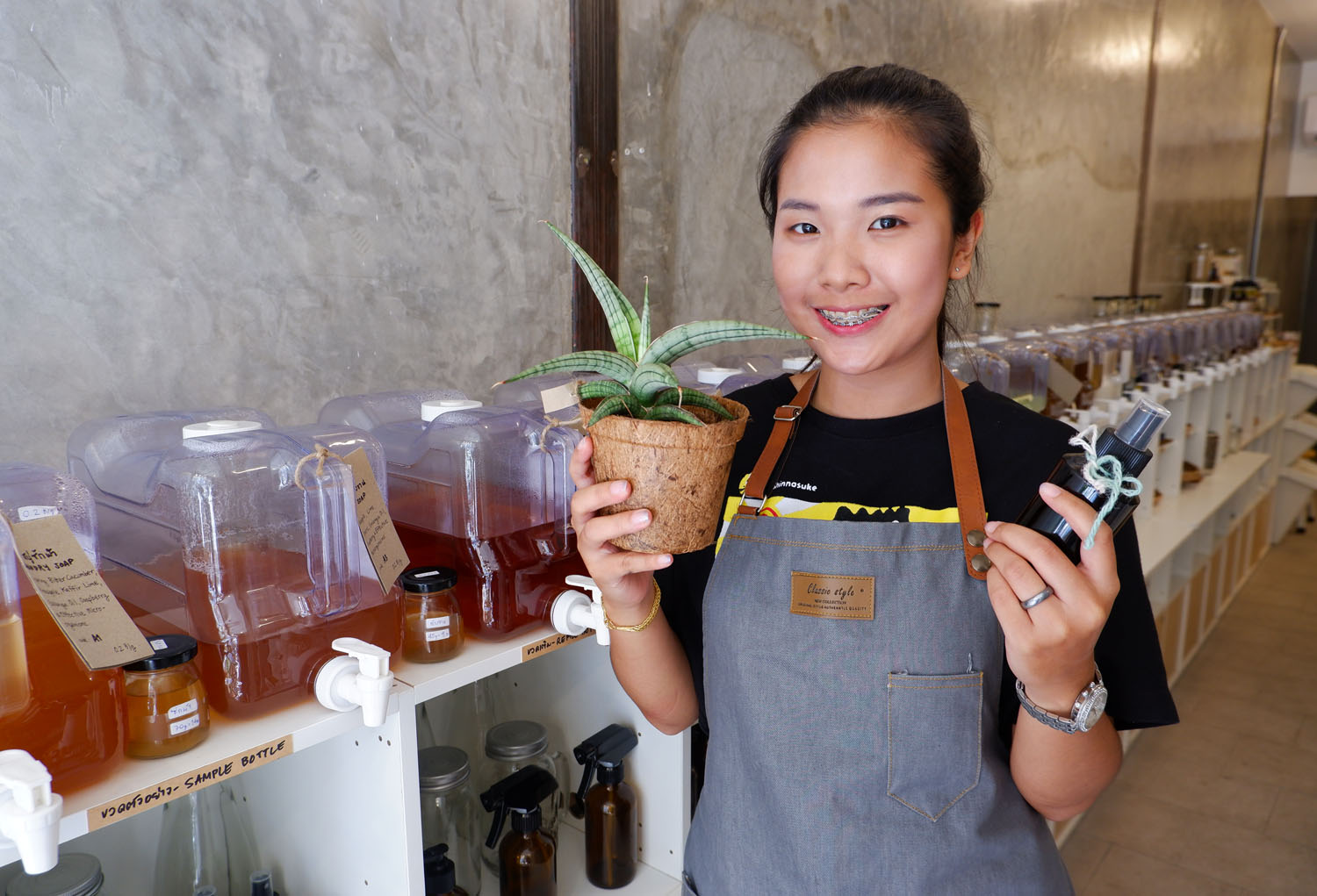
An employee at Normal Shop Bangkok.

Ecology-minded entrepreneurs are setting up refillable bulk stores in their neighborhood to encourage people to cut down on using plastic packaging. In 2019, we saw stores mushroom across the country, not just in Bangkok. Here’s our comprehensive refill shop list.

That’s not all – some expats are also pioneering clothing swaps to cut down on fast fashion waste. In June, the country’s first-ever zero-waste cocktail contest was held, trying to merge going green with getting tipsy.

Read:

Every Eco-Friendly Refill Shop in Thailand (So Far), in 1 Interactive Map

Bangkok Clothing Swap Makes Fashion Sustainable

Bartenders Put Everything Into Zero-Waste Cocktail Competition

5Rangers

Officials try to extinguish a fire at Pa Phru Kuan Kreng on Aug. 20, 2019.

Rangers, the unsung guardians of the forests and wildlife, get a rare high-profile recognition in July when Leonardo DiCaprio himself thanked Thai forest authorities for bouncing back Indochinese tiger numbers in Huai Kha Khaeng Wildlife Sanctuary. 

And when the Amazon was burning in August, Thai rangers worked to extinguish fires in Nakhon Si Thammarat, which destroyed more than 14,493 rai, or 2,318.88 hectares of forest and farmlands.

Read:

Leonardo di Caprio Thanks Thai Authorities for Rebounding Tiger Numbers

Weeks of Fire Destroyed Almost 14,500 Rai of Forest and Farms in Southern Thailand

6Everybody else

Environmental blogger Maneechanate Sammanee holding a glass jar on July 19.

All in all, caring about the environment definitely went mainstream in 2019. Even actor Alex Rendell used his star power to raise awareness for environmental problems by holding camps for kids to get in touch with nature. 

On top of that, ordinary Thais from all walks of life are becoming more environment-conscious and facing the unique social hurdles of going zero waste in Thai society. Like battling vendors who get annoyed if you bring your own container.

Read: 

The ‘Sabai Sabai’ Way to Go Zero Waste in Thailand

Alex Rendell: From Child Actor to Environmentalist

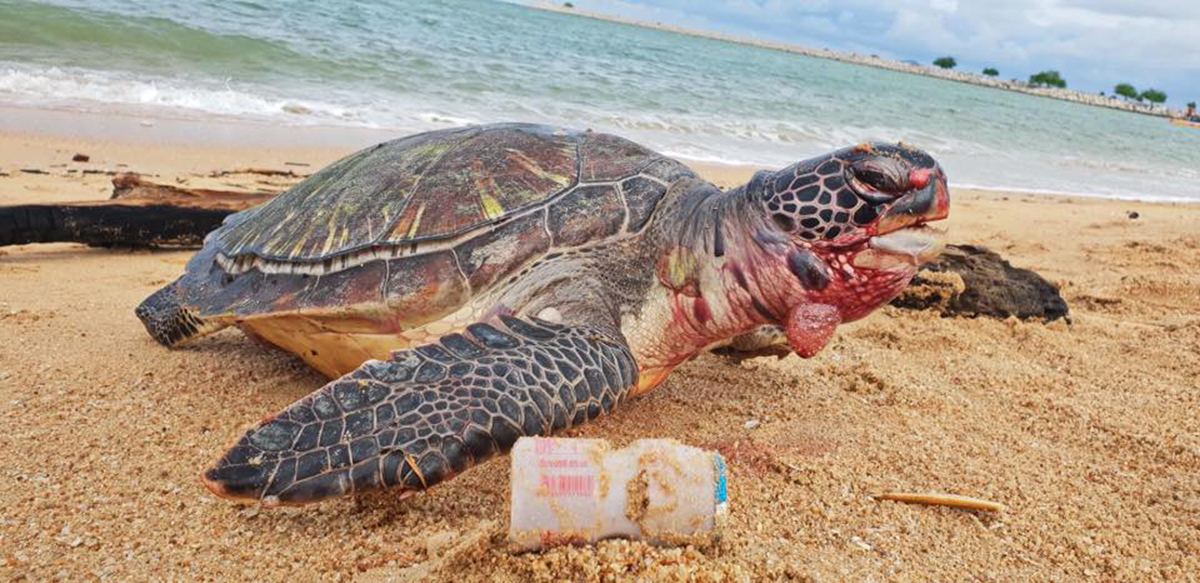
A bloated, dead sea turtle found in Sattahip by the navy in September 2018. The turtle died from eating too much plastic. Photo: Royal Thai Navy Sea Turtle Conservation Center / Facebook

Bonus: For World Turtle Day in May, we compiled a list of how to donate to aid Thailand’s turtles, from ones injured by being run over by cars to those festering in temple ponds and those choking in the ocean. 

Read: How To Save Thailand’s Turtles, Make Merit On World Turtle Day

‘Roots’ Farm-to-Cup Cafes Let You Write Postcards to Farmers

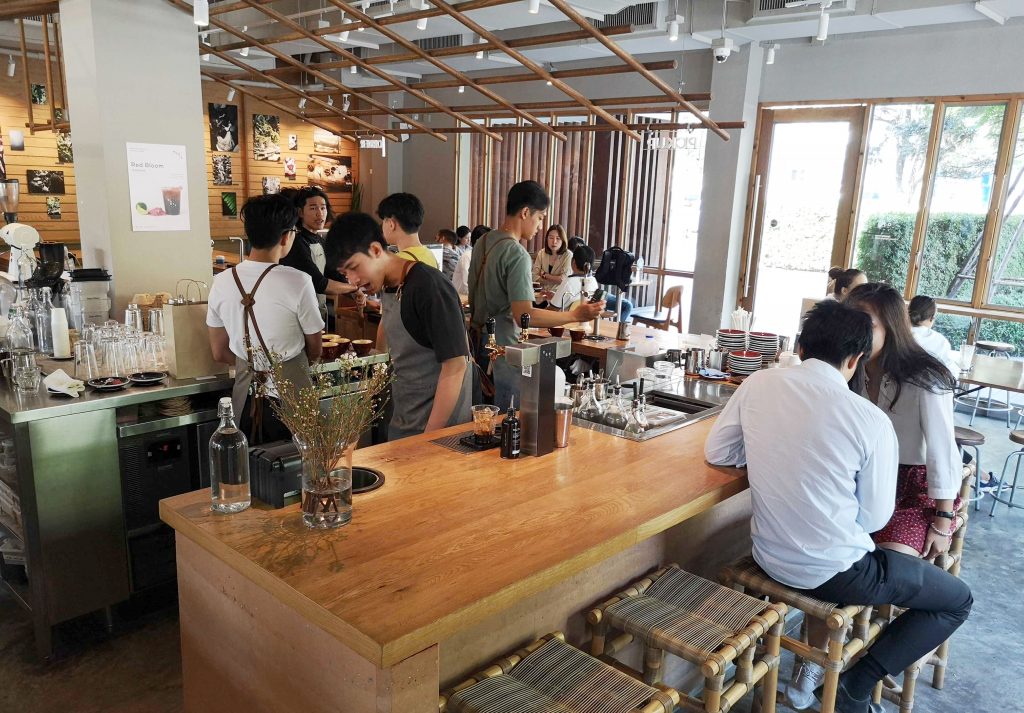
BANGKOK — At Roots Coffee, they don’t just serve Thai single-origin drip coffee. They have postcards for you to write to the farmers as well.

Wondering if it was just a marketing gimmick and whether the cards really get to the farmers or not, I asked Witsawawit Chantaweesomboon, a manager and barista at Roots at Sathorn earlier this week.

He quickly produced a pack of written postcards and said they will definitely be delivered to the farmers, whose photos adorn the one-year-old coffee shop.

“If it’s in English, we will translate it for the farmers as well,” Witsawawit said.

IMG 20191218 102242

Customers can choose to send postcards to three different farmers, and I checked out the ones that will be sent to Nawin and Tina, which the card said are third-generation coffee farmers who also run a processing mill, a roaster, and a café in Mae Suay, Chiang Mai.

The cards and texts at the Sathorn branch are printed in English, which speaks volumes about the target clientele of the coffee house. The Sathorn branch, open since June 2018, is the larger of the two and (soon to be three) branches. The other is at hip Thonglor community mall The Commons.

“We find their willingness to learn and their drive to build a better reputation for the coffee from this region very inspiring. They pay great attention to the coffee trees and go to great lengths to ensure that the trees are covered with enough shades,” the text went on.

IMG 20191218 104825

A look at their website shows multiple aesthetic pages dedicated to profiling their supplying farmers.

Roots is not fair trade, but Witsawawit said the company ensures that the farmers get their fair share. So for each cup of a hundred baht coffee, five per cent of the profits goes back to the dozen or so farmers. In case of Nawin and Tina, the manager said Roots eventually assisted them in constructing a coffee bean drying room instead of handing out the additional cash, and one can see the photos at the shop’s walls.

“We think of them as not just business partners but friends,” the barista-manager explained.

IMG 20191218 123009

I drank a satisfying Americano made from Nawin and Tina beans (100 baht). Here at Roots, customers consume not just expensive coffee but stories and faces of the farmers too.

“To Roots Coffee Farmers, Thank you so much for the love and care you give to your beans,” reads one of the customer-written postcards. “I take them home to Tokyo, grind a small amount as soon as I wake up every morning, then starts my day enjoying a taste of Thailand. I love it. Thank you.” I couldn’t decipher the name of the Tokyo-based consumer.

While chatting with the barista, Witsawawit insisted I try the lighter roasted Nawin and Tina drip or “pour over” coffee as well and he made one for me (120 baht). Lighter beans for drip coffee is more aromatic, not unlike enjoying quality tea.

IMG 20191218 123124

There’s a slightly herbal and earthy nose, as well as a lighter, more acidic taste compared to the darker, caramelized roast of the same beans used for an espresso or Americano.

The beans, which is shade-dried was described by the shop as “complex, honey finish”. Complex it was, though I wasn’t sure if I missed the honey part.

Witsawawit said single-origin drip coffee has exploded into the Thai urban palate over the past half a decade and he reckoned there are at least 1,000 specialty coffee shops in Bangkok and beyond.

IMG 20191218 123046

Roots is a place for discerning Bangkokians with adequate disposable income, who may have been hooked to Starbucks (aka the second wave of coffee drinking after that of the dreadful instant coffee) and moved onto a more socially responsible way to consume: third-wave single-origin drip coffee. And there is no going back despite the relative high price.

Witsawawit said Thai coffee farmers are doing relatively fine in the market, as imported beans are slapped with a 100 percent tariff. He is not sure what will become of Thai single-origin, which is grown almost exclusively at an elevation of 800 meters or higher in northern Thailand if imported beans will no longer be taxed due to some FTAs.

While he admitted that that some of the world’s best coffee beans from abroad are still more complex than Thailand’s locally grown ones, Witsawawit is hopeful that Thai beans can improve.

“We want Thais to enjoy specialty coffee. We see potential in Thai coffee and we are no inferior compared to those from elsewhere,” the barista said.

Roots at Sathorn opens every day from 8am to 7.30pm and is close to Exit 4 of BTS Surasak Station. Call 082-091-6175 for details. Note: The writer paid for the coffee and dessert by himself.

Advertisement

Do Good for New Year: Children Charity Calling for Donated Goods

BANGKOK — With Christmas and New Year just around the corner, it may be a good time to give and not just to people close to us, but to those in need as well.

The Mirror Foundation, a charity working for underprivileged children nationwide, said it’s accepting donations of clothes and practically anything else that can be reused or resold.

Sarit Thirachanchai, who is in charge of distributing donations, said his foundation also visits young and poor patients at hospitals, particularly those suffering from terminal diseases like cancer, to give them comfort and moral support.

“The best medicine is to pass on happiness to these kids,” Sarit said.

Founded in 1991, the Mirror Foundation is best known for tracking down missing or abducted children, and pioneering methods to help publicize missing persons notices.

Sarit said his organization could use some more help. With most donations going to temples in a belief of accruing merits and ensuring good karma, foundations like the one Sarit works for has to convince the public that its donations indeed goes to the good cause.

The Mirror Foundation has two shops, one on Vibhavadi Road and another in Thong Lo. Both spots are dropping points for donated goods as well.

Those interested in donating or buying donated goods can visit the shops on Thonglor Soi 3 (part of Krue A-Ngoon Park) and Vibhavadi Soi 62 from 9.30am to 5pm. Call 02-973-2236 for more details.

Advertisement

Review: Forget CGI. Dench Is the Special Effect in ‘Cats’

This image released by Universal Pictures shows Judi Dench as Old Deuteronomy in a scene from "Cats." (Universal Pictures via AP)

There’s apparently enough groundbreaking technology used in “Cats” for NASA to send a rocket to unexplored parts of the universe — perhaps to a far-off planet where cats sing, dance on two legs, and recite T.S. Eliot poetry in half-Cockney accents.

But let’s forget the much-discussed “digital fur technology” used to turn stars like Jennifer Hudson, Taylor Swift and Idris Elba into state-of-the-art, fabulous felines. Spoiler (or spoiled milk) alert: It’s not the technology that makes a whisker of difference here (sorry for the cat puns, but if you see this film, you’d better get used to them).

No, it’s an old-school quality that’s the real “special effect” worth talking about in ”Cats,” the new film version of the Andrew Lloyd Webber juggernaut that launched the mega-musical in the ’80s: veteran stage talent. Case one: Judi Dench, who can take any silliness and somehow make it genuine and moving, even in a computer-generated cat suit. Case two: her old friend Ian McKellen, who can embody an aging cat as well as he can Gandalf or Macbeth (which he once played opposite Dench). Case three: James Corden, who, let’s not forget, is a Tony-winning stage actor especially good at slapstick, which he uses here to amusing effect.

Bottom line: However you feel about “Cats” the show — and let’s face it, some love it and some hate it, EXACTLY as it will be with this film — give director Tom Hooper credit for assembling a cast that knows its way around a stage. This estimable group includes, along with the theater veterans, music stars like Hudson and Swift, who each make the most of one blockbuster number suited to their talents. It includes movie stars like Elba — who talks and growls more than sings — and Rebel Wilson, a “Gumbie cat” who really should be called a “Raunchy cat.”

And dance stars. Choreographer Andy Blankenbuehler (“Hamilton”) brings in top talents like Robbie Fairchild, the former New York City Ballet principal dancer who can sing and act, too, besides being one of the most graceful cats in the alley. Alongside him dances Francesca Hayward, a principal dancer with the Royal Ballet, in the ingenue role of Victoria, and other stars of ballet, tap dance and hip hop.

Before explaining the plot — and really, there’s never been much to explain — a brief primer: “Cats” is not so much a show as a cultural phenomenon. It ran in London’s West End for 21 years, and on Broadway for 18. Those are just the original productions; it has been performed in more than 50 countries and in 19 languages.

All this for a show with no real narrative arc, based on a series of poems adapted by Webber from Eliot’s 1939 “Old Possum’s Book of Practical Cats.” Here, as opposed to the stage show, the action is set in 1930s London, where Eliot would have lived.

It is Victoria (Hayward) who begins our story. The innocent young newcomer is unceremoniously dumped by her owner in an alleyway. Suddenly she is surrounded by cats — the Jellicle cats, who have come together for the annual Jellicle Ball. (Their opening song, “Jellicle Songs for Jellicle Cats,” is addictively catchy.)

The ball marks the night when one lucky cat is chosen to rise skyward to the “Heaviside Layer,” and be reborn. The choice lies with Old Deuteronomy, the grand old patriarch, who traditionally was a man — but this is the #MeToo era, and besides, they got Dame Judi Dench — so, He is a She. Dench, whose slated appearance in the original London show was thwarted by injury, takes her appointed place here, and lends the proceedings needed heft and authenticity.

If Dench embodies good, Elba’s character, the green-eyed Macavity, embodies evil. He’s desperate to win the ball’s prize, even if he has to abduct every other cat he’s competing with.

But before the ball, each cat sings what amounts to a personal audition song — sort of “A Chorus Line” for ambitious felines. They include Jennyanydots, played by Wilson in her usual raunchy, anything-goes style. (“Stop milking it!” she meows.) Jennyanydots lives in her owner’s kitchen and sleeps by day, but dances with cockroaches by night.

Bustopher Jones (Corden) is the well-groomed glutton, in spats, who eats his way through his entertaining number. We also Gus (short for Asparagus) played by McKellen, an elderly feline who recounts a life in the theater, and the younger Mr. Mistoffelees (Laurie Davidson), a magician in training. There’s Rum Tum Tugger (singer Jason Derulo in an charismatic performance), the evening’s heartthrob.

And then we have Bombalurina! Swift enters dangling from on high on a moon crescent for her number, an appropriately showy piece about her partner in crime, Macavity the mystery cat (it rhymes with “depravity”). Bombalurina is, well, pretty much everything you’d expect or want in a cat version of Taylor Swift.

But the big number in “Cats” is, and will always be, “Memory,” sung by Grizabella (Hudson), a former Glamour Cat who’s now shunned, and looking for redemption. Hudson sings this song twice (always crying), so don’t worry if you don’t hear the full belt the first time — it’s coming. (Broadway stalwarts may still miss the famous Betty Buckley version.)

Does all this work? Well, it depends on how you feel about … “Cats.” Did you love the show? You’ll find stuff to love here. Did you hate it? Ditto! Or maybe … you’ll have both reactions? That’s possible too.

And “Cats” will live on. This is a piece of pop culture that has WAY more than nine lives.

“Cats,” a Universal Studios release, has been rated PG by the Motion Picture Association of America “for some rude and suggestive humor.” Running time: 110 minutes. Two and a half stars out of four.

Advertisement

After Impeachment, House Bestows Big Trade Victory on Trump

In this July 25, 2019, file phot, President Donald Trump speaks during a ceremony for new Secretary of Defense Mark Esper at the Pentagon. If there was one day that crystallized all the forces that led to the impeachment investigation of President Donald Trump, it was July 25. That was the day of his phone call with Ukraine’s new leader, pressing him for a political favor. Photo: Alex Brandon, File / AP
In this July 25, 2019, file phot, President Donald Trump speaks during a ceremony for new Secretary of Defense Mark Esper at the Pentagon.

WASHINGTON (AP) — One day after its historic impeachment votes, the Democratic-led House gave President Donald Trump an overwhelming bipartisan victory Thursday on a renegotiated trade agreement with Canada and Mexico.

By a 385-41 vote, the House approved a bill that puts in place terms of the United States-Mexico-Canada Agreement.

The legislation passed after House Speaker Nancy Pelosi, D-Calif., and her colleagues won key concessions from an administration anxious to pass the trade deal before next year’s election season makes that task more difficult.

The deal is projected to have only a modest impact on the economy. But it gives lawmakers from both parties the chance to support an agreement sought by farmers, ranchers and business owners anxious to move past months of trade tensions that have complicated spending and hiring decisions.

The GOP-controlled Senate will probably take up the legislation when members return to Washington after the holidays and after dealing with impeachment.

Trump made tearing up the North American Free Trade Agreement a hallmark of his presidential run in 2016 as he tried to win over working-class voters in states such as Michigan, Ohio, Wisconsin and Pennsylvania.

“Critics said it couldn’t be done, but he made it happen. Another promise made, another promise kept,” said House Minority Leader Kevin McCarthy, R-Calif.

The agreement also won praise from Democrats who have routinely voted against prior trade agreements.

“Twenty-six years ago, I opposed NAFTA with every bone in my body,” said Rep. John Lewis, D-Ga. “I never thought the day would come when we would have the opportunity to right some of the wrongs in that agreement.”

Pelosi said the agreement was “light years” ahead of what the administration negotiated with Canada and Mexico. “We knew we could do better,” Pelosi said.

The original NAFTA phased out nearly all tariffs on goods produced and traded within North America. It was extraordinary because it linked two wealthy, developed countries with a poor, developing country. Since then, trade with Canada and Mexico has increased more rapidly than trade with most other countries.

Democrats for years have charged that NAFTA led to massive losses of high-paying manufacturing jobs in the U.S. as companies moved production to low-wage Mexico. Trump distinguished himself from free-trade Republicans in the presidential primary with his NAFTA-bashing rhetoric, and his administration got Canada and Mexico to negotiate a rewrite.

The International Trade Commission projected in April that the agreement would boost the economy by $68 billion and add 176,000 jobs six years after taking effect.

Some of the biggest impacts would be felt in the U.S. automotive industry. The agreement aims to see more cars produced where workers earn an average of at least $16 an hour.

The commission found that the new agreement would create 30,000 jobs in American auto parts plants. On the down side, the commission found the pact would increase the cost of pickup trucks and cars. That would hurt demand and reduce the number of jobs in factories that assemble cars by about 1,500.

Business and farm groups had been hitting the airwaves and the halls of Congress to get lawmakers to support the pact, putting pressure on Democrats to work with the administration even as labor unions remained wary that the new deal would be much of an improvement from NAFTA.

Trump, at times, seemed resigned to the assessment that the two sides would never reach a compromise. “She’s incapable of moving it,” Trump said a few weeks ago about Pelosi.

Behind the scenes, Trump’s lead negotiator, U.S. Trade Representative Robert Lighthizer, was working with House Democrats on changes to address their concerns. The agreement includes a process that could lead to inspections of factories and facilities in Mexico that are not living up to labor obligations.

It also secures more than $600 million for environmental problems in the NAFTA region. It scrapped giving pharmaceutical companies 10 years’ protection from cheaper competition in a category of ultra-expensive drugs called biologics, which are used to fight such illnesses as cancer, rheumatoid arthritis and diabetes.

In the end, the AFL-CIO endorsed the pact, as did the U.S. Chamber of Commerce and other major business groups.

Critics said they understood the renegotiated trade deal was an improvement over NAFTA, but still had problems with it.

“American jobs will still flow to other countries,” said Rep. Bill Pascrell, D-N.J.

The deal gave Democrats a chance to show constituents they weren’t focused solely on impeachment, particularly first-term lawmakers such as Reps. Kendra Horn, D-Okla., and Joe Cunningham, D-S.C. They represent districts won by Trump in 2016.

“I promised the people of the low country I’d come to Washington to work with Democrats and Republicans in Congress, the White House and anyone else necessary to find bipartisan, common-sense solutions to issues impacting our district,” Cunningham said during debate. He called the bills’ passage “a major step in that direction.”

Republicans made clear that they weren’t going to allow for an easy pivot after the harsh debate from the day before.

“The bipartisan nature of this deal that we are here discussing today cannot cover up what happened on this floor last night,” said Rep. Liz Cheney, R-Wyo.

Some Republicans also grumbled that Democrats took too long to get the agreement across the finish line, but many were quite happy with the result.

Rep. Mike Kelly, R-Pa., said the pact reminded him of when he would write a letter to Santa, and it would be answered with most of the presents he wanted on Christmas morning.

“This is certainly one of those times when the letter to Santa Claus actually got answered,” Kelly said.

AP Economics Writer Paul Wiseman contributed to this report.

Advertisement

Japan Defense Budget Hits New High With Focus on Space

Kyodo file photo

TOKYO (Kyodo) — The Japanese government approved on Friday a record draft defense budget for fiscal 2020 totaling 5.31 trillion yen ($48.5 billion) as it seeks to strengthen the country’s defense capabilities in outer space and cyberspace.

The draft budget including outlays linked to hosting U.S. military bases is up 1.1 percent from fiscal 2019 to a sixth consecutive record high as the country beefs up its ability to deal with North Korean missile and nuclear threats and China’s growing maritime assertiveness.

Continue reading the story here

Advertisement

Foundation Chairman Calls for Closer People-to-People Ties Between China, Japan

Young girls dressed in traditional kimonos attend the annual Coming-of-Age Day ceremony at the Tokyo Disneyland in Urayasu, suburban Tokyo, Japan, Jan. 12, 2015. (Xinhua/Stringer)

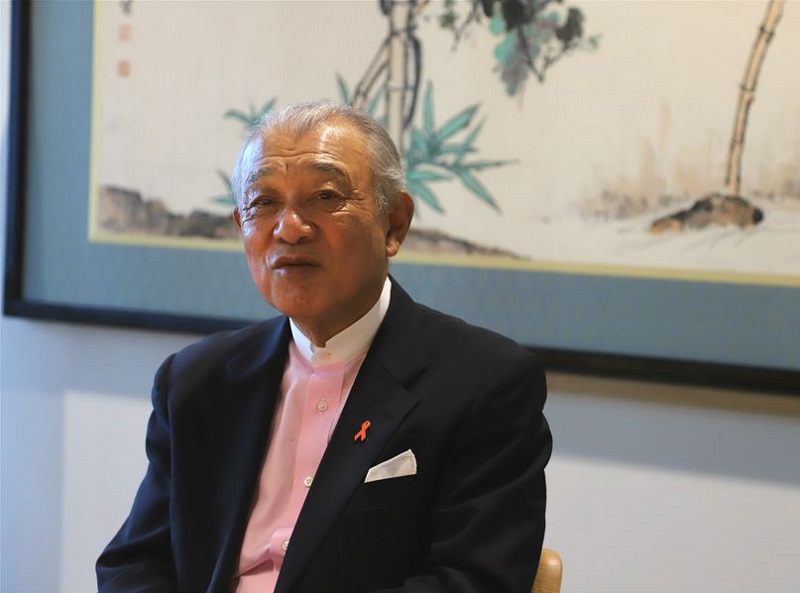
TOKYO (Xinhua) — The most important thing for the peoples of Japan and China is to look to the future and work together to forge stable bilateral relations, said Chairman of the Nippon Foundation Yohei Sasakawa.

The 81-year-old Sasakawa, also honorary chairman of the Sasakawa Peace Foundation and the Sasakawa Japan-China Friendship Fund, made the remarks in an interview with Xinhua in Tokyo.

He reviewed the achievements of the fund over the past 30 years, saying that it would continue to deepen and expand exchanges with China in various fields in the future.

Established in December 1989 by the Sasakawa Peace Foundation, the Sasakawa Japan-China Friendship Fund aims at promoting mutual understanding between the Japanese and Chinese peoples and wishing for lasting peace between the two countries.

photo l 1 3
Yohei Sasakawa, chairman of the Nippon Foundation, gives an interview to Xinhua in Tokyo, Japan, on Dec. 18, 2019 (Xinhua/Jiang Qiaomei)

Over the past 30 years, the fund has carried out 400 exchange projects, involving 7,700 Japanese and 14,000 Chinese, with a total project cost of more than 3.6 billion yen (32.86 million U.S. dollars).

The Japanese and Chinese officers exchange program is the fund’s only exchange activity related with politics. “I experienced war when I was six years old, and now at the age of 81, I am the last generation who has experienced war and the last living generation of witnesses. The tragic experience of war made me realize how precious peace is,” Sasakawa recalled his childhood experience when speaking about setting up the program.

The fund launched the Japan-China university-level military officers exchange program in 2001 to carry out dialogues and exchanges in the field of security between the two countries. By September this year, 152 officers of the Japan Self-Defense Forces and 228 officers of the People’s Liberation Army of China had visited each other’s countries through the program. They not only visited each other’s military bases, but also learned about the real social conditions of each other’s countries by visiting rural areas and high-tech enterprises.

The fund has also set up postgraduate and doctoral courses in Chinese universities, established a scholarship system for college students, and built a system for Chinese doctors to study in Japan. What the fund has done for Japan-China exchanges over the past 30 years might not be earthshaking, but the projects might have created new opportunities for the participants, Sasakawa said.

EGwYPztUcAITjzw 1
Beautiful sakura on the banks of Meguro River in Tokyo, Japan, on April 22, 2019. (Xinhua/Du Xiaoyi)

In the future, the fund will continue to be an intermediary and create more opportunities for the two peoples, especially the young people, to learn each other’s countries and enhance mutual understanding, he said.

Over the past 30 years, China has made brilliant achievements in various fields, Sasakawa said. When the fund was established, there were few decent libraries in Chinese universities, and the fund has donated more than 3.8 million books to 38 Chinese universities by far, he said.

Nowadays, all the universities in China have libraries and beautiful campuses. China’s development and changes are beyond description, and the whole society has undergone earthshaking transformation, Sasakawa said.

As to the future of Japan-China relations, Sasakawa said that people often quote “taking history as a mirror and looking to the future.” The most important thing for the two peoples is to look to the future, work together to forge stable bilateral relations and avoid tensions between the two neighbors, he said.

Advertisement

Zimbabwe Turns to Chinese Firm to Solve Power Supply Shortage

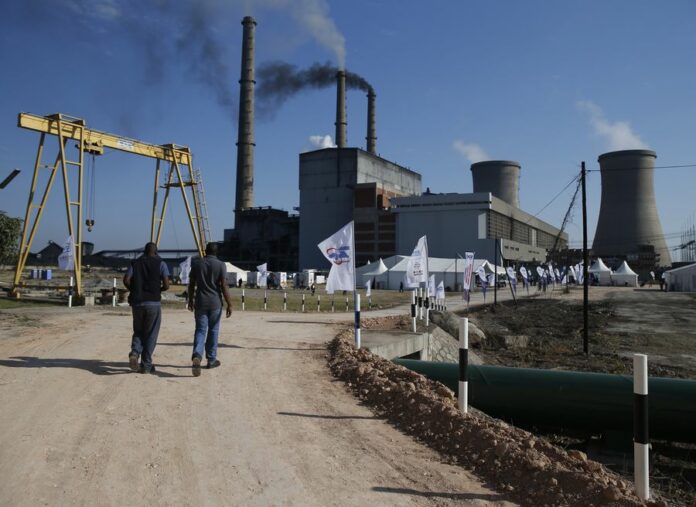
Photo taken on June 27, 2018, shows the Hwange Thermal Power Station in Hwange, Zimbabwe. The Hwange Power Station expansion project was using Chinese funding support. (Xinhua/Shaun Jusa)

HARARE (Xinhua) — Zimbabwe, currently grappling with severe power shortages, has licensed a joint venture between Zimbabwean and Chinese investors to establish a 50 megawatts coal-fired power plant.

Energy regulator, the Zimbabwe Energy Regulatory Authority (ZERA) announced the joint venture, Zimbabwe Zhongxin Electrical Energy Private Limited (ZZEE) on Wednesday.

The company, to be based in Hwange in the western part of the country, joins a long list of independent power producers (IPPs) that the energy regulator has licensed over the years.

The ZZEE license, issued on November 22 this year, allows the firm to produce and sell electricity to any customer with its permission.

“The generation is hereby granted to Zimbabwe Zhongxin Electrical Energy Private Limited to construct, own, operate and maintain the 50MW coal-fired thermal power station which would be located at Deka Bridge Farm in Hwange District in Matabeleland North Province for the purposes of generation and supply of electricity,” ZERA said.

photo l 1 4
Photo taken on March 28, 2018 shows the Kariba Dam in Kariba, Mashonaland West, Zimbabwe. (Xinhua/Shaun Jusa)

Due to a combination of drought that has resulted in reduced power generation at Kariba Power Station, as well as antiquated equipment at Hwange Power Station, Zimbabwe has a deficit of over 1,000MW of electricity.

This has forced power utility ZESA Holdings to introduce intensive load-shedding schedules of up to 18 hours a day.

ZERA has in the past five years licensed over 50 small IPP projects with a capacity to produce around 1,300 MW but most of them remain non-operational due to funding challenges.

Apart from the new venture, Chinese power company Sinohydro is already expanding the 900 MW Hwange Thermal Power Station to add 600 MW at a cost of 1.5 billion U.S. dollars.

The expansion project, which started in June 2018, is scheduled for completion by mid-2022.

The same company had also completed the expansion of another major power plant, Kariba South Hydro Power Station by 300 MW in March 2018 at a total cost of 533 million U.S. dollars.

Advertisement

Hot News

LATEST NEWS

Bangkok
overcast clouds
26.1 ° C
26.1 °
22.7 °
93 %
1.9kmh
100 %
Fri
25 °
Sat
33 °
Sun
35 °
Mon
37 °
Tue
37 °