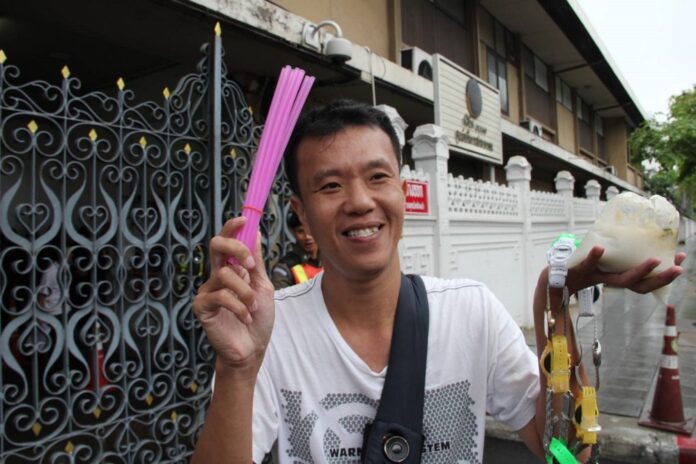
Ekachai Hongkangwan stages a one-man protest in front of Government House on May 1, 2018.
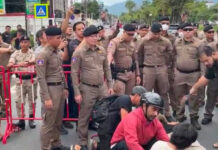
BANGKOK — Pro-democracy activist Ekachai Hongkangwan was once again assaulted Monday morning, this time in front of the Bangkok Criminal Court.
Ekachai reported from hospital that four men wearing motorcycle helmets abruptly assaulted him shortly after 8.30am. The activist suffered a fractured right hand and bruises on his face, which were visible in a selfie he posted on Facebook. He was told by the doctor to spend a night at the hospital tonight.
“There were many bystanders but they just watched, even the guard at the court,” said Ekachai. “It lasted for about two minutes until one of them said it was enough.”
Ekachai is a former lese majeste prisoner known for his repeated protests against deputy junta leader Gen. Prawit Wongsuwan’s luxury watch scandal.
Early last month, Ekachai petitioned the Witness Protection Department to afford him protection while in public, but he said there has been no progress in the request.
“What I want most is security from the Department of Witness Protection,” stressed Ekachai.
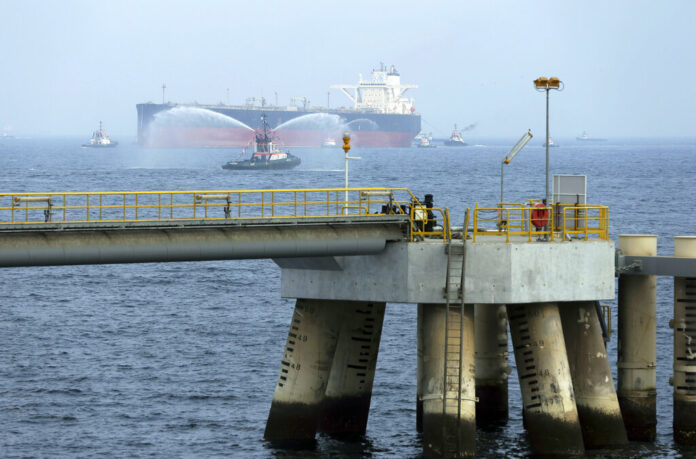
In this Sept. 21, 2016 file photo, an oil tanker approaches to the new Jetty during the launch of the new $650 million oil facility in Fujairah, United Arab Emirates. Photo: Kamran Jebreili / AP
DUBAI, United Arab Emirates — Saudi Arabia said Monday two of its oil tankers were sabotaged off the coast of the United Arab Emirates in attacks that caused “significant damage” to the vessels, one of them as it was en route to pick up Saudi oil to take to the U.S.
Khalid al-Falih’s comments came as the U.S. issued a new warning to sailors and the UAE’s regional allies condemned the reported sabotage Sunday of four ships off the coast of the port city of Fujairah. The announcement came just hours after Iranian and Lebanese media outlets aired false reports of explosions at the city’s port.
Emirati officials have declined to elaborate on the nature of the sabotage or say who might have been responsible. However, the reports come as the U.S. has warned ships that “Iran or its proxies” could be targeting maritime traffic in the region, and as America is deploying an aircraft carrier and B-52 bombers to the Persian Gulf to counter alleged threats from Tehran.
Tensions have risen in the year since President Donald Trump withdrew the United States from the 2015 nuclear deal between Iran and world powers, restoring American sanctions that have pushed Iran’s economy into crisis. Last week, Iran warned it would begin enriching uranium at higher levels in 60 days if world powers failed to negotiate new terms for the deal.
In his statement, al-Falih said the attacks on the two tankers happened at 6 a.m. Sunday.
“One of the two vessels was on its way to be loaded with Saudi crude oil from the port of Ras Tanura, to be delivered to Saudi Aramco’s customers in the United States,” al-Falih said. “Fortunately, the attack didn’t lead to any casualties or oil spill; however, it caused significant damage to the structures of the two vessels.”
Saudi Arabia did not identify the vessels involved, nor did it say whom it suspected of carrying out the alleged sabotage.
Underling the regional risk, the general-secretary of the six-nation Gulf Cooperation Council described the alleged sabotage as a “serious escalation” in an overnight statement.
“Such irresponsible acts will increase tension and conflicts in the region and expose its peoples to great danger,” Abdullatif bin Rashid al-Zayani said. Bahrain, Egypt and Yemen’s internationally recognized government similarly condemned the alleged sabotage.
A statement Sunday from the UAE’s Foreign Ministry put the ships near the country’s territorial waters in the Gulf of Oman, east of the port of Fujairah. It said it was investigating “in cooperation with local and international bodies.” It said there were “no injuries or fatalities on board the vessels” and “no spillage of harmful chemicals or fuel.”
The U.S. Navy’s 5th Fleet, which oversees the region, did not immediately offer comment. Emirati officials declined to answer questions from The Associated Press, saying their investigation is ongoing.
Earlier Sunday, Lebanon’s pro-Iran satellite channel Al-Mayadeen, quoting “Gulf sources,” falsely reported that a series of explosions had struck Fujairah’s port. State and semi-official media in Iran picked up the report from Al-Mayadeen, which later published the names of vessels it claimed were involved.
The AP, after speaking to Emirati officials and local witnesses, found the report about explosions at the port to be unsubstantiated.
Fujairah’s port is about 140 kilometers (85 miles) south of the Strait of Hormuz, the narrow mouth of the Persian Gulf through which a third of all oil at sea is traded. The facility handles oil for bunkering and shipping, as well as general and bulk cargo. It is seen as strategically located, serving shipping routes in the Persian Gulf, the Indian subcontinent and Africa.
Sunday’s incident comes after the U.S. Maritime Administration, a division of the U.S. Transportation Department, warned Thursday that Iran could target commercial sea traffic.
“Since early May, there is an increased possibility that Iran and/or its regional proxies could take action against U.S. and partner interests, including oil production infrastructure, after recently threatening to close the Strait of Hormuz,” the warning read. “Iran or its proxies could respond by targeting commercial vessels, including oil tankers, or U.S. military vessels in the Red Sea, Bab-el-Mandeb Strait or the Persian Gulf.”
Early Sunday, the agency issued a new warning to sailors about the alleged sabotage, while stressing “the incident has not been confirmed.” It urged shippers to exercise caution in the area for the next week.
Publicly available satellite images of the area taken Sunday showed no smoke or fire.
It remains unclear if the previous warning from the U.S. Maritime Administration is the same perceived threat that prompted the White House to order the USS Abraham Lincoln aircraft carrier strike group and B-52 bombers to the region on May 4.
Story: Jon Gambrell. Associated Press writers Aya Batrawy in Dubai and Bassem Mroue in Beirut contributed to this report.
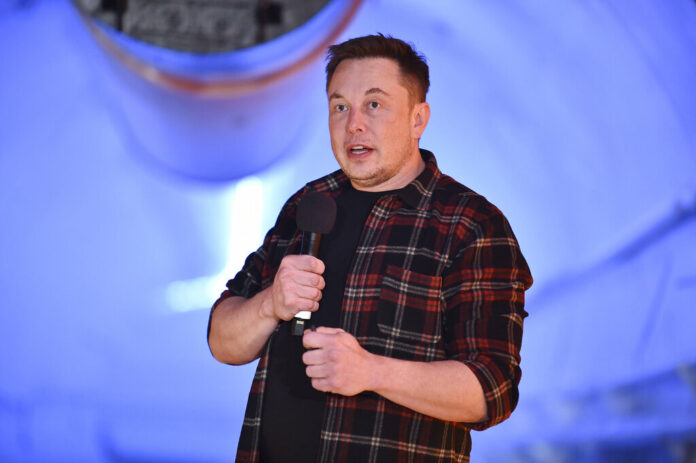
In this Tuesday, Dec. 18, 2018 file photo, Elon Musk, co-founder and chief executive officer of Tesla Inc., speaks during an unveiling event for the Boring Co. Photo: Robyn Beck / Pool Photo via AP
LOS ANGELES — Tesla CEO Elon Musk will have to go to trial to defend himself for mocking a British diver as a pedophile in a verbal sparring match that unfolded last summer after the underwater rescue of youth soccer players trapped in a Thailand cave.
A federal court judge in Los Angeles set an Oct. 22 trial date in a Friday court filing that rejected Musk’s attempt to dismiss a defamation lawsuit filed by British diver Vernon Unsworth.
Musk called Unsworth a “pedo” in a July 15 post on this Twitter account after Unsworth, in an interview with CNN, dismissed Musk’s attempts to help rescue the soccer players as a “PR stunt.” Unsworth also derided the submarine that Musk had built for a rescue mission, prompting Musk to lash back on this Twitter account, which had 22.5 million followers at the time
Musk contended his insult was protected from legal action, but the judge overseeing the case disagreed.
Unsworth is seeking more than $75,000 in damages from Musk, a multibillionaire. The suit also seeks a court order prohibiting Musk from making any further disparaging comments.
This is the second time in less than a year that Musk’s free-wheeling comments on Twitter have saddled him with legal headaches.
Last year, Musk and Tesla reached a $40 million settlement of allegations that he misled investors with a tweet declaring he had secured financing for a buyout of the electric car maker. He then had to go to court earlier this year to defend himself against assertions that he had violated an agreement with the Securities and Exchange Commission about his tweeting.
BANGKOK— New party-list MP Paiboon Nititawan has threatened to sue anyone who accuses him of illegitimately obtaining his seat in parliament.
The 65-year-old leader of the People Reform Party is a beneficiary of the Election Commission’s revised formula for allocating party-list MP seats. Prior to the March 24 election, the commission had proposed that attaining one party-list seat would require a minimum of 71,000 votes. On Wednesday however, the commission confirmed it had changed to a new formula where only 33,000 votes is required.
“I will take legal action against anyone who accuses me of wrongfully obtaining my position,” said Paiboon at the Election Commission on Friday, when he reported himself to register as a newly-minted MP.
The People Reform Party, which pushed Buddha’s teachings as its campaign platform, won slightly over 40,000 votes.
Three political parties – Pheu Thai, Future Forward and the Democrats – have threatened to legally challenge the final formula used by the Election Commission. The three claim they have been disadvantaged by the sudden change to a new seat allocation method after the conclusion of voting. On social media, the winning of party-list seats by 12 small and little-known parties has drawn ridicule and even been condemned as election rigging.
The revised allocation of party-list seats has left the anti-junta camp with only 245 seats – down from a projected 251 and without the simple majority in parliament needed to form a coalition government.
Paiboon, who has said he is “1,000 per cent” behind the nomination of junta leader Gen. Prayuth Chan-ocha as prime minister, encouraged the Election Commission to take its own action against anyone who accuses the body of dishonesty.
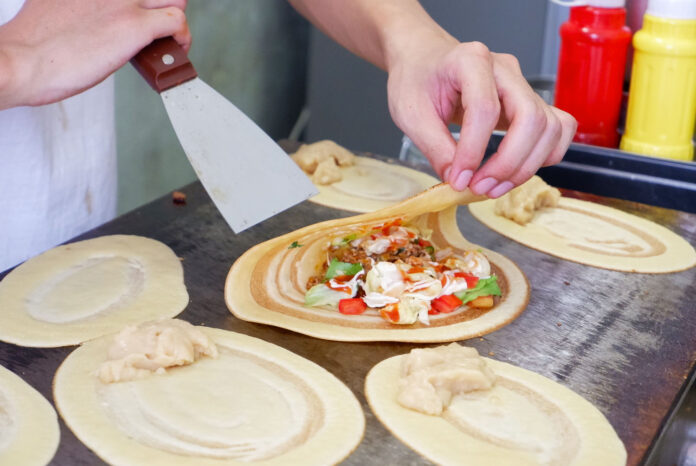
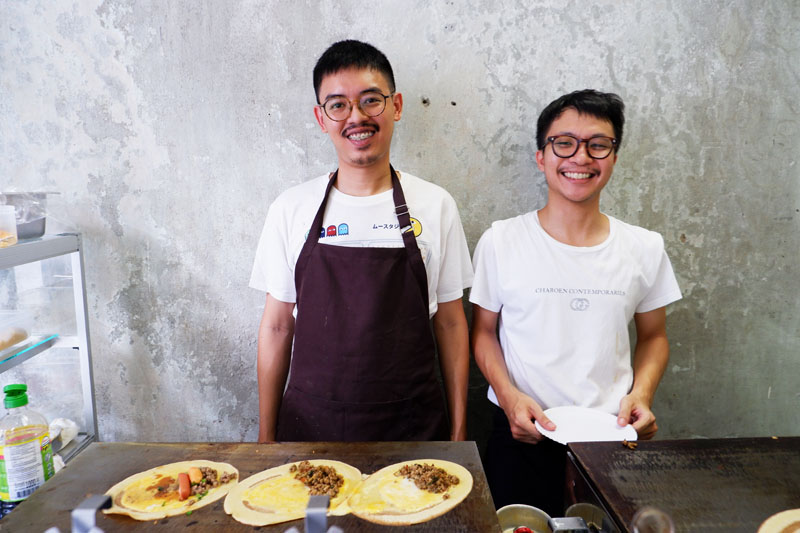
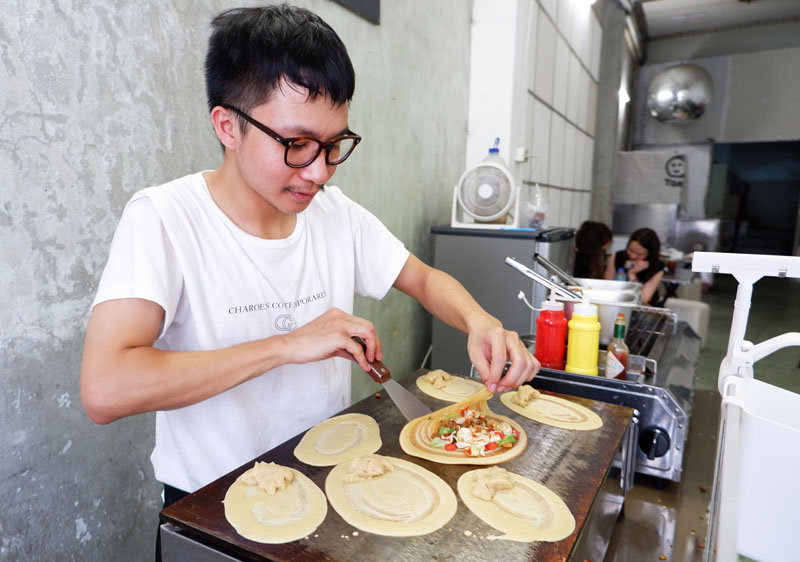
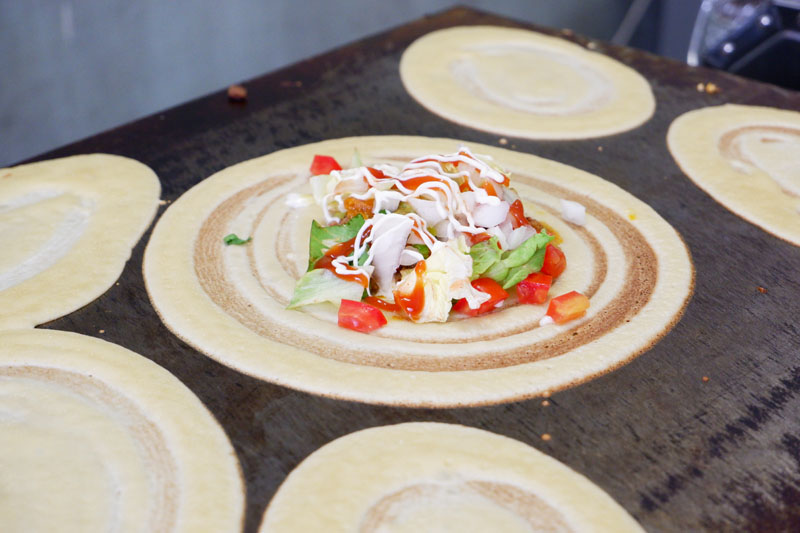
Napat “Na” Vatanakuljaras folds a Kanom Tokyo taco (40 baht) at Tokyo Hot.
Update: Tokyo Hot has moved to Charoen Krung Soi 43 and is open every day from 11am to 7pm.
BANGKOK — Imagine Mexican flavours meet kanom tokyo, a small griddled crepe that is the snack of Thai childhoods – and costs only 40 baht.
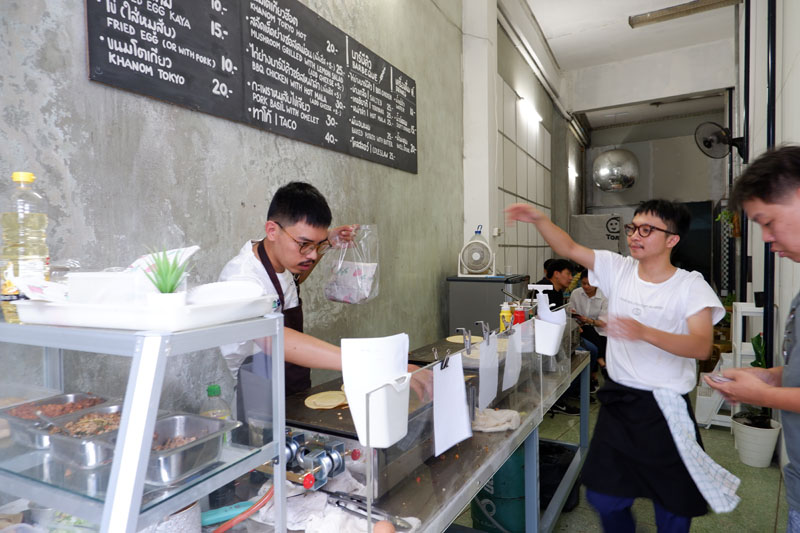
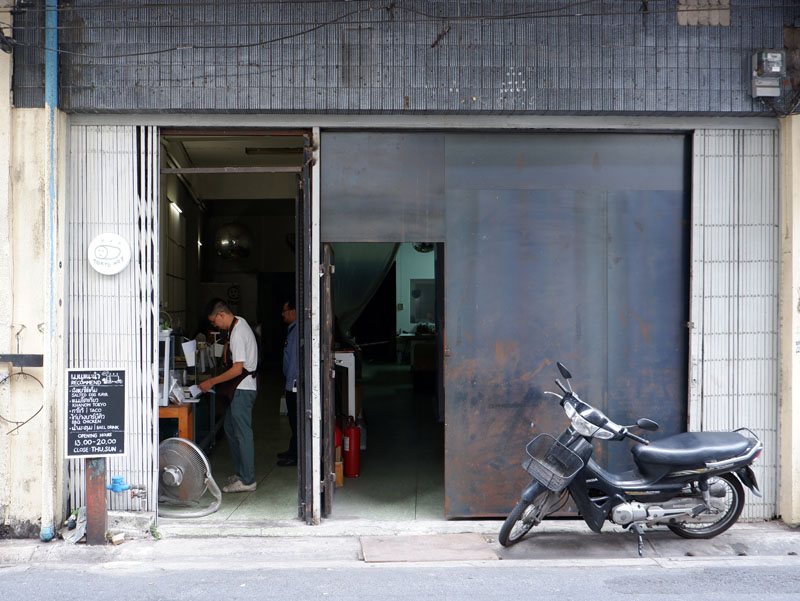
Tokyo Hot, newly open since the end of April, is a tiny Charoenkrung shop that offers just that: kanom tokyo with both sweet and savory fillings, including a taco-inspired rendition.
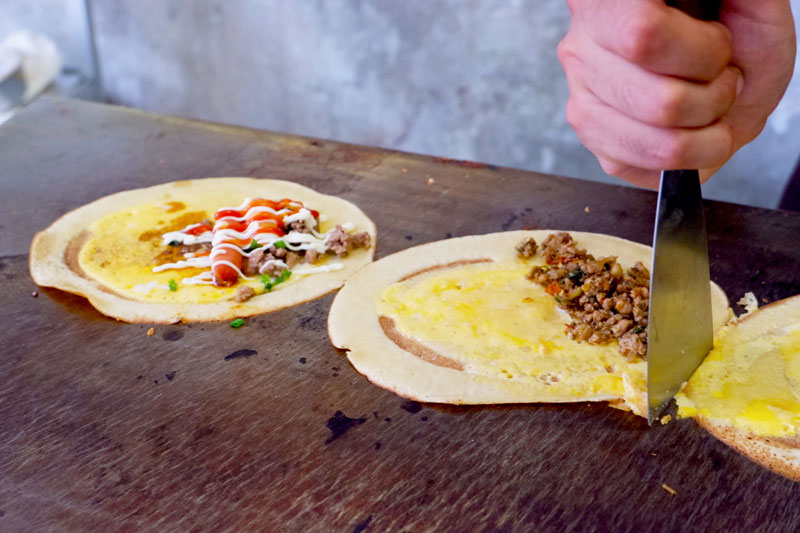
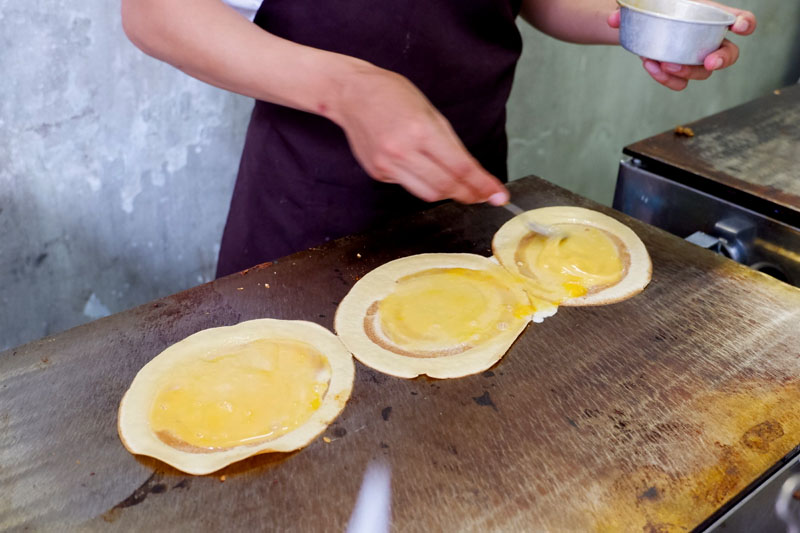
Kanom tokyo sold from side street carts are usually filled with low-grade sausage, quail eggs and a dash of meat, or pandan sangkhaya for sweet-tooths. Tokyo Hot’s are mega-sized and tap into flavours from around the world.
“Tacos are such an international food now. And I think kanom tokyo could be as well, since they can come with all kinds of fillings from around the world, sweet or salty,” co-owner Napat “Na” Vatanakuljaras, 26, said. “I love them personally because it’s a food that brings back childhood memories. Thai kids always get it as an after-school snack.”
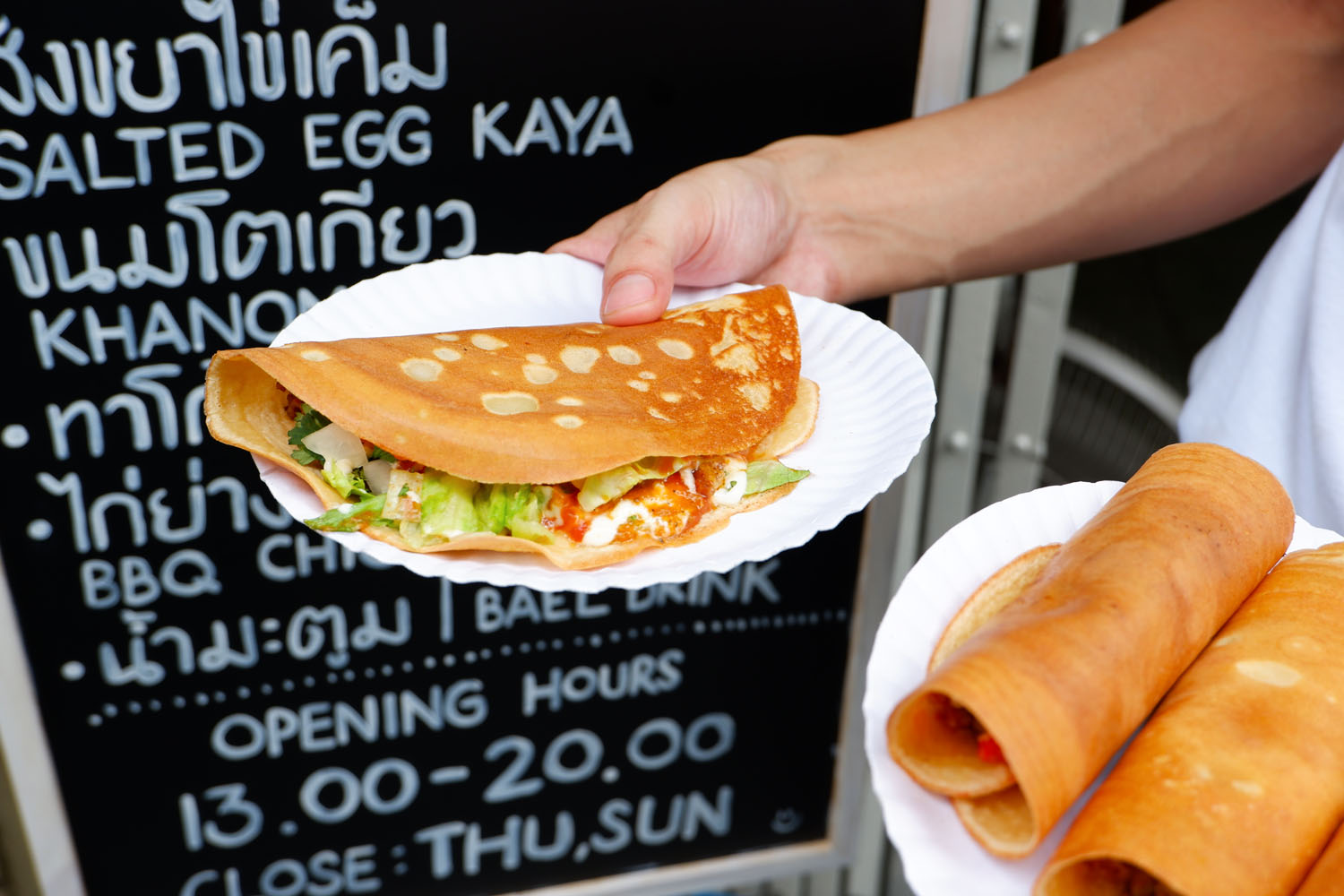
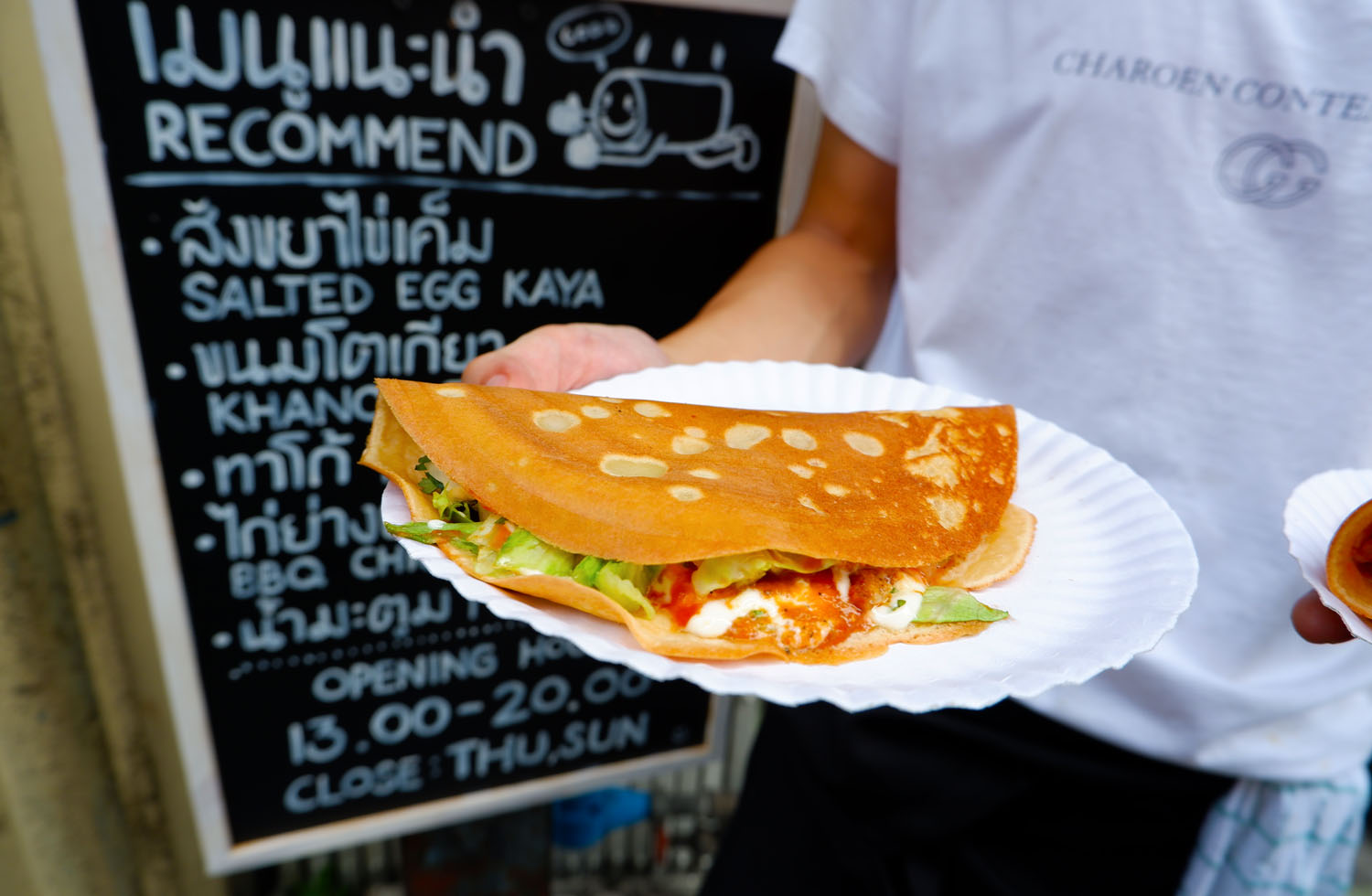
A Kanom Tokyo Taco (40 baht).
On a recent visit, only Napat had time to peel away from the kitchen for a quick chat. Co-owner Adisak “Jued” Chocksongsaneg, 28, was busy overseeing as many as a dozen kanom on a grill to keep up with hungry lunchtime queues.
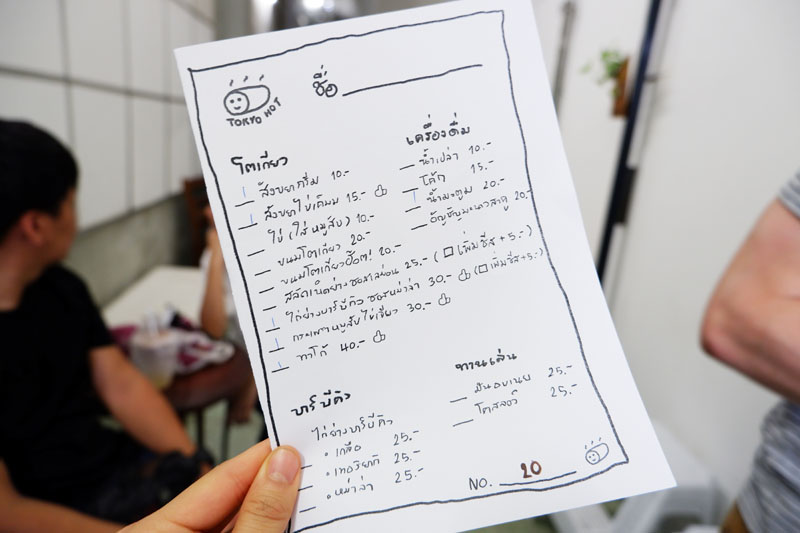
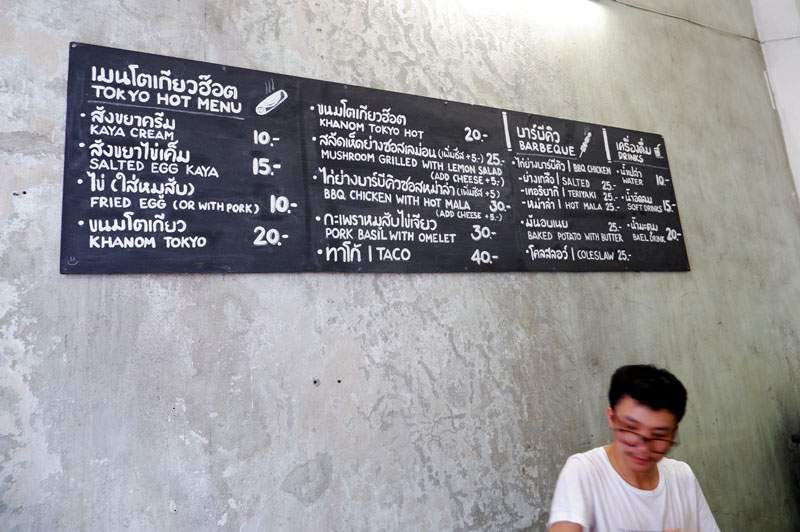
According to Na, it’s best to try savory kanom tokyo before moving on to sweet. Start off with spicy mala chicken (30 baht) – not so different from the mala stall at your favorite market — or go for the pork taco. Only tortilla or hard-shell purists will object to tasting taco fillings cased in a slightly-sweet, hot-griddled crepe – especially for 40 baht, when three crepes can come up to more than 350 baht in Thonglor. A third option is krapao pork with egg (30 baht) — a riceless version of the dish in wrap form.
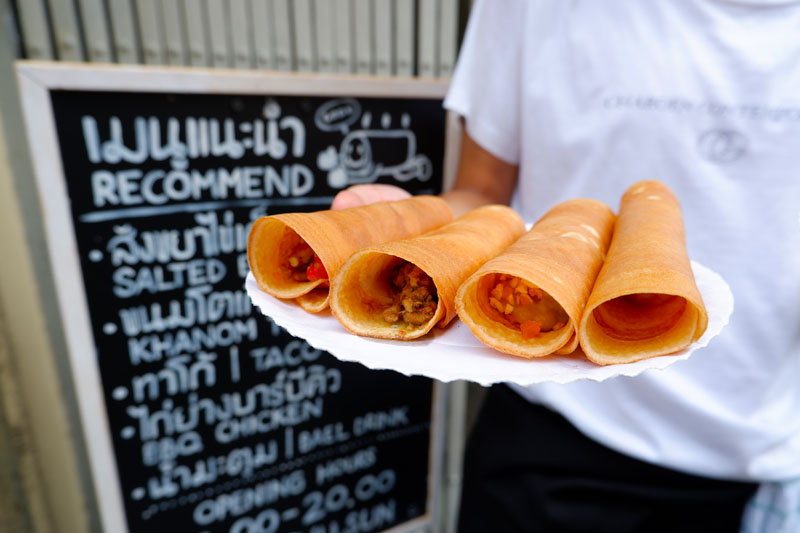
Spicy mala chicken (30 baht), krapao pork with egg (30 baht), kaya with salted egg (15 baht), and coconut kaya (10 baht).
Desserts include kaya filling with salted egg, whose contrasting flavors delight at 15 baht. Coconut kaya alone is a steal at 10 baht. As for drinks, a glass of bael juice is 20 baht.
Na and Jued originally wanted to open a taco restaurant but were unable to find a fresh tortilla source. So they turned to the Thai childhood favorite as a fusion alternative. It’s ingenuity that fits the history of kanom tokyo: despite the name, kanom tokyo are a Thai invention. Legend has it that a vendor created them by adapting imported Japanese dorayaki snacks.
Adisak “Jued” Chocksongsaneg and Napat “Na” Vatanakuljaras.
Tokyo Hot is still working out its kinks – there can be queues – and finalising its menu. Soon there will be tom yum filling, as well as sides including barbecue chicken skewers, baked potatoes and coleslaw.
Na pointed out that all the available fillings come from “tropical” cuisines – Mexican, southern Chinese, Thai.
“Even when it’s hot there, or here, we’re still fresh and active. I want the mood of Tokyo Hot to be the same,” Na said.
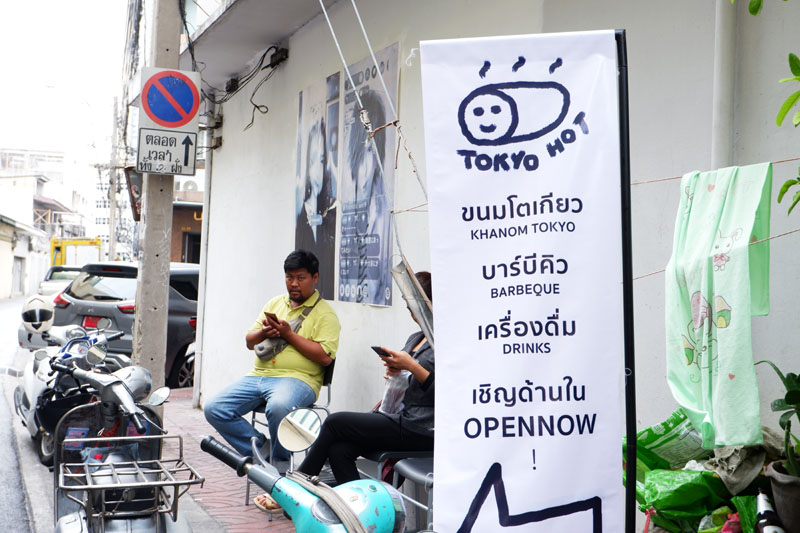
Tokyo Hot is open every day from 11am to 7pm at Charoenkrung Soi 43. We recommend stopping by after visiting the “From Monet to Kandinsky” exhibition at River City, a short walk down the soi.
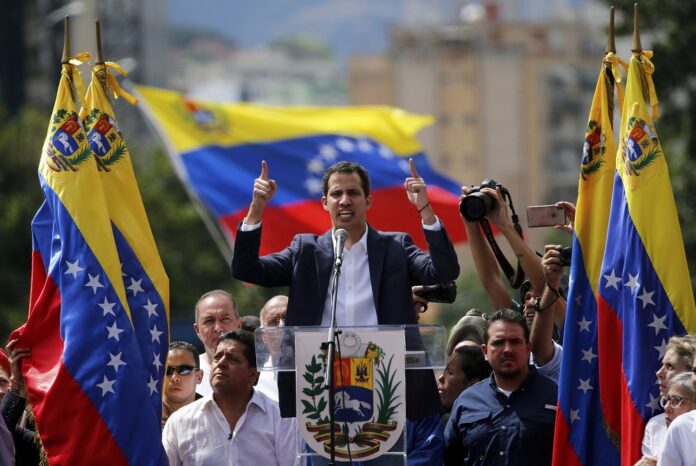
Juan Guaido, head of Venezuela's opposition-run congress, declares himself interim president of the nation until elections can be held during a rally demanding President Nicolas Maduro's resignation in Caracas, Venezuela, Wednesday, Jan. 23, 2019. (AP Photo/Fernando Llano)
CARACAS, Venezuela — Venezuelan opposition leader Juan Guaidó is looking to jumpstart his movement to oust Nicolas Maduro in the wake of last week’s failed military uprising, promising to persevere in the face of a deepening crackdown.
In an interview Friday with The Associated Press, Guaidó reiterated his willingness to consider inviting foreign troops to force Maduro from power, echoing the line from Washington that “all options” are on the table for dealing with Venezuela’s rapidly-escalating crisis.
He blamed the socialist leader for blocking all attempts to negotiate a solution and noted: “The biggest obstacle to that is Maduro.”
The 35-year-old national assembly president, who the U.S. and some 50 other countries recognize as Venezuela’s rightful leader, sat for the interview at his party’s headquarters two days after the No. 2 leader in congress was jailed and as several other lawmakers took refuge in foreign embassies. All are facing arrest for joining Guaidó and a small cadre of security forces in a military rebellion April 30 that was the closest the opposition has come in years to overthrowing Maduro.
Yet, Guaidó isn’t showing signs of fatigue.
He talks serenely and smiles widely when well-wishers huddle with him in prayer. While the Maduro government hasn’t dared arrest him — the U.S. has warned of severe consequences should he be harmed — he said security forces who track his every move could “kidnap” him at any time. Meanwhile, his fellow activist wife and 2-year-old daughter have been living outside Venezuela for months.
“There’s a movement made up of a majority that’s in the streets and that’s not going to change no matter how much they hit us,” he said. “The one thing the dictatorship fears most is hope.”
But observers note the fresh-faced opposition leader may be running out of options. Phil Gunson, a senior analyst with the Crisis Group in Caracas, said that after the failed military rebellion, it seems unlikely that the U.S. will carry through on threats of military action.
“He’s in a bind,” Gunson said. “If the repression is going to continue at this level, it’s going to be difficult to keep up his campaign of mass mobilization because people are going to be too scared to go out on the streets.”
In the current stalemate, Gunson said negotiations are the opposition’s best exit strategy. But demands that Maduro step aside as a precondition for talks are no longer a real possibility.
“They already played their best hand,” he said, referring to the opposition.
Nonetheless, Guaidó said winning over the military is possible and requires greater outreach so that troops understand they won’t be targeted if they flip. He said most top commanders and their troops already despise Maduro and are only feigning loyalty to him because they are under constant surveillance by Cuban and Venezuelan secret police.
“What keeps Maduro in power, and we’ve witnessed more openly in recent hours, is terror,” Guaidó said.
Guaidó, a previously unknown lawmaker, revived the flagging opposition movement when he declared himself interim president in January, accusing Maduro of breaking the constitutional order when he claimed victory in elections widely seen as lacking legitimacy after several opponents were barred from running.
His humble roots and unpretentious speech have endeared him to struggling Venezuelans and managed to keep together an unruly opposition coalition frequently torn apart by battling egos and strategic differences.
But old fractures are re-emerging as some blame prominent activist Leopoldo Lopez, who fled house arrest to stand alongside Guaidó in the uprising, for overplaying his hand. After the putsch failed, Maduro ordered Lopez’s arrest and the former Caracas area mayor fled to the Spanish ambassador’s residence, where he is holed up.
Lopez, who was arrested in 2014, is one of Venezuela’s shrewdest political operators who even while in state custody worked behind the scenes to promote Guaido’s rise when few Venezuelans had even heard of his name. But he’s also been dogged by criticism that he overestimates his own strength and takes ill-advised risks.
When pressed, Guaidó refused to criticize his mentor, noting that this was not the time to focus on personal ambitions.
Guaidó said he is grateful for support from the U.S., which has slapped severe oil sanctions on Venezuela and sent several planeloads of aid to bordering countries as part of a failed opposition plan to open a humanitarian corridor. With delivery of that aid unlikely for now, he said he’s willing to donate some of it to the International Committee of the Red Cross, which is working with the Maduro government to distribute supplies.
He said sanctions aren’t to blame for Venezuela’s collapse, as the government contends, but are nonetheless succeeding in squeezing Maduro’s ability to buy support through corruption.
“Without hesitation they’ve called Maduro what he is: a dictator,” he said of the Trump administration.
But as the impasse with Maduro has dragged on, America’s interest could begin to wane.
Last week, Trump directly contradicted earlier statements by his own national security team that Russia has been propping up the socialist leader with military and financial support. Instead, the U.S. president said, Russian President Vladimir Putin was not “involved” and only wants “positive” things for Venezuela.
Guaidó downplayed Trump’s comments, saying they were “just a different way of reaching out to Russia.”
Meanwhile, he said he was encouraged by recent comments by China’s government that it would step up its work with the EU and the international community to support political dialogue. Coming from Venezuela’s biggest creditor and a Maduro ally, the remarks were seen as something of an endorsement for the International Contact Group, an EU-led initiative that is seeking to promote early elections — something Maduro has steadfastly refused to consider.
__
AP writers Fabiola Sanchez in Caracas, Venezuela, and Christine Armario in Bogota, Colombia, contributed to this story.
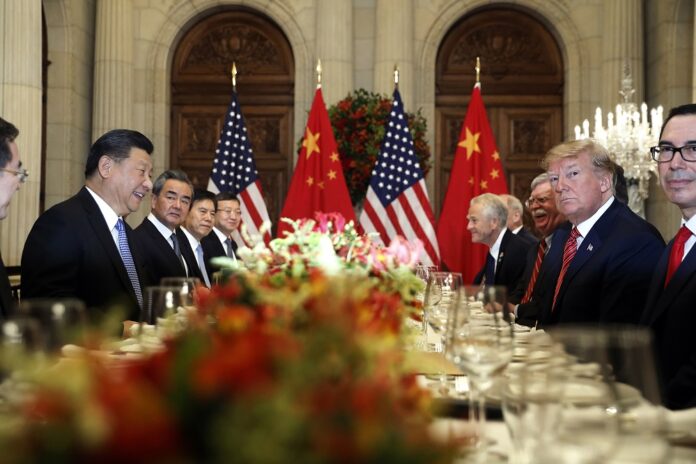
In this Dec. 1, 2018, file photo, U.S. President Donald Trump, second right, and China's President Xi Jinping, second left, attend their bilateral meeting at the G20 Summit in Buenos Aires, Argentina. (AP Photo/Pablo Martinez Monsivais, File)
WASHINGTON — Trade talks between the U.S. and China broke up Friday with no agreement, hours after President Donald Trump more than doubled tariffs on $200 billion in Chinese imports.
Trump asserted on Twitter that there was “no need to rush” to get a deal between the world’s two biggest economies and later added that the tariffs “may or may not be removed depending on what happens with respect to future negotiations.”
A White House official, speaking on condition of anonymity because they were not authorized to speak publicly on the matter, confirmed that the talks had concluded for the day but could not say when they would resume.
Hours earlier, the Trump administration hiked tariffs on $200 billion worth of Chinese imports to 25% from 10%, escalating tensions between Beijing and Washington. China’s Commerce Ministry vowed to impose “necessary countermeasures” but gave no details.
The tariff increase went ahead even after American and Chinese negotiators briefly met in Washington on Thursday and again on Friday, seeking to end a dispute that has disrupted billions of dollars in trade and shaken global financial markets. After a short session on Friday, the lead Chinese negotiator, Vice Premier Liu He, left the Office of the U.S. Trade Representative about midday. U.S. Trade Representative Robert Lighthizer and Treasury Secretary Steven Mnuchin shook hands with Liu as he left.
In the afternoon, a motorcade of sport-utility vehicles and a police escort, both with lights flashing, carried the Chinese delegation away from their lodgings at the Willard InterContinental Hotel .
Hu Xijin, editor-in-chief of the Chinese newspaper Global Times, citing “an authoritative source,” tweeted that “talks didn’t break down. Both sides think that the talks are constructive and will continue consultations. The two sides agree to meet again in Beijing in the future.”
In an interview with reporters later in the day, Vice Premier Liu He said: “We will make no concessions on matters of principle.”
The Trump administration escalated the confrontation again after the Chinese delegation left town. Lighthizer announced Friday evening that he was preparing to impose tariffs on the $300 billion in Chinese imports that haven’t already been targeted. The government will have to get public comment before it can target more Chinese goods.
On Wall Street, stocks fell initially Friday but turned positive on optimism over future talks.
Earlier, Trump asserted in a tweet that his tariffs “will bring in FAR MORE wealth to our Country than even a phenomenal deal of the traditional kind. Also, much easier & quicker to do.”
In fact, tariffs are taxes paid by U.S. importers and often passed along to consumers and companies that rely on imported components.
American officials accuse Beijing of backtracking on commitments made in earlier rounds of negotiations. “China deeply regrets that it will have to take necessary countermeasures,” a Commerce Ministry statement said.
U.S. business groups appealed for a settlement that will resolve chronic complaints about Chinese market barriers, subsidies to state companies and a regulatory system they say is rigged against foreign companies.
The latest increase extends 25% duties to a total of $250 billion of Chinese imports, including $50 billion worth that were already being taxed at 25%. Trump has said he is planning to expand penalties to all Chinese goods shipped to the United States.
Beijing retaliated for previous tariff hikes by raising duties on $110 billion of American imports. But regulators are running out of U.S. goods for penalties due to the lopsided trade balance.
Ford spokeswoman Rachel McCleery said the carmaker is most concerned about any retaliatory tariffs China might impose.
The Dearborn, Michigan-based company says 80% of the vehicles it assembles in the U.S. are sold domestically, but it does export some vehicles to China.
“While most of the vehicles we sell in China are built in China, Ford does export a number of vehicles to China from the U.S.,” McCleery said. “Our biggest concerns are impacts retaliatory tariffs would have on our exports and our expanding customer base in China.”
Chinese officials have targeted operations of American companies in China by slowing customs clearance for them and stepping up regulatory scrutiny that can hamper operations.
The latest U.S. increase might hit American consumers harder, said Jake Parker, vice president of the U.S.-China Business Council, an industry group. He said the earlier 10% increase was absorbed by companies and offset by a weakening of the Chinese currency’s exchange rate.
A 25% hike “needs to be passed on to the consumer,” Parker said. “It is just too big to dilute with those other factors.”
Despite the public acrimony, local Chinese officials who want to attract American investment have tried to reassure companies there is “minimal retaliation,” he said. “We’ve actually seen an increased sensitivity to U.S. companies at the local level,” he added.
The higher U.S. import taxes don’t apply to Chinese goods shipped before Friday. Shipments take about three weeks to cross the Pacific Ocean by sea, giving negotiators more time to reach a settlement before importers may have to pay the increased charges.
Liu, speaking to Chinese state TV upon his arrival Thursday in Washington, said he “came with sincerity.” He appealed to Washington to avoid more tariff hikes, saying they are “not a solution” and would harm the world.
“We should not hurt innocent people,” Liu told CCTV.
Also Thursday, Trump said he received “a beautiful letter” from Chinese President Xi Jinping and would “probably speak to him by phone.”
The two countries are sparring over U.S. allegations Beijing steals technology and pressures companies to hand over trade secrets in a campaign to turn Chinese companies into world leaders in robotics, electric cars and other advanced industries.
This week’s setback was unexpected. Through late last week, Trump administration officials were suggesting that negotiators were making steady progress.
U.S. officials say they got an inkling of China’s second thoughts about prior commitments in talks last week in Beijing but the backsliding became more apparent in exchanges over the weekend. They wouldn’t identify the specific issues involved.
A sticking point is U.S. insistence on an enforcement mechanism with penalties to ensure Beijing lives up to its commitments. American officials say China has repeatedly broken past promises.
China wants tariffs lifted as soon as an agreement is reached, while U.S. officials want to keep them as leverage to ensure compliance.
“A real enforcement mechanism is critical,” the American Chamber of Commerce in Shanghai said in a statement.
___
AP Business Writer Joe McDonald and AP videojournalist Dake Kang in Beijing and Alexandra Olson in New York contributed to this report.
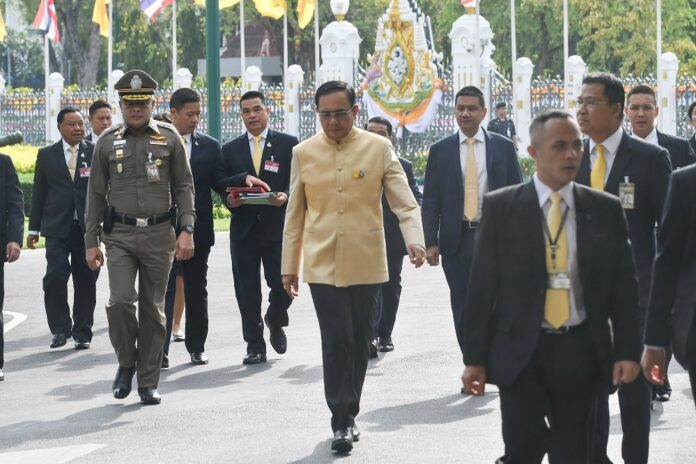
Junta chairman Prayuth Chan-ocha at Government House on May 7, 2019.
The Election Commission has finally announced the 2019 election’s official results, more than a month after voting day. Now, we should ask whether the election was free and fair.
The answer will depend on your definition of legitimate and fair. After all, there is no shortage of people in Thailand defending military coups as a just and legitimate means of regime change.
My own take is that the March 24 election was only partially free and not at all fair.
The election was not free because for four years after the May 2014 coup, political parties were banned from engaging in political activities. Citizens were also forbidden from holding political gatherings of more than four people until late last year.
Until just a few months before March 24, the Thai political landscape was one of restriction, if not repression. Those opposed to the military junta were unable to freely prepare themselves, mobilize or articulate their causes.
The election was unfair because the rules governing it were drafted by people chosen by junta leader Gen. Prayuth Chan-ocha, who himself is competing as a PM candidate and poised to become prime minister again next month.
Some argue that the the junta-sponsored constitution passed a referendum in 2016. But approval came partly because rejecting the charter would have postponed elections even further, allowing Prayuth to continue on with absolute power indefinitely. Moreover, those who campaigned against the draft charter were again harassed, with some prosecuted for violating the ban on political gatherings.
Even the so-called “referees” of the 2019 election, the Election Commission, were chosen and approved by the junta-appointed rubber-stamp parliament, the National Legislative Assembly. Consequently, the election saw gerrymandering and a bizarre method for allocating party-list MP seats.
After voting concluded, the commission amended the previously announced formula for calculating the allocation of party-list seats – and voila, the anti-junta camp is now no longer able to muster a simple majority. The 250-plus seats it was projected to collect has now been reduced to 245. Then there is the 250-member senate, with 244 senators appointed by Prayuth.
How can a game be fair when one player chooses the people who write the rules (the constitution and election laws), indirectly selects the referees (the Election Commission), and makes sure his team has extra players (250 senators who will join the 500 MPs in voting for the new prime minister)?
What kind of election is that? But in a country where some people confuse rule by the junta’s law for the rule of law, it’s not hard to imagine those groups calling the March 24 election free and fair.
To those who do accept the usurper coup makers though, the election was a way for the junta to conveniently masquerade itself as an elected and legitimate regime.
Some may wonder if the junta has no shame. Well, they had no qualms in usurping power by force in broad daylight nearly five years ago. Do not expect them to feel guilty for hatching an election where they had very little chance of losing.
BANGKOK — Hundreds of jobs are on the line after media regulators announced on Friday that seven digital TV channels are opting out of free-to-view broadcasting.
The TV channels – nearly all of them reliant on news shows – informed regulators of their wish to discontinue operations, which have proven to be too costly. The seven channels are MCOT Family, Spring, Spring News, Voice TV, 3SD, 3 Family and Bright TV.
The channels are expected to switch to paid cable TV.
In a statement, the National Broadcasting and Telecommunications Commission said it has reminded all the leaving channels of their obligation to compensate any laid off workers in accordance with labor laws.
The seven channels’ decision to walk away from free broadcasting was announced days after the junta enacted a special law allowing digital TV operators to relinquish their licenses without having to pay outstanding fees or additional penalties.
Once seen as a lucrative business, digital TV has turned out to be a financial sinkhole for the companies who won multi-billion baht bids for operating licenses, only to struggle with expensive fees and smaller-than-expected viewership.
One of the first networks to leave the platform was Thai TV, owned by media mogul Pantipa Sakulchai, who said the costs were too much to bear. Thai TV left the new platform in 2015, less than a year after paying about 1.9 billion baht in the license auction.
The NBTC allowed her to leave, but said the channel must still pay back the outstanding fees of 1.75 billion baht.
Any channel is now permitted to quit digital TV without having to pay such installments, under the special junta order issued by the junta head under Article 44 of the 2014 interim constitution.
BANGKOK — Junta chairman Prayuth Chan-ocha has joined in demanding justice for a policeman who was punished for stopping a judge at a checkpoint.
According to a government spokeswoman on Friday, the junta leader has ordered that Lance Corporal Ekkapol Juisongkaew be reinstated to his post and urged local police to investigate the incident.
Ekkapol, who works at Nakhon Si Thammarat’s Thung Song Police Station, was transferred from his traffic duties on Thursday after a now-viral video on social media showed him asking a judge to show his driver’s license.
“The prime minister also commended the junior-ranking policeman for correctly performing his duties,” spokesman Weerachon Sukhonthapatipak said. “And he asked everyone to do the right thing without having to fear any influence.”
In the video, which appears to have been filmed from Ekkapol’s mobile phone, the policeman stops a vehicle at a checkpoint and asks the driver for his license. However the driver attempts to drive away.
After ordering another policeman to stop the vehicle, Ekkapol approaches the driver and again asks him for identification. In response, the man identifies himself as a senior judge.
“I’m the Director-General of the Eighth Region Court,” the man says. “I know Superintendent Chok. You can call him right away … I’m a Director-General. Do you still want to search my car?”
“I only want to see your driver’s license. Can I see it?” Ekkapol asks, but the judge drives away without a word.
Information on the court’s website identifies the driver as Judge Krairat Weerapattanasuwan, head of the Criminal Court for Corruption and Misconduct Cases Region 8.
In a media interview, Thung Song Station superintendent Chokdee Rakwattanawong chided Ekkapol’s tough stance toward the judge, who happens to be the former’s acquaintance.
“The lance corporal only took up the job recently. He should … exercise his wisdom to identify who is and isn’t a criminal,” Col. Chokdee told Thairath.
Chokdee reported he had ordered Ekkapol to apologize in person to the judge.
But reactions on social media were overwhelmingly sympathetic to Ekkapol, with many condemning Krairat for seemingly expecting privileges.
Police authorities also appear to be siding with Ekkapol. Regional police commander Pongwuth Pongsri on Friday said he has summoned the station chief to explain Ekkapol’s punishment. Additionally, a provincial police commander said a certification to commend Ekkapol is on its way.
Speaking to reporters, government spokesman Weerachon said Gen. Prayuth has instructed the Eighth Region Court to launch its own inquiry into the incident.
It’s far from the first time that upholders of the law have found themselves in controversy for demanding privileges.
In 2017, two policemen were forced to apologize to a public prosecutor for refusing to escort him to a restaurant. A year earlier, a judge was filmed raging and throwing plastic bottles at civil servants after they told her she had parked in a restricted area.