KUALA LUMPUR — Four Finnish tourists will be deported and barred from returning to Malaysia after they were detained for distributing Christian materials on a resort island in the Muslim-majority country, police said Tuesday.
The two women and two men, aged between 27 and 60, were arrested Nov. 20 at their hotel in northern Langkawi island after police received several complains that they were handing out Christian materials in public places. Police also seized 47 pens with Bible verses and 336 notebooks containing texts from the Bible.
Langkawi police chief Mohamad Iqbal Ibrahim said the four, including a married couple, have been handed over to the immigration department following a decision by public prosecutors to deport them. He said they will also be blacklisted and the Christian material seized will be destroyed.
The attorney-general’s office will send a letter to Finland’s embassy to express displeasure over their conduct, he added.
Proselytizing of Muslims, who comprise nearly two-thirds of Malaysia’s 31 million people, by members of other religions is forbidden in Malaysia, although the reverse is allowed. Muslims are also not legally permitted to change religion.
Finnish news agency STT reported that one of those detained belongs to Joosua Missio, a Finnish Christian youth group known for promoting healthy lifestyles and touring the Nordic country’s music festivals with their own “Finland to Jesus” bus.
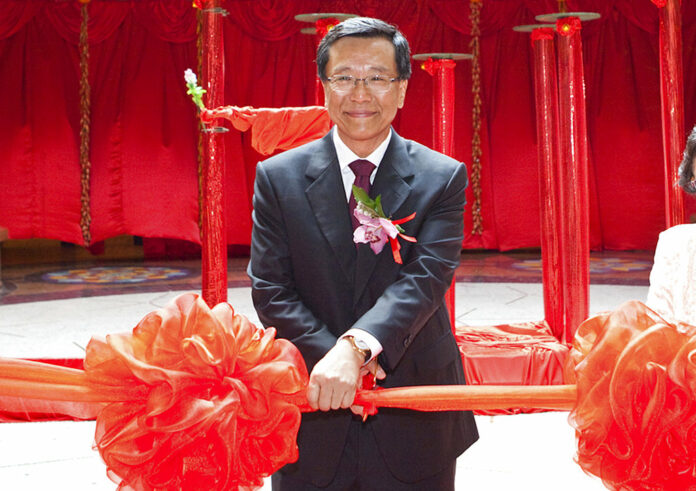
Chairman of the Malaysian Genting Group developer Tan Sri Lim Kok Thay cuts a ceremonial ribbon to open a casino in Singapore. Photo: Joan Leong / Associated Press
KUALA LUMPUR — Resort developer Genting Malaysia has filed a lawsuit in California seeking at least USD$1 billion in damages from Walt Disney Co. and Fox Entertainment Group for alleged breach of contract related to a theme park, the company said Tuesday.
The lawsuit filed Monday in the Central California District Court cites damages from Fox’s withdrawal from an agreement set in 2013 to license its intellectual property for a Fox World theme park in Resort World Genting, a sprawling facility perched on a mountain in Malaysia.
The theme park would have been Fox’s first.
According to Genting’s complaint, Fox issued a “notice of default” aimed at ending the agreement.
Despite disagreements over the specific terms of the deal, Genting said in a statement that Fox had no grounds to pull out. The complaint also alleges that Disney and 21st Century Fox interfered with the contract and caused Twentieth Century Fox Licensing and Merchandising, part of Fox Entertainment, to breach it.
Disney’s acquisition of 21st Century Fox raised issues because Genting’s resort includes a casino, which conflicts with Disney’s stance against gambling.
Genting says it has invested nearly $180 million in the Fox project. Its most recent quarterly report said the group was focused on developing its resort and on preparing to roll out the “highly anticipated 20th Century Fox World Theme Park” as well as another attraction, the Skytropolis indoor theme park.
The opening of the Fox themed park had been planned for the first half of 2019.
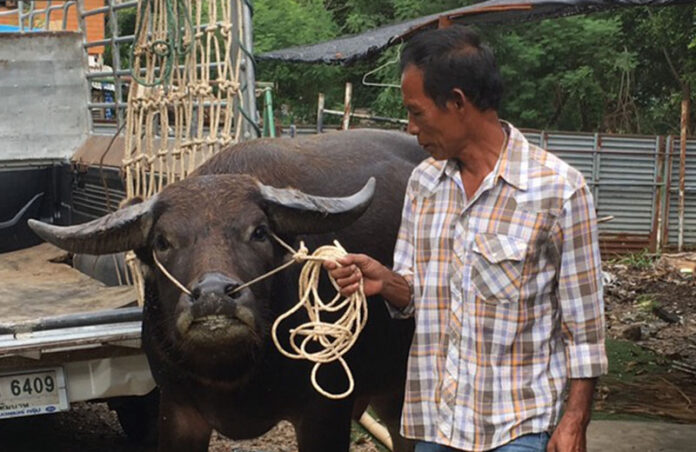
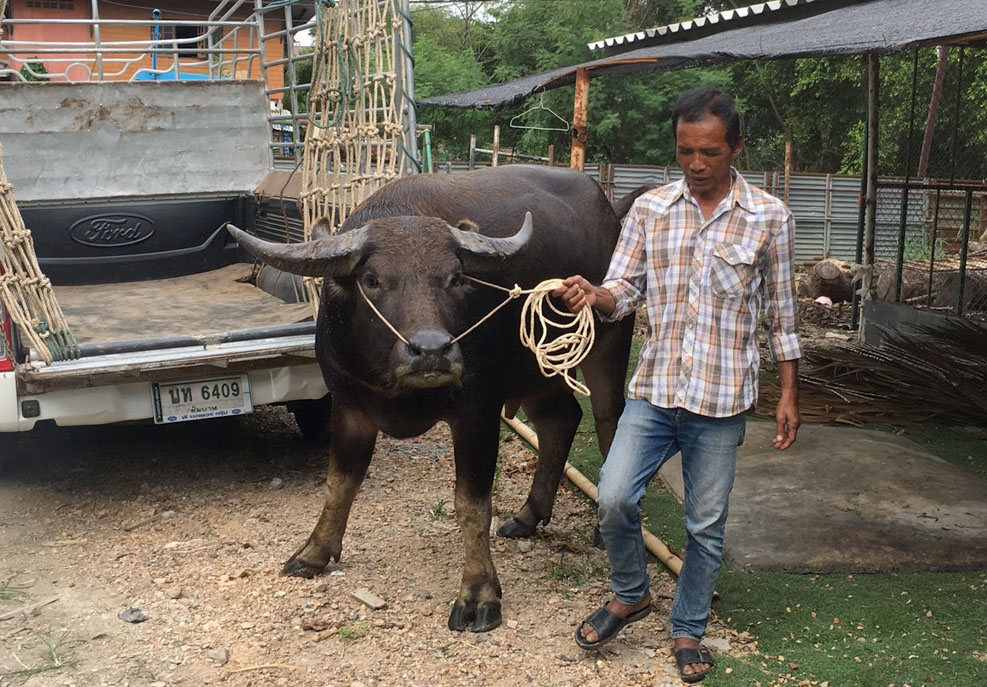
Tongkum is led off the truck that brought him from Chai Nat province Tuesday and into Bangkok’s Khan Na Yao Police Station.
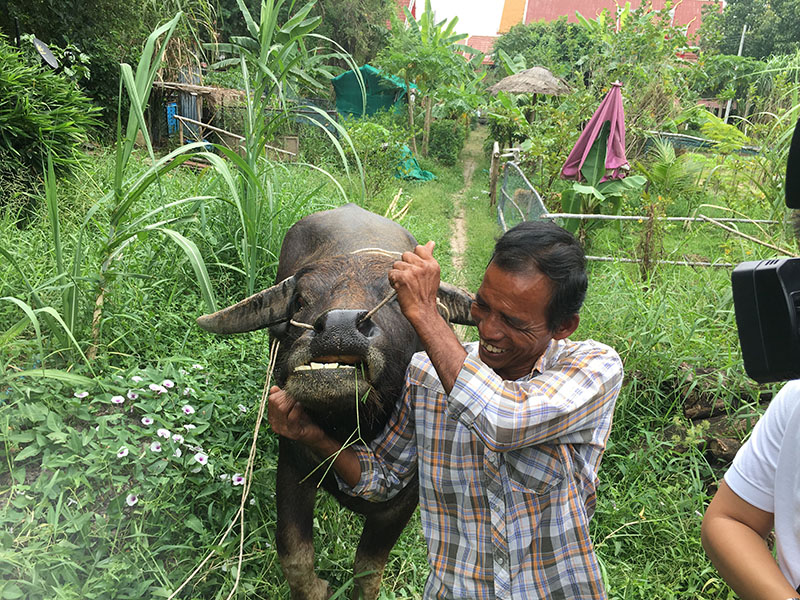
CHAI NAT – An impoverished farmer in the central province of Chai Nat was in tears Tuesday morning when police arrived to confiscate the beloved buffalo he’d just purchased with the help of online donors.
Surat Phaeoket had to lead Tongkum the buffalo onto a truck after the animal’s seller, a local government official, complained to police he had not wanted to sell the now-famous buffalo. Police said the farmer committed fraud by crowdfunding the money used to buy the buffalo and have frozen his accounts.
“I don’t want to cry anymore,” an upset sounding Surat said several hours later. “When leading him onto the truck, I told him that he will come back to our home to be with me together soon. I told him to wait just a few more days.”
Tongkum was taken to Bangkok’s Khan Na Yao Police Station, where he will remain until the court decides who owns him.
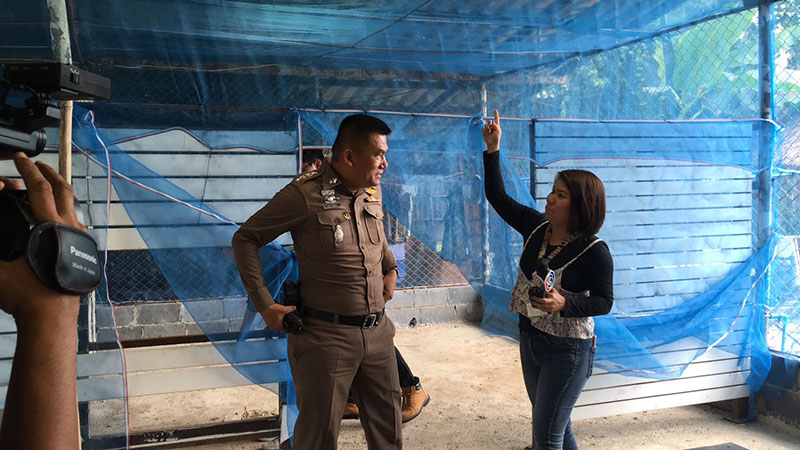
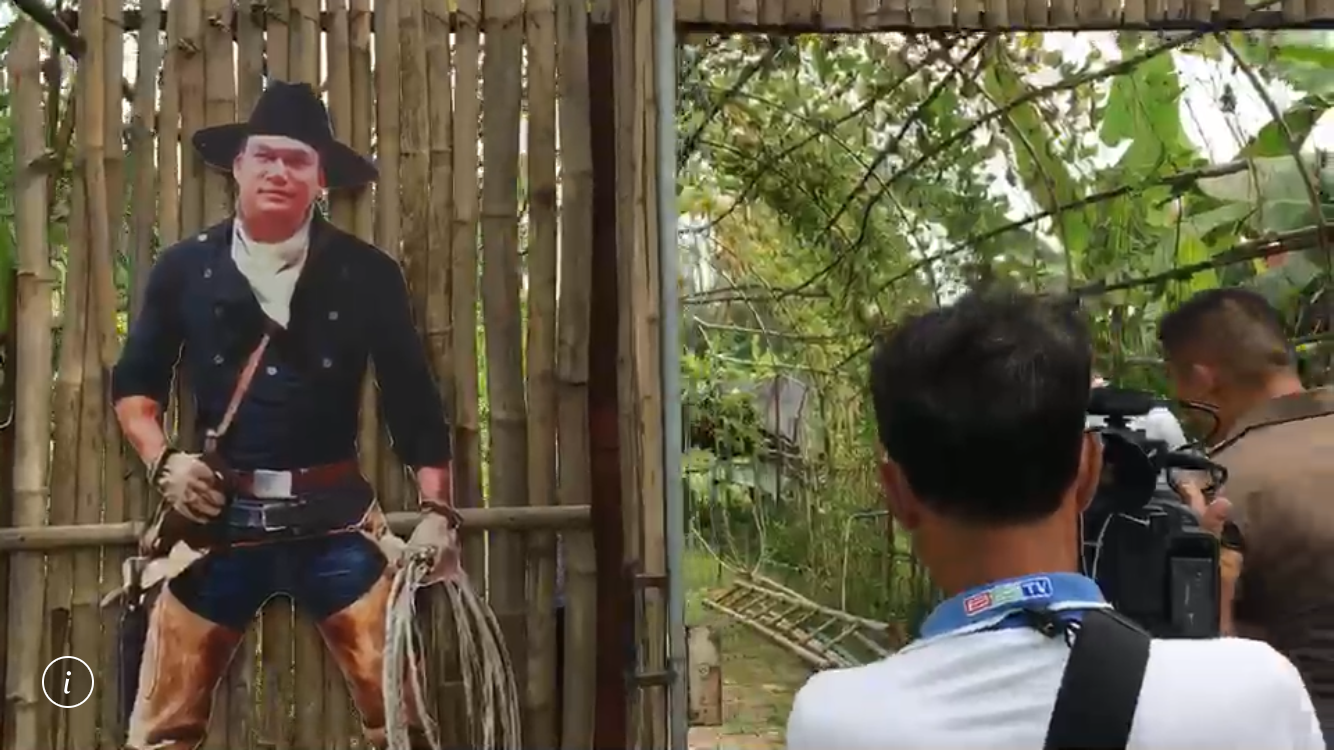
Around back, reporters were led past a cutout of Col. Singh Singhdet, the station chief, in cowboy gear to a corral containing a shed wrapped with mosquito netting. There, officers said they would take turns trying to bring the smile back to Tongkum’s face.
“The environment should still be good for him,” said one cop on the scene now tasked with buffalo care. “It’s still a natural environment.”
Surat said the animal’s well-being will suffer.
Tongkum at the Khan Na Yao Police Station on Tuesday.
“I’m so worried about him. He needs to play in water all the time and roll in mud so he can be protected from mosquitoes. He also eats a lot of grass,” Surat said.
Singh said he believes Surat misled the public about the seriousness of Tongkum’s situation.
“Surat exploited people’s pity to solicit money, which is illegal,” Singh said.
Boonlert Kanpakdee, Tongkum’s former owner and a lesser local official in Chai Nat, called Surat a beggar Monday for appealing online for the 100,000 baht he used to buy Tongkum after the pairbecame internet famous.
Surat denies making any misleading statements in his public appeal.
“I will do my best to show my innocence. I will ask for legal help,” Surat said. He said he did not have legal representation.
Boonlert was accompanied Monday to the police station by a media-hungry attorney who said he’d donated 100 baht and had now taken it back. He and one other had come forward to reclaim their donations, Singh said.
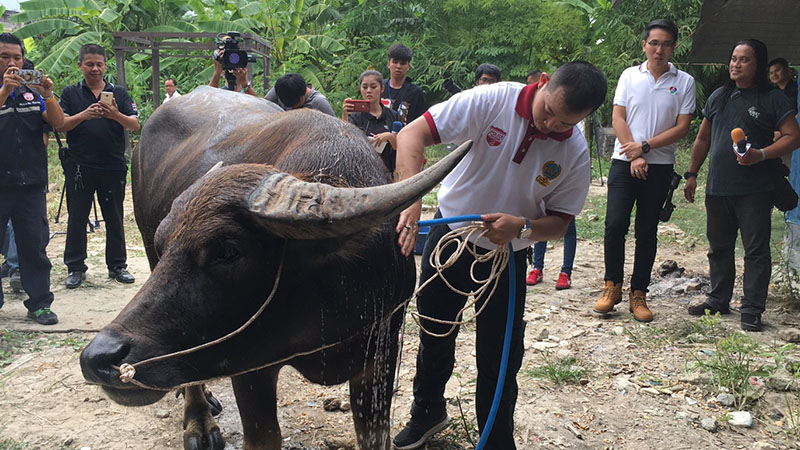
A police officer washes Tongkum on Tuesday at the Khan Na Yao police station.
Singh said that Boonlert did indeed name a price of 100,000 baht for Tongkum. He said that Surat posted a video clip of himself crying and asking for money lest Tongkum be killed.
Surat denies making such a clip. None could be found online. He did make appeals for support through various media channels, some of which embellished his tale including a few news accounts that the buffalo faced the slaughterhouse.
“Surat really does love buffaloes. He wanted this buffalo so much because he has a female one he wants [Tongkhum] to mate with,” Singh said. “If both sides fight it out, then he’ll stay here for a long time.”
Col. Singh Singhdet in Tongkum’s shed at the Khan Na Yao Police Station.
This illustration made available by NASA in October 2016 shows an illustration of NASA's InSight lander about to land on the surface of Mars. Image: NASA
CAPE CANAVERAL, Florida — A NASA spacecraft designed to drill down into Mars’ interior landed on the planet Monday after a perilous, supersonic plunge through its red skies, setting off jubilation among scientists who had waited in white-knuckle suspense for confirmation to arrive across 100 million miles of space.
Flight controllers at NASA’s Jet Propulsion Laboratory in Pasadena, California, leaped out of their chairs, screaming, dancing and hugging, upon learning that InSight had arrived on Mars, the graveyard for a multitude of previous missions.
“Touchdown confirmed!” a flight controller called out just before 3 p.m. EST, instantly dispelling the anxiety that had gripped the control room as the spacecraft made its six-minute descent.
Because of the distance between Earth and Mars, it took eight minutes for confirmation to arrive, relayed by a pair of tiny satellites that had been trailing InSight throughout the six-month, 300-million-mile (482-million-kilometer) journey.
The two satellites not only transmitted the good news in almost real time, they also sent back InSight’s first snapshot of Mars just 4½ minutes after landing.
The picture was speckled with dirt because the dust cover was still on the lander’s camera, but the terrain around the spacecraft looked smooth and sandy with just one sizable rock visible – pretty much what scientists had hoped for. Better photos are expected in the days ahead, after the dust covers come off.
It was NASA’s – indeed, humanity’s – eighth successful landing at Mars since the 1976 Viking probes, and the first in six years. NASA’s Curiosity rover, which arrived in 2012, is still on the move on Mars.
“Flawless,” declared JPL’s chief engineer, Rob Manning. “This is what we really hoped and imagined in our mind’s eye,” he added. “Sometimes things work out in your favor.”
NASA Administrator Jim Bridenstine, presiding over his first Mars landing as the space agency’s boss, said: “What an amazing day for our country.”
InSight, a USD$1 billion international project, includes a German mechanical mole that will burrow down 16 feet (5 meters) to measure Mars’ internal heat. The lander also has a French seismometer for measuring quakes, if they exist on our smaller, geologically calmer neighbor. Another experiment will calculate Mars’ wobble to reveal the makeup of the planet’s core.
“In the coming months and years even, history books will be rewritten about the interior of Mars,” said JPL’s director, Michael Watkins.
Seven hours after touchdown, NASA reported that InSight’s vital solar panels were open and recharging its batteries.
Over the next few “sols” – or Martian days of 24 hours, 39½ minutes – flight controllers will also assess the health of InSight’s all-important robot arm and its science instruments.
Many Mars-bound spacecraft launched by the U.S., Russia and other countries have been lost or destroyed over the years, with a success rate of just 40 percent, not counting InSight.
NASA went with its old, straightforward approach this time, using a parachute and braking engines to get InSight’s speed from 12,300 mph (19,800 kph) when it pierced the Martian atmosphere, about 77 miles (114 kilometers) up, to 5 mph (8kph) at touchdown. The danger was that the spacecraft could burn up in the atmosphere or bounce off it.
The three-legged InSight settled on the western side of Elysium Planitia, the plain that NASA was aiming for. Project manager Tom Hoffman said the spacecraft landed close to the bull’s-eye, but NASA did not have yet have the final calculations.
He said that it was hard to tell from the first photo whether there were any slopes nearby, but that it appeared he got the flat, smooth “parking lot” he was hoping for.
Museums, planetariums and libraries across the U.S. held viewing parties to watch the events unfold at JPL. NASA TV coverage was also shown on the giant screen in New York’s Times Square, where crowds huddled under umbrellas in the rain.
The 800-pound (360-kilogram) InSight is stationary and will operate from the same spot for the next two years, the duration of a Martian year. It will take months to set up and fine-tune the instruments, and lead scientist Bruce Banerdt said he doesn’t expect to start getting a stream of solid data until late next spring.
“It’s going to be awesome. I can’t wait to start seeing marsquakes,” Hoffman said.
Mars’ well-preserved interior provides a snapshot of what Earth may have looked like following its formation 4.5 billion years ago, according to Banerdt. While Earth is active seismically, Mars “decided to rest on its laurels” after it formed, he said.
By examining and mapping the interior of Mars, scientists hope to learn why the rocky planets in our solar system turned out so different and why Earth became a haven for life.
Still, there are no life detectors aboard InSight. NASA’s next mission, the Mars 2020 rover, will prowl for rocks that might contain evidence of ancient life.
The question of whether life ever existed in Mars’ wet, watery past is what keeps driving NASA back to the fourth rock from the sun.
BANGKOK — The trial has begun for a Thai billionaire construction tycoon accused of poaching an endangered black panther and other animals in a wildlife sanctuary.
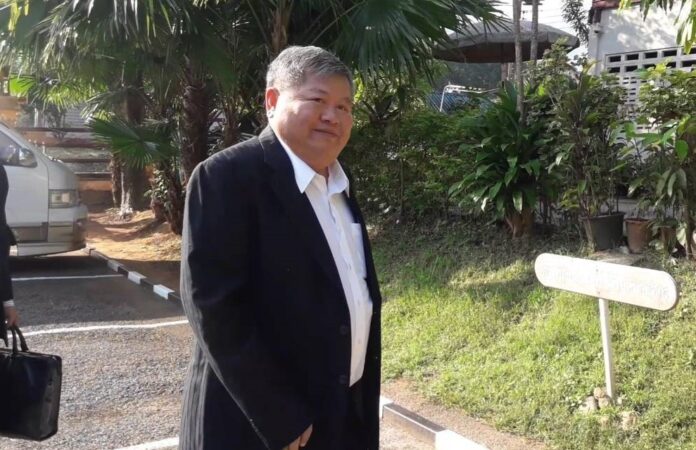
Premchai Karnasuta, president of one of Thailand’s largest construction companies, appeared at the Kanchanaburi Provincial Court on Tuesday for the first witness testimony hearing in his case.
He was arrested in February after park rangers found that he and three others had set up camp at the Thung Yai Naraesuan Wildlife Sanctuary, where they were found with guns and the carcasses of a black panther and other animals.
The group faces charges of hunting protected animals and violating gun laws in a case that is being scrutinized in Thailand, where it is not unusual for the rich and well-connected to escape justice.
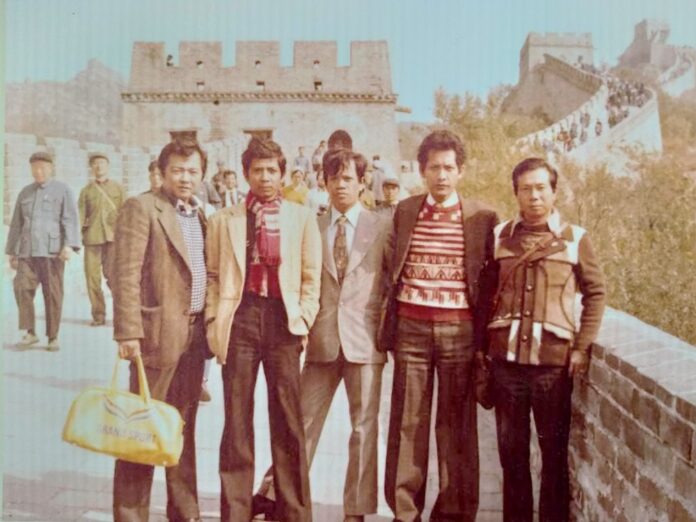
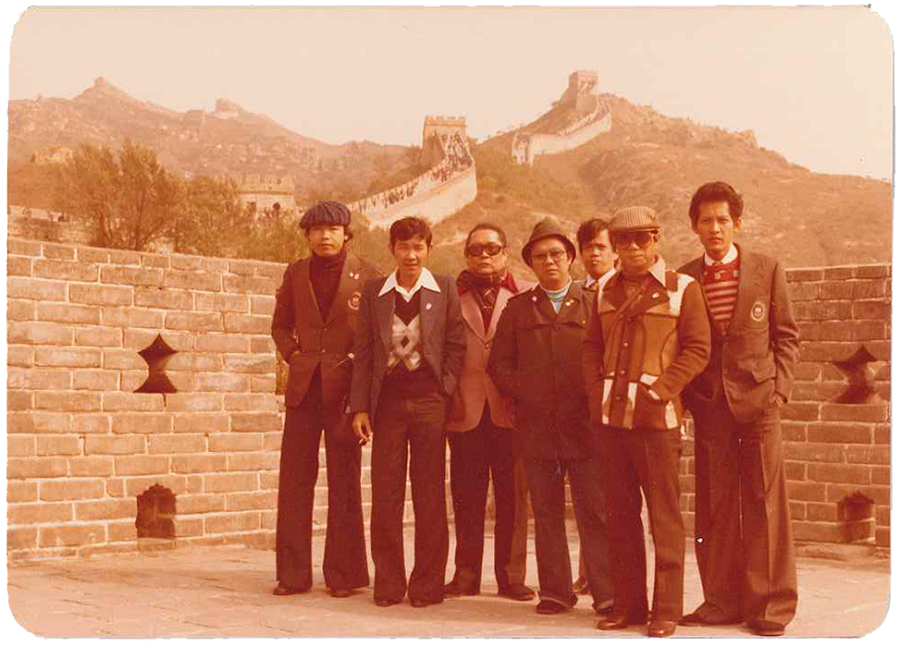
Thai athletes pose for a photo on the Great Wall of China in the 1970s.
BANGKOK — Wanwai Phathanothai was 12 when he was told to prepare to go study in the West. It was 1956 at the height of the Cold War which pit Thailand against the spreading flames of Communist upheaval spreading throughout the region.
It was just days before his departure that his father, who served as an advisor to the prime minister at the time, revealed his true destination: Wanwai was going to China, the backwater Communist state that Thailand had cut ties with seven years earlier during the Red Scare.
It turned out to be no ordinary visit. Wanwai and his sister, 8, were to be held as hostages by the Chinese while Thai officials embarked on a secret mission to reopen relations. They would end up staying there for 13 years, living under the protection of Premier Zhou En Lai as his adopted children.
“I have to give credit to my mother. If my mother didn’t let me go, if she told my father to divorce her and have another child of his own to serve as hostage, the mission might not have succeeded,” Wanwai said at a panel discussion Thursday.
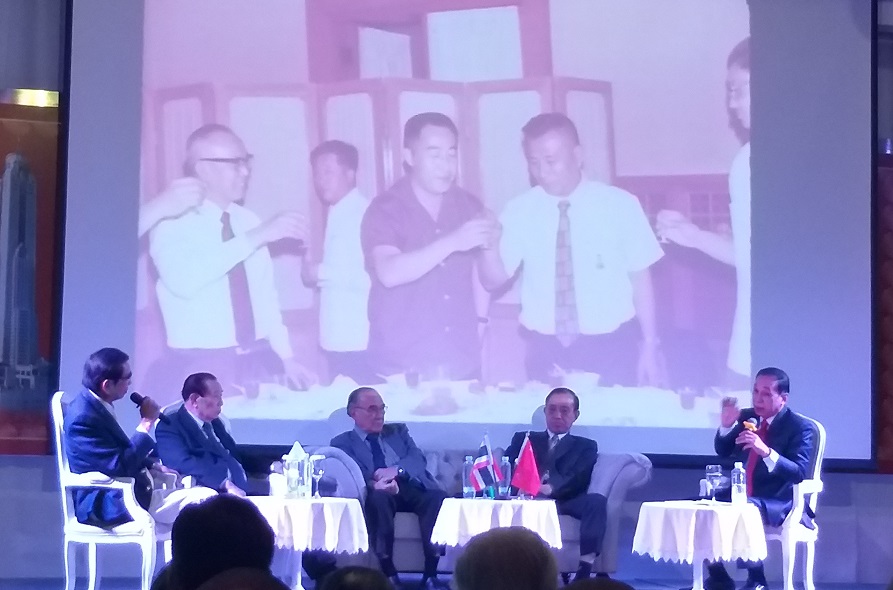
Wanwai spoke alongside other figures who played key roles behind Thailand’s historic decision to formally revive ties with China in 1975. The panel was also a kickoff for an exhibition at Baiyoke Sky Hotel that highlights the complex relationship between the two nations.
Wanwai Phathanothai and other panelists share their stories of Thailand’s effort to reopen relations with China. Photograph displayed on the screen shows Chinese officials giving a welcome toast to Thai athletes.
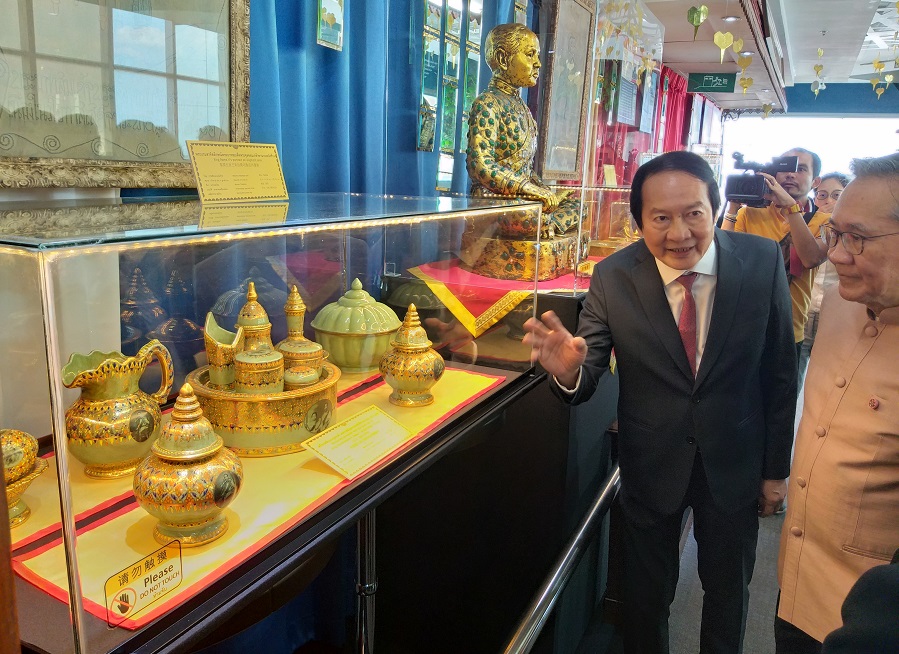
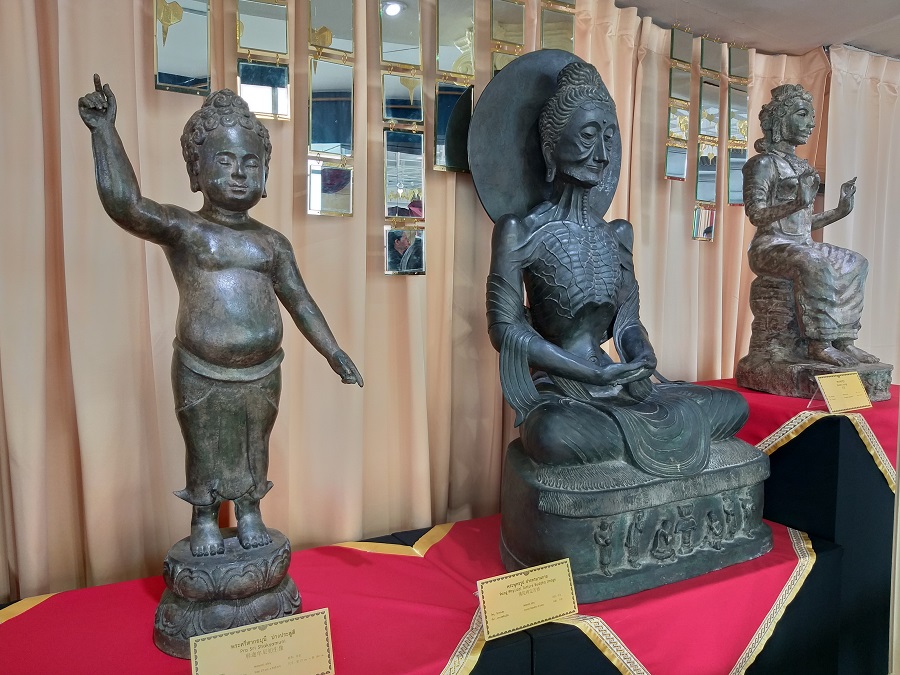
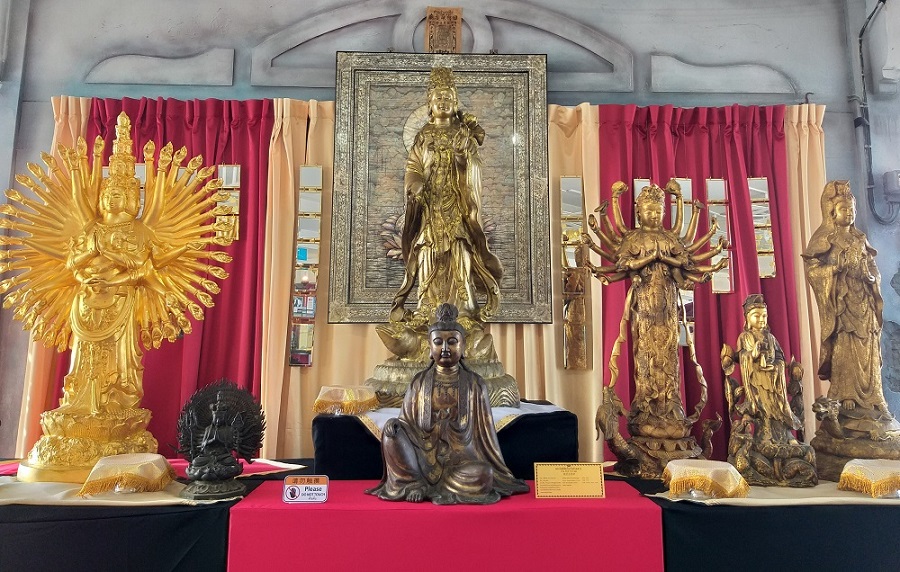
The exhibit features royal and Buddhist artifacts made by Chinese craftsmen, showing a long history of cultural connection dating back hundreds of years.
There are treasures like a set of benjarong, or traditional Thai porcelain bowls King Rama V commissioned from China – only Chinese artists knew how to make them in the jade color desired by the monarch.
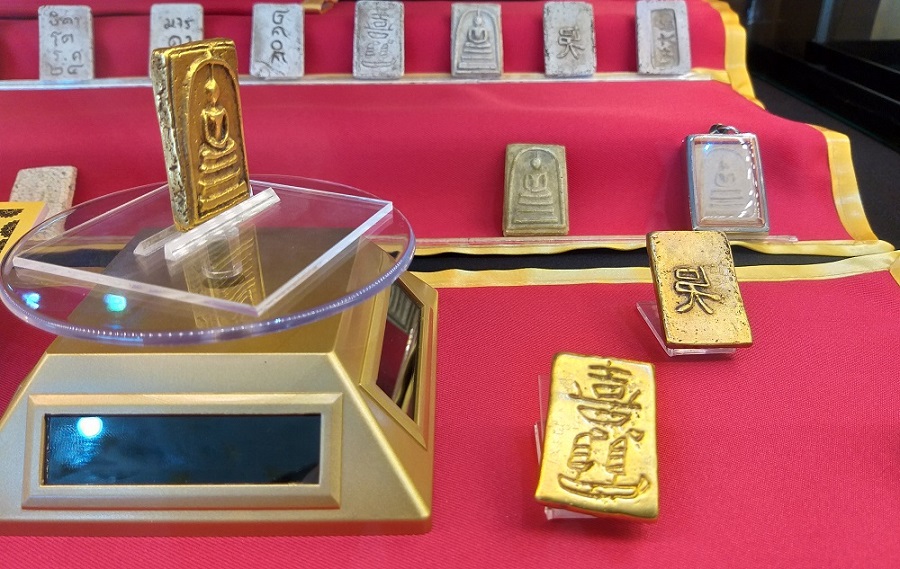
On another shelf sit rows of amulets, some cast in pure gold, made by diaspora craftsmen that settled in Thailand and adopted the local faith. The back of each is imprinted with the owner’s clan name in Chinese characters. They were all personally blessed by Somdej Toh, a renowned monk whose magical charms are now worth millions.
Hot and Cold History
But colorful relics are only half the story. Glittering displays are accompanied by photographs that mark the key milestones in the long and difficult road to reconnect the two countries.
Bangkok cut ties with Beijing in 1949 after Mao Zedong took power over the wartorn and impoverished nation. As an ally of the United States, Thailand set itself as a bulwark against Red influence in Indochina and passed a law that banned any action that aided Communists, including unsanctioned travel and contact with China.
Wanwai’s father, Sang Phathanothai, was an ardent anti-Communist, like his boss at the time, Prime Minister Plaek Pibulsongkram. But Sang soon came to recognize China as a potential superpower that Thailand should seek friendship with, instead of relying solely on the Americans.
Sino-Thai Buddhist Arts
1 of 5
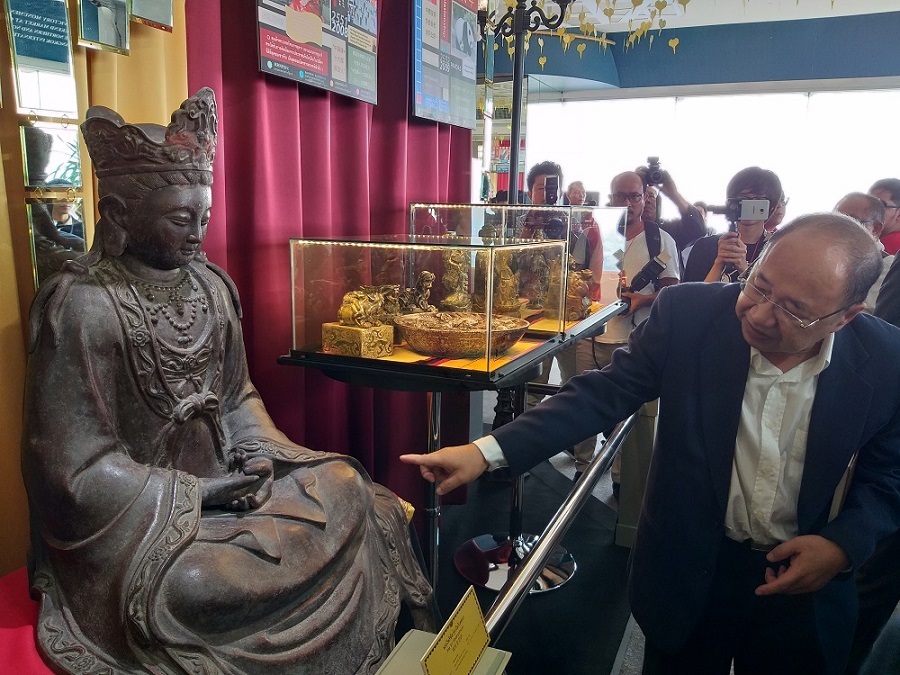
Buddhist sculptures made by Chinese craftsmen on display at Baiyoke Sky Hotel.
Buddhist amulets made by Chinese who settled in Thailand. One of them shows a Chinese junk on its back.
Foreign Affairs Minister Don Pramudwinai, right, is given a tour of the artifacts.
Buddhist sculptures made by Chinese craftsmen on display at Baiyoke Sky Hotel.
Buddhist sculptures made by Chinese craftsmen on display at Baiyoke Sky Hotel.
“He believed that one cannot draw water from faraway to douse fires that start close to home,” Wanwai said at Thursday’s event. “He changed from hating the Chinese to finding a way to befriend them.”
And so, with Plaek’s approval, Sang paved a way for that friendship and sent his own children as a guarantee of his goodwill. The mission had to be kept secret, lest it drew fury from the American allies and conservative factions back home.
But Plaek was later overthrown by Sarit Thanarat, a military despot whose anti-Red campaign saw dozens jailed or executed for the most remote connection to the Communists. Sang himself was caught in the purge and imprisoned, stranding Wanwai and his sister Sirin in China.
Opening the Door
It was only after Sarit’s successors were ousted by a popular uprising in 1973 that Thai officials give it another try.
A task force was formed for the mission. They include diplomat Anand Panyarachun, who used his post as Thai ambassador to the UN to open dialog with his Chinese counterpart, and a junior official called Don Pramudwinai, who flew to Beijing with an advance party. Don now heads the Foreign Affairs Ministry.
By that time, the climate of geopolitics in the region was changing. In 1972, US president Richard Nixon stunned the world by his surprise visit to Beijing, leading to a thaw in the relationship between the two superpowers.
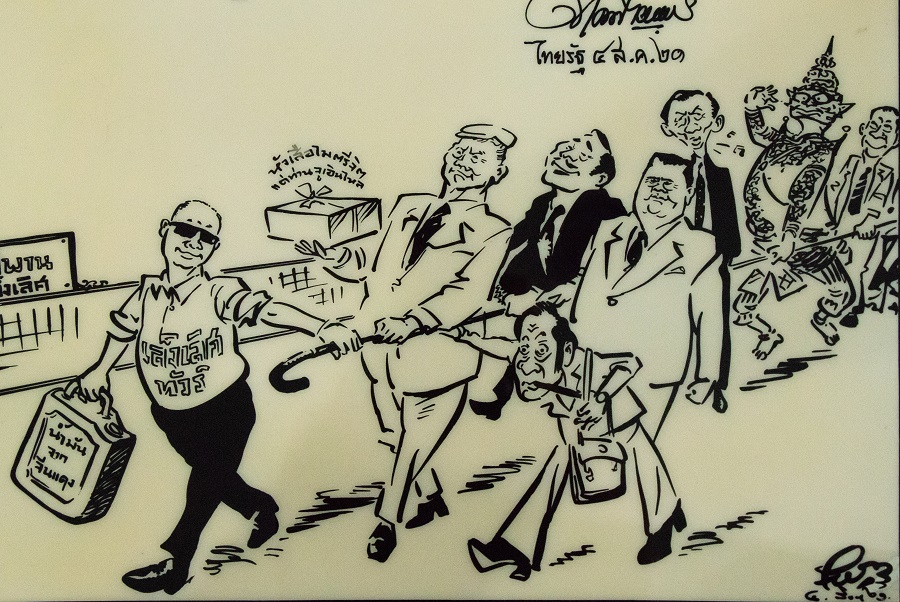
But even before the officials got to work, a Sino-Thai businessman got into the game first. Lenglert Baiyoke, the late founder of hotel chain Baiyoke Group, was convinced he had to take action to earn the Chinese trust.
He managed to negotiate sales of cheap petroleum from China. Later, when Chinese invited Thai athletes to compete in a badminton tournament there, Lenglert and his friends pooled in money to pay for their travel. The Thai government had refused to sponsor the trip.
First Delegates to China
1 of 4
A Thairath newspaper parody cartoon depicts Lenglert Baiyoke, left, as a tour group leader pulling Thai officials toward China.
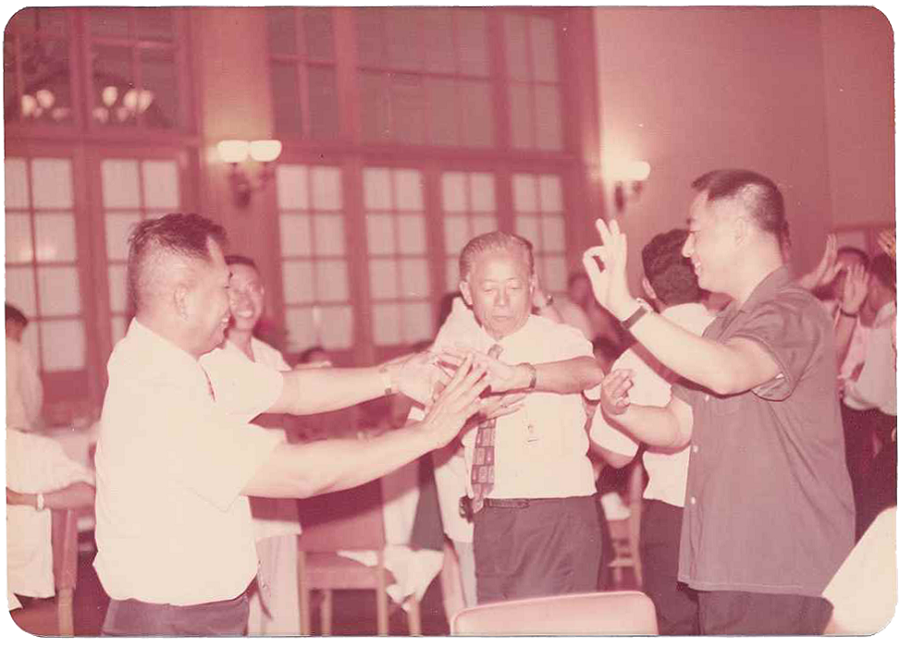
Thai athletes and Chinese officials perform a Thai traditional dance.
Thai athletes pose for a photo on the Great Wall of China in the 1970s.
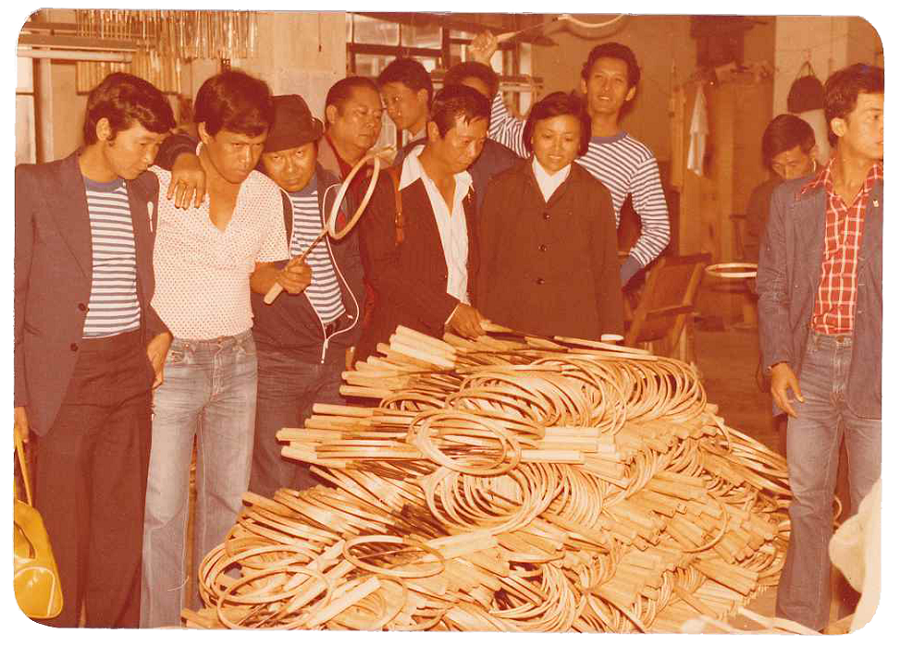
Thai athletes check out Chinese-made badminton rackets.
“I was so frightened because all I knew about China was from posters on Ratchadamnoen Avenue,” Weerapot Phumiphuti, one of the invited athletes, recalled at the panel. “They showed hammer and sickle dripping in blood. The Chinese were demons cutting off people’s heads.”
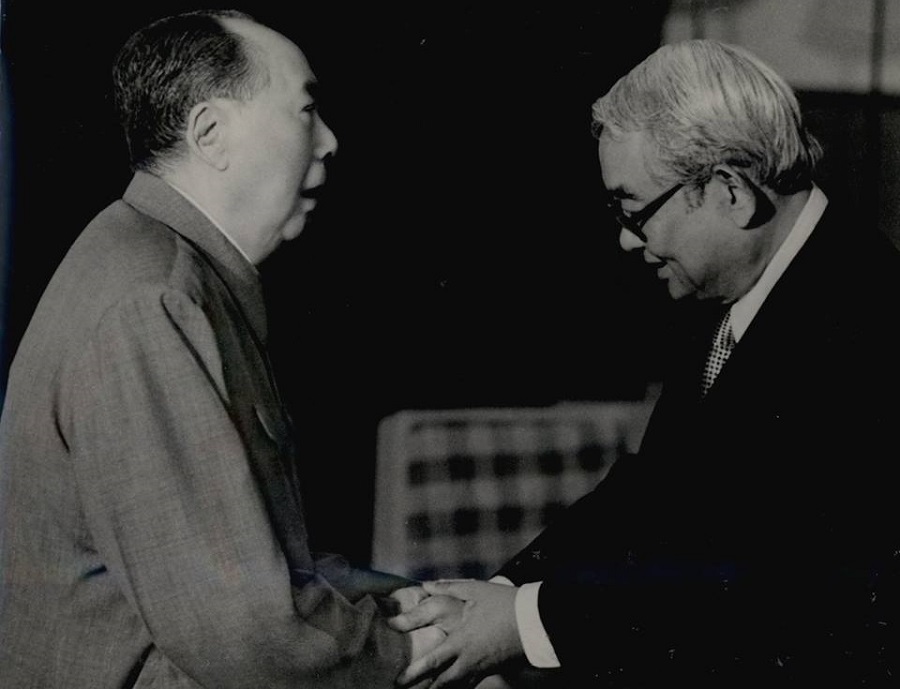
Like “ping-pong diplomacy,” sports provided a safe harbor for rapprochement until a fateful day in July 1975, when Prime Minister Kukrit Pramoj traveled to Beijing to shake hands with Chairman Mao and announce the resumption of Thai-Chinese diplomatic ties.
Wanwai said Premier Zhou, then 76 and bedridden for days at home, defied doctor’s orders and returned that day just to witness the signing ceremony.
“If you remember that day, he could barely walk. That was because he had swollen feet.” Wanwai said. Zhou died the following year.
Ties That Bind – How Tight?
As the exhibition shows, Thailand and China are enjoying unprecedented levels of cooperation. Chinese engineers are set to build Thailand’s first high-speed railway, trade values between the two reached 80 billion USD and Thai authorities predict 10 million Chinese tourists will have visited the kingdom by the year’s end.
Forty-years after the relations were rekindled, China also transformed itself from an isolated country whose population lived in abject poverty to an economic and emerging military superpower that inspires both admiration and unease in the region.
This has led some analysts to fear that Thais will pay for their over-reliance on China, which has been accused of bringing country after country to heel through its debt empire. In neighboring Malaysia, similar investment and infrastructure deals were immediately halted following the election of Prime Minister Mohammed Mahathir.
Kukrit Goes to China
1 of 6
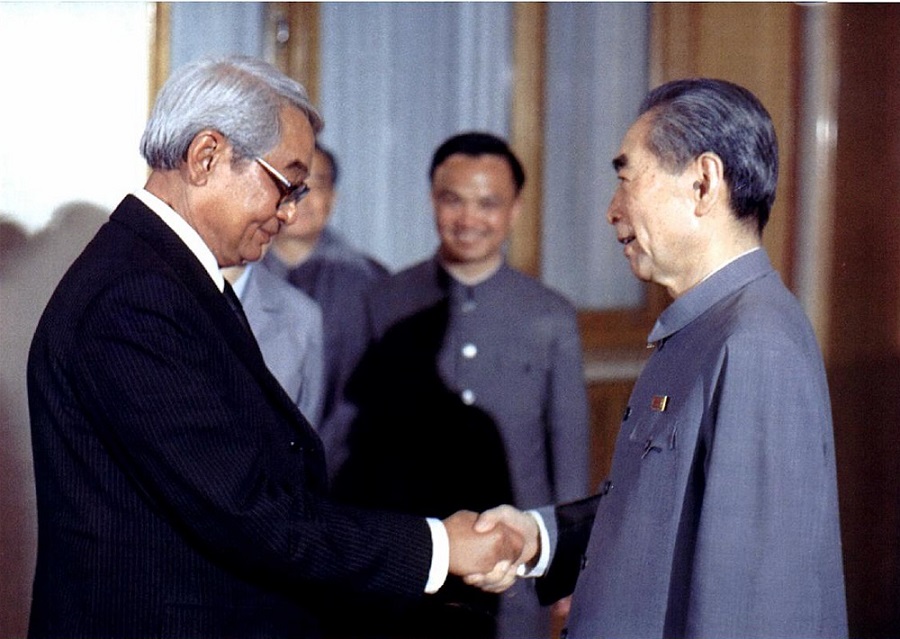
Chinese paramount leader Mao Tse Tung and Thai premier Kukrit Pramoj.
Thai prime minister Kukrit Pramoj and his Chinese counterpart Zhou En Lai.
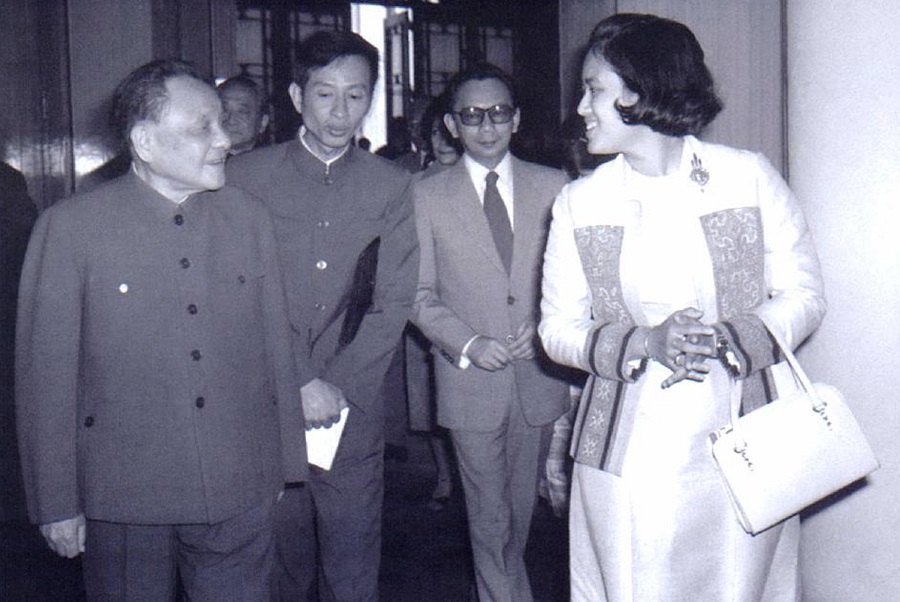
Chinese president Deng Xiaoping and Princess Sirindhorn.
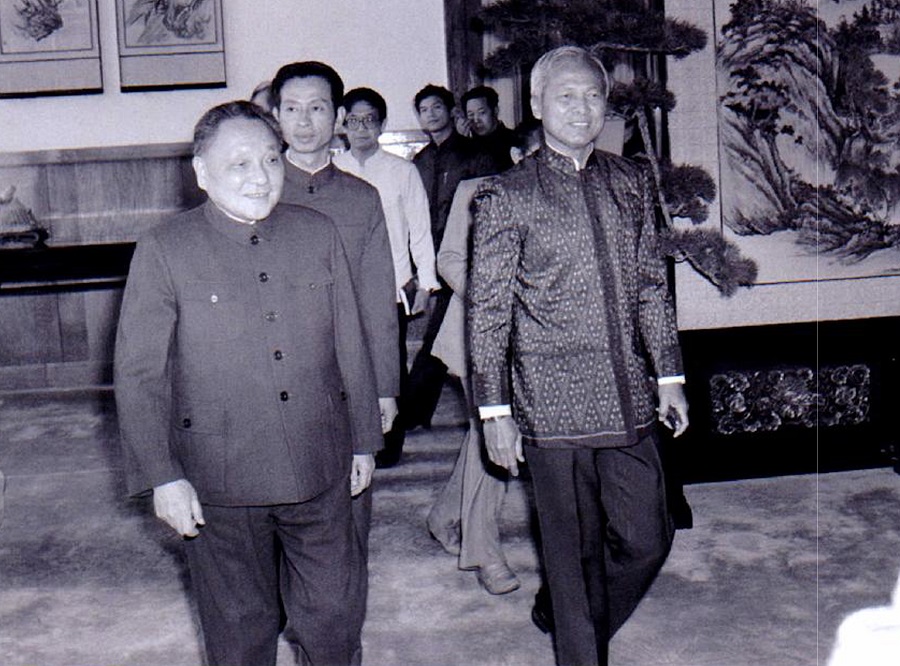
Chinese paramount leader Deng Xiaoping and Thai prime minister Prem Tinsulanonda.
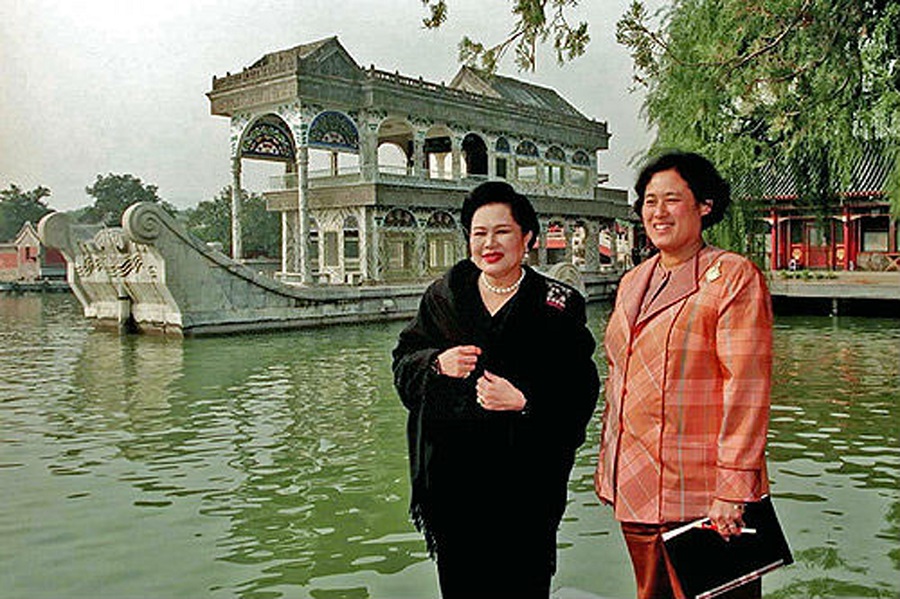
Queen Sirikit and Princess Sirindhorn at the Summer Palace in Beijing.
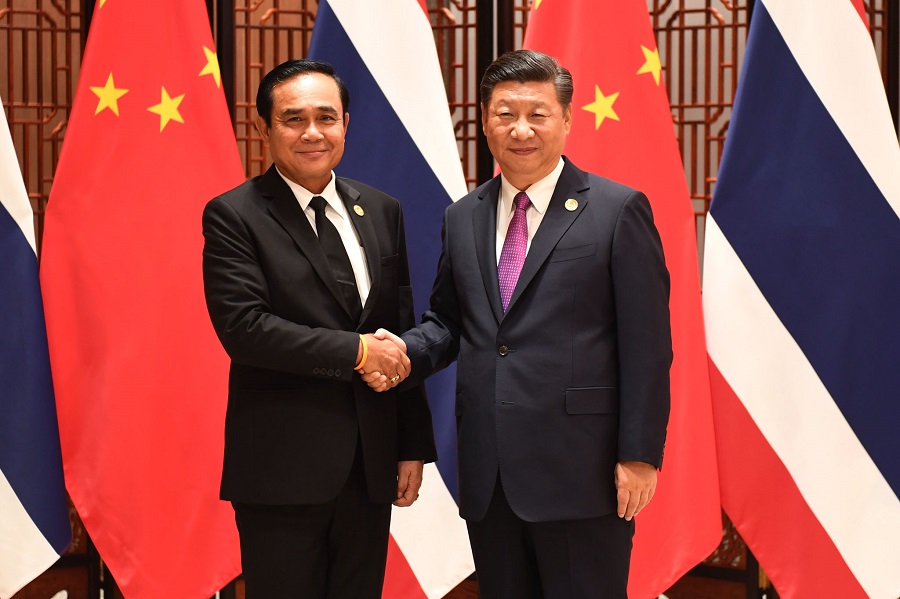
Junta chairman Prayuth Chan-ocha and Chinese president Xi Jinping.
China scholar Wasana Wongsurawat has warned that Chinese businesses are planning to take over hotels in Chiang Mai and Phuket. Last week, the government said it’s considering a law to allow Chinese e-commerce giant Alibaba to own properties on the eastern seaboard, raising concern of Chinese dominion.
Speaking at the exhibition’s inaugural event, Guan Mu, a former ambassador to Thailand, urged the two countries to look beyond differences and occasional pitfalls to forge even closer ties.
“Even siblings fight with each other, what would you expect from countries? Conflicts and difference are normal,” Guan said in Thai.
“Precious Ancient Chinese Buddhist Arts” is held on the 77th floor of Baiyoke Sky Hotel. It opens 10am to 10pm everyday and runs through Dec. 22. Tickets cost 400 baht and come with an access to the rooftop observation deck.
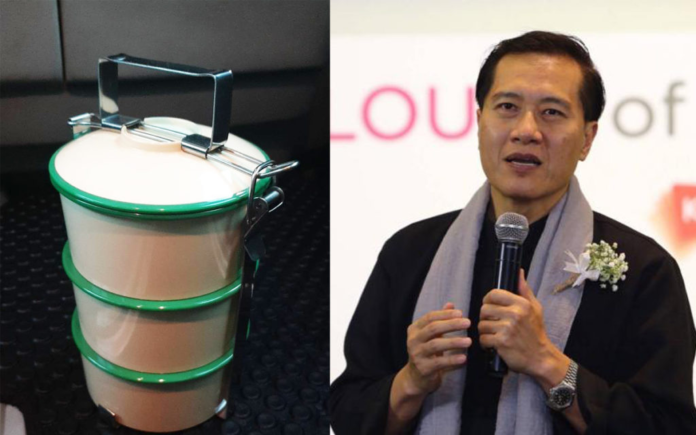
Left: A "pinto" tiffin carrier. Right: Tourism Minister Weerasak Kowsurat.
BANGKOK — Those planning a picnic or camping trip in Thailand’s national parks are being encouraged to bring their food in lunch boxes.
Tourism officials want people to use tiffin carriers – pintos in Thai – to take their meals into the parks instead of plastic bags, which have been nominally banned.
Tourism Minister Weerasak Kowsurat said Tuesday that vertical-layered pinto had been ordered to be distributed to park officials as a watershed move. He said the melamine containers would soon be available to tourists in parks nationwide.
With 150 million Thai tourists per year and 35 million foreign tourists coming this year alone, he stressed that this is another step toward responsible tourism.
“What we need is the courage to change,” Weerasak said.
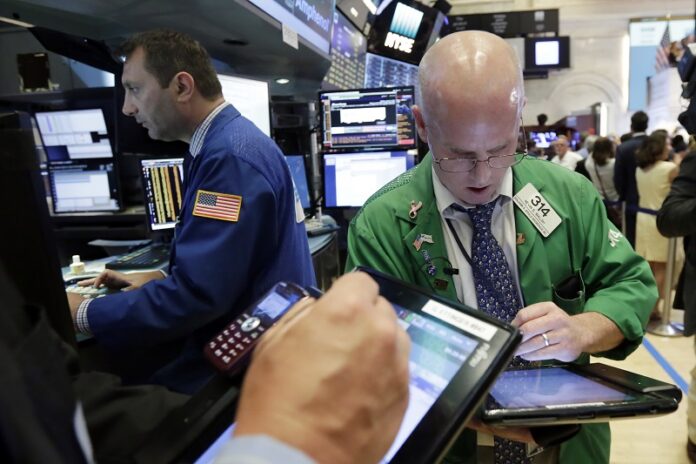
Trader Kevin Walsh, right, works in 2017 on the floor of the New York Stock Exchange. Photo: Richard Drew / Associated Press
SINGAPORE — Asian markets clocked more gains Tuesday ahead of a meeting between the U.S. and China at the Group of 20 summit this week, despite President Donald Trump’s comments that it’s “highly unlikely” he’ll hold off on raising tariffs as Beijing requested.
Keeping Score
Thailand’s SET was trading at 1,634.19 on Tuesday morning, a 0.2 percent increase. Japan’s benchmark Nikkei 225 added 0.1 percent to 21,843.37 and South Korea’s Kospi rose 0.4 percent to 2,090.35. The Shanghai Composite was up 0.3 percent at 2,582.72. Australia’s S&P/ASX 200 gained 0.6 percent to 5,702.70. Hong Kong’s Hang Seng index bucked the trend, giving up 0.4 percent to 26,269.33. Shares rose in Malaysia but fell in Taiwan, Singapore and Indonesia.
Wall Street
Technology and retail companies led a recovery of U.S. stocks, which suffered big losses last week. Monday marked the first full trading day of the holiday shopping season. Amazon surged 5 percent and Nike gained 1.7 percent. The S&P 500 index closed 1.6 percent higher at 2,673.45. The Dow Jones Industrial Average rose 1.5 percent to 24,640.24 and the Nasdaq composite jumped 2.1 percent to 7,081.85. The Russell 2000 index of smaller-company stocks added 1.2 percent to 1,505.96.
Trump on Tariffs
In an interview with the Wall Street Journal, Trump said it is “highly unlikely” he’ll reverse plans to raise tariffs on USD$200 billion of Chinese goods in January. He also threatened to impose tariffs on more Chinese goods if he fails to broker a deal with Chinese President Xi Jinping this week. The two leaders are set to meet on the sidelines of G-20 summit in Argentina, which takes place on Friday and Saturday. Trump also said that the new tariffs would “maybe” apply to iPhones and laptops imported from China. Apple slumped 2.1 percent to $170.93 in after-hours trading, erasing its gains in the U.S. session.
Analyst’s Take
The rebound in U.S. equities “is set to be tested as Trump has resumed his confrontational approach ahead of G-20 meeting with Xi,” Zhu Huani of Mizuho Bank said in a market commentary. “This has sent a cautious mood to the market as a grim reminder that hurdle remains high in the forthcoming Trump-Xi trade talk,” she added.
Energy
Oil futures fell on concerns over rising stockpiles and slowing economic growth. OPEC representatives and other major oil producers will meet in Vienna next week to discuss a possible cut in production. Benchmark U.S. crude shed 33 cents to $51.30. The contract added $1.21 to close at $51.63 in New York on Monday. Brent crude, the international standard, lost 21 cents to $60.27. It gained $1.68 to $60.48 in London.
Currencies
The dollar weakened to 113.45 yen from 113.59 yen late Monday. The euro rose to $1.1335 from $1.1327.
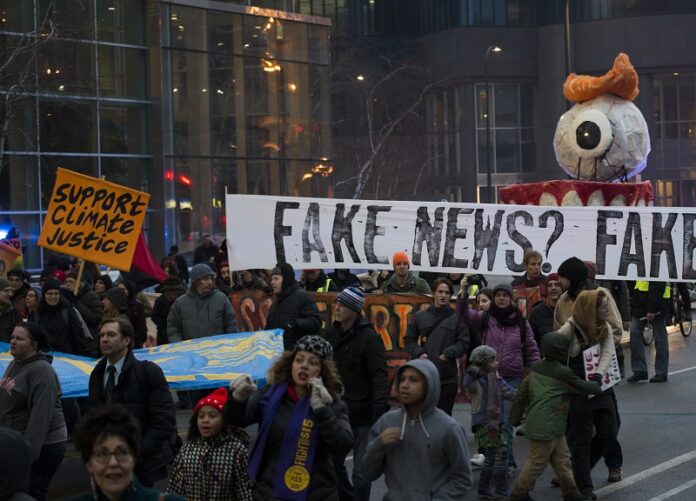
People in 2017 march through Minneapolis, Minnesota to protest the inauguration of Republican President Donald Trump. Photo: Fibonacci Blue / Wikimedia Commons
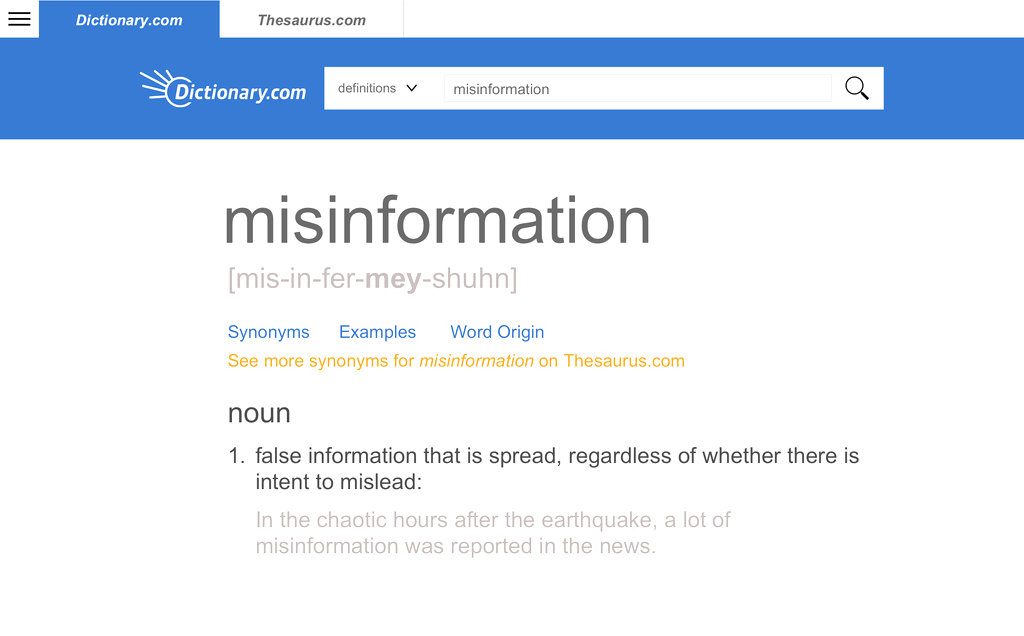
NEW YORK — Misinformation, as opposed to disinformation, was chosen Monday as Dictionary.com’s word of the year on the tattered coattails of “toxic,” picked earlier this month for the same honor by Oxford Dictionaries in these tumultuous times.
Jane Solomon, a linguist-in-residence at Dictionary, said in a recent interview that her site’s choice of “mis” over “dis” was deliberate, intended to serve as a “call to action” to be vigilant in the battle against fake news, flat earthers and anti-vaxxers, among other conduits.
It’s the idea of intent, whether to inadvertently mislead or to do it on purpose, that the Oakland, California-based company wanted to highlight. The company decided it would go high when others have spent much of 2018 going low.
“The rampant spread of misinformation is really providing new challenges for navigating life in 2018,” Solomon told The Associated Press ahead of the word of the year announcement. “Misinformation has been around for a long time, but over the last decade or so the rise of social media has really, really changed how information is shared. We believe that understanding the concept of misinformation is vital to identifying misinformation as we encounter it in the wild, and that could ultimately help curb its impact.”
In studying lookups on the site that trended this year, Dictionary noticed “our relationship with truth is something that came up again and again,” she said.
For example, the word “mainstream” popped up a lot, spiking in January as the term “mainstream media,” or MSM, grew to gargantuan proportions, wielded as an insult by some on the political right. Other words swirling around the same problem included a lookup surge in February for “white lie” after Hope Hicks, then White House communications director, admitted to telling a few for President Donald Trump.
This screen image released by Dictionary.com shows an entry for the word misinformation, which Dictionary.com announced as its 2018 Word of the Year. Image: Dictionary.com
The word “Orwellian” surfaced in heavy lookups in May, after a statement attributed to White House press secretary Sarah Huckabee Sanders accused the Chinese government of “Orwellian nonsense” in trying to impose its views on American citizens and private companies when it declared that United Airlines, American Airlines and other foreign carriers should refer to Taiwan, Hong Kong and Macau as part of China in public-facing materials, such as their websites.
Misinformation, Solomon said, “frames what we’ve all been through in the last 12 months.” In that vein, the site with 90 million monthly users has busied itself adding new word entries for “filter bubble,” ”fake news,” ”post-fact,” ”post-truth” and “homophily,” among others. Other word entries on the site have been freshened to reflect timely new meanings, including “echo chamber.”
The company’s runners-up for the top honor include “representation,” driven by the popularity of the movies “Black Panther” and “Crazy Rich Asians,” along with wins during the U.S. midterm elections for Muslim women, Native Americans and LGBTQ candidates.
But the rise of misinformation, Solomon said, stretches well beyond U.S. borders and Facebook’s role in disseminating fake news and propaganda in the Cambridge Analytica scandal. The use of Facebook and other social media to incite violence and conflict was documented around the globe in 2018, she said.
“Hate speech and rumors posted to Facebook facilitated violence against Rohingya Muslims in Myanmar, riots started in Sri Lanka after false news set the country’s Buddhist majority against Muslims, and false rumors about child kidnappers on WhatsApp led to mob violence in India,” Solomon said.
Is disinformation or misinformation at play in terms of the year’s most prominent conspiracy theories? Solomon noted proliferation on social media over students in the Parkland school shooting being crisis actors instead of victims of violence, and over a group of migrants from Honduras who are making their way north being funded by “rich liberals.”
Elsewhere in the culture, countless podcasts and videos have spread the absurd notion of a global cover-up that the Earth is flat rather than round. The idea of “misinfodemics” has surfaced in the last several years to identify the anti-vaccination movement and other beliefs that lead to real-world health crises, Solomon said.
There are distinctions between misinformation and disinformation to be emphasized.
“Disinformation would have also been a really, really interesting word of the year this year, but our choice of misinformation was very intentional,” she said. “Disinformation is a word that kind of looks externally to examine the behavior of others. It’s sort of like pointing at behavior and saying, ‘THIS is disinformation.’ With misinformation, there is still some of that pointing, but also it can look more internally to help us evaluate our own behavior, which is really, really important in the fight against misinformation. It’s a word of self-reflection, and in that it can be a call to action. You can still be a good person with no nefarious agenda and still spread misinformation.”
She pointed to “Poe’s law” in slicing and dicing “misinfo” and “disinfo.” The term, dating to 2005, has become an internet shorthand to sum up how easy it is to spread satire as truth online when an author’s intent isn’t clearly indicated.
The phrase is based on a comment one Nathan Poe posted on a Christian forum during a discussion over creationism, in which he commented: “Without a winking smiley or other blatant display of humor, it is uttrerly (sic) impossible to parody a Creationist in such a way that someone (italics used) won’t mistake for the genuine article.”
Dictionary.com chose “complicit” as last year’s word of the year. In 2016, it was “xenophobia.”
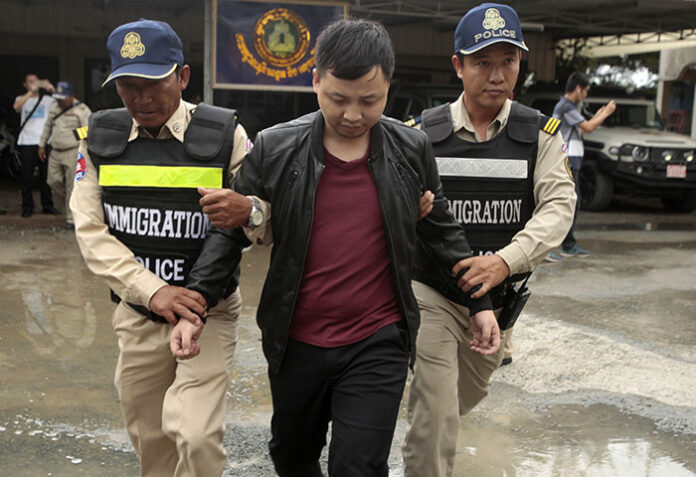
A Chinese national arrested over an alleged internet scam is escorted by police on his way to deportation at the immigration office in 2017 in Phnom Penh. Photo: Heng Sinith / Associated Press
PHNOM PENH — Police in Cambodia on Monday arrested more than 200 Chinese citizens accused of defrauding people in China over the internet.
Gen. Y Sok Khy, director of the Interior Ministry’s Department of Counter-Terrorism and Transnational Crime, said 36 women were among the 235 Chinese arrested in three different villages in Takeo province south of the capital, Phnom Penh.
Online scams by Chinese gangs that operate from foreign countries and target mainland Chinese are common throughout Southeast Asia and have been found as far away as Kenya and Spain. Cambodia has arrested and sent at least 1,000 Chinese and Taiwanese residents allegedly involved in such schemes to China since 2012.
The scams are carried out by making phone calls over the internet and employing deception, threats and blackmail against the victims. Placing phone calls over the internet makes communications costs cheap and hinders tracing of the source of the calls.
Y Sok Khy said the arrests followed months of surveillance and investigation. The suspects were sent to Phnom Penh for further questioning and will be deported to China, he said.
The arrests have caused controversy because suspects from Taiwan are usually deported directly to China in deference to Beijing, which views Taiwan as its own territory without sovereign legal status. Taiwan rejects China’s claim to its territory and wants its citizens returned there.