




























33.3 C
Bangkok
Tuesday, June 16, 2026
Home Blog Page 2063

Cambodia’s Ruling Party Claims Sweeping Win in Senate Vote

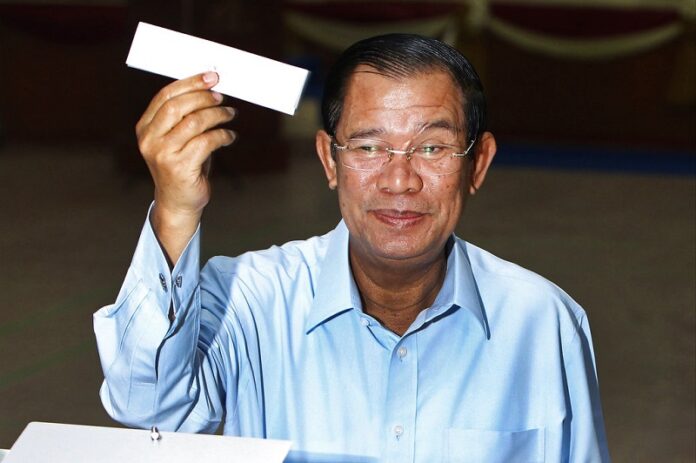
Cambodian Prime Minister Hun Sen of ruling Cambodian People's Party shows off a ballot paper before voting for senate election Sunday at Takhmau polling station in Kandal province, southeast of Phnom Penh, Cambodia. Photo: Heng Sinith / Associated Press

PHNOM PENH — The ruling party of Cambodian Prime Minister Hun Sen claimed a sweeping win in Sunday’s elections for the country’s Senate, a victory that it assured itself by eliminating any serious opposition from the contest.

Sok Eysan, a spokesman for the Cambodian People’s Party, said it had won a landslide victory. Privately, the party was claiming to have won all 58 of the seats that were voted on by the country’s 11,572 commune councilors.

Two additional senators are appointed by the National Assembly and another two by King Norodom Sihamoni.

Sunday’s vote was seen as a foretaste of a scheduled July general election for the National Assembly that is also expected to affirm Hun Sen’s rule.

The only opposition party in Parliament, the Cambodia National Rescue Party, was dissolved in November after aggressive legal challenges by the government were sustained by the politicized courts.

Government supporters then replaced the party’s members of Parliament and its commune councilors – the voters in Sunday’s polls.

Hun Sen has been in power for three decades, and while maintaining a framework of democracy, tolerates little opposition. His grip seemed shaken by 2013’s general election, when the Cambodia National Rescue Party mounted a strong challenge, winning 55 seats in the National Assembly and leaving Hun Sen’s party with 68.

The opposition party also made a strong showing in last year’s commune council elections, capturing 5,007 of the 11,572 councilor positions.

After last year’s commune council elections, Hun Sen’s ruling party then stepped up its steady offensive against critics and opponents. Media outlets seen as critical of the government were forced to shut down, and most senior members of the Cambodia National Rescue Party fled the country.

“Without the presence of the main opposition that has 55 (members of Parliament) and 5,007 commune councilors representing the will of the people, there will be no real free and fair competition as determined by the principles of free, fair and inclusive elections,” said a pre-election statement on the Senate election from the Cambodia National Rescue Party, emailed by Mu Sochua, its former deputy president, now in exile.

“We urge the United Nations and the international community to denounce the holding of the Senate election this weekend and to take immediate and stringent measures including sanctions as a signal that it will not condone dictatorship,” it said.

The United States, and last week, Germany, have banned issuing visas to certain Cambodian officials considered responsible for the deterioration of democracy. Rights groups have also been highly critical.

“Unfortunately, the Cambodian Senate will continue to stand as yet another sad reminder of Cambodia’s unmitigated descent into outright dictatorship,” said Charles Santiago, a member of the Malaysian Parliament and chairman of ASEAN Parliamentarians for Human Rights, comprising Southeast Asian lawmakers.

Only three small parties with no national followings ran candidates against the ruling party for seats in the Senate, which has no significant decision-making powers.

Story: Sopheng Cheang

Advertisement

‘Toon Bodyslam’ Hands 1.3B Baht Over to Hospitals

Artiwara ‘Toon Bodyslam’ Kongmalai holds a ‘kaen’ while handing a 143 million baht check to a Khon Kaen Hospital official.

BANGKOK — A rockstar who raised more than 1.3 billion baht by running across the country donated the money to 11 hospitals on Sunday.

Artiwara “Toon Bodyslam” Kongmalai donated funds he received from both public and corporate sponsors to the heads of the cash-strapped public hospitals he set out to support with his 55-day charity run.

“I wanted donations to go toward emergency services at hospitals. I want to support all these hard-working doctors and nurses who help our brothers and sisters, and perhaps me too in the future,” Toon said during the event held at Wachirabenchathat Park in Bangkok.

Organized by Toon’s campaign Kao Kon La Kao (Step by Step), the event saw the 38-year-old Bodyslam front man hand a giant check to Phramongkutklao Hospital Director Maj. Gen. Nimit Samotharn and other directors.

Phramongkutklao, a public hospital run by the military in Bangkok, received the largest donation of 221 million baht. Khon Kaen Hospital received 143 million baht, Surat Thani Hospital received  136.5 million baht and Ratchaburi Hospital 130 million baht. Chiang Rai Prachanukroh Hospital will now have 110.5 million baht to purchase medical supplies and Saraburi Hospital an extra 104 million baht.

The remaining hospitals: Nakornping Hospital in Chiang Mai, Chao Phraya Abhaibhubate Hospital in Prachinburi, Chaophraya Yommarat Hospital in Suphan Buri, Yala Hospital and Nan Hospital received 91 million baht each.

No mention was made of measures to ensure the funds would be used transparently.

Sunday’s event marked the end of an odyssey that saw Toon set out from the southernmost point of the nation in November. He incurred injury and had to stop to recover more than once along the way of reaching his destination 2,215 kilometers in the far north.

In the morning before the event, Toon held a 5-kilometer run which raised an additional 4 million baht from the sale of T-shirts. The funds were destined for the Mai Kaen Hospital in Pattani for the purchase of an X-ray machine.

Kao Kon La Kao will accept donations through May.

Advertisement

City Declares War on Illegal Markets – Doesn’t Know Where They Are

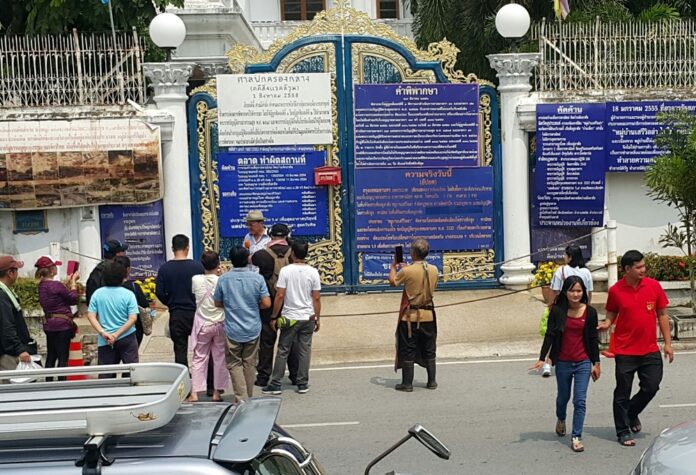
Curious onlookers gather in front of the Saengyotrakarn mansion on Saturday

BANGKOK — City Hall has declared a new crackdown that isn’t a retread of previous recycled crackdowns on banana vendors, street food or illegal parking. This time the axe is coming down on unregistered markets.

Gov. Aswin Kwanmuang’s declaration of war came after residents in eastern Bangkok smashed a shopper’s truck last week out of frustration with its customers. The incident became a national sensation, and this morning some vendors were seen taking down their stalls on the eve of Aswin’s ultimatum they shut down.

But while everyone now knows about those markets, municipal officials said they are unsure where other such markets are or how many are out there.

Bangkok’s top health official, whose department is in charge of inspecting fresh markets, said each district office, or khet, keeps its own records of legal and illegal markets in their jurisdiction. There is no central database.

“We don’t have it in our hands. You must ask each khet how many there,” Chawin Sirinak said in an interview. “We don’t know that. It’s up to each khet to do the inspection.”

Aswin, who was appointed by the junta to the top job in 2016, told reporters late last week that half of Bangkok’s approximately 1,000 markets are illegal. He said the number was an estimate and gave all 50 districts just seven days to determine the exact number.

Even the official in charge of city planning regulations had no clue.

“What the governor said was preliminary information that he was briefed on. It’s not 100 percent certain information. They are working on it,” City Planning Department Director Sakchai Boonma said.

District office officials said Friday they’ve already started working to figure out the scope of the problem.

“We have no information yet. We are about to call a meeting for an inspection,” Chatuchak District Office director Pokkrong Polamuang said.

Pokkrong said inspections are routinely carried out but declined to elaborate on what that meant.

Thawi Watthana District Office director Samornrat Attanit gave a precise number: There are ten market buildings properly registered in her area, one of which does not have a permit. The building owners are in the process of filing for relevant licenses, Samornrat said.

There are also four or five “daily markets” that pop up on certain days some in streets, but district officials aren’t going after them because they don’t occupy a permanent structure or draw complaints, she said.

“They are not eligible for any permit that we can give them, but they don’t have any building,” Samornrat said. “They sell stuff like vegetables and food in residential areas. But they are not a public nuisance.”

Axing For Justice

The blow that swung officials into action was landed by a group of women who attacked a pickup truck parked illegally in front of their mansion in Prawet district on Feb. 18.

The video of the vehicular violence initially drew the amusement and ridicule of netizens after it was posted online. But public sentiments quickly sided with the women after it emerged that they were serially victimized by shoppers blocking their driveway to go to five nearby illegal markets.

The markets buildings were erected around the Saengyoktrakarn mansion without any permission and the owners refused to close down even after the family won court cases against them, officials said.

The exterior of their large home is festooned with legal notices of court decisions against the markets. It’s since become a sort of curious tourist attraction.

Gov. Aswin pledged to close those markets down by Tuesday. The markets remained open over the weekends, but by Monday morning vendors were seen packing up and leaving the buildings.

Sakchai, the official in charge of city planning, said unregistered commercial buildings are “very common” in Bangkok, with the severity varying in each khet. He recalled a personal experience of going to inspect what was classified a residential zone and running into a full-scale factory operating without permit.

“Every building in Bangkok requires a permit … but after they got the permits, some people turned their buildings into something else,” Sakchai said.

The problem is perhaps most severe in the Lat Krabang district, where structures registered as homes have been turned into dorms, hotels and even logistics depots after Suvarnabhumi Airport opened nearby, Sakchai said.

So how can people know that the market they just dropped in for some pak chi is illegal? The city planner said it’s near impossible.

“You won’t know. There’s no way to know, except you find their office, go in there and ask to see a permit,” Sakchai said. “For ordinary people, it’s very difficult to find out.”

Advertisement

Srisaket Keeps Belt With Majority Decision Over Estrada

Image: Pantat Pochan. / YouTube

INGLEWOOD, California — Srisaket Sor Rungvisai retained his WBC super flyweight title with an exciting majority decision over Juan Francisco Estrada on Saturday night.

The Thai champion (44-4-1) controlled the early rounds and withstood a late charge from Mexico’s Estrada (36-3), leading to a dynamite 12th round that brought the lively crowd of 7,827 to its feet.

Sor Rungvisai, a near unknown in international boxing two years ago, has won 18 consecutive bouts, including two defenses of the title he took from Roman “Chocolatito” Gonzalez in a major upset last year.

Puerto Rico’s McWilliams Arroyo won a majority decision over Mexico’s Carlos Cuadras in the 115-pound penultimate bout of the latest “Superfly” show at the Forum. Donnie Nietes of the Philippines also defended his IBF flyweight title with a seventh-round stoppage of Argentina’s Juan Carlos Reveco.

Sor Rungvisai won the bout 117-111 and 115-113 on two cards, and a third scored it 114-114. The Associated Press also scored it a draw, 114-114.

“It was a very good fight,” Sor Rungvisai said. “He hits very hard, and I like his style, but I know I won the fight.”

The quicker Estrada got off to a strong start to thrill the pro-Mexican crowd, but Sor Rungvisai asserted his combination of body shots, counterpunching and head movement. Sor Rungvisai tagged Estrada repeatedly in the middle rounds, but Estrada put together a strong flurry in the eighth to begin a surge.

Estrada appeared to win several late rounds with faster hands. Both boxers fought desperately in the 12th, and both were raised in victory by their cornermen after the bell.

“I felt I won the fight clearly,” Estrada said. “I boxed him all night long, and then I attacked him the last three rounds. I landed great shots at the end. I don’t know what the judges saw.”

The card was the latest edition of the unlikely series of shows dubbed “Superfly” by Tom Loeffler and his fellow promoters. The events have showcased the world’s top talent in the super flyweight – or junior bantamweight – division, while also putting other overlooked boxers from the lighter weight classes on prominent display.

The concept for the shows evolved from promoters’ attempts to showcase Gonzalez, but the unbeaten four-division world champion from Nicaragua was dethroned last year by Sor Rungvisai, who won a debatable decision over Gonzalez on the undercard of Gennady Golovkin’s victory over Daniel Jacobs in New York.

Gonzalez got a rematch with Sor Rungvisai last September on a “Superfly” show, and the Thai champion left no doubt by registering a fourth-round knockout victory.

The WBC has mandated a title defense against Arroyo as Sor Rungvisai’s next bout, but everything is negotiable in boxing.

“I thought this performance warranted a rematch,” Loeffler said. “If there’s a way we could make a rematch for the fall, it would be tremendous to bring it back to the Forum.”

Arroyo (17-3-0) hadn’t fought since April 2016, when Gonzalez beat him by decision in the Forum. Yet the former Puerto Rican Olympian showed few signs of ring rust, peppering Cuadras throughout the 10 rounds and earning a wide decision on two cards.

“People underestimated me because I hadn’t fought in almost two years, but I was always in the gym, and I was always ready to fight,” Arroyo said. “I want now to fight the winner of the main event tonight. I will beat them also, and show I’m the best fighter in the business.”

Cuadras (36-3-1), who beat Sor Rungvisai in May 2014, had Golovkin trainer Abel Sanchez in his corner for this bout, but said he felt tight and stiff against Arroyo.

Nietes (41-1-4, 23 KOs) landed a huge shot at the sixth-round bell on Reveco (39-4), who wobbled back to his stool. The Filipino veteran then floored Reveco with a four-punch combination early in the seventh, and Reveco’s corner threw in the towel.

The 35-year-old Nietes hasn’t lost since 2004, and he knows it’s time to land a major fight.

“I’m not sure if I’ll stay at this weight or move up,” Nietes said. “I want the biggest fights possible. I would love to fight Chocolatito. I would also love to fight the winner of the main event tonight.”

Earlier, Ukraine’s Artem Dalakian claimed the WBA flyweight title with a unanimous decision over Brian Viloria. The Azeri-born Dalakian (16-0, 11 KOs) bloodied his 37-year-old American opponent on the way to a dominant victory.

Story: Greg Beacham

Advertisement

Months After Exodus Began, Rohingya See No End to Suffering

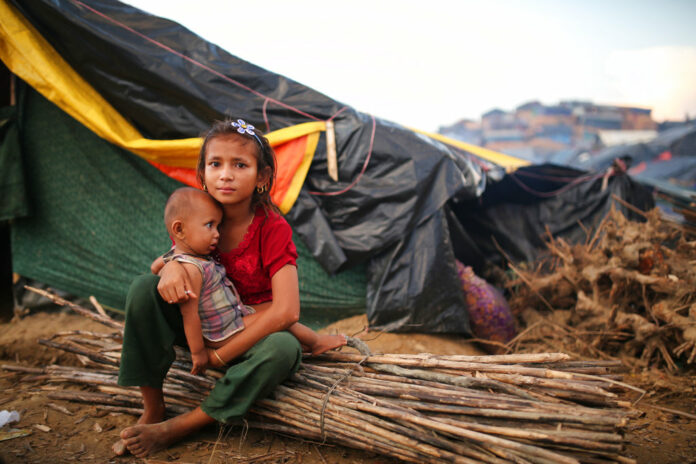
A Rohingya girl carries a child and rests at the Palangkhali refugee camp in October in Cox's Bazar, Bangladesh. Photo: Zakir Hossain Chowdhury / Associated Press

COX’S BAZAR, Bangladesh — Their houses are often made of plastic sheets. Much of their food comes from aid agencies. Jobs are few, and there is painfully little to do. The nightmares are relentless.

But six months after their horrors began, the Rohingya Muslims who fled army attacks in Myanmar for refuge in Bangladesh feel immense consolation.

“Nobody is coming to kill us, that’s for sure,” said Mohammed Amanullah, whose village was destroyed last year just before he left for Bangladesh with his wife and three children. They now live in the Kutupalong refugee camp outside the coastal city of Cox’s Bazar.

“We have peace here,” Amanullah said.

On Aug. 25, Rohingya insurgents attacked several security posts in Myanmar’s Rakhine state, killing at least 14 people. Within hours, waves of revenge attacks broke out, with the military and Buddhist mobs marauding through Rohingya villages in bloody pogroms, killing thousands, raping women and girls, and burning houses and whole villages. The aid group Doctors Without Borders has estimated that at least 6,700 Rohingya were killed in Myanmar in the first month of the violence, including at least 730 children younger than 5. The survivors flooded into Bangladesh.

Six months later, there are few signs Rohingya are going home anytime soon.

Myanmar and Bangladesh have signed an agreement to gradually repatriate Rohingya in “safety, security and dignity,” but the process has been opaque and the dangers remain. New satellite images have shown empty villages and hamlets leveled, erasing evidence of the Rohingya’s former lives. And with 700,000 having fled Myanmar since August, more Rohingya continue to flee.

So for now, the refugees wait.

“If they agree to send us back, that’s fine, but is it that easy?” asked Amanullah. “Myanmar must give us citizenship. That is our home. Without citizenship, they will torture us again. They will kill us again.”

He said he would only return under the protection of U.N. peacekeepers: “They must take care of us there. Otherwise it will not work. ”

Buddhist-majority Myanmar doesn’t recognize the Rohingya as an official ethnic group, and they face intense discrimination and persecution. Myanmar authorities maintain that security operations in Rakhine state have been aimed at clearing out insurgents.

M. Shahriar Alam, Bangladesh’s junior foreign minister, said his country would not repatriate any Rohingya against their will, but urged the international community to continue to put pressure on Myanmar to create conditions for a sustainable repatriation.

He also expressed displeasure at reports that Rohingya were still arriving in Bangladesh.

“We need to recognize that the problem has its origin in Rakhine and its comprehensive solution has to be found there,” Alam was quoted as saying Sunday by the United News of Bangladesh agency. “Bangladesh is only unjustifiably bearing the brunt of it.”

On Sunday, two Nobel Peace laureates visited refugee camps in Cox’s Bazar and talked to rape victims. Myanmar security forces have been accused of raping and sexually assaulted women and girls before and during major attacks on Rohingya villages.

Katia Gianneschi, a spokeswoman for the Nobel Women’s Initiative who accompanied Yemen’s Tawakkol Karman and Northern Ireland’s Mairead Maguire to the camp, said in an email that the women talked to the victims and heard their stories. Another laureate, Iran’s Shirin Ebadi, will join her colleagues on Monday.

The Nobel Women’s Initiative, established in 2006, is a platform of six female Nobel Peace laureates.

The three laureates, who are on a weeklong visit to Bangladesh to meet the refugees, accused Myanmar leader Aung San Suu Kyi and her country’s military of unleashing atrocities, and said the international community should bring those responsible to justice.

Minara Begum, 25, who said she was raped and tortured by soldiers, told reporters after the laureates’ visit that they hugged her and held her tightly and cried as they heard the stories of brutality.

“They were overwhelmed. They cried with us. They could not hold their tears,” Begum said. “I was also touched by their eagerness to know our sad stories.”

Karman said in an email Saturday that she and her colleagues were standing “in solidarity with displaced Rohingya women and calling for Rohingya women’s voices to be heard.”

She said Rohingya women are twice victimized – for being Rohingya and for being women – and “are affected by the ethnic cleansing and are also subject to high levels of sexual and gender-based violence.”

“Rohingya women’s unique needs are largely unmet in refugee camps in Bangladesh,” she said. “Less than 20 percent of displaced Rohingya women who have survived sexual violence have access to post-rape care.”

Meanwhile, the children in the camps face a particularly difficult time. The U.N. estimates children are the heads of 5,600 refugee families.

A survey of children’s lives inside the camps showed they faced an array of terrors, from girls reporting concerns of harassments near the camp toilets to fears that elephants and snakes could attack them as they collect firewood.

“We cannot expect Rohingya children to overcome the traumatic experiences they’ve suffered when exposed to further insecurity and fears of violence in the camps,” Mark Pierce, country director for Save the Children in Bangladesh, said in a statement.

“The overwhelming message from these children is that they are afraid,” Pierce said. “This is no way for a child to live.”

The situation will worsen soon. Seasonal monsoon rains will begin pounding the refugees’ plastic-and-bamboo city in April.

Story: Tofayel Ahmad, Julhas Alam

Advertisement

Rabbit Hole Named Bangkok’s Best at Bar Awards

A representative of Rabbit Hole receives the Bar of the Year award on Sunday at The Westin Grande Sukhumvit

BANGKOK — Thonglor’s fight to remain the capital’s top trendy nightlife destination got a boost Sunday night with its upscale bar Rabbit Hole being named the best bar in town.

Rabbit Hole was poured the Best Bar award over Teens of Thailand in Chinatown, Smalls on Suan Phlu and the swanky, riverside Bamboo Bar at the Mandarin Oriental. Bamboo didn’t end up going home alone though, winning both Best Hotel Bar and Bangkok Institution awards.

Buntanes “Pop” Direkrittikul of Eat Me was named Best Bartender.

The awards are selected by a panel of selected industry professionals.

The Bar Awards began in 2014 in Singapore by Tron Young and were held for the first time in Bangkok last year. Winners in all 12 categories were announced Sunday at The Westin Grande Sukhumvit.

Full list:

Bar of the Year: Rabbit Hole
Bartender of the Year: Buntanes “Pop” Direkrittikul (Eat Me)
Best New Bar:
#Findthelockerroom
Best Restaurant Bar:
Eat Me
Best Beer Bar: Mikkeller
Best Wine Bar: La Casa Nostra
Best Hotel Bar: The Bamboo Bar
Best Bangkok Institution: The Bamboo Bar
Best Hospitality Ambassador: David Jacobson (Smalls)
Best Hospitality Team: Backstage
Most Creative Cocktail Bar: Vesper
The Rising Star: Noppasate Hirunwathit (Rabbit Hole)

Story: Todd Ruiz, Chayanit Itthipongmaetee

Advertisement

Retired ‘Toughest Cop’ Leaps to Death at Bangkok Mall

Salang Bunnag is carried out on a boat from a Saphan Buri squat where he oversaw the extra-judicial killings of six purported drug dealers in 1996.

NONTHABURI — A former deputy police chief with a checkered past and enthusiasm for “rough justice” committed suicide Sunday by leaping from the seventh floor of a mall in northern metro Bangkok.

Gen. Salang Bunnag, 80, died on the scene today at Central Chaeng Wattana, reportedly leaving a handwritten suicide note urging his family to spread his appeal for Thailand to construct an “Autobahn.”

In the hand-written note, Salang is said to have written that he only had two more years to live and wanted to leave this world by doing something good.

Besides urging people who read the note through the media to support construction of an autobahn-style highway, Salang also urged people to oppose the construction of additional rail lines, specifically a one-meter wide dual track and elevated electric trains.

“Don’t blame me. Please be proud. If I don’t take the step, no one would know because the media are working to cover it up,” part of the letter read.

A video clip shows Salang struggle to climb over a railing before toppling over. No one else was around him at the time.

The late former deputy chief also specified details of his funeral arrangement which included reproducing his suicide note for dissemination to the public. He asked his children and grandchildren to be good.

Salang, a member of the powerful Bunnag clan, is best known for enthusiastically leading police onto the campus of Thammasat University in 1976 where, with paramilitary forces, they killed dozens of students.

Read: The Will to Remember: Survivors Recount 1976 Thammasat Massacre 40 Years Later

salang2
Salang Bunnag in an undated file photo.

Twenty years after the Thammasat Massacre, he was investigated in the late 1990s for leading cops to gun down six drug dealers, an operation that became known as the “Suphan Buri Massacre.” He was deputy police commissioner at the time.

The case became a test of Thailand’s newfound commitment to embracing justice and the rule of law.

He refused to show up for the first hearing in the murder case, according to a Human Rights Watch report from 1999.

Additional reporting Todd Ruiz


Advertisement

China Proposes Removing 2-Term Limit to Presidency

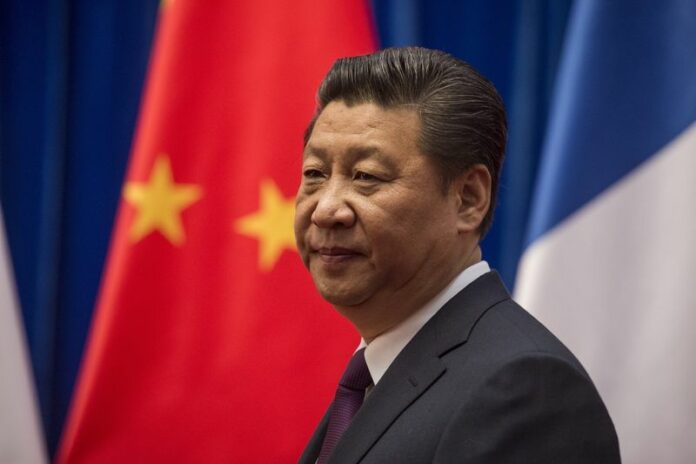
Chinese President Xi Jinping in the Great Hall of the People in Beijing in 2015. Photo: Fred DuFour / EPA

BEIJING — China’s official news agency says the ruling Communist Party has proposed removing a limit of two consecutive terms for the country’s president and vice president.

The Xinhua News Agency said in a brief report Sunday that the party’s Central Committee proposed to remove from the constitution the expression that China’s president and vice president “shall serve no more than two consecutive terms.”

It provided no further details.

The move, if approved, appears to lay the groundwork for party leader Xi Jinping to rule as president beyond 2023.

Advertisement

Shameless: Plus-Sized Pageant Winner Proud of Her Body

Kwanrapi Boonchaisuk won the 'Miss Elephant Daughter' pageant Sunday in Nakhon Ratchasima province.

KORAT — While Thailand’s enthusiasm runs deep for its many beauty contests, a pageant held Sunday in Nakhon Ratchasima dispensed with the waifs to get real.

Though the pageant’s name may be far from “woke” and its comedy is played up, contestants at Miss Elephant’s Daughter represented a positive body image for plus-sized beauty at the event.

Kwanrapi Boonchaisuk, 29, seized the crown and went home with the 10,000 baht prize. Kwanrapi, who weighs 105 kilograms, said she is proud of her body and does not consider it a disadvantage. She said all people have potential and talents to be successful.

Another highlight was the “Miss Jumbo” prize, which transgender woman Piphu Supachokthakoon won for being the heaviest. Piphu weighted 156 kilograms.

The aim was to promote tourism in the province, particularly forest-related tourism.

Forty contestants joined the competition without a hint of irony in a society still dominated by girls wanting to get slimmer. A tailoring house called “Big Mama Studio” provided the evening gowns.

med

Advertisement

Farewell, Korea: First of 3 Asian Olympics Ends

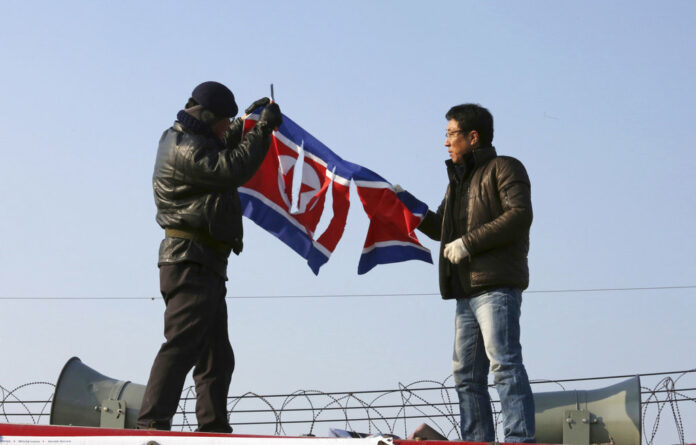
A South Korean protester tear a North Korean flag with a knife, during a rally against a visit of Kim Yong Chol, vice chairman of North Korea's ruling Workers' Party Central Committee, near the Unification bridge in Paju, South Korea, on Sunday. Photo: Ahn Young-joon / Associated Press

PYEONGCHANG, South Korea — It began with politics. It ends with … politics.

In between, humanity’s most extraordinary feats of winter athletic prowess unfolded, revealing the expected triumphs but also stars most unlikely — from favorites like Mikaela Shiffrin, Shaun White and Lindsey Vonn to sudden surprise legends like Czech skier-snowboarder Ester Ledecka and the medal-grabbing “Garlic Girls,” South Korea’s hometown curling favorites.

Pyeongchang closes its chapter of the 122-year-old modern Olympic storybook on Sunday night with countless tales to tell — tales of North Korea and Russia, of detente and competitive grit and volunteerism and verve, of everything from an uncomfortable viral outbreak to an athlete’s boozy joyride.

And above it all: unforgettable experiences for meticulously trained athletes from around the world, all gathered on a mountainous plateau on the eastern Korean Peninsula to test for themselves — and demonstrate to the world — just how excellent they could be.

“We have been through a lot so that we could blaze a trail,” said Kim Eun-jung, skip of the South Korean women’s curling team, which captured global renown as the “Garlic Girls” — all from a garlic-producing Korean hometown. They made a good run for gold before finishing with runner-up silver.

Other trailblazers: Chloe Kim, American snowboarder extraordinaire. The U.S. women’s hockey team and men’s curlers, both of which claimed gold. And the Russian hockey team, with its nail-biting, overtime victory against Germany.

That these games would be circumscribed by politics was a given from the outset because of regional rivalries. North Korea, South Korea, Japan and China are neighbors with deep, sometimes twisted histories that get along uneasily with each other in this particular geographic cul-de-sac.

But there was something more this time around. Hanging over the entire games was the saga — or opportunity, if you prefer — of a delicate diplomatic dance between the Koreas, North and South, riven by war and discord and an armed border for the better part of a century.

The games started with a last-minute flurry of agreements to bring North Koreans to South Korea to compete under one combined Koreas banner. Perish the thought, some said, but Moon Jae-in’s government stayed the course. By the opening ceremony, a march of North and South into the Olympic Stadium was watched by the world — and by dozens of North Korean cheerleaders applauding in calibrated synchronicity.

Also watching was an equally extraordinary, if motley, crew. Deployed in a VIP box together were Moon, U.S. Vice President Mike Pence and North Korean leader Kim Jong Un’s envoy sister, Kim Yo Jong. The latter two, at loggerheads over North Korea’s nuclear program, didn’t speak, and the world watched the awkwardness.

What followed was a strong dose of athletic diplomacy: two weeks of global exposure for the Korean team, particularly the women’s hockey squad, which trained for weeks with North and South side by side getting along, taking selfies and learning about each other.

On Sunday night, the closing ceremony will bookend those politics with U.S. President Donald Trump’s daughter, Ivanka, in attendance as well as Kim Yong Chol, vice chairman of North Korea’s ruling Workers’ Party Central Committee and a man suspected of masterminding a lethal 2010 military attack on the South.

There’s no reason to believe that the uneasy VIP-box scene will repeat itself. There’s also no reason to believe it will not. But the outcome could provide a coda to an extraordinary two weeks of Olympic political optics — and offer hints of the Trump administration’s approach in coming weeks as it tries to get Pyongyang to give up its nuclear weapons and deals with the North-South thaw.

That wasn’t all when it came to these odd games. Let’s not forget Russia — or, we should say, “Olympic Athletes from Russia,” the shame-laced moniker they inherited after a doping brouhaha from the 2014 Sochi Games doomed them to a non-flag-carrying Pyeongchang Games.

But two more Russian athletes tested positive in Pyeongchang in the past two weeks. So on Sunday morning, the IOC refused to reinstate the team in time for the closing but left the door open for near-term redemption from what one exasperated committee member called “this entire Russia drama.”

What’s next for the games? Tokyo in Summer 2022, then Beijing — Summer host in 2008 — staging an encore, this time for a Winter Games. With the completion of the 2018 Pyeongchang Games, that Olympic trinity marks one-third of a noteworthy Olympic run by Asia.

For those keeping score at home: That means four of eight Olympic Games between 2008 and 2022 will have taken place on the Asian continent. Not bad for a region that hosted only four games in the 112 years of modern Olympic history before that — Tokyo in 1964, Sapporo in 1972, Seoul in 1988 and Nagano in 1998. Japan and China will, it’s likely, be highly motivated to outdo South Korea (and each other).

Meantime, the Olympians departing Monday leave behind a Korean Peninsula full of possibility for peace, or at least less hostility.

The steps taken by North and South toward each other this month are formidable but fluid. People are cautiously optimistic: the governor of Gangwon, the border province where Pyeongchang is located, suggested Sunday that the 2021 Asian Games could be co-hosted by both Koreas.

It might not happen. But it could. That could be said about pretty much anything at an Olympic Games, inside the rings and out. Corporate and political and regimented though it may be, that’s what makes it still the best game in town for an athletic thrill every other year — and yes, sometimes a political one, too.

Story: Ted Anthony

Advertisement

Hot News

LATEST NEWS

Bangkok
overcast clouds
33.3 ° C
34.4 °
33.3 °
79 %
5kmh
100 %
Tue
34 °
Wed
35 °
Thu
35 °
Fri
36 °
Sat
37 °