The ‘irregular’ meat Wilawan Wasuntarasophit says she was served Monday at Bar B Q Plaza. Photo: Wilawan Wasuntarasophit / Facebook
Update Jan. 17: Bar B Q Plaza released lab results Tuesday evening that found no parasites in the meat and said the lumps were abscesses caused by bacterial infection.
BANGKOK — A major barbecue chain is recalling a shipment of beef Tuesday after a photo appeared online of lumpy meat served at one of its restaurants.
The image posted last night by Facebook user Wilawan Wasuntarasophit was quickly taken up by netizens as proof of parasites at the Central Pinklao branch of Bar B Q Plaza. Though the company denies parasites were present in the meat, it apologizedtoday for an employee’s explanation the lumps were tendons.
“We have recalled all the beef imported from Australia in the same lot to several branches for inspection by experts,” read the statement from Bar B Q Plaza. “It is a grievous error on our part that we could not inform our customers about the meat irregularity right there and then.”
Bar B Q Plaza said the “irregular” meat has been sent for inspection at Betagro Group’s company labs with results expected in a week.
Wilawan’s posthas been shared more than 17,000 times. In it, she said that she alerted the wait staff to the strange meat, who then replaced it after offering a fatuous explanation.
“I replied that I was full (actually, I couldn’t stomach anymore food). For peace of mind, I asked what the lumps were. The staff said ‘Oh, they’re tendons’ (while making a sheepish face),” she wrote. “Tendons?! If they were really tendons, then why did they change the beef?”
Bar B Q Plaza was founded in 1987 by Choopong Choopojcharoen, who also owns Joom Zap Hut restaurants and Hot Star Chicken Thailand.
BANGKOK — Hej! Fans of affordable Swedish furniture – and we know there are a lot of you – now have a date for navigating a new maze of oddly named products.
When metropolitan Bangkok’s second Ikea store opens March 15 in Nonthaburi’s Bang Yai district, it will knock Malaysia’s Johor Bahru’s store down a peg and replace it as the largest Ikea in Southeast Asia.
Not only that, the 50,278-sqm store will be the first Ikea branch in the world with checkout stands on all three floors. To accommodate large crowds, it will include 29 checkout stands – three more than Ikea Bang Na, which occupies 44,000sqm.
Ikea Bang Yai has a parking lot which can accommodate up to 1,900 cars. It is located next to Central Westgate and can also be accessed via a walk from the shopping mall’s third floor.
Thailand’s first Ikea has seen millions of visitors since it opened Nov. 3, 2011 in the Mega Bang Na shopping mall on the Bangna-Trad Road in Samut Prakan province.
Local operator Ikano Thailand says it plans to eventually open additional stores in Bangkok.
Sorachai Sathitraksadumrong's car after it came to a stop on Jan. 2 on Chiang Mai - Chiang Rai Road.
CHIANG RAI — Several soldiers were present at a northern checkpoint where a motorist was shot dead last week, a fact not disclosed by police until today under pressure from the victim’s family.
After initially saying only civilians manned the roadblock where Sorachai Sathitraksadumrong was shot to death, a crime for which a community leader is now behind bars, police said Tuesday that armed military personnel were present.
“Based on the facts we have, there were soldiers at the scene,” Mae Suai Police Station chief Col. Vicharn Churit said today. He made no mention of the soldiers in a Friday interview.
The U-turn came after Sorachai’s family and neighbors went to protest Monday at the district administrative office to demand answers and justice for his killing.
In a letter they submitted to officials, the protesters said they had information that armed soldiers were present at the checkpoint on Jan. 2 and could have been responsible for shooting the 34-year-old contractor as he passed the checkpoint with his girlfriend in the car.
“Who’s behind the deadly checkpoint?” one banner at the protest read. “Who was the person who fired the killing shot?” questioned another.
Wutthichai Injai, a local deputy community leader, aka puu yai baan, was arrested two days after the shooting and accused of firing three shots at Sorachai’s car, including the fatal round that struck Sorachai in the head. He told police he meant to fire warning shots.
Sorachai’s girlfriend said they did not see the impromptu checkpoint set up along the road between Chiang Mai and Chiang Rai. Wutthichai is behind bars awaiting trial, Col. Vicharn said.
A fourth bullet was also recovered at the scene, but Vicharn said it was fired by another individual at the scene who became excited. He did not identify that person, who was not arrested on any firearms-related charges.
Vicharn said all of the soldiers denied any involvement with the killing, and no witnesses have implicated them.
Asked whether the soldiers were armed, Vicharn said the soldiers told him they didn’t carry any weapons when he arrived at the scene of the crime, but he’s heard there was at least one military-issued rifle stored at the checkpoint.
“But I can’t confirm this yet,” Vicharn said. “We have to wait for more evidence. We have to inspect the ballistics, for example.”
Sorachai’s family said they would not hold funerary rites for him until they believe justice has been achieved.
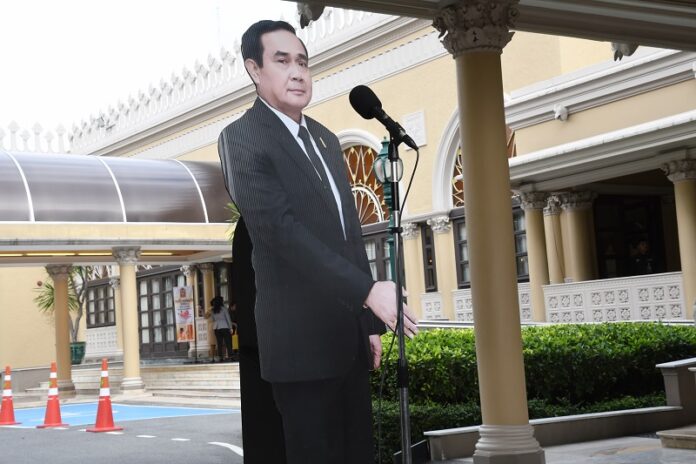
A cardboard figure of Prime Minister Gen. Prayuth Chan-ocha erected before a microphone Monday in Bangkok.
BANGKOK — Prime Minister Prayuth Chan-ocha evaded journalists’ questions on Monday by bringing out a life-sized cardboard cutout of himself and telling the reporters to quiz it instead of him.
Prayuth then turned on his heel and walked off, leaving the mock-up behind, to bemused looks and awkward laughter from the Government House press pack.
The prime minister had briefly spoken to the media after attending an event promoting upcoming Children’s Day, but deployed his dodging tactic before anyone could ask him about a number of pressing political issues.
“If you want to ask any questions on politics or conflict,” he said, “ask this guy.”
It isn’t the first time Prayuth – a general who seized power in a bloodless coup in 2014 – has dumbfounded the media. In the past he has fondled the ear of a sound technician for several minutes during an impromptu news conference, flung a banana peel at cameramen, and threatened, with gruff humor, to execute any journalist who criticized his government.
When it took power, his government, packed with military leaders, enjoyed considerable public support for ending a prolonged period of often-violent street politics. But as the junta’s rule has stretched on, criticism of its often-repressive policies and lack of transparency has grown markedly.
Prayuth has promised elections in November, though he has made similar promises several times previously and then delayed the balloting.
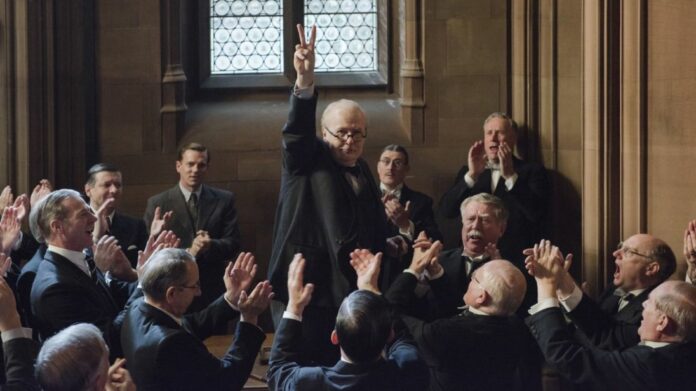
Words matter. That’s one of the key messages of “Darkest Hour,” in which Gary Oldman embodies — fiercely and memorably — the legendary Winston Churchill, who rallied his country with soaring oratory when Britain’s very survival was at stake.
But the same man who uttered indelible phrases like “I have nothing to offer but blood, toil, tears and sweat” — and many others — was also a human being, the film argues, with fears and doubts and insecurities and flaws. “Just be yourself,” Churchill’s wife, Clementine (a briskly effective Kristin Scott Thomas) advises him as he heads off, full of jitters, to meet the king and become the wartime prime minister. Later, he raises a glass with Clementine, with a fervent wish: “Here’s to not buggering it up.”
“Buggering it up” was certainly a risk — both for Churchill, and for Oldman or any actor attempting to embody the great man. It’s hard enough to portray a revered real-life figure — and harder yet with such a larger-than-life persona, physically and otherwise. It won’t be a surprise to fans of the skilled Oldman that he avoids mimicry or caricature, and it’s an even better treat that he’s able to so adeptly balance conviction with doubt, courage with fear, and gravity with humor. (Kudos are due as well to the superb makeup by Kazuhiro Tsuji, jowls and all.)
“Darkest Hour,” directed by Joe Wright and written by Anthony McCarten, focuses on one month in 1940 that saw Churchill rise to office and face down his political foes and a wary British monarch as he navigated the threat of looming war against Adolf Hitler’s forces. Though Wright is known for his sweeping filmmaking in another war film, “Atonement,” here he focuses not on the beaches of Dunkirk but on dimly lit interiors like the underground war rooms at Westminster Palace, the halls of Parliament, and Churchill’s own bedroom.
The film is, in a sense, a companion piece — by way of timing, at least — to Christopher Nolan’s “Dunkirk,” released in the summer. While Nolan focused on the action, Wright focuses on the talk — specifically how Churchill, in the words of one frustrated opponent, “mobilized the English language and sent it into battle.”
He wasn’t the first choice to be prime minister — not of his party, and certainly not of a skeptical King George VI (an excellent Ben Mendelsohn). But Parliament, as we learn at the beginning of the film, had lost confidence in the ailing Neville Chamberlain, and Churchill was a compromise solution.
He enters office as France and Belgium are on the brink of falling to the Nazis, and most of the British Army is stranded at Dunkirk. The new prime minister is forced to make an agonizing decision: try to negotiate a dubious peace, as Chamberlain desired, or fight — and risk the deaths of a generation of young British men. He’s hated by Chamberlain and his sidekick, Lord Halifax, and doubted by the king, who (initially) finds him scary and unpredictable.
It’s fun to watch the lunch meeting between the restrained king and Churchill, a man of great appetites — and a famous thirst. When the king asks how he can drink during the day, the prime minister replies: “Practice.”
There are many such moments of humor, including when Churchill first meets his new young secretary, Elizabeth Layton (Lily James), and inadvertently flashes his privates under his nightshirt. Or when he warns her as he exits the shower: “I’m coming out in a state of nature!” He’s also shown on the toilet, shouting out that he cannot speak to the Lord Privy Seal because he is “sealed on The Privy.”
Despite such comic moments, which Oldman attacks with gusto, the film’s mood is urgent and dire. The United States cannot help because of neutrality agreements; in a dispiriting phone call with Franklin D. Roosevelt, the U.S. president notes: “It must be late there.” Churchill replies: “In more ways than you can possibly know.”
Ultimately — as we all know — Churchill decides to fight on, and to declare “We will never surrender.” What gets him there? Partly, a ride on the London Underground. The prime minister decides to ditch his aides and take the Tube to Westminster, and on the way, to chat with some commonfolk. To a person, they agree with him that the country must never surrender to the forces of evil.
There are two problems with this scene. First, it’s rather corny. The second is that it never happened. The filmmakers do warn that some material has been fictionalized. But some may be disappointed to learn that one of the most pivotal scenes in the film was manufactured.
Oldman’s performance, though, which has launched him to the forefront of awards season chatter, triumphs over any such qualms. The last few years have seen a number of notable Churchill interpretations. Oldman has set the bar higher still.
“Darkest Hour,” a Focus Features release, is rated PG-13 by the Motion Picture Association of America “for some thematic material.” Running time: 125 minutes. Three stars out of four.
Swedish filmmaker Ruben Ostlund’s last film, “Force Majeure,” began with the rumble of an alpine avalanche and the wallop of a shattered self-image. When a swelling white tide appears headed straight for an outdoor cafe, a panicked father flees with his iPhone, but not his children or wife. Their respect for him is undone in a cloud of snow.
In Ostlund’s follow-up, the Palme d’Or-winning “The Square,” an upper-class, highly placed man is again humbled by a latent cowardice, but one that reveals itself in more subtle and daily acts of fraudulence.
Claes Bang stars as Christian, the handsome and suave chief curator of a Stockholm contemporary art museum. In the early scenes, we see him trying to explain a pompous museum description to an American journalist (Elisabeth Moss) and rehearsing remarks for a museum event that he will later pretend are off-the-cuff. He’s a smooth operator with the practiced air of privilege.
That the high-minded contemporary art world would have something a touch fake about it is far from a new idea. But Ostlund, in his fifth feature, has more expansive satire in mind. The title of “The Square” refers to an exhibit the museum is preparing in a city courtyard in which a square is laid into the cobblestone street. “The Square is a sanctuary of trust and caring,” reads the description. “Within its boundaries, we all share equal rights and obligations.”
Outside of the square, not so much. Throughout the film, Christian and others who espouse such enlightened ideals of community are seen failing to live up to them — and often not even trying to. “The Square” is a consistently clever odyssey of modern-day hypocrisy that rambles and hiccups but seldom lacks Ostlund’s charming but clinical satirical touch. It’s as entertaining as it is damning.
The central thread of the film begins with Christian’s phone, wallet and even cuff links being stolen in a sidewalk setup where a woman feigns to need help from her attacking boyfriend. Christian and another bystander rush to her aid, but while basking in his good deed, he realizes he’s been fleeced. Christian and a younger museum employee (Christopher Laesso) are able to track the phone to a low-income housing project where, in a lark that turns grave, Christian — unsure of which tenant to approach — disperses print-outs demanding the return of his things to every apartment.
The scheme has unwitting fallout for one furious little boy (Elijandro Edouard). Meanwhile, Christian spends an awkward night with the journalist, Anne, that includes both an unexplained chimpanzee walking around her apartment and a tense post-coital debate when Anne offers to discard the used prophylactic, rousing Christian’s suspicions. He later comes under fire for an ill-conceived marketing campaign for “The Square” that threatens his high perch.
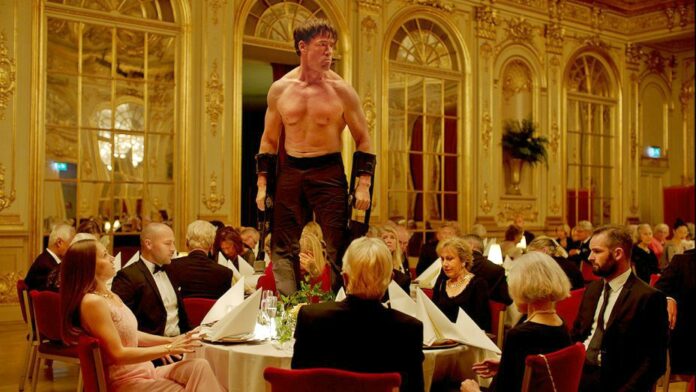
“The Square” is populated by reminders of our more primitive impulses. In one terrific scene, a man with Tourette syndrome interrupts a well-attended conversation with a highfalutin conceptual artist (Dominic West). In the film’s centerpiece, a muscular performance artist posing as a gorilla (Terry Notary of “The Planet of the Apes”) runs amok at a fancy fundraising dinner. He stalks the well-dressed attendees until an air of real fear sets in. Only after the performer has thoroughly harassed one woman does anyone dare to protest; once a single man stands up, dozens follow. Compassion runs in herds.
There’s less balance to “The Square” than there was to “Force Majeure.” Its tight early scenes (one favorite: a sea of commuters breezing past the entreaty to “save a life today” with answers like “not right now”) give way to increasingly overwrought set pieces (like the dinner scene) that are eye-catching but implausible and, besides, lose the narrative. I’d also quibble with the very late entry of Christian’s children who turn up in the film’s final third to observe, impressionably, their father in his downfall.
But “The Square,” where the enlightened and well-heeled are always gliding past beggars, remains a potent satire. The key, I think, is the exceptional Bang, a tall and dapper Danish actor who could legitimately play James Bond. He plays Christian with just the right cocktail of vulnerability and arrogance. That he’s so easy to see through makes him, in a funny way, almost loveable.
“The Square,” a Magnolia Pictures release, is rated R by the Motion Picture Association of America for “language, some strong sexual content and brief violence.” Running time: 145 minutes. In Swedish and English with English subtitles. Three stars out of four.
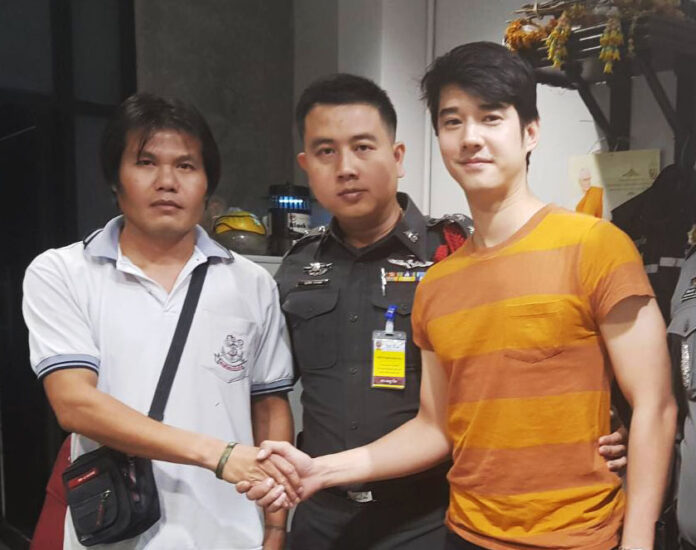
Udon Sutthison, left, shakes hands with Mario Maurer Monday at Phaya Thai Police Station.
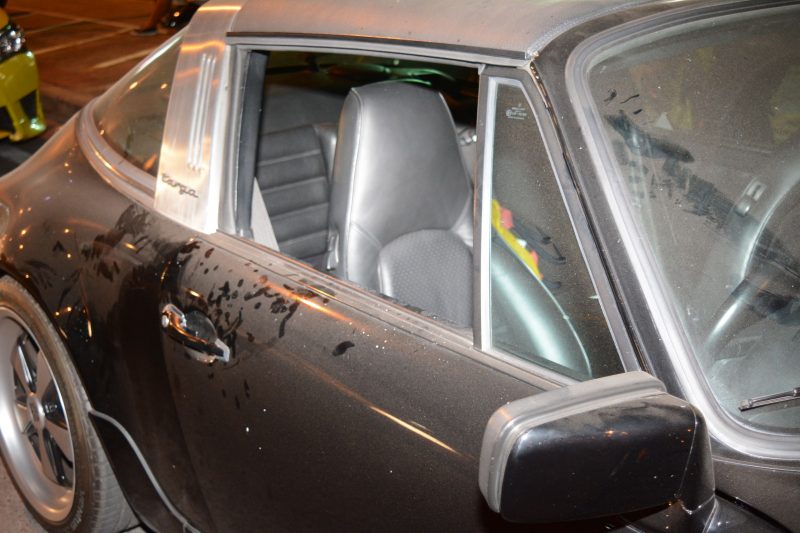
BANGKOK — When a hot young movie star cut off Udon Sutthison on Monday night in Bangkok, the taxi driver reached for his trusty slingshot. He scored a direct hit, shattering the driver’s side window.
For his marksmanship, Udon, 37 of Roi Et province, lost his license for a month Tuesday after being spared a harsher penalty by Mario Maurer, who decided not to press charges against him for the damage done to his black Carrera 2.
“I did wrong. I take responsibility and I want to apologize to all taxi drivers. I acted on emotion in the spur of the moment. I won’t do it again; I’m saying this from my heart!” Udon said with a wai today at Bangkok’s Phaya Thai Police Station.
Under the law, causing a disturbance on the road can cost driving privileges for up to a year. But the Land Transport Department opted only to revoke Udon’s license for a month and order him to attend a three-hours seminar on sportsmanlike driving.
Udon said he was driving Monday on Rama VI Road when Mario cut in front of him at the Uruphong Intersection. Udon then rolled down his window and yelled at the porsche. The two continued driving and cutting each other off until they became stuck in traffic at the Pratunam Intersection.
That’s when Udon then opened fire on Mario’s window.
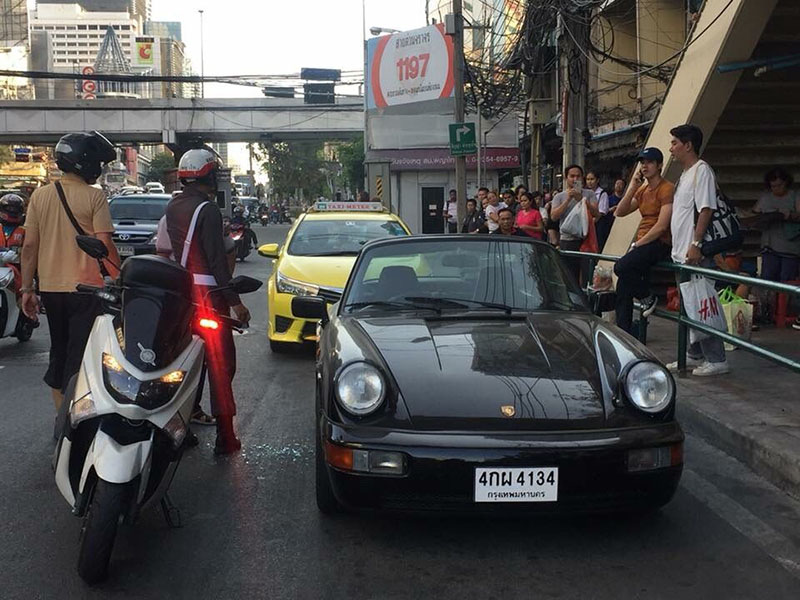
Mario then pulled over on Ratchaprarop Road and, with someone filming the encounter, offered the following measured response to Udon’s road rage:
“People can can get emotional but shouldn’t harm each other. If one of those glass pieces went in my eye and I went blind, how would you make up for that?”
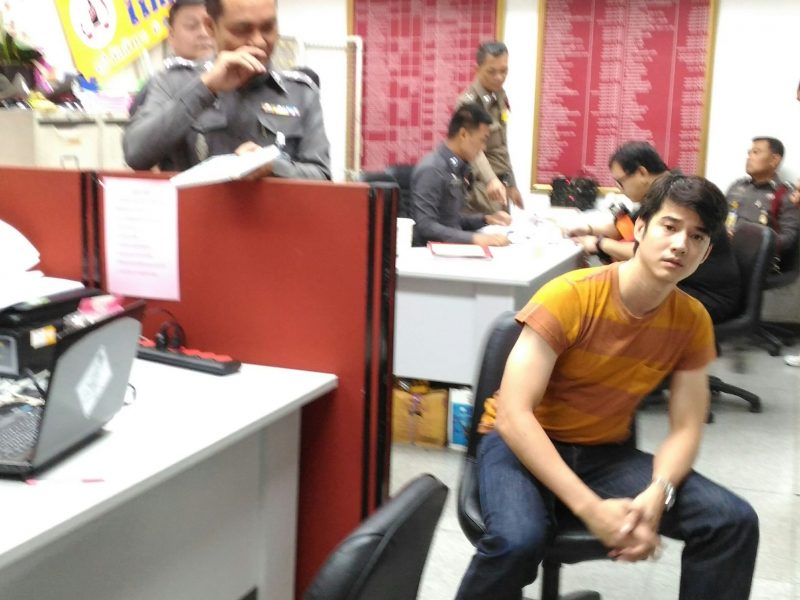
Local police then took both men in.
Mario, a ubiquitous face on screens big and small, is a German-Thai model and actor known for starring in “The Love of Siam,” “First Love” and 2013’s “Pee Mak.” He’s appeared in numerous soaps and advertising campaigns and recently voiced Thai Jon Snow for the most recent season of HBO’s “Game of Thrones.”
Mario Maurer’s broken Porsche window Monday.Mario Maurer’s Porsche and Udon Sutthison’s taxi Monday on Ratchaprarop Road.Mario looks concerned Monday at Phaya Thai Police Station.
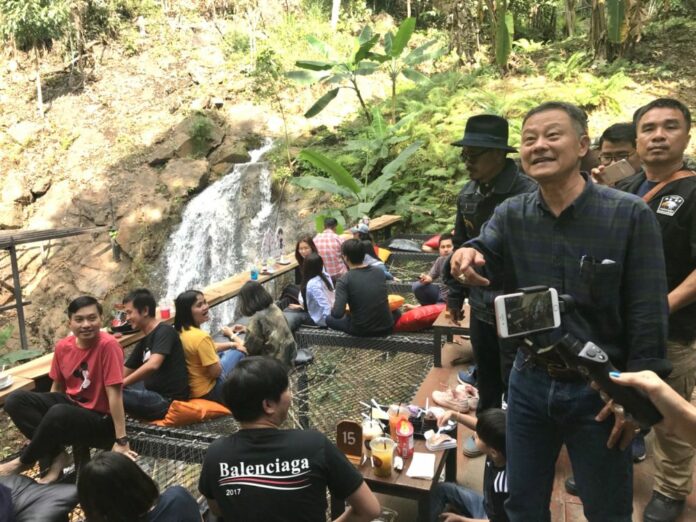
Mae Rim district chief Chaisang Pattanasakpinyo, second from right, points as he inspects the Jungle de Cafe on Tuesday in Chiang Mai province.
CHIANG MAI — Just weeks after opening, a new hip Chiang Mai cafe will be partially demolished for encroaching on protected land.
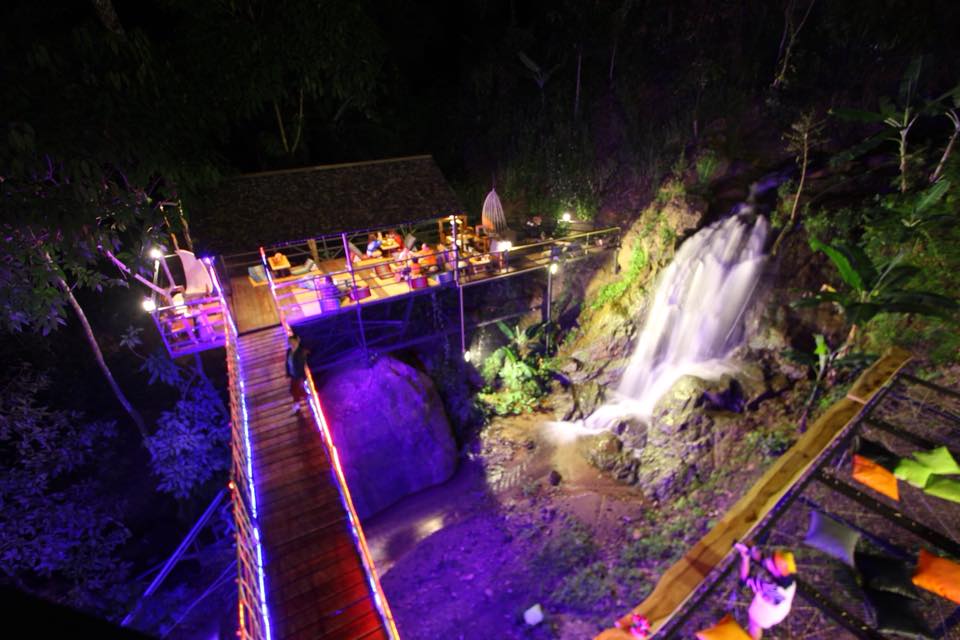
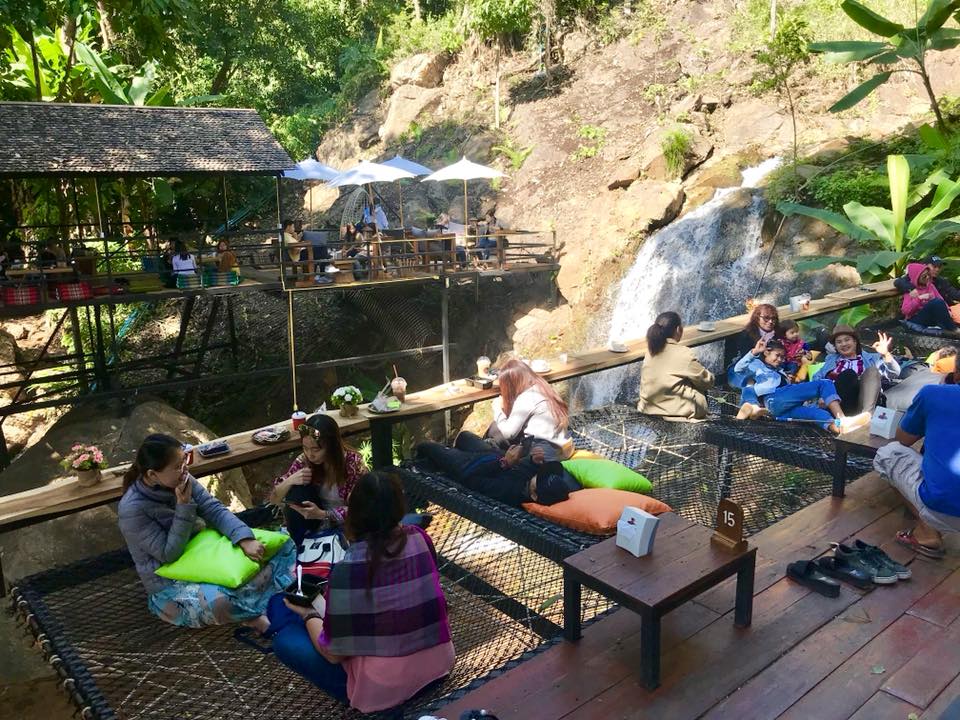
Wildlife authorities ordered Jungle de Cafe to demolish a wooden suspension bridge, deck and net-floored seating area overlooking a waterfall for encroaching 80 meters into the Mae Rim Conserve Natural Forest.
The Forest Department filed encroachment charges against the owner of the cafe, which markets itself as “coffee worth tens of baht, taste worth hundreds of baht and views worth millions of baht.”
Once the intruding structures are removed, the cafe can continue operating, according to Mae Rim district chief Chaisang Pattanasakpinyo.
Jungle de Cafe’s owner Aranya Tarin said she will comply by demolishing the offending parts of the structure.
Jungle de Cafe is located inside the Pongyang Jungle Coaster Zipline Camp and Resort in Chiang Mai’s Mae Rim district.
Soon opening in late November, it drew positive reviews and thousands of visitors for its photogenic location in a natural setting.
Photo: Jungle de Cafe / FacebookPhoto: Jungle de Cafe / Facebook
Former prime minister Yingluck Shinawatra poses for a photo on Jan. 2, 2016
BANGKOK — The foreign minister confirmed Tuesday morning that fugitive former premier Yingluck Shinawatra was in London and said Bangkok would seek her extradition.
Don Pramudwinai, minister of foreign affairs, confirmed the news after the media published three leaked photos which appeared to show Yingluck in London. Don refused to say whether the Thai government would lodge any protest against Yingluck’s much-speculated asylum seeking process.
Don told reporters that he has known Yingluck whereabouts since September, when he was informed by a minister from the British foreign office. He did not name the minister, but the timing coincides with meetings between the junta and Mark Field, foreign minister for Asia.
It was unclear whether Don had notified his superiors in the military government such as junta leader Gen. Prayuth Chan-ocha, who has routinely denied knowing where Yingluck is.
Don added that though it’s unclear how Yingluck entered the United Kingdom, he thinks she likely used one or more foreign passports since all her Thai travel documents had been revoked.
He said the government would try to seek Yingluck’s extradition, but insisted her presence in London would not affect relations between the two nations.
Yingluck fled Thailand before the Supreme Court’s Section for Political Office Holders in September found her guilty of malfeasance and sentenced her in absentia to five years in prison over corruption in a rice-subsidy scheme managed during her tenure as prime minister.
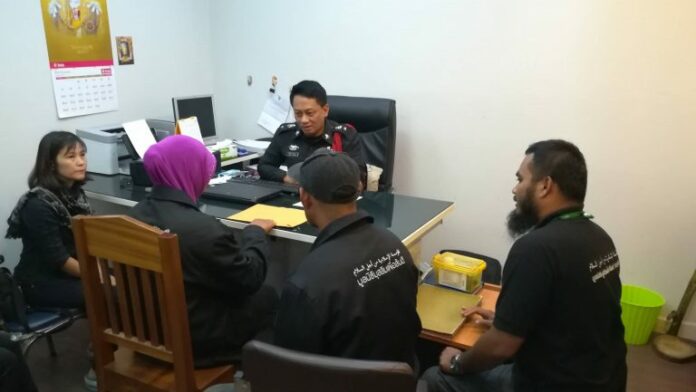
The 14-year-old alleged victim talks to police in September at the Khokkloi Police Station in Phang Nga province.
PHANG NGA — Twenty-nine of 40 people accused of gang raping a minor last year are still at large as of Tuesday morning, police said.
The case surfaced in September when a 14-year old girl came forward to accuse 40 men in the village of Ko Raet of gang raping her in 2016. Police said Tuesday that only 11 of those have been indicted as they continue searching for the remaining suspects.
“All of the 11 men have been indicted on several charges, including gang rape,” Lt. Col. Kittiphum Thinthalang of Khokkloi police in Phang Nga said Tuesday.
If convicted of raping a child under 15, the men face four to 20 years in prison and fines of 8,000 baht to 40,000 baht.
The victim said that 40 men, mostly those from her community, broke into her home, abducted her and raped her repeatedly. She also claimed that the men raped other girls from the village.
Chanon Abdullah, president of the Muslims for Peace Foundation – a nonprofit providing legal assistance to the girl and her family – said Tuesday that the victim was currently under witness protection.
“Police are still finding them. But it will be more difficult to find these men because she doesn’t know their real names,” Chanon said of the 29 suspects still at large.
There was uproar in the village when the story first broke, with many accusing the girl of lying.
“The people in the village are now starting to believe the girl,” Chanon said. “It’s because of the information and evidence that’s come to light as well as the court’s decision [to prosecute the suspects]. So that’s as it should be.”