29.4 C
Bangkok
Friday, June 26, 2026
Home Blog Page 2146

Health Ministry Defends Donating to Health Ministry

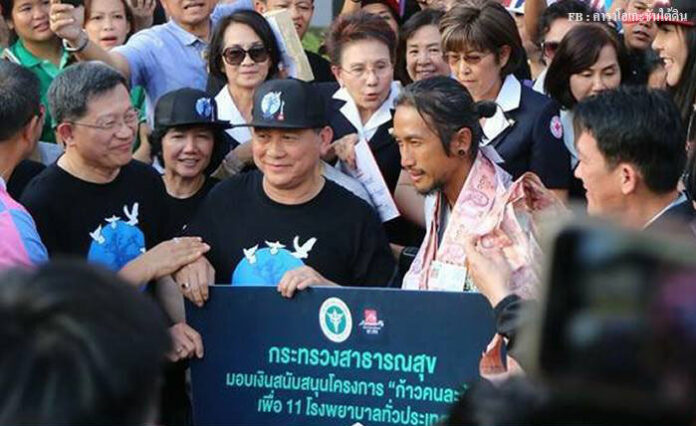
Image: Basement Karaoke / Facebook

BANGKOK — Public health officials defended their donation of 1 million baht to a rockstar running cross country to raise money for public hospitals after people pointed out they were essentially donating to themselves.

Inspector-General Pisit Sriprasert said Thursday that the money handed over came from public health workers all over the country, not just the 11 hospitals that Artiwara “Toon Bodyslam” Kongmalai is raising money for.

“Doctors, nurses and employees from all over the country gave what they could, be it 10 or 20 baht. Giving gifts in itself is a joy,” he said. “What we did was we just collected all the money and then donated it as an organization.”

Netizens on Wednesday slammed a post by the Public Health Ministry showing Permanent Secretary Jessada Chokdamrongsuk hand over 1 million baht in a photo op. Many were the Haha and Angry reacts punctuating a slew of salty comments.

Read: Body Slammed: Tired Toon Trotted Out in Bangkok

“I’d like to thank the Ministry of Public Health for donating to P’Toon so that P’Toon can donate it back to the Ministry of Public Health,” Facebook user Woradet Settha wrote.

They also faulted the ministry for collecting the money from its employees.

“They did this just because they wanted to boost their image and get on the bandwagon, but they failed because of crappy management,” Supakit Chaithip wrote.

The Kai Maew webcomic illustrated the issue by drawing Toon running in a circle, collecting then returning the money to Jessada.

Related stories:

Body Slammed: Tired Toon Trotted Out in Bangkok

A Hero’s Welcome for Toon Bodyslam in Bangkok

Toon’s Body Slams Into Bangkok Sunday

Selfie Stops Blamed For Rock Star Runner’s Injuries

Despite Raft of Sponsors, Public Gives Most to Charity Run

King to Honor Running Rocker ‘Toon’ With Gifts

Mo Farah Encourages ‘Toon Bodyslam’ on Cross-Country Charity Run

Rock Star Sets Off on Cross-Country Charity Run

Advertisement

Mascot Finalists Compete For 2020 Tokyo Olympics

Image : @Tokyo2020 / Twitter

TOKYO — Japanese schoolchildren will help determine the mascot for the Tokyo 2020 Olympics.

Organizers of the Tokyo Olympics and Paralympics on Thursday unveiled three sets of designs for the games’ mascots. The 6.5 million schoolchildren will review the shortlisted designs with their classes casting a single vote in favor of one of the three sets.

The three finalists were selected from among 2,042 entries submitted by the public, with the winner to be announced on Feb. 28.

The first set is a pair of humanoid characters clad in the ichimatsu checkered pattern of the Games’ official logo.

The second set features a maneki neko (good-luck cat) and a fox commonly seen at Shinto shrines. The third set features a fox and a dog with gold ribbons on their backs.

The Tokyo Olympics are scheduled for July 24 to Aug. 9, 2020.

Advertisement

French Reveal the Rama X Coin Thailand Didn’t Want Shown

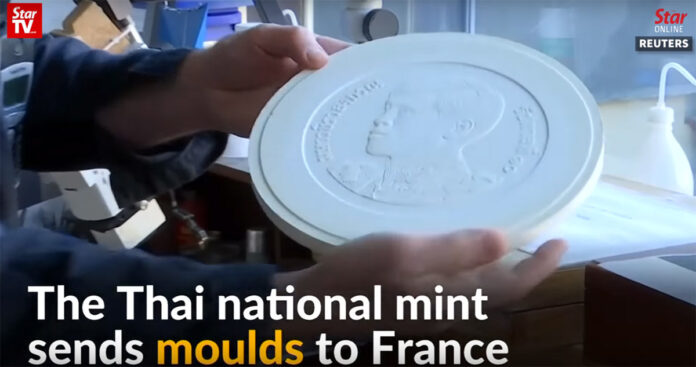
Still image from a Reuters news video on French minting of Thailand's new coins.

BANGKOK — The Treasury Department warned social media Wednesday not to share footage of the new coins being minted to replace those currently in circulation.

The new design, which bears the portrait of King Vajiralongkorn, was briefly shown in a video about a French mint contracted to supply coins to Thailand. Treasury Director Pachorn Ananta-silpa said he has written a complaint to the mint for breaching its confidentiality agreement.

The design is supposed to be a state secret and has yet to be approved for release by the cabinet, Pachorn told reporters.

Read: Rama X to Replace Rama IX on Currency

The one-minute video was produced by Reuters. It explores a little-known fact that Thailand outsources its coin production to overseas mints like the one in France. At one point in the video, a French staff member shows what the new coin will look like to the camera.

A French television news segment back in April reported that Thai coins were being minted in Paris but did not show any designs.

Per tradition, King Bhumibol’s death in October 2016 means his long-ubiquitous face on coins and banknotes will be replaced by that of his successor, King Vajiralongkorn. The government previously confirmed that would take place but gave no timeline.

Pachorn said he will seek financial compensation from the French mint for the unauthorized display of the new coin design.

He also warned Thais not to share the video on social media.

https://www.youtube.com/watch?v=1d_0p0Z0kS0a

Advertisement

Star For Street Food Joint as Michelin Bangkok Revealed

BANGKOK — A humble but pricey street food restaurant in old Bangkok received one Michelin star in the first ever such award given by the famous French culinary guidebook.

Jay Fai, a humble restaurant located at a shop house in Pratu Phee area near Mahakarn Fort was among the 14 restaurants accorded one Michelin star. No restaurant in Bangkok received three stars. Three accorded two Michelin stars were familiar names: Indian favorite Gaggan, the famous Le Normandie restaurant at The Mandarin Oriental Hotel and Mezzaluna at The Lebua.

The restaurants will be honored at an awards ceremony beginning at 7:30pm tonight at the Siam Kempinski Hotel and streamed online.

Other 1-starred restaurants included famous Thai restaurant Bo.lan, Elements at The Okura Prestige, Ginza Sushi-Ichi, Chim by Siam Wisdom, Nahm at The Como Metropolitan, J’AIME by Jean-Michel Lorain.

Read: Does Michelin Guide Mean Farangs Can Judge Thai Food?

L’Atelier de Joel Robuchon, Paste, Saneh Jaan, Savelberg at The Oriental Residence, Sra Bua by Kiin Kiin at The Siam Kempinski Hotel, Suhring and Upstairs at Mikkeller also received one star each.

“Cook like a mother would for her children… always use and choose the best ingredients,” Chef Thaninthorn Chantrawan of CHIM was quoted by Michelin online Wednesday afternoon.

“It’s important to preserve complexity and uniqueness in Thai flavours,” chef BGee Satongun of Paste Bangkok was quoted.

Absent was the famed Blue Elephant restaurant. The dark horse was by all means Jay Fai, a humble, non-air conditioned restaurant serving dishes like crab omelettes at the rather steep price of 800 baht. It’s shrimp or mixed seafood raad-nar (noodles with thick gravy) goes for 380 baht a plate. A mixed seafood tum yam gung noodle also goes for 380 baht. A middle-age Thai-Chinese woman by the name of Jay Fai, or “elder sister mole,” named after a visible mole on her face, is the only chef doing her wok wonders at the restaurant. Jay Fai is open from 3pm to 2am every day except Saturday, making it suitable for not just diners but drinkers out on the night.

A review on Pantip.com praised its food but many asked why it’s so expensive for a street food restaurant.

Definitely expensive but also one inclusions Bo.lan on Soi Sukhumvit 24 is better known and always expected to be a worth at least a star as chefs Duangporn “Bo” Songivsava and Dylan Jones are celebrities themselves.

Gaggan, an Indian restaurant on Soi Langsuan featured in a Netflix episode of the Chef’s Table food documentary series has been a repeat winner of the Best Restaurants in Asia by Restaurant magazine.

Additional reporting Asaree Thaitrakulpanich

Related stories:

Does Michelin Guide Mean Farangs Can Judge Thai Food?

Star Power: Michelin Guide Coming to Thailand

Popularity and Profits: Bangkok’s Chefs Anxiously Await ‘Asia’s 50 Best’

Advertisement

4-in-10 Thai Shoppers Toss Clothes After 1 Wear: Survey

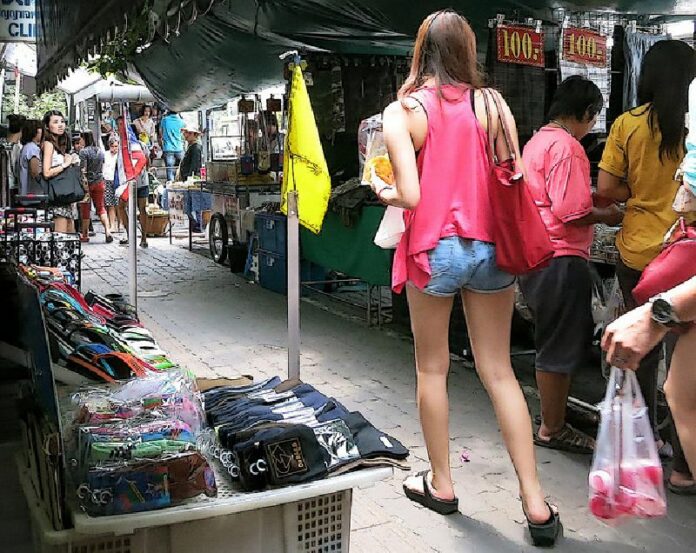
A pedestrian walks through stalls specializing in apparel and fashion items in Bangkok’s Pratunam area. Photo: Jef1947 / Flickr

BANGKOK — Hot off the rack – and ready for the landfill?

A significant number of Thai consumers are prone to trashing their clothes, with millennials given to dumping things they’ve worn only once, a survey released Tuesday found.

YouGov found eight-in-10 people admit to having discarded an item of clothing in the past year. Of those, half say they threw away more than 10 items or something they wore only one time.

“Sometimes, clothes that look good on the rack don’t really suit me when I actually try them on at home. People I’m shopping with encourage me to buy the item,” Phimploy Sangsuwan, 23, said in an interview about her own closet management.

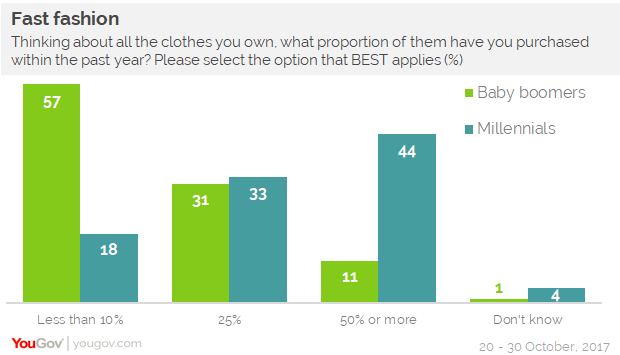
Forty-four percent of millennials (born between 1978 and 1998) say they bought half of their current wardrobes during the past year. In contrast, baby boomers bought less than 10 percent of their clothes in 2017.

Phimploy said she’s thrown away almost 10 items this year alone.

“The clothes I threw away are ones I bought in bulk, like this time where I bought five pants,” she said.

Some items she’s never even worn.

“Mostly these are winter clothes, long-sleeved shirts or crop tops that need a special occasion or weather for me to wear them,” said the recent graduate in French from Chulalongkorn University’s Faculty of Arts.

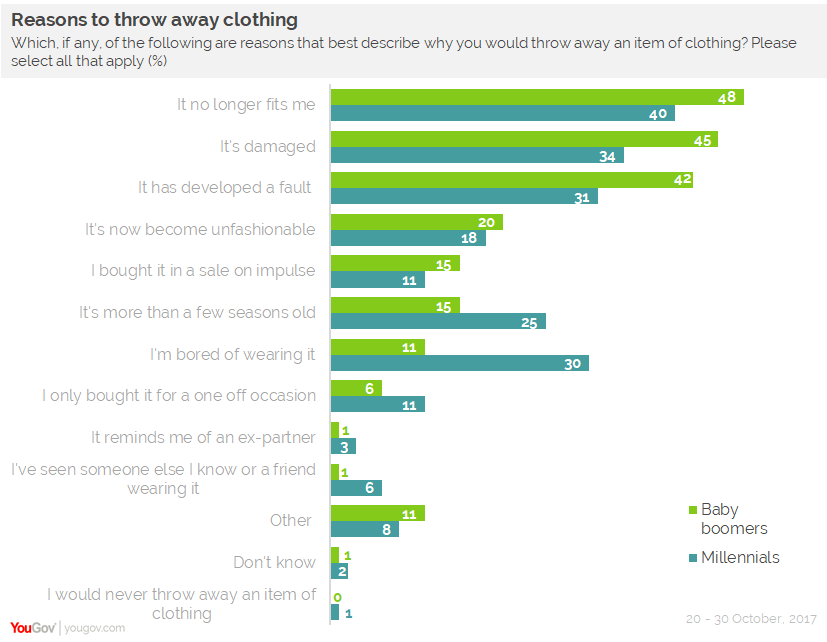
For both baby boomers and millennials, the most popular reasons for throwing clothes away are because they no longer fit or because of damages. However, a third of millenials, contrasted with 11 percent of baby boomers, throw away clothes because they are “bored of wearing it” or because “it’s more than a few seasons old.”

According to the YouGov poll, most of the 1,137 respondents – 82 percent of boomers and 62 percent of millennials – said they donate unwanted clothes to charity. A quarter of them admitted to tossing three items they’d only worn once.

YouGov, a UK-based market research company, conducted the survey between Oct. 20 and Oct. 30.

Fast fashion, or designs that move quickly from design to the rack, can be found in abundance in Thailand, whether from retail chains such as H&M and Forever 21, or inexpensive items mass-produced in China and sold in street markets.

“Fashion is short-lived, but style is long,” Phimploy said. “It’s better to find your own style and stick to it rather than just going along with the trend. Even if an item is more expensive than usual but you’re confident you can use it everyday, then it’s an investment.”

unnamed
Graphic: YouGov
unnamed 1
Graphic: YouGov
Advertisement

Show and Don’t Tell: Gen. Prawit Won’t Explain His Bling Watch to Public

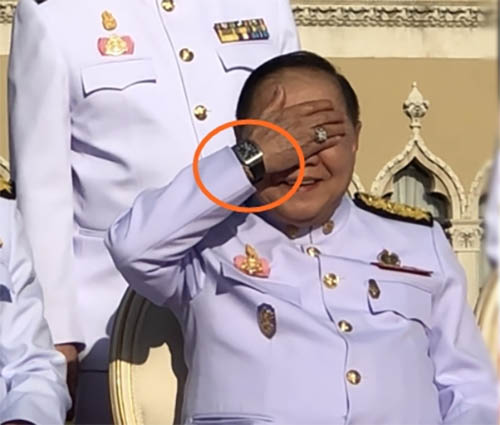
Gen. Prawit Wongsuwan flashes a watch thought to cost several million baht in a Monday photo.

BANGKOK — The second in command of the ruling junta said Wednesday he’s willing to discuss his taste for luxury wristwatches with an anti-corruption agency, but not the public – and certainly not reporters.

Gen. Prawit Wongsuwan, who was already getting low marks from the public before being spotted wearing a multi-million baht watch, said he’d discuss the flashy wristwatch with the National Anti-Corruption Commission after an anti-graft crusader vowed to petition the agency to look into it.

A member of the body took up the offer Wednesday.

Read: Deputy Junta Head Sports Spendy Haute Horology

“We are not pressured. It’s normal work. It all depends on the facts,” said Worawit Sukboon, the commission’s deputy secretary general. Worawit said the matter would be taken up Thursday.

The watch, believed to be made by super-luxury brand Richard Mille, has an estimated value of at least 3 million baht. He flashed it Monday in an official portrait taken of the new cabinet. That led veteran transparency advocate Srisuwan Janya to say he would petition the commission Thursday to look into any possible irregularities.

Since Monday, the mockery has been running wild online, where Prawit was already taking flak for insensitive comments about a cadet who died in a military academy. He has since apologized.

Netizens and critics have been striking the same pose in photos mocking the deputy junta leader with satirical remarks.

“Everyone’s got one!” pro-democracy activist and anti-junta dissident Sombat Boonngamanong wrote with a photo of himself sporting a top hat and bowtie.

University professor and social media influencer Jessada Denduangboripant posted a photo of himself with a cheap blue plastic watch and ring captioned: “I am a low-ranking civil servant, but I have enough savings for a ring and a watch. LOL.”

The watch in question was captured by news photographers Monday as Prawit joined the new cabinet for an official group photo. It invited curiosity as to how much it cost and why it was not declared among assets when he assumed the post of deputy premier after the 2014 coup.

Gen. Prawit told reporters this morning he wouldn’t publicly discuss the matter.

“I don’t need to clarify. I did it. I will clarify it to the NACC. It’s okay,” 72-year-old Prawit said. “I don’t need to answer to the press. If the NACC asks, I will reply.”

Pressed further if he has evidence readied, he said yes. Asked if the watch make was indeed a Richard Mille or not, Prawit deflected the question.

“I don’t know. Please ask about other topics,” he said.

Prawit was then asked if he feels disheartened or discouraged by the criticism. He said no.

He would not specify if he obtained the watch before or after taking office.

“Don’t know. I won’t answer. I will answer to the NACC. I don’t know why I should answer to you people. If I answered, the media will elaborate on it,” Prawit said, insisting he has not been involved in any corruption.

On Facebook, some questioned how Prawit could afford a multi-million baht wristwatch on his salaries totaling 240,000 baht (119,920 baht for deputy prime minister and 119,920 for junta deputy).

Same Sky Magazine editor Thanapol Eawsakul wrote online Tuesday to question how appropriate Prawit’s choice of a multi-million baht watch in light of the “sufficiency economy” espoused by the late King Bhumibol and encouraged by the military government.

Even New Yorker internet personality Nelson S. Howe, who often pokes fun at things Thai, joined the bandwagon by mimicking Prawit’s posture with his right hand covering his eyes:

“I love my watch. I bought it with my own money.”

Advertisement

Irawaddy Dolphin Now ‘Endangered’ and We’re to Blame

An Irrawaddy dolphin. Photo: World Wildlife Foundation

BANGKOK — Two rare aquatic mammals are now officially listed as endangered due to poor fishing practices, marine experts said Wednesday.

The Irrawaddy dolphin and finless porpoise have been downgraded to endangered from vulnerable on the IUCN Red List in its annual update released Monday after their numbers in the wild fell into the hundreds.

“Numbers more than halved over the past 60 years for the Irrawaddy Dolphin, and over the past 45 years for the Finless Porpoise,” the IUCN said. “Both species live only in shallow waters near shore, and both have populations confined to freshwater systems, which makes them extremely vulnerable to human activities.”

Thai marine wildlife officials say they are alarmed about freshwater dolphin populations.

201702231539283 20041020080146 768x513 e1512538749121
A beached Irrawaddy dolphin in February in Phatthalung province.

“There are only 22 Irawaddy dolphins left in Songkhla Lake. That’s their last natural freshwater habitat in Thailand. That’s extremely, horribly endangered,” said Weerapong Laovetchprasit of the Marine and Coastal Resources Research and Development Center in Rayong. “There are 200 more in Trat in the Gulf of Thailand, but even that number is still super low.”

As for the finless porpoise, he said his department has trouble tracking their numbers for their distinctive feature: the lack of fins makes it harder for scientists to spot them above water.

“Finless porpoises are the only type of porpoise found in Thailand. They have more numbers than the Irrawaddy, but their numbers are still decreasing very fast, counting from the beached porpoises we found,” he said.

They are prone to accidental entanglement in non-selective fishing nets – the primary cause of their decline. Further causes of decline include the overfishing of prey and habitat destruction.

Humans are the main cause of their decline, according to IUCN. People are tangling them in their nets, overfishing their prey, destroying their habitat and polluting their waters.

0702.14 Yangtzefinlessporpoise Neophocaenaasiaeorientalisasiaeorientalis CriticallyEndangered XiaoqiangWang.600
A pair of finless porpoises. Photo: Xiaoqiang Wang

“A lot of times they will get tangled in ropes and drown because they can’t come up to the surface to breathe,” he said. “Other times, they ingest so much plastic that their bodies are completely rotten when we do an autopsy.”

Thailand is the last bastion for the Irrawaddy dolphin in Southeast Asia, Weerapong said, after the freshwater dolphin became extinct in Laos since November 2016, with only a few found in Cambodia, Indonesia and Myanmar.

Freshwater whales, dolphins and porpoises are vulnerable to extinction due to low breeding rates and land use by the river, Weerapong said, referencing the Yangtze river dolphin which went extinct in 2007 in China.

Weerapong asked people to stop using plastic bags and straws indiscriminately since many end up as marine debris and endanger animals.

“People think using plastic is a boring, stupid issue, but it’s really not,” he said.

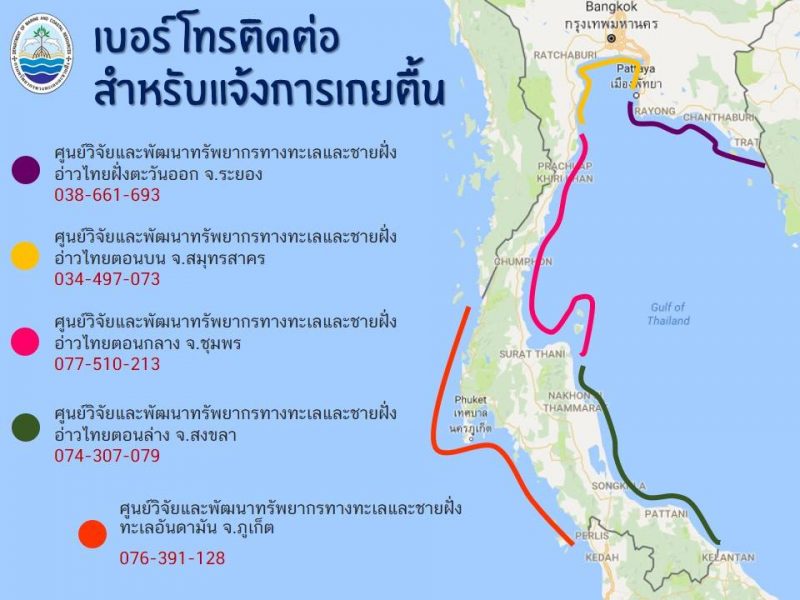
Any beached marine animals, dead or alive, should also be reported into the the Department of Marine Resources’s research branches in Rayong, Samut Sakhon, Chumphon, Songkhla or Phuket for rescue or autopsy either through Facebook or by phone.

“Please don’t leave these rare aquatic animals to die like stray dogs,” he said.

15192603 302031546864137 7150615293337441777 n 1 e1512538701145
Contact information for the Department of Marine Resources’s research branches in Rayong, Samut Sakhon, Chumphon, Songkhla and Phuket from top to bottom.
Advertisement

Russia Banned From Olympics, But No Winners in Doping Saga

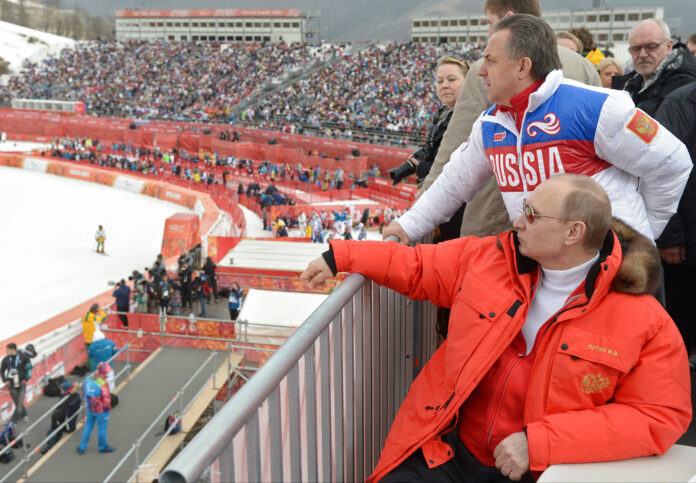
Russian President Vladimir Putin, foreground, watches downhill ski competition at the 2014 Winter Paralympics in the Roza Khutor mountain district of Sochi, Russia, as Russia's sports minister Vitaly Mutko stands behind. Photo: RIA-Novosti, Alexei Nikolsky, Presidential Press Service

LAUSANNE, Switzerland — If you’re looking for winners after the International Olympic Committee’s decision to boot Russia from the upcoming Games, keep on looking.

There are none.

Yes, it’s easy to view the IOC’s decision as a victory for clean athletes who have been desperately waiting for a day like Tuesday — when the IOC finally delivered a sanction that was, at least on some level, in line with the crimes.

It’s easy to see it as vindication for Grigory Rodchenkov, the Russian lab director who helped execute the cheating, then got sick of it all and became a whistleblower who is now living in hiding in the United States.

And it’s easy to see it as a long-awaited comeuppance for the Russians, who have been thumbing their noses at long-accepted rules and norms of fair competition, virtually daring the powers that be to do something about it.

But the crimes — they have already been committed, and those who were cheated at the Sochi Olympics will never get that moment back, even if the IOC gives them a ceremony at the Pyeongchang Games in February.

Rodchenkov’s life will never be the same.

“It’s going to be challenging in ways hard to imagine,” his attorney, Jim Walden, said. “It’s unlikely he’ll ever be reunited with his family, unlikely he’ll ever leave the United States, and he’s going to be looking over his shoulder every day.”

And while it might seem like a good deal to ban Russia from the Olympics — or at least the Russian flag, anthem and uniforms, though not all its athletes — it’s a precarious position for the IOC. One potential endgame is that Russia just throws up its hands and leaves the movement altogether. Imagine, if you will, the NBA without the Lakers or the World Cup without Brazil, and you get a sense of what the Olympics might be like in the future without its second biggest team.

As the IOC left it, there figure to be a number of Russians competing in Korea.

They will be individually referred to as “Olympic Athlete from Russia,” or “OAR.”

The fact that Russian Olympic Committee President Alexander Zhukov called the name a “very important” concession — to say nothing of the fact that IOC left open the possibility that the Russian flag could fly at the closing ceremony — gives a window into the contortions the IOC has been going through to make sure it doesn’t completely alienate the country that spent $51 billion to stage the Sochi Games where it cheated all its guests.

That $51 billion wasn’t simply to put on a good show. It was part of Russia’s attempt to use sports to show it could still be a major player on the world stage, more than two decades after the breakup of the Soviet Union. For a country spending that much, a poor showing in the medals table was a nonstarter. After finishing 11th at the 2010 Olympics in Vancouver, something had to change.

“They view (the Olympics) as a vehicle for promoting Russian values,” said Steve Roush, the former chief of sport performance at the U.S. Olympic Committee who now does international consulting. “Vancouver was embarrassing for them. That led to, ‘We are going to change the way we do things for 2014.'”

Boy did they.

As the IOC investigation confirmed, Rodchenkov helped build the cheating program at the behest of higher-ups in the Russian government. And now that the IOC has climbed on board with all the other investigators and whistleblowers and athletes in acknowledging that Russia’s government masterminded the plan, there are no major forces outside of that country who argue about the lengths Russia would go to use sports as a symbol of national strength.

So, even Russia’s small victory — that it can send athletes to compete under the Olympic flag — may feel like something less, given that nobody will see the Russian flag unfurled, the uniform worn or the anthem sung, and that name “Russia” will never appear on the official medal tally. That is, after all, what the Olympics are all about.

But the IOC’s small victory — that, after long last, it did the “right” thing — feels like something less, as well, given all the time it wasted, all the athletes who got hurt along the way, not to mention the concessions it made in an attempt to appease Russia one more time.

“Justice for a horrendous act on sport, a great option for clean athletes to have the opportunity to compete, and partial vindication for so many who we’re hurt by Russia’s actions,” American gold-medal bobsledder and current U.S. Olympic Committee board member Steve Mesler said in describing Tuesday’s decision.

Hardly the stuff champagne toasts are made of. But probably the best that can be said given the current state of the Olympics.

Story: Eddie Pells

Advertisement

Hospital Bomber Sentenced to 27 Years

Wattana Poomarej, 62, today in Bangkok.

BANGKOK — The man who set a bomb injuring 21 at an army-run hospital was sentenced Wednesday to 27 years in prison for crimes including attempted murder.

Wattana Poomarej, 62, an engineer at a state-owned utility, was found guilty of premeditated and attempted murder by setting off a pipe bomb disguised inside a flower vase in a waiting room of the Phramongkutklao Hospital.

The sentence was reduced from life for his confession. The other crimes, which altogether added up to the 27-year sentence, included assembling an explosive device, for which Wattana was sentenced to three years.

His loathing of the military junta which staged the 2014 coup was reportedly Wattana’s raison d’ etre for the indiscriminate attack. Forty-people were injured in the attack, which took place on May 22, the third anniversary of the coup. No one was killed.

The waiting room where the bomb exploded at the Bangkok hospital was also named after deputy junta leader Gen. Prawit Wongsuwan’s family. Prawit was once army chief and the hospital named various rooms after past commanders. Besides the casualties, the damage caused by the blast was estimated at 1 million baht.

Related stories:

‘I Didn’t Intend to Hurt Anyone,’ Hospital Bombing Suspect Says

Suspected Hospital Bomber Confesses, Junta No. 2 Says

Woman Held for Allegedly Sending Hospital Bomb Letters

Army Chief Links Hospital Bombing to Recent Bangkok Attacks


Advertisement

French Rock Icon, Johnny Hallyday, 74

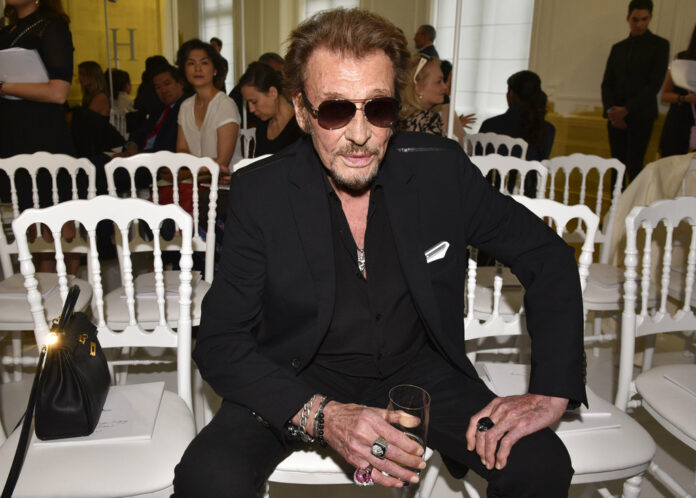
French rock singer Johnny Hallyday waits July 6, 2016, before Christian Dior's Haute Couture Fall-Winter 2016-2017 fashion collection presented in Paris, France. Photo: Zacharie Scheurer / Associated Press

PARIS — Johnny Hallyday, the French rocker icon who packed sports stadiums and was the country’s top rock star for decades, has died at 74.

French President Emmanuel Macron’s office announced his death in a statement early Wednesday, saying “he brought a part of America into our national pantheon.”

Macron’s office said the president spoke with Hallyday’s family after the news. Hallyday had long suffered from lung cancer and had repeated health scares recently.

Hallyday’s glitzy stage aura was clearly fashioned around stars like Elvis Presley and his musical inspiration came from the likes of Chuck Berry and Buddy Holly. Yet his stardom largely ended at the French-speaking world.

Macron said “we all have something of Johnny Hallyday in us.” Celine Dion was among stars sharing condolences at the news.

Story: Elaine Ganley, Angela Charlton


Advertisement

Hot News

LATEST NEWS

Bangkok
broken clouds
29.4 ° C
32.2 °
29.4 °
74 %
5.4kmh
58 %
Fri
29 °
Sat
36 °
Sun
37 °
Mon
37 °
Tue
32 °