29.9 C
Bangkok
Saturday, June 27, 2026
Home Blog Page 2153

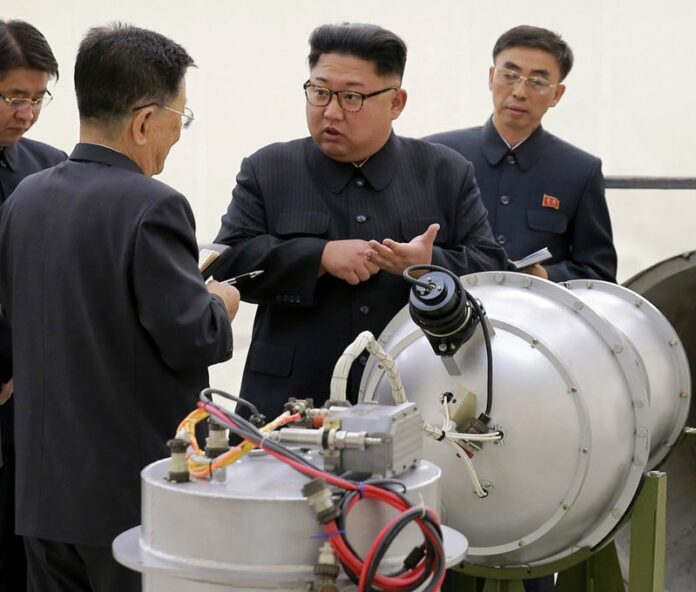
N. Korea Says It Successfully Tested New Missile

This undated file photo distributed on Sunday, Sept. 3, 2017, by the North Korean government, shows North Korean leader Kim Jong Un, second from right, at an undisclosed location (Korean Central News Agency/Korea News Service via AP, File)

WASHINGTON — North Korea says it successfully tested a new, nuclear-capable intercontinental-ballistic missile that could target the entire U.S. mainland.

The North’s state television said Wednesday the new ICBM was “significantly more” powerful than the previous long-range weapon the North tested.

The report called the weapon a Hwasong 15. The launch was detected after it was fired early Wednesday morning from a site near Pyongyang.

Advertisement

Trump’s ‘Pocahontas’ Jab at Navajo Event Draws Blowback

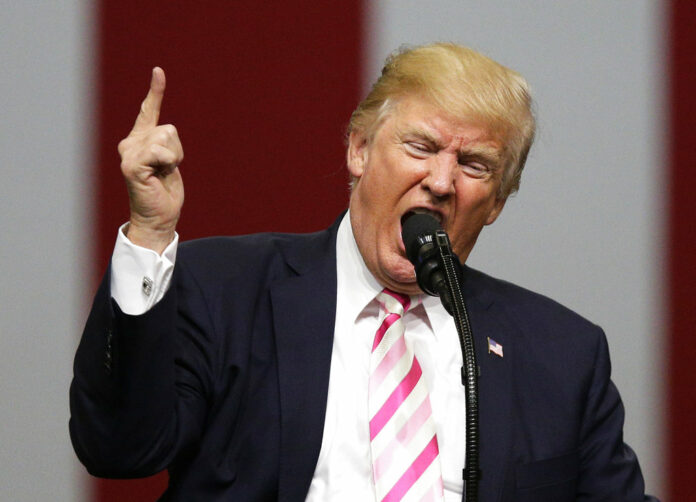
US President Donald Trump speaks in 2017 at a campaign rally in support of Sen. Luther Strange, in Huntsville, Alabama. Photo: Brynn Anderson / Associated Press

FLAGSTAFF, Arizona — Families of Native American war veterans and politicians of both major parties are criticizing President Donald Trump for using a White House event honoring Navajo Code Talkers to take a political jab at a Democratic senator he has nicknamed “Pocahontas.”

The Republican president on Monday turned to the name he often deployed for Massachusetts Sen. Elizabeth Warren during the 2016 presidential campaign to mock her claims about being part Native American. He told the three Navajo Code Talkers on stage that he had affection for them that he doesn’t have for her.

“It was uncalled for,” said Marty Thompson, whose great-uncle was a Navajo Code Talker. “He can say what he wants when he’s out doing his presidential business among his people, but when it comes to honoring veterans or any kind of people, he needs to grow up and quit saying things like that.”

Pocahontas is well-known as a Disney princess but less so for the sacrifices she made to save her people from British forces in the 1600s in present-day Virginia, descendants of her tribal community say. Whether Trump’s remark constitutes a racial slur depends on who you ask, but most critics agree it was inappropriate.

Warren said Trump’s repeated references to her as “Pocahontas” will not keep her from speaking out.

“Now he seems to think that that’s somehow going to shut me up, maybe keep me from talking about the consumer agency today,” Warren said Tuesday after a protest outside the Consumer Financial Protection Bureau. “Or keep me from talking about the tax bill that would favor giant corporations instead of working families.”

“He’s wrong. It’s not going to make any difference,” Warren said.

All he “had to do was make it through the ceremony,” she said. “But that wasn’t possible for Donald Trump. He had to throw in a racial slur.”

White House spokeswoman Sarah Huckabee Sanders, said Monday that she didn’t believe the remark was a racial slur and that “was certainly not the president’s intent.”

Trump made the comment as he stood near a portrait of President Andrew Jackson, which he hung in the Oval Office in January. Trump admires Jackson’s populism. But Jackson is an unpopular figure in Indian Country because he oversaw the forced removal of American Indians from their southern homelands.

The Navajo Nation suggested Trump’s remark was an example of “cultural insensitivity,” and they resolved to stay out of the “ongoing feud between the senator and President Trump.”

“All tribal nations still battle insensitive references to our people. The prejudice that Native American people face is an unfortunate historical legacy,” Navajo Nation President Russell Begaye said in a statement.

Still, Begaye and relatives of Navajo Code Talkers said they’re honored the story of the men recruited from the vast Southwest reservation to become Marines could be told on a national stage. Peter MacDonald, a former Navajo chairman and trained Code Talker, who stood beside Trump, also took the opportunity to ask for support for a Navajo Code Talker museum. Trump obliged.

Michael Smith, a Marine whose father was a Code Talker, said most of the Code Talkers would be skeptical about going to the White House because it could be construed to mean they support a political cause.

“So, why did they go? Why were they there? He’s putting them in the Oval Office to say ‘You did a good job, and say hi to Pocahontas?'” Smith said. “They should be taken care of as heroes, not as pawns.”

Michael Nez, whose father helped develop the code based on the Navajo language, said his father would have been upset to hear Trump’s “Pocahontas” comment. But, as other Code Talker relatives said, his father was taught to respect the president as the commander in chief.

“It’s too bad he does put his foot in his mouth,” Nez said. “Why he does it? I don’t know.”

The president has long feuded with Warren, an outspoken Wall Street critic who leveled blistering attacks on Trump during the campaign. Trump seized on questions about Warren’s heritage, which surfaced during her 2012 Senate race challenging incumbent Republican Sen. Scott Brown.

Warren says her parents told her of the Native American connection and she listed herself with that heritage in law school directories to meet others with similar backgrounds.

“Our nation owes a debt of gratitude to the Navajo Code Talkers, whose bravery, skill & tenacity helped secure our decisive victory over tyranny & oppression during WWII,” Arizona Republican Sen. John McCain, a decorated veteran of the Vietnam War, tweeted Tuesday. “Politicizing these genuine American heroes is an insult to their sacrifice.”

Story: Felicia Fonseca, Laurie Kellman

Advertisement

Pope Preaches Forgiveness in First Mass in Myanmar

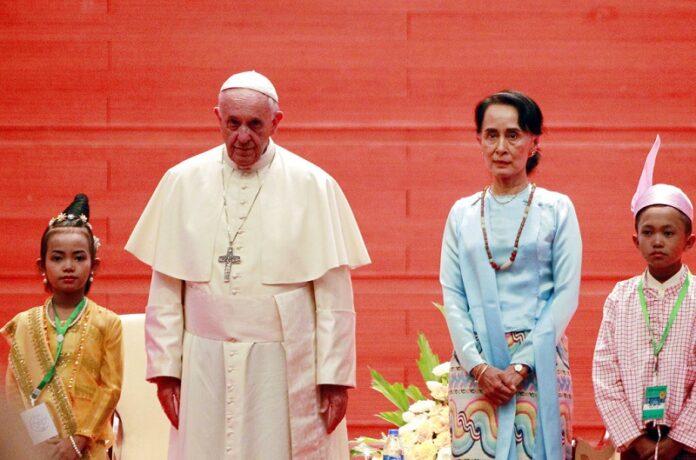
Myanmar's leader Aung San Suu Kyi, center right, and Pope Francis, centre left, pose for media at a meeting with members of the civil society and diplomatic corps in 2017 in Naypyitaw, Myanmar. Photo: Aung Shine Oo / Associated Press

YANGON — Pope Francis urged Myanmar’s long-suffering people to resist the temptation to exact revenge for the hurt they have endured, preaching a message of forgiveness Wednesday to a huge crowd in his first public Mass in the predominantly Buddhist nation.

Local authorities estimated some 150,000 people turned out at Yangon’s Kyaikkasan Ground park for the Mass, but the crowd seemed far larger. Catholics had to apply to attend through their local churches to enter the park venue, and many dressed in matching outfits or with hats bearing the pope’s image.

Before Mass, Francis looped around the park in his open-sided popemobile, waving to the crowds that continued to pour in as the service began. Local government officials and senior members of Aung San Suu Kyi’s National League for Democracy party were on hand, as were members of Myanmar’s mostly Christian Kachin minority, wearing traditional dress.

Francis has said his aim in coming to Myanmar is to minister to its Catholic community, which numbers around 660,000 people, or just over 1 percent of the population of about 52 million.

His trip has been overshadowed, though, by Myanmar’s military operations targeting the Rohingya Muslim minority in northern Rakhine state. The crackdown, which has been described by the U.N. as a campaign of “textbook ethnic cleansing,” has drawn international condemnation.

In his first public comments on Tuesday, Francis told Suu Kyi and other government authorities that Myanmar’s future lay in respecting the rights of all its people — “none excluded” — but he refrained from mentioning the “Rohingya” by name. The violence, looting and burning of Rohingya Muslim villages has resulted in more than 620,000 people fleeing to neighboring Bangladesh in Asia’s worst refugee crisis in decades.

In his homily Wednesday, Francis referred to the suffering that Myanmar’s ethnic and religious minorities have endured, a reference to the decades of conflicts between Myanmar’s ethnic minorities and the military that continue today in parts of the country. Myanmar recently emerged from nearly a half-century of military dictatorship, but minorities including the Kachins are still subject to discrimination and other forms of violence.

“I know that many in Myanmar bear the wounds of violence, wounds both visible and invisible,” Francis told the crowd in Italian that was translated into Burmese. While the temptation is to respond with revenge, Francis urged instead a response of “forgiveness and compassion.”

“The way of revenge is not the way of Jesus,” he said, speaking from an altar erected on a traditional Buddhist-style stage.

Later Wednesday, Francis is to meet with Myanmar’s Buddhist leadership and then speak to the country’s Catholic bishops. He celebrates a Mass for young people Thursday and then heads to Bangladesh for the second leg of his South Asian tour.

Story: Nicole Winfield, Esther Htusan

Advertisement

Prayuth ‘Regrets’ Yelling at Pattani Fisherman

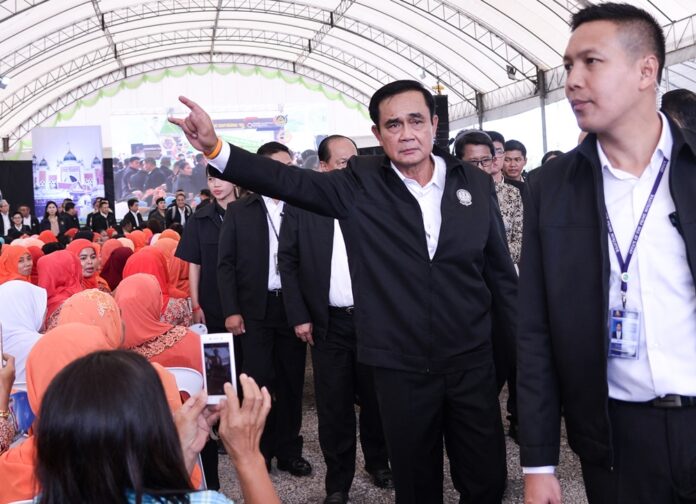
Junta chairman Prayuth Chan-ocha raises an "I love you" hand gesture Monday at an event in Pattani province
BANGKOK — Gen. Prayuth Chan-ocha took to social media Tuesday to express regret for shouting down a fisherman in the southern province of Pattani.

The message, written by the junta leader’s publicity team and posted to Facebook, fell short of an apology and urged the public to consider the context of the government policies that prompted fisherman Saranyu Charoen, 34, to complain to the Prayuth while he was touring the region.

“The prime minister regrets reprimanding a fisherman in Pattani yesterday, but do understand that what the government is doing is to solve the problems of illegal fishery,” the message posted to Prayuth’s official Facebook page read.

Saranyu complained loudly to Prayuth on Monday that fishing is allowed only up to 220 days annually, which he considered to be inadequate to make a living.

Prayuth, who was holding a microphone, looked agitated and raised his voice into the device to interrupt Saranyu.

“Don’t raise your voice at me! Understand? Talk nicely. I am willing to listen to your problems,” he said.

He then told his staff to listen to the man’s grievances and walked away.

The post on Prayuth’s Facebook page, which has 14,353 followers since launching earlier this year, had attracted more than 370 comments as of Tuesday afternoon, most of which were critical.

“Being PM, you must be calm,” user Snicy Sniper wrote. “This kind of ‘habit’ should only be employed at home. If you can’t bear it, you should just resign.”

Others made clear their adulation for the retired general was unaffected.

“I love PM… Tears brimming,” user Patapong Akaravikayakrom wrote.

It was the second apology from Prayuth’s administration in a week’s time. His deputy, Gen. Prawit Wongsuwan, apologized Friday to the family of a dead teen military cadet after suggesting those who joined the military needed to be “fully willing” to endure physical punishment.

Advertisement

Bangkok Bus Groper Caught in Act, Women Say It’s Common (Video)

A screencap from the video posted by Apinop Kom Bootdeemee to Facebook

BANGKOK — The video starts innocuously enough. A woman takes her seat on a bus. A beat later, a hand creeps out from behind toward her breast, again and again.

The video filmed by a passenger and posted on a popular Facebook group by someone claiming to be her boyfriend has drawn widespread attention and displeasure. The incident comes a week after a survey found one-third of respondents experienced sexual harassment on public transportation.

“Bus No. 8. My girlfriend was on the way to buy something but she was groped by a psycho,” Apinop Kom Bootdeemee wrote. “She was groped several times before she realized what was happening and filmed this clip.”

Read: Victims Recount Harrowing Episodes of Sexual Violence

The woman, who was not named in the post, filmed the hand reaching for her for about a minute before turning to the man and confronting him.

“Why did you put your hand there? Why did you touch me? Are you a psycho?” the woman asked. The man replied he was merely holding onto the seat.

A woman wrote in the thread that she also experienced something similar on the same bus route.

“I turned around and found this bastard, He was groping me, his body was very close to the seat,” user Orange Orangezm wrote. “Out of fright I shouted and scolded him. He said he didn’t do anything. He said I misunderstood.”

In a phone interview Tuesday, the user, who identified herself as a university student named Preeya, said she was harassed by the same man back in August. She had not gone to the police, but seeing Apinop’s video changed her mind.

“Because I saw that video. I saw it, and it was the same man,” Preeya said, adding that she will file a complaint Wednesday at the Bang Sue Police Station.

Preeya said she alerted the bus conductor after confronting her assailant, but the conductor ignored her. No commuters stepped forward to help her, she said.

“No one helped me,” Preeya said. “No one did anything.”

The man later left the bus after Preeya shouted at him. She said it was her third time being sexually harassed on a bus. She said two men exposed themselves to her in previous incidents.

Groping and other forms of sexual harassment on public transport is a common complaint, especially on buses that are crowded during rush hours.

On Wednesday, a women’s rights group unveiled a survey in which one-third of its 1,645 respondents said they had been victims of such harassment. A quarter of the victims said they chose to stay silent in the aftermath.

Group director Varaporn Chamsanit called for authorities to take the problem more seriously and urged bystanders to intervene when they see an assault taking place.

Related stories:

Sexual Violence Stalks Activist Community

Thai Colleges Urged to Do More About Sexual Violence

Why Few Thai Women Are Saying #MeToo

Advertisement

Watch a Chinese Opera Telling of the Sino-Thai Immigrant Story (Video)

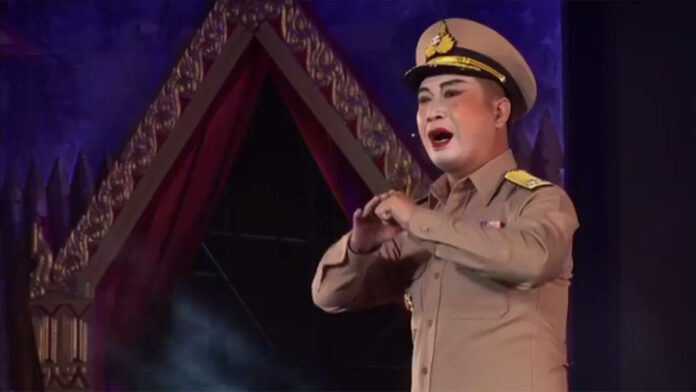
An actor from the Chae Lung Ngek Lao Choon troupe performs as a policeman Monday at Bangkok’s Sanam Luang.

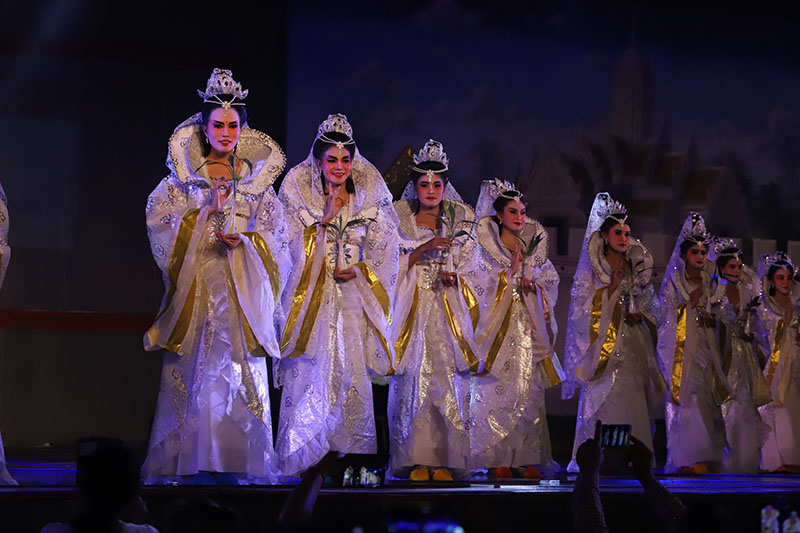
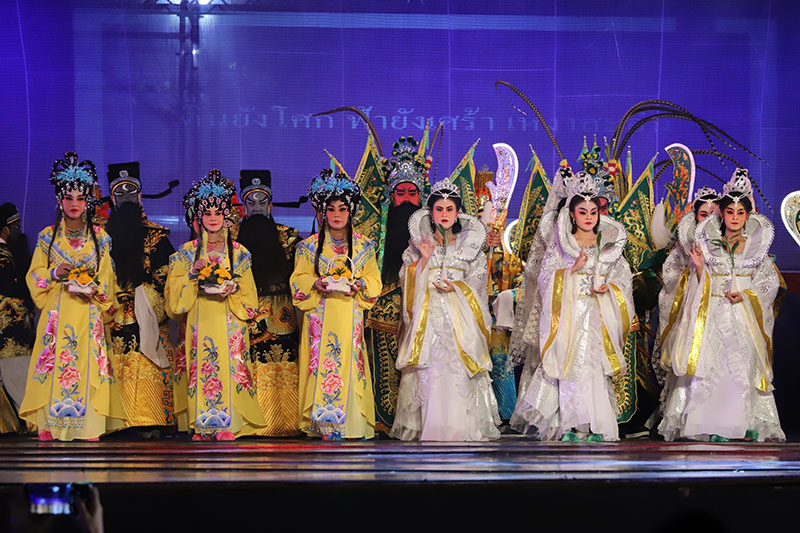
BANGKOK — A policeman, civil servant, doctor and businessman took the stage in heavy grease paint to represent the assimilation of Thailand’s Chinese immigrants in traditional opera Monday night at the Sanam Luang.

“Eighty-Nine Deities Honor the King,” performed Monday in honor of King Rama IX, told the story of Chinese immigrants settling in Thailand during his reign, demonstrating how the Sino-Thai have forged strong ideological ties with the late monarch.

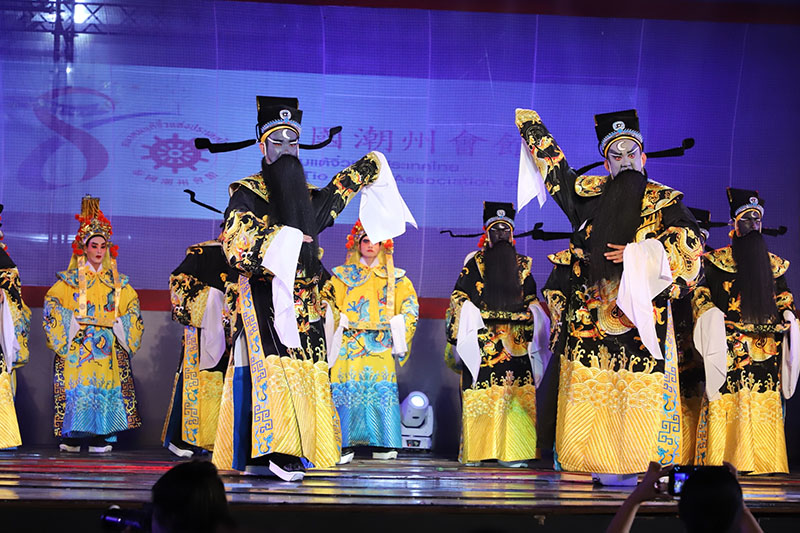
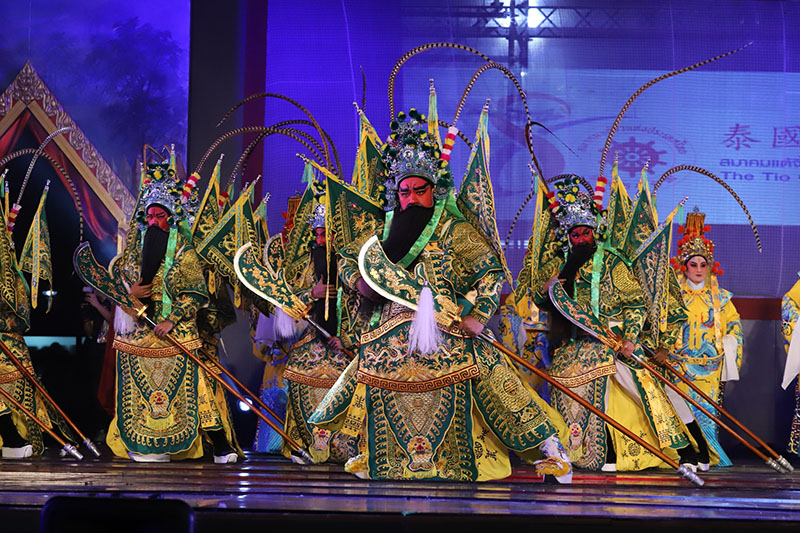
The opera began with traditional displays of ngiew, or Teochew Opera, featuring characters such as Justice Bao and Guan Yim before launching into the story of a Chinese migrant family’s arrival by sea in the 20th century.

Read: Sold Into Opera Slavery to Become Master of Dying Art

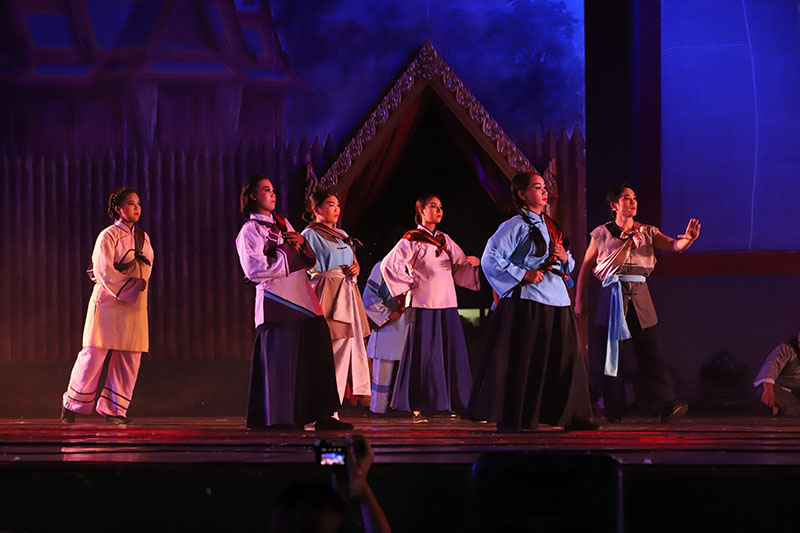
The performance highlighted Chinese immigrants who married and whose children took up careers in business, medicine and the civil service.

It was professionally filmed by Teochew Ngiew Preservation Society of Thailand, who posted it online.

The full performance of “Eighty-Nine Deities Honor the King.” The immigrant section starts at around 40 minutes.

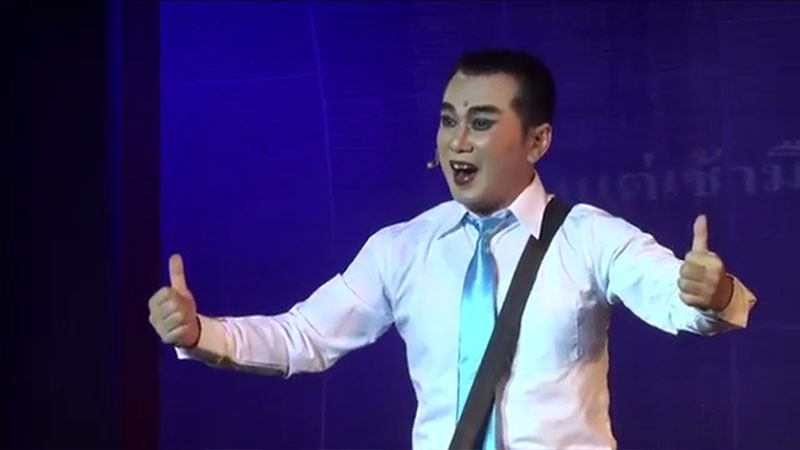
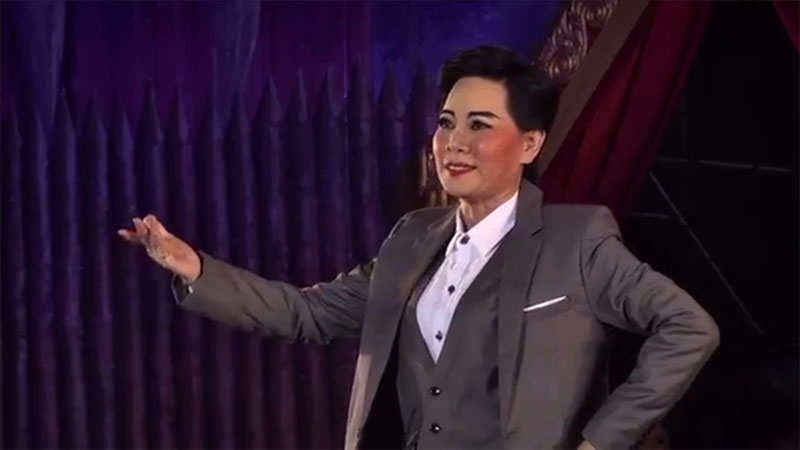
Traditional ngiew does not modernize storylines or costumes, preferring works from the canon of Chinese legend, but “Eighty-Nine Deities Honor the King” offered a departure from convention with contemporary costumes such as business suits and body language, including thumbs-up gestures.

The show, sponsored by the culture ministry, was performed in Chinese with Thai surtitles by troupes including Chae Lung Ngek Lao Choon who all work with the Teochew Ngiew Preservation Society of Thailand. In all, 275 actors and 89 orchestra musicians took part.

There were no immediate plans to restage “Eighty-Nine Deities Honor the King.”

อุปรากรจีนชุดเปิดตัว ๑๗๑๑๒๗ 0001

อุปรากรจีนชุดเปิดตัว ๑๗๑๑๒๗ 0002

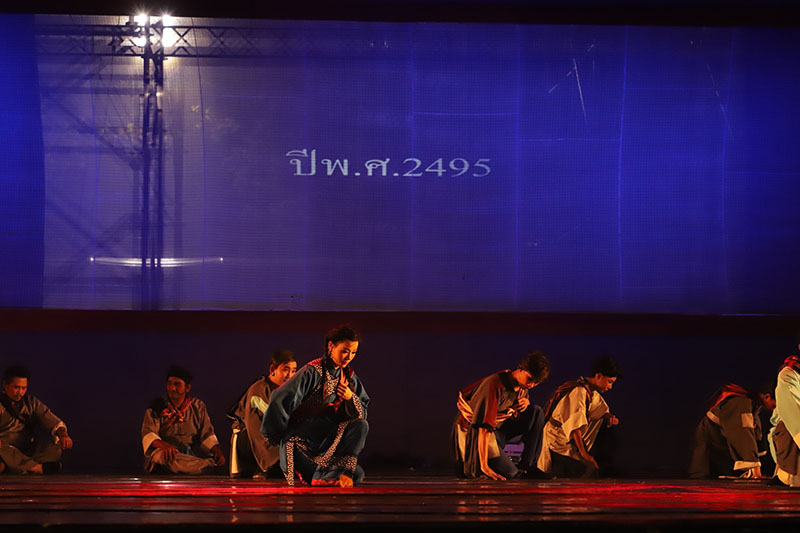
Immigrants on a scene set in 1952.
chinis2
A ngiew actor gives a thumbs-up while in modern costume.
chinis5
A ngiew actress in a suit.

อุปรากรจีนชุดเปิดตัว ๑๗๑๑๒๗ 0016 อุปรากรจีนชุดเปิดตัว ๑๗๑๑๒๗ 0018 อุปรากรจีนชุดเปิดตัว ๑๗๑๑๒๗ 0028 อุปรากรจีนชุดเปิดตัว ๑๗๑๑๒๗ 0004

Related stories:

Sold Into Opera Slavery to Become Master of Dying Art

Advertisement

Oxford City Strips Suu Kyi of 2-Decade-Old Award

Myanmar's Foreign Minister Aung San Suu Kyi greets leaders of armed ethnic groups during their meeting at a hotel last year in Naypyitaw, Myanmar. Photo: Aung Shine Oo / Associated Press

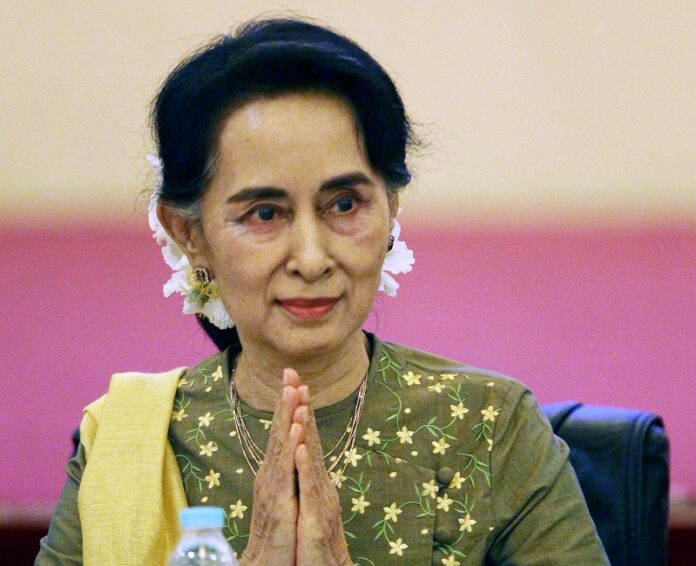
YANGON, Myanmar — The Oxford City Council has stripped the Freedom of the City Award it gave 20 years ago to Myanmar leader Aung San Suu Kyi, saying those who turn a blind eye to violence tarnish its own reputation.

The council motion was supported unanimously Monday evening and cited Suu Kyi’s inaction as Rohingya Muslims are subjected to a crackdown being described by the U.N. and others as textbook ethnic cleansing.

Suu Kyi was under house arrest for 15 years during Myanmar’s long military dictatorship and Oxford said the award was given to her originally because her advocacy for democracy in her country reflected Oxford’s values of tolerance and internationalism.

Oxford Councillor Mary Clarkson said in a statement, “We celebrated her for her opposition to oppression and military rule in Burma.”

Suu Kyi is to meet Pope Francis on Tuesday in the country’s capital, Naypyitaw.

Pope Francis has met with a Myanmar Buddhist leader who’s been criticized for using ethnic slurs against Muslims.

Vatican spokesman Greg Burke said Tuesday that Francis met briefly with Buddhist leader Sitagu Sayadaw separately from an interfaith meeting with other religious leaders at the Catholic archbishop’s residence in Yangon.

Burke said the encounter was “always in an effort to encourage peace and fraternal coexistence as the only way ahead.”

Sitagu has been criticized for using slurs against Muslims, particularly the Rohingya, who are denied citizenship in Myanmar and the target of a much-criticized military crackdown.


Advertisement

Thailand to Toll, Track Foreign Drivers

A car at a Thailand border. Photo: Remy Rossi / Flickr

BANGKOK — Foreign drivers entering at border crossings will soon have to pay tolls and subject to GPS tracking while they are in the kingdom.

On Monday, the transportation officials proposed a plan to charge cars driving into the country in order to get funding for road maintenance.

“Thailand’s central position on mainland ASEAN has great potential for us to be a commercial, transportation and logistical hub for our neighbors,” said Wilairat Sirisophonsin, transport and traffic office deputy chief.

The proposed plan, which will go to the cabinet for approval in January, consists of three phases. At first, only regular cars and pickup trucks will be charged tolls, but the plan will be expanded to include GPS tracking of all vehicles.

Wilairat said the project will cost around 525 million baht and employ about 260 people. She said the project was “necessary because so many vehicles enter Thailand, so we have to bear higher costs for road maintenance and road accidents,” a figure she put at roughly 15 billion baht annually.

More than 2.1 million vehicles crossed over the 28 border checkpoints in 2016. Malaysia and Singapore have already implemented similar tolls. Since June, entering Malaysia costs foreign drivers MYR20 (160 baht). Singapore entry became a SGD8 toll (193 baht) in October.

In the first three-year phase of the proposed plan, all foreign four-wheel cars crossing at 28 border checkpoints with Myanmar, Cambodia, Laos and Malaysia will pay 100 baht for an electronic smartcard that can be used to pass through for the next five years. Each crossing will cost 42 baht.

In the second phase, between the fourth and seventh years of implementation, Wilairat said a GPS system would be installed on foreign vehicles to track their locations and routes. The 42-baht toll would becomes distance-based, with a proposed fee of 1.5 baht per kilometer.

In year eight, the third phase would see all vehicles subjected to the same system. The number of checkpoints charging tolls would also increase as some are under construction.

Advertisement

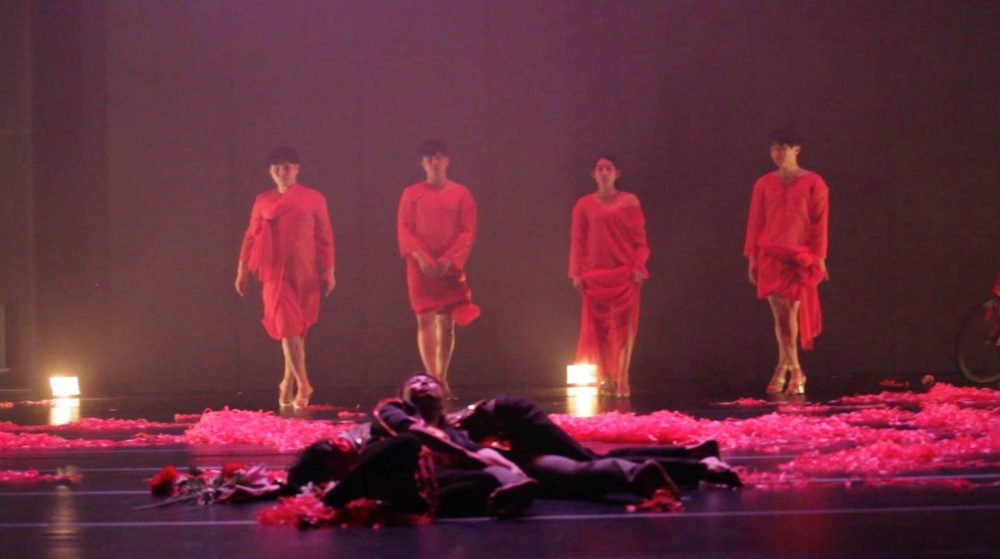
Thai-Korean Collab ‘Something Missing’ Revisits Shared Pain

Photo: B-Floor / Facebook

BANGKOK — A collaborative international performance is returning to haunt a Bangkok stage.

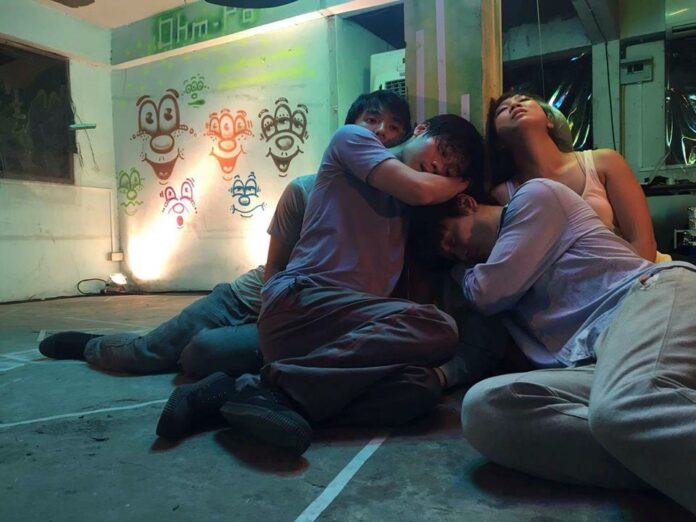
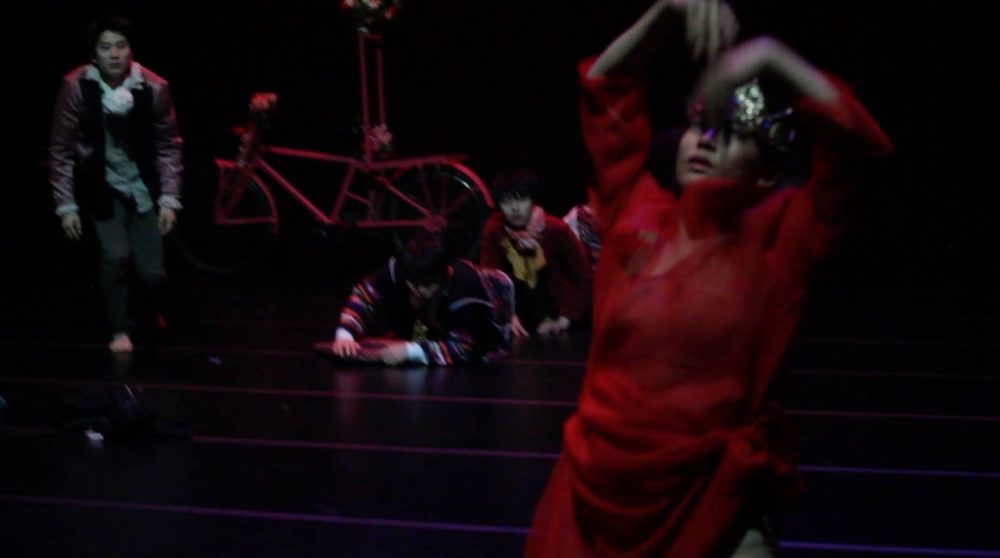
Through the movement of seven cast members, the one-hour performance “Something Missing” reflects the suppressed memories of both Thais and South Koreans from their shared histories of social and political repression. Two years after it debuted in Bangkok, the play will be restaged for six days next month.

The seven Thai and Korean actors are Min Ki Kim, Jee Hyun Noh, Shin Jae Wook, Sarut Komalittipong, Sasapin Siriwanij, Wasu Wanlayangoon and Beer Yingsuwannachai.

The performance is co-directed by Teerawat Mulvilai of B-Floor and Jong Yeon Yoon of Momggol, a performance art group from Seoul. It just completed a three-day run this week in Seoul.

The play’s 2015 debut at Thong Lor Art Space won awards for best movement-based performance and best art direction at the Bangkok Theatre Festival that year.

Thailand and South Korea have both experienced cycles of autocratic rule under which civilians were killed trying to resist. South Korea fully embraced democracy in the 1980s and has since become one of the world’s most powerful economies.

“Something Missing” will begin at 7:30pm, Dec. 12-17 at the Bangkok Art and Culture Centre. Tickets are 470 baht if purchased in advance. Students and groups of five or more are 370 baht per person. Tickets at the door are 600 baht.

STHMISSING e1511851029982
Photo: B-Floor / Facebook
MISSING e1511850720149
Photo: B-Floor / Facebook

Related stories:

Not Here to Entertain You: B-Floor Confronts Thailand in Movement and Meaning

Advertisement

Thai Political Enemies Weigh Alliance to Defeat Junta

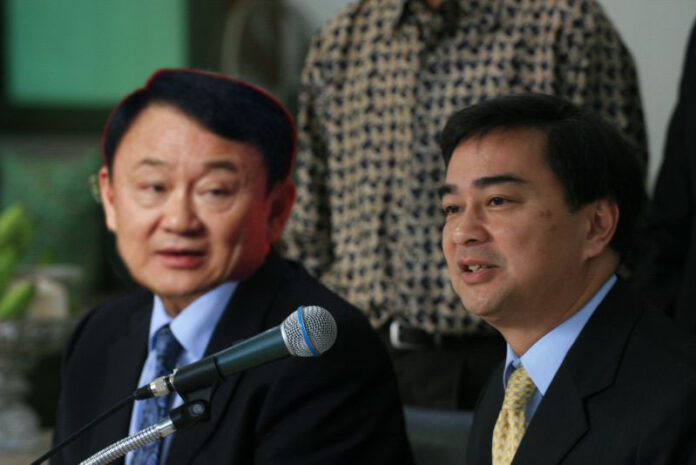
A completely fake image of Democrat Party leader Abhisit Vejjajiva, at right, with de facto Pheu Thai leader, fugitive former Prime Minister Thaksin Shinawatra.

BANGKOK — Senior figures from the Pheu Thai and Democrat Parties are considering the unthinkable: a coalition between the political archrivals to prevent junta leader Gen. Prayuth Chan-ocha’s return as prime minister after an election.

The idea, first floated Sunday by former Pheu Thai MP Chaturon Chaisaeng and deputy Democrat Party leader Nipit Intarasombat at a discussion organized by the Thai Journalists Association, raised both support and eyebrows.

“If the two parties can’t join hands, it cannot form a government,” Chaturon said a day later on Monday. “If one doesn’t want to see an [unelected] outsider as prime minister, the cooperation between the two big parties will be the most crucial condition.”

Chaturon insisted that his idea was sound despite criticisms from those Pheu Thai supporters who see the Democrat Party as their enemy.

Chaturon stressed that he suggested the idea as an individual and not as a Pheu Thai representative. He urged Pheu Thai supporters, many of them Redshirts who hold historic enmity toward the Democrat Party, to set matters aside partisanship and look at the bigger picture.

“Those supporting the Pheu Thai Party likely do not want to see the National Council for Peace and Order extend its power [beyond elections]. I don’t want to be the key person pushing for this, but I think it’s imperative to not support an outsider as PM,” Chaturon said.

The possibility of Prayuth returning to power post-election comes from the new constitution written under its supervision, which weakened the roles of the dominant parties and loaded the upper house with military appointees with a voice in the selection process.

Chaturon said that while he understands Redshirts who dislike Democrat Party leader Abhisit Vejjajiva for his handling of the 2010 anti-government protests – which resulted in nearly 100 deaths, mostly of civilians – they would have to consider whether they want to see Prayuth maintain his grip on power.

Chaturon said he knows the idea is still in its inception and questioned by some within his own party.

Pheu Thai Secretary General Phumtham Wechayachai said it’s too premature to discuss. Chaturon – who served as education minister under the previous civilian government – predicts that in a year’s time, before the scheduled November 2018 elections, people may see the junta take steps to keep the two major rival parties from uniting.

Nipit toned down his message since Sunday, saying his idea is not necessarily tied to a coalition with the Pheu Thai Party. Democrat Party supporters largely see the Pheu Thai Party as corrupt and a proxy of ousted fugitive former premier Thaksin Shinawatra.

“It’s still difficult,” Nipit said Tuesday by phone when asked about a coalition between the two. “There’s the conflicts, the policy and ideological [differences]. It’s still just an idea.”

Nipit said it may not be necessarily to have a Pheu Thai Democrat coalition if the Democrat could form a coalition with smaller parties to attain at least 375 seats. The upper House, with 250 seats and the right to jointly vote for a new prime minister, will be mostly appointed by the junta leader for the first five years after elections. Six of 250 senate seats are reserved for heads of the armed forces and police.

Similar to Chaturon, Nipit said there’s no way an appointed senate would not support Prayuth or military-chosen candidate who may not be an MP.

Both Nipit and Chaturon said they have had no private direct communication with one another at this point.

Advertisement

Hot News

LATEST NEWS

Bangkok
overcast clouds
29.9 ° C
31.1 °
28.8 °
90 %
2.8kmh
97 %
Sat
37 °
Sun
36 °
Mon
36 °
Tue
33 °
Wed
34 °