31.6 C
Bangkok
Sunday, June 28, 2026
Home Blog Page 2174

Kremlin Says Putin and Trump Likely to Meet in Vietnam

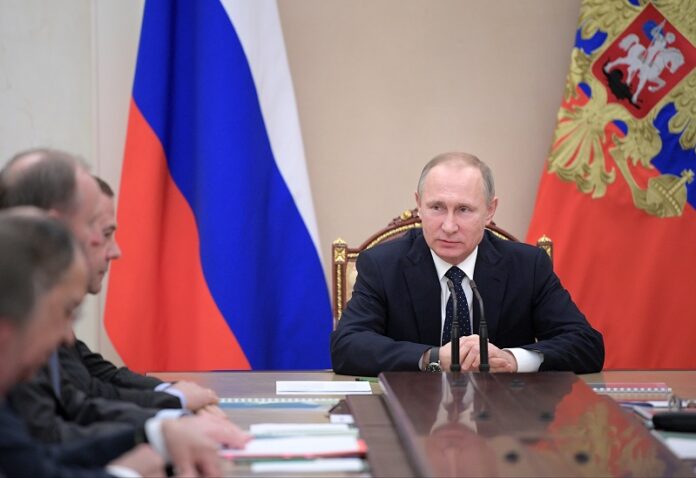
Russian President Vladimir Putin chairs a government meeting in January in the Kremlin in Moscow, Russia. Photo: Alexei Druzhinin / Associated Press

MOSCOW — Russian President Vladimir Putin and U.S. President Donald Trump have a full agenda for their likely encounter on the sidelines of a Pacific nations’ summit this week, the Kremlin said Wednesday.

Putin’s foreign affairs adviser, Yuri Ushakov, said the Russian leader will meet Trump during sessions of the Asia-Pacific Economic Cooperation leaders’ meeting that opens Friday in Danang, Vietnam.

Ushakov said the U.S. and Russian leaders may also have an “extensive” one-on-one meeting, although a specific time has not been set.

“There are things to discuss and we are ready for it,” Ushakov said, adding that the agenda would include the Syrian war, the standoff over North Korea’s nuclear and missile programs, and a crisis in bilateral ties.

Putin spokesman Dmitry Peskov said Russian and U.S. officials are trying to carve out a time slot for Trump and Putin to meet separately. The probability for a face-to-face meeting of the two presidents is “quite high,” Peskov said.

He said Putin discussed preparations for the summit with members of the presidential Security Council on Wednesday.

Moscow’s hopes for an improvement of Russia-U.S. relations under Trump have been scuttled by the ongoing investigations into alleged collusion between Trump campaign officials and Russia.

Trump and Putin first met in July at the Group of 20 summit in Hamburg, Germany. Since then, dealings between the two countries have become more strained, with Congress imposing new sanctions on Russia, Moscow capping the number of U.S. diplomatic personnel in Russia, and the closure of Russian diplomatic offices by the U.S.

Putin has blamed Trump’s political foes in the U.S. for preventing him from fulfilling his campaign promise to forge a better relationship and said Russia remains open to cooperating with Washington.

Russian Foreign Minister Sergey Lavrov struck a similar note, saying Wednesday in Vietnam that the effort to improve bilateral ties fell victim to U.S. political infighting.

“We may reach agreements, but regrettably they immediately become an element of internal political fighting, internal political games aimed to make President Trump’s life and activities as difficult as possible,” Lavrov said in televised remarks.

Story: Vladimir Isachenkov

Advertisement

Female Directors Are Ready to Topple an Ignoble Oscar Stat

This combination photo shows, from left, Patty Jenkins, who directed "Wonder Woman," Kathryn Bigelow, who directed "Detroit," Greta Gerwig, who directed "Lady Bird," and Dee Rees, who directed "Mudbound." Photo: Associated Press

NEW YORK — Four.

It’s one of the most glaring numbers in Academy Awards history. That’s how many women have been nominated for best director in the awards’ 89 years of existence. Kathryn Bigelow, for “The Hurt Locker” in 2010, is the only woman to win.

“I have to say it really bums me out,” says Greta Gerwig, whose solo directorial debut, “Lady Bird,” opened last week in limited release. “Every year I see the list of people who are in the running for best director. Kathryn Bigelow got in  that’s one. Every year they nominate five guys. Every year. And four women have been nominated in the history of the Academy Awards. That’s ridiculous. And it pisses me off.”

This year, those lists may be different  or, at least, it will be especially confounding if they aren’t.

Gerwig’s sharply observed coming-of-age tale “Lady Bird,” for one, is among the most acclaimed films of the year. Patty Jenkins’ summer sensation “Wonder Woman” was a runaway hit with both audiences and critics. Next week, Dee Rees will release her Sundance Film Festival hit, the Mississippi period drama “Mudbound.” Handicapping for March’s Academy Awards is early, but each  particularly Gerwig and “Lady Bird”  is considered among the possible nominees for best picture and for best director.

While Hollywood has been overrun with the Harvey Weinstein scandal and the harsh light it has thrown on widespread gender imbalances throughout the industry, movie screens nationwide have been aglow with ambitious films by female directors who are beating the odds stacked against them.

Oscar nominations won’t change the overwhelming maleness of the industry, where greenlighting executives, top agents and academy members (despite recent efforts to reshape membership) remain overwhelmingly male. The discrepancy is particularly pronounced behind the camera, where women comprised only seven percent of directors on the 250 highest-grossing domestic releases in 2016, according to an annual study by the Center for the Study of Women in Television and Film at San Diego State University. That’s two percentage points less than in 1998.

But as the “OscarsSoWhite” protest of recent years has shown, the Academy Awards can throw a spotlight on wider industry inequality.

“The severe gender imbalance strikes me as a source of considerable potential embarrassment for the academy,” said film professor Martha Lauzen, author of the San Diego State study. “Typically, a few high-profile individuals can skew our perceptions about how members of a certain group are faring but result in little, if any, substantial change. This year could prove to be unique in that nerves regarding this issue are raw.”

Long before hundreds of women began coming forward with allegations of sexual harassment and assault against Weinstein, director James Toback, producer Brett Ratner and many others, 2017 has been a movie year in many ways defined by female filmmakers. Bigelow, who thought her Oscar win would lead to some industry change, released her powerful race riot docudrama “Detroit.” Sofia Coppola, one of the four ever nominees (Lina Wertmuller and Jane Campion are the others), became just the second woman to win the directing prize at the Cannes Film Festival (another cinema institution with a poor track record of gender balance) for her point-of-view-flipping Civil War drama “The Beguiled.”

But there have been many more, too, including the astonishing festival selection “The Rider” by Chloe Zhao (Sony Pictures Classics will release it next year), Angelina Jolie’s intimate Cambodian genocide drama (Cambodia’s Oscar submission), Rebecca Miller’s tender documentary of her father, the playwright Arthur Miller (set to air next year) and Angela Robinson’s Wonder Woman origin story “Professor Marston and the Wonder Women.” It’s worth noting that both “Detroit” and “Professor Marston” were released by Megan Ellison’s Annapurna Pictures, one of the few female-led powerhouse production companies in Hollywood.

Robinson, noting the record-setting box office for Jenkins’ “Wonder Woman” (its USD $821.8 million worldwide gross is the most for a movie directed by a woman) has felt a hint of change is in the air.

“I do feel like there’s some give. Usually I feel like I’m banging against a rock wall,” says Robinson. “I do feel that there is a kind of energy and a kind of galvanizing anger happening that’s demanding that there be more representation of voices.”

Rees, whose breakout film “Pariah” was about a 17-year-old lesbian African-American woman coming to terms with her identity, believes awareness for gender imbalance in the industry has increased but the day-to-day reality is still very much “a work in progress.”

“Until it’s a non-story, you know we’re not there yet,” said Rees.

It’s especially fitting that this year has also brought a new film from 89-year-old Agnes Varda, the Belgian-born filmmaking legend who was one of the leading directors of the French New Wave. Her road-trip odyssey “Faces Places,” co-directed with the street artist JR, took Cannes’ documentary award, and it has since ranked among the most celebrated movies of the year.

Varda, who will be given an honorary Oscar at this Saturday’s Governors Awards, has long been an inspirational figure to generations of female filmmakers who have come after her. “The Queen,” Gerwig calls her.

“I hear that. I love that,” says Varda. “I say: Be inspired by me about cinema, not because I’m a woman. Try to be radical. Try to be daring. Don’t make the prototype. I’ve tried different things, different styles, trying to investigate what cinema can do. I try each time to say: Can I still learn something from images and sound? So I get very excited about being a filmmaker.”

Story: Jake Coyle

Advertisement

Defense Seeks to Show Political Link in Kim Jong Nam Killing

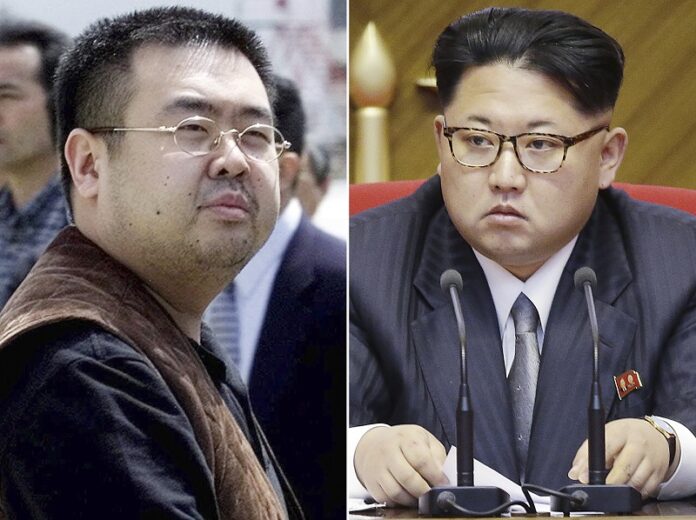
Kim Jong Nam, left, exiled half-brother of North Korea's leader Kim Jong Un, in Narita, Japan, on May 4, 2001, and North Korean leader Kim Jong Un on May 9, 2016, in Pyongyang, North Korea. Photo: Shizuo Kambayashi / Associated Press

SHAH ALAM, Malaysia — Defense lawyers in the trial of two women accused of killing the estranged half brother of North Korean leader Kim Jong Un sought Wednesday to establish there was a political motive in the brazen airport assassination, with many key suspects linked to the secretive state.

Siti Aisyah of Indonesia and Doan Thi Huong of Vietnam are the only two suspects in custody. They are accused of smearing the banned nerve agent VX on Kim Jong Nam’s face at a Kuala Lumpur airport terminal on Feb. 13. They pleaded not guilty at the start of their trial on Oct. 2 and face a mandatory death sentence if convicted.

Prosecutors have accused four North Korean men, who fled Malaysia on the day of the killing and remain at large, of conspiring with the women to plot the murder.

“We are able to establish that it is not a simple murder. There are a lot of political connotations. All the suspects are North Koreans and the North Korean Embassy was not cooperative in helping police,” Aisyah’s lawyer, Gooi Soon Seng, told reporters after the court session. “In this case, the motive appears to be political more than anything else … and the girls would not have any political motive whatsoever.”

Key parts of Wednesday’s session that tried to show the North Korean connection:


Car Used to Ferry Suspects

Police investigating officer Wan Azirul Nizam Che Wan Aziz told the court that the car used to ferry three of the North Korean suspects to the airport on the day of the murder was bought by a North Korean Embassy official known as Chal Su four months earlier. But he said the vehicle was registered under the name of Ri Jong Chol, a North Korean man.

Ri, a chemist, was arrested four days after Kim was killed. He was later released due to a lack of evidence and deported because he did not have valid travel documents. Wan Azirul said Ri did not drive the suspects to the airport and told police before he was deported that Chal Su used his name to buy the car in October last year. He said he couldn’t verify Chal Su’s status because the North Korean Embassy refused to cooperate.


North Korean Embassy Official, Air Koryo Employee

Airport security video showed that Hyon Kwang Song, then the second secretary at the North Korean Embassy in Kuala Lumpur, and Kim Uk-Il of Air Koryo, North Korea’s national carrier, arrived at the main airport terminal 40 minutes before Kim was attacked. The two men were later seen meeting with the North Korean suspects, and Wan Azirul said they assisted the four in leaving the country.

Wan Azirul said police had issued arrest warrants for the two but couldn’t interrogate them because they were hiding at the North Korean Embassy. The two were later allowed to leave Malaysia in exchange for nine Malaysians stranded in North Korea, in a deal to end a diplomatic row. Wan Azirul said police interviewed the two suspects before they left but didn’t seize their cellphones or laptops to obtain further information. He has said the two claimed it was their duty to assist North Korean citizens flying off.

Wan Azirul said three of the four suspects flew to Indonesia’s capital, Jakarta, right after Kim was killed, but couldn’t confirm a defense assertion that they then flew to Dubai and to Vladivostok in Russia before landing in Pyongyang  routes that the defense said are through countries with friendly ties with North Korea. Wan Azirul said he didn’t know if the three men worked for the North Korean Embassy. When asked by the defense whether the fourth suspect flew to Phnom Penh, Cambodia’s capital, and stayed there for two days before flying to Bangkok, he said he did not know.


Investigation Constraints

Wan Azirul said his investigation into the North Korean suspects has been partly hampered because it’s a case involving another country, and that he needed approval from his superior before he could take any action involving the men. He also said he had sought to take a statement from another North Korean suspect, Ri Ji U, known as James, but didn’t receive the green light. Defense lawyer Gooi has said James is believed to have recruited Aisyah.

Story: Eileen Ng

Advertisement

Trump Isolationism Allows China to Fill Southeast Asia Void

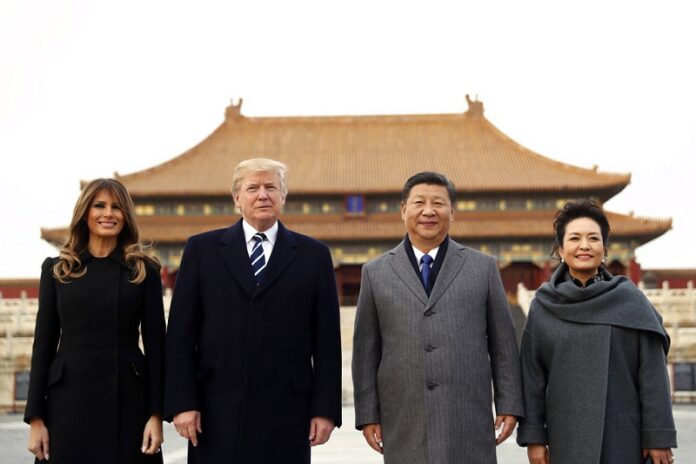
U.S. President Donald Trump, second left, first lady Melania Trump, left, Chinese President Xi Jinping and his wife Peng Liyuan stand together as they tour the Forbidden City in 2017 in Beijing, China. Photo: Andrew Harnik / Associated Press

BEIJING — When Chinese leader Xi Jinping said last month that “no country can afford to retreat into self-isolation,” he might as well have been talking about Donald Trump as the U.S. president makes his first official visit to Southeast Asia.

As Trump steers his administration’s focus inward, China has stepped into what many see as a U.S.-sized void left behind in the region, boosting cooperation on infrastructure, security and trade, flooding eager countries with tourists and offering itself up as a model for developing nations with sometimes dodgy rights records.

China’s rise in influence, and the perceived decline of the United States by some in the region, is all the more extraordinary because Beijing has often been seen as an arrogant bully in Southeast Asia, where it is mired in disputes over competing claims in the South China Sea.

Throughout the region, countries have looked at Xi and Trump and found more stability and reassurance from the Chinese president, said Richard Heydarian, a Manila-based Asia specialist and author.

“America is clearly on a downward trajectory in terms of its influence in the region,” Heydarian said. “Donald Trump comes in and he sounds even more protectionist than China. So you have a strange, in fact surreal, situation whereby China is now presenting itself as the guardian of the global economic order.”

A look at how new approaches from Trump and Xi have countries in Southeast Asia attempting a sometimes awkward balancing act:


Trump: “Radically Different”

Perhaps Trump was always destined to come up short in any Asia comparison with his predecessor, Barack Obama, whose childhood was partly spent in Indonesia and Hawaii.

Obama, who hosted Southeast Asian leaders last year in the United States, made much of a supposed “pivot” of U.S. attention back to Asia after what his administration portrayed as years of neglect.

The biggest signal that Trump appeared willing to cede ground to China came shortly after his January inauguration, when he withdrew from the Trans-Pacific Partnership trade deal, saying he preferred one-on-one pacts that brought more benefits to the United States.

Obama had presented the deal among Pacific Rim countries, including Malaysia, Vietnam, Brunei and Singapore, as symbolic of U.S. commitment to the region  and a crucial curb of Chinese power.

As the remaining TPP countries discuss ways to do the deal without Washington, critics say Trump’s protectionism will allow China to establish greater inroads.

During a recent trip to Washington, Singaporean Prime Minister Lee Hsien Loong nicely summarized the dilemma many in the region face because of a “radically different approach” under Trump.

The Chinese, Lee said, will pursue their objectives “assiduously, quietly farming away, and they will make friends and influence people whether or not you (the United States) are there, and if you are not there, then everybody else in the world will look around and say, ‘I want to be friends with both the U.S. and the Chinese, and the Chinese are ready and I will start with them.'”

Trump is set to attend the Asia-Pacific Economic Cooperation summit in Vietnam, where he may offer up a broader Asia policy, and meetings of the Association of Southeast Asian Nations in the Philippines.

A scheduled meeting with Philippine President Rodrigo Duterte could be a good signal on how Trump may be received in the region.

Duterte, who rejected Trump’s White House invitation earlier this year, recently told reporters in the Philippines, a U.S. treaty ally, that he would welcome Trump as “the important leader on this side of the planet.”


Xi: Standing “Tall and Firm”

During his speech last month at the twice-a-decade Communist Party congress, Xi, who has cemented his status as China’s most powerful leader since Mao Zedong, declared that his nation “now stands tall and firm in the East.”

China’s judgment that the U.S. is in decline, which can be traced to the onset of the global financial crisis in 2009, “is even more certain today, as it sees U.S. global leadership eroding under President Donald Trump,” Bonnie Glaser and Matthew Funaiole, China experts at the Center for Strategic and International Studies think tank in Washington, wrote recently.

Part of the explanation for China’s rise in Southeast Asia is Beijing’s decision last year to “proactively moderate” its positions on the South China Sea, which it claims nearly in its entirety, said Shi Yinhong, an international relations expert at Renmin University of China.

Beijing has also made progress because of what its critics call a willingness to support countries in the region accused of systematic human rights abuse or corruption.

China’s huge shipments of aid and investment to Cambodia help to enable long-serving Prime Minister Hun Sen’s authoritarianism and repression of the press and political opposition.

Thailand’s military rulers, who ousted an elected government in a 2014 coup, have cultivated ties with Beijing as a counterbalance to a disapproving West.

Xi’s biggest move in the region, the “One Belt, One Road” initiative, seeks to link China to Southeast Asia, Central Asia, Africa, Europe and beyond with a sprawling network of roads, railways, ports and other economic projects.

There have been worries about political and economic interference as Beijing pitches one part of that effort  a high-speed rail system  to Southeast Asian nations.

But negotiations in Indonesia and Thailand “notably suggest that rather than acting as a bully and imposing its conditions on host countries, China has actually shown a great degree of flexibility and compromise,” according to research and interviews conducted by China experts Agatha Kratz and Dragan Pavlicevic.

As Chinese money, influence and political pressure flood the region, many countries struggle with how far into Beijing’s sphere, and away from Washington, it’s wise to go. Complicating the debate is strong anti-Chinese sentiment in certain areas.

As a result, some countries have reserved judgment on Trump, raising the stakes for his Southeast Asia trip.

“They hope the Trump administration will be committed more to their region, but they do not want to take a stand or harm their relations with China,” Shi said.

Story: Foster Klug

Advertisement

Acid-Coated, Brain-Bursting Alien Worms Invade Bangkok
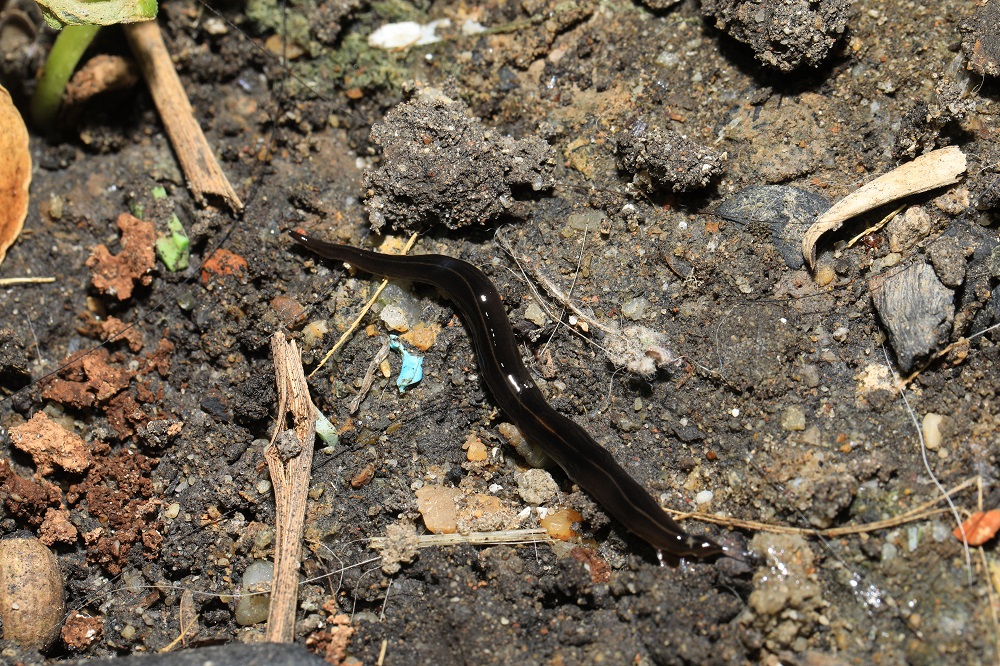
A New Guinea Flatworm preys on a snail in Pathum Thani province. Photo: Nonn Panitvong

BANGKOK – Aliens appeared on Halloween in Bangkok with skin-burning acidic goo and deadly, brain-swelling parasites.

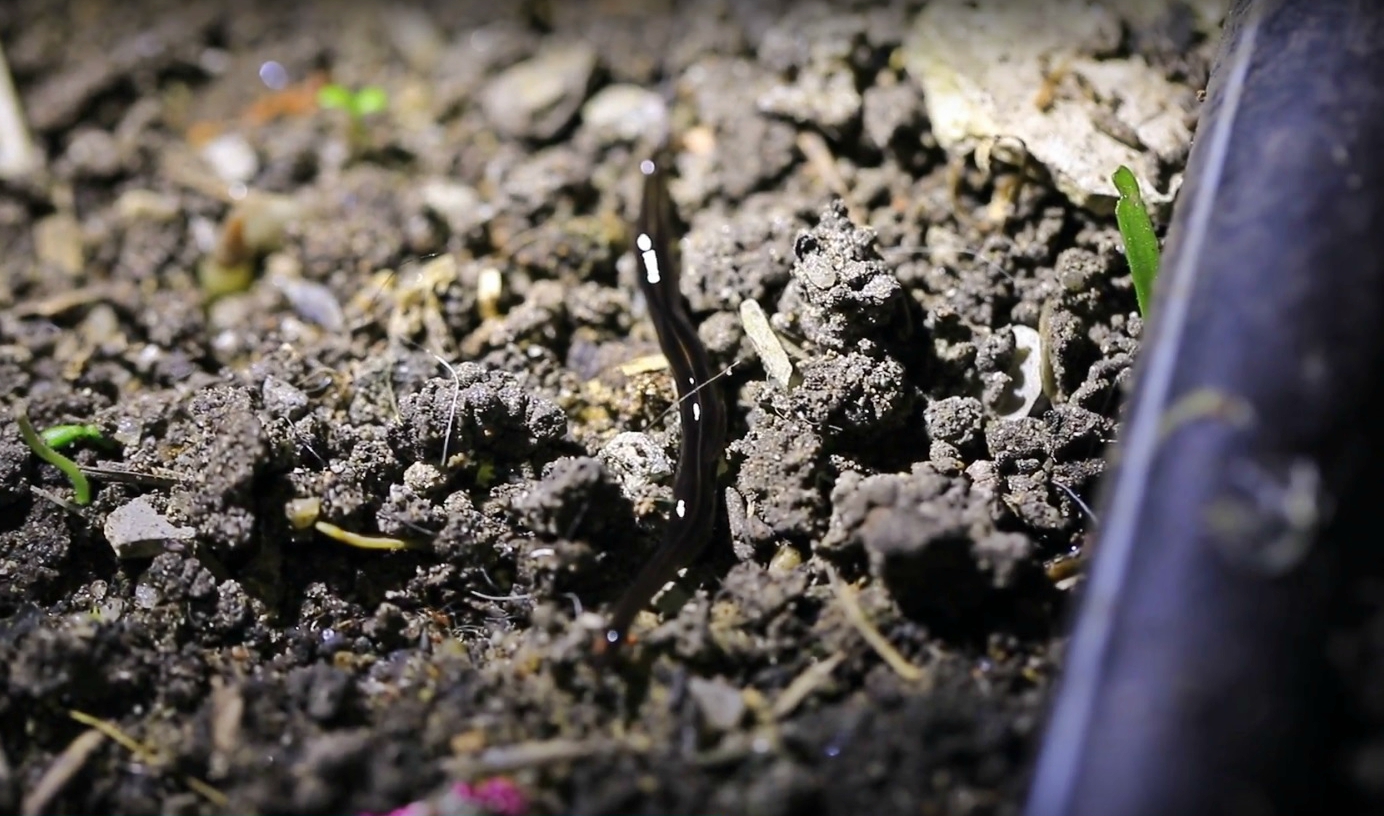
When Mongkol Utachai found 15 worms that looked like slimy slugs in his Bangkok backyard on Oct. 31, little did he know they were snail-eating New Guinea Flatworms, or nhon alien in Thai, one of the world’s most invasive species.

Environmental experts confirmed Tuesday that the specimens Mongkol found were indeed New Guinea Flatworms, said Nonn Panitvong, a researcher with environmental group Siamensis.

Nonn’s attention was drawn to pictures posted by Mongkol on social media of the nhon alien – sometimes called snail-eating worms – doing what they do best: eating snails.

“Sorry I didn’t take a lot of pictures. [I] was too excited,” Nonn wrote in response to an inquiry “From what I understand, they must have been in our country for some time now, given that they are so widespread. Some people claim to have seen them for more than two years.”

The species is listed by the Invasive Species Specialist Group as one of the world’s most invasive, because they pose a threat to the ecosystems by preying on the snails and earthworms that boost soil fertility and plant growth.

But that is not the only threat: Humans are warned to be alert too, since the New Guinea Flatworms can host a parasite known as the Rat Lungworm.

The good news: the lungworm is only transmitted between mollusks such as snails, slugs and rats. The bad news: the flatworm’s mucus and larvae can cause a severe type of meningitis. If the worm’s acidic goo contacts human skin, it can produce painful lesions. Its larvae – which can be infected with the parasitic lungworm – can be transmitted through contaminated water and cause fever, nausea, drowsiness, severe headaches and muscle pain.

According to Nonn, the invasive flatworms were found throughout the country including the provinces of Bangkok, Pathum Thani, Songkhla and Nakhon Ratchasima. But those discovered on Halloween by Mongkol were the first time Non saw that species of flatworm with his own eyes.

The hermaphrodite worm – native to New Guinea, as its name suggests – is mostly found on Pacific islands such as the Futuna Islands, Singapore, Solomon Islands, Philippines and Puerto Rico. It was found in Miami in 2015.

Nonn does not recommend killing the worm by cutting it, as he says it will only replicate into multiple copies. He suggests pouring hot water or salt on it.

If anyone finds the New Guinea Flatworm, they can report it to Siamensis on Facebook or via Line ID @Sde5284v.

flatworm j
A New Guinea Flatworm in a yard in Pathum Thani province. Photo: Nonn Panitvong

NHON

Advertisement

Prayuth Back With 6 New Election-Skeptical Questions

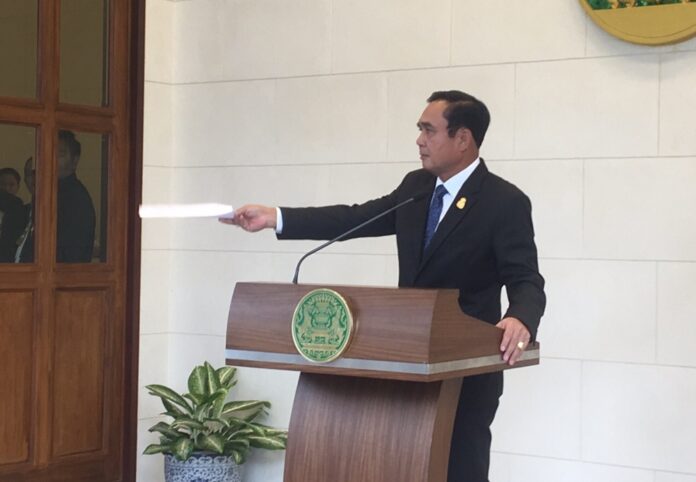
Junta chairman Prayuth Chan-ocha hands his six questions to reporters Thursday

BANGKOK — Junta chairman Prayuth Chan-ocha is back with more questions, and he wants answers from the public.

Five months after posing four leading questions about fundamental democratic principles, such as whether elections were even necessary, the inquisitive Prayuth on Wednesday added six more seemingly designed to reframe expectations for democracy in Thailand. Among them: Whether his junta regime, the National Council for Peace and Order, has the right to back a political party.

“Do I and the NCPO have the right to support any political party?” Gen. Prayuth said to reporters at Government House in an unclear statement. “And do I have to run in an election? No. Can I vote in an election? No.”

A document handed out to reporters after the news conference phrased the question more coherently: “Since the prime minister is not running in the election anyway, is it not the right of the NCPO to support any political party?”

The question comes amid ongoing speculation that a pro-junta party is already in the works to serve as a proxy for the military regime in the next poll, which is slated to take place November 2018. Other questions are essentially statements on the failures of the democratic system and successes of military rule with question marks added to the end.

The timing of Prayuth’s quiz was not lost on the two major political camps.

“I want the prime minister to be straightforward with the people,” said Weng Tojirakarn, a former MP from the Pheu Thai Party. “How is the word ‘support’ different to ‘pulling the strings?’ I want the prime minister to be straightforward: Does he want to return as prime minister or not?”

He added, “By saying vague things like this, it makes the public wonder, what exactly is the prime minister thinking?”

Former Democrat MP Nipit Intrasombat said it’s unacceptable for Prayuth to suggest he has the right to lend the military’s backing to any party.

“I can answer it for him right now: He should not, because it will create unfair advantages and disadvantages in politics,” Nipit said. “Since the NCPO has the power in their hands, whoever they pledge to support, their power will immediately swing that way. For example, officials will be pressured to help that party. If they don’t, they may get transferred.”

The Democrat politician said Prayuth’s absolute power under Section 44 of the junta-written interim charter, which was enshrined in the current constitution, risks being used to support the junta’s political favorites.

“Civil servants must be impartial in elections. They cannot lean either way,” Nipit said. “And especially the NCPO has Section 44 in their hands. Elections will fail.”

Under the constitution drafted by junta lawmakers and approved in a 2016 referendum, parties must submit names of potential prime ministers they would support prior to any vote. Unlike previous charters, the candidates do not have to be elected MPs, opening the way for a premier selected by the military-dominated legislature instead of elected by the public.

Prayuth has repeatedly declined to rule out the possibility of returning as prime minister for another term after the election. Instead, the retired general has told his supporters he will listen to the voices of the people.

Pheu Thai’s Weng urged Prayuth to cut the mystery and openly announce his intent, either by running directly as a candidate or throwing his support behind a party.

“I have no problem with it, because in the principle of democracy, the people’s voice is the divine voice,” he said. “If Prayuth or Prawit [Wongsuwan] set up a party, it’s a good thing, because the people will be able to clearly make decisions.”

According to the hard copy distributed at Government House, here are all six questions posed by Prayuth today:

“Today, do we need new political parties or new quality politicians for the people to consider for the next election?

Since the prime minister is not running in the election anyway, is it not the right of the NCPO to support any political party?

After the things NCPO and this government have done for the past three years, does the public see a good future for the country?

Is comparison of how governments were formed via election in the past with the forming of today’s government entirely appropriate?

Have Thailand’s past governments and electoral politics demonstrated a sufficient and clear degree of competent, good governance and consistent national development?

Why are political parties and politicians making moves to discredit the NCPO, the government and the prime minister, and distort facts about their efforts more intensely than usual?”

Advertisement

Bangkok Stage Lights Up Those on Society’s Margins

Blind students from Thammik Witthaya School perform 'Blossom on the Moon.'

BANGKOK — Ever want to stop the action in a story and offer solutions to the troubled characters?

This weekend, audiences will be able to jump into the action and stop a play to suggest solutions to its struggling or suffering characters, a model called forum theatre.

“Usually in a play, you’re not allowed to solve the character’s problems but sit and watch,” said Sornchai Chatwiriyachai of Malongdu Theatre. “But with forum theatre, audiences can go on stage and tell the characters how they can change their situation.”

Malongdu is one of several companies addressing marginalized members of society in this month’s Bangkok Theatre Festival being held at the Bangkok Art Culture Centre.

Malongdu, which usually performs in the streets, will stage a series of plays focusing on people with disabilities, the elderly in convalescent homes and the homeless. Sornchai said they are aimed to correct many cultural misunderstandings through forum theatre, which traces its roots back to Brazil.

On Nov. 18, they will perform “Ban-Bang-Care,” which depicts the problems with putting elderly people in special homes and “Humans of the Street,” which shows how people end up homeless. The next day on Nov. 19, “Will Show, Will Share,” will present a scenario on the problems faced by people with disabilities. All performances are in Thai and tickets are 250 baht each.

theatre1Other festival performances reveal similar underrepresented aspects of society.


Thais with disabilities are all but invisible on television and other media. On Sunday, see blind students from the Thammik Witthaya School perform “Blossom On the Moon.” The play uses metaphor to address living without sight. During the performance, audience members are told to close their eyes to understand how it feels to be blind as they listen to the story

Feel blowing air in the face, smell the scent of fresh flowers and feel water drops as a touching story unfolds about a flower that relies on others to complete its journey.

Blank Space Theatre presents “Man Gor Ja Pang Pang Noi” (Crimes of the Heart) this Saturday and Sunday, a comedy about a single, 45-year-old woman who decides she’s happy staying that way. Meanwhile, her sister has been bailed out after killing her politician husband in Khon Kaen, her mom enters a suicide pact with her unwilling cat, and her uncle strokes out. Tickets are 500 baht. Saturday’s showing is already sold-out. Performances are in Thai.

Cellist Saowakhon Muangkruan, a semi-finalist from Thailand’s Got Talent, will perform “Deadline” this weekend, which captures the feeling of trying to perform on deadline. She said her inspiration was from seeing a near-dead fly struggling to fly out of a vinegar glass. Yuthana “June” Kalambaheti, one half of experimental, cross-dressing duo Stylish Nonsense will also perform with Saowakhon. Tickets are 300 baht.

Later this month, check out mimes, puppets and other child-friendly favorites.

The festival’s full schedule is available online. Tickets are available at the venue or can be purchased in advance online. Click on the plays you want to see and be directed to pay via Paypal.

The Bangkok Theatre Festival runs until Nov. 19 at the Bangkok Art and Culture Centre, which can be reached by skywalk from BTS National Stadium.

theatre2

Advertisement

Japan’s Biggest Discount Chain ‘Donki’ to Open on Ekkamai

The Akihabara branch of Don Quijote in Tokyo. Photo: Antonio Tajuelo / Flickr

Update: Delayed opening now set for Feb. 22

BANGKOK — There will soon be no need to ask friends to bring back konnyaku peach jellies from Japan.

Don Quijote, Japan’s biggest discount store, will enter the domestic market with a branch in Bangkok next year, a spokesman for one of the development’s partners said Tuesday.

Don Quijote will occupy two floors of what will be Donki Mall Thonglor in Soi Ekkamai 5. The “mini-mall” will fill 26,770sqm on six floors.

“We can’t say what month the mall will open yet since there might be construction delays. We can estimate late 2018,” Thinun Worapaiboon, a spokesman for landowner TOA.

Donki Mall Thonglor e1510131247999
An artist’s rendition of Donki Mall Thonglor.

The project is a joint venture between Don Quijote’s Singapore-based holding company Pan Pacific International, a domestic subsidiary of a Japanese parking management firm and TOA Venture Holding, which owns the land where the mall will be built.

According to the announcement, the mall will include a “famous character park” on the fifth floor as well as restaurants and an indoor sports and entertainment facility.

Don Quijote will be the mall’s anchor tenant. It will be the chain’s second store in Southeast Asia after one opens in Singapore next month.

Don Quijote has 324 branches in Japan and three in Hawaii. Commonly called “Donki,” the stores sell a wide range of items – snacks and cookware to clothes – at low prices. In Japan, the retailer is famous for its tax-free items which tourists like to pack for home. Some come in special packaging and cannot be opened while still in Japan.

Advertisement

Ben Nicky Tops Transmission Fest’s 2018 Bangkok Lineup

Photo: Transmission Festival / Facebook

BANGKOK — Europe’s largest indoor trance party is coming back to Bangkok in March.

For its second Bangkok outing, Transmission Festival has announced Dutch production team Gouryella and British notable Ben Nicky will lead 25 talents to perform beneath a full battery of laser light beams.

More additions to the lineup will be announced.

The Prague-sourced, audio-visual dance experience will take place March 17 at the Bangkok International Trade and Exhibition Centre, or BITEC, which is a 10-minute walk or taxi ride from BTS Bang Na.

Attendees must be 21 and up. Regular tickets are 2,500 baht and 4,500 baht for VIP access. They go on sale at 11am on Saturday.

Advertisement

Lick a Pickle and Nod at Art in Bangkok Because Why Not

The Pickle Gallery. Photo: The Pickle Gallery / Facebook

BANGKOK — Had enough burgers and fries and want to go straight to the pickle? Ever want to enjoy some savory art or catch up on email with a pickle in one hand?

Then look no further than The Pickle Gallery, a cafe and co-working space with a selection of pickles on offer, which opens Tuesday just in time for International Pickle Day.

The opening party for the shop run by a Thai-Swedish couple starts at 3pm and includes a sampling of house-brand pickles and pickle-based cocktails. Prepare to pucker up, suck some pickles and make an appropriately sour face at works on display by Satit Raksasri, Hari Nayla and Gerard Gademann.

Swede owner Anders Svensson said he’s been making pickles since 2012 out of his Udom Suk condo.

“Friends loved them and every time I made a batch they would sell out in an hour just from posting on my personal FB page,” he wrote.

Svensson said that his creative-type friends inspired him to combine his love for pickles with their art.

Wanna pickle your own pickles? He says workshops will be held on how to make various types of pickles.

The Pickle Gallery is a short walk from BTS Bang Chak.

Advertisement

Hot News

LATEST NEWS

Bangkok
overcast clouds
31.6 ° C
32.7 °
31.6 °
99 %
5.2kmh
100 %
Sun
30 °
Mon
34 °
Tue
33 °
Wed
31 °
Thu
29 °