29.4 C
Bangkok
Tuesday, June 23, 2026
Home Blog Page 2252

ASEAN Pursues Nonaggression Pact With China

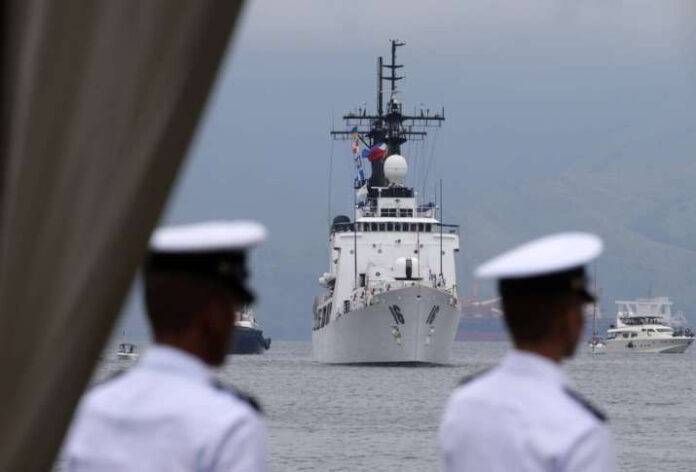
The BRP Ramon Alcaraz, the second warship of the Philippine Navy, prepares to dock on Aug. 6, 2013, for a formal welcoming ceremony about 80 kilometers northwest of Manila. Photo: Bullit Marquez / Associated Press

MANILA — Southeast Asia’s top diplomats will seek talks “as soon as possible” on a proposed nonaggression pact with China aimed at preventing clashes in the South China Sea and will likely hold back on criticism of China’s aggressive acts in the disputed waters in a weekend summit.

An initial draft of a joint communique to be issued by the Association of Southeast Asian Nations foreign ministers, which was seen by The Associated Press on Wednesday, says they would ask senior diplomats to immediately initiate talks on the so-called code of conduct in the disputed sea after their governments agreed on a framework of the accord with China in May.

The ASEAN ministers will ask their senior diplomats “to begin earnest discussions on a substantive and effective code of conduct on the basis of the framework as soon as possible,” according to the draft communique.

The long-seething disputes in the South China Sea, alarm over North Korea’s missile tests and the rise of Islamic radicalism in the region amid a deadly siege by Islamic State group-linked militants in the southern Philippines are expected to grab the spotlight in the meetings of ASEAN foreign ministers and their Asian and Western counterparts in Manila starting Saturday.

Robespierre Bolivar, the spokesman of the Department of Foreign Affairs, described the initial progress after yearslong efforts by Southeast Asian countries to negotiate a code of conduct with China “as a very big step.”

Critics have said the framework only serves as a brief outline of previously agreed principles and failed to mention concerns over China’s newly built islands and an arbitration ruling last year that invalidated Beijing’s historic basis for its claims to virtually all of the South China Sea. Beijing has refused to recognize the ruling based on a 1982 maritime treaty.

The draft communique, still to be expanded with inputs from other ASEAN member states, doesn’t mention concern and alarm over China’s artificial islands, which have reportedly been installed with a missile defense system. Those concerns have appeared in previous ASEAN joint statements.

A carefully crafted and subtle line on the dangers lurking in the dispute appears in the draft statement. “We reaffirmed the importance of enhancing mutual trust and confidence, exercising self-restraint … and avoiding unilateral actions in disputed features that may further complicate the situation,” it said.

Philippine President Rodrigo Duterte, who is ASEAN chairman this year, moved swiftly after taking office last year to revive his country’s once-frosty ties with China while taking an antagonistic attitude toward its U.S. ally.

Duterte set aside the Philippines’ arbitration victory over China but promised to take it up with Chinese leaders before the end of his six-year term. His move has eased tensions but has been criticized as squandering an opportunity to promote the rule of law in the sea.

Advertisement

Former PM Somchai Acquitted by Supreme Court

Former premier Somchai Wongsawat waves Wednesday outside the Supreme Court, which acquitted him of charges that he overstepped his power by ordering a 2008 crackdown on anti-government protesters. Story: Former PM Somchai Acquitted by Supreme Court

BANGKOK — The Supreme Court on Wednesday acquitted former prime minister Somchai Wongsawat of malfeasance, clearing him of allegations he overstepped his power by ordering a 2008 crackdown on anti-government protesters.

Other defendants include former PM Chavalit Yongchaiyudh, who served as deputy PM at the time, and former police commissioner Patcharawat Wongsuwan, a younger brother of the current deputy junta chief, Prawit Wongsuwan.

Speaking after the court was adjourned, Somchai said he felt happy to know “justice still exists.”

“It made me confident that the judiciary institution is still an institution that the people can rely on,” Somchai told reporters. “I’d like to thank everyone who traveled here to show me support.”

Read: Fates of 2 Former PMs Hinge on August Verdicts

Somchai was charged with malfeasance by the national anti-graft agency for ordering police on Oct. 7, 2008, to clear protesters from the entrance to parliament as part of an anti-government campaign.

In its ruling, the court said the government was required by the constitution to address the parliament that day, but anti-government protesters’ blockade around the building prevented it from from doing so.

The court said the protesters not only intentionally besieged the parliament but went as far as using weapons such as slingshots and wooden sticks to fight the police; therefore, their actions were not peaceful as allowed by the law.

The court also ruled the government could not possibly have known there would be fatalities when it ordered the police operation.

The court took first took up in February 2015 the National Anti-Corruption Commission case against Somchai and his subordinates. The defendants insisted they acted within the law.

Somchai is a brother-in-law of Thaksin Shinawatra, an influential former leader who retains much sway over his political clan despite being ousted in a 2006 military coup. Somchai himself was later removed from office by a court order that dissolved his political party in late 2008, to the cheers of anti-government protesters at the time.

Word of the verdict sent spasms of anger through the crowd of Yellowshirt protesters gathered outside the court today.

“Why is the murderer not in jail? Where is justice?” someone shouted.

Veera Somkwamkid, who was among the leaders of the 2008 Yellowshirt protests, expressed disappointment.

“People who were judged to be guilty might be innocent, and people who were judged to be innocent might be guilty,” Veera told reporters. “I respect the justice system, but is this really justice? That’s another issue.”

The trial has been closely watched as it could offer a precedent-setting prosecution of a prime minister for actions taken while in office, and also as a bellwether for a parallel court case against Yingluck Shinawatra, another former premier allied – and related – to Thaksin.

Yingluck, who is Thaksin’s younger sister, is accused of negligence for allegedly failing to stop massive corruption in her government’s rice subsidy program.

Yingluck faces up to 10 years in prison if convicted. A verdict is due in her case Aug. 25.

Related stories:

Asking for Justice, Yingluck Tells Court She is Victim of ‘Political Game’

Fates of 2 Former PMs Hinge on August Verdicts

Advertisement

Texas Calf Born Looking Like KISS Rocker Gene Simmons

A newborn calf named Genie, with facial marking that resemble Gene Simmons, the bass player for the rock group KISS, shortly after its birth Friday in Kerrville. Photo: Natacha Pisarenko / Associated Press

KERRVILLE, Texas — KISS frontman Gene Simmons is udderly thrilled by a newborn calf born with strikingly similar black-and-white markings to the face paint he wears on stage.

Simmons tweeted his admiration for the calf on Sunday, saying, “This is real, folks!!!”

The calf was born Friday at a ranch near Kerrville, Texas, which is about 60 miles (96 kilometers) northwest of San Antonio.

Heather Taccetta (tuh-SET’-uh), who lives at the ranch with her family, said Tuesday that the calf belongs to her grandmother. It is named Genie, in honor of Simmons.

Taccetta says the calf and its mother are doing fine and that Genie is a family favorite and won’t be sold for slaughter.

Advertisement

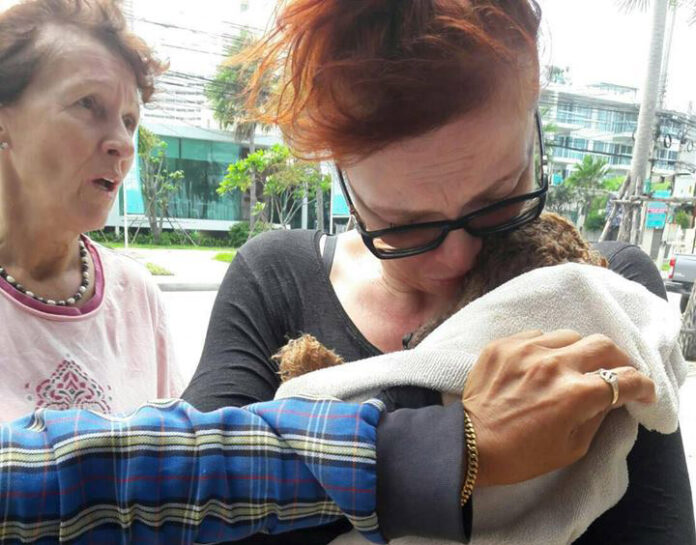
Foreigners Accused of Drowning Dog in Pattaya Sought by Police

A foreign woman holds a dog she reportedly drowned at Jomtien Beach Monday. Photo: Watchdog Thailand.

PATTAYA — Police said Wednesday they don’t expect to find two women who allegedly drowned a dog at Jomtien Beach.

Two days after an animal rights group filed a complaint alleging animal cruelty by two unidentified women who appeared to kill the animal in a disturbing video clip, Lt. Col. Theerasak Sinsang of Pattaya city police said they would be found if they were still around.

“If they’re still in Pattaya, we’ll find them. If they went back home overseas, then it’s gone way over our heads,” Police Lt. Col. Theerasak Sinsang said.

Animal rights group Watchdog Thailand said it filed the police complaint in response to a clip posted Monday in which two women are seen walking to the waterline. One woman holds a small dog wrapped in a blanket in her arms and heads into the water. She dunks the dog into the water twice until witnesses said the dog died.

“How can someone just decide for the dog that they should die? The law is there for the rights of the animal,” said someone identifying themselves as a legal advisor from Watchdog Thailand who refused to give her name. “Even if it was a mercy killing, you cannot just shoot or drown the animal, it has to be administered by a veterinarian.”

But Theerasak said police didn’t have much to go on.

“The witness didn’t follow the women or observe where they went,” he said. “All the CCTVs in the area are broken as well.”

According to the Prevention of Animal Cruelty and Provision of Animal Welfare Act of 2014, maliciously killing an animal is a crime punishable by up to two years in jail and a 40,000 baht fine.

Pattaya city police said they are looking for the women, but Watchdog Thailand believes the prospects of locating them are slim.

“The drowning happened with only a few witnesses, like a beach rental lady. She already gave her testimony. The foreigners probably already went home, and we don’t have much to go on,” said the unnamed Watchdog legal adviser. “Still, we have to try, even if they thought it was a mercy killing. They did look like they loved the dog, from the way they hugged it.”

Internet commentators were less kind. Some speculated without evidence that the dog was drowned because the women didn’t want to bring the dog back home with them.

“You’re foreigners, so you really must know that putting animals to sleep can only be done by vets, and that the animal has to be really sick, and the owner has to consent as well. Let’s see how you explain yourself out of this one!” Facebook user Russie Jankasem wrote.

Advertisement

Former PMs in Court Ahead of Abuse of Power Verdict

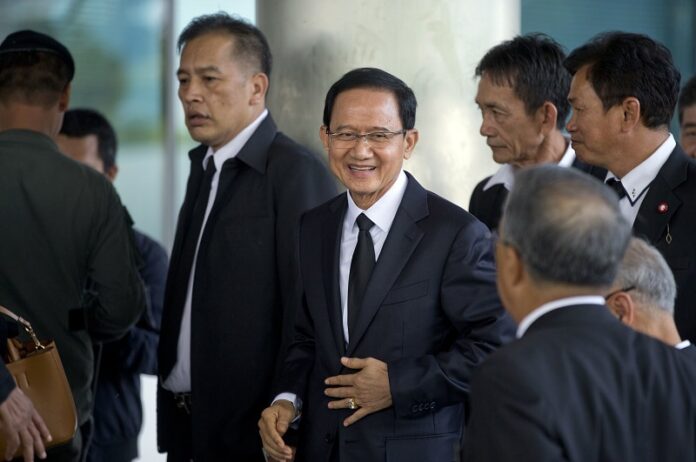
Thailand's former Prime Minister Somchai Wongsawat, center, smilies upon his arrival Wednesday at a courthouse in Bangkok. Photo: Gemunu Amarasinghe / Associated Press

BANGKOK — Two former prime ministers arrived in court in Bangkok on Tuesday to hear verdicts in their trial arising from the quelling of an anti-government protest in 2008.

Somchai Wongsawat and his then-deputy Chavalit Yongchaiyudh have both denied the charges of abuse of power.

The charges allege they authorized police to use force to clear protesters who had blockaded the National Assembly building. A pitched battle erupted, injuring several hundred people and causing two deaths. Some of the most serious wounds were caused by tear gas canisters that exploded as they landed.

Read: Fates of 2 Former PMs Hinge on August Verdicts

A man who lost his leg in the crackdown held up his prosthetic limb outside the court building and blamed the men on trial. Tee Saetaw, 73, said the order to use force had to come from Somchai and Chavalit. “If the prime minister hadn’t ordered it, they wouldn’t have shot at us,” Tee said. “The order had to come from the prime minister and the deputy prime minister. At that time it was Chavalit.”

Somchai is the brother-in-law of Thaksin Shinawatra, the popular prime minister deposed by a 2006 coup. His supporters see the various cri

minal cases against Thaksin, Somchai and others as attempts to erase his influence from Thai political life.

Thaksin’s sister, former Prime Minister Yingluck Shinawatra, declared her innocence and asked for “kindness” from a court Tuesday in a separate trial that alleges she mishandled a rice subsidy program that was the centerpiece of her party’s victory in the 2011 general election.

Her bank account has already been frozen after an administrative court held her responsible for some of the losses incurred in the subsidy program. The verdict in Yingluck’s case is to be issued Aug. 25 and could see her sent to prison for 10 years if she is convicted.

Thaksin has been in self-imposed exile since 2008 to escape a prison sentence on a conflict of interest conviction.

Advertisement

Man Posts Video of Self Climbing Philadelphia City Hall Tower

Image: CBS / YouTube

PHILADELPHIA — A man has posted an online video of himself climbing Philadelphia City Hall and its clock tower, which reaches about 500 feet (152 meters) into the air.

The man, who identified himself on the video as Carson King, tells KYW-TV that he climbed the building while scaffolding was up this year for renovations and the maintenance of the bronze William Penn statue at its apex.

King says the video isn’t meant to spawn copycats. He says: “I strongly suggest a normal citizen doesn’t try this.”

He says he climbed the building to take pictures from a unique vantage point.

City spokesman Mike Dunn says officials have seen the video and called the actions “dangerous and illegal.”

Police say they are investigating the incident.

Advertisement

Islamic School Seeks to Steer Sons of Militants to New Path

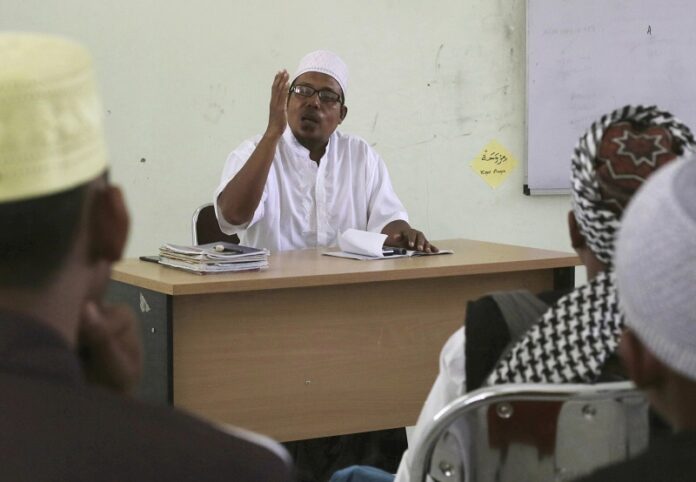
Former radical preacher Khairul Ghazali teaches at Al Hidayah Islamic Boarding School, a school set up for the sons of Islamic militants in 2017 in Sei Mencirim, North Sumatra, Indonesia. Photo: Binsar Bakkara / Associated Press

SEI MENCIRIM, Indonesia — The slim boys in Muslim caps and robes at the Al Hidayah Islamic boarding school are grinning bolts of energy who love football, need a little coaxing to do their math and Quran lessons assiduously and aspire to become policemen or respected preachers.

Their school, like many in rural Indonesia, started as a modest affair with a dusty yard, spartan sleeping quarters and an open-air classroom with a dirt floor and corrugated iron roofing. The boys, though, have been spoken to roughly by villagers, the school’s banners and billboards trampled and burned, and its head teacher reported to police.

The 20 pupils are the sons of Islamic militants, reviled by most Indonesians for killings and other acts of violence that they justified with distorted interpretations of Islam. Nearly half of the boys’ fathers were killed in police raids, and in some cases the children witnessed the deaths. Most of the other fathers are in prison for terrorism offenses.

Al Hidayah’s founder, Khairul Ghazali, is a former radical preacher whose involvement in militancy stretches back decades. He was recruited at age 19 by Abdullah Sungkar, the now-deceased leader of the Jemaah Islamiyah terror group responsible for attacks including the 2002 Bali bombings that killed more than 200 people.

Nowadays, the soft-spoken Ghazali, 52, professes to be a changed man who wants to atone by preventing his young charges, who were ostracized and taunted at mainstream schools, from becoming the next generation of Indonesian jihadists. His three sons attend the school.

A turning point, he said, came in 2010 when anti-terror police raided his home in North Sumatra and shot dead two other militants, wanted for killing police officers, in front of him, his wife and children. In prison, he dwelt on his decades of jihad and in the hours spent poring over the Quran found his past wanting. With the encouragement of prison officials, he wrote several books against radicalism, earning the enmity of other jihadists who denounced him as an infidel who deserves death.

“It’s hurt our innocent children. It’s hurt us,” said Ghazali, who was released in 2015 after serving four years for offenses that included a major bank robbery to fund attacks. “Stigmatization, poverty and the fact that many innocent people were killed and the destruction we caused all accumulated into an inner torment.”

Ghazali’s school in North Sumatra is supported by counterterrorism officials but is only a small dent in a largely undiscussed problem. By his reckoning, there are at least 2,000 sons and daughters of killed and imprisoned militants at risk of becoming battle fodder for a new wave of jihadism.

Indonesia has had successes in rooting out violent militants but officials acknowledge risks remain. A 2015 Pew survey of Indonesians showed that 4 percent, or about 10 million people, had a favorable attitude toward the Islamic State group. A survey by Saiful Mujani Research and Consulting in May this year showed 9 percent support Indonesia, the world’s most populous Muslim nation, changing from a secular to an Islamic state. A few Islamic boarding schools churn out students susceptible to violent radicalization.

The IS group’s declaration of a caliphate over swaths of territory it temporarily held in Iraq and Syria, and more recently the occupation of the southern Philippine city of Marawi by IS sympathizers, has provided a psychological boost to militant networks in Indonesia that had been atomized by a sustained crackdown. As the group’s territory in the Middle East shrinks, officials fear Indonesians who fought there, or in Marawi, will return to Indonesia and provide leadership and skills that could help produce more lethal attacks.

Sitting in a classroom just after dawn with students whose ages range from 9 to 15, Ghazali tells them stories about the life of the Prophet Muhammad to show them, he said, that Islam is a religion of love and mercy, not an ideology to justify a war against police, currently the most frequent target of militant attacks in Indonesia.

Abdullah, 13, and his two younger brothers were sent by their mother to Ghazali’s boarding school last year because of the hostility they faced at their regular school.

“I can’t stand the taunts at school,” he said, his lips trembling. “I dropped out when I was in the third grade and I had to move from place to place. I was insulted as a terrorist kid when my father was in prison. I was so sad.”

Abdullah said his favorite activities at school are football and Arabic lessons. He aspires to become an Islamic teacher because “there are many people who claim to know Islam but actually they don’t know what Islam is and how to practice it.”

The initial hostility the school faced when it opened in 2015 has faded. Local police talked to villagers, raising awareness about its purpose. A stream of officials from the district and provincial governments and the military visited to show their support.

Villager Hendra Widiarto, who lives about 300 meters (yards) from the school, said lack of information about it and its makeshift appearance made locals suspicious, and they became confrontational when they learned about the backgrounds of Ghazali and the students.

Nowadays, Widiarto, a carpenter, helps Ghazali make cabinets and bookshelves for the school. Every Friday, people from surrounding villages and students from government schools come to Al Hidayah to pray.

“If ever possible, I want my own two children to learn morals and discipline at this school,” he said.

At the request of the National Agency for Counter-Terrorism, the local government last year provided 30 hectares of land next to the school and agency’s chief collected donations from companies and businessmen that allowed a substantial mosque and two sturdy classrooms, painted lime green, for up to 60 students to be built. The original open-air classroom now has a tiled floor and construction of better living quarters will start next month; Ghazali said that will allow the boarding school to also accept the daughters of militants and kids with ordinary backgrounds.

Another school that can cater to 100 students has been set up with the counterterrorism agency’s assistance in Lamongan, the East Java hometown of three brothers who assembled a massive bomb used in the 2002 Bali attack.

“These children are victims of their parents’ wrong ideology,” said Suhardi Alius, chief of the counterterrorism agency, who wants schools for children of jihadists to be established in areas known as hotbeds of Islamic militancy such as Poso in Sulawesi and Bima in West Nusa Tenggara.

“If these children are not rescued they will follow what their parents did,” Alius said, citing the example of the 19-year-old son of executed Bali bomber Imam Samudra who police say was killed in a battle in Syria in 2015.

Alius describes Ghazali as “totally changed” and taking the right course by drawing on his experience to prevent others from taking up violence.

“The state should support him because people become radical not within a day or two, but it takes a long process, so to deradicalize them we also need a long process,” he said.

Six teachers from provincial schools are voluntarily helping Ghazali and his wife teach the standard national curriculum plus religious studies, Arabic and farming at Al Hidayah.

One of them, Muhammad Haris Iskandar, 51, a math teacher and vice director at a public school in Medan, Indonesia’s third-largest city, said he left his formal job because of the rare challenge offered by Al Hidayah.

“This school is very special for me,” he said.

He and the other volunteers are not only educators and motivators, but also healers and role models for children traumatized by their family’s radicalism and society’s reaction to it, Iskandar said.

The teachers also need to be combative and argue persuasively, he said, because the students sometimes doubt what they are taught about Islam when they compare it with what they absorbed from their parents.

For example, he said, they have questioned why non-Muslims should not be regarded as infidels who can be killed.

Dimas, 14, said he regrets the crimes of his father, who was arrested in 2014 for trafficking drugs to fund extremism and is serving a 10-year prison sentence.

“I study here because I want to repent as my father was a criminal,” said the teen, who dreams about becoming a policeman and arresting drug traffickers.

“Many people say that my father likes to hit people and is a murderer,” he said. “I don’t understand why he should kill people.”

Story: Niniek Karmini

Advertisement

Junta Won’t Ask Laos About ‘Disappeared’ Monarchy Critic

A YouTube video screencap of Wutthipong Kochathammakun, aka Ko Tee, speaking on a Redshirt protest stage in Pathum Thani on Feb. 28, 2014.

BANGKOK — Deputy junta chairman Prawit Wongsuwan said Tuesday he won’t ask Laos to explain what happened to an anti-monarchy critic and exile allegedly abducted there over the weekend.

Gen. Prawit said he didn’t know anything about the alleged abduction of Redshirt firebrand activist Wutthipong “Ko Tee” Kochathmmakun and suggested claims of junta involvement were illogical.

“I don’t know about this,” said Prawit, who also serves as deputy prime minister. “Why would I take him? He’s been there for three years. If I were to take him, I would have done so earlier.”

Read: Thai Monarchy Critic in Exile Reportedly ‘Disappeared,’ Junta Denies Knowledge
According to two men who said they were with Ko Tee when he was taken from his residence in Laos, an armed group of Thai-speaking men bound and gagged them before whisking away the 49 year old. Their account sparked fear the military regime or another party had dispatched agents to abduct him.

Prawit said he would not ask Laotian authorities about Wutthipong because he didn’t “know the facts.”

Other government officials have said they did not have any knowledge about Wutthipong’s disappearance, including junta chairman Gen. Prayuth Chan-ocha.

Like his deputy, Prayuth said it was implausible that an armed operation could be carried out in a foreign country.

“Just think about it, whoever wants to do it, can they do it in another country? Is it possible? I don’t know,” Prayuth said.

Ko Tee is known as a radical Redshirt activist who often called for violent confrontation with his opponents. He operated the Red Guard radio station until he fled Thailand following the 2014 coup. At the time he was under investigation for defaming the royal family comments made about the monarchy in an interview with Vice News.

During his exile in Laos, the activist has advocated replacing the monarchy with a federalist republic, a taboo topic back home.

He was also charged in absentia with terrorism in March for allegedly stockpiling heavy weapons at a former residence in northern metro Bangkok, though Wutthipong strongly denied the allegations.

Advertisement

Line to Launch Taxi Service in Bangkok

BANGKOK — A new taxi-booking service will compete against rivals Grab and Uber, this time with the blessing of the government and taxi drivers.

The local division of messaging juggernaut Line has joined forces with the Bangkok Taxi Cooperative Network and Land Transport Department to launch Line Taxi later this year, Line Thailand announced Monday.

Like Grab, the service will rely on regular taxi drivers, according to Ariya Banomyong of Line Thailand, who said the government-backed service will field nearly 60,000 taxis. She said that booking taxis using Line would raise standards and improve the bad reputation of Bangkok’s taxi drivers by making them more responsive.

Unlike Grab and Uber, which continue to operate despite government bans, Line Taxi will not require users download an extra smartphone app. Instead, the taxis can be called using the existing Line app. Fares can be paid using cash or the Line Pay feature.

More details are to be revealed at a later date.

With more than 41 million users as of mid-2017, Line is the country’s most popular social media service.

LINETAXI
Line Thailand managing director Ariya Banomyong, Land Transport Department director Sanit Promwong and Bangkok Taxi Cooperative Network president Witoon Naewpanich pose together for a picture on Monday at the House on Sathorn. Photo: Bi Ariya Banomyong / Facebook


Advertisement

Prayuth to Visit Flooded Region as Death Toll Climbs

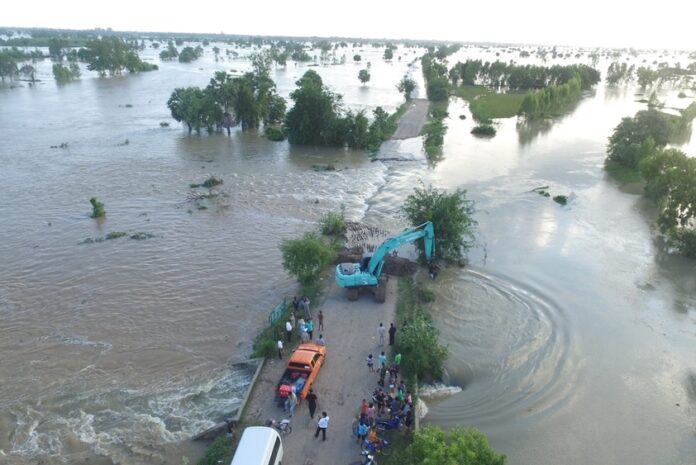
A road crew attempts to repair a road cut off by flood in Buriram Tuesday

BANGKOK — Four days into a massive flooding crisis that has killed 11 across much of the country, prime minister and junta leader Prayuth Chan-ocha said Tuesday he would visit the affected region.

Following criticism his government has been slow to take action and indifferent to the suffering, Prayuth told reporters at Government House today that he has been waiting for the right time to go himself.

“I have planned it since the first day of the flood, but I had to consult with related agencies first, including the Cabinet,” Gen. Prayuth said after his weekly Cabinet meeting. “Because if I visited the area [without preparation], it would be chaos.”

Read: Massive Flooding Continues in 19 Provinces (Photos)

On Monday the government approved an emergency fund of 35 million baht to assist flood victims as officials struggle to contain the situation and provide assistance in a crisis which has now claimed 11 lives.

The fund approved includes 50,000 baht payouts to families of the deceased, according to deputy Prime Minister Omsin Chivapruek, along with compensation for homes damaged or destroyed.

The latest known fatality took place Monday in Roi Et province – one of 19 provinces severely affected by what is believed to be the worst flood in decades – where officials say a 73-year-old man drowned.

By Tuesday noon, several dykes had breached in Roi Et province and large swaths of farmland had flooded. A road that connects Roi Et with Yasothorn was also partially flooded by the afternoon. Local residents and officials fear the flood may escalate during the next several days.

Although provinces in the north and central areas are impacted by flooding, the northeastern region of Isaan appears hardest hit, according to the director of the Geo-Informatics and Space Technology Development Agency.

“The most affected area is the northeastern region, followed by the central, the lower northern and the southern regions,” Arnon Sanitwong na Ayutthaya told reporters Tuesday. He added that the flood has spread to an area of 3 million rai (480,000 hectares).

The severity of flooding took many by surprise when it struck the province of Sakon Nakhon on Friday, after rainstorms brought by tropical storm Sonca caused a breach in a reservoir there. Much of the city remained flooded by Tuesday afternoon.

Among those who voiced their criticism at the perceived haphazard response to the flood is transparency activist Srisuwan Janya, who questioned why local disaster prevention agencies did not issue a timely warning.

Since those agencies failed to do their duty, they should be abolished so their budget should be distributed to the flood victims, Srisuwan said Tuesday.

He also said the government could have started handing out assistance much earlier because each provincial authority can withdraw up to 70 million baht from the central budget to spend on flood relief.

Speaking Tuesday, junta chairman Prayuth blamed the flood on unpredictable weather conditions and said officials should learn from the latest crisis.

When a reporter asked Prayuth to compare his administration’s response to the ongoing flood to that of the previous administration during massive flooding in 2011, the general said a comparison was inappropriate.

“They are different issues,” Prayuth said. “I don’t want to disrespect anyone because I was involved in both events … Don’t go back to the past. Let’s talk about the present. Give it the best.”

His comment struck a relatively conciliatory tone compared to his spokesman, Lt. Gen. Sansern Kaewkamnerd, who alleged the previous government mishandled relief operations during the flood of 2011.

Advertisement

Hot News

LATEST NEWS

Bangkok
broken clouds
29.4 ° C
29.4 °
25.5 °
71 %
2.9kmh
60 %
Mon
29 °
Tue
38 °
Wed
37 °
Thu
36 °
Fri
37 °