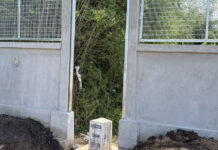
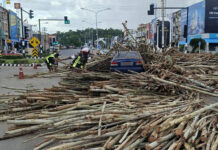
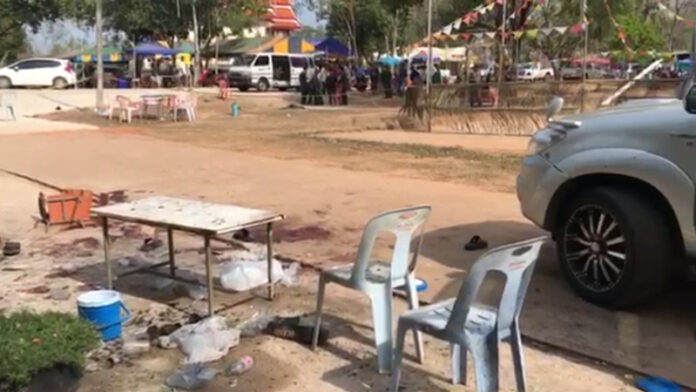
The scene where a grenade exploded early Sunday morning at Wat Amphawan in Chachoengsao, killing five people.
CHACHOENGSAO — A man faces four counts of first-degree murder after being arrested Sunday for allegedly throwing a hand grenade at a temple fair that killed four people.
Police said Anurak Sae-ngow tossed a grenade at a table of rivals a temple fair at about 1am on Sunday which killed four people and injured five. Anurak and his gang of youths had gotten into an altercation with the other group, an officer with the Chanam Khet Police Department said. They arrested him less than 24 hours later.
“We caught him last night in Chonburi,” Lt. Col. Somchai Sarachon said Monday. “He will be charged with premeditated murder.”
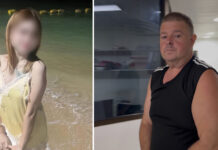
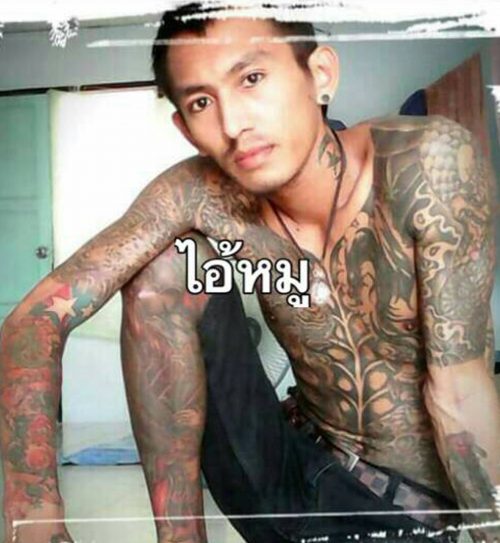
Anurak Sae-ngow in a police handout photo identifying his nickname as ‘Ai Mhoo.’
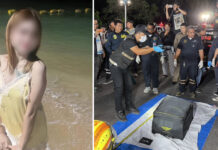
Police and bomb squad officers rushed early Sunday morning to Wat Amphawan, where people had been dancing in celebration of a Buddhist ceremony. The injured and dead were sent to a nearby hospital.
On Sunday morning, police tracked 25-year-old Anurak to his home in the Tha Takiap district, where they found his girlfriend Thanida Meeprawat, who was a witness at the bombing. She reportedly told police that Anurak was the one who had thrown the grenade was now on the run from the police with his older brother and two other men.
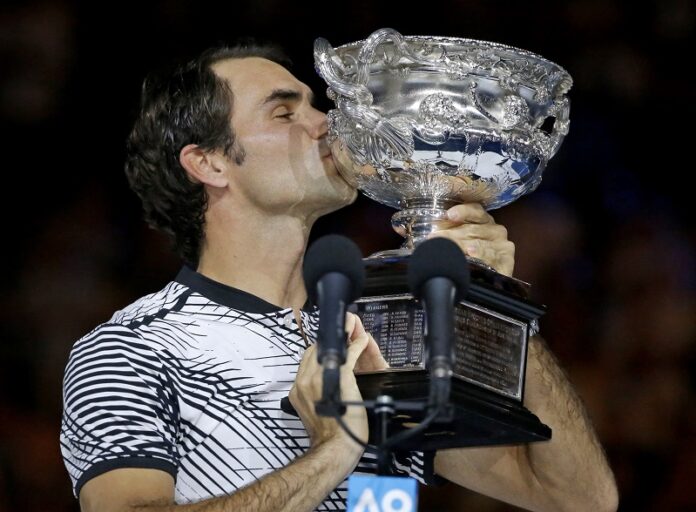
Switzerland's Roger Federer kisses his trophy after defeating Spain's Rafael Nadal during the men's singles final at the Australian Open tennis championships Sunday in Melbourne, Australia. Photo: Aaron Favila / Associated Press
MELBOURNE, Australia — So here was Roger Federer, down a break in the fifth set in a Grand Slam final. Across the net was his nemesis, Rafael Nadal, the left-handed Spaniard he hadn’t been able to beat in a major final in almost a decade.
The 35-year-old father of four was back in his first tour-level tournament after six months off letting his injured left knee recover, and he hadn’t won any of the big four events in tennis since Wimbledon 2012. Nadal was returning from injury, too, and somehow the pair had renewed the Roger-Rafa rivalry in a throwback Australian Open final that transcended sport.
At that moment, an 18th Grand Slam title didn’t feature in Federer’s thinking.
Don’t play the player, he reminded himself, just play the ball. Attack the serve.
With that, Federer recovered the break, and seized momentum in a roll of winning 10 consecutive points that helped propel him to a 6-4, 3-6, 6-1, 3-6, 6-3 win late Sunday night. His fifth Australian title extended his buffer to four atop the list of all-time Grand Slam champions. Nadal remained tied with Pete Sampras in second place with 14.
“For me it’s all about the comeback, about an epic match with Rafa again,” Federer said, “… that I can still do it at my age after not having won a slam for almost five years.
“That’s what I see. The last problem is the slam count – honestly, it doesn’t matter.”
Federer had lost six of the previous eight Grand Slam finals he’d played against Nadal and was 11-23 in their career meetings. His last win over Nadal in a major final was at Wimbledon in 2007.
“It remains for me the ultimate challenge to play against him,” Federer said. “It’s super sweet, because I haven’t beaten him a Grand Slam final for a long time now.
“This one means a lot to me because he’s caused me problems over the years.”
With big wins come big celebrations, Federer said. “We’re going to party like rock stars tonight.”
By winning in Melbourne, where he first played in 2000 and where he kicked off his long reign at No. 1 with the title in 2004, he became the oldest man since Ken Rosewall in 1972 to win a slam.
Federer had lost five semifinals in Australia since winning his previous title here in 2010. He’d lost three major finals since winning that last Grand Slam in 2012. He hadn’t played Nadal in a major final since losing at the French Open in ’11.
After twice rallying from a set down, Nadal was a break up in the fifth but couldn’t hang on to become the first man in the Open era to win each of the four majors twice. Instead, Federer became the first man in the Open era to win three of Grand Slam events at least five times (7 Wimbledon titles, 5 U.S. Opens, 5 Australian Opens and 1 French Open).
“The magnitude of this match is going to feel different. I can’t compare this one with any other one except for maybe the French Open in ’09,” Federer said. “I waited for the French Open, I tried, I fought. I tried again and failed. Eventually I made it. This feels similar, yeah.”
Three months ago, Federer and Nadal were in the Spaniard’s native Mallorca for the opening of a tennis academy wondering if they’d ever be able to contend for majors again.
Yet here they were, the first Grand Slam tournament of the season, renewing the classic rivalry that saw them dominate tennis a decade ago.
The long-odds final – No. 9 against No. 17 – unfolded after six-time champion Novak Djokovic was upset by No. 117-ranked Denis Istomin in the second round and top-ranked Andy Murray, a five-time losing finalist in Australia, went out in the fourth round to 50th-ranked Mischa Zverev.
Federer beat Zverev, and then U.S. Open champion Stan Wawrinka in a five-set, all-Swiss semifinal. That was the night before Nadal held off Grigor Dimitrov in an almost five-hour, five-set semifinal late Friday.
After four sets of a final where the momentum alternately swung, the fifth had all the tension and drama that these two players are famous for.
Federer had a medical time out for treatment on his upper right leg and was broken in his first service game of the deciding set.
But he rallied and put Nadal under pressure. Nadal saved three break points in the eighth game but lost momentum again when Federer finished off a 26-shot rally – the longest of the match – with a forehand winner down the line.
Federer got the pivotal break for 5-3, but Nadal made him work for the very last point.
Serving for the match, and after saving two break points, Federer was called for a double-fault at deuce. He challenged the out call on his second serve, however, and it was overturned. Tempo back in his court.
After hitting a forehand crosscourt winner on his second match point, his celebrations were delayed when Nadal challenged the call.
Federer watched the replay, and leaped for joy when it showed his last shot was in – the perfect finish to his 100th match at the Australian Open.
“Congratulation to Roger … Just amazing, the way he’s playing after such a long time of him not being on the tour,” Nadal said. “For sure, you have been working a lot to make that happen.”
“I fight a lot these two weeks,” he added. “Today, a great match, probably Roger deserved it a little bit more than me.”
Federer’s championship victory capped a remarkable weekend for 30-somethings – all four singles finalists were 30 or older – after 35-year-old Serena Williams beat her older sister, Venus, in the women’s final to capture her Open-era record 23rd Grand Slam title.
BANGKOK — Thai netizens flooded their timelines Monday morning with encouraging words for their Miss Universe contestant who reached final six, however failed to enter the final three.
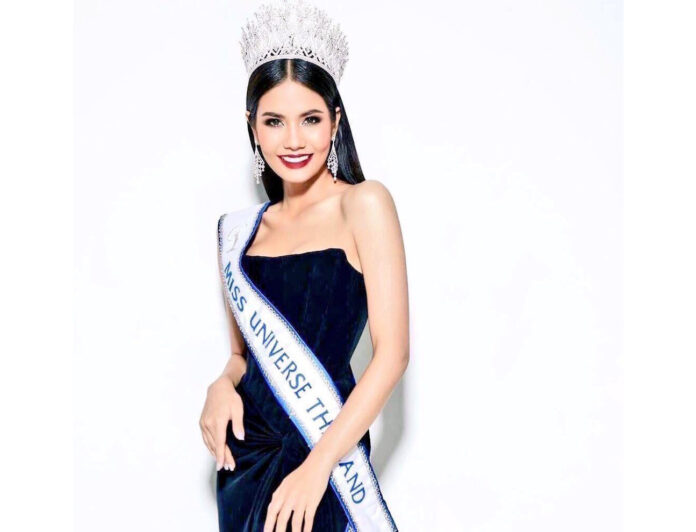
Chalita “Namtarn” Suansane was among six semifinalists this morning at the 65th Miss Universe pageant in Manila but was failed to make it into the final three.
The three finalists were Miss France, Miss Colombia and Miss Haiti. Iris Mittenaere, 23-year-old Miss France, was later named the winner.
Since Thursday, the pageant has been a subject of national fixation as Chalita advanced past the first rounds of elimination to progress further than any Thai contestant has in 28 years. The last time Miss Thailand won the Miss Universe pageant was Porntip Bui Simon in 1988.
On Monday #ThankYouChalita was the No. 2 trending hashtag on Twitter where Chalita was
“You are always my Miss Universe, CHALITA,” @Papololy_ tweeted.
Chalita is a 22-year-old student at Mahasarakham University from Samut Prakan province. She’s has been a popular contestant for her girl-next-door image.
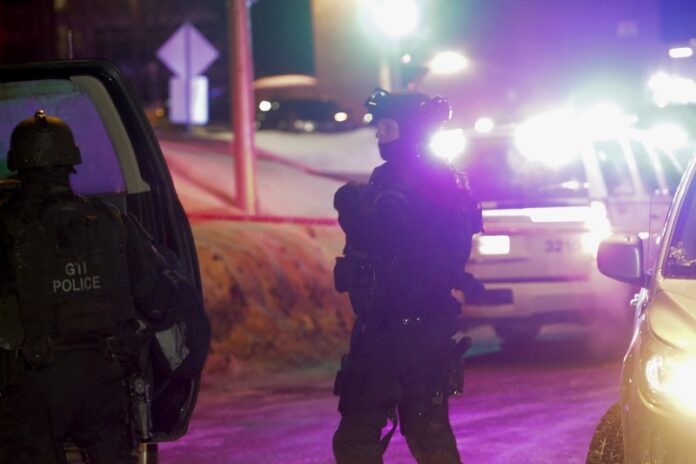
Police survey the scene after a deadly shooting at a mosque Sunday in Quebec City, Canada. Photo: Francis Vachon / Associated Press
MONTREAL — Five people were killed in a shooting at a Quebec City mosque during evening prayers, the president of the center said Sunday. Authorities reported two arrests in what Quebec’s premier and Canada’s prime minister called an act of terrorism.
Quebec City Islamic Cultural Centre President Mohamed Yangui reported the number of dead late Sunday in a telephone call from the provincial capital.
Yangui said the shooting happened in the men’s section of the mosque. He said five males had died and he worried that some were children. He said he wasn’t at the center when the attack occurred, but he got some details from people on the scene.
He said an estimated 60 to 100 people would have been there at the time of the shooting. “We are sad for the families,” he said.
Authorities did not confirm the number of fatalities. Both Prime Minister Justin Trudeau and Quebec Premier Philippe Couillard characterized the attack as a terrorist act, which came amid heightened tensions worldwide over U.S. President Donald Trump’s travel ban on certain Muslim countries.
“We condemn this terrorist attack on Muslims in a centre of worship and refuge,” Trudeau said in a statement. “It is heart-wrenching to see such senseless violence. Diversity is our strength, and religious tolerance is a value that we, as Canadians, hold dear.
“Muslim-Canadians are an important part of our national fabric, and these senseless acts have no place in our communities, cities and country,” he said. “Canadian law enforcement agencies will protect the rights of all Canadians, and will make every effort to apprehend the perpetrators of this act and all acts of intolerance.”
Quebec City police spokesman Constable Pierre Poirier said two suspects were arrested. Police said the mosque had been evacuated and things were under control.
Trudeau said on Twitter that he spoke to Quebec’s premier and was being briefed by officials. The prime minister said the government had offered “any & all assistance needed.”
Trudeau had earlier reacted to Trump’s visa ban for people from certain Muslim-majority countries by tweeting Saturday: “To those fleeing persecution, terror & war, Canadians will welcome you, regardless of your faith. Diversity is our strength #WelcomeToCanada.”
Trudeau also posted a picture of him greeting a Syrian child at Toronto’s airport in late 2015. Trudeau oversaw the arrival of more than 39,000 Syrian refugees soon after he was elected.
Couillard termed the Sunday mosque attack as “barbaric violence” and expressed solidarity with the victims’ families.
The mayor of Gatineau, Quebec, near Canada’s capital of Ottawa, said there would be increased police presence at mosques around his city following the attack.
The New York Police Department said it was stepping up patrols at mosques and other hours of worships in its city.
The NYPD issued a statement Sunday night saying Critical Response Command personnel had been “assigned to extended tour coverage” at certain mosques.
“NYPD is providing additional protection for mosques in the city. All New Yorkers should be vigilant. If you see something, say something,” New York City Mayor Bill Blasio said on Twitter.
“Our prayers tonight are with the people of Quebec City as they deal with a terrible attack on a mosque. We must stand together,” Blasio said in another tweet.
Public Safety Minister Ralph Goodale said on Twitter Sunday that he was deeply saddened by the loss of life. His office said no motive had been confirmed.
In the summer of 2016 a pig’s head was left on the doorstep of the Quebec Islamic Cultural Centre.
The incident occurred in the middle of Ramadan, when Muslims fast from dawn to sunset. Practicing Muslims do not eat pork.
Francois Deschamps, an organizer of a refugee-support group in Quebec City, said the motive was unknown, but right-wing groups are very organized in Quebec City and distribute fliers at the university and plaster stickers around town.
Deschamps said he has personally received death threats after starting a refugee support group on Facebook and people have posted his address online.
“I’m not very surprised about the event,” Deschamps said.
Canada is generally very welcoming toward immigrants and all religions, but it’s less so in the French-speaking province of Quebec.
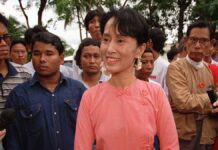
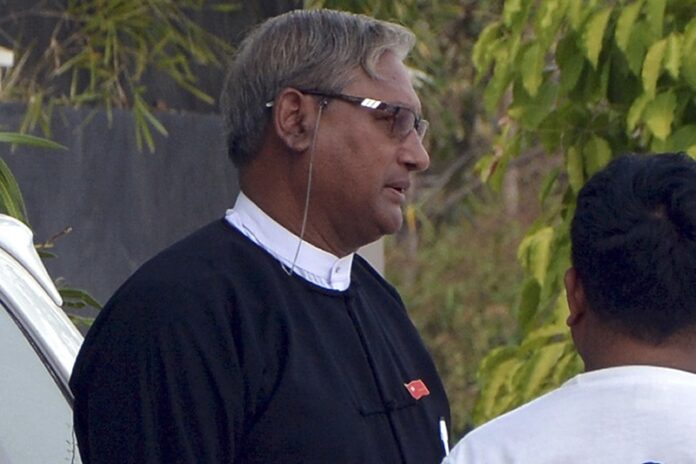
Ko Ni, a legal adviser for Myanmar's ruling National League for Democracy and a prominent member of Myanmar's Muslim minority, is photographed last February in Naypyitaw, Myanmar. Photo: Aung Shine Oo / Associated Press
YANGON — A gunman killed a legal adviser for Myanmar’s ruling National League for Democracy on Sunday, shooting the lawyer in the head at close range as he walked out of the Yangon airport, the government said.
The gunman was arrested after he killed Ko Ni, a prominent member of Myanmar’s Muslim minority, and wounded a taxi driver who tried to stop him from fleeing, the Ministry of Information said in a video posted on state-run MRTV.
Ko Ni was the Supreme Court advocate for the NLD and a longstanding legal adviser to the country’s leader Aung San Suu Kyi. He had just arrived from a trip overseas.
A friend of Ko Ni who witnessed the shooting said the suspected assassin also shot a taxi driver who tried to stop him from fleeing.
“As I stopped my car by the airport, that’s where I saw Ko Ni’s body lying on the walkway outside of the airport and I couldn’t believe that just happened,” said Thet Paing Soe, a friend and an NLD supporter. “Then as the shooter tried to run away, the police arrested him.”
Thet Paing Soe said a taxi driver known as Nay Win stopped the fleeing assassin but was shot. The ministry’s news statement said the driver was wounded.
The Ministry of Information identified the suspect as Kyi Linn from Mandalay. The motive was not known.
Kyee Myint, a former chairman of the Myanmar Lawyer Network who has a close relationship with Ko Ni, also confirmed his death.
“It is a big loss for us that Ko Ni, our beloved friend, has been killed. He is the face of the democracy in our country and this is a big loss for us,” Kyee Myint added.
Calls to Suu Kyi’s office were not answered, and other leaders of the NLD were not reachable Sunday evening.
Ko Ni was one of the country’s most prominent Burmese Muslims. He criticized the NLD in 2015 for not putting up Muslim candidates in the general election. Myanmar is a mainly Buddhist country and anti-Muslim sentiments have increased in recent years following deadly communal violence concentrated in the western state of Rakhine that is home to many Rohingya Muslims.
Amnesty International urged an independent investigation and said the killing of Ko Ni had the hallmarks of a political assassination.
“His death will send shock waves across the human rights community in the country and beyond, and the authorities must send a clear message that such violence will not be tolerated and will not go unpunished,” said the statement from Josef Benedict, Amnesty’s regional deputy campaigns director.
The group called Ko Ni a tireless human rights campaigner and expressed condolences to his family.
As a practicing lawyer, Ko Ni had handled more than 900 criminal cases and more than 1,400 civil cases. He established the Laurel Law Firm with two other advocates in 1995.
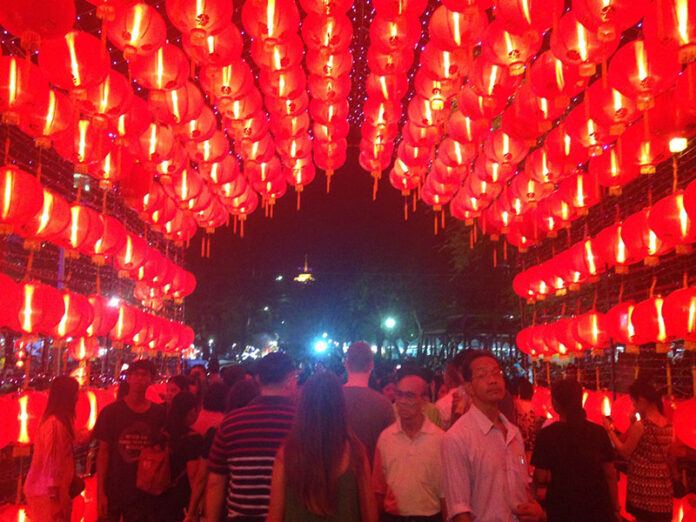
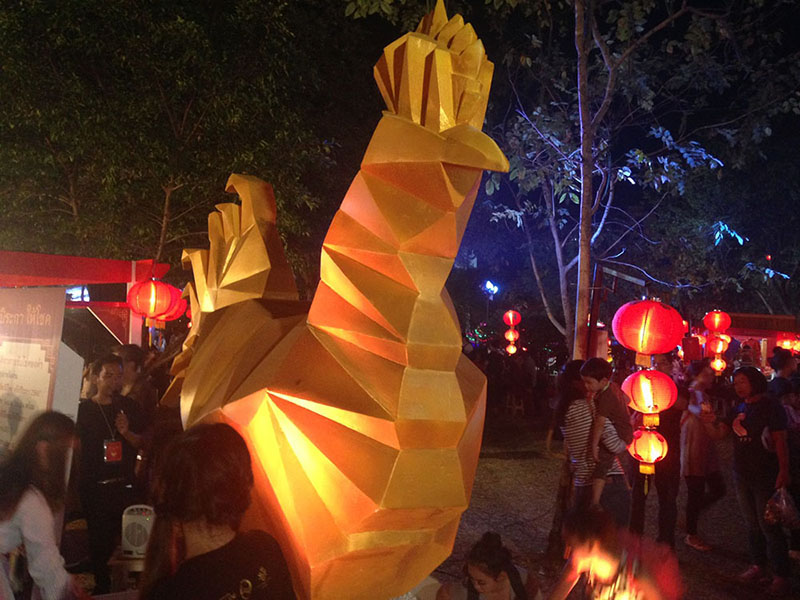
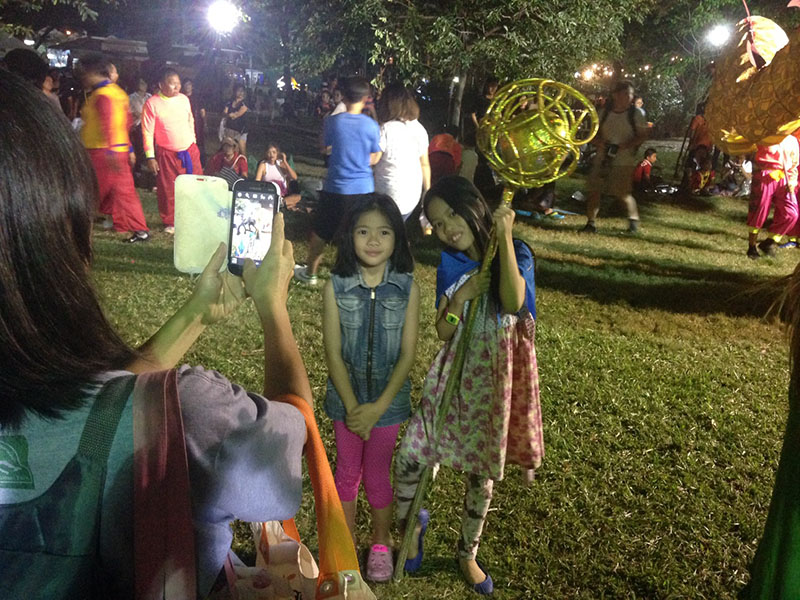
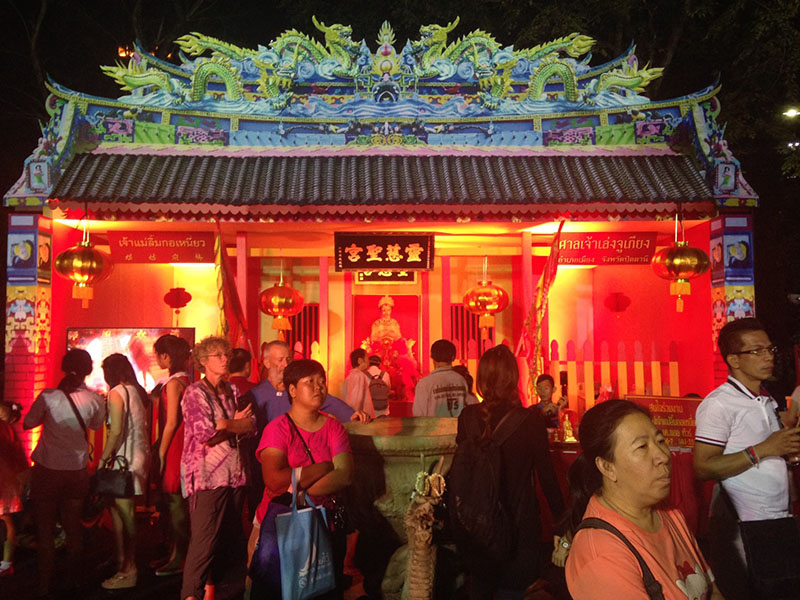
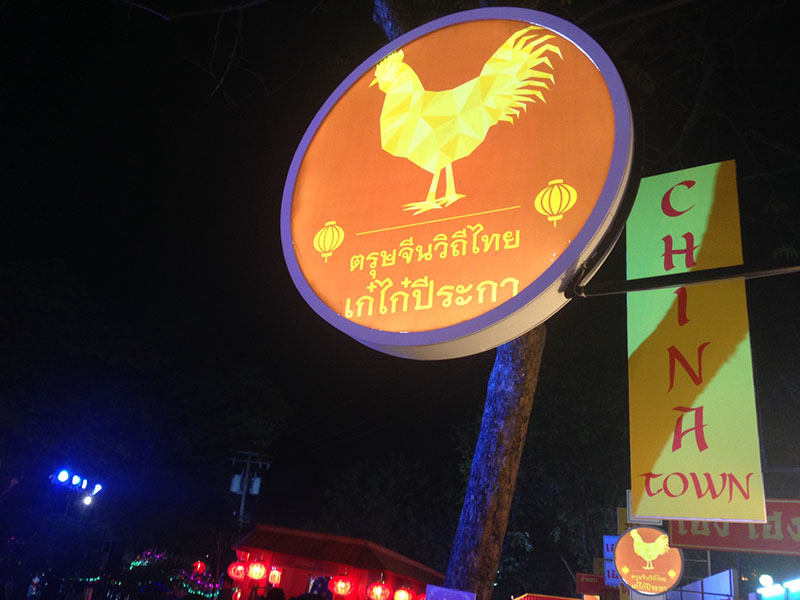
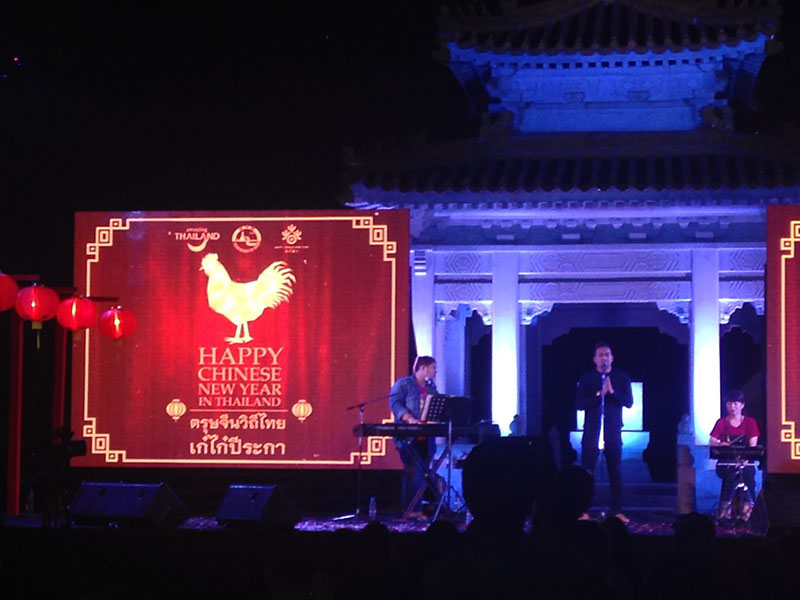
BANGKOK — Rooster statues, costumes and edibles welcomed revelers to Lumphini Park on Saturday night, where Chinese New Year festivities were staged.
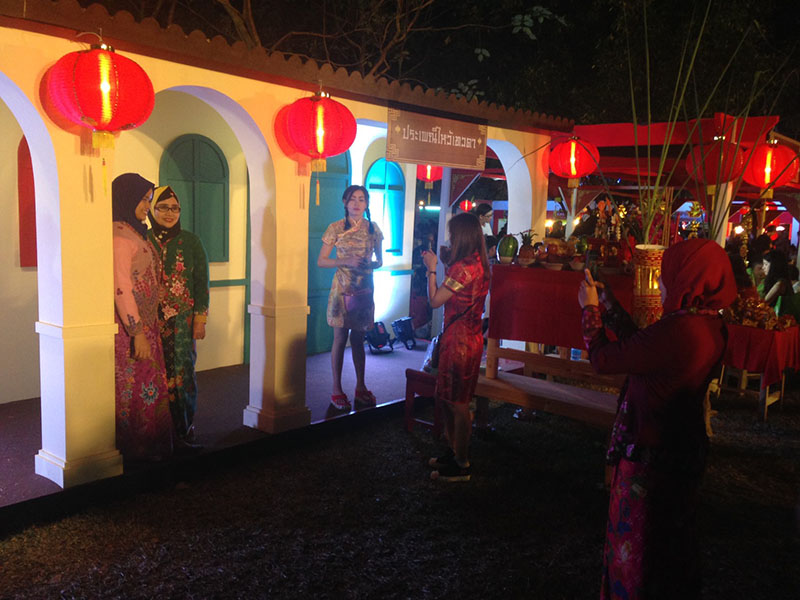
To welcome the Year of the Rooster, merrymakers emptied their hong bao (red envelopes) on food and drink booths, raffles, concerts and activities ranging from interactive games to facial hair removal.
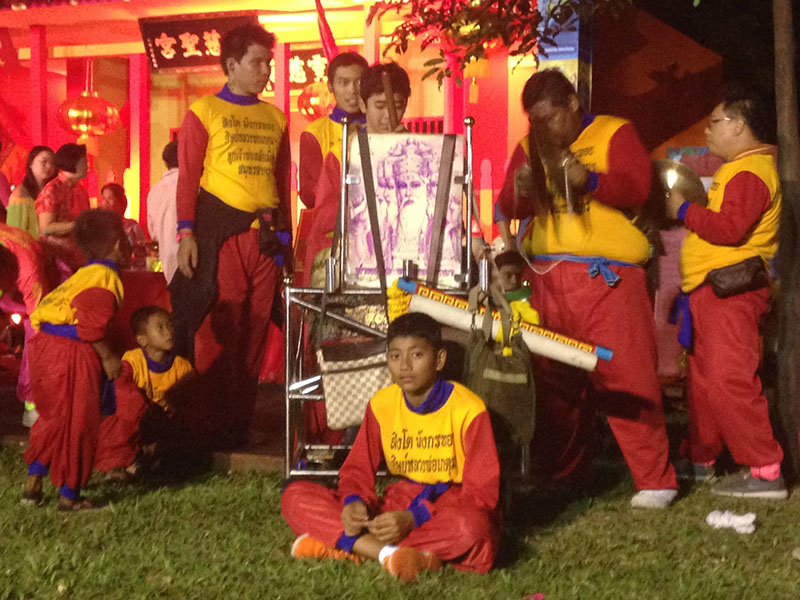
Among a drone of beating drums, devotees made auspicious prayers while others partook in traditional Chinese dragon dances clad in red qi pao and changshan.
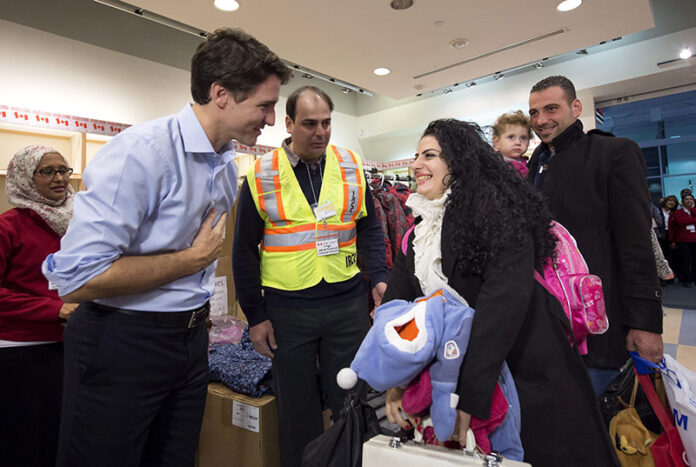
Prime Minister Justin Trudeau, left, greets Georgina Zires, center, Madeleine Jamkossian, second right, and her father Kevork Jamkossian, refugees fleeing from Syria, as they arrive at Pearson International airport on Dec. 11, 2015, in Toronto. Photo: Nathan Denette / The Canadian Press
TORONTO — Canadian Prime Minister Justin Trudeau has a message for refugees rejected by U.S. President Donald Trump: Canada will welcome you.
He says he also intends to talk to Trump about the success of Canada’s refugee policy.
Trudeau reacted to Trump’s visa ban for people from certain Muslim-majority countries by tweeting Saturday: “To those fleeing persecution, terror & war, Canadians will welcome you, regardless of your faith. Diversity is our strength #WelcomeToCanada.”
Trudeau also posted a picture of him greeting a Syrian child at Toronto’s airport in late 2015. Trudeau oversaw the arrival of more than 39,000 Syrian refugees soon after he was elected.
A spokeswoman for Trudeau said he has a message for Trump.
“The Prime Minister is looking forward to discussing the successes of Canada’s immigration and refugee policy with the President when they next speak,” spokeswoman Kate Purchase told The Associated Press.
Trudeau is expected to the visit the White House soon.
To those fleeing persecution, terror & war, Canadians will welcome you, regardless of your faith. Diversity is our strength #WelcomeToCanada
The prime minister has refrained from criticizing Trump to avoid offending the new president. Canada wants to avoid becoming a target like Mexico has. More than 75 percent of Canada’s exports go to the U.S.
Brad Wall, the conservative premier of the Canadian province of Saskatchewan, offered his support to Trudeau.
“Sask has welcomed approx 2000 refugees this past year,” Wall posted on Twitter. “We stand ready to assist fed gov’t re: anyone stranded by the US ban.”
Toronto Mayor John Tory also weighed in, noting that the city is the most diverse in the world.
“We understand that as Canadians we are almost all immigrants, and that no one should be excluded on the basis of their ethnicity or nationality,” Tory said in a statement.
Trump signed a sweeping executive order Friday that he billed as a necessary step to stop “radical Islamic terrorists” from coming to the U.S. Included is a 90-day ban on travel to the U.S. by citizens of Iraq, Syria, Iran, Sudan, Libya, Somalia or Yemen and a 120-day suspension of the U.S. refugee program.
Trump’s order singled out Syrians for the most aggressive ban, ordering that anyone from that country, including those fleeing civil war, are indefinitely blocked from coming to the United States.
White House National Security adviser Michael Flynn told Canada’s national security adviser that holders of Canadian passports, including dual citizens, will not be affected by the ban, Purchase said.
“We have been assured that Canadian citizens traveling on Canadian passports will be dealt with in the usual process,” Purchase said.
Trudeau later posted the statement on Twitter with the hashtag “ACanadianIsACanadian.”
Earlier the U.S. State Department said that Canadians with dual citizenship from Iran, Iraq, Sudan, Somalia, Syria, Yemen and Libya would be denied entry for the next three months.
The Syrian refugee crisis became a major issue in Canada’s election in late 2015 because of the haunting image of a drowned 3-year-old Syrian boy washed up on a Turkish beach. The boy had relatives in Canada. Tima Kurdi, the aunt of the boy who became a symbol of the Syrian refugee crisis, called the U.S. ban on Syrian refugees inhumane and said she was proud of Canada.
Trudeau’s tweet quickly received more than 150,000 likes. “Welcome to Canada” trended on social media in the country.
Irish-born Thai net idol Jessie Vard in an image posted on Facebook, at left, and Miss World Pageant Host Megan Young at right.
BANGKOK — When the Miss World Pageant 2016 was broadcast in Thailand last month, millions saw Filipino-American host Megan Young’s cleavage blurred by Thai censors every time she appeared on camera.
Irish-born, Thai-raised net idol Jessie Vard, who commands more than 1.4 million Facebook followers, was shamed online for not acting like a proper Thai woman for her sexually charged photos. She vowed to dial it down then apologized for a Christmas Eve event where lecherous men plastered her chest with stickers at a party.
“I must apologize for the photos and the clip that came out,” Vard wrote on Facebook. “… Jess will no longer accept such work again but bikini-shooting jobs are still a go.”
Miss World hosts Megan Young, at left, and Frankie Cena.
Then there’s the controversial junta-sponsored rewriting of the Computer Crime Act that grants power to the state to censor anything online deemed against “good morals” that will soon come into effect.
Coupled with early closing times, crackdowns on hookahs and e-cigarettes, sidewalks sanitized of street vendors, desexualized motorshows, booze bans and feigned surprise at its pervasive commercial sex industry, one might ask if Thailand is experiencing a new wave of moral and cultural policing by the military regime, aided by netizens and the private sector.
Cultural critics differ on whether the situation is aggravating but agree Thailand remains culturally conservative.
Suraphot Thaweesak, a religion and cultural critic at a public university he asked not be named due to political sensitivities, said moral and cultural controls have been imposed by Siamese elites for a long time. He traced it back to the modernization of Siam during the reign of King Rama V, who reigned from 1868 to 1910. Suraphot said secular morality, which includes love of freedom and equality, has yet to take root in Thailand. Instead, morality has been incorporated into the nationalist and royalist ethos. Liberal democracy has meanwhile been perceived as a threat to the traditional elites and the only moral authority most Thais are acquainted with is religious.
“The elites do not permit us to question fundamental problems,” said Suraphot, adding that the Thai middle class is a product on autocratic conservative ideologies inculcated through religious and school teachings. “It’s worrying.”
Asked to discuss the issue from the government’s perspective, the Culture Ministry’s Culture Surveillance Bureau declined requests for an interview about the growing role of netizens and private sector in moral and cultural policing.
The office said its director, Yupa Taweewattanakitboworn, was indisposed due to the hectic schedule of the ongoing funeral for His Majesty King Bhumibol.
An official at the bureau who asked not to be named added that the bureau has two to three staff members who constantly monitor the appropriateness of what is on the internet and in other media, then inform the Digital Ministry and other related agencies to do something it if they see something inappropriate.
Again, the target seems fixed on targeting female sexuality.
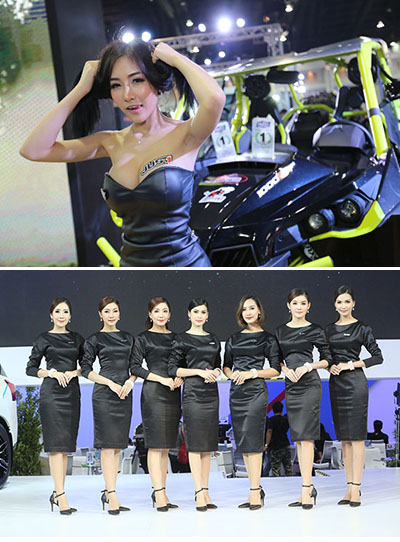
“We also inspect events such as Motor Shows to see if their pretties [promotional models] are properly dressed or not,” said the female official, in reference to the ongoing debate over how much sexuality or flesh such presenters, typically young and beautiful, should display.
Social Media the New Morality Police?
Instead of just waiting for the state to nanny us, the role of moral and cultural policing has trickled down to netizens as seen in the case of Jessie Vard and others.
Photo: Jessie Vard / Facebook
Chulalongkorn University Professor of philosophy Soraj Hongladarom thinks the growth of social media has “amplified” moral and cultural policing activities and led to policing by the masses.
“Social media act as an amplifier in a sense that people can post whatever they think [is acceptable or not] and it can set a trend.”
Soraj and Suraphot were quick to note that social media also enable people on opposing camps to debate the merits of morality and what’s culturally acceptable. As often as moral scolding breaks out online, backlashes rise to meet them, be it by netizens or the state.
“People just laugh at them,” said the professor.
For Soraj, the existence of social media means people are able to debate, and it’s no longer possible for conservatives to drag Thailand back to bygone era of, say, five decades ago. Soraj attributed moral and cultural policing by netizens to nostalgia for the notion of a good old days when they believe things were simpler.
At top, a promotional model known as a ‘pretty’ from a March 2016 auto show. At bottom, newly covered ‘pretties’ shifted into modesty for a December 2016 show.
“Society has become complex and there’s social media,” Soraj said. “Except issues like the monarchy or anything bordering on defaming the monarchy, Thailand is rather free compared to China or Singapore. If there’s too much coercive pressure, people won’t accept it.”
Soraj gave an example of netizens normalizing exposure of their bodies on social media. This, said Soraj, exemplifies the clash between conformity and individuality.
Back to Vard, despite harsh criticism against her, there were also those who defended her on Facebook.
“Why should you apologize?” asked Facebook user Arinchai Aob Viteetammaasakdi, following the Christmas Day posting by Vard. “It’s our body, and what we do with it is our business. I don’t want you to apologize because every time someone apologizes, it’s no different from branding this as a wrong choice. It will affect others who make the same choices.”
Those upset with Vard’s behavior continued to criticize her, however, and the online debate continues. Facebook user Monthakan Ratchaleam said those men defending the net idol by saying it’s her job should ask themselves if they would allow their wife to do the same, saying her behavior is disgraceful.
Not all think social media intrinsically advances a progressive ideology, however.
Feminist and well-known TV host Lakkana Panwichai, aka Kam Phaka, said social media tends to end up a platform for witch-hunting and ghettoization of like-minded people. “It’s more of a tool to discredit people and to witch hunt. Liberals tend to care about manners while conservatives don’t.”
No Change Detected
Lakkana believes things have remained the same and Thai society, be it under elected government or military regime, remains conservative and autocratic.
“It’s just that under the NCPO (junta), liberals can’t really criticize [those in power], so they feel it’s now unbearable,” she said.
Lakkana argued that it’s not the lack of free expression that emboldening cultural conservatives, but the fact that many Thais support such conservatism to begin with. She cited the example of TV stations like Channel 3 exercising greater self-censorship to cover up women they perceive as improperly dressed.
She acknowledged however that the social and political climate under dictatorship leads to greater self-censorship when it comes to what is and what is not considered appropriate.
“Under a normal regime, we know the limits of the law. Now, everyone must be more careful than usual and there’s the tendency to play it safe,” she said. “It’s unpredictable.”
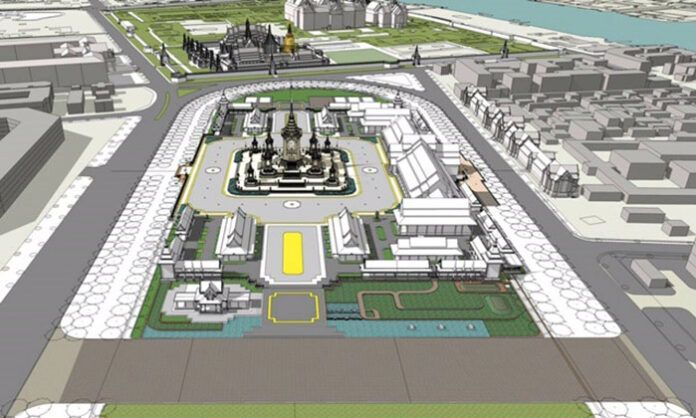
A plan of the funeral pyre, or meru, complex in Sanam Luang. Image: Department of Fine Arts
BANGKOK — The Late King’s contributions to society will be reflected in the design of his royal funeral pyre, according to the most detailed plan yet released by the officials in charge of the project.
Four ponds, a rice field, a reservoir and water mill will be part of the features, according to landscape architect Porntham Thammawimol and the government Fine Arts Department, which unveiled images from a 3D model on Friday.
The design offers the best look yet at the center of what will be the grandest royal ritual in decades. The multi-million baht funeral pyre is expected to be completed by September, just before the anniversary of the death of King Bhumibol.
Department director Anan Chuchote said the complex of the pyre, known in Thai as meru, will cover a length of 80 meters on the northern side of the Royal Cremation Grounds, or Sanam Luang.
Boasting the most ambitious work mustered by Thai craftsmanship, the meru will feature elaborate figurines depicting magical creatures and deities from Hindu cosmology.
The cremation for King Bhumibol, who died at 88 on Oct. 13, is expected to take place about a year after his death.
Anan added that the department is still recruiting artists and craftsmen for the construction and decoration of the meru. Anyone interested in the project have until Feb. 3 to apply.
The cremation of King Bhumibol, who was the longest-reigning monarch of Thailand, will be the first ritual of its kind to take place in decades. His body is lying in state at the Grand Palace, where hundreds of thousands of people have visited in recent months to pay respect.
Officials have said a preliminary budget for the funeral pyre was set at 500 million baht and can be expanded as needed.
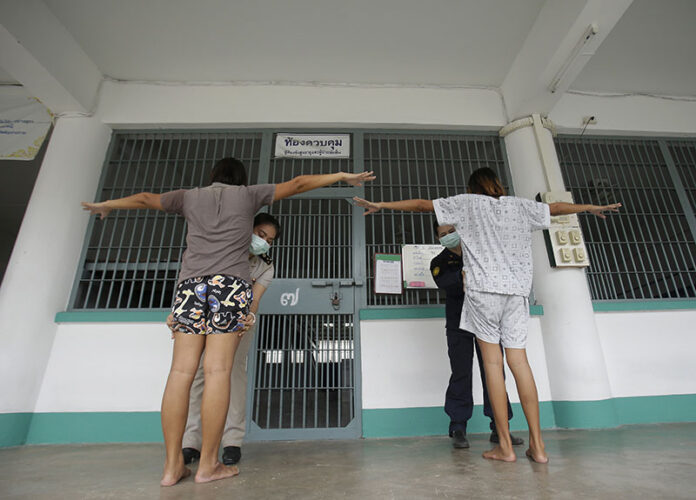
Transgender inmates get a security check from female officers before entering their cell Jan. 7 at the Pattaya Remand Prison in Pattaya, Chonburi province. Photo: Sakchai Lalit / Associated Press
PATTAYA — Theerayut Charoenpakdee was terrified when police stopped her outside a mall in Pattaya, the resort town famous for its sordid nightlife. A urine test on the spot revealed meth coursing through her veins.
“I thought I was going to be thrown in prison with all the men because I still have the title of Mr.,” the transgender woman said. “I was afraid. News and TV tells us that being sent to prison is scary.”
It turned out not to be the ordeal she expected. The prison she was destined for — Pattaya Remand — separates lesbian, gay, bisexual and transgender prisoners from other inmates, a little-known policy despite being in place nationwide since 1993, according to the Department of Corrections. Thailand, often described as a haven for gay people, has around 300,000 prisoners, of which more than 6,000 are registered as sexual minorities.
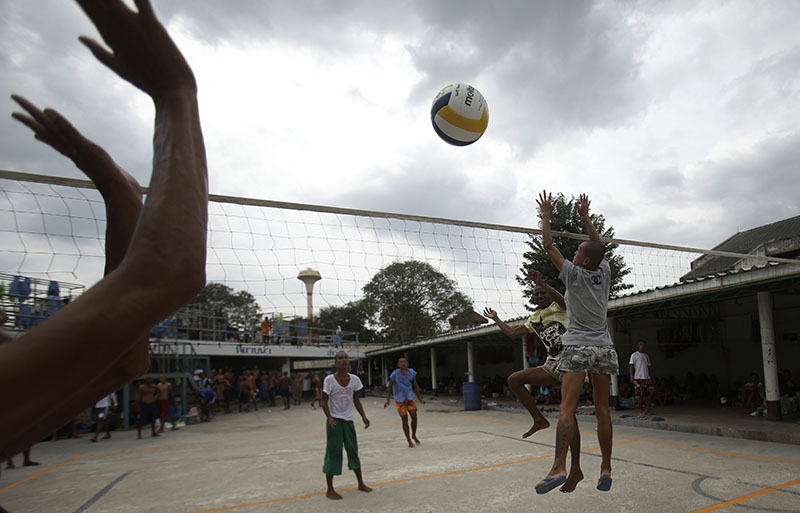
Transgender inmates play volleyball Jan. 6 at Pattaya Remand Prison in Pattaya. Photo: Sakchai Lalit / Associated Press
And that’s not all. The Thai government is also considering what could be the world’s first prison facility exclusively for LGBT inmates. While the plans are still being discussed, in Pattaya and other prisons across Thailand LGBT prisoners are kept apart to prevent violence, officials say.
“If we didn’t separate them, people could start fighting over partners to sleep with,” said Pattaya Remand Warden Watcharavit Vachiralerphum. “It could lead to rape, sexual assault, and the spread of disease.”
By day, Pattaya LGBT inmates eat together and do their morning exercises in uniform. At night, they sleep in their own quarters, apart from the other inmates.
But most of the time, they mingle freely with the others, though they tend to stick together for daytime activities like sewing or football. Transgender women spike volleyballs next to men pressing barbells and sparing with punching bags; gay men train together in first-aid at the jail clinic, sanitizing and bandaging the wounds of straight men.
Many LGBT inmates agree the limited separation is a decent compromise between safety and segregation.
“There are people that discriminate against gays,” said Chawalit Chankiew, one of the gay clinic workers, sentenced to nine years for document forgery. “If I happen to sleep next to someone who hates gay people, I wouldn’t know it unless they show it. What if they hurt me one day?”
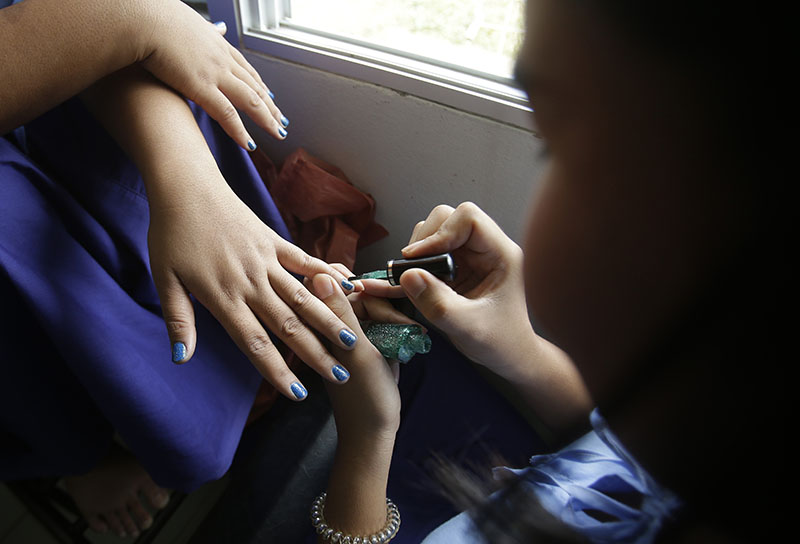
A transgender inmate paints another’s nails Jan. 6 during a lesson at Pattaya Remand Prison in Pattaya. Photo: Sakchai Lalit / Associated Press
Theerayut says the prison’s segregation makes her 1 ½-year sentence more bearable. “If we behave like others, if we aren’t stubborn and don’t break rules, this place actually isn’t so vicious,” she said, sitting in a prison yard fenced with barbed wire, her long hair bobbing up and down as she spoke.
But the system isn’t without problems.
“Transgender women who have not gone through gender reassignment surgery, they have to shave their head and live with the men, and there’s going to be problems,” says Wannapong Yodmuang, an LGBT advocate with the Rainbow Sky Association. “Some of them are going to be OK living with the men, but there are some transgender women who might have a bad experience with men and won’t want to live with them.”
There are also concerns that the system does not adequately tend to the specialized health needs of transgender inmates. Hormone therapy, for example, is written off as a luxury by some. But LGBT advocates say it is essential.
Plans for a separate facility for LGBT inmates on the outskirts of Bangkok could improve their treatment inside prison. The idea was first proposed as a measure to keep LGBT people safe, but it stalled over concern is that it would keep inmates far from their families.
“It’d be easier to control, easier to take care of, easier to develop and improve their habits and behavior,” said Watcharawit. “But they have to mix with other inmates because once they’re released, they’ll have to rejoin a diverse society.”
Some activists worry it could stigmatize them.
“Building and reallocating an entire prison facility for LGBT prisoners is as a matter of fact a measure of segregation,” said Jean-Sebastian Blanc, an expert on prisons at the Switzerland-based Association for the Prevention of Torture. “There is a significant difference between a public health policy aiming at preventing transmissible diseases and segregating a segment of the population on the basis of their sexual orientation or gender identity.”
Similar proposals in Italy and Turkey have bogged down under heavy criticism. Italy announced it was rededicating a women’s prison for transgender individuals in 2010, but the move was blocked by the Ministry of Justice over concerns that a special jail was a form of discrimination. Activists are attacking a proposed “pink prison” in Turkey over concerns that inmates there could face worse conditions than regular inmates because of anti-gay stigma.
But existing options leave much to be desired. In many prisons in the U.S. and other countries, transgender women face a stark choice: get thrown into cells with men, or go into solitary confinement.
Chelsea Manning, the whistleblower arrested for sending secret military files to WikiLeaks, was sentenced in 2013 to 35 years at a male prison in Kansas despite declaring herself a transgender woman. She was thrown in solitary confinement for attempting suicide last year, and was granted clemency by former President Barack Obama.