33.5 C
Bangkok
Monday, June 8, 2026
Home Blog Page 2492

Rape Suspect Hunted Khaosan Road for Drunk Women

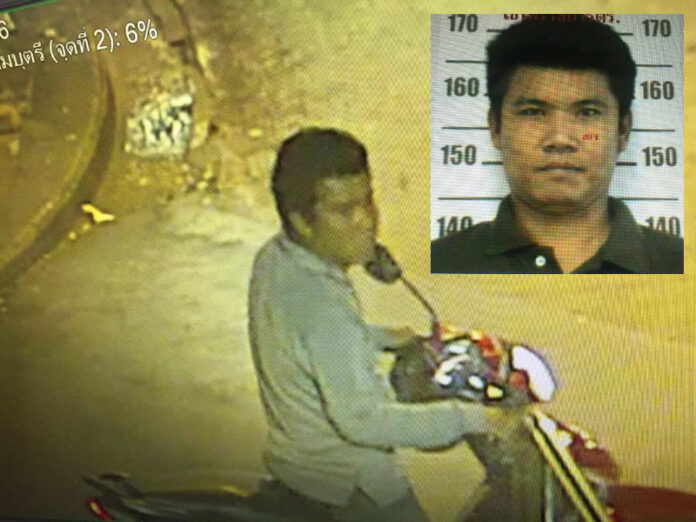
Ekburut Ritrakkhaphan, 32, seen in an image from a security camera with an Australian woman on his motorcycle traveling from the Khok Wua junction near Khaosan Road to an abandoned building where she said she was assaulted in the early hours of Dec. 5.

BANGKOK — A man accused of sexually assaulting an Australian tourist was arrested early Thursday morning.

Ekburut Ritrakkhaphan was captured in the northeastern province of Sakon Nakhon where police said he fled from Bangkok after he emerged as a suspect in the rape of a 23-year-old Australian woman earlier this month.

Police said the 32-year-old motorcycle taxi driver claims they had consensual sex.

He was arrested 10 days after the woman walked into a police station where she said she had been taken by a tuk-tuk driver to a deserted building in western Bangkok in the early hours of Dec. 5 and assaulted by the man and his friend. Police initially cast doubt on her claim, citing her heavily intoxicated state, which prompted extensive and unsympathetic media coverage.

Read: Police Confirm Australian Tourist Raped, Issue Arrest Warrant

After the news got out, police were pressured to look into the case, and police chief Sanit Mahathavorn instructed officers to fully investigate it.

They eventually issued an arrest warrant for Ekburut on Tuesday after identifying him through security camera footage. That same day the results of a medical examination confirmed the woman was assaulted.

Ekburut told police he often rides his motorcycle to Khaosan Road late at night because he knows it is a good place to find inebriated women getting out of the bars after late-night drinking sessions. He said he usually finds women to take from there to have sex with.

The motorcycle taxi driver said he saw the Australian woman, who appeared to be drunk, near the Khok Wua junction, so he approached her. He said she got onto his motorcycle of her own will, as he always does when he’s hunting for drunk women.

Ekburut said he abandoned her at the empty building at her request, claiming she did not want to go back to where she was staying, despite the dawning sun.

Ekburut was being questioned Thursday afternoon at the Bangkok Metropolitan Police Bureau.

Related stories:

Police Confirm Australian Tourist Raped, Issue Arrest Warrant

Police Weigh Australian Tourist’s Tuk-Tuk Rape Allegation

Advertisement

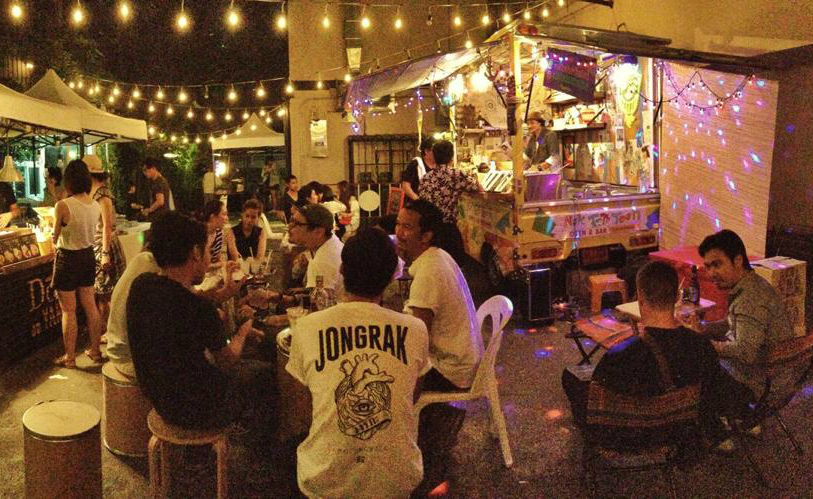
Another ‘Indy’ Night Market Opens Sunday in Thon Buri

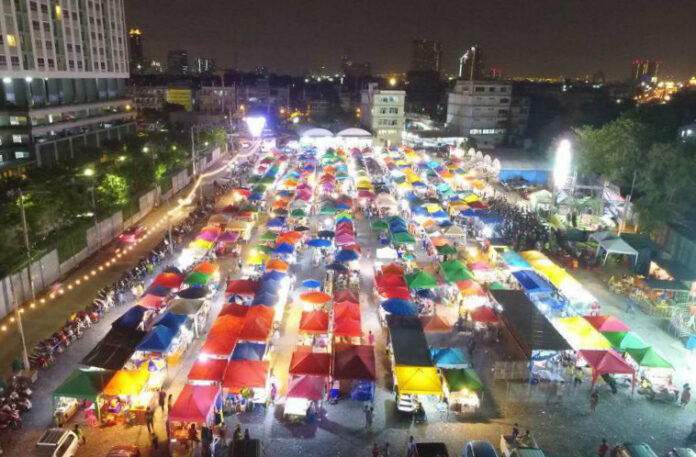
Photo: Indy Market / Facebook

BANGKOK — The year couldn’t end without another hipster night market joining the trend.

On Sunday Indy Market will open within Dao Khanong to welcome the cool breezy season.

Indy Market promises around 500 stalls of food, drink, crafts, clothes and more on the Thon Buri side of the river in the Dao Khanong area.

While the name suggests a place for auto racing fans, it may refer to the massive parking lot – 400 parking spaces – available for commuting shoppers.

It’s hosted by the same people behind the one which used to take place at Platinum Fashion Mall in the Pratunam area.

Indy Market will be open from 4pm until 11pm daily. It’s located on Soi Suksawat 2, and the closest public transportation option is the Dao Khanong Pier. But really, just drive or taxi there.

Photo: Indy Market / Facebook

Related stories:

Neon Night Market Opens Thursday

Advertisement

Have a Very Thonglor Xmas at Festive Weekend Flea Market

Photo: 953 Community Mall / Facebook

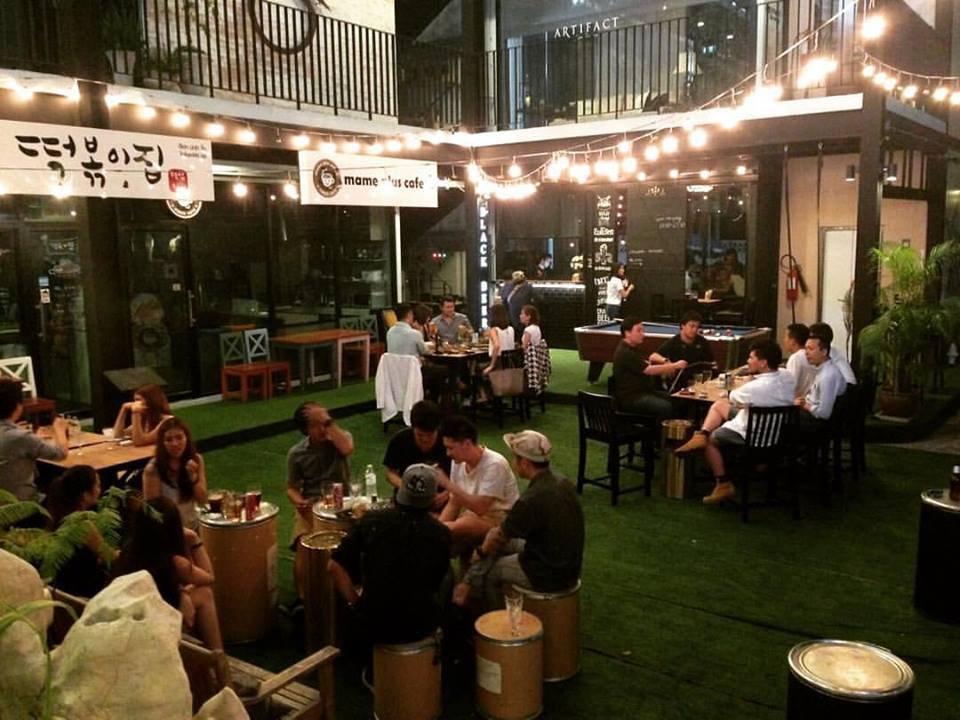
BANGKOK — What to do for a chill Christmas weekend? Consider a three-day flea market in Thonglor with everything from food, drink and music to poetry, mimes and handmade crafts.

To celebrate the holiday season’s cool weather, Winter Vibes Market will feature bands and solo artists live on stage for three days including acoustic guitarist-singer Thee Chaiyadej, indie-folk trio My life as Ali Thomas, folk-rockin’ Greasy Cafe, and alternative pop Moving and Cut.

Singer “Tul” from Apartment Khun Pa band and actor Peron Yasu will read some poetry and Japanese artist Yano Kazuki will break it down in pantomime.

Winter Vibes Market will take place Dec. 23 through Dec. 25 at the 9:53 Community Mall.

Admission to the market is free. Tickets to the live shows will be available at the door for 100 baht. The community mall is located where Soi Sukhumvit Soi 53 and Thonglor Soi 9 meet.

Photo: Jongrak MC / Facebook
Photo: Black Beer’D / Facebook

Advertisement

Bangkok Bank Strikes Back at Fox Networks Over 2.5B Baht Suit

BANGKOK Bangkok Bank hit back at a multinational media corporation’s legal complaint Wednesday, saying it did not default on guarantees of a multi-billion baht licensing deal because it was Fox Networks Group Asia that was in breach of contract.

In a statement released Wednesday night, Thailand’s largest commercial bank said it did not make good on the 2.5 billion baht licensing deal for Thai media companies GMM Grammy and CTH because Fox was at fault.

“CTH has now instructed Bangkok Bank not to make payment as demanded because Fox Networks Group Asia was at fault for breaching the contract,” said the statement from Bangkok Bank’s public relations team.

Read: Fox Sues Bangkok Bank Over 2.5B Baht Licensing Deal

Apart from claiming Fox violated contract terms, it did not go into further detail, citing  the lawsuits filed by Fox against CTH in Hong Kong, and GMM and the bank in Bangkok.

Decha Tulanun, vice president of Bangkok Bank, was not available for comment on Thursday.

Fox announced it had filed suit against the bank on Wednesday afternoon for allegedly breaching contracts under the terms of a 2013 licensing agreement the network made with domestic media companies GMM and CTH to license its programming.

Additional reporting by Asaree Thaitrakulpanich

Related stories:

Fox Sues Bangkok Bank Over 2.5B Baht Licensing Deal

Advertisement

Japan to Allow Casino Gambling at ‘Integrated Resorts’

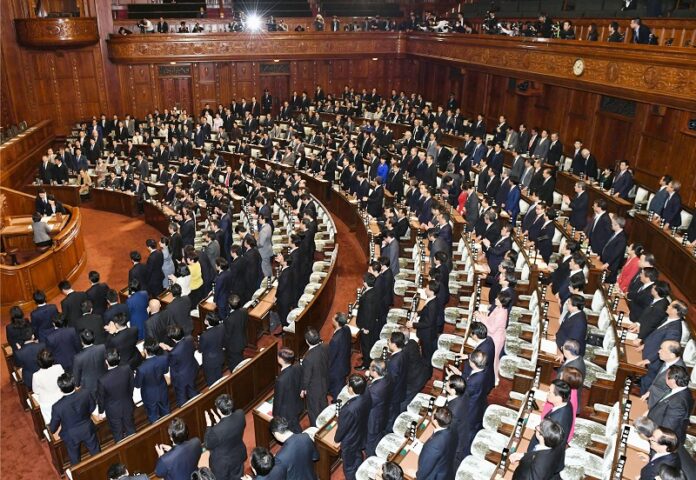
Lawmakers stand to approve a law on "integrated resorts" Thursday at the parliament's lower house in Tokyo. Photo: Yoshinobu Shimizu / Associated Press

TOKYO — Japan’s parliament approved Thursday a law on “integrated resorts” that is the first major hurdle in allowing casinos to set up shop in the wealthy nation.

Supporters of the casino legislation say it would enhance Japan’s allure as a tourism destination and draw in wealthier travelers. Big players in the industry welcomed the news, with Wynn Resorts saying it was “extremely pleased” by its passage.

Opponents object to an expansion of legalized gambling, saying it will fuel organized crime and encourage gambling addiction. Surveys have shown a majority of Japanese oppose the plan.

Casinos are unlikely to start operating in Japan until 2021 or beyond, after the Tokyo 2020 Olympic Games. The new legislation would authorize the drafting of regulations for details such as the number and location of casinos, entry restrictions for Japanese and tax rates, which are expected to take up to a year to gain approval.

The approval of the final version of the legislation came in the wee hours Thursday, after a failed attempt by opposition lawmakers to pass a no-confidence motion against its top supporter, Prime Minister Shinzo Abe. Abe has sought passage of the long-delayed legislation for years, over the objections of many in his own ruling Liberal Democratic Party.

Tokyo, Osaka and Yokohama are among the cities said to be planning to seek casino licenses.

Casino operators view Japan as a lucrative “final frontier.” In a report this month, analysts at investment bank CLSA estimated the potential market at USD $30 billion a year in gross revenue.

“This is a landmark occasion and should be a shot in the arm as it relates to investor sentiment in all gaming names that could be players in Japan,” Grant Govertsen, a Macau-based analyst at investment firm Union Gaming, said in a commentary.

CLSA’s forecast is based on revenues from Japan’s existing forms of gambling, which include lotteries, pachinko  a kind of pin-ball machine  and wagering on horse, auto, bicycle and power boat racing, which combined rake in more than USD $30 billion.

Billionaire U.S. casino moguls such as Sheldon Adelson, head of Las Vegas Sands Corp., and Steve Wynn of Wynn Resorts, or their representatives have often visited Japan to lobby for legalization.

The American Gaming Association, a trade group representing the USD $240 billion U.S. casino industry, said it had been working to inform Japanese lawmakers about various issues.

Facing down fierce objections from opposition lawmakers, Abe argued that gambling would amount to only a small fraction of the total business of the hoped-for integrated resorts, which combine casinos with hotels, convention space, theme parks and shopping malls.

“It’s not like the whole city will be taken over by casinos,” Abe said in response to sharp jibes from Renho, an opposition leader. “These facilities will attract investment and do much to help create jobs.

Japan could become the world’s second largest gambling market behind No. 1 Macau, Govertsen said.

“Quite simply, it represents the next and perhaps only other large opportunity to develop large-scale integrated resorts in Asia for a lot of these companies,” said Govertsen. “Some of these companies, their revenues and cash flow are so large today that it would take an opportunity like Japan to move the needle for them.”

Adelson told analysts in 2014 that his company was “willing to commit substantial capital investment to develop large-scale, truly iconic integrated resorts” if Japan legalizes casinos.

“The reason why everyone’s spending the time on this is that the potential is absolutely enormous,” James Murren, chairman of Las Vegas-based MGM Resorts International, said in a recent conference call with analysts.

Japan is taking a gamble as the market cools elsewhere.

A sweeping anti-graft campaign by Chinese President Xi Jinping has crimped lavish spending by high-rollers from mainland China, causing gambling revenue in Macau, which provides the bulk of profits for companies like Wynn and Sands, to fall for 26 straight months until August.

Macau raked in about USD $29 billion in casino revenue last year, about five times more than the Las Vegas strip, but down about a third from the year before.

Japan’s casinos are expected to follow Singapore’s model in some areas, perhaps charging an entry fee to local residents. Some other Asian nations with legalized gambling, such as Vietnam and Malaysia, have tighter restrictions on their own citizens visiting casinos. Other places like the Philippines and Macau have no restrictions.

Public opposition to the casinos is mainly based on concerns over gambling addiction. In a 2014 study, researchers with Japan’s health ministry found that nearly 5 million people, or 5 percent of the adult population, were thought to be addicted to gambling. That’s far higher than the 1 percent rate found in many other countries, said the researchers, who said pachinko was the main problem.

Study: Kalvin Chan, Elaine Kurtenbach

Advertisement

1 Billion Yahoo Users Hacked: World’s Biggest Ever Breach
A Yahoo sign at the company's headquarters July in Sunnyvale, California. Photo: Marcio Jose Sanchez / Associated Press

SAN FRANCISCO — Yahoo has discovered a 3-year-old security breach that enabled a hacker to compromise more than 1 billion user accounts, breaking the company’s own humiliating record for the biggest security breach in history.
The digital heist disclosed Wednesday occurred in August 2013, more than a year before a separate hack that Yahoo announced nearly three months ago. That breach affected at least 500 million users, which had been the most far-reaching hack until the latest revelation.

“It’s shocking,” security expert Avivah Litan of Gartner Inc.

Both lapses occurred during the reign of Yahoo CEO Marissa Mayer, a once-lauded leader who found herself unable to turn around the company in the four years since her arrival. Earlier this year, Yahoo agreed to sell its digital operations to Verizon Communications for $4.8 billion  a deal that may now be imperiled by the hacking revelations.

Two Hacks, More Than a Billion Accounts

Yahoo didn’t say if it believes the same hacker might have pulled off two separate attacks. The Sunnyvale, California, company blamed the late 2014 attack on a hacker affiliated with an unidentified foreign government, but said it hasn’t been able to identify the source behind the 2013 intrusion.

Yahoo has more than a billion monthly active users, although some have multiple accounts and others have none at all. An unknown number of accounts were affected by both hacks.

In both attacks, the stolen information included names, email addresses, phone numbers, birthdates and security questions and answers. The company says it believes bank-account information and payment-card data were not affected.

But hackers also apparently stole passwords in both attacks. Technically, those passwords should be secure; Yahoo said they were scrambled twice  once by encryption and once by another technique called hashing. But hackers have become adept at cracking secured passwords by assembling huge dictionaries of similarly scrambled phrases and matching them against stolen password databases.

That could mean trouble for any users who reused their Yahoo password for other online accounts. Yahoo is requiring users to change their passwords and invalidating security questions so they can’t be used to hack into accounts. (You may get a reprieve if you’ve changed your password and questions since September.)

Security experts said the 2013 attack was likely the work of a foreign government fishing for information about specific people. One big tell: It doesn’t appear that much personal data from Yahoo accounts has been posted for sale online, meaning the hack probably wasn’t the work of ordinary criminals.

That means most Yahoo users probably don’t have anything to worry about, said J.J. Thompson, CEO of Rook Security.

Questions for Verizon

News of the additional hack further jeopardizes Yahoo’s plans to fall into Verizon’s arms. If the hacks cause a user backlash against Yahoo, the company’s services wouldn’t be as valuable to Verizon, raising the possibility that the sale price might be re-negotiated or the deal may be called off. The telecom giant wants Yahoo and its many users to help it build a digital ad business.

After the news of the first hack broke, Verizon said it would re-evaluate its Yahoo deal and in a Wednesday statement said it will review the “new development before reaching any final conclusions.” Spokesman Bob Varettoni declined to answer further questions.

At the very least, the security lapses “definitely will help Verizon in its negotiations to lower the price,” Litan predicted. Yahoo has argued that news of the 2014 hack didn’t negatively affect traffic to its services, strengthening its contention that the Verizon deal should be completed under the original terms.

“This just adds to fuel to the fire and it won’t help Yahoo’s cause,” said Eric Jackson, a longtime critic of the company’s management. Although he has in the past, Jackson doesn’t currently own Yahoo stock.

Investors appeared worried about the Verizon deal. Yahoo’s shares fell 96 cents, or 2 percent, to $39.95 after the disclosure of the latest hack.

Story: Michael liedtke

Advertisement

Australian Firm to Give Up Thai Gold Mines

A road to an exploration field of gold, cooper and silver mine in 2009 in West Nusa Tenggara, Indonesia. Photo: Randi Ang / Flickr

BANGKOK — An Australian mining company said Wednesday it was shutting down its gold mines in Thailand, laying off more than 1,000 workers and focusing on projects in Chile. It said and will not come back unless it gets an “ironclad guarantee” from the government that it will be allowed to operate without interruptions.

A cabinet resolution and an executive decree citing environmental and health have forced Kingsgate to shut down its Chatree mine in central Thailand, owned through a Thai subsidiary, Akara Resources. But recently, a sliver of hope emerged when the Thai parliament passed legislation that could allow mining with a lesser degree of regulation.

Also, the government said separately it will form a committee with powers that could possibly allow gold mining to resume at a later date.

But Kingsgate executives say they are once bitten, twice shy.

“We’d need an ironclad guarantee of tenure,” Ross Smyth-Kirk, chairman of Kingsgate, told The Associated Press in a telephone interview. “It’s been a disgrace. There’s still a lot of gold there still to be taken out, needing expertise of people like ourselves who are prepared to spend big investments to get it out. It’s not some tin-pot operation.”

He said Kingsgate is planning a new mine in Chile, and hopes to launch operations there after they finish paying off their debt, which now stands at about USD$10 million, by the end of the year.

“Chile has a government that understands mining and that understands its importance to the economy,” Smyth-Kirk said. “We’ll see how negotiations go.”

Operations at Kingsgate’s mine in Phichit province were first shut down in January 2015 after a government body conducting blood tests on nearby residents found high levels of arsenic and manganese. Though the mines were reopened, the government announced again in May of this year they must be shut down by Jan. 1, according to a Cabinet order issued amid claims by residents that chemical and heavy metal runoff from the mine was making them ill.

However, Thailand’s parliament last week passed a bill that could in theory allow gold mines to continue operations by suspending a regulatory requirement. The legislation must be signed by King Vajiralongkorn to become law, and would come into effect only four months after the signing.

In an evident move to allay concerns of residents and activists that the new law could give Kingsgate a chance to reopen, Prime Minister Prayuth Chan-ocha on Tuesday issued an executive order halting all gold mining in Thailand from Jan.1.

However, the order also mandates creating a new committee to manage and oversee the country’s mineral resources, with power to allow gold mining to resume at a later date. Prayuth acted under Article 44, a provision giving him absolute power that was part of an interim constitution adopted after the army seized power in May 2014 from an elected government.

Given the series of seemingly contradictory developments, Kingsgate’s Smyth-Kirk said his company cannot work in Thailand anymore and is letting go of more than 1,000 employees and contractors.

“We will want to be compensated,” he added. Kingsgate says there’s no evidence of substantial health or environmental damage caused by its activities.

Environmentalists also remain wary, and have vowed to protest any move to resume mining.

“This (executive) order is a good thing but we don’t know how long it will last,” said Penchom Saetang, director of a Thai environmental group protesting the mines. She said that if the bill easing regulations becomes law, the mining company could resume operations and mine even more than before.

Story: Dake Kang, Kaweewit Kaewjinda

Advertisement

Police Confirm Australian Tourist Raped, Issue Arrest Warrant

BANGKOK — Police said Wednesday an arrest warrant had been issued for a man who allegedly sexually assaulted a 23-year-old Australian woman earlier this month.

After authorities and extensive media coverage cast doubt on the woman’s claims, police said the woman was sexually assaulted by Eakaburut Ritrakkhaphan, a 32-year-old motorcycle taxi driver. He was allegedly seen in security camera footage picking up the Australian woman from the Khok Wua junction near Khaosan Road before taking her to the abandoned building she earlier claimed he and a friend attacked her.

Taling Chan police commander Col. Thanawat Taraka said he could not give more details about the suspect because of the ongoing investigation.

Read: Police Weigh Australian Tourist’s Tuk-Tuk Rape Allegation

On Dec. 5, the 23-year-old Australian tourist told police she had been lured by the driver of a tuk-tuk she had allegedly grabbed to return to the guesthouse where she was staying after drinking at Khaosan Road.

She said the driver, along with a friend waiting at the deserted building in Soi Borommaratchachonnani 43, west of Bangkok, sexually assaulted her. Police cast doubt on her story after social media discussions pressured them into action. They said she was heavily intoxicated and pointed out that she was seen in another security camera kissing another foreign male.

Police also questioned the time frame during which the incident took place, as the woman appeared on the CCTV footage near Khaosan Road 37 minutes before she arrived at the police station.

Bangkok Police Chief Sanit Mahatavorn said they now believed she was raped after it was confirmed by the results of a hospital examination.

The suspect was said to have just been released from prison two months prior after serving a sentence for sexual assault, police spokesman Krissana Pattanacharoen said.

Advertisement

Single Gateway ‘Still Necessary,’ Deputy PM Prawit Says

Opponents of Thailand’s single gateway project have adopted a personification of the project called Nong Kalaland by artist Wisaruth Wisidh.

BANGKOK — Confirming the fears of digital rights activists who said a plan to bring the internet  under direct government control never went away, a member of the junta said Wednesday that a single internet gateway was still necessary.

Citing Redshirt internet radio channels operating from Laos as an example, Deputy Prime Minister Prawit Wongsuwan said the single point of control for all internet traffic, a project widely known as single gateway, remains necessary for the sake of national security.

Speaking to reporters, Gen. Pravit, who is also a junta member, said the military regime was “trying our best” to not trample on rights.

“We are trying our best to take care about it,” he said. “Everyone must be under the same law.”

His comments came as advocates of online freedom campaign against the latest draft of the Computer Crime Act, which is expected to be approved Thursday by the junta’s rubber stamp legislature.

If approved, the draft will be submitted to the King for his endorsement in 20 days.

Gaining control of the kingdom online, one of the last semi-public venues for open expression and dissent, has been a goal of the military government since it seized power in 2014.

Officials announced last year they had scrapped the plan after it was met with public outrage. It instead rebranded the effort as part of a digital economy initiative while moving forward parallel efforts such as rewriting cybercrime law to grant broader powers to authorities to intercept and censor communications without due process.

Rights groups such as the Thai Netizen Network, Amnesty International Thailand and Internet Law Reform Dialogue, or iLaw, have urged people to campaign against it. The number of people signing an online petition to stop the law on Change.org has soared in the past few days to more than 120,000 names.

Those rewriting the law heard a range of suggestions from activists and the private sector at a public hearing on Nov. 23, none of which were addressed in the latest draft released Friday.

Related stories:

‘Back Door’ in CCA Not Trojan Horse for Single Gateway, Drafters Say

New Cybercrime Regs Would Open Back Door to Censorship

Website Shutdowns Soar After King’s Death

Why Thailand Should Worry About an Improved(?) Computer Crime Act

Thailand’s Draconian Cyberlaws Tipping Toward Totalitarian

Computer Crime Act Has Issues, Google Tells Censorship Committee

Online Freedom to Slide Further, Online Activists Predict

Advertisement

Fox Sues Bangkok Bank Over 2.5B Baht Licensing Deal

BANGKOK — One of the world’s largest media conglomerates filed suit against one of Thailand’s biggest commercial banks Wednesday, accusing it of failing to make good on obligations it guaranteed under a multi-billion baht digital media deal.

Fox Networks Group Asia, a division of 21st Century Fox, alleges that Bangkok Bank breached contract under the terms of a 2013 licensing agreement the network made with two domestic media companies to license its programming.

The suit alleges that the bank guaranteed the deal with GMM Grammy and CTH and failed to honor the contract when those companies stopped making payments.

“It’s a severe disappointment to us that a major Thai bank is failing to honor its guarantees, and its consequences go well beyond my own company, especially at a time of heightened sensitivity for investor confidence,” Zubin Gandevia, Fox Networks regional president, said in a statement.

The suit was filed in both Hong Kong and Bangkok.

Bangkok Bank underwrote the approximately 2.5 billion baht deal with GMM Grammy and CTH, conglomerates which own everything from production studios to cable television channels and licenses to several digital television channels.

Digital television, hailed as a market boom several years ago, has proven a bust. CTH, a pay-tv operator and internet service provider, filed for bankruptcy in October.

Fox said it hasn’t received payment since 2015.

Fox Networks Group produces and licenses programming such as National Geographic documentaries and American Horror Story to be shown in markets around the world.

Additional reporting Chayanit Itthipongmaetee

Advertisement

Hot News

LATEST NEWS

Bangkok
overcast clouds
33.5 ° C
35 °
31.1 °
73 %
4kmh
100 %
Mon
34 °
Tue
34 °
Wed
35 °
Thu
31 °
Fri
30 °