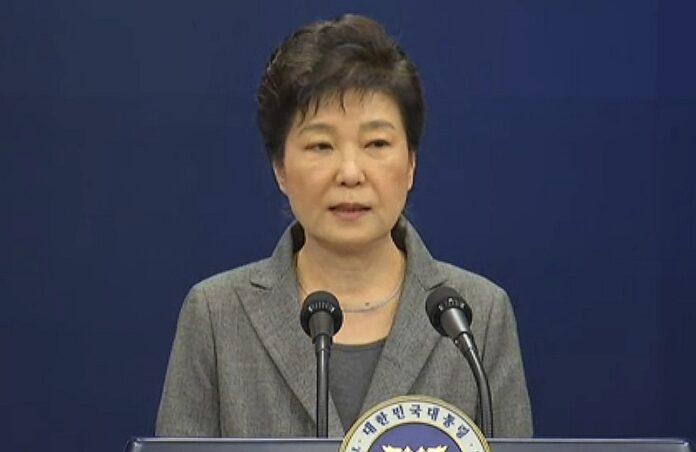
Former South Korean President Park Geun-hye makes a live televised address in 2016 in Seoul ,South Korea. Photo: Associated Press
SEOUL, South Korea — South Korean President Park Geun-hye said Tuesday that she will resign her office once parliament develops a plan for a safe transfer of power, amid prosecution claims that she colluded with a friend who wielded government power from the shadows.
Hundreds of thousands of people have gathered in Seoul each Saturday for the last five weeks to demand that Park step down amid prosecutors’ claims that she colluded with a confidante who allegedly manipulated power from the shadows and extorted companies to amass an illicit fortune.
Park would be the first South Korean leader to resign since the country’s first president, Syngman Rhee, quit and then fled to Hawaii amid a popular uprising in 1960. The succeeding government was overthrown by a coup by Park’s late father, the military dictator Park Chung-hee, whose rule also abruptly ended after he was assassinated by his spy chief in 1979.
“I will leave the matters about my fate, including the shortening of my presidential term, to be decided by the National Assembly,” Park said Tuesday in a live address to the nation, referring to parliament. “If the ruling and opposition parties discuss and come up with a plan to reduce the confusion in state affairs and ensure a safe transfer of governments, I will resign from the presidential position under that schedule and by processes stated in law.”
Opposition parties had been closing in on an impeachment motion against Park, and even her allies in the conservative ruling party have called for her to “honorably” step down rather than face impeachment.
An impeachment motion vote had been planned for Friday. The country’s two largest opposition parties were also planning on Tuesday to nominate a special prosecutor to independently investigate the scandal.
At the heart of the scandal is Choi Soon-sil, Park’s longtime friend and the daughter of a late cult leader who allegedly meddled in state affairs and pressured companies to donate millions of dollars to foundations controlled by her at the request of Park.
Prosecutors have so far indicted Choi, two ex-presidential officials and a music video director known as a Choi associate for extortion, leakage of confidential documents and other charges.
Park, who has immunity from prosecution while in office, has refused to meet with prosecutors. Her lawyer, Yoo Yeong-ha, has described prosecutors’ accusations against Park as groundless.
CHIANG MAI — Another Chiang Mai establishment was ordered closed Monday afternoon following an earlier conflict over the use of a washroom at a bar between a group of television actors and the son of a regional army commander.
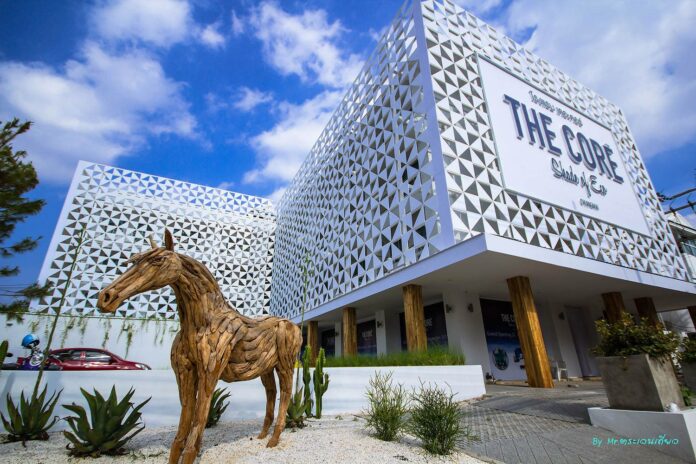
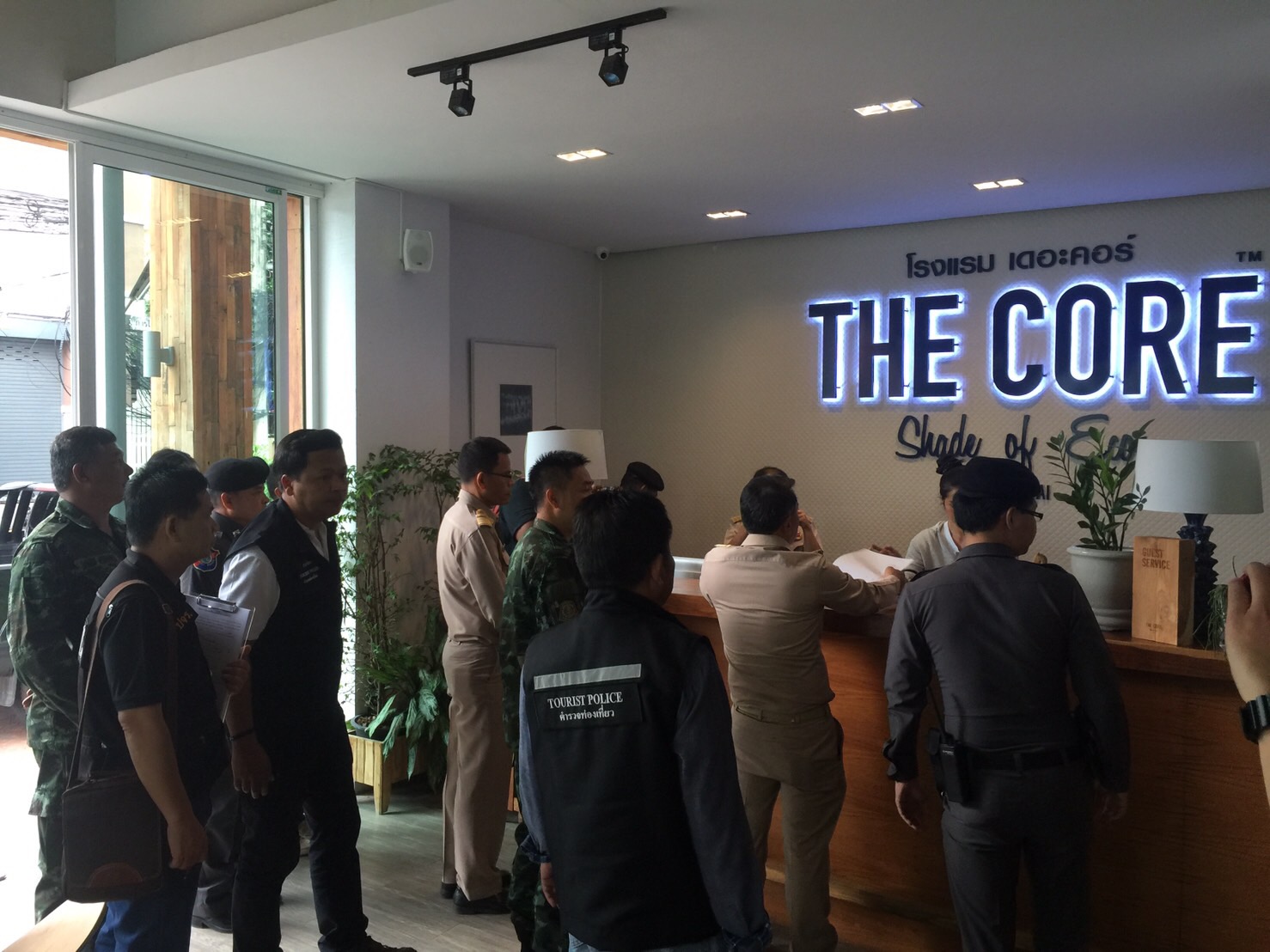
Chiang Mai city’s The Core Hotel, linked to one of the celebrities, was abruptly ordered to close for lacking an operating license, according to Col. Piyapan Pattarapongsin, deputy chief of city police, who led a raid there at about 2pm on Monday.
The five-floor hotel sitting opposite Chiang Mai University was reportedly owned by Kritsana “Ball” Amitsoon, the boyfriend of Channel 3 actress Lakana “Aum” Wattanawongsiri. Kritsana went to talk to police at about 1pm on Tuesday with his lawyers.
Lakana was at the hotel on Sunday where she and fellow actress Benjasiri “Bow” Wattana held a press conference at which they denied involvement in the Friday night brawl at the Malin Sky Bar.
Malin Sky Bar was closed by police after 23-year-old student Issarajnuwat Wankawisan was brutally beaten. The student, who is also son of the regional army commander, claimed one of four celebrities at the bar had ordered guards to assault him.
Col. Piyapan said Kritsana was not the properly listed owner of The Core. Kritsana is the only person who hasn’t spoken publicly about the incident.
Police also filed charges against Hotel Manager Supitchaya Praditpatcharakul for violating the Hotel Act. The closure was effective Tuesday.
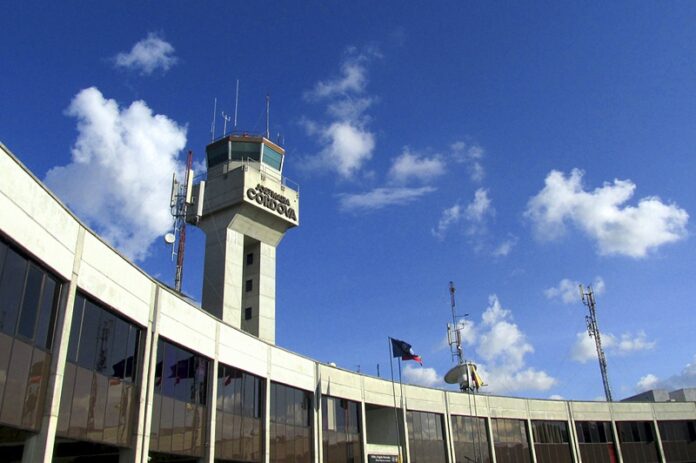
The control tower of Jose Maria Cordoba International Airport photographed in 2014 in Medellin, Colombia. Photo: Andres Molina Mesa / Flickr
BOGOTA, Colombia — An airplane with 72 people on board, including players from a Brazilian soccer team heading to Colombia for a regional tournament final, has crashed on its way to Medellin’s international airport.
Medellin’s Mayor Federico Gutierrez said that it is possible there are survivors.
“It’s a tragedy of huge proportions,” Gutierrez told Blu Radio on his way to the site in a mountainous area outside the city where the chartered aircraft is believed to have crashed shortly before midnight local time.
He said ambulances and rescuers were on their way. It is not clear what caused the crash.
Medellin’s airport confirmed that the aircraft, which departed from Bolivia, was transporting the Chapecoense soccer team from southern Brazil, which was scheduled to play the Copa Sudamerica finals against Atletico Nacional on Wednesday in Medellin.
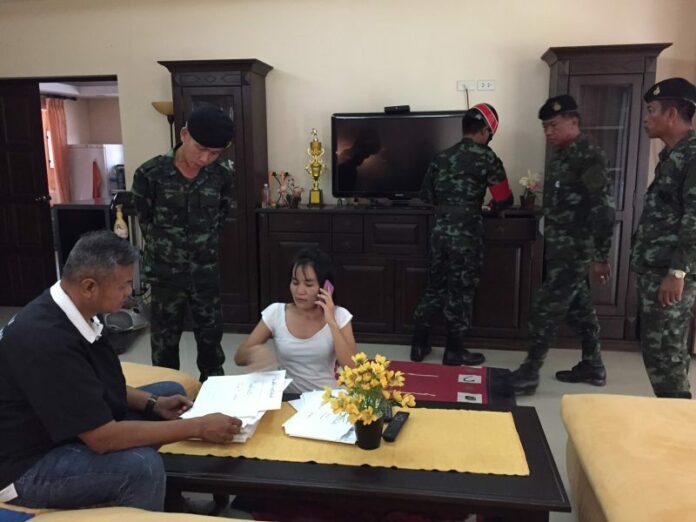
Officials search the home of German loan shark Wolfdieter Werner Mueller on Thursday afternoon in Nong Khai province.
NONG KHAI — Police said Tuesday they had fined and released a German man accused of running a loansharking operation who claims he was wrongly implicated by his ex-wife.
Police searched Wolfdieter “Max” Werner Mueller’s house Thursday after residents went to police complaining he charged exorbitant interest rates for illegal loans. Mueller had flown to Phuket earlier in the day, but said the trip had been scheduled long ago.
“I did not do wrong. Ask anyone in the village,” he said, adding that he has contacted the police.
He blamed a personal dispute with his ex-wife, who he said sent the police after him for not having a work permit. He said he had made some private loans but denied charging exorbitant interest as accused.
Police on Tuesday said Mueller was guilty of breaking the law and was fined and handed a suspended sentence.
“We won’t get involved with his family or personal affairs, which are unrelated. The issue is that he broke the law in loaning out money in his name, and working without a work permit,” police Maj. Theerapong Prajukjit said Tuesday. “Foreigners can’t loan out money in their name.”
Hatairat Silasit, Mueller’s girlfriend, already paid the fine of 20,000 baht Saturday, Inspector Theerapong said.
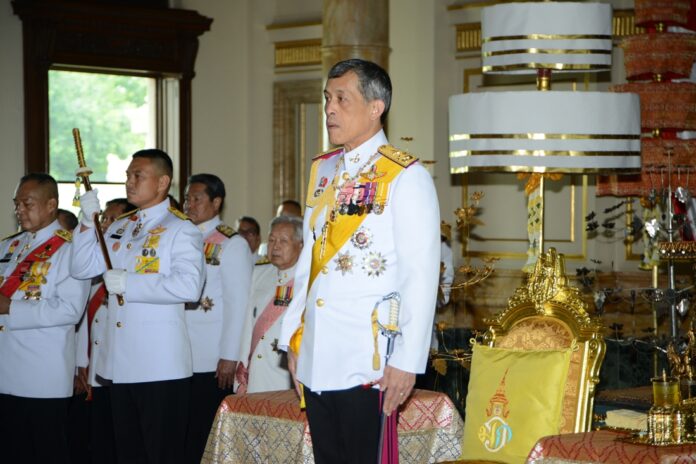
BANGKOK — Crown Prince Vajiralongkorn was proclaimed the new monarch of Thailand on Tuesday, the step before he fully succeeds his father King Bhumibol, who died seven weeks ago at 88.
Ending nearly two months of royal interregnum, an interim parliament completed a key part in naming him the 10th King of his dynasty, six days before a public holiday commemorating the birth of his late father, who was widely revered as a national father figure. His Majesty King Vajiralongkorn, 64, has been the designated heir since 1972.
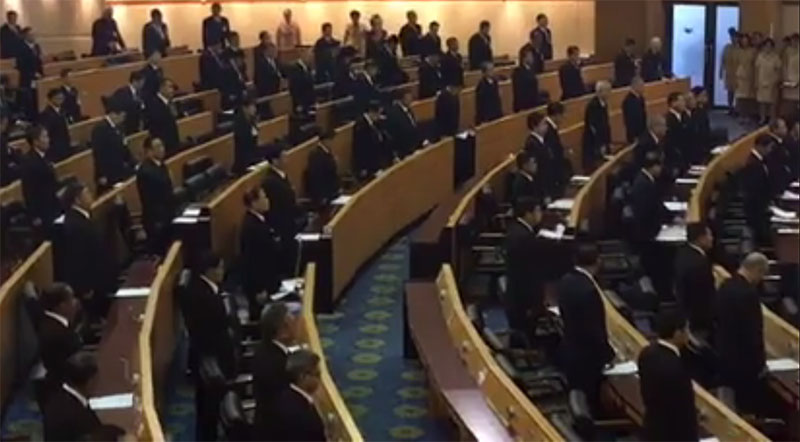
The announcement was made, per the constitution, at about 11:20am by the National Legislative Assembly, an interim parliament serving as a rubber-stamp legislature under the military junta. Assembly chairman Pornpetch Wichitcholchai told the lawmakers the Crown Prince will take the throne.
“My dear fellow members,” Pornpetch said in a speech to the lawmakers. “Upon this most auspicious occasion, I would like to ask all members to stand up and offer praise to the new king.”
The presenting members then stood up and shouted in unison, “Long live the king!”
Thais will generally call him Rama X, or the 10th king of Chakri dynasty.
One more formality is left to complete the royal succession: assembly chairman Pornpetch will meet the new king in person and formally “invite” him to take throne. The Crown Prince is expected to accept the ceremonial invitation. Deputy Prime Minister Prawit Wongsuwan said earlier Tuesday that the meeting may take place “in the next couple days.”
But he is already praised as the de facto new King of Thailand. All major Thai-language news agencies broke the news with the headline “Long Live the King” and referred to him as King Rama X. Hashtag “Long Live the King” is also trending on Twitter.
King Vajiralongkorn’s ascension to his kingship had been a subject of intense anticipation by many. The then-Crown Prince surprised the nation when he declined to take the throne immediately upon King Rama IX’s death on Oct. 13, breaking with a royal tradition of Le roi est mort, vive le roi.
Members of the National Legislative Assembly declare “Long Live the King.”
The prince said at the time that he needed time to grieve for his late father, according to junta chairman Prayuth Chan-ocha, who met with His Royal Highness on the night of Oct. 13. In the subsequent weeks, Thailand went through a historic period of prolonged interregnum, and a Regent was appointed by constitution as a caretaker over the empty throne.
As a king, His Majesty the King Vajiralongkorn will exercise his royal power as a constitutional monarch to sign legislation, hear oaths from newly appointed civil servants and represent Thailand as head of state. He will be the sovereign of Thailand’s government, justice system, bureaucracy and armed forces.
But King Vajiralongkorn will refrain from assuming the totality of royal functions as a monarch of the Chakri Dynasty until his official coronation, an elaborate religious ceremony that will take place after the cremation of his late father, likely some time late next year.
His first official duty as the new King will be presiding over state ceremonies on Dec. 5, which had been celebrated as both National Day, Father’s Day and the birthday of His Majesty the Late King Bhumibol.
Note: The content of this article has been been changed under instruction of Khaosod English’s management.
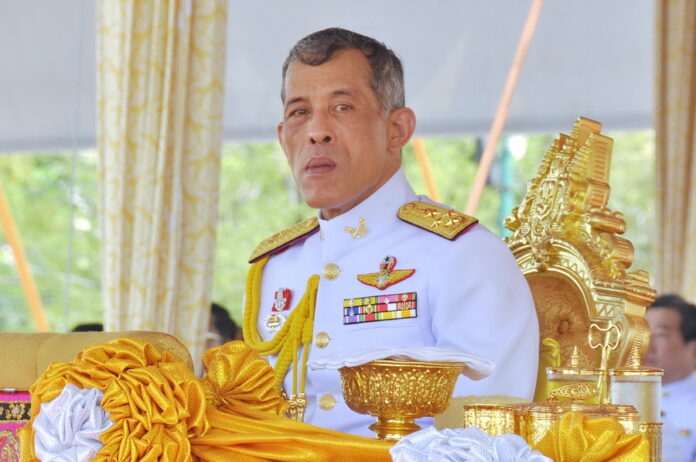
Crown Prince Vajiralongkorn presides over the royal ploughing ceremony May 9, 2016 in Bangkok. Image: Royal Household Bureau
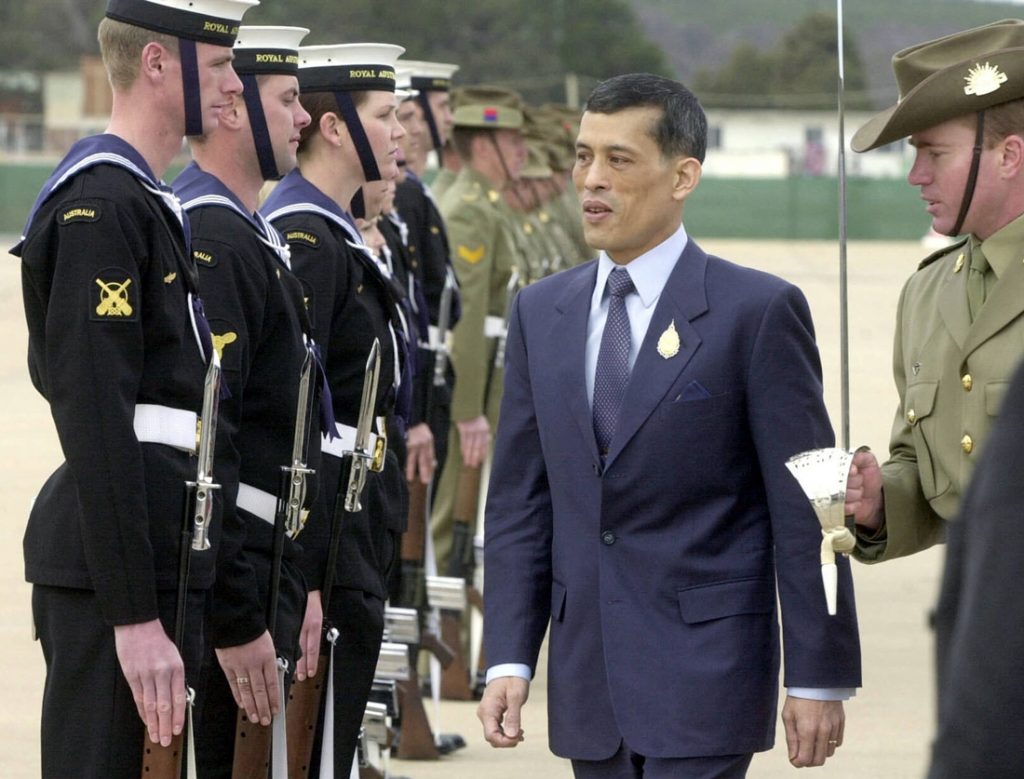
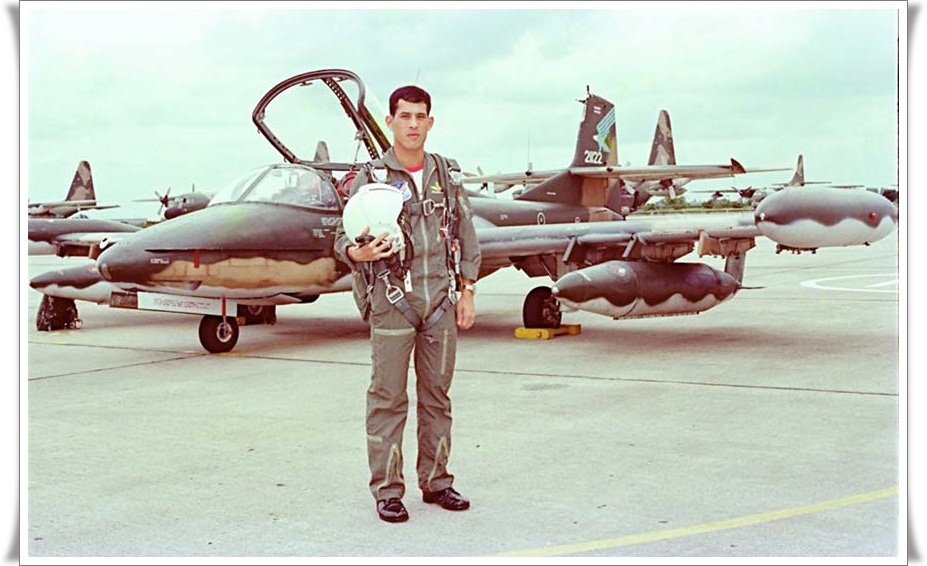
Born on July 28, 1952, Vajiralongkorn was the second child of King Bhumibol and Queen Sirikit, and their only son. After completing his basic education, the prince enrolled at a military academies in Australia, and he later returned to Thailand to take up military career.
Under Thailand’s century-old system of primogeniture, which prioritizes male heir, Vajiralongkorn was appointed a successor to King Bhumibol in 1972, at 20.
Vajiralongkorn was an enthusiast in martial affairs. He personally led a campaign against the Communist insurgency in the Cold War. He trained and eventually qualified to fly military aircrafts. He also currently leads his own infantry corps, the Ratchawallop.
Like other matters related to the royal family, the palace gave little information about Vajiralongkorn’s personality and hobbies, but it is known that he has a residence in southern Germany, that he is a fan of cycling and that he is an able pilot who can fly jetliner across continents. His most high-profile appearance is the mass cycling event in Bangkok that he headed in 2015.
Many analysts of Thai politics also agree that the new monarch has large shoes to fill, in terms of charisma and influence. Vajiralongkorn’s father, the late King Bhumibol, is revered by many Thais as a demi-god, the “Soul of the Nation.”
Note: The content of this article has been been self-censored due to sensitivity of the issue.
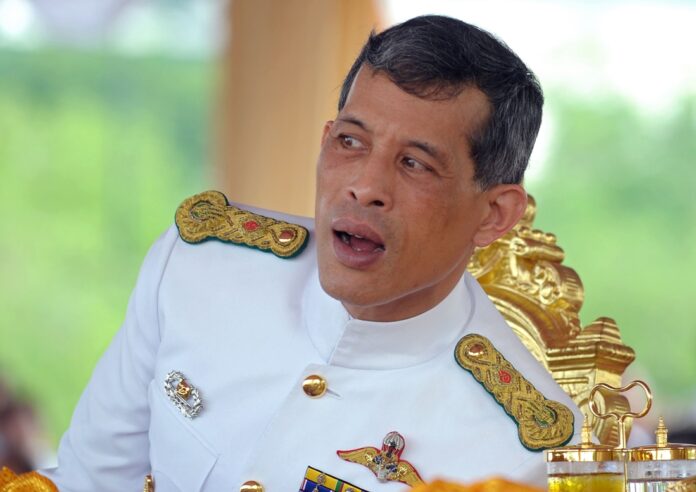
This file photo taken on May 11, 2009 shows Thai Crown Prince Maha Vajiralongkorn observeing the annual ploughing ceremony at Sanam Luang in Bangkok. / AFP PHOTO / PORNCHAI KITTIWONGSAKUL
BANGKOK — Crown Prince Vajiralongkorn is on the verge of becoming the new King of Thailand on Tuesday, succeeding his father who appointed him as the royal heir four decades ago.
Crown Prince Vajiralongkorn has been a visible presence as a member of the Royal Family but also known to be a private person who has not sat down for interviews in many years.
Over the decades, he has spoken publicly on numerous occasions, and to mark the first royal succession in 70 years, Khaosod English has compiled excerpts from the former prince’s interviews and speeches.
1. Upon being appointed an Heir-Apparent by His Majesty the King Bhumibol on Dec. 28, 1972:
“I, the Crown Prince, shall uphold with my life the dignity and royal title that His Majesty the King bestowed upon me. I shall be loyal to the country. I shall be honest to the people. I shall undertake sacrifices and perform all burdens and duties to the utmost of my ability, for the sake of progress, peace and stability of Thailand, until the end of my life.”
2. In his 1975 New Year’s address to the nation, at the height of Cold War’s political unrest and Communist insurgency:
“In this period, our country has suffered a complicated and chaotic situation. It is the duty of everyone to attempt to bring peace and unity as much as possible, by sacrificing one’s own happiness and self-interest.”
This file photo taken on August 21, 2003 shows Crown Prince Maha Vajiralongkorn (C) of Thailand inspecting the guard of honour upon his arrival in Canberra. / AFP PHOTO / NEWS LTD / JOHN FEDER / Austria OUT
3. In response to a question for an article in a 1986 issue of Dichan magazine, whether it felt lonely to be the Crown Prince:
“Sometimes. Because being in this position, the chances are slim people will become my friend or get close to me. It is normal for people who are in this position. I knew that it would be this way. I am not lonely.”
4. Replying to an interviewer who asked him what he thought of many rumors that surrounded his personal life for an article in Dichan magazine, 1987:
“Being human, when you listen to this kind of things it makes you sad, sometimes it makes you annoyed. But some stories are simply ridiculous. For example, there are rumors that I own a discotheque, or I own a condominium, or I own a gambling den or a casino … Wherever you go, there will be rumors about you. Everyone gets gossipped about. If we only busy ourselves with rumors, we won’t have time to work.”
In the same interview, he was also asked what he thought of speculation that he was “the black sheep” of the family:
“Sometimes, being a black sheep has benefits, too, you know. I want to stress this point: black sheep have benefits, too. Sometimes it’s like making merit for others. You see, being a black sheep to others, or being a black sheep that people made me to be, it helps other sheep that are not so white become whiter.”
A file photo of then-Crown Prince Vajiralongkorn
5. In a 1980 interview with the BBC for documentary Soul of the Nation, in which the reporter asked him what it’s like to be a Crown Prince:
“I don’t know what it’s like, because I have been born, from the first second of my life, as a prince.
It is difficult to say what it’s like to be a fish when you are a fish. Or what it’s like to be a bird when you’re a bird. If you go and ask them, you know, it’s difficult because they don’t know what it’s like to be a fish or a bird.”
6. Addressing the nation from abroad in a televised address on May 20, 1992, during the ongoing clashes between the military government and protesters at the time:
“Having kindness and mercy will help the situation a lot. As all of you may remember from the King’s speech that he gave on Dec. 4 last year, which was to have love and unity.”
7. Praising His Majesty the King Bhumibol on the 60th anniversary of his ascension to the throne, June 9, 2006:
“All of your royal works, although they are difficult and exhausting burdens, Your Majesty never gives up or wavers in your dedication.”
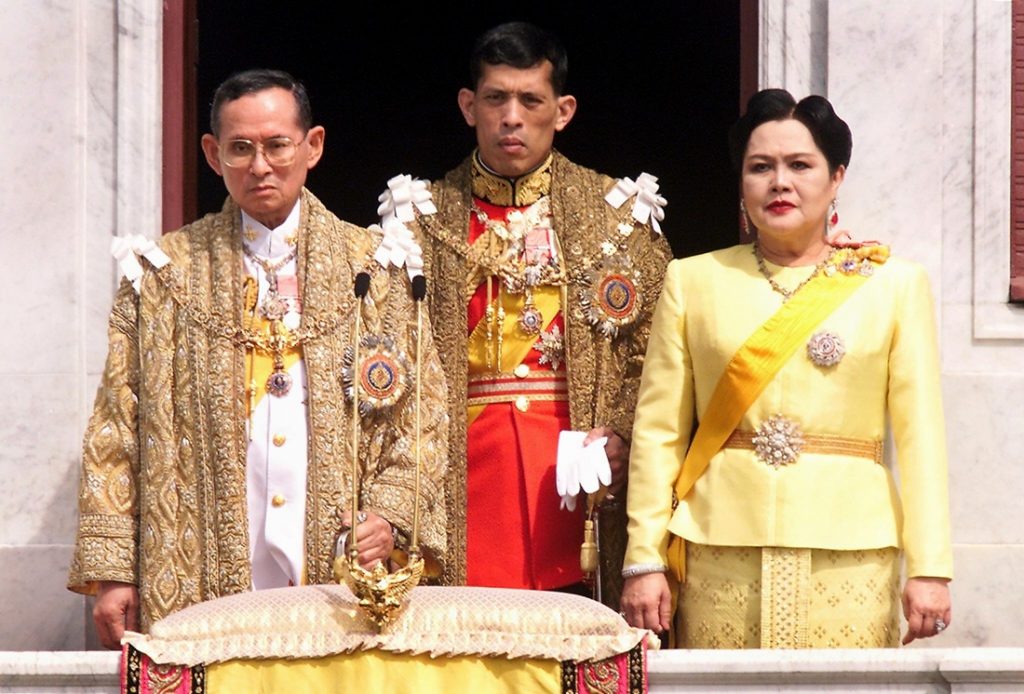
This file photo taken on December 05, 1999 shows (L-R) Thai King Bhumibol Adulyadej, Crown Prince Maha Vajiralongkorn and Queen Sirikit appearing at a balcony of Anantasamakom Throne Hall in Bangkok to mark the King’s birthday. / AFP PHOTO / PORNCHAI KITTIWONGSAKUL
8. Kirati Kongthong, a victim of a bombing attack in Songkhla province, told reporters on Sept. 22, 2006 that then-Crown Prince Vajiralongkorn offered these kind words to her during his visit to the ICU where she was admitted.
“Do not be troubled. Get well soon. A lot of people will be here to give you support. I am here to give you support, too.”
9. Like his father, King Vajiralongkorn is committed to religious tolerance and diversity in Thailand, as shown In an address to Muslim clerics at the headquarters of Central Islamic Committee of Thailand on April 30, 2016:
“The Prophet Muhammad was a person of great goodness, because he has preached a religion that showed the world a way to deliver individuals to achieve happiness and progress in lives, and a blissful and peaceful co-existence in which people have mercy and generosity for each other.”
10. Addressing new graduates of Sukhothai Thammathirat Open University at their graduation ceremony on September 29, 2016:
“If all of you understand and learn from the work that you do, and practice it correctly, and achieve your purpose, all of you will certainly have a success that is even more noble than your diploma, which is progress in your life and career.”
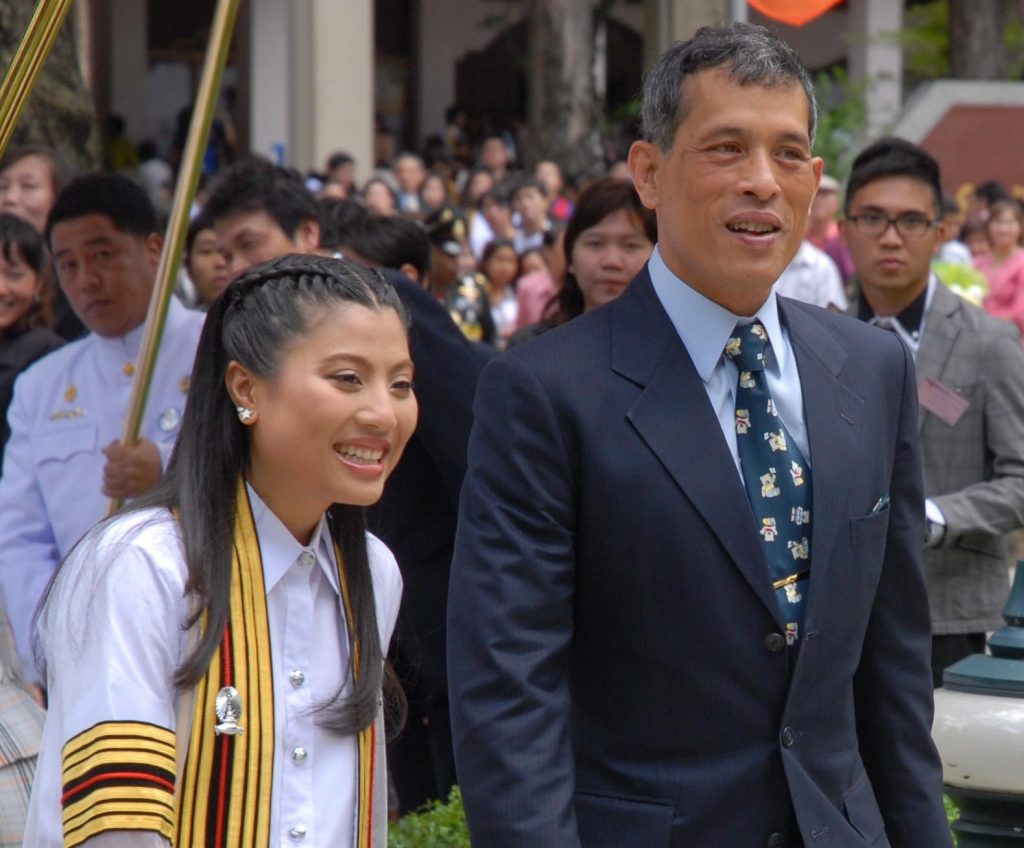
Then-Crown Prince and his daughter princess Sirivannavari Nariratana at her graduation in 2008
In Print
No Thai-language books about the prince could be found at three major booksellers in Bangkok on Monday, but the former Crown Prince was mentioned in two English-language texts.
In “King Bhumibol Adulyadej: A Life’s Work,” written by a team of mostly foreign writers under an editorial advisory board headed by former Prime Minister Anand Panyarachun, contained some biographical information.
On His Birth:
“On July 28, 1952, Prince Vajiralongkorn was born. A brother for Princess Ubol Ratana, born a year earlier on April 5, this was the most significant male birth to a ruling king in the Royal House of Chakri since the birth of prince Prajadhipok in 1893. Escorted by Princess Galyani, the princess mother flew back from Switzerland in time for the birth… In an ancient ceremony, King Bhumibol trimmed a lock of his three-month-old son’s hair. Prince Vajiralongkorn’s full name runs to almost 70 words, and took over a month to compose.” (p.101)
On Investiture:
“The following year [1972], on Dec. 28, the designation of an heir apparent was given ritual confirmation. In a magnificent and arcane ceremony in the Ananta Samakhom Throne Hall, the old parliament building overlooking the Royal Plaza, King Bhumibol poured lustral water over the head of his only son. Prince Vajiralongkorn, and invested him as crown prince at the auspicious moment of 23 minutes past midday. The heir apparent had come of age earlier in the year, and now had Maha (Great) added to his title. The anointing of a crown prince had not occurred for 77 years since the elevation of the future King Vajiravudh. A glittering garden party was held that night.” (p.125-126)
On Royal Succession:
“[HRH Princess Sirindhorn] could accede to the throne should circumstances require it, but this did not place her in any kind of competition with her older brother, Crown Prince Maha Vajiralongkorn, who married the same year.” (p.138-139)
“As an heir apparent has already been designated, the process of succession is clear and uncomplicated. Section 23 of the 2007 constitution, for instance, states: “In the case where the throne becomes vacant and the king has already appointed his heir to the throne under the Palace Law on Succession [1924], the Council of Ministers [cabinet] shall notify the president of the National Assembly. The president of the National Assembly shall convoke the National Assembly for acknowledgement thereof, and the president of the National Assembly shall invite such heir to ascend the throne and proclaim such heir as king.” (p.323)
Note: The content of this article has been been self-censored out of fear of prosecution under the lese majeste law. We regret the necessity.
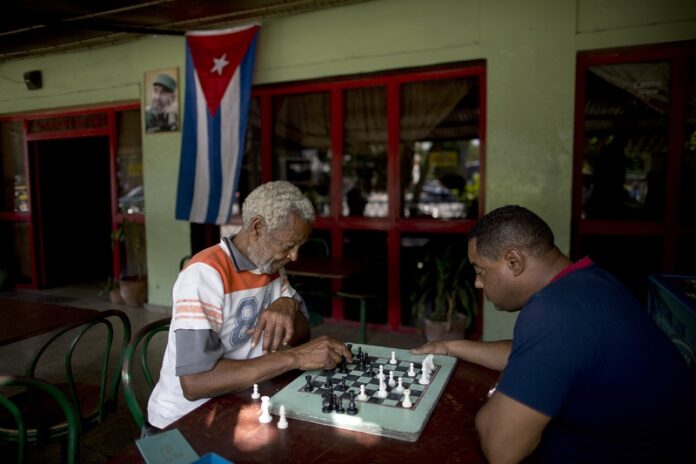
Men play chess at a bar Monday near Revolution Plaza, the site of two days of tributes to the late Fidel Castro, in Havana, Cuba. Photo: Natacha Pisarenko / Associated Press
HAVANA — Fidel Castro changed the flavor of the milk Cuban children drink at breakfast.
He filled Cuban kitchens with energy-saving rice cookers, and he gave a two-hour lesson in their use live on national television. He even changed the nation’s lightbulbs, launching a nationwide campaign to replace incandescent bulbs with fluorescents that cast a pallid white light in Cuban homes to this day.
Castro, who died Friday night at 90, gained global stature with grand visions: confronting the United States; building universal health care and education; sending Cuba’s doctors to heal the Third World’s sick and its soldiers to fight alongside socialist allies from Vietnam to Angola.
At home, he expended vast quantities of time and energy remaking the minutest aspects of life in the country he ruled for nearly 50 years. Obsessive, restless, fixated on details, Castro is being remembered by many Cubans for his decades of smaller-scale, often quixotic initiatives to implant Soviet-style central planning on an unruly and improvisational Caribbean island.
Ten years after Castro turned power over to his brother Raul, the artifacts of his time in command still feature in the daily lives of average Cubans, particularly those related to Castro’s passions for agricultural productivity and energy-saving. Millions of Cubans still depend on the pale-blue ration book that once provided a month’s worth of free food, reduced today to about 15 days of rice, beans, eggs, chicken, cooking oil, salt and sugar.
In November 2005, Castro tried to persuade his countrymen to also feed their children “chocolatin,” a mix of powdered milk and cocoa distributed to families in 200-gram (seven-ounce) bags.
“Seven of every 11 grams are whole milk powder, believe me,” he said. “Check it if you’re skeptical. Take it to a laboratory and test it. There’s also four grams of cocoa, which is very strong, as strong as it is healthy. I know that our doctors over there in the mountains of Kashmir are drinking their chocolate every night.”
To this day, it’s hard to find a Cuban child who doesn’t ask for chocolate-flavored morning milk, itself a legacy of Castro’s pledge to give every Cuban under age 7 one liter of milk every day.
In 1961, two years after Castro’s revolution won power, the new Cuban government launched an ambitious campaign to stamp out illiteracy. Some 250,000 volunteer teachers, many of them young women, fanned out across the country, especially in rural areas where access to education was spotty and the need was greatest. In the space of a year, about 700,000 people learned to read and write, said “Maestra,” a documentary that explores the initiative’s history. Today, Cuba reports a literacy rate of 99.8 percent, on par with the most developed nations in the world.
In 1960, Castro launched the Committees for the Defense of the Revolution, neighborhood watch groups given the job of implementing social welfare projects and natural disaster assistance, looking out for the elderly and organizing modest block parties. They also serve as the government’s eyes and ears, networks of informants that enforce compliance and watch for suspicious activity such as political dissidence or an illegal satellite hookup. The committees are so ubiquitous that just about everyone in Cuba, especially in the cities, still lives within sight of the home of a committee member.
In 1985, many Cubans stopped smoking when Castro abandoned his ubiquitous cigars as part of a nationwide campaign against tobacco, which remains one of the island’s principal exports.
Some Cubans fondly remember his personal involvement in the daily problems of individual citizens, while others say he created a leader-dependent autocracy that remains virtually immobile without direct commands from the president.
“A friend of mine solved her housing problem when she got Fidel’s response to her letter seeking help,” said Elisa Marquez, a 54-year-old state human resources manager. “With his signature on the letter, it got fixed.”
In 2005, Castro’s government decided as part of its “energy revolution” that the incandescent light bulb’s time was up. Workers went door-to-door across the country as people handed over old 60-watt bulbs and were given energy-efficient replacements in the 5- to 18-watt range, with the Committees for the Defense of the Revolution helping keep track of those who complied. The switch is still evident today in millions of dimly lit homes, stores and offices. Some people have complained that the light is barely enough to read by or for kids to do homework after nightfall.
In March 2005, Castro stunned islanders with the sudden announcement that the government would hand out 100,000 new pressure cookers each month until some 2.5 million were distributed in all — and that still more would then be made available at subsidized prices, along with Chinese-made rice cookers. The move “will do away with the rustic kitchen,” Castro said in remarks to the Federation of Cuban Women.
Today the pressurized appliances remain a fixture in households everywhere.
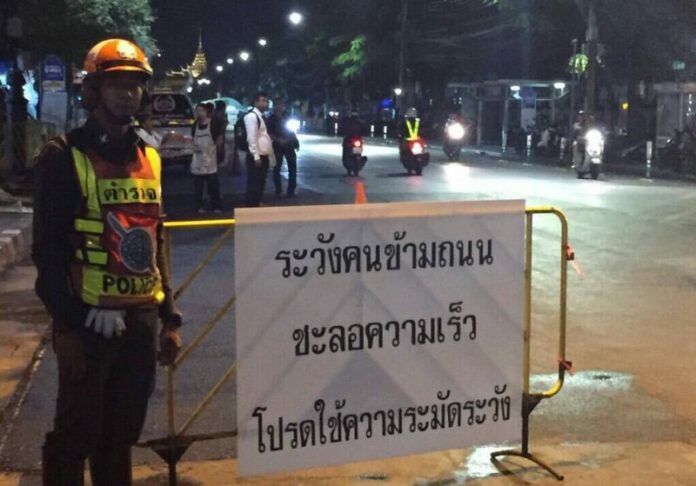
Traffic police officer with a sign asking people to slow down and watch out for pedestrians at a road near Sanam Luang.
BANGKOK — Traffic police have enforced a slow-down rule for nine intersections around Sanam Luang, citing the safety of mourners.
Since the death of His Majesty the Late King, mourners in large numbers have gathered at Sanam Luang to pay their condolences, prompting officials to regulate traffic speeds around the area Monday.
Signs asking people to decelerate have been set up at nine spots near Sanam Luang, Police Col. Pusit Wisetkamin of the Traffic Police said Monday evening.
The spots are at intersections and crosswalks on the following roads: Phan Phiphop Lila, Atsadang, Mahathat and Ratchadamnoen Nai roads, as well as Rachini Alley.
Pusit said the Traffic Police, on orders of Bangkok Gov. Aswin Kwanmueng, were enforcing this rule because they are concerned about people’s safety. Officials found that many streets in Suan Luang are one-way roads that six-wheeler vehicles must share with regular cars and shuttle buses, and that larger vehicles do not slow down for people’s safety, especially in the morning.
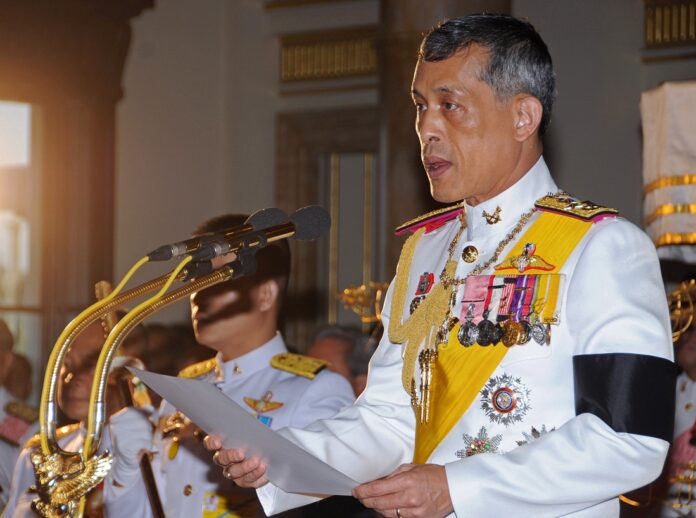
(FILES) This file handout photo received from Thailand's Royal Bureau taken on August 01, 2011 shows Thai Crown Prince Maha Vajiralongkorn reading a statement during the opening ceremony of the new parliament at Ananta Samakhom Throne Hall in Bangkok. / AFP PHOTO / ROYAL BUREAU / HO
BANGKOK — The first steps that would eventually lead to the formal succession of Crown Prince Vajiralongkorn were completed Monday morning, with the cabinet convening to acknowledge his rightful claim to the throne as required by the constitution.
After the meeting ended at about 10:30am, government officials said a dispatch was on the way to the interim parliament, the National Legislative Assembly, to notify lawmakers of the royal heir’s wish to succeed the throne.
Per procedures prescribed in the constitution, assembly chairman Pornpetch Wichitcholchai will meet with the Crown Prince and ceremoniously ask him to take throne. He will then inform the parliament, at which point the succession would be finalized.
Members of the assembly are already gathering at the House of Parliament for the session, which will convene at 11am. It will be broadcast live on television.