35 C
Bangkok
Monday, June 8, 2026
Home Blog Page 2559

Saudi Arabia Executes Prince for Murder

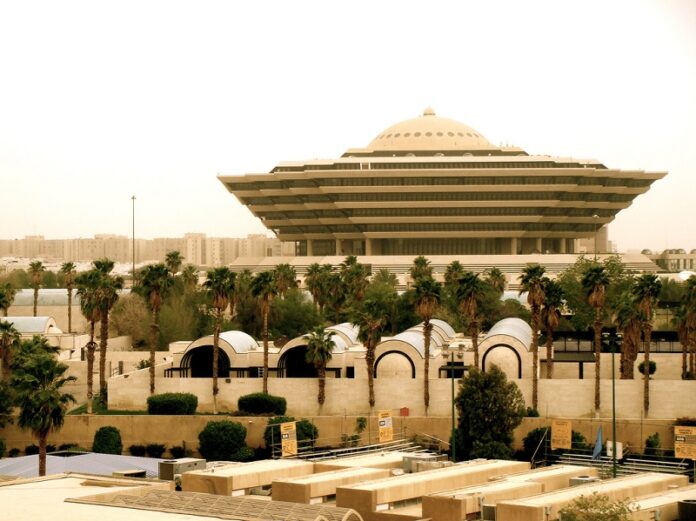
A 2007 picture of Saudi Arabia's Ministry of Interior in Riyadh, Saudi Arabia. Photo: Jon Rawlinson / Flickr

RIYADH, Saudi Arabia — Saudi Arabia says it has executed a prince who fatally shot another man in a melee, a rare death sentence carried out against a member of the kingdom’s extensive royal family.

The Interior Ministry said late on Tuesday it had executed Prince Turki bin Saud bin Turki bin Saud al-Kabeer in Riyadh. It did not describe how the sentence was carried out, though the Sunni-ruled kingdom often beheads the condemned in public.

A ministry statement carried on the state-run Saudi Press Agency warned “whoever dares to commit such a crime that the Shariah penalty is awaiting.”

Saudi Arabia is among the world’s top executioners.

Such royal executions are rare, but have happened before. In 1975, the kingdom beheaded Faisal bin Musaid bin Abdulaziz Al Saud for assassinating King Faisal.

Advertisement

Underwater Drone to Investigate Sonar Contacts in MH370 Hunt

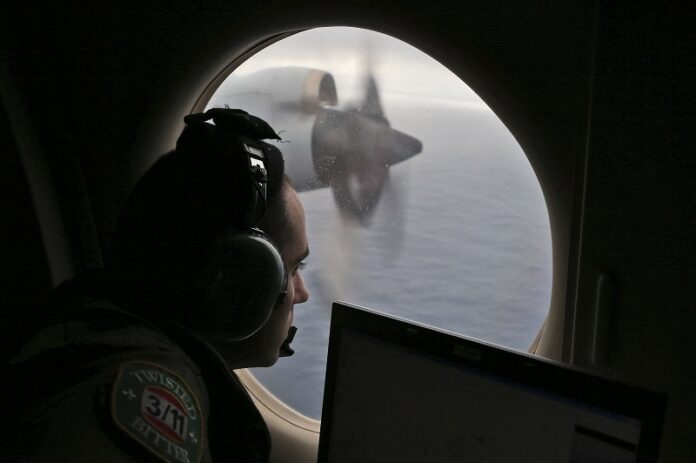
Flight officer Rayan Gharazeddine scans the water in 2014 in the southern Indian Ocean off Australia from a Royal Australian Air Force AP-3C Orion during a search for the missing Malaysia Airlines Flight MH370. Photo: Rob Griffith / Associated Press

SYDNEY — A ship involved with the deep-sea sonar search for missing Malaysia Airlines Flight 370 is being fitted with a drone that will examine several sonar contacts of interest on the remote seabed west of Australia, officials said Wednesday.

None of the sonar contacts exhibit the characteristics of a typical aircraft debris field, said the Australian Transport Safety Bureau, which is heading up the hunt for the Boeing 777 in a desolate stretch of the Indian Ocean. But some of the contacts do exhibit man-made properties and therefore must be investigated before they can be eliminated as having come from the plane, the agency said in a statement.

Officials have previously said that more than 20 sonar contacts that crews have picked up in recent months require closer examination by a sonar-equipped underwater drone. They are between 2,700 kilometers (1,700 miles) and 1,900 kilometers (1,200 miles) from the Australian port of Fremantle where the search ships are based.

Poor weather during the southern hemisphere winter has, until now, prevented the ships from deploying the drone. With the weather improving, the Chinese vessel Dong Hai Jiu 101 is being fitted with a video camera-equipped remotely operated vehicle that will scrutinize the sonar contacts.

Crews have picked up hundreds of sonar contacts of interest throughout the two-year hunt. The contacts are grouped into three classification levels based on their likelihood of being linked to the plane. Contacts dubbed “classification 1” are considered the most likely to have come from the aircraft. None of the recent sonar contacts that the drone will investigate are classification 1. There have only been two contacts that fit into that category thus far; one turned out to be an old shipwreck, and the other was a rock field.

Search crews have so far come up empty in their attempt to find the main underwater wreckage of the plane, which vanished on March 8, 2014, during a flight from Kuala Lumpur to Beijing with 239 people on board. The ships have less than 10,000 square kilometers (3,900 square miles) left to scour of the 120,000-square kilometer (46,000-square mile) search zone.

Officials previously said the search would be finished by December. On Wednesday, the transport bureau said it is now likely to take until January or February to complete, due to the long stretch of poor winter weather that has hampered search efforts.

Malaysia, China and Australia agreed in July that the hunt would be suspended after the crews finish scouring the current search zone, unless credible new evidence emerges that identifies the plane’s location.

Story: Kristen Gelineau

Advertisement

48 Bodies Recovered in Myanmar Ferry Accident

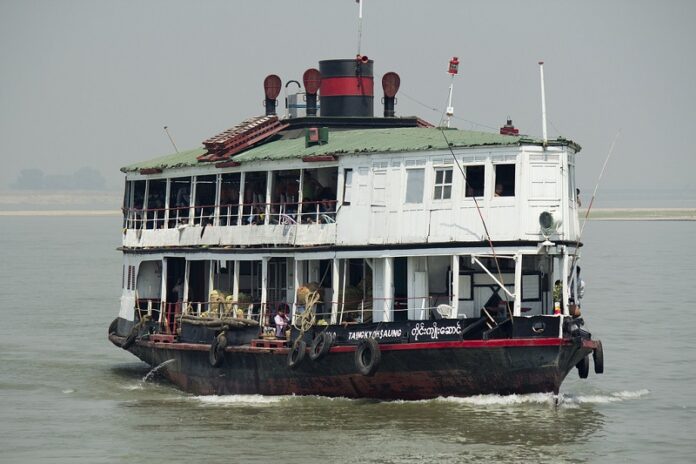
A ferry cruises in 2013 in the Irrawaddy river, Myanmar. Photo: the boy wonder 2009 / Flickr

YANGON — Authorities say 48 bodies have been found from a ferry boat that capsized last Saturday in central Myanmar, while dozens of people are still missing.

The ferry was carrying more than 250 passengers when it capsized on the Chindwin river between Monywa and Homalin townships in the Sagaing region. Authorities say 158 people were rescued and 48 bodies have been found through Wednesday. Rescuers are continuing to search for the missing.

The cause of the capsizing was unclear but local police says the boat may have been overcrowded. A regional member of parliament said police have brought criminal charges against the helmsman alleging his negligence caused the deaths.

Advertisement

Mekong Effort Fails After Years of Lavish Foreign Funding

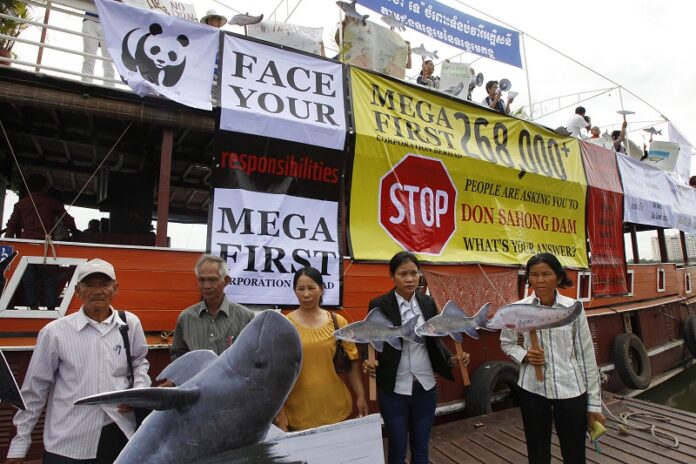
Cambodian non-governmental organization (NGOs) activists hold a cut-out of Mekong dolphin, left, and cut-out of other species during a protest against a proposed Don Sahong dam in 2014 in Phnom Penh, Cambodia. Photo: Heng Sinith / Associated Press

BANGKOK — When Western governments began pouring money into the Mekong River Commission, they hoped it would help four Southeast Asian countries cooperate in responsibly managing one of the world’s great rivers.

Two decades later, they have a surfeit of disregarded reports to show for the $320 million they spent, and a cascade of hydro power developments that benefit the narrow interests of dam builders but are ravaging the river basin, a crucial source of rice, fish and livelihoods for 60 million people.

Critics say the commission, formed when Laos, Cambodia, Vietnam and Thailand signed the Mekong River Agreement in 1995, has been sidelined by those governments. The four countries are more at odds than ever over use of the 4,800-kilometer-long (3,000-mile-long) river that begins in Tibet and snakes through their territories.

Consultations for the contentious Xayaburi and Don Sahong dams by Laos on the Mekong’s mainstream severely damaged the commission’s credibility. The other countries opposed the Lao plans, fearing damage to fisheries and the Mekong’s rice bowl delta, and the commission failed to broker an agreement.

On each occasion Laos was already working on the dams while it went through the motions of consultation. Before that, the commission’s reputation was already hanging by a thread; it paid several million dollars for a scientific study that recommended a 10-year moratorium on dam building but it was not adopted as an official document because of disagreement among the member countries.

Donor funding has shriveled and the commission’s staff has been slashed from about 160 to 66.

The largest donor, Denmark, provided $86 million of Danish taxpayer money to the commission since 1995 before ending its funding last year, said Kurt Morck Jensen, chief technical adviser to Denmark’s development agency during that period.

The funding slump coincides with cuts by Western governments of foreign aid programs they view as the least deserving. The commission needs $65 million for 2016-2020 and has secured $43 million so far. It received more than $100 million in the previous five-year period.

“There is a risk that a Mekong River Commission without donor support could further lose influence,” said Jensen. “On the other hand, donors cannot and should not be babysitting the MRC forever.”

Denmark used a critical review of the commission it conducted in 2013 to press for a faster withdrawal by foreign donors. Originally, the organization was supposed to be totally funded by its Southeast Asian member countries by 2030. Denmark recommended that be brought forward to 2020.

The Danish report:

— Criticized gaps in the commission’s knowledge that meant Vietnam and Thailand, which also fund the commission, had to conduct their own research to collect fundamental data about the river;

— Cast doubts the commission could accurately predict the effects of mainstream dams on fisheries and agriculture or know the threshold at which the river’s development would reach a damaging point of no return;

— Questioned whether it had sufficient knowhow to advise member states how to mitigate the impact of dams;

— Queried an “unusual” amount of time and money spent on travel, meetings and workshops.

Consultants hired by Denmark concluded “there is generally little evidence of value for money.” They found instances of drivers and secretaries being listed as professional participants in meetings to make up numbers, unjustified study tours of the Danube River in Europe and to the United States and Canada, and other wasteful spending.

The commission’s CEO from that time, Hans Guttman, did not respond to emailed questions.

Philip Hirsch, a professor of human geography at Sydney University and a Mekong expert, said donor money also paid for valuable scientific research. But the commission, he said, couldn’t use that knowledge to advocate on behalf of the river and the millions of people who rely on it because anything of significance had to be approved by senior officials in each country.

“It cannot be said that this has been money well spent,” Hirsch said. “It now has much reduced relevance.”

Earlier this year, a study funded by Vietnam predicted Mekong Delta rice production would drop steeply because up to nine mainstream dams planned by Laos would trap sediments, reducing nutrients flowing downstream, and reduce fish stocks by disrupting migratory breeding. It estimates annual fishery and farming losses of more than $760 million in Vietnam and $450 million in Cambodia, the two worst affected countries.

More than 100 smaller dams have been built on Mekong tributaries that were excluded from the requirement for consultations. Their cumulative social and environmental impact is much more severe than mainstream dams for the time-being, Jensen said.

One of the commission’s few defenders is its new CEO, Pham Tuan Phan, who was appointed earlier this year.

As a forum for “water diplomacy,” the commission is the only game in town, Pham said.

He pointed to an estimated $400 million spent by Laos and the Thai developer of the Xayaburi dam on design changes to improve release of sediment and aid the passage of fish as an example of its relevance.

The commission is also belatedly developing a tool to assess the environmental impact of dams across borders and hopes to complete its long-delayed comprehensive study into development of the river.

Laos will not be deterred from building more dams, Pham said, because it sees them as a way to develop its impoverished economy by exporting electricity.

“I think the public expects more than the commission has a mandate to do,” he said.

But researchers at the Stimson Center, a Washington-based think tank, said Laos may have to scale back some of its plans because of uncertain power demand.

“The project-by-project approach in Laos has created a situation that is likely to fall far short of revenue goals while at the same time lays ruin to downstream agricultural outputs and fish catches in Vietnam and Cambodia,” the center said.

Aside from Denmark, other major donors included Finland, Germany, Sweden, Belgium, Australia, World Bank, Netherlands, Japan, European Union, France and United States.

Several donors said a Mekong flood warning system was an example of money well spent. However it represents only a small proportion of the commission’s budget.

The dissatisfaction of donors was apparent as far back as 2006 when Denmark commissioned a study into how the organization could become more effective. It recommended it be given teeth, something that would require member governments to sacrifice some sovereignty.

That never happened. But Jensen defends the foreign funding as “successful to some extent.”

The knowledge generated by the commission “turned the Mekong into a political battlefield,” he said. “At least now there is considerable transparency.”

Story: Stephen Wright

Advertisement

More Than 80 Children Sickened by Food Poisoning in Cambodia

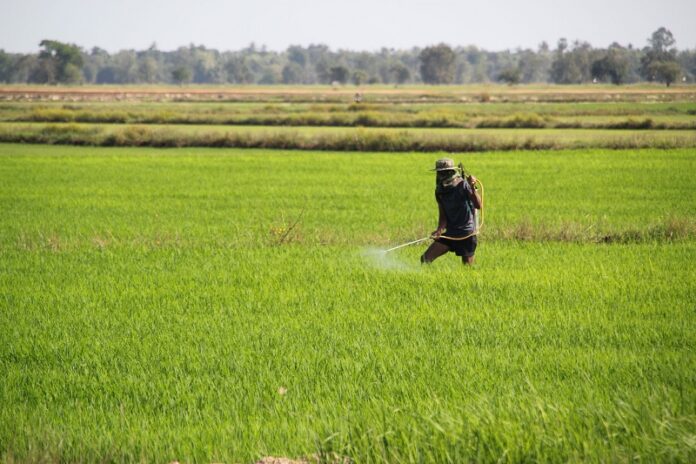
A farmer irrigates rice fields in 2013 in Cambodia. Photo: Chris Graham / Flickr

PHNOM PENH — Officials say more than 80 schoolchildren in Cambodia have fallen ill after eating contaminated food distributed by a local volunteer group.

The primary school students in the southern province of Takeo became sick Tuesday after eating fried rice, sausage and milk.

Chea Vann, the governor of Tram Kak district, where the incident took place, told police that all of the victims had the same symptoms — diarrhea and vomiting.

He said Wednesday that the children have been sent to hospitals, and that all were in stable condition.

Such mass outbreaks of food poisoning are not uncommon in Cambodia, where checks on food are rare and safety regulations lax.

Advertisement

3 Bodies Recovered in Vietnam Chopper Crash

An image from last May shows a Eurocopter EC 130 helicopter, similar to the one that crashed missing Tuesday in Vietnam, overflying Sussex, England. Photo: MercerMJ / Flickr

HANOI, Vietnam €” Rescuers have recovered the bodies of three military personnel on a helicopter that crashed into a mountain during a training flight in southern Vietnam in the latest in a series of accidents involving the military aircraft.

Hundreds of soldiers, militiamen and forest rangers were mobilized for search in Ba Ria Vung Tau province, said a local military officer, who declined to be named.

The Eurocopter EC 130 lost contact shortly after taking off Tuesday, the military said in a statement, adding a pilot and two trainees were in the helicopter.

Three crashes involving military planes that killed 11 people have been reported in the last four months.

Advertisement

New Privy Councilor Appointed in Place of Prem

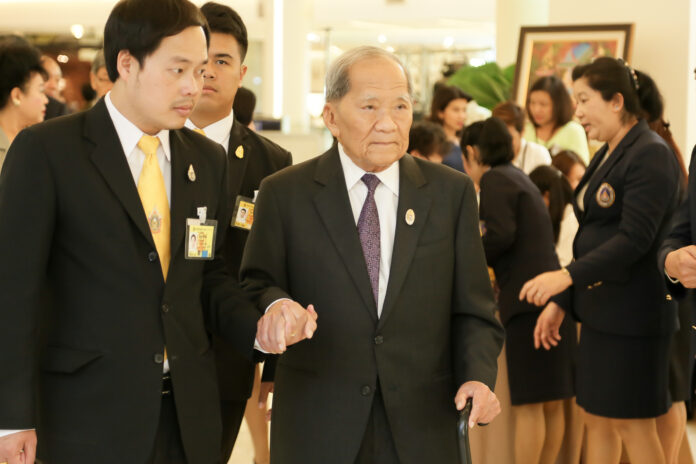
Privy Councilor Thanin Kraivichien visited an exhibition honoring His Majesty the Queen May 23 at Siam Paragon shopping mall in Bangkok.

BANGKOK — An ex-prime minister was elected new head of the Privy Council Wednesday, replacing former chairman Prem Tinsulanonda who is now serving as Regent of Thailand’s vacant throne.

As per constitutional clause, Thanin Kraivichien, 89, was chosen by fellow members of the Privy Council as their new chairman, Deputy Prime Minister Wissanu Krea-ngam told reporters Wednesday afternoon.

Prem, 96, was required to leave his post as the head of the council, which served as a personal board of advisory to His Majesty the Late King Bhumibol, after Crown Prince Vajiralongkorn declined to immediately accede to the throne when the monarch died Thursday.

A lawyer and staunch opponent of communism, Thanin was picked as prime minister by the military junta that seized power on Oct. 6, 1976, following a massacre of leftist students at Thammasat University.

Upset by his hardline conservative stance that saw newspapers closed and books confiscated, the military staged another coup a year later to remove Thanin. He was immediately appointed a member of the Privy Council by His Majesty the King.

Thanin’s role was limited to performing royal works in the decades that followed.

Related stories:

Gov’t Backs Off From Specific Succession Time Frame

Crown Prince Vajiralongkorn Meets With Regent, Will Take Throne

Prem Assumes Regency Over Thailand’s Empty Throne

Crown Prince Not Ready to Take Throne Yet, Prayuth Says

Advertisement

Gov’t Backs Off From Specific Succession Time Frame

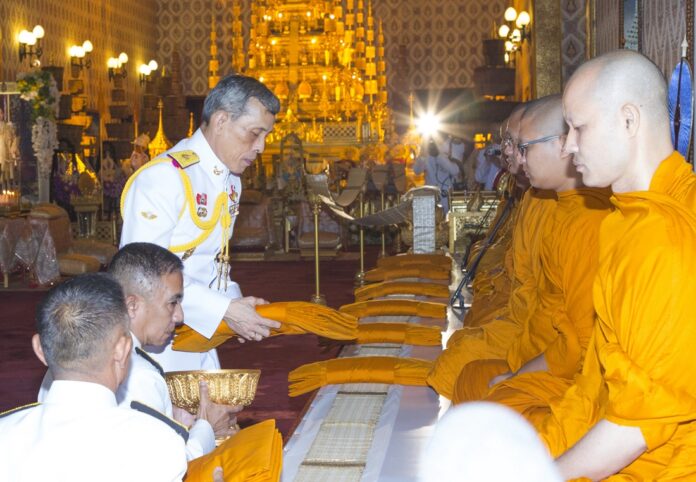
Crown Prince Vajiralongkorn leads the funerary rites for His Majesty the late King Bhumibol Tuesday at the Grand Palace in Bangkok.

BANGKOK — The government on Tuesday night revised yet again the timeframe for when Crown Prince Vajiralongkorn will ascend the throne as King Rama X.
Hours after junta chairman Prayuth Chan-ocha said the 65-year-old prince might take the throne seven to 15 days into the funeral for his father, his deputy clarified Tuesday night that explanation was not literal.
Prayuth: Crown Prince Will Soon Take Throne

Deputy Prime Minister Wissanu Krea-ngam said Prayuth meant to say it would happen after the funeral was complete, which would take up to 172 days, pushing the timeframe back to April. He based this on the number of days required for different phases of prayer.

“That’s the sequence of how we Thais make merit,” Wissanu told reporters. “That’s all the meaning there is. There’s nothing complicated or mysterious.”

Wissanu gave no indication when Crown Prince Vajiralongkorn would succeed his father, King Bhumibol, who died at 88 on Thursday. He repeated the prince’s plea for more time to grieve for the late king before taking the throne.

However, like Prayuth, Wissanu maintained that Vajiralongkorn would sign the new constitution, which was approved in an August referendum and is now pending minor revisions.

A constitutional clause requires the new charter be royally endorsed by February. Wissanu could not be reached for comment Wednesday as to how that would be accomplished within the timeframe.

After the constitution is formally promulgated, a new general election could take place as early as late 2017. At Tuesday’s news conference, Prayuth said election time frame would not be affected.

Because Crown Prince Vajiralongkorn delayed taking the throne on the night his father died, 96-year-old Privy Councilor Prem Tinsulanonda automatically became regent and head of state per constitutional provisions in event of a vacant throne.

Related stories:

Crown Prince Vajiralongkorn Meets With Regent, Will Take Throne

Prem Assumes Regency Over Thailand’s Empty Throne

Crown Prince Not Ready to Take Throne Yet, Prayuth Says

Advertisement

Sing, Volunteer For His Late Majesty Bhumibol

BANGKOK — Honor His Majesty the Late King by putting his message of service into practice,  performing in a public tribute and other events being held around Bangkok.

Somtow Sucharitkul and Chatri Chalerm Yukol meet Tuesday afternoon at Sanam Luang to discuss the performance of the royal anthem. Photo: Somtow Sucharitkul / Facebook

Mass Performance  Saturday

The public is invited to join the Siam Philharmonic, Siam Sinfonietta and a 100-member choir in singing the royal anthem conducted by composer Somtow Sucharitkul at 1pm on Saturday on the south side of the Sanam Luang.

The mass performance will be filmed by director Chatri Chalerm Yukol for a film to be shown in theaters and on television.

Those interested in participating should wear formal black attire and meet at Na Phra Lan Road on the south side of the field. Filming commences at 1pm.

People wait in line to register as volunteers at Thammasat university’s Tha Prachan campus. Photo: Volunteer for Dad / Facebook.

Volunteer – Ongoing

“Volunteers For Dad” is a volunteer center operated by City Hall and Thammasat University to provide first aid, garbage management and deliver food for the mourning encampment.

Volunteers are required to register with their ID cards or passports daily from 9am to 10pm at Sri Burapha Hall on the university’s Tha Prachan campus next to the Sanam Luang. More information can be found on Facebook.

People gather at National Book Fair at Queen Sirikit National Convention Center. Photo: Book Thai / Facebook

Literature Talk – Friday

A discussion of His Majesty Bhumibol’s literary talents will be held at 2pm on Friday on the Atrium stage at the National Book Fair at Queen Sirikit National Convention Center. The panel will be in Thai.


The venue to screen the film festival dedicated to King Bhumibol. Photo: King’s Movies / Facebook.

Film Fest – Now through Nov. 8

More than 100 films about King Rama IX will be screened for free with directors taking turns to talk about each production. Most films will show with English subtitles. The festival starts Wednesday and will be held from 6pm to 12am through Nov. 8 at The Walk Night Market on Kaset-Nawamin Road. The schedule of films will be posted on Facebook.


Advertisement

Decorate, Don’t Remove Portraits of Late King: Govt

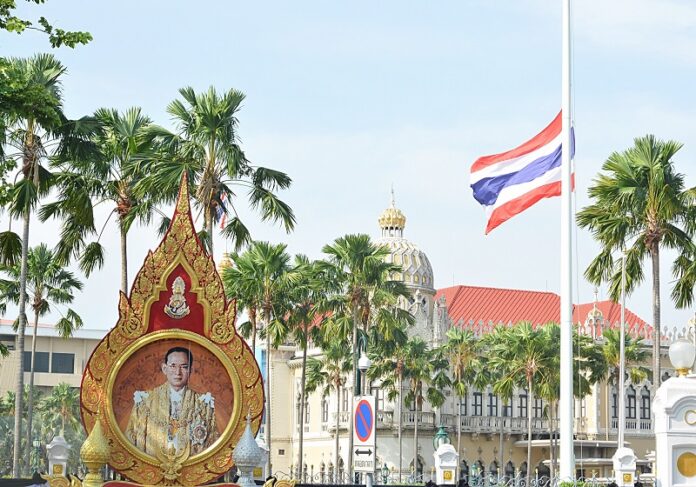
A portrait of His Majesty the Late King seen Friday at the Government House in Bangkok.

BANGKOK — Prime Minister Prayuth Chan-ocha ordered government agencies Tuesday not to take down portraits of His Majesty the Late King.

Responding to public rancor after some government agencies removed portraits King Bhumibol, Prayuth on Tuesday said agencies should decorate his portrait with ribbons and black and white fabric.

“The government never ordered the portraits removed,” he said. “I already ordered it remedied quickly. There must be no empty frame of the King’s portrait.”

He said it was also the wish of Crown Prince Vajiralongkorn for the situation to remain normal like it was before the King died.

Black ribbons should not be placed on portraits showing both King Bhumibol and Queen Sirikit, government spokesman Sansern Kaewkamnerd said. Instead they must be removed immediately and replaced with photos only of his Majesty the Late King, he said.

Messages such as “Long Live the King” will have to be changed to those of condolences, Sansern added.

https://twitter.com/pae_hunterrrrr/status/786794464907923456


Advertisement

Hot News

LATEST NEWS

Bangkok
overcast clouds
35 ° C
35 °
32.7 °
68 %
4kmh
99 %
Mon
35 °
Tue
36 °
Wed
34 °
Thu
31 °
Fri
29 °