




























31.8 C
Bangkok
Sunday, June 7, 2026
Home Blog Page 2570

Ethiopia Blames Egypt for Forcing State of Emergency

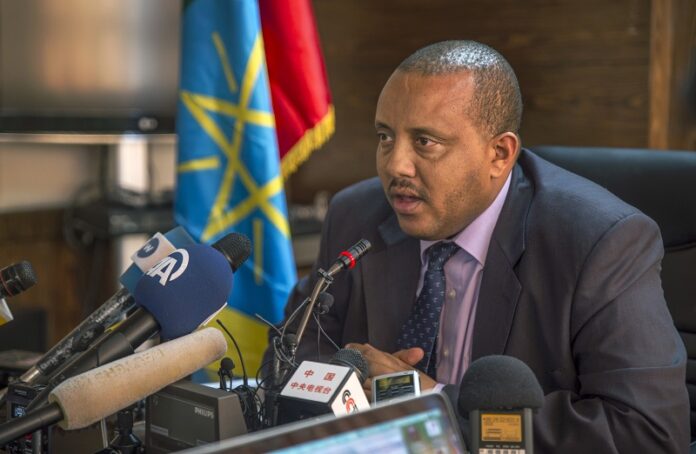
Ethiopia's Communication Affairs Minister Getachew Reda speaks to media about the current unrest in the country in 2016 in Addis Ababa, Ethiopia. Photo: Mulugeta Ayene / Association Press

ADDIS ABABA, Ethiopia — Ethiopia’s government on Monday blamed Egypt for supporting outlawed rebels and forcing the declaration of the country’s first state of emergency in a quarter-century as widespread anti-government protests continue.

There is “ample evidence” that Egypt provided training and financing to the Oromo Liberation Front, labeled a terrorist organization by Ethiopia, government spokesman Getachew Reda told journalists in the capital, Addis Ababa. “We know for a fact that the terrorist group OLF is receiving all kinds of support from Egypt.”

Egypt last week denied any support for the Ethiopian rebels. The two countries have long been in a dispute over a massive hydroelectric dam that Ethiopia is building on the Nile River, with Egypt saying the project will reduce its share of the river’s flow.

The six-month state of emergency declared Sunday will be used to reorganize the security forces to better respond to the anti-government protests throughout much of the Oromia region, Getachew said.

The developments come as German Chancellor Angela Merkel is set to visit Ethiopia on Tuesday and meet with Prime Minister Hailemariam Desalegn on issues including the migrant crisis. Ethiopia is one of the world’s top host countries of refugees.

Merkel will discuss the current political situation and “of course clearly address human rights,” German government spokeswoman Ulrike Demmer said.

On Monday, Ethiopia’s president announced during a Parliament session that the country’s election law would be amended to accommodate more political parties and opposing views.

At least 400 people have been killed in anti-government protests in the past year, human rights groups and opposition activists have said. The protesters have been demanding wider freedoms in a country that is a close security ally of the West and one of Africa’s best-performing economies.

On Oct. 2, more than 50 people were killed in a stampede after security forces opened fire on anti-government protesters during a religious festival in Bishoftu, southeast of the capital. The incident sparked more violence in Oromia, where hundreds of local and foreign businesses have been attacked over suspected government ties and more people have been killed, according to both the government and opposition.

An internet blackout that has been in place for the past five days was briefly lifted Monday before service disappeared again.

The state of emergency will not mean a total ban on civilian rights and there will not be a blanket curfew across the country, Getachew said. “This is not an attempt by the military to take over,” he added.

The government has said the state of emergency may include a curfew in some locations, arrests and search-and-seizures without a court order, restrictions on the right to assembly and a ban on some communications.

The six months is the maximum time Ethiopia allows for a state of emergency, but it can be renewed.

An informal state of emergency has been in place in Ethiopia for some time during which people have been arbitrarily arrested and even killed, Mulatu Gemechu of the opposition Oromo Federalist Congress party told The Associated Press.

“Declaring a state of emergency at this time in Ethiopia is aimed at legitimizing the killings that we have seen in the Oromia region recently,” Mulatu said. “It won’t solve the public’s problems and will only worsen it. What people are looking for is a radical change. The people now want the setting up of a transitional or caretaker government.”

Ethiopian lawmakers are expected to convene later Monday after a two-month recess, and a Cabinet reshuffle is expected in the next two to three weeks, said government spokesman Getachew.

Story: Elias Meseret
Advertisement

Cambodia Jails Opposition Lawmaker Critical of Gov’t

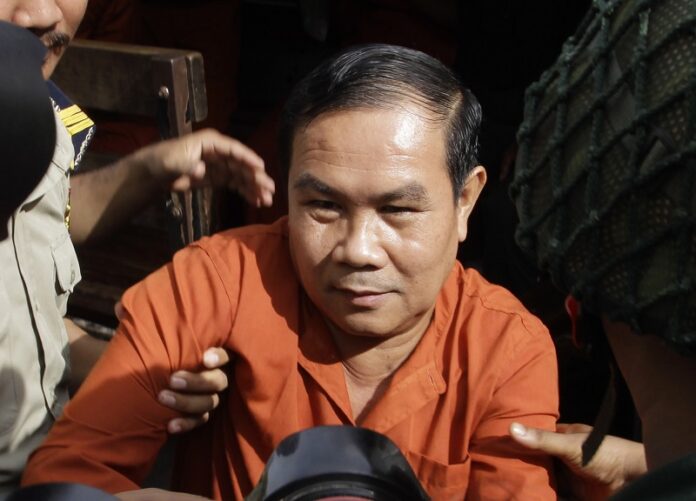
Cambodia's opposition lawmaker Um Sam An is escorted last September by prison security guards upon his arrival at Supreme Court in Phnom Penh, Cambodia. Photo: Heng Sinith / Associated Press

PHNOM PENH — A Cambodian court on Monday sentenced an opposition lawmaker who has been a strong critic of the government’s handling of demarcating the border with neighboring Vietnam to 2 1/2 years in prison for online postings he made.

Um Sam An is the latest member of the opposition Cambodia National Rescue Party to be sentenced for making comments on the politically sensitive topic and implying that Prime Minister Hun Sen’s government failed to counter land encroachment by Vietnam, Cambodia’s traditional enemy.

In handing out the sentence, Judge Heng Sokna of the Phnom Penh Municipal Court said the accusations made by Um Sam An in Facebook posts last year aimed to cause chaos in society.

The lawmaker was arrested in April in the Cambodian city of Siem Reap after having returned from a trip to the United States.

A month ago, the same court sentenced Kem Sokha, deputy to the opposition party’s leader, to five months in prison for twice ignoring a summons to answer questions related to a case involving his alleged mistress.

Critics say Hun Sen is manipulating the courts to weaken the opposition’s chances in next year’s local polls and the 2018 general election. The opposition made an unexpectedly strong showing in the 2013 general election, which it claimed it was cheated out of winning.

One victim of the legal moves has been opposition leader Sam Rainsy, who did not return from a trip abroad last November when an old conviction for defamation was restored and his parliamentary immunity was stripped by the government’s legislative majority. It had been generally assumed that the conviction, carrying a two-year prison sentence, had been lifted by a 2013 pardon that allowed Sam Rainsy to return from a previous period of self-exile.

Monday’s conviction of Um Sam An came after the opposition unexpectedly failed to attend the reopening of parliament on Friday, setting back hopes of a political truce with the government.

The party stopped attending parliamentary sessions about four months ago after ruling party lawmakers stripped some opposition lawmakers of their legal immunity. The opposition says lawsuits have been used to unfairly harass its members.

Hun Sen has been Cambodia’s leader for three decades. But in a general election in 2013, it seemed his grip on power was shaken when the Cambodia National Rescue Party mounted a strong challenge, winning 55 seats in the National Assembly and leaving Hun Sen’s Cambodian People’s Party with 68. The opposition claimed it had been cheated and staged a boycott of parliament. Seeking to shore up his legitimacy, Hun Sen reached a political truce with the opposition in 2014, making some minor concessions over electoral and parliamentary procedures.

But relations deteriorated last year after the opposition tried to exploit a volatile issue by accusing neighboring Vietnam, with which Hun Sen’s government maintains good relations, of land encroachment. The move proved politically popular, and the government reacted by stepping up intimidation of the opposition party in the courts, which are seen as being under its influence.

Hun Sen’s party has often been accused in the past of using violence or the threat of violence against opponents, but in recent years has stalked its foes mostly in the courts.

Story: Sopheng Cheang

Advertisement

Vietnam Arrests Blogger for Anti-state Propaganda

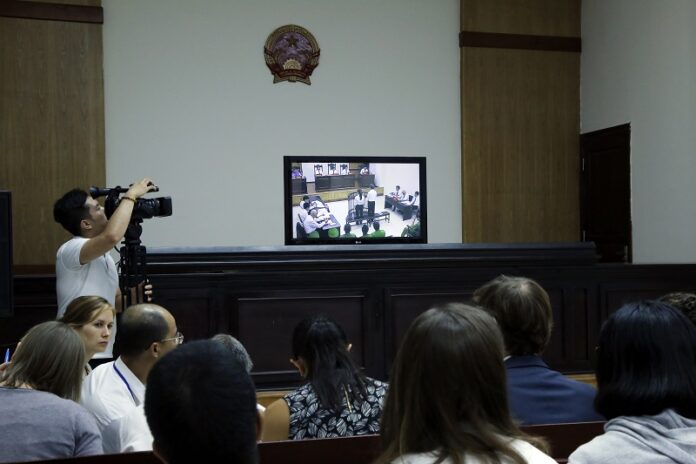
Media and diplomats watch a live screen last September showing another prominent blogger Nguyen Huu Vinh, right, and his colleague Nguyen Thi Minh Thuy, left, another couple to have been tried for online offenses in an appeals court in Hanoi, Vietnam. Photo: Tran Van Minh / Associated Press

HANOI, Vietnam — Police in Vietnam have arrested a blogger for anti-state writings which they said distorted the truth, tarnished the country’s leaders and instigated the public to oppose the government.

Nguyen Ngoc Nhu Quynh, 37, was accused of conducting propaganda against the Communist state under Article 88 of the Penal Code and taken into custody in south central Khanh Hoa province Monday, the police said on their website Tuesday.

If convicted, she could be jailed for up to 12 years.

Quynh, who blogged under the name of Me Nam or Mother Mushroom, has been blogging about the government’s human rights abuses.

The police statement called Quynh a “fierce” opponent of the government who had been given warnings but still “has shown contempt for the law.”

It said she had posted hundreds of articles online that “distorted the truth, distorted the history, undermined the national unity, (and) tarnished the (Communist) Party and state leaders.”

Police in Khanh Hoa were not available for comment.

Her mother, Nguyen Thi Tuyet Lan, was quoted by the Network of Vietnamese Bloggers as saying Quynh did not commit any crime, but was just speaking the truth.

“She just did what the law allowed and the purpose is for the country to change and to enjoy freedom and democracy,” she said.

Quynh was detained for nine days in 2009 for printing T-shirts with slogans opposing the construction of a state-owned bauxite mining project.

Last month, a court in Hanoi upheld a five-year sentence for another blogger, Nguyen Huu Vinh, who was convicted of infringing on the interests of the state by posting anti-state writings.

International human rights groups, United States and some European governments have criticized Vietnam for silencing and jailing people for peacefully expressing their views, but Hanoi says only law breakers are put behind bars.

Advertisement

Academics Warn SEA Human Rights in Regression

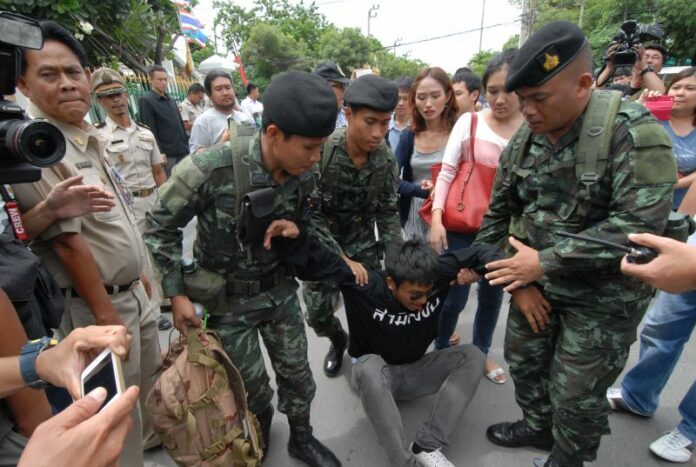
Soldiers break up a small rally by activists seeking to show solidarity with the seven jailed referendum campaigners last July in front of the Bangkok Remand Prison.

BANGKOK — Southeast Asia is witnessing a curb on freedom of expression, freedom of assembly and an overt use of security acts, said Professor Vitit Muntabhorn of Chulalongkorn University’s Faculty of Law, Monday at the 4 International Conference on Human Rights and Peace and Conflict in Southeast Asia in Bangkok.

Vitit, who was a keynote speaker at the the three-day conference organized by the Southeast Asian Human Rights Studies Network, added that human rights defenders should not lose heart.

“Human rights defenders in the region are feeling that they’re being restrained much more,”  “please don’t feel frustrated, and be energized by peers. We must give hope to those affected by human rights violations,” Vitit said, adding that there should be no single ASEAN way, but many ASEAN ways.

He mentioned wide-ranging human rights violations in some ASEAN member states, including the Rohingya conflict in Myanmar, human trafficking, extrajudicial killings, the death penalty, persecution of religious and minority rights, LGBT rights and the rights of those with mental disability among others.

“We used to be relatively democratic. It’s high time we move beyond the coup stuff,”  Vitit said about Thailand.

Sriprapha Petcharanessree, a lecturer at Mahidol University’s Institute of Human Rights and Peace Studies later added a description of Thailand under the military junta, calling it “the most autocratic regime,” for trying to curb populist movements in the provinces.

“We have been visited by people in uniforms every month,” Sriprapha said.

“Governments [of ASEAN] should be transparent, invite the UN, rather than just prosecute NGOs and human rights defenders,” Vitit said.

Although six out of 10 ASEAN member states have a human rights commission, the question remains on whether or not they’re accessible to the people, Vitit added.

Ending on a positive note, Vitit said he welcomed the fact that ASEAN is at interstate peace, but added that it has to find intra-state peace as well.

Advertisement

Roads to Close Tuesday Evening For Navatri Hindu Festival

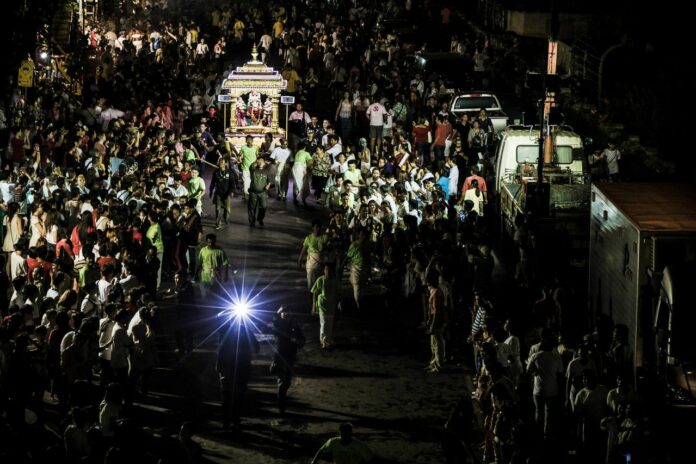
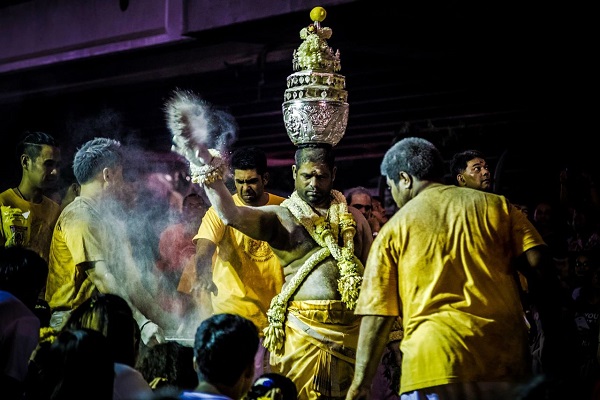
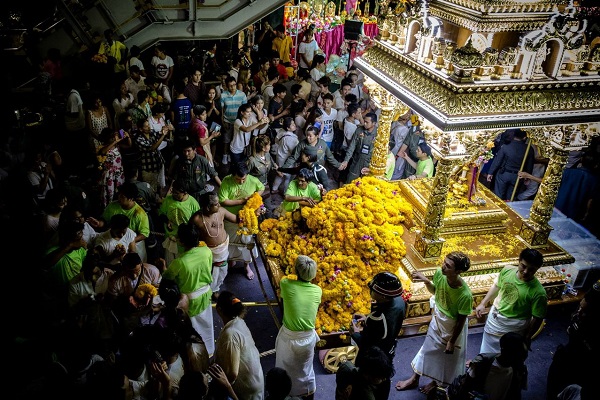
Silom area turns into a sacred place for the annual parade celebrating Hindu Festival Navaratri in a 2014 photo.

BANGKOK — Traffic around Silom area will be closed Tuesday evening to make way for a parade marking Bangkok’s biggest Hindu festival.

Four roads will be closed-off as the famous annual parade celebrating Hindu festival ‘Navaratri’ will leave Sri Maha Mariamman Temple, known in Thai as ‘Wat Khaek’ 7.30pm Tuesday.

Starting 6pm, Silom and Naradhiwas Road will be blocked. Surasak and part of Sathon Nuea Road will be closed starting 8pm. Traffic will resume 3am Wednesday.

The parade is organized every year to celebrate the end of a nine-night festival dedicated to worship Hindu deity Durga.

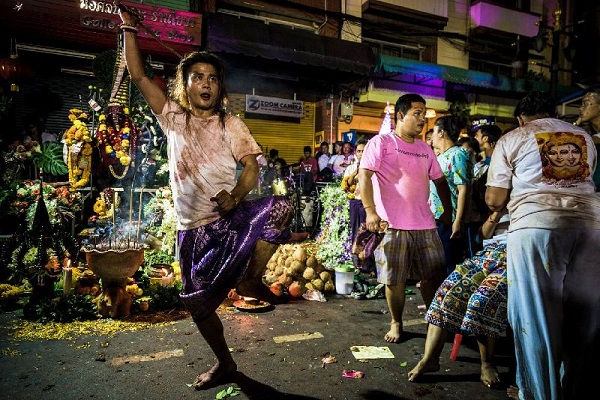
The march is annually attended by thousands of devotees including Thai Buddhists, some of whom also worship Hindu gods. Worship stalls and performances by spirit-possessed dancers will  feature along the roadside, where people are set to be waiting for blessings from Brahman priests.

Organizers of the colorful festival recommend attendees to travel  by BTS Skytrain and get off at Surasak or Chong Nonsi station.

Navaratri 2014-2

Navaratri 2014-4

Navaratri 2014-3

Advertisement

Police Memo Warns of Car Bomb Plot at Suvarnabhumi Airport

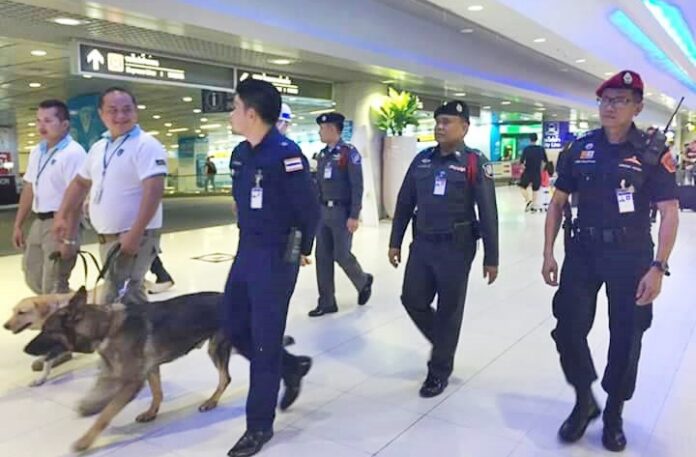
Police officers on Aug. 12 patrol Suvarnabhumi Airport hours after a series of bomb and arson attacks struck seven southern provinces on the same day.

BANGKOK — All police units in Bangkok’s southeastern suburb of Samut Prakan have been alerted for possible car bomb attacks at several landmarks, including one of the capital city’s two international airports, according to a leaked police memo.

Marked “Most Urgent,” the memo was signed by the Samut Prakan police commander on Saturday, though the commissioner disputed its authenticity in a phone interview. He also urged the media not to report about the matter out of concern for national security.

“It’s not real,” Maj. Gen. Thammanoon Traithippayapong said. “Before you report news like this, you must verify first whether it is true or not, you must consider whether your reporting will affect peace and order in the country.”

Thammanoon added that he had not seen the letter in question.

However, national police Deputy Commissioner Srivara Ransibrahmanakul told reporters the memo was genuine, describing it as a “normal procedure.”

According to the memo, which was obtained Monday afternoon by Khaosod English, an unspecified armed group is allegedly plotting up to three car bomb attacks at important landmarks in Samut Prakan, including Bhumibol Bridge, Ancient Siam open-air museum and Suvarnabhumi Airport.

The potential attacks may take place between Oct. 20 and 25, the memo said, quoting reports from “informants.”

The letter instructed all units in Samut Prakan to increase patrols, be more responsive in intelligence reports and coordinate with the Special Branch Police’s counterterrorism unit to prevent the attacks.

The warning came nearly three months after a series of bomb and arson attacks struck seven southern provinces on Aug. 12, which marks National Mother’s Day and Her Majesty the Queen’s Birthday. Four people were killed in the incidents.

Police have yet to make any arrest in connection to August’s attacks, while a separatist group based in the southern border provinces reportedly claimed responsibility for the bombing spree.

Advertisement

Russian Dies From Parachute Malfunction in Chonburi

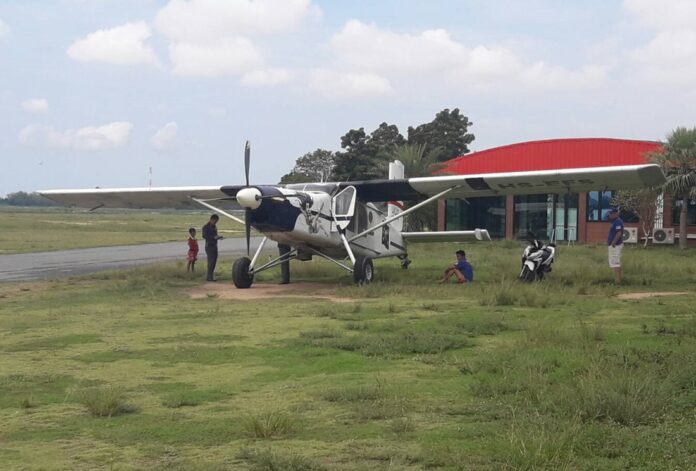
Police said a Russian citizen died after jumping off this plane in a skydiving session Monday morning in Chonburi province.

CHONBURI — A Russian parachutist plunged to his death Monday morning in Chonburi province.

The victim, reportedly in his 30s, died after his parachute was caught in a strong wind while he was filming two other skydivers, said Maj. Pongsakorn Phonphan of Nong Kham Police Station, ruling it an accident.

“The wind moved up against his parachute. The weather changed unpredictably. It was an accident,” Maj. Pongsakorn said. “We don’t believe it was because of faulty equipment.”

No one has been charged for the death, he said.

Khaosod English is withholding the victim’s identity until his family can be notified.

The victim was hired by a company called Skydive Pattaya to film its client and coach as they made their dive on Monday, Pongsakorn said. The two skydivers landed safely, he added.

The victim was an experienced parachutist who had made many jumps in the past, the police officer said.

Advertisement

Revisit Thailand’s Golden Age of Cinema Houses (Photos)

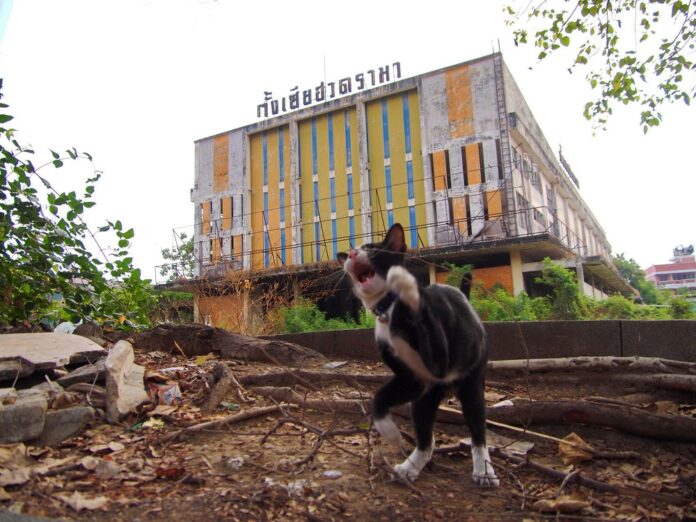
A cat in front of Tang Sia Huat Rama in Nakhon Pathom. Photo: Sonthaya Subyen and Morimart Raden-Ahmad / Courtesy.

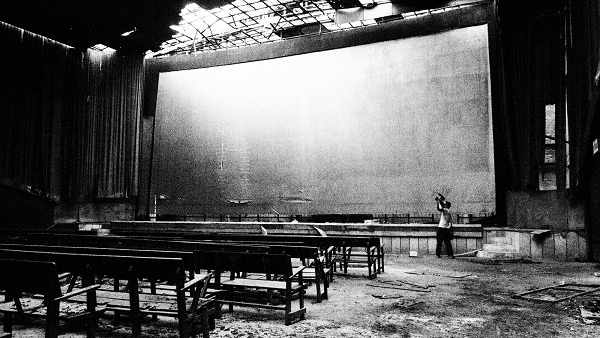
BANGKOK — Fifty years ago, standalone theaters flourished, with more than 700 nationwide. Today only five still operate, with only Bangkok’s Scala Theatre showing new films.

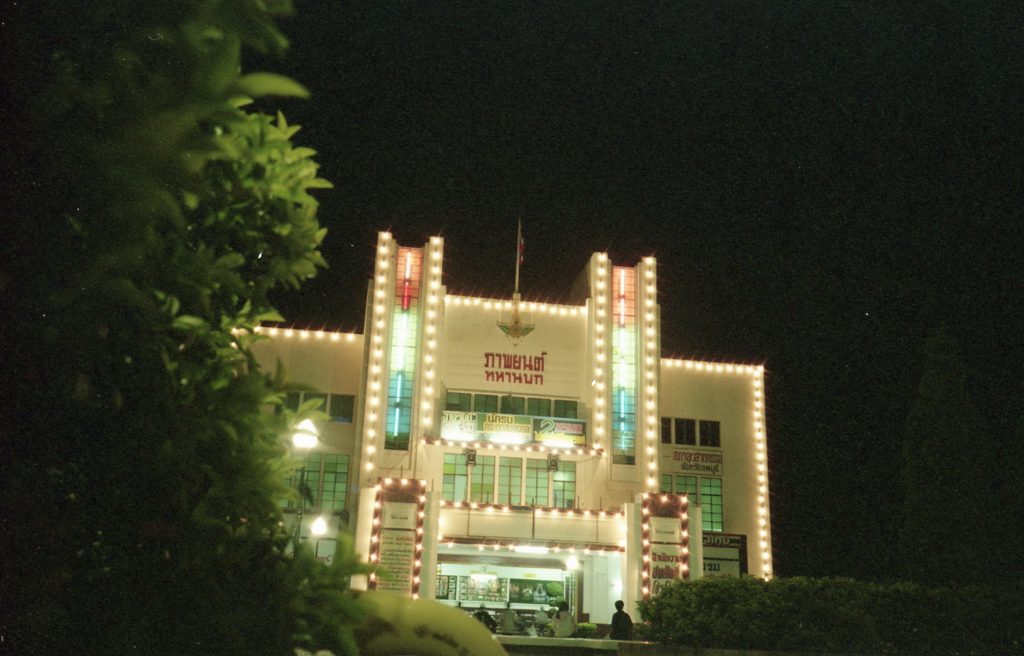
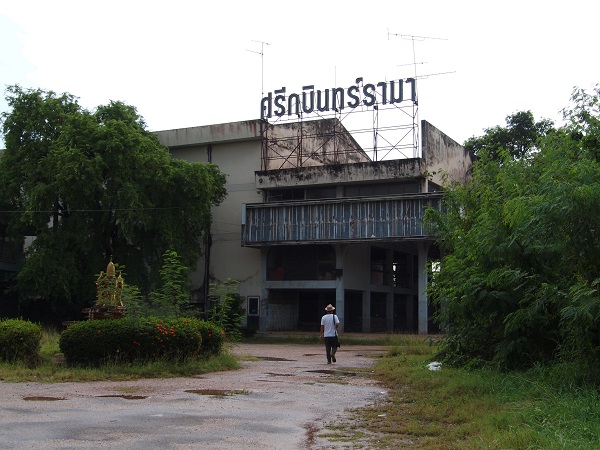
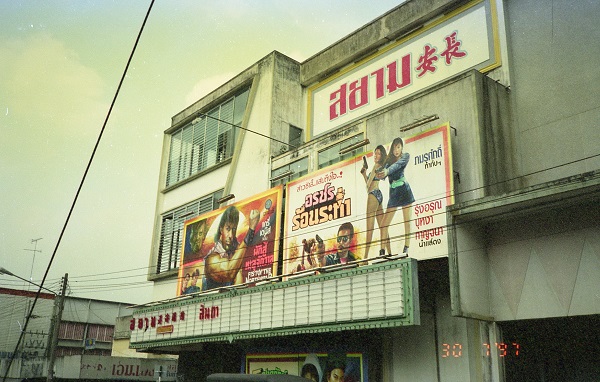
Seeing standalone theaters vanish, film lover and writer Sonthaya Subyen decided to roam Thailand for a year with colleague Morimart Raden-Ahmad to hunt for photographs of them. They published 60 of them from between 1985 to 2014 in a 500-page photo book, “Once Upon a Celluloid Planet: Where Cinema Ruled.” It captured the very last breaths of Thailand’s cinema house beauty when it was published in 2014.

More recently, the duo has released “Stand Alone, Die Alone,” in which 47 guest writers from various fields shared their memories of the vanishing grand theaters’ charms. The book includes the endangered Scala Cinema, which has long been slated for demolition by landowner Chulalongkorn University.

Photos: Courtesy Sonthaya Subyen and Morimart Raden-Ahmad


Scala Cinema, Bangkok
Ngamwongwan Rama, 2002, Bangkok
Thahan Bok Theatre, 1999, Lopburi
Sri Kabin Rama, 2013, Kabinburi, Prachinburi province
Siam Theatre, 1997, Yala province
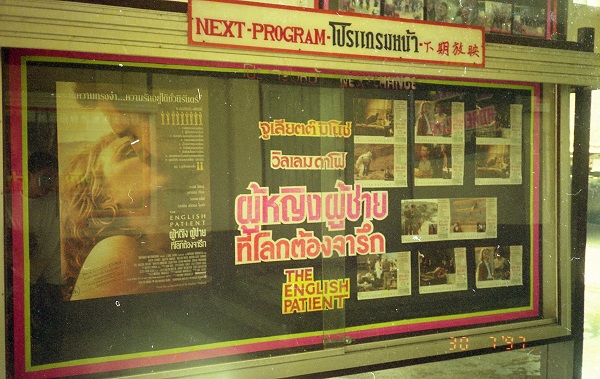
The program in Siam Theatre, 1997, Yala
Sri Siam Theatre, 2012, Samut Prakan province
Nakhonnon Rama, 2013, Nonthaburi province
Chaloem Sin Theatre, 2013, Amnat Charoen province
Chaloem Sin Theatre, 2013, Amnat Charoen
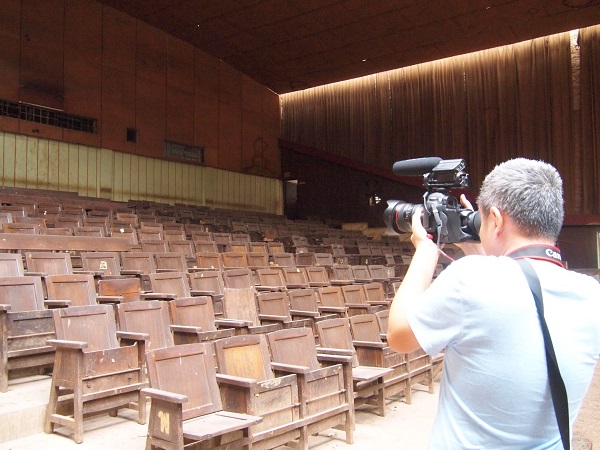
Sonthaya Subyen photographs the Chaloem Sin Theatre in 2013 in Amnat Charoen province
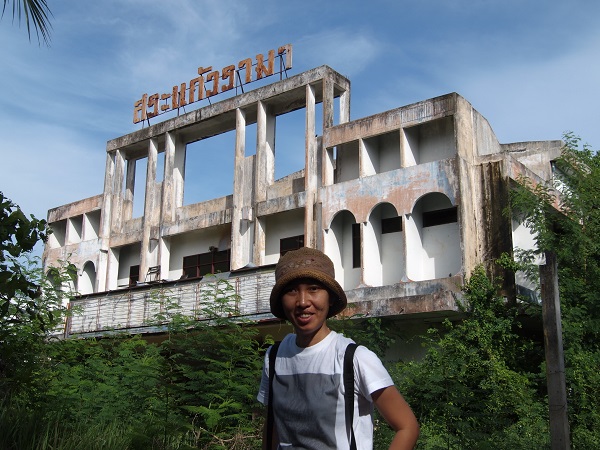
Morimart Raden-Ahmad in front of the Sakaeo Rama in 2013.

Once Upon a Celluloid Planet: Where Cinema Ruled” is available in Thai and English. “Stand Alone, Die Alone” is only available in Thai. Both books can be ordered via the Bookvirus & Filmvirus Facebook page.

Advertisement

First More Rain, Then an Early Winter Comes

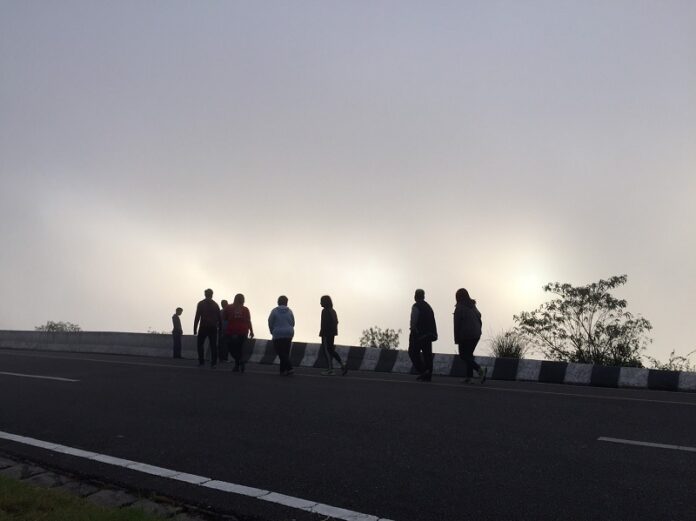
Tourists wait for the sunrise Monday at Chiang Mai’s Doi Inthanon National Park, where the temperature fell to 8C.

BANGKOK — Lashing rains were forecast Monday to continue at least another fortnight but will end sooner than usual this year with the coming of winter, according to the realm’s seers of seasonal change.

Unlike last year, when winter officially took hold in December, the new chilly season will begin in the last week of October, at least in the kingdom’s northern reaches, the Meteorological Department has declared.

When will the coldest days fall? From mid-December through mid-January, it has foretold.

The department also said this winter will be colder than recent years with temperatures bottoming out at 6C. The cold spell will continue through mid-February.

Bangkok, however, will still face rain showers into November. The city will start enjoying the cool weather in December before it warms back up a bit in February. The lowest temperature predicted for Bangkok is 14C.

Heavy downpours will continue in the south until mid-January, especially along the eastern coastal regions to Chumphon province.

Advertisement

Police Pin Murders of 4 Drifters on Burmese Man

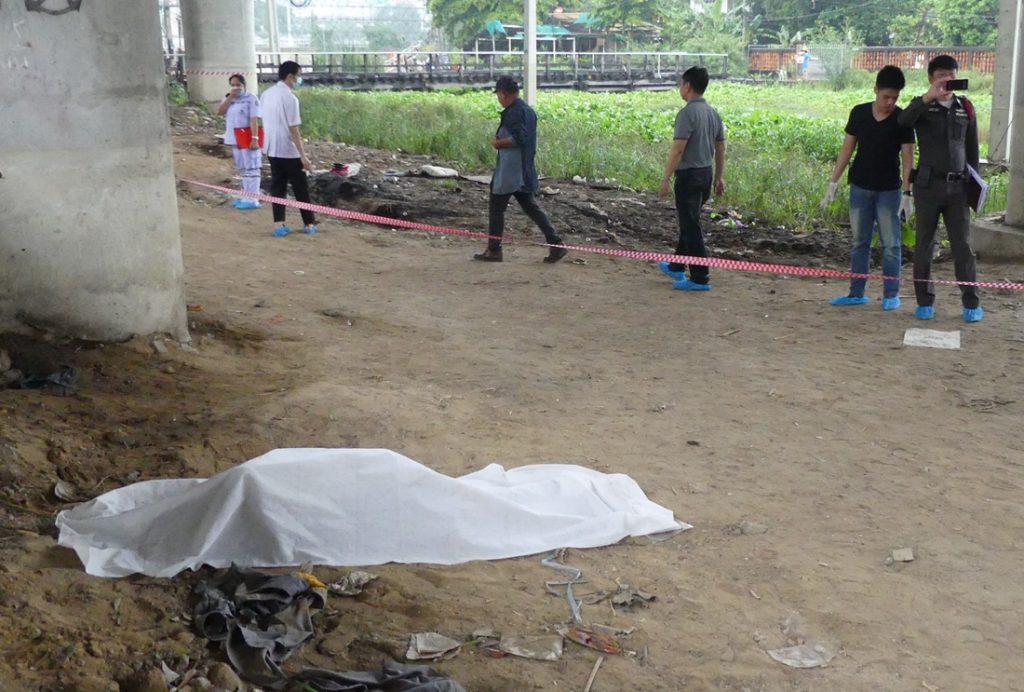
A forensic police officer on Sunday reaches for a bloody knife found next to a homeless woman stabbed to death in the Lat Phrao district of Bangkok. Police believe she was slain by the same killer who murdered three other homeless people last week.

BANGKOK — Police on Monday maintained a Myanmar man under arrest was responsible for killing four homeless people during the past week in northern Bangkok, despite the latest victim being found a day after he was taken into custody.

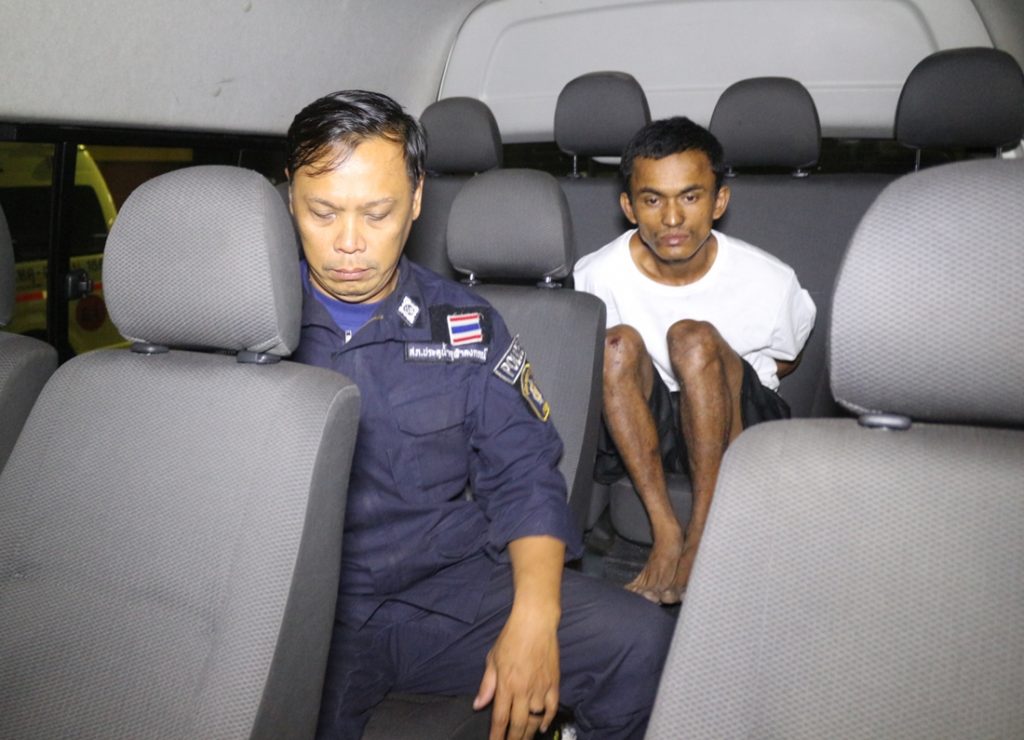
After the fourth in a series of victims was found dead Sunday in the Lat Phrao district, police said the unidentified woman was likely murdered before their suspect was arrested. That man, a 20-year-old Burmese national known simply as “Jimmy” or “Bung,” reportedly denied committing the murders since his arrest Saturday.

“There is evidence that points to the suspect,” Bangkok police commissioner Sanit Mahatavorn said Monday in a televised interview.

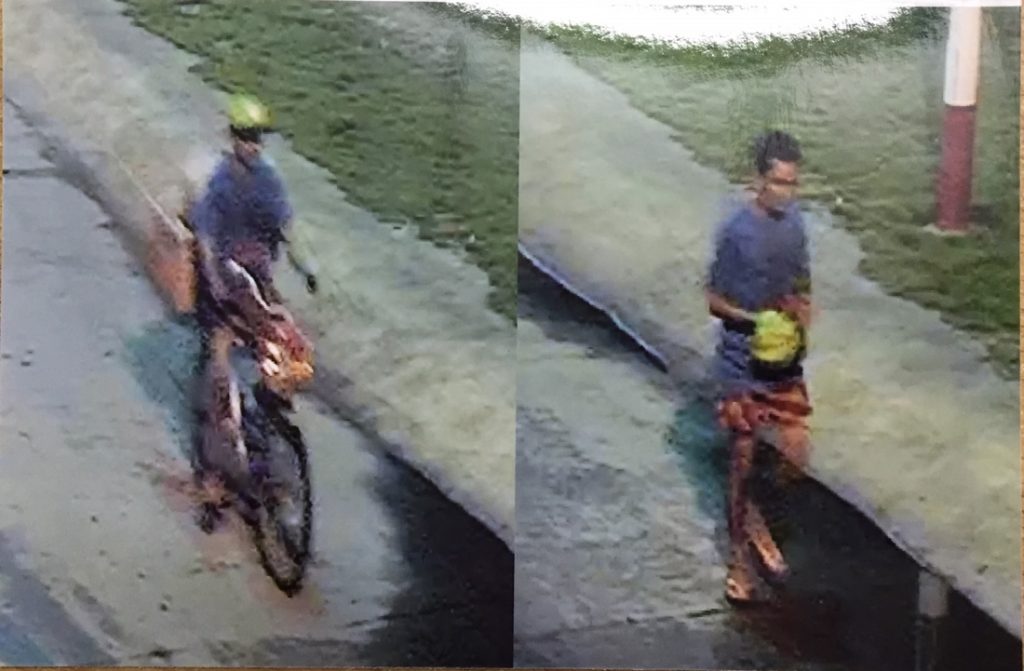
Evidence includes witness testimony and security camera footage in which Bung was identified as the most likely perpetrator, deputy national police chief Chalermkiat Sriworakhan said in a phone interview. However police were still waiting for DNA test results to confirm whether Bung was the killer, he added.

“We have to look at DNA results. Once we have the blood test results, we can close this case,” Gen. Chalermkiat said. “Right now, eyewitnesses said they saw Mr. Bung wandering near the crime scene. There is also CCTV footage, it didn’t show anyone else in the area.”

Chalermkiat said DNA results should be available “within this week.”

Killing Spree
The first and second bodies were found Tuesday in the suburban province of Pathum Thani. The third victim was found in the same province two days later, while the fourth was discovered beneath an expressway in Bangkok’s Lat Phrao district on Sunday. A bloody knife was also found next to the body.

A Burmese man named “Jimmy” or “Bung” sits in a police van on Saturday morning shortly after his arrest in Pathum Thani province.

All of the victims, only two of whom were identified, were described by police as homeless drifters who made a living as either scavengers or garbage collectors.

All victims bore similar manners of execution – hands tied behind the back and knife wounds across their bodies – leading police to believe the same killer was responsible for these deaths.

“The acts were committed in a similar manner, the victims were similar and the locations of the crime scenes were similar,” Gen. Sanit, the Bangkok police chief, said in a Channel 3 interview.

Deputy police commissioner Chalermkiat said Bung is the only suspect so far.

Doctors have ruled the fourth victim died either Thursday or Friday, Chalermkiat added, before Bung was arrested.

A homeless man found dead Thursday in Pathum Thani province.
Police say this Oct. 4 security camera footage shows Bung in the area where two homeless people were killed that day in Pathum Thani province.
Advertisement

Hot News

LATEST NEWS

Bangkok
overcast clouds
31.8 ° C
33.3 °
30 °
76 %
4.5kmh
100 %
Sun
32 °
Mon
36 °
Tue
38 °
Wed
35 °
Thu
35 °