





























27.7 C
Bangkok
Thursday, July 2, 2026
Home Blog Page 2630

Hun Sen Regime Takes Opposition to Court

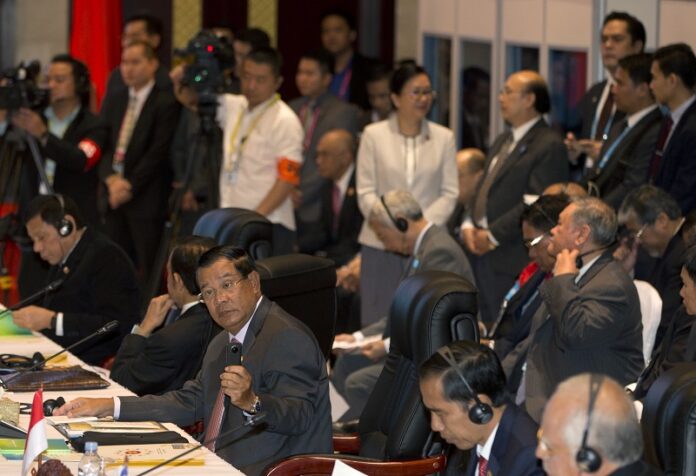
Cambodia's Prime Minister Hun Sen, left takes photos during 19th ASEAN-China summit, a parallel summit in the ongoing 28th and 29th ASEAN Summits and other related summits on Wednesday at the National Convention Center in Vientiane, Laos. Photo: Gemunu Amarasinghe / Associated Press

PHNOM PENH — Cambodia’s government and its opposition faced off in court and on the streets Friday as political tensions around challenges to Prime Minister Hun Sen’s long-standing autocratic rule show no signs of easing.

The latest flash point is a case in the Phnom Penh Municipal Court against Kem Sokha, deputy leader of the Cambodia National Rescue Party, who could be sentenced to six months in prison if found guilty of ignoring a summons. He has said he won’t attend the session that started Friday morning as hundreds of riot police gathered in front of the court and in front of the opposition headquarters.

The case is one of several hanging over leaders of the opposition in what is generally seen as an effort to disrupt their organizing efforts ahead of local elections next June. The next general election is not until the middle of 2018, but holding power at the local level is an advantage when the national polls are held.

A statement issued this week by the U.N. High Commissioner for Human Rights expressed concern “about the escalating atmosphere of intimidation of opposition politicians, their supporters, civil society, and peaceful demonstrators in Cambodia.”

It noted “a host of legal charges” faced by Kem Sokha and 29 other opposition supporters.

It said 14 of them had been given heavy prison sentences despite raise serious concerns about the fairness of the proceedings. “We urge the authorities to adhere strictly to international fair trial standards during the criminal proceedings.”

One victim of the legal assault on the opposition has been charismatic opposition leader Sam Rainsy, who did not return from a trip abroad last November when an old conviction for defamation was restored and his parliamentary immunity was stripped by the government’s legislative majority. It had been generally assumed that the conviction, carrying a two-year prison sentence, had been lifted by a 2013 pardon which allowed Sam Rainsy to return from a previous period of self-exile. He also faces a stack of separate charges that could put him away for 17 years.

Activists and non-governmental organizations, which are generally critical of the government, have come in for similar kinds of legal pressures. Physical force has also been applied. Two opposition lawmakers were beaten up by a pro-government mob last year, and the murder of a prominent social critic, Kem Ley in July, allegedly by a man to whom he owed money, is widely regarded with suspicion.

Kem Sokha has been holed up in his party’s headquarters for several months to avoid arrest, protected by a crowd of supporters. Opposition spokesman Yim Sovann said he will not appear at Friday’s trial because the charges against him are politically motivated and the lifting of his parliamentary immunity was illegal.

The opposition has called on its followers to turn out to protest. It has strong support in the capital and street demonstrations have traditionally been an effective form of push-back. But recent efforts to take to the streets have been thwarted by a government show of force.

Hun Sen has been Cambodia’s leader for three decades. But in a general election in 2013, it seemed his grip on power was shaken when the Cambodia National Rescue Party mounted a strong challenge, winning 55 seats in the National Assembly and leaving Hun Sen’s Cambodian People’s Party with 68. The opposition claimed they had been cheated, and staged a boycott of parliament. Seeking to shore up his legitimacy, Hun Sen reached a political truce with them in 2014, making some minor concessions over electoral and parliamentary procedure.

But relations between the government and the opposition deteriorated last year after the opposition tried to exploit a volatile issue by accusing neighboring Vietnam, with which Hun Sen’s government maintains good relations, of land encroachment. The move proved politically popular, and the government reacted by stepping up intimidation of the opposition party in the courts, which are seen as being under its influence.

Hun Sen’s party was often accused of using violence or the threat of violence against opponents, but in recent years has stalked its foes mostly in the courts. The case against Kem Sokha, involving allegations of illicit love affairs, is an elaborate one.

It began with recordings of intimate phone calls posted anonymously on the internet, and has resulted in a series of charges and counter-charges that included an alleged paramour of Kem Sokha being charged with prostitution.

Story: Sopheng Cheang

Advertisement

Car Drives into EmQuartier’s Hi-So Food Court

BANGKOK — A woman said she was having a dinner last night in the food court of an upscale shopping mall when she heard the sound of breaking glass and saw a Honda drive in.

At around 9:30pm Thursday, a car smashed into EmQuartier’s basement level food zone from the car park.

No one was injured, according to Pol. Lt. Col. Somsak Mongkolkunakorn of Thonglor police.

According to Somsak, the 30-year-old driver told police the throttle was out of control. The driver has agreed to pay compensation for the damage, Somsak said. Police are investigating the cause of the accident.

Advertisement

Murdered Expat Film Noir Makes Stage Debut

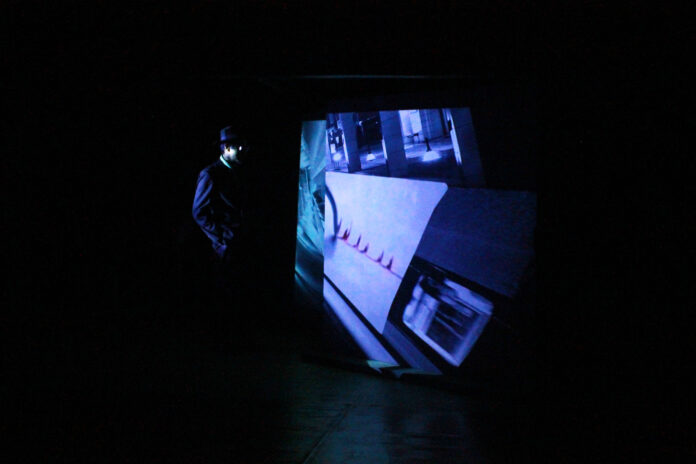
A still from “Dans Le Noir” press premiere on September 6, 2016 at Thong Lor Art Space. Photo: Nutpajee Praparat / Courtesy

BANGKOK — In 1986, a Thai-American student’s body was found east of Bangkok in a case that would spawn tawdry headlines about her love life and wrongful convictions of innocent men.

A true crime story taking inspiration from Sherry Ann Duncan’s murder takes the stage Friday in a film-noir stage play at Thong Lor Art Space that and film noir, a prolific dramatist stages a detective performance launching Friday.

“Dans Le Noir” is the story of three strangers who get wrapped in the mysterious murder of a German expat in Bangkok. One, a young waiter, becomes the prime suspect after discovering the dead body. Another is the detective who was the German’s former lover. Rounding out the cast is an actress who has to take the role of the murdered expat in a film dramatization.

“Dans Le Noir” brings cinema onto the stage. Visual artist Chulayarnnon Siriphol is in charge of a motion picture which provides narration of the past in parallel with the present story told by the actors’ performances.

After 30 years in the world of  theatre and 50 productions under his name, director Damkerng Thitapiyasak was inspired by the mystic nature of film noir and the infamous murder case of 1980s that leads to the imprisonment of scapegoats in his latest detective piece. Starring in his work are Pramote Sangsorn, Kwankaew Kongnisai AKA Lukkaew The Voice and Wisarut Himmarut.

“Dans le Noir” is part of the “First Scene With…” project, which hosts talks by artists, writers, directors, musicians and celebrities from various fields after each show, allowing the audience to broaden their artistic and cultural horizons. The talk schedule can be found online.

The ticket price is 590 baht. A 100 baht discount promotion is offered to those who pay in advance, while students can purchase tickets at 440 baht through advanced payment. Reservations can be made via the Thong Lor Art Space Facebook page, through Line ID @thonglorartspace, or by calling 095-924-4555.

The play is in Thai with English surtitles and runs at 8pm on Friday and Saturday while the Sunday show is at 4pm. Performed until Oct. 9, it will be hosted at the Thong Lor Art Space, which is a five-minute walk from BTS Thong Lo Station’s Exit 3.

Advertisement

Flight Attendant Kowtows on Floor to Irate Passenger

Photo: Matichon

BANGKOK — Flight attendants are trained to handle all kind of emergency situations, but being forced to grovel at the feet of disgruntled passengers is probably not on the list.

That’s what a Thai AirAsia hostess had to do after an Aug. 26 flight to appease a woman who believed the attendant had insulted her autistic daughter. Online accounts of the Sept. 2 incident said she was forced to prostrate herself by airline management; the company said it was a voluntary act of contrition.

Following outrage on social media, where many expressed sympathy to the flight attendant, and a meeting in Bangkok called by airline CEO Tony Fernandes, the company admitted that the kowtowing happened but insisted the staff member did so voluntarily.

“The situation on the day of the incident could only be described as highly sensitive and emotional for all involved,” Tassapon Bijleveld, an executive of AirAsia’s Thailand office, said in a statement Thursday. “But we maintain that our executives never obligated our staff to perform an act of prostration.”

Fernandes, who was in Bangkok for an unrelated media event, said online he’s met with Thai AirAsia employees to talk about the issue.

“Good session with Thai staff,” Fernandes wrote on Facebook earlier Thursday. “An investigation will be done and action taken that. I met cabin crew and was good. Tomorrow I go to Hat Yai to meet her parents . My fault. I’m the leader. We need better procedures on both sides. And we will get better.”

It began when someone started a thread on the popular Pantip forum Tuesday asking if rumors were true that an AirAsia employee had been forced to graab, or prostrate themselves. Soon people identifying themselves as friends or associates of the flight attendant, identified as chief purser Awatsara, flooded the thread with comments.

They allege that a passenger named Jumpoon Chavasiri felt Awatasara slighted her autistic daughter by asking if she needed any special attention. Tension between Awatasara and Jumpoon reportedly grew throughout the Phuket to Bangkok flight, commentators said, partly because the attendant didn’t serve Jumpoon.

After the flight landed, Jumpoon filed complaints to AirAsia’s office in Bangkok, which she later wrote about publicly on Facebook.

“Mr. Tassapon, no matter where you extend AirAsia operations to, you won’t have any success as long as you still have a staff member with a rotten heart named Awatsara from flight FD3006,” Jumpoon wrote in one post.

Both Awatsara and Jumpoon appeared to have deactivated their Facebook accounts by Thursday.

Voluntary Humility or Forced Humiliation?
But it was happened next that some found alarming. Someone claiming to be Awatsara’s colleague wrote that airline managers summoned the purser to a meeting with Jumpoon and her daughter where she was ordered her to graab, or kowtow, three times in apology.

Graab is a display of the utmost humility in Thai culture, especially if done in front of someone’s feet.

The allegations drew outrage from many online who feel that the air hostess was unfairly punished and humiliated, sparking a hashtag called #AirGraab.

Photo from Wai Thai Dot Com website

“Whether the air [hostess] made a small or big offense, she was not supposed to be forced to graab. If you’re upset at her, you should file a formal complaint. This is 2016 already, not an era when slaves were kept. Have you watched too much period drama?” tweeted Teddy_B08.

Another user, Didixxii, tweeted, “Let me say right here that I would tell my kids, relatives and anyone I know not to apply for a job here. Forcing its employee to graab? If she did something wrong, just punish her. If she did something wrong big time, just fire her.”

But in an interview with the media on Wednesday, CEO Tassapon said the online crowd got it wrong: Awatsara only performed graab once, not thrice, and no one forced her to do so.

“Our crew member graab in apology to the passenger once, and they also took a photo together, because everything ended well. They understood each other,” Tassapon said Wednesday. “I want this matter to be over. I don’t want people to keep escalating this, because everything is already over.”

In a follow-up statement released Thursday, Tassapon said the company would adjust its policies to have the Customer Relations Department handle all passenger complaints in the future to avoid a similar incident. He also apologized to Awatsara and her family for what happened.

“We affirm that we highly value the feelings of our employees and are disheartened by what has happened to the staff member in question … and both Mr. Tony [Fernandes] and I will today be meeting with the staff member and the staff member’s family to extend our genuine apologies,” Tassapon said.

Advertisement

Photo Essay: Frustrated Humans Face Off With Hungry Elephants

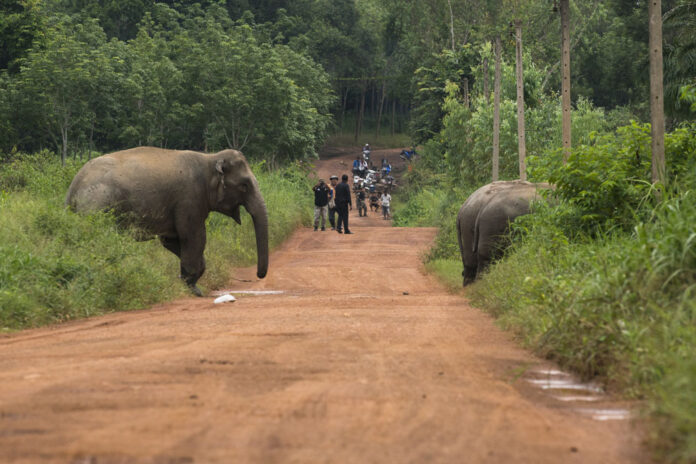
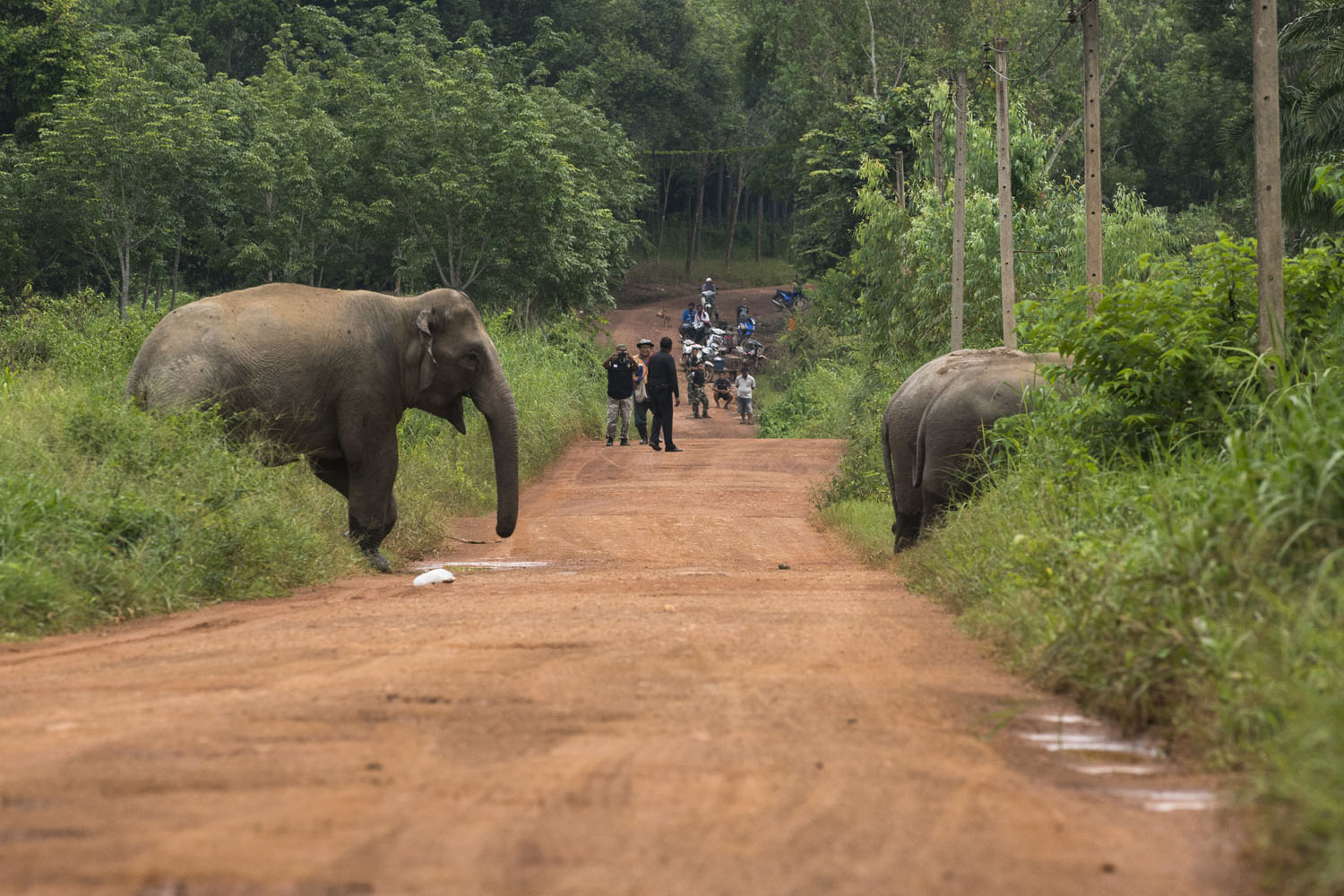
Police and wildlife officials hold back traffic while approximately 40 elephants emerge from the jungle in 2016 in Chanthaburi province’s Kaeng Hang Meao district.

CHANTHABURI — Cherry bombs and angry bees are the tools of human resistance in a growing and sometimes deadly conflict with wild elephants in eastern Thailand.

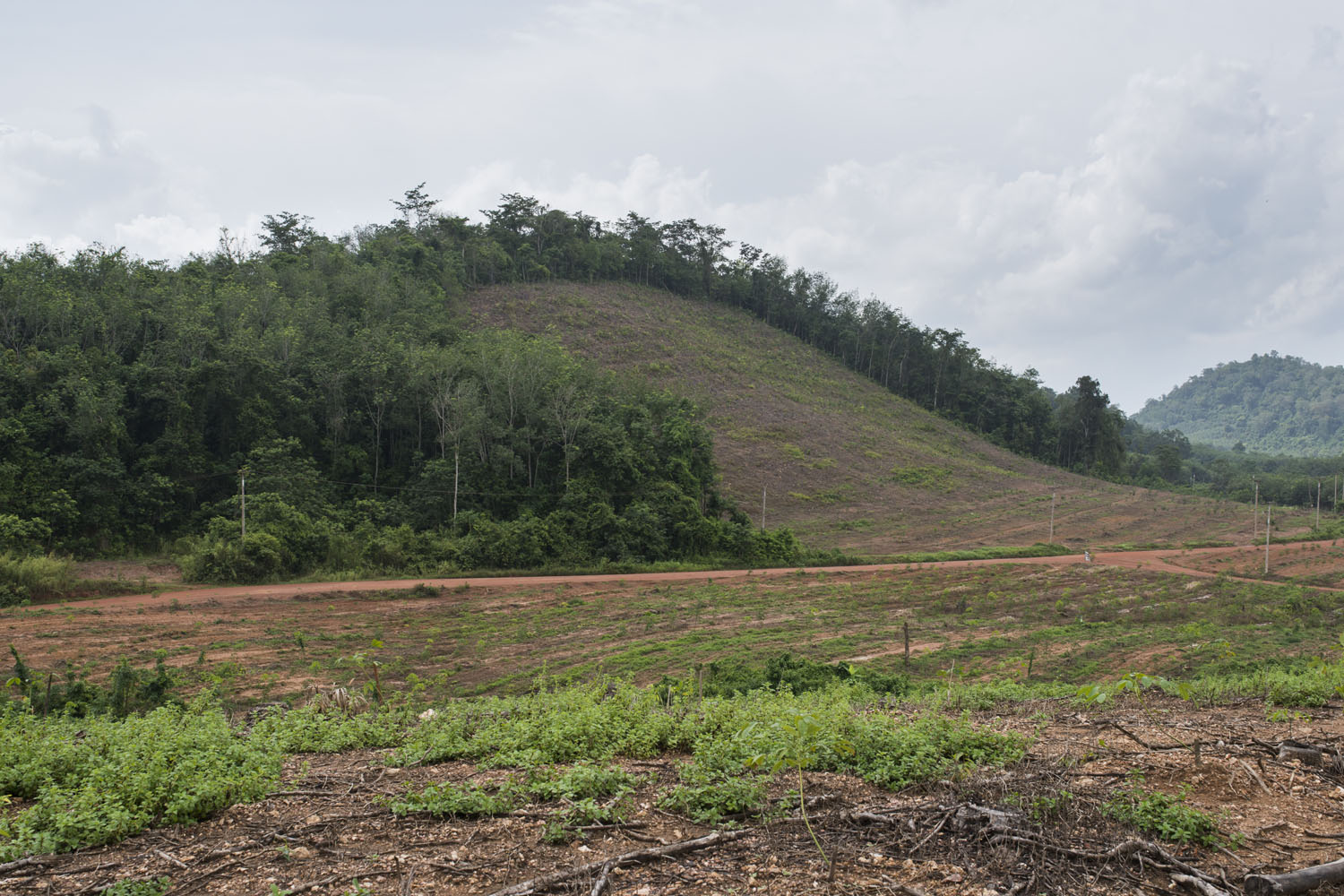
In the Kaeng Hang Meao district of Chanthaburi province – population 36,000 – humans are having more frequent run-ins with wild Asian elephants as development creeps further into territory that was once safe ground for the approximately 150 animals.

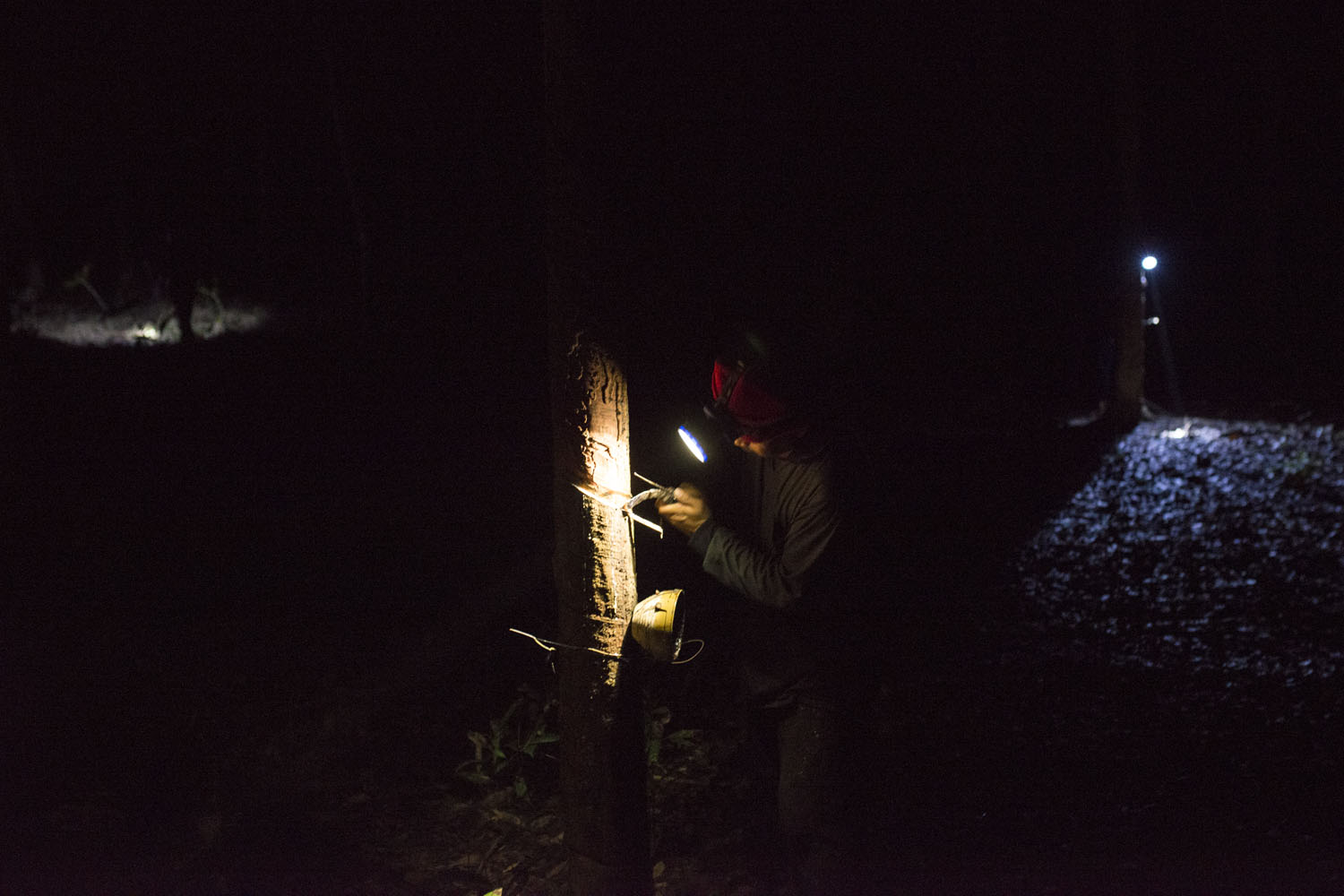
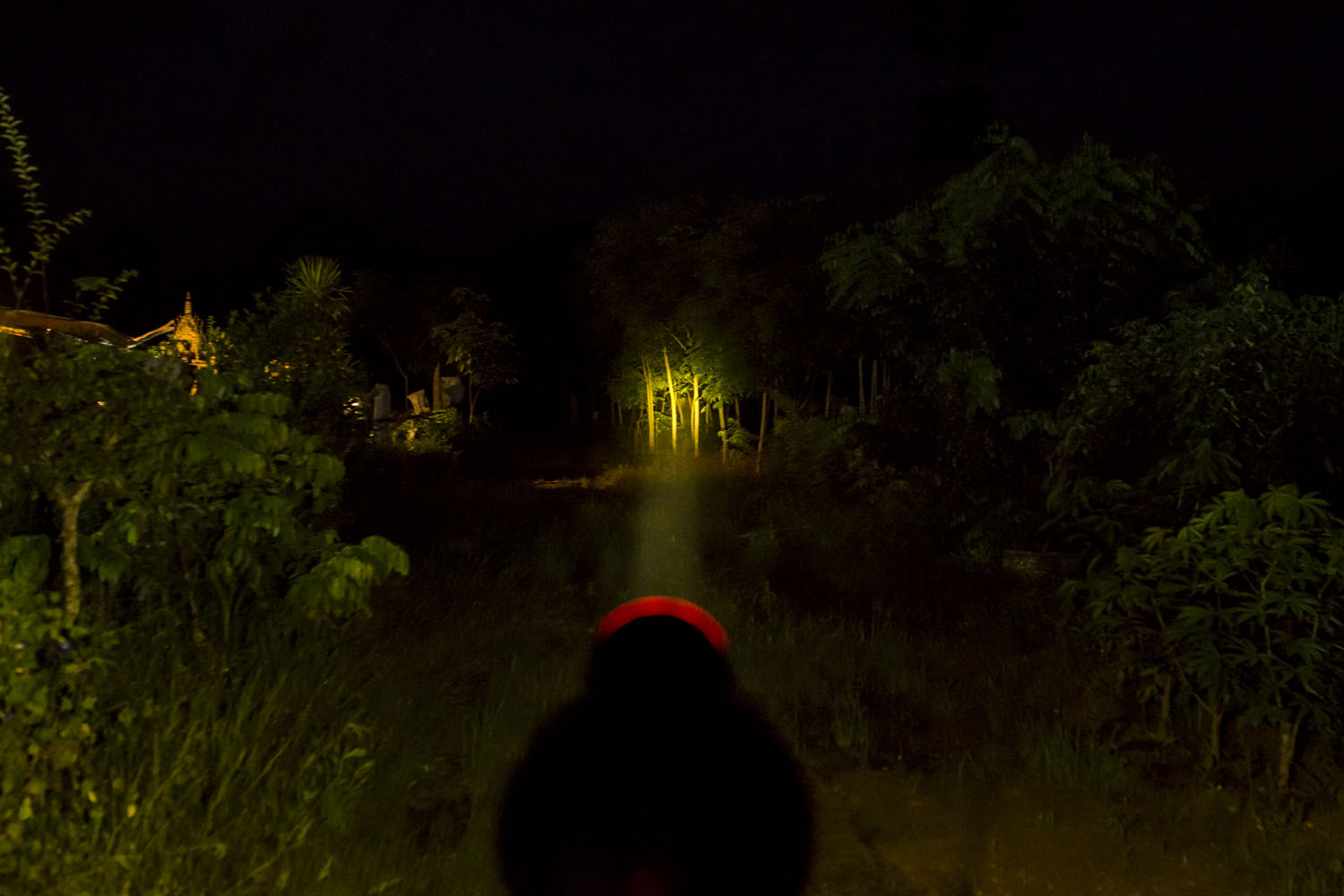
The majority of people here are rubber farmers, and recent development has meant clearing more land. Due to high temperatures during the day, the elephants are most active from early evening to dawn. That makes it particularly dangerous for plantation workers who go out to harvest at night when lower temperatures make for more fluid latex. Three people here have been killed this year. Six died in 2015.

In an effort to reduce the danger, parks and wildlife officials and volunteers regularly patrol and monitor areas where encounters are likely, such as the corridors regularly used by elephants in their daily wanderings. Their search for food brings them into areas adjacent to community members’ homes and farmlands.

People say the increasing number of animals has made their lives more difficult, as they don’t feel safe going outside after dark. That prevents them from keeping the elephants out of their crops, some of which the pachyderms are happy to make a meal of. In response, they’re experimenting with replacing crude methods such as large caltrops made by hammering large nails through wood with less harmful methods.

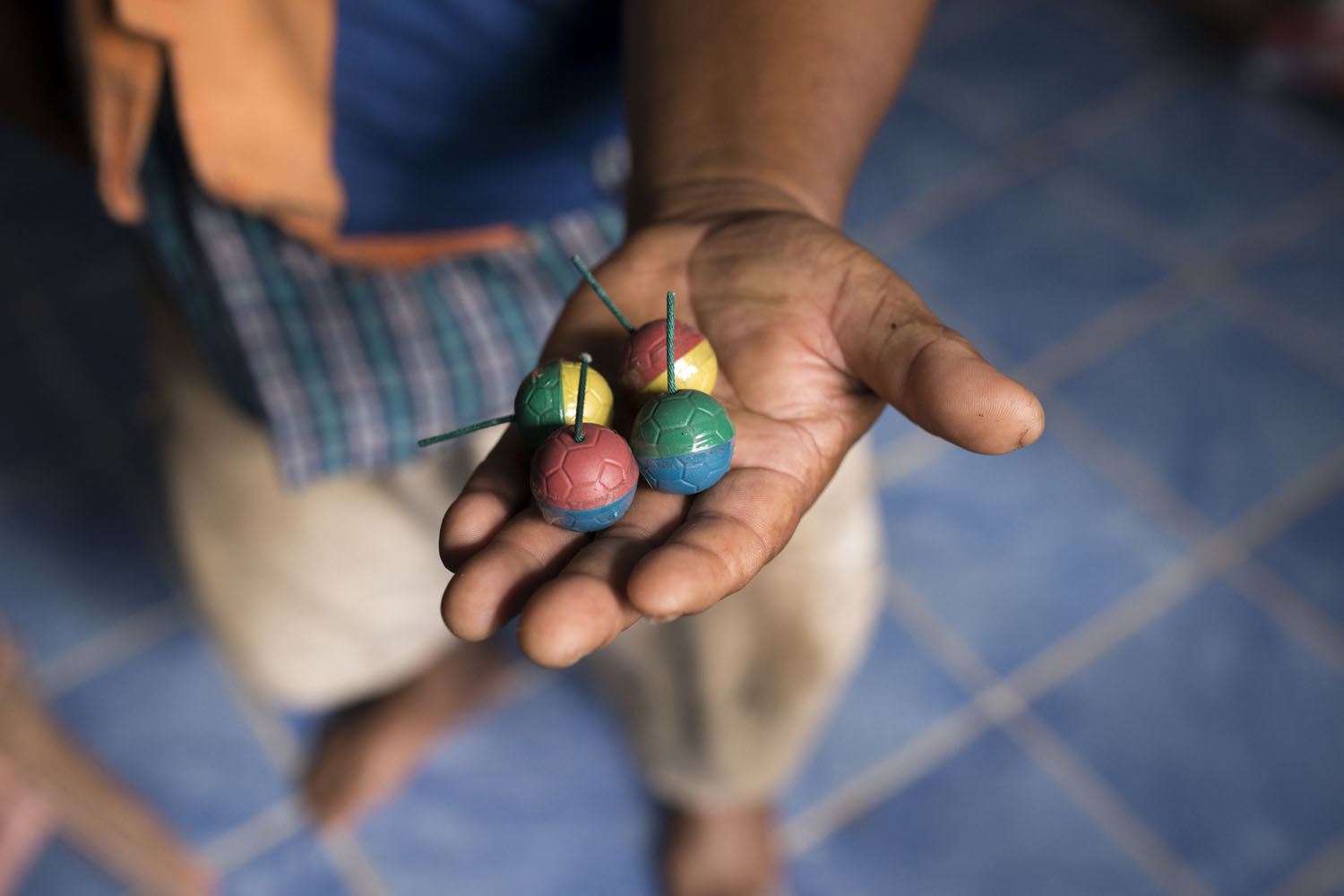
For many, the only elephant deterrent is going out at night to bang pots and pans. Others use small, but loud firecrackers to drive off the elephants if they find themselves in a dangerous situation.

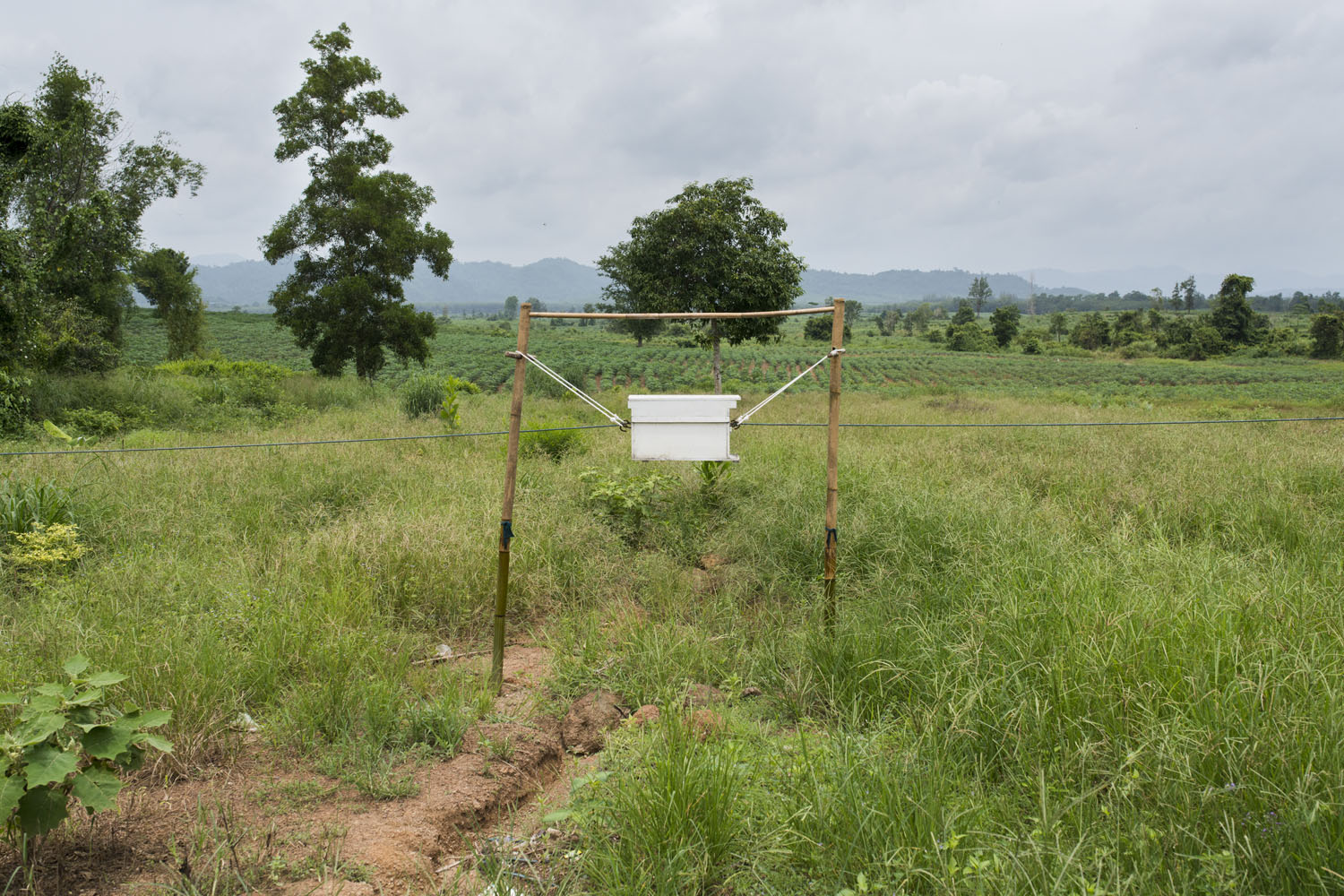
One notable method imported from use in Africa has been linking beehives with ropes to form a fence of irritable bees ready to sting if the rope is disturbed.

Scroll through and click images to expand them in photo gallery or scroll down to see them all in-line.

A man steps over puddles in earth pitted by elephant feet near a community in the Kaeng Hang Meao district of Chanthaburi province in eastern Thailand.
Some locals have begun using a new method to keep the elephants away from their homes: ‘fences’ made by connecting a number of suspended beehives with ropes. When the elephants wander into the ropes, the bees are upset and emerge from their hives. Experience has shown elephants are quite afraid of bees, and it is thought this method will help keep them out of residential and agricultural areas and out of conflict with humans and possible harm.
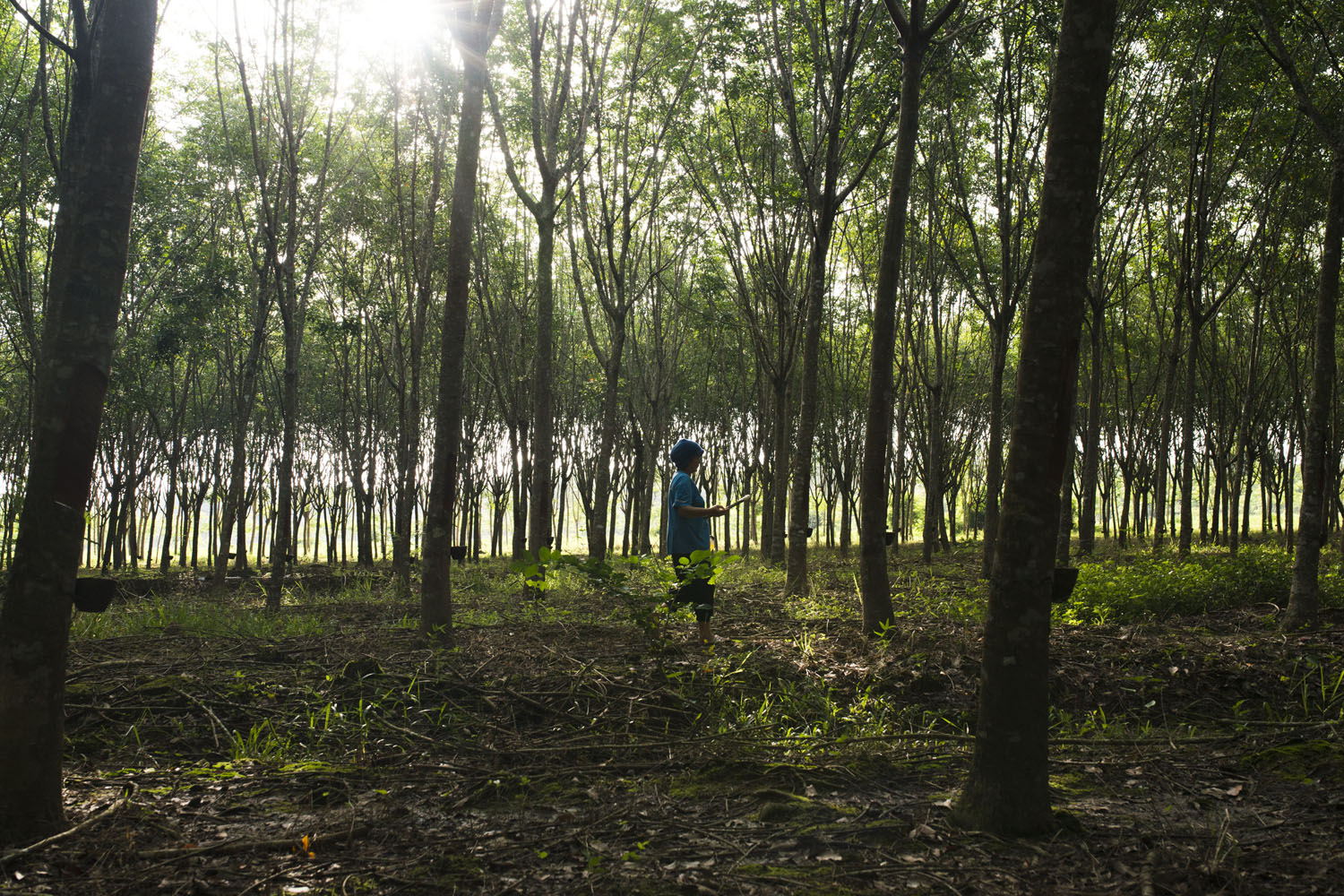
In rubber harvesting, the latex is more easily drawn from trees in the cooler hours of the early morning. This means workers must venture out in darkness, which puts them at danger as those are also the hours the elephants are most active.
A wildlife volunteer displays the small but extremely loud fireworks used to scare off elephants in the event of an encounter. Many villagers in Kaeng Hang Meao choose instead to use pots and pans to disperse the animals.
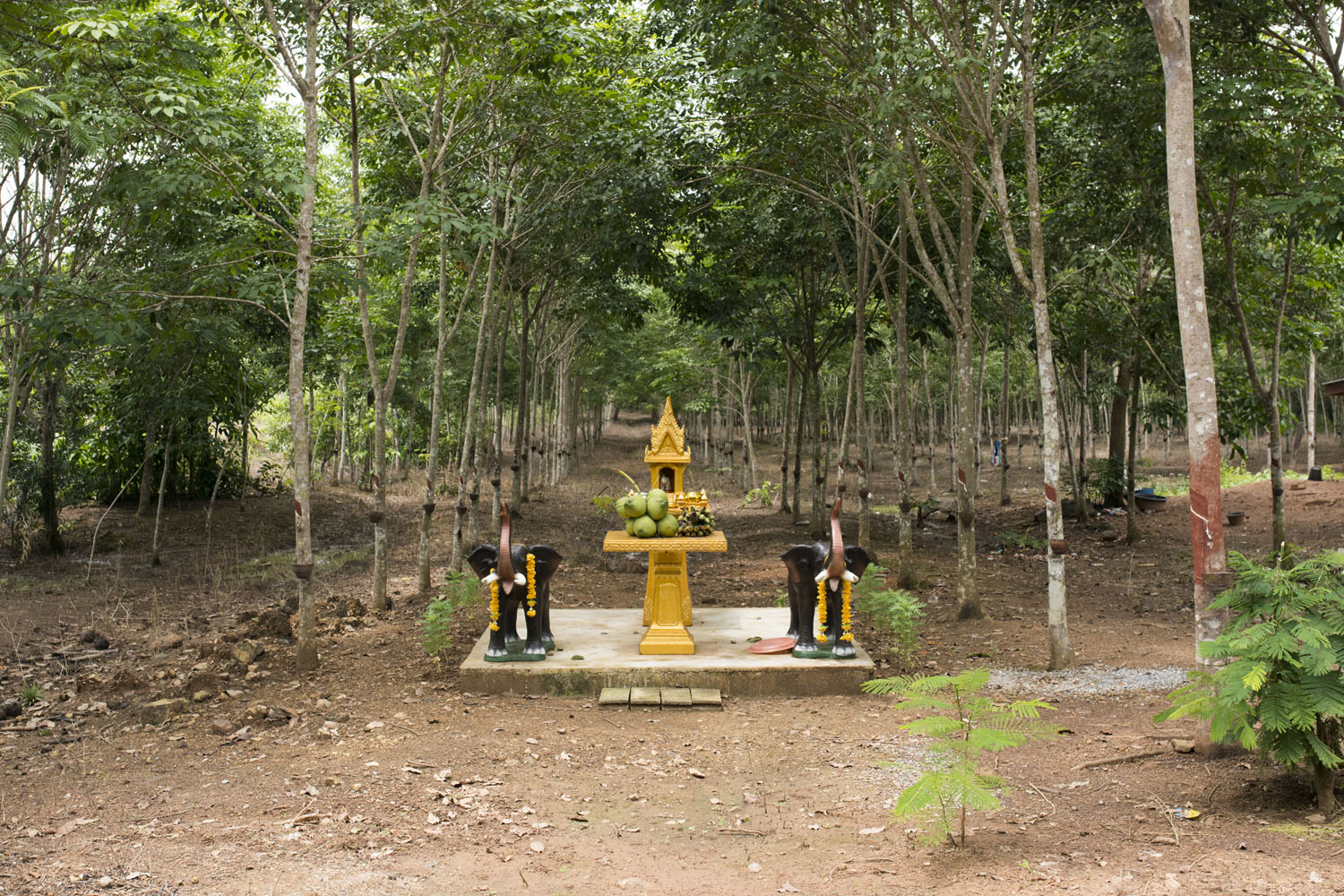
Elephants are highly respected and celebrated in Thailand, appearing on royal and government seals and emblems. Asian elephants such as those found here are considered endangered by the International Union for the Conservation of Nature. Together these factors make finding a solution to deal with the increasing number of elephants and the danger they pose a difficult situation.
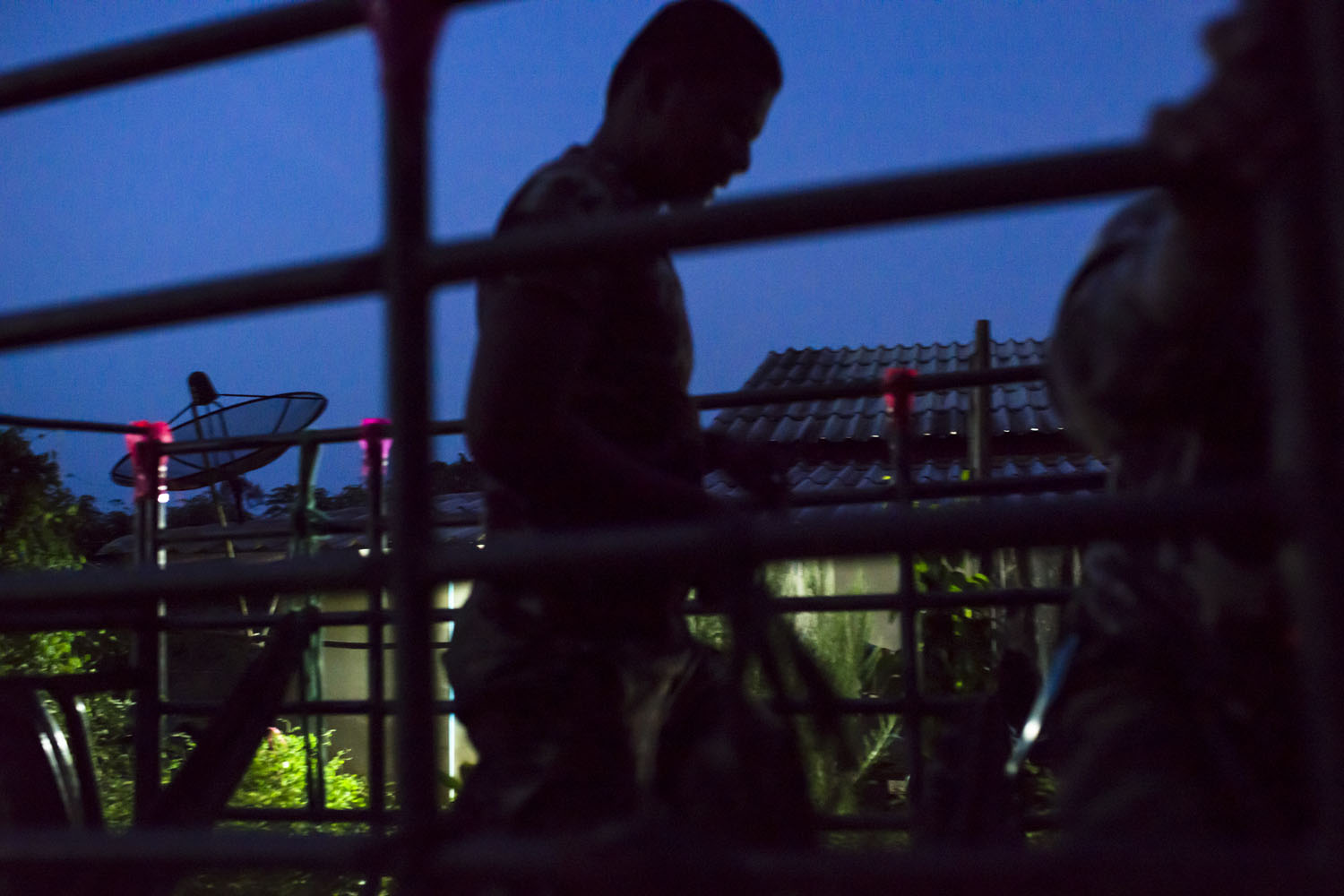
Young wildlife volunteers arrive at an area on the outskirts of town to stand vigil in case elephants approach. Various teams are positioned throughout the district and stay in radio contact with one another.
A wildlife official scans the forest on the edge of town after being alerted that wild elephants may be in the area. During the cooler nighttime hours, the elephants are more active and emerge from the dense jungle to look for food and water.
It is estimated that some 150 elephants live in the area. Meanwhile more land is being cleared for development which reduces the habitable space for the animals and making it more likely encounters between elephants and people will increase.
Police and wildlife officials hold back traffic while approximately 40 elephants emerge from the jungle in the early hours of a recent evening. It is thought approximately 150 elephants live in and around Chanthaburi province’s Kaeng Hang Meao district, an area home to about 36,000 human residents.
A rubber farmer tends her crop of trees in the early morning. The vast majority of people here own rubber plantations and need to harvest the trees’ latex at a time when elephants are most active.
Advertisement

Men on Wheels: Gearheads Open Bangkok’s First Bike Co-Op

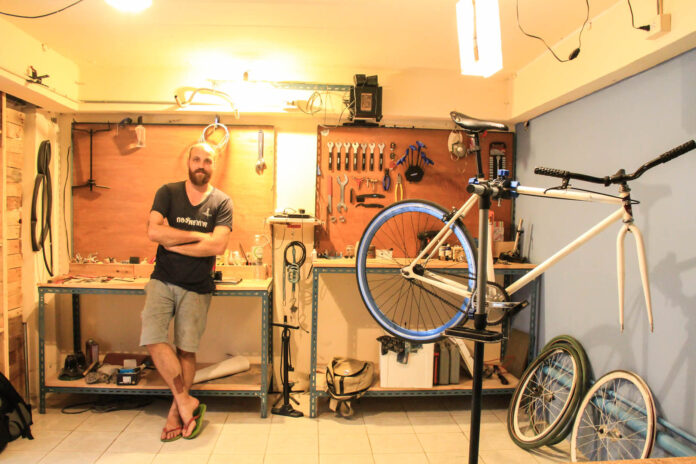
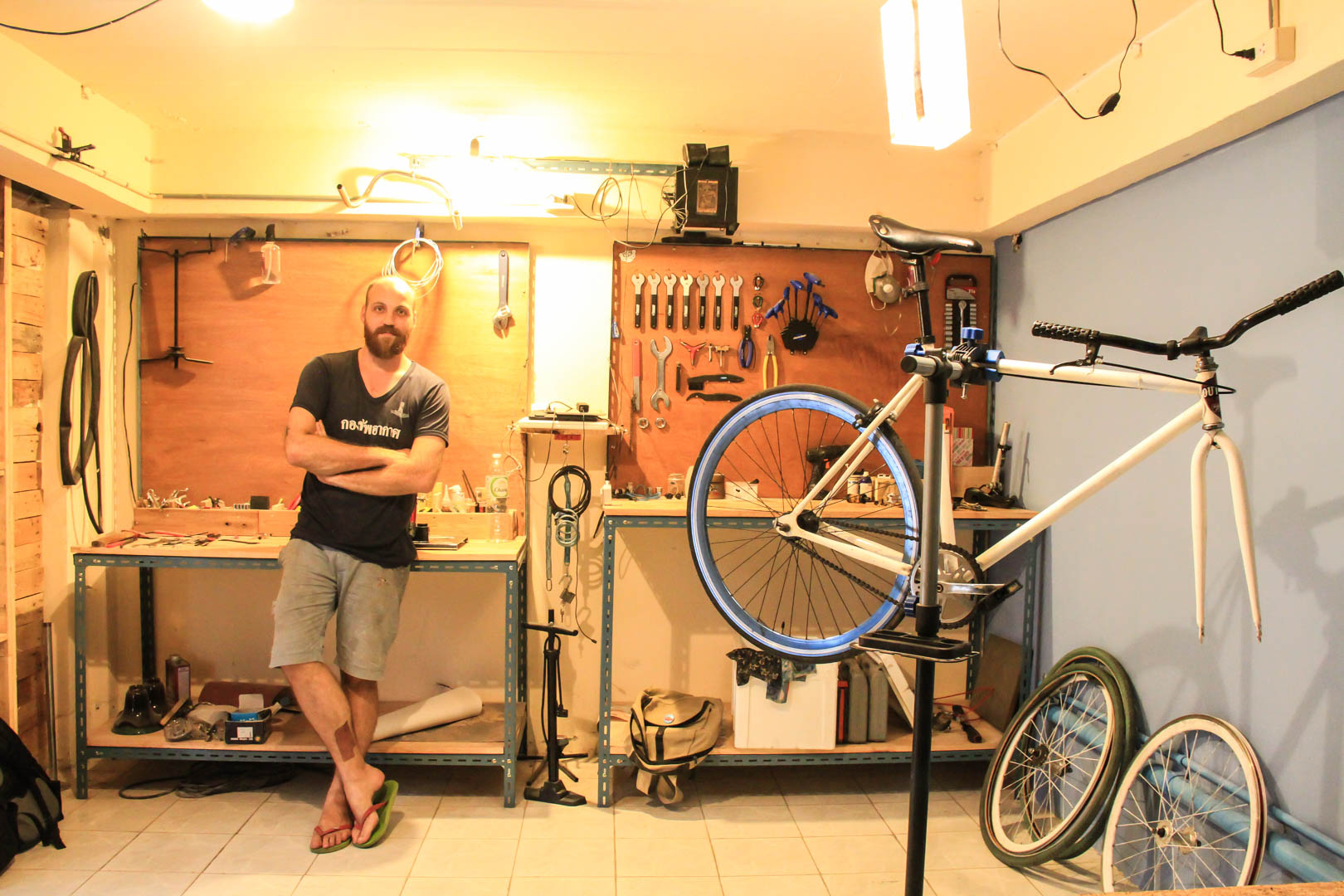
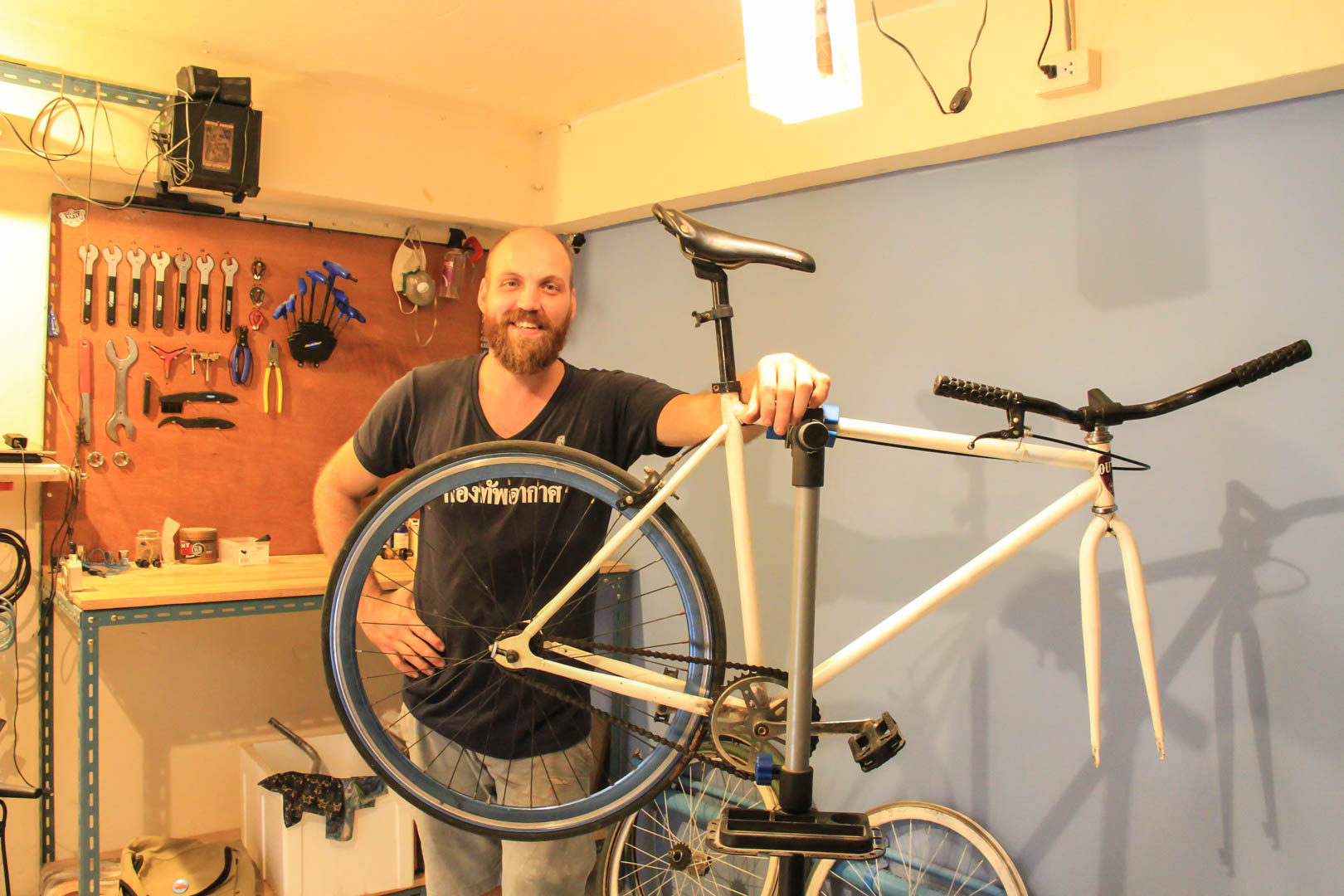
Alexander Martin with his Don Kuson Community Bike Shop

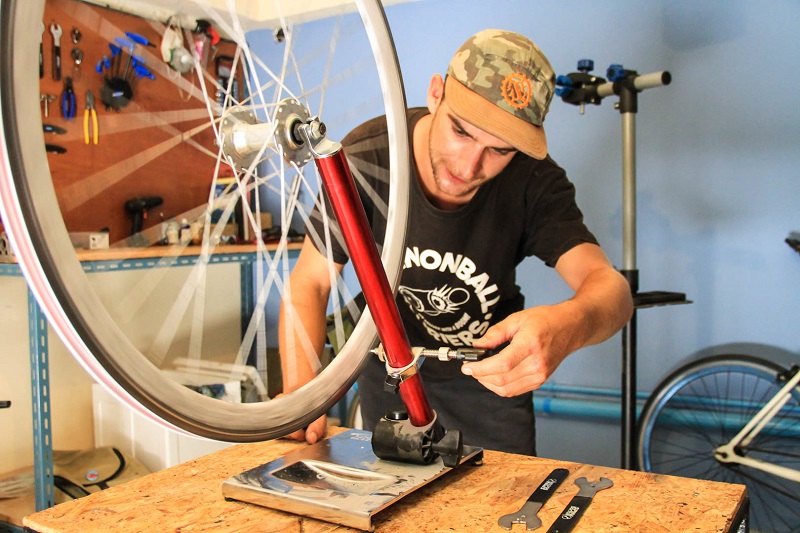
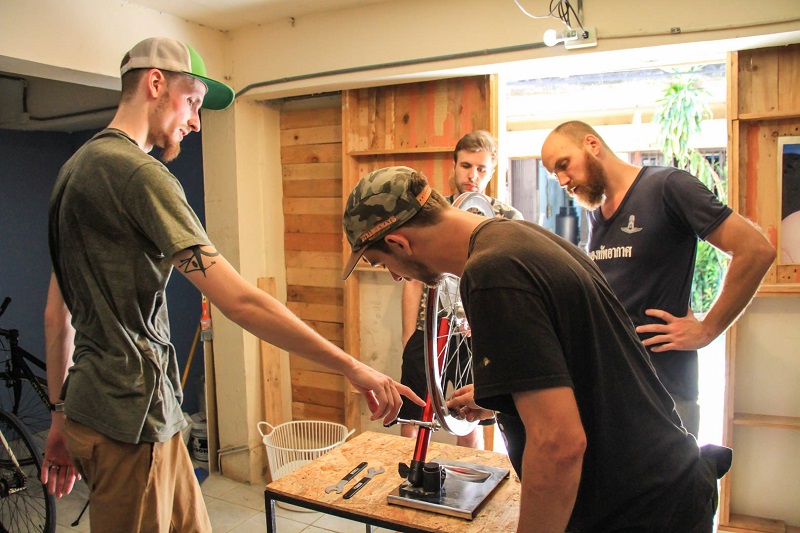
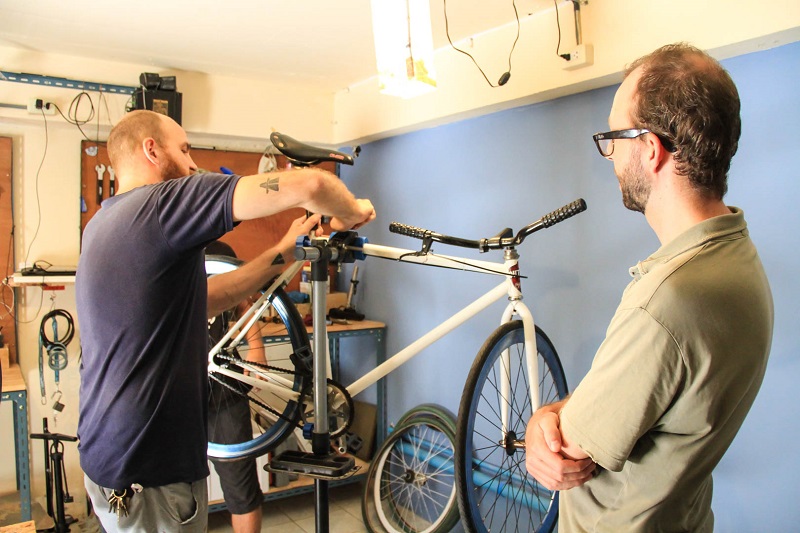
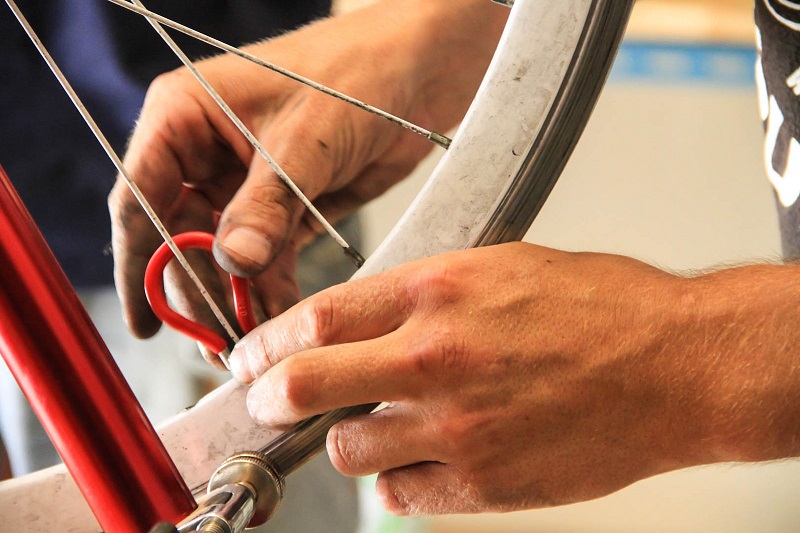
BANGKOK — On a recent Tuesday afternoon, a small group of expat bikers showed up at a shophouse down Soi Charoen Krung 57 for a serious session of “wheel truing.”

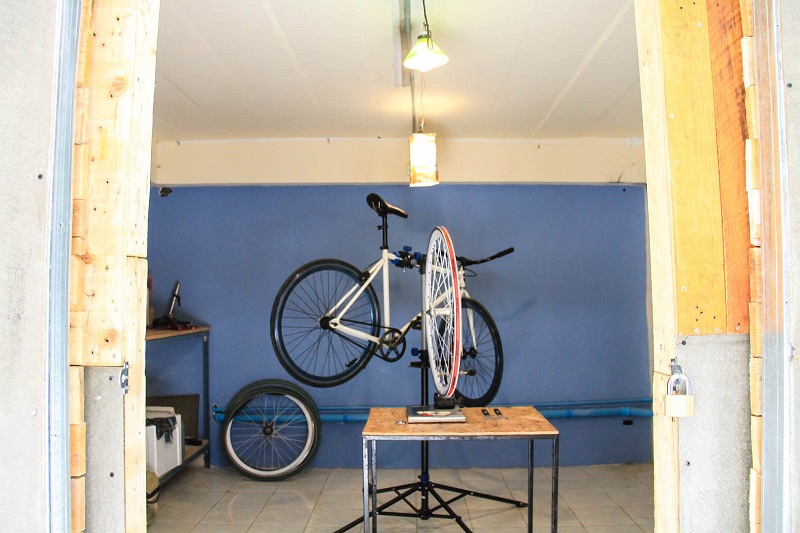
The Don Kuson Community Bike Shop is not exactly a shop selling pedal-powered, two-wheel vehicles. In fact, the space located down a small alley in Charoen Krung 57, locally called Soi Don Kuson, is more like a place to hang out, learn how to fix things and steep in bike geek lore, like the importance of tuning one’s spokes, aka truing.

It’s what they call a bike cooperative, and it’s run by a group of avid farang cyclists.

Alexander Martin had just left the U.S. Navy when he came to Thailand about three years ago. Although he found Bangkok an ideal place to pursue a Bachelor’s degree, the Nebraska native found very little of the bike shop culture he enjoyed.

“When I first moved to Bangkok, getting a bicycle was my first priority,” Martin said. “But my choices seemed to be either a cheap Turbo from a big-block store or a nice new bike from one of the boutique bike shops.”

Martin ended up digging deeper and eventually got a bike he liked from what was the Khlong Thom night market in Chinatown.

Seeing other voids in the city’s cycling community from limited access to bike gears to absence of space for the local bikers, Martin decided to fill the four shophouses he and his friends rented together with an idea of building the first bike co-op in town, modeling it after a place he used to volunteer at in Seattle, Washington.

“The Bikery was the coolest bike shop I had been to. The fact that it’s a free place to hang out, and it builds bikes for other people to buy makes it a worthy place to be,” Martin said. “Since then, I look for a co-op whenever I go to a new city, even if I don’t need a bike, I just want to see what they’re up to.”

Martin’s sought crowdfunding for his project earlier this year through Generosity.

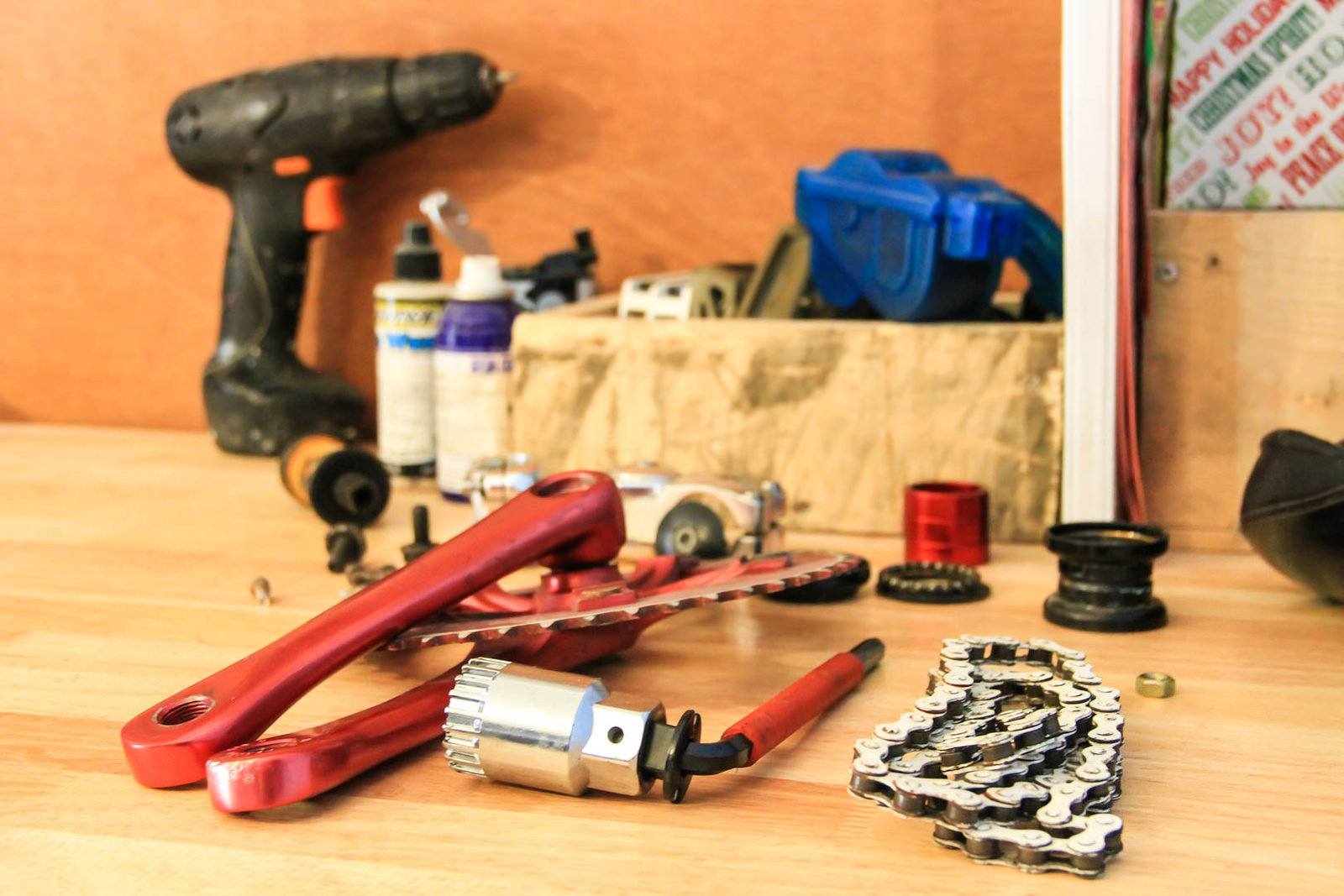
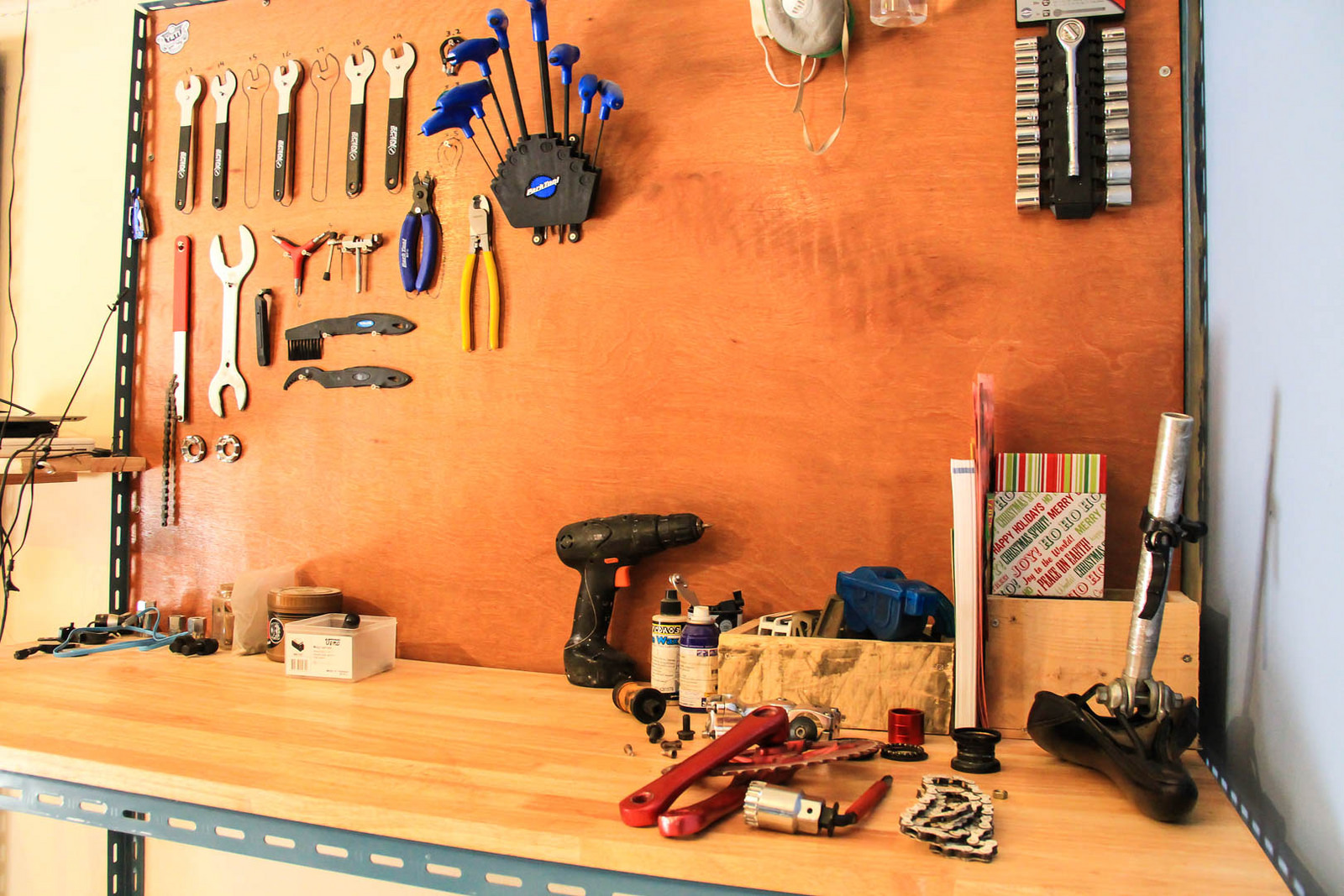
Some months passed with just a little over USD$1,000 (35,000 baht) raised in the campaign, and the shop finally got off to a small start. It’s got basic tools, a workbench, repair stand, some donated bicycles and such. The plan is to expand it as an ongoing project, bit by bit.

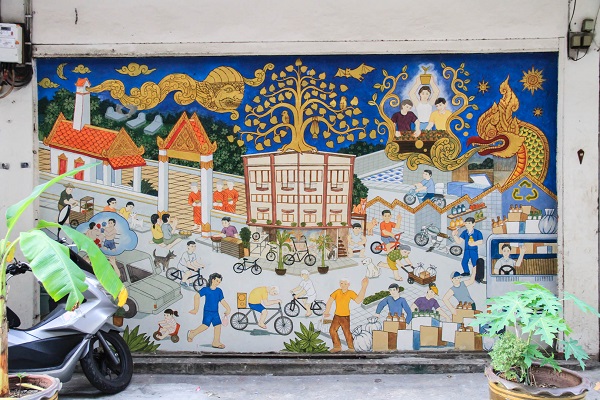
Although sitting in a small soi, the shop is quite recognizable since a friend named Ting painted a mural outside showing local scenes of life from stray furry dogs to an ice delivery man.

Mural painting by ‘Ting’ in front of the Don Kuson Community Bike Shop

Apart from hosting workshops on things like truing and maintenance, Martin said the shop also helps provide bike tools and a space to fix them up. How does this work? Martin said all of the transactions are supported by donation.

“[We] aren’t a for-profit venture,” he said. “So [the shop] relies on donations of complete and incomplete bikes, bike parts and tools. It also needs volunteers to man the space and teach workshops.”

Asked what’s next for his shop, the 35-year-old said he plans to cooperate more with Thai bikers to host regular workshops and organize cycling events including night rides.

“I’d like to alternate workshops in English with workshops in Thai,” Martin said. “I think we can have a greater impact if knowledge is transferred in Thai language, at least with people in our neighborhood.”

The Don Kuson Community Bike Shop now opens on Tuesday, Thursday and Sunday. The shophouse-bike cooperative is located on Soi Charoen Krung 57 (Soi Don Kuson), and can be reached by motorbike or a 15-minute walk from BTS Saphan Taksin.

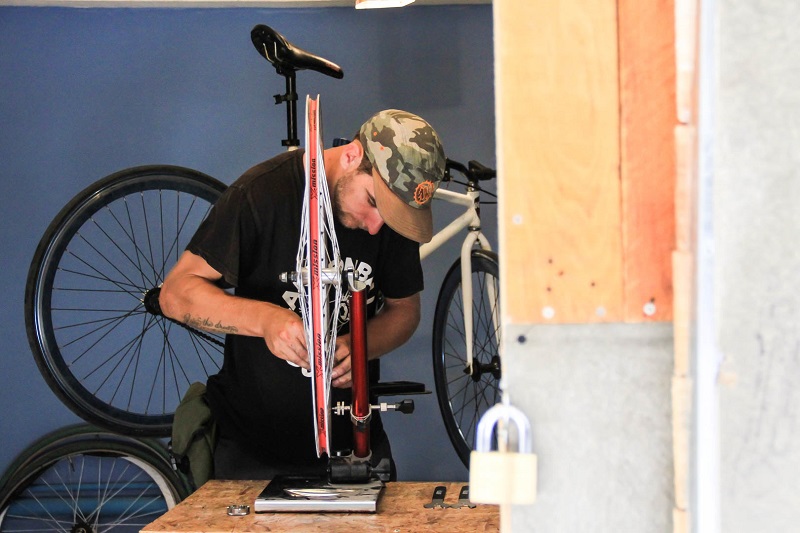
New York bike messenger Bryan Boor showing how to true a bike wheel at Don Kuson Community Bike Shop

28732339103_e22b66dfee_o

28730335094_e4fc1abb8e_o

28732338793_e0b47052dd_h

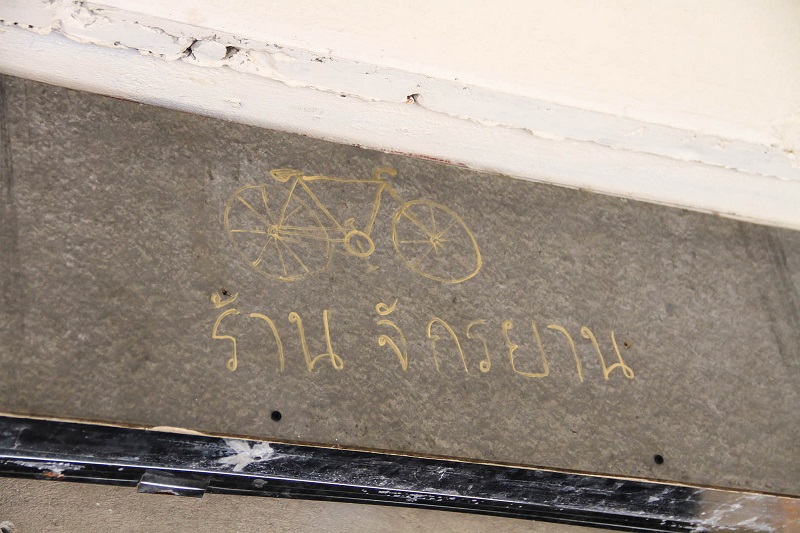
“Bike Shop” wrote in Thai above the shop’s front door

29353298375_88b05d3b53_h

29320024136_b03725f45e_o

29353297985_0e394c2175_h

28732340073_5666a108d2_h

29320023476_3ae69aa4aa_h

29353297775_7379c15947_h

2

Advertisement

Wireless Earphones, Water Resistance and More Define New iPhone

Apple CEO Tim Cook announces the new iPhone 7 on Wednesday during an event to announce new products in San Francisco, United States. Photo: Marcio Jose Sanchez / Associated Press

SAN FRANCISCO, United States — At Apple’s iPhone 7 unveiling in San Francisco on Wednesday, the tech powerhouse revealed a host of new and updated hardware and software, including a new type of headphone jack and souped-up camera. Here’s a rundown of the biggest announcements.

Apple Airpods

As expected, iPhone is removing the standard analog headphone jack and forcing headphones to use its “Lightning” connector, which plugs into the phone’s charging port. The iPhone 7 will come with an adapter so older earphones can still be used.

But Apple is pushing Apple AirPods, which CEO Tim Cook says are a “breakthrough design,” wireless headphones that sync across all Apple devices and respond to touch that can access Siri. The AirPods are shipping in late October and cost $160.

iPhone 7 and 7 Plus

Apple’s new iPhone is getting a faster processor, an updated home button and water and dust protection. Apple says theiPhone 7’s home button is now force sensitive. It will provide “haptic” feedback — that “pushing back” feeling — when you press it, but the button itself doesn’t move. It’s similar to what Apple has done with a trackpad in a slimmer MacBook model last year.

The iPhone 7 will have stereo speakers for the first time, with twice the volume of iPhone 6S speakers. The phone’s battery life is improved, too; Apple estimates that the new iPhones will have one or two hours of additional battery life over last year’s models.

Camera

Other camera improvements include a new flash with four LEDs rather than two for greater brightness. As with previous models, the flash will adjust its color to match ambient light. High-end photographers can get images in RAW format, which allows for more versatile editing, matching what many leading cameras now have.

Phil Schiller, Apple's senior vice president of worldwide marketing, talks about the features on the new iPhone 7 earphone options on Wednesday during an event to announce new products in San Francisco. Photo: Marcio Jose Sanchez / Associated Press
Phil Schiller, Apple’s senior vice president of worldwide marketing, talks about the features on the new iPhone 7 earphone options on Wednesday during an event to announce new products in San Francisco, United States. Photo: Marcio Jose Sanchez / Associated Press

The iPhone 7 Plus will have two lenses to boost the zoom capabilities of the camera. The camera can now zoom in twice as much without losing sharpness. Both cameras take 12 megapixel photos. The two lenses will also sense depth and allow users to blur backgrounds in images, mimicking an effect that typically requires changing the lens aperture in stand-alone cameras. That feature won’t be out until later this year.

Other smartphone makers such as LG and Motorola are also starting to offer models with dual lenses to improve picture quality. The difference is the wide angle on LG G5 has lower resolution with 8 megapixels.

Pricing and Storage

The iPhone 7 will start at $650, the same as the 6S it replaces. The larger Plus model is increasing to $770, instead of $750. They come in silver, gold, rose gold, black and the new jet-black finish. Storage has been doubled, so Apple joins rival phone makers in making the starter model 32 gigabytes, rather than 16 gigabytes before. Apple is doubling storage in higher-priced models, too — to 128 and 256 gigabytes.

The new phones will ship Sept. 16, with orders to start this Friday. Older iPhones will get price reductions, and last year’s models are also getting double the storage.

iOS 10

The latest software update, available on Tuesday, will add more intelligence to Apple services like Maps, Photos, the iPhonekeyboard and Siri, the voice-activated digital assistant. There’s a new Home app to control appliances. In a big change for Apple, the company is also opening Siri and its iMessage service to work with apps created by independent developers.

Apple is also allowing developers to build apps for iMessage, although the options so far appear to mostly involve sending payments or ordering food. It’s also adding bigger emoji and other visual effects for iMessage, including what it calls “Invisible Ink,” which blurs an image in a message until a recipient swipes a finger across the screen. Apple announced many of the features in June.

Apple Watch Series 2

Apple introduced a “swim-proof” watch, the Apple Watch Series 2. The new watch has built-in GPS, a brighter display and faster processor than the previous Apple Watch. There’s also new ceramic watch-face. The price starts at $370. The original model will get a faster processor price cut to $270, down from $300. The updates are coming Sept. 16.

Existing watches can get new operating software on Sept. 13. In addition, there’s a new Apple Watch Nike Plus, a Nike-branded Apple Watch in four colors that’s designed for runners. It is also priced at $369 and is available late October. The Nike version gets a special strap and custom watch faces, though the Nike app will be available for all Apple Watch models. Battery life, which has been a weak spot of the watch, was not mentioned.

Apple is phasing out smartwatch models made with 18-karat gold. The “Series 2” watches will use ceramic instead of gold for the luxury “Edition” version. The ceramic versions will start at $1,250, just a tad cheaper than the gold model, which started at $10,000.

Jeff Williams, Apple's chief operating officer, speaks on Wednesday during an event to announce new products in San Francisco, United States. Photo: Marcio Jose Sanchez / Associated Press
Jeff Williams, Apple’s chief operating officer, speaks on Wednesday during an event to announce new products in San Francisco, United States. Photo: Marcio Jose Sanchez / Associated Press

Pokemon Go

A Pokemon Go app is coming to Apple Watch. The app lets you collect items from Pokestops, hatch eggs and alert you to nearby Pokemon (you still need your phone to catch actual Pokemon). It will be shipping before the end of the year.

New Mario Game

Nintendo debuted a new Super Mario game for iOS called Super Mario Run. It’s the first iOS game featuring Nintendo’s Mario characters. Nintendo has long resisted bringing Mario to mobile phones, relying on it instead to sell its hand-held DS gaming systems. The new game, which can be played one handed, will be released in time for the holidays. The game will have a fixed price which is being kept under wraps for now. The news sent Nintendo shares soaring on Wednesday.

Apple Bay

Apple Pay will come to Japan in October with a new wireless technology called Felica to be included in iPhones and Apple Watches there. Apple Pay will also come to New Zealand in October and Russia in the fall.

In the U.S. and elsewhere, mobile payments use a wireless technology called NFC. A transit feature in Apple Maps will also launch in Japan.

iWork in Real Time

Apple iWork suite of software, including word processing, processing, spreadsheet and presentation programs, will include real-time collaboration features for the first time. It’s something Google and Microsoft already offer in some form. Although Apple’s iWork package allows syncing through iCloud, it’s has been primarily for one person to work on documents at a time. The software is available for iPhones, iPads and Mac computers, with a web version for Windows users.

Advertisement

Latest Suspect in August Attacks Also Linked to Deep South Bombings

Investigators work at the scene of an explosion in the resort town of Hua Hin on Aug.12. Photo: Jerry Harmer / AP

PHETCHABURI — A man accused of being behind the recent deadly bombing of a Pattani railway and other attacks in the Deep South was named as the sixth suspect in last month’s spree of bombings in southern region.

A military court Thursday approved an arrest warrant for Seri Waemamu, 31 of Songkhla, who was identified as a third suspect in the explosions which struck the resort town Hua Hin on Mother’s Day.

Police said they found evidence linking Seri to a power bank bomb which caught fire but failed to explode at the Chat Chai Market several days later on Aug. 14. Police believe it was meant to be part of the coordinated attacks which killed four people in seven provinces on Aug. 11 and 12.

He is now charged with possessing explosives and attempted arson.

Seri was recently named by the authorities as being behind a bomb placed on the tracks in Pattani that killed a railway worker when it exploded Saturday evening.

He also had an outstanding warrant for a 2012 explosion in a Hat Yai hotel which killed five people. Another suspect named in the Hua Hin bombings, Ruslan Baima, was also implicated in that attack.

Photo of Seri Waemamu provided by police

A news agency reported Tuesday that a source inside the separatist group behind a bloody campaign for independence in the southernmost provinces took credit for the Mother’s Day attacks as well as the railway bomb and another attack which killed a father and his young daughter in front of Narathiwat school.

According to the report from BenarNews, the National Revolution Front, or BRN, said the escalation in violence was in response to Bangkok’s insincerity in peace talks.

Despite evidence consistently pointing blame at the insurgency movement, police investigators have declined to say there is a link, a position taken by the military government almost as soon as the attacks happened.

Police Gen. Srivara Ransibrahmanakul said today his team has yet to find anything linking the attacks to the BRN.

Just as the BRN has never taken credit for attacks in the past, Thai authorities regularly blame them on undefined people with bad intentions.

On Thursday, Srivara said he believed the bomb at the school Tuesday in Narathiwat’s Tak Bai district was committed by the “ill-intentioned people” and was not aimed to worsen the situation with the insurgency.

The warrant issued Thursday morning for Seri was the sixth granted in connection to the Mother’s Day attacks.

Only one suspect, Abdulkadir Saleah, has reportedly been detained on a military base in Pattani province. The rest remain at large.

Advertisement

Obama and Duterte Meet at Last in Laos

US President Barack Obama waves to the media on Wednesday as he arrives for the gala dinner of ASEAN leaders and its Dialogue Partners in Vientiane, Laos. Photo: Bullit Marquez / Associated Press

VIENTIANE — President Barack Obama and Philippine President Rodrigo Duterte met informally on Wednesday in a holding room before attending a gala dinner at a regional summit, Philippine officials said.

The brief meeting took a little sting out of the soured relations caused by Duterte’s intemperate language in referring to Obama earlier this week. That had caused Obama to cancel a formal meeting scheduled for Tuesday.

Philippine Foreign Secretary Perfecto Yasay told The Associated Press that the leaders had met.

“They met at the holding room and they were the last persons to leave the holding room. I can’t say how long they met. It all springs from the fact the relationship between the Philippines and the United States is firm, very strong. The basis for this relationship is historical and both leaders realize this. And I’m very happy that it happened.”

Obama and Duterte are in the Laotian capital along with other regional leaders for the summit. All of them made their way through the holding room before heading to the banquet hall.

According to a White House official who would not be named discussing the private meeting: Obama had a brief discussion with Duterte before the ASEAN Gala Dinner in the leaders’ holding space. The exchange consisted of pleasantries between the two.

On Monday, hours before arriving in Laos, Duterte told Philippine reporters he wouldn’t accept questions from Obama about extrajudicial killings that have occurred during his crackdown on suspected drug dealers and users. More than 2,000 people have been killed in the crackdown since he took office on June 30.

“I do not have any master except the Filipino people, nobody but nobody. You must be respectful. Do not just throw questions. Putang ina, I will swear at you in that forum,” Duterte said, using the Tagalog phrase for “son of a bitch.”

On Tuesday, Duterte expressed regret over the remarks, but the damage was done.

A Philippine Department of Foreign Affairs spokesman, Charles Joe, also said Obama and Duterte met in the holding room. He said it was a mutually agreed meeting, but that he had no details of what was discussed.

Obama and Duterte entered the dinner venue separately, and were seated far apart and did not interact with each other during the dinner that lasted an hour and 20 minutes.

Story: Jim Gomez

Advertisement

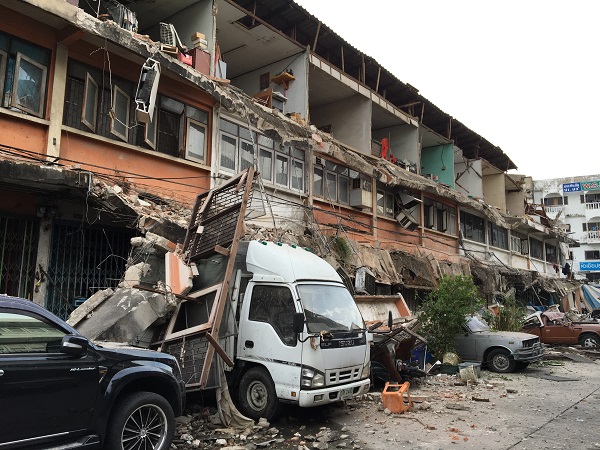
Residents Rescued From Collapsed Shophouses Near Prachaniwet Market

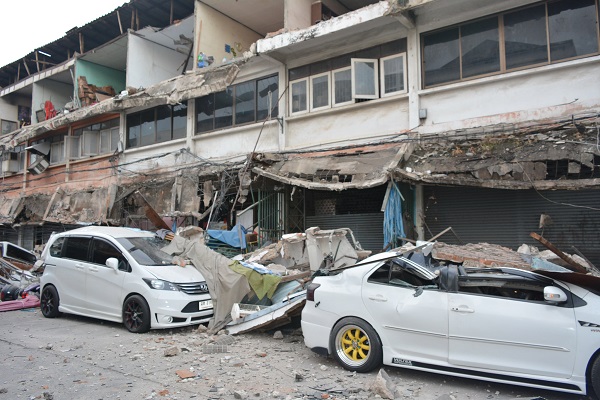
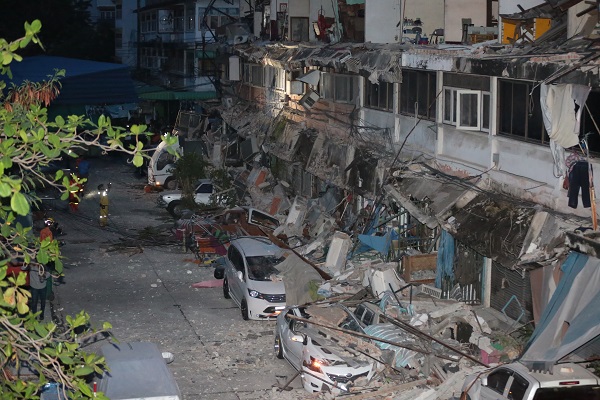
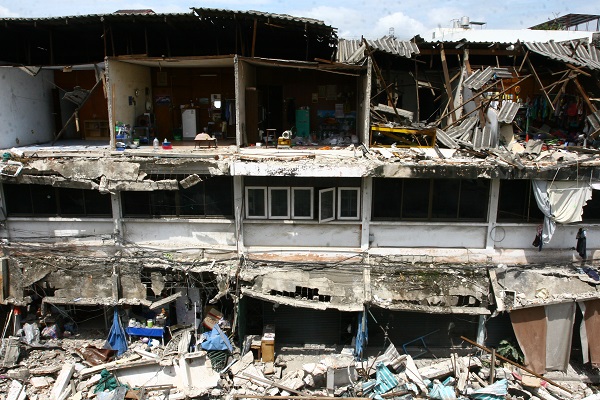
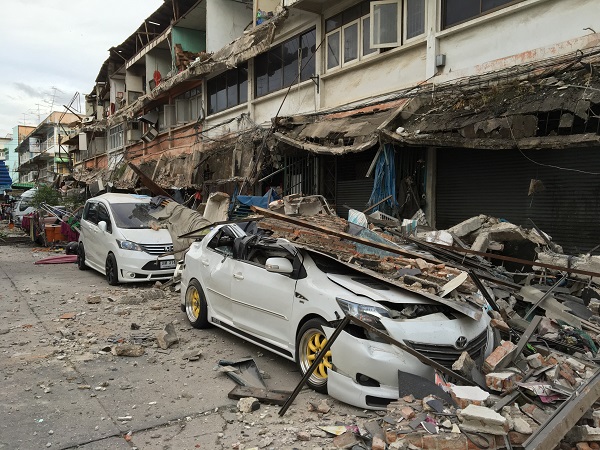
BANGKOK — Residents were briefly trapped inside a building in the Chatuchak district after 12 shophouses suddenly collapsed there Wednesday evening.

The outer wall of a row of shophouses near the Prachaniwet 1 Market came crashing down at about 6pm, trapping several people inside. No one was reported injured, but  at least seven cars and two motorbikes were damaged.

The incident caused a power outage in the area. Police said officers were eventually able to free the people stuck inside.

Pol. Col. Samard Promchat said the three-story, government-owned shophouses were built in 1982 and condemned two years ago due to flood damage from 2011. The residents were asked to move out several times, he said, but many refused to leave.

“They had a deep bond. They didn’t want to move out because they lived there for a long time,” the chief of Prachachuen police said.

Samard said police are investigating the cause of the collapse.

201609072009146-20150928153929

201609072034507-20150928153929

PCT_3491

IMG_7067


Advertisement

Hot News

LATEST NEWS

Bangkok
overcast clouds
27.7 ° C
27.7 °
27.7 °
83 %
2.3kmh
100 %
Thu
36 °
Fri
34 °
Sat
28 °
Sun
28 °
Mon
31 °