


























30 C
Bangkok
Friday, July 3, 2026
Home Blog Page 2736

Authorities Raid Soi 11 Condo Suspected of Being Unlicensed Hotel for Foreigners

Authorities raid Liberty Park II Condominium Thursday in Soi Sukhumvit 11, Bangkok.


BANGKOK — Authorities yesterday raided a Condominium building in Soi Sukhumvit 11 which was suspected of operating as an unlicensed hotel for foreign guests.

Sakchai Nithiaphaphan, 67, the manager of Liberty Park II Condominium was charged Thursday for letting foreigners stay without informing authorities and running a hotel without permission. The charges stemmed from allegations that he allowed foreigners stay in the building for periods of less than one month.

Sakchai Tanghor, Director of the Investigation and Legal Affairs Bureau, said he received a complaint from a resident of Liberty Park II Condominium who claimed to be concerned about security and was annoyed by the foreign guests staying in the condominium building.

The joint inspection carried out Thursday by police, immigration officials and soldiers found that most of the foreign guests were from Middle Eastern countries including Oman and the United Arab Emirates. The foreigners were in Thailand to receive medical services and all entered the kingdom legally.

Authorities said the fact that Sakchai did not register for a hotel license indicated his intention to avoid paying tax.

Additionally, not collecting and keeping information from foreign guests in a proper manner could be harmful to national security, especially if any of the guests turned out to be a terrorists, the Director of Investigation and Legal Affairs Bureau told reporters following Thursday’s raid.

The manager of the building admitted all the charges and said he plans to confess at trial, though he insisted on having no intention to break the law.

Sakchai said that 22 units out of 137 in the condominium building were used exclusively for foreign guests to stay short term in Bangkok. However, Sakchai claims that at present there is only one foreign guest staying for less than one month in the building, which violates the law. He denied claims that some units in the building are occupied by more than ten guests.

“Sometimes I let them stay without a monthly rental contract because they need to see the doctor first to know how long they will need to stay,” he said in an interview on Friday.

Most of his foreign guests are patients at the nearby Bumrungrad International Hospital and were recommended to stay in the building by staff from their embassies, Sakchai said.

The manager said he suspected that the complaint was filed by one resident who had previously told him of her concerns about having guests from Islamic countries stay in the building.

“From now on I will have to make everyone sign rental contracts for at least one month.”


Related stories:

Bangkok Bombing Dragnet Yields 142 Unrelated Arrests

Migrant Workers Instructed to Wear ID Wristbands

Police Call for Tougher Immigration Measures in Aftermath of Rape
 

Advertisement

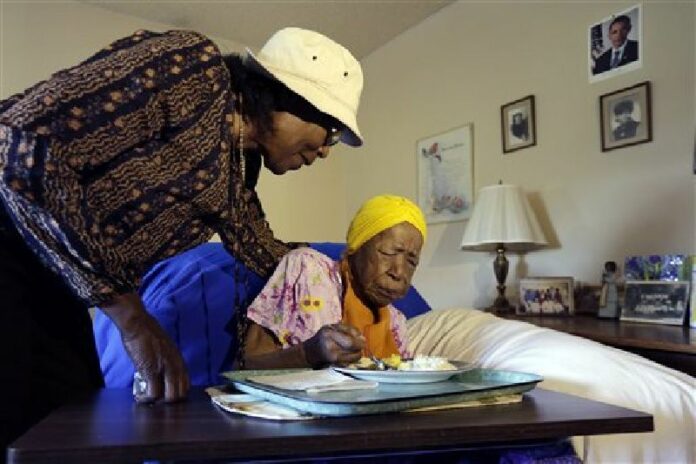
World's Oldest Person Dies in New York at Age 116

In this Monday, June 22, 2015 photo, Lois Judge, left, helps her aunt Susannah Mushatt Jones, during breakfast in Jones' room at the Vandalia Avenue Houses, in the Brooklyn borough of New York. Jones, the world’s oldest person, has died in New York at age 116. Photo: Richard Drew / Associated Press

NEW YORK — Susannah Mushatt Jones, the world's oldest person, has died in New York at age 116.

Robert Young, a senior consultant for the Los Angeles-based Gerontology Research Group, said Jones died Thursday night at a public housing facility for seniors in Brooklyn where she had lived for more than three decades. He said she had been ill for the past 10 days.

Jones was born in a small farm town near Montgomery, Alabama, in 1899. She was one of 11 siblings and attended a special school for young black girls. When she graduated from high school in 1922, Jones worked full time helping family members pick crops. She left after a year to begin working as a nanny, heading north to New Jersey and eventually making her way to New York.

"She adored kids," Lois Judge said of her aunt in a 2015 interview with The Associated Press. Jones never had any children of her own and was married for only a few years.

Family members said last year that they credited her long life to love of family and generosity to others. Judge said at the time that she believed it helped that her aunt grew up on a rural farm, where she ate fresh fruits and vegetables that she picked herself.

After she moved to New York, Jones worked with a group of her fellow high school graduates to start a scholarship fund for young African-American women to go to college. She also was active in her public housing building's tenant patrol until she was 106.

Jones became Guinness World Records' official oldest person when 117-year-old Misao Okawa died in Tokyo last year.

"Ms. Jones was the very last American from the 1800s," said Young, whose group tracks and maintains a database of the world's longest-living people.

Young said 116-year-old Emma Morano, of Verbania, Italy, just a few months younger than Jones, is now the unofficial world's oldest person.

Story: Associated Press


Advertisement

Police Confirm, Deny Gas Station Shooters Were Police

A screenshot of the dashcam video.

BANGKOK — The Commander of a police station in Bangkok said today that five gunmen who opened fire on a pick-up truck in broad daylight were police officers from another police station, a claim denied by the deputy chief of the latter station.

The shooting, which was widely shared on social media from footage captured on a dashcam, reportedly took place around noon Wednesday at a gas station on Rattanathibet Road in northwest metro Bangkok. Witnesses told media five men in a car tried to stop a pick-up truck and shot at it, but the driver managed to escape the scene, followed by the pursuers. 

Ekkaphop Tanprayoon, head of the local Bang Yai Police Station, said Friday that the five men seen in the video were police officers from Thoong Song Hong Police Station, who were chasing after a criminal suspect at the time. 

He declined to answer other questions about the pursuit, including why they were not dressed in uniform, and whether they followed police conduct by opening fire in a public area.

“They’re from Thoong Song Hong [station]. You have to ask them,” Col. Ekkaphop said.

\

Police question witnesses at the gas station on Friday


But Piphop Sukkam, deputy commander of Thoong Song Hong Police Station, said he’s not aware of any of his officers going on any pursuits on Wednesday. 

“It’s not our team, it’s not our people,” Lt. Piphop said, though he added that he has not seen the footage from the viral video. 

Furthermore, he said, his station has no policy of making arrests in other jurisdictions. “We don’t go out to arrest people outside our area,” Piphop said. 

Thai police have a long record of operating, and even using firearms, in plainclothes without any identification marking them as law enforcement officials. 


Related stories:

Journalists Condemn Undercover Police For Posing as Reporters 

Police Admit to Shooting At, Arresting Wrong Men in NE Thailand 


Advertisement

Facebook Delivers the Scoop on How it Delivers the News

In this June 11, 2014, file photo, a man walks past a mural in an office on the Facebook campus in Menlo Park, Calif. Photo: Jeff Chiu / Associated Press

NEW YORK — Will "Trending topics" become a "trending" topic on Facebook?

The social media giant on Thursday pulled back the curtain on how its Trending Topics feature works, a reaction to a report in the tech blog Gizmodo that claimed Facebook downplays conservative news subjects. Facebook denies that report, which relied upon a single anonymous individual with self-described conservative leanings.

In its own blog post , the company said a series of checks and balances — involving both software formulas and humans — ensures that stories displayed in the "trending topics" section aren't biased. The post linked to a 28-page internal document Facebook uses to determine trending topics, after the Guardian published a similar document that was leaked to it.

Justin Osofsky, vice president of global operations, said the guidelines ensure that stories in trending topics represent "the most important popular stories, regardless of where they fall on the ideological spectrum."

"The guidelines do not permit reviewers to add or suppress political perspectives," he said in a statement.

Mark Zuckerberg, co-founder and chief executive of the social media site, took to Facebook on Thursday evening to say he plans to talk with leading conservatives in coming weeks.

"I want to have a direct conversation about what Facebook stands for and how we can be sure our platform stays as open as possible," the statement said.

Facebook hasn't said how many people are responsible for the trending topics team. A Guardian report on Thursday said the team was as few as 12 people, citing leaked documents, but Facebook didn't comment on that number.

Trending topics were introduced in 2014 and appear in a separate section to the right of the Facebook newsfeed. According to Facebook, potential trending topics are first determined by a software formula, or algorithm, that identifies topics that have spiked in popularity on the site.

Next, a team of trending topic staffers review potential topics and confirm the topic is tied to a current news event; write a topic description with information corroborated by at least three of 1,000 news outlets ; apply a category label to the topic; and check to see whether the topic is covered by most or all of ten major media outlets (including The New York Times, Fox News, BuzzFeed and others). Stories covered by those outlets gain an importance level that may make them more likely to be seen.

(Facebook's list of 1,000 news outlets contains several popular conservative sites, including Fox, the Drudge Report, Glenn Beck's site The Blaze, the Daily Caller and the Washington Times.)

Each Facebook user's trending topics are then personalized via an algorithm that relies on information about the user such as "Likes" and their location.

Story: Mae Anderson / Associated Press


Related stories:

Facebook Denies Giving User Data to Thai Junta

Facebook Blocks Thailand From Page Satirizing Monarchy


Advertisement

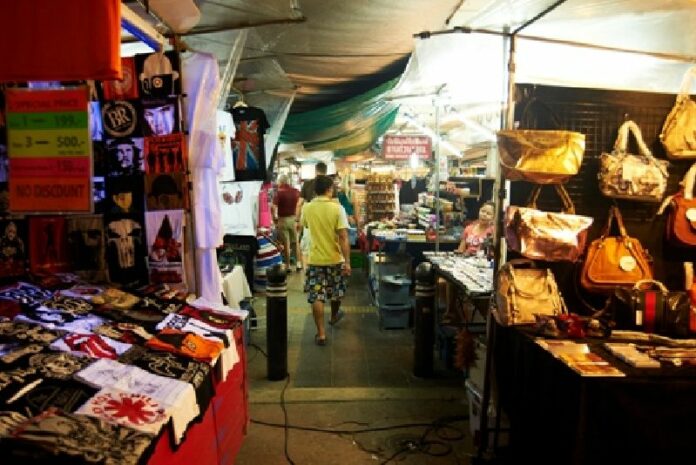
Say Goodbye to Night Market Vendors on Silom Road

Street stalls at Silom night market. Photo: Tourism Authority of Thailand


BANGKOK — Silom Road’s famous Night Market was given a death sentence Thursday, as it was named the next target of City Hall’s ongoing cleanliness and order campaign.

Nearly 600 vendors currently permitted to sell their wares on the sidewalks of Silom Road at night have until the end of the month to clear out, Vallop Suwandee of the Bangkok Metropolitan Administration said Thursday. Stalls located inside small lanes off the main road, such as the those on Patpong, will still be allowed.

Just as with every previous part of town to be “reorganized,” Vallop said City Hall was being responsive to complaints about traffic, as vendors usually park their cars near their stalls in the street. Moreover, many of the goods sold there are illegal.

Vallop added that street food stalls disposed of their waste in public drains, making the area more dirty.

Nestled in one of Bangkok’s most important and expensive business districts, Silom Road for years has been known for transforming into a bustling market once the sun goes down. Visit on any night and vendors can be found selling T-shirts, pirated DVDs and counterfeit goods. Located near Patpong, the city’s most internationally known red-light district, vendors also offer illicit goods such as pornographic movies and sex toys, the sale of which is illegal in Thailand.

Silom Road vendors used to operate day and night, until 2014 when authorities ordered them to limit business to 7pm to 2am.

It’s the latest example of Bangkok’s famed, vibrant street life to be eliminated or dramatically reduced, following a variety of legendary locations including markets at Saphan Lek, Khlong Thom, Pak Khlong Talad, Tha Prachan and Pratunam.

In a March interview, Vallop said the campaign will continue.

“Our plan is to reorganize every spot people have filed complaints about,” he said. “Our principal is respecting the rights of people who walk on the pavement.”


Related stories:

Pratunam’s Flashy, Trashy Fashion to be Swept Away

Say Goodbye to Bangkok’s Flower Market

Saved by St. Valentine: Flower Market Crackdown Extended

Huai Khwang Market Vendors Protest City Eviction

Amulet Market Gone, City Swivels to Flower Market and Banglamphu

Say Goodbye to Bangkok’s Famous Tha Prachan Amulet Market

Demolition Day: Dismantling of Saphan Lek Begins

One-Year Reprieve Sought for Saphan Lek Market

City Hall Denies Colluding With Developer to Demolish Saphan Lek

Vendors Revolt as BMA Moves to Demolish ‘Saphan Lek’


Advertisement

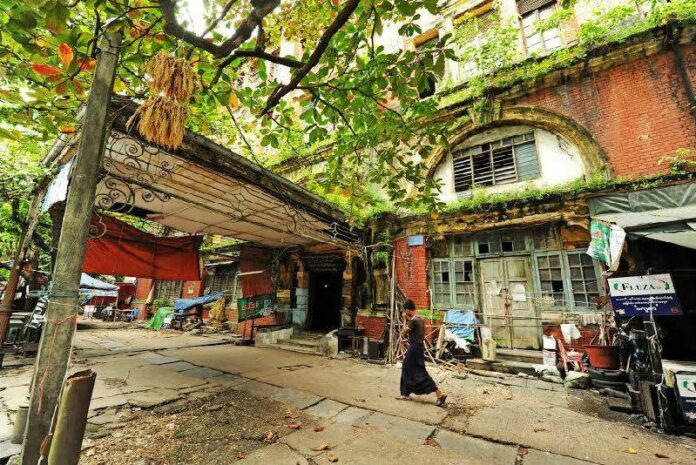
Explore the Rotting Colonial Splendor of Yangon in Bangkok

The Balthazar Building, built in 1905, in central Yangon. Photo: Philips Hejimans / Courtesy

BANGKOK — An American photojournalist is coming to the Thai capital from Yangon to release his photo book of its iconic architectural landmarks this Saturday at an art space near Chinatown.

From 1901’s Victorian-era The Strand hotel to the Secretariat Building where Gen. Aung San was assassinated in 1947, “Relics of Rangoon” captures more than 800 images and profiles of nearly 200 old buildings from Myanmar’s sole megapolis: Yangon, once called Rangoon by the British.

Shortly before World War II, Yangon rose to become one of the most modern and prosperous cities in Asia largely on exports of oil, rice and teak. This led to immigration that rivaled New York and hundreds of new buildings, many of which survive today providing the city with perhaps the largest intact colonial core in Southeast Asia.

Finding only minimal material covering Yangon’s colonial-era buildings back in 2013 when the nation had cracked open to foreigners, Hejimans photographed each building thoroughly and conducted historical research. He also spoke with residents, architects and government officers.

“I think what triggered all of this was a subconscious desire to get more involved in the subject of architecture,” said the former business editor of The Myanmar Times. “I had spent four years in Prague, where part of my family are from, and I fell in love with the power and sort of social status buildings can embody.”

The book launch and photo exhibition starts 6:30pm Saturday at Cho Why, where Hejimans will be present to discuss his work. 360-page hardcover editions of his book will be sold for 2,300 baht. A second event will be held at the same venue Thursday.

Cho Why is located on Soi Nana 17 near Charoen Krung Road, a few minutes walk from MRT Hua Lamphong, exit No. 1.

\

The former High Court building in downtown Yangon. Photo: Philips Hejimans / Courtesy


Advertisement

Some Rainy Relief Coming Soon

People cool down May 7 at a Korat waterpark.

By Simon Duncan
Deputy Editor

BANGKOK — The longest heatwave in 65 years may soon break.

Things are set to cool down (slightly) next week when scattered thunderstorms and a southern breeze are expected to hit the capital starting Monday.

Records for power consumption were again shattered Wednesday as Thailand peaked at 29,600 megawatts at 2:12pm. It was the seventh time this year a new record has been set in all-time national power usage, according to Thai PBS.

After scorching Songkran temperatures soared into the 40s across large swaths of the country, choking on its worst drought in two decades, temperatures are expected to drop as a high pressure front creeps into Thailand from China, according to the Meteorological Department.

Come Monday, the thunderstorms currently causing rainfall in parts of the north and northeast will extend to much of the country, including Bangkok and the central region.

Day time highs in Bangkok are expected to dip from the current 37C to a more bearable 34C on Tuesday, with overnight lows also expected to fall several degrees.   

Related stories:

Oxen Soothsayers Predict Enough Rainfall, Prosperous Economy

Bangkok Battered by Summer Storm (Photos)

OMGWTFBBQ: Thailand Hasn’t Been This Hot Since 1960


Advertisement

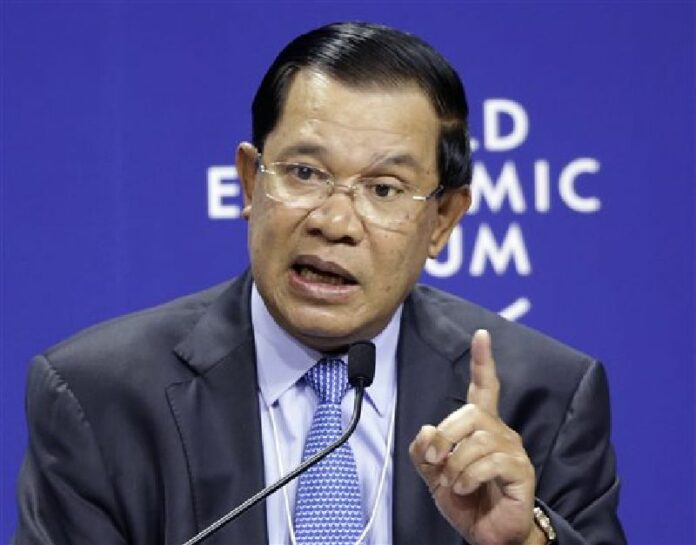
Call Me Lord Prime Minister: Cambodia Wants PM Title Used

Cambodian Prime Minister Hun Sen speaks in April of 2015 during a session at the World Economic Forum on East Asia in Jakarta, Indonesia. Photo: Achmad Ibrahim / Associated Press

PHNOM PENH — For years, some Cambodian media have referred to the country's longtime leader simply as Prime Minister Hun Sen. Authorities warned Thursday that has to stop.

Starting in August, all media must use his full, honorary, six-word title — "Samdech Akka Moha Sena Padei Techo Hun Sen" — in the opening lines of print articles, radio and TV stories about the leader.

The title translates roughly to "Lord Prime Minister and Supreme Military Commander" and was bestowed on Hun Sen by Cambodia's King Norodom Sihamoni in 2007.

The Information Ministry held a nearly three-hour meeting for journalists Thursday to announce the new guidelines and warn that legal action will be taken against media that don't comply. Officials gave no specifics on the punishment for flouting the rule, which they said was important to show respect for leaders who hold Cambodia's highest titles.

The new rule appeared aimed specifically at media viewed by the government as pro-opposition and pro-Western. Pro-government media typically refer to officials with their honorary titles.

It comes amid a series of moves by Hun Sen's government to put legal pressure on its critics and political opponents.

During his three decades in power, Hun Sen has long exerted strong control over the media, and expressing public dissent inCambodia remains risky. The government has tightened controls on telecommunications and threatens prosecution of online critics, especially those commenting on Hun Sen and his family.

"We want you to state the full title of leaders in the story's lead or first sentence," said Ouk Kimseng, an under-secretary of state at the Information Ministry, who led the meeting. Subsequent references can drop the long title, he said.

The ministry has issued similar warnings before, which were largely ignored.

The rule also applies to several ruling party officials.

Hun Sen's wife Bun Rany was given a royal title in 2013 that translates to "Celebrated Senior Scholar Bun Rany Hun Sen." It refers to an honorary Ph.D. that was given to the first lady, who never formally graduated from university.

Story: Associated Press

Related stories:

Cambodian Leaders Rev Up Facebook Rivalry

Hun Sen Threatens Log Smugglers With Rockets 

Advertisement

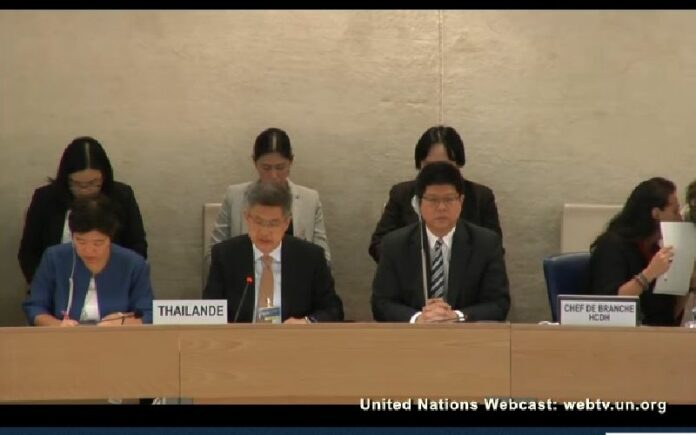
Analysis: A Day of Reckoning for Junta’s Thailand on UN Rights Stage

Justice Ministry permanent secretary Chanchai Chaiyanukit, seated second from left, headed the Thai delegation last May in Geneva. Photo: United Nations

By Pravit Rojanaphruk
Senior Staff Writer

BANGKOK — When more than 100 U.N. member states convened Wednesday in Geneva for a semiannual review of human rights conditions in Thailand, it wasn’t intended to be a “name and shame” session.

But coming at a time the nation is under military rule, that’s pretty much how it ended up.

Thais who oppose the militarization of the kingdom since the May 2014 coup delighted in hearing many democratic countries take turns telling representatives of the military regime what they see wrong with Thailand.

Belgium, for example, asked when Thailand will stop trying civilians in military tribunals. Norway, herself a kingdom, went so far as to recommend that Thailand abolish altogether its controversial law against defaming the monarchy.

The use of military courts to try civilians, arbitrary detentions without charge masked as “attitude adjustment,” absolute power wielded by junta leader Gen. Prayuth Chan-ocha and expansion of lese majeste prosecutions were among the key issues highlighted by the U.N. member states.


Rotating Hot Seat

Under the Universal Periodic Review process, all U.N. member states are subject to the critiques and recommendations of its full membership before the U.N. Human Rights Council. On Wednesday it was Thailand’s turn.

The review process was a rare occasion Thailand had to defend its human rights record and entertain recommendations by other governments.

What played out over about three hours wasn’t nice to hear, despite being couched in diplomatic niceties. And for those opposed to military rule in the kingdom, Wednesday’s session was welcomed as a marathon dressing-down session of the junta by foreign states.

Thammasat economist Pichit Likitsomboon wrote Wednesday night that Thailand’s representatives were “collectively mauled” during the process.

“Thai Foreign Ministry officials still in possession of conscience, who have not turned a blind eye to lick the military for career advancement, are well aware of how much Thailand today has become a pariah,” he wrote.


An Unconvincing Defense

Making the junta’s case, a military judge insisted that trials by the military were no different from those held in normal civilian courts of justice. He also said only a few civilians have been subjected to military trials.

The representative, from the Defense Ministry’s Judge Advocate General’s office, said they only try civilians accused of serious crimes, such as possessing heavy weapons and insulting the Royal Family. While the Thai delegation sought to assure the international community the military would try civilians fairly, they left out a a few crucial points.

For one, military court judges are not independent. They operate under the Judge Advocate General Department, which is under the Defense Ministry and thus under the junta.

Civilian courts are presided over by civilian judges which, theoretically, are independent as they operate under the Court of Justice.

Secondly, conflicts of interest invariably exist when military courts are trying activists charged with sedition for opposing military rule, such as the so-called Facebook 8.

Then there’s the question of whether the more 1,000 civilians facing military trials constitutes “a few people” as claimed.

Ultimately, why would the junta face continued flak from the international community over subjecting civilians to military trials if it believes such trials are no different from the normal course of justice? It just makes no sense.

Thai representatives also defended the continued use of absolute power by Gen. Prayuth under Article 44 of the provisional military constitution by saying it was nothing new.

The remark incorrectly gave the impression that such power has been routinely used and is not exceptional. In fact, it’s been five decades since anyone wielded such power, during the dictatorship of Field Marshal Sarit Thanarat, who staged a 1957 coup and ruled with an iron fist from 1958 till his death in 1963.

As to the controversial lese majeste law, the kingdom’s representative again failed to acknowledge the spike in such cases since the coup or explain why military trials are necessary when they were routinely handled by civilian courts prior to May 2014.


Correction: An earlier version of this story misstated that the civilian courts operate under the Justice Ministry, in fact they are independent from the government under the Court of Justice.

Advertisement

Sweden Denies Discussing Sale of Fighter Jets to Thai Junta

A Saab-built Gripen multirole fighter at the Berlin Air Show in 2010. Photo: Matthias Kabel / Wikimedia

BANGKOK — A top official with the Swedish Embassy today denied knowledge of a proposed deal to sell four fighter jets to Thailand’s military government.

After a meeting earlier Thursday with Swedish ambassador Staffan Herrstrom at Government House, Deputy Prime Minister Prajin Juntong told reporters he raised the issue of buying four Saab-built Gripen JAS fighter jets, one day after the Swedish representative to the United Nations criticized Thailand for human rights violations under the military regime. 

“The United States and Russia have some conditions, but Sweden could give us [a good deal],” said Air Chief Marshal Prajin.

Herrstrom could not be reached for comment. But Charlotta Schlyter, deputy head of the Swedish mission to Thailand, said late Thursday afternoon that the matter “was not raised in the Ambassador’s meeting with Deputy Prime Minister Prajin Juntong today, and is not under discussion.”

The Thai Royal Air Force’s 12 Gripens were purchased in 2007 under a previous junta. Their purchase was met with some controversy, as Thailand did not have a democratic government at the time.

\

In this government-issued photo, Staffan Herrstrom meets Prajin Chantong at Government House in Bangkok on Thursday. Photo: Government House

A representative of a Swedish NGO opposed to Stockholm’s arms sales called the news worrying.

“The Swedish Peace and Arbitration Society (SPAS) strongly criticises any Swedish plans of approving this sale,” Linda Akerstrom of the society’s disarmament campaign wrote in an email. “According to Swedish arms trade regulation, arms trade with countries in armed conflict and with serious and widespread human rights violations should not be approved.”

She also warned that selling the jets to Thailand would amount to “actively supporting the undemocratic military regime,” and urged Sweden to work for the benefit of human rights, instead of  “increasing income from arms sales at the expense of the people living in Thailand."

According to a statement posted online by the Embassy of Sweden, Ambassador Herrstrom’s meeting with Prajin concerned “the importance of freedom of expression and freedom of assembly” and the sale of jets was not raised.

Prajin stressed the air force had yet to make any official decision.

“I’m confident we made the right choice,” he said. “However, I think that for a fleet, the appropriate number in terms of tactical value, is 16. This is our goal.”


Sweden ‘Concerned’ by Rights Violations

Prajin’s announcement came just one day after the Thai junta was grilled during an annual U.N. assessment of human rights situation in Thailand and 13 other nations, called the Universal Periodic Review.

Among representatives at the session who express concern over the junta’s suppression of civil rights was Veronika Bard, Sweden’s ambassador to the United Nations. 

“We are concerned about the human rights situation in Thailand, including the increased restrictions on freedom of expression in connection with the constitutional referendum,” Bard said according to a transcript of the session. 

She also recommended Thailand “develop, enact and implement a national action plan on business and human rights in order to implement the UN Guiding Principles on Business and Human Rights.”


Correction: An earlier version of this story incorrectly stated that Prajin Chantong was the commander of the Royal Thai Air Force when the Gripen deal was sealed in 2007. In fact, Prajin only rose to the position in 2011. 


Related stories: 

Thailand's Top Brass Defends Plan to Spend 36 Billion Baht on Submarines 


Advertisement

Hot News

LATEST NEWS

Bangkok
overcast clouds
30 ° C
30 °
26.6 °
79 %
4.9kmh
100 %
Fri
30 °
Sat
30 °
Sun
31 °
Mon
30 °
Tue
31 °