





























31.6 C
Bangkok
Monday, June 29, 2026
Home Blog Page 2764

Indian Rescuers Dig Through Overpass Debris After 23 Die

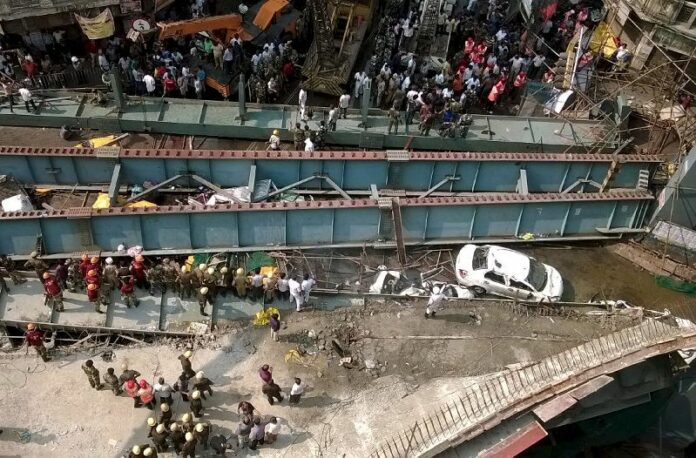
General view shows a partially collapsed overpass in Kolkata, India, Friday, April 1, 2016. Photo: Bikas Das / Associated Press

KOLKATA, India — Using saws, small cranes and bare hands, rescuers searched for survivors Friday under the crumbled concrete and twisted steel from an overpass that collapsed onto a crowded Kolkata neighborhood, killing at least 23 people and injuring more than 80.

With more than half the debris cleared by Friday morning, 67 people have been pulled out alive, Kolkata police Sgt. P. Chakraborty said. But more people were still feared trapped. It was not clear how many are missing.

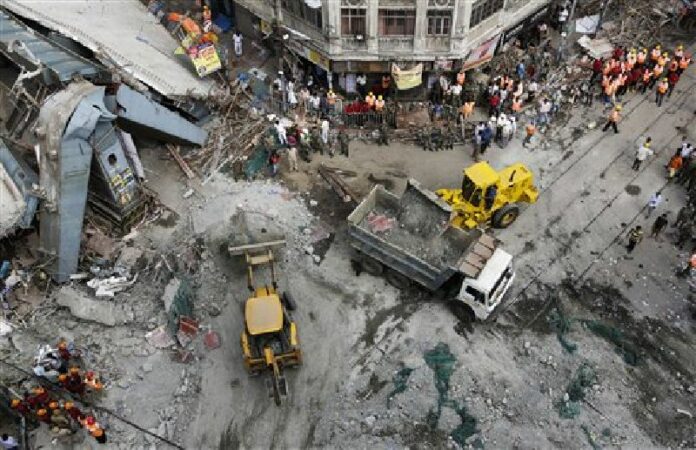
Smashed yellow taxis, a crushed truck, destroyed rickshaws and the bloody legs of trapped people jutted from the fallen girders and concrete. Building and other construction collapses are common in India, where regulations are poorly enforced and companies often use substandard materials.

The partially constructed overpass spanned nearly the width of the street and was designed to ease traffic through the densely crowded Bara Bazaar neighborhood in the capital of the east Indian state of West Bengal. The steel girders had already been fixed, and on Thursday the concrete was poured into the framework.

Within hours, as the concrete was drying, about 100 meters of the overpass fell, while other sections remained standing.

"I heard an explosion, a solid one," said resident Rabindra Kumar Gupta, who had been home eating lunch when the overpass crashed down around 12:30 p.m. Thursday. "My apartment shook. The whole building shook. When I looked outside, there was a lot of smoke."

Another resident, Yogesh Sharma, described a "huge crashing sound" when the overpass came down as he was been sitting at a roadside tea stand with friends.

"I left my cup of tea and ran," said Sharma. "I was crying at the spot."

Crowds waited anxiously near the rescue area to see if neighbors and friends had survived. The intersection had been a place where street vendors and service workers regularly plied their trades.

"There used to be a tailor who sat here on this corner. We wonder about him. A cigarettes and tobacco vendor — we knew everyone who used to stay around this crossing," resident Pankaj Jhunjhunwala said. "Until this rubbish is removed, we can't say for sure where they are or how this happened."

Police said 39 of the more than 80 people taken to hospitals were still being treated Friday morning. At least 23 people were killed.

With army troops and personnel from the National Disaster Response Force joining the effort, police said they expected the rescue and cleanup to be completed on Friday.

\

A damaged three-wheeled vehicle is taken out from the rubble of a collapsed overpass in Kolkata, India, Friday, April 1, 2016. Photo: Bikas Das / Associated Press

Workers in yellow hard-hats operated huge cranes, bulldozers and other equipment through the night to clear the rubble and pry apart the concrete slabs. They also used cutting torches to break up metal beams.

The operation was a "very, very challenging task," said O.P. Singh, chief of the disaster response force. Rescuers also used dogs and special cameras to find people who were trapped, he said.

"The area was very, very crowded. Motorized rickshaws, taxis … there was a lot of traffic," one witness told NDTV television.

Prime Minister Narendra Modi, who was in Washington at the time of the collapse, called Chief Minister Mamata Banerjee, the top elected official of West Bengal state, to express grief at the tragedy and pledge federal support.

He said he was "shocked and saddened," according to a message on his Twitter account. "My thoughts are with the families of those who lost their lives in Kolkata. May the injured recover at the earliest."

Banerjee, whose has been campaigning for re-election this month, told reporters that a private builder had missed several deadlines for completing the construction.

\

General view shows a partially collapsed overpass in Kolkata, India, Friday, April 1, 2016. Photo: Bikas Das / Associated Press

The contract for the overpass was signed in 2007 and it was expected to be completed in two years. Banerjee accused the previous Communist government in West Bengal of not adhering to building regulations.

"We completed nearly 70 percent of the construction work without any mishap," said K.P Rao, a top official of IVRCL Infrastructure company, which was building the overpass. "We have to go into the details to find out whether the collapse was due to any technical or quality issue."

Police have sealed the Kolkata office of the Hyderabad-based construction firm involved in building the overpass. It is also investigating the firm's officials for alleged culpable homicide, punishable with life imprisonment, and criminal breach of trust, which carries a prison sentence of up to seven years.

Story: Rishi Lekhi and Rishabh R. Jain / Associated Press
 

Advertisement

Taxi Driver Returns 90,000 Baht to Hong Kong Traveler

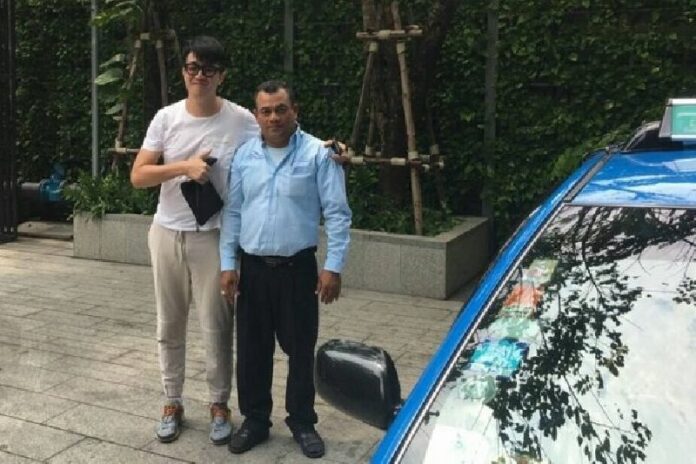
Hong Kong traveler Xuepeng Huang poses with taxi driver Wattana Pornkhongkaew on Thursday at the Bangkok hotel where he returned his cash worth over 90,000 baht.

BANGKOK — Wattana Pornkhongkaew showed the world there are some good taxi drivers by returning cash worth over 90,000 baht to a traveler from Hong Kong.

Xuepeng Huang took a taxi from Suvarnabhumi Airport on Wednesday evening to the DoubleTree by Hilton Hotel on Soi Sukhumvit 26 but got out of the taxi at Soi Sukhumvit 36 due to traffic congestion. Wattana later found Huang had left a bag inside containing HKD$20,000 in the back seat.

By reporting the loss through the Suvarnabhumi Airport taxi center and FM91 traffic radio, Wattana was able to contact Huang and return his money.

Wattana was given a certificate along with some souvenirs from Suvarnabhumi Airport.


Related stories:

Airport Taxi Loses License for Gouging Swiss Traveler

Police to Combat Bad Airport Taxis With Lecture and Sticker

Airport Taxi Busted for ‘Turbo’ Meter

Online Complaint Prompts Ban of BKK Airport Cab Driver

Say No to Taxi Passengers, Lose License 30 Days, Prayuth Proposes


Advertisement

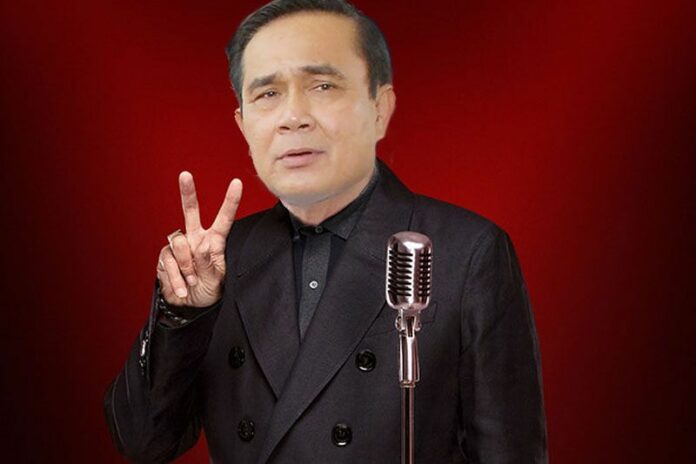
Prayuth to Croon at Charity Concert

Gen. Prayuth Chan-ocha face is photoshopped onto a lounge singer.

By Rick Allstitz

BANGKOK — Junta chairman Prayuth Chan-ocha is due to serenade the audience at a charity concert later this month, the junta announced today.

The concert, called “Strength Through Unity, Unity Through Easy Listening Favorites,” will feature patriotic ballads used ubiquitously in junta news programs, including a song penned by Gen. Prayuth himself in 2014, said government spokesman Sansern Kaewkamnerd.

Despite original plans to invite Tom Jones, Tom Selleck or David Hasselhoff – the junta chairman’s faves – Col. Sansern said Prayuth will perform all of the six songs in the concert, which will be broadcast live on all state-owned media agencies, and even those that are not (if they know what is good for them).

The concert will take place April 31 at CentralQuartier shopping mall. All proceeds will go to  the Rajabhakti Park charity foundation, Sansern said.

Related stories:

Draft Constitution Fixed With This One Weird Trick

Just Throw Rice, Junta Orders This Dry Songkran

Tourists to Be Issued ‘Balcony Bounce Suits’
 

Ed. note: We trust that as a discerning and beautiful reader of Khaosod English, you already knew this was a joke (check the date).


Advertisement

Just Throw Rice, Junta Orders This Dry Songkran

Photo: livescience.com

By Terome Jailor

BANGKOK — The junta today placed a ban on all water throwing in the upcoming Songkran festival, citing the ongoing drought situation.

Explaining that drastic situations call for drastic measures, junta spokesman Sansern Suvaree said the ban is appropriate considering that much of Thailand faces a severe water shortage.

He also advised Thais to switch to throwing grains of rice instead.

“It helps not only help alleviate the drought, but also promotes Thai culture and Thainess to foreign tourists,” Col. Winthai Suvaree said.

He said the government is mulling a plan to distribute grain rice for free on major roads around Bangkok during the festival. The rice will be fetched from numerous leftover grain stores under former Yingluck Shinawatra’s rice pledging policy, Sansern told reporters.

At first officials had considered rebranding the traditional Thai new year celebration to satisfy another critical resource allocation issue: Citizens would have been encouraged to celebrate the Songkran Rubber Festival by hurling harmless fun sourced from price-guaranteed rubber plantations in the south.

Winthai however said economic indicators suggested a better use.

“Soon we’re going to need all that rubber for writing checks!” handsome Winthai said with a wan smile and smoldering eyes filled with obvious passion for Thailand and what else we can only fantasize?

Related stories:

Draft Constitution Fixed With This One Weird Trick

Tourists to Be Issued ‘Balcony Bounce Suits’

Prayuth to Croon at Charity Concert 

Ed. note: We trust that as a discerning and beautiful reader of Khaosod English, you already knew this was a joke (check the date).


\

Advertisement

Tourists to Be Issued ‘Balcony Bounce Suits’

A prototype balcony bounce suit. Photo: Puncturegown / Deviantart

By Mike Yawn

PATTAYA — To stamp out any perception Thailand is unsafe for tourists and promote the nation among the coveted “Super Premium A-Grade” class of quality travelers, the military government today announced a crackdown on balcony-related deaths.

At a joint news conference attended by top police brass, tourism officials and representatives from related agencies who can turn up in a crisp uniform at short notice, a spokesman for the military government said Friday the crackdown would immediately solve the problem by going after those responsible for all the bad news: fall-prone farang.

“I’ve got two words for you: bounce suits,” Col. Sansern Kaewkamnerd said. “Foreigners who want to step out and enjoy the view or smoke or eat some cheese will be required to put one on.”

Read: The Balcony Did It? Why Thailand’s Falling Deaths Raise Eyebrows

Sansern said people needed to accept that foreign bodies and the kingdom’s ample balconies do not mix well.

“This is Thailand. People need to remember that things are different here. While foreigners may excel at reality television, body mass and representative democracy, clearly they are incompatible with our Thai-style balconies.”

Sources said the bounce suits would be supplied by the military’s same reliable source of bomb detectors and deflatable flying machines.

A Happy Thai Happier Numbers poll found 99% of the three people within shouting distance agreed that the problem had now been adequately and effectively solved (with continuous improvement).

This farang test subject appears quite pleased with his newfound resistance to gravity.

Thailand’s top tourism official said she welcomes anything that will bring an end to negative news reports spreading misunderstanding around the world.

“Did you read what Amy Sawitta Lefevre wrote Tuesday? She said despite blockbuster expectations for arrivals, ‘dark clouds could be forming.’ I just want everyone to think about those five words: DARK CLOUDS COULD BE FORMING,” said Tourism (and Sports!) Minister Kobkarn Wattanavrangkul. “We want guests to think ‘sunny beaches,’ not ‘dark clouds.’ So before Amy can write another 600 words of tell-me-something-I-don’t-already-know, let’s take care of this problem by announcing a crackdown, because everyone knows that’s synonymous with ‘problem solved.’”

Doing its part to allay fears of unnatural foreign deaths involving balconies, the tourism administration unveiled a plan today to award hotels and apartments for their safe balcony designs.

Starting April 2, residential buildings aimed at foreign tourists will be inspected by experts and rated according to their balcony safety, said Niranam Anatta, president of Tourism Institute of Thailand, or TIT.

“We’re aware that balconies are the number one cause of deaths for many farang in Thailand, and we are determined to change that,” Niranarm said.

If it proves successful, Niranarm said, similar programs will be launched for safe speedboats, safe tuk-tuks, safe elephants and safe islands.

Warning: Despite all appearances and today’s date, this video is not a joke


Related stories:

Draft Constitution Fixed With This One Weird Trick

Just Throw Rice, Junta Orders This Dry Songkran

Prayuth to Croon at Charity Concert 

Ed. note: We trust that as a discerning and beautiful reader of Khaosod English, you already knew this was a joke (check the date).


Advertisement

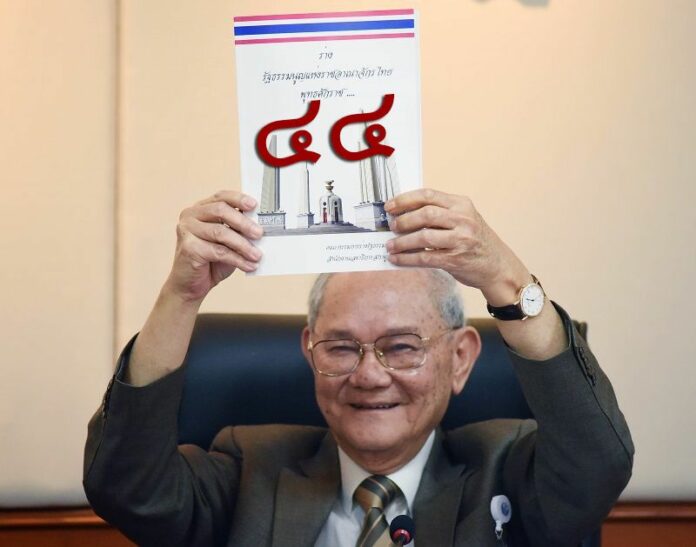
Draft Constitution Fixed With This One Weird Trick

By Konachnan Rightsamuth

BANGKOK — Days after the usual naysayers criticized the final version of what would be the nation’s 20th semi-permanent legal framework, the Constitution Drafting Committee announced today it has solved all outstanding issues and concerns with one weird trick.

“Legal scholars have long told us the strength of a charter can be found in how few articles it contains,” chairman Meechai Ruchuphan said, citing the seven originally written into that of the United States. “We’re going to outdo them all by having only one article.”

In the third and final draft charter released Friday, all 279 articles have been replaced by Article 44 from the junta’s interim constitution.

“Article 44 is like the stem cell of our legal DNA. It can be anything at any time. This will afford us tremendous creativity in applying the appropriate laws for every eventuality.”

The charter still weighs in at more than 100 pages: They literally just replaced every article with the same language granting junta leader Prayuth Chan-ocha absolute power to enact anything as  law with the stroke of a pen.

“Where some see a type of nihilism, contempt for civil society and the foundations of anarchy, we see tremendous flexibility,” he said.


Related stories:

Just Throw Rice, Junta Orders This Dry Songkran

Tourists to Be Issued ‘Balcony Bounce Suits’

Prayuth to Croon at Charity Concert 

Ed. note: We trust that as a discerning and beautiful reader of Khaosod English, you already knew this was a joke (check the date).


Advertisement

Obama Finds Common Cause on NKorea with China and Allies

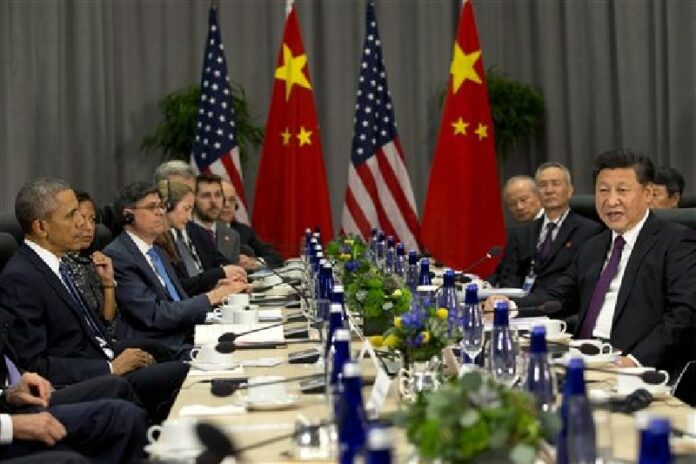
President Barack Obama listens at left as Chinese President Xi Jinping speaks during their meeting at the Nuclear Security Summit in Washington, Thursday, March 31, 2016. Photo: Jacquelyn Martin / Associated Press

WASHINGTON — In the face of mounting threats from North Korea, President Barack Obama on Thursday urged closer security ties among its chief allies in Asia and increased cooperation with strategic rival China to discourage Pyongyang from further advances in nuclear weapons.

As world leaders gathered for a nuclear security summit, Obama first met with Japanese Prime Minister Shinzo Abe and South Korean President Park Geun-hye. Together, they warned North Korea would face even tougher sanctions and more isolation if provokes again with nuclear and missile tests.

Then Obama met Chinese President Xi Jinping and both called for North Korea to give up its nuclear weapons. China also agreed to implement in full the latest economic restrictions imposed by the U.N. Security Council against Pyongyang.

More than 50 governments and international organizations are attending the two-day summit on preventing nuclear terrorism — the last in a series of global meetings Obama has championed on the issue. The risk posed by the Islamic State group tops this year's agenda but concerns about North Korea are also commanding focus.

"Of great importance to both of us is North Korea's pursuit of nuclear weapons, which threatens the security and stability of the region. President Xi and I are both committed to the denuclearization of the Korean Peninsula," Obama said at the start of his meeting with Xi.

"China and the U.S. have a responsibility to work together," Xi said in his comments made to reporters through an interpreter. As for their "disputes and disagreements," the Chinese leader said the two sides could "seek active solutions through dialogue and consultation."

North Korea's fourth nuclear test in January, followed by a space a launch in February, have heralded more convergence among often-fractious powers in East Asia — at least on the need to press the government of Kim Jong Un toward disarming.

Japan and South Korea have persuasive reasons to get along. They both host U.S. forces and are both in range of North Korean missiles. But their relations have been plagued by historical differences that date back to Japan's colonial occupation of Korea in the first half of the 20th century and its military's use of sex slaves during World War II.

But those tensions have eased some. Abe said North Korea nuclear and missile capability is a "direct and grave threat" to them all.

"Should it choose to undertake yet another provocation, it is certain to find itself facing even tougher sanctions and isolation," Park said of Pyongyang.

\

South Korean President Park Geun-hye, left, shakes hands with Japanese Prime Minister Shinzo Abe as President Barack Obama watches after their meeting at the Nuclear Security Summit in Washington, on Thursday, March 31, 2016. (AP Photo/Jacquelyn Martin)

Young leader Kim Jong Un has also alienated the North's traditional benefactor and main trading partner, China. The U.S. has long urged Beijing to take a more forceful role in pressing North Korea, and Chinese Vice Foreign Minister Zheng Zeguang said after the Obama-Xi meeting that the two sides agreed the new U.N. resolution "should be implemented in full and in its entirety."

The U.S. and China also released joint statements vowing robust collaboration to improve nuclear security and to implement a global climate change deal, and reported progress on the issue of cyber security.

But they were at stark odds in other areas.

According to Zheng, Xi told Obama that China was "firmly opposed" to the U.S. deploying a new missile defense system in South Korea, saying it was against China's national security interests and would the effect the strategic balance in the region.

The U.S. and Seoul are considering that deployment to counter the threat from the North. China contends the system would also give the U.S. radar coverage over Chinese territory. Russia opposes it as well.

Washington has also opposed China's move to build artificial islands and military facilities in the disputed South China Sea. Japan and South Korea are similiarly concerned about China's military build-up and assertive actions in the region's disputed waters.

Tensions appear set to intensify with an upcoming ruling from an international tribunal that could challenge the legal basis of some of Beijing's sweeping territorial claims. The U.S. has supported the right of its ally, the Philippines, to submit the case and says the ruling should be binding on both parties, although China has boycotted the proceedings and says it will ignore it.

Xi told Obama that the South China Sea islands — claimed by several other Asian governments — have been China's territory since ancient times and it has the right to defend its territorial sovereignty and maritime rights, Zhang said.

Obama also met Thursday with French President Francois Hollande, amid steep concerns about terrorism in Europe following Islamic State-linked attacks in Paris and Brussels. The nuclear security summit continues on Friday with a special session focused on preventing IS and other extremists from obtaining nuclear materials and attacking urban areas.

On Thursday, the U.S. said a strengthened nuclear security agreement among nations was finally set to take force following ratification by a critical mass of countries. The stricter rules include new criminal penalties for smuggling nuclear material and expanded requirements for securing materials and nuclear facilities worldwide, and are intended to reduce the likelihood of terrorists getting their hands on ingredients for a bomb.

The United States says it's making progress in reducing its stockpiles of highly enriched uranium. The White House says it's declassifying and publicly releasing a national inventory of highly enriched uranium for the first time since 1996. As of late 2013, the U.S. had 586 metric tons of highly enriched uranium. That's a drop from the 741 metric tons the U.S. had in 1996.

Fissile materials like highly enriched uranium and separated plutonium can be used to make nuclear bombs.

Story: Matthew Pennington and Josh Lederman / Associated Press
 

Advertisement

Elementary Students to Study English Every Day

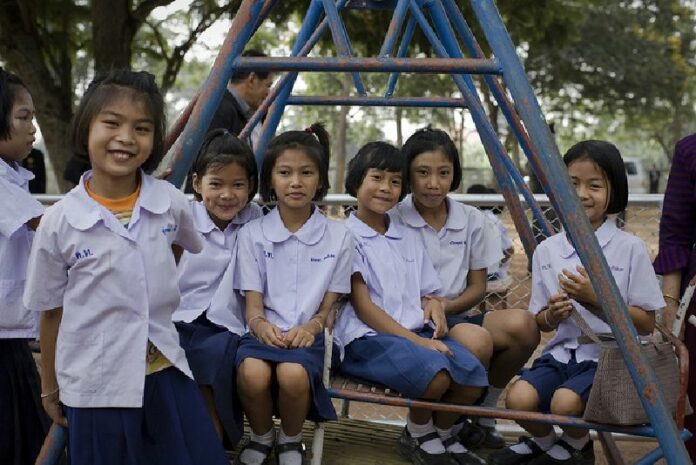
Primary students at a Ratchaburi school in a February 2011 file photo. Photo: Office of the Prime Minister

BANGKOK — From late 2016 all students from grade one to three will spend one hour every day learning English, the Minister of Education announced.

Gen.Daphong Rattasuwan, the Minister of Education said during his visit to a training course for English teachers Tuesday that he intended to greatly increase the hours of English learning for grade one to three students. The plan will quintuple the yearly study time from 40 hours per year at present to 200 hours.  

“I believe that we will succeed if we can make young children no longer feel scared to speak and use English,” said Gen.Daphong Rattasuwan. “They will have the courage to learn, to speak, to reply and this will be a good foundation for development in higher education.”

The policy covers all schools under the care of the Ministry of Education and is scheduled to begin in the second semester of the 2016 academic year.

Grade one to three students currently study English one hour per week.

Thailand is often ranked near the bottom on tables for English proficiency, something which is identified as a weakness when competing economically with other nations. In 2015 Thailand was ranked 62 out of 70 countries in Education First’s annual English Proficiency Index , rated as the third worst in Asia trailed only by Cambodia and Mongolia.


Related stories:

Democrat Slams 3 Years of Education Written Out of Constitution

New History Textbooks To Teach 'Correct Democracy'

Director Defends 'Hitler Scene' in Thai Junta Film


Advertisement

India Overpass Collapse Kills 10 with 150 Feared Trapped

A general view of the collapsed flyover in Kolkata, India, March 31, 2016. Photo: Rupak De Chowdhuri / Reuters  

By Supriyo Hazra and Rupam Jain
Reuters

KOLKATA, India — At least 10 people were killed in the Indian city of Kolkata on Thursday and 150 were feared trapped when a flyover under construction collapsed onto traffic moving along the street below, police said.

Firefighters and residents were trying with their bare hands to rescue those trapped under the wreckage of the metal-and-cement structure that came down near Girish Park in a teeming commercial district.

Television footage from the scene showed a bloody hand reaching out from under what appeared to be a massive girder. People were trying to hand bottles of water to survivors pinned underneath.

"The condition is pathetic. At this moment no one has any clue how many people are trapped," said Raichand Mohta, a police officer at the scene.

A Reuters witness said paramedics had worked to free people from a minibus taxi that was crushed in the collapse.

There was little sign of a coordinated rescue operation, with access for heavy lifting equipment restricted by the proximity of buildings on either side of the flyover and heavy traffic.

The flyover has been under construction since 2009 and has missed several deadlines for completion.

Construction projects in India have long been plagued by lax safety standards.


Advertisement

Thairath Reporter Taken to Army Base for ‘Red Bowl’ Report

Thairath frontpage for its March 28 issue.

CHIANG MAI — A veteran reporter from the largest newspaper said he was detained at an army base in Chiang Mai province for reporting about a festival water bowl that bore messages from ousted Prime Minister Thaksin Shinawatra.

Chaipin Kattiaya said the military held him for interrogation for several hours Wednesday and interrogated him regarding a frontpage report about a Redshirt activist posing with one of the red bowls published Monday. The woman, Theerawan Charoensuk was charged with sedition for the photo.  

Chaipin said he did not take the photo, but found the image online and then sent it to Thairath’s office in Bangkok. He also said he did not do so because he thought it was a political issue, but because it fit the theme of the upcoming Songkran festival. 


Woman Charged With Sedition For Posing With Red Bucket


“I told the soldiers that I didn’t take the photo. I found it on social media,” Chaipin said by telephone Thursday. “And I didn’t have any intention to cause unrest. It was just for Songkran festival news.” 

The water bowls were apparently distributed by the Shinawatra family to its supporters in the northern province. The scoops were printed with the innocuous text “the situation may be hot, but brothers and sisters may gain coolness from the water inside this bucket” and “signed” by Thaksin. 

But for posing with the bowl, Theerawan is now charged with sedition, which carries a maximum penalty of seven years in jail. She will be tried by a military tribunal. 

Chaipin said he was initially summoned by police to a local police station to give testimony as a witness in the charge against Theerawan.  But when he showed up at the station, Chaipin said, he was immediately taken by soldiers to the 33rd Army Circle base. Seven soldiers, including martial court officers, interrogated Chaipin about the red bowl photo, he said. 

“The moment I was transferred to the army camp, I was really frightened. I realized this was not a witness questioning anymore. This was a detention,” he recalled. 

According to the reporter, the soldiers were eventually convinced that he did not have any knowledge about the bowl after they phoned Theerawan and she told them he wasn’t the person who took the photo. Chaipin was released afterwards, but not before he was photographed and his personal details taken, and he was instructed to refrain from reporting about the issue in the future. 

“They said I must exercise my consideration not to do this kind of news again, because it’s sensitive; it may cause division and conflict,” Chaipin said. “They say I wrote it as one-sided news, so the other side was not pleased. They asked for my cooperation.” 

Chaipin, who has worked at Thairath since 1977, said he’s willing to comply with the order, but added that the experience is unprecedented in his career. 

“I never ran into this kind of thing before, because when I report news, I always stay in the middle. I don’t analyze things. I report news as the situation that really happened. I was really frightened [by the brief detention],” Chaipin said. 


Related stories:

Shinawatras Defy Junta With Publicity Drive

A Country Divided by a Calendar

Junta Warns Redshirts Not to Don Red Shirts

Soldiers Confiscate 'Thaksin Strawberry Jam'


Teeranai Charuvastra can be reached at [email protected] and @Teeranai_C.


\

Advertisement

Hot News

LATEST NEWS

Bangkok
overcast clouds
31.6 ° C
33.9 °
30.5 °
69 %
5.8kmh
100 %
Mon
31 °
Tue
34 °
Wed
30 °
Thu
34 °
Fri
33 °