30 C
Bangkok
Saturday, June 27, 2026
Home Blog Page 2792

Foreign Correspondents Being Denied Media Visas

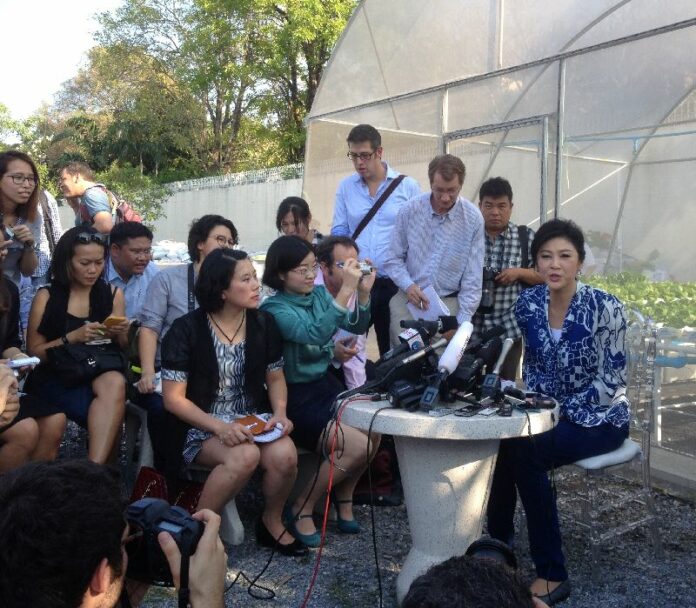
Foreign correspondents are among a crowd of reporters interviewing former Prime Minister Yingluck Shinawatra on Feb. 12 at her home in Bangkok.

By Pravit Rojanaphruk
Senior Staff Writer

BANGKOK — At least 10 foreign correspondents based in Thailand have been denied media visas during the past two months, said the former president of the Foreign Correspondents’ Club of Thailand.

Jonathan Head, who has been tasked with monitoring and responding to issue, said all 10 were bona fide journalists and not fakes, making it difficult to understand the rationale for the Foreign Ministry’s decisions. 

“We still don’t really understand what the Foreign Ministry is trying to achieve,” he said.  “All are doing legitimate media work.”

While Head would not name any of the 10 people, he said some of were freelance photographers and feature writers from small European countries.

None of the 10 has produced any work that could be regarded as critical of the junta or the monarchy, he added.

Head, the BBC’s  Southeast Asia correspondent, refused to speculate as to the ministry’s motives. The policy changes enacted last month introduced a vague rationale for denying media visas for anyone whose “work or behavior which indicates possible harm to the public or constituting any disruption to the public order or to the security of the Kingdom.”

A ministry spokesman has said it is intended to reduce “inaccurate reporting.”

That hasn’t stopped speculation it’s meant to appease the junta by making an example of some foreign correspondents by denying them visas, as they are generally viewed as being critical of the coup makers.

Head said the 10 people he’s aware of are also having difficulty securing alternative status, such as business visas.

Head said the lives of those affected are being damaged.

“I find the whole thing depressing,” he said.

Head said that it seems the Foreign Ministry is trying to narrow the definition of what it considers to be journalists.

The club will seek to engage further with the ministry about the new visa regulations.


Related stories:

Longtime Political Cartoonist ‘Stephff’ Loses Work Permit & Visa

Tough Media Visa Rules Meant to Discourage ‘Inaccurate Reporting’

Ministry Denies Targeting Foreign Media With New Rules

Defamation Suit Hits Veteran BBC Correspondent for Reports on Fraud


Pravit Rojanaphruk can be reached at [email protected] and @PravitR.

Follow Khaosod English on Facebook and Twitter for news, politics and more from Thailand. To reach Khaosod English about this article or another matter, please contact us by e-mail at [email protected].


Follow @KhaosodEnglish

\

Advertisement

Chinese Asylum Seekers Detained After Boat Founders in Storm

Nine Chinese asylum seekers were taken by officials Wednesday back to the beach in Chumphon province where their boat foundered the night before. Photo: Courtesy Lisa Zhang

By Todd Ruiz and Teeranai Charuvastra

CHUMPON — Nine Chinese refugees who tried to leave Thailand by sea were forced to return to shore by stormy weather, and now three are being held on immigration charges.

Two members of a spiritual sect persecuted by Beijing, five activists and two children were among the group which set out from Pattaya in hope of reaching New Zealand when high waves late Tuesday night disabled their yacht, according to the wife of one.

“They were already on the open sea but still near Thailand,” said 35-year-old Lisa Zhang, who recounted their story Thursday from Bangkok. “Strong winds, waves were 3 or 4 meters high, so the boat was very dangerous … and grounded near the [shore]. The water was getting into the boat, so they swam.”

Read: Chinese Journalist Who Defected is Missing From Thailand

Once upon shore, the nine Chinese were taken by police to a hotel. On Wednesday they were taken back to the shore to take photos with the boat and get their belongings, all while being paraded before the press.

Somphorn Asi-uko, a local official of Chumphon province’s Pathio District in, said four of the nine people didn’t have passports with them, but all had certificates verifying their status as asylum seekers issued by the UNHCR.

Zhang said she and her husband, 43-year-old Song Zhiyu of Hepai province, are members of China’s banned Falun Gong movement and had been living in Thailand for some time while seeking formal refugee status and eventual resettlement.

While Thai authorities in the past had mostly left Falun Gong in Thailand alone, she said they have been raiding homes and harassing them during the past year.

Before leaving by boat Monday, Song and other asylum seekers feared being deported back to China as Bangkok grows increasingly close to Beijing.

Lisa said remaining in Thailand was growing too difficult, so her husband chipped in about USD$6,000 to cover the expenses of the trip.

“We have no hope, we can’t work here, we’re not safe here,” she said. “It’s too difficult for us.”

She didn’t go due to the expense – and her fear.

“I’m afraid something will happen, afraid I will die,” Lisa said. “Afraid they will die.”

Somphorn said rescue workers found the yacht, the MW Marine, beached with hull damage caused by a rock off Thungsang Beach in Pathio district. Rescue workers and police officers inspected the scene and found it was captained by Li Xiaolong, his wife and two children. No one was injured.

Zhang said her husband Song, Li and Li’s wife are being held on immigration violations. She said immigration police took Li’s infant baby away, while the other four members of the group who had valid visas and remained free grabbed the 7-year-old child away from the authorities.

Asylum seekers typically live off the grid in Bangkok as Thailand does not recognize their legal status and sometimes prosecutes them for entering the country illegally.

In 2015, Bangkok forcibly returned more than 100 Uighur refugees discovered transiting in the south of Thailand. They were flown back to China in blindfolds and described as “terrorists” in Chinese media.

A number of Chinese dissidents have vanished while in Thailand. Li Xin, a democracy activist and journalist, vanished in January and hasn’t been seen since. Gui Minhai, a bookseller from Hong Kong, disappeared from Pattaya in October. He eventually showed up in China and speculation ran that he was abducted by Chinese agents.

Correction: An earlier version of this story indicated Lisa Zhang was not a member of Falung Gong – she is. Li Xiaolong’s name has been updated to reflect its preferred transliteration.

Advertisement

Convicted TV Host Ends His Career Amid Pressure

Sorayuth Suthassanachinda at the Criminal Court in Bangkok, Feb. 29.

BANGKOK — Thailand’s best-known TV personality Sorayuth Suthassanachinda announced he will end his 20-year career under pressure to step down after he was convicted of fraud.

The host, sentenced Monday to 13 years in prison for embezzling millions from a state-owned channel, said Thursday afternoon through his Instagram that he will end his role as TV anchor. 

“From this evening, I will end my duty as a host,” Sorayuth wrote. “So that Channel 3 will not be affected and also for the sake of peace of mind for all sides involved.” 

He ended with his announcement with the words “Until we meet again.”

The host ended his official announcement by giving thanks for all support he received. Sorayuth has worked in Thai television for two decades years. 

When Sorayuth returned to host his popular morning show Tuesday, one day after being convicted by the Criminal Court, he and Channel 3 announced that he’d continue hosting while his appeal was underway.

That didn’t stop calls from media associations and critics for Channel 3 to take him off the air. They said his lack of credibility obligated Channel 3 to show responsibility and be a role model.

Related Stories: 

TV Celebrity Sorayuth Gets 13 Years for Embezzling Ad Revenue

Channel 3 Under Pressure to Pull Convicted Host Sorayuth


\

Advertisement

Burnt out on Tourist Traps? Keep it Real in Chanthaboon (Photos)

CHANTHABURI — Next road trip skip the floating markets, elephant rides and faded beach towns for a more genuine experience in a centuries-old riverside community free of 7-Elevens and crass commercialism.

Drive three hours southeast of Bangkok and 300 years into the past to the Chanthaboon riverside community, which runs about a kilometer alongside Chantaburi city’s river and is dedicated to keeping things there Ayutthaya-period old school.

Walk along the narrow street and be reminded of Chiang Khan in Loei province, but find its charms don’t vanish with tacky shops run by outsiders. Chanthaboon is a 7-Eleven-free community. Instead of franchise convenience stores, Chanthaboon residents preserve their way of life by sticking to what has always worked and refused to go the way of touristy floating markets at Amphawa or Damnoen Saduak.

Not to say it’s untouched by time with residents weaving baskets.

From the province’s first ice-cream shop and local grocers to what Bangkokians would call “pop-up” stalls set up casually in front of homes, Chanthaboon’s laid-back values and venerable vibe make it a place to feel truly welcome, instead of tolerated for your baht.

Chantaburi city itself is a mini-melting pot. The Cathedral of the Immaculate Conception sits a short walk from Wat Khet Na Bun Ya Ram in the heart of the community. Thais, Chinese and Vietnamese immigrants live inside decades-old shophouses built in European, Chinese and Thai styles.

Going there

From Bangkok by car: Head southeast from Bangkok on the Chon Buri Expressway to Route 344 for about 100 kilometers to Route 3. After about 50 kilometers, head into town along Route 3493 and 3153. The Chantaboon community is located along Sukhaphiban Road. Or just set your navcom.

From Bangkok by bus: Air-conditioned buses leave the Eastern Bus Terminal next to BTS Ekkamai, and vans run hourly from the stands around Victory Monument. Both are 200 baht each way. The journey from Bangkok to the Chanthaburi transpo hub takes nearly four hours. Once in town, grab a moto taxi to the Chanthaboon community for 20 to 25 baht.

'Rocket Ice Cream'
‘Rocket Ice Cream’
\
\
\
\
\
\
\
\
\
Advertisement

Yingluck Allies Blast Threat of Lawsuit Over 2014 Election

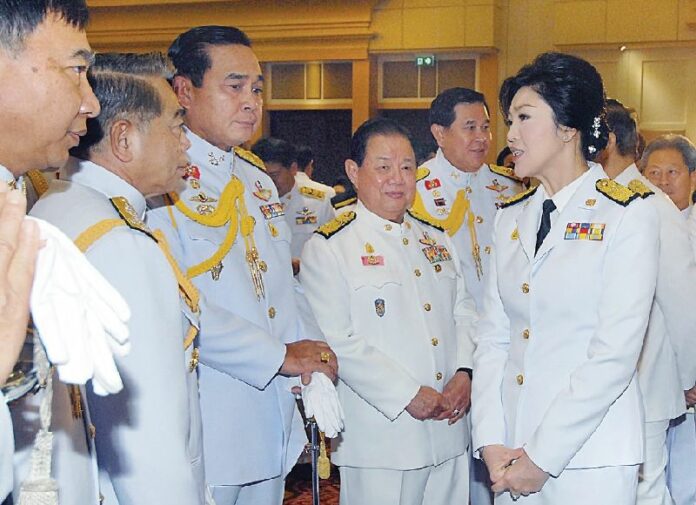
Prime Minister Yingluck Shinawatra talks with army chief on Gen. Prayuth Chan-ocha at the Army Club in Bangkok on Dec. 3, 2013, one week before she dissolved Parliament and called for fresh elections.

By Teeranai Charuvastra
Staff Reporter

BANGKOK — Supporters of Yingluck Shinawatra have lashed out against the prospect she may be sued for organizing a 2014 election ultimately derailed by the anti-government protesters besieging her government.

While no member of the Election Commission has confirmed media reports that it intends to file such a suit over the 2014 election, a high-ranking member of Yingluck’s Pheu Thai Party, which led the pre-coup government, reacted with astonishment.

“How has the world turned upside down like this? This is some ‘Thailand Only’ stuff,” said Pheu Thai deputy leader Chavalit Vichayasut. “They used something that she performed legally under her duty to sue her for damages. Is this justice? How can there be reconciliation and unity in our country?”

According to media reports Thursday, the Election Commission will accuse Yingluck of causing financial damage to the state by organizing an election that she knew would be scuttled anyway. 


An Enemy of Election At Home, Thai EC Observes Scotland Referendum


The reports cite an anonymous source on the commission saying the lawsuit is being kept secret from the public for fear that it will “cause conflict in society.” 

“She allowed the election to be arranged even though there were warnings about the incident that was bound to happen,” the source said, adding that Yingluck will stand trial on charges of malfeasance and negligence of duty. 

The 48-year-old Yingluck’s supporters on social media responded with anger at the news.

“Yingluck had no power to cancel the election, and if she didn’t organize an election within the timeframe mandated by the constitution, she would have also been guilty,” wrote Facebook user Pongtawas Max Prommawan in reply to a BBC Thai story. “Strange things in Thai politics are endless.”

Another commentator said it was absurd for the nation’s elections agency to sue anyone for organizing a vote.

“Instead of prosecuting the people who blocked and disrupted the election, they prosecute the people who ran for the election,” wrote Facebook user Ang Yee. “The EC is ridiculous.” 

The February 2014 election was announced two months after Yingluck dissolved the parliament to appease anti-government protesters demanding her ouster. In response, protesters led by a hardline conservative group called the People’s Committee for Absolute Democracy With the King As Head of State, or PCAD, mobilized to forcibly disrupt and block voting in 14 southern provinces and 15 districts in the capital.

\

In this Jan. 26, 2014 file photo, police officers escort a woman away from a group of anti-government protesters who were besieging a polling station in Bangkok's Bueng Kum district.

The Constitutional Court voided the results on the grounds that all provinces did not vote on the same day. The government was lobbying the commission for another poll when the military seized power in May 2014.

Many Pheu Thai members have accused the commission of siding with the protesters because it refused Yingluck’s request to hold fresh elections after the court nullified the poll.

Pheu Thai’s Chavalit said the case is further political persecution perpetuated by those behind the 2014 street protests.

“This fact is known throughout the country. Which political group tried to disrupt the election and prevent the election from being successfully organized?” Chavalit said. 

Related Stories:

Opponent of 2 Feb Poll To Prosecute Opponents of 2 Feb Poll

Next Election May Take Place '1-2 Years' From Now

Election Commission Gives Up On Advance Voting

PCAD Protesters Crash Election Forum 


Teeranai Charuvastra can be reached at [email protected] and @Teeranai_C.


\

Advertisement

Cambodian Leaders Rev Up Facebook Rivalry

In this June 28, 2015 file photo, Cambodian Prime Minister and President of Cambodian People's Party Hun Sen, center, greets his party supporters after the party's 64th anniversary at its headquarters in Phnom Penh. Photo: Heng Sinith / Associated Press

PHNOM PENH, Cambodia — Cambodia's long-ruling Prime Minister Hun Sen and exiled opposition leader Sam Rainsy have gotten an early start on campaigning for elections in 2018, vying for "likes" in Facebook as the political role of social media grows among the country's youthful electorate.

Both Hun Sen and Sam Rainsy tend to favor a casual approach, like Sam Rainsy riding a bicycle in the snow, or standing at the beach in a swimsuit. Hun Sen, swathed in a plush, white terrycloth bathrobe, clutching two mobile phones in the dark; sitting on the ground eating noodles, watering flowers or hugging his grandchildren.

"Technology can make you ubiquitous," said one of Sam Rainsy's recent posts. Given his nearly daily updates from villages, ceremonies and golf courses, Hun Sen appears to agree.

With a general election due in 2018 and local polls next year, Hun Sen increasingly is using Facebook as a way to answer public complaints, monitor dissent and polish his public image. On Feb. 8, he ordered government officials to set up a working group to track citizens' complaints and appeals.

"We are in a pre-election campaign already," said Jonathan Bogais, an expert on Southeast Asia at the University of Sydney. "Hun Sen knows it will be very difficult so he is taking action early."

Cambodia got a late start: Software enabling use of the local language Khmer script was only developed about a decade ago. But since then the country has leapfrogged straight into digital politics.

Now, almost all adults in Cambodia own mobile phones and nearly a third say they have Facebook accounts, according to an Asia Foundation study compiled in 2015.
 

\
Sam Rainsy, leader of the opposition Cambodia National Rescue Party, waves from a car Aug. 16 upon arrival at Phnom Penh International Airport in Phnom Penh, Cambodia. Photo: Heng Sinith / Associated Press


More Cambodians rely on Facebook for news than on the radio, though television still is their leading source of information, the Asia Foundation study showed.

Cambodia has not invested in the kinds of sophisticated surveillance technology used to police the Internet in communist-ruled China, and is unlikely to do so, says Tharum Bun, a blogger and communications specialist based in Phnom Penh.

"I believe the government won't go down that road because it's going to be a significant setback to do that," he said. "A win-win strategic approach is to utilize the Internet, Facebook and digital platforms for social listening as well as for a modern-time media machine."

It's impossible to know how accurate a measure of popularity Facebook "likes" can provide. Most popular in Cambodia, as of Tuesday, was Voice of America in Khmer, with nearly 3 million "likes." Hun Sen had 2.84 million and Sam Rainsy had 2.2 million, substantial followings for a country of about 15 million people.

Hun Sen's grandfatherly images on Facebook belie his reputation as a sometimes ruthless ruler. Social media can also be a potent weapon for damaging reputations.

Over three decades in power, Hun Sen has long exerted strong control over traditional media, and expressing public dissent in Cambodia remains risky. The government has tightened controls on telecommunications and threatens prosecution of online critics, especially those commenting on Hun Sen and his family.

But while the government still engages in violent repression at times, Hun Sen is a master of political strategy and mindful of the changing mindsets of Cambodians, apparently viewing Facebook as a way to exert control in a subtler, nonviolent way.

"Now he faces a very different situation with social media. It cannot be controlled through hard repression," Bogais said. "He has to ensure he takes control and reinforces a 'benevolent autocrat' image."

Hun Sen denied that a Facebook page set up after his party lost more than 20 parliamentary seats to Sam Rainsy's Cambodia National Rescue Party in a 2013 election was his, until September, when after his page logged more than 1.3 million "likes" he started posting frequent updates.

"All Cambodian compatriots, for the sake of our country's progress, especially to promote people's livelihoods, please join with Hun Sen to prevent and eradicate corruption by sending messages or documents to this 'inbox'," he said in a post Monday.

Sam Rainsy, cut off from traditional media and facing possible arrest if he returns home, has little choice but to rely on his Facebook page and other alternatives.

Both men's posts are aimed at younger Cambodians who form nearly 40 percent of the electorate, grew up as their country opened to the outside world and aspire for more. Older Cambodians still haunted by the bloody rule of the Khmer Rouge in the 1970s, when about a quarter of the population died from torture, overwork, starvation, executions and illness, may be more satisfied with peace and growing prosperity, said Bogais.

Social media is opening Cambodia in positive ways, Tharum Bun said.

"To be a popular digital democracy ruler on Facebook, Cambodian leaders have to be more accountable and transparent to their citizens," he said. "Who reads press releases anymore when a picture worth a thousand words can potentially go viral?"

Story: Elaine Kurtenbach and Sopheng Cheang / Associated Press


Advertisement

French Butcher’s Exquisite Meat Doesn’t Cost an Arm or Leg

45-day, dry-aged ribeye and sides.

BANGKOK — At Arno’s, don’t be confused by the menu listing only value-oriented wines instead of food. Nor the waiter who doesn’t take your order. Instead turn your attention to the jovial Frenchman behind the glass counter waving a cleaver and hacking away at cuts of beef he’s aged for 45, 75 and 100 days. Master butcher Arnaud Carre will take care of you.

Arno’s diners might feel like they’re in a butcher’s shop rather than a restaurant, and that’s because Carre is, first and foremost, a butcher. His rise to steak-serving stardom wasn’t planned, actually his original plan was to supply Bangkok with honest-to-goodness aged beef at reasonable prices. Imported beef faces heavy duties and local beef suffers from gristle and odd cuts that don’t showcase the marbling or nuanced flavors of the meat.

Carre is changing that by bringing his French butchery expertise and undercutting the competition, offering quality meat at prices unheard of in Bangkok.

What started as a small dining area for wholesale customers to sample his wares grew into a full-fledged restaurant after Carre experienced soaring demand for aged steaks at prices hyped-up Sukhumvit joints can’t dream of.

When I walked up to the counter, clearly struggling with all the choices, Carre stepped in to help. He sized me up, explained the goods (the longer the meat ages, the more intense and funky the flavor becomes), and broke down what he thought would work best: a kilo of 45-day, dry-aged ribeye. Seconds later a piece of deep red meat was removed from the display and hacked up with utmost precision and whisked out of sight.

We then sat down at the table after the lesson in butchery at the showcase. The process of selecting meat like you’re in a supermarket and then being seated is what really drives home the fact that this isn’t totally a restaurant. A red and white checkered tablecloth and chintzy decor makes it seem like ambience is an afterthought, but still the house is consistently full.

Then the meat hit the table in a fanfare of sizzles. An aroma of corn and hay filled the air while the popping and crackling steak sat on a hot plate surrounded by quartet of sauces: mushroom, pepper, truffle, and Thai.

There’s really no way to cook a steak that can replicate the nuanced flavors of dry-aged meat. As the steak sits in a temperature-controlled environment under Carre's watchful eye, naturally occurring enzymes work their magic on the cut and turn proteins and fat into flavors that satisfy some deep-rooted primal carnivorous urge and leave diners saying “damn, that’s some good steak!” with smiles on their faces.

And the best part? The smiles stick around even when the bill arrives. The sublime piece of meat I ordered came to 1,400 baht. Poke around any popular Sukhumvit steakhouse and you’d be hard pressed to find dry-aged cut near that price point.

Arno’s is open 6pm to 10pm Tuesdays through Fridays and 11:30am to 10pm on weekends. It’s located on Soi Naradhiwas Rajanagarindra 20 (Soi Olarik) in Bangkok’s Yan Nawa district.

Advertisement

Watana Charged for Criticizing Junta Deputy Chief’s 'Sexist' Comments

Watana Muangsook enters the court Thursday morning in Bangkok.

BANGKOK — Watana Muangsook, a senior member of the Pheu Thai Party, has been charged with computer crimes for criticizing a deputy junta chief’s sexist comments about former Prime Minister Yingluck Shinawatra.

A day after the former MP was taken into custody by soldiers, he arrived at the Bangkok South Criminal Court this morning to hear a charge of violating the Computer Crime Act, for a message written Tuesday on Facebook critical of Deputy Prime Minister Prawit Wongsuwan.

“I was escorted by soldiers from my house to the 11th Military Circle for criticizing the deputy prime minister’s interview given around 11.30am on Tuesday. I was later locked in a 5-by-8 meter room and interrogated by two sets of soldiers until I was escorted to the Nang Loeng police station at 9:30pm,” Watana wrote online Thursday morning, saying he was freed and arrived home around 11:10pm last night.

Military officers visited Watana’s house on Wednesday morning after the Pheu Thai member criticized Gen. Prawit as sexist for telling reporters that soldiers were shadowing the former prime minister because “she was pretty.”


Soldiers Stalk Yingluck Because She’s Pretty: Deputy Junta Chief


“His IQ is a little too low,” Watana posted Tuesday on Facebook, attacking the junta for intruding on Yingluck privacy by routinely stalking and photographing her.

\Gen. Prawit, who also serves as deputy chief of the National Council for Peace and Order, or NCPO, told reporters Wednesday that Watana would have his attitude adjusted again and again until he learned not to speak about certain issues. 

“They will adjust his attitude [to understand] he shouldn’t speak at the moment. I have already told him about this since a long time ago,” Prawit said. “If he speaks 100 times, he will be summoned 100 times. And in the future, it will take 3 days, 7 days.” 

Watana’s offending Facebook post, which was accompanied by a photo of Gen. Prawit, reads in full:
 

“‘His IQ is a little too low

“I could barely believe my own ears when I heard a government member telling reporters that the case of soldiers intruding on Prime Minister Yingluck’s privacy at a funeral: ‘it wasn’t intimidation. We were providing her security. They took photos of her probably because they thought she was pretty.’ These words show sexual degradation. Importantly, the person who said this is a former army chief, who’s presently deputy prime minister and deputy chief of the NCPO, and the same person who heads the Veterans Council that is facing allegation about his canal works. 

“I believe that even elementary school kids know that Prime Minister Yingluck is a lady, a family woman, and a mother. She has never used barbaric words like someone else. What surprised me is this: Have his family or his school never taught him how to treat a woman with dignity? Even my mother, a rural woman who graduated only from the fourth grade, taught me to think before I speak. Gen. Chatichai [Choonhavan, former prime minister] also taught me ‘Politicians must think before speaking about anything. If you just stay silent, people wouldn’t know you’re stupid.’ I remember his words to this day. But I never expected to see apology from these people, because even though they seized power from the people and caused immense damage to the people, these same people are still shamelessly demanding gratitude from the people. And they show their lack of shame by refusing to return power to the people. 

“From the day the NCPO seized power under the excuse of building reconciliation and national reform, the country took an unprecedented plunge. Society is even more divided because the government and NCPO pose themselves as belligerents. They urge people to respect laws and legal procedures, but the NCPO never set themselves as an example of responsibility. They don’t respect laws and they discriminate. The NCPO never oppose amnesty and express their willingness for scrutiny, yet they avoid scrutiny in every way. They resort to power under Article 44, giving amnesty to themselves for what they did wrong. And in the latest case, they [will] use Article 270 of Mr. Meechai’s constitution draft to absolve their wrongdoing. And while these men in uniform are running away from scrutiny, our former Mrs. Prime Minister – the one that you sent someone to photograph and covered it up by saying she was pretty – is attending court again on March 4. She will be scrutinized for the allegations against her. 

“So, before you accuse anyone or demand anyone to come back to contest their charges, you must set yourself as an example first. Don’t be a man only in your title of “Mr.” I’m embarrassed for you.”

Additional reporting Teeranai Charuvastra


Related Stories:

Junta Bars Pheu Thai's Watana From Leaving Country

Soldiers ‘Politely’ Stalk Pheu Thai Politician

Politico Accuses Soldier of Punching Him 

Ex-Pheu Thai MP Appeals Junta’s Travel Ban


Chayanit Itthipongmaetee can be reached at[email protected] and @chayaniti92.


\

Advertisement

MH370: Mozambique Wreckage Could be From Missing Plane

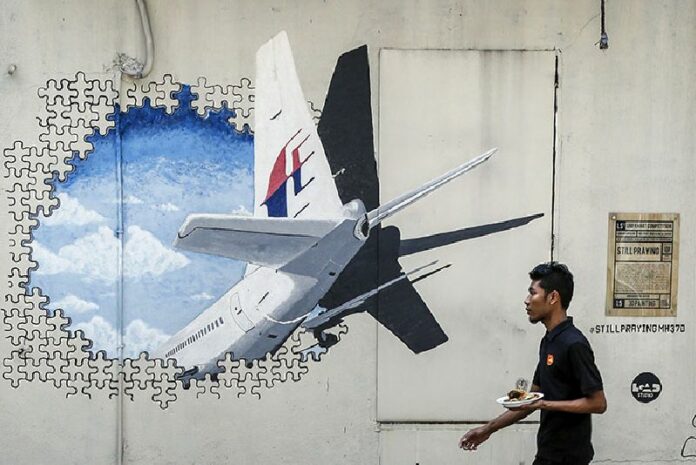
A waiter walks past a mural of Malaysia Airlines Flight 370 outside Kuala Lumpur, Malaysia, on Feb. 23. Photo: Joshua Paul / Associated Press

WASHINGTON — Debris that washed up in Mozambique has been tentatively identified as a part from the same type of aircraft as the missing Malaysia Airlines Flight 370, a U.S. official said Wednesday.

Photos of the debris discovered over the weekend appear to show the fixed leading edge of the right-hand tail section of a Boeing 777, said the official, who spoke on condition of anonymity because he wasn't authorized to speak publicly. Flight 370, which disappeared two years ago with 239 people aboard, is the only known missing 777.

People who have handled the part, called a horizontal stabilizer, say it appears to be made of fiberglass composite on the outside, with aluminum honeycombing on the inside, the official said.

The Australian Transport Safety Bureau, which is running the search for the plane in remote waters off Australia's west coast, said the part was expected to be transported to Australia for examination.

Malaysian transport minister Liow Tiong Lai also confirmed in tweets about the discovery that it appears the debris may have come from the missing plane.

"Based on early reports, high possibility debris found in Mozambique belongs to a B777," Liow said in a series of tweets.

"It is yet to be confirmed & verified. @dca_malaysia working w Australian counterparts to retrieve the debris." He urged "everyone to avoid undue speculation as we are not able to conclude that the debris belongs to #mh370 at this time."

\
A piece of aircraft debris with the words "NO STEP" photographed after it was found washed up on a beach in Mozambique.  Photo: Blaine Gibson / Australian Transport Safety Bureau via AP
 

Australian officials have seen photographs of the debris and have been in communication with Blaine Gibson, the American man who found the part, said Dan O'Malley, a spokesman for the Australian Transport Safety Bureau.

"We're aware of these reports that debris has been found in Mozambique," O'Malley said. "We're working with officials in Mozambique and Malaysia to investigate."

Australia will work with Malaysian investigators to examine the object once it arrives in Australia, he said. The ATSB hasn't made any determinations yet about the potential origins of the debris.

"We have to wait until we have the actual debris examined," O'Malley said. "We're not going to draw conclusions from the photos."

Flight 370 disappeared on March 8, 2014, while flying from Kuala Lumpur to Beijing with 239 people on board. Radar data show the plane turned sharply around as it approached Vietnamese airspace, and then flew back across the Malay Peninsula until contact was lost off the coast of Thailand.

Authorities who scrutinized data exchanged between the plane's engine and a satellite determined that the jetliner continued on a straight path across the Indian Ocean, leading them to believe that the plane flew on autopilot for hours before running out of fuel and crashing into the water.

Despite an exhaustive search of the ocean west of Australia, where the plane is believed to have crashed, the only confirmed trace of the aircraft has been a wing part known as flaperon that washed ashore last July on the French island of Reunion off the east coast of Africa — about 2,300 miles (3,700 kilometers) from the current search area.

The flaperon bore a stenciled internal marking "657 BB," which is consistent with a flaperon from a Boeing 777.

Nothing of the passengers, their luggage or even things designed to float, such as life jackets, has been discovered despite the largest and most expensive search in aviation history.

Australia has led the multinational search effort, which also includes the Malaysian and Chinese governments.

The discovery in Mozambique is unlikely at this stage to impact the underwater search for the plane, taking place thousands of miles to the east, O'Malley said.

Authorities have long predicted that any debris from the plane that isn't on the ocean floor would eventually be carried by currents to the east coast of Africa.

Australia's Transport Minister Darren Chester said in a statement Thursday that the location of the debris in Mozambique matches the ATSB's drift modeling and would therefore reaffirm that search crews are looking in the right part of the Indian Ocean for the wreckage.

With authorities unable to find the plane and its "black box" flight data and cockpit voice recorders, investigators are no closer than they were two years ago to discovering the cause of the aircraft's disappearance. There are many theories, including that a rogue pilot deliberately caused the $250 million jet to vanish, but little hard evidence.

With the search tentatively scheduled to wrap up later this year, Flight 370 may become one of aviation's great unsolved mysteries.

In the aftermath of the plane's disappearance, the airline industry and aviation authorities around the world pledged to find ways to better track airliners, especially over expanses of ocean where there's no radar coverage/

Story: Joan Lowy / Associated Press

Advertisement

Marine Biologists in Argentina Investigate 23 Dead Dolphins

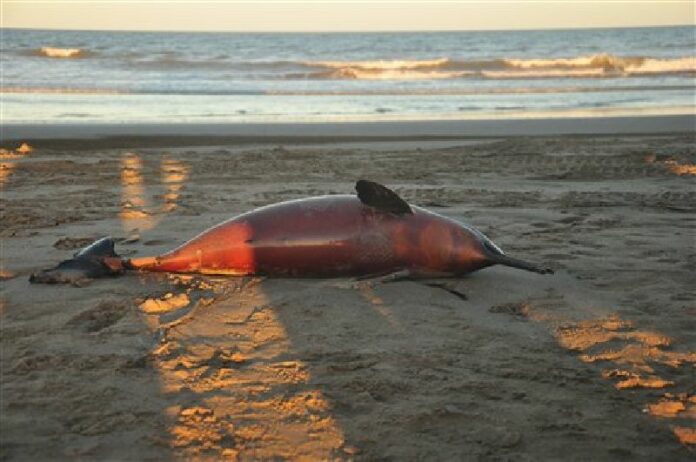
This Feb. 24, 2016 photo released by Fundacion Mundo Marino, or Marine World Foundation, shows a dead dolphin on a beach in La Costa district in Buenos Aires province, Argentina. Photo: Fundacion Mundo Marino  / Associated Press

BUENOS AIRES, Argentina — Marine biologists said Wednesday that they are trying to understand why 23 endangered Franciscana dolphins have showed up dead on several beaches.

Gloria Veira, spokeswoman for the Mundo Marino foundation, told The Associated Press that the animals were found last week.

Veira said the majority had strange markings on their snouts. She said they were found on beaches south of Buenos Aires, such as La Lucila, Aguas Verdes, Santa Teresita and Las Toninas.

Specialists were struck by the number and that they died at the same time, Veira said.

She said marine biologists so far believe climate change or large-scale fishing could be factors.

The Franciscan is an endangered species recognized by its long, slender beak. It is only found in waters off Argentina, Uruguay and Brazil.

Story: Associated Press

Advertisement

Hot News
LATEST NEWS

Bangkok
overcast clouds
30 ° C
30 °
30 °
74 %
4.4kmh
100 %
Sat
29 °
Sun
36 °
Mon
35 °
Tue
33 °
Wed
32 °