32.2 C
Bangkok
Thursday, June 25, 2026
Home Blog Page 2795

Red Cups and Hip-Hop Tonight at Badmotel

Photo: Redcup

BANGKOK — Walk into a frat house at an American university on a Saturday morning and find every surface covered with red plastic cups, all half-full of stale beer.

Now the red cup, a symbol of hard-partying college life and the foundation of the drunken sport that is beer pong, has a champion in Thailand named Nonthapat Montolsophon, who has made it his mission to champion the culture of the cup ever since he and his buddies sat around in college watching “American Pie” and decided to add them to the parties he was organizing at the time. 

Beer pong with red solo cups is what’s slated for tonight at Pop@Bad, a hip-hop party at Thonglor institution Badmotel. 

Now 27, Nonthapat has taken the red cup culture nationwide with retail distribution of the cups and associated parties in Bangkok and Chiang Mai.

“Some people think it’s just a plastic cup, sure, but according to the comments we get on our Facebook, there’s a huge group of people who understand the party culture and get their friends into it,” he said.

He said it’s evident not only on social media but campuses as well.

“Most of our customers are college students, they buy the cups and host parties in their dormitory or condo.” he said. “Customers can buy the cups directly from the Facebook page.”

Pop@Bad starts at 9pm at Badmotel’s fourth floor rooftop bar.


Advertisement

Monarchy Critic Faces Charge for 2013 Interview

A still image from the March 12, 2013, interview with Somsak Jeamteerasakul on Thai PBS. Image: YouTube

BANGKOK — Police have reopened a criminal investigation into a former history professor who criticized the monarchy in a interview broadcast nearly three years ago, a deputy police commander said Thursday.

Several people have filed complaints of royal defamation against Somsak Jeamteerasakul, who is now living in exile in France, since the interview was aired March 2013  on Thai PBS, but police previously had not taken any action, according to Police Gen. Sriwarah Rangsipramkul.

“I was just assigned to oversee the investigation into the complaints recently,” said Sriwarah, who was appointed deputy chief of Royal Thai Police in November. “So, I still have not deliberated on the content of the show, whether it is considered illegal.” 

If so, he said, Somsak and other people involved in the TV program will be charged under Section 112 of the Thai Criminal Code, which outlaws any negative remark about the Royal Family, with a maximum penalty of 15 years in prison. 


State TV Fined For Airing Monarchy Debate


“Apart from the people who appeared in the program, executives of Thai PBS TV station will also face prosecution,” Sriwarah said. 

On March 12, 2013, Somsak, then a history professor at Thammasat University, appeared on Thai PBS’ talk show Tob Jote (Answering Questions) for its episode on the monarchy and constitution. 

Throughout the interview, Somsak argued that the power and influence currently wielded by the Royal Family exceeds the limits imposed by the legal framework of the modern constitutional monarchy. 

The interview, broadcast during prime time on a state-owned TV station, was a rare display of skepticism toward the monarchy, where discussion about Royal Family is not only taboo, but potentially illegal.

The segment prompted a protest by hardline royalists at Thai PBS, and station executives abruptly canceled the rest of the episodes. The show Tob Jote was also later taken off the air. 

Somsak fled Thailand shortly after royalist army generals seized power in May 2014. He said he is now living in exile in France. 

In February 2015, Thammasat University expelled Somsak on the grounds that he repeatedly failed to show up for work. 

Related Stories:

Fugitive Academic Says Soldiers Harassed His Mom, 92

Thai Junta Chairman Vows to Hunt Down Critics of Monarchy

Thai Minister Asks French Diplomat to Extradite Lese Majeste Suspects

30 Years In Prison For Facebooker Who ‘Insulted’ Monarchy


Teeranai Charuvastra can be reached at [email protected] and @Teeranai_C.


\

Advertisement

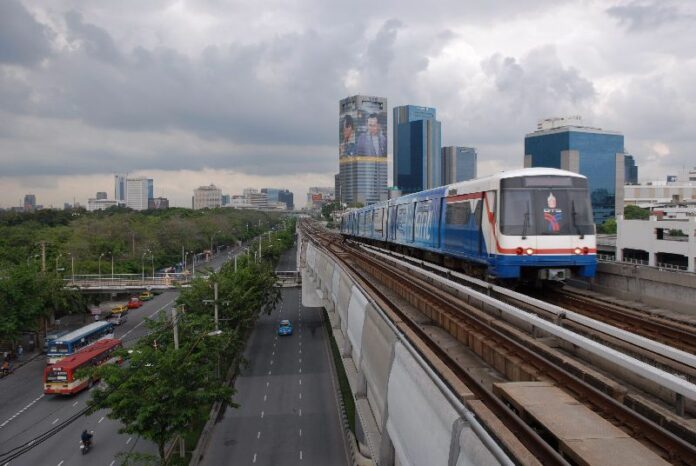
BTS Skytrain Offers 2 Free Trips to Appease Commuters

BANGKOK — The BTS Skytrain will compensate commuters affected by crippled service on Wednesday, and even those not directly affected may exploit the offer.

The Bangkok Mass Transit System Public Co. Ltd. announced Friday morning that passengers who experienced delays or abandoned their fares Wednesday are eligible to receive two free rides.

The only requirement is holding a valid Rabbit Card or 30-Day SmartPass with trips remaining as of Wednesday.
 

The free trips can be added at any BTS ticket booth beginning Tuesday through April 30.

On Wednesday morning, thousands of passengers were left stranded after a switching problem between the BTS Siam and Chit Lom stations resulted in reduced train frequency.

Service returned to normal Thursday after the switching system was repaired overnight.


Related stories:

Crippled BTS Service to Limp on Till Morning


Chayanit Itthipongmaetee can be reached at[email protected] and @chayaniti92.


\

 
Advertisement

Erawan Shrine Bombers First Targeted Pier for Chinese Tourists

Chinese tourists dine on board a boat at a pier at Chao Phraya river in Bangkok Feb. 16, 2016. Photo: Jorge Silver / Reuters

By Amy Sawitta Lefevre and Andrew R.C. Marshall
Reuters

BANGKOK — The perpetrators of last year's deadly explosion at a Bangkok shrine originally chose a pier packed with Chinese tourists as their primary target and had amassed enough chemicals to make 10 equally powerful bombs, the chief of Thailand's police bomb squad told Reuters.

A bomb planted at the Erawan Shrine on Aug. 17 killed 20 people and turned a popular tourist site into a scene of carnage.

Another device, which was left at a crowded pier on Bangkok's Chao Phraya river but failed to explode, might have inflicted much greater casualties, said a leading security analyst.

Bomb squad chief Police Colonel Kamthorn Auicharoen's disclosures to Reuters bolster a widely held theory that the perpetrators of the shrine bombing were trying to kill Chinese tourists.

The Thai police have maintained that the motive for the Erawan bombing was Thailand's earlier crackdown on human smuggling networks.

But many analysts, diplomats and even Thai officials say the Aug. 17 bombing was likely an act of revenge for Thailand's deportation to China of more than 100 Uighur Muslims in July.  

Acknowledging that Chinese tourists were intentionally targeted could dent one of Thailand's biggest industries. A record 7.9 million Chinese visited the kingdom in 2015, or more than a quarter of the 28 million tourists that year.

Tourism is one of the few thriving sectors of an economy that has floundered since the military seized power in a May 2014 coup.

When asked about the Bangkok bombers' possible targeting of Chinese citizens, Foreign Ministry spokeswoman Hua Chunying told reporters on Thursday that attacks against civilians around the world, including Chinese, were increasing.

"We believe Thai authorities can severely punish the murderers according to law," said Hua.

Thai police have uncovered evidence in the shrine bombing that points to a large and well-organized network, according to experts and documents reviewed by Reuters.

Dangerous chemicals and other materials discovered in Bangkok apartments connected to two suspects could have made ten more bombs, said bomb squad chief Kamthorn.

Warrants For 15

Yusufu Mieraili and Adem Karadag, the two suspects arrested last year by police, are Uighur Muslims from China's restive Xinjiang region. Hundreds of people have died in recent years in unrest in Xinjiang, where most Uighurs live, and in attacks elsewhere in China attributed to Uighurs.

Exiles and human rights groups say those Uighurs engaging in violence are lashing out at oppressive government policies that restrict their culture and religion. Beijing denies this and blames Islamist militants for the rise in violence.

The two suspects appeared in a Bangkok military court on Feb. 16 to hear the ten charges against them, including murder and illegal possession of explosives. Both men say they are innocent.

Police have issued arrest warrants for 15 other suspects, many of whom are thought to be Turkish or in Turkey. Thai police turned down repeated requests by Reuters for information about the investigation. National police chief Jakthip Chaijinda declined several interview requests.

The military indictment, which Reuters reviewed, accuses the men of planting the first bomb at the Chao Phraya Princess Pier where hundreds of Chinese tourists gather each day to board dinner cruises along the river.

It failed to detonate, and after two or three hours, was taken away by a blue-shirted figure later identified in an arrest warrant as an "Asian man".

He was then caught on security cameras further upriver, kicking a bag thought to contain the bomb into the water. It exploded harmlessly the next day.

The Erawan shrine bomb went off at around 7 p.m. on Aug. 17, killing mostly Chinese or ethnic Chinese tourists. Kamthorn believes the bomb "might not have happened" had the bomb at the pier functioned.

\

Chinese tourists wait for a boat at pier at Chao Phraya river in Bangkok Feb. 16, 2016. Photo: Jorge Silver / Reuters

Higher Casualties

Assuming it was a target on Aug. 17, the pier would "certainly make sense" because it caters almost exclusively to tour groups mainly from China, said Anthony Davis, a Bangkok-based analyst at security consulting firm IHS-Jane's.

"Had a device similar to that used at the Erawan Shrine exploded there, casualties would almost certainly have been significantly higher and overwhelmingly from mainland China," he said.

The choice of the pier, which doesn't cater to regular commuter ferry services, suggested the attackers had "clearly done their homework," Davis added.

"Most Bangkokians would be unaware of the existence of this pier and its importance to the Chinese tourist industry in the city," he said.

The attackers had also stockpiled a long list of chemicals and explosives at two Bangkok apartments, according to the indictment by Thai military prosecutors seen by Reuters.

These included two, 5-liter bottles of what the indictment said was triacetone triperoxide (TATP), a highly unstable explosive which has long been favored by militants.

The seven men who attacked Paris in November, killing 130 people, wore suicide vests packed with TATP. It was also used in the London attacks in 2005 and by "shoe-bomber" Richard Reid who tried to blow up an airliner in 2001.

"TATP has no commercial or military application, is only encountered in terrorist weapons and devices, and must be synthesized," said Sean Doyle, formerly principal scientist at the Forensic Explosives Laboratory, an agency of Britain's defense ministry.

Pipes and Ball Bearings

Also found in the Bangkok apartments were three chemicals which, according to global security consultancy Allen Vanguard Counter-Threat Solutions (AVCTS), could have made another 20 to 30 kg of TATP, depending on the method used and other factors.

The number of potential bombs this could have made was "variable" and depended on the size of the devices, said AVCTS.

A police document, seen by Reuters, detailed other materials found at the apartments.

These included dozens of short pipes, similar to those police believed were used in the two Bangkok bombs, as well as bags of ball bearings, commonly used as shrapnel.

The Chao Phraya Princess Pier was still crowded with Chinese tourists when Reuters reporters visited recently.

The unarmed soldiers who now patrol the area for suspicious packages said the pier had recently been fitted with extra security cameras.

One soldier pointed over the heads of waiting passengers to a spot near a waste bin where he said the bomb had been planted.

"I don't want to think what would have happened if it had exploded," he said, declining to give his name. "Look at how many people are here."
 

Related Stories:

Tourists Among 19 Killed by Bomb at Bangkok's Erawan Shrine

Tourists Narrowly Escape Second Bangkok Bombing in 24 Hours

Bombing Suspects Deny All Charges in Military Court

Advertisement

County Sheriff: Multiple Deaths, Injuries in Kansas Attacks

In this photo provided by KWCH-TV, police vehicles line the road after reports of a shooting in Hesston, Kan., Thursday, Feb. 25, 2016. Photo: KWCH-TV / Associated Press

HESSTON, Kansas — A county sheriff said Thursday that four to seven people, including a gunman, are dead and 20 to 30 people are injured after a series of shootings in south-central Kansas.

Sheriff T. Walton said at a news conference Thursday evening there are "a number of crime scenes involved," including the Excel Industries plant in Hesston, north of Wichita, which manufactures lawn mower products. The suspect, who Walton said was or had been an Excel employee, was fatally shot by authorities.

The sheriff said a shooting also took place in the plant parking lot and two other locations nearby. He said the suspect traveled between the sites and fired from his car. The scene at Excel Industries has been secured, he said.

Walton said authorities are still working to determine the exact number of fatalities and injuries. He later told TV station KAKE "anywhere from four to seven" people were killed and between 20 to 30 people were shot.

"We want to get everybody identified. We're working on that," Walton said at the news conference.

The shooting comes less than a week after authorities say a man opened fire at several locations in Kalamazoo, Michigan, leaving six people dead and two severely wounded.

Walton said a lot was still unknown about the Kansas attacks, including whether the suspect was still employed at Excel Industries. He told KAKE-TV he wasn't sure if the man had been fired.

Martin Espinoza, who works at Excel, was in the plant during the shooting. He heard people yelling to others to get out of the building, then heard popping, then saw the shooter, a co-worker he described as typically pretty calm.

Espinoza told The Associated Press the shooter pointed a gun at him and pulled the trigger, but the gun was empty. At that point, the shooter got a different gun and Martin took off running.

"I looked right at him and he looked right at me," Espinoza said.

KSN-TV footage showed a large law enforcement presence at Excel Industries and at least one person being loaded into an ambulance. A college nearby was briefly locked down.

Hesston is a community of about 3,700 residents about 35 miles (56 kilometers) north of Wichita. Excel Industries was awarded the Governor's Exporter of the Year award in 2013 from the Kansas Department of Commerce. The company manufactures Hustler and Big Dog mowing equipment and was founded in Hesston in 1960.

Walton said the FBI and the Kansas Bureau of Investigation had been called in to assist.

A spokeswoman for the Kansas City office of the FBI did not immediately return a call seeking comment Thursday night.

"This is just a horrible incident. … There's going to be a lot of sad people before this is all over," Walton said.

Story: Roxanna Hegeman / Associated Press

Advertisement

Hun Sen Threatens Log Smugglers With Rockets

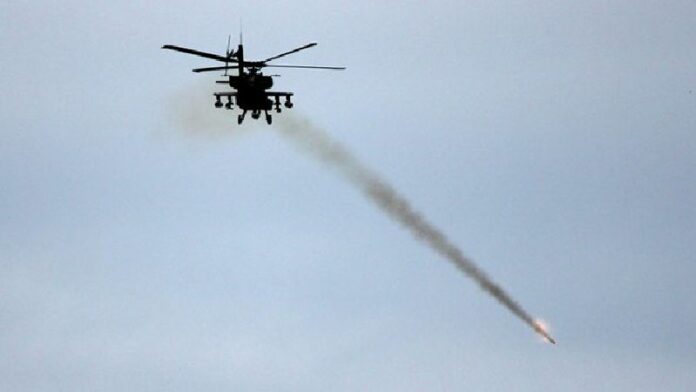
PHNOM PENH — Cambodia's tough-talking prime minister said Thursday he has authorized helicopters to fire rockets at smugglers of illegally cut timber.

Hun Sen announced the policy at the inauguration of a new Environment Ministry building in the capital, Phnom Penh.

Hun Sen is famous for intimidating his enemies through public threats, but also for tough action. He said no rockets have yet been fired from two helicopters equipped to help stop smugglers, and did not explain how illegal logs might be distinguished from the air.

Cambodia, like many Southeast Asian nations, has suffered from severe deforestation for the past several decades. Hun Sen in January established a special committee led by army Gen. Sao Sokha to crack down on the smuggling of logs to neighboring Vietnam.

Story: Associated Press

Advertisement

White Temple to Charge Foreign Visitors

The White Temple Photo: We Love Ajarn Chalermchai Kositpipat / Facebook

CHIANG RAI — A popular art temple in Chiang Rai province will start collecting entrance fees from foreign visitors later this year, its owner said.

Beginning in October, foreigners visiting the White Temple will have to pay 50 baht to enter the prayer hall (ubosot) and another 50 baht for the art hall, said Chalermchai Kositpipat, the Silpathorn Award-winning artist who designed and owns the temple.

In the video posted to his official fan page, Chalermchai said he initially wanted to keep the attraction free but fears he can no longer afford its maintenance.

“I have to pay 4.5 million baht to 6 million baht every month!” Chalermchai said. 

However, the artist said, tickets will come with goodies: a guidebook in English and Chinese, and a commemorative medallion. 

Thais will not be required to pay the entrance fee, but they can choose to do so if they want the guidebook and medallion, Chalermchai said. 

The White Temple, aka Wat Rong Khun, is particularly popular among Chinese tourists – a point of conflict for Chalermchai in the past. 

In February 2015, the 61-year-old artist briefly banned Chinese visitors after some Chinese trashed its famed Golden Toilet building. He said his Chinese visitors left toilets impossible for anyone else to use and vowed to build Chinese-only facilities.

In September, Chalermchai lashed out at a Chinese woman cosplaying in ancient costume and posing for photos at the temple. He described the photoshoot as “ugly.” 


Teeranai Charuvastra can be reached at [email protected] and @Teeranai_C.


\

Advertisement

Locals Pray for Second Miracle from Wrecked Plane

Locals pray for lottery fortune at the site of a crashed plane Thursday in Nakhon Phanom province.

NAKHON PHANOM — The tapioca field where two pilots walked away from a plane crash Wednesday became today a source of divine fortune for some local residents.

Villagers on Thursday converged on the site of the accident in search of the plane’s lucky registration number a day after the small training aircraft went down with a teacher and student aboard from Nakhon Phanom University’s International Aviation College.

Pirom Meekaew, chief of Nakhon Phanom Airport, said the control tower was notified the plane experienced a failure and request to make an emergency landing Wednesday morning. Authorities withheld the names of the pilot and trainee pilot.

After the accident, a number of villagers asked officers to let them in to see the number to inform their ticket purchases for the March 1 lottery. They were denied access.


The owner of the field where the plane crashed, 71-year-old Noi Sangpetch said he was watering his cassava when he heard the low-flying plane which then smashed into the ground. He ran to the plane and found two people stuck inside.

Those seeking fortune said there was precedent for plane-crash fortune.

Local resident Tee Traimeesaeng, 50, said she won 10,000 baht after buying a ticket with the number from a plane which crashed last year. Tee said she was disappointed Thursday to only steal a glance at the plane and failed to get the number.

Phra Ajarn Boon-oom Apassaro, a monk at Wat Pa Non Pang, also arrived at the scene Thursday to survey the fuselage, as it was he who just two years ago anointed the plane with holy water.

Without the registration number, the lottery hopefuls turned to the model of Austrian-built trainer: Diamond Star DA40.

Lottery lucky numbers 40, 04 and 401 were reportedly sold out at lottery vendors in the province.

For those interested in trying their luck, they plane is registered as HS -1 AE.


\

Phra Ajarn Boon-oom Apassaro pointing where he anointed the plane two years ago


The plane had been on duty since 2008 and never crashed before, Pirom Meekaew of Nakhon Phanom Airport said.

The area is cordoned off to protect unauthorized people while the aircraft is reportedly  under investigation of the Civil Aviation officers.


Advertisement

Smart Rats Sniff Out Cambodian Mine Fields

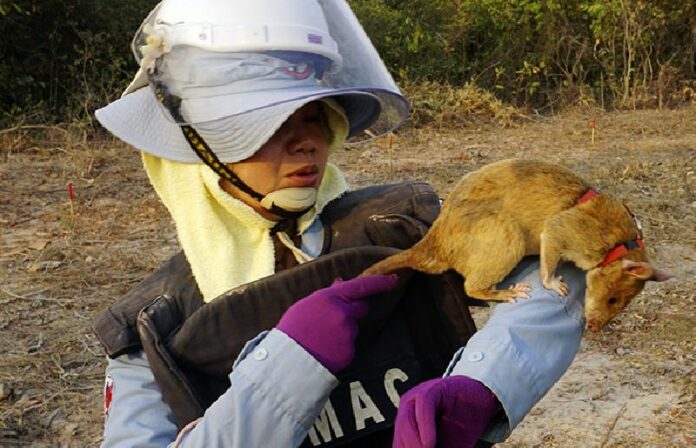
Cambodian team member So Malen plays with Cletus on Feb. 19 after he scampered across a field believed to be sown by mines in Trach, Cambodia. Photo: Denis Gray / Associated Press

TRACH, Cambodia — It's been a busy morning for Cletus, Meynard, Victoria and others of their furry band. Tiny noses and long whiskers twitching, they've scurried and sniffed their way across 775 square meters (8,300 square feet) of fields to eliminate a scourge that has killed thousands of Cambodians: land mines.

Meet the Hero Rats: intelligent, surprisingly adorable creatures with some of the most sensitive noses in the animal kingdom. Sent from Africa, where they successfully cleared minefields in Mozambique and Angola, they began the same task in northwestern Cambodia early this month and have already scored tangible results.

Two hectares have been declared mine-free around this village where more than 15 people have been killed or wounded by the explosives, forcing some to abandon their homes and rice fields and seek jobs elsewhere.

One villager, Khun Mao, says the rats have been sniffing for suspected mines in a rice field he had been afraid to cultivate for years. He says that while it is too soon to say whether the rodents can remove every mine, "To me, these rats are wonderful."

\
Phann Phat one of a 34-member mine detecting team, carries rats Fredrick and Merry from a mine field where they use their keen sense of smell to detect TNT inside buried land mines, in Trach, Cambodia. Photo: Denis Gray / Associated Press

"The villagers have started to get excited about farming their land again. You can see the light in their faces," says Paul McCarthy, Cambodia program manager for the Belgian nonprofit organization APOPO, or Anti-Personnel Land Mines Detection Product in English.

On a recent morning, the African giant pouched rats were working two suspected, taped-off minefields. Each rodent wore a harness connected to a rope strung out in a straight line between two handlers standing about 5 meters apart and outside the danger zone. The rodents then darted from one handler to the other, constantly sniffing the ground and only taking time out to scrub their bodies with tiny front paws or to answer nature's call. The handlers moved a step or two down the field to repeat the process, and a second rat was later sent over the same terrain to double check.

Two-year-old Victoria proved particularly swift "very active," one team member calls her. She stars in APOPO's "adopt-a-rat" fund-raising drive.

At the second field, Merry and Meynard were completing three hours of effort as a midday sun beat down on the parched earth. The duo had earlier nosed in on an explosive, halting just above it and scratching the ground the learned response when a rodent detects TNT inside a land mine. A deminer with a detector followed and the mine was dug up and detonated.

Unlike standard mine detectors, the super-sniffers pick up only TNT and not other metal objects. And unlike wage-earning humans, the rats work for peanuts and their other favorite, bananas.

Theap Bunthourn, operations coordinator for the 34-member team, cited other advantages of using rats: They are cheaper to acquire and train than mine-sniffing dogs and easier to transport. Rats, averaging 1 kilogram, are also too light to detonate a pressure-activated mine. Dogs avoid that danger by staying a few feet away from the explosives they detect.

Each rat can clear an area of 200 square meters in 20 minutes, something a technician with a mine detector would take one to four days to complete. Their sense of smell is so keen that in Africa they are also used to detect tuberculosis in human sputum samples at a rate much faster than the standard laboratory method.

Unlike dogs, the rats don't get attached to their handlers and thus can be rotated among many, Theap Bunthourn says. But McCarthy, an ex-British Army demolitions expert, recalls watching the student rats "following their trainers like puppies, stopping when they stopped."

Critics say that rats may offer a lower level of guarantee that an area is mine-free than man-and-machine techniques, that the animals cannot search well in thick vegetation and can only work for relatively short periods in the heat.

"I would never discard any asset that could prove useful, but I can't envision hordes of rats wiping out minefields in Cambodia," says Greg Crowther, who heads the U.K.-based Mines Advisory Group in South and Southeast Asia. One of half a dozen demining outfits operating in Cambodia, MAG employs Belgian shepherds and a variety of mechanical devices.

"I don't think they can add a whole lot to what dogs can do. But if they can speed up the pace of demining, great. Let's wait and see," Crowther says. He adds that there is plenty of work to go around: It will take up to 15 more years to clear the country's explosives.

McCarthy notes that there was skepticism about using dogs to detect landmines decades ago, "and look at them now."

"As we accumulate more data, the more we break down the skepticism." McCarthy says APOPO, the only organization using rats, doesn't have the total solution for mine-clearing but just "one fantastic tool in the tool box."

The group was founded in 1997 by Belgian Bart Weetjens, who bred rats, hamsters and other rodents as a boy and developed the idea of using rats to find mines while at university.

Even Mark Shukuru was skeptical when he joined APOPO in 2001 at the group's headquarters in Tanzania. "At first I thought: 'Rats finding mines? It's impossible.' But they proved they could do it," he says, noting that in Mozambique they cleared more than 13,000 mines without a single injury, to humans or rats.

Shukuru shepherded the Tanzanian-born rats to Cambodia, one of the world's most heavily landmined countries, with up to 6 million mines or pieces of unexploded ordnance still left in the ground from decades of war. The mines at Trach were laid in the 1980s by Khmer Rouge guerrillas fighting the Vietnamese army.

Countrywide, about 67,000 people have been killed or injured since 1979, and with more than 25,000 amputees Cambodia has highest ratio of mine amputees per capita in the world, according to de-mining organizations. A mine accident occurs every 2½ days on average.

Training the Cambodian rat contingent — eight males and six females — began at age 4 weeks by getting them accustomed to humans. This was followed by a rigorous, 9-month-long boot camp in Cambodia with APOPO, supported by the Cambodian Mine Action Center, one of a half-dozen demining outfits in the country.

The rats learned to associate a click with a food reward before being taught to respond to the scent of TNT. When they indicated TNT by scratching, a click was sounded and food followed. Eventually the click became unnecessary.

Before going into the field, the recruits are tested: One missed mine, and they don't graduate to Hero Rats, registered as the trademark HeroRATs.

Now, they are falling into an operational routine, usually working six days a week and being somewhat pampered when off-duty, sleeping indoors in roomy individual cages on wood shingles and kept healthy by regular exercise walking on a leash or on a running wheel. They are given multivitamins and weighed twice a week (a fat rat is a lethargic rat, one keeper says).

On weekends there's a special feast of apples, potatoes, watermelon and carrots. But what really drives their mine-sniffing are bananas and peanuts.

After the morning session, Victoria, Cletus and the others rested in portable cages near the mine fields while handlers offered them bananas, which they grabbed and greedily devoured. Grateful villagers gathered round the cages.

"It's not often you hear people say that they love rats," McCarthy says.

Story: Denis D. Gray / Associated Press

Additional reporting Sopheng Cheang


Advertisement

Amnesty’s Rights Report Lacks Balance, Context: Govt

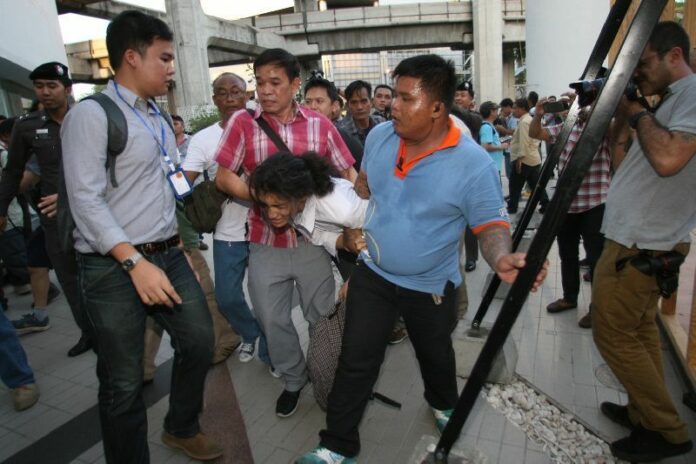
Security officers drag protesters away from a pro-democracy demonstration on the coup anniversary of May 22, 2015, in downtown Bangkok.

BANGKOK — The military government said today Amnesty International ignored Thailand’s political context in its harsh verdict on the human rights situation in the junta-ruled kingdom.

Responding to the NGO’s annual report on global rights situation, which called out junta’s continued suppression of critics, the Ministry Foreign of Affairssaid in a statement the group fails to see the need to balance freedom and stability.

“We regret that the report only presents issues of concern while leaving out several points on positive developments in Thailand,” said the English-language statement issued Wednesday evening, the same day the Amnesty report was published.
“The Report also ignores the daunting challenge facing Thailand which is the need to strike the right balance between freedom of assembly and freedom of expression and the need to prevent political conflicts from re-emerging.”

In the global report, Amnesty International faulted the military government’s iron grip since the May 2014 coup. 

It listed examples of the junta’s suppression of civil rights since the coup.

“Arresting peaceful critics for activities including staging plays, posting Facebook comments and displaying graffiti; and the military authorities’ dismissal of international calls not to extend its own powers to excessively restrict rights and silence dissent in the name of ‘security,’” it said.

But the Ministry of Foreign Affairs said the government has also implemented a series of positive laws and measures designed to improve human rights in the country.

The ministry listed the junta’s crackdown on human trafficking and a gender equality bill passed by the interim parliament as examples. It also said “the press can freely criticize the government” and insisted that the junta values civil rights.

“Nevertheless, the government is obliged to maintain a minimal degree of restriction to uphold public order and prevent social divisiveness as the country is gradually undertaking the comprehensive reform towards social harmony and a strengthened and sustainable democracy,” it read.

Numerous conditions imposed by the junta contrast that claim, however.

Political activities and protests of all kind remain banned by the junta. Dissidents of the regime have been sent to stand trial in military tribunals on increasingly surreal grounds; for example, a retired politician is facing charge for privately sending a link to friends of a video that mocked junta chairman Prayuth Chan-ocha. 

On Thursday, it also emerged that soldiers visited the family of Pavin Chachavalpongpun, an exiled academic who has been harshly criticizing the military regime and the monarchy. 

Pavin’s sister, Pranee, said soldiers showed up at her home again Thursday to request she tell Pavin to stop his vocal criticisms. 

Related Stories:

EU Parliament Slams Thai Junta For Rights Abuses

UN Rejects Thailand From Rights Council

Thai Junta Asks Human Rights Watch to 'Look at the Big Picture'

Junta Blocks Forum On Lack of Justice in Military-Ruled Thailand


Teeranai Charuvastra can be reached at [email protected] and @Teeranai_C.


\

Advertisement

Hot News

LATEST NEWS

Bangkok
light rain
32.2 ° C
32.2 °
32.2 °
95 %
3.7kmh
15 %
Wed
32 °
Thu
37 °
Fri
37 °
Sat
36 °
Sun
36 °