29 C
Bangkok
Wednesday, June 17, 2026
Home Blog Page 2854

Thailand to Extradite 'Silk Road' Adviser

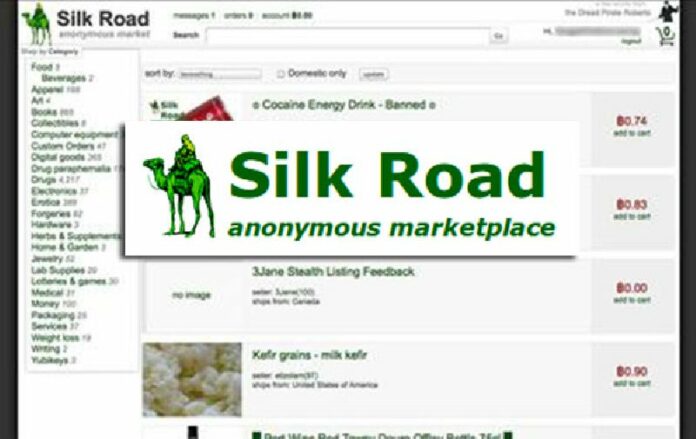
Archived images from the defunct Silk Road darknet marketplace. Images: Wikimedia Commons

Reuters

BANGKOK — A Canadian man arrested in Thailand over his alleged role as a senior adviser to the creator of the underground Silk Road website will be extradited to the United States next month, police said on today.

Thai police Wednesday said they arrested Canadian Roger Thomas Clark last week, following a request for help from U.S. authorities.

The U.S. Department of Justice alleged that Clark advised the website's creator, Ross Ulbricht, on ways to run the site, a platform for selling illegal drugs and other contraband items, and how to evade police.

Clark faces charges of narcotics conspiracy and money laundering, with a jail term of 30 years if found guilty.

Clark is being held at an immigration detention center in Bangkok and Thailand will send him to the United States,  police official Songpol Wattanachai told reporters.

"We caught and detained him and he is being held by immigration police in Bangkok," said Songpol, a deputy spokesman for national police.

"We are in the process of sending him back to the United States as America asked for him," he added. "We can send him back in about a month."

He did not say why the procedure would take a month.

Silk Road, an online black market where illegal drugs and other goods were sold, was shut down in October 2013, when authorities seized the website and arrested Ulbricht.

Ulbricht was sentenced to life in prison in May after a U.S. federal jury found him guilty of orchestrating the scheme that enabled more than $200 million in anonymous online drug sales using the digital currency bitcoin.

U.S. prosecutors said Silk Road became a blueprint for other so-called "dark market" websites that allow illegal drug sales.

Advertisement

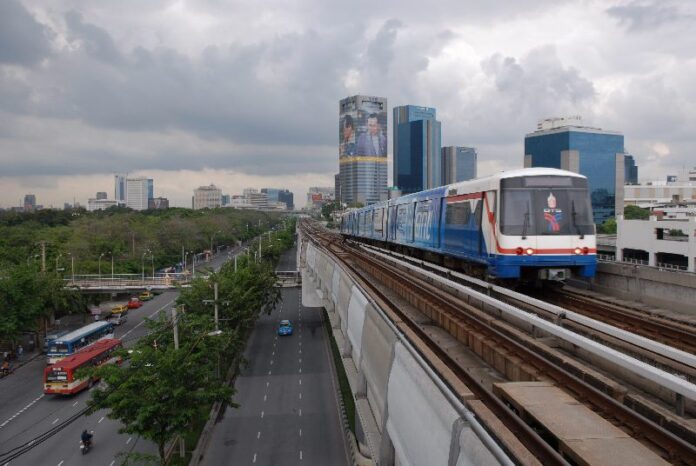
BTS Skytrain Free for ‘Bike for Dad’

BANGKOK — Cyclists in Friday’s Bike for Dad event will be able to ride the BTS skytrain for free.

To make it more convenient for people to join the cycling event, every BTS station will exempt fees for those traveling with a bicycle between 6am and 10pm.


These 84 Bangkok Roads will Shut Down Friday for ‘Bike for Dad’


Those intending to use the Bus Rapid Transit system, or BRT, are warned that only folding bikes are allowed.

Use of public transportation is advisable Friday: At least 84 roads throughout Bangkok will be closed for event. The routes will be reopened after all riders have cleared the areas.

Related stories:

These 84 Bangkok Roads will Shut Down Friday for ‘Bike for Dad’


Advertisement

Opinion: The Politics of Islamophobia

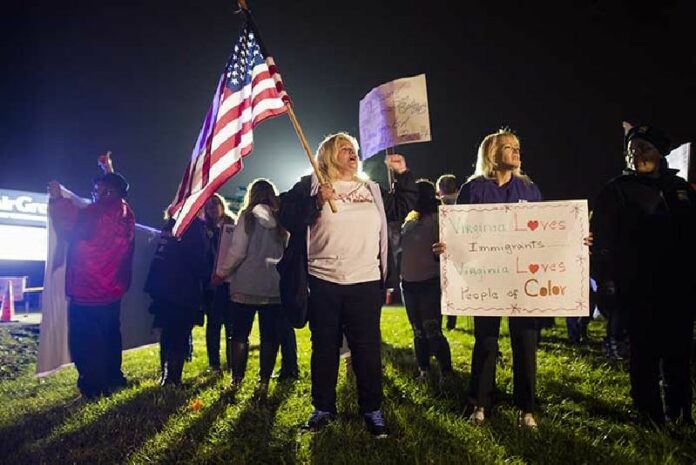
Protesters gather outside a rally for Republican presidential candidate Donald Trump in Manassas, Virginia, earlier this month. The election hopeful called for a halt on entry for Muslims to the United States on Tuesday. Photo: Jim Lo Scalzo / EPA

By Ian Buruma
Project Syndicate

NEW YORK — There are many roads to political disaster: greed, hubris, the charisma of the demagogue, and, perhaps most dangerous of all, fear.

When people panic, they can become hysterical, and hysteria often leads to mass violence. When politicians convince people that they are in a life-or-death battle – that survival is a matter of “us or them” – anything becomes possible.

Adolf Hitler combined all the elements of political catastrophe: hubris, charisma, greed, and the idea that “Aryans” and Jews were locked in a struggle for survival. Of course, none of the demagogues in the West today – from Donald Trump in the U.S. to Marine Le Pen or Geert Wilders in Europe – are comparable to Hitler. None has promoted dictatorship, let alone mass murder. But they are definitely stirring up the politics of fear.

Trump, for one, also promotes greed, openly boasting of his wealth, and has somehow refined outlandish hubris and contradictory posturing into a bizarre form of charisma. On the one hand, he promises to fix all the world’s problems, and to show China, Russia, the Islamic State, or anyone else who is boss. On the other hand, he claims that his vast and powerful country cannot take in desperate refugees from Syria, because, he warns, Muslim asylum-seekers might stage “one of the great military coups of all time.”

Trump’s Republican colleagues in the race for the U.S. presidency, such as Ted Cruz, Ben Carson, and Marco Rubio, stoke similar fears about refugees. Cruz, as well as the supposedly more moderate Jeb Bush, even suggested that only Christians should be allowed into the U.S.

More than 10,000 people are killed every year by gun violence in the U.S. – all but a handful for reasons having nothing to do with Islam. And yet all of the Republican candidates are proud of opposing gun-control measures; indeed, they have no problem allowing people to enter a school or a bar bearing concealed weapons. But even a relative handful of Muslim refugees is too dangerous to contemplate.

This is not to say that terrible acts of Islamist terror could not happen in the United States, or elsewhere. They have, and there probably will be more of them, so long as the Middle East remains in turmoil and revolutionary Islam appeals to disaffected Western youth. But it is hardly an existential threat.

An American friend of mine speculated that, “We might be one terrorist act away from a Trump presidency.” A spectacular murder spree by Islamists could spook Americans enough to vote for the greatest fear-monger. Anything is possible, but I don’t believe American voters would be that stupid.

The greater danger is, however, that the demagogues will drive even mainstream politicians into their camp. Since the Nov. 13 terror attacks in Paris, François Hollande, the unpopular but altogether sensible French president, has been so afraid of being labeled a weakling by politicians of the right and far right that he has declared a national state of emergency – and war on the Islamic State.

As long as France’s state of emergency lasts, police may arrest people without warrants, break down the doors of private residences in the middle of the night, take over restaurants and other public places with armed force, and generally behave like agents in a police state. Most French citizens are now so frightened of Islamist attacks that such measures are widely supported. But they are almost certainly counter-productive.

A national leader can declare war on a state, not on a network of revolutionaries. ISIS, despite its claims, is not a state, and Hollande should not treat it as one. Besides, even if bombing ISIS strongholds in Iraq or Syria makes military sense, it won’t break the spell of Islamist revolution for frustrated, bored, and marginalized young people in French slums.

On the contrary: The canny leaders of ISIS also rely on an apocalyptic “us or them” view of the world. Most Muslims are not violent revolutionaries who condone, let alone admire, mass violence. ISIS seeks to broaden its support, especially among young Muslims, by convincing them that true Muslims are in an existential war with the West – that the infidels are their mortal enemies. For them no less than for Trump, fear is the most powerful weapon.

So the more a Western government allows its policemen to humiliate and bully Muslims in the name of security, the more ISIS is likely to win European recruits. The only way to combat revolutionary Islamist violence is to gain the trust of law-abiding Muslims in the West. This will not be easy, but arbitrary arrests are surely the wrong way to go about it.

Likewise, when it comes to civil wars in the Middle East, Western restraint is usually a better strategy than hasty military intervention driven by domestic fear. Republican candidates in the US are already using the recent murder spree in Paris to blame President Barack Obama, and by extension any future Democratic candidate, for being weak. Trump has promised to “bomb the shit out of ISIS.”

This bellicosity has had the effect of pushing Hillary Clinton, the front-runner for the Democratic presidential nomination, into distancing herself from Obama. Like Hollande, she has to assuage public fear by talking tough and promising more military action.

Obama has consistently resisted the temptation to unleash more wars. His policies have sometimes been inconsistent and irresolute. But in his refusal to give in to panic and act rashly, he has been far braver than all the big talkers who accuse him of being a wimp.

Ian Buruma is Professor of Democracy, Human Rights, and Journalism at Bard College. He is the author of numerous books, including Murder in Amsterdam: The Death of Theo Van Gogh and the Limits of Tolerance and Year Zero: A History of 1945.

Copyright 2015, Project Syndicate


To reach us about this article or another matter, please contact us by e-mail at: [email protected].

Follow Khaosod English on Facebook and Twitter for news, politics and more from Thailand.

Follow @KhaosodEnglish

\


Advertisement

No Credible ISIS Threat, Thai Interpol Head Says

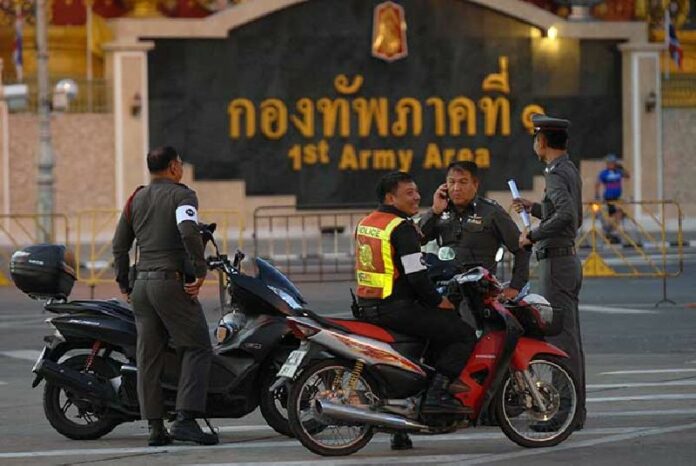
Police on Sunday patrol the planned route of the Bike for Dad event in Bangkok.

By Amy Sawitta Lefevre
Reuters

BANGKOK — Thailand's Interpol director said on Tuesday there was "no credible" threat of an attack by suspected members of Islamic State following a warning by the Russian intelligence service that 10 Syrians linked to the group had entered the country.

A document from Thailand's Special Branch police leaked to the media showed it had been warned by Russia's Federal Security Service that 10 Syrians linked to the Islamic State had entered Thailand between Oct. 15 and Oct. 31 to target Russian interests.

Confirmation on Friday that the document was real prompted Thailand to step up security around potential targets including the cities of Pattaya and Phuket, home to large Russian communities. Officials have called for calm.

Thailand's Interpol director, Police Maj. Gen. Apichart Suribunya, said that Interpol and Special Branch were both looking out for intelligence but that there was no credible threat of an attack in Thailand.

"We get warnings like this many times. There is no critical intelligence of IS presence in Thailand," Apichart told Reuters. "There is no credible threat of an IS attack, not now. From Interpol, there is no critical intelligence and no credible threat of an IS attack in Thailand."

Thailand said on Sunday it was looking for four Syrian nationals who had overstayed their visas, but did not suggest the men were a security threat.

Police later cleared three of four of any possible links to Islamic State. They did not comment on a fourth man.

An official at the Russian Embassy in Bangkok was no immediately available for comment.

Russia began air strikes against IS in Syria at the end of September. An IS-linked group claimed it brought down a Russian airliner over Egypt's Sinai peninsula in October, killing all 224 people on board.

In August, 20 people were killed in a bomb attack at a Bangkok shrine. Police have said the attack was in retaliation for a crackdown on human smuggling gangs earlier this year and said it was not a terrorist attack.

Additional reporting Patpicha Tanakasempipat

Advertisement

Criticism of Trump Spreads Over Proposal to Bar Muslims from US

U.S. Republican Presidential candidate Donald Trump reacts at a Dec. 1 campaign rally in New Hampshire, United States. Photo: CJ Gunther / EPA

WASHINGTON — Presidential candidate Donald Trump was condemned Tuesday by a chorus of critics from around the world responding to his call for a ban on Muslims entering the United States.

Republican Party leaders from U.S. House of Representatives Speaker Paul Ryan to former vice president Dick Cheney distanced themselves from the billionaire businessman, who is the frontrunner among 14 Republicans actively seeking the conservative party's 2016 nomination.

U.S. media outlets and Muslim organizations joined the rejections of Trump's proposal.

White House spokesman Josh Earnest said Trump's proposal "disqualifies him from serving as president" and suggested that Republican candidates who stand by their pledge to support Trump if he wins the nomination disqualify themselves as well.

Other Republicans "should say right now that they would not support Donald Trump for president," Earnest said.

Trump, who did not specify how exactly his policy would work, went on a media blitz early Tuesday to defend his proposal.

"We're at war with radical Islam," Trump told broadcaster CNN, stressing that the ban would be "temporary" until US officials understand what is going on.

"Our country cannot be the victims of horrendous attacks by people that believe only in jihad and have no sense of reason or respect for human life," he said.

His statements follow last week's shooting spree in San Bernardino, California, by what investigators say were a "radicalized" Muslim couple, Tashfeen Malik and Syed Rizwan Farook. Fourteen people were killed and 21 wounded.

Malik, who was let into the United States on a fiance visa, pledged allegiance to the Islamic State movement shortly before or during the attack, according to U.S. officials.

Cheney told a conservative radio host that the notion that the United States could ban a whole religion "goes against everything we stand for and believe in."

Ryan said Trump's comments are "not what this party stands for … and more importantly, it's not what this country stands for."

A spokesman for U.N. Secretary General Ban Ki-moon said rhetoric that "relies on Islamophobia, xenophobia or any other appeal to hate anyone" shouldn't be followed by anyone.

The U.N. High Commissioner for Refugees said Trump's proposal was undermining efforts to resettle Syrian refugees. The agency said Trump's policy would put at risk "an incredibly important resettlement programme" that helps people fleeing wars, spokeswoman Melissa Fleming said in Geneva.

The U.S. is the largest recipient of refugees in the program and is set to receive 75,000 people from the Middle East, Africa and elsewhere this year.

Discrimination based on religion is against "every convention that we know of in aiding people in humanitarian emergencies and of course in resettlement," Fleming said.

Trump, who is leading opinion polls in the race for the Republican nomination, said the United States has no choice but to bar Muslims because Islamist radicals want to kill Americans.

"It's going to get worse and worse. We're going to have more World Trade Centers," he said, referring to the deadly attacks on Sept. 11, 2001.

British Prime Minister David Cameron said through a spokeswoman that he believes Trump's comment is "divisive, unhelpful and quite simply wrong."

Najib Ghadbian, the U.S. representative of the Syrian National Coalition, charged that such divisive rhetoric undermines the fight against the Islamic State movement.

"The United States has a long and proud tradition of providing refuge to those in need," said Ghadbian, whose coalition represents Syrian opposition groups. "Trump's hate-mongering only undermines that venerable tradition and plays right into the hands of [the Islamic State group] and other extremist groups."

Nihad Awad, president of the Council on American-Islamic Relations, told dpa that some candidates are saying things that undermine the fight against Islamic State.

"They have been playing into the hands of [Islamic State] whether they know it or not, whether they like it or not," Awad said. "America should be afraid of ignorance, not of Muslims."

Awad said religious freedom in America is at stake because the terrorist group is trying to undermine such freedoms, and some politicians are following suit.

"There is no religious conflict," he said. "It has to do with twisted ideologies."

Story: DPA / Gretel Johnston

Advertisement

Stone Free Fest Canceled at Last Minute

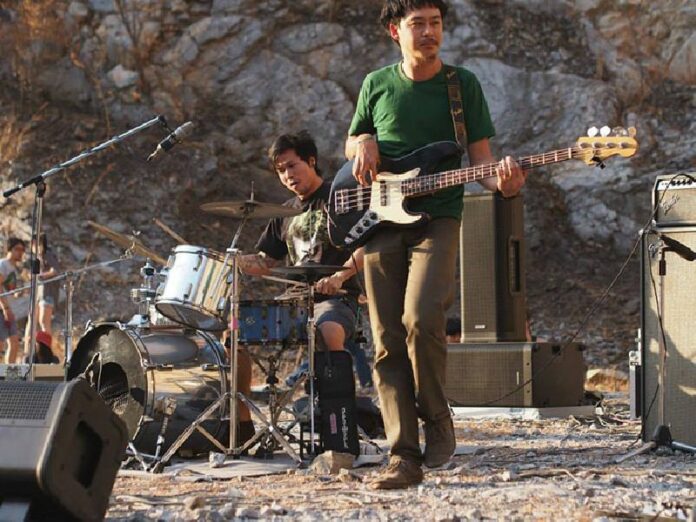
Musicians perform at Stone Free 3 in January 2014 Kanchanaburi province.

Todd Ruiz
Editor

BANGKOK — The Stone Free Music Festival was canceled at the last minute after its organizers were unable to win concessions from authorities to stage the event set to begin Friday in Saraburi province.

Organizers, who had not told fans and attendees the three-day festival was in jeopardy, posted late Tuesday night that the event was canceled and would hopefully be moved to mid-January after they were unable to win approval from local authorities.

“Those who have already purchased the tickets but could not attend the festival as per the new place and times, we are more than happy to issue you with a full refund,” read the announcement on Facebook.


From Rock to Noise, Stone Free Festival Sounds Notes of Authenticity


Organizers said they hoped to stage the festival on the weekend of Jan. 15 in the Saraburi quarry where the first two editions of the festival were held.

The noncommercial festival draws deeply committed fans, but some were disappointed by the late notice.

“Why are telling us just now? It's too close to the date,” wrote Facebook user Bancha Pry-Friend in reply. “It's not professional at all. I understand that you have problems about the venue, but if you're really professional, you would have to push and stick to the original schedule, no matter how much you have to pay extra or whatever.”

Someone identifying themselves as a merchant said they’d spent 20,000 baht preparing for this weekend’s show.

“I mean, I love this concert, I love the artists, so I decided to sell my goods there,” wrote Facebook user Buatong Pamai. “Oiiiiii I feel really bad and sad.”

Many were understanding however.

“You brothers are the best organizers. The problem is about the venue. It's about the logic of powerful people in our country, what they think of this really creative and capitalism-free festival,” user Wissanu Likitsathaporn wrote. I'm one of the people who knew the real reasons [behind cancellation], but no matter what, if the organizers come out and state the reasons, it would help people understand it more. Keep fighting. I love Stone Free Music Festival.”

Organizers later apologized for the inconvenience but declined to explain further beyond being “unable to convince the local authorities that Stone Free should go ahead.”

On Monday, festival organizer festival organizer Tokin Teekanun told Khaosod English local authorities cited fears of violence for rescinding approval that had already been granted, and told them to seek written approval from the junta to hold the event.

Related stories:

Indie Music Fest Ordered to Seek Junta OK

Advertisement

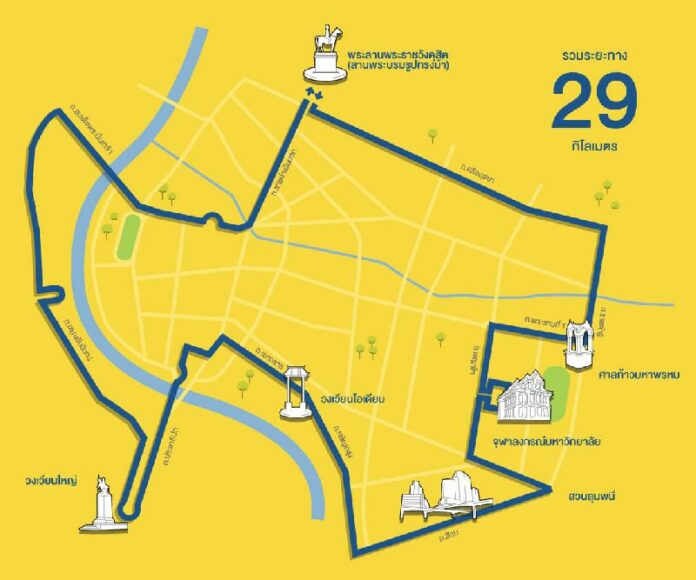
These 84 Bangkok Roads will Shut Down Friday for ‘Bike for Dad’

Map for Friday’s ‘Bike for Dad’ event. Image: Bikefordad2015.com

BANGKOK — To celebrate the 88th birthday of King Bhumibol Adulyadej, 84 roads throughout the capital city will be closed Friday for the “Bike for Dad” cycling event.

Roads along the route will be closed for upward of 22 hours Friday in some of the most traffic-prone parts of the city.

From midnight until 10pm, commuters are warned to avoid affected roads near Dusit Palace, including U Thong Nai, Si Ayutthaya and Ratchadamnoen Nok roads.

From 9am to 10pm, another 14 roads around the bike route including Si Ayutthaya, Phitsanulok, Nakhon Sawan and Rama V roads will be closed.

From noon until 10pm, a total of 67 roads; 24 along the main procession and 43 cross cut the biking route will be shut down. Roads around Pratunam intersection and roads through Ratchaprasong intersection will be closed, as well as Phaya Thai and Charoen Krung roads.

The routes will be reopened after all riders have cleared the area.

Those not participating are warned to stay home or use expressways to avoid the 29-kilometer routes Friday posted online (Thai).

Fees will be waived on 11 Bangkok expressways including Yommarat, Hualamphong, Uruphong, Sathorn, Sukhumvit and Petchaburi from 9am to 11pm.


To reach us about this article or another matter, please contact us by e-mail at: [email protected].

Follow Khaosod English on Facebook and Twitter for news, politics and more from Thailand.

Follow @KhaosodEnglish

\

Advertisement

At Mikkeller’s Upstairs, Ale is Elevated

Chef Dan Bark of Upstairs Mikkeller.

Any neophyte foodie – and there are plenty in Bangkok – knows red meat pairs with red wine; seafood pairs with white. But the sour notes of Japanese yuzu in Mikkeller’s Orange Yuzu Glad I Said Porter battling the sublime unctuousness of Wagyu beef? Sacrilege.

Purists wouldn’t pair the seemingly clashing flavors, but at Upstairs, defiance is the norm.

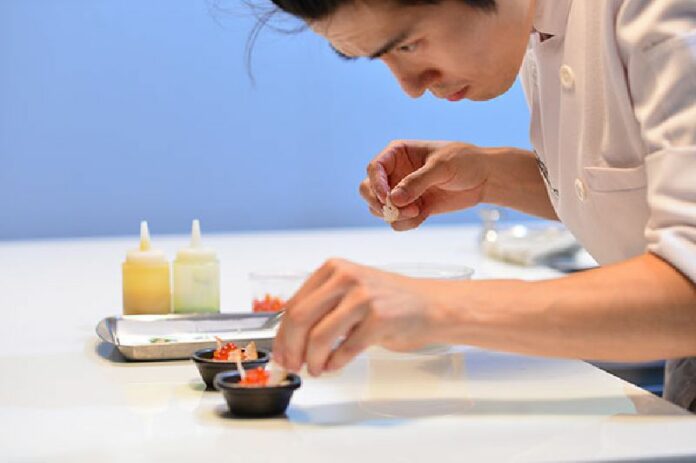
I arrive before service begins, as Chef Dan Bark, who cut his culinary chops under Chef Curtis Duffy (and his three Michelin stars) at Chicago’s Grace, sets up the open-kitchen in the corner of the small dining room. “You like Jame-O?” Dan asks, as the service staff huddles around a sterile prep station. He raises a shot glass and toasts to a successful night of service. Dan explains that this is his way of raising the team’s spirits and getting everyone excited about the night ahead, as if some of the world’s highest-rated beers and wildly inventive fare aren't enough.

A plate bursting with color lands in front of me, and before I can even make out the mess of greens, yellows, and reds, a glass of Mikkeller's Get Wit or Die Trying hits the table. The beer isn’t just served, it’s explained. A resident beer geek is on hand (which is pretty much everyone at this bar) to take diners through the finer points of the ales that accompany the food. Dan steps out from behind the kitchen with a smirk and asks if I’ve found the secret ingredient buried in the mess of taro, radish, and carrots that make up the first dish of the nine-course pairing dinner. “Your truffle game is on point, man” I replied.
 

\


The frenzied attention is on the young chef and his creations, but with typical Korean-American modesty, he credits the early success of the restaurant to his team, which includes his partner Fay, who heads up the front of the house.

At Upstairs, diners are actually sitting in a house. A former suburban-looking house converted into a beer epicenter-cum-fine dining operation.

Plating and garnishing of the fare are on full display, along with the dispensing of the beers from a row of six taps mounted flush to the wall. The pared-down dining room is small enough that you can hear the clamoring of knives and spatulas in the kitchen from any table.

“This is Whenever” Andrew says as he’s pouring out a brew that I’ve never seen or heard of before from a bottle. There’s a good reason it evades my beer-radar, the brew in question is produced specifically for The W Retreat Koh Samui by Mikkeller. The name refers to the timeframe when the lime leaf, ginger, and lemongrass pilsner is best consumed. Andrew acts as a sommelier would, explaining how the brews accentuate the cuisine and fielding questions that I’d usually reserve for an online beer forum. He handles the esoteric inquiries with ease. I snap a pic of the summery king crab dish next to the Whenever bottle bearing Mikkeller’s typical abstract and colorful branding.
 

\


To casual beer swillers, taking pictures of beer and worshipping hops and yeast must come across as lunacy. Even to the moneyed foodie crowd, wine is still king. That craft beer has made such inroads to fine dining in a city that, just years ago, was devoid of the stuff, is remarkable.

“There are a ton of great restaurants out there, and there are a ton of great beers, but so far they haven’t really come together in Asia,” explains Jakob Rasmussen, the man behind Mikkeller Bangkok  “We’re excited to be the first ones in this space.”

But if there’s a time for Bangkok to outpace other global cities in a culinary race for inventive pairings, it’s now. The stage has been set. Craft beer in the kingdom has gone mainstream, with almost every trendy eatery hawking wares from importers like Mikkeller's own Hopsession.

Bangkok is also buzzing with dozens of new eateries with Michelin starred chefs behind them.

Big names have brought us into a brave new world of Bangkok fine dining. Savelberg Thailand, L’Atelier de Joël Robuchon, and even Vogue Lounge are lighting up the city’s gastronomic scene, but they’re largely bound by convention and tradition, while Upstairs is anything but conventional.

“Staying cool in really important in the kitchen.” Dan says. The chef practices Zen-like techniques to stay calm and collected in a kitchen where all eyes are on him. “I tell my team to visualize and anticipate every single movement they make, make sure every physical movement is purposeful.”

Halfway through the meal, a boiling siphon of amber broth sneaks onto the table as a pungent herbal aroma fills the air. In Bark’s kitchen, the wow factor reigns supreme. The broth is poured over a portion of zesty duck, clearly taking cues from Vietnam’s fabled pho. The beer in question is the legendary lambic Spontanframboos.
 

\


During the brewing process, the lambic is exposed to the bacteria and wild yeasts present in the atmosphere in order to kick-start fermentation (normal beer uses carefully selected yeasts). This method of fermentation creates an incredibly complex funk that’s augmented by the hefty dose of raspberries in this particular Spontanframboos lambic. The beer glows a pigeon blood red, like a rare ruby found in Burma’s Kachin State.  The mouthfeel is that of raspberry jam, finishing with a dry, tart acidic bite.

This is the course where the whole idea of combining fantastic textures and flavors with beer became illuminated. The Spontanfromboos isn't a beer I would have on its own, but when it collides with the citrusy zing of the duck broth, something clicks. Tasting a bizarre style like lambic after cutting your teeth on the relatively safe IPAs of the previous five courses will widen your eyes. I’ve heard people use phrases like “phenol-y like the residue from a test tube,” “ester-ish,” even “wood chips and hay from a rotting barn” to describe beer, but I avoid those terms to get some distance from the overly zealous tenderfoots of the craft beer world.

To me it’s always made sense to compare beer and food flavors to surroundings and climate, and this particular pairing felt like sitting in the middle of a fragrant herb garden in Vietnam’s Hue during the dog days of summer. Of course the five beers from the previous courses had me a little loopy; heavy-hitting IPA at 6.8 percent can get the creative juices flowing.

Jakob tells me the secret to successful beer pairing is designing the dish around the beer – not the beer around the dish –  because the former cannot be changed once it’s bottled or kegged.

“Dan is one of the few chefs I know who works backwards,” he says. “He designs his food to the beer.”

Thinking back to the ceremonial shot we slammed down before service, it’s clear that Chef Dan is the antithesis of the “precious” chefs that dominate the fine dining scene in Bangkok. And that’s exactly what it takes to bring the stratospheric fussiness of pairing food and beverages down to the growing segment of casual-yet-nuanced diners. It’s what separates the typical wine dinner, filled with crisply pressed suits and inflated egos, from the beer pairing dinner. And that’s why Upstairs works, because beer doesn’t have the same orotund undertones as wine, and the diners coming to Upstairs seek respite in the laid back atmosphere that Mikkeller’s has become known for.

But this is still very much a fine dining restaurant. As soon as I took out my phone to snap pictures of the rare ales to share with fellow beer nerds, a tray appeared on the table, one appropriately sized for hors d'oeuvre, but there was no food.

What was this? It’s a tray to rest your phone on so it doesn’t touch the table. Another Bangkok first.

Upstairs Mikkeler Bangkok is open 6:30pm to 10:30pm daily and is located just off Soi Ekkamai 10.

Advertisement

Bike for Dad Won’t be a Public Holiday, Cabinet Rules

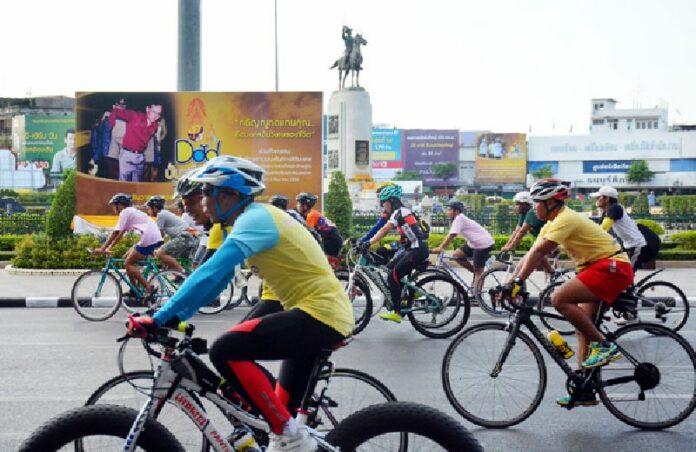
Cyclists pedal through a Bike for Dad dry run on Nov. 22 in Bangkok.

BANGKOK — Roads will close throughout the capital city and elsewhere for a nationwide cycling event honoring His Majesty the King, but the day won’t be made a public holiday, the junta cabinet decided today.

Despite some hopes that the Bike for Dad event would be cause to add another long weekend to December, a government spokesman today dismissed the idea, as he said officials believe the private sector will support the event, the second since an August cycling event honoring Queen Sirikit, by giving employees the day off.

Promotion for the event has saturated public and private channels, and labor officials Monday said they’ve asked the private sector to let employees join the cycling event without counting it as taking leave.

More than 500,000 registered cyclists are expected to join the ride dedicated to His Majesty the King, whose birthday was Saturday. Taking place at the same time across Thailand and in some major cities aboard, the Bangkok cyclists will be lead by Crown Prince Vajiralongkorn.

National police chief Chakthip Chaijinda today told reporters that police preparing the event’s security plan were confident there would be no incidents or attempts to disrupt the event.

Security has reportedly tightened along the route with more than 300,000 police officers assigned throughout the nation.


Related stories:

Tighter Security as Cyclists Warm Up for Bike for Dad (Photos)


To reach us about this article or another matter, please contact us by e-mail at: [email protected].

Follow Khaosod English on Facebook and Twitter for news, politics and more from Thailand.

Follow @KhaosodEnglish

Advertisement

Thai Press Suffering but Not Worst in Asia – For Now

By Pravit Rojanaphruk
Senior Staff Writer

BANGKOK — Thailand should expect more media censorship – and self-censorship – on the sensitive issue of the monarchy as the kingdom moves toward an eventual transitional time of succession, said a leading regional press freedom researcher.

While Thailand may not rank among the worst in Asia on matters of press freedom, things could get worse, said Bob Dietz, a veteran journalist and Asia Program Coordinator at the New York-based Committee to Protect Journalists, who flew into Bangkok last week to “take the temperature” of the kingdom.

In Dietz’s appraisal, Thailand “does not look that bad” when it comes to direct pressure applied on the media, although he cited a caveat.

“There’s a transition coming, and the uncertainties surrounding that,” he said, referring to the matter of royal succession, and the likely self-censorship in coverage or reporting anything mildly critical.

\Bob Dietz is the Commitee to Protect Journalists' Asia Program Coordinator. Photo: Commitee to Protect Journalists

Last week alone, two blank spaces were left by the local printer of the International New York Times. Eastern Printing Publishing Co. Ltd. made the executive decision to not print one news article and one editorial on its Dec. 1 front page and Dec. 4 opinion page, respectively.

“The article in this space was removed by our printer in Thailand. The International New York Times and its editorial staff had no role in its removal,” was printed in both cases instead of the articles, which the Bangkok publisher said it deemed too sensitive to publish.

Dietz, who analyzes and compiles reports on regional press freedom for the committee, said Thai authorities will “try to control the [transition] situation.”

The monarchy is often credited as a stabilizing force in Thailand, and the junta which seized power in May 2014 has stated “protecting the monarchy” as one of its primary aims.

Otherwise, in general, Thailand has a freely open press, Dietz said, even during times of security concerns.

“The media play an important role in Thailand,” he said. “That [role] seems to come under real pressure, especially under the lese majeste law.”

Discussing the role of the monarchy and treading on the sensitivity of the matter is a challenge. Dietz said that sensitivity is exploited by those in power.

“The use of the lese majeste law is one of the ways used to control criticism of the government,” said Dietz, who started working as a reporter in 1977 and has covered several continents.


Diversity of Repression

Asia in general has lost its steam when it comes to the fight for greater press freedoms, except for a few countries, Dietz said, citing relatively free press conditions in Japan, South Korea, Taiwan and the Philippines.

“Asia didn’t work out after the economic collapse [in 1997],” Dietz said, adding that different nations employ different tools to suppress the media.

From the use of sedition charges in Malaysia to China’s state security law, ‘it’s just governments trying to control the media using whatever tools,” he said.

Dietz believes that Thailand’s military regime did not need to look to China for inspiration on censorship and tactics.

Laos, for example, is buying internet censorship software from China while Myanmar looks very difficult to Dietz, where it remains to be seen if Aung San Suu Kyi can assert her authority.

Despite dozens of journalists killed over the past few years in the Philippines, Dietz said it mostly has nothing to do with the state but can be attributed it to gun culture prevalent in the former American colony.

In Thailand, said Dietz, liberals and progressive journalists are often branded as foreign agents, and the use of hate speech and threats against them is similar to that of Pakistan.

“It seems to be a major industry,” he said, adding that in Pakistan, the threats seem to be mostly conveyed directly through SMS phone messages, with some stalkers explicitly telling reporters they are watching them and know what they’re doing.

For Thailand and the rest of Asia, Dietz said local journalists should work together to build their own local institutions in order to maintain press freedom.

Asked to summarize the situation of press freedom and free expression in Thailand, Dietz, in a word said: “stalled.”

Advertisement

Hot News

LATEST NEWS

Bangkok
overcast clouds
29 ° C
30.5 °
27.7 °
91 %
2.8kmh
100 %
Wed
34 °
Thu
34 °
Fri
35 °
Sat
35 °
Sun
36 °