



























28.3 C
Bangkok
Saturday, July 25, 2026
Home Blog Page 2927

Army Colonel Accused of Insulting Monarchy as ‘Royal Impostor’

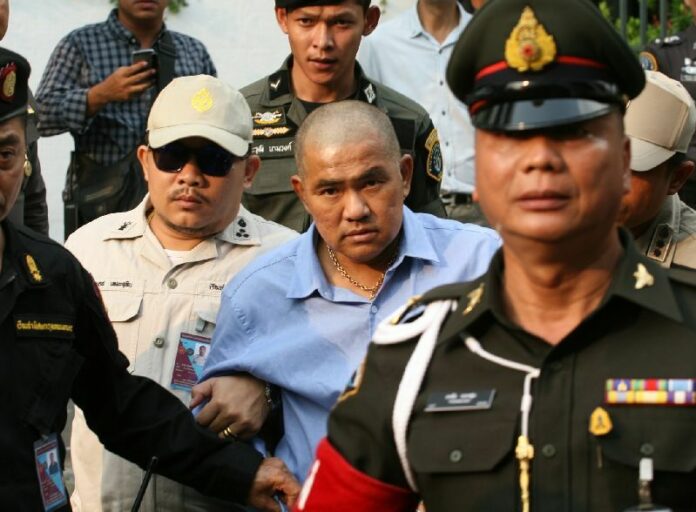
Col. Kachachat Boondee, left center, poses at a golfing event in an undated photo. Photo: 1st Division, King's Guard / website

BANGKOK — An army colonel is under investigation for allegedly taking bribes and embezzling funds in the construction of a massive park which recently opened to honor the monarchy, sources said today.

Col. Kachachat Boondee is the latest person publicly accused of exploiting ties to the monarchy for personal benefit following weeks of rumors that investigators were expanding the probe to implicate more military and police officers.

Read: Prawuth Resigns from Police & ‘Bike for Dad’ Board

A criminal complaint filed Saturday accused Kachachat of defaming the monarchy by abusing his position, according to police spokesman Piyaphan Pingmueang.

Piyaphan declined to specify Kachachat’s alleged wrongdoing. Military sources have privately told media in recent days that the colonel embezzled money and took bribes during the construction of Rajabhakti Park in Prachuap Khiri Khan province.

Construction of the park, which opened in August after 10 months of construction, was overseen by the army and was reported to have cost at least one billion baht. It features giant statues of seven prominent kings from Thailand’s history.

The project was allegedly plagued by corruption and financial irregularities. According to a member of the investigation team, unusually high prices were paid for land, equipment and statues for the park. One statue alone cost 44 million baht, said the anonymous source, while access to VIP seats at the park’s opening ceremony was sold for 1 million baht.

\
The ceremonial opening of Rajabhakti Park on Aug. 19 in Prachuap Khiri Khan province.

Pressed by reporters for details on the nature of Kachachat’s alleged crimes, police spokesman Piyaphan said the colonel was involved with former palace aide Suriyan Sujaritpalawong, whose death in custody was announced today.

Suriyan and two other suspects – his secretary Jirawong Watanathewasilp and former police officer Prakrom Warunprapha – were arrested Oct. 16 when police announced a crackdown on “royal impostors.” The trio was charged with lese majeste (insulting the monarchy) and placed in a military prison by the martial court on Oct. 21.

Two nights later, Prakrom hanged himself in prison, officials said. Suriyan also died on Saturday night of “blood infection,” officials announced today.

Whereabouts Uncertain

Immigration police sources told Khaosod that Kachachat crossed into Myanmar from Tak province on Oct. 31 and furnished images said to be from an immigration police computer logging his departure.

\

Piyaphan denied those reports today.

“We checked with the immigration police, and they haven’t found information that he left the country,” Piyaphan said. “The Royal Thai Police doesn’t have any information about Col. Kachachat’s departure from Thailand either.”

Police will call on Kachachat to give his side of the story soon, Piyaphan said. A warrant for his arrest was approved by a martial court in Bangkok late Monday afternoon.

Defense Minister Pravit Wongsuwan declined to comment on the complaint filed against Kachachat, who is the highest ranking officer to be named as a suspect in the investigation launched Oct. 16.

“So be it. Let them investigate [the issue], find out who’s involved,” Gen. Pravit told reporters today. “You cannot just come up with vague allegations. We can’t proceed with anything based on just vague allegations.”

Democrat Urges Probe

Meanwhile, former Democrat Party MP Watchara Petchthong filed a complaint today calling for the military government to investigate possible irregularities in the Rajabhakti Park project.

“I see the news reports about potential corruption in the Rajabhakti project, and as a former MP, I feel very uncomfortable about it,” Watchara said. “So, I’d like the Prime Minister to organize a committee to investigate whether there’s indeed corruption, how much the state budget was, how much were donations from private companies and the public, and which companies were involved.”

Update: This story was updated to reflect that a warrant for Kachachat’s arrest was approved late Monday afternoon.

Related stories:

Accused ‘Royal Imposter’ Too Sick to Appear in Court, Police Say

Further Autopsy of Lese Majeste Inmate Unnecessary, Minister Says

‘Royal Imposters’ Suspect Involved in Past Lese Majeste Crackdowns

Famous Astrologer Among Accused ‘Royal Imposters’
 

Advertisement

Famous Astrologer 'Mor Yong' Dies in Custody

Suriyan Sujaritpalawong at the martial court Oct. 21 in Bangkok.

BANGKOK — A well-known astrologer accused of insulting the monarchy has died in custody, the Minister of Justice said today.

Gen. Paiboon Khumchaya said Suriyan “Mor Yong” Sujaritpalawong died of a “blood infection” on Saturday. Paiboon did not say why Suriyan’s death was not announced until today. He said an autopsy had already been concluded.

Suriyan had been held in custody since Oct. 16, when police announced a crackdown on what they described as a group of individuals exploiting ties to the monarchy for personal enrichment. Suriyan was serving as a palace aide and was involved in two large government-organized cycling events, August's "Bike for Mom" and the forthcoming "Bike for Dad" set for December.


Accused ‘Royal Imposter’ Too Sick to Appear in Court, Police Say


Suriyan was arrested along with two other suspects, his secretary Jirawong Watanathewasilp and former police officer Prakrom Warunprapha. They were placed in a military prison by the martial court on Oct. 21, the last day Suriyan was seen in public.


\

A promotional photo for Suriyan’s fortune-telling service. Photo: Horoworld.com


Suriyan, a celebrity fortune-teller and household name throughout the country, is the second known to have died while in custody.

Two days after the trio were remanded into military custody, Prakrom was found dead inside his room. Officials said he hanged himself.

Like other lese majeste cases and issues involving the monarchy, the ongoing investigation into the three suspects has been conducted in secret. Media agencies have been told by authorities not to report anything other than official statements and authorized disclosures.

Suriyan’s health had been a widely discussed topic since he vanished from public view following his arrest. Questions and rumors about his condition spread on social media after prison officials announced Prakrom’s suicide on Oct. 24. That same day, officials said, Suriyan requested a transfer to the prison’s hospital, citing high blood pressure.

Paiboon said Suriyan had taken ill Thursday but recovered that night.

“Later, on Nov. 7, Mr. Suriyan’s sickness came back, so we sent him to the prison hospital again, but late at night on that day, Mr. Suriyan died,” Gen. Paiboon told reporters.

A statement from the Department of Corrections said that soldiers saw Suriyan having difficulty breathing about 9pm on Saturday. He was sent to a prison hospital in north Bangkok but was already unconscious upon arrival at about 10:20pm, and doctors couldn't find his pulse.

Paiboon said a joint autopsy was conducted by the Department of Corrections, military, police and doctors from the prison hospital. “He died from blood infection,” he said.

The Department of Corrections will soon hold a news conference regarding the transfer of Suriyan’s body to his family, Paiboon said.

Clarification: This story has been updated to reflect statements from officials regarding the timing of Suriyan's death. He is said to have died on Saturday night.


Related stories:

Accused ‘Royal Imposter’ Too Sick to Appear in Court, Police Say

Further Autopsy of Lese Majeste Inmate Unnecessary, Minister Says

‘Royal Imposters’ Suspect Involved in Past Lese Majeste Crackdowns

Famous Astrologer Among Accused ‘Royal Imposters’


To reach us about this article or another matter, please contact us by e-mail at: [email protected].

Follow Khaosod English on and Twitter for news, politics and more from Thailand.

\

Advertisement

Famous Astrologer 'Mor Yong' Dies in Custody

Suriyan Sujaritpalawong at the martial court Oct. 21 in Bangkok.

By Teeranai Charuvastra
Staff Reporter

BANGKOK — A well-known astrologer accused of insulting the monarchy has died in custody, the Minister of Justice said today.

Gen. Paiboon Khumchaya said Suriyan “Mor Yong” Sujaritpalawong died of a “blood infection” on Saturday. Paiboon did not say why Suriyan’s death was not announced until today. He said an autopsy had already been concluded.

Suriyan had been held in custody since Oct. 16, when police announced a crackdown on what they described as a group of individuals exploiting ties to the monarchy for personal enrichment. Suriyan was serving as a palace aide and was involved in two large government-organized cycling events, August's "Bike for Mom" and the forthcoming "Bike for Dad" set for December.


Accused ‘Royal Imposter’ Too Sick to Appear in Court, Police Say


Suriyan was arrested along with two other suspects, his secretary Jirawong Watanathewasilp and former police officer Prakrom Warunprapha. They were placed in a military prison by the martial court on Oct. 21, the last day Suriyan was seen in public.


\

A promotional photo for Suriyan’s fortune-telling service. Photo: Horoworld.com


Suriyan, a celebrity fortune-teller and household name throughout the country, is the second known to have died while in custody.

Two days after the trio were remanded into military custody, Prakrom was found dead inside his room. Officials said he hanged himself.

Like other lese majeste cases and issues involving the monarchy, the ongoing investigation into the three suspects has been conducted in secret. Media agencies have been told by authorities not to report anything other than official statements and authorized disclosures.

Suriyan’s health had been a widely discussed topic since he vanished from public view following his arrest. Questions and rumors about his condition spread on social media after prison officials announced Prakrom’s suicide on Oct. 24. That same day, officials said, Suriyan requested a transfer to the prison’s hospital, citing high blood pressure.

Paiboon said Suriyan had taken ill Thursday but recovered that night.

“Later, on Nov. 7, Mr. Suriyan’s sickness came back, so we sent him to the prison hospital again, but late at night on that day, Mr. Suriyan died,” Gen. Paiboon told reporters.

A statement from the Department of Corrections said that soldiers saw Suriyan having difficulty breathing about 9pm on Saturday. He was sent to a prison hospital in north Bangkok but was already unconscious upon arrival at about 10:20pm, and doctors couldn't find his pulse.

Paiboon said a joint autopsy was conducted by the Department of Corrections, military, police and doctors from the prison hospital. “He died from blood infection,” he said.

The Department of Corrections will soon hold a news conference regarding the transfer of Suriyan’s body to his family, Paiboon said.

Clarification: This story has been updated to reflect statements from officials regarding the timing of Suriyan's death. He is said to have died on Saturday night.


Related stories:

Accused ‘Royal Imposter’ Too Sick to Appear in Court, Police Say

Further Autopsy of Lese Majeste Inmate Unnecessary, Minister Says

‘Royal Imposters’ Suspect Involved in Past Lese Majeste Crackdowns

Famous Astrologer Among Accused ‘Royal Imposters’


Advertisement

Egyptian Journalist Placed in Military Custody

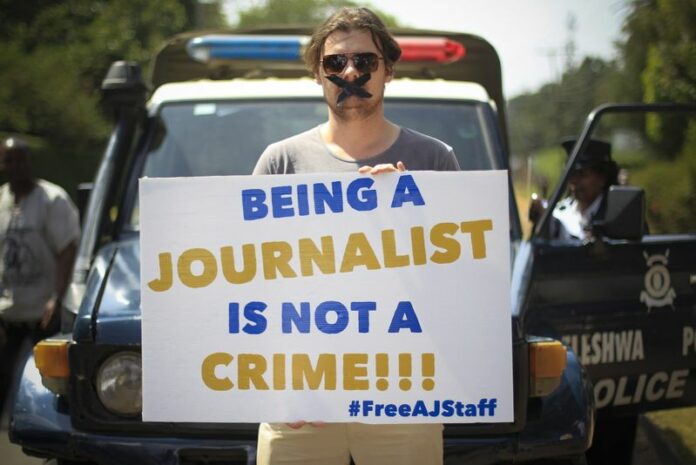
A correspondent working in Nairobi poses with a placard to protest at the imprisonment of three journalists from Al Jazeera's English-language channel in 2015 in Egypt. Photo: EPA / Dai Kurokawa

CAIRO, Egypt — An Egyptian journalist who founded one of the country's most respected human rights organizations was taken into custody Sunday and sent to military prosecutors, the editor of the news site he works for said.

Hossam Bahgat was questioned for hours by military intelligence officials before being referred to prosecutors, Mada Masr's chief editor, Lina Atallah, wrote on Twitter.

Atallah said she spoke with Bahgat by phone and he said the initial charges against him appear to be publishing false information that harms national security.

He remained in custody, awaiting questioning by prosecutors, she said.

The human rights group Amnesty International condemned Bahgat's detention.

"The arrest of a prominent advocate of freedom of expression in Egypt today is a clear signal of the Egyptian authorities' resolve to continue with their ferocious onslaught against independent journalism and civil society," the Britain-based rights watchdog said.

"He is being detained and questioned by the military prosecutor for peacefully exercising his right to freedom of expression and must be immediately and unconditionally released," said Philip Luther, the director of Amnesty's Middle East and North Africa Program.

Bahgat set up the pioneering Egyptian Initiative for Personal Rights in 2002. He headed it until he resigned in 2013 to turn his attention to journalism.

In October, he published an article on Mada Masr investigating a hushed-up military trial in which 26 army officers were reportedly jailed over an alleged Muslim Brotherhood plot to overthrow President Abdel-Fattah al-Sissi.

Atallah told DPA this was the first time military intelligence had called in any of the website's journalists.

Under Egyptian law, offenses involving the army are usually investigated by military prosecutors and tried before military courts even if the accused are civilians.

Rights groups have repeatedly condemned the use of military trials, arguing that they are not fully independent and lack the procedural guarantees that defendants enjoy in civilian courts.

According to Human Rights Watch, more than 2,000 civilians were referred to military trials from October last year, when al-Sissi empowered them to try any cases involving attacks on state infrastructure, until June.

Egypt has cracked down on opposition media since al-Sissi, who was then head of the army, ousted Islamist president Mohammed Morsi in 2013 following massive protests against his rule.

Islamist television channels have been shut down, and secular opposition figures are rarely seen on television.

Three journalists with Al Jazeera's English-language channel received pardons from al-Sissi in September after being jailed for allegedly publishing false news and collaborating with Morsi's banned Muslim Brotherhood movement.

According to the New York-based Committee to Protect Journalists, 18 journalists were in jail in Egypt in relation to their work in June this year, the highest number since the group started keeping records in 1990.

Story: DPA /  Pol O Gradaigh

Advertisement

Counting Begins After Credible Myanmar Vote

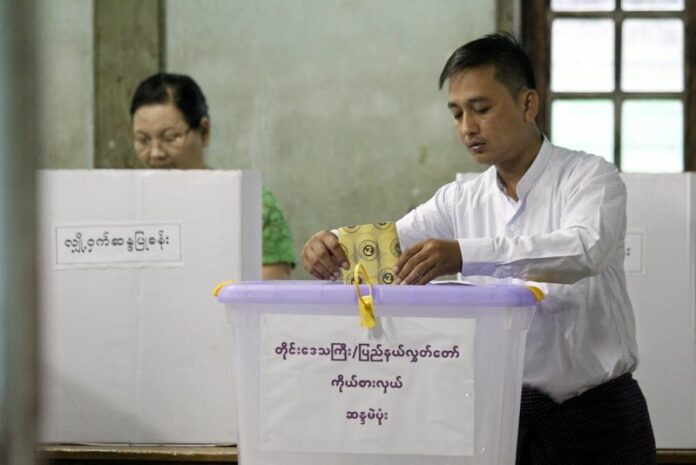
Sunday's vote in Myanmar. Photo: DPA

YANGON — Polls have closed in Myanmar after millions cast their ballots in an election pitting the army-backed establishment against an opposition led by Aung San Suu Kyi, in the country's first fully contested polls in 25 years.

Downtown Yangon was quiet on Sunday night as voters stayed indoors to follow election results. 

Several hundred supporters of Aung San Suu Kyi's National League for Democracy party gathered outside the main party headquarters in a Yangon suburb, braving rainstorms and heavy traffic. 

"I am here to watch history being made," said Ko Koo, who despite the pouring rain joined in on the festive atmosphere, dancing and singing with hundreds of others. 

Final election results were not due for several weeks, but state television showed the NLD leading by heavy margins in certain constituencies while other areas were too close to call.

The NLD released a statement late on Sunday urging supporters to accept election results without exception.

A new government will not be formed until March, when the current administration's term expires.

Human Rights Watch, which has several observers throughout the country, said late Sunday that there had been "no major issues" during the voting process. 

"So far we have not received any reports of violence or fraud," said Phil Robertson, Deputy Director of HRW's Asia Division. "We haven't seen anything that we are worried about right now."

Earlier on Sunday, opposition leader Suu Kyi – who has expressed concern over the long gap between the polls and the new government – cast her ballot in a school building near her home in Yangon, in front of crowds of supporters and hundreds of foreign journalists.

Her National League for Democracy (NLD) party is hoping to win enough seats to overturn decades of military or military-backed rule, but would require over two-thirds of the contested seats to win a parliamentary majority.

The last time the NLD contested elections, in 1990, it won a landslide victory that was later disqualified by the military. The party boycotted the last polls in 2010.

Nobel Peace Prize laureate Suu Kyi arrived at the polling station in Yangon wearing red – her party's colour – to the cheers and cries of supporters, and flanked by bodyguards.

Even though she is constitutionally barred from becoming president, the country's top post, Suu Kyi said earlier in the week that she would "run the government" if her party wins.

Local television showed incumbent President Thein Sein of the ruling army-backed Union Solidarity and Development Party (USDP) arriving to vote at a polling station in Naypyidaw, the country's administrative capital.

Thein Sein told reporters that he was prepared to accept the result of the elections, even if the USDP loses. 

"We have to respect the will of the voters," he said.

The USDP has ruled the country for the last five years, and has campaigned on a message of continuity and stability.

With many former army figures among its leadership, the USDP has argued that only it can tread the path to democracy under the watch of a distrusting military. 

"We must lead the country at least five more years so that the transition process stays peaceful," said Hla Swe, a former army officer and a sitting member of parliament for the USDP.

Story: DPA / By Cod Satrusayang and Kyaw Lynn

Advertisement

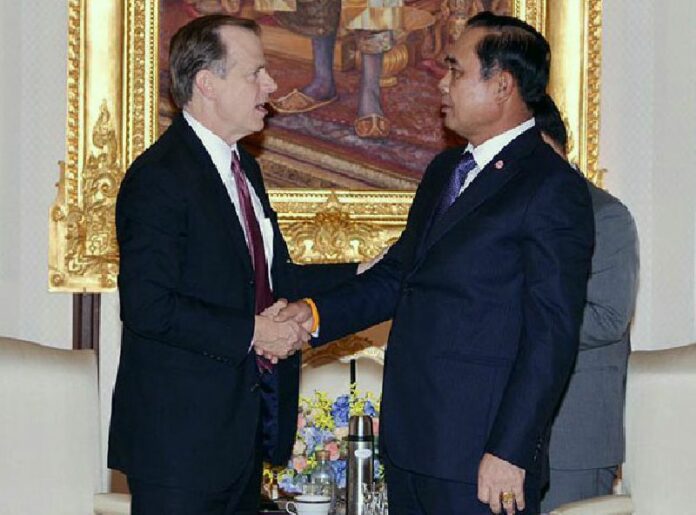
Handshake Heralds More Tactical US Approach to Junta

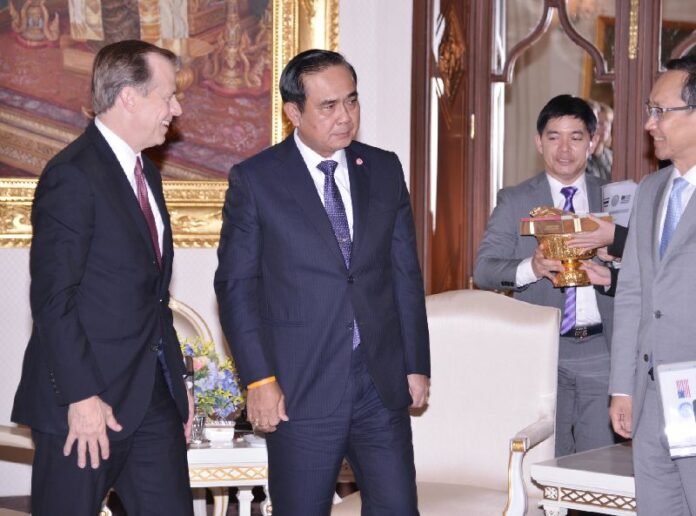
U.S. Ambassador Glyn Davies and junta chairman Gen. Prayuth Chan-ocha on Oct. 29 at Government House.

By Pravit Rojanaphruk
Senior Staff Writer

BANGKOK — Activists and academics say they are confident that U.S. policy toward the military government of Gen. Prayuth Chan-ocha will be adjusted but not drastically changed after what appeared to be a cordial meeting late last month between Prayuth and the new U.S. Ambassador to Thailand, Glyn Davies.

Following the Oct. 29 meeting, some observers are seeing in the American gesture a more tactful or calculated handling of ties, while one called for more “concrete” measures against the military regime.


Thailand Just Not That Important

Suthachai Yimprasert, a Chulalongkorn University history professor, said he doubts the United States will turn a blind eye to democracy, human rights, free expression and free assembly like it did during the Cold War to prop up successive Thai military dictators to counter perceived communist threats.

“Thailand is not that important to America’s interests, as compared to Egypt where the [U.S.] government is worried about Islamists and decided to stick with military dictators,” Suthachai said. Should Washington gravitate closer toward the Thai junta, he added, it would be counterproductive to its national interests.

Although the United States has made more overtures to the junta than the European Union and Australia, Suthachai said the U.S. government is limited by its laws on how closely it can engage with an unelected government.

Activist Pakorn Areekul was among 14 activists and students detained for 13 days in June for protesting against the junta. A central figure in the New Democracy Movement, Pakorn said he’s confident the U.S. government and embassy will continue to pay special interest to the problems of human rights and democracy in Thailand.

Although no one among his activist group has met Ambassador Davies yet, Pakorn said embassy staff are in contact with them by telephone and seem genuinely concerned with the situation.

On Sept. 19, when the group staged a protest to commemorate the September 2006 coup, the group received a call from the embassy.

“The ambassador has a duty to protects American interests, so he has to meet Prayuth,” Pakorn said.

Like Suthachai, Pakorn said he doesn’t believe Washington will support Prayuth like they did Field Marshal Sarit Thanarat in the 1960s or Field Marshal Thanom Kittikachorn in the 1970s.

“Back then [the U.S.] chose Thailand as a buffer against communism,” he said. “Take Myanmar today, where America was instrumental in pushing for elections, however.”

Pakorn said the Americans know Thailand will eventually have to return to a democratic system, and the junta does not dare sever its ties with the United States because it would reduce its leverage with other powers.

“America’s policy toward Thailand has two legs,” he concluded.

Politicians like former Pheu Thai MP and Redshirt co-leader Weng Tojirakarn said global powers don’t change their foreign policy overnight.

Weng said the United States still regards itself as the leader of the Free World.

“I don’t believe that it will support anything that destroys democracy,” he said.


A Softer Stance as China Looms

Thammasat University lecturer of International Relations Virot Ali believes the arrival of Davies signifies a softer and more tactful U.S. approach to the junta, compared to former U.S. Ambassador Kristie Kenney who was “stern” toward the coup leaders.

“He’s rather compromising and constructive,” Virot said of Davies.

It’s unlikely a coincidence, Virot said, that Davies was nominated to the post after nearly three years assigned to global problem child North Korea.

“He has the ability to foster dialogue, so his stance is constructive,” Virot said.

Virot also pointed that Davies was instrumental in opposing sanctions against Thailand in the aftermath of the 2006 coup.

At the time Davies’ litmus test for imposing sanctions was based on clear action to return power to the people, as he supported sanctions against Fiji when it suffered a coup d’etat three months after Thailand in December 2006.

He defended slapping Fiji’s junta with sanctions in August 2007 testimony to a U.S. congressional subcommittee on Asian affairs.

“Unlike in the case of Thailand, Fiji’s coup leaders have taken no credible steps to quickly restore democratic rule, other than a vague promise to hold elections in 2009,” he said at the time.

“He’s here to rein in this government in order to not cross the line,” Virot said. “It reflects the fact that [Thailand] is having problems.”

From what Davies told the press after meeting Prayuth, it appears his government wants to repair damaged ties with Thailand, Virot said, and if they continue to talk tough, Thailand will only move closer into China’s sphere of influence.

“I think they’re trying to re-engage with the ‘pivot to Asia.’”

That Obama Doctrine of disengaging from post-9/11 footing to focus on the Asia Pacific, is now being tested. Détente in the South China Sea is under threat as American and Chinese interests come into direct conflict, and Washington needs to keep its deck stacked with friends.

Virot said the United States is now in “constructive engagement” with the Thai junta, using the same term once applied to Burma under military rule. All that considered, however, he doesn’t think U.S. diplomacy will choose to ignore what’s happening in the kingdom.

“It will continue to warn the Thai government,” he said, adding that diplomatic engagement with Thailand is a two-way track.


Clarity, Credibility Sacrificed for Expediency

Not all pro-democracy activists are enamored with Washington’s handling of the junta, however.

Human rights lawyer and anti-coup activist Arnon Nampa is not impressed with the low-key pressure being applied, especially compared to the heat coming from the European Union and its member states. He said the United States appears too eager to defend its own strategic interests over maintaining its claim to support democracy around the world out of fear of losing Bangkok to Beijing.

“The United States should take a clearer stance regarding its demands [to the military government] and not just vaguely say there should be greater room for freedom of expression,” Arnon said.

At the same time, Arnon said, the junta is not eagerly giving itself over to China, as evident from its reluctance to purchase Chinese submarines.

The United States is shrewd to talk about freedom, Arnon said, but must make concrete statements about the junta’s violations of human rights.

“There should be concrete sanctions against it,” Arnon said. “Greater pressure should be exerted. Even their demands are vague.”


Related stories:

Gen. Prayuth Meets US Ambassador Davies


To reach us about this article or another matter, please contact us by e-mail at: [email protected].

Follow Khaosod English on and Twitter for news, politics and more from Thailand.

\

Advertisement

Handshake Heralds More Tactical US Approach to Junta

U.S. Ambassador Glyn Davies, left, shakes hands with junta chairman Gen. Prayuth Chan-ocha in 2015 at Government House.

By Pravit Rojanaphruk
Senior Staff Writer

BANGKOK — Activists and academics say they are confident that U.S. policy toward the military government of Gen. Prayuth Chan-ocha will be adjusted but not drastically changed after what appeared to be a cordial meeting late last month between Prayuth and the new U.S. Ambassador to Thailand, Glyn Davies.

Following the Oct. 29 meeting, some observers are seeing in the American gesture a more tactful or calculated handling of ties, while one called for more “concrete” measures against the military regime.


Thailand Just Not That Important

Suthachai Yimprasert, a Chulalongkorn University history professor, said he doubts the United States will turn a blind eye to democracy, human rights, free expression and free assembly like it did during the Cold War to prop up successive Thai military dictators to counter perceived communist threats.

“Thailand is not that important to America’s interests, as compared to Egypt where the [U.S.] government is worried about Islamists and decided to stick with military dictators,” Suthachai said. Should Washington gravitate closer toward the Thai junta, he added, it would be counterproductive to its national interests.

Although the United States has made more overtures to the junta than the European Union and Australia, Suthachai said the U.S. government is limited by its laws on how closely it can engage with an unelected government.

Activist Pakorn Areekul was among 14 activists and students detained for 13 days in June for protesting against the junta. A central figure in the New Democracy Movement, Pakorn said he’s confident the U.S. government and embassy will continue to pay special interest to the problems of human rights and democracy in Thailand.

Although no one among his activist group has met Ambassador Davies yet, Pakorn said embassy staff are in contact with them by telephone and seem genuinely concerned with the situation.

On Sept. 19, when the group staged a protest to commemorate the September 2006 coup, the group received a call from the embassy.

“The ambassador has a duty to protects American interests, so he has to meet Prayuth,” Pakorn said.

Like Suthachai, Pakorn said he doesn’t believe Washington will support Prayuth like they did Field Marshal Sarit Thanarat in the 1960s or Field Marshal Thanom Kittikachorn in the 1970s.

“Back then [the U.S.] chose Thailand as a buffer against communism,” he said. “Take Myanmar today, where America was instrumental in pushing for elections, however.”

Pakorn said the Americans know Thailand will eventually have to return to a democratic system, and the junta does not dare sever its ties with the United States because it would reduce its leverage with other powers.

“America’s policy toward Thailand has two legs,” he concluded.

Politicians like former Pheu Thai MP and Redshirt co-leader Weng Tojirakarn said global powers don’t change their foreign policy overnight.

Weng said the United States still regards itself as the leader of the Free World.

“I don’t believe that it will support anything that destroys democracy,” he said.


A Softer Stance as China Looms

Thammasat University lecturer of International Relations Virot Ali believes the arrival of Davies signifies a softer and more tactful U.S. approach to the junta, compared to former U.S. Ambassador Kristie Kenney who was “stern” toward the coup leaders.

“He’s rather compromising and constructive,” Virot said of Davies.

It’s unlikely a coincidence, Virot said, that Davies was nominated to the post after nearly three years assigned to global problem child North Korea.

“He has the ability to foster dialogue, so his stance is constructive,” Virot said.

Virot also pointed that Davies was instrumental in opposing sanctions against Thailand in the aftermath of the 2006 coup.

At the time Davies’ litmus test for imposing sanctions was based on clear action to return power to the people, as he supported sanctions against Fiji when it suffered a coup d’etat three months after Thailand in December 2006.

He defended slapping Fiji’s junta with sanctions in August 2007 testimony to a U.S. congressional subcommittee on Asian affairs.

“Unlike in the case of Thailand, Fiji’s coup leaders have taken no credible steps to quickly restore democratic rule, other than a vague promise to hold elections in 2009,” he said at the time.

“He’s here to rein in this government in order to not cross the line,” Virot said. “It reflects the fact that [Thailand] is having problems.”

From what Davies told the press after meeting Prayuth, it appears his government wants to repair damaged ties with Thailand, Virot said, and if they continue to talk tough, Thailand will only move closer into China’s sphere of influence.

“I think they’re trying to re-engage with the ‘pivot to Asia.’”

That Obama Doctrine of disengaging from post-9/11 footing to focus on the Asia Pacific, is now being tested. Détente in the South China Sea is under threat as American and Chinese interests come into direct conflict, and Washington needs to keep its deck stacked with friends.

Virot said the United States is now in “constructive engagement” with the Thai junta, using the same term once applied to Burma under military rule. All that considered, however, he doesn’t think U.S. diplomacy will choose to ignore what’s happening in the kingdom.

“It will continue to warn the Thai government,” he said, adding that diplomatic engagement with Thailand is a two-way track.


Clarity, Credibility Sacrificed for Expediency

Not all pro-democracy activists are enamored with Washington’s handling of the junta, however.

Human rights lawyer and anti-coup activist Arnon Nampa is not impressed with the low-key pressure being applied, especially compared to the heat coming from the European Union and its member states. He said the United States appears too eager to defend its own strategic interests over maintaining its claim to support democracy around the world out of fear of losing Bangkok to Beijing.

“The United States should take a clearer stance regarding its demands [to the military government] and not just vaguely say there should be greater room for freedom of expression,” Arnon said.

At the same time, Arnon said, the junta is not eagerly giving itself over to China, as evident from its reluctance to purchase Chinese submarines.

The United States is shrewd to talk about freedom, Arnon said, but must make concrete statements about the junta’s violations of human rights.

“There should be concrete sanctions against it,” Arnon said. “Greater pressure should be exerted. Even their demands are vague.”


Related stories:

Gen. Prayuth Meets US Ambassador Davies


Advertisement

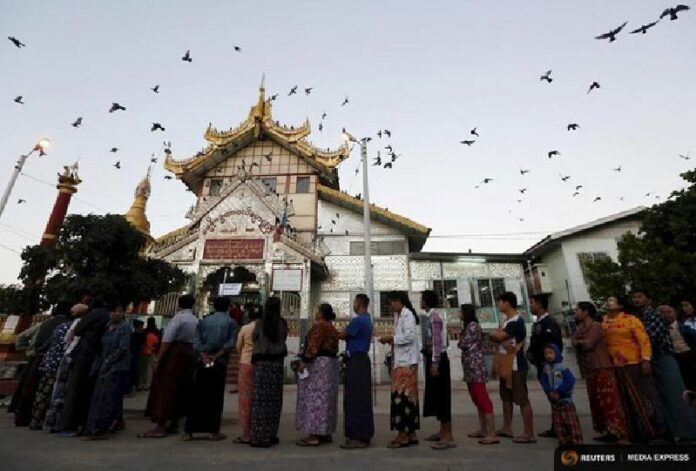
Voting Underway in Myanar's First Free Election in 25 Years

People line up outside a Buddhist prayer hall to vote Sunday during the general election in Mandalay, Myanmar. The vote is Myanmar's first free nationwide election in 25 years, the Southeast Asian nation's biggest stride yet in a journey to democracy. Photo: Reuters / Olivia Harris

By Hnin Yadana Zaw and Aung Hla Tun
Reuters

YANGON — Voting began on Sunday in Myanmar's first free nationwide election in 25 years, the Southeast Asian nation's biggest stride yet in a journey to democracy from dictatorship.

The party of opposition leader Aung San Suu Kyi is expected to win the largest share of votes cast by an electorate of about 30 million, who will choose from among thousands of candidates standing for parliament and regional assemblies.

But a legacy of military rule means she cannot become president after the election, even if her National League for Democracy, or NLD, wins by landslide, and many voters voiced doubts that the generals would accept the result.

There has been concern about the fairness of the election after it emerged that about 4 million people would be unable to cast a ballot, and on the eve of the poll the NLD said a suspiciously large number of extra voting tickets had been issued in some areas, with one family in Yangon getting 38.

Religious tension, fanned by Buddhist nationalists whose actions have intimidated Myanmar's Muslim minority, also marred the election campaign.

Still, there was a palpable sense of excitement among voters as they went to polling stations, many before dawn.

"I've done my bit for change, for the emergence of democracy," said 55-year-old former teacher Daw Myint after casting her vote for the NLD in Yangon.

Suu Kyi's car inched through a scrum of news photographers outside the Yangon polling station where the 70-year-old Nobel peace laureate came to vote and she was stony-faced as bodyguards shouted at people to move aside.

Most of the well-wishers gathered there were lucky to get more than a glimpse of the garland on her hair. A cry of "Victory! Victory!" went up from the crowd as she went inside, without a smile or a wave.

Khin May Oo, 73, who voted there earlier, said he believed the country was at a turning point, but he was worried about the army: "I'm not sure whether they will accept the election results," he said.

But in the capital, Naypyidaw, military Commander-in-Chief Min Aung Hlaing said there would be no re-run of the last free vote, in 1990, when Suu Kyi won but the army ignored the result. She spent most of the next 20 years under house arrest before her release in 2010.

Asked how he would feel if the NLD won this time, Min Aung Hlaing told reporters: "If the people choose them, there is no reason we would not accept it."

\

\

\


'Very Silly' Constitution

Results from the election are expected to come in slowly: officials say the winners of a few parliamentary seats will be announced by the end of Sunday, but a clear overall picture is not expected until Monday evening at the earliest.

Suu Kyi is barred from taking the presidency herself under a constitution written by the junta to preserve its power.

But if she wins a majority and is able to form Myanmar's first democratically elected government since the early 1960s, Suu Kyi says she will be the power behind the new president regardless of a constitution she has derided as "very silly".

Suu Kyi starts the contest with a sizeable handicap: even if the vote is deemed free and fair, one-quarter of parliament's seats will still be held by unelected military officers.

To form a government and choose its own president, the NLD on its own or with allies must win more than two-thirds of all seats up for grabs. By contrast, the ruling Union Solidarity and Development Party, or USDP, would need far fewer seats if it secured the backing of the military bloc in parliament.

However, many voters are expected to spurn the USDP, created by the former junta and led by former military officers, because it is associated with the brutal dictatorship that installed President Thein Sein's nominally civilian government in 2011.

An inconclusive result could thrust parties representing Myanmar's myriad ethnic minorities into a king-maker role, bringing them closer to the center of power after years on the fringes.


Military Power

Even if the NLD is victorious, the military will retain significant power. It is guaranteed key ministerial positions, the constitution gives it the right to take over the government under certain circumstances, and it also has a grip on the economy through holding companies.

Until just a few years ago a pariah state, Myanmar has had little experience organizing elections.

In a pre-election speech on Friday, President Thein Sein stressed the government's commitment to ensuring a credible vote, with more than 10,000 observers scrutinizing the process in which 91 parties are taking part.

Security was tight around the country, with 40,000 specially trained police watching over polling stations, and many restaurants and markets were closed in the country's usually bustling main city, Yangon.

Wa Gyi, owner of a Yangon roadside food stall, said he had been ordered to close for the day. "It's OK for us," he said. "It's our contribution to the emergence of democracy."

Additional reporting by Aubrey Belford, Timothy McLaughlin and Andrew Marshall


To reach us about this article or another matter, please contact us by e-mail at: [email protected].

Follow Khaosod English on and Twitter for news, politics and more from Thailand.

\

Advertisement

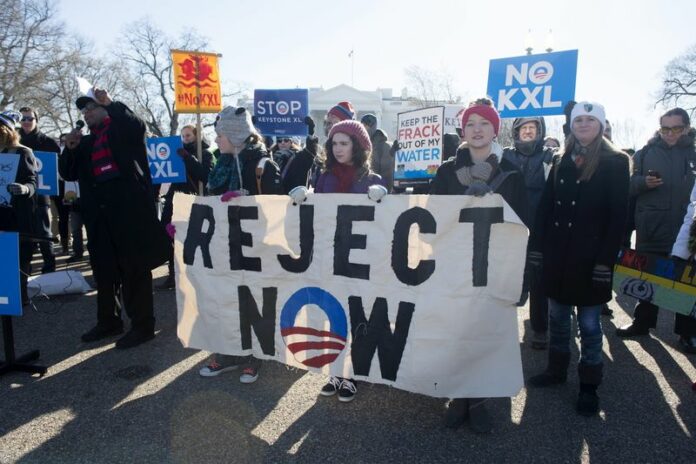
Obama Rejects Keystone XL Pipeline Project

People rally against the Keystone XL pipeline project in Washington earlier this year. Photo: EPA / Michael Reynolds

WASHINGTON — US President Barack Obama rejected the Keystone XL pipeline on Friday, saying the project would have damaged the US ability to lead on efforts to tackle climate change ahead of Paris climate talks.

"As long as I'm president of the United States, America's going hold ourselves to the same high standards to which we hold the rest of the world," Obama said after meeting with Secretary of State John Kerry on the issue.

Obama called newly installed Canadian Prime Minister Justin Trudeau to inform him of the decision. He said Trudeau expressed disappointment but promised the two countries would continue to cooperate closely on energy and climate-change issues.

"The Canada-US relationship is much bigger than any one project," Trudeau said.

The proposed Keystone XL pipeline was slated to carry oil from Canada's tar sands in Alberta to the Midwestern state of Nebraska, where an existing pipeline would carry the Canadian oil to refineries in Texas.

The project called for the construction of a 1,900-kilometre-long pipeline that would pump 830,000 barrels of oil a day.

Obama's rejection of the project – reviewed for seven years by his administration – angered opposition Republicans, who had long advocated the pipeline to reduce US reliance on oil imported from the Middle East.

They have accused the Obama administration of improperly stalling on the issue.

Speaker of the House Paul Ryan, the top Republican in Congress, where the conservative party holds majorities, called the move "sickening," claiming Obama was rejecting thousands of well-paying jobs, spurning the largest US trading partner and overriding the will of the American people and Congress.

Obama rejected their arguments in favour of the pipeline and its "overinflated role in our political discourse."

"It became a symbol too often used as a campaign cudgel by both parties rather than a serious policy matter," he said.

"And all of this obscured the fact that this pipeline would neither be a silver bullet for the economy, as was promised by some, nor the express lane to climate disaster proclaimed by others."

Apart from climate change, Obama cited a lack of significant economic benefits, minimal impact on US energy security and already falling US petrol prices as other reasons for the decision.

Because the pipeline would cross the US-Canada border and span six US states, the US State Department spearheaded the review and was responsible for providing a recommendation to Obama.

Kerry said the US must focus on renewable fuels and that rejecting the pipeline went beyond the numbers of "jobs that would be created, dirty fuel that would be transported here or carbon pollution that would ultimately be unleashed."

"The United States cannot ask other nations to make tough choices to address climate change if we are unwilling to make them ourselves. Denying the Keystone XL pipeline is one of those tough choices – but it is the right decision – for America and the world," he said.

The US Chamber of Commerce said the move broke Obama's promise to create jobs.

"In rejecting the Keystone XL pipeline, President Obama has put politics before the best interests of the country," Chamber president Thomas Donohue said.

A senior State Department official said Friday that the public provided 5 million comments to the reviewers.

Environmentalists feared the project would increase greenhouse gas emissions and risked local environmental damage through potential leaks in the pipeline itself.

Environmental group Greenpeace called the move a victory for environmentalists, farmers and communities along the proposed pipeline route.

"By rejecting Keystone XL and cancelling Arctic drilling leases, President Obama is starting to build a climate legacy that addresses the critical need to keep fossil fuels in the ground," Greenpeace US director Annie Leonard said.

The company behind the Keystone XL pipeline proposal said it will consider all its options, including filing a new application.

"TransCanada and its shippers remain absolutely committed to building this important energy infrastructure project," chief executive Russ Girling said.

"We will review our options to potentially file a new application for border-crossing authority … and will now analyze the stated rationale for the denial."

On Tuesday, the US had rejected a request from TransCanada to postpone review of the proposal. TransCanada's request to "pause" the project stemmed from a hope that a Republican will occupy the White House in 2017, improving the chances the pipeline would be approved.

In February, Obama vetoed a measure passed by the Republican-controlled Congress calling for the construction of the pipeline, which would pump 830,000 barrels of oil a day from Canada to the Texas Gulf Coast.

Story: DPA,  Anne K Walters and Peter Voskamp

Advertisement

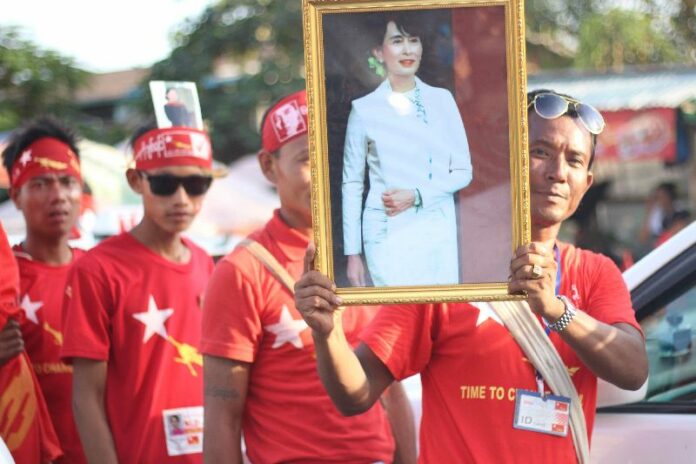
From Landslide to Coup: 6 Possible Outcomes to Sunday’s Vote in Myanmar

A supporter of Suu Kyi holds a picture of her at a Nov. 1 NLD rally in Thuwunna, Yangon. Photo: Myanmar Now / Thin Lei Win

YANGON — The outcome of the Nov. 8 elections will shape the direction of Myanmar’s democratic transition. It has been billed as the first “free and fair” election in decades.

Myanmar’s quasi-presidential system means commanding a ruling majority in parliament isn’t necessary to enact legislation. What is crucial for the major political parties is that their nominated candidate is elected as president by the parliament. If no party wins a clear majority, it is more likely that temporary alliances, rather than enduring coalitions, will be formed to smooth the passing of legislation.

The parliament elects the president, who in turn selects a cabinet. The president commands full executive power, except in key security ministries (border affairs, home affairs and defense), or in enacting changes to the constitution. The 2008 constitution, drafted by the military, stipulates that the military’s support is needed to enact major changes to the constitution or key security ministries.

Three presidential candidates are selected from both chambers of parliament and one from the military, then the parliament votes for the presidency. The two unsuccessful candidates become vice presidents.

Even if pre-election analysis proves correct and the ruling Union Solidarity and Development Party loses considerable ground to Aung San Suu Kyi’s National League for Democracy, section 59(f) of the 2008 constitution bars Suu Kyi from being president as her late husband and her sons are foreign nationals.

The military has made assurances that there will be no repeat of the 1990 election, the results of which were ignored by the then ruling junta, or the flawed 2010 election that was considered fraudulent and was boycotted by the National League for Democracy, or NLD. The 2008 constitution gives the military an automatic 25 percent bloc of seats in the bicameral parliament, giving them the power of veto and considerable influence in the presidential vote; their authority is enshrined in law.

Here are a series of post-election scenarios:

1. NLD wins outright majority, controls upper and lower house

After more than half a century of authoritarian rule, the NLD wins a resounding victory. The party takes control of both houses of parliament enabling them to select two presidential candidates, one each from the upper and lower houses.

In order to fulfil a parliamentary requirement that says one presidential nominee must be an ethnic candidate, the upper house candidate will be from an ethnic member of the NLD. 

Aung San Suu Kyi is made lower house speaker. The NLD winning 67 percent of all seats in parliament is enough to ensure it can outweigh the influence of the 25 percent military bloc and can select the president. 

The NLD-nominated president has the authority to appoint ministers in regional and state governments while a majority in both the lower and upper house enables legislation to pass through parliament without resistance.

The Union Solidarity and Development Party, or USDP, becomes the main opposition party.

The NLD hasn’t publicly nominated a presidential candidate. Retired general and NLD founder Tin Oo is an obvious choice but he is 88 years old and has said he would be reluctant to take the post. Htin Kyaw, a former diplomat and close aide of Suu Kyi, is also touted as a candidate.

Former parliament speaker Shwe Mann, ousted as USDP party chairman in a midnight purge in August, reputedly for upsetting military-backed factions within the party because of his warming public relationship with Aung San Suu Kyi, is a possible candidate. He has worked closely with Suu Kyi over reforms to the constitution. Suu Kyi hasn’t quite put an end to speculation he could be nominated as the NLD candidate.

Suu Kyi said at a new conference this week the party had selected someone to represent the NLD as president, but did not name the chosen candidate.

2. NLD victory, controls lower but not upper house

The NLD wins a majority but only controls the lower house and Aung San Suu Kyi is elected as the lower house speaker. The NLD nominates its own presidential candidate from the lower house.

Despite winning the popular vote, the party doesn’t have control of both chambers of parliament as the ethnic parties are over represented in the upper house due to electoral malapportionment. Because of this, the presidential candidate from the upper house is a member of an ethnic party. 

The USDP and the military jointly nominate a candidate to run in the tripartite presidential race. The NLD has enough votes to elect the president.


3. NLD fails to win outright majority, allies with ethnic/smaller parties

The NLD fails to win an outright majority in parliament and has to make alliances with the ethnic and smaller parties to make up a majority in the lower house. 

Those parties that boycotted the 2010 elections with the NLD join it in an informal alliance, particularly members of the NLD-friendly United Nationalities Alliance, for example the Shan Nationalities League for Democracy.

The NLD secures votes of some ethnic parties of the powerful National Brotherhood Federation, persuading them the NLD, traditionally seen as “Bamar” focused, can meet their interests.
Aung San Suu Kyi is elected as lower house party speaker.

As in scenario 2, the USDP and military jointly nominate a presidential candidate and an ethnic party candidate is nominated from the upper house.

Between the smaller and ethnic parties the NLD has enough votes to elect its presidential candidate.

The USDP becomes the main opposition party.


4. NLD fails to win outright majority, USDP alliance elects president

The NLD wins a majority of contested seats but not the two-thirds needed to elect its own presidential candidate.

The USDP wins enough seats to form a majority in an alliance with some ethnic and smaller parties and the 25 percent military allocation. A USDP proxy party in Kachin state, the UDPKS, the Pa-O national organisation and Kachin State Unity and Democracy Party as well as some member parties from the National Brotherhood Federation form an alliance with the USDP.

The ethnic parties control the upper house and select their own presidential candidate for the electoral college.

The NLD nominates its own candidate but it is the alliance of the USDP, the military and ethnic and smaller parties that choose the president, most likely Thein Sein. 

Htay Oo replaced Shwe Mann in August as party chairman and is considered a contender for the presidency. So too is new general secretary Tin Naing Thein, and influential party members Thein Zaw and Hla Htay Win.

The NLD becomes the main opposition party in both houses.


5. USDP secures the lower house and elects president with the military vote 

The NLD and USDP poll fairly evenly. The USDP has enough votes to select a presidential candidate from the lower house, whilst the military and ethnic parties also have candidates. 

The USDP’s candidate, as suggested in scenario 4, becomes president.

The NLD become the major opposition party in both houses.


6. “Worst case” scenarios

The NLD performs poorly amid evidence of widespread intimidation, interference with the voting process and voter fraud. International election observers declare the election results non-credible. 

Aung San Suu Kyi calls on voters and the international community to condemn the results and to mount pressure on the government. She seeks political avenues to challenge the results whilst urging her supporters to remain calm.

Or an overwhelming victory by the NLD prompts a backlash by reactionary forces, including military hardliners, the Buddhist nationalist Ma Ba Tha movement and USDP supporters. The groups start to foment instability across the country.

In both scenarios, with the increased likelihood of civil disobedience and wide-scale civil revolt, the military declares a state of emergency under the guise of securing stability. It uses its power to suspend the constitution indefinitely and establishes a military administration. It says it will return governance to quasi-civilian rule only when it can assure the country’s stability.

Story: Connor Macdonald

Advertisement

Hot News

LATEST NEWS

Bangkok
light rain
28.3 ° C
28.3 °
28.3 °
82 %
3.6kmh
73 %
Sat
30 °
Sun
33 °
Mon
33 °
Tue
30 °
Wed
29 °