
























25.5 C
Bangkok
Friday, June 19, 2026
Home Blog Page 2941

Former Protest Leader Leaves Monkhood, Rules Out Return to Politics

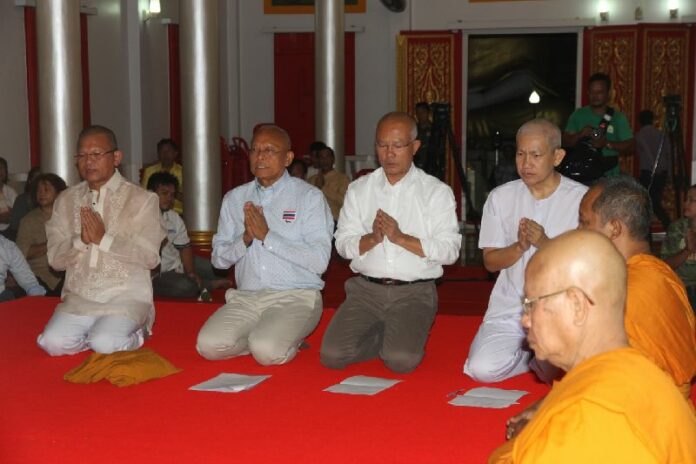
Suthep Thaugsuban (second from the left) at his disrobing ceremony in Surat Thani, 28 July 2015.

BANGKOK — The former leader of the conservative protest movement that brought about the 2014 coup d'etat left the monkhood today after spending a year at a monastery in southern Thailand.

Suthep Thaugsuban is famous for leading street protests against then-Prime Minister Yingluck Shinawatra from November 2013 to May 2014, when the military intervened with the stated aim of restoring peace and order. The following month, Suthep became a monk at a forest monastery in Surat Thani province. 

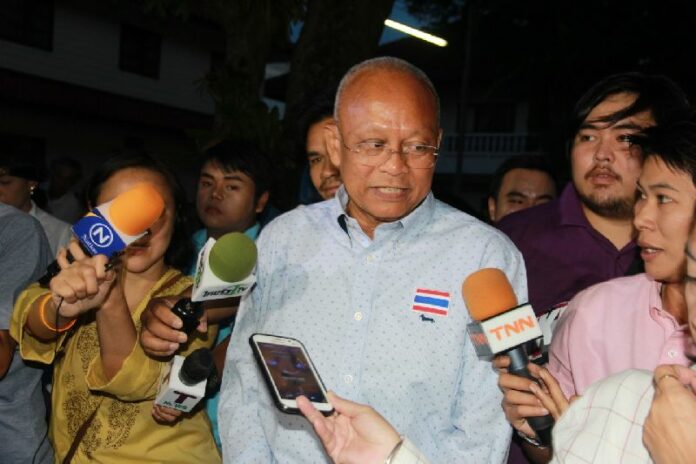
Speaking to the press after his disrobing ceremony this morning, Suthep said he plans to join a foundation that other former protest leaders have established to promote vocational education and other grassroots projects. Later in the evening Suthep took to his official Facebook account to declare that he's done with politics.

"I was in monkhood for one year and thirteen days. I have presided over ceremonies … at over 500 temples. I have conducted merit making for many of you." Suthep wrote.

"After leaving the monkhood, I will work with the Foundation of the Great Mass of the People for Reform of Thailand. I will never go back to run in an election ever again. But I will be working in civil politics alongside the Great Mass of the People for the benefit of our country." 

Prior to his foray into street protest, Suthep was deputy chairman of the Democrat Party, followed by Deputy Prime Minister from 2008 – 2011.

After Yingluck's government tried to pass a controversial amnesty bill that would have absolved the corruption conviction of her brother, former PM Thaksin Shinawatra, Suthep resigned from the Democrat Party to lead mass street protests against the measure. 

Although the protests were sparked by criticism of the amnesty bill, the movement later escalated into a full-scale anti-government demonstration that demanded Yingluck and her government be removed. Suthep called for replacing Yingluck with a royally-appointed Prime Minister, and allowing an unelected "People's Council" to spearhead a series of national reforms.

Suthep also led demonstrators to boycott the February 2014 snap election called by Yingluck in response to the protests.

Speaking to reporters today, Suthep said he plans to contest the charges that have been filed against him in relation to his protest campaign, which include insurrection and breaking into state buildings, among others. 

"I don't want any amnesty for me, even though some of my charges carry maximum penalty of execution of life sentence," Suthep said. "There should not be any amnesty for people who are charged with lese majeste [insulting the monarchy] and other serious offences either. It should be processed in accordance with the laws. But as for ordinary people who joined political struggle, there should be amnesty for these people." 


For comments, or corrections to this article please contact: [email protected]

You can also find Khaosod English on Twitter and Facebook
http://twitter.com/KhaosodEnglish
http://www.facebook.com/KhaosodEnglish
Advertisement

Former Protest Leader Leaves Monkhood, Rules Out Return to Politics

Suthep Thaugsuban speaking to reporters after leaving the monkhood in Surat Thani, 28 July 2015.

BANGKOK — The former leader of the conservative protest movement that brought about the 2014 coup d'etat left the monkhood today after spending a year at a monastery in southern Thailand.

Suthep Thaugsuban is famous for leading street protests against then-Prime Minister Yingluck Shinawatra from November 2013 to May 2014, when the military intervened with the stated aim of restoring peace and order. The following month, Suthep became a monk at a forest monastery in Surat Thani province. 

Speaking to the press after his disrobing ceremony this morning, Suthep said he plans to join a foundation that other former protest leaders have established to promote vocational education and other grassroots projects. Later in the evening Suthep took to his official Facebook account to declare that he's done with politics.

"I was in monkhood for one year and thirteen days. I have presided over ceremonies … at over 500 temples. I have conducted merit making for many of you." Suthep wrote.

"After leaving the monkhood, I will work with the Foundation of the Great Mass of the People for Reform of Thailand. I will never go back to run in an election ever again. But I will be working in civil politics alongside the Great Mass of the People for the benefit of our country." 

Prior to his foray into street protest, Suthep was deputy chairman of the pro-establishment Democrat Party, followed by Deputy Prime Minister from 2008 – 2011.

After Yingluck's government tried to pass a controversial amnesty bill that would have absolved the corruption conviction of her brother, former PM Thaksin Shinawatra, Suthep resigned from the Democrat Party to lead mass street protests against the measure. 

Although the protests were sparked by criticism of the amnesty bill, the movement later escalated into a full-scale anti-government demonstration that demanded Yingluck and her government be removed. Suthep called for replacing Yingluck with a royally-appointed Prime Minister, and allowing an unelected "People's Council" to spearhead a series of national reforms.

Suthep also led demonstrators to boycott the February 2014 snap election called by Yingluck in response to the protests.

Speaking to reporters today, Suthep said he plans to contest the charges that have been filed against him in relation to his protest campaign, which include insurrection and breaking into state buildings, among others. 

"I don't want any amnesty for me, even though some of my charges carry maximum penalty of execution of life sentence," Suthep said. "There should not be any amnesty for people who are charged with lese majeste [insulting the monarchy] and other serious offences either. It should be processed in accordance with the laws. But as for ordinary people who joined political struggle, there should be amnesty for these people." 


For comments, or corrections to this article please contact: [email protected]

You can also find Khaosod English on Twitter and Facebook
http://twitter.com/KhaosodEnglish
http://www.facebook.com/KhaosodEnglish
Advertisement

Motorcycle Injures 3 Near Memorial Service for Motorcycle Crash Victim

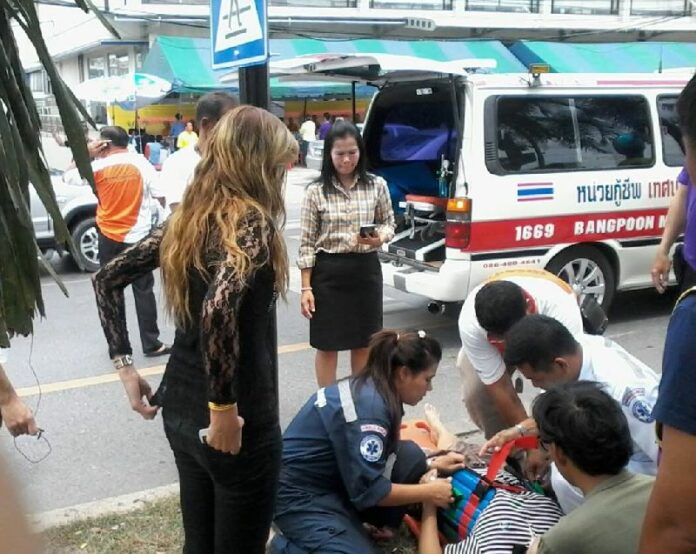
Medics assist a man injured in a motorcycle accident that took place across the street from where a ceremony was being held for a woman  killed in the same spot two weeks ago, Pathum Thani, 28 July 2015.

PATHUM THANI — Three people were injured in a motorcycle accident that took place across the street from where a religious service was being held for a pedestrian who was killed on the same crosswalk two weeks ago.

The memorial was dedicated to Lanchakorn Chanklom, 54, who died when a motorcyclist crashed into her while she was walking on a zebra crossing on Rangsit – Pathum Thani Road in Pathum Thani province on 15 July. She was returning home from an event where she had signed a petition calling for a pedestrian bridge to be built over that section of the road.

This morning, a pedestrian was injured on the same crosswalk while she was on her way to attend the merit-making ceremony for Lanchakorn.

The pedestrian, a 40-year-old woman named Suphaporn Suwannawong, and the two men on the motorcycle were injured in the accident and have been sent to the hospital, police said.

\
Buddhist monks hold a ceremony for a woman killed by a motorcycle while she was crossing a road in Pathum Thani, 28 July 2015.

According to local resident Wanchai Charoenkitpiman, 56, Pathum Thani authorities told him they are in the process of designing and approving the construction of a pedestrian bridge as requested by the petitioners. 

"I don't want to see any more people getting killed or injured by crossing this road," Wanchai said. "There's a zebra crossing here, but the vehicles rarely stop for us."

For comments, or corrections to this article please contact: [email protected]

You can also find Khaosod English on Twitter and Facebook
http://twitter.com/KhaosodEnglish
http://www.facebook.com/KhaosodEnglish

Advertisement

Timeline of Koh Tao Murder Investigation

Click here to expand.

For comments, or corrections to this article please contact: [email protected]

You can also find Khaosod English on Twitter and Facebook
http://twitter.com/KhaosodEnglish
http://www.facebook.com/KhaosodEnglish
Advertisement

Asians Mystified by Westerners' Naked Rites at Sacred Sites

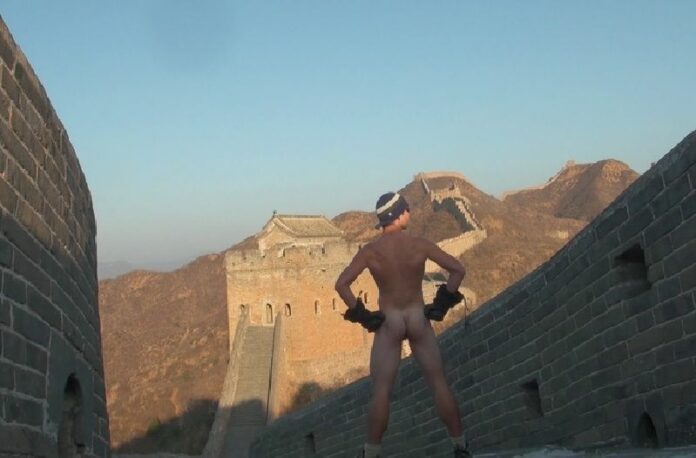
Emil Kaminski poses on the Great Wall of China. [Emil Kaminski]

BANGKOK (DPA) — Many exports of Western civilization have been well received in Asia: indoor-plumbing, the internet and the HBO series Game of Thrones to name just a few.

However, a recent trend among tourists to strip naked and pose alongside the world's major landmarks has drawn the ire of governments and residents across the region.

After an earthquake that struck Malaysia's Mount Kinabalu on June 5 claimed the lives of 18 people, regional deputy chief minister Joseph Pairin Kitingan blamed it on the naked derrieres of a few Western exhibitionists.

Kitingan said the mountain had been angered by the foreigners who "showed disrespect to the sacred mountain" by uploading naked selfies taken there to social media.

Masidi Manjun, Sabah state minister of tourism, culture and the environment, explained that the indigenous people believe Mount Kinabalu is the final resting place of departed souls, and thus the tourists' actions were "sacrilege."

The perpetrators were eventually caught, fined and expelled from Malaysia – fully clothed – amid a scrum of media coverage.

All the commotion surrounding the case felt overblown to people like Canadian Emil Kaminski, one of the first and most prominent figures in the naked-tourism phenomenon, who say the growing social media trend is "just for laughs."

"[It started] because no one else did it at the time. [We were] tired of the same old boring photos … that everyone does," Kaminski, a videographer for the Monkeetime travel blog, told dpa.

He acknowledged that there are some limits. He would not advocate walking around a crowded tourist area in the buff, but if alone in a secluded place, then "why not?"

The trend has seemingly caught on. A Facebook group calling itself Naked at Monuments has received thousands of followers while the photo-sharing website Instagram is littered with naked bottoms from around the globe.

As a major destination for travellers, South-East Asia has been inundated with tourists looking for a good time.

From Penang in Malaysia, to Chiang Mai in Thailand and Angkor Wat in Cambodia, tourists have been caught in various stages of undress by local authorities who are shocked at the growing trend.

Since the beginning of the year, three French and two Americans have been arrested at the Angkor Wat temple complex that dates to the 12th century.

One 22-year-old Canadian student who declined to be named also posed naked at Angkor Wat with her friends, but was not caught by authorities.

"We were just having a bit of fun," she says. "The weather is so hot and we saw it on social media so we thought we would try it too."

According to Maria Lombard of Northwestern University, the need for tourists to connect with locations "in a tangible way" and the ire that it draws are not new or unique.

Lombard points out that tourists have been carving initials into landmarks and historical sites for ages.

"This desire to show that "I was here" is not new; just the mode for expressing it is."

But such reassurances are no comfort to tourism officials across the region who argue that such stunts have no place for monuments that natives consider sacred.

"Everywhere on Earth, when someone takes off their clothing and becomes nude in public, it offends," said Phay Siphan, a spokesman for Cambodia's Ministry of the Interior.

"Angkor Wat is a World Heritage site and it has [important] cultural value," he said. "Nudity is not a cultural value."

Local officials are also puzzled why Western tourists who flaunt their bits at revered sites in Asia refrain from doing so in their own countries in front of landmarks like St Peter's Basilica.

"They don't seem to strip off much in the Notre Dame or Hagia Sofia or any other place I can think of," said Lawrence Osborne, a bestselling author who has written extensively about the clash of culture and identity in South-East Asia.

"Modesty and restraint are still respected virtues in the East, so stripping naked at tourist sites that are sacred or highly visible is not only taboo in these countries but a "loss-of-face" for local officials."

But what started as fun and games for Kaminski and his followers has quickly become a rallying cry in a fight against traditional conservatism.

After Malaysians blamed the earthquake on naked tourists, Kaminski took to the internet to ridicule such statements, engaging in a Twitter tussle with state tourism minister Masidi Manjun.

"While it started as a goofy thing to do with friends, at this point it has evolved into a statement about people needing to stop being Taliban-like and update their ancient social norms."

(Reporting by Cod Satrusayang)


For comments, or corrections to this article please contact: [email protected]

You can also find Khaosod English on Twitter and Facebook
http://twitter.com/KhaosodEnglish
http://www.facebook.com/KhaosodEnglish
Advertisement

Police Recruit Monks to Help Promote Road Safety

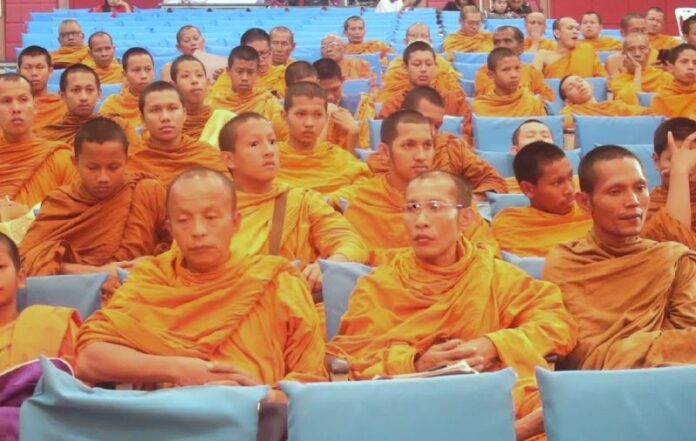
Monks gather for a meeting with police in Nakhon Si Thammarat about promoting road safety, 28 July 2015.

NAKHON SI THAMMARAT — Police in southern Thailand have asked Buddhist monks to help promote road safety by explaining to temple-goers that accidents are caused by recklessness, not bad karma.

Pol.Col. Wanchai Ekpornpitch, deputy commander of Nakhon Si Thammarat police force, told over local 90 monks in an auditorium today that police are looking to cut traffic accident fatalities by half by the year 2020.

"We want to encourage 100 percent of motorcyclists and their passengers to wear motorcycle helmets, so we invited the monks to listen to accident statistics and other measures, because religious institutions are very important in spreading information, through sermons, discussions, and other public relations efforts with people who make merit at temples," Pol.Col. Wanchai told reporters.

He explained, "They [monks] should hand out the idea that when people don't wear motorcycle helmets, and they go on to have accidents that cause deaths and injuries, it was not because of karma. It was because of reckless behavior." 

Pol.Col. Wanchai said he hopes monks who attended today's conference will be able to "accurately and successfully spread the information." 

According to Pol.Col. Wanchai, an average of 2 people are killed every day in road accidents in Nakhon Si Thammarat province. 


For comments, or corrections to this article please contact: [email protected]

You can also find Khaosod English on Twitter and Facebook
http://twitter.com/KhaosodEnglish
http://www.facebook.com/KhaosodEnglish
Advertisement

Thai Govt: US Should Clarify Human Trafficking Rankings

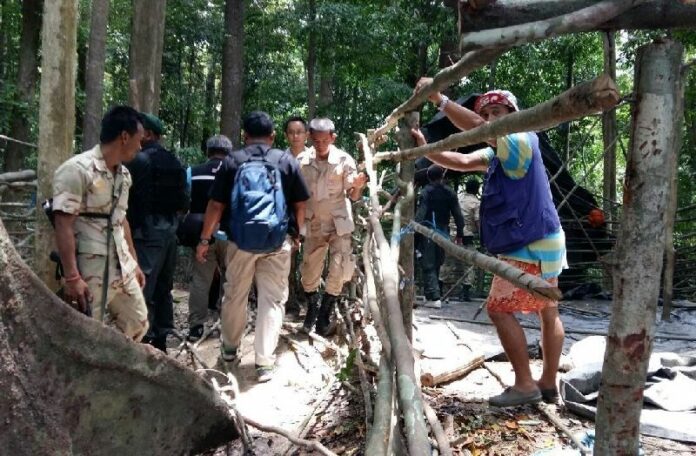
Thai police dismantle a camp used to detain trafficking victims in Songkhla province, 5 May 2015.

BANGKOK — A Thai government spokesperson said the United States is obligated to explain why it did not upgrade Thailand's ranking in an annual assessment of human trafficking around the globe.

In the 2015 Trafficking in Persons (TIP) report released last night, the US State Department retained Thailand’s"Tier 3" status, citing a the government’s failure to "fully comply with the minimum standards for the elimination of trafficking."

Thailand was first downgraded to Tier 3 – the lowest rank possible – last year. 

Speaking to reporters this morning, Thai government spokesperson Maj.Gen. Sansern Kaewkamnerd said he disagreed with the ranking. 

"Thailand's clear stance is to prevent anyone from using Thailand as a transit country or [location] of human trafficking networks, and punish any wrongdoer," Maj.Gen. Sansern told reporters.

"It is the duty and responsibility of the report publishers to explain clearly to the world community about the source of the data they collected, and what standards they used to make their analysis, in order to make that report truly credible and accepted."

He added, "They have to confirm that this is an action based on facts without any hidden agenda."

The 2015 TIP Report described Thailand as a source, destination, and transit country for victims of human trafficking, both foreigners and Thais, who are often defrauded by brokers into working in the sex trade or fishing industry.

The report also faulted Thai authorities for discouraging media coverage of human trafficking, creating an environment where victims are afraid to report crimes, and failing to root out corruption among officials. 

"Some Thai officials are complicit in trafficking crimes and corruption continues to undermine anti-trafficking efforts," the report said.  "Thailand investigated and prosecuted some cases against corrupt officials involved in
trafficking but trafficking-related corruption continued to impede progress in combating trafficking."

The report also noted some progress made by Thailand's military government, which came to power through a coup in May 2014, including new laws regulating the fishing industry, harsher punishments for trafficking crimes, and efforts to register undocumented migrants who are vulnerable to exploitation.

"Thailand is neither worried nor dispirited by this report, because we are well aware of how much progress our problem-solving has brought,” Maj.Gen. Sansern said today, noting the Thai police’s dismantling of a human trafficking network in southern Thailand following an investigation in May.

The May 2015 crackdown, which led to the indictment of more than 70 people on trafficking charges, was not included in the TIP assessment because it occurred after the reporting period, which ended on 31 March 2014.

In a statement published on its website, the US Embassy in Bangkok said it was encouraged by the anti-trafficking efforts in Thailand that came after the March deadline and will be included in next year's report. 

"We welcome additional efforts by the Thai government since March 31 to fight trafficking in persons, including efforts to create special units within criminal courts to adjudicate trafficking cases and the arrests of dozens possibly involved in human trafficking crimes and other abuses against migrants in southern Thailand," the statement said. 

The US Embassy's statment also noted that "TIP report rankings are made based upon a thorough evaluation of the country’s anti-trafficking record and is made without consideration of the country’s current political context."


For comments, or corrections to this article please contact: [email protected]

You can also find Khaosod English on Twitter and Facebook
http://twitter.com/KhaosodEnglish
http://www.facebook.com/KhaosodEnglish
Advertisement

Thai Govt: US Should Clarify Human Trafficking Rankings

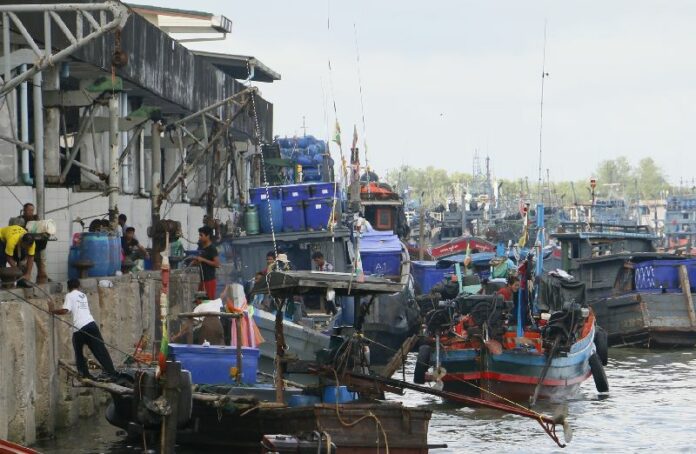
A fishing port in Ranong province, 28 July 2015. Thailand's fishing industry has long been a hotbed of human trafficking and forced labor.

BANGKOK — A Thai government spokesperson said the United States is obligated to explain why it did not upgrade Thailand's ranking in an annual assessment of human trafficking around the globe.

In the 2015 Trafficking in Persons (TIP) report released last night, the US State Department retained Thailand’s"Tier 3" status, citing a the government’s failure to "fully comply with the minimum standards for the elimination of trafficking."

Thailand was first downgraded to Tier 3 – the lowest rank possible – last year. 

Speaking to reporters this morning, Thai government spokesperson Maj.Gen. Sansern Kaewkamnerd said he disagreed with the ranking. 

"Thailand's clear stance is to prevent anyone from using Thailand as a transit country or [location] of human trafficking networks, and punish any wrongdoer," Maj.Gen. Sansern told reporters.

"It is the duty and responsibility of the report publishers to explain clearly to the world community about the source of the data they collected, and what standards they used to make their analysis, in order to make that report truly credible and accepted."

He added, "They have to confirm that this is an action based on facts without any hidden agenda."

The 2015 TIP Report described Thailand as a source, destination, and transit country for victims of human trafficking, both foreigners and Thais, who are often defrauded by brokers into working in the sex trade or fishing industry.

The report also faulted Thai authorities for discouraging media coverage of human trafficking, creating an environment where victims are afraid to report crimes, and failing to root out corruption among officials. 

"Some Thai officials are complicit in trafficking crimes and corruption continues to undermine anti-trafficking efforts," the report said.  "Thailand investigated and prosecuted some cases against corrupt officials involved in
trafficking but trafficking-related corruption continued to impede progress in combating trafficking."

The report also noted some progress made by Thailand's military government, which came to power through a coup in May 2014, including new laws regulating the fishing industry, harsher punishments for trafficking crimes, and efforts to register undocumented migrants who are vulnerable to exploitation.

"Thailand is neither worried nor dispirited by this report, because we are well aware of how much progress our problem-solving has brought,” Maj.Gen. Sansern said today, noting the Thai police’s dismantling of a human trafficking network in southern Thailand following an investigation in May.

The May 2015 crackdown, which led to the indictment of more than 70 people on trafficking charges, was not included in the TIP assessment because it occurred after the reporting period, which ended on 31 March 2014.

In a statement published on its website, the US Embassy in Bangkok said it was encouraged by the anti-trafficking efforts in Thailand that came after the March deadline and will be included in next year's report. 

"We welcome additional efforts by the Thai government since March 31 to fight trafficking in persons, including efforts to create special units within criminal courts to adjudicate trafficking cases and the arrests of dozens possibly involved in human trafficking crimes and other abuses against migrants in southern Thailand," the statement said. 

The US Embassy's statment also noted that "TIP report rankings are made based upon a thorough evaluation of the country’s anti-trafficking record and is made without consideration of the country’s current political context."


For comments, or corrections to this article please contact: [email protected]

You can also find Khaosod English on Twitter and Facebook
http://twitter.com/KhaosodEnglish
http://www.facebook.com/KhaosodEnglish
Advertisement

Malaysia, Cuba Off US List of Worst Trafficking Offenders

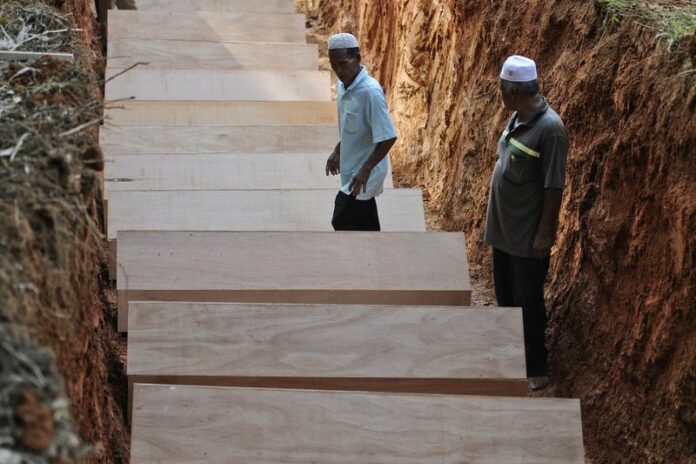
Malaysian grave diggers position coffins containing remains believed to be of Rohingya at Pokok Sena, Malaysia, in a June 22 file photo. EPA/STR MALAYSIA

WASHINGTON (DPA) — Malaysia and Cuba were among the countries removed Monday from a list of countries deemed by the US State Department as the worst in addressing human trafficking.

The move in an annual report on trafficking prompted criticism from human rights groups, which alleged that the upgrades were motivated by US political and trade interests rather than actual improved conditions.

Malaysia is part of a Pacific Rim trade deal being negotiated between the US and 11 other countries, and the US has resumed diplomatic ties with Cuba this month after more than half a century.

"The decision to upgrade Malaysia lacks credibility," said Melysa Sperber, director of the Alliance to End Slavery and Trafficking. "Thousands of trafficked men, women and children are in dire jeopardy each day."

She said that "allowing political interests to influence how governments are held accountable for this horrendous crime calls into question both the [Trafficking in Persons] Report's integrity and the United States' commitment to preventing human trafficking."

Senator Bob Menendez, a member of President Barack Obama's left-leaning Democratic Party, accused the Obama administration of turning its back on trafficking victims and ignoring the facts.

"Upgrades for Malaysia and Cuba are a clear politicization of the report and a stamp of approval for countries who have failed to take the basic actions to merit this upgrade," he said.

The State Department denied any political motivations in the report and noted that being upgraded from its list of worst offenders to its "watch list" reflects some improvements amid lingering concerns.

Undersecretary of State Sarah Sewall, who handles human rights issues, noted progress in Malaysia including stronger victim protections and more trafficking investigations.

In 2014, Malaysia more than doubled the number of trafficking probes and increased prosecutions, but still convicted only three traffickers, the report said.

The discovery this year near human trafficking camps in Malaysia of mass graves believed to hold remains of Rohingya migrants from Myanmar occurred after the report was drafted, Sewall told reporters.

"This upgrade is more about the (TransPacific Partnership) and US trade politics than anything Malaysia did to combat human trafficking over the past year, but sadly this action also does significant damage to the credibility of a report that is a critical part of global efforts  to combat slavery," Phil Robertson on Human Right Watch told dpa.

In Cuba, sex trafficking remains a problem, as do reports of coercion for medical workers to participate in government postings abroad, the report said. It noted efforts to address sex trafficking and to criminalize trafficking.

Secretary of State John Kerry said the report draws attention to the issue of human trafficking and the need for governments to take action.

"Not only is this a fight we have to attempt … it's a fight we absolutely have to win," he said. "It is a modern-day human rights challenge of enormous proportions."

The Democratic Republic of Congo, Papua New Guinea, Saudi Arabia and Uzbekistan were removed from the State Department's blacklist. Among countries remaining on the list are Iran, North Korea, Thailand and Venezuela.

Belarus, Belize, Burundi, the Comoros, the Marshall Islands and South Sudan were downgraded from the watch list to the list of 23 countries that do not comply with minimum standards to address human trafficking.

Thailand, which remained in the lowest tier, released a statement late Monday questioning its placement "as not accurately reflect[ing] the significant efforts undertaken by the government … in making the tangible progress."

Malaysia, Thailand and Myanmar were at the heart of the Rohingya migrant crisis this year when mass graves containing the remains of dozens of refugees were found in Thailand and Malaysia. Myanmar was listed on the State Department's watch list and was not included in its lowest tier.

The ensuing outcry led the Thai junta to crack down on human trafficking networks, with thousands of migrants stranded in boats off the coasts of Thailand and Malaysia.

The ethnic Muslim Rohingya say they suffer persecution in predominantly Buddhist Myanmar. Rights groups say systematic discrimination by the Myanmar government has made the refugees vulnerable to human trafficking networks.

Human Rights Watch welcomed the decision to keep Thailand at the lowest ranking and calling for greater pressure on the Thai government to address trafficking in its fishing industry.

Thai Prime Minister Prayuth Chan-ocha told reporters Monday that he had been briefed on the contents of the TIP report and vowed to continue combating human trafficking despite the setback.

(Reporting by Anne K Walters and Cod Satrusayang)


For comments, or corrections to this article please contact: [email protected]

You can also find Khaosod English on Twitter and Facebook
http://twitter.com/KhaosodEnglish
http://www.facebook.com/KhaosodEnglish
Advertisement

Misspelled Road Signs in Sukhothai to be Replaced

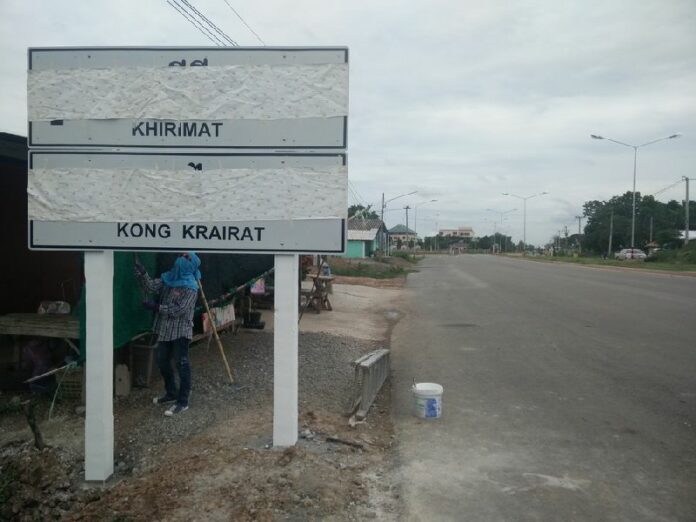
Misspelled road signs in Sukhotai province have been covered with white tape while officials arrange to install new ones, 27 July 2015.

SUKHOTHAI — Officials in Sukhothai have ordered new batch of road signs to replace six signs that misspelled the names of two districts in the northern province.

Photos of the misspelled signs began circulating on social media over the weekend, showing inaccurate spellings of Kirimat (คีรีมาศ) and Kong Krailat (กงไกรลาศ) districts. The final letters of the two names were incorrectly written with ส instead of ศ. 

\
The
misspelled signs of two districts in Sukhothai province, 27 July 2015.

The mistake drew ridicule and criticism from social media users.

"This mistake is unforgivable," wrote a Facebook user named Noonoot Yodphet who posted the photos. "How come they are so negligent that they haven't checked these? It says so much about those responsible."

Sukhotahi's Governor, Piti Kaewsalabsi, told Khaosod that he has been informed by officials that the road signs were recently installed by private contractors.

According to Jatuporn Ruenjutibodhiban, the manager of the private company responsible for the signs, his staff spotted the mistakes before they surfaced on social media, and were already in process of fixing the signs.

White tape has been placed over the misspelled district names while the removal process is ongoing. 


For comments, or corrections to this article please contact: [email protected]

You can also find Khaosod English on Twitter and Facebook
http://twitter.com/KhaosodEnglish
http://www.facebook.com/KhaosodEnglish

Advertisement

Hot News

LATEST NEWS

Bangkok
overcast clouds
25.5 ° C
25.5 °
25.5 °
93 %
3.2kmh
100 %
Fri
25 °
Sat
32 °
Sun
35 °
Mon
37 °
Tue
37 °