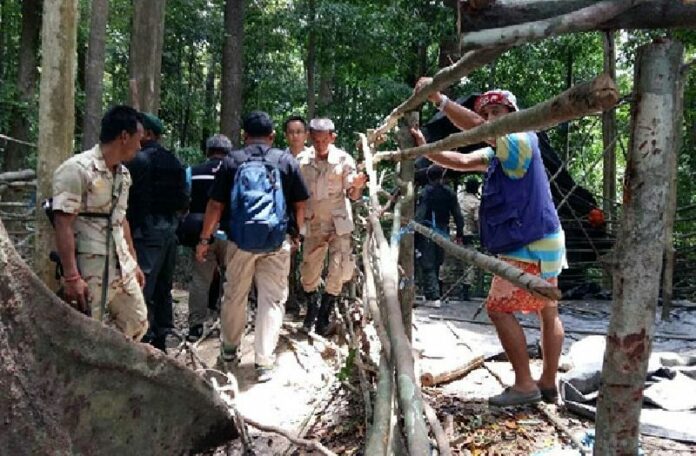
Thai security forces inspect a just-abandoned jungle stockade in Thailand near the border with Malaysia where human traffickers kept captives under dire conditions in this 5 May 2015 file photo.
KUALA LUMPUR — Malaysian authorities have found mass graves containing the remains of more than 20 people believed to be human trafficking victims near the border with Thailand, police said on Sunday.
The heavily forested Thai-Malay border has been a transit point for smugglers bringing people to Southeast Asia by boat from Myanmar and Bangladesh.
The migrants are often held for ransom in squalid detention camps and according to some accounts face torture and starvation.
Police uncovered 24 bodies on Saturday in the Bukit Wang Burma area near the Malaysian border with Thailand, close to where authorities in May had found hundreds of bodies in illegal detention camps.
"Following on from the operation in which we found … bodies of illegal immigrants, 24 more bodies have been found and dug up," police said in a statement, adding that the remains had been handed over to medical experts.
It was not immediately clear if the bodies discovered were those of Rohingya, a minority ethnic group in Myanmar, whose members have fled widespread persecution in that country.
A crackdown by Thai authorities in May drove traffickers to abandon thousands of migrants on rickety, overcrowded boats in Southeast Asian waters, triggering a regional humanitarian crisis that saw them land in Malaysia and Indonesia after being rescued by fishermen.
Story: Reuters / Trinna Leong
To reach us about this article or another matter, please contact us by e-mail at:[email protected].
Follow Khaosod English onFacebookand Twitterfor news, politics and more from Thailand.
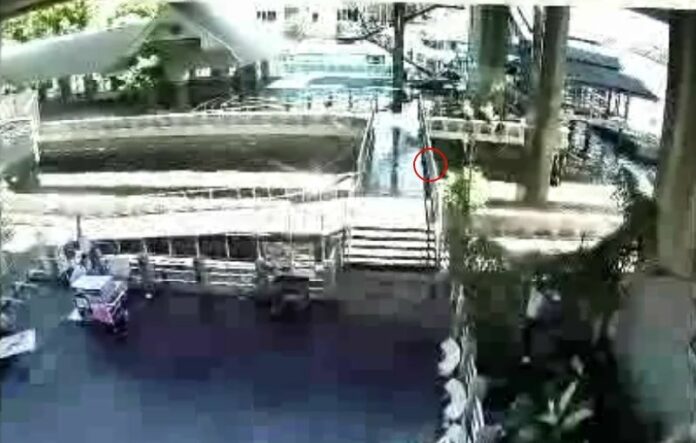
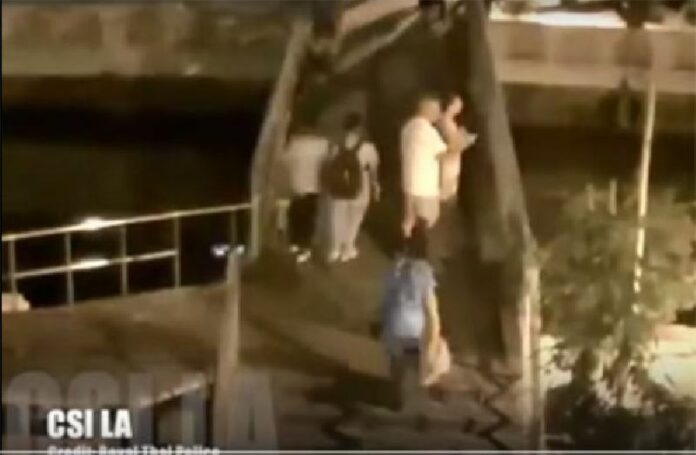
Low quality CCTV footage shows a man drop a plastic bag into the water less than a half hour after Monday night's deadly blast, where less than 16 hours later a blast occurred.
BANGKOK — Less than 30 minutes after a bomb exploded Monday night at the Erawan Shrine, a man dropped a bag into the water next to a footbridge near Sathorn Pier that could have been the device which exploded harmlessly the next afternoon.
Twenty-six minutes after the first bomb went off, a security camera captured a man carrying a plastic bag onto the footbridge underneath Saphan Taksin at 7:21pm on Monday, less than 16 hours before an explosion in the water there sent a throng of people scrambling – but caused no injuries.
Police initially claimed someone threw it down from a bridge passing over the Chao Phraya River. As recently as Thursday, investigators were simulating such a cause by throwing bricks from Saphan Taksin down toward the footbridge, which connects to a pier on the river frequented by tourists.
Investigators on Thursday use a brick to simulate their theory Tuesday's blast came from a device thrown from Saphan Taksin.
Police spokesman Prawuth Thawornsiri said they haven't ruled that theory out yet.
“At this moment, I cannot yet confirm that the footage of Sathorn pier, which is claimed to capture the suspect, is indeed evidence," he said. "And let me remind you that any dissemination of evidence has to be formally approved by Royal Thai Police first.”
The video was posted to the CSI LA Facebook group, the administrator of which claimed it was furnished to him by police. It incudes what appears to be an official police timeline indicating the timecode indicated in the video is off by several minutes.
CSI LA is a community of amateur keyboard sleuths which came together in response to frustration over 2014’s Koh Tao murder investigations to crowdsource information.
Prime Minister gen. Prayuth Chan-ocha said yesterday the Sathorn and Erawan Shrine bombings were carried out by the same group of people.
“I think it’s a network. It’s connected – Erawan Shrine and Sathorn Bridge,” he said without elaborating. “They have their targets. I’d like to warn them to surrender themselves.”
In the footage, a man in a blue shirt wearing a messenger bag walks onto the footbridge carrying what appears to be a plastic bag of some weight. As foot traffic continues behind him over the busy bridge, he sets the bag down at its edge, pulls out his phone and uses it for awhile, appearing to speak into it for some moments. He puts the phone away, then appears to receive an incoming call.
Nearly three minutes after loitering on the bridge, he retrieves the bag, moves closer to the center of the bridge and sets it down again. While gazing out over the Chao Phraya River, he subtly nudges it over the side and into the water with his foot then immediate leaves the bridge from the way he came.
At 1 pm on Tuesday, something exploded in the water, the force of which sent an eruption of water in all directions from the same spot where the bag was dropped in.
A number of commentators have suggested the blue bag carried onto the footbridge resembles the bag the suspected Bangkok bomber carried in and out of the Erawan Shrine.
The suspected Bangkok bomber leaves the Erawan Shrine moments before the blast carrying a blue plastic bag.
The bombing came less than 16 hours after Monday’s powerful blast killed at least 20 people, mostly foreign tourists at the Erawan Shrine, a popular tourist destination in the commercial heart of the Thai capital. More than 150 others were left injured.
Authorities have gone back and forth over whether they think the two attacks were linked.
“We believe that the perpetrators belong to same group," outgoing police chief Somyot Pumphanmuang said hours after the blast. Authorities later backed away from the position, saying there were “similarities” between the bombs’ materials.
What appears to be the same man who dropped the bag into the water has been found in other security camera footage.
About 11 minutes before stepping onto the bridge, he was walking south on the west side of Sathorn Road toward the river and pier, if the time code shown in the video is accurate.
He’s walking from the same direction as a neighborhood where motorcycle taxi drivers said they gave rides to a man several times between December and February who matched photos from immigration and a possibly fake passport this week.
He never takes his eyes off of his phone as he steps across Charat Wiang Road. In view of a CCTV camera, he stops, sets down the plastic bag and readjusts his messenger bag to operate his “phablet” type phone using two hands. He appears to initiate a telephone call before picking up his the bag and continuing to walk south on Sathorn Road.
Seen continuing from a CCTV pointed south in the same location, he walks with his head is tilted into his phone the entire time, as if he is trying to hear something over the traffic.
UPDATE: Story updated with comment on footage from police spokesman.
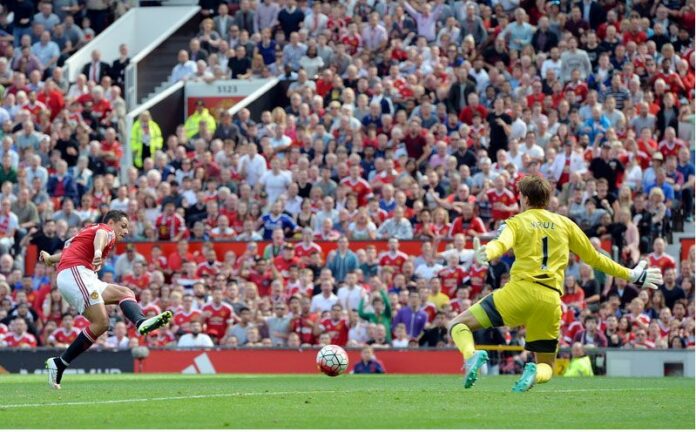
Manchester United's Javier Hernandez has a shot saved by Newcastle United's Tim Krul during the Premier League match on August 22, 2015. Manchester United were held to a frustrating goalless draw. EPA
LONDON (DPA) – Two of the Premier League's four perfect records bit the dust on Saturday as Manchester United and Leicester were held to draws.
United could only draw 0-0 at home with Newcastle while Leicester came from behind to draw 1-1 with Tottenham.
Callum Wilson scored a hat-trick as Bournemouth made history with their first ever Premier League points in a 4-3 win at West Ham.
Crystal Palace edged out Aston Villa 2-1 to move up to fourth while the other two matches also ended in draws, with Norwich v Stoke and Sunderland v Swansea both finishing 1-1.
Manchester United striker Wayne Rooney had the ball in the Newcastle net inside six minutes but it was ruled out for offside.
Aleksandr Mitrovic hit the woodwork for Newcastle but United were denied by several good saves from Tim Krul and could have won it late on when Chris Smalling hit the post.
"We can be satisfied with the performance but not with the result – we were unlucky," United manager Louis van Gaal said.
"We did not make the right choices in the final third but we played fantastic as a team. I like these kind of games when we work like this, but not this result.
"The performance was one of the best in my period but we don't reward ourselves and there was only one club that wanted to win and that was us."
Newcastle manager Steve McClaren, a former assistant manager at United, said he thought his side might have won it.
"We're disappointed," he said. "We knew the first 20 minutes would be theirs but we grew in belief and we should have scored.
"The defending and discipline was superb but we really could have nicked it – we had the chances but didn't take them."
Leicester joined United on seven points at the top after they drew 1-1 with Tottenham.
Riyad Mahrez, with his fourth goal of the season, equalized directly after Dele Alli had given Spurs an 81st minute lead.
Bournemouth were hanging on at the end but claimed a 4-3 win at West Ham to take their first ever Premier League points.
Wilson put them 2-0 up with two goals inside 28 minutes and though a Mark Noble penalty and a Cheikhou Kouyate goal made it 2-2, Mark Pugh and then a Wilson penalty restored Bournemouth's two-goal advantage.
But a Modibo Maiga strike pulled one back for West Ham and the visitors survived a few goalmouth scrambles at the end to claim victory.
"I'm over the moon, to start with three points and delighted for the team," Wilson said.
"We have showed people we can score goals in this league. That gets confidence in this team and hopefully we can pick up some more along the way."
Palace left it late to see off Villa 2-1, Bakary Sako winning it three minutes from time after Scott Dann's header had been wiped out by a Pape Souare own goal.
Norwich threw the kitchen sink at Stoke but the visitors held on for a 1-1 draw thanks to a string of outstanding saves from Jack Butland.
Mame Biram Diouf headed Stoke in front but Russell Martin found the equalizer for the hosts.
Swansea remain unbeaten after a 1-1 draw at Sunderland, Jermain Defoe earning a point for the home side after cancelling out Bafetimbi Gomis' opener.
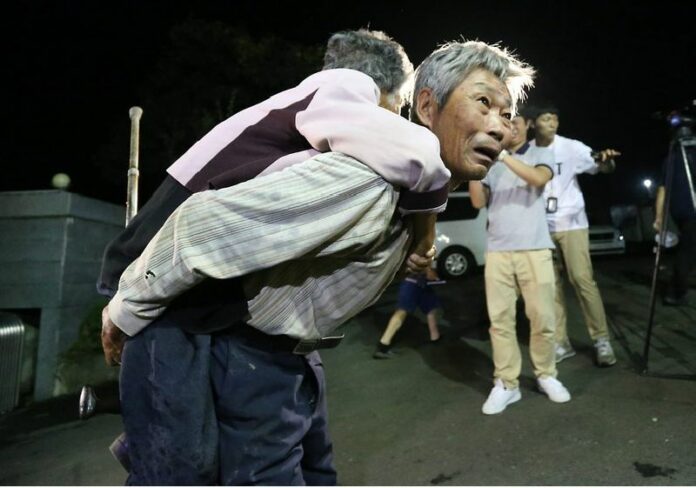
A South Korean carries his elderly mother to the emergency bunkers in Yeoncheon-gun, South Korea, 21 August 2015. South Korean authorities have ordered the evacuation of residents living close to the western side of it's border with North Korea. EPA/JUNG UI-CHEL
SEOUL (DPA) – High-level teams from North and South Korea meet at the truce village of Panmunjom on Saturday in an attempt to defuse tensions following an exchange of gunfire this week that prompted the North to threaten "all-out war."
South Korean national security adviser Kim Kwan Jin and representatives of the Defence Ministry met with Kim Yang Gon, an official with the Workers' Party of Korea who specializes in South Korea issues as well as the chief of the Korean People's Army, Vice Marshal Hwang Pyong So.
Hwang is considered a close confidante of the country's leader, Kim Jong Un.
South Korea resumed the operation of loudspeakers broadcasting propaganda across the border in retaliation for a land mine laid by North Korean forces that blew the legs off two South Korean troops.
North Korea intensified its threats of war Saturday, calling the situation "hardly controllable." It also gave an ultimatum to Seoul to halt all provocations of sending propaganda across the border.
"Our military and people are prepared to risk their lives in an all-out war, to defend the system our people choose," the Foreign Ministry said on the official Korean Central News Agency, in comments before the announcement of the Panmunjom talks.
Earlier Saturday, the South Korean Yonhap news agency said Pyongyang was making preparations for possible military strikes. Military sources said Northern forces were erecting additional artillery batteries north of the demilitarized zone.
Kim Jong Un declared a "quasi-war status" and ordered frontline army units to be fully battle ready.
An Myong Hun, North Korea's deputy ambassador to the United Nations, said in New York Friday that South Korea must stop the propaganda broadcasts within 48 hours or face military retaliation.
To reach us about this article or another matter, please contact us by e-mail at:[email protected].
Follow Khaosod English onand Twitterfor news, politics and more from Thailand.
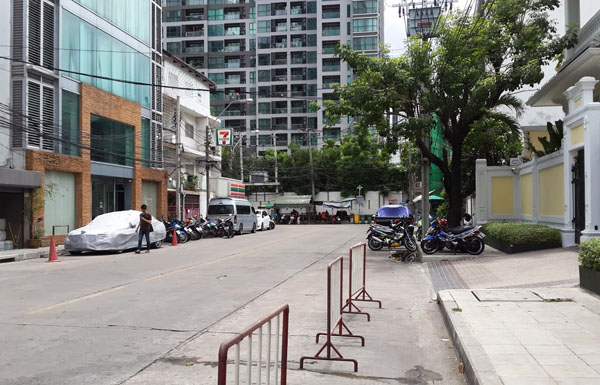
Several motorcycle taxi operators located here on Soi Sathorn 10 said they gave numerous rides to a man between December and February who matched a passport photo shown to them by investigators hunting for the Bangkok bomber.
By Todd Ruiz, Editor
BANGKOK — Motorcycle taxi operators in an upscale, residential neighborhood have identified a man seen numerous times there between December and February as matching a passport photo shown to them by investigators hunting the suspected Bangkok bomber, who might have been using a fake Turkish passport.
Withaya Chaisiriwongsawang, a motorcycle taxi driver who has worked several years on Soi Sathorn 10, told a Khaosod English reporter today that he and his colleagues had on numerous occasions in those months given rides to a man they were confident matched passport and immigration photos shown to them this week by investigators.
“I have seen this man long ago,” Withaya said, indicating the first time was in December. He said the photo shown to him Wednesday by officers from the Bureau of Immigration was much clearer than the sketch released Tuesday, and looked more like the man he remembers.
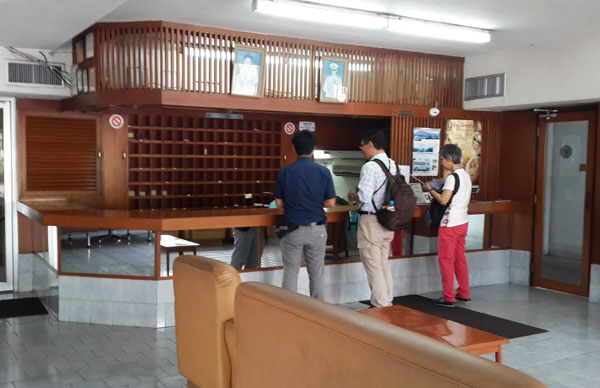
An NHK news team talks to the receptionist at the Niagara Hotel at 1pm today on Sathorn Soi 10.
He said the man spoke English, but could not attest to what ability. Withaya said it was many months ago, but he clearly remembers giving two rides to a man he was relatively confident was that seen in the passport. He verified a media report that his colleague, Nikhom Tantula, was “100 percent sure” it was the same man Nikhom gave upward of 10 rides to during that period. Nikhom was away on a lunch break at the time of the interview, he said.
Outgoing police chief Somyot Pumpanmuang yesterday denied having yet linked a name to their lead suspect in the bombing, but added they would not share that information, even if they did.
The day after Monday’s attack killed at least 20 people – mostly foreign tourists – and injured more than 150 at Bangkok’s Erawan shrine, their investigation has seemed focused on one man seen in CCTV footage leaving a backpack at the scene minutes before the blast.
Withaya said the man he remembers appeared somewhat similar to that shown in grainy CCTV photos, but much more so in the passport photo he was shown.
Investigators also showed a photo taken at an immigration checkpoint of what they said was the same man.
The man Withaya remembers never appeared during the daytime; only at night, he said. Relative to his own height, Withaya said he appeared to be about 175 centimeters tall, but not over 180 centimeters. He had an average build and dressed normally and always appeared with messy, spiky hair, Withaya said. He described him as appearing “khaek khao,” a Thai term for Arab. He said the man had a slight growth of hair on his chin but not a full beard. He estimated his age between 25 and 30.
In February, Withaya was not working due to entering the monkhood for a month. It was after that, in March, that he gave the man two rides, both times toward the Sala Daeng area. While heading across Soi Sala Daeng, the man got off midway between Sathorn and Silom roads. The second time, he dropped him off near the Silom Complex shopping mall. Both times in the evening. They never saw him during the day; he only came at night, he said.
This reporter showed him the name reported shown on the passport with the surname spelled in three different ways, and Withaya immediately pointed to “Mohamad Museyin,” the same name reported in The Times yesterday.
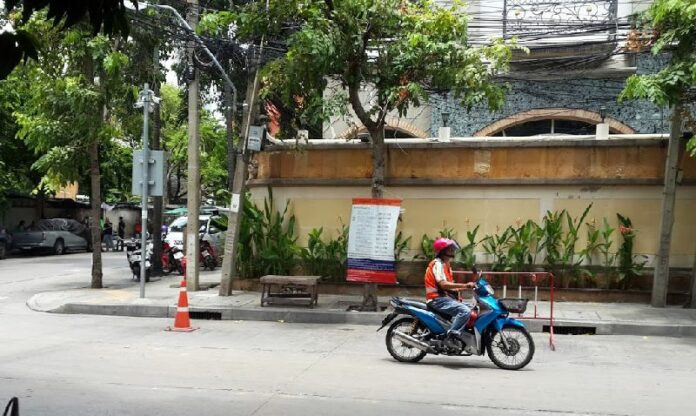
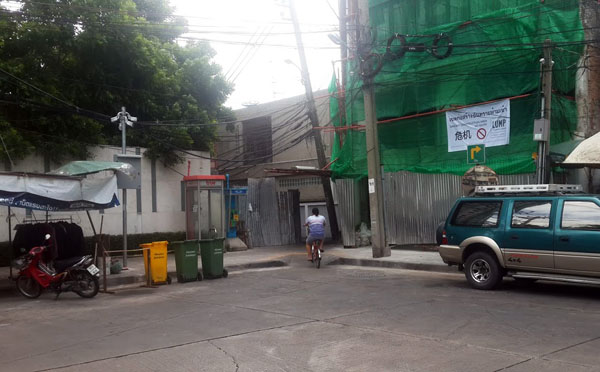
Soi Sueksa Witthaya connects sois Sathorn 10 and 12. It was from this direction motorcycle taxis said a man approached them, only at night, for rides between December and February.
Investigation at a Crossroads
Their motorcycle taxi stand is located between Sathorn and Silom roads, at the three-way intersection of Sathorn 10 and Soi Sueksa Witthaya, a neighborhood that in recent years has transformed from quiet residences into an upscale cluster of European restaurants, art galleries and bars. It’s walking distance from Silom Road, a popular tourist haunt known for the red light Patpong district, and many hotels and entertainment venues frequented by travelers.
Withaya said that he, and to his knowledge his colleagues working the taxi stand, never saw the man emerge from the Niagara Hotel located directly across the street from their stand, as was identified as the focus of police investigators this morning in a report from The Times‘ Richard Lloyd Parry.
The hotel is the type of pay-per-hour establishment known as a “love motel” in Thailand.
A woman at the hotel’s reception desk today said she worked there every day and told investigators she had never seen anyone matching the passport photo or other images of the suspected bomber when they came Wednesday. Neither did the staff members at a corner 7-Eleven who have worked there since at least late 2014.
“Soldiers, police local, and police from central agencies [came Wednesday.],” Suthira Rompirom of the Niagara Hotel said. “They questioned me. I dont know the person in the photo. I have worked here for five years already. I man the daytime desk. If he checked out I would have seen him.”
She said immigration officers identified the passport shown to her as a Turkish passport, and asked her if any of the hotel’s guests had registered as being from Turkey. She told them no, she said.
“They showed me a photocopy of a passport they said it is from Turkey,” Suthira said.
The printed language in the passport only appeared in English, according to her, Whitaya and several other people in the area who said they had been shown the document.
As the roster of suspects in the August bombing attack widens, keep track of who is who with our interactive feature.
However both she and Withaya both independently said there was something funny about the passport. The birth year was listed as 2000. They said the immigration officers who questioned them suggested it was likely fake.
The possibility of a Turkey connection is likely to fan the flames of suspicion the attacker could have been have been acting over anger about Thailand’s forcible return of more than 100 Uighur refugees to China in July. The day after they were deported, an angry mob stormed the Thai consulate in Istanbul, Turkey.
Withaya said he and, to his knowledge, his colleagues had always seen the man walking toward them along Soi Sueksa Witthaya from the west. Several vendors, a condominium and budget hostel along that short stretch of street said they had never seen the man.
The soi bends left to become Soi Sathorn 12, which runs into Sathorn Road, and at the turn, a small footpath runs off to the right through an alley to connect to Silom Road. Soi Sathorn 10 can also be entered from Soi Silom 9, which after Monday’s attacks was rumored to have been the suspected bomber’s destination when he left the scene of the crime on a nearby motorcycle taxi.
Another group of motorcycle taxis at the bend said they were surprised on Tuesday, in the morning after the attack, when “many” police officers arrived asking questions, but said they had not seen the man. They said if he did not take a ride from them, they were unlikely to notice him because foreigners “look the same” to them.
A small lane at the corner of Soi Sathorn 12 and Soi Sueksa Witthaya winds out and connects to Silom Road.
Police Doubt Transnational Terror
Police chief Somyot said yesterday he believes the deadly bombing was not the work of a foreign terrorist organization.
“I can assure you that this is not terrorism or transnational terrorism,” Police Gen. Somyot told reporters. “Because usually, a group or a movement will immediately claim responsibility after the attack, and state their manifesto. The attacks are sometimes related to ideological conflict, and fanatical religious beliefs.”
In many instances attacks directed by groups such as ISIS or Al Qaeda have been quickly taken credit for through the sophisticated communications channels they maintain.
Some analysts have said Monday’s attack doesn’t fit the modus operandi of Thailand’s southern insurgency or its own cyclical, internecine political conflict. Others, such as author Chris Baker said such possibilities cannot be discounted, in a Voice of America report.
Thailand’s military government has dismissed as absurd questions it could have been behind the blast to legitimize its ongoing grip on power since seizing control in May 2014.
Nevertheless, Police Gen. Somyot added that he did not discount the possibility that the perpetrator or perpetrators of Monday’s bombing were foreigners.
“It is not terrorism but the perpetrators may be foreigners,” Pol.Gen. Somyot said. “Our intelligence agencies have names of all terrorist groups. If they surface anywhere, we would issue warnings. We are constantly monitoring their movements all the time.”
He also said, “I believe the perpetrators are still in Thailand.”
Bangkok has been a known transit point for international terror operatives and a possible target in at least two instances. In January, authorities in Bangkok arrested an alleged Swedish-Lebanese member of Hezbollah. one month before several Iranian nationals were arrested in what was believed to be a botched plot to kill Israelis.
A widely quoted security analyst at IHS Jane’s was cited by Channel News Asia yesterday saying it could be a “new group.”
“This could be a new group, come together in the wake of what’s been happening in Xinjiang and specifically in the wake of what’s been happening in Thailand in terms of this deportation, which organised this atrocity and may disperse,” Anthony Davis said.
Uighurs are branded terrorists in China’s far western Xinjiang province, where they say they have been persecuted by ethnic Han Chinese. They have never conducted an attack outside of China, and those within usually involve a single attacker, often armed with only a knife.
There also remains the possibility of a lone wolf attacker, inspired by radical rhetoric internal or external to Thailand, staging a one-off attack.
ISIS, which emerged from the Syrian civil war to declare a caliphate in June 2014 and gain control of large swaths of Syria and Iraq, has called for and inspired many such attacks from the United States and Europe to the Middle East.
Beginning in late 2014, ISIS began calling for attacks around the world. Such lone-wolf attacks often employ low tech means to inflict damage and spread fear.
In places such as Ottawa, Canada; Dallas, Texas; Paris, France, individuals or small groups have launched deadly attacks they later said were inspired by ISIS’ calls to action.
But there’s been little such activity in East Asia, beyond arrests of suspected ISIS recruiters and recruits in Malaysia this past April.
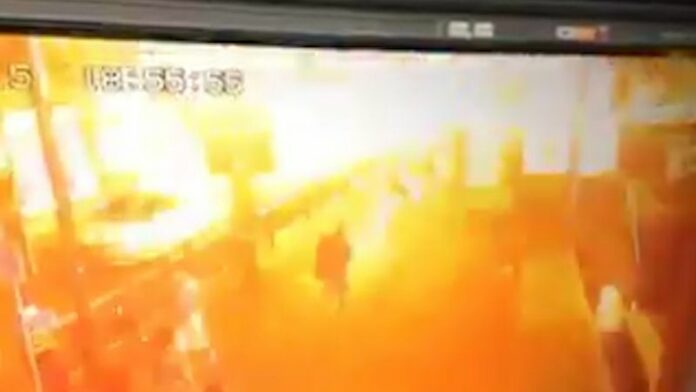
The moment of the blast as captured by a security camera at 6:55pm on Monday night. At least 20 people were killed and more than 150 injured.
BANGKOK — Thai police chief Somyot Pumpanmuang said yesterday he believes the deadly bombing that killed 20 people in Bangkok on Monday night was not a work of a foreign terrorist organization.
“I can assure you that this is not terrorism or transnational terrorism,” Pol.Gen. Somyot told reporters. “Because usually, a group or a movement will immediately claim responsibility after the attack, and state their manifesto. The attacks are sometimes related to ideological conflict, and fanatical religious beliefs.”
In many instances attacks directed by groups such as ISIS or Al Qaeda have been quickly taken credit for through the sophisticated communications channels they maintain.
Analysts have also said Monday’s attack does not fit the modus operandi of Thailand’s southern insurgency or cyclical, internecine political conflict.
Nevertheless, Police Gen.Somyot added that he did not discount the possibility that the perpetrator or perpetrators of Monday’s bombing were foreigners.
“It is not terrorism but the perpetrators may be foreigners,” Pol.Gen. Somyot said. “Our intelligence agencies have names of all terrorist groups. If they surface anywhere, we would issue warnings. We are constantly monitoring their movements all the time.”
He also said, “I believe the perpetrators are still in Thailand.”
Among other possibilities, that leaves the chance it was carried out by a lone wolf attacker, possibly inspired by the radical rhetoric of such groups, staging a one-off attack.
ISIS, which emerged from the Syrian civil war to declare a caliphate in June 2014 and gain control of large swaths of Syria and Iraq, has called for and inspired many such attacks from the United States and Europe to the Middle East.
Beginning in late 2014, ISIS began calling for attacks around the world. Such lone-wolf attacks often employ low tech means to inflict damage and spread fear.
In places such as Ottawa, Canada; Dallas, Texas; Paris, France, individuals or small groups have launched deadly attacks they later said were inspired by ISIS’ calls to action.
But there’s been little such activity in East Asia, beyond arrests of suspected ISIS recruiters in Malaysia this past April.
Speculation on the lead suspect in the attack, seen leaving a backpack in the Erawan Shrine minutes before the blast, has centered on whether he is a foreigner and his movements around Bangkok.
A blue-clad suspect is seen in security camera footage.
BANGKOK (DPA) – Thai police said they are investigating a new suspect linked to terrorist bombings in Bangkok earlier this week.
A blue-clad suspect is seen in security camera footage throwing a bomb at a busy pier on Monday, police spokesman Prawut Thavornsiri said Saturday.
A blue-clad suspect is throwing a bomb on Monday 17th August.
Bomb exploded on Tuesday 18th August.
The explosive missed the pier and exploded in the river. Forensics teams found similarities between that incident and the bombing that killed 20 people and injured more than 100 the previous day at a popular shrine, officials said.
Police are also seeking a woman seen dressed in black on security footage at the scene of the shrine bombing.
Two men earlier thought to have aided the prime suspect in that bombing were no longer under investigation after one turned himself in.
One of the men was a tour guide and the other was a Chinese tourist who had already left the country.
The two incidents are not thought to be the work of international terrorist organizations, Police Chief Somyot Poompanmoung said Friday, after investigators consulted with Interpol and foreign intelligence agencies.
To reach us about this article or another matter, please contact us by e-mail at:[email protected].
Follow Khaosod English onand Twitterfor news, politics and more from Thailand.
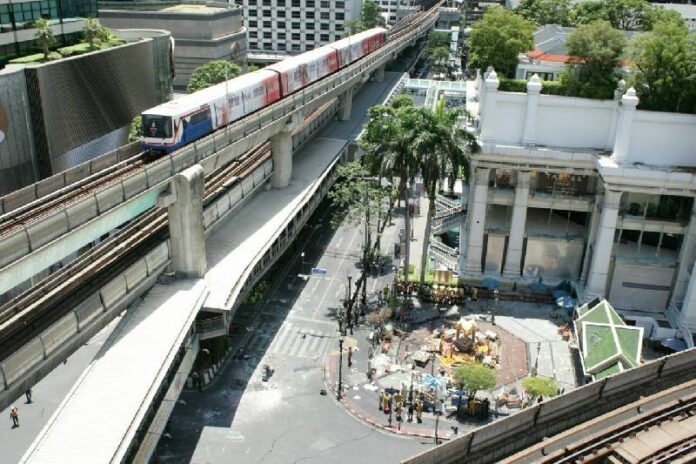
Erawan Shrine a day after the bombing, 18 August, 2015.
BANGKOK — Police have denied a news report earlier today claiming two witnesses who said they interacted with the suspected Bangkok bomber had positively identified him in a passport photo shown to them by authorities.
While one suspect remains the singular focus of intense scrutiny and speculation behind Monday’s deadly bombing at the Erawan Shrine, police refuted a report from correspondent Richard Lloyd Parry claiming one witness was “100 percent sure” the suspect was the same man whose passport photo was shown to him.
“I don't know who the source in this story is, but let me insist that police are working based on the evidence that we have,” outgoing national police chief Somyot Pumpanmuang told reporters this afternoon when asked about the report.
Somyot denied the man named in the news report was a person of interest. Asked specifically if investigators have linked any name to the suspected bomber yet, Somyot said “not yet.”
“But even if I have the name, I wouldn't necessarily tell the media, because it won't do anyone any good,” he said.
Earlier today the account was posted by correspondent Richard Lloyd Parry on his Facebook, who said the story was only published in electronic editions of the paper this morning and not available online. Parry is a correspondent for London-based The Times.
“When the police showed me the pictures, I recognised him immediately,” the report quotes a Nikhom Tantula, who is said to be one of two motorcycle taxis who stepped forward to say they had given the suspect a ride. “I said: ‘I’m 100 percent sure'. They asked me some questions, but not many. It’s strange.”
Nikhom, in Parry’s account, said he gave ride to the suspect eight days in a row in February, always at 5:30am from a stand on Sathorn Road and was confident it was the same man show to him in a passport photo shown to him by an immigration official.
Nikhom recounted taking the man, Parry wrote, to a hotel close to Asoke Hospital in central Bangkok.
While there is no listing for an Asoke Hospital, there is an Asoke Skin Hospital near the MRT Petchaburi station on Asok-Din Daeng Road.
The name identified in Parry's report is "Mohamad Museyin." Perry's account relies on a spelling provided by officials, which are occasionally inaccurate. Searching public records finds few references to a Museyin family name, and it could be a possible misspelling of Huseyin, a common name in Turkey.
In Turkey, Huseyin is a common rendering of a common name spelled elsewhere as Hussein.
That possibility is likely to fan the flames of suspicion the attacker might have been acting over anger about Thailand's forcible return of more than 100 Uighur refugees to China in July. The day after they were deported, an angry mob ransacked the Thai Consulate in Istanbul, Turkey.
Since Monday’s deadly attack, which killed at least 20 and wounded more than 150, public signals from investigators have centered on one man seen in CCTV footage leaving a backpack in the shrine minutes before the blast.
Debate has swirled about his identity, with no conclusive evidence provided as to his nationality or ethnic background, despite a wash of rumors and claims.
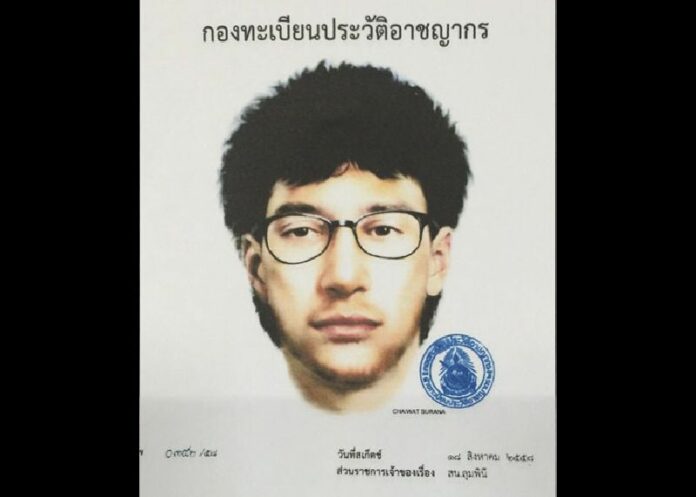
A composite sketched released Tuesday of the suspected Bangkok bomber.
BANGKOK — Police have denied a news report earlier today claiming two witnesses who said they interacted with the suspected Bangkok bomber had positively identified him in a passport photo shown to them by authorities.
While one suspect remains the singular focus of intense scrutiny and speculation behind Monday’s deadly bombing at the Erawan Shrine, police refuted a report from correspondent Richard Lloyd Parry claiming one witness was “100 percent sure” the suspect was the same man whose passport photo was shown to him.
“I don't know who the source in this story is, but let me insist that police are working based on the evidence that we have,” outgoing national police chief Somyot Pumpanmuang told reporters this afternoon when asked about the report.
Somyot denied the man named in the news report was a person of interest. Asked specifically if investigators have linked any name to the suspected bomber yet, Somyot said “not yet.”
“But even if I have the name, I wouldn't necessarily tell the media, because it won't do anyone any good,” he said.
Earlier today the account was posted by correspondent Richard Lloyd Parry on his Facebook, who said the story was only published in electronic editions of the paper this morning and not available online. Parry is a correspondent for London-based The Times.
“When the police showed me the pictures, I recognised him immediately,” the report quotes a Nikhom Tantula, who is said to be one of two motorcycle taxis who stepped forward to say they had given the suspect a ride. “I said: ‘I’m 100 percent sure'. They asked me some questions, but not many. It’s strange.”
Nikhom, in Parry’s account, said he gave ride to the suspect eight days in a row in February, always at 5:30am from a stand on Sathorn Road and was confident it was the same man show to him in a passport photo shown to him by an immigration official.
Nikhom recounted taking the man, Parry wrote, to a hotel close to Asoke Hospital in central Bangkok.
While there is no listing for an Asoke Hospital, there is an Asoke Skin Hospital near the MRT Petchaburi station on Asok-Din Daeng Road.
The name identified in Parry's report is "Mohamad Museyin." Perry's account appears to rely on spelling seen by the two men on the passport page shown to them. Searching public records finds few references to a Museyin family name, and it could be a possible misspelling of Huseyin, a common name in Turkey.
In Turkey, Huseyin is a common rendering of a common name spelled elsewhere as Hussein.
That possibility is likely to fan the flames of suspicion the attacker might have been acting over anger about Thailand's forcible return of more than 100 Uighur refugees to China in July. The day after they were deported, an angry mob ransacked the Thai Consulate in Istanbul, Turkey.
Since Monday’s deadly attack, which killed at least 20 and wounded more than 150, public signals from investigators have centered on one man seen in CCTV footage leaving a backpack in the shrine minutes before the blast.
Debate has swirled about his identity, with no conclusive evidence provided as to his nationality or ethnic background, despite a wash of rumors and claims.
BANGKOK — Police have denied a news report earlier today claiming two witnesses who said they interacted with the suspected Bangkok bomber had positively identified him in a passport photo shown to them by authorities.
While one suspect remains the singular focus of intense scrutiny and speculation behind Monday’s deadly bombing at the Erawan Shrine, police refuted a report from correspondent Richard Lloyd Parry claiming one witness was “100 percent sure” the suspect was the same man whose passport photo was shown to him.
“I don't know who the source in this story is, but let me insist that police are working based on the evidence that we have,” outgoing national police chief Somyot Pumpanmuang told reporters this afternoon when asked about the report.
Somyot denied the man named in the news report was a person of interest. Asked specifically if investigators have linked any name to the suspected bomber yet, Somyot said “not yet.”
“But even if I have the name, I wouldn't necessarily tell the media, because it won't do anyone any good,” he said.
Earlier today the account was posted by correspondent Richard Lloyd Parry on his Facebook, who said the story was only published in electronic editions of the paper this morning and not available online. Parry is a correspondent for London-based The Times.
“When the police showed me the pictures, I recognised him immediately,” the report quotes a Nikhom Tantula, who is said to be one of two motorcycle taxis who stepped forward to say they had given the suspect a ride. “I said: ‘I’m 100 percent sure'. They asked me some questions, but not many. It’s strange.”
Nikhom, in Parry’s account, said he gave ride to the suspect eight days in a row in February, always at 5:30am from a stand on Sathorn Road and was confident it was the same man show to him in a passport photo shown to him by an immigration official.
Nikhom recounted taking the man, Parry wrote, to a hotel close to Asoke Hospital in central Bangkok.
While there is no listing for an Asoke Hospital, there is an Asoke Skin Hospital near the MRT Petchaburi station on Asok-Din Daeng Road.
The name identified in Parry's report is "Mohamad Museyin." Perry's account relies on a spelling provided by officials, which are occasionally inaccurate. Searching public records finds few references to a Museyin family name, and it could be a possible misspelling of Huseyin, a common name in Turkey.
In Turkey, Huseyin is a common rendering of a common name spelled elsewhere as Hussein.
That possibility is likely to fan the flames of suspicion the attacker might have been acting over anger about Thailand's forcible return of more than 100 Uighur refugees to China in July. The day after they were deported, an angry mob ransacked the Thai Consulate in Istanbul, Turkey.
Since Monday’s deadly attack, which killed at least 20 and wounded more than 150, public signals from investigators have centered on one man seen in CCTV footage leaving a backpack in the shrine minutes before the blast.
Debate has swirled about his identity, with no conclusive evidence provided as to his nationality or ethnic background, despite a wash of rumors and claims.

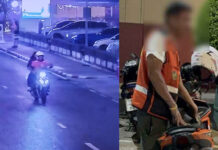



















 What appears to be the same man who dropped the bag into the water has been found in other security camera footage.