32.8 C
Bangkok
Saturday, June 27, 2026
Home Blog Page 2987

'Reckless' Teenagers Steal Rifles from Police Armory

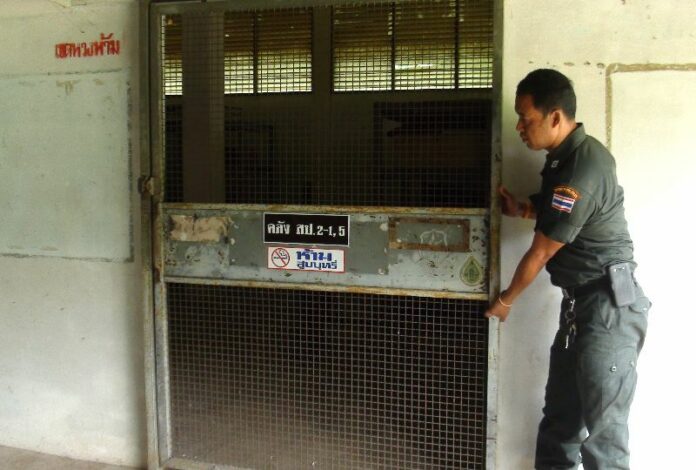
A police officer shows reporters the arsenal where assault rifles were stolen at the base of Border Patrol Police in Nakhon Si Thammarat province, 28 May 2015

NAKHON SI THAMMARAT — Police say they have arrested five people, including two minors, who allegedly stole assault rifles from a police base in Nakhon Si Thammarat province.

According to police, the five suspects broke into the arsenal of a Border Patrol Police command center in Thung Song district, stole the weapons, and sold them in the black market to buy narcotics.

Two of the suspects are 16, and the rest are 19, 33, and 40, said said Pol.Maj.Gen. Kiattipong Khaosam-ang, commander of the police force in the region.

One of the teenagers is the son of a police officer stationed in the base, he said.

"Based on our investigation, the crime was initiated out of recklessness," said Pol.Maj.Gen. Kiattipong. 

Police officers discovered that the weapons were missing on 26 May, and have recovered ten assault rifles so far, said Pol.Maj.Gen. Kiattipong. He did not say how many weapons were stolen in total or when the thefts took place.

"They stole two to three guns each time," Pol.Maj.Gen. Kiattipong said. "They committed the crimes multiple times." 

Police will also issue separate arrest warrants on those who purchased the weapons, Pol.Maj.Gen. Kiattipong said. 

Border Patrol Police in the region have been instructed to review and step up their security measures in the wake of the theft, he added. 

For comments, or corrections to this article please contact: [email protected]

You can also find Khaosod English on Twitter and Facebook
http://twitter.com/KhaosodEnglish
http://www.facebook.com/KhaosodEnglish

Advertisement

22 Arrested Over Yala Bombing Spree

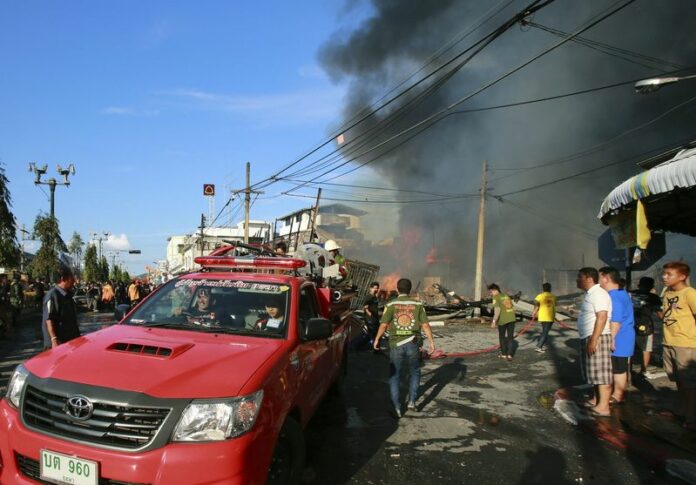
Thai firemen and volunteers try to extinguish a fire after a bomb attack in Yala, southern Thailand, 06 April 2014. Up to 39 explosions injured 22 people over the past three days in Thailand's restive southern province of Yala. EPA/NAKHARIN CHINNAWORNKOMOL

YALA — Thai authorities have arrested 22 suspects in connection with a three-day spate of bombings in the southern border province of Yala that injured nearly 20 people last month.

According to Col. Isra Chantakrayom, commander of the 41st Ranger Division, security officers tracked down the suspects using CCTV footage and witnesses' testimonies.

\
Thai firemen and volunteers try to extinguish a fire after a bomb attack in Yala, southern Thailand, 06 April 2014.  EPA/NAKHARIN CHINNAWORNKOMOL

The bombings, which rocked Yala between 14 – 16 May, injured 18 people, including children. Police say at least 56 homemade explosives were detonated throughout the weekend.

Although the explosions themselves were relatively small, the incident was one of the most coordinated attacks to strike the insurgent-torn region in recent months.

Col. Isra said the 22 suspects, who were arrested on 2 June, have not been formally charged wiht a crime, except for one man who already had a pre-existing arrest warrant on him for separate charges. 

"As for the detention of these 22 suspects, I insist that we will quickly interrogate them, and once the interrogation determines that they are not related to the incident, they will be immediately released," Col. Isra explained. "Their relatives have already have been informed."

Col. Isra also told reporters that three suspects have already confessed to their involvement in the May bombings, but he declined to provide further details, citing classified information. 

The Muslim-majority southern provinces of Yala, Narathiwat, and Pattani – a region known as the Deep South – have been plagued by a bloody Islamic insurgency for the past decade. The insurgents are seeking to revive the Islamic state of Patani, which was annexed by Thailand in the early 20th century. 

Near-daily bomb attacks and shootings have claimed the lives of more than 6,200 people since the most recent waves of secessionist violence broke out in January 2004. 


For comments, or corrections to this article please contact: [email protected]

You can also find Khaosod English on Twitter and Facebook
http://twitter.com/KhaosodEnglish
http://www.facebook.com/KhaosodEnglish

Advertisement

Defense Minister Say Army General Charged With Trafficking a 'Dedicated' Officer

Lt.Gen. Manas Kongpaen (in green) surrendered to police at the at the Royal Thai Police HQ in Bangkok on 3 June 2015.

BANGKOK — Thailand's defense minister Prawit Wongsuwan described the army general who surrendered to police today on charges of human trafficking as a hard-working military officer.

Lt.Gen. Manas Kongpaen, a "senior adviser" to the Royal Thai Army, turned himself in this morning after police accused him of aiding trafficking operations in southern Thailand that involved holding Rohingya and Bangladeshi migrants in jungle camps and extorting ransoms from their families. Lt.Gen. Manas has allegedly been involved in the operation since May 2012. 

\
Lt.Gen. Manas Kongpaen arriving at a police station in Hat Yai, Songkhla, 3 June 2015.

When a reporter asked Gen. Prawit, the Defense Minister, whether the armed forces had any knowledge of Lt. Gen. Manas's alleged criminal activity, he replied, "No. He has worked well. As far as I know, he is dedicated in his works, generally speaking. He has done a lot of work for the country." 

He added, "This is a personal issue. He is still only an accused."

Police obtained an arrest warrant for Lt.Gen. Manas on 1 June, and charged him with human trafficking, assisting aliens in illegal entry to the Kingdom, illegal detention, and holding individuals for ransom.

He is the first army officer to be named as a suspect in police’s ongoing crackdown on human trafficking rings in the south. Fifty-one people have been arrested so far, including local police officers, politicians, and businessmen. 

Lt.Gen. Manas told reporters yesterday that he would turn himself in at a police station in Songkhla province – where the abandoned detention camps were found – but instead met with high-ranking police officers at the headquarters of the Thai police in Bangkok today.

He was later transferred to a police station in Hat Yai, Songkhla, where he will be held for up to 48-hours of interrogation.

Thai police chief Pol.Gen. Somyot Pumpanmuang said Lt.Gen. Manas denied the charges this morning, but did not provide any further testimony during their meeting. 

Speaking to reporters on the phone yesterday, Lt.Gen. Manas asked the public to withold their judgment until his case is formally processed in court.

"I would like to ask society not to judge me as a guilty person," he said. "I want them to look at information from both sides, and let the court decide. I would like to ask for fairness. I am willing to cooperate with the officials in any way. No matter what the verdict is, I will accept it. I don't have problem with it. I am a Thai person, I accept all rules in this society."

A total of ​84 arrest warrants have been issued since the crackdown on human trafficking started on 1 May, said Pol.Gen. Aek Angsananont, deputy commander of Thai police. Regarding Lt.Gen. Manas's arrest, he said, "Police will give dignity to the suspect, who is a senior army officer. But we will also treat him with the same standard as other suspects." 


For comments, or corrections to this article please contact: [email protected]

You can also find Khaosod English on Twitter and Facebook
http://twitter.com/KhaosodEnglish
http://www.facebook.com/KhaosodEnglish

Advertisement

22 Arrested Over Yala Bombing Spree

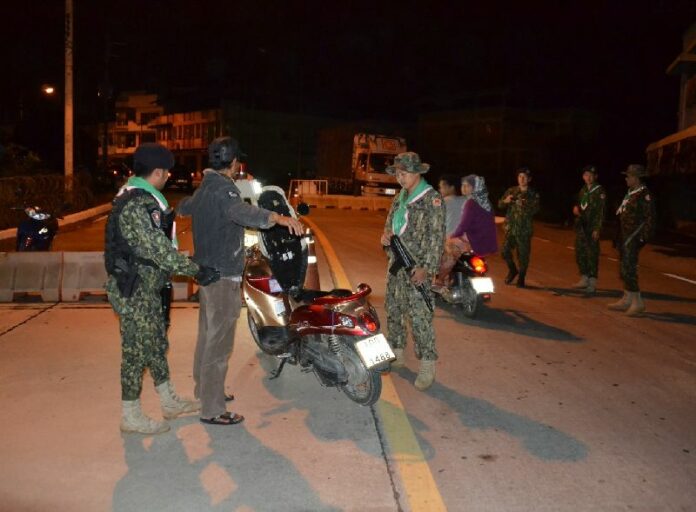
A security checkpoint in Yala province, 24 May 2015.

YALA — Thai authorities have arrested 22 suspects in connection with a three-day spate of bombings in the southern border province of Yala that injured nearly 20 people last month.

According to Col. Isra Chantakrayom, commander of the 41st Ranger Division, security officers tracked down the suspects using CCTV footage and witnesses' testimonies.

\
Thai firemen and volunteers try to extinguish a fire after a bomb attack in Yala, southern Thailand, 06 April 2014.  EPA/NAKHARIN CHINNAWORNKOMOL

The bombings, which rocked Yala between 14 – 16 May, injured 18 people, including children. Police say at least 56 homemade explosives were detonated throughout the weekend.

Although the explosions themselves were relatively small, the incident was one of the most coordinated attacks to strike the insurgent-torn region in recent months.

Col. Isra said the 22 suspects, who were arrested on 2 June, have not been formally charged wiht a crime, except for one man who already had a pre-existing arrest warrant on him for separate charges. 

"As for the detention of these 22 suspects, I insist that we will quickly interrogate them, and once the interrogation determines that they are not related to the incident, they will be immediately released," Col. Isra explained. "Their relatives have already have been informed."

Col. Isra also told reporters that three suspects have already confessed to their involvement in the May bombings, but he declined to provide further details, citing classified information. 

The Muslim-majority southern provinces of Yala, Narathiwat, and Pattani – a region known as the Deep South – have been plagued by a bloody Islamic insurgency for the past decade. The insurgents are seeking to revive the Islamic state of Patani, which was annexed by Thailand in the early 20th century. 

Near-daily bomb attacks and shootings have claimed the lives of more than 6,200 people since the most recent waves of secessionist violence broke out in January 2004. 


For comments, or corrections to this article please contact: [email protected]

You can also find Khaosod English on Twitter and Facebook
http://twitter.com/KhaosodEnglish
http://www.facebook.com/KhaosodEnglish

Advertisement

Thai Govt Combats Drought With Rain-Summoning Ceremony

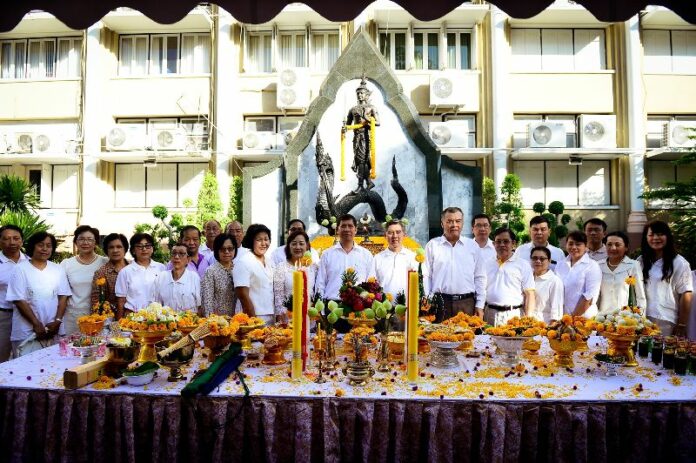
A rain-summoning ceremony at the Ministry of Agriculture and Cooperatives in Bangkok on 2 June 2015.

BANGKOK — Thailand’s military government turned to supernatural forces yesterday in an effort to stave off the annual droughts that occur during Thailand’s dry season.

Chavalit Chookajorn, Permanent Secretary of Agriculture and Cooperatives, presided over a traditional Thai ceremony asking Phra Pirun – the god of rain in Hindu beliefs – to bless the Kingdom with rain.

The Secretary was assisted by Sorajja Nual-yu, a well-known astrologer who styles himself as “Thailand’s Nostradamus.”

Speaking to reporters today, Chavalit said Sorajja, who used to work at the Ministry of Agriculture, warned that a severe drought is imminent.

“Brother Chui has the sixth sense,” Chavalit said, referring to Sorajja by his nickname. “He told me that there will certainly be a drought this year. So he wanted the Ministry to conduct a ceremony to ask for rain.”

Thailand experiences droughts every year during dry season, which lasts from November to April.

“Personally, I think it’s a good thing,” Chavalit said, in reference to the ceremony. “It’s not a superstition. It doesn’t hurt if we do the ceremony. It’s about finding something your spirit can hold on to.”

Many Thais are deeply superstitious and draw upon astrology, feng shui, and other spiritual beliefs to guide their daily lives. It is common practice for government officials and leading politicians to consult personal astrologers.

Sorajja previously predicted that a major earthquake would strike Thailand some time before “12 July.” His prediction earned him a rebuke from a government spokesperson who asked astrologers not to cause panic among the public.

Meanwhile, Lertchai Sri-anand, a director of the Royal Irrigation Department, said farmers in the lower part of the Chao Praya River plain are suffering from water shortages because those in the upper plain are diverting the water for their own use.

“I have to admit that the Department is facing problems in water management for agriculture, because farmers in the upper part of the river worried that this year’s water level will be low, and drought may be coming, and there won’t be enough water for agriculture, so they pump the water into their own ponds,” Lertchai said.

He insisted that sufficient water is being stored in many reservoirs to meet farmers’ needs throughout the country, and asked farmers not to worry.


Advertisement

"All-Out" Search Yields Few Survivors After China Ship Capsize

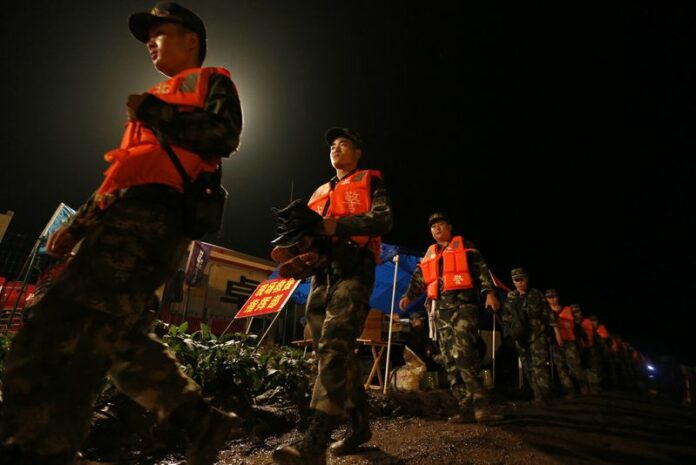
Rescuers walk along the bank of the Yangtze River as they search for missing passengers of a capsized tourist ship in Jianli, Hubei province, China, 02 June 2015. Rescue workers in China searched overnight for 430 passengers still missing, but found only a few more survivors, state media reported Wednesday. EPA/WU HONG

BEIJING (DPA) — Rescue workers in China searched overnight for 430 passengers still missing from a cruise ship accident on the Yangtze River, but found only a few more survivors, state media reported Wednesday.

More than 4,600 search personnel, including hundreds of underwater divers, were taking part in rescue efforts after Monday's accident.

So far, 14 people had been rescued, while 12 were confirmed dead, according to reports.

More than 450 people were on board the Eastern Star when it sank in bad weather in Jianli in Hubei province.

Chinese Premier Li Keqiang, who arrived at the scene of the accident on Monday, urged "all-out efforts" to save lives.

"Mobilize all resources available, take every possible measure and race against time," Li said, according to Xinhua news agency.

Most of the passengers on board were senior citizens in their sixties and seventies, Xinhua said, with the ages of passengers ranging from 3 to 83.

The ship capsized when it was caught in a cyclone, reports said.

The incident happened "so fast that the captain did not even have the time to send out a distress signal," Xinhua cited Wang Yangsheng, a senior official with the Yueyang Maritime Rescue Centre, as saying.

Those rescued included the captain and the chief engineer.

All those rescued were wearing life jackets, according to the Ministry of Transport.

The divers said rescue efforts have been complicated by the intricate layout of the vessel, as well as strong wind and heavy rain, according to Xinhua.

(Reporting by Joanna Chiu)

For comments, or corrections to this article please contact: [email protected]

You can also find Khaosod English on Twitter and Facebook
http://twitter.com/KhaosodEnglish
http://www.facebook.com/KhaosodEnglish

Advertisement

Construction of Thai-China Railway to Begin 'Before Year's End'

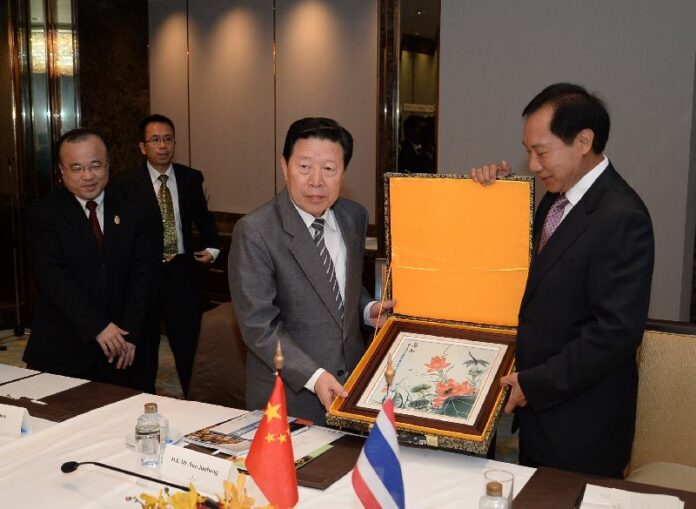
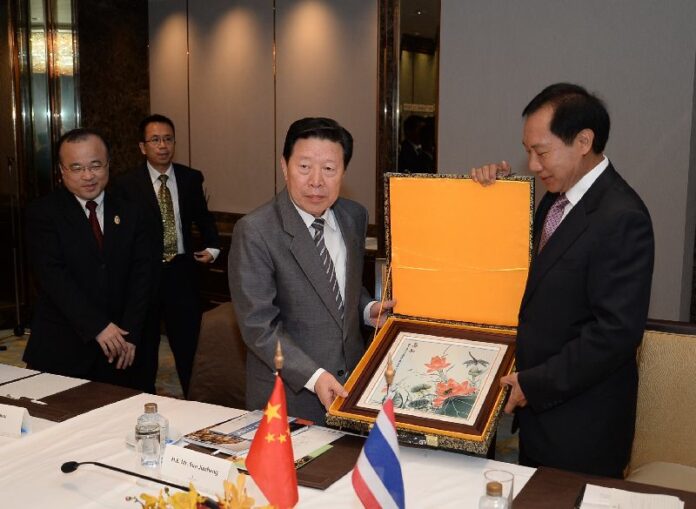
Thai officials welcome representatives from the Thai - Chinese Culture and Economy Association for a discussion on the Thai - Chinese rail project at Shangri-La Hotel in Bangkok, 2 June 2015.

BANGKOK — The construction of a new railway in Thailand that will ultimately connect with a route to China will begin before the end of this year, according to a spokesperson of the Thai military government.

Maj.Gen. Sansern Kaewkamnerd said the railway – which will service “medium speed” trains – will run between Thailand's eastern seaboard and Nong Khai province, which borders Laos in the northeast. The railroad will connect with another train route also being built by the Chinese government in Laos, ultimately linking Thailand and China by train.

"We are currently preparing the fifth joint committee meeting between Thailand and China by the end of June. Route surveys and cost estimations will be finished by August as planned," Maj.Gen. Sansern said. "We expect that construction will begin within year 2015." 

He added, "This project will benefit the increase of economic and trade cooperation between the two countries, and stimulate economic development in the entire region."

In a memorandum of understanding signed between the two governments in December 2014, China pledged to help build the Eastern Seaboard – Nong Khai rail and a separate route that will connect it with Bangkok. The two rail lines will cover a total of 873 kilometers and run "medium speed" trains at 180 kilometer per hour, Maj.Gen. Sansern said. 

Thailand’s train services, which are solely operated by the State Railway of Thailand, have long been criticized for poor maintenance, delays, and frequent accidents. 

According to Maj.Gen. Sansern, Japanese rail companies will also develop two high-speed rails between Bangkok and the northern city of Chiang Mai, and Kanchanaburi and Sa Kaeo provinces, though no schedule for the construction has been released. The two governments signed an MOU on the project on 27 May. 

"Gen. Prayuth Chan-ocha, the Prime Minister, has a clear policy in cooperating with our allied countries, as seen in the construction of Thai-Chinese railway, and investment in rail by Japanese companies," Maj.Gen. Sansern told reporters. 

In 2012, the government of Prime Minister Yingluck Shinawatra announced a 2.2 trillion baht project aimed at overhauling Thailand's infrastructure and rail services by 2020. The plan called for constructing high-speed railways connecting Bangkok with other major cities.

The proposal came under intense scrutiny from opposition politicians, who balked at the hefty price tag, and warned that the project would pave the way for massive corruption. In March 2014, the Constitutional Court nullified the bill that was drafted to seek a loan for the project, citing irregularities in the legislation. One of the judges also described the rail project as unnecessary and urged the government to get rid of "dirt roads" in the country first. 

The government was later toppled in a coup d'etat staged by Gen. Prayuth in May 2014.  


For comments, or corrections to this article please contact: [email protected]

You can also find Khaosod English on Twitter and Facebook
http://twitter.com/KhaosodEnglish
http://www.facebook.com/KhaosodEnglish

Advertisement

Lese Majeste Criminal, Not Political: Thai Govt

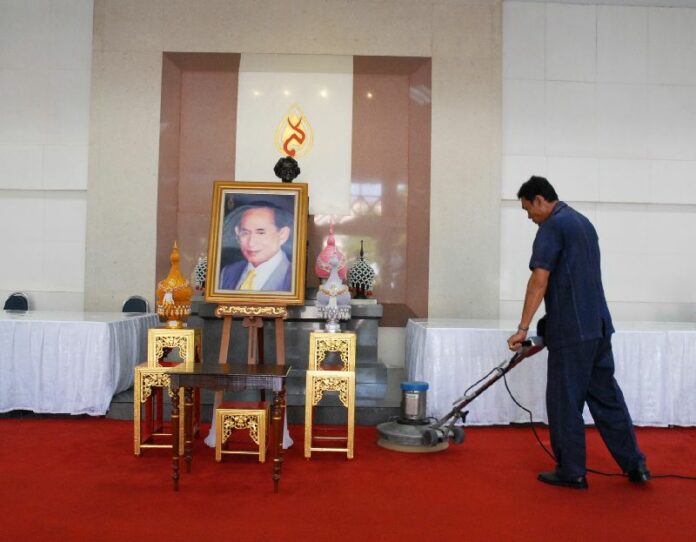
Hospital staff clean the floor near a portrait of His Majesty the King at Siriraj Hospital in Bangkok, 1 June 2015.

BANGKOK — In an effort to extradite lese majeste suspects living abroad, Thailand’s military government will inform foreign ambassadors that insulting the monarchy is a criminal offense, not a political one.

Gen. Paiboon Khumchaya, Minister of Justice, said the Ministry of Foreign Affairs will explain to diplomats from countries where fugitives are residing that the suspects need to be brought back to Thailand for criminal prosecution.

According to the general, 31 people charged with lese majeste are currently in exile, with 14 of them living in neighboring Laos.

"They have to understand that this wrongdoing is not a political issue, but a criminal wrongdoing," Gen. Paipoon said. "I have already instructed the Ministry [of Foreign Affairs] to create understanding about each suspect's legal case before proceeding, because in some countries there is no law related to insulting the monarchy."

In Thailand, criticizing the monarchy is punishable by up to 15 years in prison under Section 112 of the Thai Criminal Codes, a law known as lese majeste. 

Although discussing the monarchy has long been taboo in Thailand, the ruling military junta has enforced the country's lese majeste law with new vigor since seizing power in a coup in May 2014. The junta is led by Gen. Prayuth Chan-ocha, a former army chief and hardline royalist. 

Since the coup, at least 46 people have been charged with lese majeste, and more than half of them have been denied bail while they await trial, according to iLaw, a watchdog group that tracks legal cases in Thailand.  

Critics and human rights groups say Thailand's lese majeste law – the strictest of its kind in the world – is used to suppress free speech and smear political opponents.

Amnesty International, for instance, recognizes those convicted of lese majeste in Thailand as "prisoners of conscience." 

"Amnesty International considers all those who have been jailed solely for peacefully expressing their opinions to be prisoners of conscience, who should be released immediately and unconditionally," Rupert Abbott, AI's Research Director for Southeast Asia and the Pacific, said in February 2015. "The lese majeste law should be amended so that it complies with Thailand's international legal obligations, including under the International Covenant on Civil and Political Rights." 

King back in hospital 

King Bhumibol, 87, is widely revered as a demigod in Thailand and often credited with bringing stability to the Kingdom during his 68 years on the throne.

However, his frail health is a source of anxiety for many Thais, the majority of whom have never lived under another monarch. 

On 31 May, His Majesty the King returned to Siriraj Hospital in Bangkok for what the palace said was a routine medical check-up following his six-month stay at the hospital earlier this year. 

He was admitted with a high fever in October 2014, and later underwent a surgery to remove his infected gallbladder, according to the palace. His Majesty returned to his summer palace in Prachuap Kiri Khan province on 10 May.

For comments, or corrections to this article please contact: [email protected]

You can also find Khaosod English on Twitter and Facebook
http://twitter.com/KhaosodEnglish
http://www.facebook.com/KhaosodEnglish


Advertisement

Lese Majeste Criminal, Not Political: Thai Govt

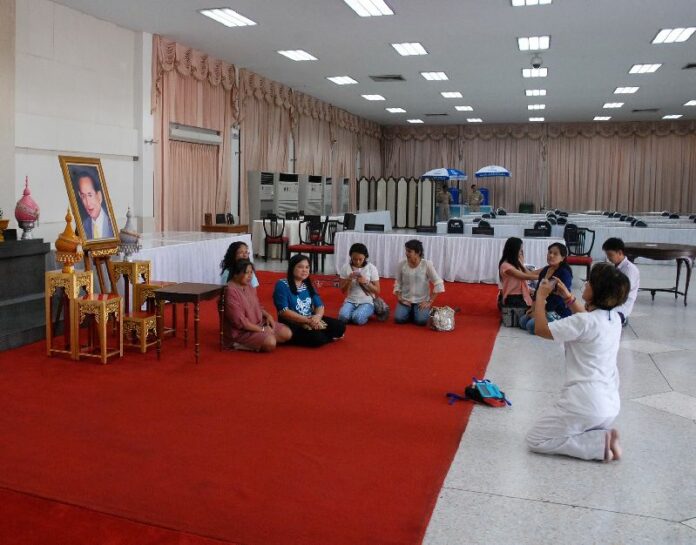
A group of Thai well-wishers take photo with portrait of His Majesty the King at Siriraj Hospital in Bangkok, 1 June 2015

BANGKOK — In an effort to extradite lese majeste suspects living abroad, Thailand’s military government will inform foreign ambassadors that insulting the monarchy is a criminal offense, not a political one.

The Ministry of Foreign Affairs will explain to diplomats from countries where fugitives are living that the suspects need to be brought back to Thailand for criminal prosecution, said Gen. Paiboon Khumchaya, Minister of Justice.

"They have to understand that this wrongdoing is not a political issue, but a criminal wrongdoing," Gen. Paipoon said. "I have already instructed the Ministry [of Foreign Affairs] to create understanding about each suspect's legal case before proceeding, because in some countries there is no law related to insulting the monarchy."

In Thailand, criticizing the monarchy is punishable by up to 15 years in prison under Section 112 of the Thai Criminal Codes, a law known as lese majeste. 

According to the general, 31 people charged with lese majeste are currently in exile, with 14 of them living in neighboring Laos.

Although discussing the monarchy has long been taboo in Thailand, the ruling military junta has enforced the country's lese majeste law with new vigor since seizing power in a coup in May 2014. The junta is led by Gen. Prayuth Chan-ocha, a former army chief and hardline royalist. 

Since the coup, at least 46 people have been charged with lese majeste, and more than half of them have been denied bail while they await trial, according to iLaw, a watchdog group that tracks legal cases in Thailand.  

Critics and human rights groups say Thailand's lese majeste law – the strictest of its kind in the world – is used to suppress free speech and smear political opponents.

Amnesty International, for instance, recognizes those convicted of lese majeste in Thailand as "prisoners of conscience." 

"Amnesty International considers all those who have been jailed solely for peacefully expressing their opinions to be prisoners of conscience, who should be released immediately and unconditionally," Rupert Abbott, AI's Research Director for Southeast Asia and the Pacific, said in February 2015. "The lese majeste law should be amended so that it complies with Thailand's international legal obligations, including under the International Covenant on Civil and Political Rights." 

\
Hospital staff cleaning the floor near a portrait of His Majesty the King at Siriraj Hospital in Bangkok, 1 June 2015.

King back in hospital 

King Bhumibol, 87, is widely revered as a demigod in Thailand and often credited with bringing stability to the Kingdom during his 68 years on the throne.

However, his frail health is a source of anxiety for many Thais, the majority of whom have never lived under another monarch. 

On 31 May, His Majesty the King returned to Siriraj Hospital in Bangkok for what the palace said was a routine medical check-up following his six-month stay at the hospital earlier this year. 

He was admitted with a high fever in October 2014, and later underwent a surgery to remove his infected gallbladder, according to the palace. His Majesty returned to his summer palace in Prachuap Kiri Khan province on 10 May.
For comments, or corrections to this article please contact: [email protected]

You can also find Khaosod English on Twitter and Facebook
http://twitter.com/KhaosodEnglish
http://www.facebook.com/KhaosodEnglish


Advertisement

Construction of Thai-China Railway to Begin 'Before Year's End'

Thai officials welcome representatives from the Thai - Chinese Culture and Economy Association for a discussion on the Thai - Chinese rail project at Shangri-La Hotel in Bangkok, 2 June 2015

BANGKOK — The construction of a new railway in Thailand that will ultimately connect with a route to China will begin before the end of this year, according to a spokesperson of the Thai military government.

Maj.Gen. Sansern Kaewkamnerd said the railway – which will service “medium speed” trains – will run between Thailand's eastern seaboard and Nong Khai province, which borders Laos in the northeast. The railroad will connect with another train route also being built by the Chinese government in Laos, ultimately linking Thailand and China by train.

"We are currently preparing the fifth joint committee meeting between Thailand and China by the end of June. Route surveys and cost estimations will be finished by August as planned," Maj.Gen. Sansern said. "We expect that construction will begin within year 2015." 

He added, "This project will benefit the increase of economic and trade cooperation between the two countries, and stimulate economic development in the entire region."

In a memorandum of understanding signed between the two governments in December 2014, China pledged to help build the Eastern Seaboard – Nong Khai rail and a separate route that will connect it with Bangkok. The two rail lines will cover a total of 873 kilometers and run "medium speed" trains at 180 kilometer per hour, Maj.Gen. Sansern said. 

Thailand’s train services, which are solely operated by the State Railway of Thailand, have long been criticized for poor maintenance, delays, and frequent accidents. 

According to Maj.Gen. Sansern, Japanese rail companies will also develop two high-speed rails between Bangkok and the northern city of Chiang Mai, and Kanchanaburi and Sa Kaeo provinces, though no schedule for the construction has been released. The two governments signed an MOU on the project on 27 May. 

"Gen. Prayuth Chan-ocha, the Prime Minister, has a clear policy in cooperating with our allied countries, as seen in the construction of Thai-Chinese railway, and investment in rail by Japanese companies," Maj.Gen. Sansern told reporters. 
In 2012, the government of Prime Minister Yingluck Shinawatra announced a 2.2 trillion baht project aimed at overhauling Thailand's infrastructure and rail services by 2020. The plan called for constructing high-speed railways connecting Bangkok with other major cities.

The proposal came under intense scrutiny from opposition politicians, who balked at the hefty price tag, and warned that the project would pave the way for massive corruption. In March 2014, the Constitutional Court nullified the bill that was drafted to seek a loan for the project, citing irregularities in the legislation. One of the judges also described the rail project as unnecessary and urged the government to get rid of "dirt roads" in the country first. 

The government was later toppled in a coup d'etat staged by Gen. Prayuth in May 2014.  


For comments, or corrections to this article please contact: [email protected]

You can also find Khaosod English on Twitter and Facebook
http://twitter.com/KhaosodEnglish
http://www.facebook.com/KhaosodEnglish

Advertisement

Hot News

LATEST NEWS

Bangkok
overcast clouds
32.8 ° C
36.6 °
32.7 °
68 %
3.3kmh
100 %
Sat
37 °
Sun
36 °
Mon
35 °
Tue
34 °
Wed
33 °