32.8 C
Bangkok
Thursday, June 25, 2026
Home Blog Page 3004

Tourism Ministry Plans Nationwide Toilet-Cleaning Day

BANGKOK — Thailand’s Minister of Sports and Tourism says that cleaning public restrooms in major transport hubs across the country is a top priority for the agency this year.

Officials will hold a nationwide cleaning of restrooms in bus terminals, train stations, and ferry ports on 4 July, said Kobkarn Wattanavrangkul. The ceremony, titled "Big Cleaning Day," will be jointly overseen by the Ministry of Sports and Tourism and Ministry of Public Health. 

Dirty toilets at public transport facilities have been source of complaints for many Thais, though some agencies have moved to improve the situation in recent years. For example, the State Railway of Thailand announced in March that it will overhaul restrooms in train stations and toilets on trains over the next six months. 

Kobkarn also asked the Cabinet to encourage bureaucrats and members of the public to wear dresses made from local fabric every Friday in order to promote awareness about the local textile industry and boost sales. 

According to Kobkarn,  the number foreign tourists arrivals between January – March 2015 was 24 percent higher than the same period last year. 

 
For comments, or corrections to this article please contact: [email protected]

You can also find Khaosod English on Twitter and Facebook
http://twitter.com/KhaosodEnglish
http://www.facebook.com/KhaosodEnglish

Advertisement

Roundup of Police Findings From Trafficking Bust in Songkhla

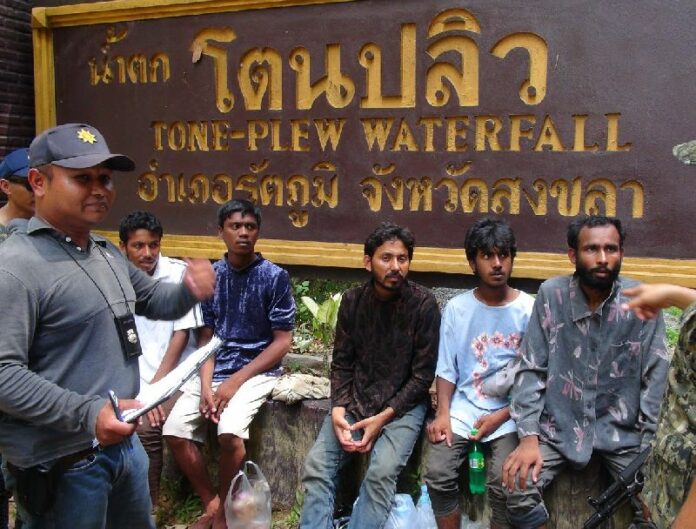
Police found a group of abandoned Bangladeshi men in Songkhla on 8 May 2015.

BANGKOK — In a sweep of Songkhla province this past week, Thai police have discovered a total of four vacated jungle camps they suspect were used by human traffickers to detain Rohingya refugees headed for Malaysia.

Thirty-three corpses were also uncovered near the sites, and 114 abandoned refugees were rescued in the area, according to police. The refugees include 24 Rohingyas, 69 Bangladeshis, and 16 people whose nationalities have not been verified.

\
Police found 54 abandoned Bangladeshi men in Songkhla on 8 May 2015.

A total of 29 arrests warrants have been issued in connection with the discovery of the camp sites, including 11 arrest warrants that were freshly approved by the court today, said Pol.Maj.Gen. Phuttichart Ekkachan, deputy commander of Ninth Region Police. 

Seven people, including a local mayor and other Thai officials, have been arrested and charged with human trafficking and other offenses. At least 50 police officers also under investigation for their connection to the camps. 

Police said no more suspected trafficking camps or bodies were found today, though the search is ongoing.

The four camps consisted of a total of 51 wooden shelters, which police believe were used to house hundreds of Rohingyas while traffickers secured ransom money from their relatives. Police believe the corpses belonged to Rohingyas who died of illness or malnourishment.

Several grave sites were discovered near the camps, though not all of them contained bodies.

The Rohingya are a Muslim minority that hail from western Myanmar, where they face violent persecution from a Buddhist population and severe discrimination from the state, which denies them citizenship. Around 300,000 stateless Rohingya are estimated to live in camps in bordering Bangladesh.

Since 2012, tens of thousands of Rohingyas have illegally entered Thai territories, often en route to Muslim-majority Malaysia. Many refugees have been exploited by human smugglers in Thailand, who detain them in the jungle camps for ransom, or sell them as slaves. For years, Thai authorities have largely turned a blind eye. 

Last June, the United States government downgraded Thailand to the lowest rank in its annual Trafficking In Persons (TIP) report for failing to meet the minimum standards to combat trafficking. 

Thailand’s military government, which came to power in a coup d'etat a month prior to the downgrade, says that eradicating human trafficking is a national priority. Junta chairman and Prime Minister Prayuth Chan-ocha has given local authorities 10 days to ensure clear any detention camps in their jurisdictions.

 
For comments, or corrections to this article please contact: [email protected]

You can also find Khaosod English on Twitter and Facebook
http://twitter.com/KhaosodEnglish
http://www.facebook.com/KhaosodEnglish

Advertisement

Roundup of Police Findings From Trafficking Bust in Songkhla

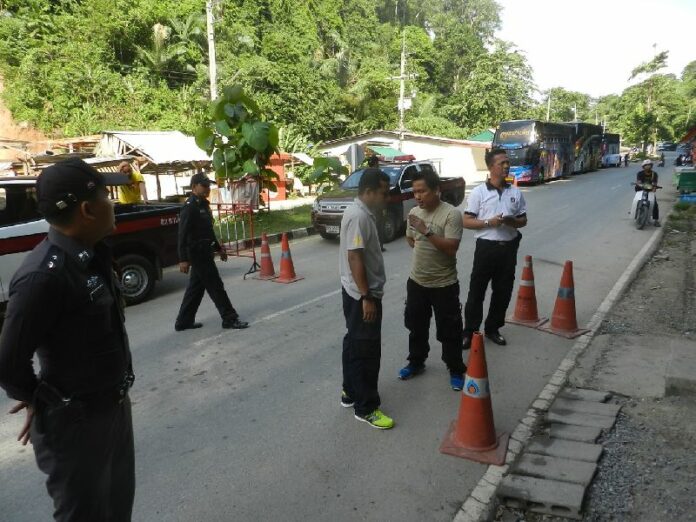
Police set up checkpoints in an effort to intercept human traffickers and Rohingya captives in Satul province, 8 May 2015.

BANGKOK — In a sweep of Songkhla province this past week, Thai police have discovered a total of four vacated jungle camps they suspect were used by human traffickers to detain Rohingya refugees headed for Malaysia.

Thirty-three corpses were also uncovered near the sites, and 114 abandoned refugees were rescued in the area, according to police. The refugees include 24 Rohingyas, 69 Bangladeshis, and 16 people whose nationalities have not been verified.

\
Police found 54 abandoned Bangladeshi men in Songkhla on 8 May 2015.

A total of 29 arrests warrants have been issued in connection with the discovery of the camp sites, including 11 arrest warrants that were freshly approved by the court today, said Pol.Maj.Gen. Phuttichart Ekkachan, deputy commander of Ninth Region Police. 

Seven people, including a local mayor and other Thai officials, have been arrested and charged with human trafficking and other offenses. At least 50 police officers also under investigation for their connection to the camps. 

Police said no more suspected trafficking camps or bodies were found today, though the search is ongoing.

The four camps consisted of a total of 51 wooden shelters, which police believe were used to house hundreds of Rohingyas while traffickers secured ransom money from their relatives. Police believe the corpses belonged to Rohingyas who died of illness or malnourishment.

Several grave sites were discovered near the camps, though not all of them contained bodies.

The Rohingya are a Muslim minority that hail from western Myanmar, where they face violent persecution from a Buddhist population and severe discrimination from the state, which denies them citizenship. Around 300,000 stateless Rohingya are estimated to live in camps in bordering Bangladesh.

Since 2012, tens of thousands of Rohingyas have illegally entered Thai territories, often en route to Muslim-majority Malaysia. Many refugees have been exploited by human smugglers in Thailand, who detain them in the jungle camps for ransom, or sell them as slaves. For years, Thai authorities have largely turned a blind eye. 

Last June, the United States government downgraded Thailand to the lowest rank in its annual Trafficking In Persons (TIP) report for failing to meet the minimum standards to combat trafficking. 

Thailand’s military government, which came to power in a coup d'etat a month prior to the downgrade, says that eradicating human trafficking is a national priority. Junta chairman and Prime Minister Prayuth Chan-ocha has given local authorities 10 days to ensure clear any detention camps in their jurisdictions.

 
For comments, or corrections to this article please contact: [email protected]

You can also find Khaosod English on Twitter and Facebook
http://twitter.com/KhaosodEnglish
http://www.facebook.com/KhaosodEnglish

Advertisement

Health Official Warns Parents of Risky Preteen Internet Fad

A "F.C. recruitment" video on Youtube. The text reads "Recruiting FC, will anyone sign up?"

BANGKOK — A senior government official has advised parents to a monitor a recent online trend among preteen girls in Thailand that involves providing a home address to strangers on the internet in order to receive gifts in the mail.

Amphon Benjapolpitak, director of the Ministry of Public Health's Rajanukul Institute, which promotes mental health, warned that children may not be aware of the risks that come with sharing personal details on the internet.

"What children may not have thought about is that, when they are in the position that anyone can see them, there may be people who lurk quietly and monitor them," said Amphon. "It puts them in risk of danger."

She added, "The more information of children the criminals have, the higher the chance the children will encounter danger." 

Known as "F.C. recruitment" by many teens, the online trend consists of female school students – mostly in elementary level – posting videos on Youtube and asking strangers to join their "fan club," shortened as "F.C." 

According to the fad’s unofficial rules, the "fans" must mail gifts to the young "idols" regularly. The recipients will upload videos to show the presents that arrive. Some of the girls provide their home addresses in the videos, while others ask fans to contact them on the chat application LINE to receive their addresses.

Hundreds of such videos have been uploaded to Youtube and other websites in past two months.

Despite some social media site’s minimum age requirements – such as Facebook's, which is 13 – many children in Thailand regularly use social media. 

Instead of completely banning the fan club trend, Amphon suggested that parents talk to their children about the concept of privacy, and establish rules about what type of personal information is appropriate to share on the internet. She also encouraged parents to talk with their children about the trend so that adults can keep track of who their children are interacting with.  

"Children want to have the ability to make decisions on some issues on their own. We [adults] have to listen to them, and follow the results of such decisions," Amphon said. "If this kind of interaction exists in the families … there won't be incidents of children doing and hiding something."

Social media is extremely popular in Thailand. As of 2014, the Kingdom had 28 million Facebook users, 4.5 million Twitter users, and 1.7 million Instagram users, according to media reports.

 
For comments, or corrections to this article please contact: [email protected]

You can also find Khaosod English on Twitter and Facebook
http://twitter.com/KhaosodEnglish
http://www.facebook.com/KhaosodEnglish

Advertisement

Pakistan Helicopter Crash Kills Norwegian, Philippine Ambassadors

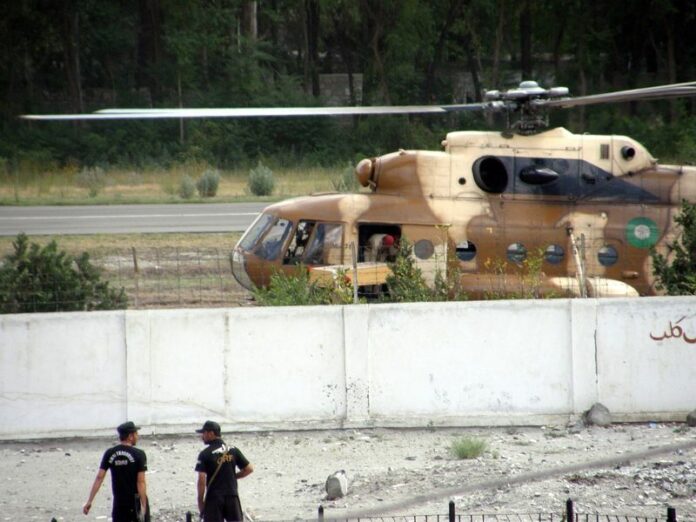
An archive images shows a coffin being carried from a Pakistani Army helicopter after arriving in Gilgit in June 2013. The ambassadors of Norway and the Philippines to Pakistan were killed when a military helicopter crashed into a school in the north of the country on Friday. EPA/ZAFAR ABBAS

ISLAMABAD (DPA) — The Norwegian and Philippine ambassadors to Pakistan were killed when a military helicopter crashed into a school in the north of the country Friday, an army spokesman said.

The wives of the Indonesian and Malaysian ambassadors also died, along with the two pilots, Major General Saleem Bajwa said.

The Dutch and Polish ambassadors were among the injured.

Three MI 17 helicopters were flying Western diplomats to Gilgit-Baltistan region in northern Pakistan where Prime Minister Nawaz Sharif was to address a ceremony,

"Two helicopters landed safely but the third one crashed and caught fire," Bajwa said

Premier Sharif was in a plane at the time of the crash and diverted back to Islamabad safely, Geo television reported.

At least 11 foreigners and six Pakistanis were onboard the ill-fated helicopter. Most of the others were injured, Bajwa said.

(Reporting by Zia Khan)

 
For comments, or corrections to this article please contact: [email protected]

You can also find Khaosod English on Twitter and Facebook
http://twitter.com/KhaosodEnglish
http://www.facebook.com/KhaosodEnglish

Advertisement

Crown Prince Worried for Cyclists' Safety: Official

The scene where a bicyclist was run over by a car in Bangkok's Saphan Sung district, 8 May 2015.

BANGKOK — Thailand's Crown Prince has expressed concern over the safety of bicyclists following a spate of road accidents in recent days, a junta spokesperson said.

"His Royal Highness Vajiralongkorn has seen the news about accidents involving many cyclists in this period," said Maj.Gen. Sansern Kaewkamnerd, a spokesperson for Thailand’s military government. "He is concerned for welfare of everyone. His Royal Highness also uses a bicycle to exercise regularly, so he has informed the Prime Minister to ensure safety on Thai roads for everyone."

\
Thailand's
 Crown Prince sent a bouqet of flowers to Wichian Pinkesorn, a popular cyclist who is being hospitalized for injuries caused by a collision with a motorcyclist in Bangkok, 7 May 2015. 

He added, "His Royal Highness would like to advise everyone that respecting traffic laws is the most important factor to reduce accidents."

Yesterday, the Crown Prince sent a bouqet of flowers to a popular cyclist who is being hospitalized for injuries caused by a collision with a motorcyclist in Bangkok on 6 May. 

Five cyclists have been killed on Thai roads in the past week alone, including three people in Chiang Mai province, a 31-year-old woman in Bangkok, and a 63-year-old man who was killed in a freak accident caused by a truck driver in Ayutthaya province.   

This morning, police received reports that yet another bicyclist was run over by a driver in Bangkok's Saphan Sung district. According to police, 75-year-old Supinan Chantarakul was cycling in the left lane when a pick-up truck slammed into him from behind, dragging the bicycle under the vehicle. Supinan has been sent to hospital. 

Police say they have detained the 26-year-old driver of the pick-up truck for interrogation. 

Cycling has been gaining popularity in Thailand in recent years as a form of exercise and way to evade notorious traffic jams in Bangkok and other cities. Thai authorities have also built new bike paths and organized several campaigns to encourage cycling. 

Thai roads are considered the second most dangerous in the world, according to the Transportation Research Institute, with a death rate nearly twice the global average. 

 
For comments, or corrections to this article please contact: [email protected]

You can also find Khaosod English on Twitter and Facebook
http://twitter.com/KhaosodEnglish
http://www.facebook.com/KhaosodEnglish

Advertisement

Thai Soldiers Detain Israeli Businessmen 'Out of Misunderstanding'

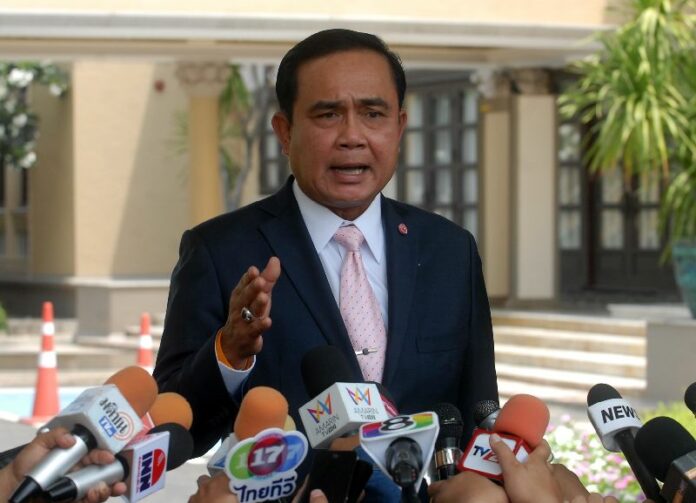
Junta chairman Gen. Prayuth Chan-ocha speaking to reporters on 8 May 2015.

BANGKOK – Thai soldiers mistakenly arrested nine businessmen from an Israeli technology firm while they were meeting with police yesterday, junta officials say.

The nine men, who were demonstrating surveillance equipment to police officers at the Royal Thai Police headquarters, were taken by soldiers to the 2nd Cavalry Division base, where they were questioned and then released without charges, junta spokesperson Col. Winthai Suwaree told reporters today.

Col. Winthai said police were informed beforehand of the arrest, but several officers at the Special Branch Police told Khaosod they were taken by complete surprise when at least 10 armed soldiers arrived on three military vehicles and took the nine men without police’s permission.

The soldiers reportedly informed police they were acting under Order 3/2558, an order issued by the junta chairman that allows soldiers to detain individuals without charges. 

According to the officers, the businessmen were demonstrating a device that would improve Thai police’s ability to intercept phone calls, track the location of phone users, and analyze calling data. 

Junta chairman and Prime Minister Prayuth Chan-ocha told reporters today that the arrests were caused by a misunderstanding. 

"Yes, I have been briefed about it. It was a slight misunderstanding," Gen. Prayuth said this morning, adding that he has apologized to the commanders of the Royal Thai Police and the Special Branch Police. 

"We have reached understanding with each other now," Gen. Prayuth said. "From now on, I want [security officers] to coordinate with each other. In this case, there was no coordination at all, so the subordinates… well, everyone just tried to do their duties. We had no intention to violate anyone's dignity."

Asked whether the incident was a sign of discord between the police and army, Gen. Prayuth replied, "How can there be discord? Does the media want us to fight each other? I am explaining to you: we have already talked with each other. It's over. The media should make it over, too. You want the police and soldiers to fight each other? Don't be concerned about this. I am more concerned about this than the media. Don't be concerned about something that is not your duty."

The Israeli Embassy told Khaosod English the businessmen, not all of whom are Israeli nationals, were representatives of a well-known Israeli technology firm invited to demonstrate their products to Thai police.

"Even though they obtained all necessary documents and permits from the relevant Thai government agencies as required by law, for some unclear reason they were detained by Thai military authorities," Simon Roded, Israeli ambassador to Thailand, said in an email. "The group was treated with a polite and respectful manner; and well taken care of."

He added, "After some inquiries and the intervention of the Embassy of Israel, it became evident that this is all an internal misunderstanding of the Thai authorities.  The group was let go and we accepted the apology of the Thai representatives."

Correction: The original version of this article misidentified the name and title of ambassador Simon Roded. 

 
For comments, or corrections to this article please contact: [email protected]

You can also find Khaosod English on Twitter and Facebook
http://twitter.com/KhaosodEnglish
http://www.facebook.com/KhaosodEnglish


Advertisement

Former Yingluck Govt Officials Impeached Over Rice Corruption

Former Minister of Commerce Boonsong Teriyapirom defends himself before the NLA on 23 April 2015.

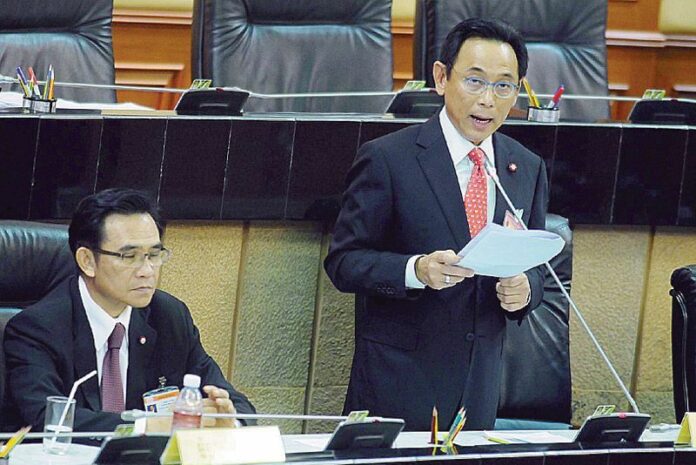
BANGKOK — Three former government officials have been retroactively impeached by the Thai junta’s rubber-stamp parliament for their involvement in a fraudulent rice sale.

The three officials, who worked for the elected government toppled in the coup, include former Minister of Commerce Boonsong Teriyapirom, former deputy Minister of Commerce Poom Sarapol, and former director of the Department of Foreign Trade Manus Soiploy.

\
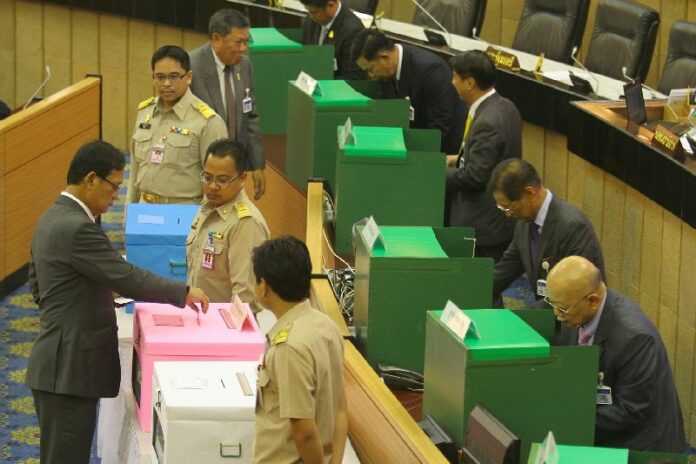
The NLA voted to impeach the three former government officials on 8 May 2015.

According to the National Anti-Corruption Commission (NACC), the trio oversaw rice sales that were falsely billed as a Government-to-Government (G2G) trade with China.

It later emerged that the two Chinese companies named in the deal were not authorized to purchase rice on behalf of the Chinese government, and that the rice was eventually sold at a low price to Thai firms with close ties to the ruling Pheu Thai Party, before being distributed in Thai markets, according to the NACC.

The junta-appointed National Legislative Assembly (NLA), an interim parliament whose members were chosen by the ruling junta, began deliberation on the officials in early April and voted to impeach all three today.

The ballots were counted at noon, revealing overwhelming majorities in the assembly for retroactively impeaching the politicians and thereby banning them from politics for five years.

Boonsong was impeached by 180-6 vote, with four abstentions; Poom was impeached by a 182-5 vote, with two abstentions and one spoiled ballot; and Manus was impeached by a 158-25 vote, with six abstentions and one spoiled ballot.

There is no immediate comment from Boonsong, Poom, and Manus.

In January, the NLA similarly voted to impeach former Prime Minister Yingluck Shinawatra for failing to prevent graft in the rice-pledging scheme, a key policy of her administration. The rice mortgage program, which involved purchasing rice from farmers at above-market prices, was popular among the Pheu Thai’s rural support base but bashed by critics who said the scheme was financially ruinous and rife with corruption.

According to the NACC, mismanagement and corruption in the rice program cost the state more than 500 billion baht in damages.

Yingluck and her supporters say her impeachment ruling was a politcally-motivated effort to curb the influence of the Pheu Thai party, whose politicians have won every national election in the past decade.

Advertisement

Former Yingluck Govt Officials Impeached Over Rice Corruption

The NLA voted to impeach three former government officials over corruption in a rice sale, 8 May 2015.

BANGKOK — Three former government officials have been retroactively impeached by the Thai junta's rubber-stamp parliament for their involvement in a fraudulent rice sale.

The three officials, who worked for the elected government toppled in the coup, include former Minister of Commerce Boonsong Teriyapirom, former deputy Minister of Commerce Poom Sarapol, and former director of the Department of Foreign Trade Manus Soiploy. 

\
Former Minister of Commerce Boonsong Teriyapirom defends himself before the NLA on 23 April 2015.

According to the National Anti-Corruption Commission (NACC), the trio oversaw rice sales that were falsely billed as a Government-to-Government (G2G) trade with China.

It later emerged that the two Chinese companies named in the deal were not authorized to purchase rice on behalf of the Chinese government, and that the rice was eventually sold at a low price to Thai firms with close ties to the ruling Pheu Thai Party, before being distributed in Thai markets, according to the NACC.

The junta-appointed National Legislative Assembly (NLA), an interim parliament whose members were chosen by the ruling junta, began deliberation on the officials in early April and voted to impeach all three today.

The ballots were counted at noon, revealing overwhelming majorities in the assembly for retroactively impeaching the politicians and thereby banning them from politics for five years. 

Boonsong was impeached by 180-6 vote, with four abstentions; Poom was impeached by a 182-5 vote, with two abstentions and one spoiled ballot; and Manus was impeached by a 158-25 vote, with six abstentions and one spoiled ballot. 

There is no immediate comment from Boonsong, Poom, and Manus. 

In January, the NLA similarly voted to impeach former Prime Minister Yingluck Shinawatra for failing to prevent graft in the rice-pledging scheme, a key policy of her administration. The rice mortgage program, which involved purchasing rice from farmers at above-market prices, was popular among the Pheu Thai’s rural support base but bashed by critics who said the scheme was financially ruinous and rife with corruption. 

According to the NACC, mismanagement and corruption in the rice program cost the state more than 500 billion baht in damages.

Yingluck and her supporters say her impeachment ruling was a politcally-motivated effort to curb the influence of the Pheu Thai party, whose politicians have won every national election in the past decade. 


For comments, or corrections to this article please contact: [email protected]

You can also find Khaosod English on Twitter and Facebook
http://twitter.com/KhaosodEnglish
http://www.facebook.com/KhaosodEnglish


Advertisement

Carlsberg Opens Brewery in Myanmar

A file photo dated 16 February 2006 of Danish Carlsberg beer bottles at a bar in Jakarta, Indonesia. EPA/WEDA

YANGON (DPA) — Carlsberg opened its first beer production plant in Myanmar, company officials said Friday.

The joint venture between the world's fourth-largest beer maker and a Myanmar company has a capacity of 60 million litres per year.

"We are producing three kinds of beer here – the flagship Carlsberg brand, the Tuborg brand and new brand Yoma," said Thein Tun, chairman of joint venture partner Myanmar Golden Star.

The Denmark-based group holds 51 per cent of joint venture Myanmar Carlsberg Co Ltd under a 2013 agreement.

The 75-million-dollar factory in Bago, 80 kilometres  north-east of commercial capital Yangon, started operations Thursday.

"We haven't any plan yet to export our products from the plants. We just focus on Myanmar beer market as the beer consumption here is still very low," Thein Tun said.

Myanmar currently consumes just 6 litres of beer per head per year, according to the company's research, compared with 38 litres in Thailand and 100 in Europe.

Thein Tun said his company and Carlsberg began working together in 1993 but Carlsberg was forced to leave the country three years later under mounting pressure from human rights activists and threats of a boycott of the brand.

 
For comments, or corrections to this article please contact: [email protected]

You can also find Khaosod English on Twitter and Facebook
http://twitter.com/KhaosodEnglish
http://www.facebook.com/KhaosodEnglish

Advertisement

Hot News

LATEST NEWS

Bangkok
overcast clouds
32.8 ° C
32.8 °
32.8 °
92 %
4.7kmh
86 %
Wed
33 °
Thu
36 °
Fri
38 °
Sat
36 °
Sun
36 °