






























27.7 C
Bangkok
Friday, June 26, 2026
Home Blog Page 3008

'Stolen Car' Used in Deadly Crash with Cyclists

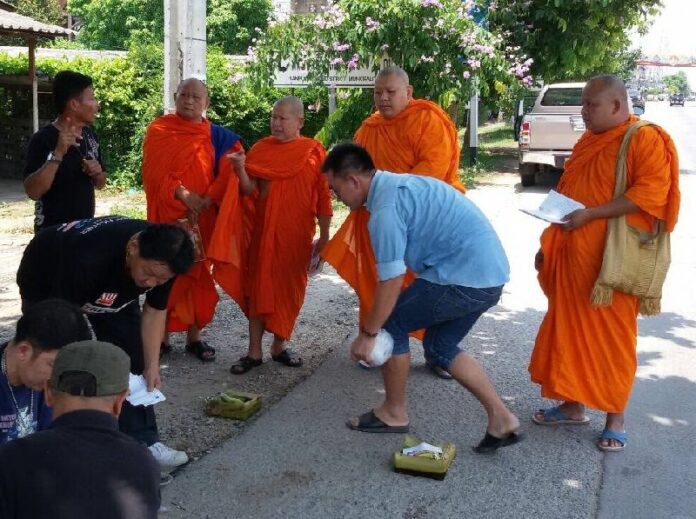
Buddhist monks pray over the spot where 3 cyclists were killed in Chiang Mai on 3 May 2015.

BANGKOK — Police say the car that crashed into a group of cyclists and killed one woman in Bangkok on Monday night was reported stolen by its previous owner, and that the driver behind the hit-and-run provided a fake name to medical staff before fleeing.

The crash took place on Ratchada-Ramintra Road in Kannayao district at around 8.30 pm on 4 May, killing one 31-year-old woman and injuring several others. The driver, described by witnesses as “young man,” was taken to the hospital by rescue workers and left before speaking with police.

\
The scene of car crash that killed one cyclist and injured several others on 4 May 2015 in Bangkok.

The motorist reportedly identified himself to medical staff as Saran Intanond, 23, but police say the name does not exist in the national database.

The car involved in the crash was also reported stolen on 17 March, said Pol.Col. Kittichet Sakkayaphabwichanond, commander of Kokkram Police Station. The sister of the car's previous owner met with police yesterday and said she and her brother did not have any connection to the incident.

Five bicyclists were killed on Thai roads in the past week alone. On 3 May, three cyclists were run over and killed by a 23-year-old university student in Chiang Mai province whose blood alcohol content exceeded the legal limit. On 5 May a bicyclist died in Ayutthaya province after a truck crashed into a roadside billboard, causing the structure to fall and crush the 63-year-old man. 

Earlier this week, junta chairman and Prime Minister Prayuth Chan-ocha ordered police to crack down on drunk driving – a common cause of road accidents in Thailand – and asked drivers to share the roads with bicyclists.

"Gen. Prayuth also extends his condolence to families and friends of the dead and injured," a government spokesperson said on 4 May. "He has urged traffic commuters to be compassionate and drive carefully, and to share the roads with bicyclists, which are increasing in number every year." 

Pol.Lt.Gen. Prawut Thawornsiri, spokesperson of the Royal Thai Police, said police will increase road checkpoints to track drunk drivers.

"Usually, checkpoints will stop at around 2 – 3 am," Pol.Lt.Gen. Prawut said. "If drunk drivers emerge after that, they will be able to escape. From now on, we will expand checkpoints to cover the entire 24 hour period." 

He also suggested the government increase the penalty for DUI and allow police to suspend drivers' license for up to six months, or even revoke them permanently. 

 
For comments, or corrections to this article please contact: [email protected]

You can also find Khaosod English on Twitter and Facebook
http://twitter.com/KhaosodEnglish
http://www.facebook.com/KhaosodEnglish
Advertisement

Two More Suspected Trafficking Camps Found

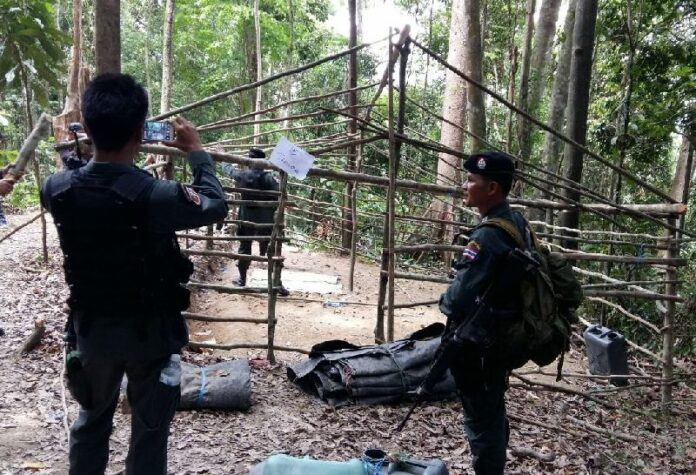
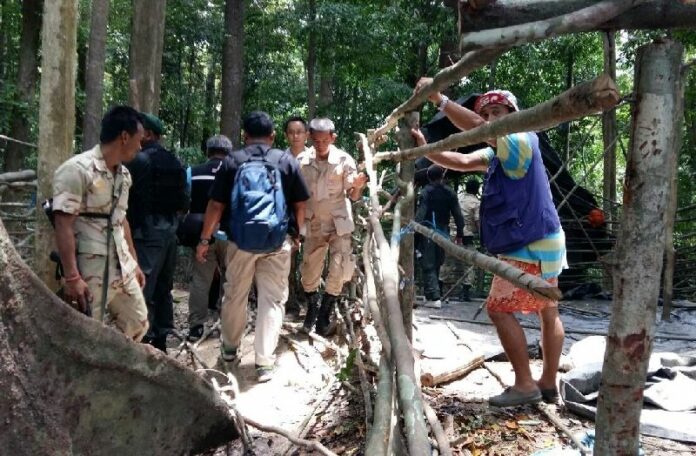
Security officers dismantle a hut at the second suspected detention site found in Songkhla province, 5 May 2015.

SONGKHLA — Thai security forces in southern Thailand have uncovered two more abandoned camps they believe were used by human traffickers to detain Rohingya refugees.

The discovery came several days after police discovered 26 corpses buried near a suspected detention site close to the Thai-Malaysian border in Songkhla province. The camp, located deep in the jungle, consisted of makeshift wooden huts, fences, a watch tower, and the mass grave of Rohingya bodies.

Police believe the camp was used by human traffickers to detain Rohingya refugees who entered Thailand illegally and demand ransom money from their relatives.

\
Security officers dismantle a hut at the second suspected detention site found in Songkhla province, 5 May 2015.

Two more abandoned campsites were found yesterday, said Pol.Lt.Gen. Prawut Thawornsiri, spokesperson of the Royal Thai Police.

One camp, consisting of several wooden shelters, two kitchen areas, and five grave sites, was found approximately one kilometer away from the first site in Padang Besar subdistrict. Police said the camp’s occupants appeared to have fled shortly before the officers arrived, citing evidence of recent cooking at the site.  

"This Rohingya camp appears to be a 'transit' camp,” said Pol.Lt.Gen. Prawut. "I expect that we will find more Rohingya camps." 

A third, smaller site consisting of one large hut was also found nearby. No bodies were found at the two new sites. 

Police also encountered one Rohingya woman and two children in the area, who they believe were survivors of the camps. The woman and children were found in a state of exhaustion and are being treated at a nearby hospital, police say.

Separately in nearby Phang Nga province, local officials reported discovering four bodies buried in makeshift graves approximately one kilometer from the sea. The bodies have been sent for forensic testing to determine whether they are Rohingya people, an ethnic Muslim minority from Myanmar. 

Five suspects in custody 

Police arrested three Thai officials and one Burmese man on 4 May in connection with the suspected trafficking operation. The three Thais were identified as Amsan Intanu, 48, Roe Sonyalae, 41, and Arlee Lamoh, 47. According to police, Amsan is an official at Padang Besar’s municipal office, and Roe and Arlee are local deputy village chiefs. 

The fourth suspect, So Niang Anu, 40, was identified by police as a "Burmese national," but Reuters reported he is a Rohingya. The four men have been charged with human trafficking, illegal detention, and holding people for ransom. 

Pol.Lt.Gen. Prawut said a fifth suspect, village chief Arlee Krem, surrendered to police yesterday. Police are still looking for three more suspects. 

"Right now we are investigating the routes of the operation," Pol.Lt.Gen. Prawut said. "We will close all these routes. We are also coordinating with Malaysian authorities about lists of people who have crossed into Thailand."

The wife of Arlee Lamoh, one of deputy village chiefs arrested following the discovery of the first camp, told reporters her husband is innocent. 

"My husband is not involved in this," said Kodiyah Lamoh, who described her husband as an honest official who also works in a rubber orchard to help pay her family's debt.  

"The allegation has caused so much damage to my family," she continued. "Villagers now think that my husband is a bad man. I want justice for my family. If my husband is arrested and prosecuted, how can I find money to help my three children go to school?"

Junta vows tough crackdown

The Rohingyas are a Muslim people that hail from the Rakhine state of Myanmar, where they have faced persecution from the region’s Buddhist majority. 

As a result of ethnic and religious violence, tens of thousands Rohingyas have crossed illegally into Thai territories, often in an effort to reach Muslim-majority Malaysia. Some Rohingya refugees have been intercepted by human traffickers and held at detention camps for ransom, or sold as slaves onto Thai fishing boats. For years, Thai authorities have largely turned a blind eye. 

Last June, the United States government downgraded Thailand to the lowest rank in its annual Trafficking In Persons (TIP) report for failing to meet the minimum standards to combat trafficking. Thailand’s military government, which came to power in a coup d'etat a month prior to the downgrade, has made eradicating human smuggling a national priority.

Yesterday, a spokesperson of the military government said the junta will not spare any official who is involved in human trafficking operations. 

"All administrative agencies in all levels – village, tambon, and district – have been instructed to closely monitor every square inch of their jurisdiction," said Maj.Gen. Sansern Kaewkamnerd. "If they neglect their duty and allow detention of victims of human trafficking, or give assistance and shelter to the traffickers, they will be held responsible."

He continued, "As for officials who collect bribes or have interest in the crime, they will be punished both by disciplinary and legal actions." 

 
For comments, or corrections to this article please contact: [email protected]

You can also find Khaosod English on Twitter and Facebook
http://twitter.com/KhaosodEnglish
http://www.facebook.com/KhaosodEnglish

Advertisement

Two More Suspected Trafficking Camps Found

Security officers dismantle a hut at the second suspected detention site found in Songkhla province, 5 May 2015.

SONGKHLA — Thai security forces in southern Thailand have uncovered two more abandoned camps they believe were used by human traffickers to detain Rohingya refugees.

The discovery came several days after police discovered 26 corpses buried near a suspected detention site close to the Thai-Malaysian border in Songkhla province. The camp, located deep in the jungle, consisted of makeshift wooden huts, fences, a watch tower, and the mass grave of Rohingya bodies.

Police believe the camp was used by human traffickers to detain Rohingya refugees who entered Thailand illegally and demand ransom money from their relatives.

\
Security officers dismantle a hut at the second suspected detention site found in Songkhla province, 5 May 2015.

Two more abandoned campsites were found yesterday, said Pol.Lt.Gen. Prawut Thawornsiri, spokesperson of the Royal Thai Police.

One camp, consisting of several wooden shelters, two kitchen areas, and five grave sites, was found approximately one kilometer away from the first site in Padang Besar subdistrict. Police said the camp’s occupants appeared to have fled shortly before the officers arrived, citing evidence of recent cooking at the site.  

"This Rohingya camp appears to be a 'transit' camp,” said Pol.Lt.Gen. Prawut. "I expect that we will find more Rohingya camps." 

A third, smaller site consisting of one large hut was also found nearby. No bodies were found at the two new sites. 

Police also encountered one Rohingya woman and two children in the area, who they believe were survivors of the camps. The woman and children were found in a state of exhaustion and are being treated at a nearby hospital, police say.

Separately in nearby Phang Nga province, local officials reported discovering four bodies buried in makeshift graves approximately one kilometer from the sea. The bodies have been sent for forensic testing to determine whether they are Rohingya people, an ethnic Muslim minority from Myanmar. 

Five suspects in custody 

Police arrested three Thai officials and one Burmese man on 4 May in connection with the suspected trafficking operation. The three Thais were identified as Amsan Intanu, 48, Roe Sonyalae, 41, and Arlee Lamoh, 47. According to police, Amsan is an official at Padang Besar’s municipal office, and Roe and Arlee are local deputy village chiefs. 

The fourth suspect, So Niang Anu, 40, was identified by police as a "Burmese national," but Reuters reported he is a Rohingya. The four men have been charged with human trafficking, illegal detention, and holding people for ransom. 

Pol.Lt.Gen. Prawut said a fifth suspect, village chief Arlee Krem, surrendered to police yesterday. Police are still looking for three more suspects. 

"Right now we are investigating the routes of the operation," Pol.Lt.Gen. Prawut said. "We will close all these routes. We are also coordinating with Malaysian authorities about lists of people who have crossed into Thailand."

The wife of Arlee Lamoh, one of deputy village chiefs arrested following the discovery of the first camp, told reporters her husband is innocent. 

"My husband is not involved in this," said Kodiyah Lamoh, who described her husband as an honest official who also works in a rubber orchard to help pay her family's debt.  

"The allegation has caused so much damage to my family," she continued. "Villagers now think that my husband is a bad man. I want justice for my family. If my husband is arrested and prosecuted, how can I find money to help my three children go to school?"

Junta vows tough crackdown

The Rohingyas are a Muslim people that hail from the Rakhine state of Myanmar, where they have faced persecution from the region’s Buddhist majority. 

As a result of ethnic and religious violence, tens of thousands Rohingyas have crossed illegally into Thai territories, often in an effort to reach Muslim-majority Malaysia. Some Rohingya refugees have been intercepted by human traffickers and held at detention camps for ransom, or sold as slaves onto Thai fishing boats. For years, Thai authorities have largely turned a blind eye. 

Last June, the United States government downgraded Thailand to the lowest rank in its annual Trafficking In Persons (TIP) report for failing to meet the minimum standards to combat trafficking. Thailand’s military government, which came to power in a coup d'etat a month prior to the downgrade, has made eradicating human smuggling a national priority.

Yesterday, a spokesperson of the military government said the junta will not spare any official who is involved in human trafficking operations. 

"All administrative agencies in all levels – village, tambon, and district – have been instructed to closely monitor every square inch of their jurisdiction," said Maj.Gen. Sansern Kaewkamnerd. "If they neglect their duty and allow detention of victims of human trafficking, or give assistance and shelter to the traffickers, they will be held responsible."

He continued, "As for officials who collect bribes or have interest in the crime, they will be punished both by disciplinary and legal actions." 

 
For comments, or corrections to this article please contact: [email protected]

You can also find Khaosod English on Twitter and Facebook
http://twitter.com/KhaosodEnglish
http://www.facebook.com/KhaosodEnglish
Advertisement

The End of 1945

By Ian Buruma

NEW YORK – On May 8, 1945, when World War II in Europe officially ended, much of the world lay in ruins. But if the human capacity for destruction knows few limits, the ability to start over again is just as remarkable. Perhaps that is why mankind has so far managed to survive.

No doubt, millions of people at the end of the war were too hungry and exhausted to do anything much beyond staying alive. But, at the same time, a wave of idealism swept across the wreckage, a collective sense of determination to build a more equal, peaceful, and safer world.

That is why the war’s great hero, Winston Churchill, was voted out of office in the summer of 1945, even before Japan surrendered. Men and women had not risked their lives simply to return to the old days of class privilege and social deprivation. They wanted better housing, education, and free health care for all.

Similar demands were heard all over Europe, where the anti-Nazi or anti-fascist resistance was often led by leftists, or indeed Communists, and prewar conservatives were frequently tainted by collaboration with fascist regimes. There was talk of revolution in countries such as France, Italy, and Greece. This did not happen, because neither the Western Allies nor the Soviet Union supported it. Stalin was content to settle for an empire in Eastern Europe.

But even Charles de Gaulle, a resistance leader of the right, had to accept Communists in his first postwar government, and he agreed to nationalize industries and banks. The swing to the left, to social-democratic welfare states, occurred all over Western Europe. It was part of the 1945 consensus.

A different kind of revolution was taking place in Europe’s former colonies in Asia, where native peoples had no desire to be ruled once more by Western powers, which had been so ignominiously defeated by Japan. Vietnamese, Indonesians, Filipinos, Burmese, Indians, and Malays wanted their freedom, too.

These aspirations were often voiced in the United Nations, founded in 1945. The UN, like the dream of European unity, was also part of the 1945 consensus. For a short while, many prominent people – Albert Einstein, for one – believed that only a world government would be able to ensure global peace.

This dream quickly faded when the Cold War divided the world into two hostile blocs. But in some ways the 1945 consensus, in the West, was strengthened by Cold War politics. Communism, still wrapped in the laurel leaf of anti-fascism, had a wide intellectual and emotional appeal, not only in the so-called Third World, but also in Western Europe. Social democracy, with its promise of greater equality and opportunities for all, served as an ideological antidote. Most social democrats were in fact fiercely anti-communist.

Today, 70 years later, much of the 1945 consensus no longer survives. Few people can muster great enthusiasm for the UN. The European dream is in crisis. And the post-war social-democratic welfare state is being eroded more and more every day.

The rot began during the 1980s, under Ronald Reagan and Margaret Thatcher. Neoliberals attacked the expense of entitlement programs and the vested interests of trade unions. Citizens, it was thought, had to become more self-reliant; government welfare programs were making everyone soft and dependent. In Thatcher’s famous words, there was no such thing as “society,” only families and individuals who ought to be taking care of themselves.

But the 1945 consensus was dealt a much greater blow precisely when we all rejoiced at the collapse of the Soviet Empire, the other great twentieth-century tyranny. In 1989, it looked as if the dark legacy of World War II, the enslavement of Eastern Europe, was finally over. And in many ways, it was. But much else collapsed with the Soviet model. Social democracy lost its raison d’être as an antidote to Communism. All forms of leftist ideology – indeed, everything that smacked of collective idealism – came to be viewed as misguided utopianism that could lead only to the Gulag.

Neoliberalism filled the vacuum, creating vast wealth for some people, but at the expense of the ideal of equality that had emerged from World War II. The extraordinary reception of Thomas Picketty’s Capital in the Twenty-First Century shows how keenly the consequences of the collapse of the left have been felt.

In recent years, other ideologies have also emerged to fill the human need for collective ideals. The rise of right-wing populism reflects revived yearnings for pure national communities that keep immigrants and minorities out. And, perversely, American neo-conservatives have transformed the internationalism of the old left by seeking to impose a democratic world order by US military force.

The answer to these alarming developments is not nostalgia. We cannot simply return to the past. Too much has changed. But a new aspiration toward social and economic equality, and international solidarity, is badly needed. It cannot be the same as the 1945 consensus, but we would do well, on this anniversary, to remember why that consensus was forged in the first place.

Ian Buruma is Professor of Democracy, Human Rights, and Journalism at Bard College, and the author of Year Zero: A History of 1945.


Copyright: Project Syndicate, 2015.
www.project-syndicate.org


For comments, or corrections to this article please contact: [email protected]

You can also find Khaosod English on Twitter and Facebook
http://twitter.com/KhaosodEnglish
http://www.facebook.com/KhaosodEnglish

Advertisement

Junta Declines Calls to Revoke Year-Long Ban on Political Activities

File photo of junta chairman Gen. Prayuth Chan-ocha.

BANGKOK — Thailand's military junta will retain its ban on political activities, which was imposed nearly one year ago, despite calls from the leader of the Pheu Thai party to repeal the prohibition.

The sec-gen of the Pheu Thai party, which led the government toppled in the May 2014 coup, urged the junta yesterday to lift the ban and allow political parties to organize conferences and discuss the constitution being drafted by a junta-appointed body. 

Junta spokesperson Col. Winthai Suwaree said today that the junta will "deliberate" on Phumtham Wechayachai’s suggestion, but that the ban will stay in place for the time being.

The colonel also advised all political parties to voice their opinions through junta-approved channels, such as the Center for Reconciliation and Reform (CRR). 

"The NCPO [National Council for Peace and Order] already has the CRR that opens forums for all sides to voice their opinions, be it politicians, academics, and students," Col. Winthai said. "They can express their opinions on all topics, including about the constitution and reforms."

He added, "We are not suppressing [rights]. There's already the CRR forums, which have been useful. Everyone can voice their opinion freely." 

In addition to banning political gatherings and protests, the junta has also arrested dozens of people for making small-scale gestures of defiance, such as flashing anti-coup saluteseating sandwiches"with anti-coup intent," and reading George Orwell's dystopian novel Nineteen-Eightyfour in public. 

 
For comments, or corrections to this article please contact: [email protected]

You can also find Khaosod English on Twitter and Facebook
http://twitter.com/KhaosodEnglish
http://www.facebook.com/KhaosodEnglish

 

Advertisement

Indonesia Declares Ban on Domestic Workers Heading to Middle East

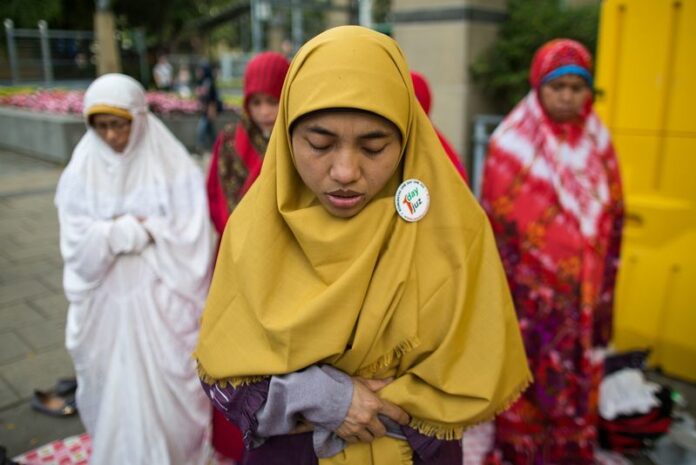
Indonesian migrant workers pray before taking part in a Labor Day march in Hong Kong, China, 01 May 2015. Indonesia will stop workers from going to 21 Middle Eastern countries over concerns about poor working conditions, reports said Tuesday. EPA/JEROME FAVRE

JAKARTA (DPA) – Indonesia will aim to stop domestic workers from going to 21 Middle Eastern countries over concerns about poor working conditions and abuse, the government said Tuesday.

The ban will be imposed on workers seeking to work for individual employers or families, not companies, said Manpower Ministry spokesman, Subhan. 

"The most important reason is that there is still a lack of standard regulations in those countries, making Indonesian workers at disadvantage," Manpower Minister Hanif Dhakiri said on the ministry's website.

Hanif said domestic workers such as maids in some Middle Eastern countries were often subjected to unfair treatment and low wages.

"The government has the power to bar placement in certain countries if the jobs are considered to be degrading to the person and the nation's dignity," Hanif said. 

Most Indonesian migrant workers are recruited as maids by labour agencies, which need a government licence. These agencies will be banned from recruiting people for domestic work in the Middle East, according to the government's plans

The countries affected by the ban, which is to come into force after a transitional period of three months, include Saudi Arabia, the United Arab Emirates, Bahrain, Egypt and Qatar.

Indonesia imposed a moratorium on sending domestic workers to Saudi Arabia and several other Middle Eastern countries in 2011 following a spate of abuse cases against maids.   

The Manpower Ministry said employers in the Middle East often prevented Indonesian maids from returning to their home country even though their contracts had expired.

He also said maids were paid as low as 2.7 million rupiah (about 200 dollars) a month.   

Last month, two female Indonesian domestic workers were executed in Saudi Arabia in separate murder cases, prompting diplomatic protests from Jakarta. 

Indonesian workers send home around 7 billion dollars annually and form a major source of the country's foreign exchange incomes, according to the central bank.

More than 400,000 workers from Indonesia went overseas last year, including 100,000 to the Middle East, according to the Agency for the Placement and Protection of Indonesian Workers.

About 2 million Indonesians currently work in the Middle East, mostly as domestic workers.   

Reporting by Ahmad Pathoni


For comments, or corrections to this article please contact: [email protected]

You can also find Khaosod English on Twitter and Facebook
http://twitter.com/KhaosodEnglish
http://www.facebook.com/KhaosodEnglish

Advertisement

Junta Declines Calls to Revoke Year-Long Ban on Political Activities

File photo of junta chairman Gen. Prayuth Chan-ocha on 9 September 2014 in Bangkok.

BANGKOK — Thailand's military junta will retain its ban on political activities, which was imposed nearly one year ago, despite calls from the leader of the Pheu Thai party to repeal the prohibition.

The sec-gen of the Pheu Thai party, which led the government toppled in the May 2014 coup, urged the junta yesterday to lift the ban and allow political parties to organize conferences and discuss the constitution being drafted by a junta-appointed body. 

Junta spokesperson Col. Winthai Suwaree said today that the junta will "deliberate" on Phumtham Wechayachai’s suggestion, but that the ban will stay in place for the time being.

The colonel also advised all political parties to voice their opinions through junta-approved channels, such as the Center for Reconciliation and Reform (CRR). 

"The NCPO [National Council for Peace and Order] already has the CRR that opens forums for all sides to voice their opinions, be it politicians, academics, and students," Col. Winthai said. "They can express their opinions on all topics, including about the constitution and reforms."

He added, "We are not suppressing [rights]. There's already the CRR forums, which have been useful. Everyone can voice their opinion freely." 

In addition to banning political gatherings and protests, the junta has also arrested dozens of people for making small-scale gestures of defiance, such as flashing anti-coup salutes, eating sandwiches "with anti-coup intent," and reading George Orwell's dystopian novel Nineteen-Eightyfour in public. 


For comments, or corrections to this article please contact: [email protected]

You can also find Khaosod English on Twitter and Facebook
http://twitter.com/KhaosodEnglish
http://www.facebook.com/KhaosodEnglish
Advertisement

Fourth Cyclist Run Over on Thai Roads in a Week

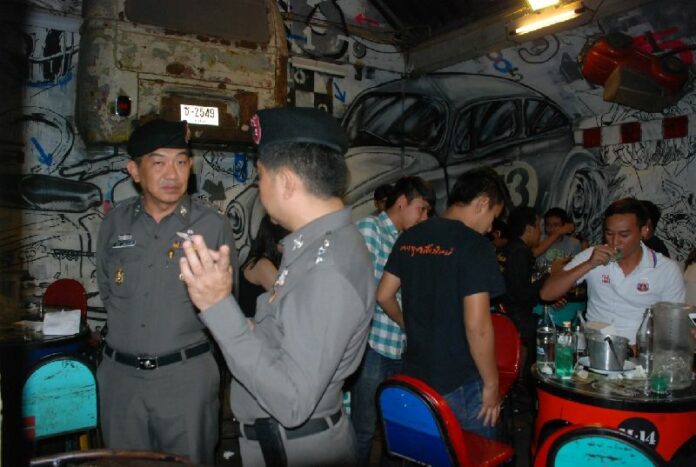
Police inspect bars in Chiang Mai province early on 5 March 2015 to ensure compliance with the mandatory 2am closing law.

BANGKOK — A 31-year-old woman was struck and killed by a car while she was riding a bicycle in Bangkok last night, several days after three cyclists were killed by a drunk driver in northern Thailand.

According to reports on Thai Rath and Daily News, the motorist crashed into  group of cyclists on Ratchada-Ramintra Road in Kannayao district at around 8.30 pm yesterday.

\
Buddhist
 monks pray over the spot where 3 cyclists were killed in Chiang Mai on 3 May 2015.

The driver, identified by witnesses as a young man, was taken to the hospital by rescue workers and left before meeting with police. Police are searching for the man. 

Three cyclists were sent to hospital, and one of the victims, 31-year-old Thanyakorn Densirimongkol, later died of the wounds.

The incident came two days after a university student crashed her car into cyclists in Chiang Mai, killing three people. The driver, Phatchuda Chairuean, 23, is being treated for injuries at the hospital. She has been charged with reckless driving leading to deaths and injuries of others.

Yesterday junta chairman and Prime Minister Prayuth Chan-ocha ordered police to crack down on drunk driving – a common cause of road accidents in Thailand. 

"Gen. Prayuth also extends his condolence to families and friends of the dead and injured," a government spokesperson said. "He has urged traffic commuters to be compassionate and drive carefully, and to share the roads with bicyclists, which are increasing in number every year." 

Chiang Mai Governor Suriya Prasarnbundit said yesterday that he has ordered tougher inspections of nightlife establishments in the province because the driver behind Sunday’s deadly crash confessed that she was drinking till morning with friends at a bar. 

"She drank until dawn. We have to take this seriously," Suriya said, adding that bar owners should accept any financial losses that come with closing earlier for the sake of public safety. 

Shortly after midnight today, around 100 security officers visited bars in Chiang Mai to ensure that the venues were obeying the mandatory 2 am closing time. Operators of two bars visited by police were arrested after officers found underage customers drinking at their venues. 

One of the cyclists injured on Sunday, 56-year-old Supol Tasingha, held a sign that said "Drinking + Drive = Murder" while he talked to reporters at his bedside yesterday. 

Supol said he was biking only a few meters away from those who died in the accident. "I heard a loud bang behind me, and seconds later I didn't feel anything. Everything stopped and went dark. When I regained consciousness, I was on the road," he recalled.

"I want this to be a moral lesson," Supol continued. "If you are drunk, don't drive … It's dangerous for you, and for others."

CORRECTION: The motorist who killed a woman in Bangkok on 4 May did not flee the scene immediately after the crash as was originally reported. He fled before speaking to police from the hospital, where he was brought by rescue workers.

For comments, or corrections to this article please contact: [email protected]

You can also find Khaosod English on Twitter and Facebook
http://twitter.com/KhaosodEnglish
http://www.facebook.com/KhaosodEnglish
Advertisement

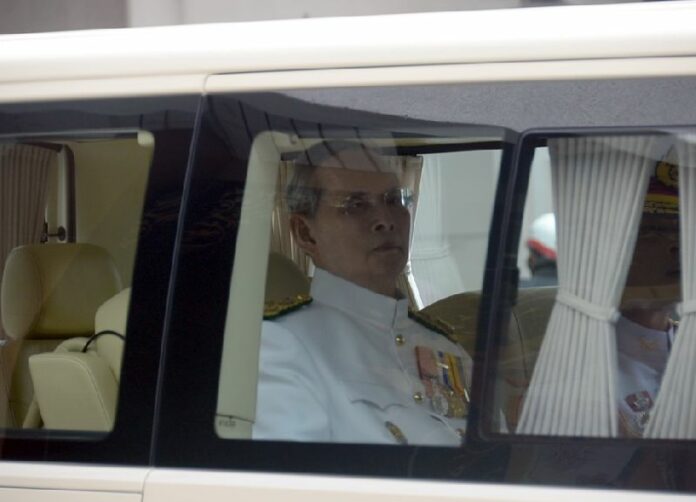
Thailand's King Bhumibol Marks 65th Anniversary of Coronation

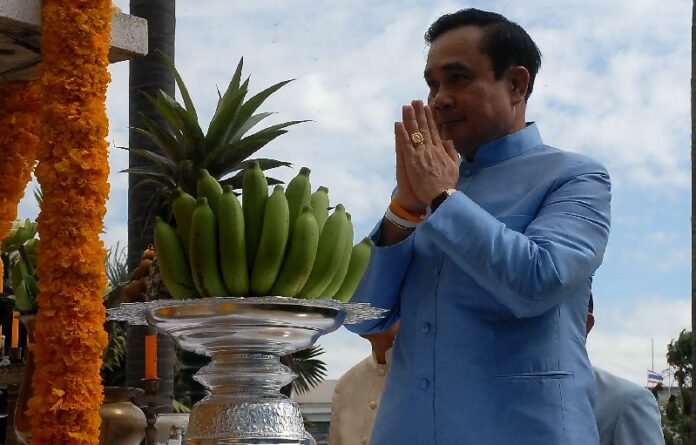
King Bhumibol left Bangkok's Siriraj Hospital to make an appearance at the Grand Palace on Coronation Day, 5 May 2015.

BANGKOK (DPA) — The world's longest-reigning monarch made a rare public appearance Tuesday during a Coronation Day ceremony at the Grand Palace in the Thai capital.

King Bhumibol Adulyadej, 87, was presiding over the ceremony to celebrate the 65th anniversary since his coronation on May 5, 1950.

He was accompanied by Crown Pince Maha Vajiralongkorn, 62, and Crown Princess Maha Chakri Sirindhorn, 60, at the ceremony.

A service was held in front of the Amarin Vinijchai Throne Hall in the Grand Palace complex.

King Bhumibol, or Rama IX, travelled to the event from Bangkok's Siriraj Hospital, where he currently resides.

The king is highly revered and regarded as a father figure by Thai people, many of whom deify him.


For comments, or corrections to this article please contact: [email protected]

You can also find Khaosod English on Twitter and Facebook
http://twitter.com/KhaosodEnglish
http://www.facebook.com/KhaosodEnglish
Advertisement

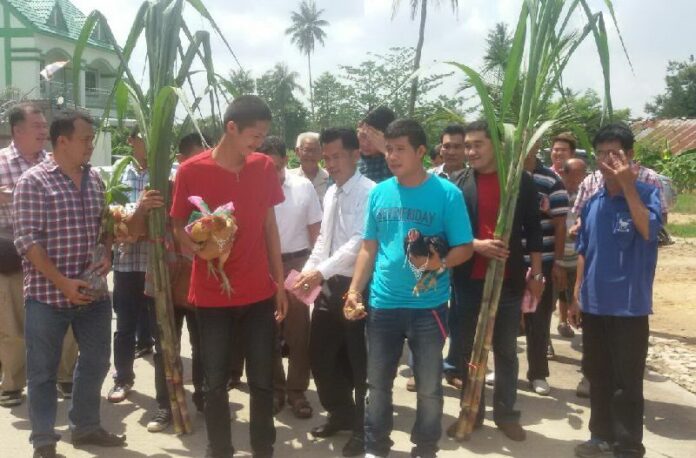
300,000 Baht Dowry Paid at Cock-Hen Wedding

A traditional Thai wedding was held for a cockfighting rooster and hen in Chonburi province on 5 March 2015.

CHONBURI — A rooster and a hen tied the knot in Chonburi province today, a union that their owners hope will produce talented birds for cockfighting tournaments.

The wedding, which took place in a village in Ban Bueng district this morning, was modeled after a traditional Thai wedding with monks' prayer, wedding parade, and dowry. 

The “groom,” a rooster called Yod Makham, is an experienced gamecock that has never lost a match, said his owner, Weerachai Charunet. Weerachai, 54, estimated that Yod Makham is worth at least one million baht.

Saman Thongkam, the owner of the hen, said he spent months trying to convince Weerachai to agree to the marriage after he saw how skillfully Yod Makham beat one of his roosters in a competition. "In that match, mine was defeated in both scores and punches. It was a complete defeat," Saman told reporters. Weerachai eventually conceded, and received 300,000 baht in cash as dowry from Saman at the ceremony today. 

According to an agreement reached by the two men, Yod Makham will live with the hen, named Daeng Kyushu, in Nakhon Pathom province until the two produce offspring, estimated to be four to five months from now.  Afterward, Yod Makham will be returmed to Weerachai. 

"I want to develop better breed for gamecocks in our country," said Saman.

Cockfighting is a popular sport and lucrative industry in Thailand, though it has attracted criticism from animal rights advocates in recent years. The game is exempted from the animal cruelty law that was passed last November. Betting on cockfights is illegal, but the law is weakly enforced. 

CORRECTION: The rooster and hen did not compete in a cockfighting match as was originally reported. 


For comments, or corrections to this article please contact: [email protected]

You can also find Khaosod English on Twitter and Facebook
http://twitter.com/KhaosodEnglish
http://www.facebook.com/KhaosodEnglish


Advertisement

Hot News

LATEST NEWS

Bangkok
broken clouds
27.7 ° C
27.7 °
27.7 °
81 %
2.7kmh
67 %
Fri
36 °
Sat
36 °
Sun
37 °
Mon
36 °
Tue
35 °