




























31.6 C
Bangkok
Friday, June 26, 2026
Home Blog Page 3009

300,000 Baht Dowry Paid at Cock-Hen Wedding

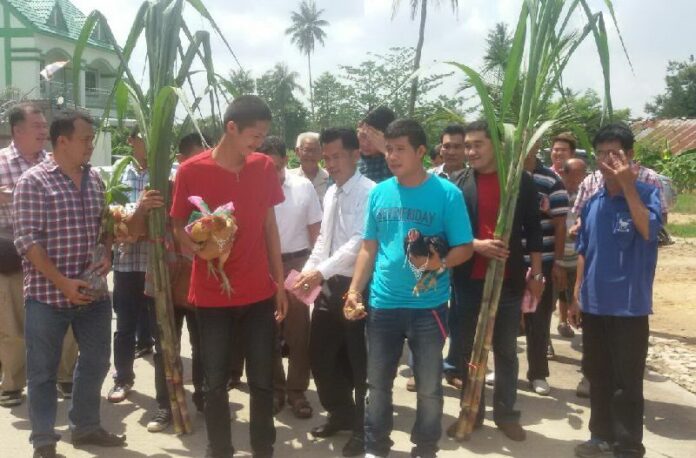
A traditional Thai wedding was held for a cockfighting rooster and hen in Chonburi province on 5 March 2015.

CHONBURI — A rooster and a hen tied the knot in Chonburi province today, a union that their owners hope will produce talented birds for cockfighting tournaments.

The wedding, which took place in a village in Ban Bueng district this morning, was modeled after a traditional Thai wedding with monks' prayer, wedding parade, and dowry. 

The “groom,” a rooster called Yod Makham, is an experienced gamecock that has never lost a match, said his owner, Weerachai Charunet. Weerachai, 54, estimated that Yod Makham is worth at least one million baht.

Saman Thongkam, the owner of the hen, said he spent months trying to convince Weerachai to agree to the marriage after he saw how skillfully Yod Makham beat one of his roosters in a competition. "In that match, mine was defeated in both scores and punches. It was a complete defeat," Saman told reporters. Weerachai eventually conceded, and received 300,000 baht in cash as dowry from Saman at the ceremony today. 

According to an agreement reached by the two men, Yod Makham will live with the hen, named Daeng Kyushu, in Nakhon Pathom province until the two produce offspring, estimated to be four to five months from now.  Afterward, Yod Makham will be returmed to Weerachai. 

"I want to develop better breed for gamecocks in our country," said Saman.

Cockfighting is a popular sport and lucrative industry in Thailand, though it has attracted criticism from animal rights advocates in recent years. The game is exempted from the animal cruelty law that was passed last November. Betting on cockfights is illegal, but the law is weakly enforced. 

CORRECTION: The rooster and hen did not compete in a cockfighting match as was originally reported. 


For comments, or corrections to this article please contact: [email protected]

You can also find Khaosod English on Twitter and Facebook
http://twitter.com/KhaosodEnglish
http://www.facebook.com/KhaosodEnglish
 

Advertisement

Thailand's King Bhumibol Marks 65th Anniversary of Coronation

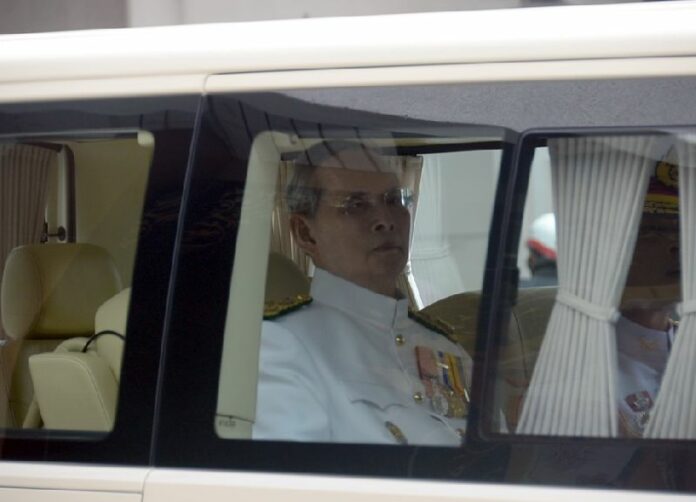
King Bhumibol left Bangkok's Siriraj Hospital to make an appearance at the Grand Palace on Coronation Day, 5 May 2015.

BANGKOK (DPA) — The world's longest-reigning monarch made a rare public appearance Tuesday during a Coronation Day ceremony at the Grand Palace in the Thai capital.

King Bhumibol Adulyadej, 87, was presiding over the ceremony to celebrate the 65th anniversary since his coronation on May 5, 1950.

He was accompanied by Crown Pince Maha Vajiralongkorn, 62, and Crown Princess Maha Chakri Sirindhorn, 60, at the ceremony.

A service was held in front of the Amarin Vinijchai Throne Hall in the Grand Palace complex.

King Bhumibol, or Rama IX, travelled to the event from Bangkok's Siriraj Hospital, where he currently resides.

The king is highly revered and regarded as a father figure by Thai people, many of whom deify him.


For comments, or corrections to this article please contact: [email protected]

You can also find Khaosod English on Twitter and Facebook
http://twitter.com/KhaosodEnglish
http://www.facebook.com/KhaosodEnglish

Advertisement

Thai Junta Chairman Orders Crackdown on Drunk Driving

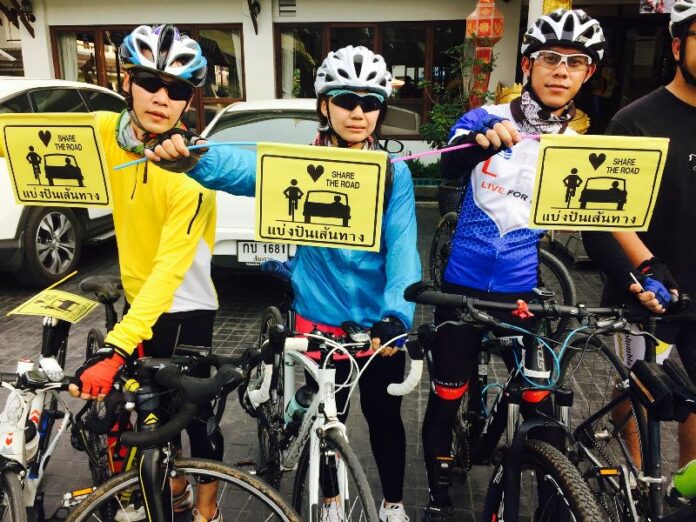
Cyclists gather in Chiang Rai to promote road safety, 4 May 2015.

BANGKOK — Thai junta chairman and Prime Minister Prayuth Chan-ocha has ordered police to crack down on drunk driving, a day after a 23-year-old woman driving under the influence killed three bicyclists in northern Thailand.

Gen. Prayuth specifically instructed police to organize more road check points and strictly refuse any bribes from motorists, said Maj.Gen. Sansern Kaewkamnerd, a spokesperson of the military government.

\
The scene of the car crash in Chiang Mai that killed three cyclists on 3 May 2015.

"The Prime Minister has also ordered police to investigate the facts that led to this tragedy," Maj.Gen. Sansern said. "For example, to find out where the [driver] was drinking. If it was a nightlife establishment, they must check whether illegal activity was involved, such as possible violation of a mandatory closing time, because the incident took place early in the morning but the motorist said she was still intoxicated." 

He added, "The Prime Minister does not want to just proceed with this incident. Police should tackle the root causes."

Phatchuda Chairuean, a university student, crashed her car into a group of bicyclists in Chiang Mai province at around 6 am on Sunday, killing three victims and injuring two other people. Phatchuda was also wounded in the crash and sent to hospital, where tests revealed that her blood-alcohol level was above the legal limit. Police say she was charged with reckless driving leading to deaths and injuries of others.

Drunk driving is a major cause of traffic accidents in Thailand. During the seven-day Thai New Year festival in April known as Songkran, intoxicated drivers were responsible for more than 1,000 road accidents, according to statistics compiled by the Thai authorities. 

The incident also came at a time when Thai authorities are encouraging more people to use bicycles to reduce fuel consumption and ease the notorious traffic jams in major cities, especially Bangkok. 

"Gen. Prayuth also extends his condolence to families and friends of the dead and injured," Maj.Gen. Sansern told reporters today. "He also urged traffic commuters to be compassionate and drive carefully, and to share the roads with bicyclists, which are increasing in number every year." 

\
Cyclists gather in Chiang Rai to promote road safety, 4 May 2015.

At around 5:00 pm today, more than 200 cyclists gathered in front of a hotel in Chiang Rai province and held a brief rally urging improved road safety. The group held a moment of silence in memory of the three who died on Sunday, and then proceeded to bike around Chiang Rai as a part of their campaign.

One of the event’s organizers, 59-year-old Sakda Wiwatkachornsak, said cycling groups in the province have urged their members to wear bright vests and avoid "risky" roads.

"Our clubs are also pushing for bike lanes on many roads, because in the present time, more and more people are interested in biking as exercise," Sakda said. 

In February, a Chilean bicyclist was run over and killed in northeastern Thailand during his attempt to set a world record of cycling around the globe. 

 
For comments, or corrections to this article please contact: [email protected]

You can also find Khaosod English on Twitter and Facebook
http://twitter.com/KhaosodEnglish
http://www.facebook.com/KhaosodEnglish

Advertisement

Thai Junta Chairman Orders Crackdown on Drunk Driving

More than 200 people gathered in front of a hotel in Chiang Rai province and held a brief rally urging increased safety for cyclists, 4 May 2015.

BANGKOK — Thai junta chairman and Prime Minister Prayuth Chan-ocha has ordered police to crack down on drunk driving, a day after a 23-year-old woman driving under the influence killed three bicyclists in northern Thailand.

Gen. Prayuth specifically instructed police to organize more road check points and strictly refuse any bribes from motorists, said Maj.Gen. Sansern Kaewkamnerd, a spokesperson of the military government.

"The Prime Minister has also ordered police to investigate the facts that led to this tragedy," Maj.Gen. Sansern said. "For example, to find out where the [driver] was drinking. If it was a nightlife establishment, they must check whether illegal activity was involved, such as possible violation of a mandatory closing time, because the incident took place early in the morning but the motorist said she was still intoxicated." 

He added, "The Prime Minister does not want to just proceed with this incident. Police should tackle the root causes."

\
The scene of the car crash in Chiang Mai that killed three cyclists on 3 May 2015.

Phatchuda Chairuean, a university student, crashed her car into a group of bicyclists in Chiang Mai province at around 6 am on Sunday, killing three victims and injuring two other people. Phatchuda was also wounded in the crash and sent to hospital, where tests revealed that her blood-alcohol level was above the legal limit. Police say she was charged with reckless driving leading to deaths and injuries of others.

Drunk driving is a major cause of traffic accidents in Thailand. During the seven-day Thai New Year festival in April known as Songkran, intoxicated drivers were responsible for more than 1,000 road accidents, according to statistics compiled by the Thai authorities. 

The incident also came at a time when Thai authorities are encouraging more people to use bicycles to reduce fuel consumption and ease the notorious traffic jams in major cities, especially Bangkok. 

"Gen. Prayuth also extends his condolence to families and friends of the dead and injured," Maj.Gen. Sansern told reporters today. "He also urged traffic commuters to be compassionate and drive carefully, and to share the roads with bicyclists, which are increasing in number every year." 

\
Cyclists gather in Chiang Rai to promote road safety, 4 May 2015.

At around 5:00 pm today, more than 200 cyclists gathered in front of a hotel in Chiang Rai province and held a brief rally urging improved road safety. The group held a moment of silence in memory of the three who died on Sunday, and then proceeded to bike around Chiang Rai as a part of their campaign.

One of the event’s organizers, 59-year-old Sakda Wiwatkachornsak, said cycling groups in the province have urged their members to wear bright vests and avoid "risky" roads.

"Our clubs are also pushing for bike lanes on many roads, because in the present time, more and more people are interested in biking as exercise," Sakda said. 

In February, a Chilean bicyclist was run over and killed in northeastern Thailand during his attempt to set a world record of cycling around the globe. 

 
For comments, or corrections to this article please contact: [email protected]

You can also find Khaosod English on Twitter and Facebook
http://twitter.com/KhaosodEnglish
http://www.facebook.com/KhaosodEnglish

Advertisement

Roadside Bomb Kills Army Ranger, Injures 4 in Deep South

Security officers investigate the site of a roadside bomb in Narathiwat on 3 May 2015 that did not cause any deaths or injuries.

NARATHIWAT — A roadside bomb killed one army ranger and wounded four others in the southern border province of Narathiwat today.

The bomb was planted on a road in Waeng district and detonated when a group of rangers passed by in a military truck around noon, police say. One of the rangers later died in the hospital. According to police, the rangers were carrying tables and other equipment to a base in Narathiwat province for a celebration marking Coronation Day scheduled for tomorrow.

Thousands of rangers are stationed in southern Thailand to help authorities combat local insurgents who have been waging a bloody secessionist campaign in Narathiwat and its two neighboring provinces, Yala and Pattani, since 2004. The militants are aiming to secede the three southern border provinces and revive the independent Islamic state of Patani, which was annexed by Thailand in the early 20th century. 

The attack came one day after another bomb targeted soldiers on patrol in Narathiwat's Ru So district at around 5 pm on Sunday. The bomb reportedly detonated a few seconds after the soldiers' vehicle passed, and did not injure anyone. Police believe both incidents were staged by separatists in the region, known as the Deep South.

The decade-long insurgency has killed more than 6,200 people, according to data compiled by human rights groups. At least 60,000 security officers are currently stationed the Deep South, which has been under martial law for the past nine years.

 
For comments, or corrections to this article please contact: [email protected]

You can also find Khaosod English on Twitter and Facebook
http://twitter.com/KhaosodEnglish
http://www.facebook.com/KhaosodEnglish
Advertisement

Four Arrested Over Rohingya Mass Grave at Thai-Malay Border

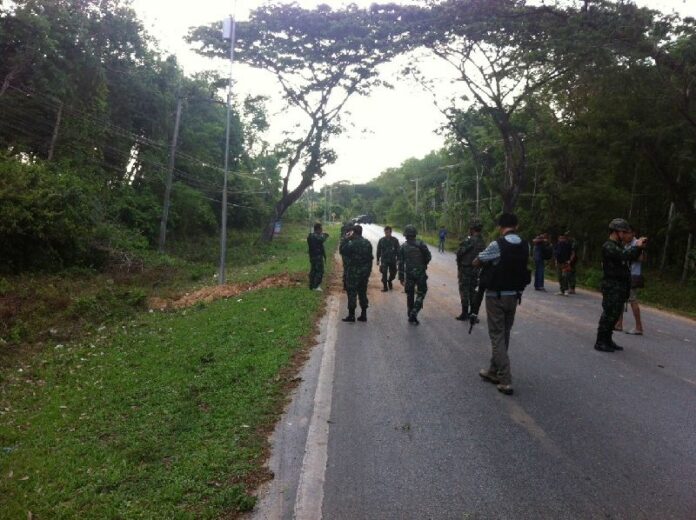
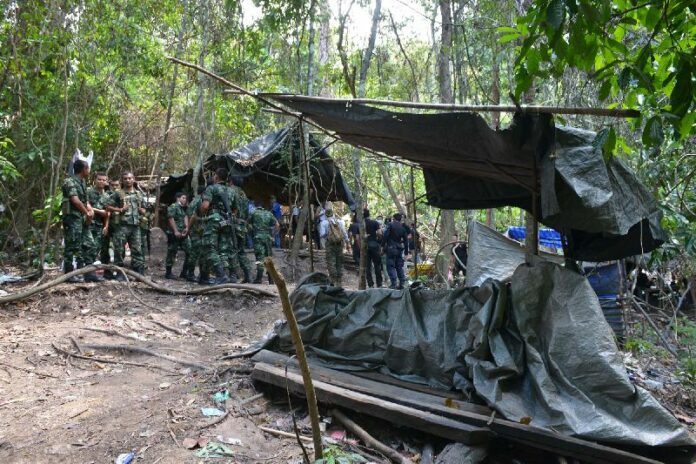
Officers inspect the suspected Rohingya migrant detention camp May 1, 2015 in Songkhla province.

BANGKOK — Three Thai men and one Burmese man have been arrested for their alleged involvement in a deadly detention camp for Rohingya refugees in southern Thailand.

Thai authorities discovered the camp and a "mass grave" containing at least 26 buried Rohingya people on Friday. Police believe the camp, which is located 300 meters from the Thai-Malaysian border, was used by human traffickers to detain Rohingya refugees and demand ransoms from their relatives.

\
Rescue workers carry a dead body from the suspected detention camp in Songkhla province on 1 May 2015.

According to police, the camp's operators fled the site several hours before security officers arrived, taking all of their captives with them except for one ill and malnourished Rohingya man found at the scene. 

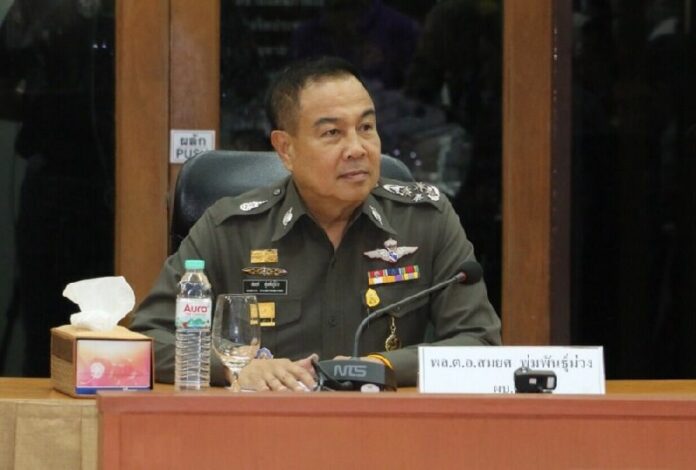
Pol.Gen. Somyot Pumpanmuang, commander of Royal Thai Police, said today that four suspects have been arrested in connection to the camp. The suspects are identified as Amsan Intanu, 48; Roe Sonyalae, 41; Arlee Lamoh, 47; and So Niang Anu, 40. 

Amsan is an official at a local administrative agency, and So is a Burmese national, Pol.Gen. Somyot said. Two police officers from the police station nearest to the camp have also been indefinitely transferred, he said.

"Right now, it is clear that the detention camp and dead bodies we discovered are related to human-trafficking," Pol.Gen. Somyot told reporters. "It is also clear that this is a transnational operation." 

All four suspects have been charged with human trafficking, illegal detention, and abduction for ransom. Amsan was also charged with illegal possession of firearms. Police are looking for four more suspects.

Police believe up to 300 Rohingyas may have been interned at the site, which consists of wooden huts ringed by bamboo fences deep in the jungle in Songkhla province. Authorities believe those found buried at the camp died from illness or starvation. 

The Rohingyas are largely-Muslim group that hails from the Arakan region of Myanmar, where they have faced violent persecution from the region’s Buddhist majority. 

As a result of ethnic and religious violence, tens of thousands Rohingyas have crossed illegally into Thai territories, often in an effort to reach Muslim-friendly Malaysia. Some Rohingya refugees have been intercepted by human traffickers and held at detention camps for ransom, or sold as slaves onto Thai fishing boats. For years, Thai authorities have largely turned a blind eye. 

Last June, the United States government downgraded Thailand to the lowest rank in its annual Trafficking In Persons (TIP) report for failing to meet the minimum standards to combat trafficking. Thailand’s military government, which came to power in a coup d'etat a month prior to the downgrade, has made eradicating human smuggling a national priority. 

Asked to comment on whether the discovery of the camp and the mass grave will affect the upcoming TIP report, Pol.Gen. Somyot said the problem has been going on for many years, and insisted that any officials involved in human trafficking will be strictly punished. 

"The Prime Minister has instructed me that any state official involved in this must be dealt with severely. No exceptions," Pol.Gen. Somyot said. 

 
For comments, or corrections to this article please contact: [email protected]

You can also find Khaosod English on Twitter and Facebook
http://twitter.com/KhaosodEnglish
http://www.facebook.com/KhaosodEnglish

Advertisement

Four Arrested Over Mass Rohingya Grave at Thai-Malay Border

Pol.Gen. Somyot Pumpanmuang, commander of Royal Thai Police, speaking at a press conference on 4 May 2015.

BANGKOK — Three Thai men and one Burmese man have been arrested for their alleged involvement in a deadly detention camp for Rohingya refugees in southern Thailand.

Thai authorities discovered the camp and a "mass grave" containing at least 26 buried Rohingya people on Friday. Police believe the camp, which is located 300 meters from the Thai-Malaysian border, was used by human traffickers to detain Rohingya refugees and demand ransoms from their relatives.

\
Rescue workers carry a dead body from the suspected detention camp in Songkhla province on 1 May 2015.

According to police, the camp's operators fled the site several hours before security officers arrived, taking all of their captives with them except for one ill and malnourished Rohingya man found at the scene. 

Pol.Gen. Somyot Pumpanmuang, commander of Royal Thai Police, said today that four suspects have been arrested in connection to the camp. The suspects are identified as Amsan Intanu, 48; Roe Sonyalae, 41; Arlee Lamoh, 47; and So Niang Anu, 40. 

Amsan is an official at a local administrative agency, and So is a Burmese national, Pol.Gen. Somyot said. Two police officers from the police station nearest to the camp have also been indefinitely transferred, he said.

"Right now, it is clear that the detention camp and dead bodies we discovered are related to human-trafficking," Pol.Gen. Somyot told reporters. "It is also clear that this is a transnational operation." 

All four suspects have been charged with human trafficking, illegal detention, and abduction for ransom. Amsan was also charged with illegal possession of firearms. Police are looking for four more suspects.

Police believe up to 300 Rohingyas may have been interned at the site, which consists of wooden huts ringed by bamboo fences deep in the jungle in Songkhla province. Authorities believe those found buried at the camp died from illness or starvation. 

The Rohingyas are largely-Muslim group that hails from the Arakan region of Myanmar, where they have faced violent persecution from the region’s Buddhist majority. 

As a result of ethnic and religious violence, tens of thousands Rohingyas have crossed illegally into Thai territories, often in an effort to reach Muslim-friendly Malaysia. Some Rohingya refugees have been intercepted by human traffickers and held at detention camps for ransom, or sold as slaves onto Thai fishing boats. For years, Thai authorities have largely turned a blind eye. 

Last June, the United States government downgraded Thailand to the lowest rank in its annual Trafficking In Persons (TIP) report for failing to meet the minimum standards to combat trafficking. Thailand’s military government, which came to power in a coup d'etat a month prior to the downgrade, has made eradicating human smuggling a national priority.

Asked to comment on whether the discovery of the camp and the mass grave will affect the upcoming TIP report, Pol.Gen. Somyot said the problem has been going on for many years, and insisted that any officials involved in human trafficking will be strictly punished. 

"The Prime Minister has instructed me that any state official involved in this must be dealt with severely. No exceptions," Pol.Gen. Somyot said. 

 
For comments, or corrections to this article please contact: [email protected]

You can also find Khaosod English on Twitter and Facebook
http://twitter.com/KhaosodEnglish
http://www.facebook.com/KhaosodEnglish
Advertisement

Frustrated by Slow Relief Effort, Nepalese Take the Initiative

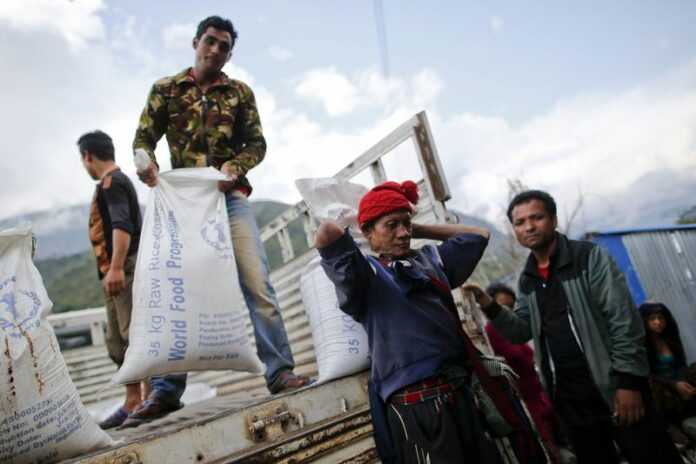
Nepali villagers offload sacks of food donated by the World Food Program (WFP) in Baluwa, a village in the Nepalese district of Gorkha. Villagers have had to start distributing emergency provisions by themselves in many places because official aid has yet to reach many of the survivors. EPA/DIEGO AZUBEL

KATHMANDU (DPA) — Slow relief efforts are driving many in Nepal to organize aid campaigns, collecting money, food, clothes, blankets and medicines for those affected by last week's devastating earthquake.

The frustration can be heard and seen in Baneshwor, a neighbourhood of Kathmandu where some two dozen high school students collected donations from homes and shops, using a megaphone to urge compassion.

\
Nepali villagers offload sacks of food donated by the World Food Program (WFP) in Baluwa, a village in the Nepalese district of Gorkha. EPA/DIEGO AZUBEL

"Let's all come together, this is the time to give back," a female student shouted. The aid will be delivered to a nearby area that was badly damaged.

In Bungmati, an old town outside the capital, some 40 youths, mostly men, used picks and shovels to help locals retrieve their valuable belongings from the rubble of their homes.

An 80-year-old house in the courtyard of a Hindu temple had collapsed during the earthquake, covering a statue of a Hindu god with rubble.

"We are clearing the debris because the owners want to secure some of their valuable items," said Vishal Gurung, a 30-year-old boxer. "We need to help because the police only rescues people."

Gurung and his team have been raising funds and distributing food, water and medicines to five localities since Wednesday.

"We can not just fold our arms and stay home," he said. "We will forever blame ourselves if we do not help. The government is stuck in bureaucratic red tape, even for urgent needs."

As he spoke, some young men and a couple of police officers pulled a giant nylon cord to cover a damaged building, which threatens the safety of locals.

Some 300,000 houses were partially or completely destroyed in the earthquake and aftershocks. Hundreds of people are still believed to have been buried under the rubble, which could take the death toll to well over the 7,040 figure provided by the government.

In Kathmandu's Boudha neighbourhood, Shree Subba organizes youths and members of the local church to deliver aid to villagers in Sankhu, which lies several kilometres east of the capital.

Like many Nepalese who seek work in Gulf countries, he had spent the last 12 years in Qatar before returning home last year.

"We are taking one truck of relief materials that we were able to collect," he said. "It includes tents, food and water, and blankets. In Sankhu more than 100 houses have collapsed in the old town."

Shyam Shrestha, 21, of Tiny Hands, a Christian non-governmental organization for children, has been convincing friends and relatives to volunteer on relief trips to remote villages severely damaged by the earthquake.

"People are so desperate that they stopped our relief and tried to snatch the materials we were carrying," he recalled from his trip to the region of Sindhupalchowk and the village of Chitlang. "We had to tell them that we were locals and it was a personal purchase."

Aid Ray, a rapper, has been visiting western areas of Kathmandu and organizing aid deliveries.

"In some areas people did not get to eat anything for two days," he said. "We took them some dry food and water."

Drinking tea with friends after a long day in the field, he added: "There is no calling. When you see this much devastation you can't but do your part, whatever it is, to help the people."

Reporting by Subel Bhandari and Pratibha Tuladhar, dpa

 
For comments, or corrections to this article please contact: [email protected]

You can also find Khaosod English on Twitter and Facebook
http://twitter.com/KhaosodEnglish
http://www.facebook.com/KhaosodEnglish
Advertisement

Frustrated by Slow Relief Effort, Nepalese Take the Initiative

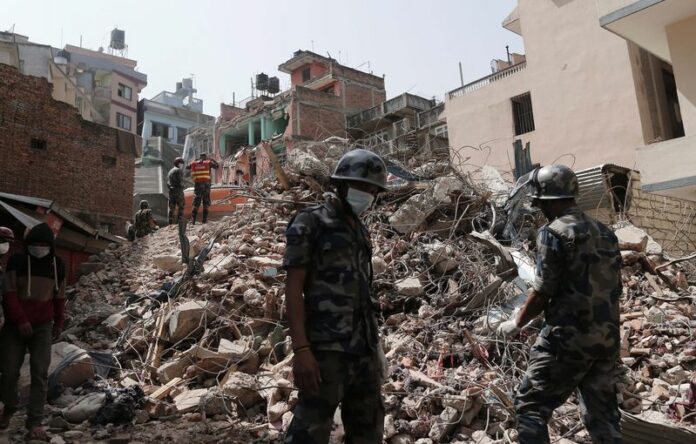
Nepalese soldiers and members of a search and rescue team work on removing debris from a destroyed building in Kathmandu. EPA/SEDAT SUNA

KATHMANDU (DPA) — Slow relief efforts are driving many in Nepal to organize aid campaigns, collecting money, food, clothes, blankets and medicines for those affected by last week's devastating earthquake.

The frustration can be heard and seen in Baneshwor, a neighbourhood of Kathmandu where some two dozen high school students collected donations from homes and shops, using a megaphone to urge compassion.

\
Nepali villagers offload sacks of food donated by the World Food Program (WFP) in Baluwa, a village in the Nepalese district of Gorkha. EPA/DIEGO AZUBEL

"Let's all come together, this is the time to give back," a female student shouted. The aid will be delivered to a nearby area that was badly damaged.

In Bungmati, an old town outside the capital, some 40 youths, mostly men, used picks and shovels to help locals retrieve their valuable belongings from the rubble of their homes.

An 80-year-old house in the courtyard of a Hindu temple had collapsed during the earthquake, covering a statue of a Hindu god with rubble.

"We are clearing the debris because the owners want to secure some of their valuable items," said Vishal Gurung, a 30-year-old boxer. "We need to help because the police only rescues people."

Gurung and his team have been raising funds and distributing food, water and medicines to five localities since Wednesday.

"We can not just fold our arms and stay home," he said. "We will forever blame ourselves if we do not help. The government is stuck in bureaucratic red tape, even for urgent needs."

As he spoke, some young men and a couple of police officers pulled a giant nylon cord to cover a damaged building, which threatens the safety of locals.

Some 300,000 houses were partially or completely destroyed in the earthquake and aftershocks. Hundreds of people are still believed to have been buried under the rubble, which could take the death toll to well over the 7,040 figure provided by the government.

In Kathmandu's Boudha neighbourhood, Shree Subba organizes youths and members of the local church to deliver aid to villagers in Sankhu, which lies several kilometres east of the capital.

Like many Nepalese who seek work in Gulf countries, he had spent the last 12 years in Qatar before returning home last year.

"We are taking one truck of relief materials that we were able to collect," he said. "It includes tents, food and water, and blankets. In Sankhu more than 100 houses have collapsed in the old town."

Shyam Shrestha, 21, of Tiny Hands, a Christian non-governmental organization for children, has been convincing friends and relatives to volunteer on relief trips to remote villages severely damaged by the earthquake.

"People are so desperate that they stopped our relief and tried to snatch the materials we were carrying," he recalled from his trip to the region of Sindhupalchowk and the village of Chitlang. "We had to tell them that we were locals and it was a personal purchase."

Aid Ray, a rapper, has been visiting western areas of Kathmandu and organizing aid deliveries.

"In some areas people did not get to eat anything for two days," he said. "We took them some dry food and water."

Drinking tea with friends after a long day in the field, he added: "There is no calling. When you see this much devastation you can't but do your part, whatever it is, to help the people."

Reporting by Subel Bhandari and Pratibha Tuladhar, dpa

 
For comments, or corrections to this article please contact: [email protected]

You can also find Khaosod English on Twitter and Facebook
http://twitter.com/KhaosodEnglish
http://www.facebook.com/KhaosodEnglish

Advertisement

Intoxicated Driver Kills 3 Cyclists in Chiang Mai

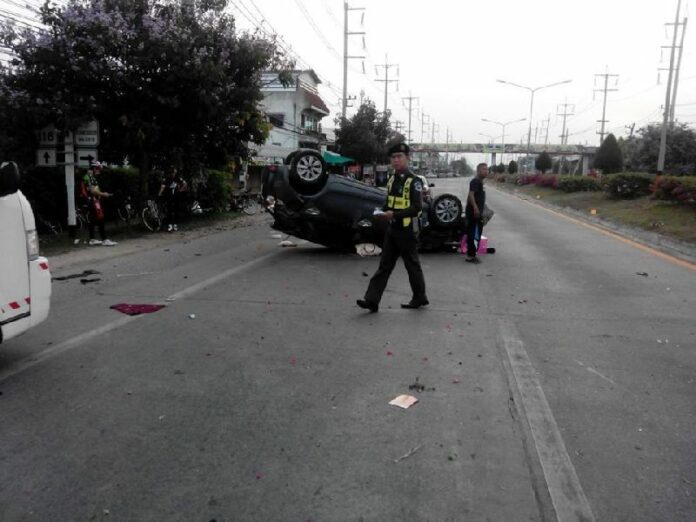
The scene of the crash in Chiang Mai province, 3 May 2015.

CHIANG MAI — A 23-year-old woman who had been drinking alcohol crashed her car into a group of cyclists in Chiang Mai province this morning and killed three people, police say.

According to police, the incident took place at around 5.50 am on Chiang Mai – Chiang Rai Road. 

Police identified the deceased as Chairat Yonglan, 65, Saman Kantha, 65, and Pongthep Kamkaew, 40. Three other people were also injured in the crash, including the car driver. 

A police officer said the cyclists were biking along the road as a part of their weekly morning exercise when Phatchuda Chairuean lost control of her car and crashed into the group. 

The officer said Phatchuda was intoxicated at the time. It is unclear whether she has been charged with any crime, as she has been sent to hospital. 

Drunk-driving is a major cause of traffic accidents in Thailand. During the seven-day Thai New Year festival in April known as Songkran, drunk drivers were responsible for more than 1,000 road accidents, according to statistics compiled by the Thai authorities. 

CORRECTION: Phatchuda Chairuean is 23 years old, not 24 as the original article stated.

For comments, or corrections to this article please contact: [email protected]

You can also find Khaosod English on Twitter and Facebook
http://twitter.com/KhaosodEnglish
http://www.facebook.com/KhaosodEnglish
Advertisement

Hot News

LATEST NEWS

Bangkok
broken clouds
31.6 ° C
31.6 °
31.6 °
71 %
2.8kmh
83 %
Fri
36 °
Sat
36 °
Sun
37 °
Mon
37 °
Tue
36 °