26.6 C
Bangkok
Friday, July 24, 2026
Home Blog Page 3028

Malaysia Bars Entry to Hong Kong Protest Leader

Student activist Joshua Wong of the group Scholarism, talks to members of the media before reporting to the Wanchai Police Station in Hong Kong, China, 16 January 2015. Malaysia's immigration authorities prevented a prominent Hong Kong student leader from entering the country. EPA/JEROME FAVRE

KUALA LUMPUR (DPA) — Malaysia's immigration authorities on Tuesday prevented a prominent Hong Kong student leader from entering the country, activists and human rights advocates said.

Joshua Wong, 18, was detained by Malaysian immigration officers shortly after arriving at Penang International Airport, according to Suaram, a local human rights group.

Suaram said Wong was not allowed to enter Malaysia based on a government order. He was sent back to Hong Kong.

Immigration officials could not immediately be reached for comment.

Wong was a key leader in protests in Hong Kong last year, in which tens of thousands of people took to the streets to demand fully democratic elections of the Chinese territory's chief executive.

Wong was supposed to speak at several forums in Malaysia on June 3, the eve of the 26th anniversary of the suppression of the Tiananmen Square protests .

"Our government must grow up," said Eric Paulsen, a human rights lawyer. "Joshua Wong is a pro-democracy activist."


For comments, or corrections to this article please contact: [email protected]

You can also find Khaosod English on Twitter and Facebook
http://twitter.com/KhaosodEnglish
http://www.facebook.com/KhaosodEnglish

Advertisement

Thai Trafficking Suspects Face Civil Lawsuit

Police officers in Songkhla province with signs that encourage locals to call an anti-trafficking hotline if they have any knowledge of human trafficking, 11 May 2015

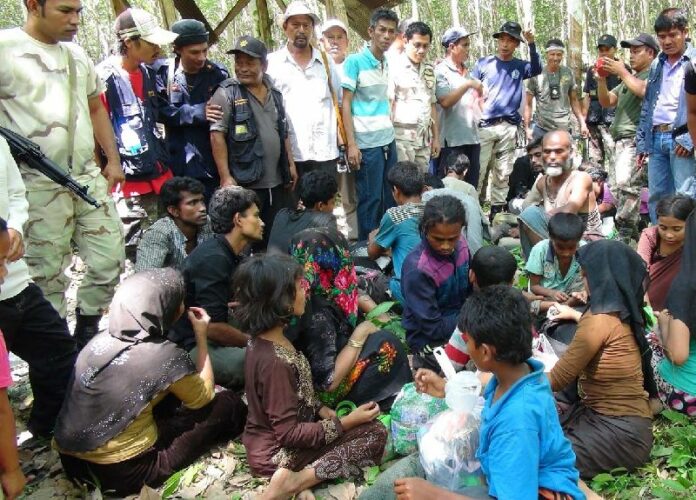
SONGKHLA — Public prosecutors in Thailand are filing civil lawsuits against suspected human traffickers in an effort to secure financial compensation for the victims, police say.

"Four separate groups — investigation officers, the Attorney-General, social development officials, and the victims — are currently in discussion to determine the damages victims suffered," said Pol.Maj.Gen. Phuttichart Ekachan, deputy commander of the Ninth Region Police. "The Attorney-General will then file a compensation lawsuit on behalf of the victims."

\
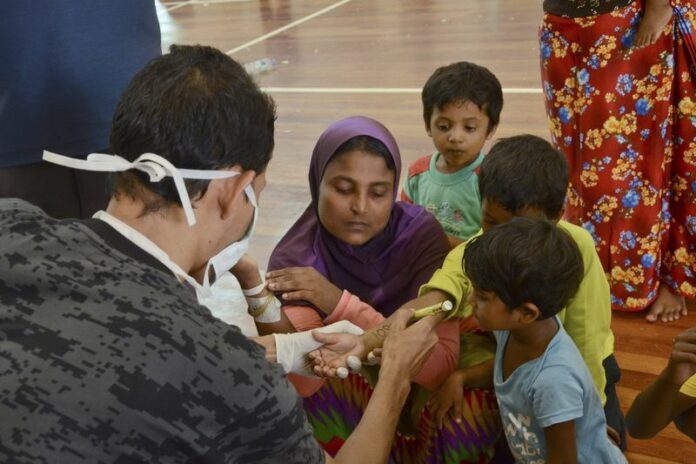
Security officers find 26 migrants from Myanmar and Bangladesh wandering in a jungle in Songkhla province, 11 May 2015

A total of 77 arrest warrants have been issued this month in connection with human trafficking operations in southern Thailand. Forty-six people, including local businessmen, police officers and politicians, have been detained so far.

The suspects are also being prosecuted for the criminal charges of human trafficking and other "transnational crimes," said Pol.Mag.Gen. Phuttichart.

The officer said 64 of the approximately 300 recently-rescued migrants from Bangladesh and Myanmar have been classified as victims of human trafficking. The others are being processed as illegal immigrants.

"The interrogation is almost completed now," he said. "We have only 9 more [victim witnesses] to go." 

Police are still looking for a core leader of the human trafficking operation named Piyawat Pongthai, who is believed to have fled abroad, Pol.Maj.Gen. Phuttichart said. 

Thai authorities launched an unprecedented crackdown on human trafficking operations in the south after security officers found detention camps and mass graves of migrants in Songkhla province in early May. 

Police believe the camps were used by traffickers to detain migrants and extort ransom money from their families.

Thailand has long been a transit country for human traffickers who prey on the Rohingyas, a persecuted ethnic group in western Myanmar, but Thai authorities have been mostly turned a blind eye.  

At the press conference today, Pol.Maj.Gen. Phuttichart said police have started a program to encourage civilians in southern Thailand to be on lookout for traffickers.

"Around 6,800 people have signed up to cooperate," Pol.Maj.Gen. Phuttichart said, adding that "majority of local residents" are opposed to human trafficking. 

However, the BBC recently aired a documentary in which locals explained how "entire communities" in parts of southern Thailand are complicit in trafficking operations, with residents serving as guards and food fetchers.  

This week, Malaysian authorities also found 139 graves, many containing multiple corpses, at 28 human trafficking camps near the Thai sites on the Malaysian side of the border.  


For comments, or corrections to this article please contact: [email protected]

You can also find Khaosod English on Twitter and Facebook
http://twitter.com/KhaosodEnglish
http://www.facebook.com/KhaosodEnglish

Advertisement

Thai Trafficking Suspects Face Civil Lawsuit

Security officers find 26 migrants from Myanmar and Bangladesh wandering in a jungle in Songkhla province, 11 May 2015.

SONGKHLA — Public prosecutors in Thailand are filing civil lawsuits against suspected human traffickers in an effort to secure financial compensation for the victims, police say.

"Four separate groups — investigation officers, the Attorney-General, social development officials, and the victims — are currently in discussion to determine the damages victims suffered," said Pol.Maj.Gen. Phuttichart Ekachan, deputy commander of the Ninth Region Police. "The Attorney-General will then file a compensation lawsuit on behalf of the victims."

\
Police officers in Songkhla province with signs that encourage locals to call an anti-trafficking hotline if they have any knowledge of human trafficking, 11 May 2015

A total of 77 arrest warrants have been issued this month in connection with human trafficking operations in southern Thailand. Forty-six people, including local businessmen, police officers and politicians, have been detained so far.

The suspects are also being prosecuted for the criminal charges of human trafficking and other "transnational crimes," said Pol.Mag.Gen. Phuttichart.

The officer said 64 of the approximately 300 recently-rescued migrants from Bangladesh and Myanmar have been classified as victims of human trafficking. The others are being processed as illegal immigrants.

"The interrogation is almost completed now," he said. "We have only 9 more [victim witnesses] to go." 

Police are still looking for a core leader of the human trafficking operation named Piyawat Pongthai, who is believed to have fled abroad, Pol.Maj.Gen. Phuttichart said. 

Thai authorities launched an unprecedented crackdown on human trafficking operations in the south after security officers found detention camps and mass graves of migrants in Songkhla province in early May. 

Police believe the camps were used by traffickers to detain migrants and extort ransom money from their families.

Thailand has long been a transit country for human traffickers who prey on the Rohingyas, a persecuted ethnic group in western Myanmar, but Thai authorities have been mostly turned a blind eye.  

At the press conference today, Pol.Maj.Gen. Phuttichart said police have started a program to encourage civilians in southern Thailand to be on lookout for traffickers.

"Around 6,800 people have signed up to cooperate," Pol.Maj.Gen. Phuttichart said, adding that "majority of local residents" are opposed to human trafficking. 

However, the BBC recently aired a documentary in which locals explained how "entire communities" in parts of southern Thailand are complicit in trafficking operations, with residents serving as guards and food fetchers.  

This week, Malaysian authorities also found 139 graves, many containing multiple corpses, at 28 human trafficking camps near the Thai sites on the Malaysian side of the border.  


For comments, or corrections to this article please contact: [email protected]

You can also find Khaosod English on Twitter and Facebook
http://twitter.com/KhaosodEnglish
http://www.facebook.com/KhaosodEnglish

Advertisement

Myanmar Gold Rush Slows Ahead of Elections

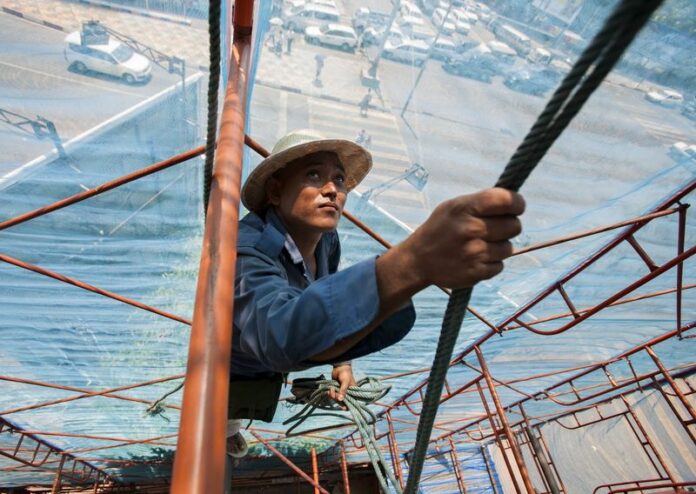
A Myanmar worker on the scaffolding of a construction site in downtown Yangon, Myanmar, 22 April 2013. EPA/LYNN BO BO

BANGKOK (DPA) — When Myanmar began its political reforms in 2011, firms around the world salivated at the prospect of investing in the resource-rich and largely undeveloped country.

But four years later there are signs that the rush to invest is being slowed by dragging market reforms and the country's turbulent politics.

\
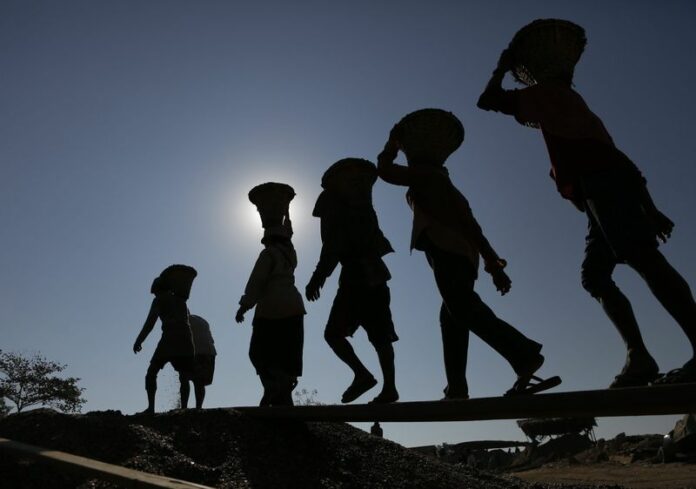
Myanmar workers carry baskets loaded with gravel on their shoulders as they pile up those near a jetty of Yangon River, Yangon, Myanmar, 27 January 2015. EPA/LYNN BO BO

Before 2011, Myanmar's only big international investor was China. The investments made by China were mainly concentrated in the energy and infrastructure sectors.

When the country opened up, the market was ripe for liberalization, for example in key sectors including telecommunications and banking.

Data from the World Bank showed that direct foreign investment was 900 million US dollars in 2010, and that figure more than doubled to 2.5 billion dollars in 2011.

Companies appeared willing to put aside the risks of dealing with Myanmar's uncertain political situation to secure the necessary contracts.

"The country has high potential for rapid growth and development given its rich natural resources, abundant labour force and strategic location," a country report by the Asian Development Bank in 2012 noted.

Myanmar was so confident of foreign investment that it has engaged in several mega projects and economic zones including the Dawei deep sea port, the largest of its kind in South-East Asia.

Win Win Tint, the managing director of Myanmar's largest retailer City Mart Holdings, told dpa that the situation had improved massively since 2011, noting that before the reforms the government rarely touched on business and economic policy.

"Now, the government is listening to us," she said. The administration "has engaged with foreign countries so there is more interest from foreign investors."

But recently the rush of firms competing to invest in Myanmar has slowed to a steady stream.

A forecast by the International Monetary Fund released in February stated that "the growth outlook of the Myanmar economy remains favorable over the medium term, but downside risks for the near term have increased."

"The bureaucratic apparatus is like an old machine," said Win Win Tint. "It hasn't moved for 15 years and need to be greased continuously to move."

Many consultants and analysts also lowered their economic outlook for the country due to the uncertainty surrounding elections scheduled for the end of the year.

Most foreign investors are "waiting for the results of the November elections, after which the nature of Myanmar's next government will become clearer," said Sean Turnell, a Myanmar economics expert and professor in economics at Macquarie University.

Turnell argues that in order for continued economic growth there needs to be "greater stability and predictability in policy-making."

That uncertainty may have filtered down to government decision-making on major projects like the Dawei deep sea port.

The 50-billion-dollar project was once destined to cover over 200 square kilometres and hold more tons of cargo than the ports of Los Angeles and New York combined.

Now the signing agreement between Myanmar, Thailand and private developer Italian-Thai Development has been constantly postponed.

"We are ready to sign it, the Thai government is ready to sign it, the Myanmar government however are delaying the issue," said Pravee Kamolkanchana, Italian-Thai Development's marketing manager.

"We are dealing with an unprecedented situation," said Nyantha Maw Lin, the Myanmar director of corporate advisory firm Vriens and Partners.

According to Nyantha, various government agencies are putting in place plans to ensure stability over the transition of government including putting installing permanent secretaries to oversee policy.

"Myanmar has never had such a transition before so there are going to be hiccups," he said.

Regardless of who wins the election, business leaders and analysts agree that Myanmar needs to do more to reassure foreign investors over the next transition of power.

(Reporting by Cod Satrusayang)


For comments, or corrections to this article please contact: [email protected]

You can also find Khaosod English on Twitter and Facebook
http://twitter.com/KhaosodEnglish
http://www.facebook.com/KhaosodEnglish

Advertisement

Myanmar Gold Rush Slows Ahead of Elections

Myanmar workers carry baskets loaded with gravel on their shoulders as they pile up those near a jetty of Yangon River, Yangon, Myanmar, 27 January 2015. The international rush for lucrative investments in Myanmar is being slowed by looming elections. EPA/LYNN BO BO

BANGKOK (DPA) — When Myanmar began its political reforms in 2011, firms around the world salivated at the prospect of investing in the resource-rich and largely undeveloped country.

But four years later there are signs that the rush to invest is being slowed by dragging market reforms and the country's turbulent politics.

\
A Myanmar worker on the scaffolding of a construction site in downtown Yangon, Myanmar, 22 April 2013. EPA/LYNN BO BO

Before 2011, Myanmar's only big international investor was China. The investments made by China were mainly concentrated in the energy and infrastructure sectors.

When the country opened up, the market was ripe for liberalization, for example in key sectors including telecommunications and banking.

Data from the World Bank showed that direct foreign investment was 900 million US dollars in 2010, and that figure more than doubled to 2.5 billion dollars in 2011.

Companies appeared willing to put aside the risks of dealing with Myanmar's uncertain political situation to secure the necessary contracts.

"The country has high potential for rapid growth and development given its rich natural resources, abundant labour force and strategic location," a country report by the Asian Development Bank in 2012 noted.

Myanmar was so confident of foreign investment that it has engaged in several mega projects and economic zones including the Dawei deep sea port, the largest of its kind in South-East Asia.

Win Win Tint, the managing director of Myanmar's largest retailer City Mart Holdings, told dpa that the situation had improved massively since 2011, noting that before the reforms the government rarely touched on business and economic policy.

"Now, the government is listening to us," she said. The administration "has engaged with foreign countries so there is more interest from foreign investors."

But recently the rush of firms competing to invest in Myanmar has slowed to a steady stream.

A forecast by the International Monetary Fund released in February stated that "the growth outlook of the Myanmar economy remains favorable over the medium term, but downside risks for the near term have increased."

"The bureaucratic apparatus is like an old machine," said Win Win Tint. "It hasn't moved for 15 years and need to be greased continuously to move."

Many consultants and analysts also lowered their economic outlook for the country due to the uncertainty surrounding elections scheduled for the end of the year.

Most foreign investors are "waiting for the results of the November elections, after which the nature of Myanmar's next government will become clearer," said Sean Turnell, a Myanmar economics expert and professor in economics at Macquarie University.

Turnell argues that in order for continued economic growth there needs to be "greater stability and predictability in policy-making."

That uncertainty may have filtered down to government decision-making on major projects like the Dawei deep sea port.

The 50-billion-dollar project was once destined to cover over 200 square kilometres and hold more tons of cargo than the ports of Los Angeles and New York combined.

Now the signing agreement between Myanmar, Thailand and private developer Italian-Thai Development has been constantly postponed.

"We are ready to sign it, the Thai government is ready to sign it, the Myanmar government however are delaying the issue," said Pravee Kamolkanchana, Italian-Thai Development's marketing manager.

"We are dealing with an unprecedented situation," said Nyantha Maw Lin, the Myanmar director of corporate advisory firm Vriens and Partners.

According to Nyantha, various government agencies are putting in place plans to ensure stability over the transition of government including putting installing permanent secretaries to oversee policy.

"Myanmar has never had such a transition before so there are going to be hiccups," he said.

Regardless of who wins the election, business leaders and analysts agree that Myanmar needs to do more to reassure foreign investors over the next transition of power.

(Reporting by Cod Satrusayang)

 

For comments, or corrections to this article please contact: [email protected]

You can also find Khaosod English on Twitter and Facebook
http://twitter.com/KhaosodEnglish
http://www.facebook.com/KhaosodEnglish

Advertisement

Thai Govt's Boat People Policy 'Illegal, Helps Trafficking Trade'

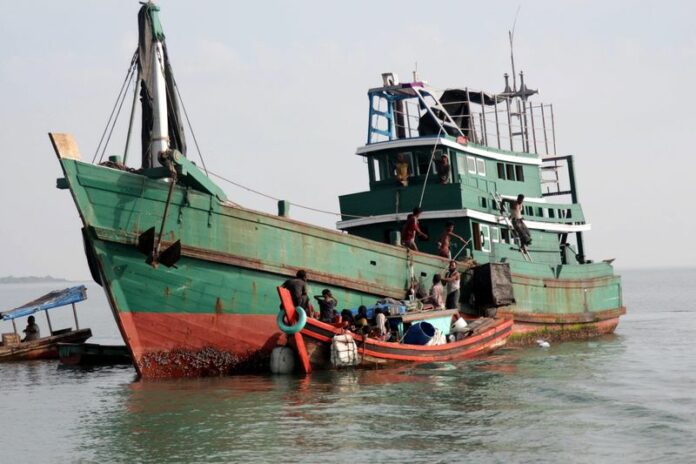
Refugees from Myanmar and Bangladesh are rescued by Aceh fisherman in Julok, East Aceh, Sumatra, Indonesia, 20 May 2015. Indonesian fishermen rescued more than 370 migrants, many from Myanmar's Rohingya minority, a rescue official said. EPA/STR

BANGKOK — The Thai government's policy of allowing boats of migrants in Thai waters to continue to a third country is illegal and indirectly supports the human trafficking trade, according to a member of the Lawyer Council of Thailand.

Surapong Kongchantuk, the head of the council's subcommittee on migration and stateless people, was referring to the Thai Navy’s policy of asking boat people in the Andaman Sea whether they wish to land in Thailand or sail to other countries.

According to the policy, migrants that wish to continue to a third country will be provided with humanitarian assistance before continuing onwards, while anyone who lands on Thai shores will be processed as illegal immigrants.

\
Refugees from Myanmar and Bangladesh are rescued by Aceh fishermen in Julok, East Aceh, Sumatra, Indonesia, 20 May 2015. . EPA/STR

Surapong pointed out that this policy violates Thai laws that explicitly require authorities to arrest every person who enters Thai territory without proper documentation. He also stressed that adhering to these laws is necessary to snuff out the long-running human smuggling operation, which involves ferrying migrants from the Bay of Bengal to Malaysia and Indonesia, often using Thailand as a transit country.

Human traffickers may be on the boats and simply pose as refugees, Surapong said, citing a case from 2008 in which 6 traffickers were found among 78 migrants rescued and interrogated by Thai police.

By permitting the traffickers to continue to onward without arrest, the Thai navy is allowing the business to thrive, he said. The migrants also likely hold valuable information about the network of smugglers and traffickers, which would be lost if their boats were simply let go.  

"The solution is to stick to the laws and bring these people to the justice system," Surapong said at a talk on the Rohingya crisis at Thammasat University in Bangkok. "Root out the traffickers. Interrogate the victims. We talked to those 78 [migrants] for over 90 days. We realized that six of them were traffickers. Then they gave us information about other traffickers in Thailand." 

Surapong added that migrants must be treated in accordance with humanitarian principles while they are detained in Thailand, and that Thai authorities should not deport anyone whose life will be at risk upon return to their home country. 

Nevertheless, Gen. Prayuth insisted yesterday that Thailand will continue to let boats of migrants pass if the occupants express a desire to go elsewhere.

"As for the Rohingyas in the seas, they will be treated under the same method, which is, depends on their hearts, where they desire to go," Gen. Prayuth told reporters at the Government House.

He also unveiled a plan of placing a helicopter carrier in the Andaman as a "floating station" to assist the boat people before sending them to Malaysia or Indonesia; the governments of the two nations have pledged to provide temporary shelter for Rohingya and Bangladeshi migrants that enter their territories.

"Don't criticize the government or Thailand. Our budget is limited, and it is getting smaller each day,” Gen. Prayuth said . “It's impossible for them to live and eat as well as Thai people." 

More than 3,000 migrants fleeing poverty in Bangladesh and ethnic persecution Myanmar have landed on Malaysian and Indonesian shores this month, with thousands more thought to be adrift at sea.

The surge of stranded migrants was triggered in part by Thailand's clampdown on trafficking operations in the south earlier this month, which spurred smugglers to abandon their human cargo.

After sweeping the region, Thai police found several jungle camps used by traffickers to detain and abuse migrants until their relatives sent hefty ransom sums. Mass graves of human corpses were found nearby, presumably containing those who were unable to secure ransom from their families. 

This week, Malaysian authorities found 139 graves, many containing multiple corpses, at 28 human trafficking camps nearby the Thai sites on the Malaysian side of the border.  

Thailand is holding an international summit to discuss the humanitarian crisis on 29 May 2015.

For comments, or corrections to this article please contact: [email protected]

You can also find Khaosod English on Twitter and Facebook
http://twitter.com/KhaosodEnglish
http://www.facebook.com/KhaosodEnglish

Advertisement

Thai Govt's Boat People Policy 'Illegal, Helps Trafficking Trade'

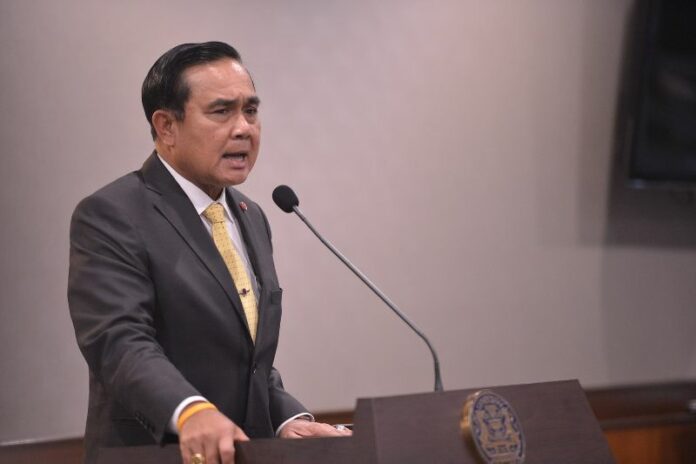
Gen. Prayuth Chan-ocha speaking about the boat people crisis on 25 May 2015.

BANGKOK — The Thai government's policy of allowing boats of migrants in Thai waters to continue to a third country is illegal and indirectly supports the human trafficking trade, according to a member of the Lawyer Council of Thailand.

Surapong Kongchantuk, the head of the council's subcommittee on migration and stateless people, was referring to the Thai Navy’s policy of asking boat people in the Andaman Sea whether they wish to land in Thailand or sail to other countries.

According to the policy, migrants that wish to continue to a third country will be provided with humanitarian assistance before continuing onwards, while anyone who lands on Thai shores will be processed as illegal immigrants.

\
Refugees from Myanmar and Bangladesh are rescued by Aceh fishermen in Julok, East Aceh, Sumatra, Indonesia, 20 May 2015. . EPA/STR

Surapong pointed out that this policy violates Thai laws that explicitly require authorities to arrest every person who enters Thai territory without proper documentation. He also stressed that adhering to these laws is necessary to snuff out the long-running human smuggling operation, which involves ferrying migrants from the Bay of Bengal to Malaysia and Indonesia, often using Thailand as a transit country.

Human traffickers may be on the boats and simply pose as refugees, Surapong said, citing a case from 2008 in which 6 traffickers were found among 78 migrants rescued and interrogated by Thai police.

By permitting the traffickers to continue to onward without arrest, the Thai navy is allowing the business to thrive, he said. The migrants also likely hold valuable information about the network of smugglers and traffickers, which would be lost if their boats were simply let go.  

"The solution is to stick to the laws and bring these people to the justice system," Surapong said at a talk on the Rohingya crisis at Thammasat University in Bangkok. "Root out the traffickers. Interrogate the victims. We talked to those 78 [migrants] for over 90 days. We realized that six of them were traffickers. Then they gave us information about other traffickers in Thailand." 

Surapong added that migrants must be treated in accordance with humanitarian principles while they are detained in Thailand, and that Thai authorities should not deport anyone whose life will be at risk upon return to their home country. 

Nevertheless, Gen. Prayuth insisted yesterday that Thailand will continue to let boats of migrants pass if the occupants express a desire to go elsewhere.

"As for the Rohingyas in the seas, they will be treated under the same method, which is, depends on their hearts, where they desire to go," Gen. Prayuth told reporters at the Government House.

He also unveiled a plan of placing a helicopter carrier in the Andaman as a "floating station" to assist the boat people before sending them to Malaysia or Indonesia; the governments of the two nations have pledged to provide temporary shelter for Rohingya and Bangladeshi migrants that enter their territories.

"Don't criticize the government or Thailand. Our budget is limited, and it is getting smaller each day,” Gen. Prayuth said . “It's impossible for them to live and eat as well as Thai people." 

More than 3,000 migrants fleeing poverty in Bangladesh and ethnic persecution Myanmar have landed on Malaysian and Indonesian shores this month, with thousands more thought to be adrift at sea.

The surge of stranded migrants was triggered in part by Thailand's clampdown on trafficking operations in the south earlier this month, which spurred smugglers to abandon their human cargo.

After sweeping the region, Thai police found several jungle camps used by traffickers to detain and abuse migrants until their relatives sent hefty ransom sums. Mass graves of human corpses were found nearby, presumably containing those who were unable to secure ransom from their families. 

This week, Malaysian authorities found 139 graves, many containing multiple corpses, at 28 human trafficking camps nearby the Thai sites on the Malaysian side of the border.  

Thailand is holding an international summit to discuss the humanitarian crisis on 29 May 2015.

For comments, or corrections to this article please contact: [email protected]

You can also find Khaosod English on Twitter and Facebook
http://twitter.com/KhaosodEnglish
http://www.facebook.com/KhaosodEnglish

Advertisement

Suspected Insurgents Attack Soldiers at Narathiwat Checkpoint

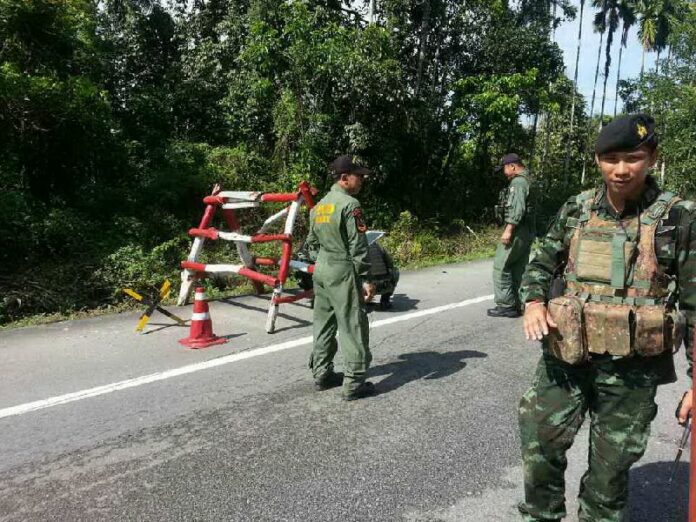
Security officers collect evidence from the checkpoint where soldiers and suspected insurgents exchanged gunfire on 24 May 2015.

NARATHIWAT — A group of gunmen attacked a military checkpoint in the southern border-province of Narathiwat last night, Thai police say.

According to police, the militants began shooting at soldiers who were manning the checkpoint during a heavy rainstorm in Sugai Kolok district at around 10 pm. 

\
Security officers collect evidence from the checkpoint where soldiers and suspected insurgents exchanged gunfire on 24 May 2015.

The soldiers reportedly shot back at the suspected insurgents, who eventually retreated. No injuries have been reported.

The militants also left behind one homemade explosive, which soldiers disposed of this morning, said Pol.Col. Kong-at Suwannakham, superintendent of Sugai Kolok Police Station.

Police suspect the gunmen were members of an Islamic separatist movement that has claimed more than 6,000 lives in the southern provinces of Narathiwat, Yala, and Pattani – a region known as the Deep South. The insurgents are believced to be seeking to revive the Islamic state of Patani, which was annexed by Thailand in the early 20th century. 

More than 60,000 security officers are stationed in the region to combat the secessionist violence, which broke out in January 2004. 

Experts say the insurgency is mostly fueled by ethnic and religious differences. While the vast majority of Thailand is Buddhist, the southern provinces of Yala, Narathiwat, and Pattani are mostly populated by Muslims who speak a Malay dialect.  

Yesterday, representatives of the Organization of Islamic Cooperation (OIC) visited a Muslim community in Pattani's Thung Yang Daeng district and gave a lecture on morality, peace, and religious teachings. The group was given a welcome ceremony by Lt.Gen. Prakarn Chollayuth, commander of the Fourth Region Army, which oversees security operation in the Deep South. 
 
For comments, or corrections to this article please contact: [email protected]

You can also find Khaosod English on Twitter and Facebook
http://twitter.com/KhaosodEnglish
http://www.facebook.com/KhaosodEnglish

Advertisement

Indonesia to Send Rohingya Children to Islamic Boarding Schools

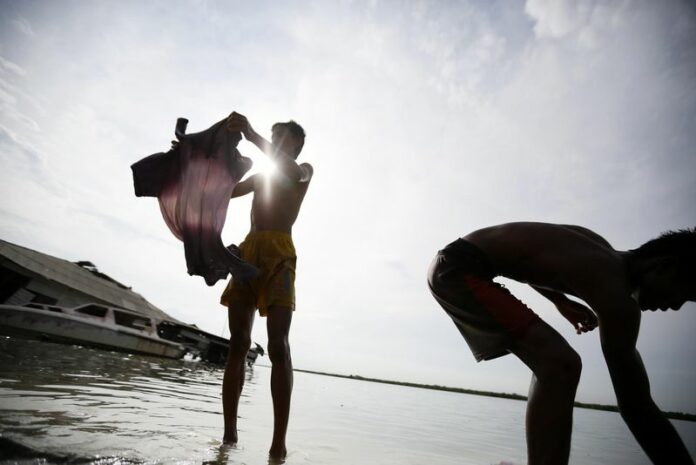
Migrants bath in the sea in Kuala Langsa, Aceh, Indonesia, 17 May 2015. As thousands of Rohingya continue to board unsafe boats for Thailand, Malaysia and Indonesia, residents in those countries have their own perspectives on the crisis. EPA/HOTLI SIMANJUNTAK

JAKARTA (DPA) — Indonesia will send more than 230 children from Myanmar's persecuted Rohingya minority to Islamic boarding schools, local television reported on Tuesday.

The children are part of more than 1,700 boat people who reached the shores of Indonesia's Aceh province this month after weeks at sea. 

"Several Islamic boarding schools on Java island are willing to accept them if they are ready to study," Social Affairs Minister Khofifah Indar Parawansa said on Metro TV.

"All of these children are Muslim," she said.

At their temporary shelters in Aceh, the children have been taught language and other lessons by volunteers. 

Malaysia and Indonesia agreed last week to give temporary shelter to the more than 7,000 migrants, conditional on international assistance in the longer term, after initially refusing to let them land.

The two countries also mounted search-and-rescue efforts for boat people believed to be drifting at sea with little food or water.

Indonesia said Bangladeshis accounted for around half of the migrants brought ashore in Aceh and they would be repatriated because they had no legitimate refugee claims.

Thousands of migrants, mostly members of Myanmar's Muslim ethnic Rohingya group, have stranded on traffickers' boats off the coasts of Thailand, Malaysia and Indonesia.

The Rohingya say they suffer discrimination in Myanmar, which does not recognize them as one of the country's official ethnic groups and considers them illegal Bengali immigrants.

(Reporting by Ahmad Pathoni)

 
For comments, or corrections to this article please contact: [email protected]

You can also find Khaosod English on Twitter and Facebook
http://twitter.com/KhaosodEnglish
http://www.facebook.com/KhaosodEnglish

Advertisement

Indonesia to Send Rohingya Children to Islamic Boarding Schools

A Malaysian official marks an Rohinghya migrant in Kuah, on Langkawi island. More than 8,000 migrants were adrift off the coasts of Thailand, Malaysia and Indonesia, an IOM official said Tuesday, posing a potential humanitarian crisis for the region's governments. EPA/STR

JAKARTA (DPA) — Indonesia will send more than 230 children from Myanmar's persecuted Rohingya minority to Islamic boarding schools, local television reported on Tuesday.

The children are part of more than 1,700 boat people who reached the shores of Indonesia's Aceh province this month after weeks at sea. 

"Several Islamic boarding schools on Java island are willing to accept them if they are ready to study," Social Affairs Minister Khofifah Indar Parawansa said on Metro TV.

"All of these children are Muslim," she said.

At their temporary shelters in Aceh, the children have been taught language and other lessons by volunteers. 

Malaysia and Indonesia agreed last week to give temporary shelter to the more than 7,000 migrants, conditional on international assistance in the longer term, after initially refusing to let them land.

The two countries also mounted search-and-rescue efforts for boat people believed to be drifting at sea with little food or water.

Indonesia said Bangladeshis accounted for around half of the migrants brought ashore in Aceh and they would be repatriated because they had no legitimate refugee claims.

Thousands of migrants, mostly members of Myanmar's Muslim ethnic Rohingya group, have stranded on traffickers' boats off the coasts of Thailand, Malaysia and Indonesia.

The Rohingya say they suffer discrimination in Myanmar, which does not recognize them as one of the country's official ethnic groups and considers them illegal Bengali immigrants.

(Reporting by Ahmad Pathoni)

 
For comments, or corrections to this article please contact: [email protected]

You can also find Khaosod English on Twitter and Facebook
http://twitter.com/KhaosodEnglish
http://www.facebook.com/KhaosodEnglish

Advertisement

Hot News

LATEST NEWS

Bangkok
moderate rain
26.6 ° C
27.2 °
26.6 °
88 %
4.8kmh
89 %
Fri
32 °
Sat
36 °
Sun
34 °
Mon
31 °
Tue
31 °