33 C
Bangkok
Tuesday, July 7, 2026
Home Blog Page 3122

Black Box Locator Deployed to AirAsia Crash Site


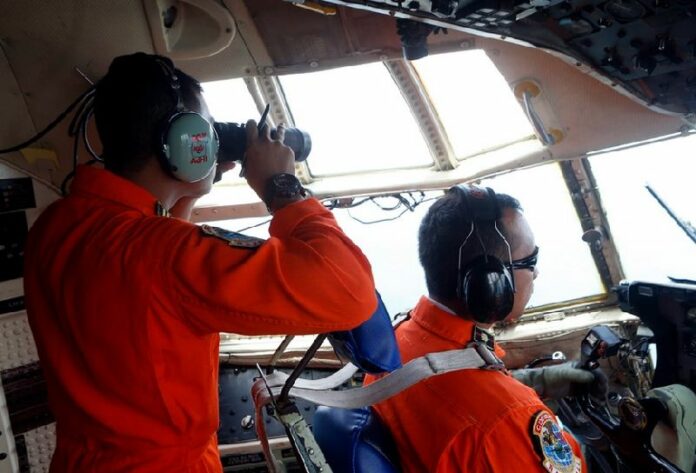
Indonesian Air Force members look the cockpit windows of C-130 Hercules plane during a search and rescue operation as they search for the missing AirAsia plane over Bangka Island, Indonesia. The search for a missing AirAsia plane that left Indonesia with 162 people on board expanded, with more aircraft and ships sent to scour a wider area. EPA/ADI WEDA

By Ismira Lutfia Tisnadibrata

JAKARTA (DPA) – A research ship equipped with a black box locator was being deployed to the presumed crash site of AirAsia flight QZ8501 in the Java Sea, Indonesian search officials said Thursday.

The Baruna Jaya research ship is also equipped with a sonar device that can detect metal and provide three-dimensional underwater images with the hope of finding the plane's fuselage, the Search and Rescue Agency's operations chief Tatang Zaenudin said in a press conference.

Two Indonesian military aircraft and a South Korean plane were already in the search zone, Zaenudin said.

"We hope that searches from the sea and the air will yield more findings," Zaenudin said.

Despite hopes of a break in the bad weather, seas continued to be unsettled with waves estimated at between 3 and 4 metres, and winds of some 70 kilometres per hour, the national meteorological agency said.

AirAsia Indonesia flight QZ8501 crashed Sunday with 162 passengers and crew on board, halfway through a two-hour flight between Surabaya, Indonesia's second-largest city, and Singapore.

Two objects believed to be parts of the plane have been plucked out of the ocean, an Indonesian broadcaster reported Thursday. 

Footage broadcast by Metro TV news channel showed a red object with the AirAsia logo and a part of a black  plastic object with a label reading "inflatable manufactured in Mexico," both recovered by the Indonesian navy ship Bung Tomo in Kumai Bay near Central Kalimantan.

Two more bodies pulled from around the crash site were taken ashore to the nearby town of Pangkalan Bun by navy helicopter, Tempo.co news website reported Thursday.

Two other bodies had already been flown to Surabaya and are being identified by forensic doctors, he said.

Seven bodies had been found in total.

The search area was expanded Thursday to four sectors with a total search area of 13,500 nautical miles, after it was previously limited to two sectors.


For comments, or corrections to this article please contact: [email protected]

You can also find Khaosod English on Twitter and Facebook
http://twitter.com/KhaosodEnglish
http://www.facebook.com/KhaosodEnglish


Advertisement

Five Family Members Found Dead in Bangkok House

BANGKOK — Police are investigating the suspected murder of five family members, including two teenagers, who were found dead in their home in Bangkok last night.

The bodies of 89-year-old Lim Kiang Xiam and her daughter Petcharat Jarupankit, 61, were found on the first floor of a house in Thonburi by forensic officers who were informed of the murder by the house’s owner. Both women were covered with white sheets.

The grandmother’s 64-year-old son Anan Jarupankit and his two children, a 16-year-old girl and 14-year-old boy, were also found hanging on the second floor, with three chairs collapsed beneath them.

According to a neighbor, the owner of the house found the family dead yesterday. 

"The family was about to move out, so the owner came by to discuss their contract," said the neighbour, Thanida Rattanathanakul. "He called out, but there wasn't any response. The front door was also closed, so he went in and found that everyone was dead."

Police found two notes inside the house, one written by Anan describing his anxiety about moving, and the other penned by his daughter, who described a problematic relationship with Anan's ex-wife. 

Police suspect that poison may have played a role in some of the deaths. The bodies have been sent to a forensic hospital for autopsy. 

For comments, or corrections to this article please contact: [email protected]

You can also find Khaosod English on Twitter and Facebook
http://twitter.com/KhaosodEnglish
http://www.facebook.com/KhaosodEnglish


Advertisement

Teenage Gang Blocks Road, Attacks 2 Cars On New Year’s Day

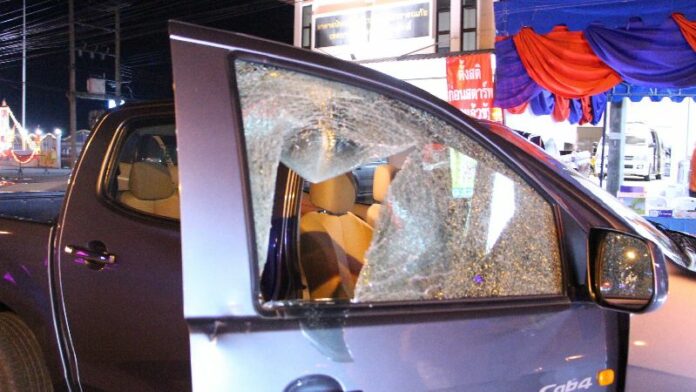
A teenage gang allegedly shattered the windshield of a  family's car in Chonburi, 1 Jan 2014.

CHONBURI — A group of teenagers allegedly launched unprovoked attacks on two cars driving through Chonburi province early this morning, police say.

Prawit Wongbooppa, 57, was driving his wife and two sons to a Buddhist temple at around 6 am this morning when a group of teenagers reportedly blocked the road and began to beat his car with heavy sticks, shattering the windshield and injuring Waranyu Wongbooppa, who was sitting in the passenger seat.

Shortly after, the group attacked another vehicle driving down the same road in Udomsak county, police say.

Pol.Col. Pichitpong Yordpikul said he believes the teens were blocking the road to wait for a rival gang.

"They've got a lot guts attacking people like that," said Pol.Col. Pichitpong Yordpikul. "They will be punished with the justice system of the law." 

Police are investigating the two incidents and looking for suspects, he said.

For comments, or corrections to this article please contact: [email protected]

You can also find Khaosod English on Twitter and Facebook
http://twitter.com/KhaosodEnglish
http://www.facebook.com/KhaosodEnglish


Advertisement

Economy To Grow in 2015: TDRI

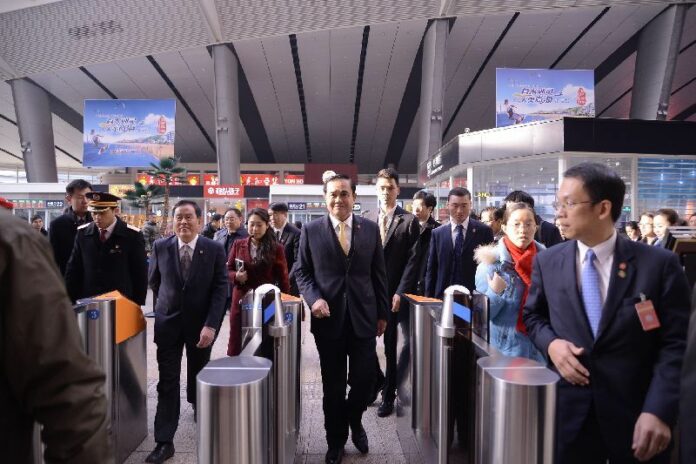
Thai junta leader and Prime Minister Prayuth Chan-ocha visits a train station in Beijing, China, 23 December 2014

BANGKOK — The Thai economy will improve in 2015 under the military junta's rule, a Thailand-based policy institute has predicted.

Yongyuth Chalamwong, the director of the Thailand Development Research Institute (TDRI), says he's confident the economy will grow by 4% in 2015 as a result of the military government’s investment projects and what he predicts will be a more stable political climate, state media reported.

Thailand’s GDP grew by less than one percent this year, the lowest in three years and the slowest rate in the region. The downturn was caused in large part by losses in the tourism industry, which was hampered by months of anti-government street protests that paralyzed parts of Bangkok and culminated in a military coup in May.

After seizing power, the junta, formally known as the National Council For Peace and Order (NCPO), imposed martial law and has banned all political protests. The NCPO, which has retained absolute power over the interim government it appointed several months ago, is expected to remain in power until 2016 at the earliest. 

According to state media, TDRI Director Yongyuth said he also believes new investment projects pursued by the military government, which is led by coup-maker turned Prime Minister Gen. Prayuth Chan-ocha, will lower the unemployment rate to around 1%.

Gen. Prayuth recently approved plans to work with Chinese developers to construct a "medium-speed rail system" that will connect Bangkok and northeastern Thailand. Transport officials are also reportedly looking to Japan for help in building three other rail routes in Thailand.

The Thai economy, the second-largest in Southeast Asia and once dubbed the "Teflon economy" for its perceived resilience, showed signs of recovery in November with private consumption increasing after a 0.3% contraction the month before. 


For comments, or corrections to this article please contact: [email protected]

You can also find Khaosod English on Twitter and Facebook
http://twitter.com/KhaosodEnglish
http://www.facebook.com/KhaosodEnglish


Advertisement

Asian Democracy in the Balance After Turbulent 2014

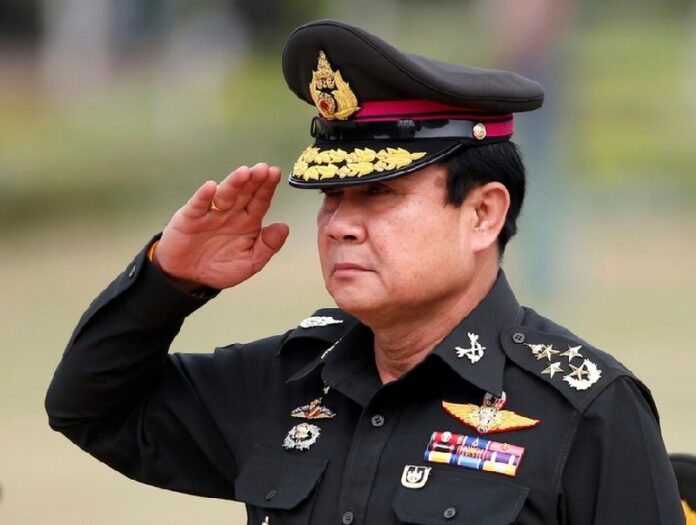
Thai General Prayuth Chan-ocha, now the country's prime minister, salutes during a military ceremony in Chonburi province, Thailand, 21 August 2014. A dramatic 2014 for Asia's democracies began with election violence in Bangladesh and concluded with an all-too predictable poll in Japan. Does this presage anything for further tests of democracy in 2015? EPA/RUNGROJ YONGRIT

By Robin Powell

BANGKOK (DPA) – From the world's biggest election to a military coup to months of pro-democracy protests, Asia became arguably the world's most important crucible for democracy in 2014. And more tests are forecast for the year ahead.

A dramatic year for Asia's democracies began inauspiciously.

On January 5, Bangladesh's ruling party won elections that were boycotted by the opposition and beset by violence that killed more than 100.

Meanwhile, Thailand found itself politically paralysed, with daily anti-government protests choking the capital Bangkok. In May, the army stepped in, as it had about a dozen times in the country's modern history.

Coup leader and now Prime Minister General Prayuth Chan-ocha would guide the country, he said in a much-debated phrase, towards a "Thai-style democracy."

"Thai-style democracy emphasizes traditional institutions and values rather than the rights and expectations of an awakening electorate," said Thitinan Pongsudhirak, the director of the Institute for Securities and International Studies.

Indeed, the path back to democracy in Thailand has been getting longer, with the first post-coup elections – expected in late 2015 – now likely to be pushed back to 2016.

There was more gloom for pro-democracy groups in neighbouring Myanmar, as the authorities in November shut the door on changing the country's military-drafted constitution anytime soon.

The constitution is "unfair, unjust and undemocratic," insisted opposition leader Aung San Suu Kyi, with visiting US President Barack Obama at her side.

Days after Obama's departure, changes ahead of elections in 2015 were ruled out.

There will still be a referendum on the charter and the "political bargaining" over constitutional change will continue in a "crucial" 2015, said political analyst Myo Yan Naung Thein.

By the middle of the year, Asia's electoral disappointments – including a deeply flawed vote in Afghanistan – had commentators talking about "democracy in retreat" in the region.

In fact the biggest success stories were in Asia's two largest democracies: India and Indonesia.

Turnout in India's general election was the highest in history, as 66 per cent of 815 million registered voters headed to the polls in April and May.

Indonesia's young democracy came through its own test a few months later.

After a peaceful vote for a new president in August, Indonesians waited patiently as the result was first challenged in court, and then a winner – former governor Joko Widodo – confirmed in October.

Indonesian democracy was "maturing" said Yunarto Wijaya, director of local think tank Charta Politika. "Indonesia has become a role model for peaceful, democratic transfers of power in South-East Asia," gushed The New York Times.

End-of-year elections in Japan also went smoothly, albeit entirely predictably.

The Liberal Democratic Party – in power for 65 of the last 69 years – won yet another mandate in December, even as turnout fell to a post-war low of 52.66 per cent and the poll became the butt of media jokes.

"Electoral dysfunction leaves Japan's voters feeling impotent," as one commentator put it in The Japan Times.

Japan isn't the only Asian nation that seems to lack what is a keystone of democracy in Europe, the United States and elsewhere: a credible opposition to take the government to task.

Lee Kwan Yew's People's Action Party has led Singapore since 1965. In Malaysia, Prime Minister Najib Razak's United Malays National Organisation (UMNO) has been the dominant force since independence in 1957.

Few would gamble on major political change in these three countries in the coming year – but that may not be a bad thing, argues public policy Professor Lok-sang Ho at Hong Kong's Lingnan University.

"Having different parties and elections may not be essential," he says. "The spirit of democracy is that the government must be responsive to people's needs and effective in filling those needs.

"This could be an Asian Style Democracy," he suggested.

Ho was one of the opponents of student-led protests in Hong Kong in the second half of the year, where the debate over the limits of democracy reached perhaps its highest pitch.

The biggest challenge to China's autocratic rule since 1989 gradually ran out of steam amid assertive policing and a lack of wider support both within Hong Kong and internationally.

One of the grandees of Asian politics, Singapore's Lee, said the students may have been aiming too high.

"Each country has to find its own way forward. I don't think there is salvation in saying we need more democracy … Hong Kong is just one of the cases in point," he told an international business forum.

Banners proclaiming "We will be back" at vacated protest sites hinted of more trouble to come for Beijing. Opposition lawmakers meanwhile suggested they may obstruct Beijing's limited electoral reforms.

Despite obstacles along the way, some emphasize that Asian democracy has come far in recent decades.

Shashi Tharoor, a former UN undersecretary general and current Indian lawmaker, summed up Asia's democratic trials:

"A generation ago, half of Asia's governments had seized power by force," he wrote. But it will take more progress "before the continent will truly have turned the democratic corner."


For comments, or corrections to this article please contact: [email protected]

You can also find Khaosod English on Twitter and Facebook
http://twitter.com/KhaosodEnglish
http://www.facebook.com/KhaosodEnglish

Advertisement

Asian Democracy in the Balance After Turbulent 2014

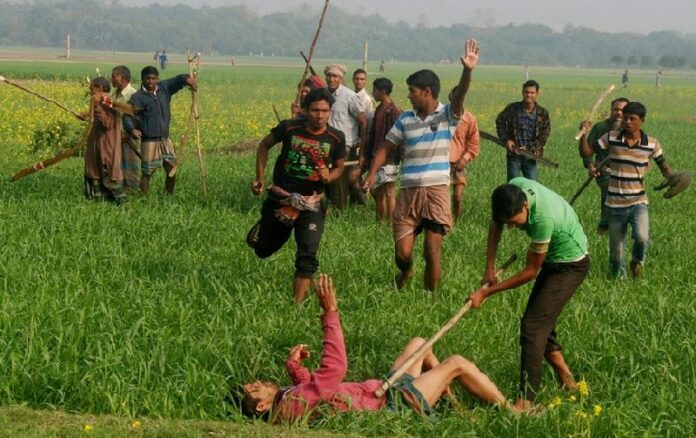
Supporters of the Bangladesh Nationalist Party (BNP) beat a supporter of the rulling party Awami League during the 10th national election at Baghmara in Rajshahi, Bangladesh. A dramatic 2014 for Asia's democracies began with election violence in Bangladesh and concluded with an all-too predictable poll in Japan. Does this presage anything for further tests of democracy in 2015? EPA/STRINGER

By Robin Powell

BANGKOK (DPA) – From the world's biggest election to a military coup to months of pro-democracy protests, Asia became arguably the world's most important crucible for democracy in 2014. And more tests are forecast for the year ahead.

A dramatic year for Asia's democracies began inauspiciously.

On January 5, Bangladesh's ruling party won elections that were boycotted by the opposition and beset by violence that killed more than 100.

Meanwhile, Thailand found itself politically paralysed, with daily anti-government protests choking the capital Bangkok. In May, the army stepped in, as it had about a dozen times in the country's modern history.

Coup leader and now Prime Minister General Prayuth Chan-ocha would guide the country, he said in a much-debated phrase, towards a "Thai-style democracy."

"Thai-style democracy emphasizes traditional institutions and values rather than the rights and expectations of an awakening electorate," said Thitinan Pongsudhirak, the director of the Institute for Securities and International Studies.

Indeed, the path back to democracy in Thailand has been getting longer, with the first post-coup elections – expected in late 2015 – now likely to be pushed back to 2016.

There was more gloom for pro-democracy groups in neighbouring Myanmar, as the authorities in November shut the door on changing the country's military-drafted constitution anytime soon.

The constitution is "unfair, unjust and undemocratic," insisted opposition leader Aung San Suu Kyi, with visiting US President Barack Obama at her side.

Days after Obama's departure, changes ahead of elections in 2015 were ruled out.

There will still be a referendum on the charter and the "political bargaining" over constitutional change will continue in a "crucial" 2015, said political analyst Myo Yan Naung Thein.

By the middle of the year, Asia's electoral disappointments – including a deeply flawed vote in Afghanistan – had commentators talking about "democracy in retreat" in the region.

In fact the biggest success stories were in Asia's two largest democracies: India and Indonesia.

Turnout in India's general election was the highest in history, as 66 per cent of 815 million registered voters headed to the polls in April and May.

Indonesia's young democracy came through its own test a few months later.

After a peaceful vote for a new president in August, Indonesians waited patiently as the result was first challenged in court, and then a winner – former governor Joko Widodo – confirmed in October.

Indonesian democracy was "maturing" said Yunarto Wijaya, director of local think tank Charta Politika. "Indonesia has become a role model for peaceful, democratic transfers of power in South-East Asia," gushed The New York Times.

End-of-year elections in Japan also went smoothly, albeit entirely predictably.

The Liberal Democratic Party – in power for 65 of the last 69 years – won yet another mandate in December, even as turnout fell to a post-war low of 52.66 per cent and the poll became the butt of media jokes.

"Electoral dysfunction leaves Japan's voters feeling impotent," as one commentator put it in The Japan Times.

Japan isn't the only Asian nation that seems to lack what is a keystone of democracy in Europe, the United States and elsewhere: a credible opposition to take the government to task.

Lee Kwan Yew's People's Action Party has led Singapore since 1965. In Malaysia, Prime Minister Najib Razak's United Malays National Organisation (UMNO) has been the dominant force since independence in 1957.

Few would gamble on major political change in these three countries in the coming year – but that may not be a bad thing, argues public policy Professor Lok-sang Ho at Hong Kong's Lingnan University.

"Having different parties and elections may not be essential," he says. "The spirit of democracy is that the government must be responsive to people's needs and effective in filling those needs.

"This could be an Asian Style Democracy," he suggested.

Ho was one of the opponents of student-led protests in Hong Kong in the second half of the year, where the debate over the limits of democracy reached perhaps its highest pitch.

The biggest challenge to China's autocratic rule since 1989 gradually ran out of steam amid assertive policing and a lack of wider support both within Hong Kong and internationally.

One of the grandees of Asian politics, Singapore's Lee, said the students may have been aiming too high.

"Each country has to find its own way forward. I don't think there is salvation in saying we need more democracy … Hong Kong is just one of the cases in point," he told an international business forum.

Banners proclaiming "We will be back" at vacated protest sites hinted of more trouble to come for Beijing. Opposition lawmakers meanwhile suggested they may obstruct Beijing's limited electoral reforms.

Despite obstacles along the way, some emphasize that Asian democracy has come far in recent decades.

Shashi Tharoor, a former UN undersecretary general and current Indian lawmaker, summed up Asia's democratic trials:

"A generation ago, half of Asia's governments had seized power by force," he wrote. But it will take more progress "before the continent will truly have turned the democratic corner."

 

For comments, or corrections to this article please contact: [email protected]

You can also find Khaosod English on Twitter and Facebook
http://twitter.com/KhaosodEnglish
http://www.facebook.com/KhaosodEnglish

Advertisement

Shanghai Stampede Leaves Dozens Dead, Mars 2015 Celebrations

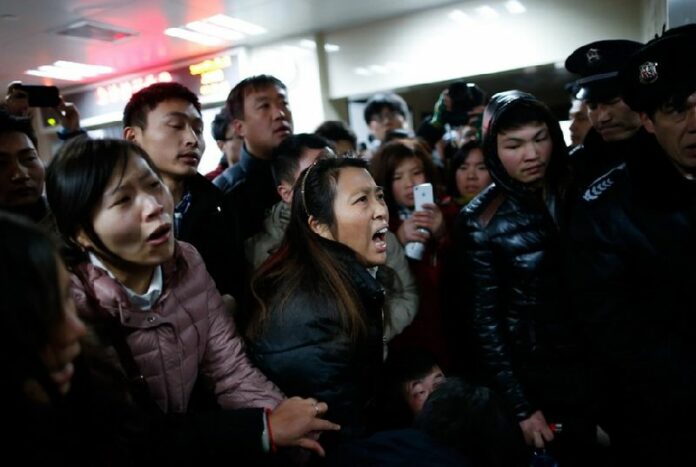
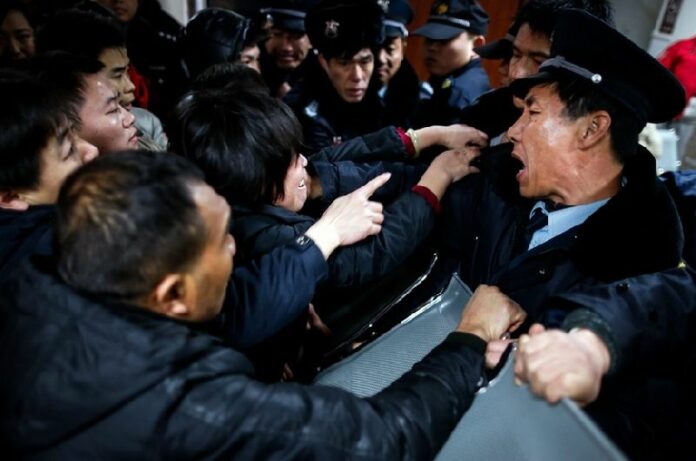
Security guards hold a line to keep relatives away from the emergency area of a hospital where some people injured in the stampede were admitted, in Shanghai, China, 01 January 2015. A stampede on New Year's Eve left 35 dead and more than 40 injured in Shanghai, marring celebrations that drew revellers around the world. The accident occurred 25 minutes before midnight at the crowded Chen-Yi Square along the city's famed Huangpu River waterfront. EPA/XING ZHE CHINA OUT

SHANGHAI/BERLIN (DPA) – A stampede on New Year's Eve left 35 dead and more than 40 injured in Shanghai, marring celebrations that drew revellers around the world to ring in 2015.

The accident occurred 25 minutes before midnight at the crowded Chen-Yi Square along the city's famed Huangpu River waterfront, China News agency reported, citing government officials.

Clubs in the historic buildings nearby had reportedly been throwing "New Year's money" that looked like 100-dollar bills, eye witnesses said on Chinese social media. Photos showed fake bills printed with "New Year's 2015" and the name of a nightclub.

The chaos reportedly broke out when revellers yelled that money was being thrown, and people were trampled in the rush.

The victims were trampled to death in the panic. Photos posted on social media showed pedestrians lying unconscious in the street and bystanders attempting to revive them.

The plaza at the Peace Hotel is the most famous viewing platform of the city's skyline and crowds had gathered to ring in the new year. A laser show had been planned, but was cancelled just last week amid concerns about crowd control.

Crowd control was a top concern for officials worldwide.

In London, for the first time, tickets were required for the city's fireworks display due to security concerns after half a million people packed the city centre a year earlier. On the black market tickets were being sold for many times the 10 pound face value.

Around 100,000 people gathered on the banks of the Thames as Big Ben struck 12 and fireworks lit up the night sky.

Elsewhere, hundreds of thousands gathered at Berlin's Brandenburg Gate for one of the world's largest open air parties, where violinist David Garrett played as the clock struck midnight and David Hasselhoff earlier performed for the crowd.

There were no fireworks in Paris, but hundreds of thousands gathered on the Champs-Elysees for a light and video show broadcast on the Arc de Triomphe.

Hours before midnight, thousands had already assembled on New York's Times Square to watch the famous ball drop despite bitter temperatures forecast for minus 2 degrees Celsius at midnight. Police were on high alert due to large crowds and recent violence aimed at the city's police officers.

Around 2 million people celebrated the arrival of the New Year on Rio de Janeiro's Copacabana beach in Brazil.

Shortly before midnight a message from Pope Francis was displayed on a giant screen. A 16-minute fireworks display followed the pope's message.

Music groups, DJs, singers and samba dancers performed on three large stages.

Cities across Asia on Wednesday began the countdown to 2015 with a mix of fireworks, beach parties and prayers.

More than 1 million revellers thronged Sydney Harbour in Australia to welcome in the year with a fireworks extravaganza that lit up the city's iconic bridge and Opera House.

For the first time, partygoers at official sites in Sydney were not able to bring their own drinks, broadcaster ABC reported, with alcohol only available from a quarter of the sites, and only from on-site vendors.

While it may be the first globally recognized celebration, the Sydney fireworks came three hours after Samoa said goodbye to 2014, and two hours after New Zealand, where poor weather dampened celebrations, if not the mood.

Younger New Zealanders and tourists flocked to the beaches and resorts, while major cities Wellington and Christchurch rang in the New Year with a mix of bands, movies and a countdown to fireworks at midnight.

Across Japan, people flocked to shrines and temples to pray for happiness and prosperity during the first three days of the New Year.

As per tradition, temple bells chimed around midnight (1700 GMT).

While celebrations loomed large and loud throughout Thailand's capital, Bangkok, many chose to spend New Year's in meditation retreats.

Conducted in the Buddhist temples, pious Thais passed New Year's Eve in deep spiritual meditation to cleanse both the spirit and the mind in anticipation of the upcoming year.

"It is a much more calming way to pass new year's," said Mint Saruda, an airline official. "It relaxes you and is much better for the soul than getting drunk and stupid with your friends."

In Beijing, several thousand merrymakers in sub-zero weather headed to the National Stadium, the venue known as the "Bird's Nest" that was erected for the 2008 Summer Olympics. The spot was chosen to highlight China's bid for the 2022 Olympic Winter games.

The celebration, which included performances by star pianist Lang Lang and Olympic medalists, was low-key compared to events in other cities. China, like several other Asian countries, observes the lunar calendar – the year of the sheep arrives on February 19.

But in Hong Kong, which was a British colony for more than 150 years, a large fireworks display lasting eight minutes lit up Victoria Harbour.


For comments, or corrections to this article please contact: [email protected]

You can also find Khaosod English on Twitter and Facebook
http://twitter.com/KhaosodEnglish
http://www.facebook.com/KhaosodEnglish

Advertisement

Search Widens For AirAsia Crash Victims

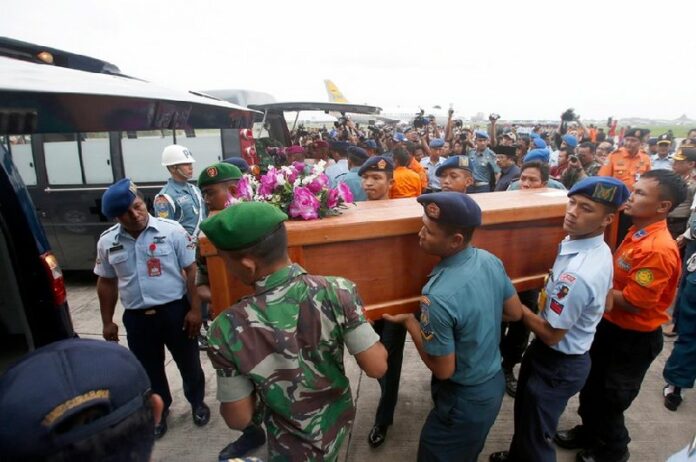
Indonesian military personnel in Surabaya carry one of two coffins with remains recovered from the AirAsia crash site as they arrive at Juanda Airport, in Surabaya. Photo EPA/MADE NAGI

By Ismira Lutfia Tisnadibrata

JAKARTA (DPA) – The search for victims of the AirAsia plane crash in waters off Indonesia widened Thursday, local media reported, as more bodies from around the crash site in the Java Sea were taken ashore.

Amid improved weather conditions, the search area was expanded into four sectors after it was previously concentrated only on two sectors, Republika Online news website reported.

"[The length is] 150 nautical miles and it is 90 nautical miles wide," Tatang Zaenudin, the National Search and Rescue Agency's operations chief, was quoted as saying.

AirAsia Indonesia flight QZ8501 crashed Sunday with 162 passengers and crew on board, halfway through a two-hour flight between Surabaya, Indonesia's second-largest city, and Singapore.

Two more bodies pulled from around the crash site were taken ashore, Tempo.co news website reported Thursday.

They were transported to the nearby town of Pangkalan Bun by navy helicopter, Tatang was reported as saying.

Two other bodies had already been flown to Surabaya and are being identified by forensic doctors, he said.

As of late Wednesday, seven bodies had been found in total.

A vigil was held in Surabaya earlier for the victims of the crash.

Advertisement

Shanghai Stampede Leaves Dozens Dead, Mars 2015 Celebrations

Security guards hold a line to keep relatives away from the emergency area of a hospital where some people injured in the stampede were admitted, in Shanghai, China, 01 January 2015. A stampede on New Year's Eve left 35 dead and more than 40 injured in Shanghai, marring celebrations that drew revellers around the world. The accident occurred 25 minutes before midnight at the crowded Chen-Yi Square along the city's famed Huangpu River waterfront. EPA/XING ZHE CHINA OUT

SHANGHAI/BERLIN (DPA) – A stampede on New Year's Eve left 35 dead and more than 40 injured in Shanghai, marring celebrations that drew revellers around the world to ring in 2015.

The accident occurred 25 minutes before midnight at the crowded Chen-Yi Square along the city's famed Huangpu River waterfront, China News agency reported, citing government officials.

Clubs in the historic buildings nearby had reportedly been throwing "New Year's money" that looked like 100-dollar bills, eye witnesses said on Chinese social media. Photos showed fake bills printed with "New Year's 2015" and the name of a nightclub.

The chaos reportedly broke out when revellers yelled that money was being thrown, and people were trampled in the rush.

The victims were trampled to death in the panic. Photos posted on social media showed pedestrians lying unconscious in the street and bystanders attempting to revive them.

The plaza at the Peace Hotel is the most famous viewing platform of the city's skyline and crowds had gathered to ring in the new year. A laser show had been planned, but was cancelled just last week amid concerns about crowd control.

Crowd control was a top concern for officials worldwide.

In London, for the first time, tickets were required for the city's fireworks display due to security concerns after half a million people packed the city centre a year earlier. On the black market tickets were being sold for many times the 10 pound face value.

Around 100,000 people gathered on the banks of the Thames as Big Ben struck 12 and fireworks lit up the night sky.

Elsewhere, hundreds of thousands gathered at Berlin's Brandenburg Gate for one of the world's largest open air parties, where violinist David Garrett played as the clock struck midnight and David Hasselhoff earlier performed for the crowd.

There were no fireworks in Paris, but hundreds of thousands gathered on the Champs-Elysees for a light and video show broadcast on the Arc de Triomphe.

Hours before midnight, thousands had already assembled on New York's Times Square to watch the famous ball drop despite bitter temperatures forecast for minus 2 degrees Celsius at midnight. Police were on high alert due to large crowds and recent violence aimed at the city's police officers.

Around 2 million people celebrated the arrival of the New Year on Rio de Janeiro's Copacabana beach in Brazil.

Shortly before midnight a message from Pope Francis was displayed on a giant screen. A 16-minute fireworks display followed the pope's message.

Music groups, DJs, singers and samba dancers performed on three large stages.

Cities across Asia on Wednesday began the countdown to 2015 with a mix of fireworks, beach parties and prayers.

More than 1 million revellers thronged Sydney Harbour in Australia to welcome in the year with a fireworks extravaganza that lit up the city's iconic bridge and Opera House.

For the first time, partygoers at official sites in Sydney were not able to bring their own drinks, broadcaster ABC reported, with alcohol only available from a quarter of the sites, and only from on-site vendors.

While it may be the first globally recognized celebration, the Sydney fireworks came three hours after Samoa said goodbye to 2014, and two hours after New Zealand, where poor weather dampened celebrations, if not the mood.

Younger New Zealanders and tourists flocked to the beaches and resorts, while major cities Wellington and Christchurch rang in the New Year with a mix of bands, movies and a countdown to fireworks at midnight.

Across Japan, people flocked to shrines and temples to pray for happiness and prosperity during the first three days of the New Year.

As per tradition, temple bells chimed around midnight (1700 GMT).

While celebrations loomed large and loud throughout Thailand's capital, Bangkok, many chose to spend New Year's in meditation retreats.

Conducted in the Buddhist temples, pious Thais passed New Year's Eve in deep spiritual meditation to cleanse both the spirit and the mind in anticipation of the upcoming year.

"It is a much more calming way to pass new year's," said Mint Saruda, an airline official. "It relaxes you and is much better for the soul than getting drunk and stupid with your friends."

In Beijing, several thousand merrymakers in sub-zero weather headed to the National Stadium, the venue known as the "Bird's Nest" that was erected for the 2008 Summer Olympics. The spot was chosen to highlight China's bid for the 2022 Olympic Winter games.

The celebration, which included performances by star pianist Lang Lang and Olympic medalists, was low-key compared to events in other cities. China, like several other Asian countries, observes the lunar calendar – the year of the sheep arrives on February 19.

But in Hong Kong, which was a British colony for more than 150 years, a large fireworks display lasting eight minutes lit up Victoria Harbour.


For comments, or corrections to this article please contact: [email protected]

You can also find Khaosod English on Twitter and Facebook
http://twitter.com/KhaosodEnglish
http://www.facebook.com/KhaosodEnglish

Advertisement

HM King Stresses Messages of 'Will' in 2015 New Year Card

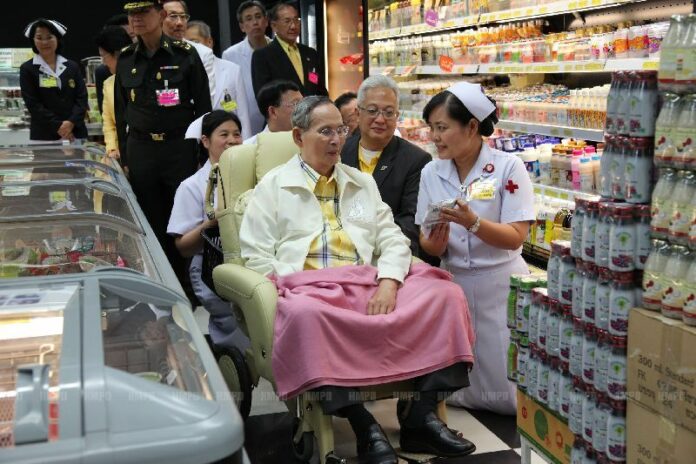
King Bhumibol visited a supermarket on the ground floor of Siriraj Hospital in Bangkok, 29 December 2014.

BANGKOK – His Majesty the King has urged all Thais to practice a "pure will" and "perfect physical strength" in a New Year greeting card released to the public tonight.

The card depicts a scene from the tale of King Maha Janaka, the previous life of Lord Buddha, who is praised for his iron will for swimming in the seas for days after a storm sank the ship that was carrying him to the land of Suvarnabhumi.

"Have a pure will, sharp wisdom, and perfect physical strength," the text in the centre of the card says. 

\

The card is decorated with rows of "smiley faces" emoticons on the side. The Royal Household Bureau unveiled the card at 8 pm today. 

King Bhumibol, who turned 87 on 5 December, has presented a New Year card to the public since late 1970s. Different messages are included in the greeting card each year.

The monarch is currently residing at Siriraj Hospital in Bangkok where he is being treated for several illnesses. The king was rushed to hospital from his summer palace in Prachuap Kiri Khan province in October for what the palace said was "high fever." 
His Majesty later underwent a surgery to remove his gallbladder. 

Read more: HM King Re-Emerges After Months Of Illness


For comments, or corrections to this article please contact: [email protected]

You can also find Khaosod English on Twitter and Facebook
http://twitter.com/KhaosodEnglish
http://www.facebook.com/KhaosodEnglish

Advertisement

Hot News

LATEST NEWS

Bangkok
broken clouds
33 ° C
33.9 °
31.6 °
65 %
5.3kmh
55 %
Tue
34 °
Wed
36 °
Thu
33 °
Fri
32 °
Sat
32 °