27.2 C
Bangkok
Saturday, July 18, 2026
Home Blog Page 3212

Rights Protests Different Than Political Protests, Police Chief Says

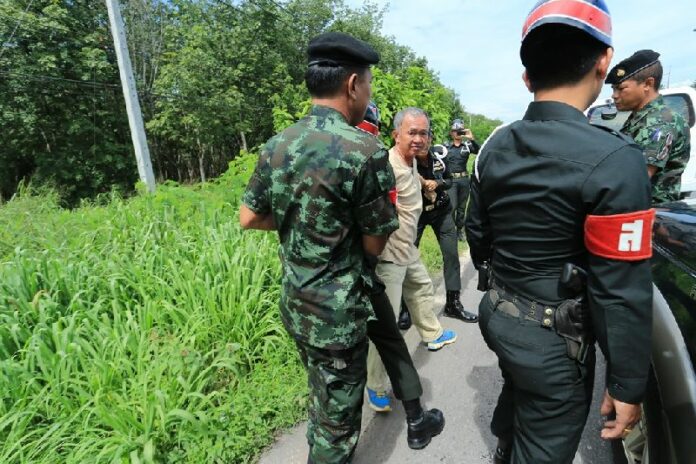
Soldiers detain activists from "Energy Reform" group in Songkhla province on 2 Sept 2014.

BANGKOK— In an effort to clarify the state’s stance on public demonstrations, Thailand’s next police chief has drawn a distinction between political protests and protests advocating for greater fairness and rights.

"We have to differentiate between protests that are political and protests that are about people's rights," said Pol.Gen. Somyot Pumpanmuang, who has been selected to take the post as commander of the Royal Thai Police on 1 October.

Demonstrators who demand improvements to their general welfare will not be considered political protesters, Pol.Gen. Somyot said, drawing a distinction that is bound to confound many.

Thailand’s military rulers placed a ban on public demonstrations soon after declaring martial law on 20 May, yet the order has not been applied evenly; while many anti-coup activists have been arrested and sent to face trials in martial court, protesters rallying around other causes have avoided persecution.

"Activists should clearly study the laws, especially students who may have staged protests because they want to have fun or because they were invited by their friends to show off their different ideas," Pol.Gen. Somyot said. "Sometimes, an action may not violate certain law, but it may end violating another law.” 

His comment came a day after the military junta's National Council for Peace and Order (NCPO) forced a group of lawyers and activists to cancel their panel discussion on the status of human rights in post-coup Thailand.

The panel discussion, titled "Access to Justice in Thailand: Currently Unavailable," was scheduled to take place at the Foreign Correspondents’ Club of Thailand. A group of police officers entered the club, which has long been considered a haven for free speech, and stopped the panelists from speaking to crowds of reporters.

The military has also detained almost 30 activists in the past month for organising marches in support of overhauling Thailand’s energy sector. 


For comments, or corrections to this article please contact: [email protected]

You can also find Khaosod English on Twitter and Facebook
http://twitter.com/KhaosodEnglish
http://www.facebook.com/KhaosodEnglish


Advertisement

Martial Law May Be Repealed In 22 Provinces: Source

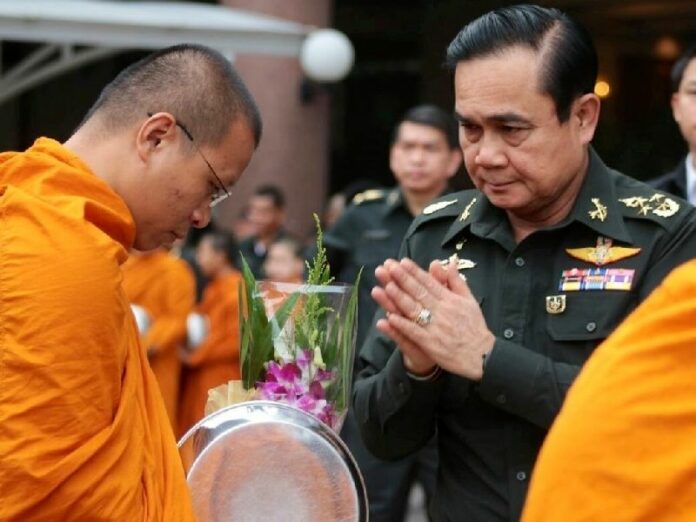
Gen. Prayuth Chan-ocha (R) in Bangkok, 29 August 2014.

BANGKOK — Thailand’s military junta is considering repealing martial law in 22 provinces, according to a source close to the junta.

The junta – formally known as the National Council for Peace and Order (NCPO) – may lift martial law over these provinces because of "tourism interests," the source said. 

The proposal will be debated by the newly-formed Cabinet on 9 September, the source added.

Using his power as the commander-in-chief of the Royal Thai Army, Gen. Prayuth Chan-ocha unilaterally imposed martial law over Thailand on 20 May with the stated aim of preventing violent confrontations between the pro- and anti-government political factions that were rallying in Bangkok at the time.

Gen. Prayuth seized power two days later in a coup d’état when representatives from both sides of the political conflict failed to reach a compromise during an army-brokered peace dialogue. 

Gen. Prayuth is now Prime Minister and chairman of the NCPO. During a meeting with other NCPO members at the army headquarters yesterday, Gen. Prayuth expressed a willingness to repeal the martial law – when the time is appropriate. 

"As for the martial law, there will be relaxing and easing, but not in this time," Gen. Prayuth said.

The 100-year-old law grants the military an array of special powers, including the power to impose a curfew, arrest individuals or search properties without warrants, censor the media, ban public protests, and try civilians in military court. In addition, the law prohibits anyone from claiming compensation from the army for damages that may result during the exercise of these powers.

Thhe NCPO has used its powers under martial law to outlaw public demonstrations, arbitrarily detain hundreds of politicians and activists, and try anti-coup protesters in martial court

Human rights activists have criticised the absolute power wielded by the military under martial law, while a number economists have warned that it deters tourists from visiting Thailand. 

Even if martial law is repealed in the near future, the NCPO is still authorized under the junta-drafted 2014 interim constitution to take action without the government's consent against any "threats" to national security, the monarchy, public order, and the economy. 


Related articles:
For comments, or corrections to this article please contact: [email protected]

You can also find Khaosod English on Twitter and Facebook
http://twitter.com/KhaosodEnglish
http://www.facebook.com/KhaosodEnglish

Advertisement

Junta Blocks Forum On Lack of Justice in Military-Ruled Thailand

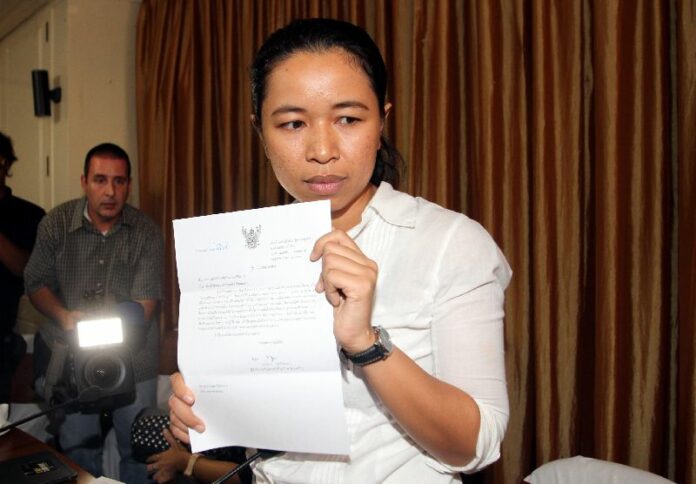
Pavinee Chumsri, a member of the Thai Lawyers for Human Rights, told reporters that today's public discussion was not intended to be a protest against the NCPO, 2 Sept 2014.

BANGKOK — Thailand’s military junta forced a group of lawyers and activists to cancel their panel discussion on the status of human rights in post-coup Thailand today.

The discussion, aptly titled "Access to Justice in Thailand: Currently Unavailable," was slated to feature representatives from Amnesty International Thailand, the Thai Lawyers for Human Rights, and Cross Cultural Foundation at the Foreign Correspondents’ Club of Thailand (FCCT) at around 2.30 pm today.

Several hours before the event, the organisers announced that they had received a notice from the junta – formally known as the National Council for Peace and Order (NCPO) – "asking for their cooperation" to cancel the talk.

The panel organisers said they complied with the order and agreed to call off the event, but several of the speakers arrived at the FCCT at 2 pm to explain the reasons behind the cancellation. 

As the panelists started to speak, a group of police officers barged into the clubhouse, presented the speakers with a copy of the NCPO letter, and demanded they cease all activities immediately. 

The letter, penned by a cavalry commander on behalf of the NCPO, helpfully suggested that any complaints about a lack of access to the justice system or problems associated with freedom of speech be submitted to the NCPO directly via its hotline instead.

It is the second time security officers have entered the FCCT, long known as a sanctuary for free debate in Thailand, in the last four months. On 27 May, soldiers stormed the FCCT and detained former Minister of Education Chaturon Chaisaeng as he was speaking to a crowd of foreign journalists about why he did not surrender himself to the NCPO. 

Pavinee Chumsri, a member of the Thai Lawyers for Human Rights, told reporters that today's public discussion was not intended to be a protest against the NCPO. She said her organisation simply demands the NCPO repeal martial law, stop detaining dissidents, put an end to censorship, and suspend all trials of civilians in the military court. 

Since staging a coup on 22 May, the NCPO has sought to silence critics by banning public protests, intimidating the media, arresting anti-coup protesters, and trying dissidents in military court, where the legal proceedings are chaired by military judges and access to lawyers is said to be restricted. 

Over 300 activists, academics, and former politicians have also been held incommunicado in military barracks for "attitude readjustment." 


For comments, or corrections to this article please contact: [email protected]

You can also find Khaosod English on Twitter and Facebook
http://twitter.com/KhaosodEnglish
http://www.facebook.com/KhaosodEnglish


Advertisement

Junta Blocks Forum On Lack of Justice in Military-Ruled Thailand

Pavinee Chumsri, a member of the Thai Lawyers for Human Rights, told reporters that today's public discussion was not intended to be a protest against the NCPO, 2 Sept 2014.

BANGKOK — Thailand’s military junta forced a group of lawyers and activists to cancel their panel discussion on the status of human rights in post-coup Thailand today.

The discussion, aptly titled "Access to Justice in Thailand: Currently Unavailable," was slated to feature representatives from Amnesty International Thailand, the Thai Lawyers for Human Rights, and Cross Cultural Foundation at the Foreign Correspondents’ Club of Thailand (FCCT) at around 2.30 pm today.

Several hours before the event, the organisers announced that they had received a notice from the junta – formally known as the National Council for Peace and Order (NCPO) – "asking for their cooperation" to cancel the talk.

The panel organisers said they complied with the order and agreed to call off the event, but several of the speakers arrived at the FCCT at 2 pm to explain the reasons behind the cancellation. 

As the panelists started to speak, a group of police officers barged into the clubhouse, presented the speakers with a copy of the NCPO letter, and demanded they cease all activities immediately. 

The letter, penned by a cavalry commander on behalf of the NCPO, helpfully suggested that any complaints about a lack of access to the justice system or problems associated with freedom of speech be submitted to the NCPO directly via its hotline instead.

It is the second time security officers have entered the FCCT, long known as a sanctuary for free debate in Thailand, in the last four months. On 27 May, soldiers stormed the FCCT and detained former Minister of Education Chaturon Chaisaeng as he was speaking to a crowd of foreign journalists about why he did not surrender himself to the NCPO. 

Pavinee Chumsri, a member of the Thai Lawyers for Human Rights, told reporters that today's public discussion was not intended to be a protest against the NCPO. She said her organisation simply demands the NCPO repeal martial law, stop detaining dissidents, put an end to censorship, and suspend all trials of civilians in the military court. 

Since staging a coup on 22 May, the NCPO has sought to silence critics by banning public protests, intimidating the media, arresting anti-coup protesters, and trying dissidents in military court, where the legal proceedings are chaired by military judges and access to lawyers is said to be restricted. 

Over 300 activists, academics, and former politicians have also been held incommunicado in military barracks for "attitude readjustment." 


For comments, or corrections to this article please contact: [email protected]

You can also find Khaosod English on Twitter and Facebook
http://twitter.com/KhaosodEnglish
http://www.facebook.com/KhaosodEnglish


Advertisement

Reform Council Registration Window Closed, 6000 Apply

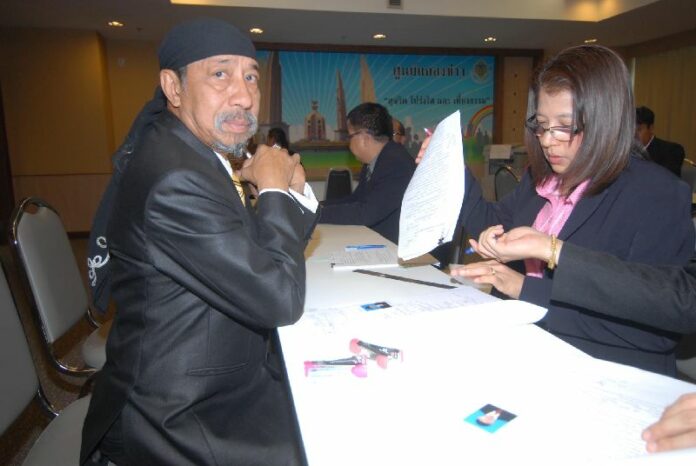
The famous Thai comedian Sornsuttha Klanmalee, aka Tuarae Chernyim, also showed up to apply for the NRC on the final day of the application period, 2 Sept 2014.

BANGKOK — More than 5,000 people have applied to join the National Reform Council (NRC) since junta chairman and Prime Minister Prayuth Chan-ocha urged more candidates to apply two weeks ago after only 400 names had been submitted.

The registration period closed today with around 6,000 applicants, including Gen. Prayuth Chan-ocha’s former school principal Prasert Pudpong.

Mr. Prasert, the director of Wat Nuan Narodit, said he was nominated by his school to join the reform council because he has "full knowledge" of the education system and a genuine desire to reform public schools. In order to qualify to apply for the NRC, candidates must be nominated by their organisation, political party, or company. 

The NRC was formed by the junta’s 2014 interim charter and will be tasked with proposing reforms across broad sectors of society, including politics, public administration, law and justice, local government, education, economy, energy, public health and environment, mass media, and social affairs.

A screening committee formed last month will nominate up to 50 candidates for each of the categories, after which the junta —  formally known as the National Council For Peace and Order (NCPO) —  will choose an unspecified number of representatives to join the final council.

The NCPO will also choose one out of the five representatives nominated by 76 provincial selection committees across the country. A total of 250 people will be selected to sit in the NRC.

The famous Thai comedian Sornsuttha Klanmalee, aka Tuarae Chernyim, also showed up to apply for the NRC on the final day of the application period.

Mr. Sornsuttha is known for being an unofficial cheerleader during sports matches between Thai national teams and foreign players.

"If I am selected into the NRC, I will focus on sports science," Mr. Sornsuttha told reporters. "I think Thai athletes' bodies are smaller than foreign athletes. If there is development in this issue, I believe Thai athletes will have more qualities."

Other prominent NRC candidates include retired pop musician Winai Pantharak, flute musician Thanit Sriklindee, and ultra-nationalist activist Veera Somkhamkid, who spent almost four years in Cambodian prison for trespassing Thai-Cambodian border during a campaign to "reclaim" the disputed temple of Preah Vihear in 2010. 

 
For comments, or corrections to this article please contact: [email protected]

You can also find Khaosod English on Twitter and Facebook
http://twitter.com/KhaosodEnglish
http://www.facebook.com/KhaosodEnglish


Advertisement

Park Chief Reinstated Despite Links to Case of Missing Karen Activist

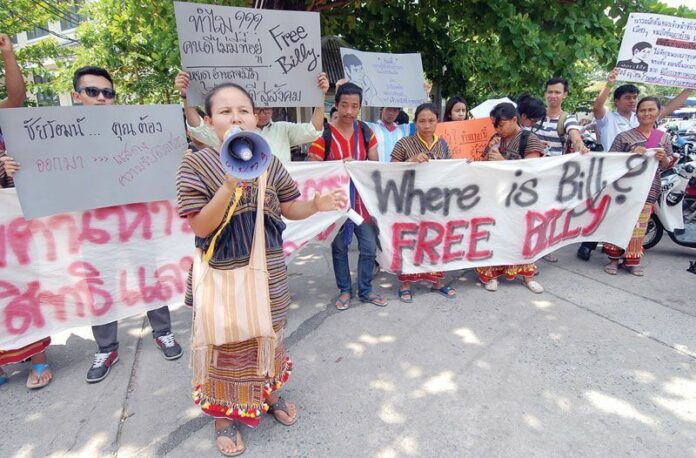
Activists demand answers about Billy's disappearance on 24 April 2014, Bangkok.

By David Hopkins

CHIANG MAI — The Park Director implicated in the disappearance of a Karen activist who went missing five months ago was recently reinstated in Kaeng Krachan National Park, drawing criticism from rights groups and casting doubt over the integrity of the investigation into the activist’s disappearance.

Porlachee "Billy" Rakchongcharoen has not been seen since he was detained by park officials on 17 April in Kaeng Krachan National Park, Phetchaburi province. Billy, an ethnic Karen, was a key figure in a lawsuit brought against Chaiwat Limlikitaksorn, the park chief who was reinstated on 24 August.

Mr. Chaiwat had originally agreed to be transferred while the investigation into Billy’s disappearance unfolded, but has resumed his post until the end of September to finish work related to the 2014 fiscal year budget.

Prior to his disappearance, Billy was organising testimony and documents for a lawsuit filed against Mr. Chaiwat and several other park agencies in relation to the alleged burning and destruction of the houses of more than 20 Karen families living in the park in July 2011.

In a statement to Khaosod English, the International Commission of Jurists (ICJ) expressed concern that Mr. Chaiwat’s reinstatement could affect the impartiality of the investigation into Billy’s disappearance.

“Some of the potential witnesses in the case, who are ethnic Karen villagers living in the National Park, have expressed their fear of reprisal if they assist with the investigation,” the ICJ said. “The Government has an obligation to carry out a thorough and impartial investigation into Billy's apparent 'disappearance' while at the same time ensuring that witnesses are free from pressure, intimidation or fear of reprisal for assisting the investigation.”

Mr. Chaiwat also faces charges of allegedly masterminding the murder of human rights defender Tatkamol Ob-om in September 2011. Like Billy, Mr. Tatkamol had been helping Karen villagers report abuses by park officials. The case is currently before the Phetchaburi Provincial Court.

“Generally when a government official is charged with this kind of serious criminal case the practice is to relieve him of his official duties while the court case is going on,” said Surapong Kongchantuek of the Lawyer’s Council of Thailand. “So it’s quite strange that he still has the trust of the authorities and [has] been reinstated [and] sent back to the park.”

Thailand’s Department of Special Investigation (DSI) is conducting a joint-investigation into Billy’s disappearance with the provincial police. This includes working with park officials to collect DNA evidence in the park related to the case, Mr. Surapong explained. However, details of the investigation remain unclear, with little information forthcoming from Thai authorities.

Meanwhile, other potential avenues for justice have already been exhausted. On 17 July the Phetchaburi Provincial Court rejected a petition, filed by Billy’s wife Phinnapha Phrueksaphan, which sought an enquiry into the lawfulness of her husband’s detention. Park officials say they detained Billy on the day he disappeared for allegedly possessing illegal honey.

Day of the disappeared

In a joint-statement released to commemorate the International Day of the Victims of Enforced Disappearances on Saturday, 39 human rights organizations called on Association of Southeast Asian Nations (ASEAN) member states to end acts of enforced disappearance, investigate unsolved cases and bring those responsible to justice. The statement highlighted the case of Billy, as well as the Thai human rights lawyer, Somchai Neelapaijit, who has not been seen since 12 March 2004 when he was pulled from his car in Bangkok by a group of men.

Scores of disappearances in Thailand remain unresolved; the UN Working Group on Enforced or Involuntary Disappearances currently lists 81 ‘open’ cases of enforced disappearance in Thailand, including Billy’s.

Enforced disappearance is not recognized as a criminal offense under Thailand's penal code. The Thai government signed the International Convention for the Protection of All Persons from Enforced Disappearance in January 2012, but the treaty has yet to be ratified by a parliament.

The Chair-Rapporteur of the UN Working Group, Ariel Dulitzky, stressed that addressing impunity is essential to preventing future incidents of enforced disappearance.

“Impunity is one of the ways that allows enforced disappearances to be repeated,” Mr. Dulitzky said. “The right to justice… not only acts as a remedy for the particular case but is also a preventive measure for the recurrence of enforced disappearances in the future.”

Indigenous peoples rights in the spotlight

Billy’s case has also highlighted broader concerns over the treatment and rights of indigenous peoples in Thailand, including the Karen people, who make up the largest of Thailand's hill tribes.

It is widely suspected that Billy was targeted due to his active role defending the rights of Karens living in the Kaeng Krachan National Park. Billy had been documenting the alleged illegal logging activities of park officials before his disappearance.

The Karen have lived in the park for hundreds of years, but still have no legal protection, said Kittisak Rattanakrajangsri, General Secretary of the Indigenous Peoples’ Foundation for Education and Environment. This legal limbo has been exacerbated by Thailand’s military government, which seized power in a coup d’etat on 22 May and has cracked down on forest communities across the country. 

The 2007 Constitution that the coupmakers dissolved in May recognized community resource management rights, said Nicole Girard, Minority Rights Group’s Asia Programme Coordinator.

“There is a chance, however small, that a new constitution could more effectively protect the rights of Thailand’s indigenous peoples,” she said. “[That’s] a chance Thailand’s authorities should take.”                                                  

For the Karen villagers forcibly evicted from their homes in the park in 2011, Billy’s disappearance has inflicted a double blow – both increasing their sense of insecurity and setting back their ongoing legal struggle.

Without Billy’s testimony and leadership, their case has been significantly weakened, said Joan Carling, Secretary General of Asia Indigenous Peoples Pact.

“In their attempts to seek justice, more injustice has been done to them," Ms. Carling said.


For comments, or corrections to this article please contact: [email protected]

You can also find Khaosod English on Twitter and Facebook
http://twitter.com/KhaosodEnglish
http://www.facebook.com/KhaosodEnglish

Advertisement

British Labour Activist's Libel Trial Starts In BKK Today

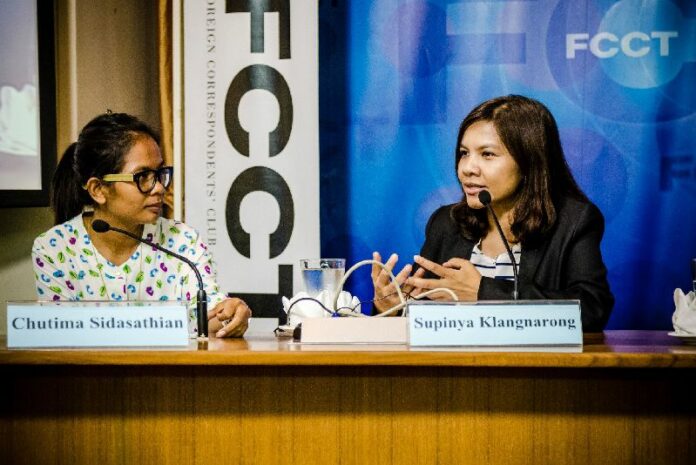
Chutima Sidasathian from Phuketwan (L) and Supinya Klangnarong (R) speaking at a Foreign Correspondents' Club of Thailand panel on 1 Sept, 2014. [Photo by Gerrit Phil Baumann].

BANGKOK — British labour activist Andy Hall is scheduled to go on trial in Bangkok today to fight charges of defamation for a report he wrote two years ago accusing a Thai food company of mistreating its workers.

Mr. Hall, 34, contributed to a report published by the Finish NGO Finnwatch last January that chronicled a number of labour abuses committed by Natural Fruit Co. Ltd., one of Thailand’s biggest pineapple processors. The factory workers Mr. Hall interviewed, some of whom were undocumented migrants, described hazardous working conditions, unlawfully low wages, and instances of child labour.

Natural Fruit has denied the allegations and launched several cases against Mr. Hall, including charges of criminal defamation, violation of the Computer Crime Act, and demands for 10 million U.S. dollars through a civil suit. If found guilty, Mr. Hall could face up to seven years in prison.

Today's trial concerns the defamation charges brought against Mr. Hall for an interview he gave to Al-Jazeera about Natural Fruit's alleged labour abuses. Prosecution witnesses are scheduled to begin their testimony in Bangkok’s Prakanong Court today.

Defamation is a criminal offense in Thailand, defined under Thai law as any statement made by one party that is likely to impair the reputation of another party or expose the latter to hatred. The offense is punishable by up to two years in prison and a fine of 200,000 baht.

The law has been frequently criticised by rights activists, who say it is abused by authorities and large corporations to silence critics and create a climate of fear.

Last month, 100 rights organisations from around the world signed a letter asking the Thai Pineapple Industry Association (TPIA) to urge Natural Fruit to drop the case.

“By refusing to work with civil society and instead launching an aggressive legal battle against Mr. Hall, Natural Fruit is sending a message that it would rather intimidate critics and silence those who advocate on behalf of migrant workers than engage in genuine dialogue about conditions in its factories,” the leader reads.

Earlier this year, two Phuket-based journalists were charged with defamation by the Royal Thai navy for a publishing an excerpt from a Reuters report that alleged Navy officials’ involvement in the trafficking of Rohingya refugees from Myanmar.

In both Mr. Hall’s case and the Phuketwan journalists’ cases, the law is being used to target individuals and not the larger organisations their work is affiliated with. Instead of pursuing charges against Finnwatch, Natural Fruit Co. has targeted Mr. Hall alone. Similarly, the Thai navy has focused their efforts on prosecuting the journalists from Phuketwan, even though the report in question was authored by Reuters.

“This law is used to intimidate people,” said Supinya Klangnarong, a media rights activist who was charged with defamation and for criticizing the Shin Corporation in 2003. “Most of the defamation cases in Thailand are about ‘protecting face.’”

Ms. Supinya, who was eventually acquitted after a highly publicised trial, was referring to a common Thai idiom — 'saving/protecting face' (rak sa na)—  that describes many Thai people's concern with protecting their reputation or image. Any act that causes someone to 'lose face' (sia na) is considered extremely offensive in Thai culture.


For comments, or corrections to this article please contact: [email protected]

You can also find Khaosod English on Twitter and Facebook
http://twitter.com/KhaosodEnglish
http://www.facebook.com/KhaosodEnglish

Advertisement

Park Chief Reinstated Despite Links to Case of Missing Karen Activist

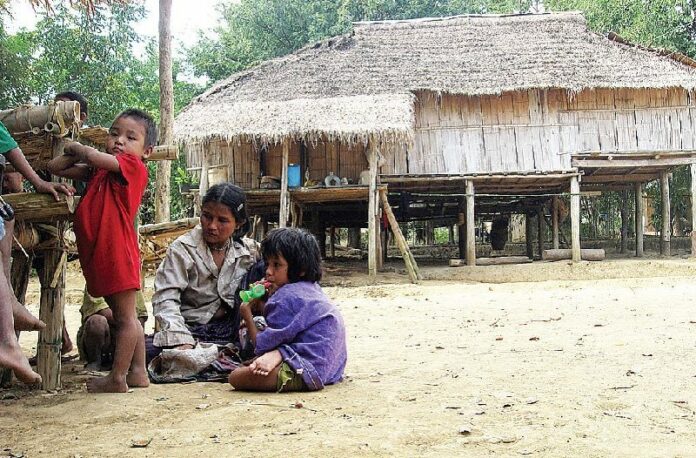
Billy's home town, Bang Kloi village, in Kaeng Krachan National Park

By David Hopkins

CHIANG MAI — The Park Director implicated in the disappearance of a Karen activist who went missing five months ago was recently reinstated in Kaeng Krachan National Park, drawing criticism from rights groups and casting doubt over the integrity of the investigation into the activist’s disappearance.

Porlachee "Billy" Rakchongcharoen has not been seen since he was detained by park officials on 17 April in Kaeng Krachan National Park, Phetchaburi province. Billy, an ethnic Karen, was a key figure in a lawsuit brought against Chaiwat Limlikitaksorn, the park chief who was reinstated on 24 August.

Mr. Chaiwat had originally agreed to be transferred while the investigation into Billy’s disappearance unfolded, but has resumed his post until the end of September to finish work related to the 2014 fiscal year budget.

Prior to his disappearance, Billy was organising testimony and documents for a lawsuit filed against Mr. Chaiwat and several other park agencies in relation to the alleged burning and destruction of the houses of more than 20 Karen families living in the park in July 2011.

In a statement to Khaosod English, the International Commission of Jurists (ICJ) expressed concern that Mr. Chaiwat’s reinstatement could affect the impartiality of the investigation into Billy’s disappearance.

“Some of the potential witnesses in the case, who are ethnic Karen villagers living in the National Park, have expressed their fear of reprisal if they assist with the investigation,” the ICJ said. “The Government has an obligation to carry out a thorough and impartial investigation into Billy's apparent 'disappearance' while at the same time ensuring that witnesses are free from pressure, intimidation or fear of reprisal for assisting the investigation.”

Mr. Chaiwat also faces charges of allegedly masterminding the murder of human rights defender Tatkamol Ob-om in September 2011. Like Billy, Mr. Tatkamol had been helping Karen villagers report abuses by park officials. The case is currently before the Phetchaburi Provincial Court.

“Generally when a government official is charged with this kind of serious criminal case the practice is to relieve him of his official duties while the court case is going on,” said Surapong Kongchantuek of the Lawyer’s Council of Thailand. “So it’s quite strange that he still has the trust of the authorities and [has] been reinstated [and] sent back to the park.”

Thailand’s Department of Special Investigation (DSI) is conducting a joint-investigation into Billy’s disappearance with the provincial police. This includes working with park officials to collect DNA evidence in the park related to the case, Mr. Surapong explained. However, details of the investigation remain unclear, with little information forthcoming from Thai authorities.

Meanwhile, other potential avenues for justice have already been exhausted. On 17 July the Phetchaburi Provincial Court rejected a petition, filed by Billy’s wife Phinnapha Phrueksaphan, which sought an enquiry into the lawfulness of her husband’s detention. Park officials say they detained Billy on the day he disappeared for allegedly possessing illegal honey.

Day of the disappeared

In a joint-statement released to commemorate the International Day of the Victims of Enforced Disappearances on Saturday, 39 human rights organizations called on Association of Southeast Asian Nations (ASEAN) member states to end acts of enforced disappearance, investigate unsolved cases and bring those responsible to justice. The statement highlighted the case of Billy, as well as the Thai human rights lawyer, Somchai Neelapaijit, who has not been seen since 12 March 2004 when he was pulled from his car in Bangkok by a group of men.

Scores of disappearances in Thailand remain unresolved; the UN Working Group on Enforced or Involuntary Disappearances currently lists 81 ‘open’ cases of enforced disappearance in Thailand, including Billy’s.

Enforced disappearance is not recognized as a criminal offense under Thailand's penal code. The Thai government signed the International Convention for the Protection of All Persons from Enforced Disappearance in January 2012, but the treaty has yet to be ratified by a parliament.

The Chair-Rapporteur of the UN Working Group, Ariel Dulitzky, stressed that addressing impunity is essential to preventing future incidents of enforced disappearance.

“Impunity is one of the ways that allows enforced disappearances to be repeated,” Mr. Dulitzky said. “The right to justice… not only acts as a remedy for the particular case but is also a preventive measure for the recurrence of enforced disappearances in the future.”

Indigenous peoples rights in the spotlight

Billy’s case has also highlighted broader concerns over the treatment and rights of indigenous peoples in Thailand, including the Karen people, who make up the largest of Thailand's hill tribes.

It is widely suspected that Billy was targeted due to his active role defending the rights of Karens living in the Kaeng Krachan National Park. Billy had been documenting the alleged illegal logging activities of park officials before his disappearance.

The Karen have lived in the park for hundreds of years, but still have no legal protection, said Kittisak Rattanakrajangsri, General Secretary of the Indigenous Peoples’ Foundation for Education and Environment. This legal limbo has been exacerbated by Thailand’s military government, which seized power in a coup d’etat on 22 May and has cracked down on forest communities across the country. 

The 2007 Constitution that the coupmakers dissolved in May recognized community resource management rights, said Nicole Girard, Minority Rights Group’s Asia Programme Coordinator.

“There is a chance, however small, that a new constitution could more effectively protect the rights of Thailand’s indigenous peoples,” she said. “[That’s] a chance Thailand’s authorities should take.”

For the Karen villagers forcibly evicted from their homes in the park in 2011, Billy’s disappearance has inflicted a double blow – both increasing their sense of insecurity and setting back their ongoing legal struggle.

Without Billy’s testimony and leadership, their case has been significantly weakened, said Joan Carling, Secretary General of Asia Indigenous Peoples Pact.

“In their attempts to seek justice, more injustice has been done to them," Ms. Carling said.

 
For comments, or corrections to this article please contact: [email protected]

You can also find Khaosod English on Twitter and Facebook
http://twitter.com/KhaosodEnglish
http://www.facebook.com/KhaosodEnglish

Advertisement

Free World Cup Telecasts Bill Still Unpaid

RS executives unveiled the TV "boxes" required to watch the FIFA World Cup matches, 12 March 2014 [MATICHON].

BANGKOK — The state has yet to compensate Thai media giant RS International for airing the 2014 FIFA World Cup matches free of charge to the public, a move that was ordered by the Thai military junta a month after it staged a coup.

Surachai Chetchotisak, executive chairman of RS International, said yesterday that the company is still owed 308,890,000 baht from Thailand’s National Broadcasting and Telecommunication Commission (NBTC).

The payment is supposed to compensate RS for the "lost opportunity" it faced in June after the junta ordered the company to relinquish its exclusive rights to the World Cup broadcasts and allow every match to be aired for free on public TV channels. The order was part of the junta's campaign to "return happiness to the people."

RS initially intended to only broadcast the matches to customers who had purchased their "signal boxes," which would have netted approximately 700 million baht for the company.

Mr. Surachai said only 100 million baht of the 427 million baht promised by the junta has been paid so far. 

"Although the [agreed] amount of money was not sufficient to compensate the business damages, and not worth the investment, the company was willing to cooperate to create an atmosphere of happiness for Thai people," Mr. Surachai said. "RS did what we agreed with NBTC in a fast and complete manner. But now that the World Cup has been over for months, there is no progress about the payment."

The RS executive said he has already submitted two letters to the NBTC demanding the rest of the money and warning that RS will resort to legal action if no progress is made.

Sec-gen of the NBTC Takorn Tantasit said the commission's president, Air Chief Marshal Thares Poonsri, is in Turkey at the moment and unable to make any decisions regarding the payment.

Mr. Takorn said the NBTC is willing to pay RS 200 million baht – half of what the company asked – but stressed that no decision will be made until Mr. Thares returns to Thailand. 
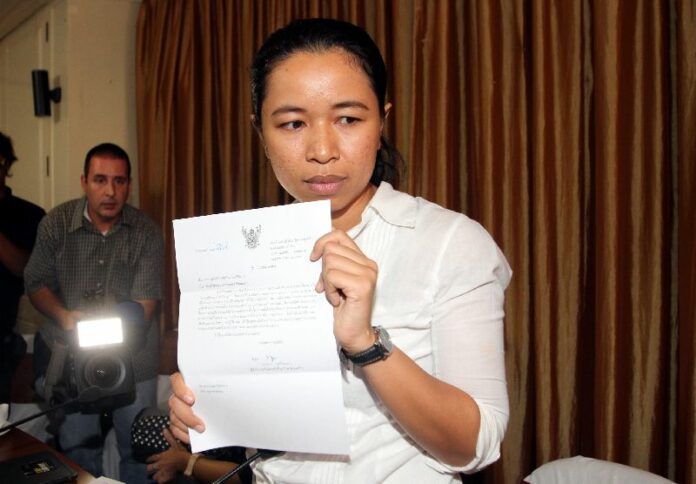
The free World Cup telecasts, which were shown on army-owned Chanel 5 and the state-run Channel 11, were part of the junta's “happiness campaign” following the military takeover on 22 May. Other activities organised by the junta, formally known as the National Council for Peace and Order (NCPO), included free concerts, free haircuts, and free movie tickets.
 
For comments, or corrections to this article please contact: [email protected]

You can also find Khaosod English on Twitter and Facebook
http://twitter.com/KhaosodEnglish
http://www.facebook.com/KhaosodEnglish

Advertisement

British Labour Activist's Libel Trial Starts In BKK Today

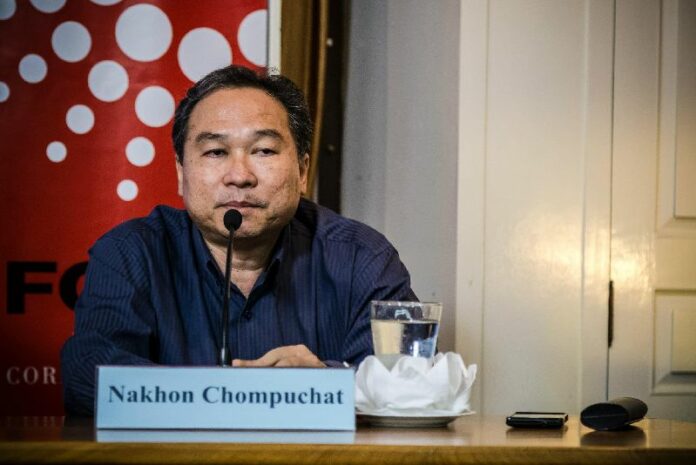
The head of Andy Hall's legal team, Nakhon Chompuchat, speaking at a Foreign Correspondents' Club of Thailand panel on 1 Sept, 2014. [Photo by Gerrit Phil Baumann].

BANGKOK — British labour activist Andy Hall is scheduled to go on trial in Bangkok today to fight charges of defamation for a report he wrote two years ago accusing a Thai food company of mistreating its workers.

Hall, 34, contributed to a report published by the Finish NGO Finnwatch last January that chronicled a number of labour abuses committed by Natural Fruit Co. Ltd., one of Thailand’s biggest pineapple processors. The factory workers Hall interviewed, some of whom were undocumented migrants, described hazardous working conditions, unlawfully low wages, and instances of child labour.
 
Natural Fruit has denied the allegations and launched several cases against Hall, including charges of criminal defamation, violation of the Computer Crime Act, and demands for 10 million U.S. dollars through a civil suit. If found guilty, Hall could face up to seven years in prison.
 
Today's trial concerns the defamation charges brought against Hall for an interview he gave to Al-Jazeera about Natural Fruit's alleged labour abuses. Prosecution witnesses are scheduled to begin their testimony in Bangkok’s Prakanong Court today.
 
Defamation is a criminal offense in Thailand, defined under Thai law as any statement made by one party that is likely to impair the reputation of another party or expose the latter to hatred. The offense is punishable by up to two years in prison and a fine of 200,000 baht.
 
The law has been frequently criticised by rights activists, who say it is abused by authorities and large corporations to silence critics and create a climate of fear.
 
Last month, 100 rights organisations from around the world signed a letter asking the Thai Pineapple Industry Association (TPIA) to urge Natural Fruit to drop the case against Hall.
 
“By refusing to work with civil society and instead launching an aggressive legal battle against Mr. Hall, Natural Fruit is sending a message that it would rather intimidate critics and silence those who advocate on behalf of migrant workers than engage in genuine dialogue about conditions in its factories,” the letter reads.
 
Earlier this year, two Phuket-based journalists were charged with defamation by the Royal Thai navy for a publishing an excerpt from a Reuters report that alleged Navy officials’ involvement in the trafficking of Rohingya refugees from Myanmar.
 
Similar to the case against Hall, the law was used to target individuals and not the larger organisations their work was affiliated with. 
 
“This law is used to intimidate people,” said Supinya Klangnarong, a media rights activist who was charged with defamation for criticizing the Shin Corporation in 2003. “Most of the defamation cases in Thailand are about ‘protecting face.’"
 
Supinya, who was eventually acquitted after a highly publicised trial, was referring to a common Thai idiom — 'saving/protecting face' (rak sa na) —  that describes a widespread concern with protecting one's reputation or image. Any act that causes someone to 'lose face' (sia na) is considered extremely offensive in Thai culture.
 

(Reporting by Sally Mairs)


For comments, or corrections to this article please contact: [email protected]

You can also find Khaosod English on Twitter and Facebook
http://twitter.com/KhaosodEnglish
http://www.facebook.com/KhaosodEnglish


Advertisement

Hot News

LATEST NEWS

Bangkok
overcast clouds
27.2 ° C
27.2 °
27.2 °
81 %
3.5kmh
100 %
Sat
35 °
Sun
37 °
Mon
36 °
Tue
31 °
Wed
36 °