


























28.8 C
Bangkok
Tuesday, July 14, 2026
Home Blog Page 3243

Typhoon Rammasun Kills 38 In The Philippines

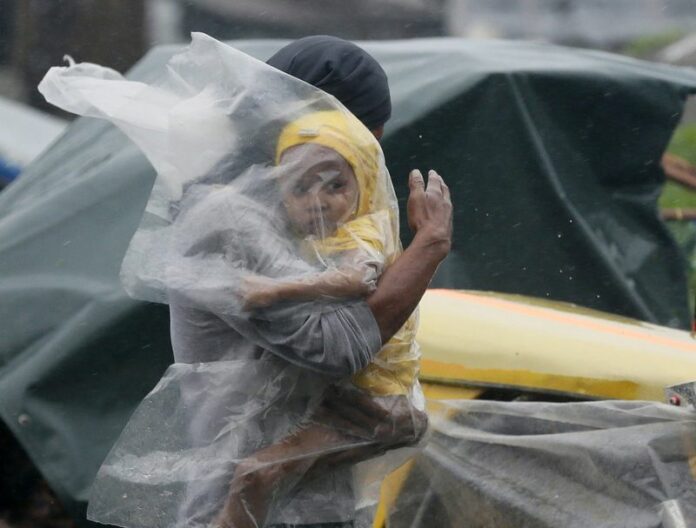
A Filipino father with his child covered under a plastic sheet flee the strong winds and rain brought by typhoon Rammasun in the Tondo slum area, in Manila, 16 July 2014. At least 38 people have been killed as typhoon Rammasun batters the north-eastern Philippines, disaster relief officials and police say. EPA/DENNIS M. SABANGAN

By Girlie Linao (DPA)

MANILA (DPA)  — The strongest storm to hit the Philippines this year killed 38 people and left millions without power for a second day, disaster management officials said Thursday.

Most of the deaths were caused by toppled trees, collapsed structures and other debris whipped up by typhoon Rammasun's winds of up to 150 kilometres per hour (kph), the national disaster risk management agency said.

Eight people were missing, including three fishermen that went out to sea despite the storm warning, the agency added.

More than 1.8 million people in Manila and nearby provinces were without electricity for the second day, according to the Manila Electric Company that supplies power to the areas.

Millions more were also without power in the eastern provinces of Albay, Sorsogon, Camarines Sur and Camarines Norte, said Energy Secretary Jericho Petilla.

"An estimated 1,500 electrical poles were damaged and it will take two weeks to repair all," he said.

"It wasn't as bad as Yolanda, where we had to start from scratch," he added, referring to super typhoon Haiyan by its local name, which wiped out communities and destroyed key infrastructure.

Many parts of the eastern and central Philippines are still recovering from Haiyan, which killed more than 6,200 people and displaced over 4 million in November.

Rammasun, locally called Glenda, slammed into the country's eastern coast with gusts of up to 185 kilometres on Tuesday. It passed over Manila and forced schools, government offices, banks, the airport and transport systems to shut down on Wednesday.

More than 420,000 people were displaced in the affected areas, where the typhoon uprooted trees, ripped off roofs, triggered landslides and floods.

Classes in most schools were still suspended in Manila to give time for emergency teams to clear roads of trees, branches and other debris.

"We're concentrating on major roads to make them passable," said Francis Tolentino, chairman of the Metropolitan Manila Development Authority. "We have to pick up the pieces quickly to normalize the situation in Manila."

The weather bureau said Rammasun was already out of the Philippines on Thursday, but a new low pressure area has been monitored east of the southern region of Mindanao.
Advertisement

Suspected Gunrunner Disputes Police Allegation

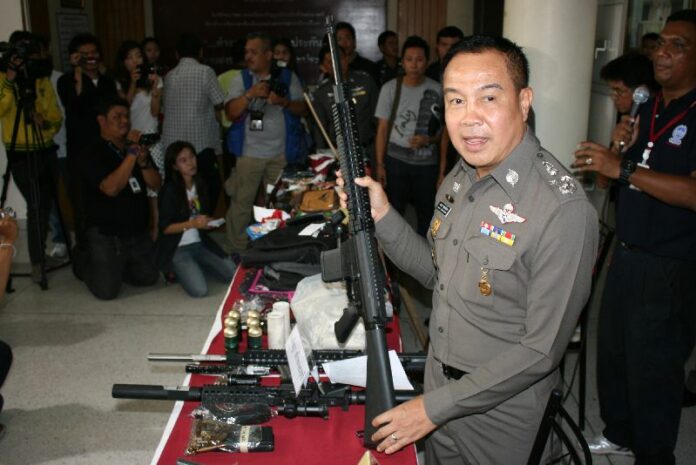
Pol.Gen. Somyot Phumpanmuang displays weapons allegedly confiscated from a suspected gunrunner in Bangkok, 16 July 2014

BANGKOK — A police effort to parade a suspected gunrunner in front of the press corps collapsed today when the suspect shouted that he had been forced into confession by the officers.

Satya Sateerapongsasutthi, 39, was arrested last night at a condominium in the upscale district of Sukhumvit on charges of possessing firearms and ammunition without permit and carrying weapons into a residential area without due cause.

Mr. Satya is also charged with resisting police operation; police claim the suspect attempted to draw a handgun at the officers during the raid on his condominium. 

At the press conference held at Bangkok Metropolitan Police headquarters this morning, deputy police chief Pol.Gen. Somyot Phumpanmuang said Mr. Satya has been actively selling military grade weapons to criminals, including those who launched attacks on anti-government protesters earlier this year.

According to Pol.Gen. Somyot, the search of Mr. Satya's condominium turned up two M-16 rifles, two unidentified assault rifles, three handguns, 19 grenades for M79 launchers, and thousands of bullets for handguns and rifles. 

The police also uncovered a pair of night-vision goggles, one bullet proof vest, and one bullet proof helmet, Pol.Gen. Somyot said.

"The suspect confessed that he owned the weapons," Pol.Gen. Somyot told reporters, adding that Mr. Satya first identified himself as a military officer working under the military junta's National Council for Peace and Order (NCPO) and tried to shoot the police with his handgun.

However, as the police escorted Mr. Satya to the press conference, the suspect suddenly struggled and shouted that he had been forced by the police to make confession. 

Mr. Satya also said he wants a lawyer and that he will fight his allegations in court. 

The police then canceled the press conference and took Mr. Satya away. He is understood to be under the custody of Lumpini Police.

Thai police have a history of assaulting or coercing suspects to confess while in police custody. Last week, a viral video showed a police officer smacking the head of a rape and murder suspect, apparently during interrogation.


For comments, or corrections to this article please contact: [email protected]

You can also find Khaosod English on Twitter and Facebook
http://twitter.com/KhaosodEnglish
http://www.facebook.com/KhaosodEnglish

Advertisement

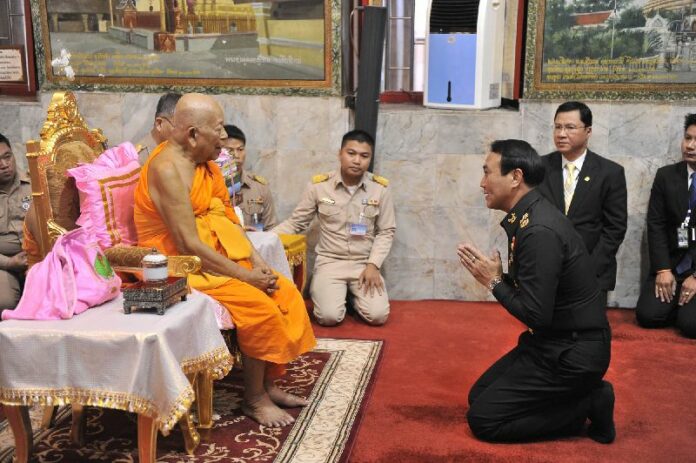
Buddhist Patriarch Says Junta Leader Fit For Premiership

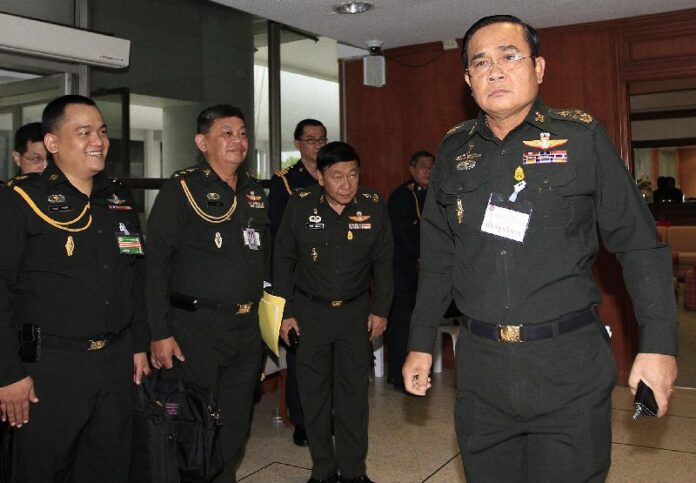
File photo of Gen. Prayuth Chan-ocha, the leader of Thailand's military junta.

BANGKOK— The spiritual leader of Thai Buddhism has deemed the leader of Thailand’s military junta, Gen. Prayuth Chan-ocha, fit to be the Prime Minister of the country’s next government.

Somdet Phra Maharatchamongkhalachan, the acting Supreme Patriarch of Thai Buddhism and abbot of Wat Pak Nam Temple in Samut Prakarn province, delivered the comments today as representatives of the ruling National Council for Peace and Order (NCPO) visited him to offer alms on the occasion of Buddhist Lent.

A reporter at the ceremony asked the venerable monk, who is known locally as Somdet Chuang, whether he thinks NCPO leader Gen. Prayuth is capable of being Prime Minister.

"If he wants to be, he surely can,” Somdet Chuang replied. "Judging from his action and strength, Gen. Prayuth is capable of being a Prime Minister."

Gen. Prayuth currently holds all the powers of prime minister as leader of Thailand’s military junta, but is expected to cede administrative power to an interim government this September. So far, he has refused to rule out the possibility of taking the premiership, which would make him the first Prime Minister to also be an active military commander since 1992.

State-owned and pro-coup media agencies have published survey polls that claim a majority of the Thai population wishes to see Gen. Prayuth as the new Prime Minister, but Somdet Chuang is the most high-profile figure to endorse the army chief so far.

"What the NCPO has done so far is considered to be the right path," Somdet Chuang told reporters. "Because the NCPO leader wants to establish reconciliation, unity, and harmony."

The Supreme Patriarch said he would like to give his moral support to Gen. Prayuth "so that he stays strong and accomplishes works for the goodness of the country."

The monk added that Thai people should live in harmony and unity, and strictly practice the Five Precepts of Buddhism by disavowing murder, theft, lying, adultery, and alcohol. 

Somdet Chuang has been holding the rank as the supreme leader of the Buddhist order in Thailand since his predecessor, Somdet Phra Nyanasamvara, died at the age of 100 at Chulalongkorn Hospital last year.


For comments, or corrections to this article please contact: [email protected]

You can also find Khaosod English on Twitter and Facebook
http://twitter.com/KhaosodEnglish
http://www.facebook.com/KhaosodEnglish

Advertisement

Buddhist Patriarch Says Junta Leader Fit For Premiership

An NCPO representative receives the blessing of Supreme Patriarch Somdet Phra Maharatchamongkhalachan, on July 16, 2014, two months after it seized power.

BANGKOK— The spiritual leader of Thai Buddhism has deemed the leader of Thailand’s military junta, Gen. Prayuth Chan-ocha, fit to be the Prime Minister of the country’s next government.

Somdet Phra Maharatchamongkhalachan, the acting Supreme Patriarch of Thai Buddhism and abbot of Wat Pak Nam Temple in Samut Prakarn province, delivered the comments today as representatives of the ruling National Council for Peace and Order (NCPO) visited him to offer alms on the occasion of Buddhist Lent.

A reporter at the ceremony asked the venerable monk, who is known locally as Somdet Chuang, whether he thinks NCPO leader Gen. Prayuth is capable of being Prime Minister.

"If he wants to be, he surely can,” Somdet Chuang replied. "Judging from his action and strength, Gen. Prayuth is capable of being a Prime Minister."

Gen. Prayuth currently holds all the powers of prime minister as leader of Thailand’s military junta, but is expected to cede administrative power to an interim government this September. So far, he has refused to rule out the possibility of taking the premiership, which would make him the first Prime Minister to also be an active military commander since 1992.

State-owned and pro-coup media agencies have published survey polls that claim a majority of the Thai population wishes to see Gen. Prayuth as the new Prime Minister, but Somdet Chuang is the most high-profile figure to endorse the army chief so far.

"What the NCPO has done so far is considered to be the right path," Somdet Chuang told reporters. "Because the NCPO leader wants to establish reconciliation, unity, and harmony."

The Supreme Patriarch said he would like to give his moral support to Gen. Prayuth "so that he stays strong and accomplishes works for the goodness of the country."

The monk added that Thai people should live in harmony and unity, and strictly practice the Five Precepts of Buddhism by disavowing murder, theft, lying, adultery, and alcohol. 

Somdet Chuang has been holding the rank as the supreme leader of the Buddhist order in Thailand since his predecessor, Somdet Phra Nyanasamvara, died at the age of 100 at Chulalongkorn Hospital last year.


For comments, or corrections to this article please contact: [email protected]

You can also find Khaosod English on Twitter and Facebook
http://twitter.com/KhaosodEnglish
http://www.facebook.com/KhaosodEnglish

Advertisement

Sadao Checkpoint Turning Away Hundreds of Foreigners with Tourist Visas

(Chiang Rai Times)

SADAO  – Tourists unable to prove the legitimacy of their trip to Thailand are being turned away despite having tourist visas issued by Thailand’s Ministry of Foreign Affairs, confirmed Lt Col Banphot Kittivira, deputy superintendent of the Immigration checkpoint at Sadao.

The Sadao checkpoint, the portal for Phuket visa runners bound for Malaysia, sees about 100 foreigners denied entry into the Kingdom per month, Col Banphot noted.

“If tourists can’t provide us with details about their trip to Thailand, we will refuse them entry,” said Col Banphot. Read more here


Note: Khaosod English is not responsible for content on other websites.


Advertisement

Cambodian Opposition Members In Court After Protest Violence

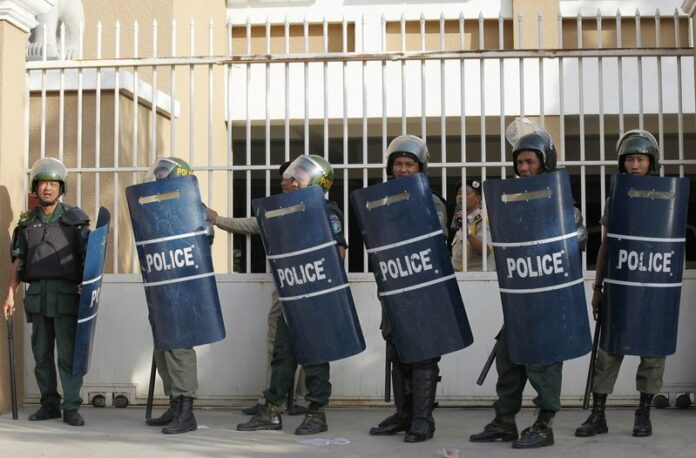
Cambodian police officers stand guard outside the municipal court in Phnom Penh, 16 July 2014. The court is trying lawmakers of the opposition Cambodia National Rescue Party, who are accused of acts of violence against the authorities during a protest to demand the re-opening of Freedom Park for the public. EPA/MAK REMISSa

PHNOM PENH (DPA) — Five members of the Cambodian opposition were sent to court for questioning early Wednesday, after being arrested when a demonstration they had organized turned violent.

Protesters beat and kicked security guards who had tried to break up the demonstration on Tuesday by the Cambodian National Rescue Party (CNRP).

Thirty-eight guards were injured and three remain in intensive care.

"The CNRP MPs-elect caused the violence," Keo Remy, secretary of state at the Council of Ministers, said at a press conference, declining to say whether the five would be charged.

"If we look at the nature of [Tuesday's] violence, it is very brutal and inhumane," Remy said, adding that protesters had blocked an ambulance from coming to attend to the wounded guards.

Since disputed elections a year ago the CNRP has held dozens demonstrations, some resulting in violence and injuries, mostly to protesters. Seven have been killed by police fire.

Son Chhay, CNRP chief whip, said Wednesday's violence was not condoned by the party.

Advertisement

Suthep Joins Ranks of Political Figures Seeking Safety in Monkhood

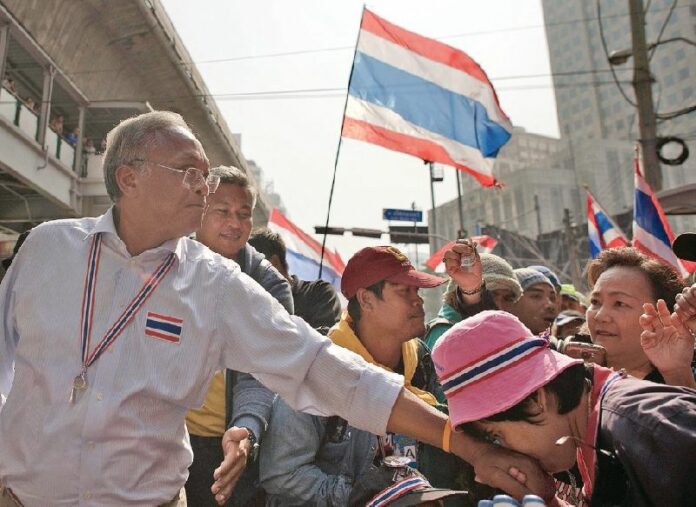
Former anti-government protest leader Suthep Thaugsuban during a rally in Bangkok on 23 January, 2014.

SURAT THANI — Former anti-government protest leader Suthep Thaugsuban surprised many by appearing as a monk today, raising speculation that he is joining a long tradition of political leaders seeking asylum in the monkhood.

Many villagers in Lamet district were baffled to see Mr. Suthep in saffron robes with his head and eyebrows shaven, as is the Buddhist tradition, collecting alms alongside other monks near Than Nam Lai Temple in Surat Thani this morning. 

Mr. Suthep and other monks walked for about one kilometre to collect food donations before returning to their secluded temple. Only one temple assistant was seen accompanying Mr. Suthep throughout the journey. 

Starting last November, the former deputy chairman of the Democrat Party spent six months as the firebrand leader of the People's Committee for Absolute Democracy With the King As Head of State (PCAD) in its effort to topple the government of Prime Minister Yingluck Shinawatra and replace it with an unelected people’s council to carry out unspecified “national reforms.”

Mr. Suthep, who is now known by his Buddhist name "Paphakaro," did not announce his intention to be ordained as a monk. Media reports also indicate that people close to Mr. Suthep were surprised by the sudden move. 

Monkhood as asylum

Although Mr. Suthep has not publicly stated his reasons for becoming a monk, Thailand has a history of political leaders joining the monkhood to avoid assassination or revenge following periods of upheaval in the country’s politics. Killing monks is considered a grave sin in Buddhist cosmology.

Prominent examples in Thailand's pre-modern history include King Maha Chakkraphat, who briefly sought exile in the monkhood in 1538 after a coup was staged against his dynasty, and King Rama IV, who spent 27 years as monk before he was crowned King of Siam to avoid a conflict of interest with his brother, King Rama III. 

A more recent example is Sondhi Limthongkul, the controversial leader of the ultra-royalist People's Alliance for Democracy (PAD), the predecessor of the PCAD that campaigned against Ms. Yingluck's brother, former Prime Minister Thaksin Shinawatra, starting in 2005.  

Mr. Sondhi entered the monkhood in 2007, a year after Mr. Thaksin's administration was overthrown in a military coup that the PAD's protests helped engineer. Prior to his ordination, Mr. Sondhi made controversial remarks claiming that members of the Thai Royal Family were supportive of the PAD's quest against Mr. Thaksin, who the PAD had accused of being an “anti-monarchy tyrant.”

Mr. Sondhi eventually returned to secular life and nearly died life in 2009, when unknown assailants fired a full magazine of bullets from an automatic rifle at his car in Bangkok. The perpetrators were never found.

Many critics of Mr. Suthep have likened his ordination to that of Mr. Sondhi. Last month, Mr. Suthep caused an uproar when he told a gathering of PCAD donors at an exclusive club that he had been conspiring with army chief Gen. Prayuth Chan-ocha to overthrow Thaksin-allied governments since 2010. 

Gen. Prayuth, who led the coup against Ms. Yingluck's government on 22 May, insisted that the coup was necessary to prevent further bloodshed and maintained that he did not take any sides in the country’s political conflict. However, since seizing power, the military junta has taken up the centerpiece of the PCAD’s platform: instituting a series of “national reforms” before the next election is held.

According to Gen. Prayuth, an interim government will be formed in September and tasked with reforming the country’s constitution. A year later, elections will be held if conditions are deemed stable.

Ekkanat Prompan, a close aide of Mr. Suthep during the anti-government campaign, was also ordained as a monk shortly after the 22 May coup. 

 
For comments, or corrections to this article please contact: [email protected]

You can also find Khaosod English on Twitter and Facebook
http://twitter.com/KhaosodEnglish
http://www.facebook.com/KhaosodEnglish

Advertisement

British Tsunami Survivors To Reunite With Thai Rescuers

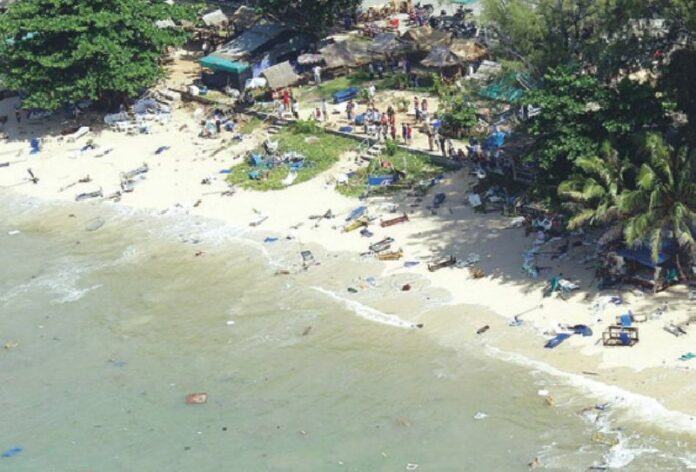
Karon Beach on Phuket Island after the 2004 tsunami.

BANGKOK — Two British survivors of the 2004 Indian Ocean tsunami are returning to Phuket to meet the Thai couple that helped them escape in the aftermath of the catastrophe.

In December 2004, Emily and Ben Willgrass, who are brother and sister, were on holiday with their parents in Phuket when the tsunami struck.

While their father searched for their mother, Emily and Ben took shelter with a Thai couple named Upin Sengmuang  and Pitchet Buaniam. Their mother’s body was later found in basement of the Ocean Shopping Mall at Patong Beach.

According to Ms. Upin, Mr. Willgrass was so devastated that he did not know how to break the news to the children, so she had to explain to them what happened. After that, the Thai couple let Mr. Willgrass and his children stay at their home overnight and drove them 870km to Bangkok the following day because the Phuket airport was closed.

Emily and Ben recently decided to come back to Phuket on 20 July to reunite with Ms. Upin and Mr. Pitchet and thank them for their kindness. The siblings posted their plans on Facebook and asked for help locating the couple.

Their story quickly circulated on social media and Thai websites, and a number of people who recognized the faces of the Thai couple provided the Willgrass’s with their contact information.  

“It has been a mad 24 hours for us, and we are just so happy to have found them and can’t wait to come and see them,” Ben told Khaosod English in an email.

"I feel very happy to know that [they] are returning to Thailand on 20 July to thank me," said Ms. Upin. "I saw that they were victims of the disaster. I had to help them the best I could. Anyone would have done the same.”

Mr. Pichet, who is now living in Phatthalung province, said he initially kept in touch with the Willgrass’s but lost contact with them after a few years. Yesterday, he found out about Ben and Emily’s effort to relocate him through a friend.

"I am very happy to know that the Wilgrass's haven't forgotten about me and [Ms. Upin], and that they still think of us," said Mr. Pichet, who is working as an assistant for the village headman in Phatthalung.

"In that incident, Upin and I helped many other foreign victims of the Tsunami, but the Wilgrass’s were the only family that contacted us after the crisis even though we have a difficult time communicating because I can only speak very little English,” said Mr. Pichet . “But I am very happy to meet with them again."

Mr. Pichet said he will travel to Phuket to meet Ben and Emily on 20 July and invite them to stay with him and give them a tour of Phuket island. 

The 2004 tsunami, caused by the Indian Ocean earthquake, is considered to be the worse tsunami in human history, killing more 200,000 people across Southeast Asia.  

The tsunami decimated much of Thailand’s Andaman coast, especially popular tourist destinations such as Phuket and Khao Lak. There were a total of 5,078 confirmed deaths in Thailand, half of whom were foreign tourists.

“Words cannot explain how thankful we are for the help and support they gave us,” Ben and Emily wrote in their Facebook post. “The kindness they showed at a time when it was needed most will never be forgotten.” 


For comments, or corrections to this article please contact: [email protected]

You can also find Khaosod English on Twitter and Facebook
http://twitter.com/KhaosodEnglish
http://www.facebook.com/KhaosodEnglish

Advertisement

China Withdraws Oil Rig From Waters Claimed By Vietnam

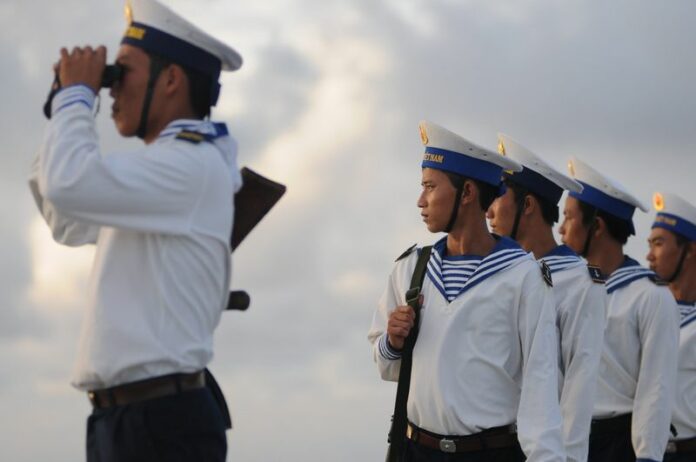
A file photograph showing Vietnamese naval soldiers standing guarding at East Spratly Island, Vietnam, 07 January 2013. China has removed an oil drilling platform from waters also claimed by Vietnam nearly two months after its installation provoked violent anti-Chinese protests. EPA/STR

HANOI (DPA) — China has removed an oil drilling platform from waters also claimed by Vietnam, nearly two months after its installation provoked violent anti-Chinese protests, officials said Wednesday.

"Haiyang Shiyou 981 has moved north-west to China's Hainan Island," Major General Nguyen Quang Dam, commander of the Vietnamese Coast Guard, told dpa.

Le Ha, deputy director of Vietnam Fisheries Resources Surveillance Department, said the oil rig was moved more than 40 nautical miles from its former location, and all escort vessels have been removed from the area. 

China's official Xinhua news agency said the rig was moved due to the onset of the storm season.

Beijing deployed it in early May, saying at that time that it would be withdrawn on August 15 to avoid the storm season. The move heightened tensions between the two countries, with each accusing the other of ramming vessels in the area.

The dispute triggered anti-China protests across Vietnam, which led to riots in several industrial zones. Beijing said four Chinese workers were killed. Vietnam blamed the riots on "hostile forces" and has since cracked down on protests.

The withdrawal of the rig "diffuses the crisis for the moment," said emeritus professor Carl Thayer, a specialist on South-East Asia from the Australian Defence Force Academy.

"China has used commercial reasons for withdrawing the rig, thus preserving its face," he said, adding that Beijing also wanted to deflect political pressure ahead of the annual meeting of the Association of South-East Asian Nations regional forum.

Advertisement

British Tsunami Survivors To Reunite With Thai Rescuers

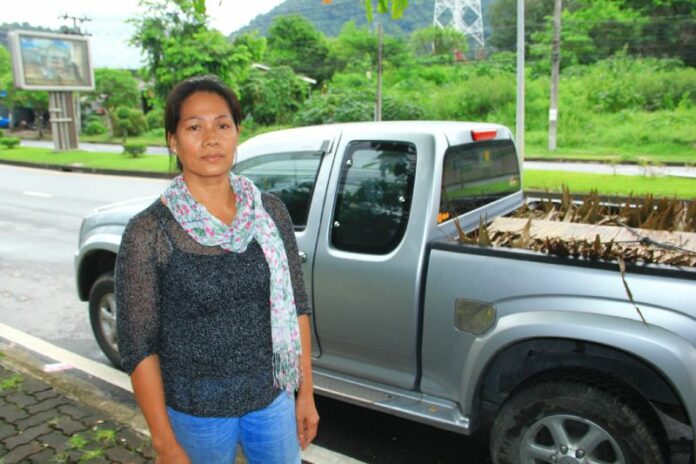
Upin Sengmuang, a Thai woman who helped foreign tourists in the aftermath of the 2004 Indian Ocean tsunami.

BANGKOK — Two British survivors of the 2004 Indian Ocean tsunami are returning to Phuket to meet the Thai couple that helped them escape in the aftermath of the catastrophe.

In December 2004, Emily and Ben Willgrass, who are brother and sister, were on holiday with their parents in Phuket when the tsunami struck.

While their father searched for their mother, Emily and Ben took shelter with a Thai couple named Upin Sengmuang  and Pitchet Buaniam. Their mother’s body was later found in basement of the Ocean Shopping Mall at Patong Beach.

According to Ms. Upin, Mr. Willgrass was so devastated that he did not know how to break the news to the children, so she had to explain to them what happened. After that, the Thai couple let Mr. Willgrass and his children stay at their home overnight and drove them 870km to Bangkok the following day because the Phuket airport was closed.

Emily and Ben recently decided to come back to Phuket on 20 July to reunite with Ms. Upin and Mr. Pitchet and thank them for their kindness. The siblings posted their plans on Facebook and asked for help locating the couple.

Their story quickly circulated on social media and Thai websites, and a number of people who recognized the faces of the Thai couple provided the Willgrass’s with their contact information.  

“It has been a mad 24 hours for us, and we are just so happy to have found them and can’t wait to come and see them,” Ben told Khaosod English in an email.

"I feel very happy to know that [they] are returning to Thailand on 20 July to thank me," said Ms. Upin. "I saw that they were victims of the disaster. I had to help them the best I could. Anyone would have done the same.”

Mr. Pichet, who is now living in Phatthalung province, said he initially kept in touch with the Willgrass’s but lost contact with them after a few years. Yesterday, he found out about Ben and Emily’s effort to relocate him through a friend.

"I am very happy to know that the Wilgrass's haven't forgotten about me and [Ms. Upin], and that they still think of us," said Mr. Pichet, who is working as an assistant for the village headman in Phatthalung.

"In that incident, Upin and I helped many other foreign victims of the Tsunami, but the Wilgrass’s were the only family that contacted us after the crisis even though we have a difficult time communicating because I can only speak very little English,” said Mr. Pichet . “But I am very happy to meet with them again."

Mr. Pichet said he will travel to Phuket to meet Ben and Emily on 20 July and invite them to stay with him and give them a tour of Phuket island. 

The 2004 tsunami, caused by the Indian Ocean earthquake, is considered to be the worse tsunami in human history, killing more 200,000 people across Southeast Asia.  

The tsunami decimated much of Thailand’s Andaman coast, especially popular tourist destinations such as Phuket and Khao Lak. There were a total of 5,078 confirmed deaths in Thailand, half of whom were foreign tourists.

“Words cannot explain how thankful we are for the help and support they gave us,” Ben and Emily wrote in their Facebook post. “The kindness they showed at a time when it was needed most will never be forgotten.” 


For comments, or corrections to this article please contact: [email protected]

You can also find Khaosod English on Twitter and Facebook
http://twitter.com/KhaosodEnglish
http://www.facebook.com/KhaosodEnglish

Advertisement

Hot News

LATEST NEWS

Bangkok
overcast clouds
28.8 ° C
28.8 °
28.8 °
67 %
5.4kmh
100 %
Tue
37 °
Wed
40 °
Thu
33 °
Fri
35 °
Sat
36 °