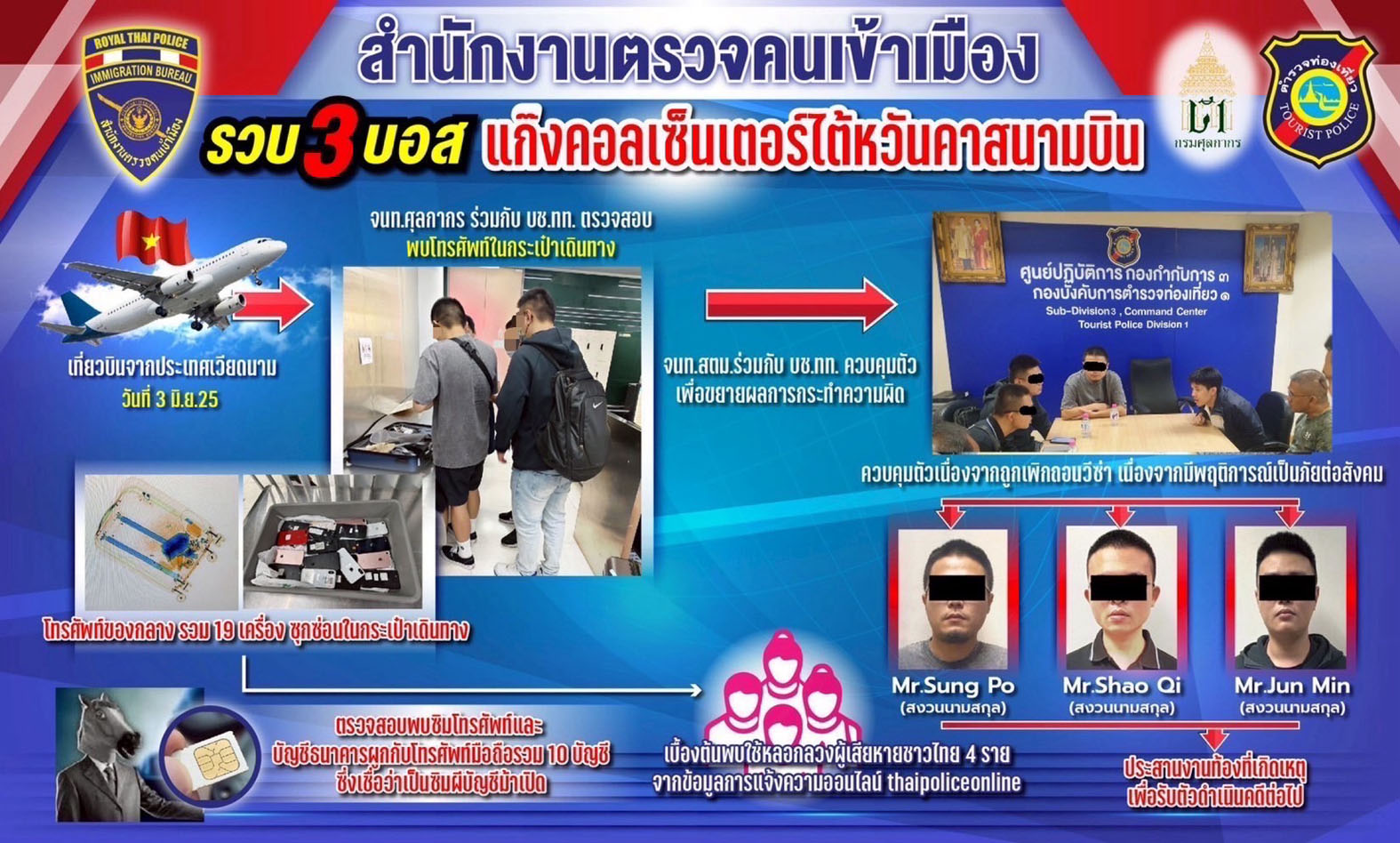
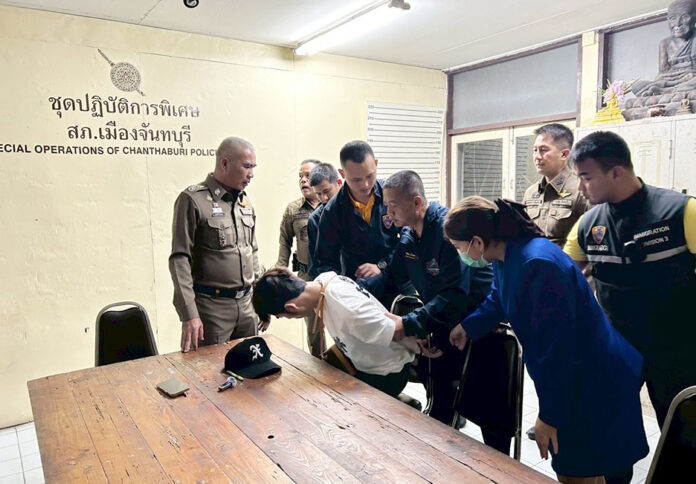
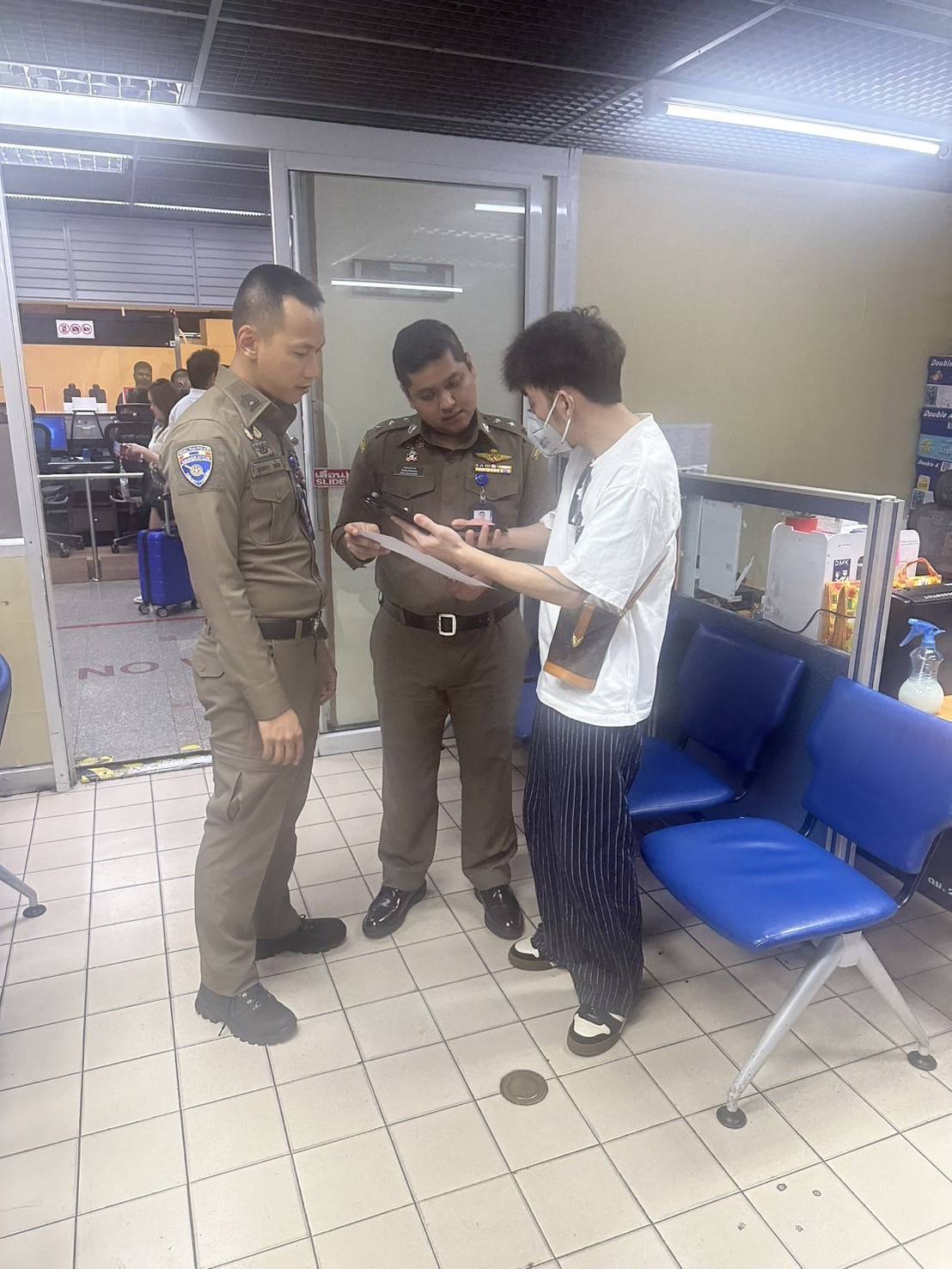
Police officers interrogate three Taiwanese suspects in the scam case at Tourist Police Division 1 on June 3, 2025.
BANGKOK — The recent arrests of foreign suspects who fled to Thailand involve both Chinese and Taiwanese nationals. In the first case, the Chinese authorities requested the Thai authorities to arrest and extradite a suspect. In the second case, three Taiwanese nationals came under suspicion after being caught with 19 mobile phones.
Pol. Maj. Gen. Phanthana Nuchanart, deputy commissioner of the Immigration Department, held a press conference at the Immigration Department on 5 June where he explained both cases in detail.
Chinese Suspect Wanted for $47.2M Fraud
The first suspect is a 55-year-old Chinese citizen named Dong, against whom an arrest warrant was issued on 19 May 2025 for illegally obtaining public funds.
The Embassy of the People’s Republic of China in Thailand had sent an official letter to the Thai Ministry of Foreign Affairs requesting assistance in the arrest and extradition of Mr Dong. He is also on an Interpol Red Notice.
Immigration Police officers arrest a 55-year-old Chinese suspect, who is also on an Interpol Red Notice, at his residence in Li District, Lamphun Province.
Mr Dong is accused of defrauding 878 victims in China with a fake product distribution company. He promised returns of 2% per month and a doubling of investments in two years. The total loss is estimated at 339 million yuan (about 1.542 billion baht or USD 47.2 million).
Dong fled to Thailand and initially stayed in the province of Chachoengsao. When he realised he was under surveillance, he moved to a house in Moo 14, Li Subdistrict, Li District, Lamphun Province. The authorities finally arrested him when he was walking near his residence. He refused to make a statement. The authorities have handed him over to the Chief Public Prosecutor’s Office for extradition.
Suspicious Taiwanese Trio Caught with 19 Phones
In the second case, immigration authorities were informed on 3 June by customs officers at Suvarnabhumi Airport and the Tourist Police about three Taiwanese nationals who had entered the country from Vietnam and attempted to smuggle 19 mobile phones into Thailand for scam operations.
Initial investigations revealed that the phones were already registered with SIM cards and linked to bank accounts, which were then used to defraud Thai victims. These accounts matched four suspect profiles linked to online fraud reports via the Thai police online system in both major cities and regions (Region 6).
Multiple mobile phones belonging to three Taiwanese suspects seized for investigation at Suvarnabhumi Airport on June 3, 2025.Immigration Police chart showing investigation routes and arrests of three Taiwanese suspects who scammed victims across Bangkok and other major cities, displayed at a press conference on June 5, 2025.
The group’s tactics included fake online sales, top-up fraud and currency exchange scams. Victims were tricked into transferring money without ever receiving goods or services. According to the authorities, the scam caused hundreds of thousands of baht worth of damage in several provinces.
Database checks confirmed that this was the trio’s first entry into Thailand. Further investigations revealed that all three had criminal records in Taiwan for money laundering and illegal gambling.
As their activities posed a threat to society, the Thai authorities revoked their permission to stay in the country. They were handed over to investigators from the Third Investigation Division of the Immigration Bureau for prosecution. Authorities are working with local police to pursue the charges and expand the investigation to uncover further financial links to other suspects.
Caltex continues to drive its non-oil businesses under continued collaboration with the Franchise and License Association Thailand (FLA) with “Caltex Partnership Networking 2025”, an event aiming to offer local franchisees business expansion opportunities while enhancing Caltex fuel service stations network’s potential to become the hub of retail outlets and services catering to customers’ diverse needs. Caltex targets to increase the retail outlets’ number to cover 85% of its station network by the end of this year.
Ms. Sompratana Chermsirivatana, Vice President, Retail Business Development, Star Fuels Marketing Limited (SFL), a subsidiary of Star Petroleum Refining Public Company Limited (SPRC) and the exclusive licensee of Caltex fuels in Thailand, said that Caltex has been committed to developing high-quality products and services. The partnership of over 2 years with the FLA has successfully gained positive reception from over 20 branded retail partners in various businesses currently operating at Caltex service stations including food and beverage groups, convenience stores, and other services.
“This year, Caltex, in collaboration with the FLA, has organized “Caltex Partnership Networking 2025” at Thailand Franchise and Business Opportunities 2025 (TFBO) with the goal to provide a venue for investors, Caltex retailers and FLA members to network, exchange ideas, explore mutual business opportunities and expand a new customer base to effectively strengthen their brands and market competitiveness.”
“Caltex has given priority to continuing our partnership with branded retailers under the “Smart Partnership” concept which plays an important role in helping us achieve our non-oil business growth target. This year, we have targeted to increase our retail outlets to cover 85% of our Caltex fuel service station network from the existing 80%. There are currently over 530 Caltex fuel service stations with more than 1,300 retail outlets under the Caltex network across the country. In addition, we continue to actively grow our business and expand our fuel service station network year on year to achieve our sales growth target.”
Meanwhile, Mr. Suthichai Panitnarakul, President of the Franchise and License Association Thailand (FLA), revealed that in 2024, the trade value of franchise businesses in Thailand totaled over 300 billion THB and saw investments exceeding 100 million THB. In 2025, the franchise business market is forecasted to grow around 15-20% amidst ongoing impact from the sluggish economy and franchisors’ business system issues.
However, franchise businesses still have the potential to grow in all sectors. If investors can determine the strengths and identify ways to meet the needs of each franchise market segment, the franchise business market will continue to be an attractive investment option especially in sectors focusing on innovation, health and specialized services which continue to thrive as mainstream businesses in the market now and in the future.
The partnership with Caltex of over the past 2 years has been regarded as one of the FLA’s key missions to help franchise operators access areas with strategic potential and simultaneously nurture and develop Thailand’s franchising industry.
The “Caltex Partnership Networking 2025” event demonstrates the strong partnership between Caltex and over 20 franchise brands which have the potential to expand alongside Caltex fuel service station network. Caltex is well prepared to welcome non-oil retailers to become a part of its fuel service station network to offer joyful experiences to all customers.”
“Caltex has a capable area management team to help our partners select suitable spaces in service stations across the country. The team is also ready to provide support and consultations on investments, management processes as well as other marketing plans. At the same time, the FLA is also available to offer guidance to franchise members to steadily drive and sustain franchise business growth in Thailand that can compete in the international stage, adding value to the overall franchising industry in the kingdom in the future.”
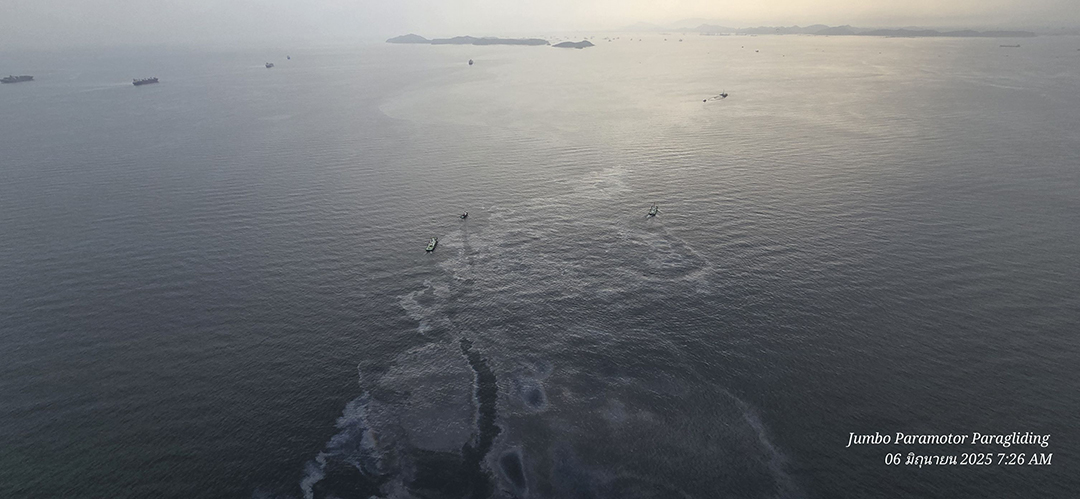
Photo from Jumbo Paramotor Paragliding shows oil spill in the sea from Thai Oil's SBM 2 oil transfer pipeline disconnection during crude oil tanker unloading operations on the morning of June 6, 2025. (Photo credit: Pollution Control Department)
CHONBURI — Government officials and private companies are working to control damage from a crude oil spill at Single Buoy Mooring-2 (SBM-2) of Thai Oil’s refinery in Sri Racha, Chonburi, during oil transfer operations from the Singapore-flagged vessel Phoenix Jamnagar. The incident occurred approximately 13km from shore and 9km from Koh Sichang island in 30-meter-deep waters.
Thai Oil Public Company Limited issued a statement explaining that the spill was caused by force majeure conditions from sudden high waves and strong winds just minutes before midnight on June 5, while workers were halting oil transfer operations according to standard safety procedures.
Oil leaked when the SBM-2’s Breakaway Coupling protection system valve was closing at approximately 11:54 p.m.
“The company had already deployed booms before crude oil transfer operations. Currently, there is no additional oil leakage, and the SBM-2 buoy system sustained no damage,” Thai Oil stated. “Oil slicks on the sea surface resulted from high waves and strong winds causing some oil to escape from the boom line. No injuries occurred from this incident.”
Photo from Jumbo Paramotor Paragliding shows oil spill in the sea from Thai Oil’s SBM 2 oil transfer pipeline disconnection during crude oil tanker unloading operations on the morning of June 6, 2025. (Photo credit: Pollution Control Department)
Government Response Mobilized
Deputy Transport Minister Manaporn Charoensri ordered Marine Department Director-General Krichphet Chaichuay to establish a coordination center for preventing and eliminating marine oil pollution. The Marine Department coordinated with the Royal Thai Navy to set up an incident command center for oil spill cleanup.
Area surveys revealed thin black or brown oil slicks scattered across approximately 100 square meters, moving southward at 1 knot with northeast winds.
Cleanup Operations Underway
The Marine Department deployed the vessel Chonthara Anurak with personnel and equipment including 200 meters of booms, 800 liters of oil dispersant, spray arms, and skimmers. The operation maintains 24-hour readiness to control the situation and minimize oil slick spread.
The Marine Department dispatches vessel Chonthara Anurak with personnel and equipment to eliminate oil spills in the sea, 9km from Koh Sichang, on June 6, 2025.
Coordination includes the National Maritime Interest Protection Command Center and the 1st Naval Area Command, providing land and sea support with personnel, watercraft, aircraft, UAVs, helicopters from Laem Chabang, HTMS Tachai, and Do 228 maritime patrol aircraft.
The Pollution Control Department and Marine and Coastal Resources Department reported that Thai Oil successfully stopped the leak 100%, deployed containment booms around the incident area, and applied oil dispersants. The Pollution Control Department provided OILMAP modeling to the Marine Department and Thai Oil for tracking crude oil movement, with continued environmental monitoring and technical assistance.
Anne Jakkaphong Jakrajutatip, owner of the Miss Universe Organization, arrives for the national costume competition at the Miss Universe Beauty Pageant in San Salvador, Thursday, Nov. 16, 2023. (AP Photo/Moises Castillo)
BANGKOK — Business turmoil has been mounting for Jakapong “Anne” Jakrajutatip, the transgender celebrity businesswoman and former co-owner of Miss Universe Organization.
She has now been forced to resign from all company positions after being charged by the Securities and Exchange Commission (SEC). She is expected to step down from the Miss Universe Organization.
On June 6, JKN Global Group Public Company Limited filed a notification acknowledging the SEC’s charges and the resignation of directors. The company stated that the Office of the Securities and Exchange Commission had filed charges against three individuals with the Department of Special Investigation (DSI): JKN itself, Mr. Jakapong Jakrajutatip (Managing Director and Chief Executive Officer), and Ms. Pimpuma Jakrajutatip (Director and Deputy Managing Director of Content Division).
The charges relate to jointly committing or consenting to false statements and/or maintaining incomplete, incorrect, and inaccurate accounting records in the company’s 2023 annual financial statements and Q1 2024 accounting documents.
Anne Jakkaphong Jakrajutatip, owner of the Miss Universe Organization, stands on the stage during the final round of the 72nd Miss Universe Beauty Pageant in San Salvador, El Salvador, Saturday, Nov. 18, 2023. (AP Photo/Moises Castillo)
“The Company would like to inform you that Jakkaphong Jakrajutatip and
Pimauma Jakrajutatip have submitted their resignation letters to the Company, resigning from their positions as directors, subcommittee members, and executives of the Company, effective from June 5, 2025, onwards,” the notification stated.
SEC Findings Reveal Suspicious Transactions
Beyond the formal charges, the SEC also notified the audit committee of several observations regarding unreasonable content licensing transactions:
Duplicate licensing purchases: JKN purchased licenses in 2024 that duplicated existing, unexpired rights, despite the company’s liquidity problems
Questionable orders: Some purchase orders may not have been genuine, with incomplete accounting records and licensing documentation inconsistent with auditor verification data
Financial discrepancies: From 2020-2023, JKN’s licensing assets increased substantially but were inconsistent with licensing revenue and trade receivables, suggesting the company collected little to no payment from trade debtors
The SEC found that Jakapong and Pimpuma allegedly created fake creditor and debtor accounts recorded in the 2023 financial statements and Q1 2024 documents. This resulted in JKN’s financial statements showing inflated revenue and liabilities.
The manipulation also involved incorrectly recording licensing payables across different periods, making 2023 financial statements understate actual liabilities and assets, while shifting trade payables to 2024 records. These fake creditors were then allegedly used to vote for selecting JKN’s business rehabilitation plan administrator.
Strengthening Efforts Before Downfall
Anne Jakrajutatip once became the first trans woman to own the Miss Universe Organization. She had purchased the pageant organization for $20 million in October 2022. However, the company subsequently faced chaotic financial problems.
She has been struggling to deal with the financial crisis at JKN Global since September 2023, when it faced a crisis for failing to repay a stock loan. She and her sister were forced to sell their shares multiple times.
In January 2024, JKN Global informed the Stock Exchange of Thailand that it had sold ordinary shares in JKN Legacy Inc, an entity operating the Miss Universe Organization (MUO) and owning the copyright to the Miss Universe Brand, to Mexico’s Legacy Holding Group USA Inc (LHG) to become co-owners in a 50:50 split of the MUO.
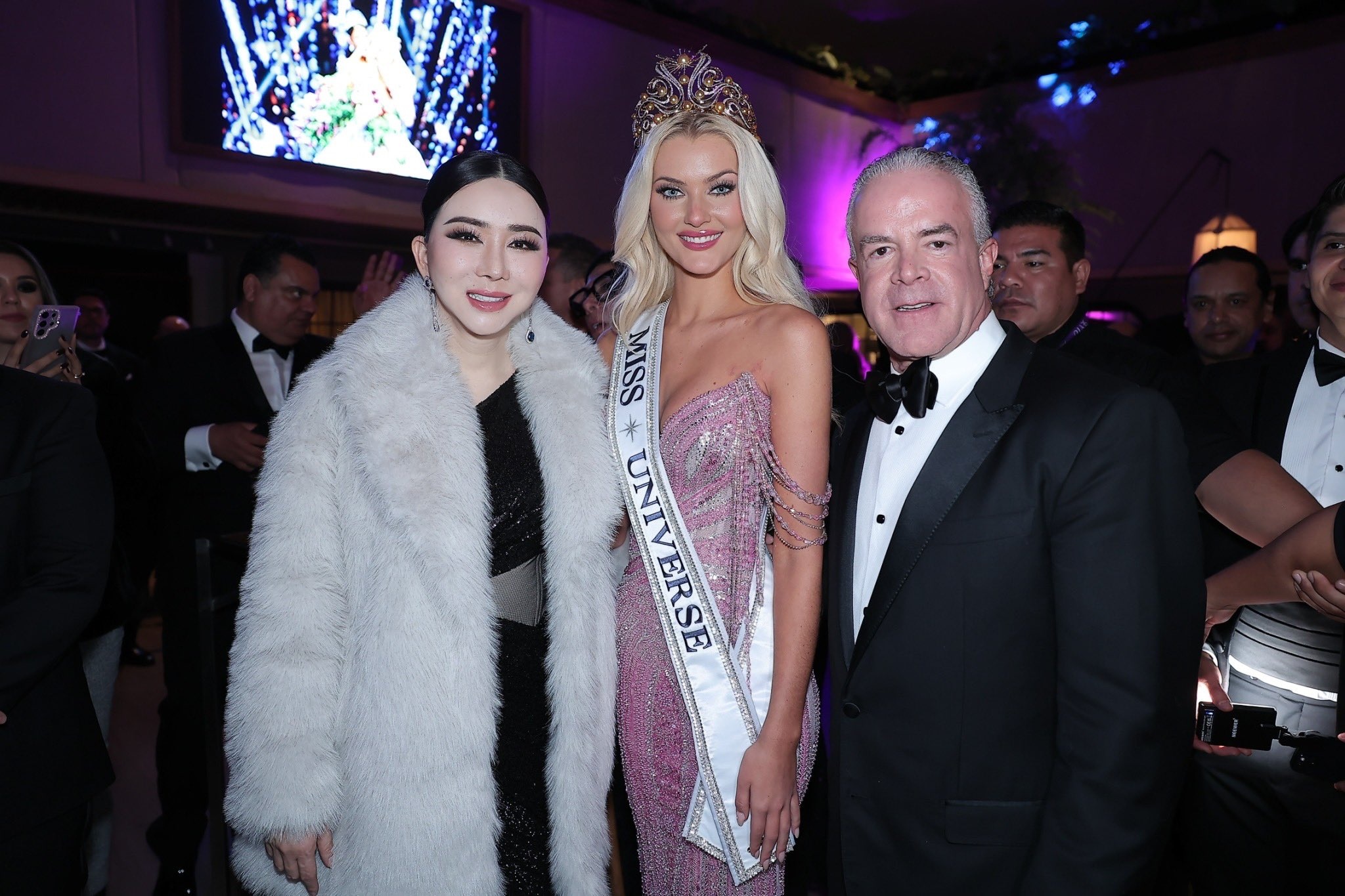
Anne Jakkaphong Jakrajutatip, along with Mexican entrepreneur Raul Rocha Cantu, photographed with 73rd Miss Universe Victoria Kjær Theilvig on November 24, 2024.
Prior to the SEC charges, Anne had been working to strengthen the company’s business alliance. In April, JKN announced key appointments including experienced businessman Songpol Chanmatkit to the board, beauty pageant organizer Nawat Itsaragrisil as Executive Director of Miss Universe Organization, and international business expert Indra Suharjono as Executive Advisor.
Additionally, Miss Grand International Public Company Limited (MGI), led by Nawat, announced it would be allotted 100 million newly issued JKN shares worth 50 million baht.
The case now moves to criminal enforcement procedures involving police investigation, prosecution decisions, and court proceedings. Police Colonel Yutthana Praedam, Director-General of DSI, said on June 6 that the DSI has criteria for consideration under securities and capital market law in cases with damages valued at 100 million baht or more.
The complaint documents from the SEC may enter the process of the Special Case Administration Division, Department of Special Investigation, within the next week.
The DSI will assign the Financial, Banking and Money Laundering Crime Division to be responsible for the investigation. After collecting evidence, analyzing financial and accounting transactions, and examining the behavior of related individuals, summons will be issued for witnesses and suspects to acknowledge the charges according to procedure.
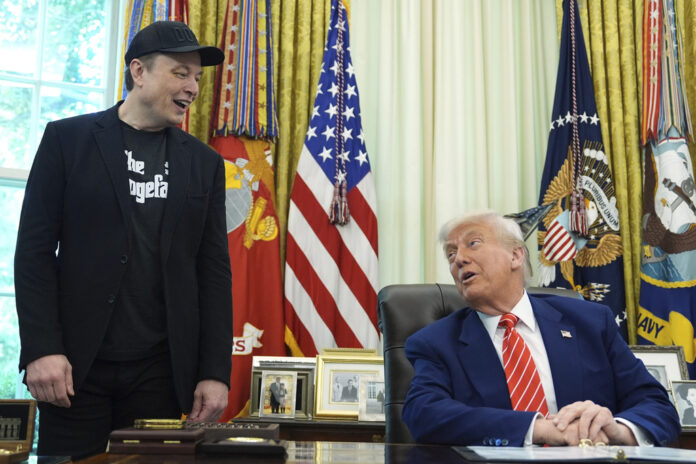
President Donald Trump speaks during a news conference with Elon Musk in the Oval Office of the White House, Friday, May 30, 2025, in Washington. (AP Photo/Evan Vucci)
WASHINGTON (AP) — Maybe it was always going to end this way, with two billionaires angrily posting about each other on social media, fingers flying across pocket-sized screens as their incandescent feud burned hotter by the minute.
But even if the finale was predictable, that didn’t make it any less shocking. After long months when Donald Trump and Elon Musk appeared united in their chaotic mission to remake Washington, their relationship imploded this week like a star going supernova.
It began with Musk complaining about the centerpiece of Trump’s legislative agenda, which the president at first took in stride. Eventually Trump let slip that he was disappointed in his former adviser, prompting Musk to unleash a flood of insults and taunts.
He accused Trump of betraying promises to cut federal spending, shared a suggestion that the president should be impeached and claimed without evidence that the government was concealing information about his association with infamous pedophile Jeffrey Epstein. Perhaps most viciously, Musk insisted that Trump wouldn’t have won last year’s election without his help.
Trump, not one to slouch from a fight, could hold back no longer. He posted that Musk had been “wearing thin,” that he had “asked him to leave” his administration, that the tech titan had “gone CRAZY.”
Maybe, Trump threatened, he should save taxpayer money by canceling government contracts and subsidies for Musk’s companies.
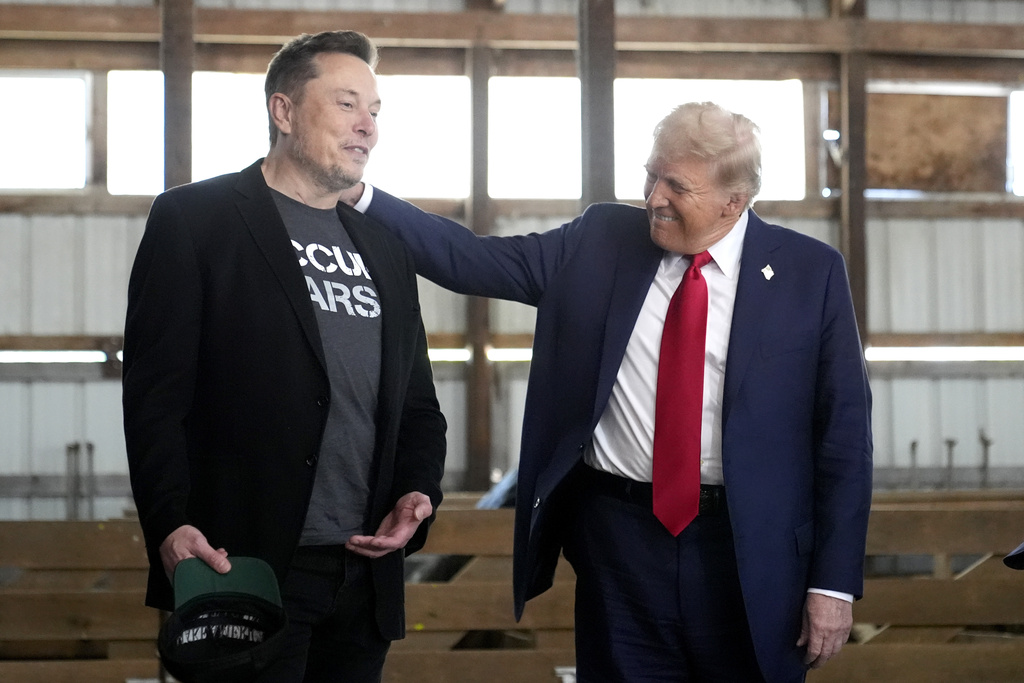
FILE – Tesla and SpaceX CEO Elon Musk, left, and Republican presidential nominee former President Donald Trump attend a campaign event at the Butler Farm Show, Oct. 5, 2024, in Butler, Pa. (AP Photo/Alex Brandon, File)
Bad blood with high stakes
On and on it went, as liberals savored the spectacle of their most despised political opponents clawing at each other’s digital throats and conservatives reeled at the prospect of having to pick sides. Laura Loomer, a right-wing provocateur and conspiracy theorist, saw an opportunity to position herself as the voice of reason.
“This fight should be taken offline,” she said — on social media, of course.
The question now is whether Trump and Musk find some way to step back from a battle that is tearing apart one of the most consequential relationships in modern American politics. If they don’t, there’s little telling how far the fallout could spread from a collision between the world’s most powerful man and its wealthiest.
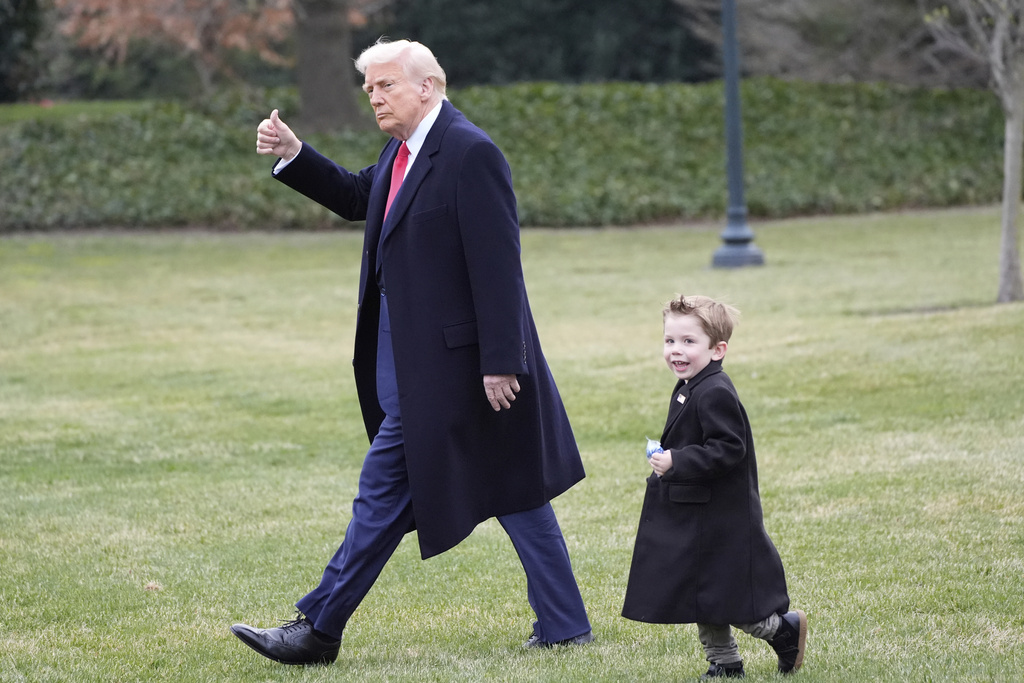
FILE – President Donald Trump walks with Elon Musk’s son X Æ A-Xii on the South Lawn of the White House, March 14, 2025, in Washington to depart on Marine One. (AP Photo/Alex Brandon, File)
“It’s like India and Pakistan,” said Republican Rep. Ryan Zinke of Montana, referring to two nuclear-armed nations that recently skirmished along their border. “It just escalates and neither one of them seem to back down and understand the strength of each other.”
Opposites attracted (for a time)
Trump and Musk were always an odd pairing, with contrasting world views and deep generational and stylistic differences.
Trump, 78, comes from old-school New York real estate and never appears in public without a suit and tie unless he’s on the golf course. Before running for president, he became a household name as a reality television star.
Musk, 53, is an immigrant from South Africa who struck it rich in Silicon Valley. In addition to running Tesla and SpaceX, Musk owns the social media company X. He’s fashioned himself as a black-clad internet edgelord, and his wealth vastly outstrips Trump’s.
But Trump and Musk are kindred spirits in other ways. They’re experts at generating attention who enjoy stirring the pot by riling up their opponents. Each has sought more power to accomplish existential quests. Trump assails the federal “deep state” that resisted him during his first term, while Musk warns about the country going bankrupt from excessive spending and promotes an interplanetary future powered by his rocket technology.
Musk endorsed Trump after the Republican candidate was nearly assassinated in Butler, Pennsylvania, and he began spending millions to support him. His social media megaphone was a powerful addition to Trump’s comeback campaign, magnifying his efforts to court tech leaders and young, very online men.
Trump rarely tolerates sharing the spotlight, but he seemed enamored with his powerful backer, mentioning him in stump speeches and welcoming him onstage at rallies.
After the election, Musk was a fixture around Mar-a-Lago, posing for photos with Trump’s family, joining them for dinner, sitting in on meetings. Instead of growing tired of his “first buddy,” Trump made plans to bring Musk along to Washington, appointing him to lead a cost-cutting initiative known as the Department of Government Efficiency.
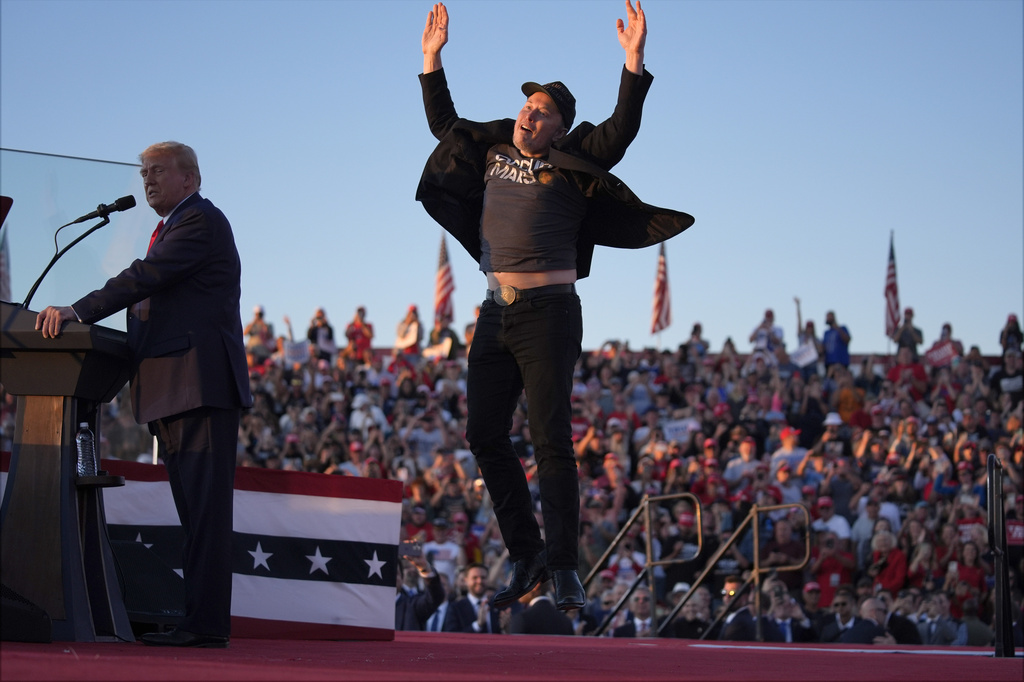
FILE – Elon Musk jumps on the stage as Republican presidential nominee former President Donald Trump speaks at a campaign rally at the Butler Farm Show, Oct. 5, 2024, in Butler, Pa. (AP Photo/Evan Vucci, File)
Cracks emerge
Musk tried to establish himself as the president’s omniscient and omnipresent adviser. He held court in Cabinet meetings, slept over in the Lincoln Bedroom and helped himself to caramel ice cream from the White House kitchen.
The federal bureaucracy practically trembled before Musk, who oversaw layoffs and downsizing with his team of acolytes and engineers embedded in various agencies.
Musk appeared thrilled at his opportunity to tinker with the government and exulted in his bromance with Trump, posting on Feb. 7 that he loved the president “as much as a straight man can love another man.”
Trump returned the favor on March 11, allowing Musk to line up Tesla vehicles on the White House driveway as his company was struggling with declining sales. Trump made a show of choosing a cherry red electric car for himself.
But cracks were emerging, especially as Trump pursued tariffs that could raise costs for Musk’s businesses. Musk said Peter Navarro, the president’s trade adviser, was “truly a moron” and “dumber than a sack of bricks” on April 8.
The billionaire entrepreneur, who had never before worked in public service, seemed to be souring on government. He suggested there wasn’t enough political will, either in Congress or in the White House, to adequately reduce spending.
Trump started signaling that it was time for him to leave even though Musk said he would be willing to stay.
Shortly before announcing his departure, Musk said he was “disappointed” by legislation that Trump called the “big beautiful bill” because it would increase the deficit. The measure includes tax cuts, more money for border security and changes to Medicaid that would leave fewer people with health insurance.
“I think a bill can be big or it could be beautiful,” Musk said. “But I don’t know if it could be both.”
The criticism didn’t prevent Trump from giving Musk a send-off in the Oval Office, where he presented his outgoing adviser with a ceremonial key.
“Elon is really not leaving,” Trump said. “He’s going to be back and forth.”
Musk said, “I’ll continue to be visiting here and be a friend and adviser to the president.”
The implosion comes hard and fast
It’s hard to imagine that now.
Musk escalated his attacks on the legislation Tuesday, calling it a “disgusting abomination,” and Trump tried to fend off the criticism.
“He hasn’t said bad about me personally, but I’m sure that will be next,” the president said Thursday in the Oval Office during a meeting with the German chancellor.
It was.
Musk quickly took to X to vent his anger at Trump, saying his tariffs “will cause a recession in the second half of this year” and accusing him of lying. He also said it was “very unfair” that the legislation would eliminate tax incentives for electric vehicles.
“I don’t mind Elon turning against me, but he should have done so months ago,” the president posted. “This is one of the Greatest Bills ever presented to Congress.”
Meanwhile, some of Trump’s allies plotted revenge.
Steve Bannon, a former Trump adviser who hosts an influential conservative podcast, said the president should direct the U.S. government to seize SpaceX. He also encouraged Trump to investigate allegations that Musk uses drugs and “go through everything about his immigration status” in preparation for potential deportation.
“We’ll see how good Elon Musk takes a little of that pressure,” Bannon said, “because I happen to think a little of that pressure might be coming.”
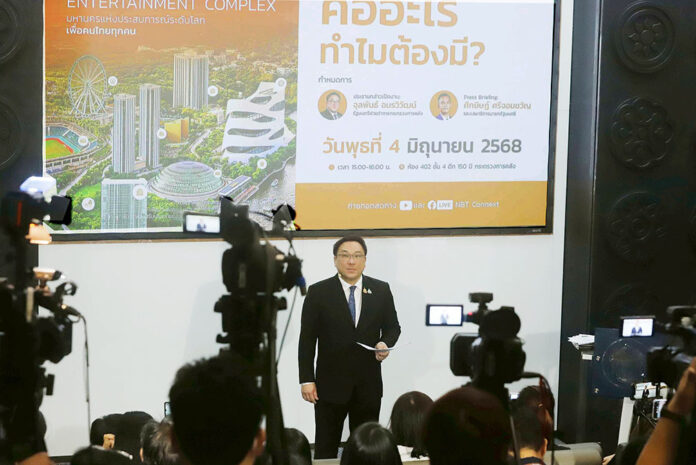
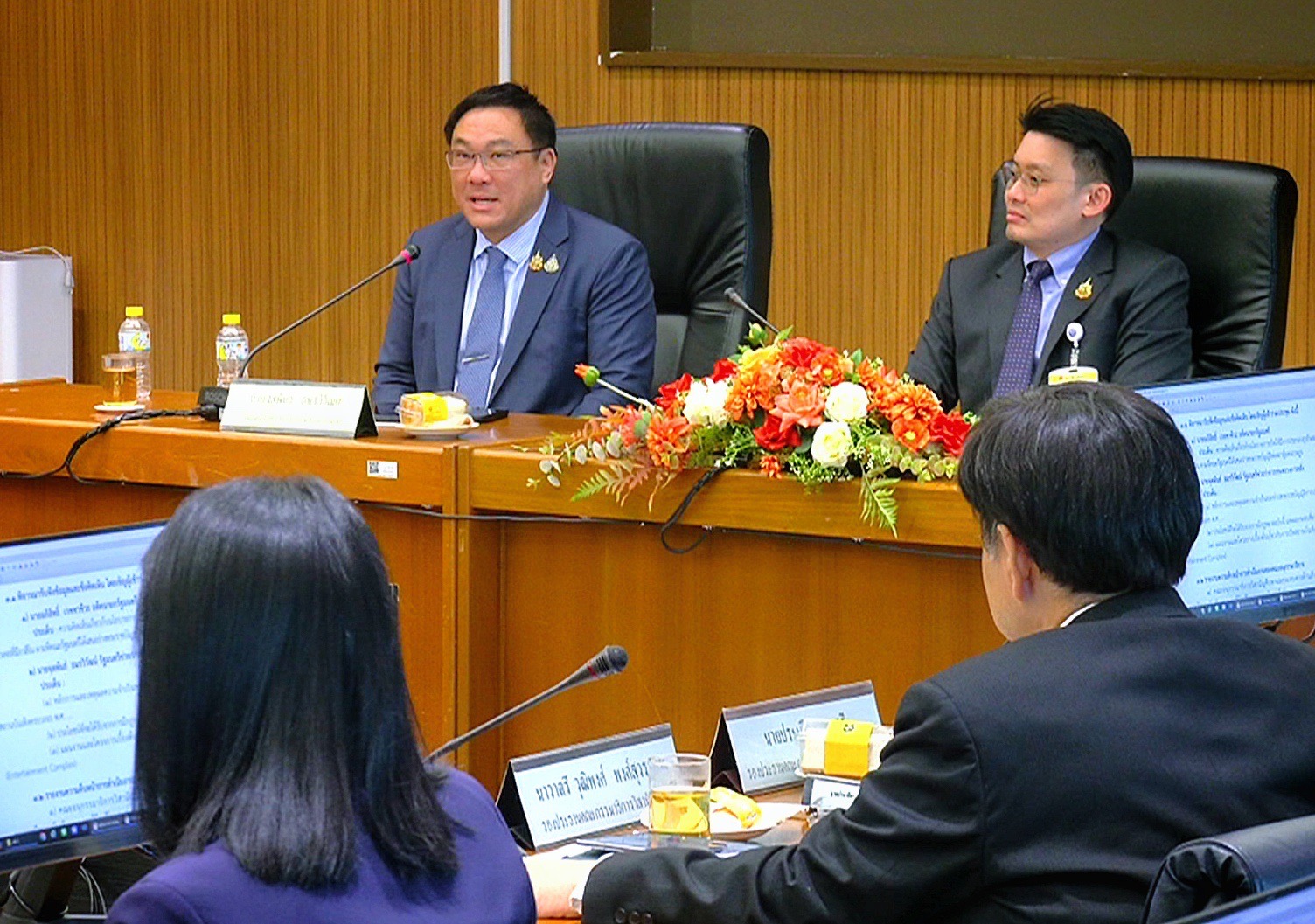
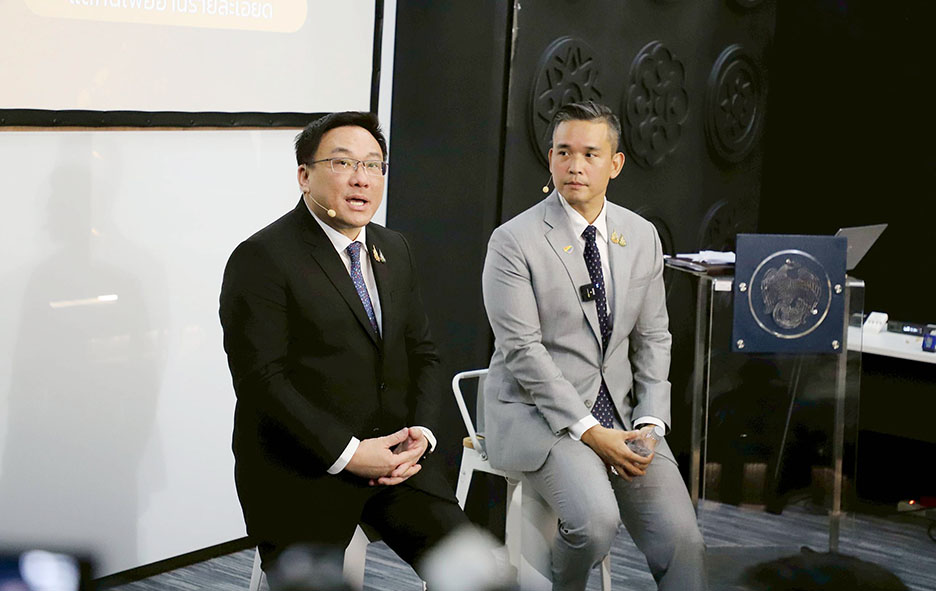
Deputy Finance Minister Julapun Amornvivat presents the operational plan for the THAILAND ENTERTAINMENT COMPLEX project for the country's future economy at the Ministry of Finance on June 4, 2025.
BANGKOK — Investors believe that Thailand could become the third largest centre for entertainment complexes in the world after Las Vegas and Macau in the next 5–10 years, which could generate 39 billion baht ($1.2 billion) in revenue for the state, said Thai minister.
Deputy Finance Minister Julapun Amornvivat reiterated the government’s determination to push ahead with legislation for the development of entertainment complexes, with the aim of passing the bill during the current government’s term.
On June 5 in Parliament, Julapun presented details to the Senate Select Committee looking into the establishment of integrated entertainment complexes and listened to concerns to help refine the proposal.
He emphasized that an integrated entertainment complex is not a gambling den, but rather a large-scale investment. He acknowledged that many sectors are opening up platforms for discussion, which he believes will help to concretize the concept.
Deputy Finance Minister Julapun Amornvivat (left) presents the operational plan for the Thailand Entertainment project to the Senate Select Committee at Parliament in Bangkok on June 5, 2025.
Casino Cannot Be Excluded
In response to suggestions from some groups to remove the casino element from the entertainment complex, Julapun said that this model is widely used internationally to attract tourists. He emphasized that competition for tourist spending is intense and Thailand cannot afford to stand idle while other countries capture larger shares of the tourism market.
As an example, he cited Disneyland, which had decided against investing in Thailand in the past due to perceived investment risks. However, he said that attracting a brand like Disney could now become a reality through the development of an entertainment complex.
Such a complex would signal to investors that there is a strong population base and consistent tourist traffic in the region, factors that help build confidence that this type of investment can be successful. It’s a logical step in the business process.
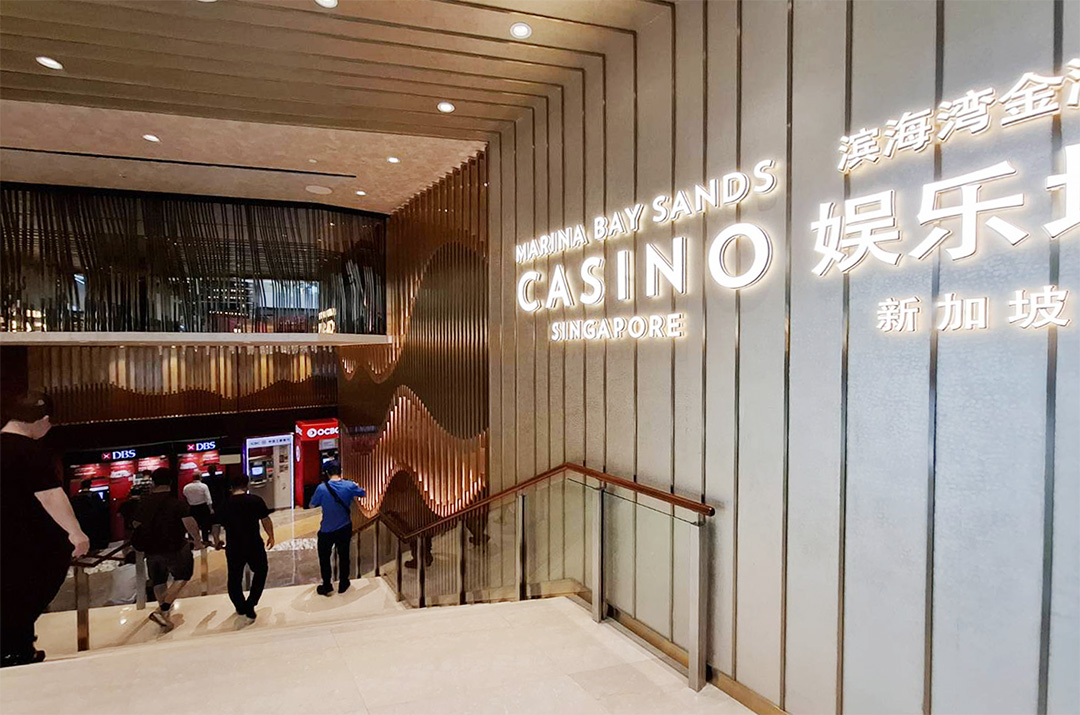
The Casino at Marina Bay Sands spans four luxurious levels. It is located at 10 Bayfront Avenue, Singapore. (Pravit Rojanaphruk)
Set 2-Year Deadline for the Bill
Asked if the law on the entertainment complex will be passed before the end of the current legislative session, Julapun said this is an important goal the government will strive for. He emphasized that passing a tangible and implementable law would help boost investor confidence in the various sectors. He believes that the two-year timeframe is sufficient to make the necessary adjustments and finalise the legislation.
Earlier in Thailand Entertainment Complex: A World-Class Experience Hub, Mr Julapun shared that global investors involved in the entertainment industry are confident that Thailand could become the third largest entertainment complex in the world within 5—10 years – after Las Vegas in the US and Macau in China. If the project is realised, Julapun said, it would bring immense economic benefits to the country.
“We are not inferior to other countries, within or outside ASEAN, that compete in the tourism sector,” said Mr Julapun. “Thailand offers nature and cultural tourism, strong infrastructure, a comprehensive transport network and large hotels throughout the country. We also already have a solid tourist base of over 30 million visitors. So when it comes to investing in entertainment complexes, Thailand is clearly competitive.”
Deputy Finance Minister Julapun Amornvivat and Deputy Secretary-General to the Prime Minister Suksit Srichomkwan present the operational plan for the THAILAND ENTERTAINMENT COMPLEX project for the country’s future economy at the Ministry of Finance on June 4, 2025.
Increase Tourists and Revenue
Suksit Srichomkwan, deputy secretary-general to the prime minister, added that the entertainment complex is just one of many strategies to improve the tourism sector. More importantly, it is a tool to boost the economy, create jobs, generate income and ensure that Thailand no longer has an “off-season.”
The expected benefits include increasing tourist spending per trip by about 22,300 baht ($685) per person, increasing the number of tourists by 5–20% annually and increasing the number of tourists by 13% during the traditional low season, resulting in a more consistent flow of tourism throughout the year.
The global market opportunity for entertainment complexes is estimated at 54 trillion baht annually. By comparison, in 2022, integrated entertainment complexes in Vietnam generated annual revenue of around 180 billion baht ($5.5 billion), in South Korea 320 billion baht ($9.8 billion) and in Singapore 430 billion baht ($13.1 billion).
These figures from neighboring countries clearly show the economic potential. In Thailand, the projected annual revenue from such complexes amounts to 39 billion baht ($1.2 billion).
As far as the casino areas are concerned, not everyone will be allowed in. Casinos will be strictly regulated under stringent laws and global monitoring standards. These include responsible gaming measures, entry bans, player registration and tracking, as well as wider social responsibility initiatives, such as scholarship funding, corporate social responsibility (CSR) programs and prevention and rehabilitation efforts. The details will be set out in the forthcoming legislation.
Chanthaburi Provincial Police officers arrest a Chinese suspect who escaped by jumping from the 2nd floor of Pattaya City Police Station building on June 5, 2025.
PATTAYA — Thai police have successfully apprehended a Chinese man wanted on fraud charges who escaped by jumping from the Pattaya City Police Station on Thursday evening.
Li Jian, a 38-year-old Chinese national, was captured in Chanthaburi Province on June 5 after local residents spotted him and promptly reported the tip to police authorities. Chanthaburi Provincial Police and Immigration officers then transported him back to Pattaya City Police Station.
The Fraud Case
The Chinese suspect was initially arrested by immigration officers at Don Mueang Airport in Bangkok at 3:48 p.m. on June 4 as he prepared to board a flight to Da Nang, Vietnam. The arrest followed the discovery of an outstanding warrant issued by Pattaya Provincial Court on fraud charges.
Investigations revealed that Li and the victim were former friends. The suspect had requested to exchange Chinese yuan for USDT digital currency for investment purposes. The victim transferred 38,712.77 USDT tokens, valued at over 1.26 million baht, in exchange for 178,000 yuan. However, Li failed to transfer the agreed amount, prompting the victim to file a police complaint.
Immigration officers at Don Mueang Airport arrest a 38-year-old Chinese suspect of fraud case, as he prepared to board a flight to Da Nang, Vietnam on June 4, 2025.
The Dramatic Escape
After his arrest, Don Mueang Airport immigration officials coordinated with Pattaya Police Station to transfer the suspect for legal proceedings just before 1:00 a.m. on June 5.
During questioning, Li seized an opportunity when the investigating officer was momentarily distracted. He opened a sliding glass window on the second floor at the back of the detention facility and jumped into Soi 9 beside the police station before fleeing.
A police officer who attempted to pursue him by jumping down sustained injuries after hitting a wooden chair below and was unable to continue the chase.
The Manhunt
Following the escape, Police Lieutenant Colonel Anek Sathong-Yu, Chief of Pattaya City Police Station, immediately ordered the deployment of detective units and patrol officers throughout the Pattaya area. Authorities sealed off various routes and reviewed CCTV footage from multiple angles to track down the fugitive.
Police Major General Thawatchkiet Jindakuansanong, Commander of Chonburi Provincial Police, appealed to the public for assistance, urging anyone who spotted the suspect to contact authorities at 191, available 24 hours a day.
The Recapture
Later, Chanthaburi Provincial Police officers received a report from locals who saw Li leaving his hotel room and walking in front of the hotel on Maharaj Road, leading to his immediate arrest.
Li confessed that after jumping and escaping from the Pattaya City Police Station building, he had hired a taxi for 4,000 baht to take him to the Chanthaburi area with plans to flee across the border. However, he was caught before he could escape.
The 1st Special Forces Division conducts training on June 5, 2025 to prepare to support the Thai Army's mission in the east where there is ongoing border conflict with Cambodia.
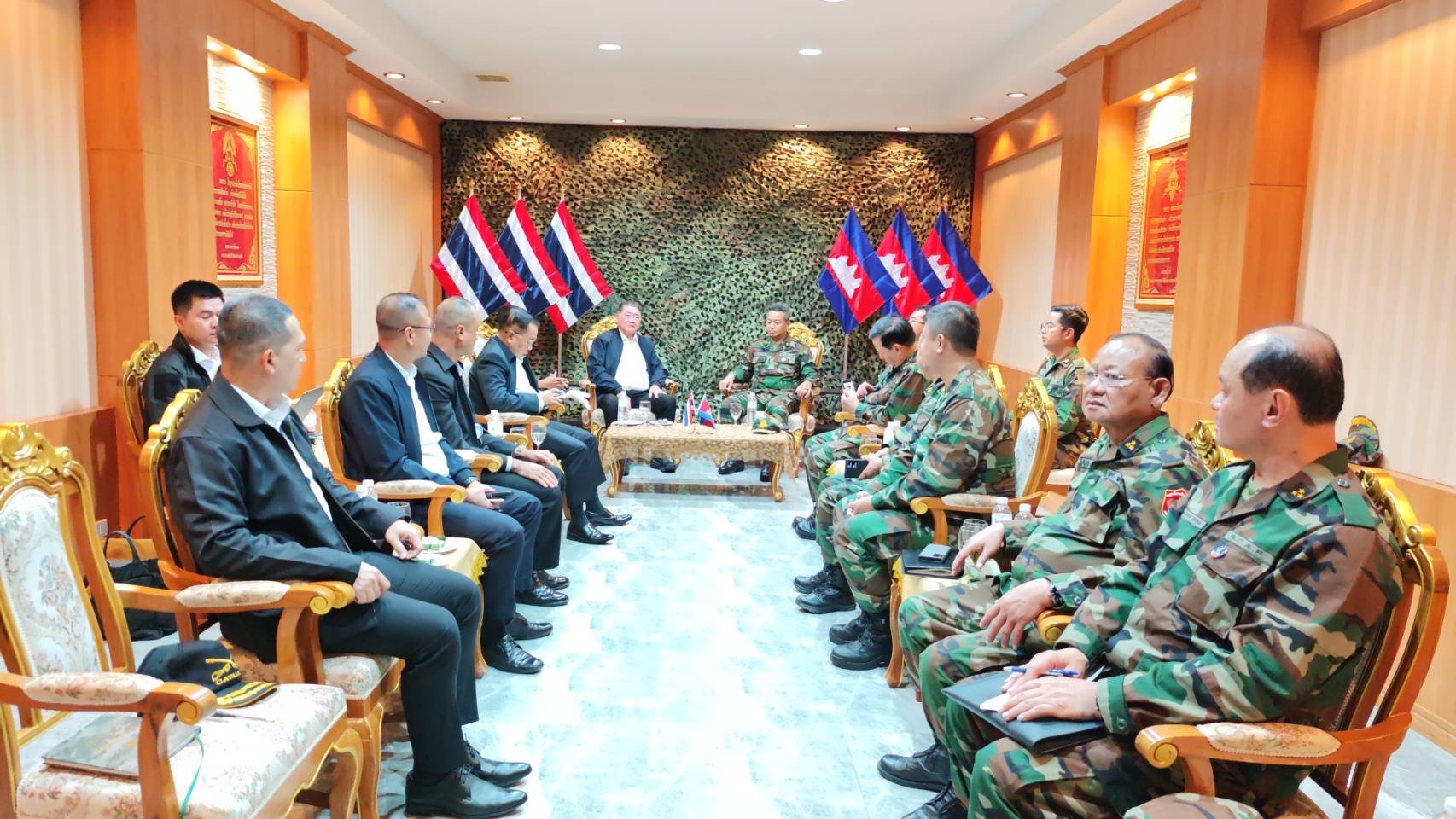
BANGKOK — Tensions between Thailand and Cambodia remain high as nationalist movements in both countries intensify following a brief border skirmish that left one Cambodian soldier dead, threatening the personal friendship between the ruling Shinawatra and Hun families.
The incident occurred in the Chong Bok area bordering Thailand’s Ubon Ratchathani province, which Cambodia identifies as a Cambodian army position in Techo Morokot Village, Morokot Commune, Choam Khsan District, Preah Vihear Province.
Conflicting Accounts of Border Clash
Cambodia maintains that Thai forces fired first, while the Thai military, despite expressing regret over the loss of life, insists that Cambodian forces initiated the shooting, prompting Thai troops to return fire in accordance with international law.
Following a May 29 meeting between military leaders from both countries, where both sides pledged to resolve disputes peacefully, the situation appeared to improve. However, the political complexity surrounding the close personal relationship between the two countries’ leaders has provided ammunition for nationalist groups to attack both Thailand’s Shinawatra family and Cambodia’s Hun family.
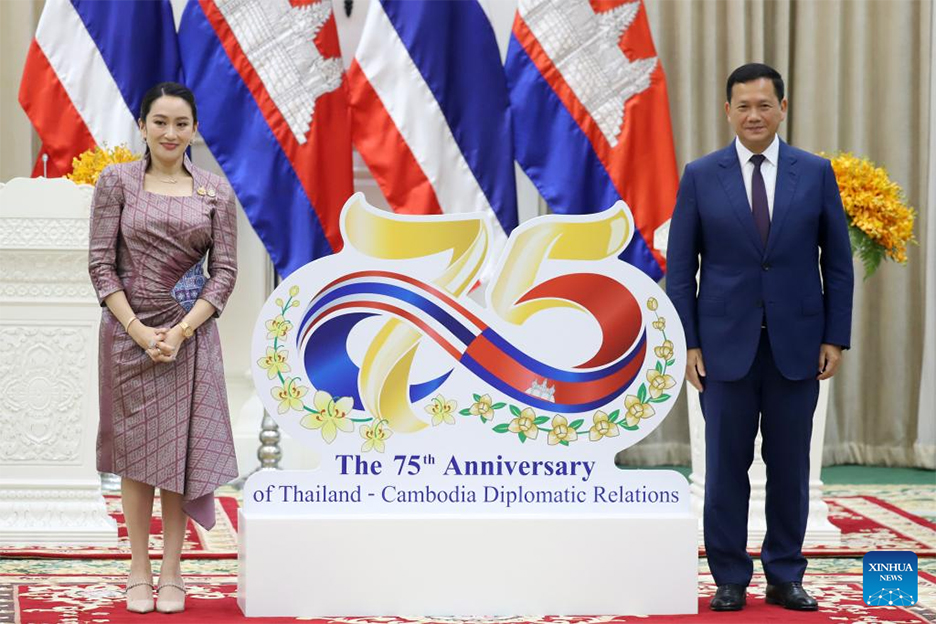
Cambodian Prime Minister Hun Manet (R) and visiting Thai Prime Minister Paetongtarn Shinawatra unveil a plaque marking the 75th anniversary of diplomatic relations between the two countries in Phnom Penh, Cambodia on April 23, 2025. (Photo by Nitola/Xinhua)
PM Faces Direct Questions
Social media has been flooded with messages supporting military forces and sharing images of combat preparations, alongside extensive military exercises conducted by both sides along land and sea borders.
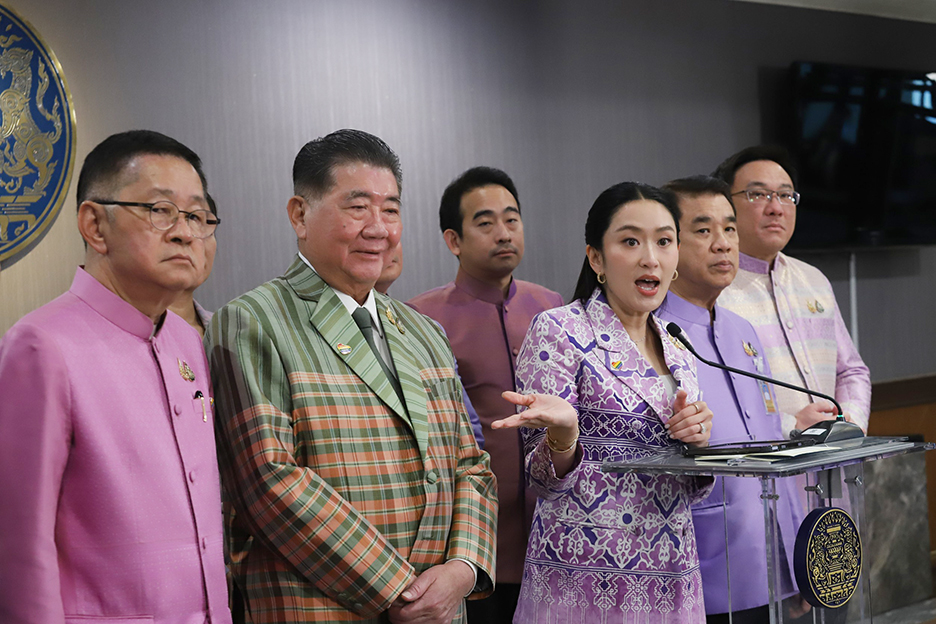
During a June 4 press conference at Government House, reporters directly questioned Prime Minister Paetongtarn Shinawatra about criticism that she appeared too soft due to personal relationships between the two families.
“Even though our two families are friends, it doesn’t mean we would allow the country to lose its interests,” the female PM responded. “If friends have a disagreement one day, we try to understand each other. But if a friend asks for your house, no friend would just give it away.”
When asked about the apparent disconnect between the positions of Senate President Hun Sen and Prime Minister Hun Manet versus the actual situation, Paetongtarn emphasized Thailand’s commitment to peaceful approaches: “If we choose violence in response to violence, will that create peace? If we can choose peaceful methods, and we still can choose them now, we will.”
Prime Minister Paetongtarn Shinawatra responds to media questions about tensions with Cambodia during a press conference on June 4, 2025.
Border Intrusion Claims
When a reporter claimed that Cambodian troops had crossed 200 meters into Thai territory, violating agreements, the PM immediately responded, “Have you actually been down to see the real area?” She smiled when the reporter admitted the Defense Ministry delegation hadn’t taken them to the ground.
This exchange between the reporter and PM sparked opposition party members to attack Paetongtarn for lacking maturity, while nationalist groups and anti-Shinawatra factions launched widespread criticism on social media.
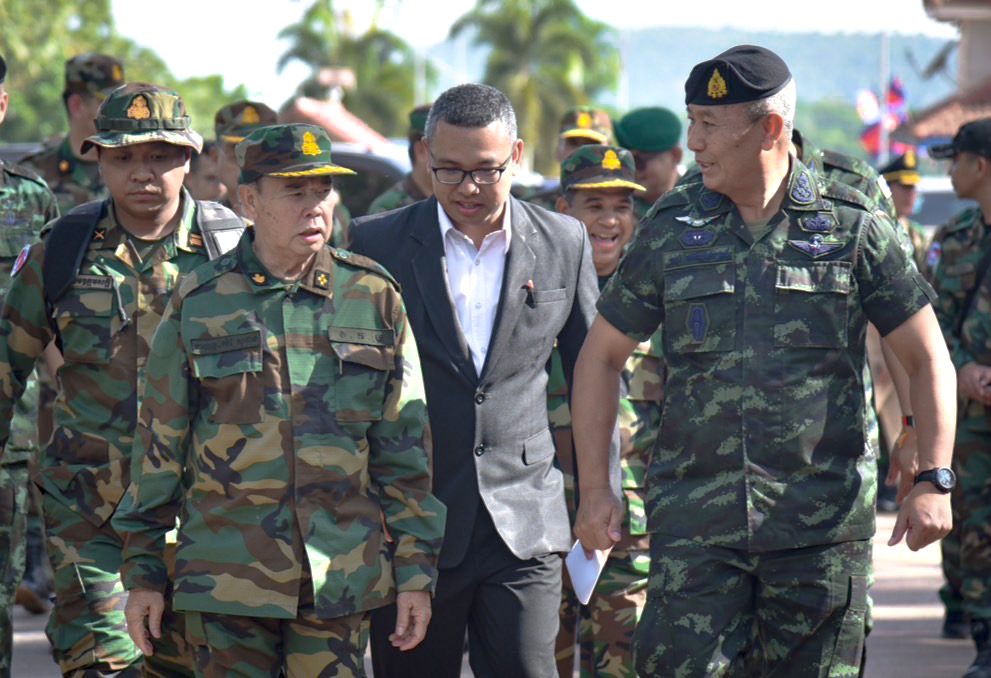
Thai Army Chief Gen. Pana Klaewplodthuk and his Cambodian counterpart, Lt. Gen. Mao Sophan, met Thursday afternoon, May 29, 2025, at the Chong Chom border pass in Surin province to de-escalate tensions following a clash between soldiers that resulted in one Cambodian fatality.
ICJ Referral Threat
Beyond facing negative public sentiment, the Thai government is under additional pressure from Cambodia’s new statement refusing to negotiate territorial disputes through the Joint Commission on Demarcation of Land Boundary (JBC) scheduled for June 14, 2025, in Phnom Penh, instead threatening referral to the International Court of Justice (ICJ) in The Hague.
“Cambodia will continue to engage through existing bilateral frameworks and will host the next meeting of the Joint Commission on JBC on 14 June 2025 in Phnom Penh. However, given the referral to the ICJ, the four aforementioned areas — Moin Bel, Ta Moan Thom Temple, Ta Moan Tauch Temple, and Ta Krabel Temple — to the International Court of Justice will not be included on the agenda of the upcoming JBC session,” the statement read.
Thailand’s Response
Prime Minister Paetongtarn convened with policy advisors, including the Defense and Foreign Ministers, before issuing a second statement regarding Cambodia’s intention to refer the territorial dispute to the ICJ. Thailand reiterated that it has not accepted ICJ jurisdiction over various disputes since 1960 and emphasized that current issues should be resolved only within the affected areas without expanding the scope.
“The most important issue at hand is that both sides must focus solely on addressing and resolving the said incident, and avoid expanding it further as it will add unnecessary complexity,” the statement concluded.
Phumtham Wechayachai, Deputy Prime Minister and Minister of Defence, and General Tea Seiha, Cambodian Deputy Prime Minister and Minister of Defence, along with their delegations, exchange views and explore solutions for existing issues between the two sides in Sa Kaeo on June 5, 2025.
Defense Ministers Meet for De-escalation
Meanwhile, on June 5, Phumtham Wechayachai, Deputy Prime Minister and Minister of Defence, along with General Natthapol Nakpanich, Deputy Minister of Defence, General Thongchai Rodloy, Army Chief of Staff, and their delegation, met with General Tea Seiha, Cambodian Deputy Prime Minister and Minister of Defence, General Eth Sarath, Deputy Commander-in-Chief and Joint Chief of Staff, and and their delegation in Sa Kaeo, Thailand.
Both countries agreed to proceed according to the existing cooperation mechanisms to achieve concrete conclusions and to adjust forces in the area to reflect the 2024 deployment. They also emphasized the importance of using bilateral mechanisms as the primary tool for driving cooperation and resolving issues together, aiming to sustainably strengthen the good relations between both nations.
Bangkok, – As the transition to electric mobility continues to accelerate globally, the 4th International Conference Charging & Battery ASEAN will bring together industry leaders, policymakers, and technology innovators in Thailand’s capital. With a strong regional focus, the event will address the pressing questions that will shape Southeast Asia’s role in the evolving battery and EV landscape.
The opening day will begin with a focus on the electrification of commercial vehicles and buses in ASEAN. Virat Patel, Managing Director of Pioneer Consulting Asia-Pacific, will outline the structural and strategic differences between Western and ASEAN markets, emphasizing infrastructure gaps and consumer perception as major challenges for EV adoption. Ralf Kraemer, CEO of Daimler Truck Thailand, will follow with a keynote on Thailand’s electric truck market, highlighting infrastructure needs as central to scalable fleet integration. The discussion will then broaden to charging logistics, with contributions from The Mobility House and Plugit, offering insights into optimized solutions for commercial fleets across the region.
A central topic on the first day will be the evolving EU Battery Regulation (2023/1542) and its implications for ASEAN stakeholders. Presentations by TÜV SÜD and AVL Technologies will explore compliance strategies, new testing standards, and the potential of digital battery passports to not only ensure traceability but also unlock new business models. TÜV Rheinland will shed light on the carbon footprint criteria under the regulation, framing sustainability as both a regulatory and strategic priority.
The first day will conclude with a closer look at battery recycling and second-life applications, as Umicore Thailand will present Thailand’s role in closing the battery loop. This topic, highlighting circular economy approaches, will bridge regulation and innovation in sustainable battery management.
On the second day, attention will turn to premium EV market dynamics and charging efficiency. Krisda Utamote of BMW Group Thailand will present an overview of Thailand’s premium EV segment, pointing out opportunities amidst global volatility. Chantakorn David Gridwitchayayarkarn of EVAT will expand on infrastructure progress and ecosystem readiness, positioning Thailand as an emerging EV hub in the region. These discussions will be followed by sessions on modular battery design, intelligent in-vehicle charging ecosystems powered by generative AI, and the role of microgrid applications for decentralized power solutions Peter Willemsen, Webasto President & EVP Region APAC, Pascal Bergougnou, Amazon Web Services and Jochen Siebert, Managing Partner of JPW Asia Consulting.
A key discussion in the afternoon will address geopolitical influences on EV battery supply chains. John H. Kwon from global battery leader CATL will analyze how U.S. policy shifts and resource nationalism are expected to reshape global sourcing strategies, especially for mineral-rich Asian economies.
The final segment will explore hydrogen as a future technology for Thailand. Suwanchotchoung Narun from the Hydrogen Thailand Association will present upcoming infrastructure initiatives and pilot projects. Christian Biedermann from Bosch will round off the session with an overview of hydrogen systems in mobility, contrasting fuel cell and H₂ engine technologies and emphasizing the company’s commitment to scalable hydrogen solutions in Southeast Asia.
With delegates expected from across the ASEAN region and international experts, the conference will provide a vital platform for knowledge exchange and strategic dialogue.
From battery innovation to charging technologies and solutions to regulatory alignment and digital integration, the event will demonstrate that Southeast Asia, and Thailand in particular, is preparing to play a central role in the global mobility transformation.
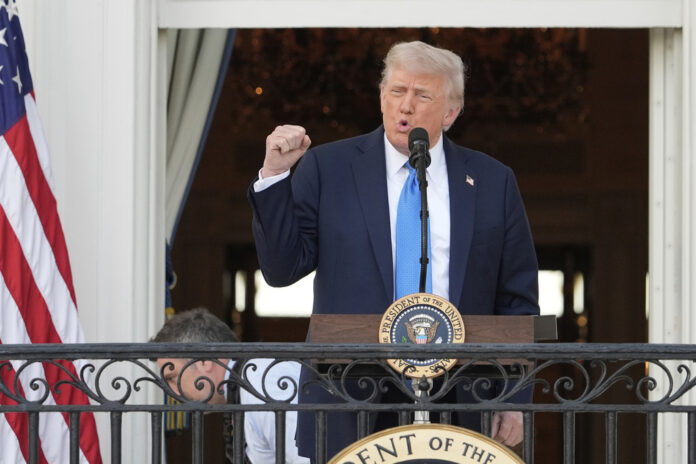
President Donald Trump speaks during a summer soiree on the South Lawn of the White House, Wednesday, June 4, 2025, in Washington. (AP Photo/Alex Brandon)
WASHINGTON (AP) — President Donald Trump on Wednesday resurrected a hallmark policy of his first term, announcing that citizens of 12 countries would be banned from visiting the United States and those from seven others would face restrictions.
The ban takes effect Monday at 12:01 a.m., a cushion that may avoid the chaos that unfolded at airports nationwide when a similar measure took effect with virtually no notice in 2017. Trump, who signaled plans for a new ban upon taking office in January, appears to be on firmer ground this time after the Supreme Court sided with him.
Some, but not all, 12 countries also appeared on the list of banned countries in Trump’s first term. The new ban includes Afghanistan, Myanmar, Chad, the Republic of Congo, Equatorial Guinea, Eritrea, Haiti, Iran, Libya, Somalia, Sudan and Yemen.
There will be heightened restrictions on visitors from Burundi, Cuba, Laos, Sierra Leone, Togo, Turkmenistan and Venezuela.
In a video released on social media, Trump tied the new ban to Sunday’s terror attack in Boulder, Colorado, saying it underscored the dangers posed by some visitors who overstay visas. The suspect in the attack is from Egypt, a country that is not on Trump’s restricted list. The Department of Homeland Security says he overstayed a tourist visa.
Trump said some countries had “deficient” screening and vetting or have historically refused to take back their own citizens. His findings rely extensively on an annual Homeland Security report of visa overstays of tourists, business visitors and students who arrive by air and sea, singling out countries with high percentages of remaining after their visas expired.
“We don’t want them,” Trump said.
The inclusion of Afghanistan angered some supporters who have worked to resettle its people. The ban makes exceptions for Afghans on Special Immigrant Visas, generally people who worked most closely with the U.S. government during the two-decade-long war there.
Afghanistan was also one of the largest sources of resettled refugees, with about 14,000 arrivals in a 12-month period through September 2024. Trump suspended refugee resettlement his first day in office.
“To include Afghanistan — a nation whose people stood alongside American service members for 20 years — is a moral disgrace. It spits in the face of our allies, our veterans, and every value we claim to uphold,” said Shawn VanDiver, president and board chairman of #AfghanEvac.
Trump wrote that Afghanistan “lacks a competent or cooperative central authority for issuing passports or civil documents and it does not have appropriate screening and vetting measures.” He also cited its visa overstay rates.
Haiti, which avoided the travel ban during Trump’s first term, was also included for high overstay rates and large numbers who came to the U.S. illegally. Haitians continue to flee poverty, hunger and political instability deepens while police and a U.N.-backed mission fight a surge in gang violence, with armed men controlling at least 85% of its capital, Port-au-Prince.
“Haiti lacks a central authority with sufficient availability and dissemination of law enforcement information necessary to ensure its nationals do not undermine the national security of the United States,” Trump wrote.
The Iranian government government offered no immediate reaction to being included. The Trump administration called it a “state sponsor of terrorism,” barring visitors except for those already holding visas or coming into the U.S. on special visas America issues for minorities facing persecution.
Other Mideast nations on the list — Libya, Sudan and Yemen — all face ongoing civil strife and territory overseen by opposing factions. Sudan has an active war, while Yemen’s war is largely stalemated and Libyan forces remain armed.
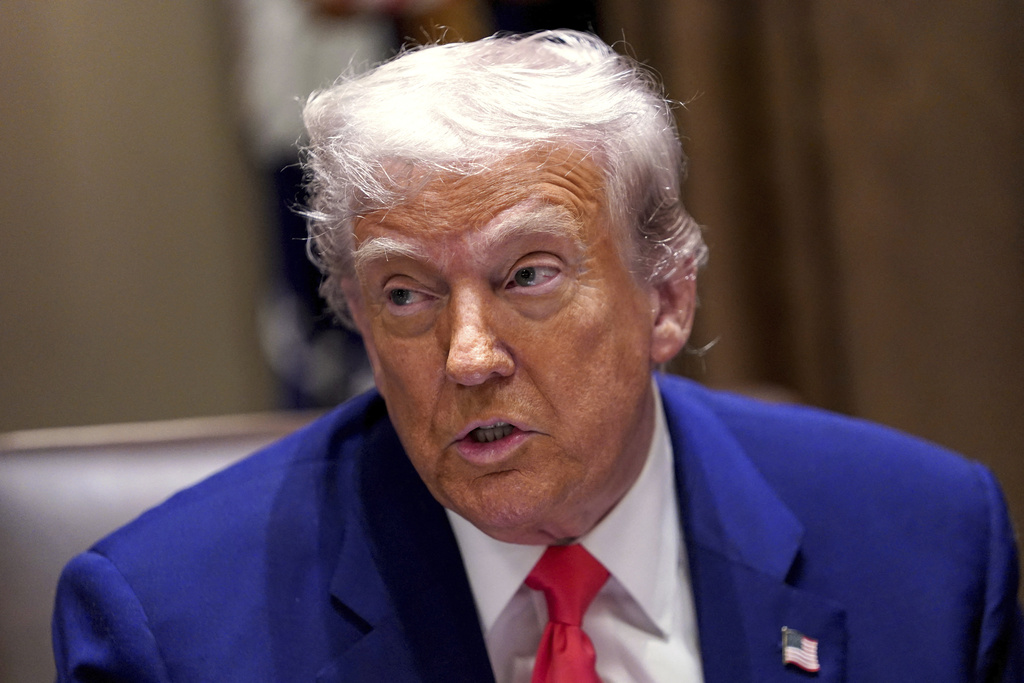
President Donald Trump speaks at a cabinet meeting in the Cabinet Room of the White House, Thursday, April 10, 2025, in Washington. (Pool via AP)
International aid groups and refugee resettlement organizations roundly condemned the new ban. “This policy is not about national security — it is about sowing division and vilifying communities that are seeking safety and opportunity in the United States,” said Abby Maxman, president of Oxfam America.
The travel ban results from a Jan. 20 executive order Trump issued requiring the departments of State and Homeland Security and the Director of National Intelligence to compile a report on “hostile attitudes” toward the U.S. and whether entry from certain countries represented a national security risk.
During his first term, Trump issued an executive order in January 2017 banning travel to the U.S. by citizens of seven predominantly Muslim countries — Iraq, Syria, Iran, Sudan, Libya, Somalia and Yemen.
It was one of the most chaotic and confusing moments of his young presidency. Travelers from those nations were either barred from getting on their flights to the U.S. or detained at U.S. airports after they landed. They included students and faculty as well as businesspeople, tourists and people visiting friends and family.
The order, often referred to as the “Muslim ban” or the “travel ban,” was retooled amid legal challenges, until a version was upheld by the Supreme Court in 2018.
The ban affected various categories of travelers and immigrants from Iran, Somalia, Yemen, Syria and Libya, plus North Koreans and some Venezuelan government officials and their families.
Trump and others have defended the initial ban on national security grounds, arguing it was aimed at protecting the country and not founded on anti-Muslim bias. However, the president had called for an explicit ban on Muslims during his first campaign for the White House.