A small police plane is seen crashed into the sea killing at least 5 people on board in Prachuab Kiri Khan province, western of Thailand, Friday, April 25, 2025. (Royal Thai Police)
HUA HIN — A Royal Thai Police aircraft crashed into the sea shortly after takeoff in Hua Hin on Friday morning, killing six officers, one of whom died in the afternoon at a hospital, officials said.
The Viking DHC-6 Twin Otter went down approximately 100 meters offshore while conducting a test flight in preparation for parachute training exercises in the popular beach resort town.
“The plane was performing a test flight to prepare for parachute training exercises in Hua Hin district before it crashed around 8 a.m.,” Royal Thai Police spokesperson Archayon Kraithong confirmed.
Investigators reported that the aircraft lost stability shortly after leaving the runway. Despite pilots’ attempts to regain control, the plane plunged into the sea, with the fuselage appearing to break in two upon impact.
Initial reports indicated six fatalities, but authorities later revised the death toll to five, confirming that Police Lieutenant Chaturong Wattanapaisanth survived the crash but remained in critical condition at Hua Hin Hospital.
National Police Chief Police General Kittirat Phanphet visited the crash site by helicopter and later went to the hospital to check on the injured officer. However, on Friday afternoon, the Royal Thai Police spokesperson announced that Police Lieutenant Chaturong died at 3:58 p.m. after surgery to stop internal bleeding, with the liver having sustained severe injuries.
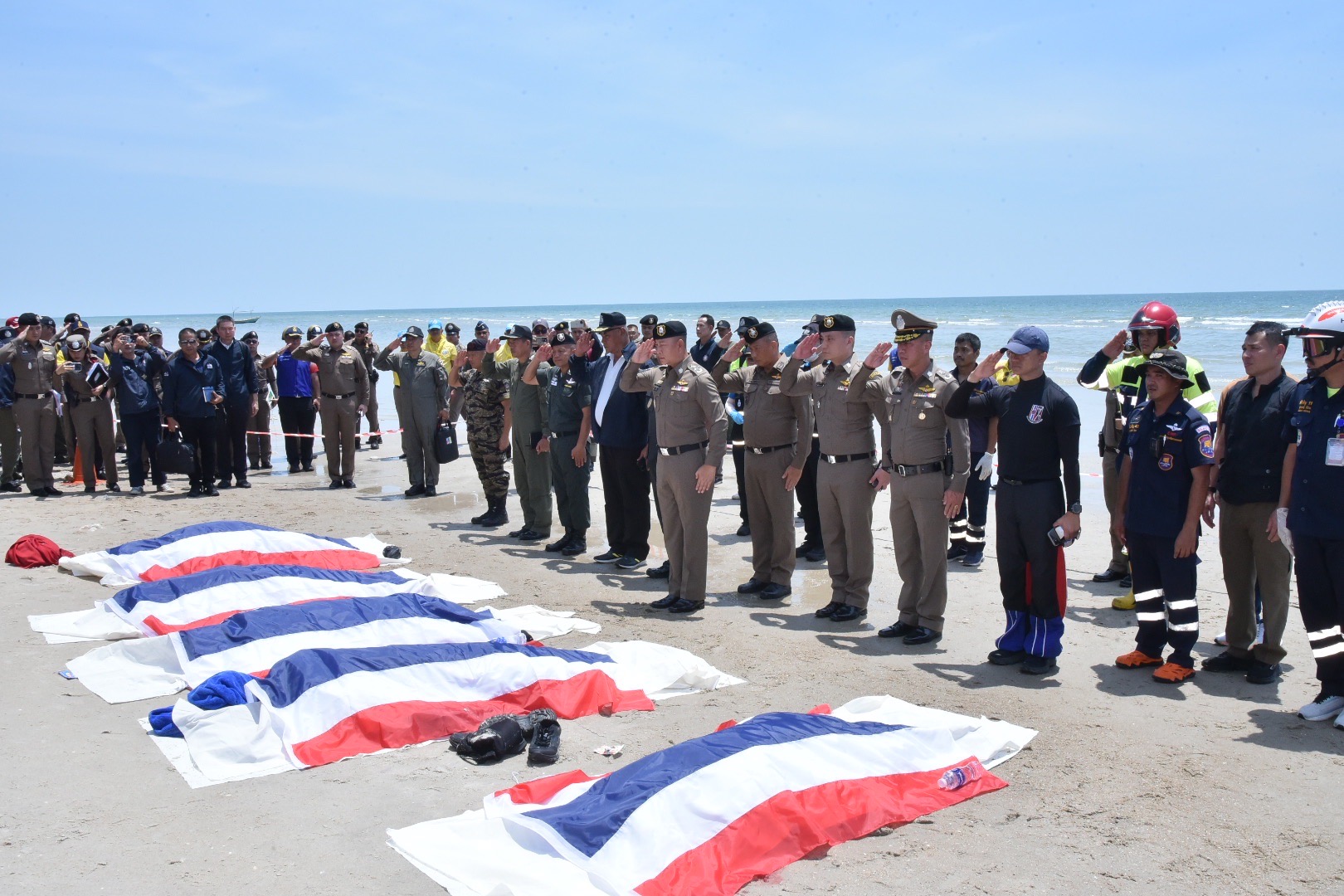
National Police Chief Police General Kittirat Phanphet and police officers pay respects to the five police officers’ bodies, which are covered with Thai national flags, at the shore of Hua Hin Beach, Prachuap Khiri Khan Province, on April 24. 2025.
Police General Kittirat extended condolences to the families of the deceased officers and stated that the Royal Thai Police would provide full support to those affected by this tragedy.
He also praised and honored all the pilots, engineers, and mechanics, saying that from the preliminary investigation, when the accident occurred, the aircraft was losing directional control and heading toward residential areas. However, the pilots steered the aircraft toward the sea to prevent casualties among civilians.
A small police plane is seen crashed into the sea killing at least 5 people on board in Prachuab Kiri Khan province, western of Thailand, Friday, April 25, 2025. (Royal Thai Police)
The National Police Chief stated that he has already ordered the establishment of a committee and investigation team to determine the cause of the incident. Regarding recovery operations, he has assigned the Air Support Division, Border Patrol Police Bureau, Marine Police, and Police Aviation Division to work together to retrieve the aircraft from the sea.
The operation is expected to take at least one day, and they will expedite the process as quickly as possible without damaging potential evidence. He has instructed them to accelerate the investigation to establish facts to prevent similar incidents from happening again in the future.
A DHC6-400 Twin Otter aircraft
According to information from the Police Aviation Division, the DHC6-400 Twin Otter from Canada was the 36th aircraft of the Royal Thai Police. Three of these aircraft entered service in 2020 and were stationed at the Police Aviation Division at Don Mueang Airport in Bangkok.
Prior to the accident, the aircraft had experienced problems with the wing strut and control stick malfunction. It underwent systematic repairs and was on a test flight when the incident occurred.
This type of aircraft is a tactical transport plane that can be modified for various missions, including airborne supply drops, personnel transport, medical evacuation, equipment transport, and search and rescue operations. It can carry a maximum of 19 passengers and can be modified to install four medical beds with seats for doctors and nurses.
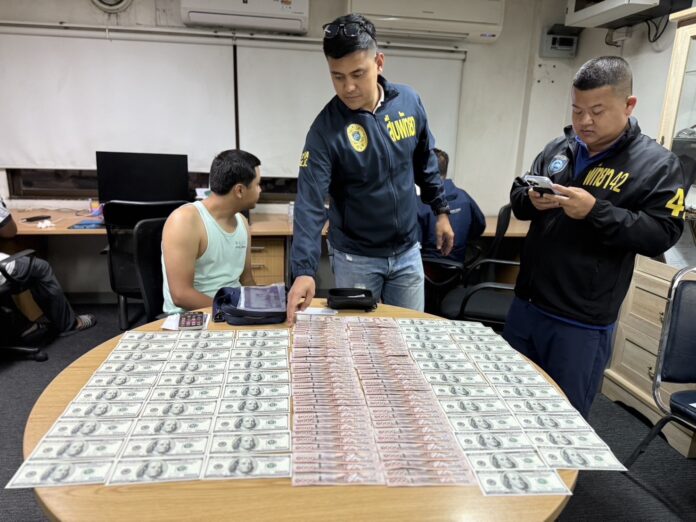
The Uzbek suspect is taken to Pattaya City Police Station for questioning along with the evidence: 30 counterfeit $100 bills, on April 25, 2025.
PATTAYA — Thai police have arrested a foreign tourist for exchanging counterfeit US dollars for Thai baht and actively spending in Pattaya.
The arrest came after authorities received a tip from a currency exchange business that had processed approximately 80,000 baht worth of suspicious US dollar notes.
Police Lieutenant Colonel Arut Sapanon, Deputy Superintendent of Pattaya City Police, led the investigation using CCTV footage which identified the suspect as Mr. Iskandarkhuja, a 31-year-old Uzbekistan national. Officers subsequently arrested him at a hotel in central Pattaya, Nongprue Subdistrict, Banglamung District, Chonburi Province.
During the search of his hotel room, authorities discovered two currency exchange receipts on the bedside table and additional US dollar notes hidden in his shoulder bag. The suspect was taken to Pattaya City Police Station for questioning along with the evidence: 30 counterfeit $100 bills totaling $3,000.
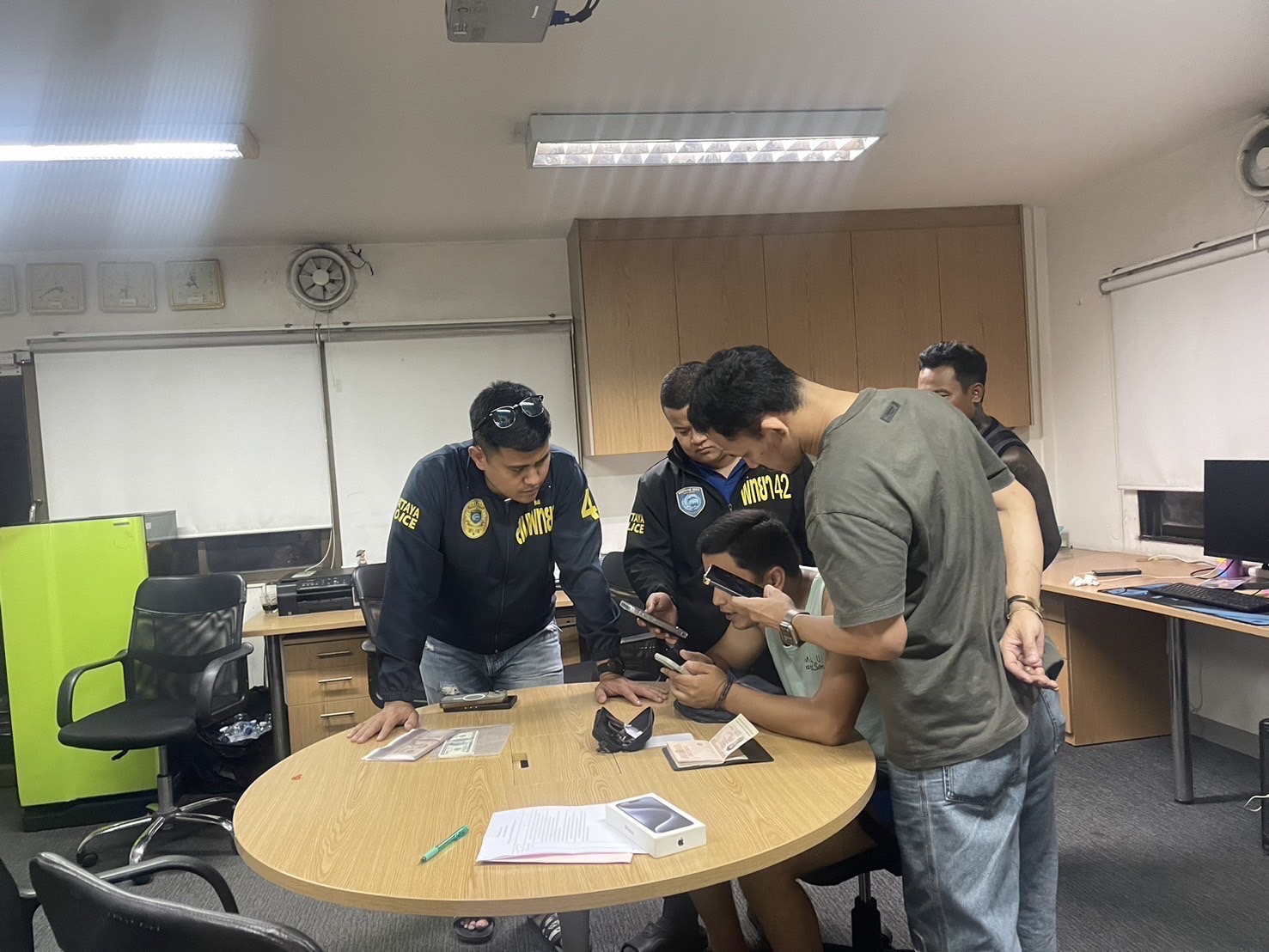
Pattaya police question the Uzbek suspect for bringing counterfeit US dollar bills to exchange in Thailand, on April 25, 2025.
Iskandarkhuja confessed to bringing the counterfeit US currency from Turkey to fund his vacation expenses in Thailand. His plan was to exchange the fake bills for Thai baht or other foreign currencies and use the proceeds for daily expenses.
The suspect has been charged with possession and use of counterfeit US currency while knowing it was fake.
Police Colonel Anek Srathongyoo, Superintendent of Pattaya City Police, has asked any businesses that may have fallen victim to this suspect to file additional complaints at the Pattaya City Police Station. He also urged currency exchange operators to immediately alert nearby officers if they encounter suspicious individuals attempting similar crimes. Police assistance is available 24 hours a day.
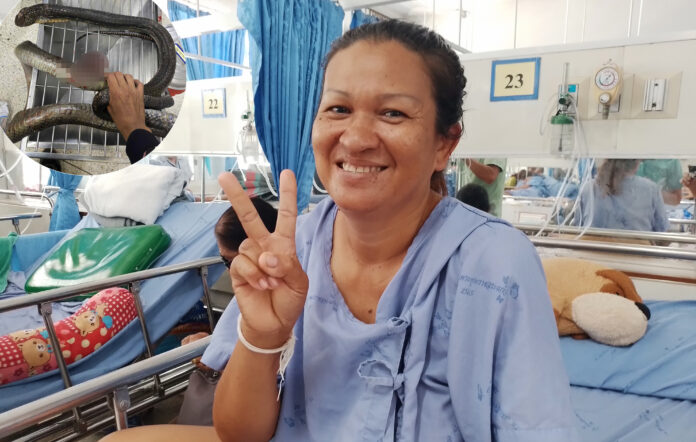
Supin Wanpen, 47, smiles for a photo while being interviewed about her near-death experience after being bitten by a king cobra. She brought the snake's carcass to Crown Prince Hospital in Sa Kaeo province to help doctors with her treatment, on April 22, 2025.
SA KAEO — A 47-year-old woman from Sa Kaeo Province has been discharged from the hospital after surviving a king cobra attack, during which she fought the snake and brought its carcass to doctors to aid in her treatment.
Supin Wanpen returned home to Moo 8, Ban Nong Khi Hen in Khok Pi Khong sub-district, Mueang Sa Kaeo district on April 23, following the harrowing incident that occurred on April 19.
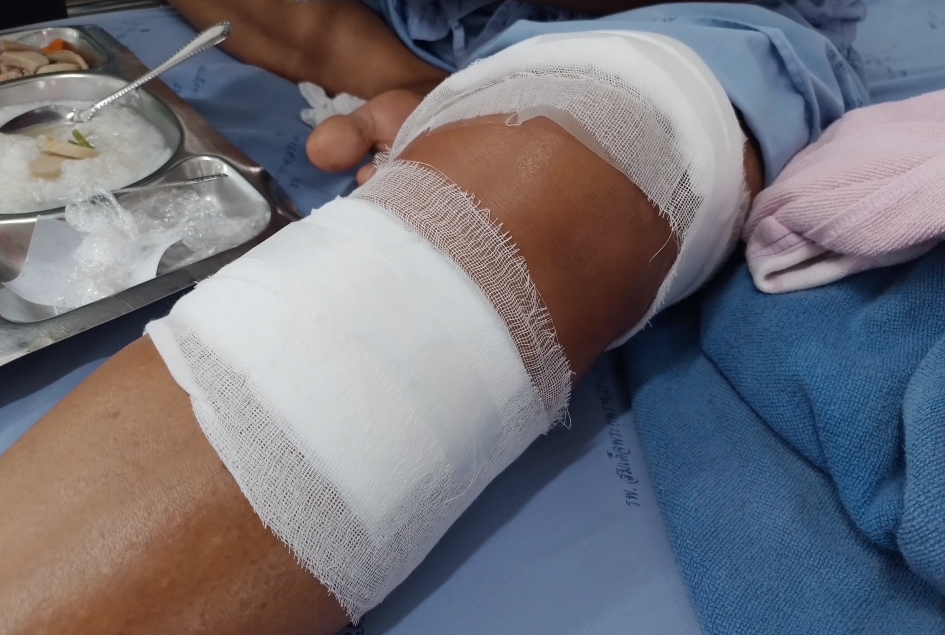
According to Supin, she was gathering mushrooms near the Khlong Khan Tho reservoir in Watthana Nakhon district with several relatives when a 3-meter king cobra lunged at her, biting her left leg and causing a severe wound. In a moment of panic and without any weapons, her only thought was to capture the snake to show doctors for proper treatment.
She kicked the cobra’s neck, pinning it to the ground before calling relatives and her grandfather to help kill the snake.
The two wounds on Supin Wanpen from the cobra attack, with one wound being very large.
Her relatives contacted her husband, a forestry official, who arranged for an emergency vehicle from Pang Sida National Park to transport her to Crown Prince Sa Kaeo Hospital. During the journey, they tied cloth above the bite wound in three places to prevent the venom from reaching her heart.
“From the time I was bitten at around 9:30 AM until reaching the hospital at about 11:00 AM, followed by wound treatment and serum injection, it took about two and a half hours before my condition improved,” Supin explained.
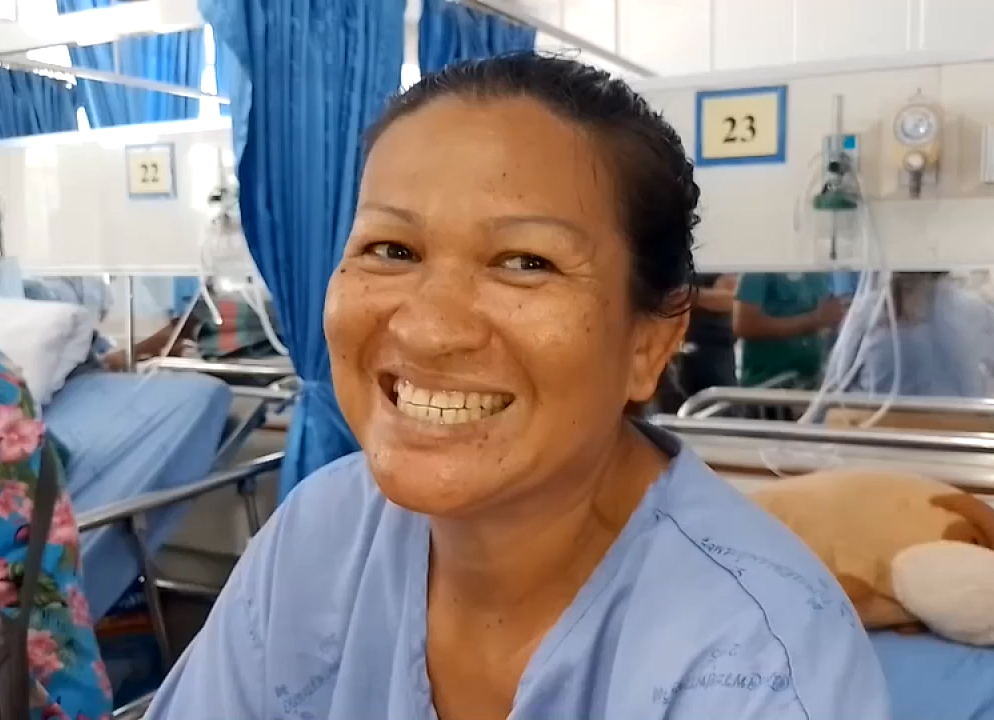
Supin Wanpen, 47, smiles while being interviewed about her near-death experience after being bitten by a king cobra.
On April 21, Supin’s friend, Kannika Ruangsa, posted photos on Facebook showing Supin in the hospital alongside the dead snake she had brought with her. The post, which read: “Supin Wanpen, my amazing friend, got bitten by a king cobra while collecting mushrooms, killed the snake with her bare hands, and even carried it to the hospital. She’s the strongest. Supin is now out of ICU and safe,” garnered over 14,000 likes, 1,100 supportive comments, and was shared 4,500 times.
Supin advises anyone facing a similar emergency: “You must maintain your composure. Don’t panic, don’t be afraid. Stay strong and do everything possible to survive.”
“If we don’t fight, we die. If we fight, there’s a chance of survival. You must stay calm and fight to stay alive,” she concluded.
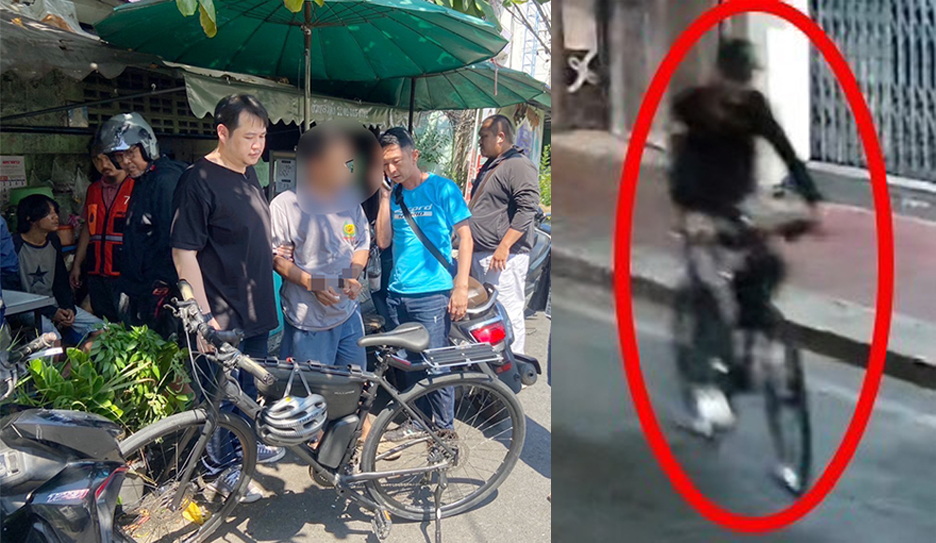
Police seize a black TREK bicycle which matched the description of the Israeli tourist's stolen property in Bang Sai Kai 2 Alley, Bangkok, where the suspect was subsequently arrested.
BANGKOK — Police have apprehended two suspects who allegedly stole a bicycle belonging to an Israeli tourist in Bangkok’s Yaowarat, Chinatown district, and attempted to sell it on Facebook.
Officers from Chakkrawat Police Station arrested 45-year-old Sompoth near Bang Sai Kai 2 Alley in Bangkok’s Thonburi district on April 23. Police recovered a black TREK FX3 bicycle and a gray-black GIRO helmet as evidence.
The case began when 54-year-old Israeli national Mr. Erez filed a police report in the early morning of April 20. According to his statement, on April 19 around 6:00 p.m., he had parked and locked his black TREK bicycle to a lamppost on Songwat Road before going to enjoy the sights and cuisine of Yaowarat. When he returned around 2:00 a.m. on April 20, he discovered the bicycle missing and the lock chain cut.
Police arrest a 45-year-old suspect for stealing a black TREK bicycle which matched the description of the Israeli tourist’s stolen property near Bang Sai Kai 2 Alley in Bangkok’s Thonburi district on April 23, 2025.
Investigators later received information from the victim that a Facebook user named “Sompoth” was selling a black TREK bicycle for 7,000 baht (approximately $200) that matched the description of the stolen property. Police contacted the Facebook account holder posing as potential buyers.
Believing the officers to be customers, Sompoth arranged to meet them in Bang Sai Kai 2 Alley, where he was subsequently arrested.
During questioning, Sompoth claimed he had purchased the bicycle from another individual identified only as “Anant” or “Man” for 5,000 baht (approximately $140) from a rental room in Itsaraphap Soi 29. He then listed it on Facebook for 7,000 baht, hoping to make a 2,000 baht ($60) profit.
Authorities have charged Sompoth with nighttime theft involving damage to protective barriers, participating in a crime with two or more people using a vehicle to facilitate the offense, and receiving stolen property. They are also pursuing Anant on similar charges. Both suspects have denied all allegations.
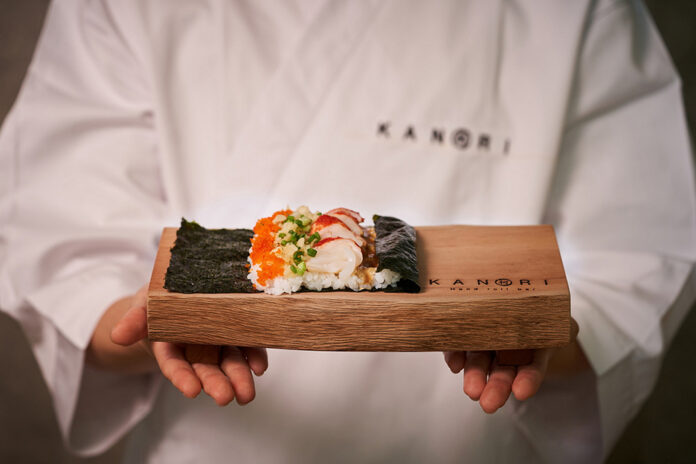
BANGKOK — KANORI Hand Roll Bar, Thailand’s first dedicated hand roll restaurant, has announced revenue exceeding 300 million baht ($9 million) and ambitious plans to grow 20% in 2025, capitalizing on the country’s expanding Japanese culinary scene.
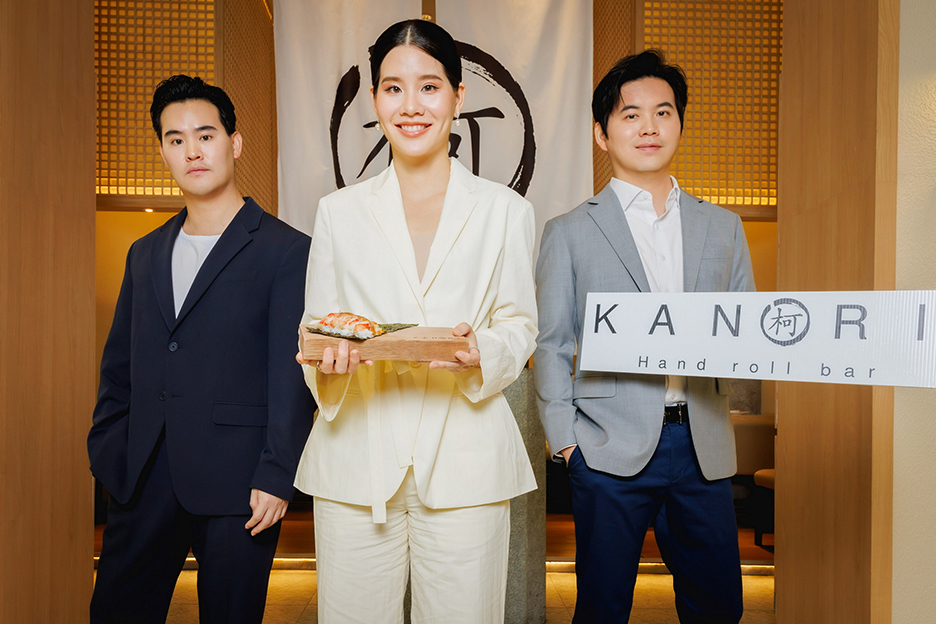
Founded by siblings Panitan, Paniti, and Pavitra Kobkulsuwan, KANORI has established itself as a pioneer in Thailand’s Japanese restaurant market, which grew to 5,916 establishments in 2024—a 2.9% increase from the previous year, according to data from the Japan External Trade Organization (JETRO Bangkok).
“We aim to bring something entirely new to the table, something never attempted before,” said Paniti Kobkulsuwan, co-founder of KANORI. “Our methods and ideas go beyond traditional textbooks, incorporating the dynamics of the modern world to offer a fresh perspective. It’s fair to say that the ‘KANORI Hand roll bar’ was the First Mover in establishing the hand roll industry in Thailand.”
Panitan, Paniti, and Pavitra Kobkulsuwan
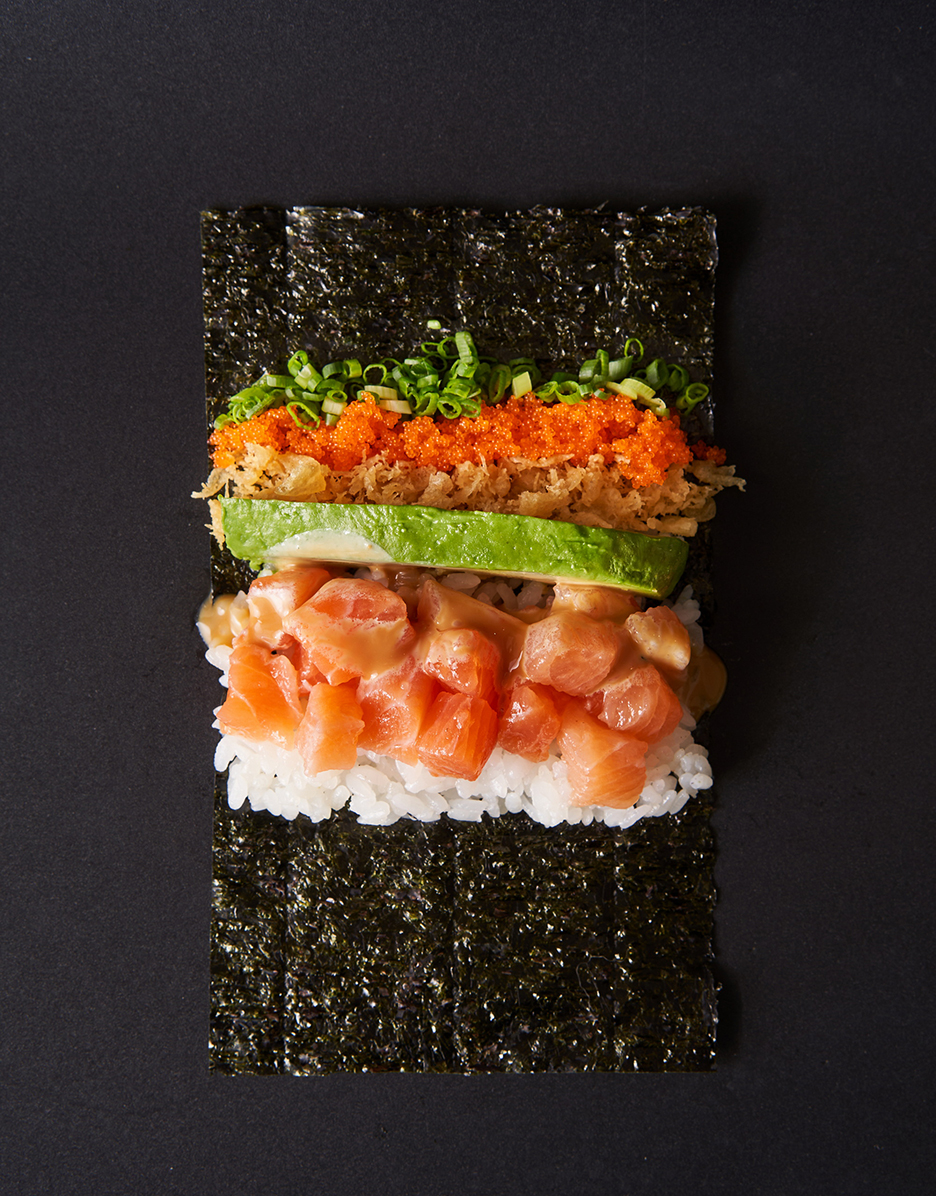
Since opening its first location in Soi Sukhumvit 49 just 18 months ago, KANORI has rapidly expanded to four locations, adding branches in EmQuartier, Central Embassy, and most recently, IconSiam. The concept features high-quality imported ingredients crafted into fresh hand rolls prepared directly at the counter, catering to consumers seeking both quality and convenience.
According to co-founder Pavitra Kobkulsuwan, the business has thrived despite intense pricing competition in Thailand’s Japanese food sector by focusing on value rather than profit margins.
The concept of KANORI Hand Roll Bar features high-quality imported ingredients crafted into fresh hand rolls prepared directly at the counter.
“The key to our success as Thailand’s first hand roll restaurant, and our ability to expand to four locations, lies in researching consumer insights, understanding customer needs, and focusing on delivering value,” Pavitra explained. “At an affordable price, we provide a semi-omakase ambiance, making it an inviting experience for families with both adults and children.”
KANORI’s delivery service has also contributed significantly to its growth, maintaining the quality of premium ingredients like fresh seaweed even during transport.
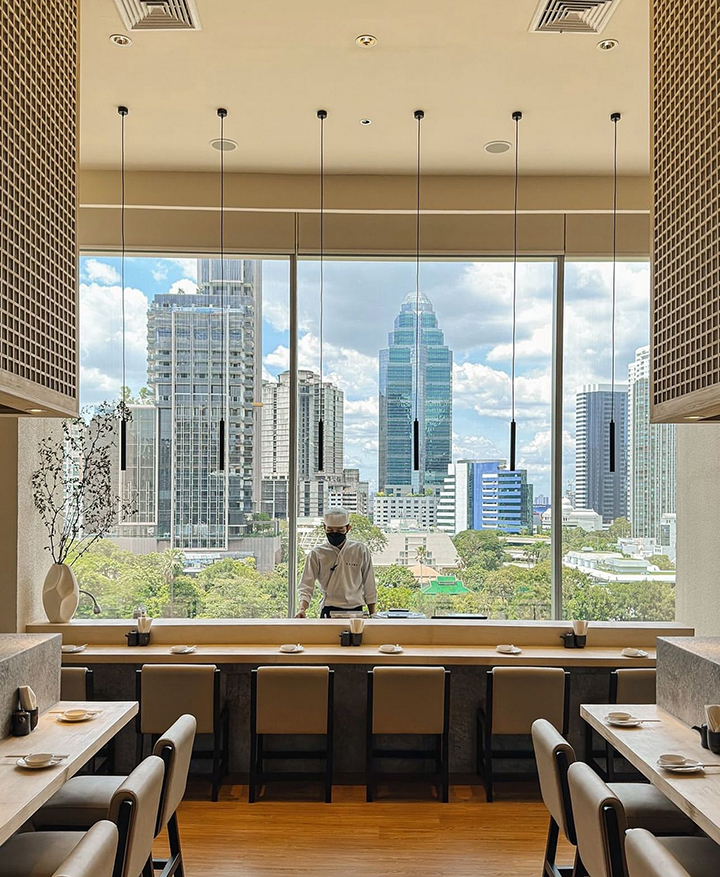
KANORI Hand Roll Bar at Central Embassy
Looking ahead, co-founder Panitan Kobkulsuwan revealed plans for further expansion: “The ‘KANORI Hand roll bar’ is set to expand further in the third quarter. Our focus will be on opening new branches in high-end department stores in Bangkok as our primary locations, while also exploring opportunities in major cities.”
The company aims to achieve a 20% revenue increase in 2025 compared to the previous year, furthering its position in Thailand’s competitive Japanese restaurant market.
KANORI Hand Roll Bar is operated by THAISAKOL ESTATE Co., Ltd., which manages a diverse portfolio including Kay’s (brunch-style restaurant), Day by Kay’s (beverages and pastries), and K Maison hotel.
The restaurant’s success story highlights the growing sophistication of Thailand’s food scene and consumer interest in innovative international cuisine concepts that blend quality, convenience, and value.
Thailand's health tourism sector has experienced remarkable growth of 120%, generating a total revenue of $12.34 billion.
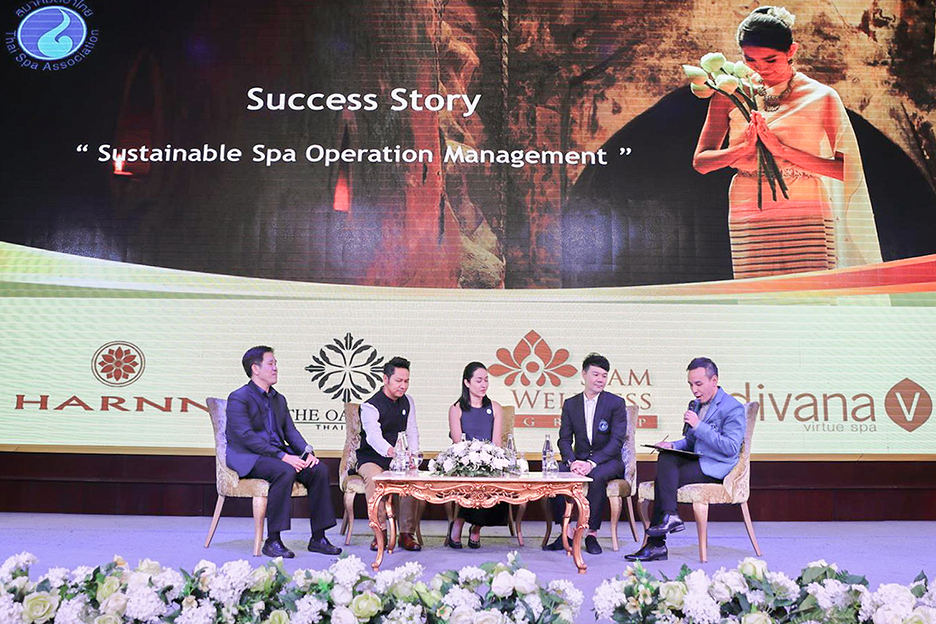
BANGKOK — Thailand’s health tourism sector has experienced remarkable growth of 120%, generating a total revenue of $12.34 billion (431 billion baht), according to a recent announcement by the Thai Spa Association.
This significant growth was revealed during the launch of the first Food & Hospitality Thailand 2025 event, which coincided with the opening of the ASEAN Wellness Tourism Congress 2025 and the 8th Thailand Spa & Well-being Awards 2025.
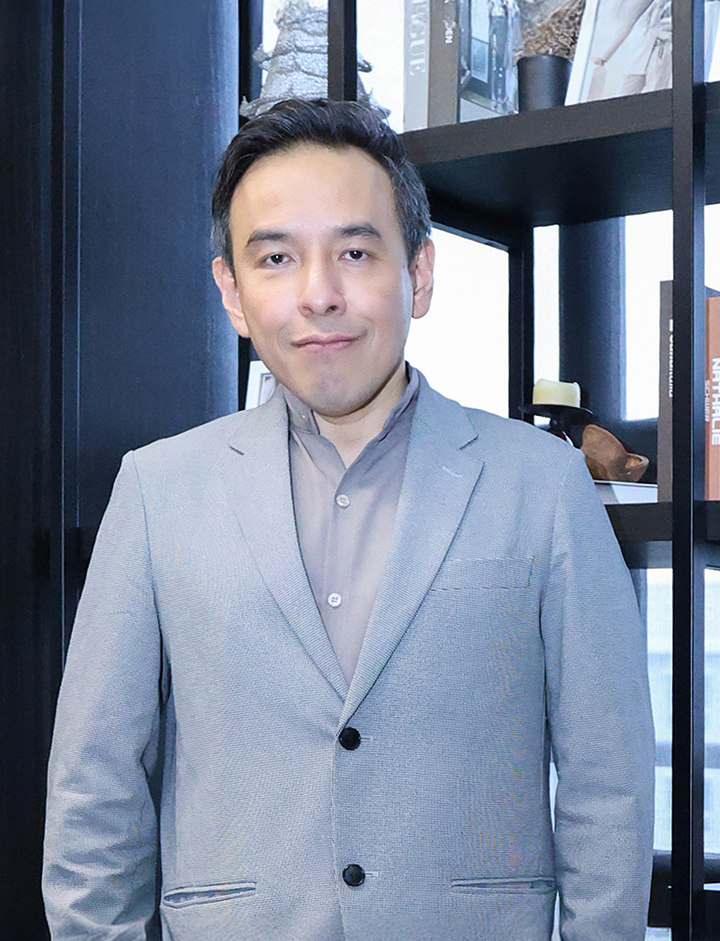
Sunai Wachiravarakarn
Sunai Wachiravarakarn, President of the Thai Spa Association, emphasized that wellness tourism is gaining interest worldwide, creating positive momentum for Thailand’s spa and health service businesses. “Health tourism encompasses a broad spectrum of services from prevention and promotion to care and treatment, including relaxation experiences for tourists and service users,” he explained.
According to the latest report from the Global Wellness Institute (GWI), Thailand ranks 24th globally out of 218 countries and 9th in the Asia-Pacific region for health promotion goods and services, with a total value of 40.5 billion US dollars (approximately 1.42 trillion baht).
Medical tourism leads the sector, valued at 12.34 billion US dollars (approximately 431.41 billion baht), positioning Thailand as one of the world’s top 15 destinations for international tourists seeking health activities and services. The average spending per trip in Thailand is approximately 1,735 US dollars (about 60,650 baht).
The spa business specifically has grown by 9.4%, reaching a total value of 1.598 billion US dollars (approximately 55.93 billion baht), with medical spas showing exceptional growth of 22%.
“Operators must upgrade their services and develop new, more comprehensive offerings to capitalize on this growth opportunity,” Wachiravarakarn advised. “Health services with promising prospects include medical spas that combine medical treatments with health care provided by medical personnel, mental wellness services, sleep therapy, nutritional health care, health real estate, and hot spring services.”
Thailand ranks 24th globally out of 218 countries and 9th in the Asia-Pacific region for health promotion goods and services.
The report indicates that tourists aged 25-34 spend the most on health tourism. This demographic not only prioritizes health but also values environmental sustainability, suggesting that businesses should adapt their operations to meet these concerns.
In a strategic move to support industry development, the Thai Spa Association has partnered with Informa Markets to organize the Food & Hospitality Thailand (FHT) 2025 event, scheduled for August 20-23, 2025.
The collaboration aims to provide maximum benefits to entrepreneurs and visitors through exhibition spaces featuring the Association’s operations and displays from leading entrepreneurs in the health and spa service business.
Food & Hospitality Thailand (FHT) 2025 event will be held on August 20-23, 2025.
The ASEAN Wellness Tourism Congress 2025 will serve as a forum for knowledge exchange, featuring experts from various ASEAN countries who will discuss trends in service and health tourism, technology integration for competitive advantage, and sustainable business development.
The event will culminate with the presentation of the 8th Thailand Spa & Well-being Awards 2025, which will recognize excellence across 16 categories. These awards, judged by industry experts and international wellness industry media representatives, aim to encourage successful entrepreneurs and elevate industry standards, ultimately enhancing the capabilities of Thai businesses to become global leaders in health tourism.
Domestic tourism has also contributed significantly to the sector’s growth, with average spending increasing by 23%, further underlining the expanding opportunities in Thailand’s wellness tourism market.
The cruise glided in night breeze with glittering lights on the distant shore of Hong Kong Harbourfront. Dancing was in full swing on the deck as champagne flowed to celebrate the opening of Art Basel Hong Kong (ABHK). Regarded as the largest and most attractive art fair in Asia, the week was packed with openings, parties, performances, conversations and sales.
The Special Administrative Region’s art trade emphasized on free trade that has made Hong Kong the haven for transaction in art sales and art business. Nevertheless, times are changing as representative of Hong Art Gallery Association (HKAGA) commented on shipping which has become extremely expensive. Trump’s trade war will inevitably have impact on tariffs, materials, shipment and art investment.
Despite escalating tariff threats from trade war, Hong Kong Convention and Exhibition Centre buzzed with activities as packed aisles were full of VIPs, celebrities, collectors, dealers, artists, critics, philanthropists and spectators.
This year’s edition featured 240 galleries from 42 countries with about half of the galleries from the Asia Pacific. Established galleries from Europe and US included Pace, Thaddeus Ropac, Mennour, Gagosian, Lisson, Hauser & Wirth, White Cube, Continua, Massimodecarlo and Krinzinger.
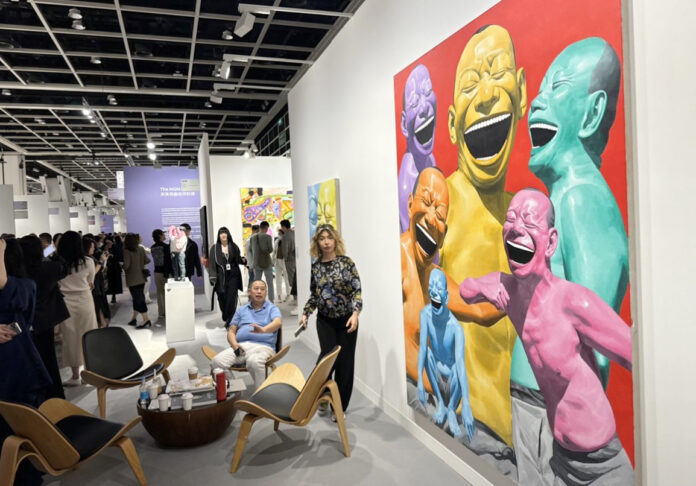
Art Basel Hong Kong (ABHK)
From Asia, Richard Koh, Ames Yavuz, Bangkok City City, Flowers, Silverlens, ShangART, Tang and TKG. At the entrance of ABHK, Takashi Murakami featured prominently in collaboration with Louis Vuitton. Inside, Encounters Artists sections included Pacita Abad, Lu Yang, Liam Gillick and Nadia Hernandez.
Coincided with ABHK, M+ Museum staged The Hong Kong Jockey Club Series, Picasso for Asia: A Conversation with displays of 60 paintings and sculptures by Picasso and 80 works by Asian artists inspired by the Spanish master. An excellent exhibition by Cindy Sherman and Yasumasa Morimura traces their brilliant career through self-portraits in masquerades.
Hong Kong Museum of Art (HKMoA) displays paintings by Cezanne and Renoir. At Art Central, the largest edition exhibited 100 galleries and 500 artists. Auction houses Christie’s, Sotheby’s and Bonthams held sales of paintings by Marc Chagal and Jean-Michel Basquiat while Phillips staged the Sovereign Art Prize.
Apart from H Queen’s galleries at Central, invigorating exhibitions included Tenzing Rigdol at Rossi & Rossi, Chulayanon Siripol’s The Golden Snail Series at Tomorrow Maybe and Beauty Will Save the World with works by Southeast Asian artists including Vu Dan Tan, FX Harsono, Moe Satt, Din Q Le at10 Chancery Lane Gallery.
At ABHK, some outstanding art transactions included David Zwirner’s sale of Infinity Net painting by Yayoi Kusama for US$3.5 million, Felix Gonzales-Torres work for US$900,000; Thaddeus Ropac reported US$6 million in sales including Georg Baselitz, and Roy Lichtenstein. Hauser & Wirth sold a sculpture by Louise Bourgeois for US$2 million to a Chinese collector. Perrotin sold a Takashi Murakami for US$1.3 million. Tang Contemporary reported painting by Yue Minjun fetched US$1 million.
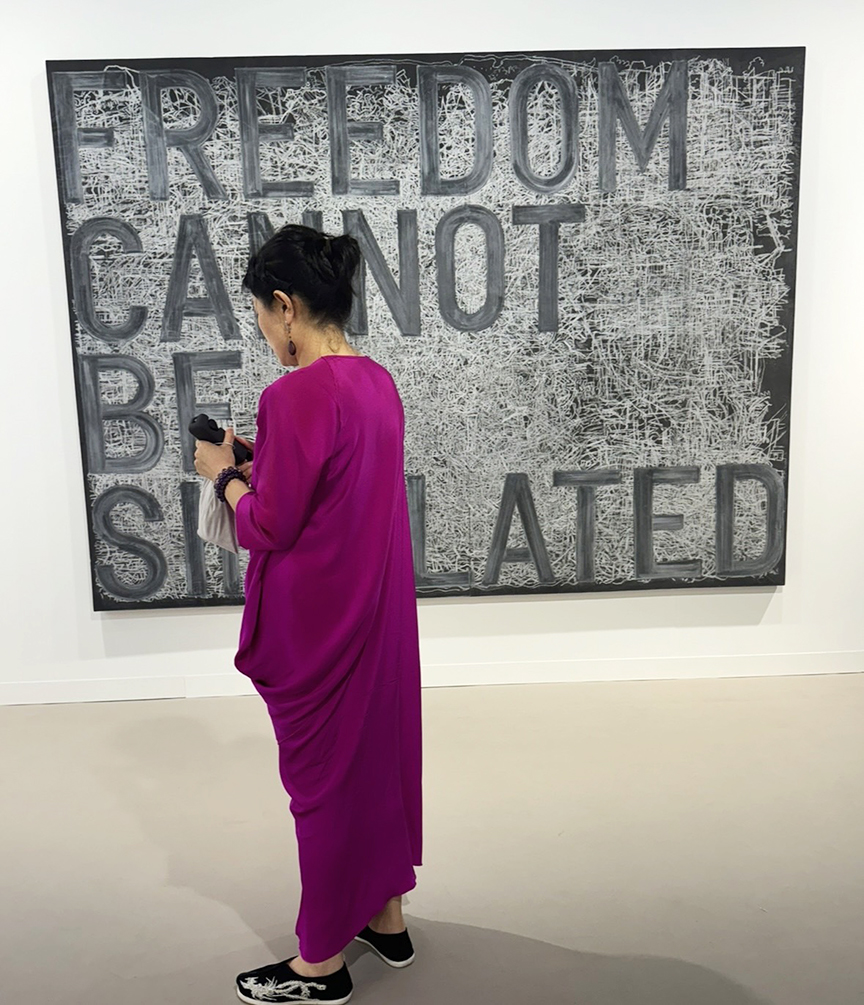
2. Painting by Rirkrit Tiravanila at Kurimanzuto, ABHK, Hong Kong
The MGM Discoveries Art Prize to celebrate originality and innovative artworks went to South Korean Shin Min and Gallery 21 (Seoul). Cash prize of US$50,000 awarded to Min for her works that explore hard realities of service labor, gender and class. MGM, led by Pansy Ho, focuses on cultural tourism, creativity, innovation, casinos and entertainment in Macao.
Notably, Thai participations were well received. Pinaree Sanpitak’s two paintings Silver Offering (2003) represented by Ames Yavuz were each sold for US$175,000; Rirkrit Tiravanija displayed familiar sign paintings Freedom Cannot be Simulated at Kurimanzuto and Asians Must Eat Rice at Pilar Corrias.
Young talented painter Channatip Chanvipava held his debut at Ames Yavuz. Bangkok City City featured Tanat Teeradakorn with a stall full of T-shirts, souvenirs, video related to protest songs. At Tang Contemporary, a solo exhibition of new paintings by Gongkan attracted many Chinese collectors.
All 18 works were sold before the show opened. Gongkan revealed that he was delighted as his focus has shifted toward struggle on issues related to old Chinese values and his transgender.
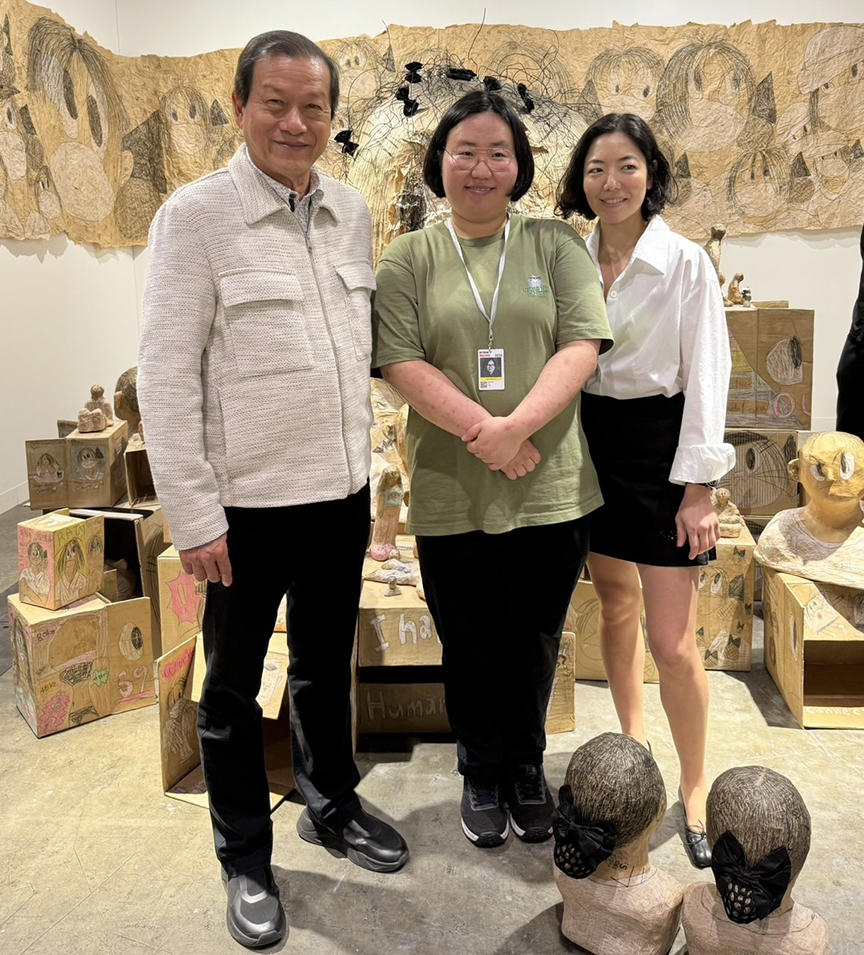
The announcement of the long-awaited Dib International Contemporary Art Museum initiated by the late Petch Osathanugrah was launched by his son Purat (Chang) at Rosewood Hotel. VIP guests included Bernard Chan, Hoor Al Qasimi, Uli Sigg, Akiko Mikki and Gregor Muir. Conversation at ABHK between Purat and Alan Ho on patronage and philanthropy with full-house audience was indeed a promising beginning for Dib which will open on 20 December in Bangkok.
Thailand as Art Hub and Entertainment Complex
When former Prime Minister Srettha Thavisin announced that Bangkok will be the art hub of Asia with Art Basel International Art Fair among the attractions, many eye brows were raised. With Paetongtarn’s government, Thailand Creative Culture Agency (THACCA) has poured millions of baht through soft power campaigns in film, food, festivals, fashion, design, literature, art, music and performance to upgrade Thai creative industry.
THACCA has facilitated the art industry by working with the Revenue Department to reduce tariff tax to 0% from previous 10% in order to compete with Singapore, Vietnam, Malaysia, Indonesia, Japan, South Kora and Hong Kong. Incentives and benefits to support local collectors and artists on tax reduction have been positively received.
Last month, THACCA organized with Lawrence Ho, CEO of Melco Resorts & Entertainment, Macao, Global Soft Power Talks: The New Rules of Soft Power. Paetongtarn attended the talks by leading speakers including Alain Ducasse, Viviana Muscettola, Giuliano Peparini, Mathieu Lehanneur.
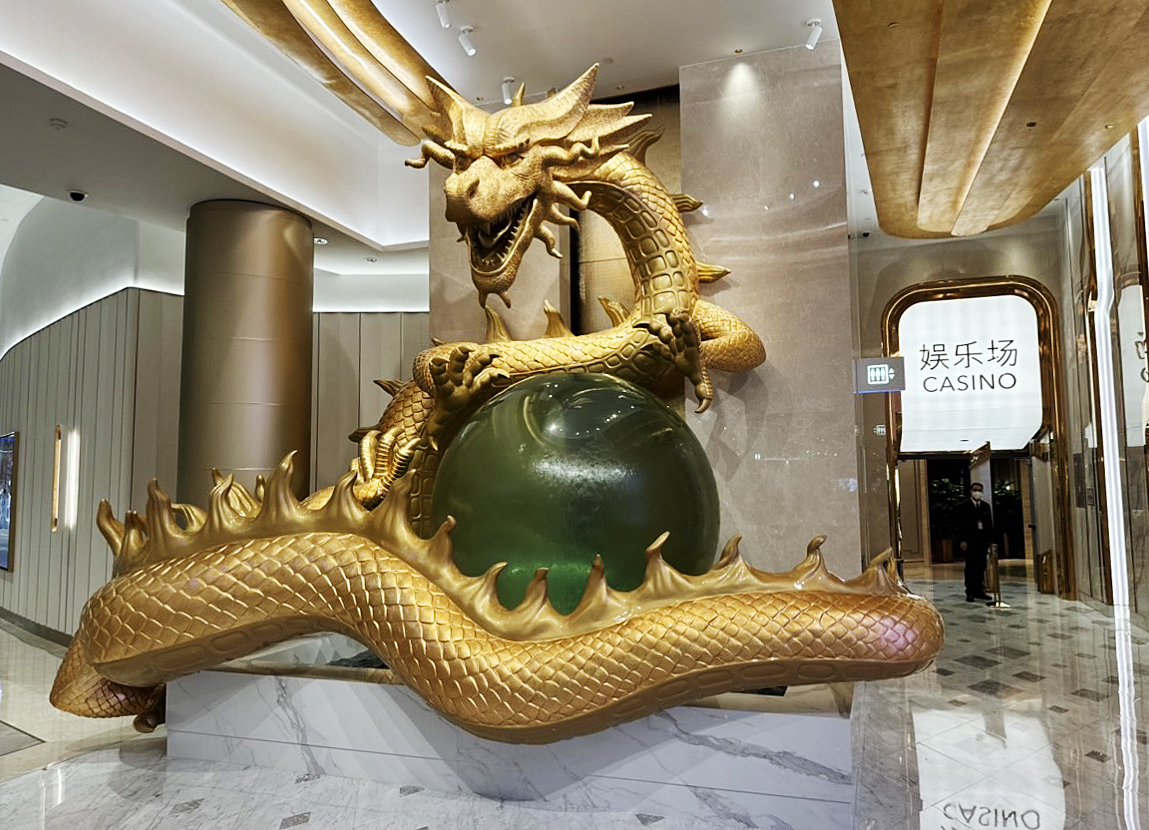
Casino at City of Dreams, Macao
Plans are announced to take young creative Thai talents to visit resorts and entertainment complexes in Macao. Why is the government paying special interest in the new rules of soft power in Macao?
Stanley Ho, Hong Kong-Macao billionaire, who owned 19 casinos in Macao was named Godfather and King of Gambling. MGM and Melco Resorts are among the entertainment complexes under the Ho family known for integrated resorts with entertainment and gaming facilities.
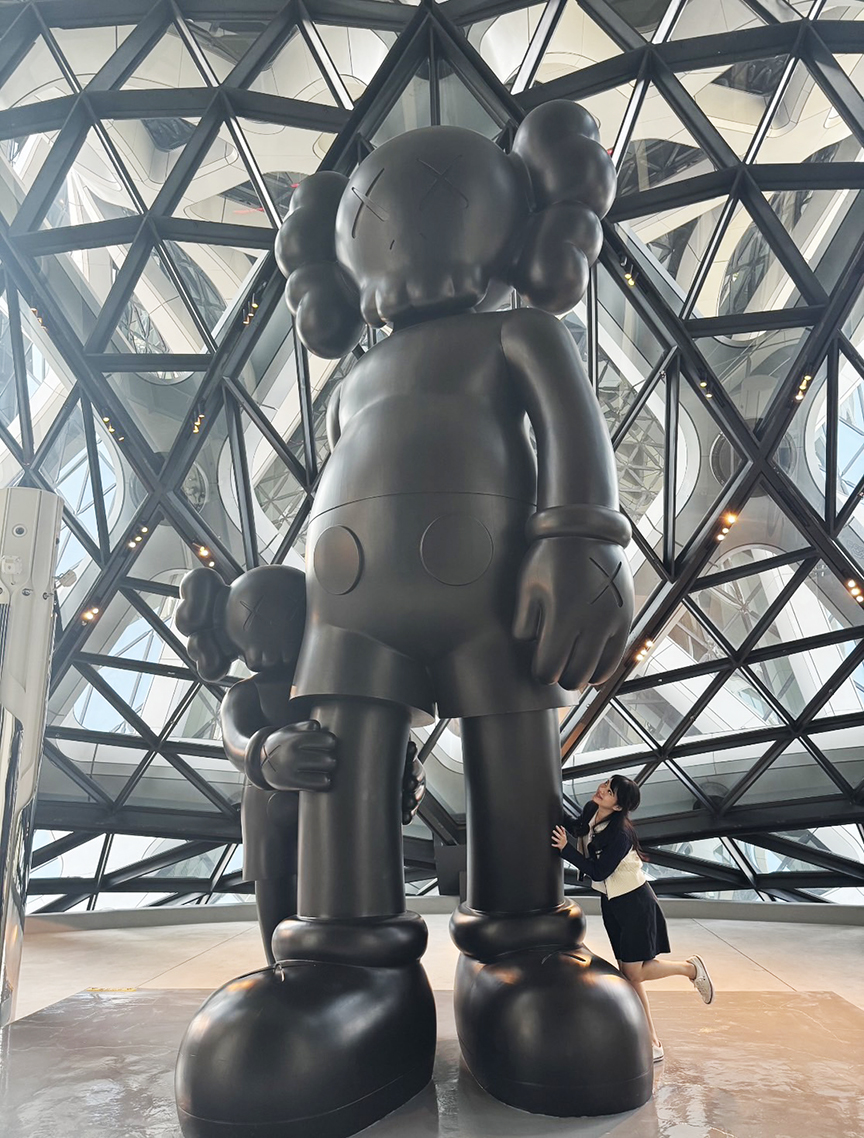
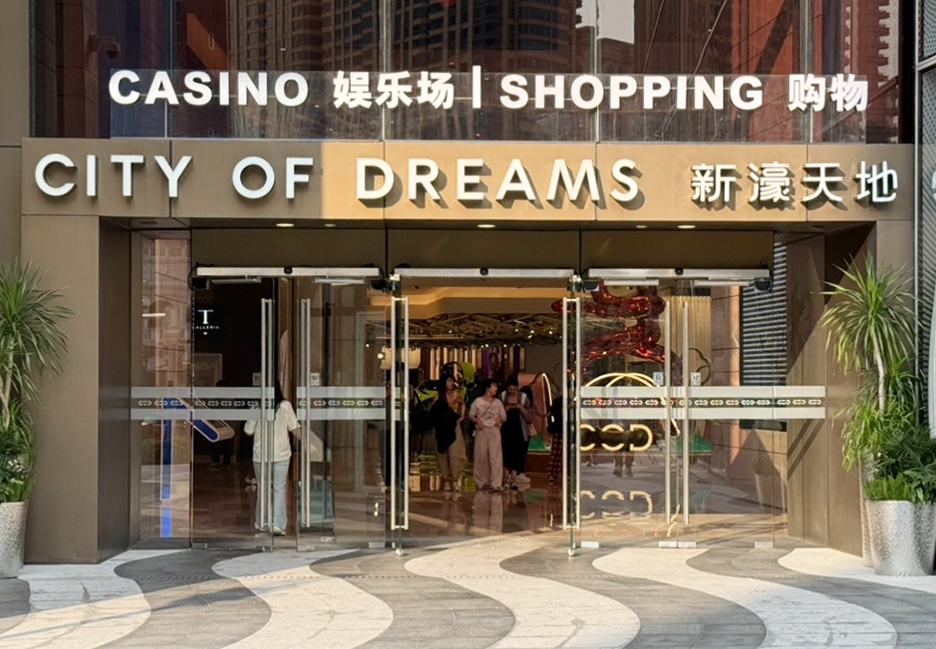
City of Dreams designed by the late architect Zaha Hadid combines entertainment, indoor sports, designer-brand shopping, immersive art displays and restaurants. Works by Murakami, Kaws, Mr. Doodle, Daniel Buren, Zhao Zhao are installed as part of art attractions for visitors.
Sculpture by Kaws at City of Dreams, Macao
Whether soft power is seen as intertwined with casino, gaming and entertainment complex, Thai government needs to explain clearly its intention to the public. With recent demonstrations against the bill proposed for entertainment complex and casinos, issues regarding the role of soft power as part the bill must be raised. With recent catastrophic earthquake followed by Trump’s trade war, Thai soft power has been hard hit.
In a short period, the new rules of soft power have changed again. Let us tread carefully in this political and economic whirlwind that will come thick and fast. There is no longer time to play softly or gamble with the game of hit and miss. Because losers will be stuck deeply in murky waters full of deep shit.
……………………
Apinan Poshyananda (left) and Shin Min, winner of MGM Discoveries Art Prize (center)
Prof. Dr. Apinan Poshyananda holds a BA and MA in Fine Arts from Edinburgh University and a Ph.D. in Art History from Cornell University. His distinguished career includes serving as Director-General of Thailand’s Office of Contemporary Art and Culture, Director-General of the Cultural Promotion Department, and as Permanent Secretary and Acting Minister at Thailand’s Ministry of Culture, where he curated the first Thai Pavilion at the 50th Venice Biennale.
A renowned curator, he has directed major international exhibitions including “Contemporary Art from Asia: Traditions/Tensions” (New York, 1996), “Traces of Siamese Smile” (Bangkok, 2008), and “Thailand Eye” (London and Bangkok, 2015).
He serves on boards and committees for prestigious institutions including the Asian Cultural Council, Solomon Guggenheim Museum, National Gallery Singapore, Bangkok Art and Culture Centre, and as an advisor to Thai Beverage Plc.
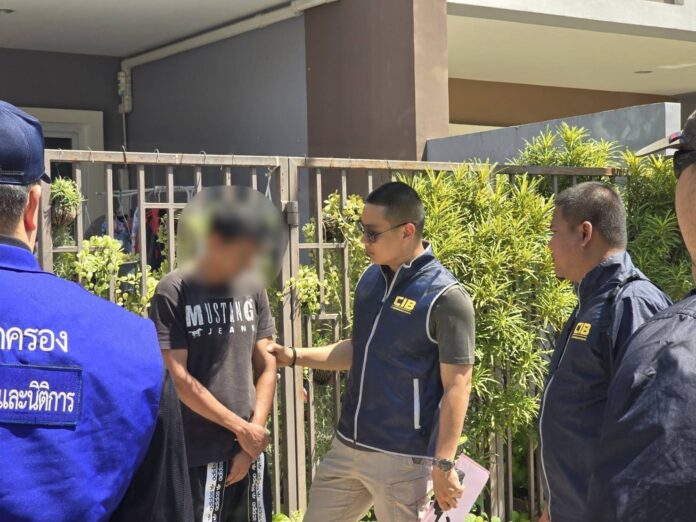
Thai police arrest a 41-year-old Pakistani man who had been living in Thailand for over a decade using the ID card of a deceased Thai citizen, at his residence in Bangkok, on April 24, 2025.
BANGKOK — Thai police have arrested a 41-year-old Pakistani national who had been living in Thailand for over a decade using the identification card of a deceased Thai citizen.
Police received a tip that Mr. Zeshan, a Pakistani national, had entered Thailand to conduct a business selling gemstones and decorative stones, with the intention of permanently settling in the country.
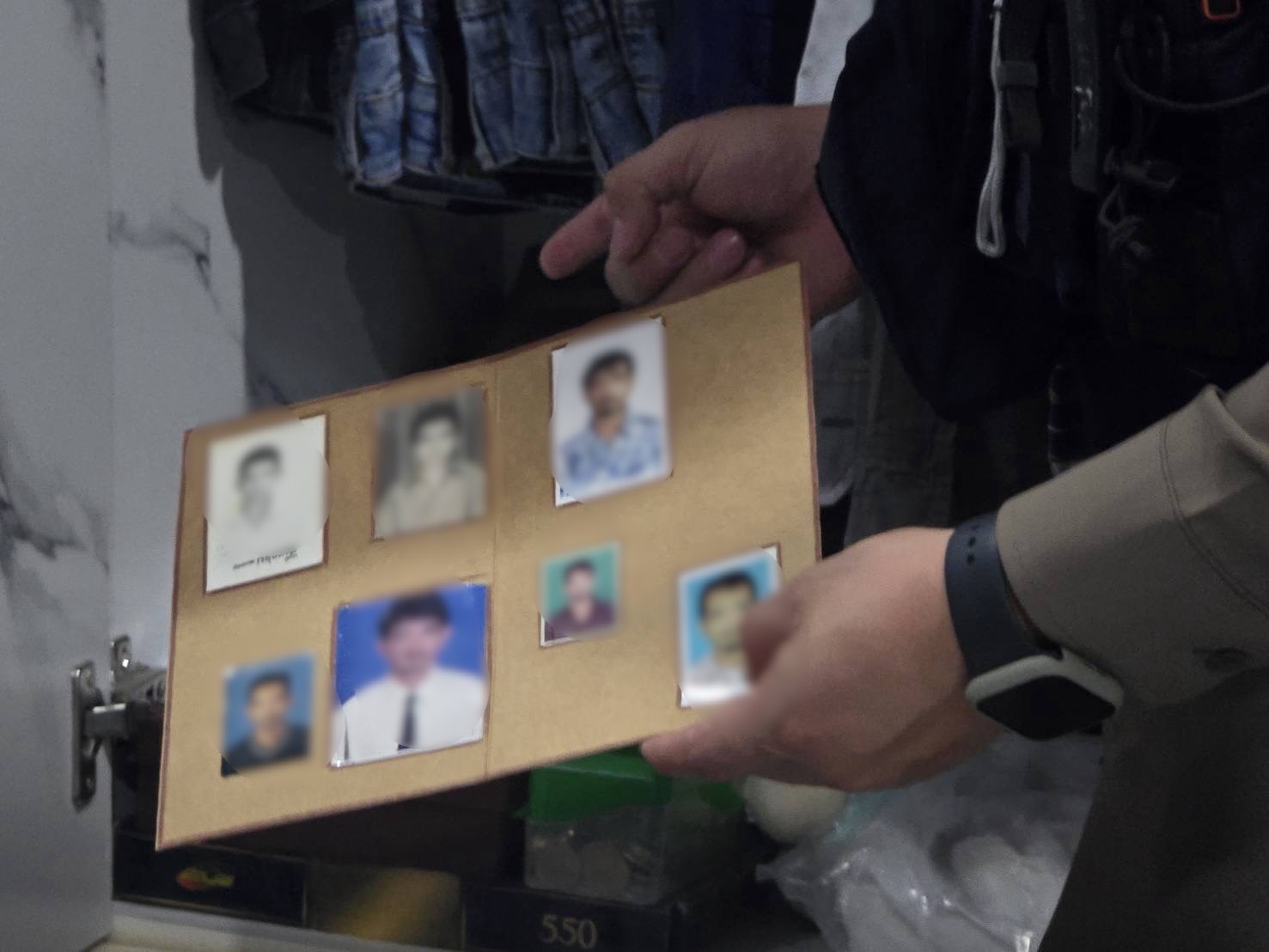
The investigation revealed that Mr. Zeshan had been living in Thailand for more than ten years using the identification card of a deceased Thai person whose death had not been properly reported to authorities. This allowed him to live as a Thai citizen and access various rights and benefits reserved for Thai nationals.
Thai police discover a 41-year-old Pakistani man using the ID card of a deceased Thai citizen for living in Thailand for over a decade. The arrest took place on April 24, 2025, in Bangkok.
Police Major General Wittaya Sriprasoetpap, Commander of the Crime Suppression Division, revealed that Mr. Zeshan had used the fraudulent ID card to obtain a passport, which he then used to enter and exit Thailand more than 100 times. After confirming these facts, investigators gathered evidence and sought a court-issued arrest warrant.
With sufficient evidence in hand, Crime Suppression Division officers executed the arrest warrant at a residence in the Thung Khru area of Bangkok on April 24.
The Pakistani national faces multiple charges including using or presenting an ID card obtained through false evidence without having Thai nationality, falsely claiming Thai nationality to be registered in the civil registration system, providing false information to be recorded in official documents, forging and using forged documents, and forging and using a counterfeit passport. The suspect has denied all charges.
Arresting officers handed Mr. Zeshan over to investigators at the Crime Suppression Division for legal proceedings, while continuing to expand their investigation to prosecute others involved in the document forgery network.
Nawat Isarakraisin, Chairman of Miss Universe Thailand 2025, and Anne-Jakkapong Jakrajutatip, CEO of Miss Universe Organization, preside over a press conference announcing that Thailand, represented by Miss Grand International Co., Ltd. (Public), has been granted the hosting rights for the 74th MISS UNIVERSE pageant at Bravo BKK Shopping Center, Bangkok on March 13, 2025.
BANGKOK — Just hours after Nawat Itsaragrisil joined the Miss Universe Organization (MUO) as an executive, his company secured the rights to organize the Miss Universe Thailand pageant for another 20 years, bringing the total contract period to 25 years.
Nawat, in his capacity as CEO of Miss Grand International Public Company Limited (MGI), has informed the Stock Exchange of Thailand that MGI has successfully extended the license for Miss Universe Thailand for another 20 years beyond the original five-year contract.
A statement from the company said: “The company will be allotted 100,000,000 newly issued ordinary shares of JKN Global Group Public Company Limited with a par value of 0.50 baht per share at a subscription price of 0.50 baht, representing a total value of 50,000,000 baht.”
Earlier, JKN, founded by Jakapong “Anne” Jakrajutatip and co-owner of Miss Universe Organization, had sent invitations to influential and experienced personalities to strengthen the business alliance of JKN and MUO. On April 22, Nawat, who is known for his extensive experience in the pageant industry, was officially appointed Executive Director of MUO.
Nawat’s appointment came shortly after the Securities and Exchange Commission (SEC) of Thailand initiated civil proceedings against JKN and Jakapong for allegedly disseminating false or misleading information about JKN’s financial figures. The penalty included a payment of 4,124,078 baht and a temporary ban on an individual from working as a director or officer.
Miss Universe Thailand page posts a photo of Nawat Itsaragrisil, CEO of MGI, and Anne Jakrajutatip, the owner of Miss Universe Organization, after MGI secured a 5-year license to organize the pageant starting from 2025, on Feb 17, 2025.
JKN and Jakapong issued a statement respecting but disagreeing with the SEC’s decision and asserting that the decision was factually incorrect in several important respects. They promised to prove their innocence through the legal process.
To ensure continued smooth business operations amid the controversy, JKN announced the hiring of the following key figures to strengthen JKN and MUO:
Songpol Chanmatkit, an experienced businessman, has been appointed to the board.
Nawat Itsaragrisil, an experienced beauty pageant organizer, has been appointed Executive Director of MUO.
Indra Suharjono, an international business expert, has been appointed Executive Advisor for the MUO.
Miss Thailand Suchata Chuangsri and Miss Denmark Victoria Kjær Theilvig compete during the final round of the 73rd Miss Universe Beauty Pageant in Mexico City, Saturday, Nov. 16, 2024. (AP Photo/Fernando Llano)
Miss Universe Thailand 2025 will begin on July 5 with an orientation event. On August 3, the selected contestants will participate in activities. 10 finalists will travel to South Korea for a welcome ceremony. Events will take place in Bangkok from August 6–8, followed by training and activities in Phuket from August 9–16.
The national costume competition is scheduled for August 18, with the preliminary round taking place on August 20. The finals will take place on August 23.
The reigning Miss Universe Thailand 2024, Suchata “Opal” Chuangsri, is not expected to crown her successor. She was recently stripped of the title of 3rd runner-up Miss Universe after appearing on stage at Miss World Thailand, where she was named Thailand’s representative for the upcoming Miss World pageant in India on May 31, without participating in a national selection process.
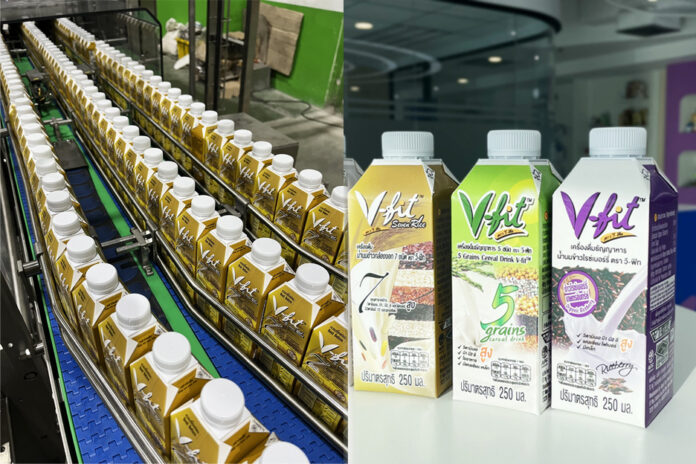
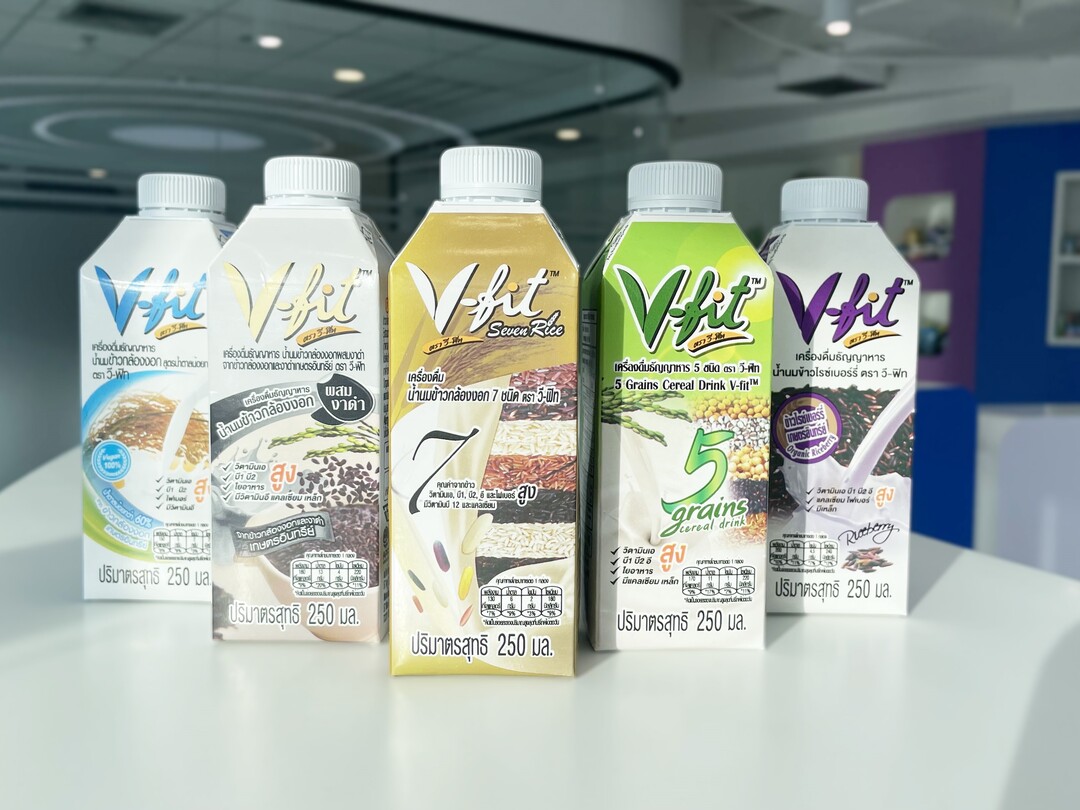
SIG DomeMini packaging for its new premium V-FIT rice-based nutritional drink range
BANGKOK — SIG, a global leader in packaging solutions, has officially introduced its innovative SIG DomeMini carton bottle to the Thai market through a strategic partnership with Ampol Food, marking a significant advancement in sustainable packaging options for on-the-go beverages in the region.
The launch comes as Thai consumers increasingly prioritize sustainable packaging in their purchasing decisions. Ampol Food, a prominent innovator in Thailand’s food and beverage manufacturing sector, has selected the SIG DomeMini packaging for its new premium V-FIT rice-based nutritional drink range.
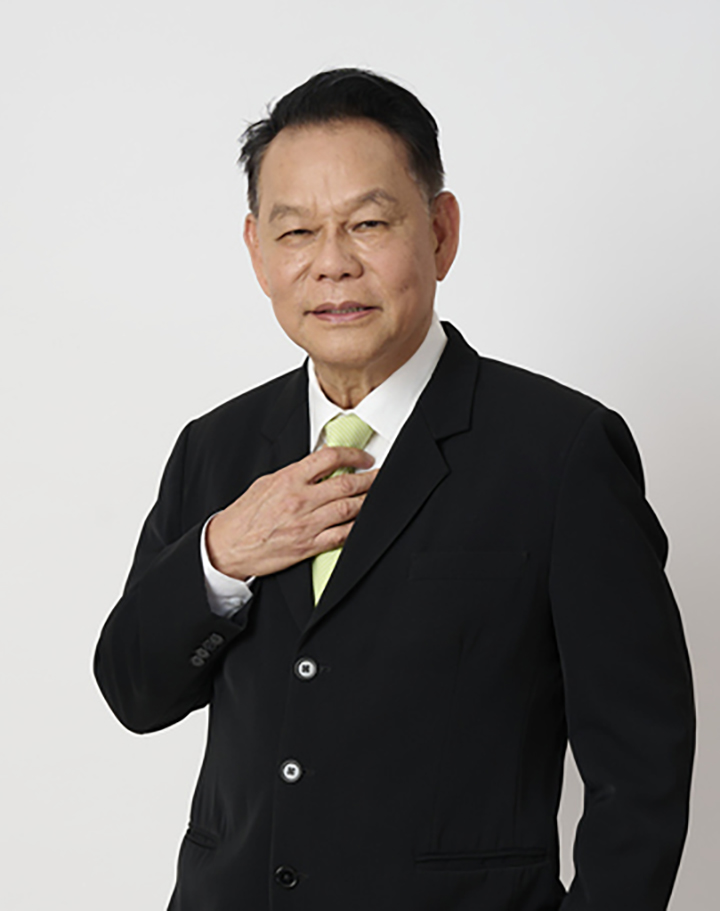
Dr. Kriangsak Theppadungporn, Managing Director at Ampol Food
“We are leading the way, not only when it comes to innovation in our products, but also in setting the trend for packaging solutions as part of the product concept,” said Dr. Kriangsak Theppadungporn, Managing Director at Ampol Food. “Opting for the SIG DomeMini is a step towards sustainable on-the-go packaging in Thailand. We are empowering our consumers to make more eco-conscious choices without compromising on convenience.”
The SIG DomeMini combines the on-the-go convenience of a plastic bottle with the sustainability benefits of a carton pack. Its main material is FSC™-certified paperboard, manufactured using 100% renewable electricity. The packaging features a lightweight, space-saving design with a large, centrally positioned cap that is easy to open and reclose – designed specifically for busy, health-conscious consumers.
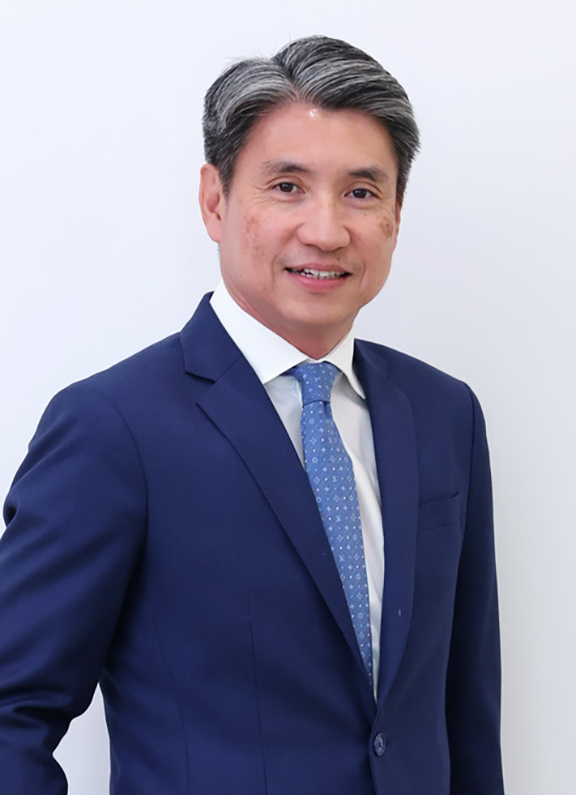
Vatcharapong Ungsrisawasdi, Head of Market for Thailand, Cambodia, Laos, and Myanmar at SIG
Mr. Vatcharapong Ungsrisawasdi, Head of Market for Thailand, Cambodia, Laos, and Myanmar at SIG, emphasized the significance of this launch: “The market for on-the-go beverages in Thailand is growing, and the market entry of SIG DomeMini with its sustainability benefits offers a perfect alternative to tackle the challenges of plastic bottles.”
He added that the carton bottle aligns with the trend toward “paperization” in product packaging, offering manufacturers and consumers an alternative with a significantly lower “plastic-to-product” ratio compared to conventional plastic bottles.
The SIG DomeMini products are now available on Thai retail shelves in 250ml packages, with initial availability in both 200ml and 250ml volumes. The packaging is filled on SIG’s aseptic filling machine, which can process 12,000 packages per hour in seven different volume sizes ranging from 180ml to 350ml, requiring just 15 minutes for volume changes.
This partnership represents a significant step toward fostering responsible consumption in Thailand’s beverage market, with both companies committed to bringing more sustainable packaging solutions to consumers.
The SIG DomeMini products are now available on Thai retail shelves in 250ml packages, with initial availability in both 200ml and 250ml volumes
SIG, founded in 1853 and headquartered in Switzerland, provides packaging solutions globally with approximately 9,600 employees serving customers in over 100 countries. The company produced 57 billion packs and generated €3.3 billion in revenue in 2024, maintaining high sustainability ratings including an AAA ESG rating from MSCI and a Platinum CSR rating from EcoVadis.