






















32.7 C
Bangkok
Friday, June 5, 2026
Home Blog

Lisa takes spotlight in Nike’s World Cup 2026 campaign

BANGKOK — 5 June 2026, BLACKPINK’s Lisa has featured in Nike’s star-studded campaign ahead of the 2026 FIFA World Cup, joining world-class athletes, artists and celebrities from various fields in a single promotional film.

The global sportswear giant’s new commercial, titled “Rip The Script”, was launched as part of its campaign for the 2026 FIFA World Cup, which will be jointly hosted by the United States, Canada and Mexico from 11 June to 19 July 2026.

One of the campaign’s highlights is the appearance of Lisa (Lalisa Manobal) of BLACKPINK. She takes centre stage in one scene, signing autographs for fans inside a production studio while a group of football stars break away from the set to chase a football across the studio.

In that scene, Raúl Jiménez, a striker for Premier League club Fulham and the Mexico national team, pauses the action to approach Lisa and ask for her autograph, saying, “Can I get your signature?” before she responds, “Okay.” The moment has charmed fans worldwide and become one of the campaign’s most talked-about scenes.

4 web

The advertisement features a host of football superstars, including Kylian Mbappé, Virgil van Dijk, Vinícius Júnior, Erling Haaland and Cristiano Ronaldo. It also includes appearances from celebrities outside football, such as Kim Kardashian, LeBron James, Travis Scott and Channing Tatum.

Nike said “Rip The Script” was built around the idea of breaking free from traditional boundaries and celebrating athletes, creators and cultural figures who are unafraid to be themselves. The campaign’s central message is “Nobody ever dreams of doing what they’re told.”

Enrico Balleri, Nike vice president and creative director for global brand voice, said those featured in the film were selected to reflect how football’s influence extends beyond sport into music, fashion, entertainment and contemporary culture.

Lisa is also the only Asian figure to hold a prominent role in the campaign, reinforcing her status as a global partner for Nike and highlighting her influence as an artist who bridges the worlds of sport, music and fashion.

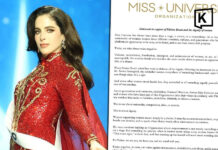
Lisa’s custom-made pink dress has emerged as another talking point from the campaign. Created by Thai fashion brand IWANNABANGKOK and stylist Nanist, the outfit was made by deconstructing and reassembling components from Nike’s new Mercurial Vapor football boots as part of an upcycling concept.

3 web

The outfit was inspired by the Nike Mercurial Vapor 17, a lightweight speed-focused boot weighing 150 grams, which Nike describes as one of the lightest in the brand’s history. The dress incorporates shoelaces, upper materials and lacing details, reinterpreted into a contemporary fashion design.

IWANNABANGKOK said its team completed the dress in just 24 hours to reflect the concept of speed that defines the Mercurial line. The brand described the project as a milestone achieved through collaboration with partners who shared the same creative vision.

5 web

Lisa’s appearance in “Rip The Script” marks another milestone for Thai artists on the global stage. The campaign has also brought international attention to Thai fashion label IWANNABANGKOK through one of Nike’s most prominent promotions ahead of the 2026 FIFA World Cup.

2 web 1 1 web

Advertisement

Missing hiker found dead after four-day search in Trang

TRANG — 4 June 2026, Search teams on Thursday found the body of a 54-year-old woman who had been missing for four days in the forest of Khao Chet Yot, a popular natural attraction on the Banthat mountain range spanning Trang and Phatthalung provinces.

The victim, Wantanee, also known as “Ae”, from Mueang district in Nonthaburi province, disappeared on Monday while hiking with friends and local guides.

More than 100 personnel from multiple agencies, including the Department of National Parks, Wildlife and Plant Conservation, the Royal Forest Department, wildlife sanctuary officials, police, local administrators, rescue workers and villagers, took part in the search operation despite steep terrain and intermittent heavy rain. Authorities had planned to deploy thermal-imaging drones with police assistance if she was not located by Thursday.

A breakthrough came on Thursday morning when search teams discovered discarded wet wipes near a creek upstream of Ton Te Waterfall in Palian sub-district. The site was located about 5 km uphill from Nan Sato Waterfall, the usual descent route from Khao Chet Yot. Believing the wipes had been used two to three days earlier, officials adjusted their search plan and concentrated efforts in the area.

Between 14:30 and 15:30, rescuers located Wantanee’s body near Nhan Yan Sai, an upper watershed area above Ton Te Waterfall characterised by steep cliffs and fast-flowing streams. Officials first spotted her pink backpack lodged among boulders in a stream before a detailed search led to the discovery of her body nearby.

Investigators believe she may have strayed onto the Nhan Yan Sai route, a rugged and hazardous trail known for slippery rock formations during periods of rain. The route is generally avoided even by experienced local hunters. Authorities suspect she may have lost her footing while crossing a stream or navigating the rocks, resulting in a fatal fall. However, the exact cause of death has yet to be determined pending an autopsy and further examination of evidence.

After receiving the report, police officers, forensic personnel, rescue workers, wildlife sanctuary officials and experienced local hunters trekked for at least two hours to reach the scene, carrying field stretchers, medical supplies, drinking water, flashlights and food. Despite strong winds and persistent rain, teams began transporting the body down the mountain.

Following an operation lasting more than five hours, officials successfully brought the body to the base of the mountain. They also recovered personal belongings from the victim’s backpack, including food, drinking water, a portable gas canister, clothing and other personal items.

Meanwhile, Sinruasak Chusieon, a Phatthalung tour guide who led the trekking group on the day of the incident and participated throughout the search effort, developed fever and chills while assisting near the recovery site. He was taken to Palian Hospital for treatment. According to reports, he had previously suffered injuries and muscle cramps during the operation but continued returning to the mountain to assist in the search.

News of the discovery prompted condolences from local residents and members of Thailand’s hiking community, many of whom also praised the dedication of officials and volunteers who worked in difficult conditions throughout the four-day search.

Advertisement

Saudi man arrested at Phuket airport with ketamine hidden in underwear

PHUKET — 3 June 2026, A Saudi Arabian man was arrested at Phuket International Airport after allegedly attempting to smuggle ketamine out of Thailand by concealing capsules inside his underwear.

Customs officers stationed at Phuket International Airport, working with police, arrested the suspect at approximately 20:00 in the international departures terminal in Mai Khao, Thalang district.

The suspect was identified as a 28-year-old Saudi national.

Authorities seized 63 red-and-white capsules containing a white powder, with a total weight of approximately 32 grams, suspected to be ketamine. The capsules had been hidden inside the suspect’s underwear. Two iPhones were also confiscated.

According to investigators, the suspect had checked in for an Etihad Airways flight and deposited two pieces of luggage before passing through immigration and entering the international departure screening area.

While passing through a body scanner, officers detected an anomaly and conducted a more thorough search. They subsequently discovered the capsules concealed in a white cloth bag inside the suspect’s underwear.

Preliminary testing of the powder using an ONCB053 Ketamine Reagent produced a light purple reaction, indicating the substance was ketamine, a Category 2 narcotic under Thai law.

2 web

The suspect was charged with attempting to export a Category 2 narcotic (ketamine) without permission and unlawful possession of a Category 2 narcotic. He also faces charges under the Customs Act B.E. 2560 (2017).

The suspect and seized evidence were handed over to investigators at Sakhu Police Station for legal proceedings.

Pol. Col. Salan Santisatsanakul, superintendent of Sakhu Police Station, said authorities continue to maintain strict screening measures at airports to prevent Thailand from being used as a transit route for international drug trafficking.

Police said the investigation is ongoing to determine whether the suspect is linked to a wider trafficking network.

Advertisement

Israeli man arrested over alleged illegal Pai studio

Israeli man arrested over alleged illegal Pai studio

MAE HONG SON — 4 June 2026, Thai authorities have arrested an Israeli businessman in Pai district on allegations of illegally operating a studio business through nominee arrangements and providing false information in official registration documents.

The suspect, identified as Mr. Goren, 39, was arrested at a residence in Thung Yao subdistrict, Pai district, Mae Hong Son province, at around 15:00 on 4 June 2026.

The operation was carried out by officers from Provincial Police Region 5, Mae Hong Son Tourist Police and Pai district administrative officials under a warrant issued by the Pai branch of the Mae Hong Son Provincial Court.

According to authorities, Goren is accused of conspiring to provide false information to public officials for inclusion in official documents intended for use as evidence, potentially causing harm to others or the public.

He is also accused of operating a studio business in a sector restricted to Thai nationals under Thailand’s foreign business regulations and of allowing Thai nationals or Thai entities to assist in conducting a foreign-owned business without the required authorisation.

Investigators said they had received information that Goren was staying at a house in Pai and travelled to the location to execute the arrest warrant. Officers confirmed his identity before taking him into custody.

Police said Goren acknowledged that he was the person named in the warrant and stated that he had not previously been arrested under the warrant.

He was informed of the charges and his legal rights before being transferred to investigators for further legal proceedings.

Advertisement

Why We Cannot Leave Thailand–Cambodia Relations to Our Governments Alone

Why We Cannot Leave Thailand–Cambodia Relations to Our Governments Alone

It was another precarious week for Thailand–Cambodia relations, judging by several incidents over the past few days. Some were entirely unnecessary. There was also a missed opportunity at last month’s ASEAN Summit: Prime Minister Anutin Charnvirakul and his Cambodian counterpart, Hun Manet, couldn’t even hold a bilateral meeting by themselves without the mediation of ASEAN chair Ferdinand Marcos Jr., the president of the Philippines.

This spoke volumes about the continuing distrust between the two sides, five months after the ceasefire in late December. Anutin may also be wary of giving ammunition to Thais who suspect that any private discussion with the Cambodian leader could involve a secret deal, as critics once alleged of former prime minister Thaksin Shinawatra. Two decades after it was signed, Thailand revoked the 2001 memorandum of understanding on maritime disputes late last month.

​As if the situation were not precarious enough, Thailand this week built a large Buddha statue along the border, which led to a protest from Cambodia, which claimed that the statue had been built on Cambodian soil occupied by Thailand.

​The Thai army, meanwhile, was quick to reject Cambodia’s protest over border installations, including a Buddha statue and Thai flags, saying all activities were carried out within Thai sovereign territory.

​It was an unnecessary and immature move by Thailand, which doesn’t seem to understand the notion of a ‘disputed’ territory, to allow Buddha statues to be built and put Thai flags up, which led to the protest by the Cambodian Foreign Ministry. Such actions delay the normalisation of relations between the two nations.

Then there is the barbed-wire installation incident along the border. The Thai Army said the measures were aimed at boosting morale and ensuring security, but Cambodian soldiers thought it may have been placed on their side of the border. After several minutes of tense argument and a stand-off captured on video, the Cambodian troops withdrew from the Chong Bok area of Ubon Ratchathani. Again, this shows the persistence of the overlapping claims and was not necessary at all.

Also this week, there were rumours about Thai authorities allowing Cambodian students to cross the border to study in Thailand at the beginning of the new school term, which went viral on social media. Now, this is intriguing and tragic. It was likely a domestic sabotage attempt against the Anutin government. And although this should be welcome news if true, it is now something that is abnormal and taboo, particularly as more Thais are speaking out against spending Thai taxpayers’ money to send the children of Cambodian migrant workers to school. In the end, the government even threatened to take legal action against those who spread the rumours.

As if these were not enough to complicate relations, PM Hun Manet was also accused by some influential Thai netizens of having been educated at West Point in the US under Thailand’s quota, and thus of being ungrateful to Thailand. This led to a public denial by Hun Manet this week. In a bizarre move, some Thais continue to believe that Hun Manet lied despite having no evidence to support their belief. One influential Thai-American netizen known as Jaa Oh posted a vitriolic video full of expletives and concluded that because Hun Manet had to come out and deny it, he must be lying. Talk about logic.

​All this is happening in an environment of continued mutual hate speech between some Thai and Cambodian netizens.

​They should take a break, breathe deeply and recognise that holding on to hatred is unhealthy for them.

With the 2001 MoU unilaterally revoked by the Thai side in a Cabinet resolution on 5 May, this week also saw Cambodia publicly pursuing a settlement to the maritime border disputes through UNCLOS, or the UN Convention on the Law of the Sea.

What should Thais expect? Thailand cannot simply withdraw from the 2001 agreement that had guided negotiations on overlapping maritime claims and expect Cambodia not to resort to an alternative channel to settle the dispute in what it perceives to be its best interests. Cambodia is a smaller country and lost disputed land territories after two brief border wars last year, so it would naturally be less keen to engage in bilateral negotiations without a third party. Now, the Thai government will have to deal with the consequences and the belligerent attitudes of some Thais.

While PM Hun Manet said the move is aimed at resolving the dispute through international law and peaceful dialogue, not escalation, the Thai side wasn’t happy. Thai officials feel both nations should seek to resolve the dispute bilaterally first.

​Hun Manet said Cambodia viewed the MoU as the only agreed bilateral framework for resolving maritime disputes and developing resources in contested waters. With its cancellation, he said, bilateral negotiations had effectively reached a dead end.

He stressed that UNCLOS conciliation is a peaceful legal mechanism aimed at facilitating negotiations through an independent panel of international experts, not an escalation of the dispute. But as expected, Thai Foreign Minister Sihasak Phuangketkeow warned that the move could undermine efforts to restore relations and discuss border security.

And so the precarious state of Thai-Cambodian relations continues. And it continues as neither Thailand nor Cambodia has a meaningful and effective opposition capable of checking its government on the issue

​Allow me to elaborate on the Thai side, which technically should have a strong opposition but appears blinded by ultranationalism.

​Exiled historian and political dissident Somsak Jeamteerasakul posted the following message in Thai on Facebook earlier this week: “The issue of the military and the Cambodian border is something the [main opposition] People’s Party could certainly address. They don’t need to fear Article 112 [the royal defamation law] at all.

​”Yet they have done nothing. They have not come out to condemn the frenzied nationalist agitation.

“It is deeply disappointing.

“(As for the Pheu Thai Party—needless to say—they have also cowered and done nothing.)”

Unrestrained nationalism has been rearing its ugly head quite clearly since last year’s Thai-Cambodian conflict, and the People’s Party is not immune. If anyone thinks that Thais who oppose the lèse-majesté law and have a critical understanding of the monarchy are few in number, those who are able to see through and challenge Thai ultranationalism are even fewer—by dozens or even hundreds of times.

At its peak, tens of thousands once took to the streets of Bangkok to demand reform of the monarchy half a decade ago. But the number of Thais who came out to call for peace during the Thai-Cambodian war last year did not even reach 100 at its peak.

Given the situation, it should be clear that Cambodians and Thais cannot just leave the matter to their respective governments or opposition camps, but they themselves will have to try to play a positive and proactive role in an attempt to normalise relations between both nations.

We can start by refraining from engaging in hate speech and discouraging our fellow countrymen from doing so; by not resorting to stereotypical branding of the other; by not automatically and uncritically supporting our government’s handling of Thai-Cambodian ties; and by not succumbing to a defeatist mentality or a self-fulfilling prophecy that our relationship is doomed for eternity.

Look how far France and Britain have come in restoring normal and good relations with Germany despite the horrors of World War II. Or think about the fact that, once upon a time, the British burned down the White House in that young nation that is the United States, or how Singaporeans and Malaysians today are fond of sushi, ramen and many things Japanese despite Japan’s brutal occupation and the immense suffering caused during the Second World War.

I have no doubt that one day, Thai-Cambodian relations will be normalised. However, it is up to us, sensible Thais and Khmers, to try to steer our relations back on track sooner rather than later, because we stand to lose more otherwise.

We cannot leave the matter to politicians and army generals who may have vested interests in perpetuating the idea of the neighbouring country as the nemesis in order to unite people domestically against a common ‘enemy’ and distract us from real issues they may not want us to pay attention to.

Advertisement

“Trump Buffalo” becomes star attraction at Bangladesh Zoo

“Trump Buffalo” becomes star attraction at Bangladesh Zoo

DHAKA, Bangladesh — 4 June 2026, The Associated Press (AP) reports that a 700-kilogram albino buffalo has gone viral in the Bangladesh for its distinctive blond forelock, which resembles the hairstyle of U.S. President Donald Trump. The buffalo has become the newest star attraction at the Bangladesh National Zoo after being moved there last week.

This rare albino buffalo caused a massive stir when a farmer noticed that the golden-coloured hair on its forehead resembled U.S. President Donald Trump’s trademark hairstyle. Videos of the buffalo quickly spread across social media, prompting large numbers of people to visit a farm outside Dhaka to see the animal with their own eyes whether the buffalo truly possessed such a hairstyle. Consequently, the animal was referred as “Donald Trump.”

According to reports, the albino buffalo was originally destined to be sacrificed during a Muslim festival. However, the government ordered its relocation to the capital’s zoo due to safety concerns. Currently, despite sweltering temperatures, crowds have continued to visit the zoo to see the albino buffalo.

AP26154383646392 0

On Tuesday, visitors packed around the buffalo enclosure’s safety fence, recording videos on their mobile phones while some fathers lifted young children onto their shoulders for a better view of the buffalo.

Meanwhile, zoo staff have been taking special care of the buffalo, brushing its hair, spraying it with water to keep it cool, and using fans to help it cope with the heat.

Mohammad Nazim, a student from Dhaka, said the buffalo resembled Trump in terms of its eyes, hairstyle, and skin color. Just like Trump, it has a unique personality and lifestyle. Since becoming famous on social media, the buffalo has been living a similar life, receiving special attention and treatment.

AP26154232119526 0

Local media reported that a sign bearing the name “Donald Trump” was initially displayed outside the enclosure but was later removed. The zoo employee responsible for caring for the buffalo was also dismissed on Saturday, although no official reason has been provided for the termination.

However, some view the naming as inappropriate. Mohammad Joynal Abedin, a Dhaka resident who visited the zoo to see the albino buffalo, said naming a farm animal after one of the world’s most influential political leaders was definitely wrong as it seems disrespectful. He felt that the farmer who did so had made a poor decision.

The albino buffalo had already been sold ahead of Eid al-Adha, or the Festival of Sacrifice, which is one of Islam’s two major holidays, before Bangladesh’s interior minister reportedly ordered police to retrieve the animal, refund the buyer, and transfer the buffalo to the national zoo.

AP26154231950354 0

Advertisement

Bangkok temple thief caught on CCTV despite chanting concealment spell

Bangkok temple thief caught on CCTV despite chanting concealment spell

BANGKOK — 4 June 2026, police in Bangkok have arrested a security guard accused of stealing cash from donation boxes at Wat Pho after he allegedly climbed over the temple wall, covered his head with a cloth and recited what he described as a spell to conceal himself before carrying out the theft.

Lt. Gen. Siam Boonsom, commissioner of the Metropolitan Police Bureau, together with Maj. Gen. Pallop Aemla, deputy commissioner of the Metropolitan Police Bureau, and Maj. Gen. Chaikrit Pho-a, commander of Metropolitan Police Division 6, announced the arrest of Ratchathan, 43, on 4 June. He was apprehended at the entrance to Soi Lat Phrao 136 in Bangkok’s Bang Kapi district at about 12:30 on 3 June.

The arrest followed a complaint filed on 30 May by representatives of Wat Phra Chetuphon Wimon Mangkhalaram, better known as Wat Pho, regarding a night-time theft inside the temple grounds.

guardthifewat5 1 0

According to police, two wooden donation boxes inside a pavilion had been moved to the rear of the building and smashed open. Investigators found a small tripod nearby, which they believe was used to break the boxes.

The suspect allegedly stole 100 20-baht banknotes, worth a total of 2,000 baht.

CCTV footage reviewed by temple staff showed a man wearing a black T-shirt, black trousers and black trainers with white laces entering the pavilion at about 01:25 on 30 May. He had wrapped a white cloth around his head to conceal his face.

Investigators gathered CCTV footage from before and after the incident, including images showing the suspect moving the donation boxes and the damage caused to them. The evidence was used to obtain an arrest warrant from the Criminal Court on 2 June.

guardthifewat4 0

Police later located the suspect in the Lat Phrao area and took him into custody.

During questioning, Ratchathan allegedly confessed to the crime. Police said he admitted climbing over the wall of Wat Pho and targeting the donation boxes because he needed money to pay his rent.

The suspect, who works as a security guard in Bangkok’s Pinklao area, reportedly told investigators that he had previously visited the temple and knew there was money inside the donation boxes.

Police said he claimed that before carrying out the theft he apologised to the temple’s sacred spirits and recited what he described as a concealment spell that he believed would prevent others from noticing him.

guardthifewat3 0

He allegedly used the stolen money to pay his rent and cover other living expenses.

Investigators said the suspect also admitted having a previous theft conviction in another province. After serving his sentence, he moved to Bangkok and found work as a security guard.

He has been charged with night-time theft, trespassing at night, criminal damage, and concealing his identity while committing an offence. Police also alleged that he entered the temple grounds by overcoming a barrier intended to protect property. He was transferred to investigators at Phra Ratchawang Police Station for further legal proceedings.

Advertisement

Khon Kaen Hospital apologises after nurse gives saline to wrong patient

Khon Kaen Hospital apologises after nurse gives saline to wrong patient

KHON KAEN — 4 June 2026, the director of Khon Kaen Hospital has led a team to present an apology basket to a patient after a nurse mistakenly injected another patient with the same first name, confirming the fluid was only saline solution and probing into staff negligence ongoing.

This follows an incident where Thanaphon Athiphatpaphakon posted a photo while awaiting treatment at Khon Kaen Hospital, stating that a nurse had mistakenly injected him with medication intended for another patient. He noted that he is waiting for clarification from Khon Kaen Regional Hospital as he had already informed staff that the surname being called was not his.

On Thursday, at Special Ward 298 on the fifth floor of Khon Kaen Hospital, Dr. Thanasit Praipong, hospital director, accompanied by a team of medical executives, nurses, and the attending physician to visit 48-year-old patient, Thanaphon. The delegation presented a gift basket and provided a clarification regarding the incident. Dr. Thanasit apologised and expressed his regrets over what had occurred.

khon 3 0

Dr. Thanasit said the error occurred in the nursing service because there were two patients named “Thanaphon,” leading to a mistake in patient identification. He admitted that staff had acted negligently, and a formal fact-finding investigation had already been launched under the hospital’s internal procedures. He emphasized that the management team has not ignored this incident. It is a serious matter that directly affects patients receiving treatment and the hospital will use this case to improve its working procedures.

“The incident had caused immeasurable damage to the organization’s image. Once regarded as one of the best hospitals in Thailand, but that reputation has vanished. We want to rebuild trust so that everyone who comes to receive our services can feel confident. Our executives, nurses, and entire staff have always been instilled with prioritising patient safety above all else,” Dr. Thanasit added.

khon 2 0

Dr. Thanasit continued that according to the investigation, a saline solution had been injected before staff realized it was given to the wrong patient. Although it was merely saline, the investigation must still continue. Any disciplinary action would depend on the intent and exact details of the mistake, as well as whether professional standards had been breached.

Meanwhile, Thanaphon said he felt more relieved. He admitted that he had been frightened and highly concerned, prompting him to post about the incident as a record, ensuring that someone would be held accountable in case he suffered harm or died. However, after receiving the explanation from the hospital director, he feels much more at ease. He insisted that he had not intended to damage the reputation of the hospital or its medical staff. He chose to receive treatment at Khon Kaen Hospital because of his trust and confidence in its personnel and would still be willing to return here for medical treatment, if necessary, in the future.

Advertisement

Thai livestock groups back US corn imports to cut costs

Thai livestock groups back US corn imports to cut costs

BANGKOK — 4 June 2026, Thailand’s livestock and aquaculture industries defended plans to import feed corn from the United States, arguing that the move would reduce production costs, ease environmental pressures and would not harm domestic corn farmers.

The Federation of Thai Livestock and Aquaculture, joined by four livestock industry associations, said imports were necessary to address a shortfall in Thailand’s feed grain supply and to support ongoing trade negotiations with the United States.

Pornsil Patcharintanakul, president of the Thai Feed Mill Association and secretary-general of the federation, said Thailand requires about 9 million tonnes of feed corn annually but produces only 5 million tonnes, leaving a deficit of 4 million tonnes.

Thailand currently imports around 3.2 million tonnes of feed ingredients, including 1.5 million tonnes of corn from neighbouring countries and 1.7 million tonnes of wheat, while a further 800,000 tonnes remain unmet, he said.

The industry groups said a proposal to allow imports of up to 1 million tonnes of US corn would not replace domestically grown corn because importers would still be required to purchase local corn under a 3-to-1 domestic purchasing ratio before importing. They said the imported corn would instead substitute for wheat already being imported.

Pornsil said domestic feed corn prices had risen above 13 baht per kilogramme, which he described as the highest level globally. He attributed the increase in part to tighter import controls, restrictions on corn linked to crop burning and delayed rainfall that affected planting schedules.

Industry representatives argued that alternative domestic feed ingredients such as rice, broken rice, rice bran and cassava were already being used but could not fully replace corn because of nutritional, technical and market limitations.

They said lower-cost US corn could help reduce feed expenses, benefiting livestock and aquaculture producers as well as consumers through more stable prices for meat, eggs and other protein products.

The groups also argued that increased imports could help reduce environmental problems, including PM2.5 air pollution and transboundary haze associated with agricultural burning.

Addressing concerns about genetically modified organisms (GMOs), the federation said GMO crops have been widely used around the world for decades and noted that Thailand has imported and used GMO soybeans in the food and animal feed sectors for more than 30 years without adverse health effects or export disruptions.

The statement reflected the position of 21 livestock, aquaculture and feed industry associations, which said they were seeking greater public understanding of feed policy and long-term food security issues.

Advertisement

Chinese Student Rescued in Thailand After Scammers Ordered Her to Stage Own Kidnapping

Chinese Student Rescued in Thailand After Scammers Ordered Her to Stage Own Kidnapping

BANGKOK — 4 June 2026, Thai police have rescued a 21-year-old Chinese student after a transnational scam network allegedly manipulated her into travelling alone from Hong Kong to Thailand, staging her own kidnapping and sending images intended to extort a further 12.5 million baht from her family.

The student, identified only as Ms Wang, was found safe at a hotel in Bang Phli district, Samut Prakan, after police traced her movements through immigration records, hotel surveillance footage and witness accounts.

Police said the case involved a form of psychological manipulation known as “virtual kidnapping”, in which scammers do not physically abduct a victim but instead use threats, fear and isolation to pressure them into following instructions and creating the appearance that they have been taken captive.

The operation was announced on Wednesday by senior Royal Thai Police and Central Investigation Bureau officers.

helpjeanwoman1

According to police, Ms Wang’s father received messages through WeChat from an unidentified man claiming that his daughter had been abducted. The messages included images showing her bound and with apparent injuries, along with a ransom demand of HK$3 million, or about 12.5 million baht.

Her father did not transfer the requested ransom and instead reported the case to Hong Kong police, who coordinated with Thai authorities.

Investigators later found that the family had already lost HK$1.4 million, or about 5.8 million baht, during an earlier phase of the alleged scam.

Between 19 and 20 May, Ms Wang was reportedly instructed to ask her father for money under the pretext that it was needed as proof of financial support for overseas study. Her father transferred the funds into her Bank of China account, before the money was rapidly dispersed through suspected mule accounts linked to the scam network, police said.

The alleged scammers later intensified the pressure on Ms Wang, reportedly posing as government or law-enforcement officials and claiming that she was connected to a criminal case.

helpjeanwoman4

Police said she left Hong Kong alone aboard Hong Kong Airlines flight HX767 on 31 May and arrived in Thailand at approximately 02:36 on 1 June. She then checked into a hotel in Bangkok’s Lat Krabang district.

As investigators examined surveillance footage from the hotel, they found that she appeared to have arrived alone and that no suspected kidnappers had entered or left her room.

Police said Ms Wang had hired a vehicle to buy rope, straps, a knife, body paint and red lipstick. She allegedly used the items to stage signs of injury, bind herself and record images and videos that were later used to pressure her family into paying the ransom.

The scammers then allegedly instructed her to move to a hotel in Bang Phli district, Samut Prakan, using an image of a fake passport supplied online to complete the check-in process.

Thai police traced her location and brought her to safety. No accomplices were found with her at the hotel.

helpjeanwoman2

Pol. Gen. Tatchai Pitaneelaboot, deputy national police chief and director of the Royal Thai Police Anti-Trafficking in Persons Centre, said the case reflected an emerging form of transnational crime in which scammers remotely control victims through psychological pressure.

Police warned that victims could face further danger if they were instructed to travel onward to other countries, potentially placing them at risk of actual human trafficking.

Thai authorities said they would continue coordinating with Hong Kong police and international law-enforcement agencies to investigate the network behind the alleged scam.

Advertisement

Hot News

LATEST NEWS

Bangkok
overcast clouds
32.7 ° C
33.9 °
31.1 °
68 %
7.5kmh
100 %
Fri
35 °
Sat
36 °
Sun
35 °
Mon
35 °
Tue
33 °