37.8 C
Bangkok
Friday, June 26, 2026
Home Blog Page 1140

Court Acquits 80-Year-Old Writer of Defaming Monarchy

Bundit Aneeya at the court on Jan. 26, 2021.

BANGKOK (AP) — An 80-year-old writer accused of defaming Thailand’s monarchy in 2015 because of comments he made at a public seminar about the constitution was acquitted Tuesday by the Criminal Court.

The court ruled that Bundit Aneeya had not violated the lese majeste law because he had not specifically referred to royalty and had not used rude language.

The punishment for violating the law is three to 15 years’ imprisonment on each count.

The court last week gave a record sentence of 43 1/2 years under the law to a woman arrested six years ago who posted audio clips online deemed critical of the monarchy. The former civil servant had her nominal sentence of 87 years halved because she pleaded guilty.

In the past two months, the authorities have pursued lese majeste cases against at least 54 people, according to the legal aid group Thai Lawyers for Human Rights.

They acted after growing public criticism of the monarchy, once virtually unknown, by a youth-led pro-democracy movement. The protest movement seeks reform of the monarchy, which it says is unaccountable and has excessive power in what is supposed to be a democratic constitutional monarchy.

After King Maha Vajralongkorn took the throne in 2016 following his father’s death, he informed the government that he did not wish to see the lese majeste law used. But as the protests grew last year and criticism of the monarchy got harsher, Prime Minister Prayuth Chan-ocha warned a line had been crossed and the law would be used.

Bundit was prosecuted for saying at a seminar at Bangkok’s Thammasat University that “Human value and dignity of Thais must be higher than dust under someone’s feet.”

By tradition, Thai citizens who see themselves as subjects of the king refer to themselves as “the dust under your feet” when formally addressing the monarch.

The seminar was convened by an activist group opposed to the junta that took power in a 2014 military coup, and solicited public comments on a draft constitution to replace the one nullified in the army takeover.

Police and military agents monitored the meeting and took Bundit into custody as soon as he made a proposal for five principles that should be enshrined in the charter, including human dignity.

He was formally accused only in 2017, when a military prosecutor alleged that his remark was a derogatory reference to the late King Bhumibol Adulyadej.

The lese majeste law is supposed to cover the king, his immediate family and any regent, but has sometimes been applied more broadly.

It was the third lese majeste case filed against Bundit, who is in poor health. He was convicted in one previous case, for which he received a suspended sentence, and acquitted in the other.

Advertisement

UK’s ‘Tsunami’ of Grief as Coronavirus Deaths Pass 100,000

A woman passes a government conronavirus advert in central London, during England's third national lockdown to curb the spread of coronavirus, Thursday, Jan. 14, 2021. (Dominic Lipinski/PA via AP)

LONDON (AP) — For nine months, Gordon Bonner has been in the “hinterlands of despair and desolation” after losing his wife of 63 years to the coronavirus pandemic that has now taken the lives of more than 100,000 people in the United Kingdom.

Only recently did Bonner think he might be able to move on — after sensing the spirit of his wife, Muriel, near him on what would have been her 84th birthday.

“I suddenly understood I had to change my attitude, that memories are not shackles, they are garlands and one should wear them like garlands around your shoulders and use them to communicate between the quick and the dead,” the retired Army major said in an interview from his home in the northern city of Leeds. “Grief is the price we pay for love.”

Bonner, 86, is just one of many hundreds of thousands of Britons toiling with grief because of the pandemic. With more than 2 million dead worldwide, people the world over are mourning loved ones, but the U.K.’s toll weighs particularly heavily: It is the smallest nation to pass the 100,000 mark.

1000 10 11
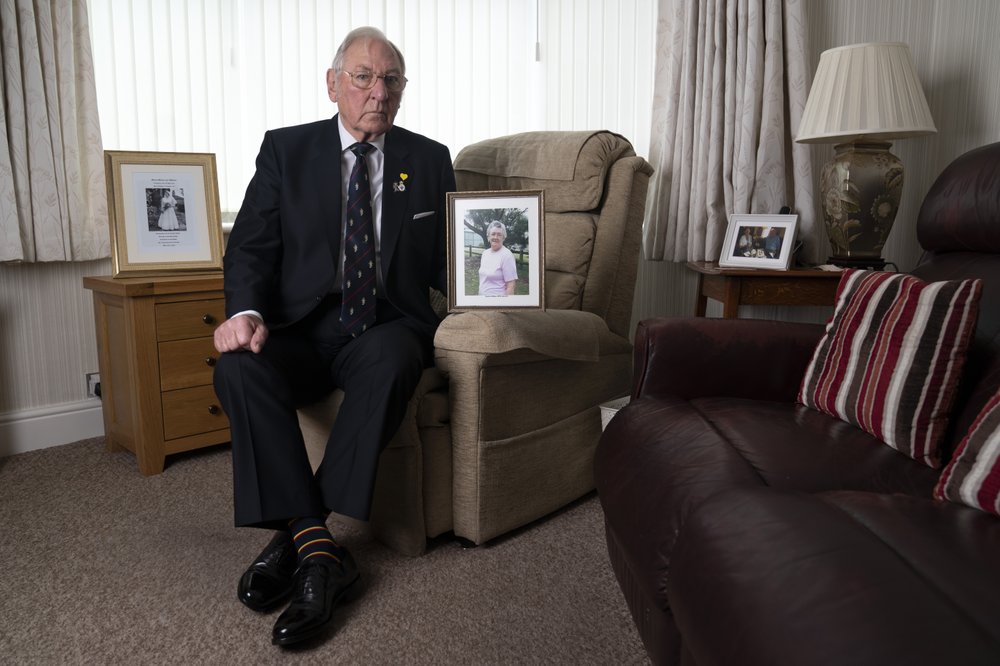
Retired Major Gordon Bonner holds a photograph of his wife Muriel who, in April 2020 died of COVID-19, at his home in Leeds, England, Saturday Jan. 23, 2021. ( AP Photo/Jon Super)

While Wuhan, Bergamo or New York City may be more associated with the pandemic, the U.K. has one of the the highest death tolls relative to its population. For comparison, the United States, with five times Britain’s population, has four times the number of deaths. Experts say virus tallies, in general, are undercounts due to limited testing and missed cases, especially early in the pandemic.

Alongside excess deaths comes excess grief, made even more acute by the social distancing measures in place to slow the virus’s spread.

“There’s going to be a tsunami of grief and mental health issues this year, next year, ongoing, due to the complications, because of course people haven’t been able to have the usual rituals,” said Linda Magistris, founder of the Good Grief Trust, which brings bereavement services in the U.K. together under one umbrella.

Bonner understands the need for restrictions but that hasn’t made it any easier.

Six weeks after he was prevented from going to Muriel’s care home because of lockdown restrictions and 10 days after she was diagnosed with COVID-19, Bonner was summoned to the hospital and, “dressed like a spaceman,” he bore witness to his wife’s final agonizing moments.

“She was working so hard to draw breath, her lips were pursed as if she was sucking on a straw,” he said. “I can see her face now with her lips in that position and it was devastating and it knocked me sideways.”

That was the last time he saw Muriel, and that image haunts him. And in what he termed a “wicked twist in the tale,” Bonner was not offered the chance to replace that memory as his wife’s body was deemed a “reservoir of active coronavirus.” He wasn’t even able to have her dressed the way he wanted for her cremation. Hugs with friends and family — well, they’re not advised.

1000 14 20
Britain’s Prime Minister Boris Johnson loads produce into baskets during a visit to a tesco.com distribution centre in London, Wednesday, Nov. 11, 2020. (AP Photo/Kirsty Wigglesworth, pool)

Those rituals help people cope, a task made harder now because there’s no escape from the scale of death in the U.K. — beyond the annual average of around 600,000 — from the regular sound of ambulance sirens to the alarming headlines on news bulletins.

“The backdrop of death, of grief, around creates quite a caustic context,” said Andy Langford, clinical director at Cruse, a leading charity for bereaved people.

Many left behind are unsure where to seek help, partly because they are navigating the grieving process at a time when local health services are not operating as normal.

Bereavement charities have stepped in, tailoring support groups online, that may appeal to those who may otherwise have been reluctant to search out help in the pre-COVID-19 world.

But resources are stretched, especially when the country is regularly recording over 1,000 deaths a day. The government is being urged to provide extra funding to bolster helplines, counseling services and other community support programs.

“It’s really important we don’t pathologize grief as indicative of mental health difficulties, but equally a huge proportion of people will need support,” said Dr. Charley Baker, associate professor of mental health at the University of Nottingham.

1000 4 26
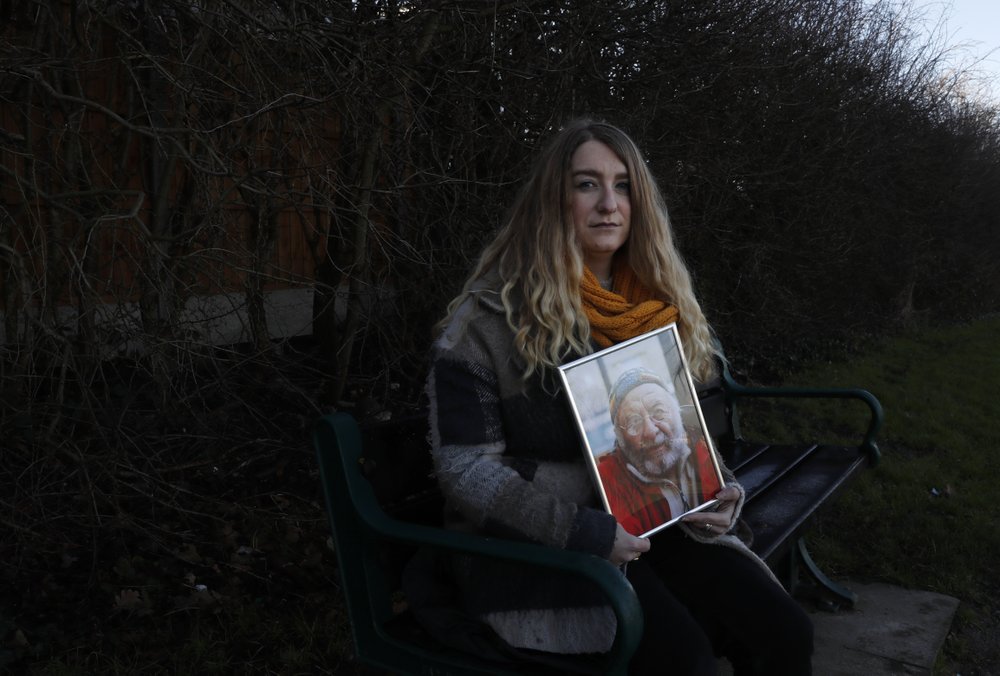
Jo Goodman holds a portrait of her late father Stuart as she poses for a photo in London, Friday, Jan. 22, 2021. (AP Photo/Alastair Grant)

Many won’t need any or only minimal outside support. But there is a concern that some of the grief is pent up: that people may be be subconsciously shielding themselves from its full impact, and they may end up being hit hard as the pandemic comes under control.

“I think it will be strange because it will be a really positive thing when things can hopefully get back to some degree of normality, but I think that would also be a very difficult moment because we’ve all been a bit frozen in time,” said Jo Goodman, who lost her 72-year-old father Stuart last April, just days after he tested positive for the virus.

A couple of months after her father died, Goodman, 32, co-founded the COVID-19 Bereaved Families for Justice group to pressure the government to back a public inquiry into how the pandemic was handled last spring.

“We can’t normalize the fact that hundreds upon hundreds of people are dying everyday and knowing what their families are going through,” Goodman said.

Prime Minister Boris Johnson has said an inquiry will take place — but only after the crisis is over. But already critics are arguing that the government has repeated the mistakes it made in the spring in the current resurgence, such as locking down the country too late. The U.K. is also contending with a new, more contagious variant that may carry a higher risk of death than the original strain.

Bonner, meanwhile, is hoping that the country will take the time to properly mourn and is considering sending a letter to Johnson, who has yet to back a national commemoration for virus victims, to suggest a “a simultaneous remembrance service so those of us who have lost people to COVID can go somewhere to seek some solace.”

Advertisement

Japan PM Apologizes Over Lawmakers’ Hostess Bar Visits Amid Virus Emergency

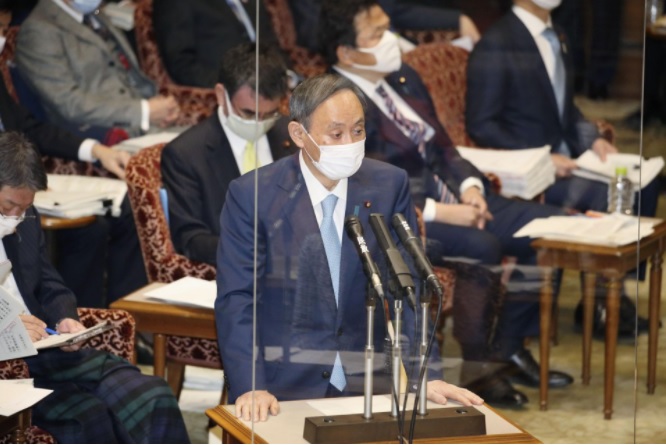
Japanese Prime Minister Yoshihide Suga speaks during a House of Councillors budget committee session in Tokyo on Jan. 27, 2021, with a transparent acrylic screen set in front of him to prevent coronavirus infection. (Kyodo)

TOKYO (Kyodo) — Japanese Prime Minister Yoshihide Suga apologized Wednesday in parliament after executives of the ruling coalition were reported to have visited hostess bars in Tokyo’s posh Ginza district, defying a state of emergency that urges people to avoid unnecessary outings.

Jun Matsumoto, acting chairman of the Liberal Democratic Party’s Diet Affairs Committee, and Kiyohiko Toyama, acting secretary general of Komeito, both admitted to visiting such bars last week.

Continue reading the story here

Advertisement

U.S. Announces Restoration of Relations With Palestinians

A girl wearing a head-to-toe Islamic garment stands with her sister at a police checkpoint as worshippers enter the Al Aqsa Mosque compound for Friday prayers in the Old City of Jerusalem, Friday, Jan. 22, 2021. (AP Photo/Maya Alleruzzo)

UNITED NATIONS (AP) — U.S. President Joe Biden’s administration announced Tuesday it was restoring relations with the Palestinians and renewing aid to Palestinian refugees, a reversal of the Trump administration’s cutoff and a key element of its new support for a two-state solution to the decades-old conflict between Israelis and Palestinians.

Acting U.S. Ambassador Richard Mills made the announcement of Biden’s approach to a high-level virtual Security Council meeting, saying the new U.S. administration believes this “remains the best way to ensure Israel’s future as a democratic and Jewish state while upholding the Palestinians’ legitimate aspirations for a state of their own and to live with dignity and security.”

President Donald Trump’s administration provided unprecedented support to Israel, recognizing Jerusalem as Israel’s capital, moving the U.S. Embassy from Tel Aviv, slashing financial assistance for the Palestinians and reversing course on the illegitimacy of Israeli settlements on land claimed by the Palestinians.

Israel captured east Jerusalem and the West Bank in the 1967 war. The international community considers both areas to be occupied territory, and the Palestinians seek them as parts of a future independent state. Israel has built a far-flung network of settlements that house nearly 700,000 Jewish settlers in the West Bank and Jerusalem since their capture in 1967.

The peace plan unveiled by Trump a year ago envisions a disjointed Palestinian state that turns over key parts of the West Bank to Israel, siding with Israel on key contentious issues including borders and the status of Jerusalem and Jewish settlements. It was vehemently rejected by the Palestinians.

Mills made clear the Biden administration’s more even-handed approach to the Israeli-Palestinian conflict.

“Under the new administration, the policy of the United States will be to support a mutually agreed two-state solution, one in which Israel lives in peace and security alongside a viable Palestinian state,” he said.

Mills said peace can’t be imposed on either side and stressed that progress and an ultimate solution require the participation and agreement of Israelis and Palestinians.

“In order to advance these objectives, the Biden administration will restore credible U.S. engagement with Palestinians as well as Israelis,” he said.

“This will involve renewing U.S. relations with the Palestinian leadership and Palestinian people,” Mills said.

“President Biden has been clear that he intends to restore U.S. assistance programs that support economic development programs and humanitarian aid to the Palestinian people, and to take steps to reopen diplomatic relations that were closed by the last U.S. administration,.” Mills said.

Trump cut off funding for the U.N. Relief and Works Agency known as UNRWA, which was established to aid the 700,000 Palestinians who fled or were forced from their homes during the war surrounding Israel’s establishment in 1948. It provides education, health care, food and other assistance to some 5.5 million refugees and their descendants in the West Bank and Gaza Strip, as well as Jordan, Syria and Lebanon. The U.S. was UNRWA’s major donor and the loss of funds has created a financial crisis for the agency.

The Trump administration closed the office of the Palestine Liberation Organization in Washington in September 2018, effectively shutting down the Palestinians’ diplomatic mission to the United States.

Mills said the United States hopes to start working to slowly build confidence on both sides to create an environment to reach a two-state solution.

To pursue this goal, Mills said, “the United States will urge Israel’s government and the Palestinians to avoid unilateral steps that make a two-state solution more difficult, such as annexation of territory, settlement activity, demolitions, incitement to violence, and providing compensation for individuals in prison for acts of terrorism.”

Israel has accused the Palestinians of inciting violence and has vehemently objected to the Palestinian Authority paying families of those imprisoned for attacking or killing Israelis.

Mills stressed that “the U.S. will maintain its steadfast support for Israel” — opposing one-sided resolutions and other actions in international bodies that unfairly single out Israel and promoting Israel’s standing and participation at the U.N. and other international organizations.

The Biden administration welcomes the recent normalization of relations between Israel and a number of Arab nations and will urge other countries to establish ties, Mills said.

“Yet, we recognize that Arab-Israeli normalization is not a substitute for Israeli-Palestinian peace,” he said.

Mills stressed that the fraught state of Israeli-Palestinian politics, and the fact that trust between the two sides “is at a nadir,” don’t relieve U.N. member nations “of the responsibility of trying to preserve the viability of a two-state solution.”

Before Mills spoke, Palestinian Foreign Minister Riad Malki sharply criticized the Trump administration for using “the United States’ might and influence to support Israel’s unlawful efforts to entrench its occupation and control” and reiterated Palestinian President Mahmoud Abbas’ hopes “for the resumption of relations and positive engagement.”

“Now is the time to heal and repair the damage left by the previous U.S. administration,” he said. “We look forward to the reversal of the unlawful and hostile measures undertaken by the Trump administration and to working together for peace.”

Malki called for revival of the Quartet of Mideast mediators — the U.S., U.N., European Union and Russia — and reiterated Abbas’ call for an international peace conference “that can signal a turning point in this conflict.” He also expressed hope that “the U.S. will play an important role in multilateral efforts for peace in the Middle East.”

Russia’s Foreign Minister Sergey Lavrov said Moscow is convinced that the Quartet, working closely with both sides and Arab states, “can play a very, very effective role.”

In support of Abbas’ call for an international conference, Lavrov proposed holding a ministerial meeting this spring or summer with the Quartet and Egypt, Jordan, United Arab Emirates and Bahrain as well as Saudi Arabia to analyze the current situation and assist “in launching a dialogue” between Israeli’s and Palestinians.

Arab League Secretary-General Ahmed Aboul Gheit said “Palestinians suffered from unprecedented pressure from the former U.S. administration” and said the organization’s 22 members look forward to Biden correcting Trump’s actions and working with international and regional parties to relaunch “a serious peace process.”

But Israel’s U.N. Ambassador Gilad Erdan told the council that instead of focusing on the Israeli-Palestinian conflict, it should focus on Iran, which “does not try to hide its intention of destroying the world’s only Jewish state.”

On the Israeli-Palestinian conflict, he suggested that the council discuss what he called “the real obstacles to peace: Palestinian incitement and culture of hate.”

Israel remains willing to make peace “when there is a willing partner,” Erdan said, accusing Abbas of inciting violence, and saying he should come to the negotiating table “without making outrageous demands and not call for another pointless international conference … (which) is just a distraction.”

Advertisement

Rural Pupil Who Braves Scorching Sun for Internet Signal Goes Viral

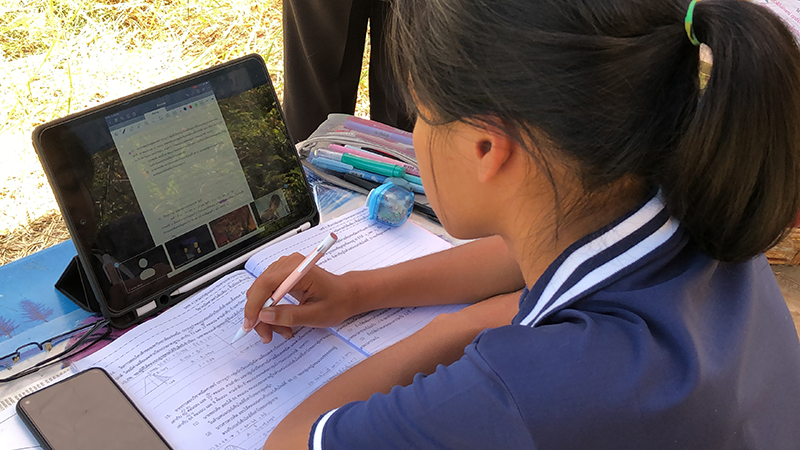
Sirilak Ritbua in her study spot in a field on Jan. 25, 2021, in Prachuap Khiri Khan province.

PRACHUAP KHIRI KHAN — To attend her online classes, high schooler Sirilak Ritbua had to stake a clear spot in a field, armed with only an umbrella against the relentless heat, for the internet signal.

Her daily ordeal went viral over the weekend after a teacher at Hua Hin School went around visiting students and found Sirilak, 18, studying under the sun. Her house has no mobile or internet signal. The field is the only place she can catch some signal, and even then, it’s unstable at times.

The teacher then posted photos of her and wrote that Sirilak’s diligence was admirable. Schools remain closed in 28 provinces since the shutdown was announced in early January amid a second wave of COVID-19 outbreak.

“I’ve told the teacher that sometimes there’s no signal at all, or that it’s so hot outside that I can’t attend class,” Sirilak told reporters. Her younger brother also has to go outside in an attempt to get an internet signal.

Sympathy poured in from around the country. Predictably, local education and state telecomm officials also rushed into the spotlight on Monday to lend a hand. They installed a six-meter Wifi signal booster for Sirilak, who lives in Nong Phlap subdistrict, and gifted her with three tablet computers and some face masks.

Heck, staff from Bangkok Hospital Hua Hin even pitched a tent for her, so she can study under a shade instead of having to hold an umbrella throughout the entire class.

“Thank you for seeing my troubles and determination,” Sirilak said to the officials Monday. “I will study harder, because I have all the materials now.”

IMG 2065

But the quick fix by the local authorities drew much mockery from the netizens.

“I saw the picture and thought the Internet people were going to install better signals for her, or make it that she doesn’t have to study outdoors,” wrote Facebook user Beay OvaSoul in a viral post shared more than 20,000 times. “They just pitched a tent so she would get less sun! Good job, you fixed the problem at the source, you dumbass!”

“If you just fix problems on a case-by-case basis like this, how many more centuries will we take to get developed?” wrote Facebook user Pakawat Kerdbanchan.

Facebook user Ya Nakpong chimed in, “Everyone thinks Hua Hin is developed. But only the city area is. In the mountainous areas, they don’t even have electricity.”

Sirilak, a Matthayom 6 scholarship student at Hua Hin School, has a GPA of 3.99 and has dreams of being a doctor. Her father is a motorcycle taxi driver and her mom is a farmhand.

In November, Sirilak appeared on the “Get a Scholarship if You’re Smart” game show and won a 50,000 baht scholarship and an iPad – she would later use it while studying in the lonely field.

IMG 2233 copy

IMG 2095 copy

Related stories:

Literature Teacher in Ang Thong Puts on a Show for Online Classes

YouTuber Donated to a Rural Village, Upsetting Local Gov’t

Advertisement

Only 1 Party Plans to Highlight Lese Majeste in Censure Debate

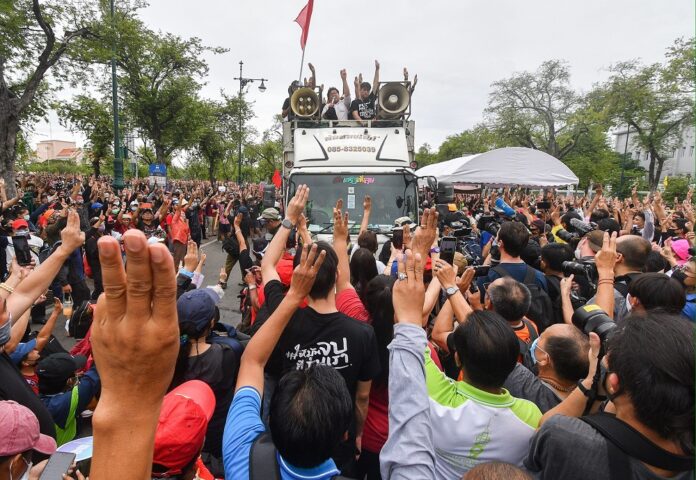
Protesters rally close to the Grand Palace on Sept. 20, 2020, to call for monarchy reforms and abolition of lese majeste law.

BANGKOK — Only one opposition party is planning to raise the issue of the excessive use of the royal defamation offense when the Parliament reconvenes for a censure debate next month.

Move Forward MP Wiroj Lakkhanaadisorn said his party will slam the enforcement of the draconian law, also known as lese majeste, which he views as an attempt to intimidate dissidents. But other parties have indicated they will not touch the issue, even as nearly 60 people have been charged under the offense in just two months – a reluctance that disappoints pro-democracy activists interviewed for this story.

“We will take to the floor and speak about the intimidation of protesters by the Emergency Decree and Article 112,” Wiroj said, referring to the lese majeste law. “Its enforcement is not transparent. Different MPs will discuss the issue from different perspectives.”

The politician also said Move Forward will push for reforms of libel laws, including lese majeste, after the censure debate is over. The amendment is expected to start by the end of February at the earliest.

“The draft to amend Article 112 is being revised right now,” Wiroj said. “I confirm that the party will try to do it after the no-confidence debate concludes. Perhaps within February, but definitely within the first quarter of this year.”

He continued, “We have studied lese majeste laws used in other countries and consulted with academics, so we’ll know what they think. The punishment has to be suitable for modern context. It cannot be disportionately high.”

S 3367347 2
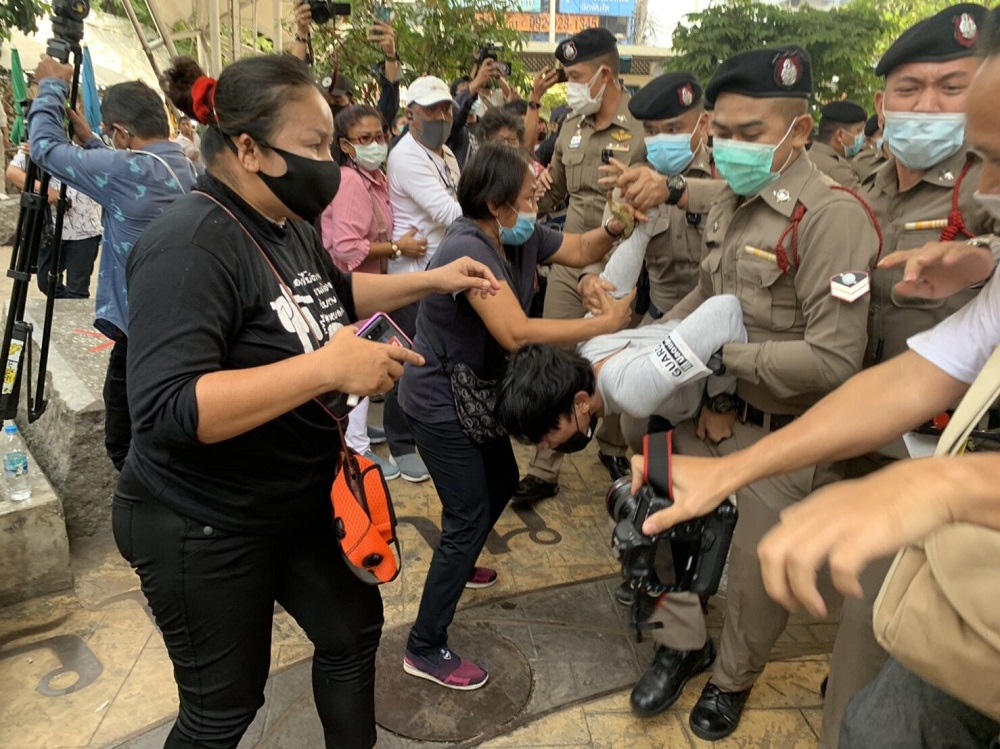
Police crack down on a rally against lese majeste law at Victory Monument on Jan. 16, 2021.

But the overture by Move Forward is unlikely to be taken up by its allies.

Although the formal motion of the no-confidence debate accused PM Prayut Chan-o-cha of “using the monarchy as an excuse to deepen the division in the society,” Pheu Thai Party sec gen Prasert Jantararuangpong said that the party has no plan to raise the issue of the lese majeste during the censure debate or support the law’s amendment.

“If there are important points in the future, we’ll consider it again,” Prasert said by phone on Tuesday. “We didn’t include monarchy reforms in the motion either. We only wrote it broadly, that PM Prayut damages the confidence in democratic regime with the King as Head of State.”

The Pheu Thai leader also said discussions about the monarchy during a parliamentary session are generally discouraged.

“There are restrictions … we cannot mention His Majesty the King unnecessarily,” Prasert said.

Seri Ruam Thai Party leader Sereepisuth Temeeyaves said he will not touch on the lese majeste law or the monarchy reform either.

“I won’t talk about it in the censure debate,” Sereepisuth said. “I’ll be talking a lot about COVID problems.”

Reforming the monarchy and abolishing the lese majeste are among some key demands put forth by pro-democracy protests throughout the latter half of 2020 – an unprecedented movement that invited intense, sometimes violent, backlashes from the royalists.

line 25945111755466
Protesters rally close to the Grand Palace on Sept. 20, 2020, to call for monarchy reforms and abolition of lese majeste law.

Opposition parties initially supported the protests, which started as a rebuke to PM Prayut’s administration, but later distanced themselves from the campaign when the monarchy issue took the forefront.

Benja Apan, a student activist from the United Fronts of Thammasat and Demonstration, said she was disappointed to learn that many voices in the Parliament will be silent on the crackdown under lese majeste law.

The 21-year-old said she believes the only solution is to abolish the offense entirely, not just amend it.

“I feel disappointed. Many people in Move Forward campaigned against Article 112 in the past,” Benja said. “But when we’ve reached this point, when so many people were arrested, they’d settle with only amending the law And as for the Pheu Thai Party, I’m disappointed to the point that I have no feeling left for them.”

Benja was arrested and charged with lese majeste after reading a statement about His Majesty the King’s stay in Germany during a demonstration to the German Embassy in Bangkok in October.

She said a lack of solid actions from parliamentarians to rein in lese majeste means demonstrators will have to take the matter to the streets again.

“I think there’ll be a campaign to gather signatures to abolish the law. I think it’s an idea that a lot of people are having,” Benja said. “Let’s see the situation first. I think we’ll see some action by midyear.”

Protest leader and former lese majeste convict Somyot Prueksakasemsuk said he was also less than pleased, but acknowledged that an attempt to reform the law could be a promising start.

line 30102082208463 1
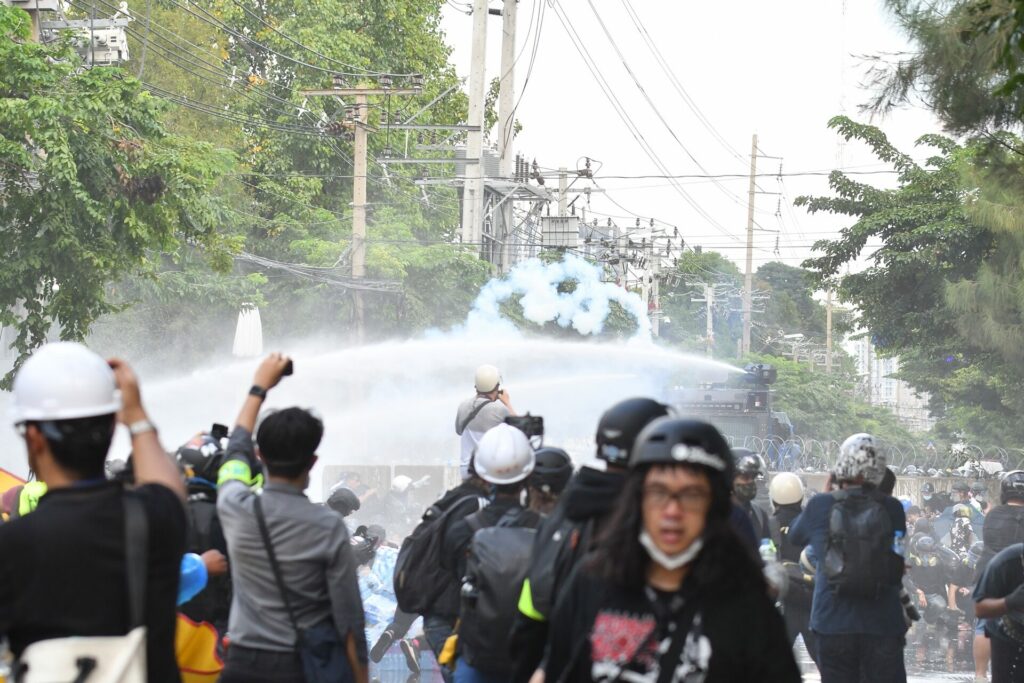
Police deploy tear gas and water cannons on demonstrators seeking monarchy reforms and charter amendments in front of the Parliament on Nov. 17, 2020.

“It’s a good initiative,” Somyot said by phone. “But Pheu Thai still lacks moral courage. It will only worsen and prolong the problem of political divisions.”

He went on, “Whatever parties that won’t speak about it in the censure debate, I’m deeply disappointed in all of them. They don’t have enough courage. They cannot proudly call themselves representatives of the people.”

Earlier this month, ruling Phalang Pracharath Party deputy leader Paiboon Nititawan and Democrat Party spokesman Ramet Rattachaweng told Khaosod English that their parties will oppose any move to amend the lese majeste law.

Previous attempts to reform Article 112 were spearheaded in 2011 by a group of law scholars called Nitirat. Their campaign hit a deadend in 2012 when the Pheu Thai-majority Parliament refused to debate on the proposal.

One of the Nitirat founders, Piyabutr Saengkanokkul, later formed the Future Forward Party, which placed third in the 2019 general election, but he declined to revive the bid to amend the royal insult law.

Related stories:

Police: Return of Lese Majeste Charges is ‘Inevitable’

For Sharing ‘Anti-Monarchy’ Audio Clips, Woman Gets 43 Years in Jail

Advertisement

Police Still Looking For Activist Who Filed ‘False’ Abduction Report

A photo dated Nov. 3, 2019 obtained from Mongkol Santimethakul’s Facebook showing him in army uniform, left, Mongkol during his visit to Samut Prakan City Police Station on Jan. 17, 2021, right.

SAMUT PRAKAN — Police on Tuesday said a pro-democracy campaigner who filed a false report that he was abducted by security officers appears to have gone into hiding.

Mongkol “Yale” Santimethakul, a member of the protesters’ security network, was nowhere to be found more than a week after he said he was carried off in an unmarked van after joining a protest on Jan. 16. Police said an arrest warrant was issued on Thursday after Mongkol did not show up for questioning as summoned.

“We couldn’t find him anywhere,” Samut Prakan provincial police commander Chumpol Phumphuang said. “We went to his apartment in Samut Prakan province and his home in Prachuap Khiri Khan province, but there are no signs of him.”

Maj. Gen. Chumpol added, “His father said he hasn’t heard from his son ever since the news broke.”

Mongkol said he was manhandled into the van by a group of men claiming to be security officers on the night of Jan. 16 before they freed him on the following day. But investigators said Mongkol could be seen in CCTV footage walking down a street and an apartment hallway on his own at the time when he was supposed to be blindfolded and detained inside the van.

Although Mongkol’s peers accused the Internal Security Operations Command of engineering the kidnapping to intimidate the activist, the agency quickly denied any involvement.

The Guard Coalition for the People, the group that Mongkol volunteered as a member, later released a statement on Jan. 20 urging Mongkol and the authorities to clarify the matter. 

“We’d let the police investigate and verify whether this is a hoax. We want to know the facts, too,” part of the statement said. “If there is clear evidence that Yale made it up, and there was no abduction as the news reported, he will have to be held responsible for what he did.”

Police also said Mongkol is an ex-soldier wanted for deserting his post back in 2019.

Chumpol said the activist would be prosecuted for filing a false police report once he is arrested, and he would be later transferred to a military tribunal for the alleged desertion.

The army confirmed that Mongkol is a serviceman stationed at an infantry school in Prachuap Khiri Khan before he went AWOL in December 2019.

Fellow activists said they were perplexed by Mongkol’s silence. The leader of the Guard Coalition for the People said he never heard from Mongkol ever since he was reunited with his group.

“He’s gone under the radar,” Kitpiwat Sriboonruang said, adding that he’s still convinced that Mongkol wasn’t making up the abduction.

“I really believed that he was abducted when we found him. He was shaking and appeared to be shocked. If he was acting, he would be a very good actor.”

Advertisement

Gov’t to Thanathorn: Current Vaccine Plans Are ‘Best Choice for Thailand’

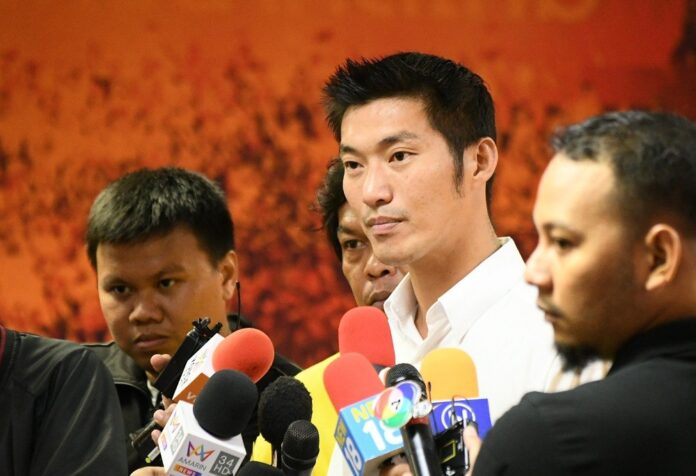
Future Forward Party chairman Thanathorn Juangroongruangkit speaks to reporters on July 2, 2019.

BANGKOK — The government on Tuesday defended its vaccination program as “the best choice” for Thailand amid renewed criticism from an opposition leader that the doses will only be enough for a fifth of the population.

In an open letter to politician Thanathorn Juangroongruangkit, who has raised doubts over the vaccine deals in recent days, public health minister Anutin Charnvirakul said that the decisions to secure AstraZeneca and Sinovac vaccines against COVID-19 were made by medical experts and appropriate to the outbreak situation in Thailand. 

“Speaking on behalf of the Ministry of Health and National Vaccine Institute, I say that our work is not delayed or lagging as Thanathorn has accused us of,” Anutin wrote. “We act according to the calculations of medical experts who consider the national situation and citizens’ safety.”

“Let me confirm that the purchase of 61 million AstraZeneca doses and 2 million Sinovac doses are the best choice for Thais and Thailand.”

Read: Thanathorn Claps Back at Lese Majeste Accusation

The cordial tone of the open letter is a highly unusual gesture from the government, whose responses to criticism in the past rely on deflecting the blames and slapping its critics with legal retaliation.

Just last week, Anutin accused Thanathorn of disloyalty to the monarchy by questioning the transparency in the vaccine procurement process. Government officials also filed charges of royal defamation against Thanathorn, who led the Future Forward Party until its dissolution in early 2020.

Thailand’s long-awaited vaccination campaign is said to begin on Valentine’s Day. The first group to be inoculated will be frontline health workers and government leaders, using imported 200,000 doses of AstraZeneca vaccine, health officials said.

The first shipment of the 2 million Sinovac vaccines will also come in February. Thailand will produce their own AstraZeneca vaccines through an agreement with Siam Bioscience, a company wholly owned by the palace. Production of the 61 million shots will reportedly start in May.

Enough is Enough?

In a series of speeches and Facebook posts, Thanathorn warned that the total doses will account for only about 21 percent of the population, and questioned why the government allowed for such a shortfall.

But Anutin maintained that the number is sufficient under Thailand’s strategy to contain the disease.

“The National Vaccine Institute has determined that this amount is suitable for Thailand’s situation, where there are no heavy outbreaks or large amounts of infected patients or deaths,” Anutin wrote.

“This is different from other countries who must quickly distribute vaccines despite the risk of side effects.”

Anutin said the production of 61 million AstraZeneca doses – 26 million in the first “phase” and 35 million in the second phase for the general public – when added with the 2 million Sinovac doses, will be used to inoculate 31.5 million people, or 63 percent of the population.

“This is a sufficient amount to create immunization for Thais,” he wrote. “The price of vaccines is also expected to go down, and we will be able to save a large amount of the budget.”

AP21025460740744 1
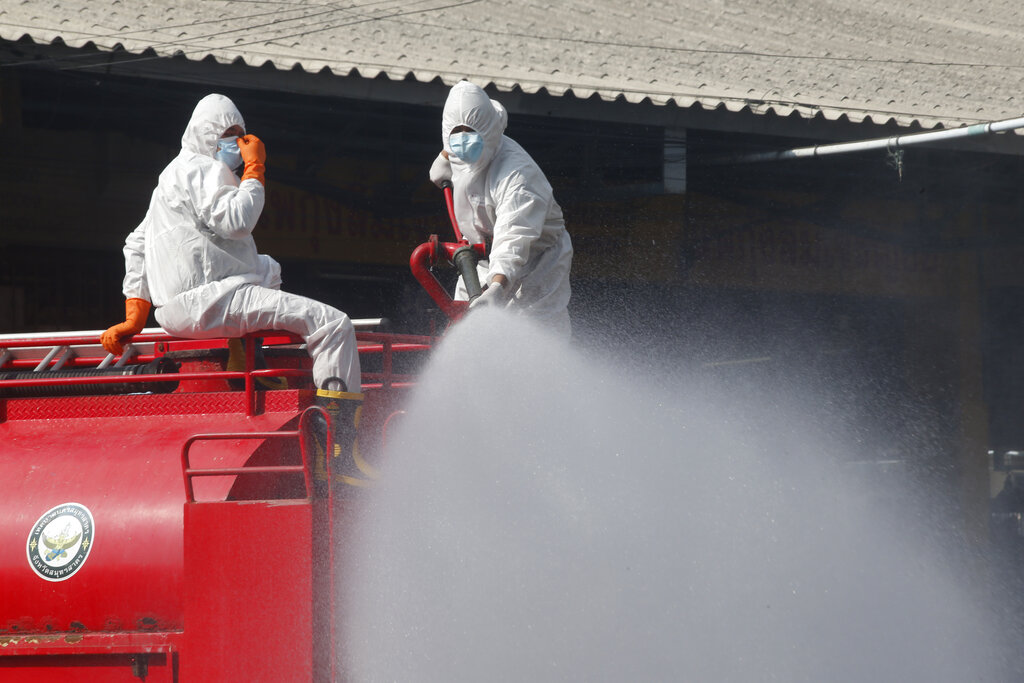
Workers spray disinfectant as a precaution against the coronavirus at a shrimp market in Samut Sakhon, Thailand, Monday, Jan. 25, 2021. Photo: AP

Those under 18 and pregnant women will not be eligible for COVID-19 vaccines.

Tawee Chotpitayasunondh, an expert at the National Communicable Disease Committee, also said that the government has ongoing discussions with other vaccine companies to secure enough for the population.

“Let me ask you, do you believe those numbers he said during that live?” Tawee said by phone Tuesday. “He talked about the vaccine agreements we already signed. But you have to understand that we have ongoing agreements. We aren’t finished making agreements for vaccines yet.”

He added, “Of course we will get more vaccines. The agreements, the information on them, is changing every day.”

In the open letter, Anutin insisted that the agreement with AstraZeneca saved considerable amounts of taxpayer money, since the company sells its doses at a lower price than other sources, including the World Health Organization’s COVAX program.

“Khun Thanathorn, you are a businessman who has done business negotiations with foreign companies, so surely you understand,” Anutin wrote.

Advertisement

Recruits Say Commander Beat, Tortured Them For Smoking Pot

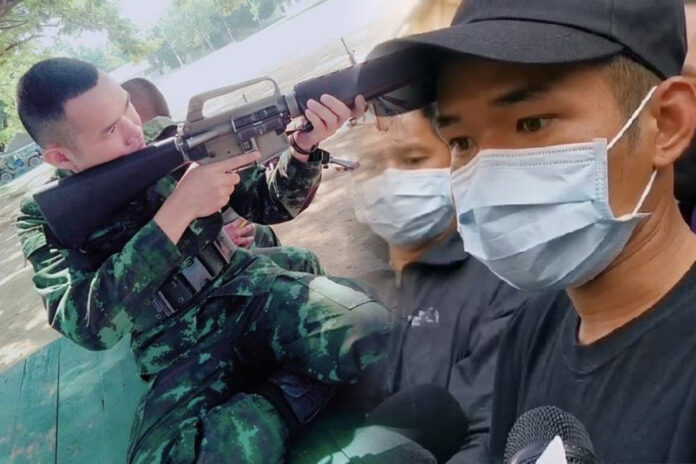
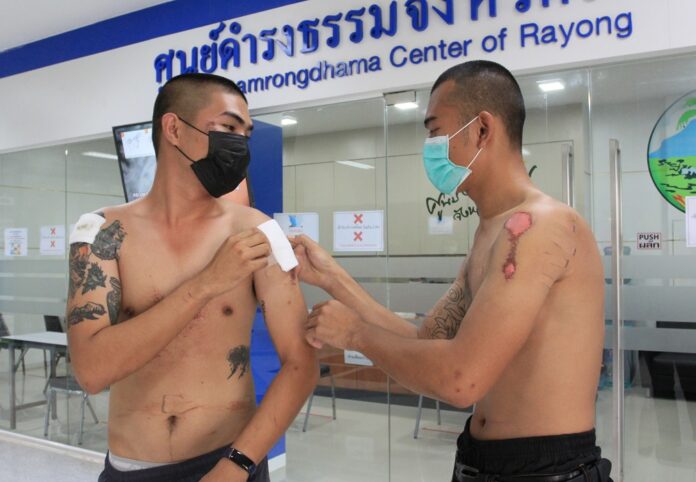
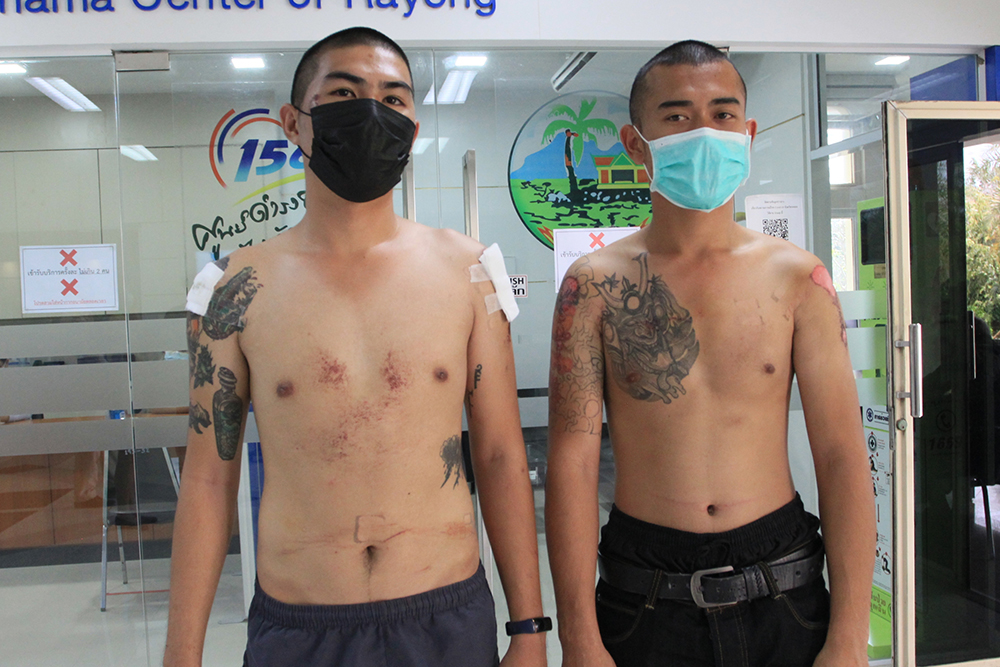
Pvt. Watchara Sirirak and Pvt. Kajorn Prachong show their bruises to reporters on Jan. 25, 2021.

Update: The army said the officer implicated by the two recruits has been detained following an investigation.

CHONBURI — Police on Tuesday said they are investigating a claim by two army recruits that they were assaulted by their commanding officer after they were caught with marijuana at their base.

Chonburi City police commander Nithat Waewpradab said investigators are questioning the recruits, who were stationed at Chonburi’s Camp Nawamin, for possible legal actions against the perpetrators.

“They went to hospital for a checkup,” Col. Nithat said by phone. “Charges will be filed once all the evidence is gathered.”

Pvt. Watchara Sirirak, 22, and Pvt. Kajorn Prachong, 24, said they and another three draftees were subject to a series of tortures by a drill instructor at the base on Jan. 22 after he found the weed in their possession.

The five soldiers were struck by a piece of wood multiple times and waterboarded with a garden hose for refusing to reveal where they got the weed from, Pvt. Watchara and Pvt. Kajorn said.

Pvt. Watchara Sirirak and Pvt. Kajorn Prachong show their bruises to reporters on Jan. 25, 2021.

The pair said they eventually fled the base and filed a petition with the government’s complaint center in the neighboring Rayong province on Monday. The three other soldiers decided to stay behind because they feared retaliation if they spoke out, according to Watchara and Kajorn.

“I feel sorry for my son,” Watchara’s mother Punyisa Sirirak said. “If my son is wrong, then he should be punished according to the regulations, not being beaten as if they are animals. I only saw these kinds of things in the news, but I never thought that this would happen to my own son.”

Kajorn’s mother said her son has eight months left in the service, but she does not believe that her son could survive any longer if he is still stationed at the same base.

“I want to be assured that my son will survive if he returns to the base,” Chattra Prachong said.

The First Region Army later said in a statement on Tuesday afternoon that an investigation was launched into the complaint. Preliminary inquiry revealed that there was sufficient evidence pointing to excessive punishments given by the drill sergeant, the statement said.

The unnamed officer has been detained while a full inquiry is ongoing, according to the statement, though no timeframe was given.

A number of junior ranking soldiers have died during their military service at the hands of their commanders. Victim’s families who seek the truth have been met with silence from the authorities or even prosecution.

In 2018, a 22-year-old private fell into a coma and died after he was reportedly beaten by three officers.

Two similar deaths were reported in the year of 2017 alone. Eight soldiers were accused of assaulting and killing a 22-year-old recruit, and an army cadet died in suspicious circumstances after he was subject to physical punishment by his commanding officers.

In early 2020, then-army chief Gen. Apirat Kongsompong pledged to treat low ranking servicemen better and promote transparency within the ranks. The reform was promised after a disgruntled soldier went on a shooting rampage in Korat that killed 30 people.

Advertisement

As Abortion Reform Nears Reality, Backlash From Catholic Church Begins

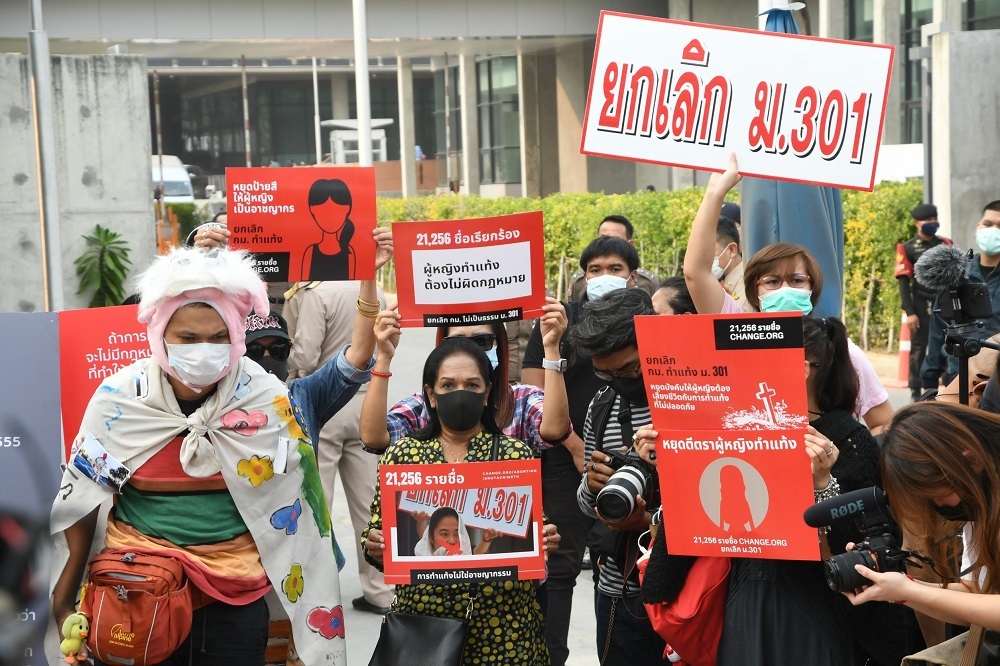
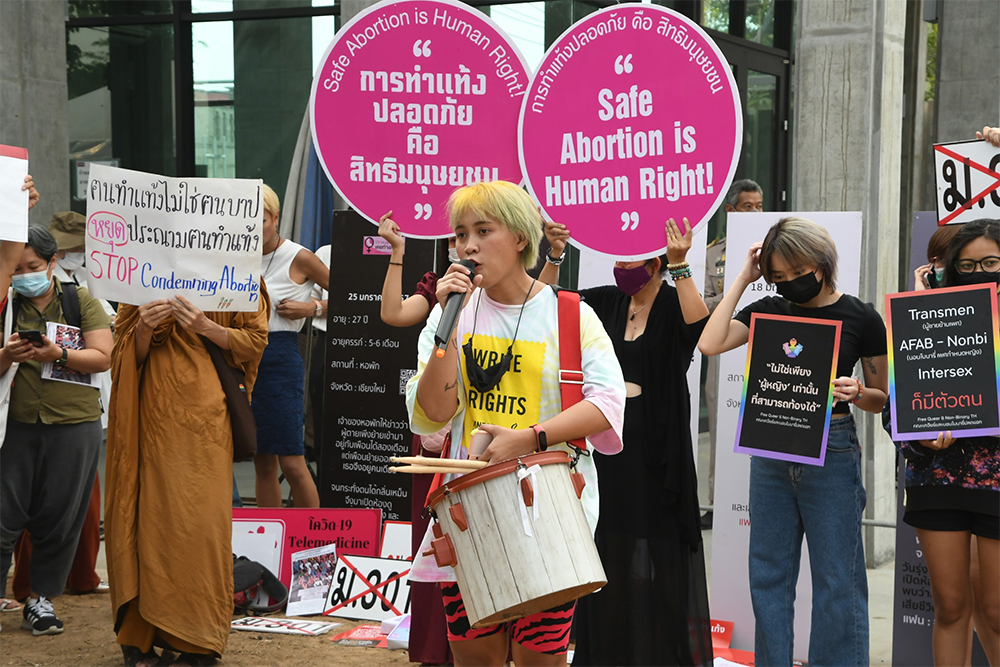
Activists stage a rally in front of the Parliament to call for abortion rights on Jan. 25, 2021.

BANGKOK — The Senate on Monday endorsed a bill that would legalize abortion up to the 12th week of pregnancy in compliance with a historic court rule – a move condemned by the Catholic Church leadership as “an immoral law.”

The amendment to the Criminal Codes aims to cement the legal protection for women seeking to terminate their pregnancy. Lawmakers hope the change will come into effect by Feb. 12, a deadline mandated by the Constitutional Court, even as the Church is launching a last ditch effort to stop its passage.

“Today’s session is historic,” Senator Kamnoon Sitthisamarn said on Monday. “We will try to wrap up the debate within one day so that the law could become effective within Feb. 12.”

The Senate eventually completed all of its three sessions required for debating a legislation by Monday night. The amendment is now pending an announcement on the Royal Government Gazette to become effective.

While abortion rights advocates say the new law would save countless women from illegal and often deadly procedures, senior officials of the Catholic Church are urging the faithfuls to oppose the effort, which they see as an infringement on “the rights of unborn children.”
Activists stage a rally in front of the parliament to call for abortion rights on Jan. 25, 2021.

“People get abortions because they want to get around the problem, they don’t want to solve the problem,” Fr. Pairat Sriprasert, director of pastoral care at the Catholic Bishop Conference of Thailand, said by phone.

“Our standpoint is clear. We oppose all forms of abortion since we hold that life is born after a zygote is formed,” Pairat said. “We must think about the rights of the unborn children as well.”

He continued, “People may argue that women want to get an abortion because they’re not ready to raise a child or are financially unstable, but there are solutions to these problems.”
About 1 percent of Thai population follows Christianity, though Roman Catholics are formally recognized as a faith group by the Thai state.

Priests have begun gathering signatures from churchgoers for a petition that urges the lawmakers to reconsider the bill. The Church also launched campaigns to raise public awareness of the Catholic’s view on abotion. Multiple Catholic organizations are set to meet on Thursday and hold a public discussion on why overturning the abortion ban is in violation of their religious dogma.

But Pairat conceded that he is not expecting the decision to be overturned.

“We will not go as far as staging a protest,” Pairat said. “But we will keep standing up for our belief. Although the law may eventually pass, the conscience prevails in this world. Actions have to be taken even though we are outnumbered in this Buddhist’s majority country.”

Key leaders of the Buddhist faith, which often preaches against abortions and views it as a maternal sin, have remained largely silent on the legal amendment. No major Buddhist groups have staged any public effort to protest the procedure either.

Unconstitutional

The bill passed by the Senate on Monday repealed Article 301 of the Criminal Codes, which criminalizes almost all cases of abortion, as well as holding the doctors who perform them liable to prosecution.

Under the law, which was passed in 1956, women found guilty of terminating their pregnancy face up to three years in prison. The maximum jail term is raised to five years for doctors who assisted them.

But a landmark verdict handed down in November by the Constitutional Court rules that Article 301 violates women’s rights to their life and body. The court also recommended that the article be amended accordingly within 365 days.

Safe and legal abortions were possible prior to the court’s verdict, thanks to a clause under Article 301 that allowed doctors to perform the operation if the women’s “mental health” is at risk, but pro-abortion activists argued the grey area did not offer enough protection for both women and doctors.

“The Universal Declaration of Human Rights states that everyone is born free, that’s clear enough,” Supecha Baotip, an activist from Tamtang, an abortion advocacy group, said in an interview. “There should be no law forbidding access to medical services.”

Activists stage a rally in front of the parliament to call for abortion rights on Jan. 25, 2021.
Activists stage a rally in front of the Parliament to call for abortion rights on Jan. 25, 2021.

It was Tamtang who filed a legal challenge to Article 301, which eventually led to the historic ruling by the Constitutional Court.

Supecha added, “I want everyone to understand that it is necessary for some women to undergo the procedure. No one else knows best except themselves.”

The amendment to Article 301 sailed through the Lower House without any significant opposition, with 276 MPs voted in favor, eight against, and 54 abstained. The proposed text of the amended law stated that women have the rights to abortion within 12 weeks of pregnancy.

Supecha said she understands concerns expressed by religious groups about the abortion law, but she warned that women’s lives would be at risk if the ban is not overturned.

“I understand that it’s their beliefs, but if you close the door, women will go through the window,” said Supecha. “We can’t really stop them by criminalizing abortions, but we can offer them a safe access to the procedure with this bill. This helps save lives and solve women’s problems.”

Advertisement

Hot News

LATEST NEWS

Bangkok
broken clouds
37.8 ° C
37.8 °
36.6 °
54 %
3.7kmh
71 %
Fri
38 °
Sat
36 °
Sun
37 °
Mon
37 °
Tue
36 °