27.7 C
Bangkok
Monday, June 22, 2026
Home Blog Page 1774

Red Curry, Thai Omelette Among Oldest Thai Food: Expert

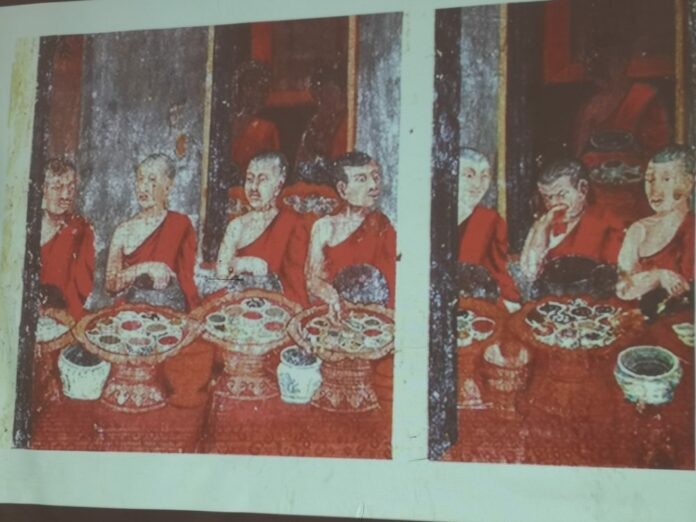
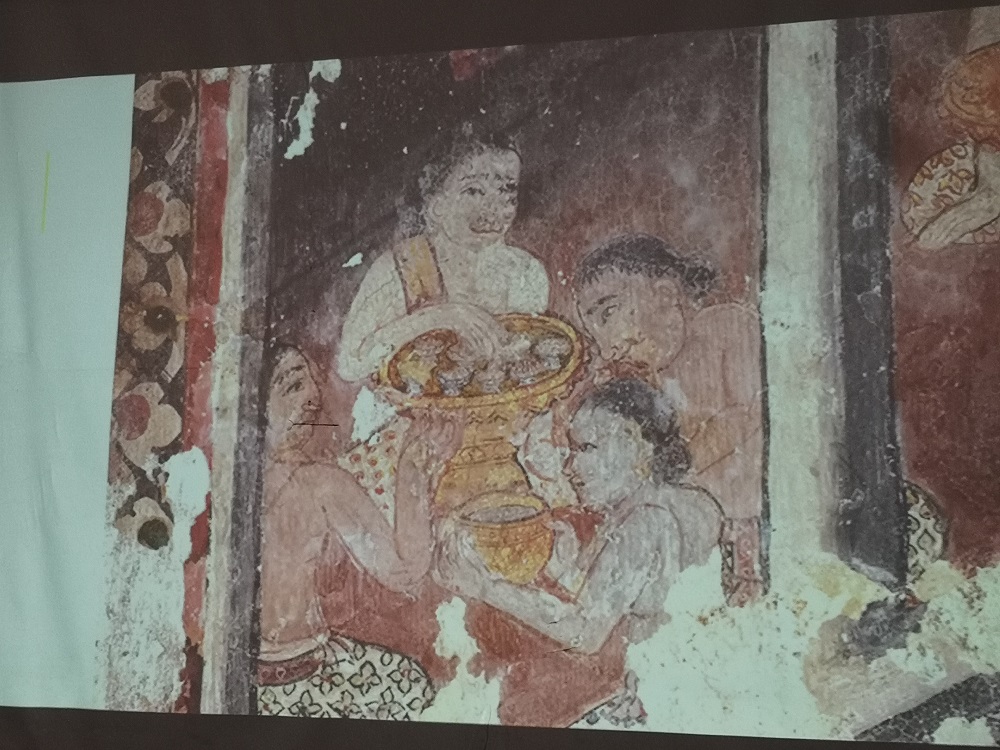
Old unidentified temple murals dating to the Ayutthaya period show how Siamese monks and lay people eat.

BANGKOK — Chicken red curry, crispy Thai omelette and chilli paste are three of the centuries-old recorded Thai dishes still common today, an expert said Thursday.

The three were listed among a dozen meals offered to Buddhist monks at the Temple of the Emerald Buddha, or Wat Phra Kaew, in 1809 in Bangkok during the reign of King Rama I, according to retired folklore professor Sukanya Sujachaya.

Now, they’re on a new list of dishes the Culture Ministry hopes to register as cultural heritage with UNESCO.

Little or no written record about Thai dishes existed during the Ayutthaya period, Sukanya – who is researching food history for the ministry – said during the talk at Matichon Academy. She believes this is because food was so abundant back then that people didn’t bother paying attention, leaving foreigners to make the records. Some of them concluded that the Siamese were lazy because they didn’t have to work hard to fill their stomachs.

Another Western account also noted a spike in the popularity of alcohol consumption from 1620 to 1628 during the reign of King Songtham of Ayutthaya, credited to his prodigious drinking.

Old murals and foreign chronicles show people ate communally, but with women and men segregated by gender and class.

Another discovery was that sweets were not so sweet during the Ayutthaya period – at least not until sugar cane plantations became common much later.

Sukanya – who is writing a book on ancient Thai dishes for the Culture Ministry – said fish sauce, or nam plaa, as we now know it existed during the Ayutthaya period. However she said it came from China, as the Siamese had previously fermented freshwater fish and not saltwater fish.

Other world-famous Thai dishes such as tom yum goong are shrouded in mystery, as there aren’t early written records about their provenance, although Sukanya believes the soup probably existed since the Ayutthaya period because freshwater prawn is common in the river.

Old unidentified temple murals dating to the Ayutthaya period show how Siamese monks and lay people eat.

“Prawns were common so the dish most likely existed back then,” Sukanya said, referring to the period that lasted from 1351 to 1767. Records from King Rama I’s period also contain a dish described as boiled prawn.

Another dish on the list still eaten in a similar way today is fried fish and watermelon. Today however, the dried fish is shredded, whilst previously it was eaten whole.

As for the use of forks and spoons, Sukanya credited King Chulalongkorn, or Rama V, for the selective adoption of western cutlery – namely smaller forks and spoons that suited Thai dishes instead of larger forks and knives, as meat is mostly cut into smaller pieces before being served. This replaced the use of hands to pick up food and scoop rice – which is common in South and Southeast Asia.

“It was chosen from the many pieces of Western cutlery. It’s very convenient to eat with forks and spoons as one can sturdily press food down with them.”

Another notable eating habit – long before one-plate meals became common – is that Thais used to eat rice with a few side dishes that came together, instead of the western tradition of serving dishes one at a time. Again, this is depicted in old temple murals dated back to the Ayutthaya period.

Although food was not really mentioned in detail in Ayutthaya period literature, a wind of change came after the kingdom’s fall, as famine struck the old capital when it was sacked and burned down by the Burmese.

Sukanya said King Taksin of Thonburi Kingdom – which succeeded Ayutthaya – had to import rice from China for seven years after the incident. Since, literature touched on food which was once abundant – at least for a period of time – before people became obsessed about it given its scarcity.

Advertisement

Prayuth’s Berlin Trip Rescheduled to Tuesday

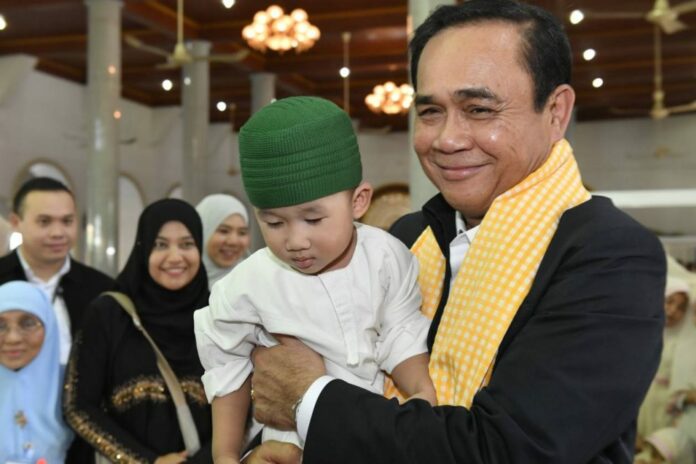
Junta chairman Prayuth Chan-ocha poses for a picture at a mosque in Bangkok on Wednesday. Image: Government House

BANGKOK — Junta chairman Prayuth Chan-ocha is slated to visit Germany from Tuesday to Thursday, government officials confirmed.

Gen. Prayuth was originally scheduled to meet Chancellor Angela Merkel at the end of October, but the government postponed it at the last minute. The two leaders are set to discuss partnerships in industry, technology and education, officials said.

The pair met briefly on Oct. 19 at a Thai-Asian summit in Brussels.

Prayuth will also attend the Thai-German Business Forum and meet with representatives of Thai communities in Germany during his three-day trip.

Correction: A previous version of this article said Prayuth was to visit Germany starting Monday. In fact, he started the trip on Tuesday.

Advertisement

Drunken Knife Brawl Between Monks Leaves Both Bloodied

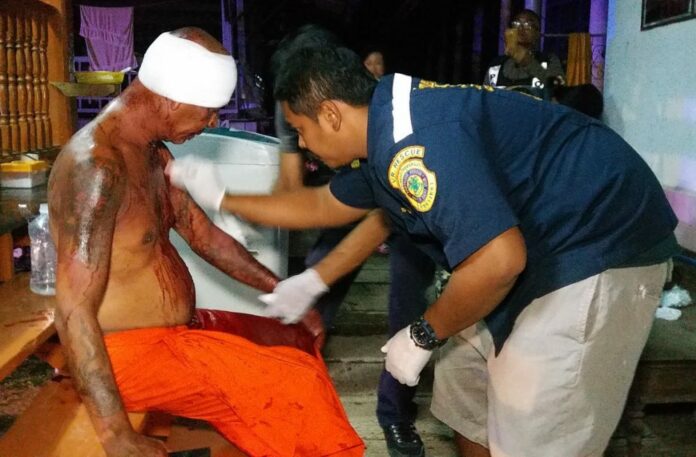
Rescue workers apply first aid to Phra Chuchart Boonloh.

ANG THONG — Two monks were sent to hospital after an alcohol-fueled knife fight broke out late Friday night, police said.

Phra Wannop Roengjai, 52, and Phra Chuchart Boonloh, 43, both suffered knife wounds from the altercation between them at Wat Amphawan in Ang Thong province.

According to police, Phra Chuchart said he and his senior monk were drinking liquor together inside temple grounds Friday when he complained to Wannop for not allowing monks to accept invitations to perform ceremonies outside the temple.

The conversation soon turned heated and the pair started brawling, Chuchart told police. He also claimed that Wannop drew out a knife and slashed at him, so he seized the weapon and stabbed him in return.

Police said they would interrogate both monks after they recover.

Advertisement

King Opens Cycling Track at BKK Airport (Photos)

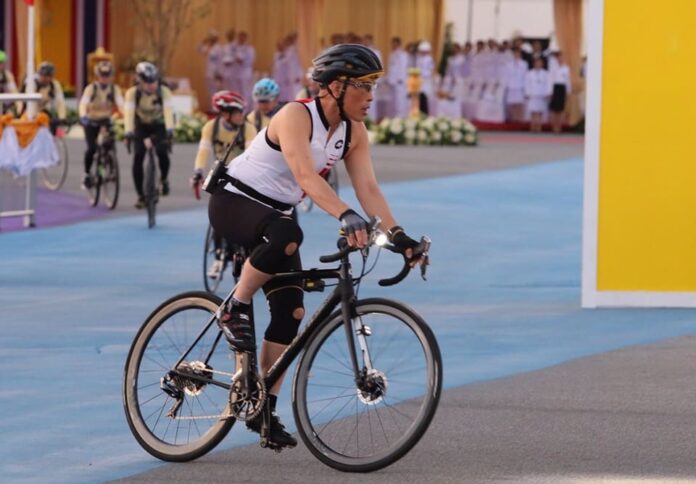
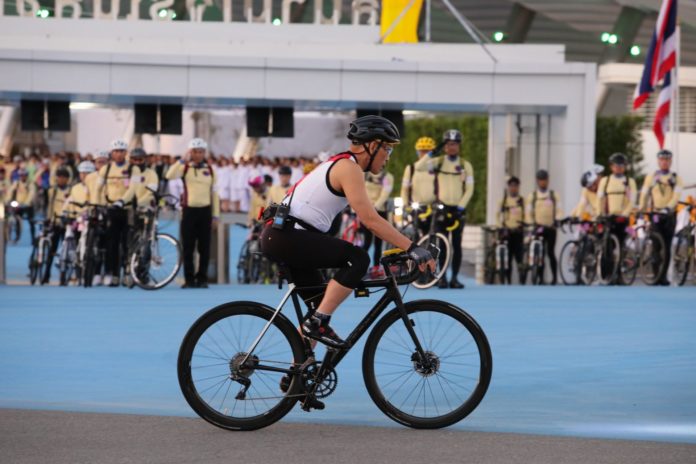
His Majesty the King cycles at Happy and Healthy Bike Lane.

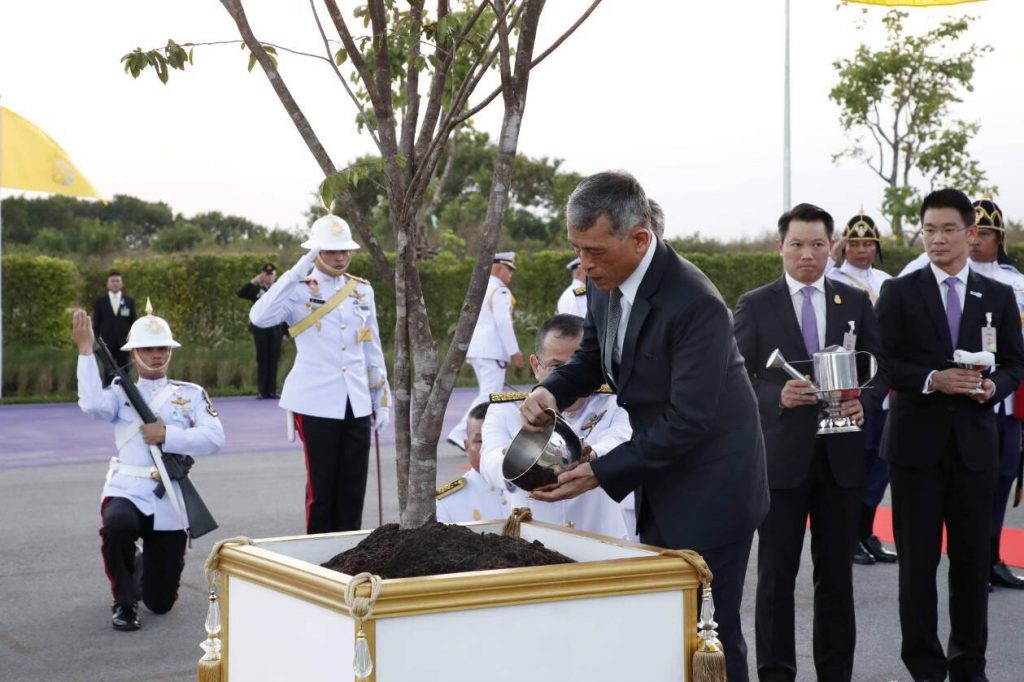
BANGKOK — His Majesty the King on Friday inaugurated and cycled on a track at Suvarnabhumi Airport.

The cycling track, officially called the Happy and Healthy Bike Lane in English, loops around the airport in Samut Prakan province. King Vajiralongkorn presided over its opening ceremony at about 5pm.

He then biked on the entire 23.5-kilometer track, accompanied by an entourage of 450 representatives and officials.

The track consists of a blue lane for casual bikers and a purple one for professional cyclists. It’s open to the public 6am to 9pm daily. Entry is free.

Related stories:

King to Rehearse Big Ride Friday at BKK Airport

56 2
His Majesty the King cycles at Happy and Healthy Bike Lane.
46498136 1087171248131307 334729285531074560 o
His Majesty the King cycles at Happy and Healthy Bike Lane.
46510921 1087171254797973 4802494617771573248 o
His Majesty the King plants a tree to inaugurate Happy and Healthy Bike Lane.
S 9699371
His Majesty the King cycles at Happy and Healthy Bike Lane.
2DB28733 950A 4205 B49F FE7E85FAF529
His Majesty the King cycles at Happy and Healthy Bike Lane.
Advertisement

S&P 500 Slides Into ‘Correction’ for Second Time This Year

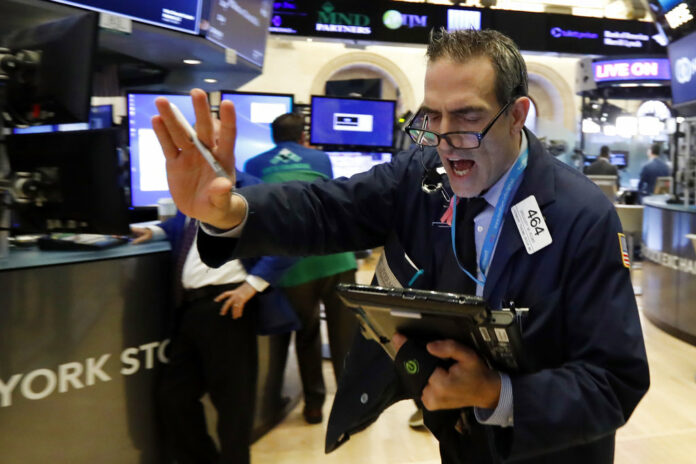
Trader Gregory Rowe works Nov. 7 on the floor of the New York Stock Exchange. Photo: Richard Drew / Associated Press

United States stocks closed lower after a shortened session Friday, bumping the benchmark S&P 500 index into a correction, or drop of 10 percent below its most recent all-time high in September.

Energy companies led the market slide as the price of U.S. crude oil tumbled to its lowest level in more than a year, reflecting worries among traders that a slowing global economy could hurt demand for oil.

“Oil is really falling sharply, continuing its downward descent, and that appears to be giving investors a lot of concern that there’s slowing global growth,” said Jeff Kravetz, regional investment director at U.S. Bank Private Wealth Management. “You have that, and then you have the recent sell-off in tech and in retail, and then throw on there trade tensions and rising rates.”

Losses in technology and internet companies and banks outweighed gains in health care and household goods stocks. Several big retailers declined as investors monitored Black Friday for signs of a strong holiday shopping season.

Trading volume was lighter than usual with the markets open for only a half day after the Thanksgiving holiday.

The S&P 500 index fell 17.37 points, or 0.7 percent, to 2,632.56. The index is now down 10.2 percent from its last all-time high set Sept. 20. The last time the index entered a correction was in February.

The latest correction comes as investors worry that corporate profits, a key driver of stock market gains, could weaken next year.

“The market is re-pricing and trying to assess where we’re going to be in the early part of 2019,” said Quincy Krosby, chief market strategist at Prudential Financial.

The Dow Jones Industrial Average lost 178.74 points, or 0.7 percent, to 24,285.95. The Nasdaq composite dropped 33.27 points, or 0.5 percent, to 6,938.98. The Russell 2000 index of smaller-company stocks picked up 0.40 points, or 0.03 percent, to 1,488.68.

Crude oil prices fell for the seventh straight week on worries that a slowing global economy could hurt demand even as oil production has been increasing.

The benchmark U.S. crude contract slid 7.7 percent to settle at USD$50.42 per barrel in New York. That is the lowest since October 2017. Brent crude, the international standard, lost 6.1 percent to close at $58.80 per barrel in London.

Saudi Arabia and other OPEC members have recently signaled a willingness to consider production cuts at the oil cartel’s meeting next month. The U.S. has been increasing pressure on Saudi Arabia and OPEC to not cut production, however, a move which could push prices down further.

The slide in oil prices weighed on energy stocks. Concho Resources, a developer and explorer of oil and natural gas properties, slumped 6.3 percent to $126.96.

Tesla fell 3.7 percent to $325.83 after the electric auto maker said it intends to cut prices for its Model X and Model S cars in China to make them more affordable.

Traders had their eye on retailers as Black Friday, the traditional start to the crucial holiday shopping season, began. Shares in L Brands, operator of Victoria’s Secret and Bath & Body Works, added 2 percent to $29.97. Other retailers put investors in a selling mood. Kohl’s fell 3.7 percent to $63.83, while Target lost 2.8 percent to $67.35. Macy’s dropped 1.8 percent to $32.01.

Rockwell Collins climbed 9.2 percent to $141.63 after Chinese regulators conditionally approved the sale of the maker of communications and aviation electronics systems to United Technologies Corp.

Investors will be watching next week when Presidents Xi Jinping and Trump meet at the Group of 20 summit in Argentina for signs that the two leaders can find common ground to begin unwinding the spiraling trade dispute.

The dispute between the U.S. and China has weighed on the market, stoking traders’ worries that billions in escalating tariffs imposed by both countries on each other’s goods will hurt corporate earnings at a time when the global economy appears to be slowing.

“If you can get President Trump and President Xi to even just come closer with their rhetoric and make a bit of progress on the trade front that could be the catalyst for markets to move higher,” Kravetz said.

It may take more than a meeting to work out deep-seated issues between Washington and Beijing, which resumed talks over their trade dispute earlier this month. According to The Wall Street Journal, the U.S. has asked its allies to stop using telecommunications equipment from Huawei, which is Chinese-owned. The report cited people familiar with the matter.

Bond prices fell Friday. The yield on the 10-year Treasury note rose to 3.05 percent from 3.04 percent late Wednesday.

The dollar fell to 112.88 yen from 112.97 yen late Thursday. The euro weakened to $1.1330 from $1.1406. The pound eased to $1.2810 from $1.2876.

Gold declined 0.4 percent to $1,223.20 an ounce. Silver dropped 1.8 percent to $14.24 an ounce. Copper slid 1 percent to $2.77 a pound.

In other commodities trading, wholesale gasoline plunged 7.9 percent to $1.39 a gallon. Heating oil lost 4.8 percent to $1.88 a gallon. Natural gas fell 3.2 percent to $4.31 per 1,000 cubic feet.

Major indexes in Europe finished mostly higher after shaking off an early slide.

Traders were weighing the latest developments in the negotiations for Britain’s exit from the European Union. Both sides were finalizing the terms of the divorce Friday and expected to sign off on the deal Sunday, though it’s unclear whether the British parliament will pass the deal.

The FTSE 100 index of leading British shares slipped 0.1 percent. Germany’s DAX index rose 0.5 percent, while France’s CAC 40 gained 0.2 percent.

Earlier in Asia, South Korea’s Kospi shed 0.6 percent and Hong Kong’s Hang Seng index dropped 0.4 percent. Australia’s S&P/ASX 200 bucked the trend, gaining 0.4 percent. Shares fell in Taiwan and rose in Singapore, Thailand and Indonesia. Japanese markets were closed for a holiday.

Story: Alex Veiga

Advertisement

Thai Law: Demystifying the New Property Tax Code

Come Jan. 1, 2020, 25 long and delicate years of work by 13 governments to bridge the economic divide of the Thai population will hit the books.

For the first time ever in Thai legal history, those with deep pockets will be forced to pay any tax on their houses at all. It will drive a redistribution of land, as those hoarding large, undeveloped tracts will face a powerful incentive to divest.

wirot.3Commercial, residential, vacant and agricultural lands are the four types of taxable land and buildings that the new property tax law covers.

All in all, low- to middle-income people should not be affected much by the new law, which aims to increase revenues for local administrative organizations such as municipalities and sub-district government bodies by way of “taking money from the rich and distributing it to the poor.”

This is extra money from local land to fund the running of the villages to be extracted from ultra-wealth, although cynics are skeptical as to how much money from the low-tax rates and generous exemptions will actually be added to the village coffers, vis-a-vis traditional budget support from the central government.

Many see the push for historic wealth redistribution in the law – which comes just a few months before a general election – as an achievable, low-key starting point. Criticism has been aired over reduced tax ceilings, benefits of tax exemptions and great compromises for the rich.

Nevertheless, the law is historic, the first wealth redistribution law aimed directly at property holdings. Here are the highlights.

Commercial Property: 0.3% on Appraised Value

When the Act on Land and Building Tax comes into effect 13 months from now, it will replace the current 12.5 percent house and land tax with a 0.3 percent property tax on land and buildings used for commercial purposes. Looking at the percentages alone is misleading as they are each calculated on a different basis.

Today’s 12.5 percent rate is calculated from the annual rent a property could earn, while the upcoming 0.3 percent rate will be based on the property’s appraised value by the Treasury Department. That means every situation will be different, and owners will have to find out on a case-by-case basis if their tax burden will increase or decrease.

Someone with a 10 million-baht shophouse that rents out for 15,000 baht per month (180,000 baht annually) now pays 22,500 baht under the 12.5 percent rate. Their annual assessment will increase significantly to 30,000 baht, or 0.3 percent of the appraised value.

But if the property’s value is 5 million baht and also rented out at 15,000 baht per month, you’ll pay less under the new law – 15,000 baht.

Your condominium units for rent will be subject to a similar calculation.

An interim provision of the new property tax law already anticipates the possibility of an increased tax burden. It allows the taxpayer to pay the same amount they paid the year prior to the effective date of the new tax for each of the first three years, provided that the additional balance is fully repaid over the following three years.

The 0.3 percent rate applies to commercial land and structures with a total value of up to 50 million baht. The progressive rate gradually goes up to the highest rung at 0.7 percent for property worth over 5 billion baht. These applicable rates are expressed as temporary rates for the first two years of the new tax commencing in 2020.

Thereafter, new rates will be announced by the Finance Ministry, which administers the law, in a royal decree, an implementing regulation to be issued after the new law is in place. The maximum rate specified in the new law that royal decrees can go up to for commercial land is 1.2 percent.

The Legislation Process

The passage of the law on Friday, Nov. 16, 2018, by the National Legislative Assembly, or NLA, was surprising given that the first reading which approved it in principle was early last year. The second reading that considered the bill article-by-article was concluded Thursday, and the final reading, a binary vote of yes or no, one day later on Friday.

The next step is for the prime minister to go through a waiting period of 25 days under the Constitution before he signs the bill and presents it to His Majesty the King for the royal countersignature. The Constitution prescribes another 90 days for his Majesty to consider and execute the bill. An executed bill from the palace will be announced and published in the Royal Gazette, completing the process for the bill to become law.

In spite of the ample time permitted by the Constitution for the new law to be further processed, it is expected that this new property tax law will be published and have the force of law by the end this year or early next year, leaving the actual tax collection to start on Jan. 1, 2020. In the meantime, the old 12.5 percent land and house tax and the very cheap land development tax will continue to apply.

Never Before Have Wealthy Landlords Paid Taxes on Their Houses

Residential land and buildings are where the rich fully benefit. Individuals who own a parcel of land and house worth 50 million baht (USD$1.5 million) as their primary residence with their name shown in the household registration book are entirely exempt from tax.

For the first two years the new tax is enforced beginning in 2020, properties worth over 50 million baht are subject to applicable tax rates of 0.03 percent to 0.1 percent; the upper end of that range belongs to land and houses, condo included, worth over 100 million baht. Rates applicable after the first two years will be announced by royal decrees to be promulgated after the law is enacted. In addition to the initial two-year rates, the law itself specifies the low legal limit of 0.3 percent for residences, which future royal decrees of applicable rates cannot exceed.

50 Million is the Magic Number

Generally speaking, the wealthier you are with land past the 50 million baht mark, the higher property tax you need to pay – up to 0.3 percent. It’s the first-time ever in Thai legal history that those with deep pockets are forced to pay any tax on their houses at all.

The poor and middle class, whose properties are valued at far less, will be unaffected.

The 50 million-baht threshold finally survived an initial scare, as critics thought it was too high and wanted to bring it down to 25 million baht – by Thai standards the lesser amount still being beyond the reach of the middle class. In the end, the 50 million baht of the original draft stands. Yes, for a fluid transition to a new tax regime, some appeasement may be necessary.

For those foreigners who own homes that are located on rental tracts of land, the tax-free threshold is lower, at 10 million baht. Value beyond that starts paying taxes starting at 0.02 percent. No legal entity owners enjoy this benefit.

A mixed-use, commercial/residential property will be charged taxes at proportion to the areas used for different purposes.

Agricultural Land, Friendly Rates

As with residential land, agricultural land is tax free for the first 50 million baht of the official assessed value for land owned by individuals; legal-entity landowners are not so lucky. The high threshold means a significant number of well-to-do businessmen will be classified as farmers protected by the country, which takes pride in its agricultural roots. It is amusing to see how the nation’s agricultural background was cited in debates to keep the threshold for tax exemption at this current level.

Among the four types of taxable property, farmland attracts the lowest rate. The low-end of the scale for the first two years will begin at 0.01 percent for agricultural land worth up to 75 million baht, graduating to the highest applicable rate of the range at 0.1 percent for land valued at over 1 billion baht, while the legal limit written in stone in the act is fixed at a comfortable level of 0.15 percent.

And if the property owners are individuals, there is a generous grace period of three years counting from 2020 during which they don’t have to pay tax.

There is no such grace period for owners who are legal entities.

Vacant Land: Point of Attack

It’s time to do something with those overgrown, vacant lots that are a nuisance to your neighbors or vast holdings that serve no purpose in Suphan Buri

Undeveloped land is the lightning rod that draws the highest property taxes and the largest target of the new law. Land bank accumulation, a hobby of Thai millionaires for generations, has been discouraged since the outset of this legislative effort. It’s the type of land the most compromise was made to smooth out opposition from land accumulators. The originally planned 5 percent ceiling was lowered drastically to 3 percent.

What happens to undeveloped land under the new legislation will no doubt serve as a catalyst for land redistribution, the chief purpose of the law. The waiting period of one year in 2019 will inevitably see more vacant land offloaded to the market to escape the wrath of the 2020 vacant land tax, which will increase as the years go by.

True, the law stipulates the ceiling of the vacant land tax at 1.2 percent, but this is only temporary. The applicable rates for the first two years of the new tax collection range from 0.3 percent for the initial notch of 50 million baht – there are no exemptions here. The applicable rates rise step-by-step to 0.7 percent applied to a land worth over 5 billion baht, with the regulatory ceiling at 1.2 percent. The vacant land has simply mirrored the tax treatment of commercial land.

However, if the vacant land remains undeveloped for three years in a row, the applicable rate will creep up by another 0.3 percent in year four. An additional 0.3 percent kicks in every three years until the total vacant land tax hits the absolute limit of 3 percent.

Wealthy Thais sitting on vast swathes of vacant land can no longer have peace of mind: Either you must divest or wait until the law is revised by future elected governments, which may be inclined to ignore the small voting pool of tycoons in favor of the deep ballot trough presented by the grass roots and slap on even higher taxes.

It won’t be less, it’ll be more. The floodgates have been opened.

Wirot Poonsuwan is Senior Counsel and Head of Special Projects at Blumenthal Richter & Sumet in Bangkok and can be reached at [email protected].

Advertisement

Parliament Approves Draft Weed Law Unanimously

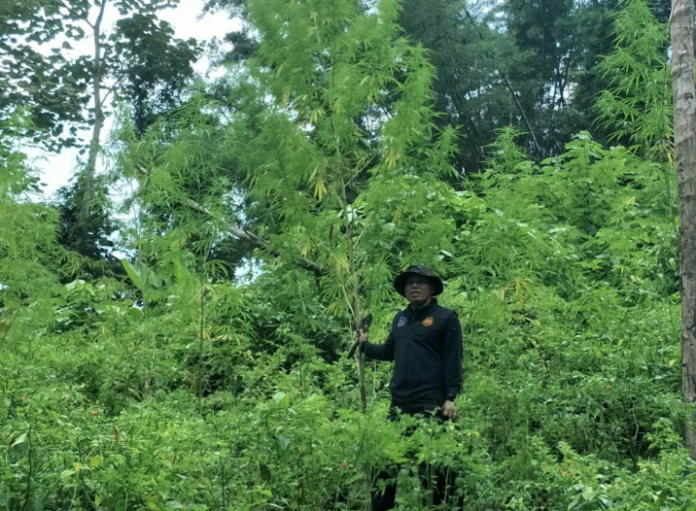
A ranger stands amid a large strand of cannabis to be confiscated Oct. 8 in Phetchaburi province.

BANGKOK — The interim parliament unanimously approved Friday the first draft of a bill to legalize medical use of cannabis and kratom.

By a 145-to-0 vote, the assembly endorsed the draft, which would allow research, consumption, production, import and export of the controlled substances for medical purposes.

Attempts by foreign pharmaceutical companies to get control of the market before passage of the law have come to light with dozens of broad patent applications. Lawmakers are seeking to quash them.

Read: Patents Reveal Foreign Pharma’s Secret Bid to Seize Thai Cannabis Market

Recreational use of marijuana would still be illegal under the new law.

Bill sponsor Somchai Sawangkan said agencies and personnel empowered under the draft law to handle cannabis and kratom include the Red Cross, dentists, veterinarians and Thai traditional medicine practitioners.

After the vote, the bill will be reviewed and modified in detail by a committee for a week. The parliament will then reconvene in three more sessions to vote on the revised draft within the next 60 days.

Advertisement

Police Still Clueless to Whereabouts of ‘Boss Red Bull’

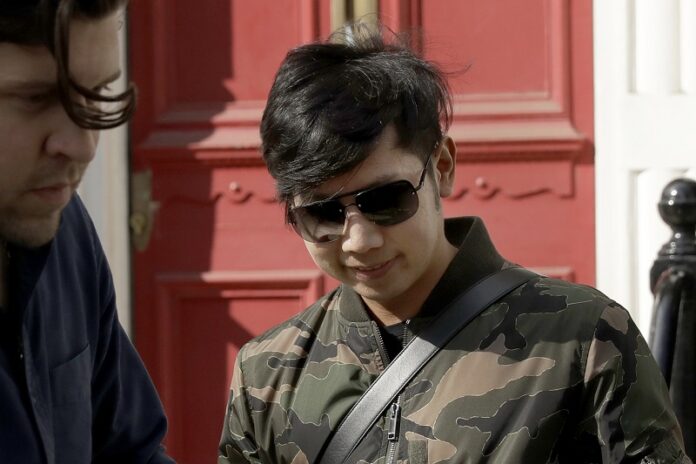
Vorayuth "Boss" Yoovidhya, whose grandfather co-founded energy drink company Red Bull, walks to get in a car as he leaves a house in London, Wednesday, April 5, 2017. Photo: Matt Dunham / Associated Press

BANGKOK — Police have yet to determine the whereabouts of the fugitive scion of an energy drink empire accused of killing a policeman six years ago, a spokesman said Thursday.

Despite nearly 600 days having elapsed since a warrant for the arrest of Vorayuth “Boss” Yoovidhya was approved, Thai police say they can’t pinpoint what nation he’s residing in, police spokesman Krissana Pattanacharoen said.

He said no countries have responded to Thailand’s request for information.

Chatchom Akapin, director of attorney general’s foreign affairs office, also said he has not received information concerning the millionaire’s whereabouts.

Vorayuth is the grandson of Red Bull founder Chaleo Yoovidhya.

He left the country soon after he crashed his Ferrari into and killed motorcycle cop Sgt. Maj. Wichian Klanprasert in 2012. He has lived in Bangkok and abroad since then, during which time he has repeatedly ignored summonses from prosecutors, citing claims of unfair treatment.

The 32-year-old again left Thailand that April, just three days before the court finally issued an arrest warrant for him.

He had been living somewhat in the open, attending Red Bull Formula One events and posting to social media when reporters caught up with him at a residence in an exclusive London neighborhood that he then immediately moved out of.

Related stories:

In UK, Red Bull ‘Boss’ Silent About Thai Crash Case

Advertisement

Wildlife Defender Who Arrested Tycoon Recognized for Bravery by UN

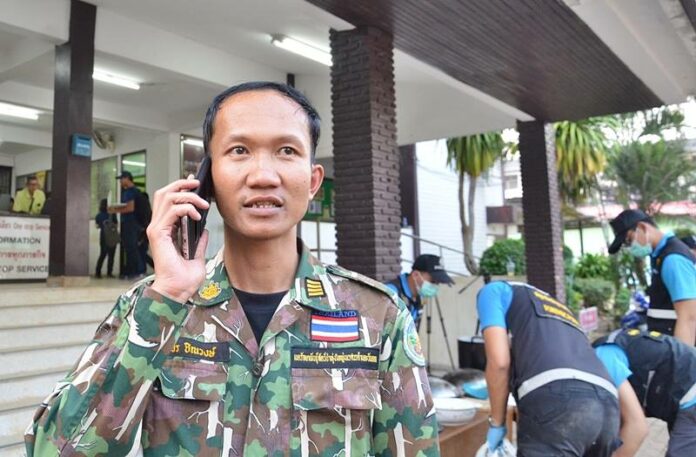
A February 2018 photo file of Wichien Chinnawong in Kanchanaburi.

BANGKOK — The forest ranger who tracked down and arrested a construction magnate suspected of poaching animals in a wildlife sanctuary earlier this year was awarded for his courage Thursday.

Wichien Chinnawong, chief ranger at the Thungyai Naresuan Wildlife Sanctuary, was among nine winners in Asia recognized for their work in preventing transnational environmental crimes by the United States Agency for International Development, Interpol and the Freeland Foundation.

Although Wichien’s arrest of Premchai Karnasuta in Kanchanaburi province did not involve a transnational crime, he received a special commendation award in light of his “outstanding accomplishments.”

“When it became clear that one of the members of the group was a renowned, wealthy and influential businessman in Thailand, the team [led by Wichien] did not show any sign of intimidation and instead carried out their duties as enforcers of the law,” UN Environment Asia said in a statement.

Wichien, 37, hunted down Premchai Karnasuta, the powerful president of Italian-Thai Development, which led to his arrest at a campsite in the Thungyai Naresuan Wildlife Sanctuary, where he was found with animal carcasses and hunting rifles.

“I didn’t think he would be some famous big CEO… but after arresting him, I’m not worried or scared of someone interfering in my work,” he said soon after the February arrest. “When someone with money does something wrong and is arrested, they should be treated according to the law the same as with any chaobaan [village folk] or any other citizens.”

The case against Premchai remains unresolved nine months later amid prevailing public sentiments that justice won’t be done.

Other winners included Thai Customs, the national parks department, as well as foreign recipients such as Vietnamese judge Le Thi Hang, a Nepalese police organization and Wang Wei, director of an anti-smuggling agency in China.

Related stories:

Hero Worship: Thailand Lionizes Humble Defender of the Wild

Advertisement

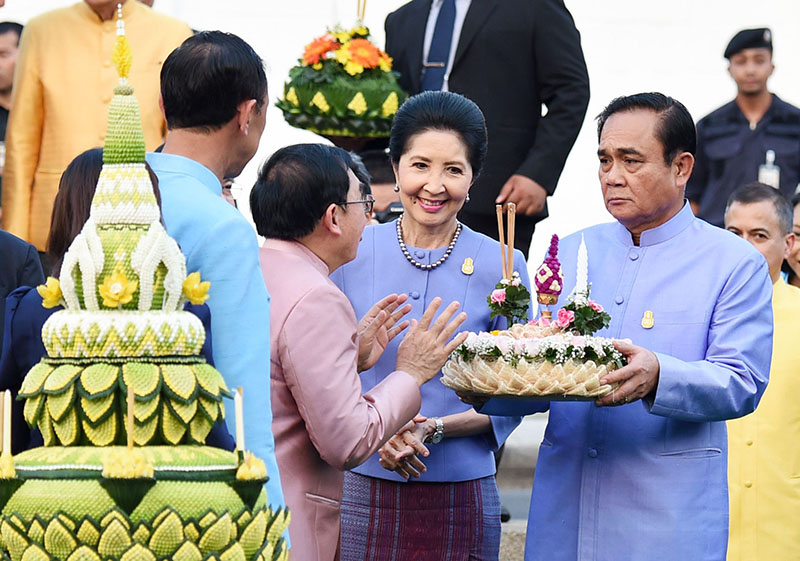
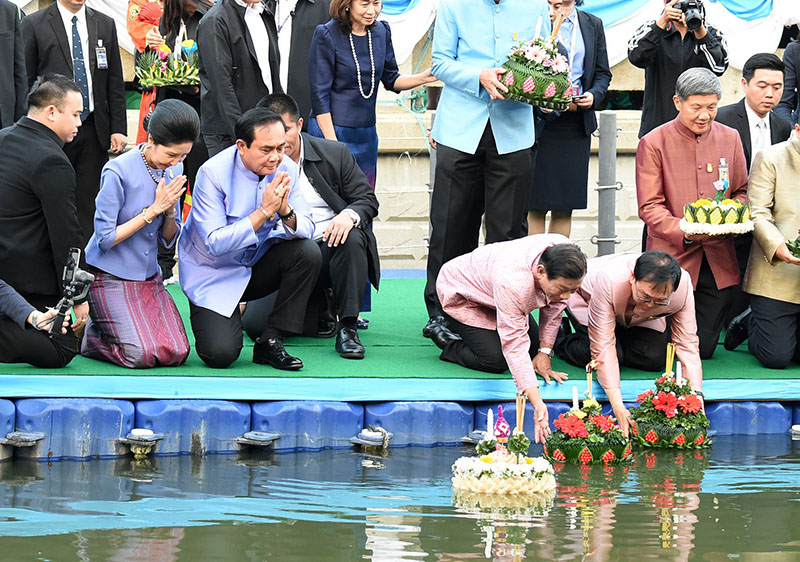
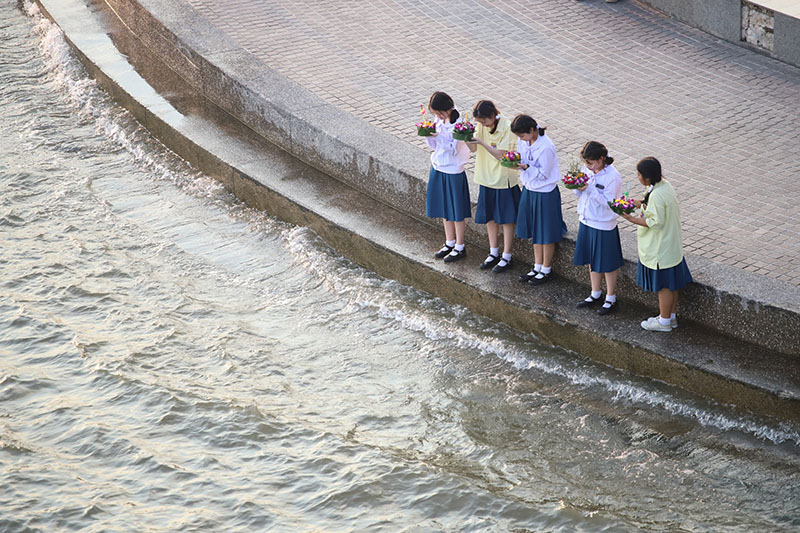
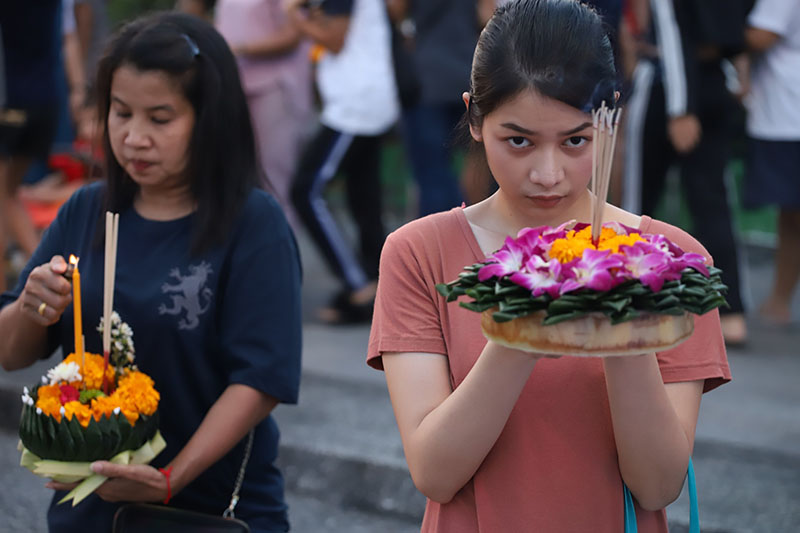
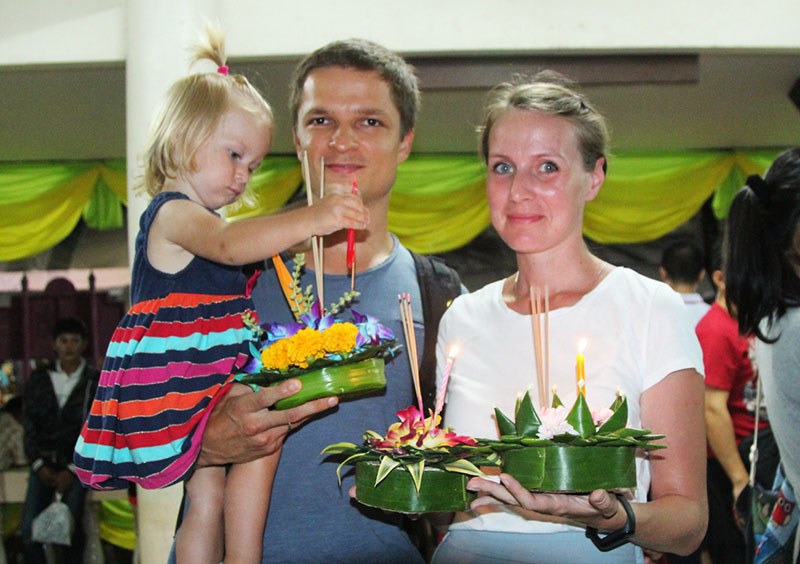
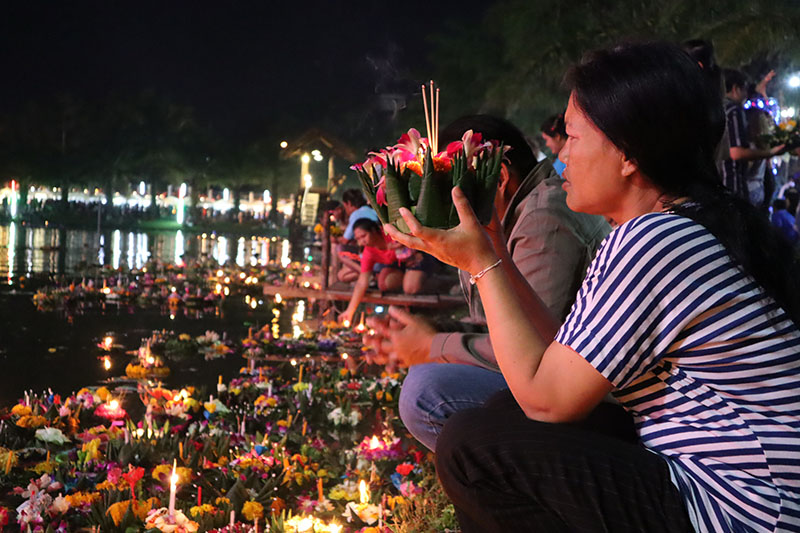
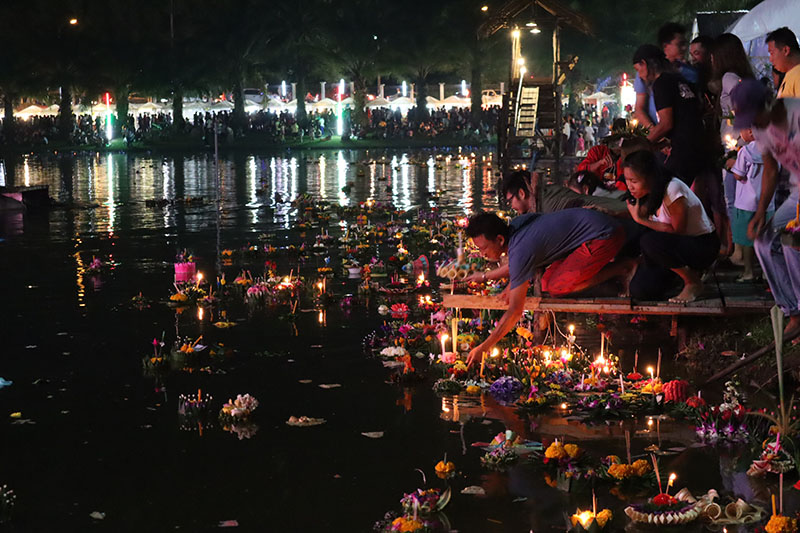
See This Year’s Loy Krathong All Over the Kingdom (Photos)

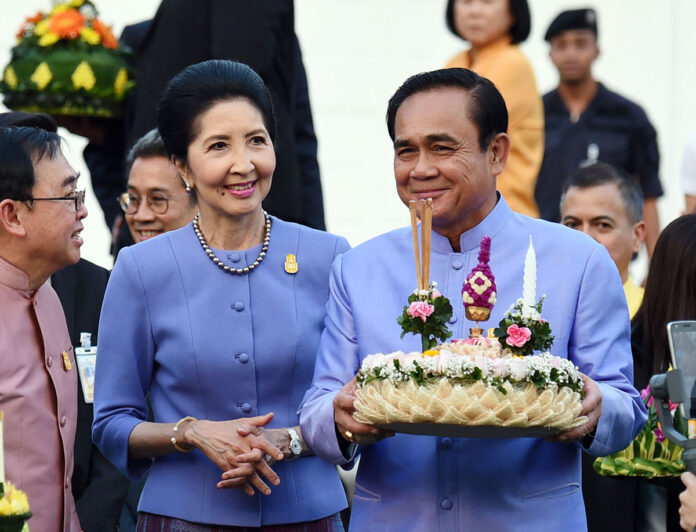
Naraporn Chan-ocha, left, and Gen. Prayuth Chan-ocha hold a krathong Thursday at Government House.

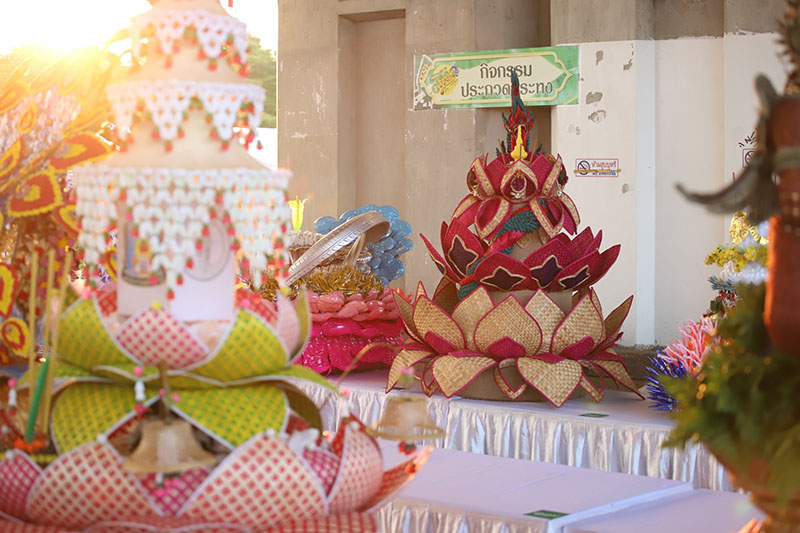
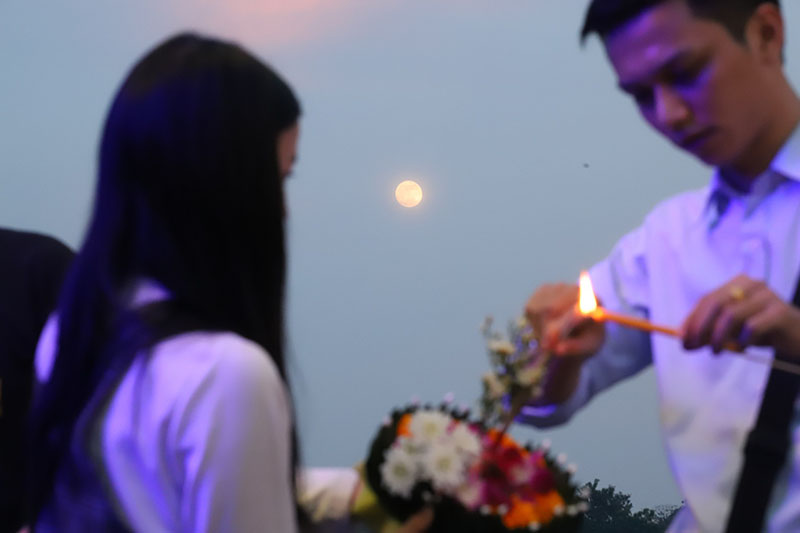
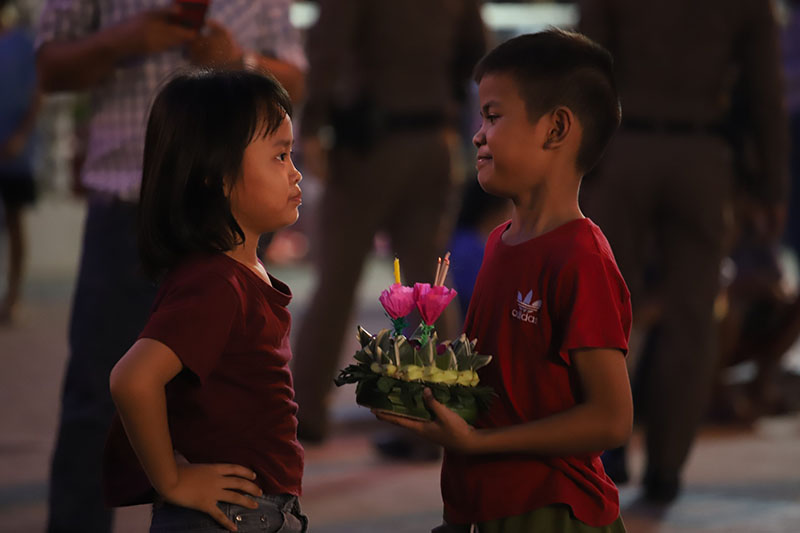
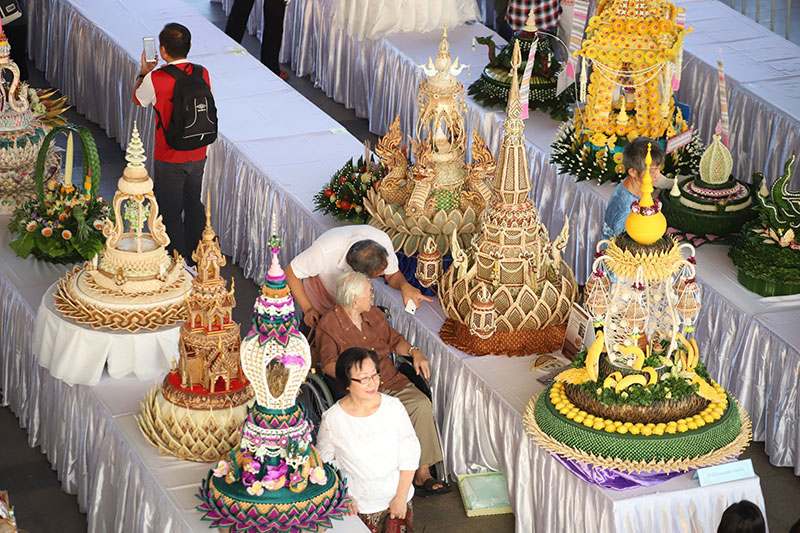
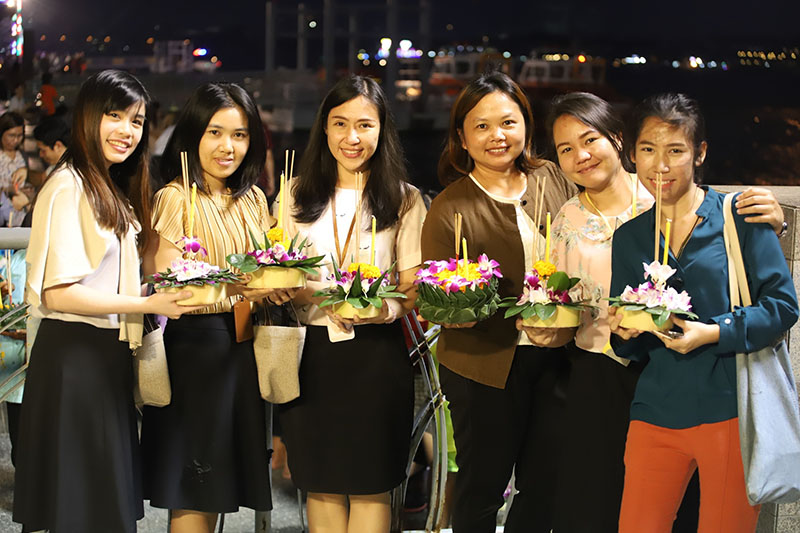
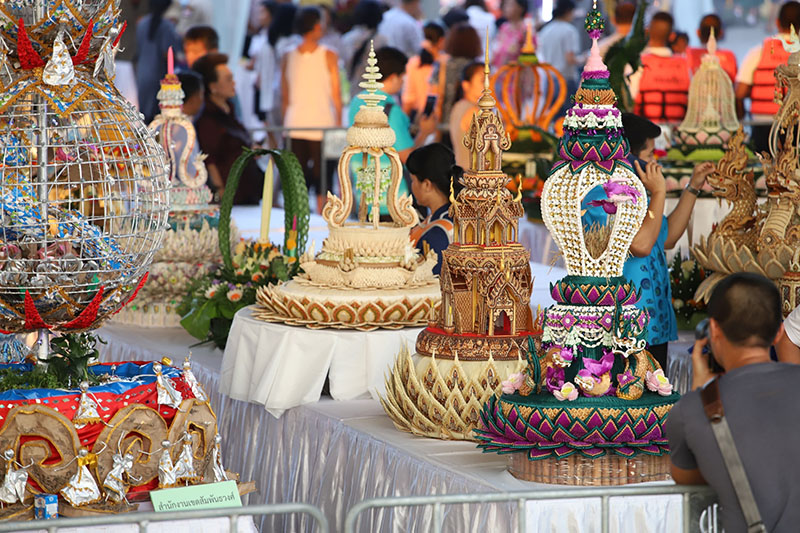
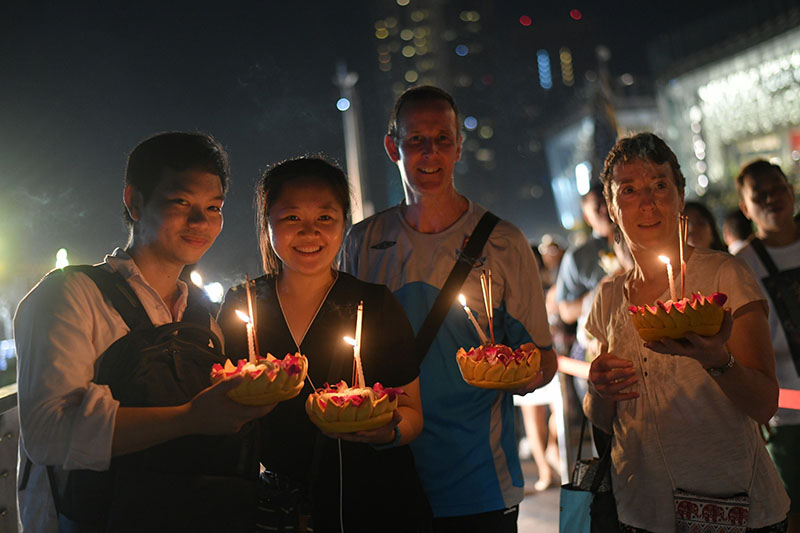
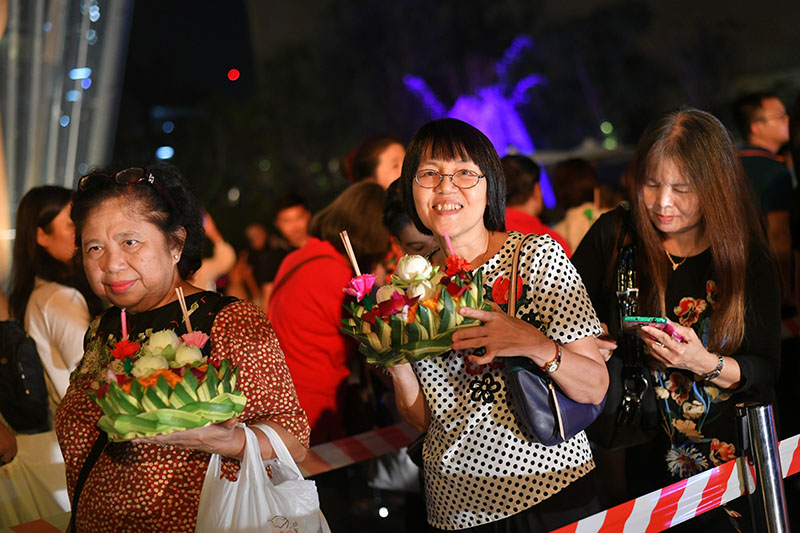
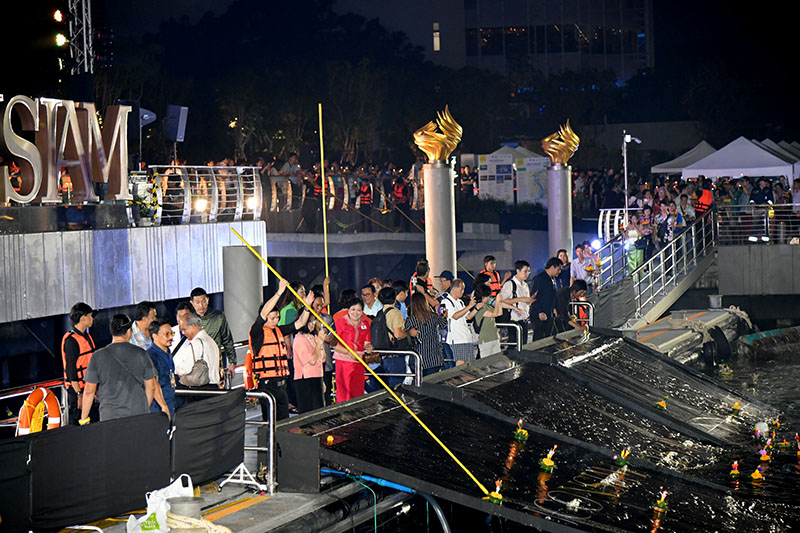
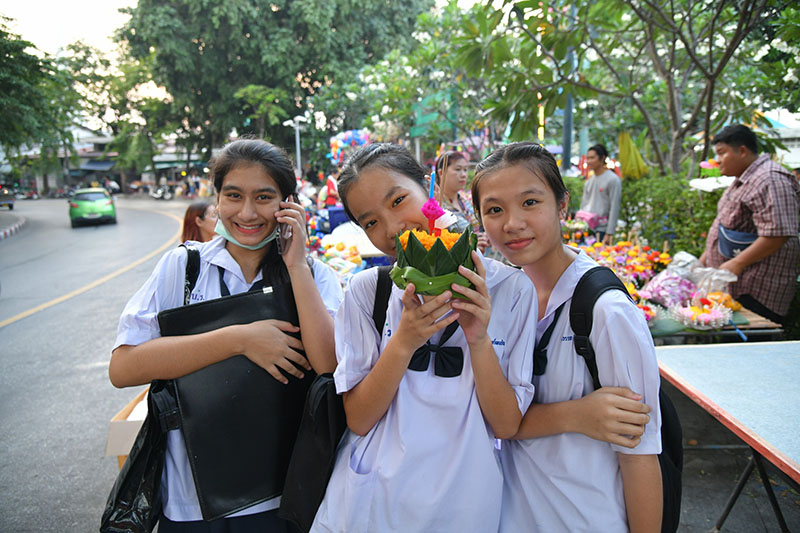
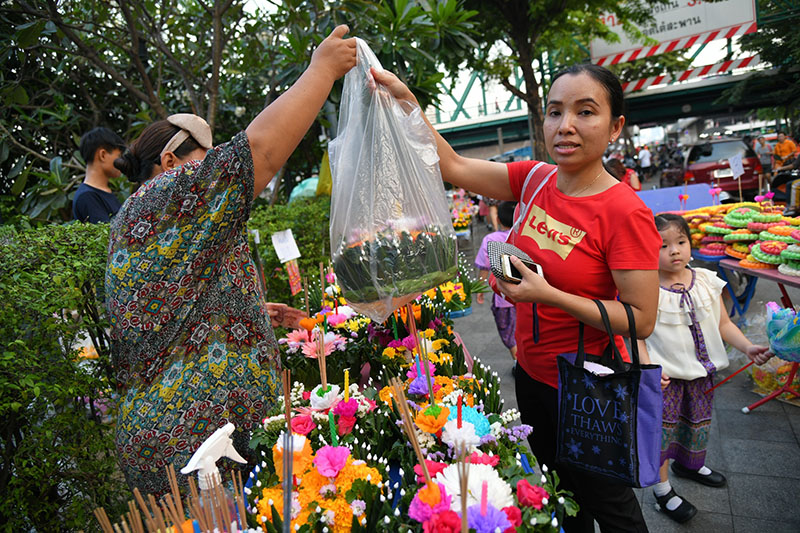
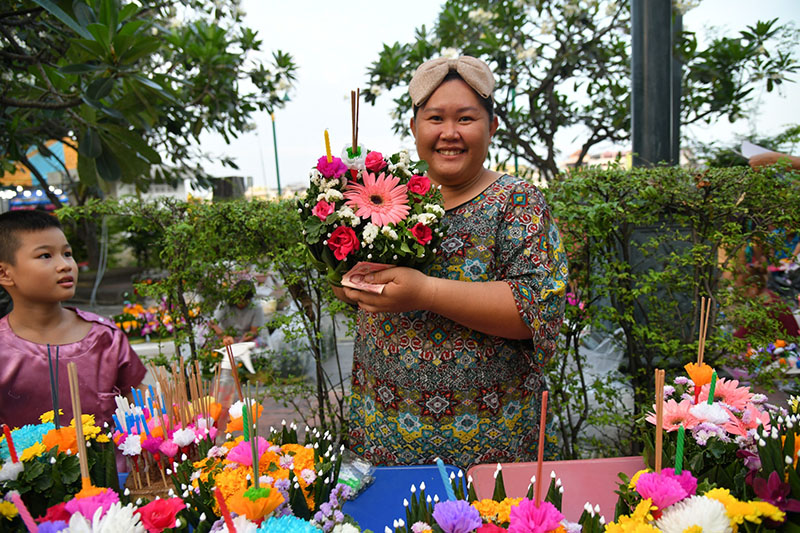
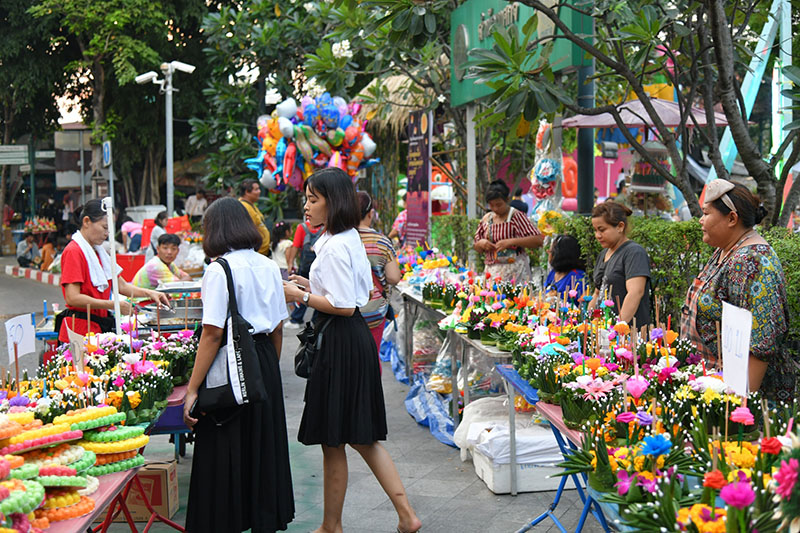
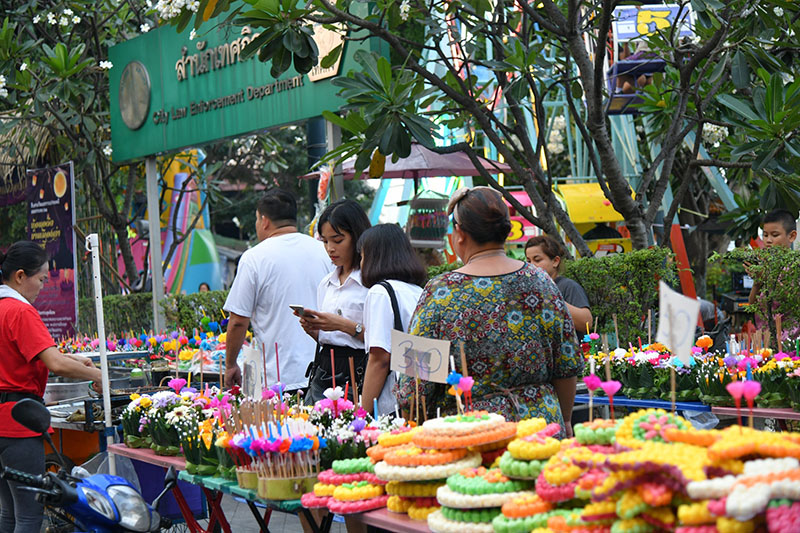
BANGKOK — From former prime ministers and junta leaders to regular folks, Thais kingdom-wide purchased krathongs to loy (float) for the annual festival Thursday night.

The festival was much more toned down last year due to the mourning period following King Rama IX’s death in October 2016.

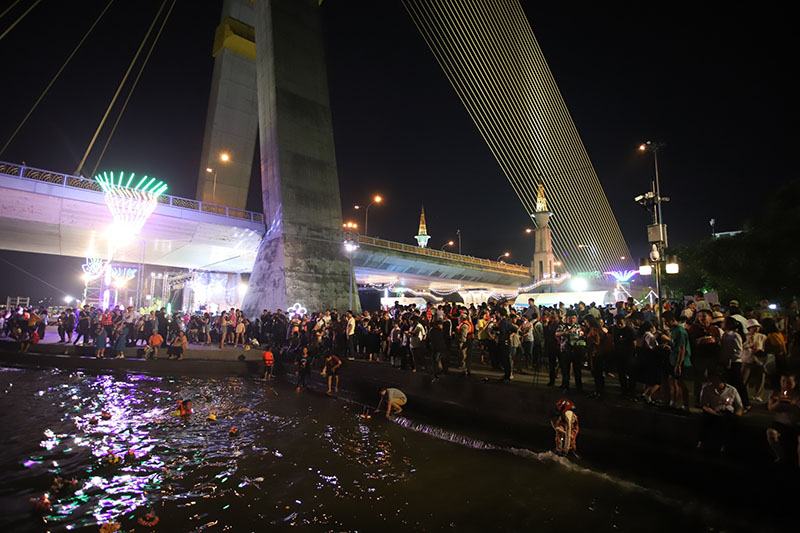
Here’s how it looked.

Gen. Prayuth Chan-ocha went live for the first time via his official Facebook page as he floated a krathong at Government House with his wife Naraporn Chan-ocha.

“I hope the country is safe, and that the media are lovely,” Prayuth said when asked what he had wished.

Ousted former Prime Minister Yingluck Shinawatra also took to social media to express her thoughts.

“I want to float krathongs with fellow Thais so much, but all I can do is send my sentiments,” Yingluck posted Thursday evening on Facebook from self-imposed exile.

Read: Light of Morning Dispels Romance of Loy Krathong

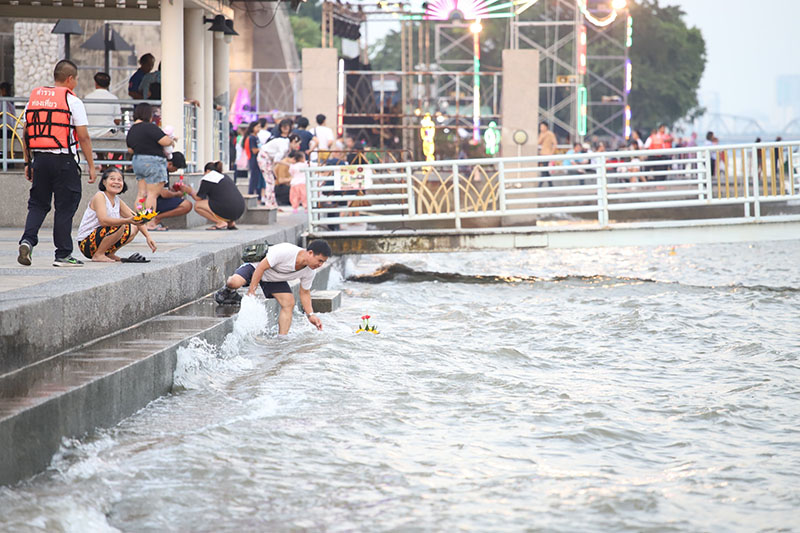
Meanwhile, crowds descended on both sides of the riverbank by the Rama VIII Bridge to float their krathongs in a temple fair-like atmosphere. With steps leading down to the water on the western bank on the Rama VII Park, some even swam into the brackish water to push their krathongs further into the stream.

A more mall-going crowd traveled to the newly opened riverside megamall Iconsiam, some in full, traditional costume.

A little upstream, revelers also floated krathongs at the Phra Phuttha Yodfa Bridge.

Down in Phuket, expats and locals alike gathered at the Bang Ma Ruan Lake to celebrate.

Advertisement

Hot News

LATEST NEWS

Bangkok
overcast clouds
27.7 ° C
27.7 °
27.7 °
80 %
1.2kmh
100 %
Sun
30 °
Mon
36 °
Tue
37 °
Wed
37 °
Thu
36 °