


























29.7 C
Bangkok
Tuesday, July 7, 2026
Home Blog Page 1795

Isaan Turkey Farmer Talks About His Gobble Gobbles

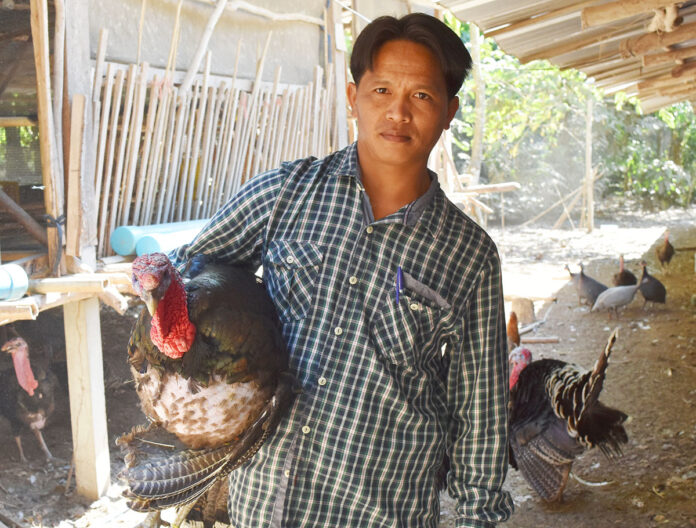
Kanisorn Mongkorn holds one of his turkeys.

BUENG KAN — The first turkey farmer in Thailand’s newest province says although he won’t be carving up turkeys for Thanksgiving today, he knows some customers that might.

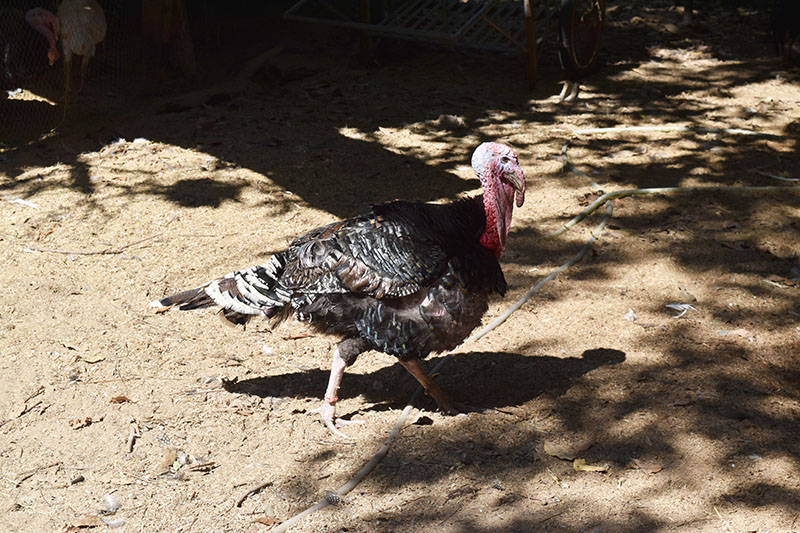
This Thanksgiving, meet farmer Kanisorn Mongkorn. He’s been raising turkeys for seven years, and catered to Thai, Laos and farangs who hunger to feast on the North American bird – and sales are especially good around the holidays.

“Thanksgiving? Yep, the farang turkey holiday,” Kanisorn said. “I’m Catholic, so I know about it.”

Kanisorn, 41, said that although he and his church community wouldn’t be carving up a turkey today, he says it’s customary to do so around there toward Christmastime or New Year’s. Fun fact: Thanksgiving in Thai is literally Thank God Day.

“People from Nakhon Phanom and Sakon Nakhon, where there are a bit more farangs, will also come buy turkeys for holidays,” Kanisorn said. “Not long ago, this German guy who married a Thai woman came and bought some live turkeys to cook them all himself.”

Christian communities in Isaan, starting in Nakhon Phanom, began rearing turkeys since the rubber crop price dropped in 2014 and 2015. Since rubber farming is the main cash crop of the newest province in Thailand, Kanisorn – a rubber farmer of a decade – was severely affected.
Nga 5

In 2012 he decided to sit down and calculate his expenses and found out that he was paying way too much for chemical fertilizers – and when coupled with the unstable crop prices, he wasn’t growing a profit.

“I thought I could rear some animals and use their feces to make fertilizer, so that’s how I started with the turkeys,” Kanisorn said. “In Bueng Kan, it’s still pretty uncommon.”

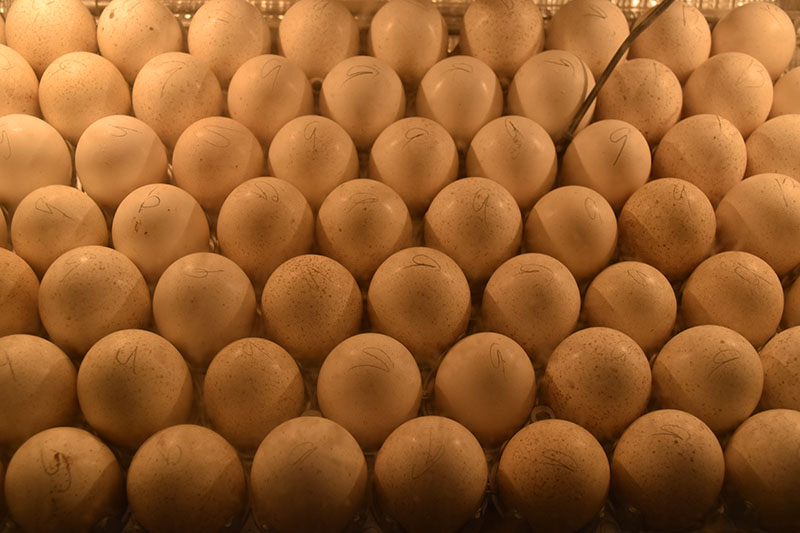
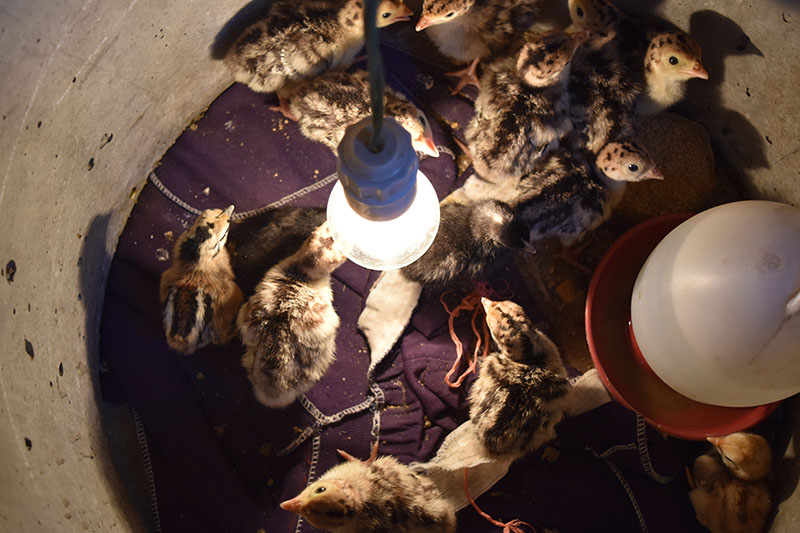
Kanisorn then bought 10 turkeys from a farm in Nakhon Phanom and brought them back to his farm. Usually, after chicks hatch they have to be brooded in a dry container for a week or more in temperatures of about 35C, but under Thailand’s hot weather Kanisorn says they only need a couple of days.

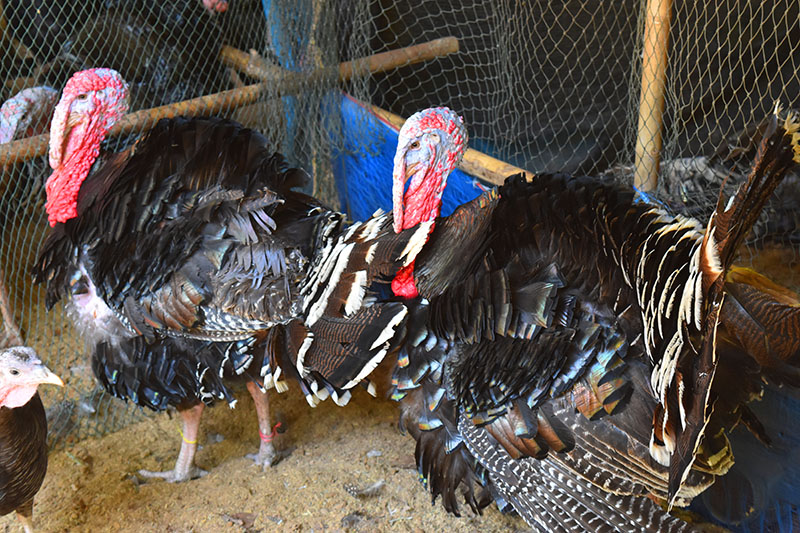
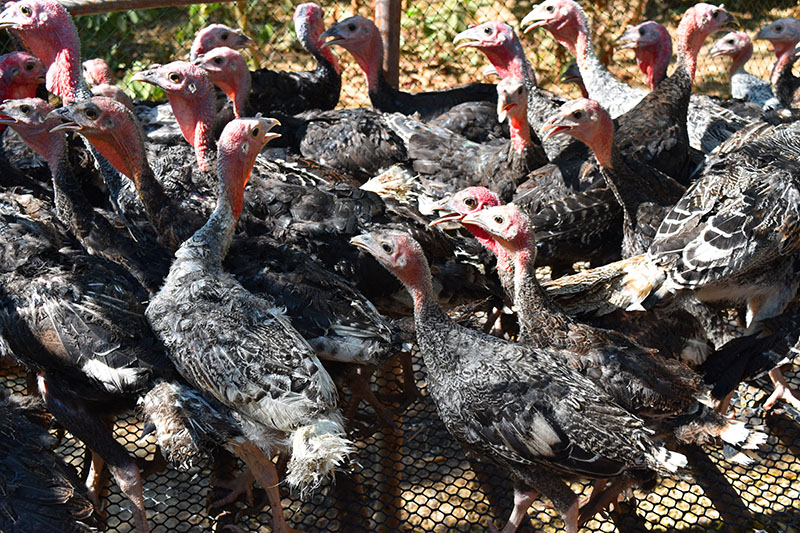
Of course, he provides mosquito nets as well to protect them. It takes about four to five months for turkeys to become fully grown, weighing around 5 kilograms.
Nga 4

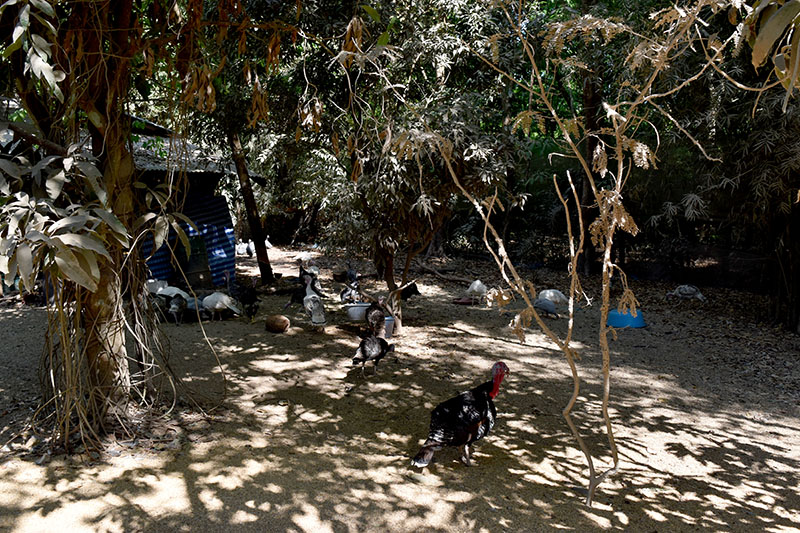
“I let them run around and forage in the dirt, so they’re strong and I don’t have to vaccinate them,” he said. “They’ve all been healthy so far.”

Orders for his turkeys started pouring in so much that he couldn’t keep up and got some more of his farmer friends to help. Then, a bright idea dinged – why not make some extra cash from selling Isaan dishes featuring turkey?

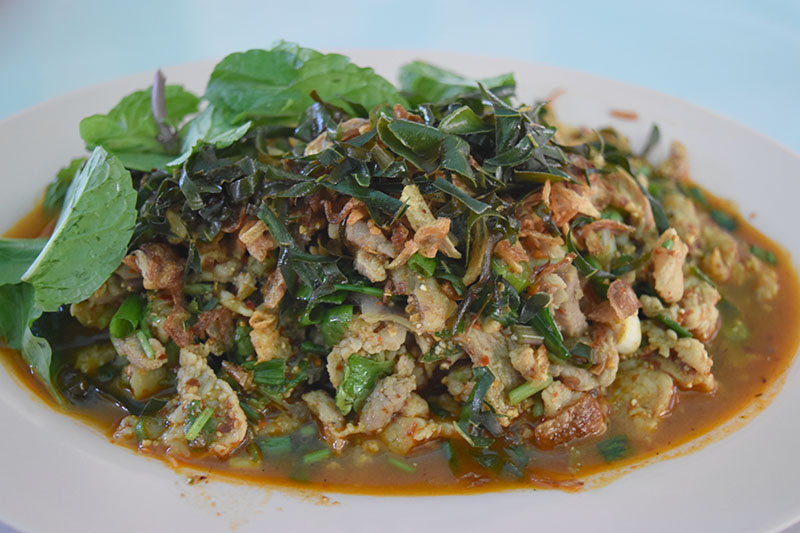
“People around here really like it. Larb, tom yum, fried dishes and so many menus can be made with turkey,” Kanisorn said. “Sometimes people come from Laos to eat it because they say it’s hard to find in their country.”

The farmer says he’s optimistic about the turkey market, especially with a Laotian market just over the river.
Nga 3

“One turkey can feed 20 people. Some folks around here like to pool their money together to buy one, so they’re really popular toward the holidays,” Kanisorn said.

Turkey tom yum, turkey larb and fried turkey with Isaan-style spicy and sour sauce or jim jaew are popular dishes people order.

Kanisorn says he sells seven-year-old chicks for 100 baht, adult turkeys for 500 baht and turkey meat for 200 baht a kilogram but advises that anyone looking to buy live ones should have a “love for animals.”

Now, of course, his turkey business supplements his rubber farming, and using the birds’ feces as fertilizer has significantly cut his costs.

“When the rubber price isn’t good, I don’t have to hurry to harvest it because I have turkeys. I can wait for it to go up first,” he said.

Kanisorn can be reached at 081-058-3987.
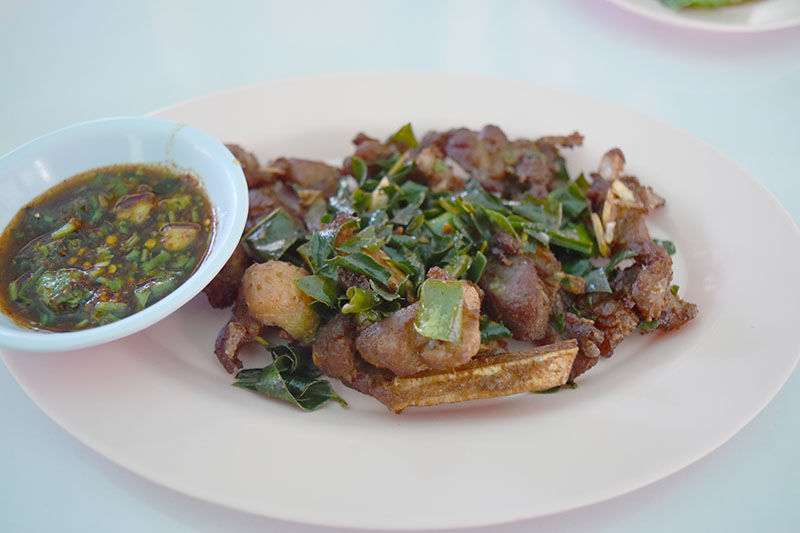
Fried turkey with jim jaew (Isaan-style spicy and sour sauce).
Turkey larb.
Turkey larb.

Nga 7 Nga 6 Nga 2

The original story first appeared in Thai on Technology Chaoban, part of the Matichon Group which also owns Khaosod, and focuses on reporting agricultural content. 

Additional reporting and photos by Suradej Sodkhomkham

Related stories:

Reason for the Season is Sales, but Mai Pen Rai, Thai Christians Say
Advertisement

Australian Drug Smuggler Returns Home From Bali Jail

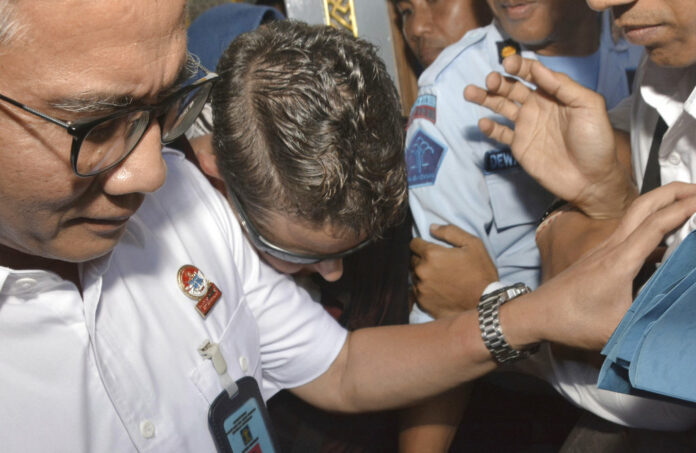
Australian Renae Lawrence, center, is escorted Wednesday as she leaves Bangli prison in Bali, Indonesia. Photo: Dana Pradana / Associated Press

BANGLI, Indonesia — A teary and largely silent convicted Australian drug mule returned to her hometown on Thursday hours after she was deported from the Indonesian tourist island of Bali where she had served nearly 14 years in prison for smuggling heroin.

Renae Lawrence was the only woman among nine Australians who were arrested in 2005 for attempting to smuggle 8.3 kilograms (18.3 pounds) of heroin from Bali to Australia.

Lawrence, 41, wearing black sunglasses and a black T-shirt, was escorted Wednesday afternoon through a crush of reporters outside Bangli prison on Bali into a waiting car. She made no comment.

She faced a throng of media when she and her mother, Beverley Waterman, landed at Australia’s Brisbane Airport from where they took a domestic flight to their hometown of Newcastle. Lawrence faces potential arrest in Newcastle on outstanding warrants that predate her ill-fated journey to Bali.

Asked by reporters in Brisbane if she wanted to comment on her return to Australia, Lawrence looked teary-eyed and declined. Her mother explained: “It’s very overwhelming.”

Asked later if she had anything to say, Lawrence told reporters in the Bahasa Indonesia language: “Thanks to the government of Indonesia. That’s it.”

Lawrence faces potential arrest in Newcastle on warrants including one that alleges the former panel beater was involved in a high-speed police chase in a stolen car a month before her arrest in Bali in April 2005.

New South Wales Police Commissioner Mick Fuller had indicated a deal with Lawrence’s lawyers to hand herself in to police was more likely than her being arrested at Newcastle Airport.

“From our perspective, we will make a time reasonable with her legal team to bring her in to have those warrants satisfied,” Fuller told reporters on Tuesday.

Lawrence was again surrounded by journalists and cameras on arrival in Newcastle but said nothing as she walked from the airport to a waiting car.

Maryoto Sumadi, head of Bali’s justice and human rights office, said Lawrence is banned from ever re-entering Indonesia.

She may be the only member of the group dubbed the “Bali Nine” by Australian media to walk free from prison.

Andrew Chan and Myuran Sukumaran, the ringleaders, were executed by a firing squad in 2015, causing a diplomatic furor between often testy neighbors Indonesia and Australia.

Five others had their sentences increased to life on appeal, and another member, Tan Duc Thanh Nguyen, died from cancer in May.

Lawrence, whom Customs caught with 2.2 kilograms (4.8 pounds) of heroin strapped to her body, was sentenced to 20 years in prison and fined 1 billion rupiah ($68,000). She didn’t appeal and almost every year her sentence was reduced during holiday remissions that are customary in Indonesia for inmates with good behavior, except those on death row or sentenced to life.

Lawrence’s sentence was completed in May but was extended by six months because she couldn’t afford to pay the fine, Bangli prison chief Made Suwendra said.

Another convicted Australian drug smuggler, Schapelle Corby, whose trial and imprisonment on Bali mesmerized her country for more than a decade, returned home last year.

Corby was arrested in 2004 at the age of 27 with more than 4 kilograms (9 pounds) of marijuana inside her boogie board bag, sparking a media frenzy in Australia on par with America’s O.J. Simpson trial.

Corby’s insistence that the drugs were planted by baggage handlers was dismissed as a lie by Balinese prosecutors. A court sentenced her to 20 years in prison, though that was later reduced.

Story: Andi Jatmiko

Advertisement

Exile Won’t Stop Vietnamese Blogger From Highlighting Abuses

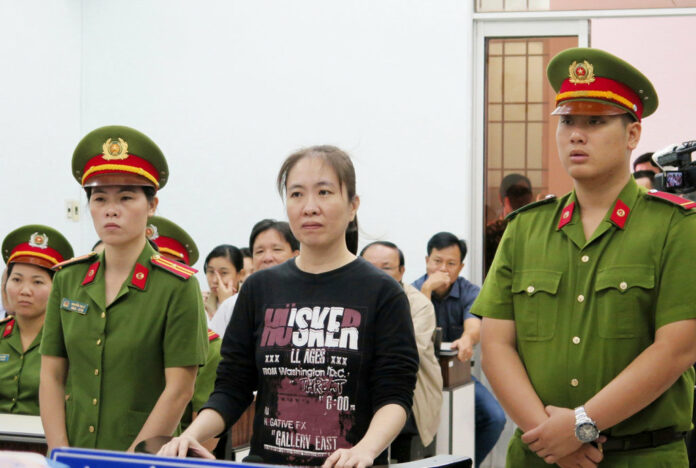
Nguyen Ngoc Nhu Quynh, center, a prominent Vietnamese blogger, stands trial in 2017 in the south-central province of Khanh Hoa, Vietnam. Photo: Tien Minh / Associated Press

HOUSTON — Forced into exile in the U.S., Vietnamese blogger Nguyen Ngoc Nhu Quynh is without her homeland but not without hope.

Quynh and her family are beginning their lives anew in Houston after she was released last month from prison in Vietnam on the condition that she left the country. She had been serving a 10-year sentence for documenting various human rights abuses in Vietnam, including civilian deaths in police custody and environmental disasters.

Quynh says her eyesight was affected by months in solitary confinement, with her cell kept in darkness during the day and flooded with blinding light at night.

“In Vietnam, I read in the newspaper that the people in the U.S. have freedom, but it belongs to the U.S. government. My government said that,” Quynh recently said in an interview with The Associated Press. “When I came here … I found out the people here, the citizens in the U.S., they really have” freedom.

What she has so far seen as she settles into her new life in Houston has given Quynh the belief that her homeland – criticized by groups such as Amnesty International for restricting freedom of speech, the press and religion – will one day be transformed and she will be able to return.

“I believe if all the people raise their voice, fight for freedom, Vietnam will be changed,” she said.

Quynh said she will continue highlighting abuses in Vietnam as she and her 12-year-old daughter Nam, her six-year-old son Gau and her 62-year-old mother settle into their new lives.

Since arriving in the U.S., Quynh has traveled to Washington, D.C., to meet U.S. government and European Union officials as well as journalists. On Tuesday, she was one of five journalists who received the International Press Freedom Award from the Committee to Protect Journalists at a ceremony in New York.

The 39-year-old blogger known by her pen name Me Nam, or “Mother Mushroom,” co-founded a network of bloggers and that is very popular in Vietnam.

Posts about the release of toxic chemicals by a Taiwanese-owned factory that killed thousands of fish in one of Vietnam’s worst environmental disasters were some of her best known.

But her reporting made her a target of the Vietnamese government.

More than four decades after communist North Vietnam prevailed in 1975 over the U.S. and South Vietnam in the long and bloody Vietnam War, the government promotes an image of an open, globalized economy. But it has maintained a firm grip over the country through strict controls of the media and other forms of communication.

“In a country where the mainstream press is fully under the government’s control, her independent reporting provided a crucial public service,” said Shawn Crispin, the Committee to Protect Journalists’ Southeast Asia representative.

In June 2017, she was sentenced to 10 years in prison for her Facebook posts that the government considered anti-state propaganda, as part of a larger crackdown on bloggers and activists.

In October, Quynh was released in a freedom-for-exile deal. Crispin says the Vietnamese government increasingly uses such agreements to silence critics.

Quynh says she and her family are still dealing with the effects of her incarceration. Her daughter has become quiet and reserved. Her son is always nervous, believing that police in the U.S. will try to take his teddy bear as Vietnamese police did when they arrested his mother.

Quynh said she plans to highlight the harsh prison conditions activists and others still incarcerated in Vietnam face, including a lack of proper health care and for female prisoners, a lack of privacy where they essentially have to shower in view of male guards.

“When I was in prison, the Vietnamese authorities always tried to convince me that … I was totally forgotten. I will be rotting in here for life and nobody will care,” Quynh said.

In Houston – which has the third-largest Vietnamese population in the U.S. behind Los Angeles and San Jose, California – she is staying with a member of her blogging network and is receiving support while her application for asylum is reviewed by the U.S. government.

“If the (activists) who are behind bars right now, if they just know that (they’re not forgotten), that will help fuel their spirit, lift them up and give them more strength.”

Story: Juan A. Lozano

Advertisement

Patents Reveal Foreign Pharma’s Secret Bid to Seize Thai Cannabis Market

BANGKOK — The fight over who will profit from medical cannabis – not the patients but the patents – is underway with lawmakers slamming bureaucrats for putting corporate interests over public benefit.

Following wide speculation that foreign pharma is seeking to dominate the potential market before it even exists, the commerce minister yesterday confirmed that at least 31 patent applications for medical marijuana have been filed to the Intellectual Property Department by foreign multinationals.

Lawmakers, officials and advocates say they should have been rejected automatically.

If someone tries to patent heroin or a weapon of mass destruction, like biological or nuclear weapons, will they also process that?

The revelation came only hours after the National Legislative Assembly was told such patents could not be rejected due to international trade treaties that Thailand signed, according to one of the sponsors of the decriminalization law.

Assemblyman Somchai Sawangkarn said he was surprised today by the new number as the department insisted yesterday there were only 11 such requests.

“The speaker specifically asked yesterday how many applications were there, and they said 11,” he said. “If it turns out to be 31, who will trust the department from now on?”

He decried the patent office for not doing its job.

“If someone tries to patent heroin or a weapon of mass destruction, like biological or nuclear weapons, will they also process that?” he said.

After the interim cabinet earlier this month approved a bill that would allow medical use of all Class 5 drugs, the debate has turned to serious potential conflicts of interest as it came to light that foreign pharmaceutical companies have already applied for broad patents that would grant them exclusive ownership over most derivative products. Lawmakers said this never should have been allowed as long as cannabis remains illegal.

Jetn Sirathranont, a doctor and lawmaker, said the Intellectual Property Department yesterday told the assembly it had no choice but to accept and process the applications as required under World Trade Organization pacts meant to protect intellectual property rights.

Somchai, the NLA member, said international agreements can’t trump domestic law, and that the department is duly authorized to reject such applications without due process because the law deems such drugs “contradictory to public order.”

Sontirat Sontijirawong, the minister of commerce, on Monday said the remaining applications can be processed as they are not trying to patent cannabis extracts known as cannabinoids, or CBD. He said such patents could only cover specific, unique formulations in which they are used.

A set of documents obtained by Khaosod English from a cannabis advocacy group tells a different story.

Furnished by cannabis activist group Highland, they show British and Japanese pharmaceutical companies – GW Pharma and Otsuka Pharmaceutical – filed patents broadly covering several marijuana extracts as much as 15 years ago. They could potentially bar Thai doctors and companies from any further research and development of the compounds.

“The future of medical marijuana lies on the authority and decision of the Intellectual Property Department,” Highland spokeswoman Chokwan “Kitty” Chopaka said. “We’d like them to revoke all of these applications, known by the public or not, for Thai people to be able to access them without having to pay too much.”

Somchai said experts at the assembly meeting told them the products in the patents cover entire cannabis extracts, not specific recipes for remedies.

The law prevents any natural extracts from animals or plants to be patented. For example, companies cannot patent naturally occurring substances such as sugar, only recipes containing sugar.

It’s not the first time the issue has been raised. The Government Pharmaceutical Organization back in May said the patent applications were illegal and supposed to be rejected. Copyrights regulators at the time said no one should worry as plant extracts can’t be patented.

Somchai said the department’s representatives told the assembly they have dropped four medical cannabis patent requests since Thursday.

“These applications have been filed for years, from 8-14 [years ago], and they hadn’t done anything about them until we asked them to,” he said. “If it’s legal, why are they not yet approved? And if it’s illegal, why aren’t they rejected? What’s the point of keeping them around?”

The patent application records shared by Highland show no Thai companies or organizations listed in the application process, which is Somchai’s main concern.

“This is like a modern economic colonization of developing countries by using loopholes in international laws, which I’m totally against,” he said. “As a lawmaker, I want Thai people to benefit from medically approved treatments, modern or traditional, that are cheap, stopping the expensive Western medicine imports.”

“The source of them can be found in Thailand. It shouldn’t be that we legalize it, and then have to ask for permission from a foreign company. We can plant it but can’t use the extracts. If so, should we allow this law to come into effect?” he added.

Somchai said the assembly will take up debate of the cabinet-approved bill for the first time on Friday.

Correction: A previous version of this article misidentified Chokwan Chopaka as a Highland’s attorney. She is in fact its spokeswoman.

Related stories:

Medical Weed Law Clears Thai Cabinet

Thailand Rushes Law Allowing Medical Use of All Class 5 Drugs

Advertisement

Censors Pulled Thai Film Due to Crying Monk Scene

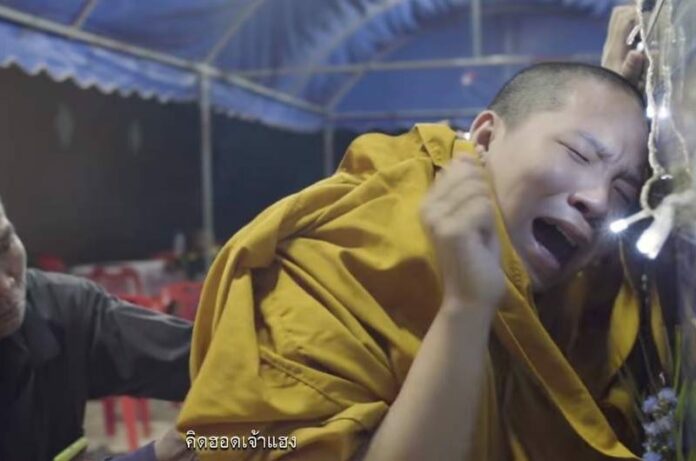
This image from a scene in “Thi Baan The Series 2.2” shows monk Phra Siang crying during his former girlfriend’s funeral.

BANGKOK — A monk despairing at his ex-girlfriend’s funeral is the scene that caused a Thai film to be censored just days before its Thursday release.

Speaking Wednesday at the Bangkok Art and Cultural Centre, a group of Thai directors revealed that what the censors called a “sensitive” scene in “Thi Baan The Series 2.2” depicted a monk character bursting into tears in front of his ex-girlfriend’s coffin.

Representatives of the Thai Film Director Association demanded that the censor board use reliable standards when reviewing movies.

Update: Thai Film Minus Crying Monk Approved by Censors

“There are many other Thai films that contain more aggressive scenes or scenes in which Buddhist monks are not discreet, but they get approved by censors,” filmmaker Bhandit Thongdee said.

Thanit Jitnukul, the association’s director, said that although the crew behind the film agreed to cut the scene, the board’s move imperils the value left for audiences.

“The cinematic work will be ruined because that scene is so emotional,” Thanit said. “If the scene is cut out so it can be shown in cinemas, it is once again that Thai audiences get to watch a film that isn’t its best. This has happened many times before.”

Read: Thai Film Pulled Over ‘Sensitive’ Buddhist Scene

The group also showed footage of comedy “Luang Pee Jazz 5G” where the larger-than-life protagonist monk peeks at women’s breasts and says “a badass shags a duck.”

The release of “Thi Baan The Series 2.2” has been indefinitely postponed.

It isn’t the first Thai movie to lack full approval from censors. In 2015, the board banned horror film “Arbat” (“Sin of a Monk”) for scenes portraying a novice monk it said behaved inappropriately. The film studio had to re-edit the movie before re-submitting it to the board.

The list of censored or banned films also includes “Insects in the Backyard,” “Shakespeare Must Die” and more.

“In the end, we have to depend on our luck?” Thanit said.

Related stories:

Thai Film Pulled Over ‘Sensitive’ Buddhist Scene

Advertisement

US Carrier in Hong Kong After Bombers Fly Over S. China Sea

An F/A-18 Super Hornet fighter jet lands Tuesday on the deck of the U.S. Navy USS Ronald Reagan in the South China Sea. Photo: Kin Cheung / Associated Press

HONG KONG — A U.S. aircraft carrier docked in Hong Kong on Wednesday, days after a pair of American B-52 bombers flew over the disputed South China Sea.

The arrival of the USS Ronald Reagan and its battle group in the Asian financial hub comes after China rejected a similar request by another U.S. Navy ship amid a spike in tensions between the countries’ militaries.

The Reagan’s visit is being seen as a friendly gesture ahead of a planned meeting later this month between President Donald Trump and Chinese leader Xi Jinping that will mark the first time they’ve sat down together since the start of a bitter trade war.

China has demanded the U.S. cease military activity of all kind near its South China Sea island claims that it has been rapidly fortifying. The U.S. says it takes no stance on sovereignty claims, but will continue to sail and operate wherever international law permits.

In late September, a Chinese destroyer came close to the USS Decatur in the South China Sea in what the U.S. Navy called an “unsafe and unprofessional maneuver.”

The Navy said in a statement that during the Reagan’s visit, interactions will take place with Hong Kong citizens through sports, community relations projects and tours of the carrier. More than 4,400 men and women are usually aboard the ship.

“The abundant growth and prosperity that surrounds us in Hong Kong is what the United States Seventh Fleet seeks to preserve for all nations in this important region,” Rear Adm. Karl O. Thomas, commander of Carrier Strike Group 5, said in the statement.

In comments Tuesday to Hong Kong television, Thomas said the U.S. and Chinese militaries are able to maintain a professional relationship, despite tensions.

“When we’re out at sea, we have a mission to do, and we come out and operate around each other and we do it professionally,” Thomas said.

Meanwhile, U.S. Pacific Air Forces said two B-52 bombers flew over the South China Sea on Monday, calling it a “routine training mission.”

The B-52H Stratofortress bombers departed Andersen Air Force Base in Guam as part of the U.S. Indo-Pacific Command’s Continuous Bomber Presence operations that began in 2004, Pacific Air Forces said in a statement Wednesday.

“This recent mission is consistent with international law and United States’ long-standing commitment to a free and open Indo-Pacific,” the statement said.

Also this week, the Washington-based Center for Strategic and International Studies, or CSIS, reported that China had installed a new platform on Bombay Reef, a remote undeveloped feature in the Chinese-controlled Paracel Islands in the South China Sea. Vietnam and Taiwan also claim the reef.

The platform appears to be topped with a radome and solar panels, and its strategic location makes it likely it is intended to extend China’s radar or signals intelligence collection in the area, the report said. Bombay Reef already has a lighthouse to serve as an aid to navigation.

Unlike China’s large man-made islands created by piling sand on top of coral reefs, installing the modestly sized Bombay Reef platform did not require inflicting major environmental damage, CSIS said. However, that illustrates how easily China could expand its footprint to other features such as Scarborough Shoal, which it seized from the Philippines in 2012, it added.

Compared to dredging and reclamation, the installation of a modest platform would be “harder to prevent at the time and more difficult to rally international condemnation against after the fact,” the report said.

Advertisement

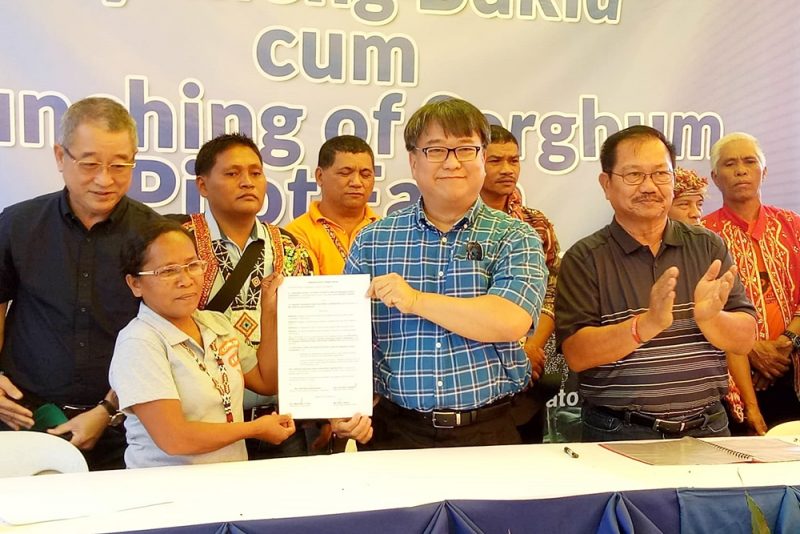
CP Foods to Supports the Philippines’ Government Sustainable Sorghum Project in Tribal Lands (Sponsored)

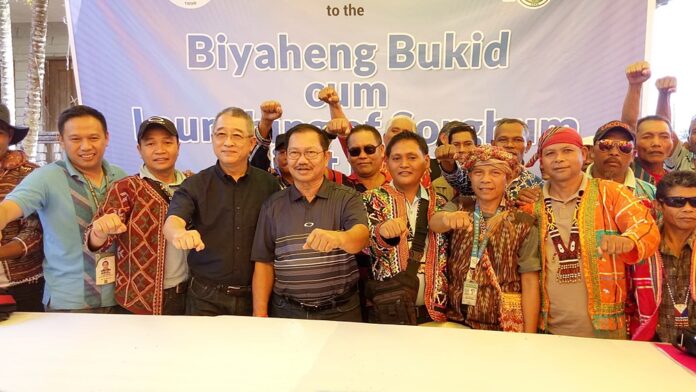
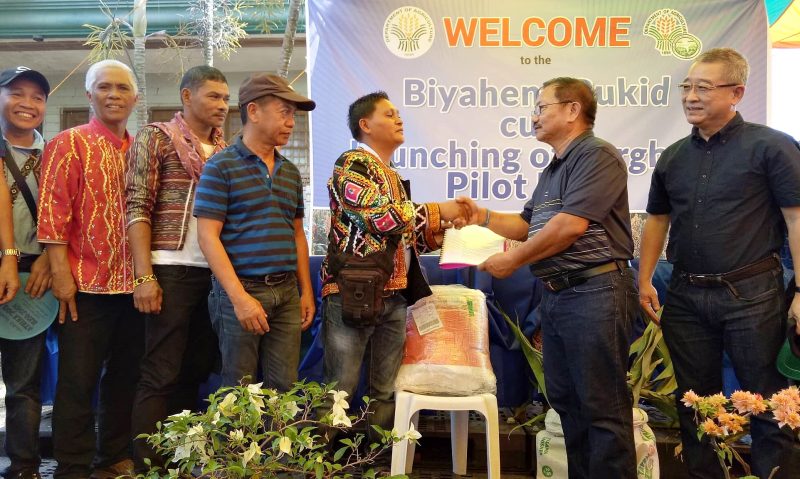
The Philippines’ Department of Agriculture (DA) recently kicked off the National Sorghum Development Program to promote sustainable sorghum production in the tribal areas to fill growing domestic demand for animal feed under which CP Foods Philippines is fully supported to purchase all the production Indigenous People’s communities.

The National Sorghum Development Program aims at increasing sorghum production, focusing mainly in Indigenous People’s Ancestral Domain Areas. It targeted to plant sorghum in 1 million hectares (6.25 million Rai) areas within the next 3 years. The higher domestic capacity could lower the cost of farming operation and lead to cheaper price of meat products.

At the launching ceremony, CP Foods Philippines has signed Memorandum of Understanding (MoU) with tribal group committed to purchase sorghum production from the communities. .

As a part of the project, Mr. Emmanuel F. Pinol, the Secretary of Agriculture Department of the Philippines, together with CP Foods Philippines vice chairman Mr.Sakol Cheewakoset, and Mr. Sompong Rojanaadisorn, CP Foods senior vice president for Livestock Feed Business, recently visited sorghum plantation area in Makilala community, North Cotabato, Philippines, the area is one of the targeted areas under the program which CP Foods Philippines.

1 1 e1542790978900

Mr.Sakol said the company strives to develop sustainable sorghum production with the Philippines’ farmers. The protein rich crop can be used as a substitute of corn and imported wheat in animal feed. Sorghum will be a strategic plant that serve the rapid growth of animal feed sector. The Philippines exported 2 million metric tons of feed wheat last year.

The increasing domestic capacity will help the country to reduce its reliance on imported raw materials and, subsequently, lowering the cost of animal feed. Ultimately, the Philippines consumers will be able to buy quality meat at reasonable price.

“Shortage of raw material is a looming threat for animal feed business in the Philippines. The price of animal feed is rising due to the fact that feed mills have to import corn and wheat to compensate the lack of domestic raw material. This project could dramatically lower the cost of animal feed” Mr.Sakol explained.

The government also sets up pilot farms nationwide as learning centers where the farmers can learn sustainable agricultural techniques.

By following the techniques, the farmers will be able to produce quality products with small cost of operation. In addition, farmers can earn extra 120,000 peso from making Sorghum stalks for cattle feed.

4 e1542790984317

Advertisement

Baby Dies in Bali After US Woman Allegedly Threw It From Car

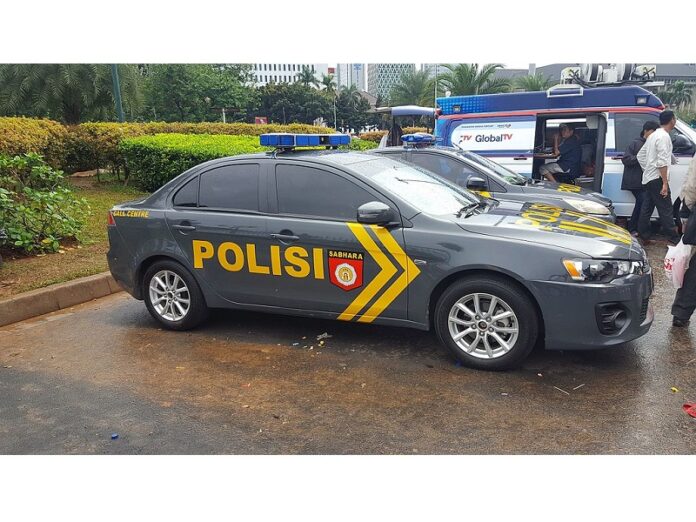
An Indonesian police car in 2016. Photo: Wikimedia Commons

DENPASAR, Indonesia — An American woman allegedly threw her 2-month-old daughter from a moving car on the tourist island of Bali and then tried to kill herself by jumping from the vehicle, Indonesian police said Wednesday.

South Denpasar police chief Nyoman Wiarajaya told a news conference that officers haven’t been able to question Nicole Stasio because she is hospitalized in a severe state of depression.

A driver and guide who were with 32-year-old Stasio told police she jumped out of the car without warning Tuesday evening at an intersection in Denpasar and they were initially unaware of what had happened to the baby.

Villagers found the infant with severe injuries about a kilometer (less than a mile) from where Stasio leapt out of the vehicle. The baby died about seven hours later at the same hospital, Bali Mandara, where Stasio is being treated.

Wiarajaya said the woman, who was born in California, traveled to Bali with her parents in July. The parents stayed in Bali for about 10 days and Stasio gave birth on the island in September after her parents had left the island.

“She refused to answer when they (the parents) asked about her baby’s father,” Wiarajaya said, quoting information from the driver and tour guide who accompanied the family since they arrived.

“But she gave the impression that she was unmarried and her family preferred that she give birth to a child abroad, like wanting to avoid something,” he said.

The driver, Wayan Siaja, and the guide, Made Arimbawa, told police they had taken Stasio and her daughter to Bali’s international airport on Tuesday evening but Stasio changed her mind about returning to the U.S. and told them to take her back to Ubud, a town popular with tourists for its traditional crafts and culture.

They said she sat silently in the car before the tragic events unfolded, according to Wiarajaya.

Advertisement

King to Rehearse Big Ride Friday at BKK Airport

A palace aide shows a uniform for Un Ai Rak cycling event participants.

BANGKOK — His Majesty the King will bike around a track at Suvarnabhumi Airport on Friday ahead of a mass cycling event he will lead next month, according to the government.

King Vajiralongkorn’s planned visit to the international airport, which is located in Samut Prakan province, was announced Tuesday by junta chairman Prayuth Chan-ocha.

The monarch is set to return to the province Dec. 9 at the head of a massive peloton going from the Royal Plaza in front of the Dusit Palace to Lat Pho Park and back. The entire event, called Bike Un Ai Rak (The Warmth of Love), is expected to cover a total 50 kilometers.

Palace officials today also unveiled T-shirts for the event featuring a drawing made by His Majesty. It shows a family and a dog riding tandem.

The government has invited members of the public to register and accompany the king that day. They can sign up by going to the official website, entering their details and choosing which portion of the route they would like to join. English-language registration is available on the site.

Similar cycling events will be held in other provinces. Officials expect up to 100,000 participants for the main event in Bangkok alone.

S 9642032

Advertisement

River Activists Sue Over ‘Chao Phraya Promenade 2.0’

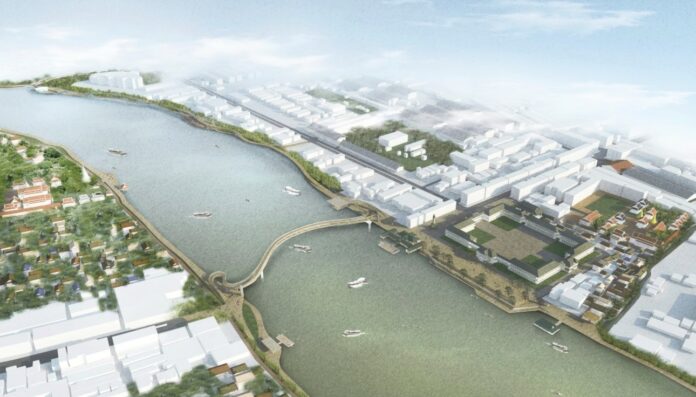
A rendering shows a proposed pedestrian lane and bridge along the Chao Phraya River in Bangkok.

BANGKOK — Opponents of a plan to build boardwalks along the Chao Phraya River filed a lawsuit Wednesday seeking an injunction against further action and demanding its impact be fully evaluated.

Four government bodies including the interim cabinet and City Hall are accused in the suit of rushing the massive riverside redevelopment project without proper study of its environmental impacts and failing to share information with affected stakeholders. It was filed at the Administrative Court, a representative for several environmental and urban design groups said.

“The government is likely to open bidding on the construction soon,” said Yossapon Boonsom, founder of Friends of the River. “If that happens before the project is studied appropriately, it could lead to serious damage, even for the private companies that may enter a bid. We want a special order halting the bidding for now.”

It’s been a long, contentious process since the controversial project was first approved in 2015.

With a budget of 14 billion baht, the military government said it wanted to turn the riverside into a world-class landmark. Opponents said pouring concrete walkways along the river was ugly, ill-conceived and failed to take into account impacts on communities and the environment. The plan immediately met stiff opposition.

In April, a government conservation committee – led by junta deputy Gen. Prawit Wongsuwan – said it would withdraw and rethink the plan as well as exempt banks along the Rattanakosin area in the old quarter, but no such order was subsequently issued.

The committee said then it would redevelop the river in a more piecemeal fashion, “spot by spot and not by laying a whole walkway.”

In a reversal one month later, Bangkok’s public works department said promenades between the Rama VII Bridge to the Dusit district and Bang Phlat canal were green-lit. Yossapon, who’s also a landscape architect, said he believes there have been no changes to the original, maligned design.

Experts from the opposition groups last week hosted a debate over the project. They said that while it might have begun with good intentions, the government has never consulted with those who will be directly impacted by construction and called for a reevaluation of the whole plan.

On Tuesday, the transport and interior ministries approved 5 billion baht for two more river developments in Nonthaburi province: a 4.9-kilometer pedestrian/bicycle lane connecting the Maha Chesadabodindranusorn and Rama V bridges, and a 400-meter pedestrian bridge.

Officials said the Interior Ministry would oversee construction of the walkways while the Transport Ministry will be in charge of redeveloping piers and areas under the new bridge. They expect the plans to get a cabinet approval in two years.

The projects are part of a bigger plan initiated by City Hall’s transport and traffic planners to spend 35 billion baht on building 140 kilometers of pedestrian bridges and paths along the river throughout metro Bangkok in Pathum Thani, Nonthaburi and Samut Prakan provinces.

Related stories:

City Hall Continues ‘Canceled’ River Boardwalk Plan

Chao Phraya Boardwalk Plan Dead in the Water: Architects

Evictions Continue as Funds Set for Chao Phraya Promenade

Opponents, Proponents of Chao Phraya Boardwalk Open Fire

Locals Ready to be Evicted for Chao Phraya Boardwalk, Official Says

River’s Friends Float Hope for Public Hearings on 14B-Baht ‘Promenade’

Chao Phraya Promenade Should be Sent Back to Drawing Board, Architects Say

Advertisement

Hot News

LATEST NEWS

Bangkok
scattered clouds
29.7 ° C
30 °
27.2 °
78 %
3.2kmh
38 %
Tue
35 °
Wed
36 °
Thu
33 °
Fri
32 °
Sat
29 °