
























29.4 C
Bangkok
Wednesday, July 22, 2026
Home Blog Page 1856

Love Yuzu Much? Citrusy Ramen Comes to Bangkok

Photos by Chayanit Itthipongmaetee

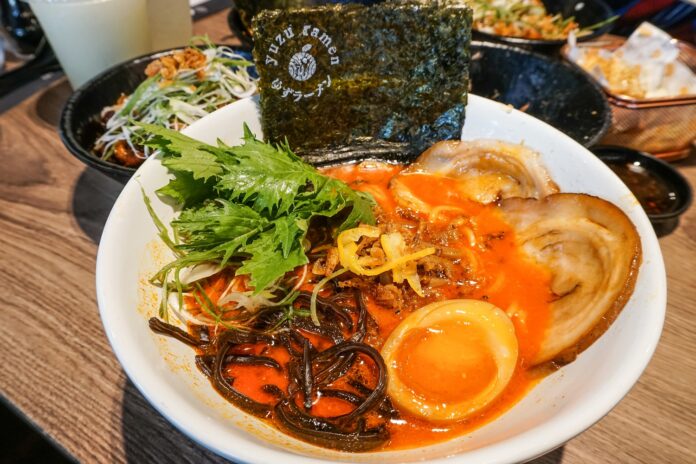
Top: Spicy Yuzu Tonkotsu Ramen (฿320).

A citrus fruit comes front and center in a ramen shop that tries to give traditional Japanese dishes a zesty Thai kick.

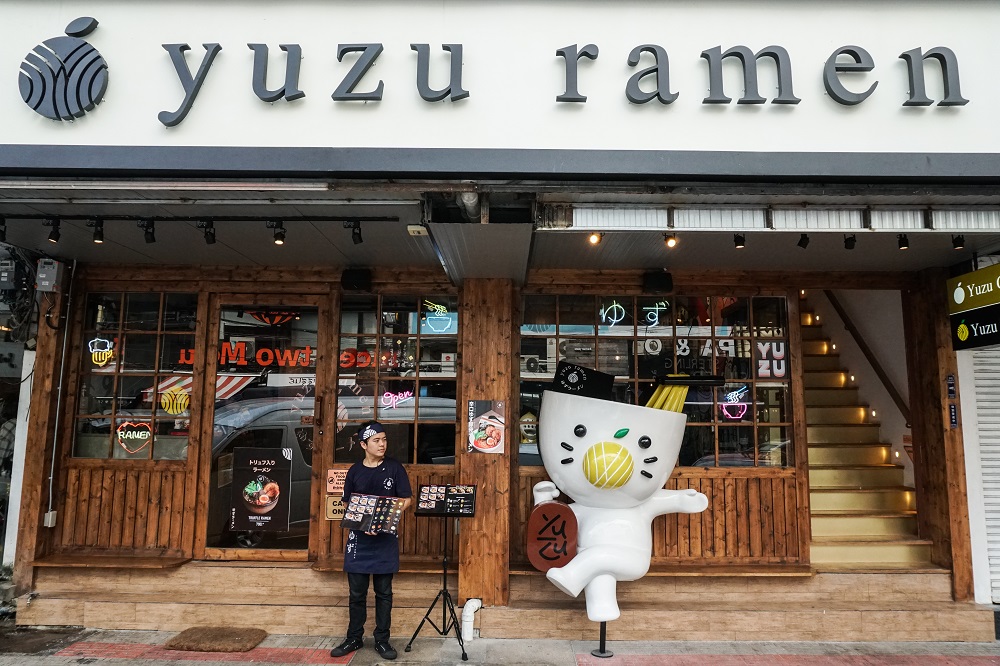
Open almost two months, Yuzu Ramen in Siam Square attempts to inject the zest of the yuzu fruit into mild-mannered Japanese dishes to appeal to spicy Thai tongues, with largely acceptable results.

“I like yuzu so much that I bought the recipe and adapted to be more zesty and modern for Thais,” owner Poramin Pruangmethangkul, 26, said. “And I didn’t want to make a traditional Japanese shop. I don’t want it to be boring, but to have a Shinjuku, Brooklyn kind of vibe.”

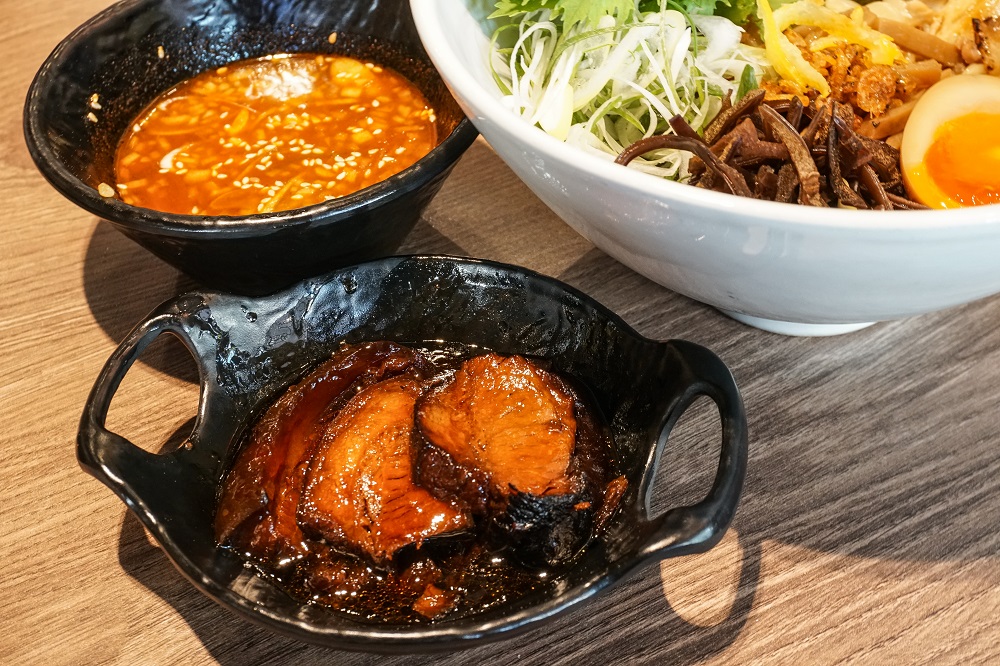
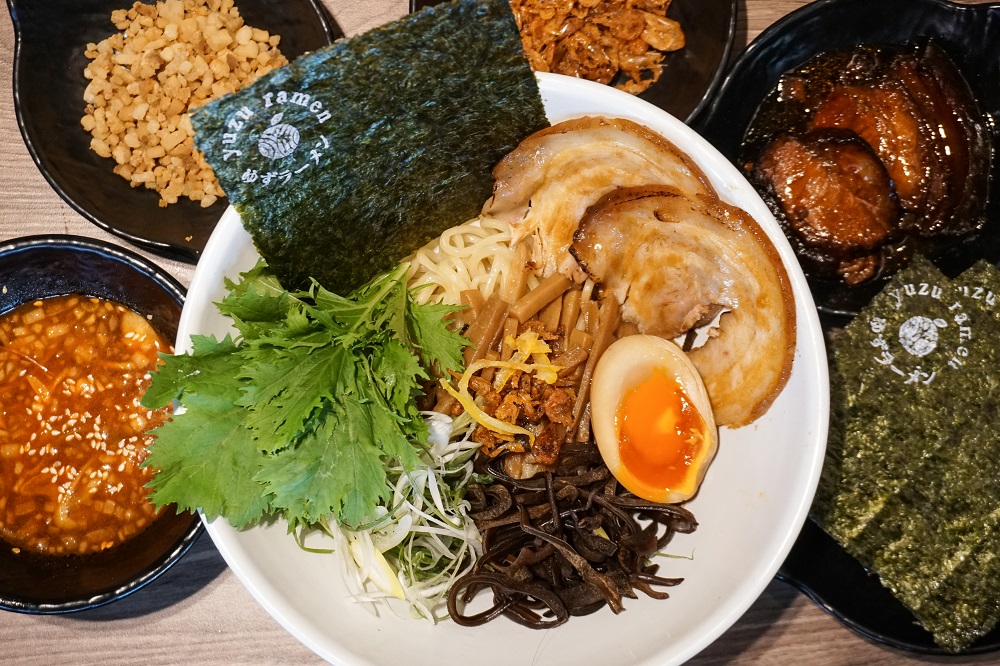
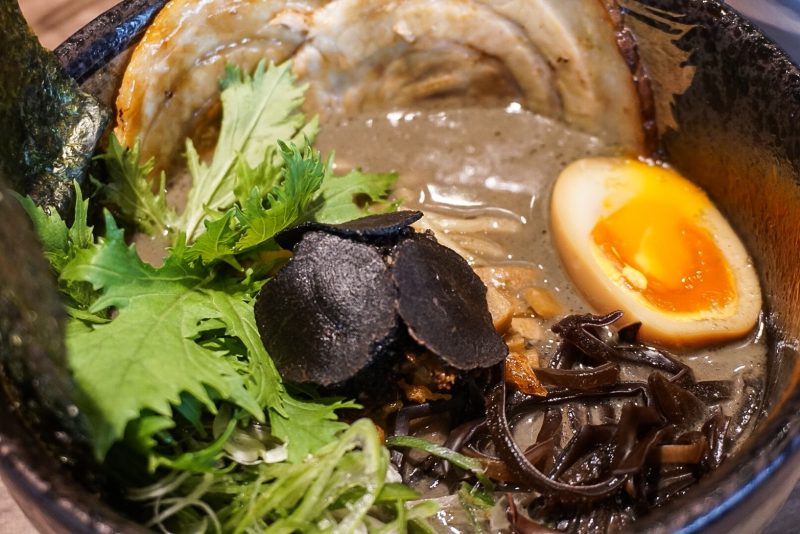
Choose the spiciness levels and noodle type for your dish, such as the signature Spicy Yuzu Tonkotsu Ramen (฿320). Although it’s pushed as the star dish, there’s only a nasal hint of yuzu in the aftertaste, which it tries to make up for with milky, spicy soup. Opt instead for the more refreshing Yuzu Tsukemen (฿320), where you dip noodles and pork slices into a bright-orange broth. The Truffle Ramen – though filled with truffles mixed into the broth and on top – is still an unrealistic ฿790.

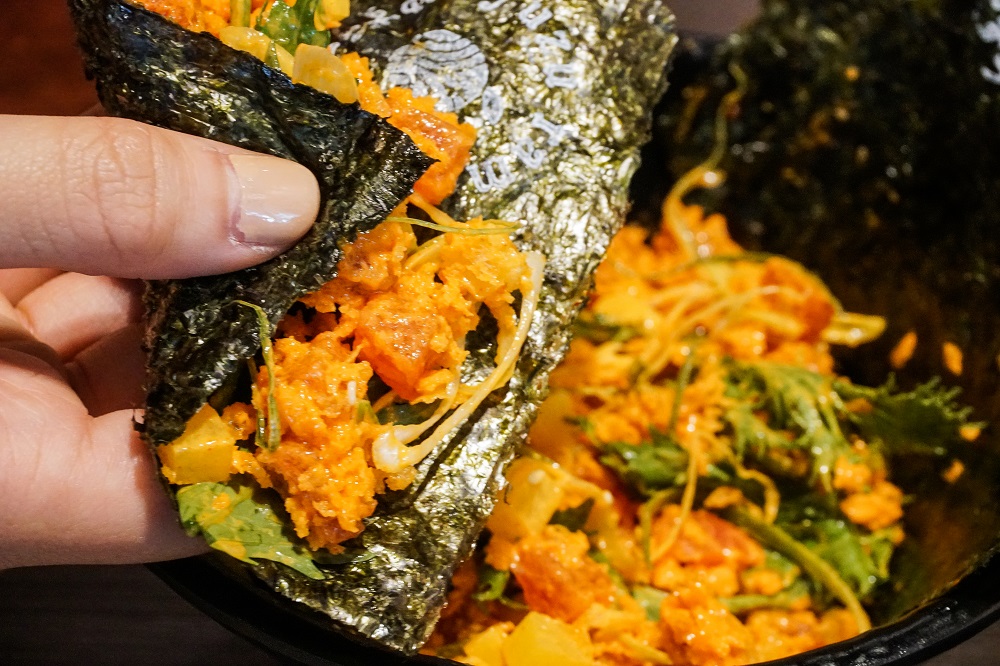
Appetizers aren’t just pushed-aside dishes either, with the Spicy Tuna Tartare (฿290) a fusion food done right – possibly better than most of the ramen dishes. Tuna cubes are mixed with crunchy yellow radish and crispy tempura flakes, drizzled with a satisfying spicy mayo-like sauce. Wrap a spoonful into a sheet of nori, and enjoy the varying flavors.
DSC03315
Yuzu Tsukemen (฿320), surrounded by various toppings.

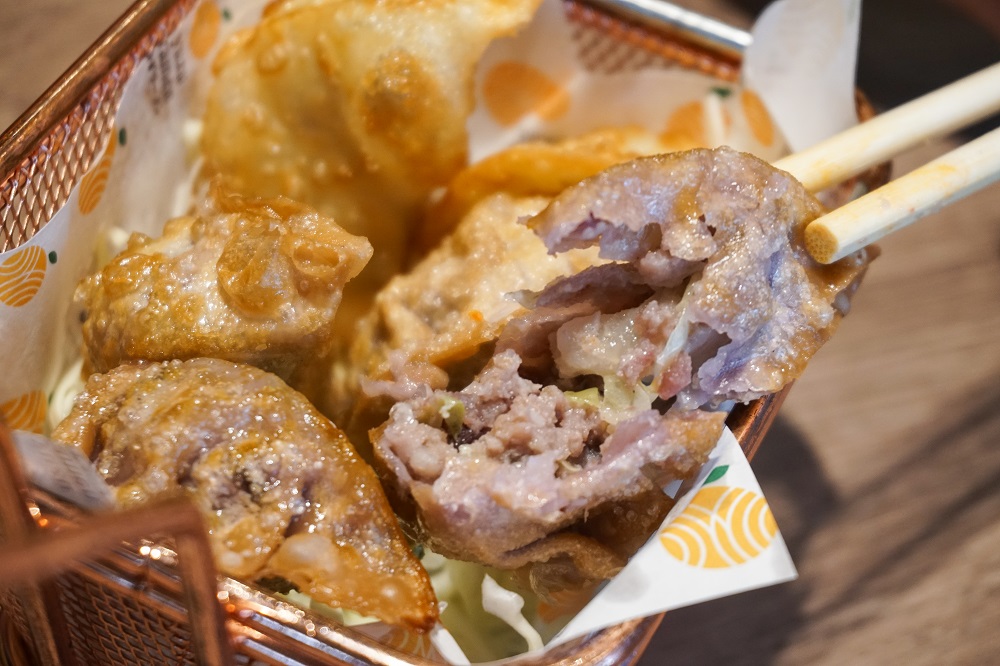
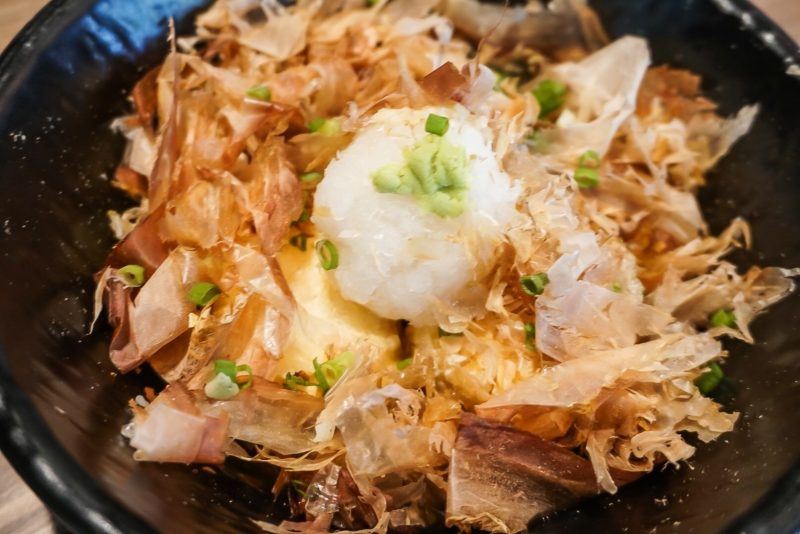
The gyoza, with pork, taro and purple potato fillings (฿140 for 6 pieces) are small but crunchy and add a playful purple tinge to regular gyoza. The Agedashi Tofu (฿130) is crispy on the outside but soft, white and wiggly on the inside and topped with a generous heap of bonito fish flakes.

Although they’re ฿135 and ฿140 respectively, the Yuzu Honey Soda and Yuzu Honey Slushies are must-orders. Cutting through the creamy oiliness, the drinks might be the most yuzu thing there.

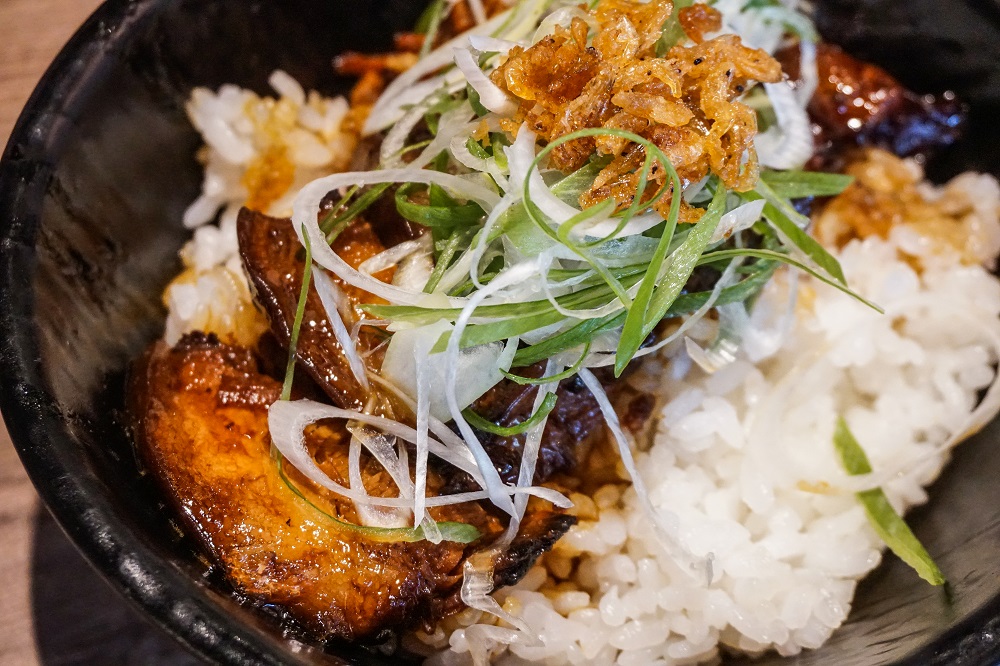
The rice dishes, such as the Teriyaki Glazed Chashu Over Rice (฿130), aren’t the stars of the shop. Although sweet, fatty and filling, it’s not so unique from other Japanese restaurants.

The shop imports most its products – the yuzu and seaweed from Japan and the truffles from France. On the other hand it’s not exactly an ad for sustainability and local sourcing.
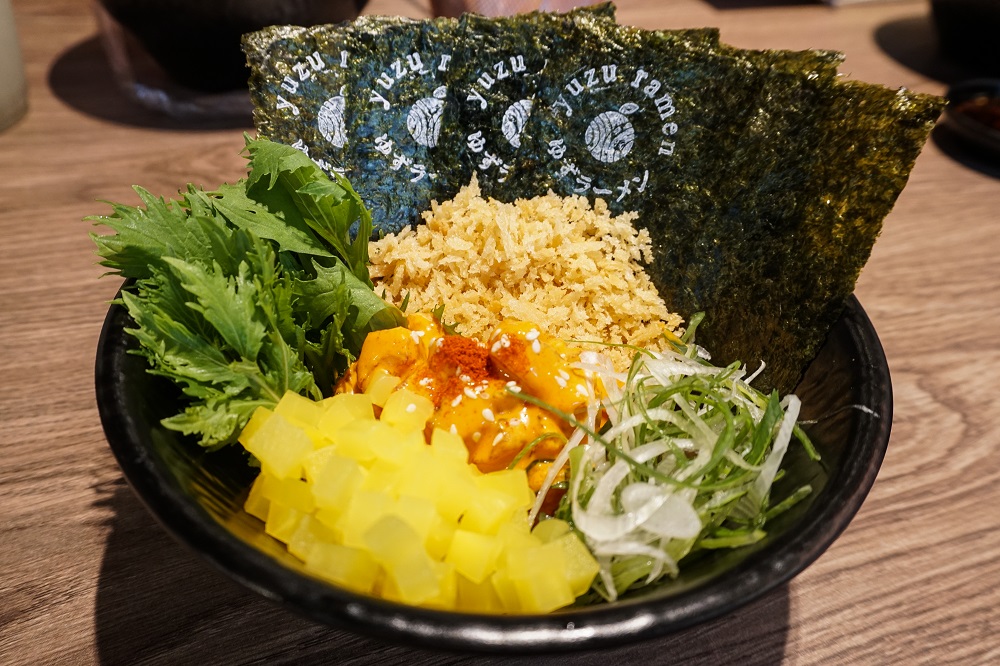
DSC03228
Spicy Tuna Tartare (฿290).

Vegetarians can try the Yuzu Shoyu Ramen (฿320), Shoyu Ramen (฿220), Yuzu Tsukemen (฿320) and Zaru Soba (฿260) – just ask for no meat with your order.

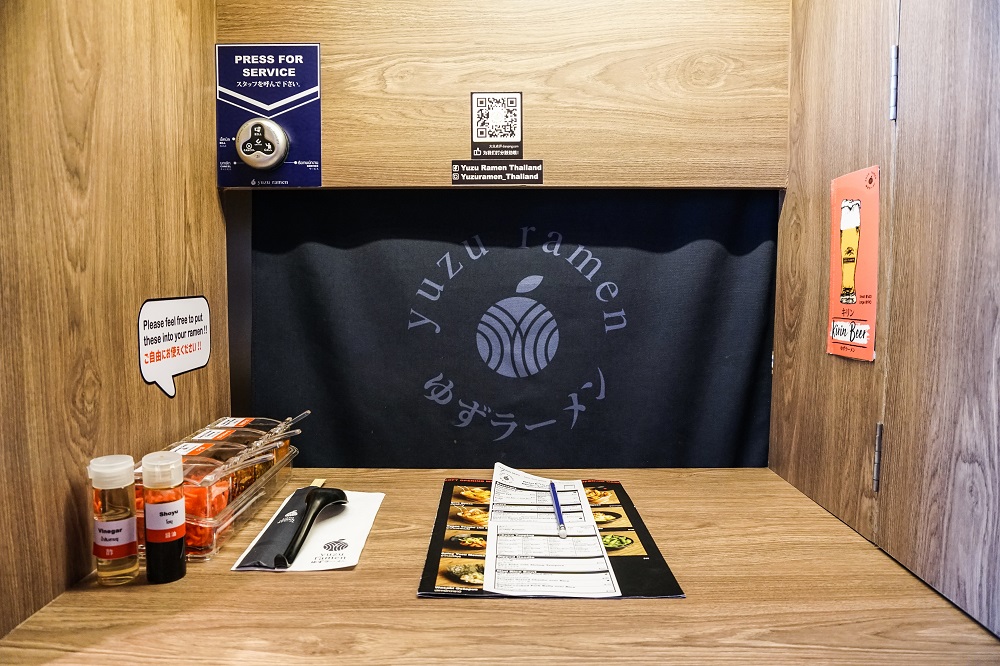
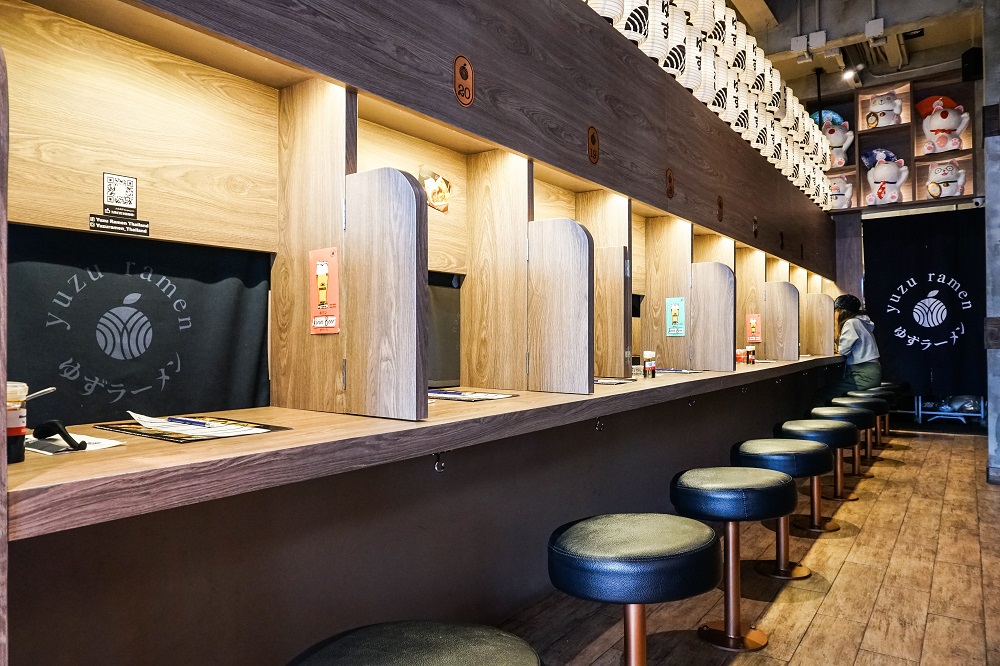
The interior is decorated in a Japanese-street style and plays music of the same genre. The walls have a Heian period-style mural and lanterns. Half the shop has individual booths where solo diners can eat undisturbed, but the dividers can be folded to chat with the person beside them.

“Thai people like to eat together, so I made the booth divider foldable,” Poramin said.

Yuzu Ramen is open from 11am to midnight every day. Located in Siam Square Soi 3, it’s reachable via BTS Siam.
YUZURAMEN SELECTED 181010 0018 e1539157922620
Truffle Ramen (฿790).
DSC03253
Spicy Tuna Tartare (฿290).
DSC03240
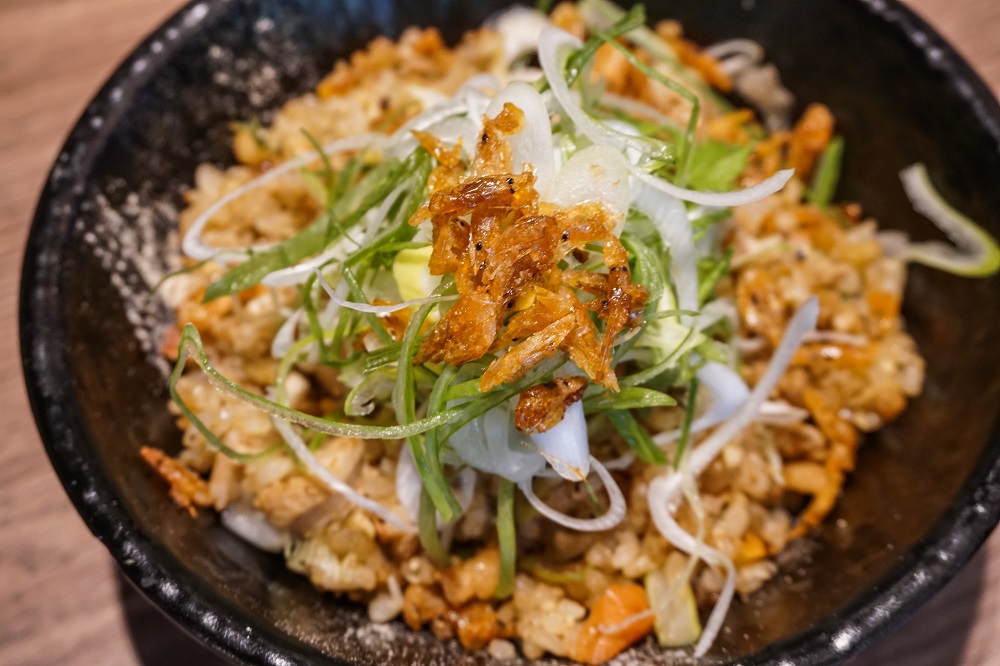
Red Shiso Plum Fried Rice (฿180).
DSC03256
Double-cooked Pork Belly over Rice (฿160).
DSC03321
An extra topping of pork belly (฿65).
DSC03224
Gyoza Combo (฿140).
YUZURAMEN SELECTED 181010 0003 e1539158045710
Agedashi Tofu (฿130).

DSC03333 DSC03336 DSC03345

Advertisement

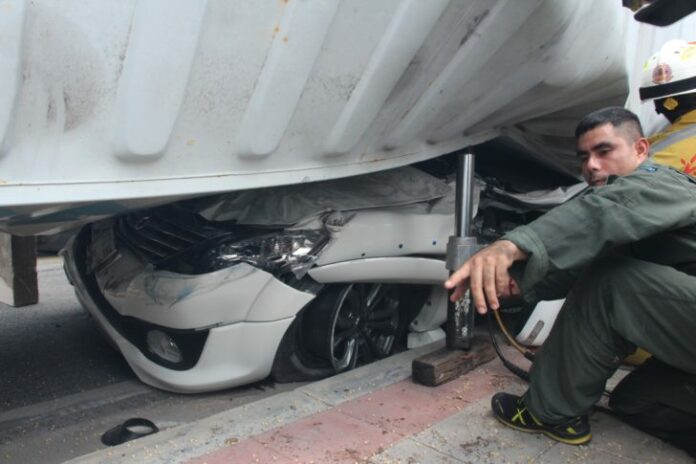
Driver Fined 6,000 Baht for Lorry Crash That Flattened Car

Scene of the accident on May 27.

BANGKOK — A criminal court on Wednesday found the driver of an 18-wheeler guilty of drunk driving for flattening another car in a May accident, in which the victim narrowly escaped death.

Narong Wongpetch, 33, was driving a 46-ton container on a road in Lat Krabang district when it toppled on a Toyota Fortuner, trapping the motorist for almost three hours before rescue workers could extract him from the flattened vehicle. He was later charged with DUI and reckless driving.

Read: Man Recounts Escape from Car Flattened by Lorry (Video)

In a verdict delivered today, the court convicted Narong of drunk a driving offense and dismissed the other charge. He was fined 6,000 baht.

Narong was working for a company called KPS Transport Ltd at the time of the accident.

Video footage released by police shows the truck approaching a bend at high speed before it topples onto the car.

Worawut Yooyatmak, who spent two hours and 45 minutes trapped inside the wreck, told reporters in July that he had yet to receive compensation from Narong’s company. A separate civil lawsuit Worawut filed against the firm is ongoing.

Related stories: 

Loose Container Crushes Public Van, Killing 1

Advertisement

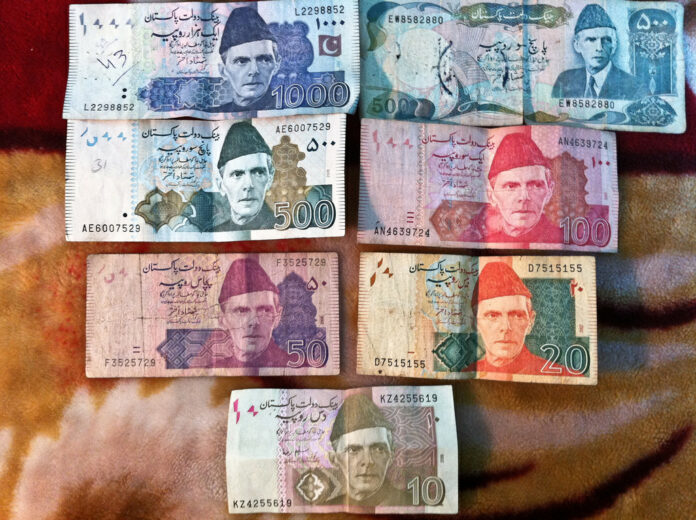
Pakistani Rupee Plunges 7% as Country Seeks IMF, China Loans

Photo: Peretz Partensky / Flickr

ISLAMABAD — Pakistan’s currency plunged by about 7 percent on Tuesday after the government said it would seek emergency bailout loans from the International Monetary Fund.

The Pakistani rupee briefly weakened to 138 to the dollar on Tuesday before settling at 133.6. The rupee was trading at 124.3 at close of business Monday, before the announcement was made.

A Pakistani delegation will meet with IMF officials in Indonesia later this week.

After a visit last week, the IMF said Pakistan is facing significant economic challenges, with diminishing growth, high fiscal and current account deficits, and low foreign exchange reserves.

Pakistan is also seeking fresh loans from China, which is already heavily invested in its transport and energy sectors.

Advertisement

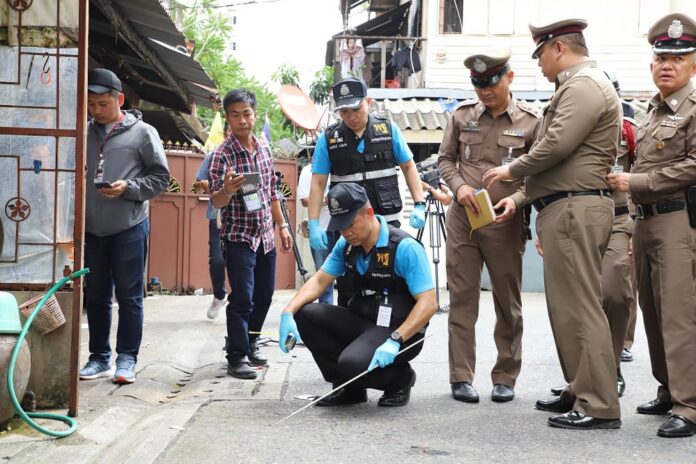
5 More Arrested in Snooker Gunfight Investigation

Police on Monday investigate the snooker bar where an altercation there escalated into a shootout.

BANGKOK — Five more people were arrested in connection to a deadly gunbattle that killed a foreign tourist earlier this week in Bangkok.

Police announced the arrests Wednesday after they raided 12 buildings to look for evidence related to the shootout, which they said involved two rival gangs. An Indian tourist was killed in the crossfire and four others were wounded.

Col. Nakarin Sukhonthawit said 11 arrest warrants have been issued. Five suspects remain on the run.

Police said the fight broke out Sunday night between two gangs at a parking lot of the Watergate Pavillion shopping mall in Ratchathewi district. The two gangs were reportedly playing snooker in a nearby bar before they got into a heated argument, which escalated into a gun battle.

Col. Nakarin said multiple firearms was used in the incident, including an assault rifle, at least two handguns and a hunting rifle.

Advertisement

Poaching Suspects Post Bail as Park Rangers Seek More Evidence

A machete, hunting gears discovered along with four bearcat paws Oct. 7 at Sai Yok National Park, Kanchanaburi province.

KANCHANABURI — A dozen suspects posted bail Tuesday after they were arrested and found with hunting gear and bearcat paws in their vehicles in Sai Yok National Park.

A Kanchanaburi court on Tuesday afternoon set the bond at 200,000 baht for each suspect.

Today, police and park rangers – led by park chief Panatchakorn Phobandit – will search the Tao Dam monastery and its vicinities for evidence.

According to Panatchakorn, authorities do not believe one of the suspects’ claims who said he bought the paws from local people in the park.

Read: Jaw, Skin Found at Park Where 12 Were Charged With Poaching

The 12 people were arrested Sunday. On Monday night officers found an animal jaw, skin, bullet shells and a machete near Tao Dam monastery, which the group claimed to have visited to make merit.

Among the suspects is Watcharachai Sameerak, permanent secretary of Dan Makham Tia district in Kanchanaburi. He was suspended from duty Monday.

In addition to poaching, the 12 face charges such as illegal possession of a protected animal and taking a vehicle into an off-road area without authorization.

Bearcats are a protected species under the 1992 Wildlife Protection Act.

Related stories:

Jaw, Skin Found at Park Where 12 Were Charged With Poaching

Govt Official Among 12 Charged With Poaching in Kanchanaburi

Advertisement

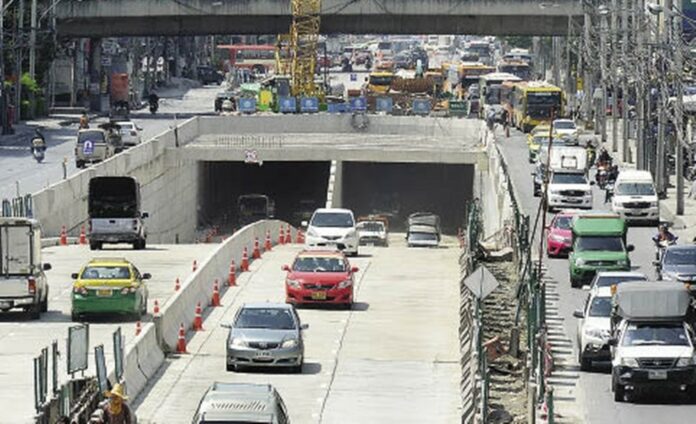
Govt Mulls First Bangkok Underground Expressway

Traffic at the Mahaisawan Intersection underpass in Bangkok.

BANGKOK — Transport officials Tuesday said they’re considering building the country’s first underground expressway to solve traffic jams in the capital.

The plan from Transport and Traffic Policy Plan Office said the roadway would be 9 kilometers long, starting from Naradhiwat Rajanagarindra road in central Bangkok to Sam Rong district in Samut Prakan province.

“Initial research found the possibility to build the first underground expressway in Thailand there,” deputy director general Chayatan Phromsorn said. “It could help ease high traffic congestion in Sathorn, Silom and nearby areas in the long run.”

He said the expressway, if greenlit, would collect a toll and could be divided in two levels for public transport and private vehicles. Construction costs could run high, ranging from 2 to 10 billion baht per kilometer.

After the junta leader ordered a way be found to urgently solve the chronic traffic jams, Transport Minister Arkhom Termpittayapaisith said more underground roads in Bangkok could follow, as space on and over the ground may be scarce.

A recent study by the Urban Design and Development Center of Chulalongkorn University found streets cover 7 percent of land in Bangkok, while the average in most major cities is about 20 percent to 25 percent.

Chayatan said the project needed further study, and that his office could propose the results to the Transport Ministry within two to three months.

Advertisement

From Squalid Refugee Camp, Rohingya Teen Plans for Higher Ed

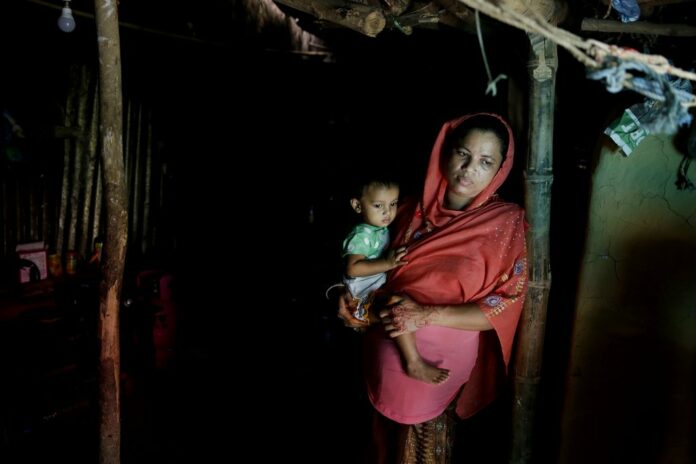
Rohingya refugee woman Minara Begum, mother of Rahima Akter, holds her youngest daughter Arohi Zannat inside the family hut in August in Kutupalong refugee camp, Bangladesh. Photo: Altaf Qadri / Associated Press

KUTUPALONG, Bangladesh — At an age when many young Rohingya women have children, Rahima Akter has other plans.

From the refugee camp in southern Bangladesh where she was born, Akter, a 19-year-old with a confident smile who goes by the name Khushi, says she aspires to become the most educated Rohingya woman in the world.

Akter was born and has lived her whole life in the camp, a makeshift settlement of bamboo and tarpaulin huts spread out over rolling hills that were once protected forestland.

Her parents were among a wave of 250,000 Rohingya Muslims who escaped forced labor, religious persecution and violent attacks from Buddhist mobs in Myanmar during the early 1990s.

She sees education as her ticket out of the camp.

“If we take education then we will be able to lead our life as a life,” she said.

Akter has supplemented her family’s income by working as a translator for aid groups and journalists responding to a new influx of Rohingya refugees who have flooded the camp since August 2017, when the Myanmar military and Buddhist mobs began “clearance operations” against Rohingya in retaliation for insurgent attacks on security posts in Myanmar’s Rakhine state.

A United Nations fact-finding mission reported last month that at least 10,000 Rohingya are believed to have died in the violence. The U.N. has called for Myanmar’s top military generals to be prosecuted for genocide and crimes against humanity.

But while the Rohingya have found a measure of safety in southern Bangladesh, access to education is far from assured.

Akter said she is among only a few Rohingya refugee girls to have completed the Bangladeshi equivalent of high school, a feat she could only achieve by sneaking past the camp’s checkpoints and bribing Bangladeshi public school officials for a placement.

More than 1,200 temporary schools teach English, math, Burmese, science and the arts to about 140,000 children between the ages of 6 and 14, just over a quarter of the more than half a million refugee children living in the camp, according to UNICEF.

But the schooling only goes up to 5th grade, so Akter and other refugees have had to secretly enroll in schools in Cox’s Bazar or other towns to complete their studies.

Because of the limited educational opportunities for them, UNICEF calls the refugee children “a lost generation.”

“The international community has failed these children,” UNICEF spokesman Sakil Faizullah said, adding that the agency plans to start offering basic classes for older refugee students on the assumption they will receive formal education when they return to Myanmar.

But in the current anti-Rohingya climate in Myanmar, Akter said her family’s return has not been possible.

In order to go to school, Akter said she disguised her Rohingya identity by speaking only in Bengali, and dressing like a Bangladeshi girl.

But it was the battles she had to fight at home that were the most challenging, she said.

Most Rohingya girls are expected to get married by the age of 16, and sometimes as early as 14. She had to fight off her father who said her time for marriage had come.

Akter cried for days and begged her parents with hands clasped to let her continue studying.

Her mother, Minara Begum, a refugee who fled Myanmar as a child and never attended school, not only convinced her husband to let their eldest daughter study, but also fought off rebukes from the elders in her community who warned that sending girls out into the world was a sin.

“I told them ‘let Allah punish me then,'” Begum said. “What about our lives as refugees that have gone in vain because of our illiteracy? If I can help my children get a better future by education, then that is what I am going to do.”

Begum now sends three of her four daughters to school and hopes to educate her youngest daughter and only son as well. Akter and two of her sisters live on their own near the school in Cox’s Bazar, about two hours’ drive from the camp. Akter’s sisters were able to enroll in the Bangladeshi school after she had secured a place for herself there.

Begum said the family has skimped on food to cover the costs of sending the children to school, hoping that they can build a future for themselves that is not bound by the stigma of being a refugee.

“We are Rohingya. There is no land under our feet. We have no future. We are in the same situation as chicken in a cage,” Begum said, adding that they “can’t even claim ownership over the fruit from a tree that we planted.”

Begum’s dedication to her children’s education seems to be paying off already. Akter now earns more money than the rest of her family’s income combined.

While she is mostly busy preparing university applications, Akter also spends time going door-to-door at the expansive camp, documenting accounts of people who fled Myanmar last year.

She hopes to eventually publish her research when she is in college, where she plans to study human rights.

“Why do people have to lead their lives in such a situation?” she said. “One day maybe I’ll be able to raise up my voice about human rights for the Rohingya.”

Story: Rishabh R. Jain

Advertisement

Malaysia Plans New Taxes to Help Pay off Snowballing Debt

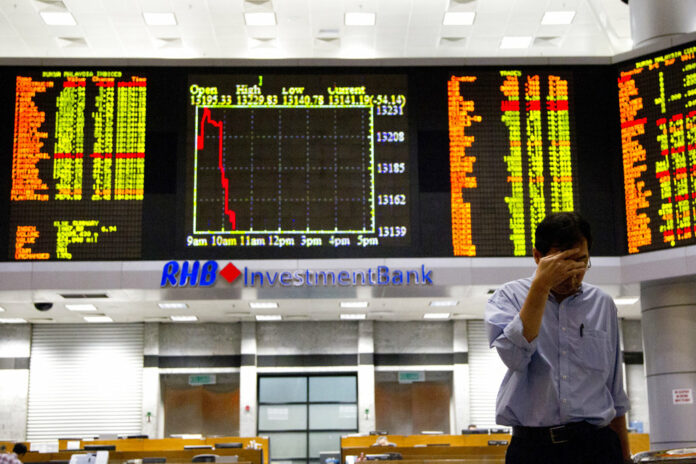
An investor walks in front of trading boards at a private stock market gallery in September in Kuala Lumpur, Malaysia. Photo: Yam G-Jun / Associated Press

KUALA LUMPUR — Malaysian Finance Minister Lim Guan Eng said Tuesday the government plans to introduce new tax measures to help raise funds to pay off national debt that has snowballed due to corruption under the previous government.

Lim said it will take the government three years to resolve its fiscal woes due to more than 1 trillion ringgit (USD$240.5 billion) in debt and another 35 billion ringgit ($8.4 billion) in newly discovered unpaid tax refunds that were not disclosed by the previous government.

“Fiscal consolidation will not be achieved easily, and we must be willing to expect some pain and even offer some sacrifice. We would need 3 years to resolve the fiscal issues,” Lim told an economic forum. He didn’t give details of the tax measures but said these will be announced in the 2019 federal budget that will be unveiled Nov.2.

Prime Minister Mahathir Mohamad told the forum the fiscal problems have turned Malaysia from an Asian tiger into a “small kitten.”

“It is going to be tough for the government because it inherited a country that is completely disoriented,” said Mahathir, who was elected a second time to become the world’s oldest leader at 93. “We may have to devise new taxes in order to have the money to pay our debts. Of course the other thing we can do is to sell our assets.”

Anger over massive corruption at the 1MDB state investment fund prompted Mahathir – who led Malaysia for 22 years until 2003 – to make a political comeback and turn on his former party. Mahathir’s alliance won a stunning victory in May 9 elections to oust scandal-tainted former Prime Minister Najib Razak, ushering in the country’s first change of power since independence from Britain in 1957.

The country’s huge debt is partly due to losses from the 1MDB fund set up by Najib that led voters to abandon him, and sparked investigations in the U.S. and several other countries. U.S. investigators say Najib’s associates stole and laundered at least $4.5 billion from the fund.

Najib and his wife Rosmah have been charged with multiple counts of corruption and money laundering linked to 1MDB, after Mahathir reopened investigations into the fund that were suppressed during Najib’s rule. The couple have both pled not guilty and Najib has accused the government of seeking political vengeance against his family.

The new government has reviewed large infrastructure projects, including Chinese investment, to cut costs. It also is seeking ways to bolster revenues to pay off debts and plug deficits expected after it scrapped an unpopular goods and services tax.

Lim said the government may sell its equity in state-owned companies to raise funds but will aim to strike a balance between fiscal consolidation and ensuring productive spending and investment.

“While it is imperative for the government to be prudent with our expenditure, we are equally cognizant that we must not fall into the austerity trap. What we want is merely to get a bigger bang for the buck,” Lim said at the forum.

Advertisement

Japanese Passport Tops 2018 Visa-Free Travel Index

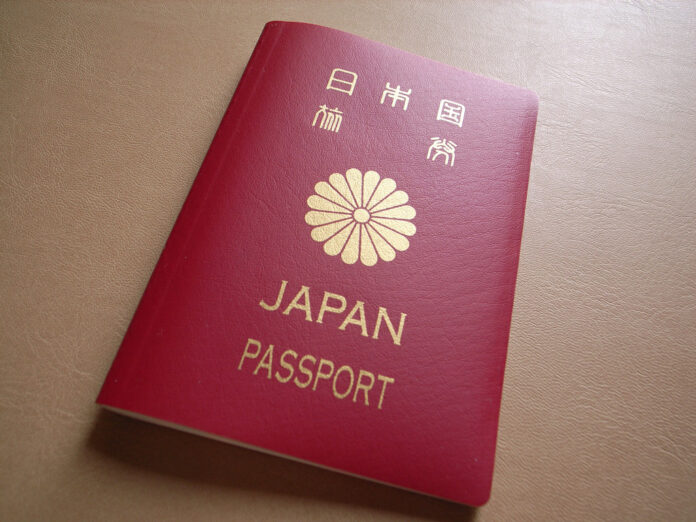
Photo: Toshiyuki IMAI / Flickr

LONDON — Japan has overtaken Singapore to claim the top spot on the 2018 Henley Passport Index, having gained visa-free access to Myanmar this month.

Japan now enjoys visa-free or visa-on-arrival access to 190 destinations, compared to Singapore’s 189. The countries both climbed to 1st place in February, pushing Germany down to 2nd place for the first time since 2014.

Germany now shares 3rd place with South Korea and France. Their nationals enjoy visa-free access to 188 countries. France moved up a place Friday when it gained visa-free access to Uzbekistan. Iraq and Afghanistan continue to sit at the bottom (106th) of the index according to data from the International Air Transport Association.

The US and the UK, both with 186 destinations, slid from 4th to 5th place, with neither having gained access to new jurisdictions since the start of 2018. With stagnant outbound visa activity compared to Asian high-performers.

The United Arab Emirates made the most remarkable ascent, from 62nd place in 2006 to 21st place this year. the most dramatic climb could come from Kosovo, which officially met all the criteria for visa-liberalization with the EU in July and is now in discussions with the European Council.

Thailand ranked 68th, with visa-free or visa-on-arrival access to 77 countries.

Russia received a boost in September when Taiwan announced a visa-waiver, but the country nonetheless fell from 46th to 47th place due to movements higher up the ranking. The same is true of China: Chinese nationals obtained access to two new jurisdictions (St. Lucia and Myanmar), but the Chinese passport fell two places, to 71st overall.

Christian H. Kälin, Group Chairman of the index, said countries with citizenship-by-investment, or CBI, programs all fall within the top 50 of the index. Newcomer Moldova, due to launch its CBI program in November, climbed 20 places since 2008.

Advertisement

Seoul Says Kim Jong Un Wants Pope Francis to Visit N Korea

Pope Francis delivers his weekly address in 2015 in St. Peter's Square in the Vatican City. Photo: EPA / Ettore Ferrari

SEOUL, South Korea — North Korean leader Kim Jong Un wants Pope Francis to visit the officially atheist country, South Korea said Tuesday.

South Korea’s presidential office said in a statement that Kim told President Moon Jae-in during their summit last month that the pope would be “enthusiastically” welcomed in North Korea.

Kim has been intensely engaged in diplomacy in recent months in what’s seen as an effort to leverage his nuclear weapons program for an easing of economic sanctions and military pressure.

North Korea strictly controls the religious activities of its people, and a similar invitation for then-Pope John Paul II to visit after a 2000 inter-Korean summit never resulted in a meeting. The Vatican insisted at the time that a papal visit would only be possible if Catholic priests were accepted in North Korea.

Moon plans to convey Kim’s desire for a papal visit when he travels to the Vatican next week. Moon said on Monday that he expects Kim to visit Russia soon and possibly hold a summit with Japanese Prime Minister Shinzo Abe.

Moon did not comment on the likelihood of a papal visit.

Following an unusually provocative run of weapons tests last year, Kim has been on a diplomatic offensive since the start of this year.

He initiated offers for summits with Seoul and Washington, which led to three meetings with Moon and a highly choreographed June summit with U.S. President Donald Trump at which they issued an aspirational goal of a nuclear-free peninsula, without describing how or when it would occur.

Kim has presented himself as an international statesman, sharing food, wine and laughs with South Korean officials and appearing thoroughly at ease during his meeting with Trump in Singapore.

But post-summit nuclear negotiations between North Korea and the United States got off to a rocky start, with the North accusing Washington of making “gangster-like” unilateral demands for denuclearization, and calling for sanctions to be lifted before any further progress in nuclear talks.

There are doubts whether Kim is willing to fully relinquish his country’s nuclear weapons, which he may see as a stronger guarantee of survival than whatever security assurances the United States could provide.

U.S. Secretary of State Mike Pompeo visited Kim in Pyongyang, North Korea’s capital, on Sunday for talks on setting up a second summit with Trump.

The Vatican’s priests were expelled by North Korea long ago and state-appointed laymen officiate services.

Estimates of the number of North Korean Catholics range from 800 to about 3,000, compared to more than 5 million in South Korea.

Story: Kim Tong-hyung

Advertisement

Hot News

LATEST NEWS

Bangkok
overcast clouds
29.4 ° C
29.4 °
28.8 °
67 %
2.4kmh
100 %
Wed
35 °
Thu
32 °
Fri
33 °
Sat
34 °
Sun
33 °