32.5 C
Bangkok
Wednesday, July 22, 2026
Home Blog Page 1859

Slurp Bouncy Bua Loi Drinks at New Downtown Bangkok Cafe

A cup of purple potato milk topped with purple potato and sweet potato balls (฿75). The bua loi on top are stuffed with black sesame, purple potato, sweet potato and salted egg custard.

BANGKOK — Taiwanese potato and taro ball desserts aren’t novel to Thailand, but a new cafe at the heart of the capital is plopping Thai desserts with generous stuffings onto them.

Dessert cafes serving shaved ice topped with potato and taro balls have opened citywide the past year – but Klom Dessert House is among the newer ones that also incorporates Thai desserts – specifically, bua loi, or stuffed glutinous rice balls.

“When I went to Taiwan and saw desserts there, I saw that they also had Thai herbs. I thought I could incorporate them,” 32-year-old shop owner Kanokporn Maythawee said.

Cups of Thai tea, green tea, milk or ginger tea are topped with chewy house-made balls, or tubes, with sweet and purple potato. The bua loi have four stuffings: traditional black sesame, sweet potato, purple potato and the delightfully gooey, runny salted egg custard (฿55 to ฿75).

The bua loi are stuffed to the brim – the sesame a fragrant and dry rub instead of a black goopy mess – with the balls stingy on the flour and generous on the filling.

DSCF3593
Bua loi with purple potato, sweet potato and black sesame stuffings.

“The tubes have just a bit of flour to help them stick together. I would say they’re made of 90 percent potato. There are six people on my team making them every day,” Kanokporn said. “We grind and roast the sesame and boil the salted egg ourselves.”

Nothing is too sweet and the bua loi’s textures and balls are a delight with milk or ginger. Drinks aside, there are also bua loi served with dango (Japanese rice flour dumplings on a skewer), rolled in black sesame (฿69 to ฿89), with bingsu (฿99) or just the rice balls on their own (฿45 to ฿75.) To be accurate, the cafe serves a hybrid of Taiwanese, Thai, Korean and Japanese desserts.

DSCF3600
A set with bua loi in ginger tea and dango (฿69).

However, drinks are heavy on the ice as well as single-use plastic straws and spoons.

In Taiwan, taro and potato ball desserts are usually served in hot ginger tea or baobing shaved ice with or without grass jelly. Thai cafes adapting the dessert usually serve the purple and sweet potato balls over ice with sweet, cold milk.

DSCF3599
Thai tea topped with potato balls and bua loi (฿75).

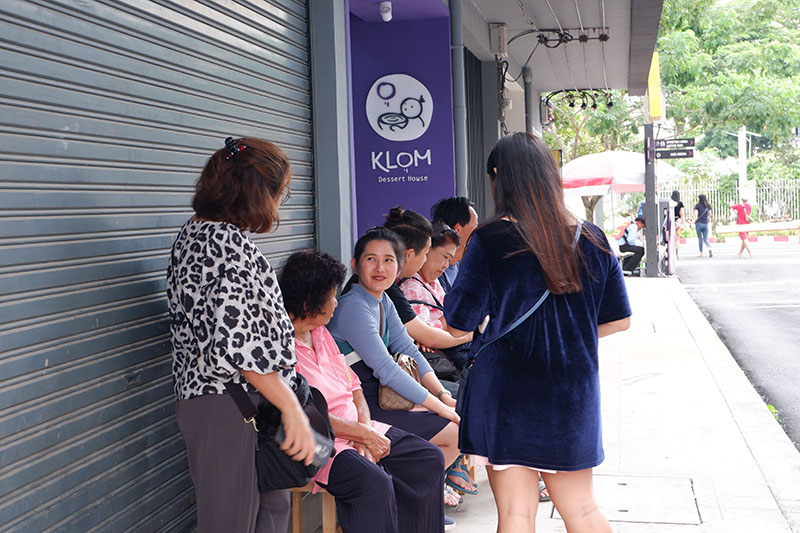
Although prices are friendly and snacks are chewy, the dessert house – open for less than two weeks – is stuffed with food bloggers and curious cafe-hoppers. Wait until the hype dies down before heading over to avoid crowds. The new branch is located in Stadium One outdoor shopping complex, while the first, which opened in July 2017 is in Bang Na.

Klom Dessert House is located within Stadium One complex on Banthat Thong Road, or a walk from BTS National Stadium. It’s open Monday to Friday from 1pm to midnight, and 11:30am to midnight on weekends.

DSCF3608
Kanokporn Maythawee, 32.
DSCF3599
Thai tea topped with potato balls and bua loi (฿75).

DSCF3602 DSCF3596 DSCF3604 DSCF3614

Advertisement

Mahidol Becomes Top Thai Uni in Times 2019 Global Rankings

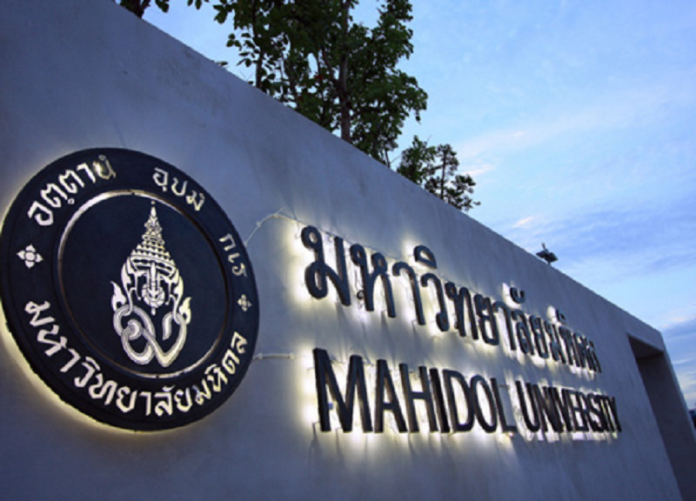
An undated photo of a Mahidol University sign. Photo: Matichon

BANGKOK — Five Thai universities are among the world’s top 1,000 according to this year’s Times Higher Education World University Rankings.

Mahidol University ranked the highest in the country and was classed in the world’s top 601 to 800, while Chulalongkorn University, Suranari Technology University, Chiang Mai University and King Mongkut’s University of Technology Thonburi made the 801 to 1,000 bracket.

Thammasat University, Khon Kaen University, Srinakharinwirot University, Kasetsart University and six other Thai universities were ranked outside the top 1,000.

Mahidol received an overall score of 32.92 out of 100. It scored 29.1 percent for teaching quality, while Chulalongkorn University and Chiang Mai University received 28.9 points and 19.8 points respectively.

Chulalongkorn University topped Thai universities on research, with 20.5 percent, while Mahidol scored 18.2 compared to Chiang Mai University’s 13.6.

Mahidol’s academic papers were the most cited among Thai universities and received a score of 44.8 percent, while Chulalongkorn University scored 20.4 percent. Mahidol also topped the industrial income score.

Mahidol scored 45.6 percent on International Outlook, followed by Chulalongkorn University at 38.4 percent.

In Southeast Asia, the best university was National University of Singapore, or NUS, which ranked No. 23 worldwide.

In Asia, the report noted that Japan has overtaken the United Kingdom as the second most-represented nation in the world, with 103 institutions compared to 93.

At the top of the chart were the English universities of Oxford and Cambridge respectively. The rest were American, with Stanford University at No. 3, Massachusetts Institute of Technology at No. 4 and California Institute of Technology at No. 5. Harvard University came sixth, followed by Princeton University.

“This year’s list of the best universities in the world is led by the University of Oxford and the University of Cambridge for the second year in a row. Yale University is the only newcomer to the top 10, joining at eight place. Tsinghua University is now the top university in Asia, after rising eight places to 22nd, becoming the first Chinese institution to lead the continent under the current methodology since 2010,” the online report said. The University of Tokyo came at No. 42 while Seoul National University ranked 63rd.

The report also noted the rapid rise of Chinese institutions.

“The data also shows that the average teaching reputation score for China’s 10 leading universities is now on par with the best higher education institutions in the UK and Germany, while China’s average research reputation score among this group is higher than that for the best-performing institutions in both France and Australia.”

Advertisement

Bangkok Gunfight Kills Tourist Near Mall

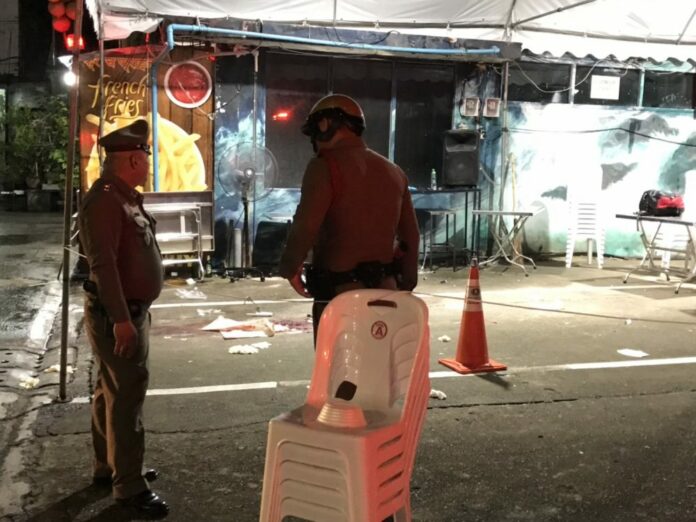
Police officers Sunday night at the shooting scene near a shopping mall central Bangkok.

BANGKOK — Police on Monday were looking for the shooters who killed a tourist in a street gunfight in central Bangkok.

Police said the incident occurred at about 8:30pm on Sunday at a parking lot of the Watergate Pavillion shopping mall in Ratchathewi district. The Indian victim died in a hospital after being caught in the crossfire.

Update: 1 Arrested in Parking Lot Shootout That Killed Tourist

Four others – two Thais, an Indian and a Laotian – were also injured by stray bullets. All were hospitalized.

Maj. Gen. Senit Samramrat, metro police division 1 commander, said investigators found rounds of handguns and assault-rifle shells nearby, adding that a preliminary investigation suggested a gunfight between street gangs.

Julie Sawangarun, a mall tour guide, told police a group of Indian tourists were about to get into a bus after dinner at the mall when about 20 teenagers holding guns, knives and wooden sticks ran out of a bar into an alley next to the scene. She said three other men with rifles followed them and started shooting toward where the tourists were waiting.

Correction: The previous version of this article said two foreigners were killed and five people injured. In fact, an Indian tourist died and four others were injured.

Advertisement

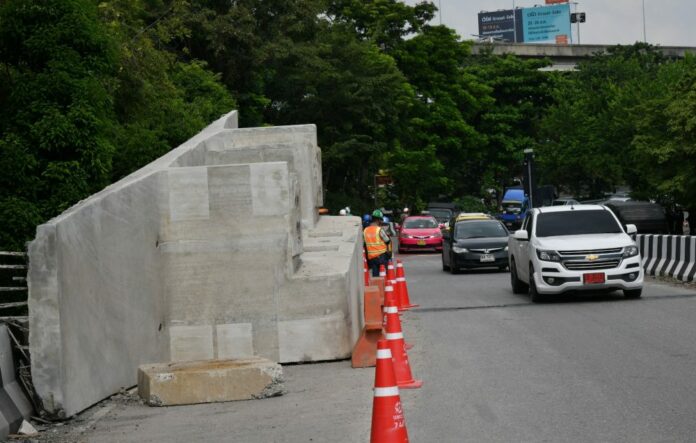
Skytrain Concrete Slab Slips, Falls on Road

The slab blocking a traffic lane on Ratchavipha flyover Monday morning

BANGKOK — Police said a truck driver was charged Monday with reckless driving for a large concrete barrier that fell from his vehicle last night.

Pradit Jobdee, 44, was transporting a slab for a railway construction site in northern Bangkok when it crashed at about 1:30am onto Ratchavipha flyover. A local police chief said officers are investigating the accident.

“It could have been carelessness of the driver, or the chain was too loose,” Col. Itthichet Wonghomhuan said from the site of the accident, where he said traffic officers were trying to ease congestion.

No one was hurt, police said. Pradit was fined 1,000 baht for the incident, though Itthichet said the company that operated the truck – Unique Engineering – might also be liable.

The slab was bound for the construction site for the Red Line elevated railway.

Related stories:

Green Line Construction Crane Topples on Phahonyothin Road

Advertisement

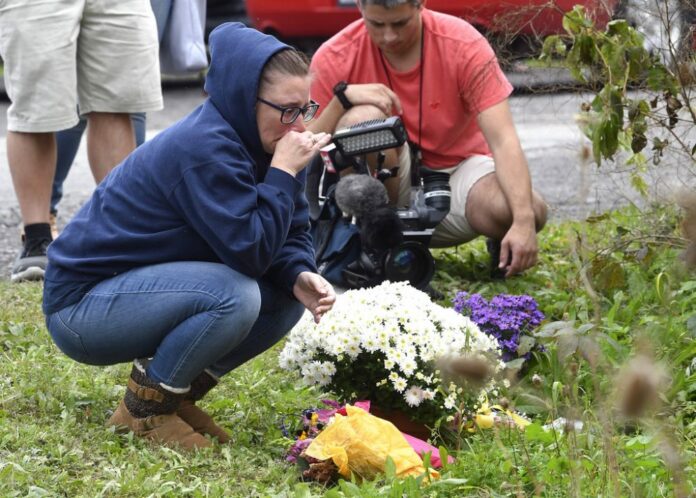
20 Dead in Crash of Limo Headed to a Birthday Celebration

A woman kneels after placing flowers, Sunday at the scene where 20 people died as the result of a limousine crashing into a parked and unoccupied SUV at an intersection a day earlier, in Schoharie, N.Y. Photo: Hans Pennink / Associated Press

SCHOHARIE, N.Y. — A limousine carrying four sisters, other relatives and friends to a birthday celebration blew through a stop sign and slammed into a parked SUV outside a store in upstate New York, killing all 18 people in the limo and two pedestrians, officials and victims’ relatives said Sunday.

The weekend crash was characterized by authorities as the deadliest U.S. transportation accident in nearly a decade. The crash turned a relaxed Saturday afternoon to horror at a rural spot popular with tourists viewing the region’s fall foliage. Relatives said the limousine was carrying the sisters and their friends to a 30th birthday celebration for the youngest.

“They were wonderful girls,” said their aunt, Barbara Douglas, speaking with reporters Sunday. “They’d do anything for you and they were very close to each other and they loved their family.”

Douglas said three of the sisters were with their husbands, and she identified them as Amy and Axel Steenburg, Abigail and Adam Jackson, Mary and Rob Dyson and Allison King.

“They did the responsible thing getting a limo so they wouldn’t have to drive anywhere,” she said, adding the couples had several children between them who they left at home.

The 2001 Ford Excursion limousine was traveling southwest on Route 30 in Schoharie, about 170 miles (270 kilometers) north of New York City, when it failed to stop at 2 p.m. Saturday at a T-junction with state Route 30A, State Police First Deputy Superintendent Christopher Fiore said at a news conference in Latham, New York.

It went across the road and hit an unoccupied SUV parked at the Apple Barrel Country Store, killing the limousine driver, the 17 passengers, and two people outside the vehicle.

The crash “sounded like an explosion,” said Linda Riley, of nearby Schenectady, who was on a shopping trip with her sisters. She had been in another car parked at the store, saw a body on the ground and heard people start screaming.

The store manager, Jessica Kirby, told The New York Times the limo was coming down a hill at “probably over 60 mph.” In an email to The Associated Press, she complained that the junction where the crashed occurred is accident-prone.

“We have had 3 tractor trailer type trucks run through the stop through our driveway and into a field behind the business,” Kirby wrote. “All of these occurred during business hours and could’ve killed someone then.”

She added that the state Department of Transportation has banned heavy trucks from the intersection but there are constant smaller crashes. “More accidents than I can count.”

The National Transportation Safety Board is investigating.

“This is one of the biggest losses of life that we’ve seen in a long, long time,” NTSB Chairman Robert Sumwalt said.

It’s the deadliest transportation accident since February 2009, when Colgan Air Flight 3407 crashed near Buffalo, New York, killing 50 people, Sumwalt said.

And it appears to be the deadliest land-vehicle accident since a bus ferrying nursing home patients away from Hurricane Rita caught fire in Texas 2005, killing 23.

At the news conference, Fiore didn’t comment on the limo’s speed, or whether the limo occupants were wearing seat belts. Authorities didn’t release the names of the victims or speculate on what caused the limo to run the stop sign. Autopsies were being conducted.

Speaking through tears on the telephone, Valerie Abeling said her 34-year-old niece Erin Vertucci was among the victims, along with Vertucci’s newlywed husband, 30-year-old Shane McGowan.

“She was a beautiful, sweet soul; he was too,” Abeling said.

The couple was married in June at a “beautiful wedding” in upstate New York, Abeling said. “They had everything going for them.”

Vertucci, who grew up in Amsterdam, New York, was an administrative assistant at St. Mary’s Healthcare in Amsterdam, Abeling said.

The vehicle was an after-market stretch limousine, according to an official briefed on the matter who spoke on condition of anonymity. The official was not authorized to discuss an ongoing investigation publicly and thus declined further identification.

Safety issues on such vehicles have arisen before, most notably after a wreck on Long Island in July 2015 in which four women on a winery tour were killed. They were in a Lincoln Town Car that had been cut apart and rebuilt in a stretch configuration to accommodate more passengers. The limousine was trying to make a U-turn and was struck by a pickup.

A grand jury found that vehicles converted into stretch limousines often don’t have safety measures including side-impact air bags, reinforced rollover protection bars and accessible emergency exits. That grand jury called on New York Gov. Andrew Cuomo to assemble a task force on limousine safety.

Limousines built in factories are already required to meet stringent safety regulations, but when cars are converted into limos, safety features are sometimes removed, leading to gaps in safety protocols, the grand jury wrote.

On Sunday, New York’s senior U.S. Sen., Chuck Schumer, noted he asked NTSB to toughen standards after the 2015 crash. “I commend the NTSB’s immediate aid on scene and am very hopeful that we will have concrete answers soon,” Schumer said.

Limousine accidents remain rare, according to NHTSA data. They accounted for only one death crash out of 34,439 fatal accidents in 2016, the last year for which data is available.

Cuomo on Sunday released a statement saying, “My heart breaks for the 20 people who lost their lives in this horrific accident on Saturday in Schoharie. I commend the first responders who arrived on the scene and worked through the night to help … I have directed state agencies to provide every resource necessary to aid in this investigation and determine what led to this tragedy.”

Advertisement

Govt Official Among 12 Charged With Poaching in Kanchanaburi

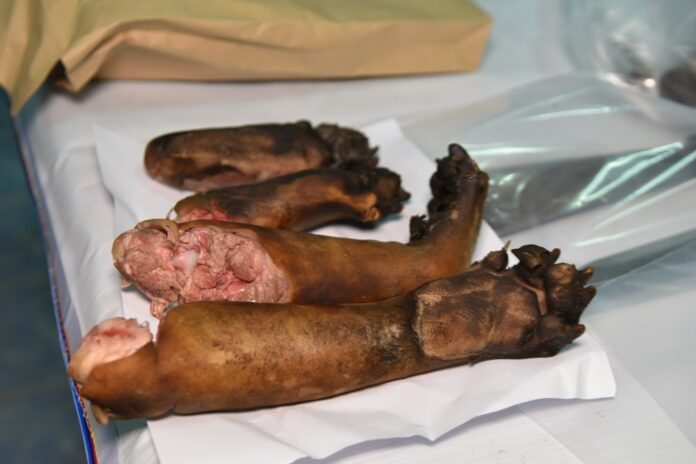
KANCHANABURI — Twelve people were arrested Sunday and charged with poaching after they were found with hunting gear and severed bearcat limbs.

Panatchakorn Phobandit, chief of Sai Yok National Park, led a troupe of rangers to arrest 12 people travelling in a caravan of six off-road vehicles in Kanchanaburi province. Among the suspects is Watcharachai Sameerak, permanent secretary of a provincial district.

The search found a rifle, two pistols, ammunition and hacked bearcat paws.

Watcharachai denied that he and the other 11 visited the park to kill wildlife. He told officers that the group intended to make merit at a monastery and stay overnight.

Watcharachai said the bearcat paws belonged to a member of the group who bought them.

Jirakiat Bhumisawat, Kanchanaburi governor, said that if Watcharachai – a government officer – is found guilty, he would be dismissed.

Earlier this year, Italian-Thai Development president Premchai Karnasuta and three other men were arrested in the Thungyai Naresuan Wildlife Sanctuary in the same province. They were found at a campsite in possession of two rifles, a double-barrelled shotgun, various bullets, the body of a Kalij pheasant, a muntiacini deer carcass, a skinned and salted black leopard and a black panther skull.

The case against Premchai is ongoing.

Related stories:

Italian-Thai President Charged With Poaching Wild Animals

Advertisement

Romania: Weak Voter Turnout Voids Gay Marriage Referendum

A priest exits a voting booth Saturday in Bucharest, Romania. Photo: Andreea Alexandru / Associated Press

BUCHAREST, Romania — A referendum aimed at putting same-sex marriage further out of reach in Romania was invalidated Sunday after a quick tally showed too few voters cast ballots, election officials said.

The weekend vote on a constitutional amendment that would have changed the definition of family to make marriage a union between a man and a woman instead of between “spouses” required voter turnout of at least 30 percent for the result to stand.

Election officials said after polls closed that only 20.41 of eligible voters participated. The turnout threshold never was close to being reached all day, a trend that gay rights group Accept said showed citizens “want a Romania based upon democratic values.”

“We have shown that we cannot be fooled by a political agenda that urges us to hate and polarize society,” the group said in a statement before the turnout number was final.

Marriage statutes already prohibit same-sex marriage in Romania. The conservative Coalition for Family spearheaded the referendum with a signature petition, arguing that any ambiguity in the constitution needed to be eliminated.

The group conceded defeat before the overall turnout from two days of balloting was announced late Sunday.

“Next time, we’ll succeed,” Coalition for Family spokesman Mihai Gheorghiu said. “Let’s be happy for this day. The Christian vote exists.”

Earlier in the day, the group issued a statement blaming the lack of enthusiasm among voters on what it called “a massive disinformation campaign” by the media, politicians and local governments.

It alleged “a general boycott by all political parties” that was “primarily directed against the Christians of Romania.”

The influential Romanian Orthodox Church backed the amendment. Concerned about the low turnout, Patriarch Daniel urged Romanians earlier Sunday to “vote before it’s too late.”

“We call on you to vote, to have this honor, to demonstrate this freedom and right,” he was quoted as saying in a statement on the news website of the Romanian church.

Opponents argued the new constitutional language could make LGBT people feel more like second-class citizens and make other non-traditional families targets of discrimination.

In the village of Adunati-Copaceni, south of Bucharest, the capital, only 62 people had voted by midmorning out of a total electorate of 1,147.

Priests leading services at St. Mary’s Church encouraged the congregation to vote. Retired farmer Ana Buturgianu, 69, said she’d heed the advice, as did Andrei Aurelian, a 53-year-old cashier.

“The vote is for us and for our children. It’s normal to have a man and a woman, not two men together,” Aurelian said.

But Bucharest resident Marin Soare, 50, who was cycling through the village Sunday, boycotted the referendum, calling it “a waste of money.”

“We already have traditional families in Romania and have done so for 2,000 years,” he said. “And there’s always been same-sex relationships.”

Story: Alison Mutler

Advertisement

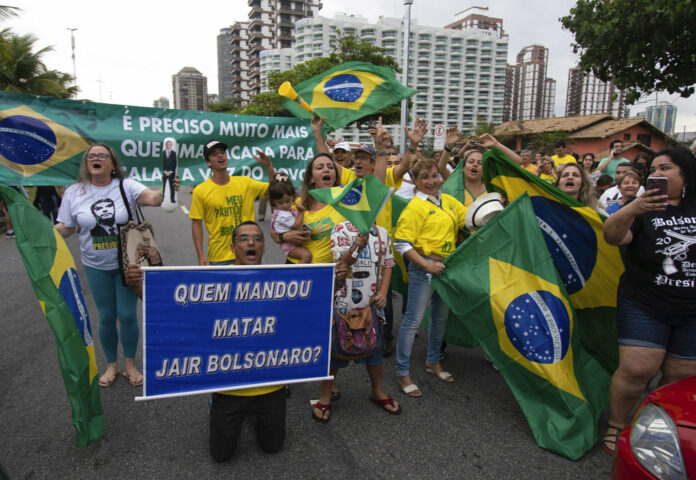
Brazil’s Far-Right Candidate Falls Short of Election Stunner

Supporters of Jair Bolsonaro, presidential candidate with the Social Liberal Party, gather in front of his house after general elections Sunday in Rio de Janeiro, Brazil. Photo: Ricardo Borges / Associated Press

SAO PAULO — A far-right former army captain who expresses nostalgia for Brazil’s military dictatorship won the first round of its presidential election by a surprisingly large margin Sunday but fell just short of getting enough votes to avoid a runoff against a leftist rival.

Jair Bolsonaro, whose last-minute surge almost gave him an electoral stunner, had 46 percent compared to 29 percent for former Sao Paulo Mayor Fernando Haddad, according to figures from Brazil’s Superior Electoral Tribunal with 99.9 percent of the vote counted. He needed over 50 percent support to win outright.

Polls predicted Bolsonaro would come out in front on Sunday, but he far outperformed expectations, blazing past competitors with more financing, institutional backing of parties and free air time on television.

Despite the sizable victory, polls have shown the two candidates are neck-and-neck for the Oct. 28 runoff, and much could shift in the coming weeks. Two other candidates, one center-left and one center-right, said they would decide in the coming days if they would endorse anyone.

Ultimately, Bolsonaro’s strong showing reflects a yearning for the past as much as a sign of the future. The candidate from the tiny Social and Liberal Party made savvy use of Twitter and Facebook to spread his message that only he could end the corruption, crime and economic malaise that has seized Brazil in recent years – and bring back the good old days and traditional values.

“This is a victory for honest people, who want the best for Brazil,” said Bianca Santos, 40-year-old psychologist, who added Bolsonaro would end high crime rates.

Brazil is the largest economy in Latin America and it is a diplomatic heavyweight in the region. Bolsonaro has promised to shake up its foreign policy, including taking a harder line on Venezuela and other leftist regimes and forging closer ties with the United States. He won over many foreign investors by promising smaller government and a more open economy.

But the election largely turned on domestic matters, on which Bolsonaro has alienated nearly as many people as he has attracted. Many fear what Brazil will look like if he wins.

Barbara Aires, a transgender woman who unsuccessfully ran for Rio de Janeiro state representative, said Bolsonaro’s first-round victory represented a “step backward” that could lead to “taking back rights and more violence toward the LGBT community.”

The two candidates have painted starkly different visions of the country’s past and future.

Bolsonaro has portrayed a nation in collapse, where drug traffickers and politicians steal with equal impunity, and moral rot has set in. He has advocated loosening gun ownership laws so individuals can fight off criminals, giving police a freer hand to use force and restoring “traditional” Brazilian values – though some take issue with his definition of those values in light of his approving allusions to the 1964-1985 dictatorship and his derisive comments about women, blacks and gay people.

He once told a fellow congresswoman that she was too ugly for him to rape and said that he would not be able to love a gay son.

While those comments have disgusted many, Bolsonaro has capitalized on Brazilians’ deep anger with their traditional political class and “throw the bums out” rage after a massive corruption investigation revealed staggering levels of graft.

Beginning in 2014, prosecutors alleged that Brazil’s government was run like a cartel for years, with billions of dollars in public contracts handed out in exchange for kickbacks and bribes.

Revelations of suitcases of cash, leaked recordings of incriminating exchanges between powerbrokers and the jailing of some of the of the country’s most powerful people, including da Silva, unfolded like a Hollywood script – and then became one: Netflix released a (barely) fictionalized account of the probe this year.

The Workers’ Party was at the center of that investigation, and many have turned to Bolsonaro as a tactic to keep the party out of office.

“I voted against thievery and corruption,” said Mariana Prado, a 54-year-old human resources expert. “I know that everyone promises to end these two things, but I feel Bolsonaro is the only one can help end my anxieties.”

Meanwhile, the party has struggled to stage a comeback with Haddad after da Silva was barred from running. He has said that many of the allegations against Workers’ Party politicians are political persecution and portrayed a country hijacked by an elite that will protect its privileges at all costs and can’t bear to see the lives of poor and working class Brazilians improve.

Haddad has promised to roll back President Michel Temer’s economic reforms that he says eroded workers’ rights, increase investment in social programs and bring back the boom years Brazil experienced under his mentor, da Silva.

Bolsonaro’s poll numbers jumped after he was stabbed during a campaign event on Sept. 6. He was unable to campaign or participate in debates as he underwent surgeries during a three-week hospital stay, but instead brought messages directly to voters via Facebook and Twitter.

“For a front-runner, the best thing to do is commit as few errors as possible,” said Andre Portela from Getulio Vargas Foundation, a leading university and think tank. “Getting stabbed helped Bolsonaro in that. He wasn’t exposed to debate, to people questioning him.”

The campaign to run Latin America’s largest economy, which is a major trade partner for countries in the region, has been unpredictable and tense. Da Silva led initial polls by a wide margin, but was banned from running after a corruption conviction. Bolsonaro’s stabbing forced candidates, and Bolsonaro himself, to shift strategies and recalibrate.

All along, Brazilians have said their faith in leaders and their hopes for the future are waning.

This election was seen as the great hope for ending a turbulent era in which many politicians and business executives were jailed on corruption charges, a president was impeached and removed from office in controversial proceedings, and the region’s largest economy suffered a protracted recession.

Instead, the two front-runners merely reflect the rabid divisions that have opened up in Brazilian politics following former President Dilma Rousseff’s impeachment and the revelations emerging from the “Car Wash” graft probe.

Caught in the middle are Brazilians who dislike both candidates and see them as symbols of a broken system.

“I think we’re going to continue with the same polarization,” if either Haddad or Bolsonaro wins, said Victor Aversa, a 27-year-old massage therapist who voted for center-left candidate Ciro Gomes, who had been polling third. “We’ve been on this path of crazy bipolarity. Haddad and Bolsonaro will both lead populist governments.”

Story: Sarah Dilorenzo, Mauricio Savarese, Peter Prengaman

Advertisement

UN Report on Global Warming Carries Life-or-Death Warning

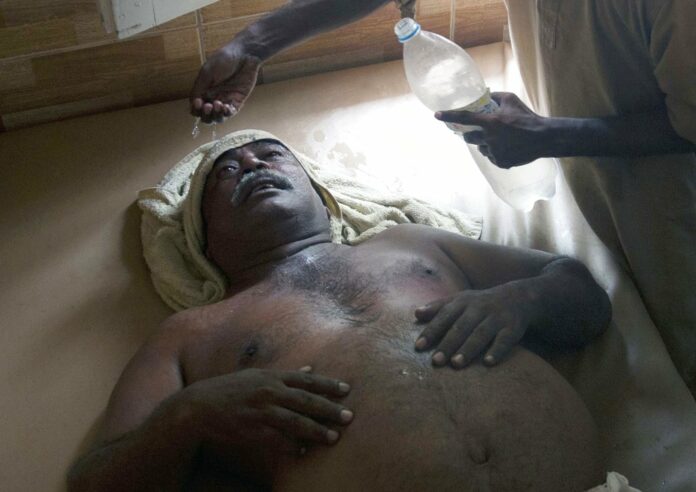
A Pakistani boy sprinkles water on his father who is suffering from heatstroke in 2015 in Karachi, Pakistan. Photo: Shakil Adil / Associated Press

WASHINGTON — Preventing an extra single degree of heat could make a life-or-death difference in the next few decades for multitudes of people and ecosystems on this fast-warming planet, an international panel of scientists reported Sunday. But they provide little hope the world will rise to the challenge.

The Nobel Prize-winning Intergovernmental Panel on Climate Change issued its gloomy report at a meeting in Incheon, South Korea.

In the 728-page document, the U.N. organization detailed how Earth’s weather, health and ecosystems would be in better shape if the world’s leaders could somehow limit future human-caused warming to just 0.9 degrees Fahrenheit (a half degree Celsius) from now, instead of the globally agreed-upon goal of 1.8 degrees F (1 degree C). Among other things:

— Half as many people would suffer from lack of water.

— There would be fewer deaths and illnesses from heat, smog and infectious diseases.

— Seas would rise nearly 4 inches (0.1 meters) less.

— Half as many animals with back bones and plants would lose the majority of their habitats.

— There would be substantially fewer heat waves, downpours and droughts.

— The West Antarctic ice sheet might not kick into irreversible melting.

— And it just may be enough to save most of the world’s coral reefs from dying.

“For some people this is a life-or-death situation without a doubt,” said Cornell University climate scientist Natalie Mahowald, a lead author on the report.

Limiting warming to 0.9 degrees from now means the world can keep “a semblance” of the ecosystems we have. Adding another 0.9 degrees on top of that – the looser global goal – essentially means a different and more challenging Earth for people and species, said another of the report’s lead authors, Ove Hoegh-Guldberg, director of the Global Change Institute at the University of Queensland, Australia.

But meeting the more ambitious goal of slightly less warming would require immediate, draconian cuts in emissions of heat-trapping gases and dramatic changes in the energy field. While the U.N. panel says technically that’s possible, it saw little chance of the needed adjustments happening.

In 2010, international negotiators adopted a goal of limiting warming to 2 degrees C (3.6 degrees F) since pre-industrial times. It’s called the 2-degree goal. In 2015, when the nations of the world agreed to the historic Paris climate agreement, they set dual goals: 2 degrees C and a more demanding target of 1.5 degrees C from pre-industrial times. The 1.5 was at the urging of vulnerable countries that called 2 degrees a death sentence.

The world has already warmed 1 degree C since pre-industrial times, so the talk is really about the difference of another half-degree C or 0.9 degrees F from now.

“There is no definitive way to limit global temperature rise to 1.5 above pre-industrial levels,” the U.N.-requested report said. More than 90 scientists wrote the report, which is based on more than 6,000 peer reviews.

“Global warming is likely to reach 1.5 degrees C between 2030 and 2052 if it continues to increase at the current rate,” the report states.

Deep in the report, scientists say less than 2 percent of 529 of their calculated possible future scenarios kept warming below the 1.5 goal without the temperature going above that and somehow coming back down in the future.

The pledges nations made in the Paris agreement in 2015 are “clearly insufficient to limit warming to 1.5 in any way,” one of the study’s lead authors, Joerj Roeglj of the Imperial College in London, said.

“I just don’t see the possibility of doing the one and a half” and even 2 degrees looks unlikely, said Appalachian State University environmental scientist Gregg Marland, who isn’t part of the U.N. panel but has tracked global emissions for decades for the U.S. Energy Department. He likened the report to an academic exercise wondering what would happen if a frog had wings.

Yet report authors said they remain optimistic.

Limiting warming to the lower goal is “not impossible but will require unprecedented changes,” U.N. panel chief Hoesung Lee said in a news conference in which scientists repeatedly declined to spell out just how feasible that goal is. They said it is up to governments to decide whether those unprecedented changes are acted upon.

“We have a monumental task in front of us, but it is not impossible,” Mahowald said earlier. “This is our chance to decide what the world is going to look like. ”

To limit warming to the lower temperature goal, the world needs “rapid and far-reaching” changes in energy systems, land use, city and industrial design, transportation and building use, the report said. Annual carbon dioxide pollution levels that are still rising now would have to drop by about half by 2030 and then be near zero by 2050. Emissions of other greenhouse gases, such as methane, also will have to drop. Switching away rapidly from fossil fuels like coal, oil and gas to do this could be more expensive than the less ambitious goal, but it would clean the air of other pollutants. And that would have the side benefit of avoiding more than 100 million premature deaths through this century, the report said.

“Climate-related risks to health, livelihoods, food security, water supply, human security and economic growth are projected to increase with global warming” the report said, adding that the world’s poor are more likely to get hit hardest.

Princeton University climate scientist Michael Oppenheimer said extreme weather, especially heat waves, will be deadlier if the lower goal is passed.

Meeting the tougher-to-reach goal “could result in around 420 million fewer people being frequently exposed to extreme heat waves, and about 65 million fewer people being exposed to exceptional heat waves,” the report said. The deadly heat waves that hit India and Pakistan in 2015 will become practically yearly events if the world reaches the hotter of the two goals, the report said.


Coral and other ecosystems are also at risk. The report said warmer water coral reefs “will largely disappear.”

The outcome will determine whether “my grandchildren would get to see beautiful coral reefs,” Princeton’s Oppenheimer said.

For scientists there is a bit of “wishful thinking” that the report will spur governments and people to act quickly and strongly, one of the panel’s leaders, German biologist Hans-Otto Portner said. “If action is not taken it will take the planet into an unprecedented climate future.”

Story: Seth Borenstein

Advertisement

‘Wild Boars’ Play Friendly Match in Argentina

Kapol Jantawong, coach and captain of Thai team Wild Boars, left, fights for the ball Sunday during a friendly soccer match against River Plate Youth Team at Monumental stadium in Buenos Aires, Argentina. Photo: Eitan Abramovich / Associated Press

BUENOS AIRES, Argentina — The 12 boys and football coach who were found in a partially flooded cave in Chiang Rai once again found themselves capturing the media’s attention on Sunday.

The team played a friendly match against the prestigious River Plate youth football team of Argentina – which was somewhat of a dream come true for the young Thais who want to become professional football players.

A day prior, the Wild Boars football team participated in the opening ceremony of the Youth Olympic Games, which are taking place from Oct. 6 to 18 in the South American country.

Thomas Bach, president of the International Olympic Committee, called the boys “brave” and said they “showed us all the importance of sports values.” They were loudly applauded by thousands of people attending the event.

The boys and their coach became well-known after they got trapped in a cave on June 23. They were found by two British divers and brought out in a daring rescue mission that ended on July 10.

Nearly 4,000 athletes between the ages of 15 and 18 will participate in the youth games.

Advertisement

Hot News

LATEST NEWS

Bangkok
overcast clouds
32.5 ° C
33.3 °
31.6 °
59 %
3.1kmh
100 %
Wed
34 °
Thu
32 °
Fri
30 °
Sat
36 °
Sun
35 °