32.8 C
Bangkok
Tuesday, June 16, 2026
Home Blog Page 2061

UN Experts: North Korea Sent Banned Chemical Items to Syria

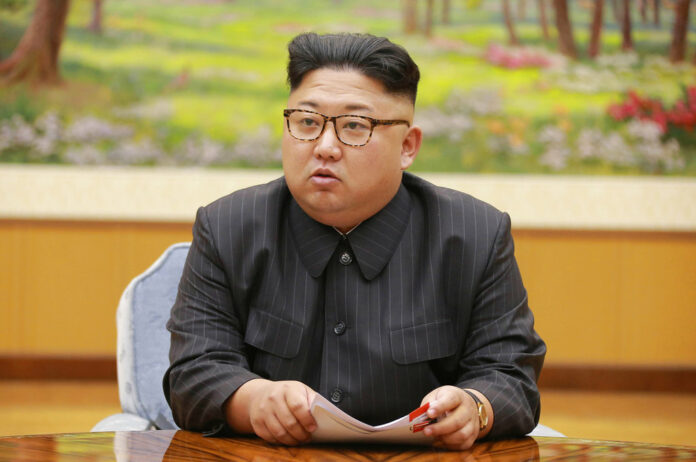
North Korean leader Kim Jong Un holds a meeting of the ruling party's presidium on Sept. 3, 2017. Photo: Korean Central News Agency / Korea News Service

UNITED NATIONS — U.N. experts say North Korea sent items used in ballistic missile and chemical weapons programs to Syria along with missile technicians in violation of U.N. sanctions, and it transferred banned ballistic missiles systems to Myanmar.

The panel of experts monitoring sanctions against North Korea said its investigations into Pyongyang’s transfer of prohibited ballistic missile, conventional arms and dual use goods found more than 40 previously unreported shipments to Syria between 2012 and 2017.

The Associated Press reported on Feb. 2 that according to the experts, North Korea was flouting U.N. sanctions on oil and gas, engaging in prohibited ballistic missile cooperation with Syria and Myanmar, and illegally exporting commodities that brought in nearly USD$200 million in nine months last year.

AP obtained details from the more than 200-page report Tuesday.

Advertisement

Companies Face Mounting Pressure to Pick Sides in Gun Debate

National Rifle Association Executive Vice President and CEO Wayne LaPierre, speaks at the Conservative Political Action Conference (CPAC), Thursday at National Harbor, Maryland. Photo: Jacquelyn Martin / Associated Press

NEW YORK — As the gun debate heats up following the massacre at a Florida high school, companies are under growing pressure to pick a side: whether to stand by the National Rifle Association or walk away.

Metlife, Delta and more than a dozen others have decided to end benefits deals offered to the organization’s members. Others, including FedEx, are staying put. The decision to stay or go for many companies involves walking a fine line that can impact their image for better or worse.

“How well can they position themselves so that they’re being viewed as honest and supportive of what is a national crisis and not walking away from the Second Amendment?,” said Robert Passikoff, president of Brand Keys, a consumer research firm.

The calls for boycotts have been cutting both ways, with gun rights and gun-control supporters threatening to take their dollars elsewhere, depending on a company’s decision.

FedEx is the latest company to respond to consumer pressure, saying it will maintain its discount for NRA members and supports the right to own firearms, but does not believe civilians should own assault rifles.

That response shows the nuances many companies are dealing with in the current debate over guns. Several other companies have also affirmed support for gun rights, but decided to cut ties with the NRA over its positions.

Over the weekend, Delta said it would end its discount rates deal for NRA members’ group travel and requested it be removed from the organization’s website. But, it also said it continues to support the Second Amendment.

Delta’s balancing act in particular sparked a harsh response from Georgia’s Republican Lt. Gov. Casey Cagle. He threatened to use his position to derail the USD$38 million-per-year sales tax exemption on jet fuel that would primarily benefit Delta Air Lines, calling it an attack on conservatives. Delta is based in Atlanta.

The NRA has also pushed back, calling the departure of its corporate partners a “shameful display of political and civic cowardice.”

Other companies that have cut ties with the NRA include First National Bank of Omaha, Hertz, Avis, Budget, Enterprise, Best Western, Wyndham, United Airlines, Chubb, and Starkey Hearing Technology. Still, many others have maintained their relationship, including FedEx and the less-well-known Hotel Planner and eHealth.

The decisions come during an uptick in consumer activism, fueled by social media empowering more people to voice their opinions and values. Companies have become more aware of public sentiment that can be amplified over Twitter and other platforms.

That activist consumer atmosphere  coupled with the Feb. 14 Parkland, Florida, school massacre and the always heated gun-control debate  make this a potentially tricky situation for companies looking to protect their image and bottom line.

“It’s a different communication paradigm than it was five years ago and that’s the thing,” Passikoff said. “The sense of immediacy has increased.”

The boycott movement is not just about image. Companies have to take into account their other constituents, particularly shareholders and whether ties to the NRA will have any impact on their financial performance.

Elliot H. Lutzker, chair of the corporate law practice group at Davidoff Hutcher & Citron LLP, said the boycott movement may have little impact on companies financially. Several of the hospitality firms that have cut ties can figure out just how much of an impact cutting a discount benefit will have and act accordingly.

“It’s really a question of fiduciary duty,” he said.

The real power lies with credit cards and media companies, he said. Specifically in allowing or blocking purchases of firearms and NRA advertisements.

So far, credit card companies have resisted calls by some consumers to limit their cards’ use to purchase guns. Visa said it strives to make its payment services available to everyone within the confines of national and international laws.

“We do not prohibit transactions on our network for the purchase or sale of lawful products and services, including guns in the United States,” the company said in a statement. Other credit card companies did not respond to requests for comment.

Story: Damian J. Troise

Advertisement

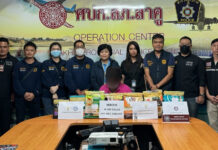
75 Foreigners Arrested in Soi Cowboy Crackdown

BANGKOK — More than 70 foreigners were arrested early Wednesday morning after police raided a red light district in the capital.

Police arrested 75 foreign nationals at about 1am in Soi Cowboy, charging them with overstaying their visas and illegally entering and working in Thailand.

The foreigners included Ugandan, Sudanese, Bangladeshi, Indian and Cambodian nationals.

Tourist Police Deputy Commissioner Maj. Gen. Surachet Hakpal said most foreigners entered the country with tourist visas, and illegally worked as English teachers, missionaries or soccer players.

On Feb. 1, police arrested 10 nationals from India and African countries for various offenses at the Nana Hotel in Soi Sukhumvit 4, during a “raid on colored people” which police have called “Operation Black Eagle.”

Related stories:

Africans, Indians Arrested in Latest Raid on ‘Black People’ (Video)

Advertisement

Trolling, DC-Style: Russian Embassy Gets a New Street Name

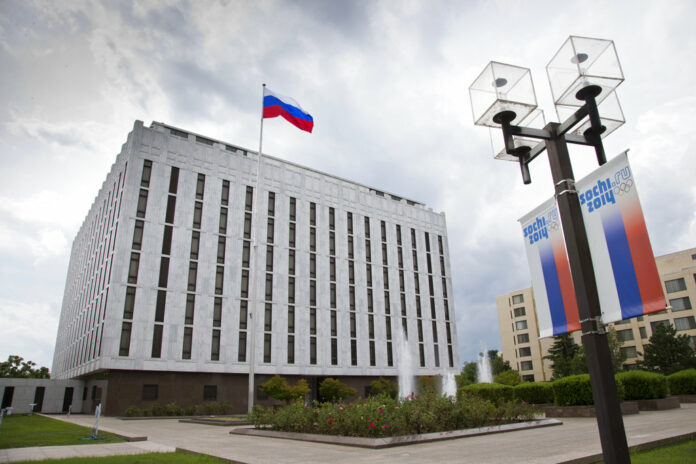
A portion of the Russian Embassy complex in 2013 in Washington. Photo: J. Scott Applewhite / Associated Press

WASHINGTON — The Russian Embassy in Washington has a new address, at least symbolically.

A one-block section of Wisconsin Avenue directly in front of the embassy was officially renamed Boris Nemtsov Plaza on Tuesday, in what amounts to a D.C.-sponsored effort to troll the Russian government.

A former deputy prime minister, Nemtsov became an opposition activist and vocal public critic of President Vladimir Putin. He was shot dead while walking on a bridge near the Kremlin three years ago.

The move to rename the street started in the U.S. Congress at the urging of Sen. Marco Rubio, R-Fla., and others.

“This serves as an enduring reminder to Vladimir Putin and those who support him that they cannot use murder and intimidation to suppress dissent,” Rubio said.
Such politicized street-naming games are not new to Washington. In recent years, there have been moves to name the street on which China’s embassy is located after famed Chinese dissident and Nobel Peace laureate Liu Xiaobo, who died in prison in 2017. Members of Congress have also supported a similar effort to rename a portion of the road that is home to Cuba’s embassy after Oswaldo Paya, a pro-democracy activist who died in a 2012 car accident that some believe may have been set up by the Cuban government.

And this isn’t even the first time that Russia has been targeted by provocative street naming. Back in the Cold War days, when what was then the Soviet embassy was located on 16th Street, the city named a portion of the street after famed dissident Andrei Sakharov.

The United States is not alone in such trolling. There is a long history of both national and municipal governments trying to score political points by renaming streets to irritate other countries.

During the Vietnam War, India renamed the street where the U.S. consulate in Kolkata is located after North Vietnamese leader Ho Chi Minh. Iran and Egypt had no diplomatic ties for decades, and only restored them after Iranian officials agreed in 2004 to change the name of a Tehran street that had been named after the man who assassinated Egyptian President Anwar Sadat.

More recently, some Russian politicians have suggested retaliating for the Nemtsov change by re-naming a street outside the U.S. Embassy in Moscow “North American Dead End.”

The decision to create Boris Nemtsov Plaza also represents a rare moment of harmony between the U.S. Congress and Washington city government, which normally chafes under the federal government’s oversight power over all District of Columbia decisions.

When the original street-renaming bill stalled in the Senate, Rubio turned to the D.C. Council for help. Councilmember Mary Cheh agreed to sponsor the bill, which breezed through the council in January after public hearings that included testimony from Nemtsov’s daughter, Zhanna Nemtsova.

Cheh on Tuesday noted that Moscow police have prevented Nemtsov supporters from maintaining a shrine at the site of his killing, repeatedly clearing away candles and flowers from the bridge.

“This commemoration will not be removed,” Cheh said. “Let them steal the candles. Let them steal the flowers. They can never steal his memory.”

Congresswoman Eleanor Holmes Norton, the non-voting representative of Washington in Congress, noted with satisfaction that the city council was able to quickly accomplish what the Senate couldn’t.

“We might have been here in time for next year’s anniversary (of Nemtsov’s killing) if we were dependent on the Congress,” she said.

Several speakers, including Rubio, took the opportunity to criticize Putin, not only for his repression of dissent but for Russia’s interference in the 2016 U.S. presidential election.

Rubio condemned both Putin’s “aggressive policies inside Russia” and his “effort to interfere in the democratic process inside the United States.”

Story: Ashraf Khalil

Advertisement

Police: Kim Jong Nam Told Friend He Feared for His Life

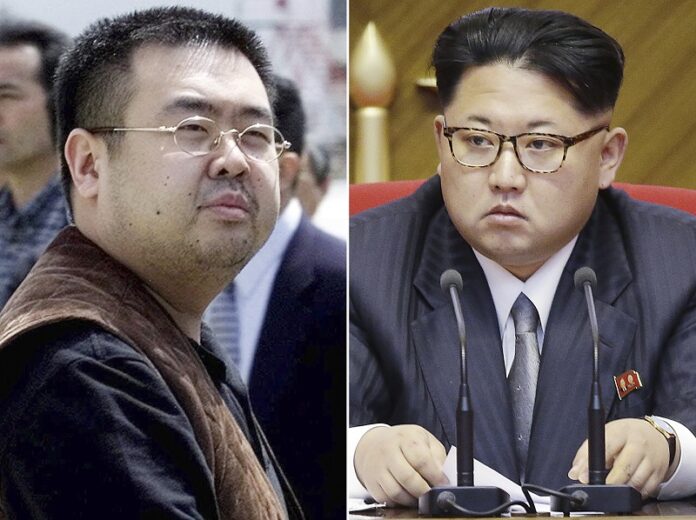
Kim Jong Nam, left, exiled half-brother of North Korea's leader Kim Jong Un, in Narita, Japan, on May 4, 2001, and North Korean leader Kim Jong Un on May 9, 2016, in Pyongyang, North Korea. Photo: Shizuo Kambayashi / Associated Press

SHAH ALAM, Malaysia — A police investigator testified Tuesday that the estranged half brother of North Korea’s leader told a friend in Malaysia that his life was in danger six months before he was killed at an airport.

Indonesian Siti Aisyah and Doan Thi Huong of Vietnam have been charged with murdering Kim Jong Nam by applying the banned VX nerve agent to his face in a crowded Kuala Lumpur airport terminal on Feb. 13 last year. They allegedly conspired with four North Korean men who fled Malaysia the same day.

Chief police investigator Wan Azirul Nizam Che Wan Aziz told the court that Kim’s friend provided a driver for him during his trip to Kuala Lumpur last year after Kim told him that “my life is in danger” and “I am scared for my life” six months before he was killed. He didn’t say why Kim feared for his life.

If they are convicted, the two women could face the death penalty, but not if they lacked intent to kill. Defense lawyers say the women believed they were playing a prank for a hidden-camera TV show and had previously been paid to conduct similar pranks. Prosecutors contend the women knew they were handling poison.

Aisyah’s lawyer, Gooi Soon Seng, also asked the policeman if Hong Song Hac, one of four suspects believed to have fled back to North Korea, was an official with the North Korean Embassy in Indonesia at the time. Wan Azirul initially said he didn’t know but then agreed when shown a document provided by the Indonesian foreign ministry.

Gooi told reporters later that police had failed to investigate the background of the four other suspects. He said the involvement of another North Korean Embassy official reinforced the belief that the embassy and its government were involved in the plot.

The court heard earlier that a North Korean Embassy official in Kuala Lumpur met with the four suspects at the airport before they left and helped them to check in. The court was also told that a car used to take the suspects to the airport was bought by the embassy in the name of one of its citizens just months earlier.

Kim, the eldest son in the family that has ruled North Korea since its founding, had lived abroad for years after falling out of favor. It is thought he could have been seen as a threat to the rule of his half brother, Kim Jong Un.

Malaysian officials have never officially accused North Korea of involvement in Kim’s death and have made it clear they don’t want the trial politicized.

The trial is to resume March 14.

Advertisement

Election Next Year For Sure Unless Not, Prayuth Says

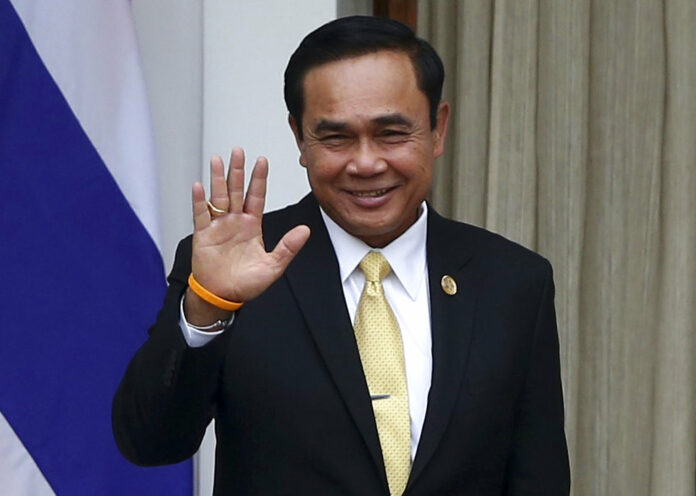
Prayuth Chan-ocha waves during a Jan. 25, 2018, visit to New Delhi, India. Photo: Associated Press

BANGKOK — The head of the ruling junta which took power in a coup in 2014, said Tuesday the country will have elections by this time month next year, though he suggested the date is conditional on the political situation remaining calm.

It is not the first time the government of Prime Minister Prayuth Chan-ocha has set a date for polls, though such plans have been postponed time and again. Critics suggest the military is clinging to power until it can ensure a victory by parties it favors.

The repeated delays, along with several corruption scandals, have raised discontent with the ruling junta among the public and media. There was little open opposition to the military when it seized power in May 2014 after an extended period of political street violence that paralyzed the running of government.


Election Vow Highlights:
Election Will Take Place in October 2015 at Earliest
Post-Coup Election May Be Delayed To 2016
‘There Will Definitely be an Election’ in 2017, Prayuth Promises
Junta Promises Election in 2017, For Real This Time
No Elections For Thailand This Year, NLA Says

No Really, There Will Be Elections This Year, Prawit Says
Asserting ‘Thailand First,’ Prayuth Says Elections Up to Him


The most recent date that had been suggested for the elections was November this year, but in January the timetable for preparations was altered by the junta-appointed legislature to allow another 90 days for the process. In the meantime, political parties have not been allowed to do any organizing.

Asked by reporters about the election schedule, Gen. Prayuth — who is known for his testy manner with the press — said, “Now I’m answering clearly — elections before February 2019 — what more do you want?”

Referring to a 150-day maximum period established by the constitution between passage of election laws and the holding of polls, he said the government would “have to consider the country’s situation.”

“I’m not making threats, but if everyone keeps coming out, we’ll see,” he said, in what appeared to be a reference to student-led protests pressing for the polls to be held this year. “Once we unlock the ban on politics, what will happen? I hope good things will happen, that people will campaign in peace without throwing around accusations or insinuations so that elections can take place.”

Prayuth has recently been making tours to various areas of the country in what seems similar to campaigning. At the same time, there are signs that new political parties are being established that will follow the military’s line.

Prayuth has denied having further political ambitions but has not ruled out the possibility of seeking to be prime minister after elections.

On Tuesday, he said he wasn’t trying to delay new polls in order to stay in power.

“If you think that way, then I don’t want to talk to you,” he said to reporters.

Advertisement

Severe Damage in Papua New Guinea Hinders Quake Assessment

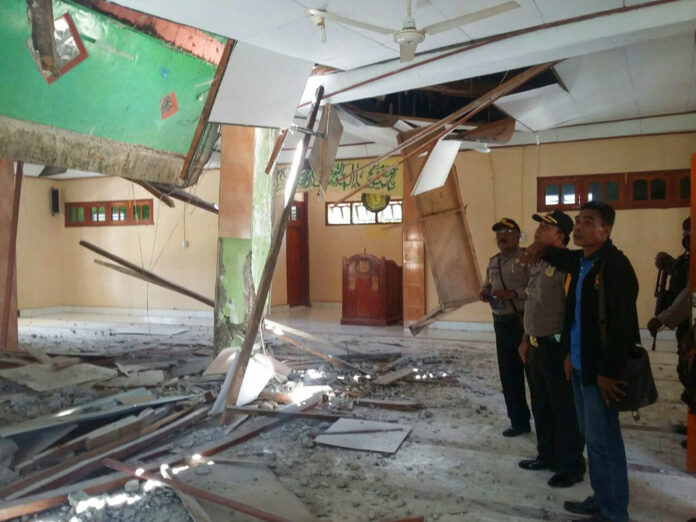
Local officials inspect the damage to a mosque following Monday's powerful earthquake in neighboring Papua New Guinea, in Boven Digoel, Papua province, Indonesia. Photo: Associated Press

WELLINGTON, New Zealand — Severe damage to phone networks and roads from a powerful earthquake in Papua New Guinea was hindering efforts to assess the extent of the destruction Tuesday, although officials in the remote central region feared dozens of people may have been injured or killed.

The government had not confirmed any deaths after the magnitude 7.5 quake struck the Pacific nation’s central highlands region early Monday. Aftershocks were continuing to strike the area.

Hela Provincial Administrator William Bando told The Associated Press that phone networks were out, power lines were down and roads were blocked by landslides. He said the quake was a disaster on a scale he hasn’t experienced before.

“There are massive, massive disruptions,” Bando said.

He said he’d been hearing reports of dozens of deaths and injuries but couldn’t confirm them.

The National Disaster Centre said it was carrying out a rapid assessment by ground and by helicopter in order to give information to the government.

Prime Minister Peter O’Neill said authorities were assessing the damage and getting ready to provide relief.

“There are communities that have suffered from this natural disaster, and we are sending our soldiers and other government agencies to support our people in their time of need,” O’Neill said in a statement.

The quake also disrupted work at oil and gas plants, mines and coffee plantations.

ExxonMobil Papua New Guinea shut down an airport it built as well as a gas conditioning plant, where there was damage to the administration buildings, living quarters and mess hall. The company was also evacuating nonessential workers.

Managing Director Andrew Barry said it was trying to re-establish communications with nearby communities to understand the broader impacts of the quake.

“We are deeply saddened by the damage this natural event has caused to the people in the highlands provinces,” he said in a statement.

Aid agencies said they were ready to help but were also awaiting more information. Udaya Regmi, the country head of the International Federation of Red Cross and Red Crescent Societies, said it had 20 volunteers on standby but that getting accurate information remained difficult.

The quake hit about 89 kilometers (55 miles) southwest of Porgera, the site of a large gold mine that employs more than 2,500. Several aftershocks stronger than magnitude-5 struck the region, including a magnitude 6.3 early Tuesday.

The quake also caused panic and damaged buildings across the border in eastern Indonesia.

Papua New Guinea is home to 7 million people and is located on the eastern half of the island of New Guinea, to the east of Indonesia. It sits on the Pacific’s “Ring of Fire,” the arc of seismic faults around the Pacific Ocean where earthquakes and volcanoes are common.

Story: Nick Perry

Advertisement

Cambodian Court Orders Seizure of Former Opposition HQ

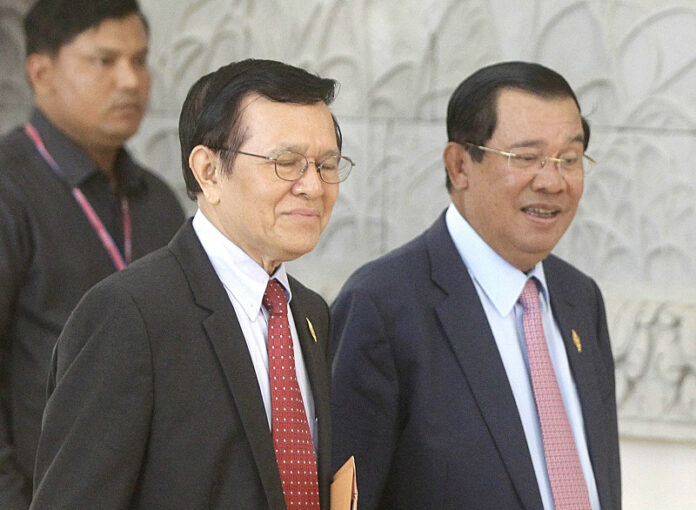
Cambodia's Prime Minister Hun Sen, right, walks together with opposition Cambodia's Rescue Party Deputy President Kem Sokha, center in 2016 during a break at National Assembly in Phnom Penh, Cambodia. Photo: Heng Sinith / Associated Press

PHNOM PENH — A court in Cambodia has ordered the seizure of the headquarters of the country’s former opposition party, which was dissolved last November after a ruling that it was involved in trying to overthrow the government of Prime Minister Hun Sen.

A lawyer for Hun Sen said Tuesday that the Phnom Penh Municipal Court ruled that the headquarters of the Cambodian National Rescue Party be seized because the party’s former leader, Sam Rainsy, failed to pay a USD$1 million judgment against him for defaming Hun Sen and another ruling party leader. Sam Rainsy is the owner of the property.

The case is generally seen as part of an intense push by Hun Sen’s government to neutralize political opponents and silence critics ahead of a general election in July.

Advertisement

Somchai Says Election Commission Work Could Continue Without Him

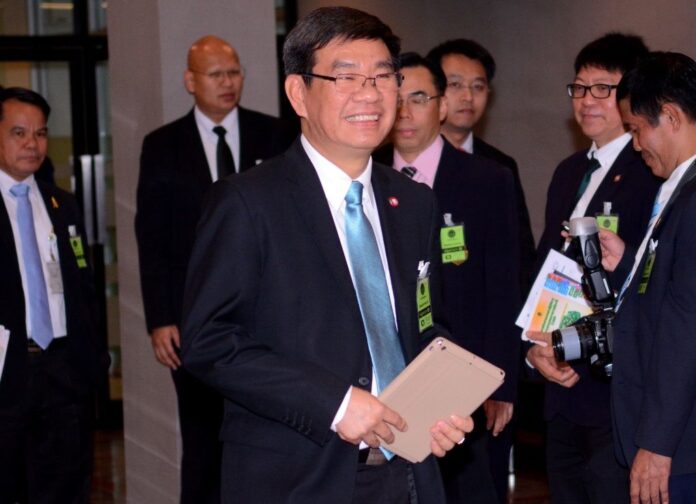
An undated file photo of election commissioner Somchai Srisuthiyakorn. Image: Matichon

BANGKOK — An election commissioner who applied to become the commission’s secretary general said Tuesday that the preparation of polls would not be affected by the move.

Commissioner Somchai Srisutthiyakorn said he doesn’t expect his decision to affect the works of the Election Commission in the coming months, after concerns arose about a possible vacuum if he became secretary general. He said there would be four other election commission members on duty should he be selected to the position.

“There will be four election commission members. I don’t even know if they will select me,” Somchai said, adding that he would take leave on the day of the vote.

Somchai filed an application on Monday and said he wished to continue contributing to society by working for the commission before new members are soon appointed. The National Legislative Assembly has 90 days to vote on a second set of seven nominated commission members to replace the current five – including Somchai.

Somchai said he may have to resign by May 31 if he becomes secretary general.

Advertisement

Songkran Extended to 5 Days This Year

Revellers celebrate the last day of Songkran last year in Silom.

BANGKOK — The interim cabinet announced Tuesday that the Songkran holiday will be extended two days this year.

Col. Atisit Chaiyanuwat, prime minister’s office spokesman, said the holiday will also be observed on April 12 and April 16 this year since the official days – April 14 and April 15 – fall on a weekend.

Atisit said he hopes the extended holiday will promote tourism.

Advertisement

Hot News

LATEST NEWS

Bangkok
overcast clouds
32.8 ° C
32.8 °
32.7 °
73 %
4.7kmh
99 %
Tue
33 °
Wed
35 °
Thu
35 °
Fri
36 °
Sat
37 °