



























31.1 C
Bangkok
Monday, June 15, 2026
Home Blog Page 2075

India, China Vie for Influence as Crisis Unfolds in Maldives

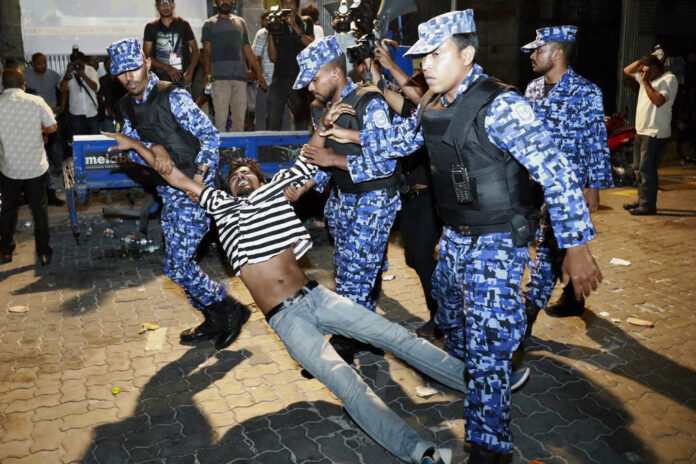
Maldivian police officers on Feb. 2 detain an opposition protester demanding the release of political prisoners during a protest in Male, Maldives. Photo: Mohamed Sharuhaan / Associated Press

NEW DELHI — As a political crisis plays out in the Maldives, a quiet tug of war is taking place around it, with heavyweights China and India vying for strategic dominance in the picturesque Indian Ocean nation.

At first glance, Beijing and New Delhi want no part in the turmoil that erupted Feb. 1 when the country’s Supreme Court overturned the convictions of several opposition politicians, including the president’s main rival. Chinese and Indian officials spoke in usual diplomatic tones, saying they have no interest in interfering in the archipelago’s internal affairs. But in reality, both have strategic regional interests to safeguard and are jostling for the upper hand.

President Yameen Abdul Gayoom has sent envoys to “friendly nations” China, Pakistan and Saudi Arabia to explain his government’s position since he rejected the court ruling, imposed a state of emergency last week and arrested two of the Supreme Court judges. His actions fueled suspicion that he has no intention of easing up on eliminating his rivals and tightening his hold on power ahead of this year’s elections.

His most powerful opponent, exiled former President Mohammed Nasheed, appealed to India to send troops to end the crisis.

“On behalf of Maldivian people we humbly request: 1. India to send envoy, backed by its military, to release judges & pol. Detainees … We request a physical presence,” Nasheed tweeted last week.

Traditionally the archipelago of 1,200 islands and a population of 390,000 Sunni Muslims has been firmly in New Delhi’s sphere of influence, with India even intervening in 1988, when a group of mercenaries tried to seize power. Its support helped keep former strongman Maumoon Abdul Gayoom in power for three decades and later aided Nasheed, the country’s first democratically elected leader who became famous when he used his low-lying island nation to highlight the risk of rising sea levels and climate change.

But Male began tilting toward Beijing after Yameen, the half brother of Gayoom, came to power in 2013 by defeating Nasheed.

Yameen has rolled back many of Nasheed’s democratic gains, with all of his potential political opponents either jailed or in exile. His government curbed freedom of speech and assembly, with heavy fines imposed on journalists and social media users found guilty of defamation. In 2015, in a trial widely criticized by rights groups, Nasheed was sentenced to 13 years in prison. He later received asylum in Britain.

China saw the developments as an opening.

“Until 2011, China didn’t even have an embassy in the Maldives. Coming to 2018, it’s seen as a big player in this whole Indian Ocean region,” said Mahalakshmi Ganapathy, an India-China expert currently at Singapore’s S. Rajaratnam School of International Studies.

When Yameen visited Beijing in December, the two countries signed a free trade agreement that eliminates most tariffs on Maldivian exports, primarily fish, and opens the island nation to Chinese goods and services, including in finance, health care and tourism.

China is already the Maldives primary source of tourists, whose spending largely drives the economy, and Beijing is investing hundreds of millions of dollars in an airport expansion, housing development and other projects.

China now sees the Maldives as a crucial part of its “One Belt One Road” project along ancient trade routes through the Indian Ocean and Central Asia. The initiative envisages building ports, railways and roads to expand trade — and China’s influence — in a swathe across Asia, Africa and Europe.

China’s massive lending to poor nations for such projects has raised concerns about their ability to repay. Already, Beijing has taken over ports it developed in Sri Lanka and Pakistan on long-term leases.

Nasheed says China is “buying up the Maldives” under Yameen, accusing the president of opening up the floodgates to Chinese investments with little or no oversight and transparency. China has dismissed those allegations.

Beijing is watching the Maldives very carefully. If the political situation turns in Nasheed’s favor, that may shift the balance of influence back toward New Delhi.

India is clearly uneasy with China’s growing presence in its backyard. What’s less clear is how it will respond to the current upheaval in the Maldives.

So far India hasn’t responded publicly to Nasheed’s demand that it deploy soldiers to end the crisis, and it’s held off formally meeting with Yameen’s envoy.

But on Friday, India’s Ministry of External Affairs issued a carefully worded statement aimed at China.

“We note that China has said that Maldives Government has the ability to protect the security of Chinese personnel and institutions in Maldives. We hope that all countries can play a constructive role in Maldives, instead of doing the opposite.”

“India is in a very difficult position,” said David Brewster, an expert on Indian Ocean strategic affairs at the National Security College in Canberra. “It would like to see Yameen replaced, but it is not sure how to do that.”

He added: “”India’s primary concern is not to restore democracy, but rather to reduce China’s influence in the country.”
Advertisement

Voranai: My Brother’s Keeper

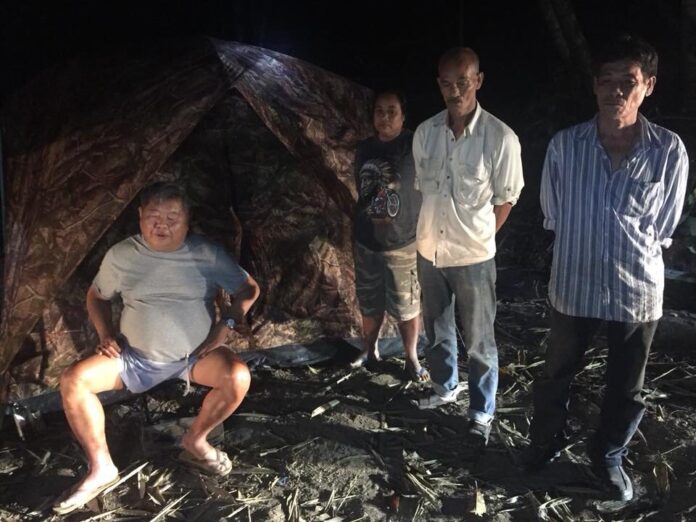
Premchai Karnasuta, far left, sits in the campsite where he was found on Feb. 5 with the remains of a leopard, panther and other wildlife in the Thungyai Naresuan Wildlife Sanctuary in Kanchanaburi province.
Premchai Karnasuta, far left, sits in the campsite where he was found on Feb. 5, 2018, with the remains of a leopard, panther and other wildlife in the Thungyai Naresuan Wildlife Sanctuary in Kanchanaburi province.

Voranai Vanijaka

Raise your hand if you have used, know someone who has or are familiar with the following negotiation tactic: “There’s nothing we can’t work out. What do you want? I’ll send my people to get it for you.” How about this one? “I’ll have a puu yai come talk to you. There’s a way. There are ways around the law.”

These are quotes from a leaked audio clip allegedly attributed to Premchai Karnasuta, the 63-year-old president of Italian-Thai Development, negotiating with wildlife authorities.

Premchai and three others were charged with six poaching-related crimes after they were caught at about 2am this past Monday in the Thungyai Naresuan Wildlife Sanctuary. Authorities found two rifles, a double-barreled shotgun, various bullets, the body of a Kalij pheasant, a muntiacini deer carcass, a skinned and salted black leopard and a black panther skull in their camp.

In a land where everything can be negotiated, Premchai was looking for a way out of the predicament in a manner well-familiar to Thai society. He was banking on his connections in high places swooping down to save him, of which he should have many, being the owner of one of the largest construction companies in the country.

It is similar to how Gen Prayuth Chan-ocha is saving Gen. Prawit Wongsuwan over the luxury watch scandal. The junta leader simply invoked his dictatorial authority and told the media and the people to shut up about it. The National Anti-Corruption Commission is, of course, powerless to do anything. Gen. Prayuth said his deputy does not have to resign, and in fact, anyone involved in the junta regime never has to resign over anything. After all, they are a tribe, a network. They are brothers. This is a demonstration of loyalty as opposed to betrayal.

Obviously, Premchai has powerful friends who can make the whole scandal disappear, and if today was 20 years ago, Premchai would be smoking a cigar in his office, admiring the black panther skull that adorns his desk and wearing a jacket made of black leopard skin as I’m typing this commentary. But in the age of social media, while the high and mighty may still escape justice, it’s not as easy. Meanwhile, they cannot escape social scrutiny. Premchai’s friends in high places have to tread carefully.

Feudalistic baggage is the bane of many developing countries, Thailand included. What we have here is feudal-style problem solving. Invoking tribalism, appealing to powerful puu yai – bribe, negotiate and bully your way out of trouble. Basically, it’s the same way many of us get out of a traffic ticket, get our kids into privileged schools or cut through bureaucratic red tape. It is why we bring a basket of goodies to the local village head, kowtowing as if he was emperor of China, all smiles and howdy-do. It is why we keep name cards of some senior police officer, who we have met may be once, in the car, just in case we might get caught making an illegal U-turn.

In a feudalistic culture, we establish a network. We are brothers and sisters, connected. We have the puu yai looking out for us. When we get into trouble, we appeal to the tribal network.

Rule of law? What has that got to do with anything? Everything is sabaai sabaai, we can work it out. This attitude is not exclusive to the junta leader or the construction magnate, it is the norm of Thai culture. Though let’s be fair, it is presence in every culture, not unique to Thailand. But truth be told, it is much more prevalent in a country like Thailand when compared to countries that have managed to distance themselves from feudal pasts.

Often, our leaders, elected or unelected, are but the reflection of who we are as a society. Premchai and General Prayuth are just people. They come and they go. Eventually, we are all ashes to ashes, dust to dusts. But cultural values live on, pass down from generation to generation. There are wonderful things about the Thai culture, but we should also recognize the flaws in us. For society to progress, we need to learn that the rule of law trumps tribal relations, doesn’t matter if you are a prime minister, a tycoon or a taxi driver.

Advertisement

Protest Just a ‘Kick-off,’ Activists Say

By Asaree Thaitrakulpanich, Teeranai Charuvastra

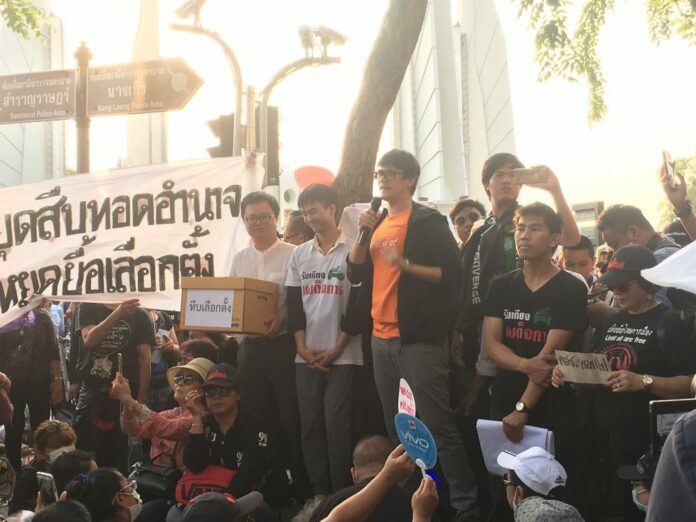
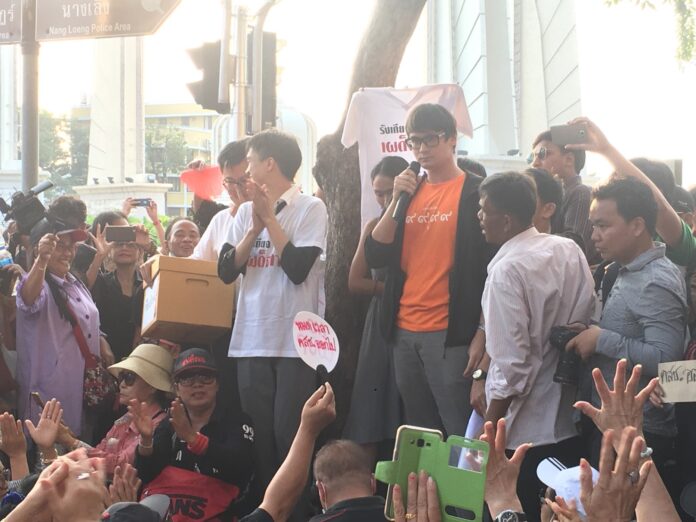
BANGKOK — Opponents of the ruling junta said Saturday’s rally was just the beginning of plans to resist the military regime.

The activists pledged at a protest just opposite Democracy Monument to escalate their campaign if the ruling junta disregards calls for an election to be held this year and the military government to step down.

“Today is just part of our kick-off,” protest leader Sirawith Seritiwat shouted into a microphone. “Today people are starting up, they are standing up!”

Sirawith, aka Ja New, spoke in plain sight of the policemen deployed around the protest site who had earlier vowed to arrest him on sight. Arrest warrants for Sirawith and three other activist leaders on sedition and public gathering charges were issued Friday. Police did not make any move to detain them today.

Although the junta’s popularity has suffered under the weight of scandal, today’s crowd was not much larger than previous rallies.

Before the protest began, a large police presence had been deployed around the monument, the plaza of which was filled with trees.

The police later decamped the site and moved farther away.

Two other activists wanted by the authorities — Rangsiman Rome and Arnon Nampa — also gave speeches lambasting the junta at the rally. The fourth activist, Ekachai Hongkangwan, was arrested in front of his home earlier today.

Friends of Rangsiman, Arnon and Sirawith said the two would will turn themselves in tonight at Pathumwan Police Station.

Rangsiman, a familiar face from many many pro-democracy campaigns and encounters with police was as fiery as ever. His comments focused on urging the youth to rise up.

“Some say politics isn’t a children’s game. But if the P-clan of Prayuth and Prawit keep on violating us like this, the future will be ruined for people my age!” Rangsiman said.

Arnon spoke to the crowd not only about the plight of protesters charged for a similar rally late last month but also others who’ve criticized the junta.

Sirawith said that many protesters upcountry had been blocked from traveling to the capital.

“If the authorities were really brave, then take out those blocks and we’ll fill all of Ratchadamnoen!” he said, referring to road blockades reportedly erected to prevent people from traveling to the capital.

Karn Pongpraphapan, a fourth-year student from Thammasat University, spoke from the impromptu stage.

“Everyone, let’s clap for all the soldiers in the back, in the front, and to the side over here for keeping us so safe!” he said cheerfully, amid cheers.

Protesters passed out a variety of curios including snacks, roses, posters depicting Prayuth as a mosquito laying the eggs of dictatorship and a handbook on how to survive in prison in case of arrest.

Advertisement

Police Don’t Move on Protest Leaders as Rally Begins

Activists speak at a Feb. 10 rally demanding an election in November

BANGKOK — Police have made no attempt to arrest a number of protest leaders at a Saturday afternoon rally calling for elections.

A day after arrest warrants were issued for leaders of the so-called MBK39, several of the pro-democracy movement leaders were speaking Saturday afternoon to a crowd of about 150 people at Bangkok’s Democracy Monument.

Just after 5pm, protest leader Rangsiman Rome was decrying what he deacribed as a lack of justice for influential figures under junta rule, citing recent scandals such as those involving a deputy junta leader and construction firm magnate.

The roads remained open around the monument.

One of four wanted protest leaders was arrested Saturday morning at his home.

Advertisement

MBK39 Leader Arrested Before Planned Protest

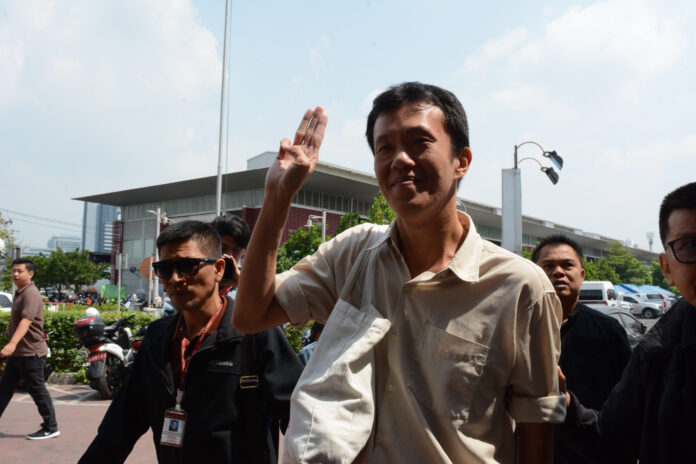
Ekachai Hongkanwan flashes a three-finger salute of the junta opposition in front of the Pathum Wan Police Station on Saturday.

BANGKOK — Police on Saturday arrested a pro-democracy activist leader just hours before a planned protest.

Ekachai Hongkangwan, one of the four campaigners wanted by authorities on charges related to a Jan. 27 previous protest was arrested his home in Lat Phrao area of Bangkok.

Ekachai and three others – Rangsiman Rome, Arnon Nampha and Sirawith Seritiwat – defied summons to appear before police on Thursday. They pledged to join the upcoming protest this evening at Democracy Monument.

Read: Arrest Us Tomorrow, Wanted MBK39 Leaders Taunt Police

The activist was brought to Pathumwan Police Station, where he told reporters he would deny all charges because he had done nothing wrong before flashing a three-finger salute to them.

Ekachai and three other leaders were charged with sedition and violating a law that banned staging protests within 150-meter radius of a royal residence.

A total of up to 39 people were charged for joining the rally, including nine alleged organizers. All reported to police by Thursday as instructed except for Ekachai, Rangsiman, Sirawith and Arnon.

Today’s protest is planned for 5pm at Bangkok’s Democracy Monument.

Advertisement

Sweden’s Kalla Wins 1st Gold at Olympics

Charlotte Kalla of Sweden celebrates Saturday after winning the women's 7.5km /7.5km skiathlon cross-country skiing competition at the 2018 Winter Olympics in Pyeongchang, South Korea. Photo: Matthias Schrader / Associated Press

PYEONGCHANG, South Korea — Charlotte Kalla of Sweden won the first medal of the Pyeongchang Games on Saturday and Norwegian cross-country skier Marit Bjoergen took silver in the women’s 15-kilometer skiathlon to become the most decorated female Winter Olympian ever.

Bjoergen captured her 11th career medal, breaking a three-way tie with Raisa Smetanina of Russia and Stefania Belmondo of Italy.

Kalla won the race by more than seven seconds, breaking away from the pack in the final 2 kilometers to avenge her loss to Bjoergen at the 2014 Sochi Olympics.

But the 37-year-old Bjoergen, who won three gold medals in Vancouver in 2010 and three more in Sochi, proved she’s still a dominant figure in the sport despite entering the competition ranked seventh in the world in the event.

Krista Parmakowski of Finland was third and Jessica Diggins finished fifth, missing a chance to become the first American woman to earn a medal in cross-country skiing.

Advertisement

Thai Law: On Property Rights and Saving Your Marriage Before it Begins

Photo: Sasin Tipchai

wirot.3The concept of the prenuptial agreement was brought to Thailand by Western expats who wedded Thai women while still under legal or social obligations to their former wives and children back in the West.

People heard stories of older American billionaires marrying younger ladies and taking care of their youthful wives by providing high salaries which ensured comfortable lives throughout the marriage, payable from an offshore trust while at the same time making sure the futures of their children from these former wives were secured by separate funds and inheritance.

Upon divorce, the new wife would still enjoy regular income from the offshore trust for the rest of her life even after the death of her senior husband, without having to compete with the man’s children for his inheritance.

Understanding how prenuptial agreements can be used today to give both spouses granular control of how they want things shared is important. Today all marriages in Thailand – even if one party is not a citizen – are subject to community property law. This means all income and nearly all the property acquired by one spouse will be classified as community property – half of which is vested in the other.

This has made some Thai couples, especially those in real estate, forego marriage registration for fear they’ll need mutual consent to buy and sell property.

Now that Thai law recognizes prenuptial agreements, they can be a powerful tool to give couples a new option to designate community property however they see fit.

How the Law Works

Bee is from a large, wealthy business family and marries Bim, whose roots are middle class.

Bim may resign from whatever job to join Bee’s successful business. Now all of Bee’s income and nearly all the property acquired will be classified as community property, half of which goes to Bim.

On the other hand, if Bim were from an equally elite background, all the generous cash and jewelry received from Bim’s parents at the wedding will be separate property belonging only to Bim.

The home where the newlyweds live may be separate from that of Bee’s parents, but they own the land where both homes stand. Bee and Bim’s home is recognized by Thai law as Bee’s separate property – in which Bim does not share ownership.

How Prenups Can Help

The statutory rights of both spouses to community and separate property can totally be altered by a prenuptial agreement signed prior to their wedding registration and put into force by being legally attached to the marriage certificate.

The land and house that are the separate property of one can now be divided from the main plot into a smaller title deed and turned into a community property in the joint names of both as co-owners. All the cash and jewelry from Bim’s parents can likewise be expressly given to both jointly as their community property. Basically, almost anything that a couple wants to add or subtract from each other’s property rights during their marital relationship can be spelled out in a prenuptial agreement.

Instead of delivering half of their high earning power to her already wealthy husband, a prudent wife might agree to transferring that half to an offshore trust created for the benefit of children to be born from wedlock. Another rich wife could also express her eternal love to a commoner husband by relinquishing all her rights to the income he will earn throughout his life, turning it into separate property only he alone can enjoy.

Foreign Considerations

The community property rule applies to both foreign and Thai spouses but is limited by laws about what foreigners can own.  When it comes to an actual transfer of land to a foreign spouse, the transfer registration cannot be done as Thai land law prevails. Foreign spouses are still entitled to the unregistered ownership of the land and can transform it into property they can own such as cash, by way of having their Thai spouses or estates (if the Thai passes away) sell the land to another Thai national. The sale proceeds belong to the foreign spouse.

Securing the Future

As for community property they may allocate to their future children, securing those benefits to the children permanently, safe from any undesirable changes, makes an offshore trust in the Western hemisphere necessary. They can stipulate a condition that the trust be used for the specific purpose of education. They can further limits its accessibility to whatever specific conditions they want, such as the time period between freshman enrollment in a UK or US university until graduation with an MBA or PhD. Such a security fund denominated in British pounds or US dollars will always be there for their children’s Western education 18 years from now. The young parents don’t even have to worry about the fund erosion from any prospective drops of the Thai baht currency over the decades to come.

Parents funding education abroad during the Asian financial crisis of 1997 will vividly recall the hardships families were going through. Before the crisis, parents would pay 50,000 baht to buy USD$2,000 from a bank and remit it to America for the child’s monthly allowance. During the crisis, the baht’s plunge saw parents paying double at 100,000 baht for the same amount of dollars. The family found it hard to a earn baht income to match the dollar expenses, especially those who borrowed dollars to do business. Some could not find enough to finance their children to graduation.

Thais are drawn to offshore trusts as there aren’t any financial tools locally to secure funding for a Western education against depreciation of the baht. Parents just pray for the baht to remain strong forever – aware that this is pure fantasy. Thai law has not allowed a trust to be set up. Investment overseas, through permission of authorized banks, comes in as an option to fill the gap for wealthy Thais to secure solid Western education for their children as well as future well-being for the younger generations.

Apportioning community property for children is something that should be planned in a prenuptial agreement as Thai law ensures that once the agreement is registered and appended to the marriage registration certificate, the agreement will become permanently valid and enforceable and incapable of being revoked, unless ordered otherwise by the court.

If you wait until after children are born then plan to give away part of the community property to an offshore trust, the plan can be regarded as a postnuptial agreement, revocable by either husband or wife throughout their marriage or within 1 year after their divorce, no matter how many decades that postnuptial agreement has remained in place.

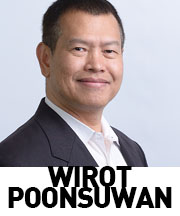
Wirot Poonsuwan is a practicing attorney and can be reached at [email protected].

Advertisement

Detoxifying Our Political Past

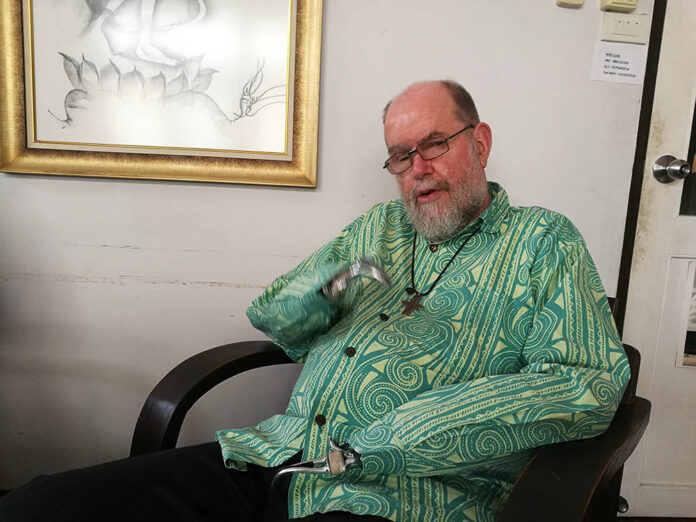
South African Anglican Priest Michael Lapsley.

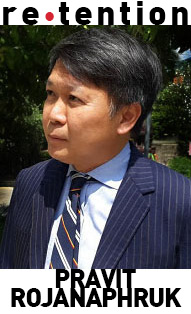
Re•tention: Pravit RojanaphrukIt was a rare sight seeing Yellowshirt activist Veera Somkwamkid in lockstep with Redshirt leader Sombat Boonngam-anong arriving to be arraigned on charges including sedition for a recent anti-junta protest.

Long divided by whether they support or despise ousted and fugitive former premiers Thaksin and Yingluck Shinawatra, it can be generally said that the political divide is toxic.

The toxic politics that are over a decade old, predating the 2006 coup, are so severe that some friends and even family members have become estranged as a result.

Yet both may have common opponents now in the repressive junta, formally known as the National Council for Peace and Order.

Being able to sometimes look beyond Thailand helps. I met New Zealand-born Michael Lapsley last weekend for a one-hour chat-cum-interview and was convinced that Thailand cannot move forward united and reconciled as long as they cannot deal and put toxic politics to rest.

Lapsley, 68, is a New Zealand-born South African Anglican priest who played an active role in ending apartheid in South Africa. Back in 1982, while working to end apartheid in exile in Zimbabwe, Lapsley received a letter bomb by the South Africa’s Civil Cooperation Bureau, believed to be a covert outfit of the apartheid security forces.

The bomb, hidden inside two religious magazines, took his hands and sight in one eye. But it failed to undermine his faith in religion and reconciliation.

But he continued to preach the words of peace and reconciliation around the world as a social justice activist.

“Pain is pain is pain, no matter where in the world,” Laspley told me, in reference to address the old wounds of the past.

I agree with Lapsley in that the best way, if not the only way to deal with a painful past is to confront it. Father Lapsley said pain in the past often continues to inflict the present. That makes the issue of “healing” relevant, he added.

“Are we prisoners of our memories?” Lapsley said, adding that the point is not about forgetting but detoxifying the past. This is necessary because hatred doesn’t destroy the enemy but the person who harbor hatred, said the unassuming priest during the meeting in Bangkok.

What is needed, said Lapsley, is a “safe and sacred space” for people of opposing views and painful past to confront the past and lay it to rest.

This may be easier said than done in Thailand, where people of different political belief doesn’t mingle or open up but preferred to attack one another from afar, stereotyped one another, and find the idea of dialogue or deliberation abominable.

I think there can be no common future for Thailand if people cannot be at peace with the troubled political past which saw not just deep political hatred and fatalities on the streets from protest sites on both sides.

“You need inclusive politics. Wherever people are excluded, eventually they will go to war,” Lapsley told me. “The poison lies not in what we think about the past but what we feel about the past.”

That involves people’s ability to be empathetic about those who think differently. “In isolation and separation, you continue the stereotype about each other.”

During apartheid years, Lapsley noted that it was crucial for him not to just understand black hope but white fears.

“The head and the heart must come together. If we are too cerebral, we could do the worst things.”

Lapsley told me that sometimes it takes a whole generation to pass before the country can move forward.

I hope that won’t be the case for Thailand although deep down I think that might be the case. That means will be lose more years, if not another decade, before we could come together without political hatred as members of the same society.

What’s even more disturbing but perhaps correct was Lapsley’s observation that sometimes the past doesn’t go away and gets perpetuated from one generation to another. It dawn to me that it’s true as some Thais continued to hold a very negative perception towards migrant workers from Myanmar for the wars between the two kingdoms centuries past.

This is what Lapsley referred to as “the chain of hatred.”

As for the letter bomb which deprived him of both his hands and one eye sight, three decades on, Lapsley confessed that he still wants to know who exactly sent the letter bomb to him.

“If they are prisoners in themselves for what they did I have a key,” Lapsley told me pointing out to his willingness to let bygone be bygone.

Despite that, Lapsley said he wasn’t sure “how to handle it” if the perpetrator doesn’t care or repent.

That shows how difficult it is to get over a bitter past and detoxify it.

Advertisement

Arrest Us Tomorrow, Wanted MBK39 Leaders Taunt Police

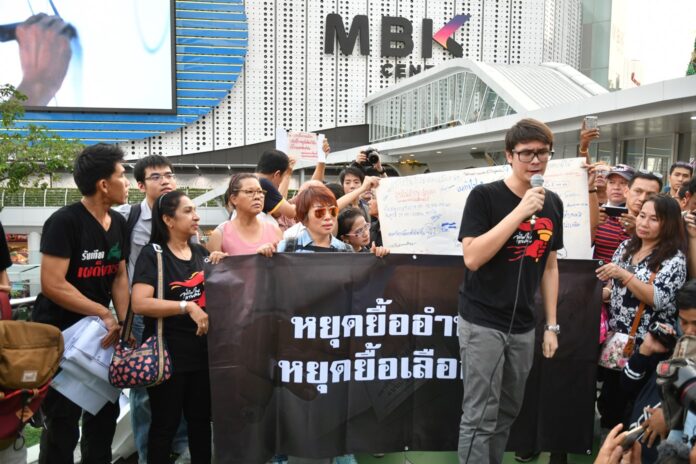
Rangsiman Rome speaks at a rally Jan. 27 in Bangkok

BANGKOK — A court on Friday approved arrest warrants for four activists a day after they failed to show up at their arraignment for staging a pro-democracy protest.

After defying the summons, the four high-profile pro-democracy campaigners vowed to attend a protest planned for Saturday where they dared police to arrest them, setting the stage for a confrontation.

“Arrest me tomorrow at Democracy Monument,” Ekachai Hongkangwan, a former lese majeste convict turned activist, said in a message posted online.

Movement figure Rangsiman Rome, rights attorney Arnon Nampha and activist leader Sirawith Seritiwat likewise pledged to join Saturday’s 5pm rally to demand an election take place in November as promised last year by junta chairman Prayuth Chan-ocha.

A policeman stationed near the Democracy Monument vowed to detain the four as soon as they are spotted.

“They don’t have to reach Democracy Monument to be arrested. At this point, if these people wander anywhere and encounter the police, they will be arrested immediately,” Pitak Sutthikul, chief of Chanasongkram Police Station, said.

The four were charged with sedition and staging a rally within 150 meters of a royal palace for their Jan. 27 protest on the skywalk in front of the MBK shopping mall on Jan. 27.

Five other protest leaders were freed by criminal court judges to await trial after they were arraigned Thursday, against the wishes of police. Thirty other people who were at the rally and charged with violating the public assembly law also walked free on their own recognizance.

A total of 39 people are being prosecuted for either organizing or attending the rally.

No date was set for their trials to begin, except one protester whose trial starts in early March.

Advertisement

Bangkok to Extradite Russian Dark Web Fraud Suspect

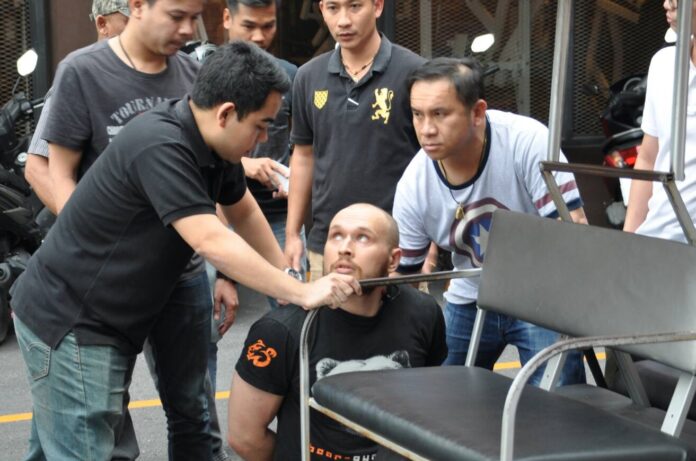
Sergey Medvedev is apprehended by Thai police on Friday

BANGKOK — A Russian national identified as the mastermind of a transnational cybercrime ring was awaiting extradition Friday after his arrest in the capital.

Sergey Medvedev is wanted by American authorities for fraud amounting to over USD$530 million, most of it from credit cards. A joint effort between Thai and US authorities had been tracking Medvedev since last year, according to a police officer who participated in today’s raid.

“This is an operation by the [US] Department of Homeland Security that involves spontaneous [raids] in 14 countries,” Maj. Nattapol Rattanamongkol said. “The United States has requested assistance from Thai police, and the police commissioner ordered the Crime Suppression Division to work on this case in late 2017.”

Police commandos arrested Medvedev at a residence in the Bang Na area. Nattapol said Medvedev refused to talk to Thai police.

No American officials were involved in the raid, Nattapol said.

The Russian is listed as the admin of InFraud, a dark web marketplace selling stolen credit card info, malware and other tools to conduct identity theft.

While Nattapol said the ring involved more than 10,000 people worldwide, he had no information so far about Thai nationals working with the Russian.

Advertisement

Hot News

LATEST NEWS

Bangkok
overcast clouds
31.1 ° C
31.1 °
29.4 °
73 %
2.8kmh
99 %
Mon
33 °
Tue
35 °
Wed
36 °
Thu
35 °
Fri
36 °