33.3 C
Bangkok
Sunday, June 21, 2026
Home Blog Page 2108

Get Edgy at Bangkok Fest for ‘First Ideas’

BANGKOK — People, passion and great ideas will converge riverside later this month.

Billed as the city’s “First Ideas Festival,” Bangkok Edge will gather writers, activists, journalists, photographers, chefs and more to lead provocative talks and inspirational workshops covering fashion, food, journalism, arts and culture.

Highlights include a discussion of “Thai History in Difficult Times” by award-winning British expat writer Chris Baker and leading historian Charnvit Kasetsiri.

Marina Mahathir, a Malaysian author and activist will share her views on women’s rights in Asia, while Malaysian-Australian author-poet Omar Musa will show off his talents and sit down to talk about hip-hop in contemporary society.

What’s the deal with bad news, good news and fake news? Anjan Sundaram, award-winning journalist and author of “Bad News: Last Journalists in a Dictatorship,” will join a panel discussion with writer Christopher G. Moore.

Chef Andrew Martin of Bangkok’s 80/20 restaurant will host an outdoor workshop on cooking with food waste.

Films and concerts will also take place both days. The story of a burned-out man traveling with his elephant across Thailand will be told in “Pop Aye” at 7pm on Jan. 20 while famous 2004 Thai romance “Citizen Dog,” widely compared to French film “Amelie,” will show at 7pm on Jan. 21.

Both days will see live performances by local acts including Hugo, Yellow Fang, Yena and Chanudom.

Admission to every activity is free. The complete schedules for Jan. 20 and Jan. 21 are online.

The Bangkok Edge Festival – which debuted in 2016 – will run noon to midnight on Jan. 20 and Jan. 21 at Museum Siam, Chakrabongse Villas and Rajini School. All venues can be reached from the Yodpiman River Walk or Tha Tien piers. Motorists can park at the Royal Thai Navy Club House or Yodpiman River Walk then walk or take a motorbike.

Related stories:

Ignite a Passion for Ideas at Bangkok Edge Festival


Advertisement

WWE Wants UFC Star Rousey to Jump From Octagon to Ring

Ronda Rousey in 2016 stands in the cage after Amanda Nunes forced a stoppage in the first round of their women's bantamweight championship mixed martial arts bout at UFC 207 in Las Vegas. Photo: John Locher / Associated Press

UFC star Ronda Rousey’s next fight could come in a WWE ring.

WWE executive Paul Levesque, better known as wrestling superstar Triple H, had dinner with Rousey in Los Angeles on Tuesday night, again fueling speculation that UFC’s biggest female star could leave the octagon for a career in sports entertainment.

“We are talking to Ronda, as we’ve been for a while,” Levesque told The Associated Press by phone on Wednesday. “She has a lot of things going on. We have a lot of things going on. But we have a great relationship with her, a very friendly standpoint for a long period of time now. It was great to catch up with her.”

Rousey, once the most dominant fighter in mixed martial arts, has not competed since she suffered a 48-second loss to Amanda Nunes at UFC 207 in December 2016. Rousey (12-2) lost two straight bouts in 13 months and took a hiatus that saw her branch out into other forms of entertainment.

Rousey, who adopted the “Rowdy” nickname from WWE Hall of Famer “Rowdy” Roddy Piper, is a big wrestling fan as made guest appearances at WWE events. She notably stood side-by-side with Dwayne “The Rock” Johnson as they fought off the villainous Triple H and his wife and fellow executive, Stephanie McMahon.

The Rock raised Rousey’s arm in celebration at the end of the segment held at WrestleMania in 2015. Rousey has since appeared in the stands at events for WWE’s developmental system, NXT.

Rousey and fellow UFC fighters Marina Shafir, Shayna Baszler and Jessamyn Duke were known as the Four Horsewomen — a tribute to the nefarious Ric Flair-led Four Horsemen stable of the 1980s and ’90s. Baszler has signed with WWE and wrestles in NXT.

The WWE recently announced it will hold its first women’s Royal Rumble match (an over-the-top-rope battle royale) at the Jan. 28 Royal Rumble pay-per-view in Philadelphia. The match would be a splendid time to showcase Rousey in her WWE debut if she can break free from her film commitments. Rousey could also lead her Horsewomen against a WWE faction at WrestleMania on April 8.

Or, it could just be buzz designed to keep Rousey in the news and give the WWE a publicity boost as it heads toward its biggest four-month stretch of the year.

“We have nothing to announce at this time,” Levesque said. “But she’s a huge fan of what we do and she’s incredibly interested in what we do and the opportunities that lie there. We’re fans of hers and incredibly interested in what those opportunities could be with us. But there’s a lot of things to walk through. We’re talking. We’re having conversations.”

UFC President Dana White was on vacation and unavailable for comment.

Levesque was in Los Angeles to speak on a Television Critics Association panel.

Rousey refused to comment when approached by TMZ, only saying, “I enjoy fine dining.”

But it’s clear that the Rousey-wrestling connection appeals to WWE.

“I’d love it,” Levesque said.

Story: Dan Gelston

Advertisement

China’s Modern Silk Road Hits Political, Financial Hurdles

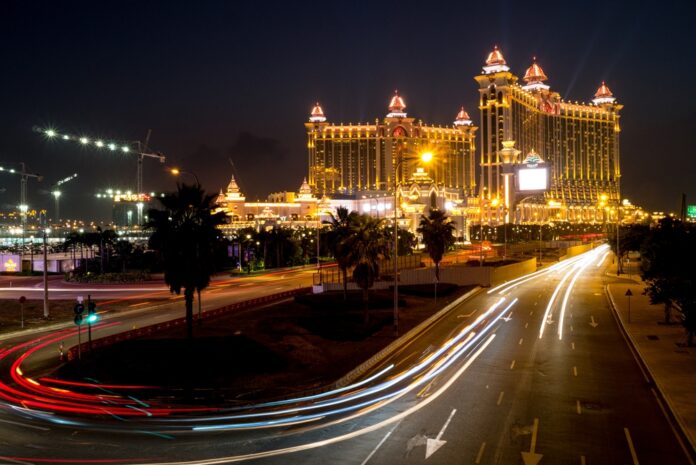
A 2013 file photo of a casino in Macau, China. Gambling or organizing an overseas gambling trip that involves more than 10 people remains illegal in mainland China. Image: Ronald Un / Flickr

BEIJING — China’s plan for a modern Silk Road of railways, ports and other facilities linking Asia with Europe hit a USD $14 billion pothole in Pakistan.

Pakistan’s relations with Beijing are so close that officials call China their “Iron Brother.” Despite that, plans for the Diamer-Bhasha Dam were thrown into turmoil in November when the chairman of Pakistan’s water authority said Beijing wanted an ownership stake in the hydropower project. He rejected that as against Pakistani interests.

China issued a denial but the official withdrew the dam from among dozens of projects being jointly developed by the two countries.

From Pakistan to Tanzania to Hungary, projects under President Xi Jinping’s signature “Belt and Road Initiative” are being canceled, renegotiated or delayed due to disputes about costs or complaints host countries get too little out of projects built by Chinese companies and financed by loans from Beijing that must be repaid.

In some areas, Beijing is suffering a political backlash due to fears of domination by Asia’s biggest economy.

“Pakistan is one of the countries that is in China’s hip pocket, and for Pakistan to stand up and say, ‘I’m not going to do this with you,’ shows it’s not as ‘win-win’ as China says it is,” said Robert Koepp, an analyst in Hong Kong for the Economist Corporate Network, a research firm.

“Belt and Road,” announced by Xi in 2013, is a loosely defined umbrella for Chinese-built or -financed projects across 65 countries from the South Pacific through Asia to Africa and Europe. They range from oil drilling in Siberia to construction of ports in Southeast Asia, railways in Eastern Europe and power plants in the Middle East.

Other governments welcomed the initiative in a region the Asian Development Bank says needs more than USD $26 trillion of infrastructure investment by 2030 to keep economies growing. Nations including Japan have given or lent billions of dollars for development, but China’s venture is bigger and the only source of money for many projects.

Governments from Washington to Moscow to New Delhi are uneasy Beijing is trying to use its “Belt and Road” to develop a China-centered political structure that will erode their influence.

China’s significance to Pakistan as a source of financing increased following U.S. President Donald Trump’s Jan. 5 decision to suspend security assistance to Islamabad in a dispute over whether it was doing enough to stop Afghan militants.

“Belt and Road” is a business venture, not aid. A Cabinet official, Ou Xiaoli, told The Associated Press in April that lending will be on commercial terms. Beijing wants to attract non-Chinese investors, though that has happened with only a handful of projects, he said.

Among projects that have been derailed or disrupted:

—Authorities in Nepal canceled plans in November for Chinese companies to build a $2.5 billion dam after they concluded contracts for the Budhi Gandaki Hydro Electric Project violated rules requiring multiple bidders.

—The European Union is looking into whether Hungary violated the trade bloc’s rules by awarding contracts to Chinese builders of a high-speed railway to neighboring Serbia without competing bids.

—In Myanmar, plans for a Chinese oil company to build a $3 billion refinery were canceled in November due to financing difficulties, the newspaper Myanmar Times reported.

There is no official list of projects, but consulting firm BMI Research has compiled a database of USD $1.8 trillion of infrastructure investments announced across Asia, Africa and the Middle East that include Chinese money or other involvement.

Many are still in planning stages and some up to three decades in the future, according to Christian Zhang, a BMI analyst.

“It’s probably too early to say at this point how much of the overall initiative will actually be implemented,” said Zhang.

The U.S. and Japanese governments express interest in building contracts or other potential “Belt and Road” opportunities for their companies. But they also are trying to develop alternative initiatives.

In November, the U.S. government’s Overseas Private Investment Corp. signed an agreement with Japanese partners to offer “infrastructure investment alternatives in the Indo-Pacific region,” according to a White House statement.

The following month, Prime Minister Shinzo Abe said Japan can “cooperate greatly” with China.

The stumbles for one of the world’s most ambitious infrastructure ventures could help temper concerns Beijing will increase its strategic influence.

“There is a big possibility that China is going to have a lot of disagreements and misunderstandings,” said Kerry Brown, a specialist in Chinese politics at King’s College London. “It’s hard to think of a big, successful project the ‘Belt and Road Initiative’ has led to at the moment.”

Even Pakistan, one of China’s friendliest neighbors, has failed to agree on key projects.

The two governments are developing facilities with a total cost of USD $60 billion including power plants and railways to link China’s far west with the Chinese-built port of Gwadar on the Indian Ocean.

A visit by a Chinese assistant foreign minister in November produced no agreement on railway projects in the southern city of Karachi valued at USD $10 billion and a USD $260 million airport for Gwadar.

The same month, the chairman of the Pakistan Water and Power Development Authority announced the Diamer-Bhasha Dam would be withdrawn from joint development. The site is in Gilgit-Baltistan in Pakistan’s far north, part of the Kashmir region, which also is claimed by India.

“Chinese conditions for financing the Diamer-Bhasha Dam were not doable and against our interests,” the official, Muzammil Hussain, told legislators, according to Pakistani news reports.

The Chinese Cabinet agency overseeing “Belt and Road,” the National Development and Reform Commission, denied in a written statement that it asked for an ownership stake. It said the two sides had held only preliminary talks about the project.

A Pakistani Cabinet official who spoke on condition he not be identified further said the Chinese side asked for clarification of the ownership status of the dam site because Gilgit-Baltistan has yet to be formally made part of a Pakistani province. The water authority didn’t respond to requests to clarify its chairman’s comments.

“Belt and Road” is interwoven with official efforts to export Chinese rail, hydropower and other technology and steel, aluminum and other industrial goods.

In Thailand, work on a USD $15 billion high-speed railway was suspended in 2016 following complaints too little business went to Thai companies.

After more talks over costs, technology sharing and land ownership, Thai leaders announced a new plan in July for a first line to be built from Bangkok to the country’s northeast. Building contracts went to Thai companies while China will supply technology.

In Tanzania, the government has reopened negotiations with China and another investor, the government of the gulf nation of Oman, over ownership of a planned USD $11 billion port in the city of Bagamoyo. The Tanzanian government failed to raise USD $28 million for its contribution, leaving it unclear what share the government might get.

Tanzania wants to make sure its people get more than just taxes collected from the port, said the director of the Tanzania Ports Authority, Deusdedit Kakoko.

“Land is for Tanzanians, and as the government we’re ensuring they get a share,” Kakoko said in an interview.

Despite such setbacks, Chinese officials say most “Belt and Road” projects are moving ahead with few problems.

Work on pipelines to deliver oil and gas from Russia and Central Asia is making “steady progress,” said a deputy commerce minister, Li Chenggang, at a Nov. 21 news conference.

“We have a lot of room for further cooperation,” said Li.

The state-run China Development Bank announced in 2015 it had set aside USD $890 billion for more than 900 projects across 60 countries in gas, minerals, power, telecoms, infrastructure and farming. The Export-Import Bank of China said it would finance 1,000 projects in 49 countries.

Acting as banker gives Beijing leverage to require use of Chinese builders and technology. But it can lead to complaints host countries fail to negotiate hard enough.

In Sri Lanka, the government sold an 80 percent stake in a port in the southern city of Hambantota to a Chinese state-owned company on Dec. 9 after falling behind in repaying USD $1.5 billion borrowed from Beijing to build it. That prompted complaints the deal was too favorable to Beijing.

“There is the perception of a Chinese incursion into their sovereignty by taking over the port,” said BMI’s Zhang.

Story: Joe McDonald, Munir Ahmed, Sylvester Domasa

Advertisement

Prawit Backs Prayuth as Post-Election Prime Minister

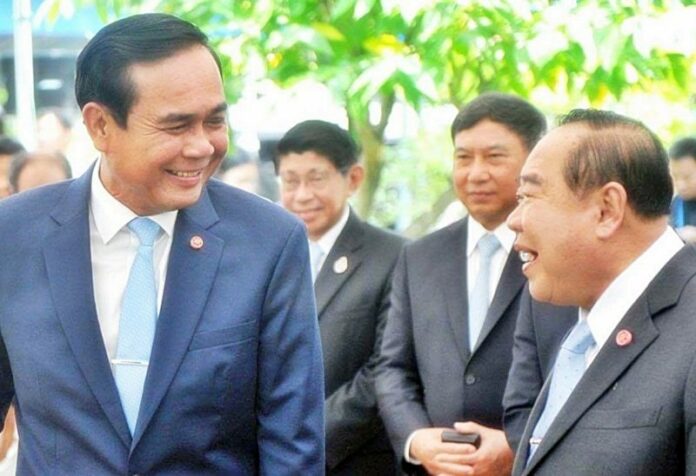
Junta chief Prayuth Chan-ocha shares a laugh with his deputy Prawit Wongsuwan in an undated file photo.


BANGKOK — A week after declaring himself a politician, junta leader and expected political candidate Prayuth Chan-ocha got his first high-profile endorsement today from none other than his embattled deputy.

“I likely agree,” Deputy Prime Minister Gen. Prawit Wongsuwan said Thursday when asked if he thought Prayuth – who’s also currently prime minister – should return to lead the government after the general elections promised for November.

Prawit, who was installed as deputy prime minister after helping lead the 2014 coup, said the decision whether to return Prayuth to the job lies with voters.

“It must be the voice of the people,” he said.

On Jan. 4, Prayuth declared publicly that he was now a politician, raising the likelihood he will seek to remain in power after voting returns to Thailand.

Advertisement

Airport Food Too Pricey? Tourism Minister Says He Doesn’t Eat There

Weerasak Kowsurat, tourism and sports minister, has advice on sufficiency eating. Photo: Matichon

BANGKOK — The new top tourism official had some straight talk for those unhappy about airport food prices: He doesn’t eat there.

Weerasak Kowsurat, tourism and sports minister, said Wednesday evening that he sometimes fills his stomach before heading to the airport so he doesn’t have to deal with expensive food and drinks.

“I eat something before arriving or wait until we get food served on the plane, or else eat at the destination we’re flying to,” he said.

Read: Don Mueang Defends Food Prices as PM Orders Investigation

Weerasak’s gave his official common-sense take on things after a Bangkok-based businessman’s complaint about bottled water prices Monday sparked a broad discussion of the issue.

Weerasak said a water bottle can be found for 10 baht while bottles of mineral water are sold from 25 baht to 50 baht, depending on the retailer.

There are also free water fountains and affordable food sellers such as food courts available inside most airports as an alternative for budget travelers, he added.

Note: After this story was published, Weerasak reached out to say that he wasn’t advising the public not to eat at the airport, and was only speaking about his personal experience. He said that he believes travelers should have options available at all budget levels. The story has been revised accordingly.

Related stories:

Don Mueang Defends Food Prices as PM Orders Investigation

Food at DMK Cheaper in Time for Songkran

Advertisement

Gunmen Slay Family of Former Pattani Volunteers

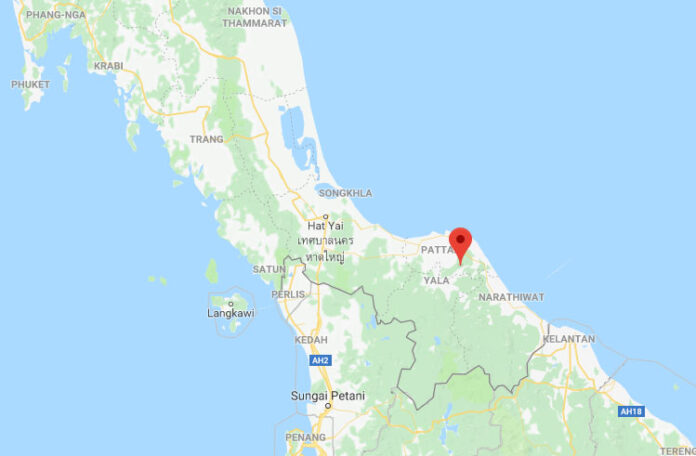
Thung Yang Daeng district in Pattani province. Image: Google

PATTANI — Four men accused of murdering a family of former volunteer paramilitaries in their home were still on the run Thursday morning, police said.

Gunmen entered the home Wednesday night and shot dead Hasana Hama, 29; Nasree Jehmaeng, 32; and Yuso Nilae, 73. They lived in the Thung Yang Daeng district of Pattani province, police said.

Local police were not ready to link it to the decade-plus insurgency movement that has claimed thousands of lives and frequently targets security forces.

“We are still investigating whether this is due to local unrest or personal disputes,” said Lt. Cpt. Boonthep Kerdmood of Thung Yang Daeng Provincial Police.

A police investigation revealed that the four men arrived on two motorbikes, entered the house and shot the three before fleeing.

The victims sustained multiple gunshot wounds. The house was found covered in splattered blood.

The family were said to be former members of Thung Yang Daeng’s Territorial Defense Volunteer Corps, a paramilitary group.

Advertisement

Pilot Caused Children’s Day Plane Crash: Military

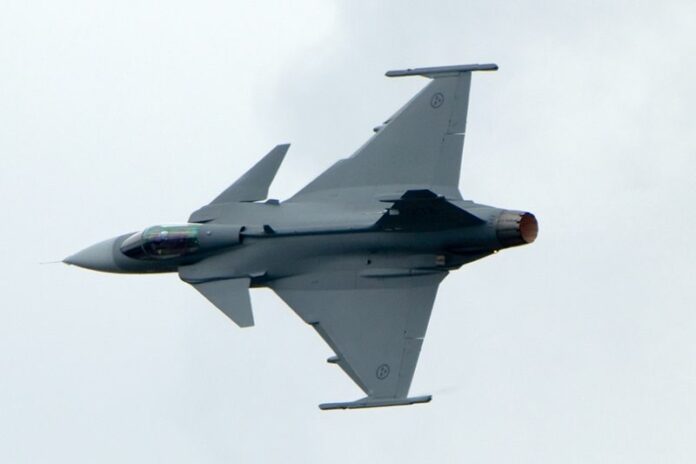
A Saab-built Gripen multirole fighter at the Berlin Air Show in 2010. Photo: Matthias Kabel / Wikimedia

BANGKOK — The air force on Friday said a jet fighter crash which killed the pilot during a Children’s Day air show a year ago was caused by the pilot’s loss of orientation during the flight.

In a statement released two days before the anniversary of the Gripen crash, the military said Dilokrit Pattawee became disoriented, which hampered his sense of awareness and direction.

Read: Year After Unexplained Crash, Gripens to Fly on Children’s Day

The statement said the condition could happen to any trained pilot and that the incident on the 2017 Children’s Day could not have been foreseen or prevented.

It added that the investigation – which involved engineers from a Swedish firm that built the Gripens – ruled out a possible mechanical malfunction.

The Gripens are set to take to the sky again on Saturday to mark this year’s Children’s Day over Don Mueang International Airport.

Related stories:
Two Months Later, No Explanation for Gripen Crash
Air Force to Keep Flying During Investigation of Gripen Crash

Gripen Fighter Jet Crashes at Hat Yai Air Show, Pilot Killed

Advertisement

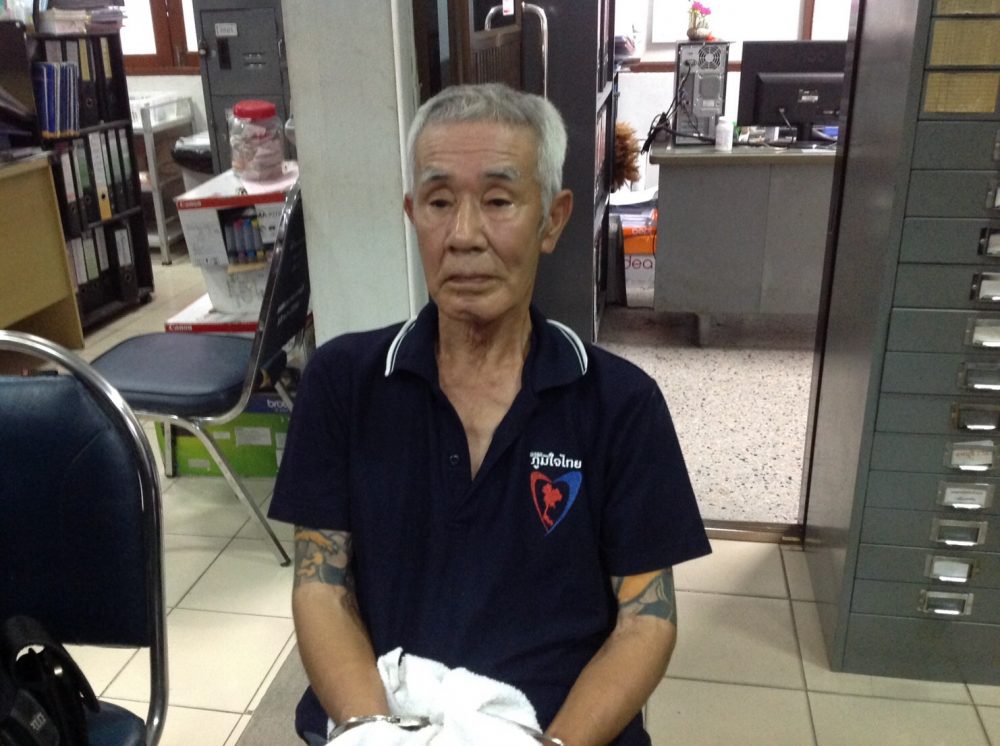
Cool Tattoos Give Away Lopburi Man’s Yakuza Secret

Shigeharu Shirai seen on a Facebook post in August

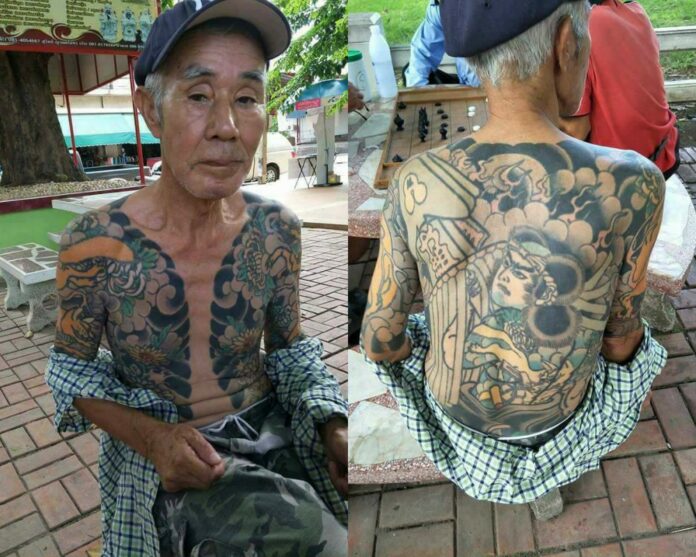
LOPBURI — A suspected Yakuza assassin avoided the law for 15 years in Thailand until Wednesday, after he was betrayed by his own hikae, or ritual sleeve tattoos.

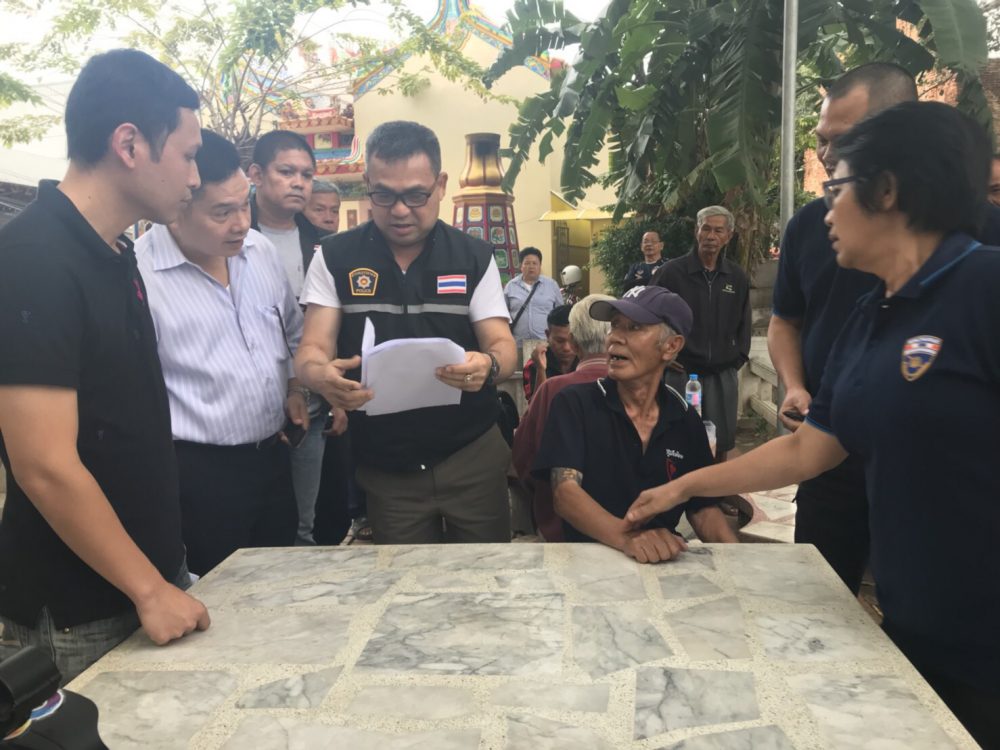
Shigeharu Shirai was playing chess when the police closed in on him Wednesday afternoon in Lopburi city, five months after photos of his impressively inked arms made a splash on social media. Shirai is a suspected member of Yamaguchi-gumi, Japan’s largest yakuza organization, and has been on the run in Thailand since 2005.

Shirai is among Japan’s most-wanted fugitives, according to Col. Ukrit Phuklan, deputy police commander of Lopburi province. He and seven others are accused of killing the leader of a rival yakuza gang in 2003 before escaping Japan.

In addition to tattoos all over his body, Shirai’s left pinky is missing, suggesting he participated in the yakuza ritual of yubitsume, in which members must chop off their own finders to atone for serious offenses.

The 74-year-old man reportedly has a Thai ex-wife Arisara Aranuwetchapan, 60.

Police got wind of his whereabouts after someone posted photos of Shirai’s tattoos to Facebook in August, praising them for their aesthetics.

“Uncle, you’re my idol. Am I going to be handsome like you when I’m older?” Tepparin Inchan said in the post, which went viral and was picked up by several media agencies.

Shirai will be charged with illegally entering Thailand, Ukrit said Thursday. Then police will hand him over to Japan.

The Yakuza are one of several transnational criminal organizations that operate in Thailand.

S 9486534 e1515645196694
Shigeharu Shirai on Wednesday at a police station in Lopburi province.
S 9486432 e1515645158701
Shigeharu Shirai, seated, with police officers on Wednesday in Lopburi city
Advertisement

Malaysia to Pay US Firm up to $70M If It Finds Missing Plane

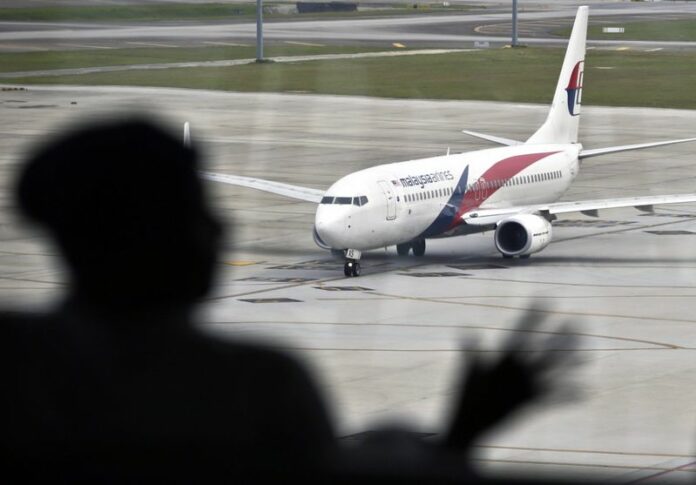
A Malaysian Airlines Plane in an undated file photo.
Photo: Fazry Ismail, EPA

PUTRAJAYA, Malaysia — Malaysia’s government said Wednesday it will pay U.S. company Ocean Infinity up to USD $70 million if it can find the wreckage or black boxes of Malaysia Airlines Flight 370 within three months, in a renewed bid to solve the plane’s disappearance nearly four years ago.

Transport Minister Liow Tiong Lai said there was an 85 percent chance of finding the debris in a new 25,000 square kilometer (9,650 square mile) area  roughly the size of Vermont  identified by experts.

The government signed a “no cure, no fee” deal with the Houston, Texas-based company to resume the hunt for the plane, a year after the official search by Malaysia, Australia and China in the southern Indian Ocean was called off. The plane vanished on March 8, 2014, while flying from Kuala Lumpur to Beijing with 239 people on board.

“The primary mission by Ocean Infinity is to identify the location of the wreckage and/or both of the flight recorders … and present a considerable and credible evidence to confirm the exact location of the two main items,” he told a news conference.

If the mission is successful within three months, payment will be made based on the size of the area searched. Liow said the government will pay Ocean Infinity USD $20 million for 5,000 square kilometers (1,930 square mile) of a successful search, USD $30 million for 15,000 square kilometers (5,790 sq. miles), USD $50 million for 25,000 square kilometers (9653 sq. miles) and $70 million if the plane or recorders are found beyond the identified area.

Ocean Infinity Chief Executive Oliver Plunkett said the search vessel Seabed Constuctor, which left the South African port of Durban last week, is expected to reach the southern Indian Ocean by Jan. 17 to begin the hunt.

He said eight autonomous underwater vehicles, which are drones fitted with high-tech cameras, sonars and sensors, will be dispatched to map the seabed at a faster pace. Plunkett said the underwater drones can cover 1,200 square kilometers (463 sq. miles) a day and complete the 25,000 square kilometers within a month.

“We have a realistic prospect of finding it,” he said. “While there can be no guarantees of locating the aircraft, we believe our system of multiple autonomous vehicles working simultaneously is well suited to the task at hand.”

The official search was extremely difficult because no transmissions were received from the aircraft after its first 38 minutes of flight. Systems designed to automatically transmit the flight’s position failed to work after this point, said a final report from Australian Transport Safety Board last January.

“I feel very happy but at the same time very panicky whether it can be found or not. Now it’s back to four years ago where we have to wait everyday (to find out) whether debris can be found,” said Shin Kok Chau, whose wife Tan Ser Kuin was a flight attendant on MH370.

Underwater wreck hunter David Mearns said the new search takes into account oceanographic models used to drastically narrow the possible locations of the crash and deploys state-of-the art underwater vehicles that will allow the company to cover far more seabed at a faster pace.

“There are no guarantees in a search of this type. However, notwithstanding that uncertainty, this upcoming search is the best chance yet that the aircraft wreckage will be found,” said Mearns, director of Blue Water Recoveries Ltd.

Story: Eileen Ng

Advertisement

Buddha Issara ‘Not Yet a Suspect’ in Lese Majeste Case: Police

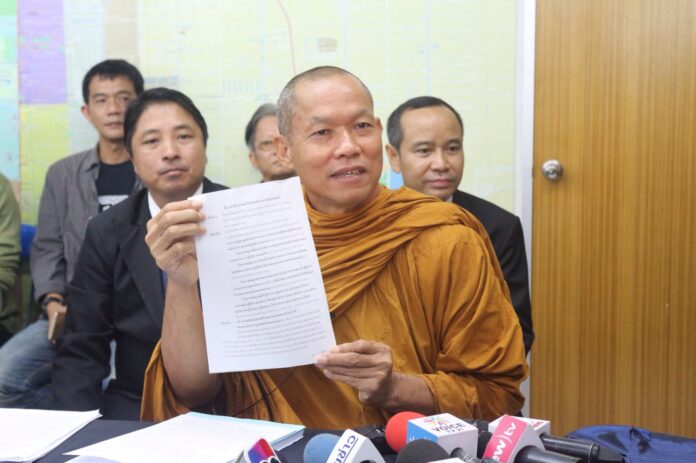
Buddha Issara speaks to reporters in a June 27, 2016

BANGKOK — An investigation into a royal defamation case involving a controversial activist monk is proceeding, but police have yet to name any suspect, a senior official said Wednesday.

A controversial activist monk Tuesday denied defaming the monarchy by selling unauthorized amulets, though police said he is not even officially a suspect in their investigation.

Buddha Issara, a firebrand monk who helped lead street protests that resulted in the 2014 coup, denied the allegations at a meeting with police. He also told reporters he heard of a planned raid on his temple by police commandos, an accusation officers dismissed as unfounded.

“He keeps talking like this. The media already knows how he is. You know he’s been like this for a long time,” Col. Phumin Pumpanmuang, a commander of Crime Suppression Division. “Whatever he wants to speak, it’s his rights.”

He added that the case has yet to have any suspect, and Buddha Issara is merely considered a person of interest.

A Buddhist group filed a royal defamation complaint to police in April, accusing Buddha Issara of making amulets bearing royal insignia without permission from the palace. Buddha Issara, who was born Suwit Thongprasert, denied the allegation.

The monk met with police Tuesday to give his testimony, but he did not tell reporters what he said in the meeting. Phumin also declined to disclose what the two parties discussed.
“This is an ongoing investigation,” Phumin said.

Any sign of disrespect toward the monarchy is harshly punished. Claiming false ties to the palace or forging palace-issued goods has led to serious charges in the past.

Known for fiery rhetoric that has verged on incitement of violence, Buddha Issara helped lead street protests against the civilian government in 2013 alongside other opposition politicians and activists.

He famously led crowds to occupy parts of Government Complex and demand a hotel give him 120,000 baht for not accepting his bookings.

The protests, during which at least 20 people died, culminated in a military takeover in May 2014.

Advertisement

Hot News

LATEST NEWS

Bangkok
broken clouds
33.3 ° C
33.3 °
32.7 °
59 %
1.3kmh
70 %
Sun
36 °
Mon
37 °
Tue
36 °
Wed
37 °
Thu
36 °