36.1 C
Bangkok
Saturday, June 27, 2026
Home Blog Page 2159

Docu Winds Clock Back to Black Struggle in US

Image: Magnolia Pictures & Magnet Releasing / YouTube

BANGKOK — The brutality experienced by black Americans and other ethnic minorities in the United States during their fight for social equality will be revisited in a documentary showing Monday.

Just over 50 years since the US Civil Rights Act sought to end institutionalized racism and repression in the Land of the Free, a press club will screen “I Am Not Your Negro,” a documentary recalling the violent struggle minorities endured in the quest for achieve their goal.

Based on “Remember This House” – an unfinished manuscript of memoirs by social critic James Baldwin on his slain friends Martin Luther King Jr., Medgar Evers and Malcolm X – “I Am Not Your Negro” highlights the consequences of racism in the United States.

Directed by Raoul Peck and narrated by actor Samuel L. Jackson, the film was nominated for best documentary of 2016 at the Oscars.

“I Am Not Your Negro” shows at 7pm on Monday at the Foreign Correspondents’ Club of Thailand, which can be reached via skywalk from BTS Chit Lom’s Exit No. 2. Tickets are 150 baht (free for members) and 250 baht for buffet access.

Advertisement

Commuters Trapped in BTS Rush Hour Breakdown

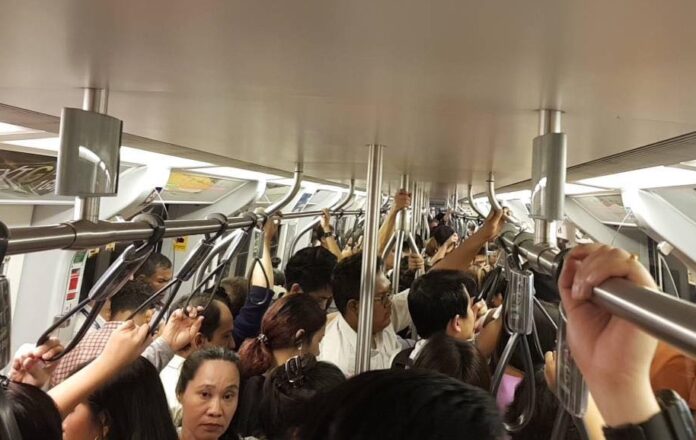
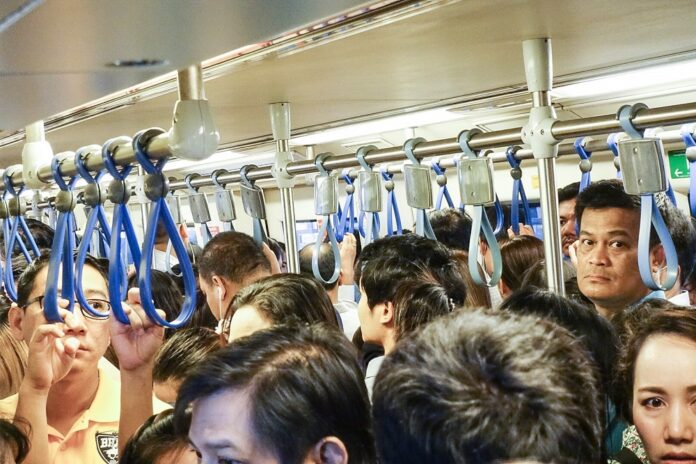
Passengers trapped inside a skytrain carriage Thursday evening

BANGKOKA system failure left hundreds of skytrain passengers stranded on platforms and in carriages for an hour.

The trains broke down at about 6:24pm, according to a statement tweeted by BTS management. It said there would be “10 minutes delay” for train rides. However, the system wasn’t back on track until over an hour later at 7:39pm.

The system’s operator did not give any reason for the breakdown.

Many passengers were stuck in crowded trains without air conditioning, while others were packed onto platforms during the evening rush hour. Train commuters were only informed there was “an inconvenience.”

It’s second time the skytrain – a vital mode of transport in the traffic-choked Bangkok – to break down this week, following a similar delay Tuesday morning.

Frustrated commuters took to Twitter to vent their outrage at what seem increasingly common breakdowns.

“I have a dinner date with a guy, but you made my date late. How will you take responsibility? I have less time to spend with him, will you take responsibility?” @Debracken tweeted to the official BTS account.

“U want to know why BTS malfunctions nearly everyday, and how will they improve or fix it? Even though the fare is high, why is quality for passengers so low?” @TawLovesJesus wrote.

Some also criticized the operators leaving foreign tourists in the dark.

“There should be announcement in English. Have some consideration for tourists. They were confused, had to ask people around them what happened,” @Chinesejai tweeted.

Advertisement

Prayuth Reshuffling Deck in Hope of Popularity Trump Card: Pundits

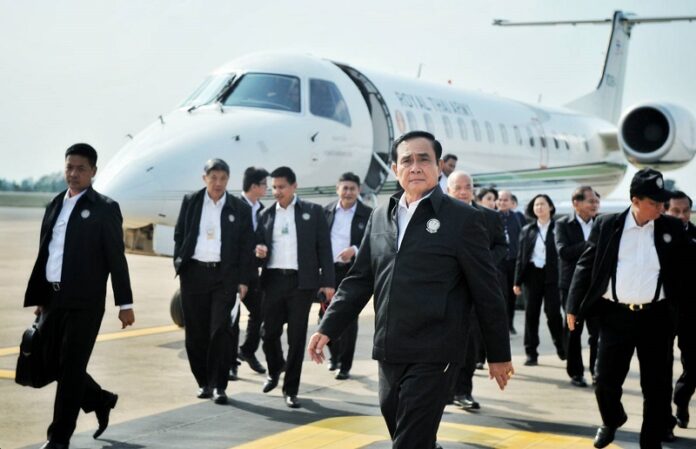
Prime Minister Prayuth Chan-ocha arrives Oct. 31, 2017, to Khon Kaen province with members of his cabinet to inspect flood damage.

BANGKOK — Although the details of who’s in and out in the cabinet reshuffle have yet to be announced, politicians and critics are seeing it as a pivot by the military regime toward elections next year.

Among them is former senior Democrat MP Kraisak Choonhavan, who said Thursday that junta leader and Prime Minister Prayuth Chan-ocha’s revamping of his cabinet is a sign that his military government is preparing to compete for votes, and even more, a desperate bid to shore up its flagging popularity.

“It is necessary because its legitimacy is depleting,” Kraisak said. “To communicate with the public, you have to go through the media, but they have been battling the press for three years now. Can they really go on?”

Read: Cabinet Reshuffle Pinned on Junta Economic Fails

It’s impossible, he added, for the military to extend its power and influence beyond general elections without allies. That’s where small- and middle-size political parties come into play.

Among speculation about the latest cabinet reshuffle is the possibility that key members of such parties, such as the Chartthaipattana or Krung Jai Thai parties, could be brought in to join the cabinet.

Dean of Ubon Ratchathani University’s political science department, Titipol Phakdeewanich, said the reshuffle is meant to tweak and introduce policies that can attract votes and reverse the sliding popularity of the junta, which calls itself the National Council for Peace and Order.

Titipol said that despite polls suggesting the junta is highly popular, they probably know the reality is different. “It’s about creating a comfort zone for themselves and an acknowledgment of its steeply dwindling popularity,” he said.

An effective reshuffle could revive its popularity, with the economy being a key concern, the dean said.

Rumors began circulating earlier this month that Prayuth would reconstitute his cabinet for a fourth time since seizing power in 2014. He confirmed Wednesday that the plan had been sent to the king for approval, but did not disclose the details other than to dispute speculation his economic team would be replaced.

All in all, Titipol sees the move as an attempt to pave way for Prayuth to become prime minister again after general elections.

“There’s a high likelihood that Prayuth will return as PM [after elections],” he said.

This is the reason why people like former Pheu Thai MP and Redshirt poohbah Weng Tojirakarn wants Prayuth to state publicly that he won’t seek the post.

“Does the prime minister dare announce that he won’t become PM after the election?” said Weng, who sees the latest reshuffle as an attempt the lift the military government out of unpopularity.

Weng said the current cabinet is largely ineffective, citing the agriculture ministry’s failures to shore up prices of basic agricultural products such as rubber. The former MP claims the economic growth the regime boasts about most likely benefits the top 1 percent of the population.

“The feelings of the people are reaching a saturation point, and the NCPO is aware, so it reshuffled the cabinet to avoid reaching a low point,” Weng said.

As for the junta’s engagement with small and medium-sized political parties, Weng said it’s made obvious by Prayuth’s recent visits to provinces such as Suphan Buri – a bastion of support for Chartthaipattana. This means the regime is reaching out for allies, Weng believes.

“They will likely join hands with these parties, and there may be no need to set up their own army party,” Weng said.

Read: ‘Junta Party’ Leader Says He Isn’t, Critic Says He Is

To democracy activist Rangsiman Rome, the major reshuffle is testament to the inefficacy of the military government.

“They probably think what should be done to make the government more effective. They probably are thinking about elections already. If there weren’t elections [next year], there probably would be no need for such a major reshuffle. It’s likely that there will be,” he said, adding that there is still uncertainty whether elections will definitely take place as currently set for next November.

Making his case for the reshuffle on Wednesday, Prayuth said it is intended to make his government more agile and ensure “optimal effectiveness.”

Rangsiman said people expect the economy to improve. As for the speculation that some members of small- and middle-sized parties could be brought on board, he said those parties are easier to deal with compared to the dominant Democrat and Pheu Thai parties.

Advertisement

Despite Raft of Sponsors, Public Gives Most to Charity Run

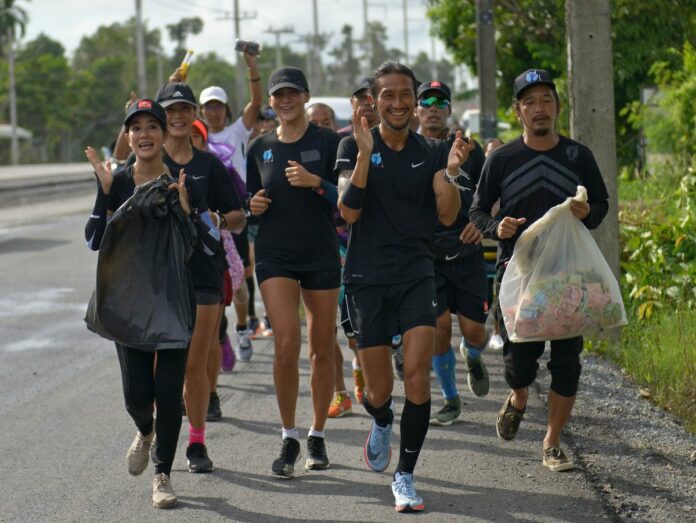
Artiwara “Toon Bodyslam” Kongmalai at the head of a pack of runners earlier this month in Nakhon Si Thammarat province.

Thousands have lined up to hand over millions of baht in cash to a rock star running the length of the nation for charity, more than double the amount private corporations have poured into his cause.

Though Artiwara “Toon Bodyslam” Kongmalai’s run was halted in the 19th day of his run due to an injury that may prevent him from finishing it, he has already raised over 300 million baht for 11 state-run hospitals across Thailand. Organizers said somewhere between 20 percent to 25 percent of that, which would be 60 million baht to 75 million baht, has come from 68 corporate sponsors.

Members of the public have donated 220 million baht.

Sixty-seven domestic sponsors have backed the effort with cash and goods, Patcharin Noosaeng, spokeswoman for the campaign called Kao Kon La Kao (Step by Step) said.

Read: Rock Star Sets Off on Cross-Country Charity Run

Those corporate donations range from 500,000 baht to 25 million baht. The largest donor is King Power, with 25 million baht. Donations in this range also come from private individuals.

Although Toon’s body is festooned with Nike logos, the sportswear company has not contributed any money to the cause, Patcharin said.

She also confirmed that the Bodyslam frontman was not receiving any money for the run.

“Every satang, every baht goes to the cause,” she said. “P’Toon does not get any money or was hired for this, I can confirm it. … We can guarantee that Phramongkutklao Hospital is directly receiving all the donations.”

Moreover, she said all team members were people who knew Toon personally and were donating their time without compensation.

“We’re not doing this for a salary. We’re doing this for the common good. Any food or accommodation we get is given to us from people’s hearts,” she said.

Donors can also ask for tax breaks for donations to Toon’s run.

Proceeds from the sale of a Line sticker set featuring Toon, drawn by cartoonist Pakdee “Tai Kai-Hua-Ror” Saentaweesuk will also go to the charity. Patcharin said other sponsors are not creating products to profit from the endeavor. Proceeds from official T-shirts and hats sold through sponsor Lazada’s online shopping site also go directly to the cause, said Patcharin.

Proceeds from Toon’s run, currently sitting at 313 million baht, will go to 11 public hospitals nationwide, including Bangkok’s Phramongkutklao Hospital.

Toon’s progress has captivated the national media since he set out on what was to be a 55-day, 2,191-kilometer run from Yala province in the south to Chiang Rai in the north. Donations have poured in to close the distance to Toon’s 700 million baht goal, from regular win motosai to wealthy businesspeople.

Whether he will be able to complete the run is up in the air after his progress was halted Thursday due to a tendon injury. He plans to rest two days and resume the run on Saturday.

Related stories:

King to Honor Running Rocker ‘Toon’ With Gifts

Mo Farah Encourages ‘Toon Bodyslam’ on Cross-Country Charity Run

Rock Star Sets Off on Cross-Country Charity Run

Advertisement

Siamese Fighter Flagged for National Fish

A flag-colored fighting fish Thursday at Government House.

BANGKOK — The Siamese fighting fish will be declared Thailand’s national fish due to its cultural – and commercial – importance, if the agriculture ministry gets its way.

Fishery and ag officials dropped the gauntlet Thursday at the Government House’s Khlong Phadung Krung Kasem Floating Market to call for Betta Splendens, aka Siamese fighting fish, to be given the national title.

“Our ministry wants to push for the Siamese fighting fish to be declared the national aquatic animal because of its historical, cultural, social and commercial importance,” Thanit Anekwit, an official from the Ministry of Agriculture and Cooperatives said.

Thanit said there it would be a boost to many fish farmers. Exports of the fish generate 1 billion baht annually.

“Thailand’s beautiful fish are one of the agricultural products that have a potential for growth in the overseas export market, especially Siamese fighting fish,” Thanit said. “Thailand can breed species of fighting fish that have been praised and accepted on the international stage.”

In its eight centuries, the kingdom has never named a national fish. The elephant is the national animal.

S 7938059 e1511427241903

S 7938060 e1511427118353


Advertisement

Shrine Bombing Suspect Reappears to ‘Fight Her Case’

Police question Wanna Suansan on Wednesday evening in Bangkok.

BANGKOK — After two years on the run, a woman accused of colluding with the engineers of Thailand’s worst terror attack suddenly reappeared at Bangkok’s international airport yesterday.

Wanna Suansan, 29, who was arrested Wednesday upon landing at Suvarnabhumi Airport, said through her lawyer that she returned with the intention of proving her innocence.

“She said she came back to fight her case,” Bodeesorn Paosuthor said, adding that his client would only testify in court.

Wanna left Thailand six weeks before a bomb went off at the popular Erawan Shrine in August 2015, in what was considered the kingdom’s worst terror attack in modern history. Many of the victims were tourists of Chinese descent.

Police accused Wanna and her husband, a Turkish suspect who’s still on the run, of colluding with the bombers. Wanna denies all allegations, according to Bodeesorn.

Wanna is the third suspect to be arrested in connection with the 2015 bombing, after two Uighur men Adem Karadag and Yusufu Mieraili. Karadag is identified as the man who planted the bomb at the shrine, while Mieraili is accused of finding equipment for the bomber. Both men deny all allegations.

Like the two men, Wanna will be tried under the military court. Her lawyer said today that she is unlikely to be granted bail.

Special Branch police commander Chayapol Chatchaidet said his force learned yesterday that Wanna was due to return to Thailand on the same day. The government of the country she departed from has requested Thai police not to publicly identify them by name, said Maj. Gen. Chayapol, whose agency oversees police intel gathering.

23960936 10154921686435636 102928156 o
Wanna Suansan arrives at military court Thursday

Reporters at the scene of the arrest say Wanna was traveling from Turkey. Immigration records from 2015 also say she left Thailand for Turkey.

Asked why Wanna abruptly returned to the country after two years on the run, Chayapol said, “Police will gather information about her motive.”

A total of 17 arrest warrants were issued in the wake of the bombing. Apart from Wanna, Karadag and Mieraraili, no one else has been arrested. Fugitive suspects include Wanna’s husband, a Turkish national named Emrah Davutoglu.

“We are trying to track down the rest,” Chayapol said.

No group has ever claimed responsibility for the attack.

Police described it as revenge by human smugglers for cracking down on their network.

Most analysts believed it was staged by militants upset at Thailand’s decision to deport Uighur refugees back to China, where a history of abuses toward Uighur ethnics are routinely documented by civil rights groups. Twenty-five of those refugees who remained incarcerated in an immigration detention center in Songkhla province escaped and fled earlier this week.

Turkish Link

After the attack, a growing body of evidence established many links to Turkish suspects.

When police raided Wanna’s home in the south of Thailand, her family said she told them she was in Turkey with her husband. Piles of forged Turkish passports were found in the raid that netted the man now on trial for leaving the bomb, Adam Karadag, who was using a fake Turkish passport.

A number of Turkish nationals were named in arrest warrants, but no mention of them was made again after the arrests of two suspects investigators said were the attack’s masterminds.

Both were ethnic Uighurs, a majority Muslim and ethnically Turkic group who speak a language similar to Turkish, in China’s restive Xinjiang province.

For this, China brands them terrorists and put the screws on Bangkok for many months to hand over a large group of Uighurs caught in the kingdom en route to Turkey.

Advertisement

Future Factory to Feature French Beatsmith ‘Onra’

Arnaud Bernard, or Onra.

mongkorn.bug .2017

Arnaud Bernard, aka Onra, has released seven albums and a string of singles and EPs, earning him a reputation for beats that draw inspiration from ‘80s funk, jazz and most recently – retro Chinese music.

Released in March, the album “Chinoiseries Pt. 3” is the last and final chapter of a project originally conceived a decade ago when the producer was traveling through Thailand, Vietnam and China. In each city, Benard would spend hours crate-digging at second-hand record stores for ‘60s and ‘70s Chinese music. Those finds served as the source material and samples for the entire Chinoiseries album series.

Thirty-two tracks deep, “Chinoiseries Pt. 3” is a sonic collage of sorts. Imagine Chinese gongs, flutes, string instruments and opera snippet samples from dusty crackling records pulled apart layered, looped, filtered and rearranged over a framework of boom bap hip hop beats. All done using Bernard’s trusted weapon of choice – the Akai MPC 1000 – a sampler, drum machine and midi sequencer all rolled into one. It was a popular piece of equipment for many hip hop producers during the ‘90s.

This weekend Onra brings his Akai MPC’s 1000 to perform live for his Bangkok fans. But before his show I caught up with Onra to talk about crate digging, his trusted sampler and his upcoming projects.

Mongkorn Timkul: I understand you grew up in the countryside. Were you into music back then?

Arnaud Bernard: I grew up between Abidjan, Germany, in a mid-size city one hour away from Paris. Wasn’t really that country. I got into hip-hop and R&B from the age of 10, in 1991. I started making music for fun, and it became my passion at the age of 18.

MT: With you being half Vietnamese and besides digging for Asian music and finding vinyl to collect, was the Chinoiseries a way of exploring your Asian heritage through music?

AB: Not at all, I never looked at it that way. This project happened by chance, and at first I didn’t even want to release it. I always thought this was like a challenge to me, to try and find something decent out of these records and make something cool out of it. I could have had origins from Africa, South America or somewhere in the Middle East, I would have done the exact same thing.

Pasted image at 2017 11 23 12 11 PM

MT: Do you think crate digging and flipping samples and loops is an art that is disappearing with new generation producers?

AB: I don’t think so at all. I recently heard some Future production, and the beat is mostly a loop. The only thing that differentiates the old and new generation if the tempo, the rhythm and the drum sounds. Aside from that, it’s very similar and sampling will never die.

MT: So “Chinoiserie Pt. 3” is out. I hear there won’t be anymore. So you don’t want to explore anymore of the Asian themes or will you have a few similar releases in the future?

AB: Nah. I’m done with it. This has never been what I do on a daily basis, like I said, I just did this project for fun and take it like a challenge.

MT: I see you work mostly with MPC. Are you using anymore new equipment nowadays? What is it about the MPC that you like?

AB: I’m just used to it. I started with it and now it’s just easy to use. I have some other equipment but I still like to use the MPC so far.

MT: What new projects do you have lined up for 2018 and what kind of stuff are you gonna drop for your fans in Bkk?

AB: My new album is coming out in a few months, sounds like ‘80s and ‘90s R&B, which is more how I define my sound and personality. So I’ll play some of this, and some of my six different albums… some exclusive stuff… some old stuff and some Chinoiseries.

Onra Live Set will start at 8pm on Saturday at Future Factory Bangkok, reachable by foot from BTS Sanam Pao. Tickets are 500 baht.

Advertisement

What Happens Once ‘Net Neutrality’ Rules Bite the Dust?

NEW YORK — The Federal Communications Commission formally released a draft of its plan to kill net-neutrality rules, which equalized access to the internet and prevented broadband providers from favoring their own apps and services.

Now the question is: What comes next?


Radical Departure”

The FCC’s move will allow companies like Comcast, AT&T and Verizon to charge internet companies for speedier access to consumers and to block outside services they don’t like. The change also axes a host of consumer protections, including privacy requirements and rules barring unfair practices that gave consumers an avenue to pursue complaints about price gouging.

FCC Chairman Ajit Pai says his plan eliminates unnecessary regulation. But many worry that his proposal will stifle small tech firms and leave ordinary citizens more at the mercy of cable and wireless companies.

“It would be a radical departure from what previous (FCC) chairs, of both parties, have done,” said Gigi Sohn, a former adviser to Tom Wheeler, the Obama-era FCC chairman who enacted the net neutrality rules now being overturned. “It would leave consumers and competition completely unprotected.”

During the last Republican administration, that of George W. Bush, FCC policy held that people should be able to see what they want on the internet and to use the services they preferred. But attempts to enshrine that net-neutrality principle in regulation never held up in court — at least until Wheeler pushed through the current rules now slated for termination.

Pai’s proposals stand a good chance of enactment at the next FCC meeting in December. But there will be lawsuits to challenge them.


More Details

The formal proposal reveals more details of the plan than were in the FCC’s Tuesday press release. For instance, if companies like Comcast, AT&T and Verizon decide to block a particular app, throttle data speeds for a rival service or offer faster speeds to companies who pay for it, they merely need to disclose their policies for doing so.

The FCC also says it will pre-empt state rules on privacy and net neutrality that contradict its approach. Verizon has noted that New York has several privacy bills pending, and that the California legislature has suggested coming up with its own version of net neutrality rules should the federal versions perish.

The plan would leave complaints about deceptive behavior and monitor privacy to the Federal Trade Commission, which already regulates privacy for internet companies like Google and Facebook.


Best Behavior

Broadband providers are promising to be on their best behavior. Comcast said it doesn’t and won’t block, throttle or discriminate against lawful content. AT&T said that “all major ISPs have publicly committed to preserving an open internet” and that any ISP “foolish” enough to manipulate what’s available online for customers will be “quickly and decisively called out.” Verizon said that “users should be able to access the internet when, where, and how they choose.”

Some critics don’t put much weight on those promises, noting that many providers have previously used their networks to disadvantage rivals. For example, the Associated Press in 2007 found Comcast was blocking some file-sharing. AT&T blocked Skype and other internet calling services on its network on the iPhone until 2009.

But others suggest fear of a public uproar will help restrain egregious practices such as blocking and throttling. “I’m not sure there’s any benefit to them doing that,” said Sohn. “It’s just going to get people angry at them for no good reason. They don’t monetize that.”


Fast Lanes, Slow Lanes

Sohn, however, suggests there’s reason to worry about more subtle forms of discrimination, such as “paid prioritization.” That’s a term for internet “fast lanes,” where companies that can afford it would pay AT&T, Verizon and Comcast for faster or better access to consumers.

That would leave startups and institutions that aren’t flush with cash, like libraries or schools, relegated to slower service, said Corynne McSherry, legal director at the Electronic Frontier Foundation, a digital-rights group. In turn, startups would find it harder to attract investors, Sohn said.

Michael Cheah, general counsel of the video startup Vimeo, said broadband companies will try to lay groundwork for a two-tiered internet one where cash-strapped companies and services are relegated to the slow lane. To stay competitive, small companies would need to pony up for fast lanes if they could but those costs would ultimately find their way to consumers.

The view is different at the Information Technology and Innovation Foundation, a Washington, D.C., think tank funded by Google and other established tech companies. Doug Brake, a telecom policy analyst at the foundation, said there’s little chance broadband companies will engage in “shenanigans,” given how unpopular they already are with the public.

Brake likewise played down the threat of internet fast lanes, arguing that they’ll only be useful in limited situations such as high-quality teleconferencing. Like the FCC, he argued that antitrust law can serve to deter “potentially anticompetitive” behavior by internet providers.

Story: Tali Arbel

Advertisement

Royal Crematorium to Open Until Dec. 31

Update Nov. 29: The royal crematorium is extended to open until Dec. 31, the cabinet announced on Wednesday. 

BANGKOK — The royal crematorium exhibit may be open to the public longer than planned.

On Tuesday, Gen. Prayuth Chan-ocha said his cabinet was considering extending the exhibition since visitors are still packing into the site every day since it opened at the beginning of this month following the cremation of King Bhumibol.

Gen. Prayuth said it sent a positive message to the world.

“People take beautiful photos with the crematorium and foreigners all over the world see it. They think, ‘The funeral is over, why are so many people still at the crematorium?’” Prayuth said. “It shows our love, faith and confidence in the monarchy, which is a good thing.”

The general also said that during his foreign travels, foreigners praised his country’s history and art.

“Whether it’s the UN Secretary General or Donald Trump, they say Thailand is beautiful and has nice people, even if they have never been here. But they’ve seen footage on TV, so they view our country in a good light.”

The royal crematorium exhibition opened on Nov. 1 to visitors, days after the late king was cremated in spectacular rites observed nationwide.

The public was subsequently banned from ascending to the structure’s upper levels the next day.

The crematorium was to be dismantled at the end of November, as tradition considers it a bad omen to leave it standing in the city center for long. So far, more than 1.4 million people have reportedly visited the structure, where an exhibition and murals about King Rama IX have been erected.

Related stories:

Royal Crematorium Interior Closes to Visitors

Take a Tour Around the Royal Crematorium (Photos)

Finished: Royal Crematorium 100% Complete (Photos)

Advertisement

More Seatless Subway Cars Coming: MRT

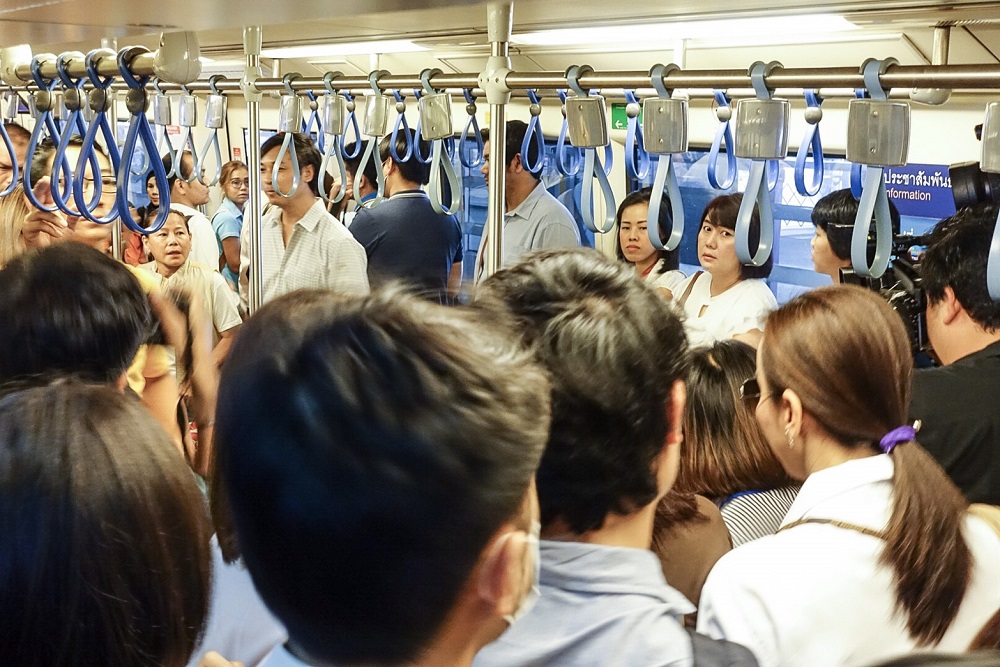
MRT commuters inside a new train that seats were replaced with straps at Tao Poon Station on Thursday morning

BANGKOK — During the Thursday morning crunch, commuters streamed into a train at MRT Tao Poon to find three compartments no longer had seats.

Defending the plan after the unannounced pilot program met a frosty reception this week, officials insisted this morning that the new experiment – replacing 14 seats with 32 more straps in the middle of each compartment – means an additional 10 percent passenger capacity.

Read: Bangkok Subway Removes Seats to Save Space

That means carrying 990 passengers instead of 900, according to Ronnachit Yaemsaard of the Mass Rapid Transit Authority.

The seat removal met a hostile reception from the public Monday, when it was piloted on a single train on the MRT Blue Line subway. Angry commuters protested the plan the system operator has presented as a stop-gap measure until it puts additional trains into service.

“I had a long day today and I only wished to sit in the MRT train. I was first in line, but it appeared the compartment I was on was the one that had its seats removed. Damn it,” @waralee tweeted.

Good governance activist attorney Srisuwan Janya filed a complaint Tuesday alleging the Bangkok Expressway and Metro exploited consumers by not investing in purchasing more trains.

If the plan is approved, seats will be removed from every train by the end of the year, said Sombat Kitjalaksana. managing director of the Bangkok Expressway and Bangkok Metro.

The MRT Blue Line’s 19 trains will be supplemented by an additional 35 trains, Sombat said, which have been ordered and will be rolled out starting in late 2018.

Not all were opposed to the idea. A number of people said the change would add more space and offer more options for commuters.

“[I] like the new MRT. It can fit more people. They only removed the seats in the middle. There are still seats in other areas,” @Natfanjbnaja tweeted.

https://twitter.com/natfanjbnaja/status/933518251396497408

Sombat said the model is common around the world on rail services in places such as Japan and Singapore.

For those who entitled to seats, Ronnachit said the affected carriages will be marked by stickers to inform pregnant women, children, monks and seniors where seats have been removed.

S 6881288

498717


Related stories:

Bangkok Subway Removes Seats to Save Space


Advertisement

Hot News

LATEST NEWS

Bangkok
overcast clouds
36.1 ° C
36.6 °
35 °
61 %
3.6kmh
100 %
Sat
37 °
Sun
36 °
Mon
35 °
Tue
33 °
Wed
32 °