





















27.2 C
Bangkok
Monday, June 29, 2026
Home Blog Page 2179

Scientists Discover Hidden Chamber in Egypt’s Great Pyramid

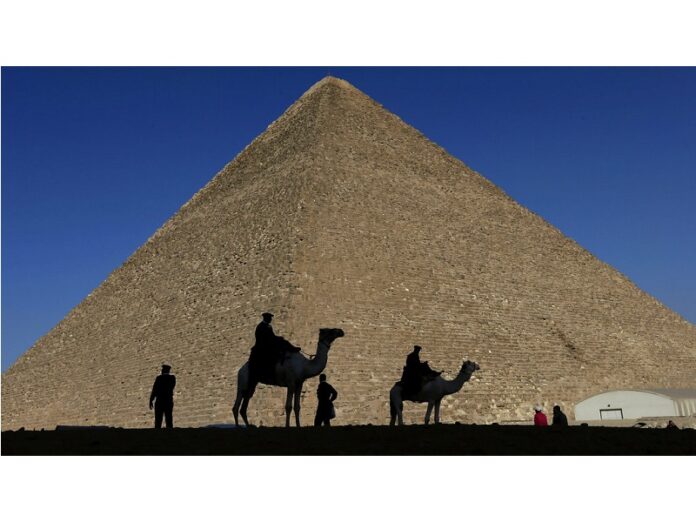
Policemen are silhouetted in 2012 against the Great Pyramid in Giza, Egypt. Photo: Hassan Ammar / Associated Press

CAIRO — Scientists say they have found a hidden chamber in Egypt’s Great Pyramid of Giza, in what would be the first such discovery in the structure since the 19th century and one likely to spark a new surge of interest in the pharaohs.

In an article published in the journal Nature on Thursday, an international team said the 30-meter (yard) void deep within the pyramid is situated above the structure’s Grand Gallery, and has a similar cross-section.

The purpose of the space is unclear, and it’s not yet known whether it was built with a function in mind or if it’s merely a gap in the pyramid’s architecture. Some experts say such empty spaces have been known for years.

“This is a premier,” said Mehdi Tayoubi, a co-founder of the ScanPyramids project and president of the Heritage Innovation Preservation Institute. “It could be composed of one or several structures… maybe it could be another Grand Gallery. It could be a chamber, it could be a lot of things.”

The scientists made the discovery using cosmic-ray imaging, recording the behavior of subatomic particles called muons that penetrate the rock similar to X-rays, only much deeper. Their paper was peer-reviewed before appearing in Nature, an international, interdisciplinary journal of science, and its results confirmed by other teams of scientists.

Chances of the space containing treasure or burial chambers are almost nil, said Aidan Dodson, an Egyptologist at the University of Bristol, but the discovery helps shed light on building techniques.

“The pyramid’s burial chamber and sarcophagus have already been discovered, so this new area was more likely kept empty above the Grand Gallery to reduce the weight of stone pressing down on its ceiling,” he said, adding that similar designs have been found in other pyramids.

Egypt’s former antiquities minister and famed archaeologist Zahi Hawass, who has been testing scanning methods and heads the government’s oversight panel for the new techniques, said that the area in question has been known of for years and thus does not constitute a discovery. He has long downplayed the usefulness of scans of ancient sites.

“The Great Pyramid is full of voids. We have to be careful how results are presented to the public,” he said, adding that one problem facing the international team is that it did not have an Egyptologist as a member. He said the chamber was likely empty space builders used to construct the rooms below.

“In order to construct the Grand Gallery, you had to have a hollow, or a big void in order to access it  you cannot build it without such a space,” he said. “Large voids exist between the stones and may have been left as construction gaps.”

The pyramid is also known as Khufu’s Pyramid for its builder, a 4th Dynasty pharaoh who reigned from 2509 to 2483 B.C. Visitors to the pyramid, on the outskirts of Cairo, can walk, hunched over, up a long tunnel to reach the Grand Gallery. The space announced by the scanning team does not appear to be connected to any known internal passages.

Scientists involved in the scanning called the find a “breakthrough” that highlighted the usefulness of modern particle physics in archaeology.

“It was hidden, I think, since the construction of the pyramid,” Tayoubi added.

The Great Pyramid, the last surviving wonder of the ancient world, has captivated visitors since it was built as a royal burial chamber some 4,500 years ago. Experts are still divided over how it and other pyramids were constructed, so even relatively minor discoveries generate great interest.

Late last year, for example, thermal scanning identified a major anomaly in the Great Pyramid  three adjacent stones at its base which registered higher temperatures than others.

Speculation that King Tutankhamun’s tomb contains additional antechambers stoked interest in recent years, before scans by ground-penetrating radar and other tools came up empty, raising doubts about the claim.

The muon scan is accomplished by planting special plates inside and around the pyramid to collect data on the particles, which rain down from the earth’s atmosphere. They pass through empty spaces but can be absorbed or deflected by harder surfaces, allowing scientists to study their trajectories and discern what is stone and what is not. Several plates were used to triangulate the void discovered in the Great Pyramid.

While the technology can detect large open spaces, it cannot discern what is inside, so it’s unclear if the empty space contains any objects. Tayoubi said the team plans now to work with others to come up with hypotheses about the area.

“The good news is that the void is there, and it’s very big,” he said.

Story: Brian Rohan
Advertisement

Thai Royalist Group Demands UK Expel BBC Correspondent

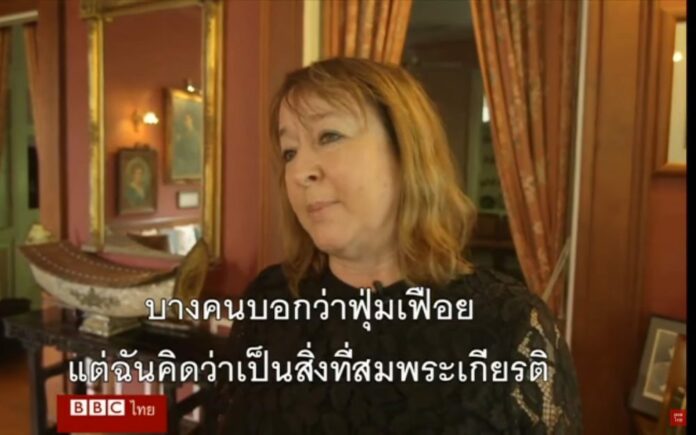
Narisa Chakrabongse speaks in a BBC interview.

BANGKOK — A small number of protesters gathered Thursday in front of the British Embassy in Bangkok to demand a BBC regional correspondent be removed from Thailand following a recent report relating to King Bhumibol.

The demand to remove Jonathan Head came in response to an Oct. 27 news segment in which he quizzed royal descendant Narisa Chakrabongse. During the interview, Head asked about the affection Thai people felt for the late king, who had been cremated the day before in a spectacular rite.

“We see this really emotional connection between him and ordinary people – genuine personal affection, there is that kind of bond. Yet in a country where royalist propaganda is so prevalent, and you have so many restrictions on what you can say about the royal family, people outside are bound to ask: Is it genuine, this love?”

Although the Narisa replied in the affirmative, the question enraged hard-line royalists on social media, leading to yesterday’s protest.

Read: Thailand’s ‘King of Kings’ Laid to Rest in Ancient Ritual

Calling themselves “Young Thai Blood,” four people staged a rally in front of the embassy and urged the British government to expel Head from Thailand, according to a copy of the letter they delivered.

“[Head] has shown no respect, courtesy nor consciousness toward our culture at any stages [sic] by questioning the love to our late King Rama IX throughout his public broadcast,” the English-language statement said. “Giving to his action, he has proven to be a bias and unprofessional, field reporter who lacks in conduct or ethics. [sic]”

The group is said to be led by Petchmongkol Wassuwan, an activist who’s campaigned on education reform and community rights. Petchmongkol did not reply to messages seeking comment.

Head, BBC’s Southeast Asian correspondent who’s worked from Thailand for the better part of two decades, declined to comment for this story.

The BBC interview was published as part of its coverage on the royal cremation of King Bhumibol, an elaborate ritual that took a year of preparations. Narisa is a great-granddaughter of King Rama V, who in turn was the grandfather of King Rama IX.

Narisa, who went on to acknowledge her own criticism of the lese majeste law, said she believed the affection was sincere.

“I think it is genuine,” Narisa replied in English. “I mean, for example, I’ve been brought up in Britain and in Thailand, so I’m quite interested in democracy and equality and all that sort of thing, but I feel it, just as much as anyone else. I was surprised how upset I felt when he died, and going on the streets and seeing people.”

She added, “So yeah, I think it’s very genuine.”

Despite the benign response, a number of royalists saw the question as an attack on the monarchy. Those critical of the interview included deputy education minister Panadda Diskul, who took to Facebook to denounce the BBC.

“It’s a question that lacks basic knowledge about history, culture, tradition and ethics,” Panadda wrote. “To sum it up: He does not know Thai people and Thailand’s important institutions.”

Head, a longtime resident of Thailand, covers a wide range of regional topics for the BBC which has included Thai politics, the monarchy and lese majeste law.

Head and other foreign correspondents based in the kingdom are often subjected to witch-hunting and backlashes from hardline conservatives incensed by critical or questioning coverage of the monarchy.

Correction: The headline and portions of this story have been changed to reflect that the four protesters in fact asked the British government to expel Head, not shut down the BBC in Thailand. We regret the error.

Related stories:

Govt Deplores Foreign Media Coverage, BBC Coverage Blocked

Authorities Visit BBC Thai Offices, Block Article Online

Advertisement

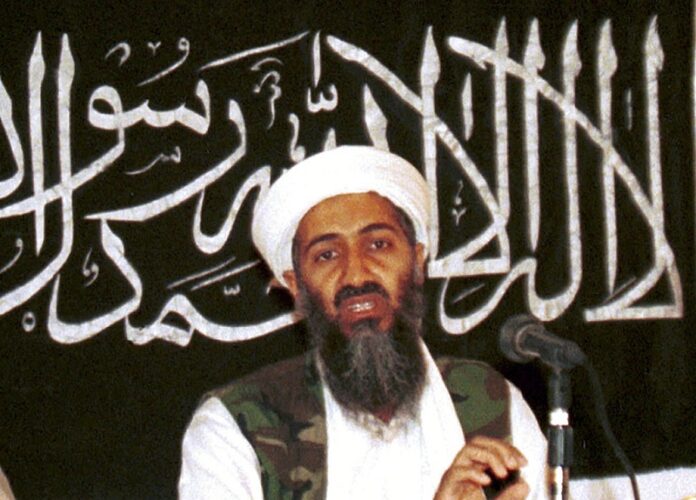
Bin Laden’s Views on Arab Spring Revealed in Family Journal

Osama bin Laden is seen in 1998 at a news conference in Khost, Afghanistan. Photo: Mazhar Ali Khan / Associated Press

DUBAI, United Arab Emirates — A journal made public by the CIA and apparently handwritten by one of Osama bin Laden’s daughters offers a glimpse into how the al-Qaida leader viewed the world around him and reveals his deep interest in the 2011 Arab Spring revolutions unfolding in the months before he was killed in a U.S. raid.

He talks about Libya becoming a pathway for jihadis to Europe; of his visit as a youth to William Shakespeare’s home in Britain; of how quickly turmoil had gripped the Middle East.

The 228-page journal meanders among discussions, thoughts and reflections bin Laden shared with his family about how to exploit the uprisings, what to make of the rapid changes unfolding in the Arab world and when al-Qaida should speak out.

“This chaos and the absence of leadership in the revolutions is the best environment to spread al-Qaida’s thoughts and ideas,” bin Laden is quoted as telling his family in the document.

Bin Laden’s wife, referred to as Um Hamza, assures him that a tape he released seven years earlier calling out the rulers of the region as unfit could be one of the major forces behind the Arab Spring protests roiling the region.

The Associated Press examined a copy of the journal uploaded by the Long War Journal to its website. The CIA released it Wednesday as part of a trove of material recovered during the May 2011 raid that killed bin Laden, then took down the files, saying they were “temporarily unavailable pending resolution of a technical issue.”

The journal appears to cover conversations between bin Laden and his daughters, Miriam and Somiya, his wife and his sons, Khaled and Hamza  the latter of whom would become a potential successor to lead the group his father founded.

The journal is titled, “Special diaries for Abu Abdullah: Sheikh Abdullah’s points of view  A session with the family,” which refers to bin Laden by his traditional Arabic name. The conversations took place between February and April 2011, with the journal entries dated according to the Islamic calendar.

During that time, uprisings in Tunisia and Egypt had ousted longtime autocratic rulers, touching off protests in Libya, Yemen, Bahrain and Syria. The Middle East was on the cusp of unstoppable change, chaos and turmoil.

In Libya, the uprising would end with Moammar Gadhafi’s death months after bin Laden was killed. In Yemen, al-Qaida would gain a greater foothold and remain active amid the chaos of war and famine. In Bahrain, the Sunni-led monarchy would launch a crackdown on the country’s Shiite majority. In Syria, the government’s lethal response to a protest by schoolchildren in early 2011 would spark mass protests and ignite a war and massive refugee crisis that continues today.

The reflections, jotted at times in blue ink and others in red, refer repeatedly to media reports of what was happening across the region.

At one point, they criticize Al-Jazeera TV’s broadcast of gruesome images from a deadly protest in Yemen, saying a warning should have been given to shield children from viewing them. However, the Qatari-backed channel is also hailed for “working on toppling regimes” and for “carrying the banner of the revolutions.”

Bin Laden appears concerned by the speed of some of the region’s revolts, believing that a gradual approach would help avoid the backlash of a counter-revolution as regime figures sought to hold onto power at all cost.

“I am upset by the timing of the revolutions. We told them to slow down,” bin Laden is quoted as saying, though it’s not entirely clear which countries he is referring to.

On Libya, bin Laden says he believes the uprising “has opened the door for jihadists.”

“This is why Gadhafi and his son say that the extremists will come from the sea, which will be an area of operation for al-Qaida. This will be the Somalia of the Mediterranean,” he is quoted as saying.

Still, bin Laden appears reluctant to issue a statement in support of Islamists in Libya for fear that if Gadhafi is ousted, the U.S. will try to expand its footprint there.

Yemen is a primary focus of the journal entries. Al-Qaida’s branch there is among its most active in the world and the journal suggests al-Qaida was plotting an assassination attempt against Yemen’s embattled ruler at the time, Ali Abdullah Saleh.

There is little indication that the writer had much information about what was happening in the region beyond what was reported in the media. This could indicate that bin Laden had become isolated in his final months hiding out in Abbottabad, Pakistan, where U.S. forces would find and kill him a little over a month later. Or it could also be that bin Laden was shielding his relatives from al-Qaida intelligence.

In the early pages of the document, bin Laden is asked about his thoughts on jihad, and replies that he first considered it “in secondary school.”

He says this was a result of his home and school environment. Separately, he describes his father as a pious man.

“There wasn’t a particular group that was guiding me, like the Muslim Brotherhood,” he is quoted as saying.

From a young age, he appeared to be unfazed by worldly spoils, recounting a story about declining a new watch from his wealthy father.

He recalls a summer spent studying in the U.K. when he was 14, including a visit to the home of Shakespeare. His time in Britain left him feeling uneasy and he decided not to return the following summer.

“I saw that they were a society different from ours and that they were morally corrupt,” he says.

Bin Laden imagines that Saudi Arabia would soon feel the “tsunami” of change sweeping the region. The late al-Qaida chief held Saudi citizenship until the early 1990s, before he was stripped of his nationality by the government.

He talks about wanting to deliver a message to Saudi youth and Saudi rulers: “The flood is coming and it will lead to a change so there is no need for violence.”

Story: Aya Batrawy, Maggie Michael, Malak Harb, Sinan Salaheddin, Malaka Badr

Advertisement

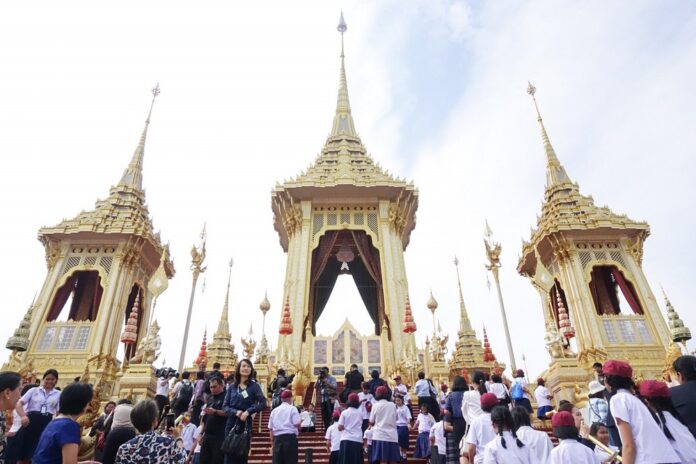
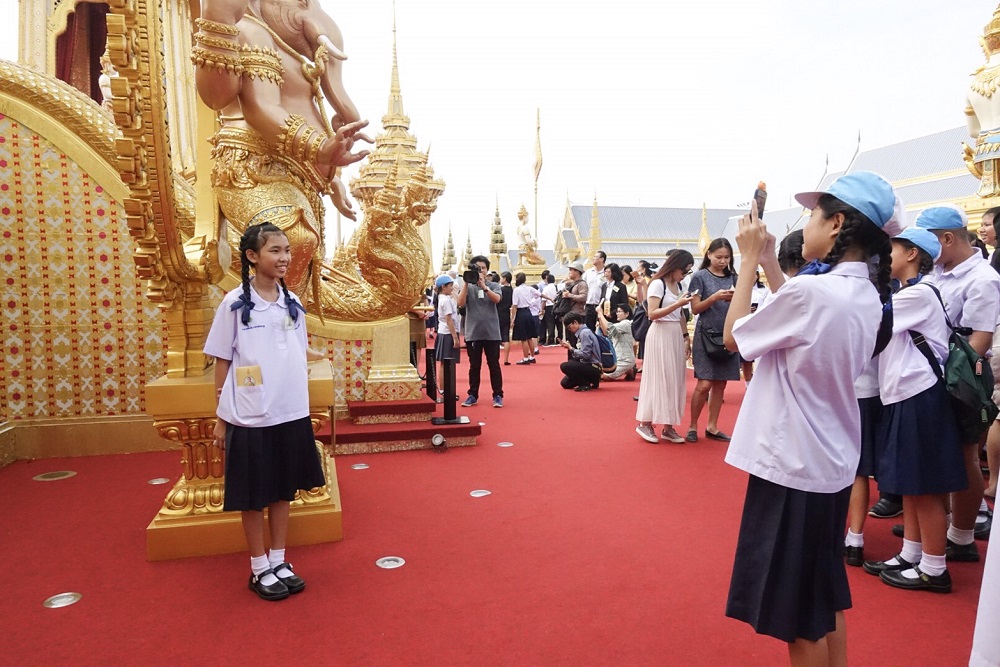
Royal Crematorium Interior Closes to Visitors

Visitors Wednesday morning at the crematorium.

BANGKOK — The Royal Crematorium’s interior can no longer be accessed after authorities on Thursday grew concerned it could be damaged by the multitude of daily visitors.

The decision by the Fine Arts Department means visitors will no longer be allowed on any of Meru Mas’ three levels. Anan Choochote, director of the Fine Arts Department, said the new regulation was implemented after Princess Sirindhorn opened the grounds to the general public Thursday morning.

Anan said the princess was satisfied with the overall exhibitions, but asked authorities that they keep order and discretion.

Read: Take a Tour Around the Royal Crematorium (Photos)

The crematorium grounds are still open to visitors, who will now only be allowed around the structure.

Visitors are not allowed to touch the artwork at Meru Mas and most exhibitions. They are equally forbidden from livestreaming through social media platforms and from taking selfies with two fingers.

Visitors on Wednesday at a preview event were allowed to enter to the first and second levels of the three-tiered structure.

S 4988945
Visitors Wednesday on the second floor of the crematorium.
20171101094947 IMG 3787
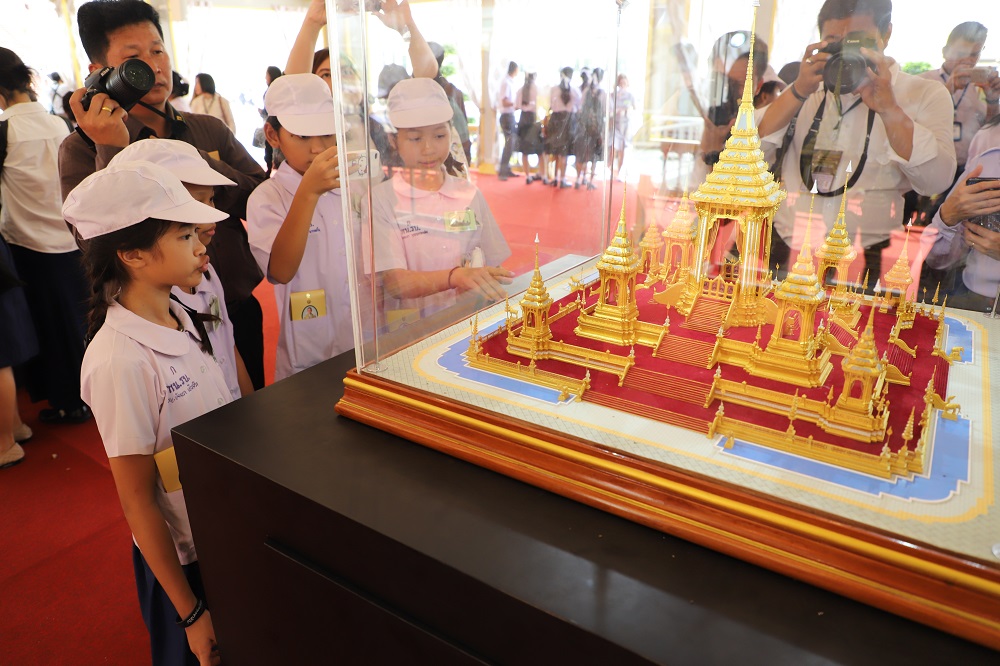
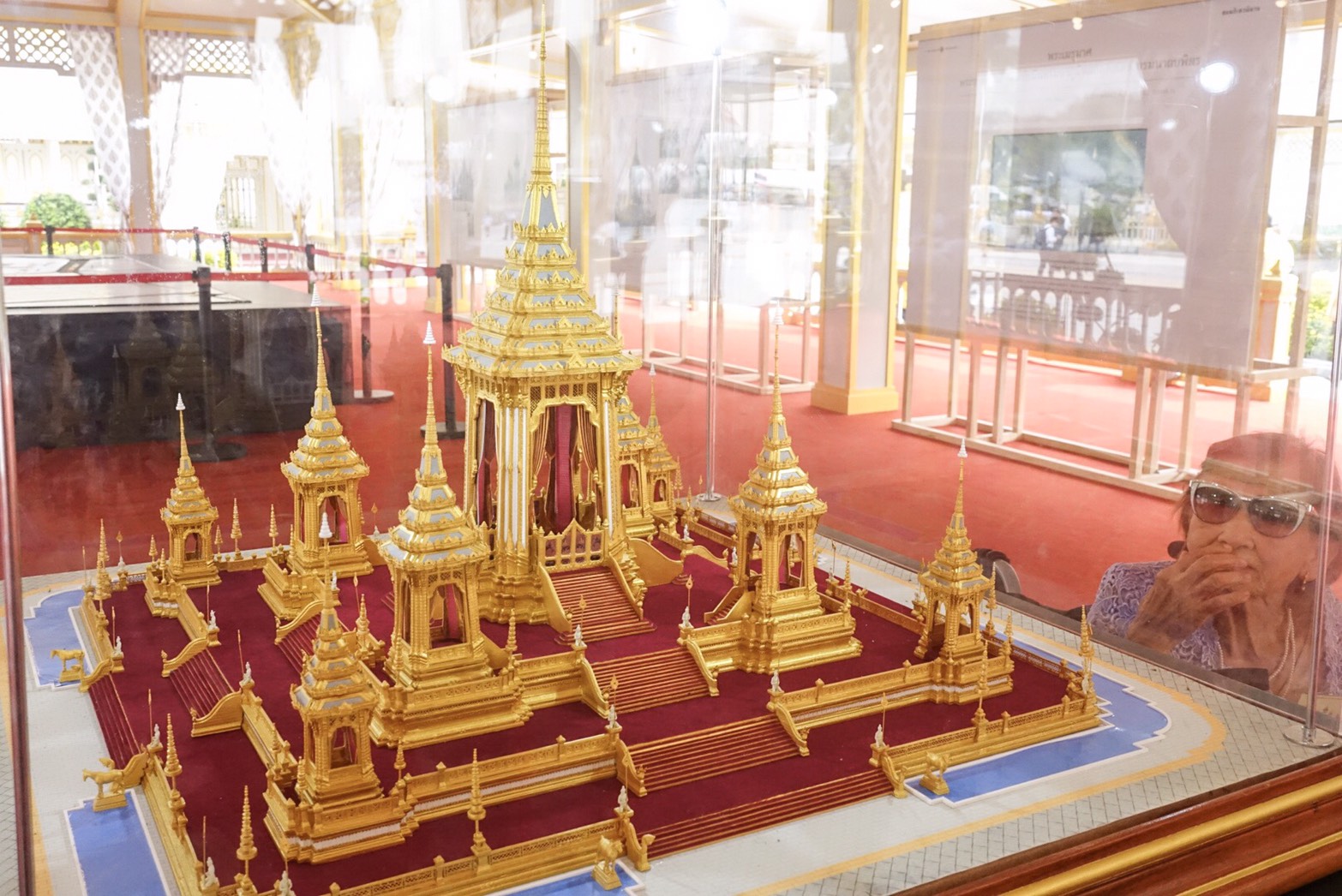
A model of the crematorium’s three levels.
S 5267849
A model of the crematorium’s three levels.

Related stories:

Take a Tour Around the Royal Crematorium (Photos)

Advertisement

Migrant Policy Possible Reason for Labor Minister Resignation: Activist

Sirichai Dittakul. Image: NBT WORLD / YouTube

BANGKOK — Labor minister Gen. Sirichai Dittakul tendered his resignation letter on Wednesday after junta leader Gen. Prayuth Chan-ocha used Article 44 of the constitution to remove Varanon Pitiwan, director general of the Department of Employment, from office.

Sirichai kept mum as to the reason, but labor activist Adisorn Kerdmongkol said Thursday that it may have been due to the slow pace in registering the estimated more than 2 million migrant workers from neighboring countries.

Adisorn, the coordinator of Migrant Working Group, a nonprofit dedicated to the betterment of migrant workers’ conditions in Thailand, added that the removal and resulting resignations could have been due to discrepancies in the idea of collecting migrants workers’ biometric data.

Foreign fishery boat workers already have such data collected, Adisorn said, adding that the idea is controversial and will require more funds to set up a new system and machines.

“Why would they need to collect such data? The risk for violating rights to privacy is high,” Adisorn said, adding that he was unaware of the actual reason that led to Varanon’s removal and Sirichai’s resignation.

Adisorn said registering migrant workers by the ministry has been slow, partly because the process of verifying their nationalities has been very slow. He said this is especially the case for workers people Cambodia, where many are originally from.

Varanon was reassigned to become deputy permanent secretary of the labor ministry, a largely ceremonial position.

Sirichai’s resignation came after he met Prayuth on Wednesday at the Government House following Varanon’s removal. Sirichai refused to talk to reporters after the meeting about his decision. He resigned along with his team.

Advertisement

Maid Arrested For Trolling Policewomen on Facebook

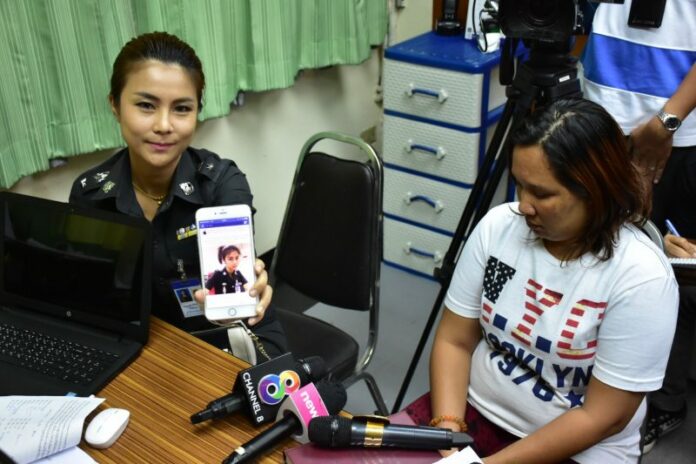
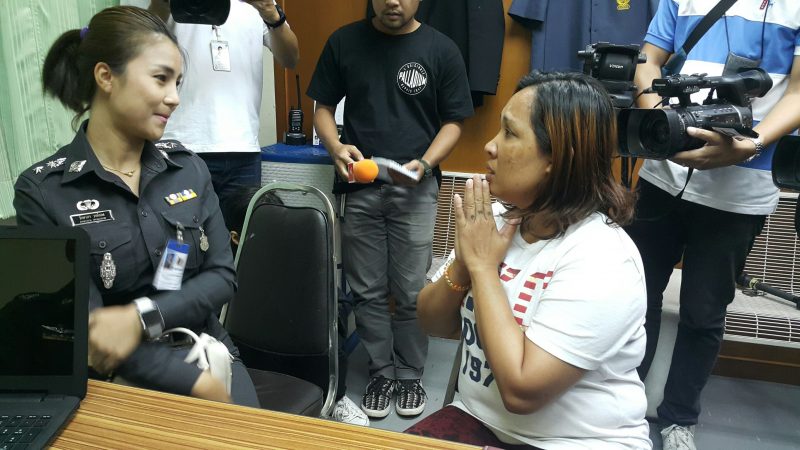
Police Lt. Col. Raktapa Wongyod displays a fake Facebook profile with her photo next to the alleged perpetrator Angkhana Danakam on Thursday morning at Bang Khen police station.

BANGKOK — Not everyone gets a chance to confront their online troll face-to-face, but a policewoman did Thursday morning.

After police arrested housemaid Angkhana Danakam, who allegedly impersonated policewomen Capt. Thanthawan Kodduang and Lt. Col. Raktapa Wongyod on Facebook, Angkhana and Raktapa met Thursday at Bang Khen Police Station under police summons.

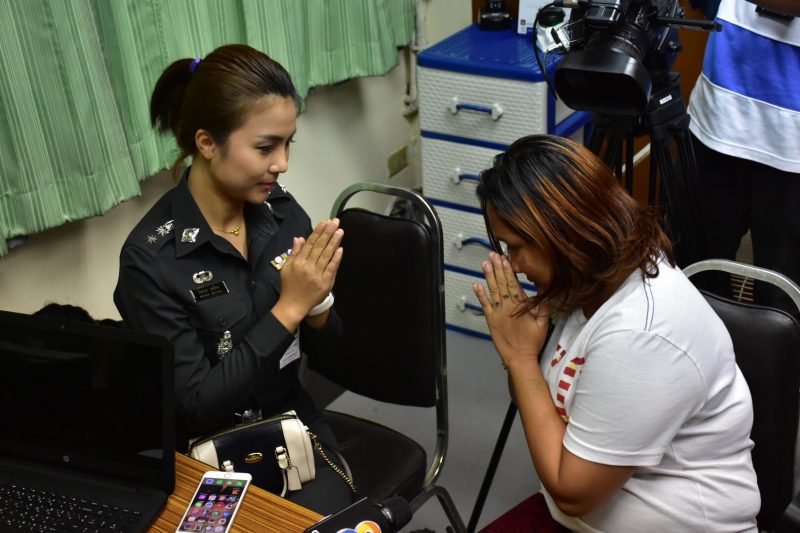
“You uploaded Capt. Rose’s profile photo and then used the account to berate people,” 38-year-old Raktapa said to Angkhana, who reacted by wai-ing in apology.

A year ago in November 2016, Raktapa filed a defamation complaint under the Computer Crime Act with Bang Khen police over a Facebook user account allegedly belonging to Angkhana. After almost a year-long search, police recently arrested Angkhana, 36, in Dan Makham Tia District in Kanchanaburi.

However, Angkhana denied uploading the photos of the women and posting defamatory messages, saying that her four Facebook accounts had been hacked.

The Facebook profile used both Thanthawan and Raktapa’s photos as profile pictures.

“A lieutenant of my level is never weak or backs down. I don’t even want to be a rival of a so-yesterday kiddo like you, it’s cluttering my brain. I sleep with the same person in my bed each day,” and “Come on and arrest me, I’m waiting,” Angkhana wrote to Raktapa using a profile picture of Thanthawan, as shown in one of the screenshots submitted to police last year.

The investigation is ongoing and police will take her to court for an arraignment Friday.

S 19669007 e1509602303483
Police Lt. Col. Raktapa Wongyod and Angkhana Danakam wai to each other Thursday morning.

990512 e1509602316785

Advertisement

Royal Funeral Protests Vowed for Fourth Day

Protesters stage a rally Wednesday night demanding resignation of Chonburi governor. Image: Army Worldwide News / Facebook

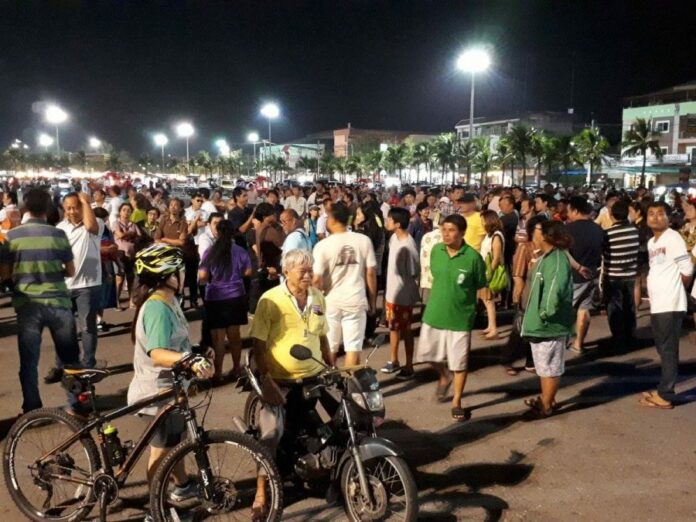
CHONBURI  — A rare protest under military rule broke out for a third day Wednesday in Chonburi province, where angry residents condemned the handling of local ceremonies marking King Bhumibol’s cremation.

Scores of people rallied Wednesday in front of the Chonburi City Hall to demand Gov. Pakarathon Tienchai to resign over his alleged mismanagement of the Oct. 26 event, which left mourners waiting up to eight hours to pay their respects to the late king while bureaucrats were allowed to skip the queue.

The governor has so far rejected demands he resign.

While authorities previously did not interfere with protests on Friday and Tuesday, officials told protesters Wednesday night that they were violating a ban on political assembly and could face criminal prosecution.

“If you really have unity and love for each other, please go home,” one official tells the crowd in a video, followed by a response of boos by protesters.

One protester said failing to heed their demands would only see the protest swell.

“You’re inviting more guests. Tomorrow, you watch, they will fill this entire field,” a woman shouted back.

Protesters left at about 8:15pm, after singing the royal anthem. They pledged to be back tonight.

When reached for comment Thursday, deputy Gov. Chaowalit Saeng-Uthai would only say there was no violence. He said he was not allowed to speak about the matter further. Phone calls to Gov. Pakarathon went unanswered.

Another high-ranking official said he’s been told the protest would take place again Thursday night, but added that City Hall would likely choose to sit it out instead of cracking down on protesters.

“The governor is waiting for the protest to end on its own,” said the official, who requested anonymity because he was not authorized to speak to media.

One week ago, while King Bhumibol was being cremated in elaborate rites in Bangkok,  mourners in Chonburi and other provinces were invited to pay respects by offering sandalwood flowers at replica crematoria across the country.

Complaints of people queueing in Chonburi for as long as eight hours and mourners fainting in the heat soon flooded social media. An online petition criticized the decision to let bureaucrats in before the public and demanded that Pakarathon take responsibility by resigning.

The organizers’ decision to decorate the replica funerary pyre with banners of marigold flowers instead of planting real ones also drew mockery online.

The cremation of King Bhumibol, like all other affairs related to the monarchy, is treated with caution and sensitivity. The authorities imposed a variety of rules and bans to ensure the ceremony proceeded smoothly as a showcase of national unity.

Chonburi isn’t the only province hit by a fallout over the royal funeral mishaps. On Wednesday, directors of three districts in Bangkok – Wattana, Bang Bon and Prawet – were transferred from their posts reportedly because they failed to burn all of the funeral flowers left in their jurisdictions.

“They did not burn all of the dok mai chan,” Bangkok government spokeswoman Treedao Apaiwong said, without elaborating.

Interior affairs minister Anupong Paochinda told reporters Wednesday he had instructed officials to look into the Chonburi protests and find out what happened. He urged the protesters to have understanding and refrain from future gatherings.

“I’d like to ask everyone to understand,” Gen. Anupong said. “I’d like to stress that people shouldn’t make this issue into a conflict.”

Advertisement

Trump Says NYC Suspect Should Get Death Penalty

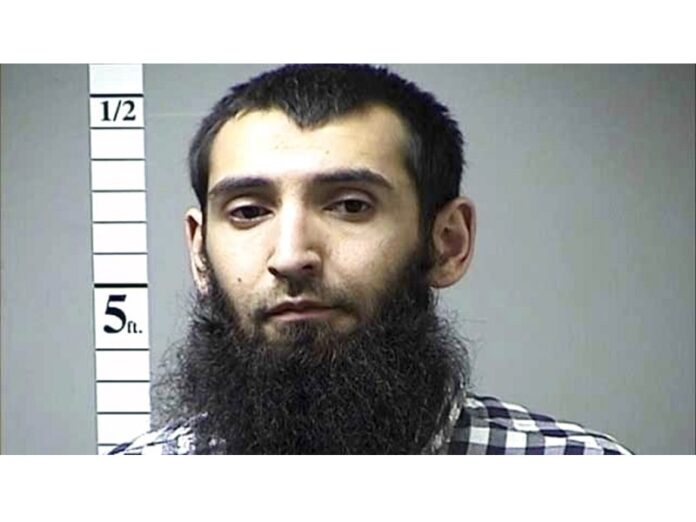
Extremism suspect Sayfullo Saipov. Photo: Associated Press

NEW YORK — President Donald Trump says the Uzbek immigrant accused in the truck rampage that left eight people dead in New York City should get the death penalty.

Trump made the comments late Wednesday on Twitter.

Federal prosecutors brought terrorism charges earlier Wednesday against 29-year-old Sayfullo Saipov (sy-foo-LOH’ sy-EE’-pawf), saying he was spurred to attack Tuesday by the Islamic State group’s online calls to action.

Prosecutors said in court papers, Saipov asked to display the Islamic State group’s flag in his hospital room and said “he felt good about what he had done.”

Trump referenced that in his comments on Twitter.

Outside court, Saipov’s attorney said he hoped “everyone lets the judicial process play out.”

Advertisement

Giant Panda Sleeps Through Much of Indonesia Media Debut

A giant female panda from China named Hu Chun eats bamboo at Taman Safari Indonesia zoo Wednesday in Bogor, West Java, Indonesia. Photo: Achmad Ibrahim

BOGOR, Indonesia — Giant panda Cai Tao was asleep for much of his debut before media Wednesday in the Indonesian city of Bogor, but occasionally perked up to eat bamboo.

Cai Tao and a much more active female, Hu Chun, were shown in their specially built enclosure to reporters as part of preparations for allowing the public to visit them at Taman Safari zoo starting later this month.

The pair arrived in Indonesia in late September from Chengdu in China and were quarantined at the zoo in Bogor, just outside the capital, Jakarta.

The zoo hopes the 7-year-olds will mate and add to the giant panda population.

It’s built a special enclosure and facilities that cost about 60 billion rupiah ($4.5 million).

Zoo director Jansen Manansang said he’s “very optimistic they can breed here next year or the year after.”

In an outdoor play area, Hu Chun walked around the green landscape, climbed rocks and contentedly munched on bamboo.

The living quarters for Cai Tao and Hu Chun, built to resemble a Chinese temple, are equipped with an elevator, sleeping area, medical facilities and indoor and outdoor play areas.

Manansang said the “palace” will be the pair’s home for about 10 years under a breeding loan agreement between Indonesia and China. Any offspring would be given to China, he said.

There are fewer than 1,900 giant pandas in their only wild habitats in the Chinese provinces of Sichuan, Shaanxi and Gansu.

China gifted friendly nations with its national mascot in what was known as “panda diplomacy” for decades. Countries now pay to be loaned pandas, but they remain a symbol of Chinese cultural and political power.

Advertisement

Suu Kyi Makes 1st Visit to Conflict-Torn Northern Rakhine

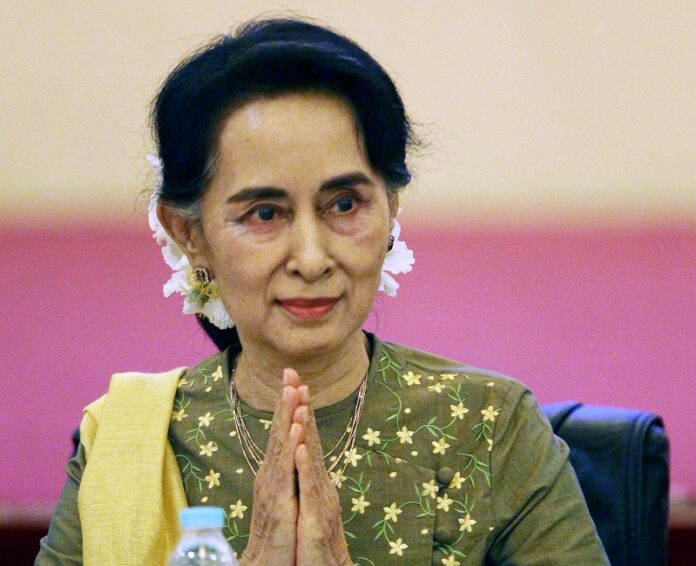
Myanmar's Foreign Minister Aung San Suu Kyi greets leaders of armed ethnic groups during their meeting at a hotel last year in Naypyitaw, Myanmar. Photo: Aung Shine Oo / Associated Press

YANGON — Myanmar leader Aung San Suu Kyi is visiting conflict-torn northern Rakhine state for the first time and her government says a repatriation plan for the hundreds of thousands of Rohingya Muslim refugees who’ve fled violence is underway.

She arrived in the state capital Sittwe on Thursday morning and headed to restive northern Rakhine where many Rohingya villages were located. During a 2015 election campaign, she visited southern Rakhine, where there hasn’t been much conflict.

Tin Maung Swe, a deputy director of the Rakhine government, said: “The state counselor just arrived but she is heading to Maungdaw, northern Rakhine, with the state officials.”

State counselor is her official title.

Suu Kyi spokesman Zaw Htay would not release Suu Kyi’s plans for the trip until later because of security concerns.

Advertisement

Hot News

LATEST NEWS

Bangkok
overcast clouds
27.2 ° C
27.2 °
27.2 °
82 %
3.9kmh
100 %
Mon
34 °
Tue
34 °
Wed
33 °
Thu
35 °
Fri
27 °