


























28.8 C
Bangkok
Monday, June 29, 2026
Home Blog Page 2182

China to US: Stay Out of South China Sea Talks

The USS John S. McCain conducts a patrol in January in the South China Sea while supporting security efforts in the region. Photo: James Vazquez / Associated Press

WASHINGTON — The United States shouldn’t obstruct efforts by China and its neighbors to agree on a code of conduct in the disputed South China Sea, China’s ambassador said Monday as President Donald Trump prepared for his first official visit to Asia.

Ambassador Cui Tiankai said the U.S. has no territorial claim in those waters and should let countries in the region manage their disputes in a “friendly and effective way.”

Beijing’s island-building in the South China Sea has drawn criticism from Washington which says it has a national interest in freedom of navigation in sea lanes critical for world trade. Secretary of State Rex Tillerson this month said China’s “provocative actions” challenge international law and norms.

Efforts to forge a legally binding code of conduct between China and the diverse members of the 10-nation Association of Southeast Asian Nations, or ASEAN, have long been stymied by Beijing’s reluctance to negotiate with nations as a bloc and differences within ASEAN itself. Singapore’s prime minister last week said the negotiations were likely to take years.

Cui implied that Washington was making that more difficult.

“I think it would certainly be better if others including the United States would not try to interfere in this constructive process, would not try to create obstacles to early agreement on the (code of conduct),” he told reporters at the Chinese Embassy in Washington. “I think that this is our hope. This is also the hope of the ASEAN countries.”

Cui was previewing China’s preparations for Trump’s five-nation trip to Asia that includes a state visit to China. He said it comes at a “very important moment” for relations between the two world powers — building on progress made when Chinese President Xi Jinping met Trump at his Florida resort in April.

The ambassador said North Korea will be a priority in the talks. He warned that tensions over the North’s nuclear program could get more dangerous without more efforts to reach a negotiated solution.

Asked whether comments from Trump — who has threatened to “totally destroy” North Korea if it attacks — were making worse, Cui urged all parties to “refrain from doing anything that might escalate the tension.”

The ambassador predicted concrete results at the summit on economics and trade but didn’t say what they might be. Trump wants to narrow the gaping U.S. trade deficit with China — a goal Cui said China shares although he cautioned it would take time as it was a “structural” problem.

He rejected U.S. accusations that China, the world’s second-largest economy and the largest in Asia, was engaged in “predatory” policies at the expense of its neighbors.

Cui said those saying things about China, “might just look into the mirror and it might be describing themselves.”

Advertisement

Manafort, Gates Indicted in First Charges From Russia Probe

Trump campaign chairman Paul Manafort talks to reporters in 2016 on the floor of the Republican National Convention at Quicken Loans Arena in Cleveland as Rick Gates listens at back left. Photo: Matt Rourke / Associated Press

WASHINGTON — President Donald Trump’s former campaign chairman, Paul Manafort, and a former business associate, Rick Gates, were indicted Monday on charges of conspiracy against the United States, money laundering and several other financial charges.

The charges were the first stemming from special counsel Robert Mueller’s probe into possible ties between Trump’s presidential campaign and Russia. The indictment filed in federal court in Washington accused both men of funneling tens of millions of dollars in payments through foreign companies and bank accounts.

Manafort and Gates surrendered to federal authorities, and were expected in court later Monday to face charges brought by Mueller’s team.

The indictment lays out 12 counts including conspiracy against the United States, conspiracy to launder money, acting as an unregistered foreign agent and several charges related to failing to report foreign bank and financial accounts. The indictment alleges that they moved money through hidden bank accounts in Cyprus, St. Vincent and the Grenadines and the Seychelles. In total, more than $75 million flowed through the offshore accounts. Manafort is accused of laundering more than $18 million, according to the indictment.

Manafort, 68, was fired as Trump’s campaign chairman in August after word surfaced that he had orchestrated a covert lobbying operation on behalf of pro-Russian interests in Ukraine. The Associated Press reported that Manafort also represented a Russian billionaire a decade ago with the goal of advancing the interests of Russian President Vladimir Putin.

The White House declined to comment. A spokesman for Manafort did not immediately return calls or text messages requesting comment.

Mueller was appointed as special counsel in May to lead the Justice Department’s investigation into whether the Kremlin worked with associates of the Trump campaign to tip the 2016 presidential election.

The appointment came one week after the firing James Comey, who as FBI director led the investigation, and also followed the recusal months earlier of Attorney General Jeff Sessions from the probe.

Investigators have focused on associates including Manafort, whose home was raided in July by agents searching for tax and international banking records, and ex-national security adviser Michael Flynn, who was forced to resign in February after White House officials said he had misled them about his conversations with the Russian ambassador to the United States.

Manafort joined Trump’s campaign in March 2016 and oversaw the convention delegate strategy. Trump pushed him out in August amid a steady stream of negative headlines about Manafort’s foreign consulting work.

Trump’s middle son, Eric Trump, said in an interview at the time that his father was concerned that questions about Manafort’s past were taking attention away from the billionaire’s presidential bid.

Manafort has been a subject of a longstanding FBI investigation into his dealings in Ukraine and work for the country’s former president, Viktor Yanukovych. That investigation was incorporated into Mueller’s broader probe.

Previously, he denied any wrongdoing related to his Ukrainian work, saying through a spokesman that it “was totally open and appropriate.”

Manafort also recently registered with the Justice Department as a foreign agent for parts of Ukrainian work that occurred in Washington. The filing under the Foreign Agents Registration Act came retroactively, a tacit acknowledgment that he operated in Washington in violation of the federal transparency law.

Mueller’s investigation has also reached into the White House, as he examines the circumstances of Comey’s firing. Investigators have requested extensive documents from the White House about key actions since Trump took office and have interviewed multiple current and former officials.

Mueller’s grand jury has also heard testimony about a June 2016 meeting at Trump Tower attended by a Russian lawyer as well as Manafort, Donald Trump Jr., and the president’s son-in-law, Jared Kushner.

In Gates, Mueller brings in not just Manafort’s chief deputy, but a key player from Trump’s campaign who survived past Manafort’s ouster last summer. As of two weeks ago, Gates was still working for Tom Barrack, a Trump confidant, helping with the closeout of the inauguration committee’s campaign account.

Story: Eric Tucker, Chad Day

Advertisement

Rama X to Replace Rama IX on Currency

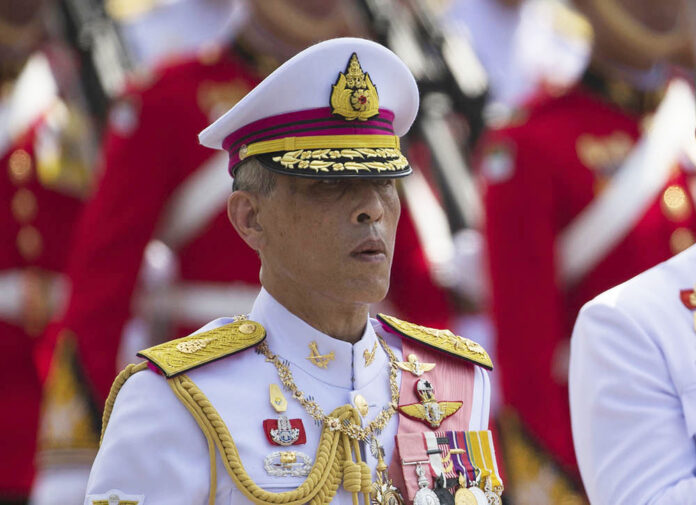
King Vajiralongkorn walks Thursday, Oct. 26, 2017, during a procession for his father. Photo: Wason Wanichakorn / Associated Press

BANGKOK — With a new reign will come all new currency.

The minting of coins depicting King Vajiralongkorn will take a step forward Tuesday when the Finance Ministry proposes legislative measures to clear the way, an official said Monday.

Once green-lit in Tuesday’s cabinet meeting, the law will mean new coins entering circulation to mark the reign of King Rama X. Treasury’s Director-General Patchara Anuntasilpa said preparations are complete and only awaiting legal authority.

The new designs, which have not been made public, will cover all existing nine types of coins: 10 baht, 5 baht, 2 baht, 1 baht, 50 satang, 25 satang, 10 satang, 5 satang and one satang.

Advertisement

Chinese Myth Meets Hong Kong Cool at Bangkok’s ‘Rabbit Hill’

Update: Rabbit Hill closed down in May 2019 and has been replaced with Soho Bar X Taiyo Sushi as of August 2019.

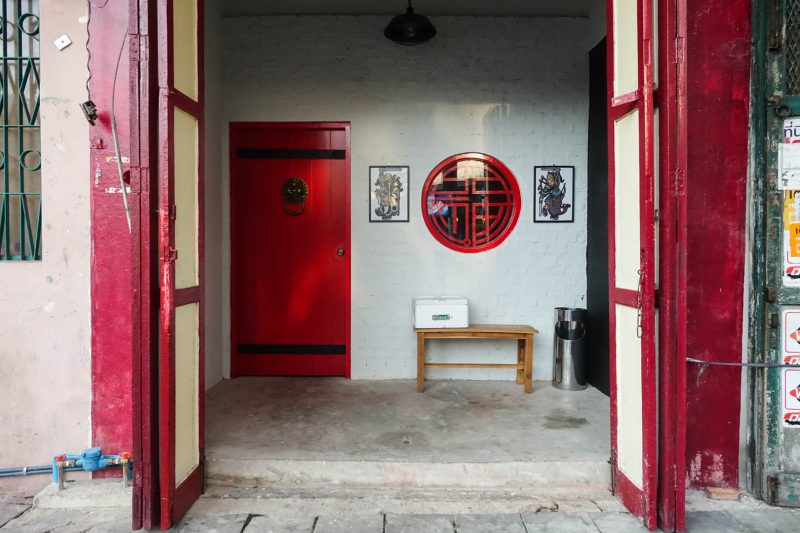
When some pass the divine figures flanking a red latticed window in Rabbit Hill’s inset entry, they mistake the bar for a spirit house and wai.

But inside, Chinese myths, retro ballads and novel spins on family fare come together at this recently opened Chinatown establishment, where a small but full menu satisfies even third-generation Sino-Thais weary of being force-fed at family dinners.

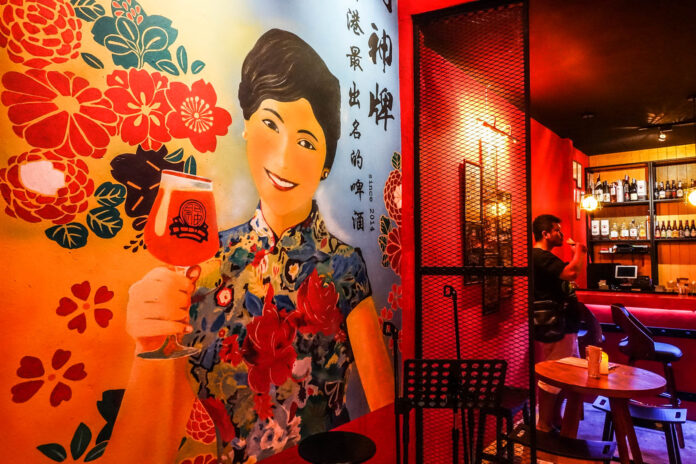
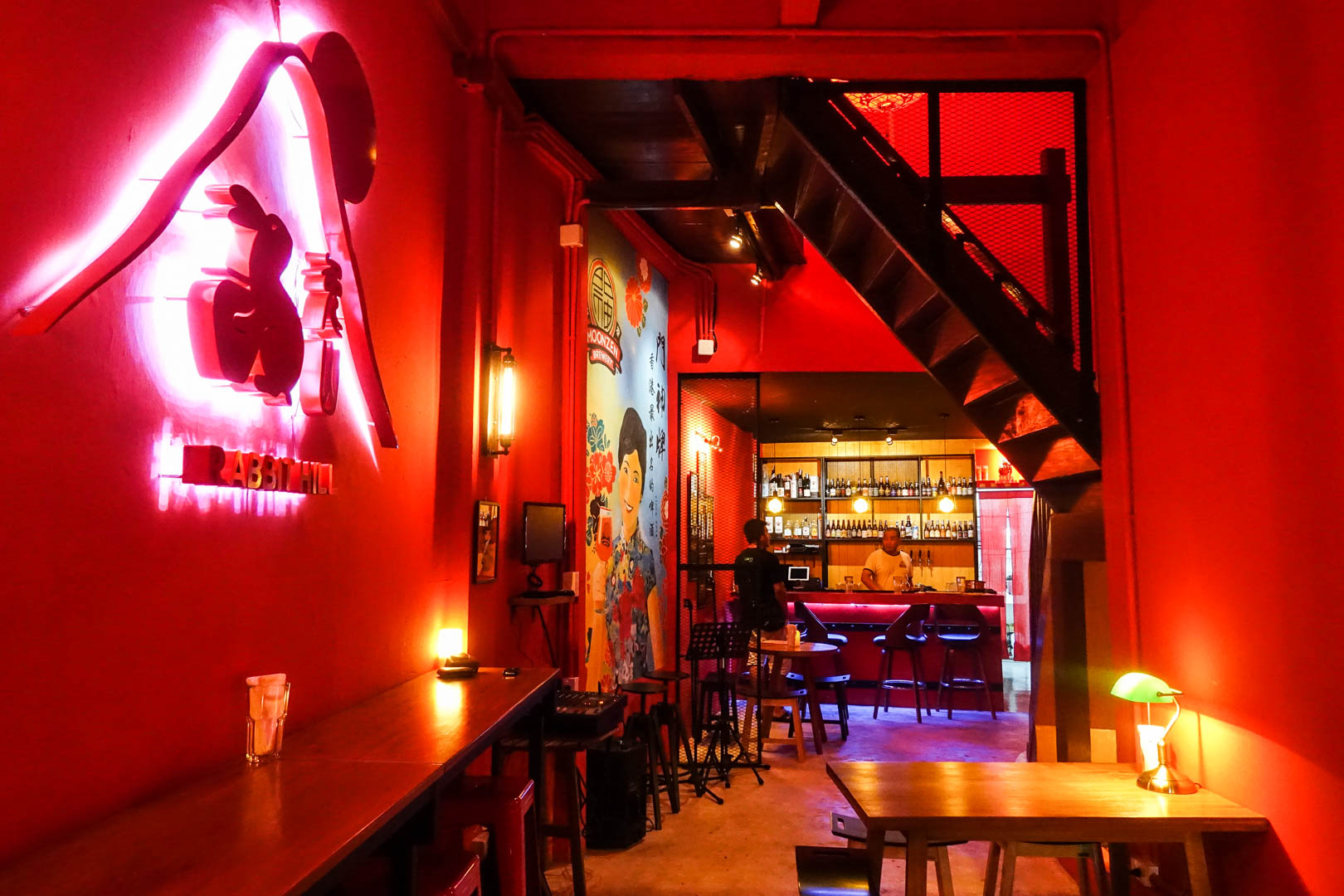
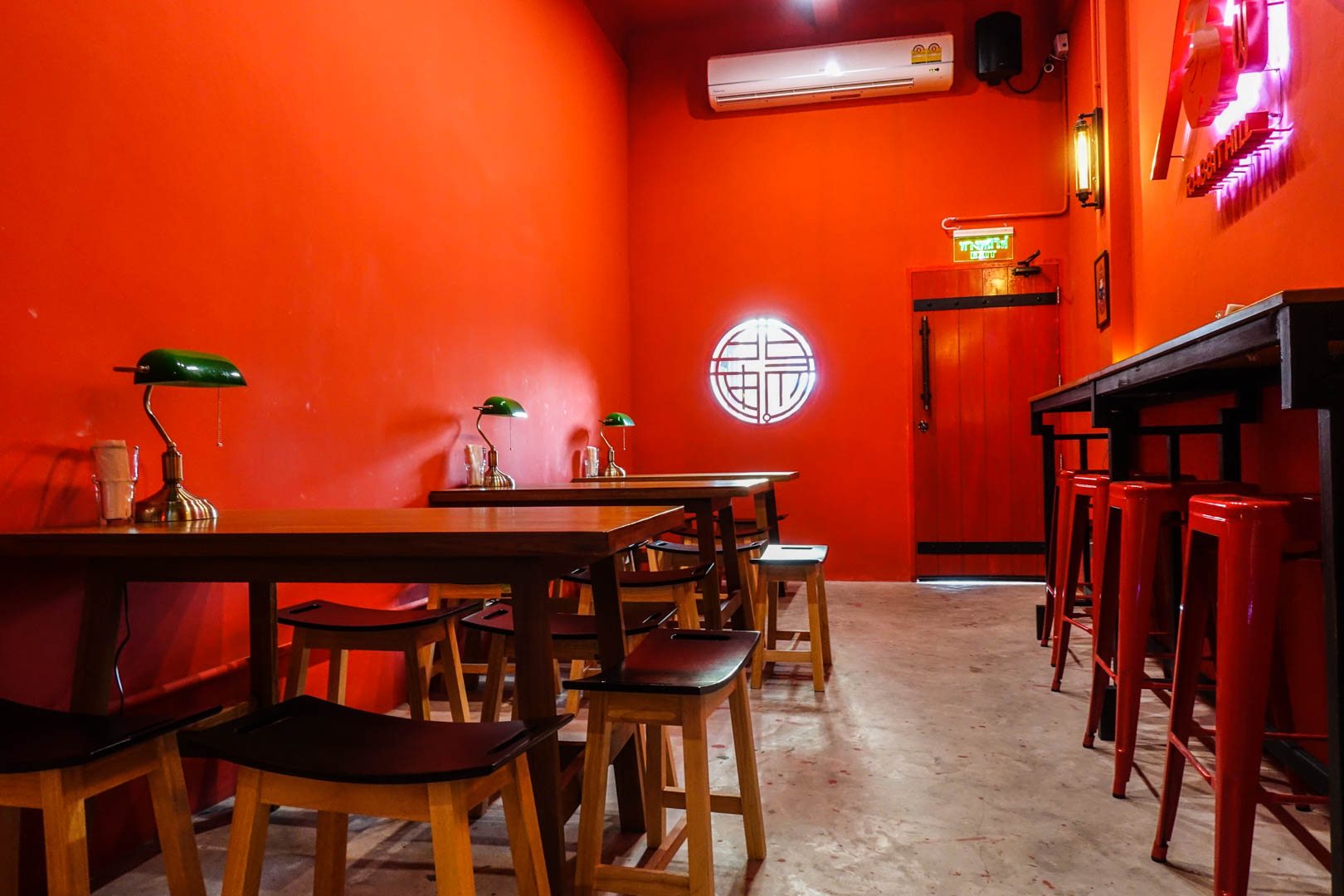
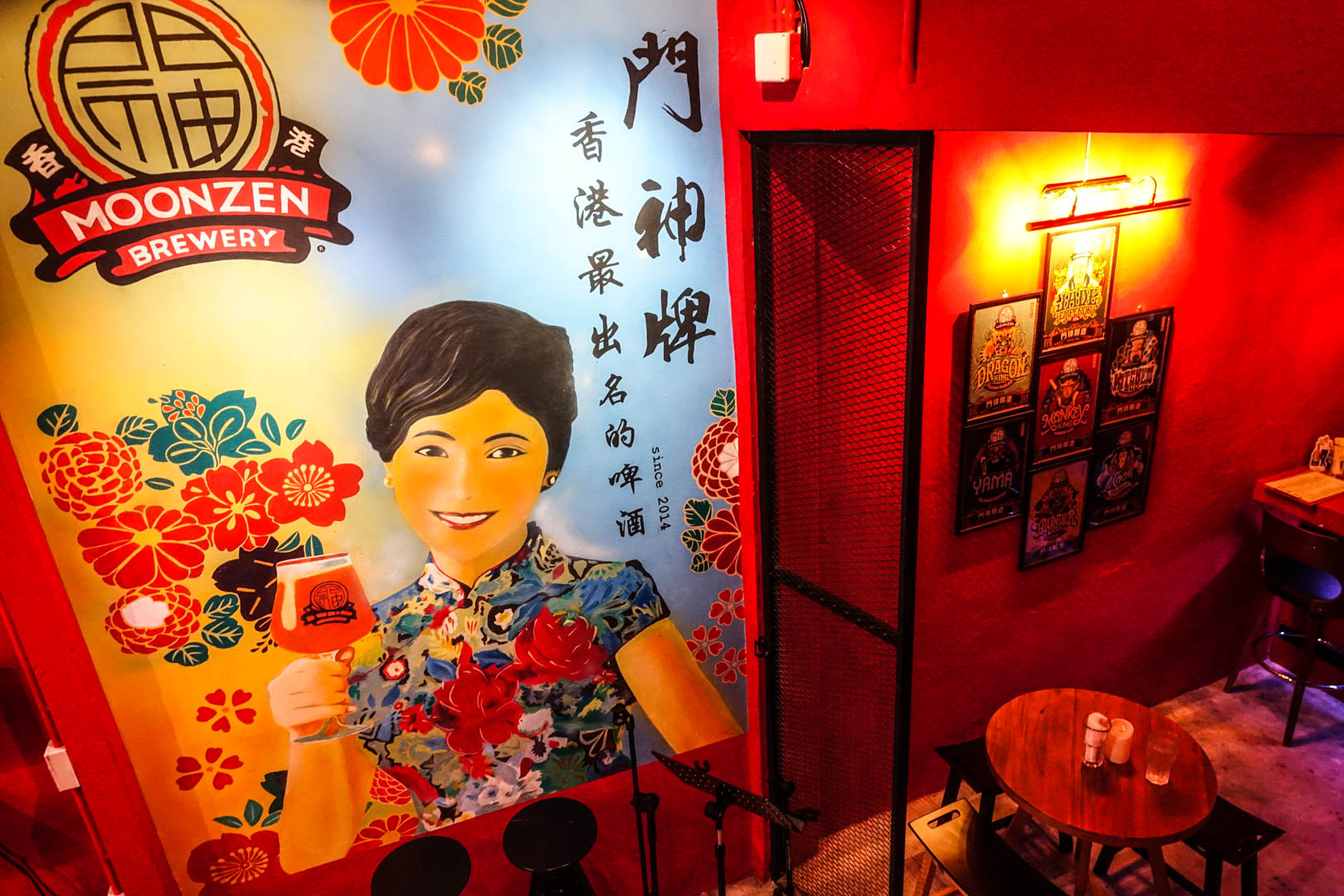
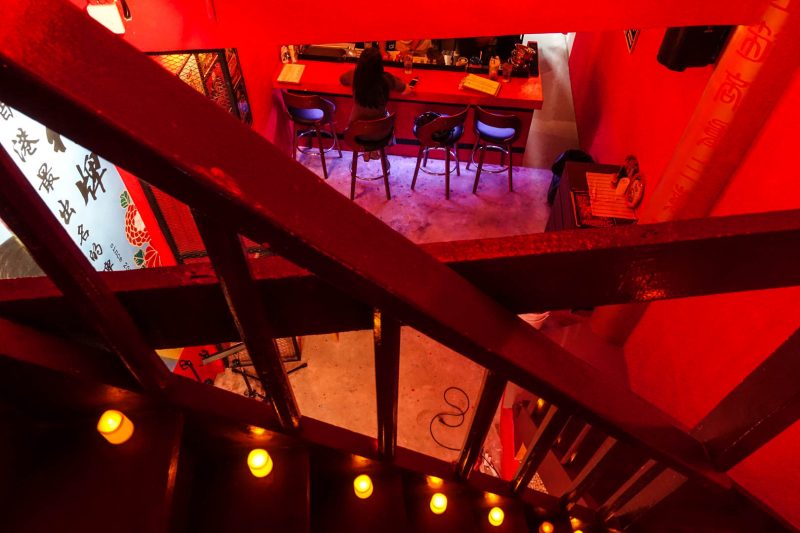
Housed in a classic shophouse, the interior is painted a daring red, contrasted by green banker’s lamps and the restaurant’s neon logo. Covering one wall is a mural of the owner’s wife hoisting a frothy beverage in a qipao. Climb up the steep wooden staircase – a cool version of those found in many family shophouses – to a more private space overhead.

DSC02473 2
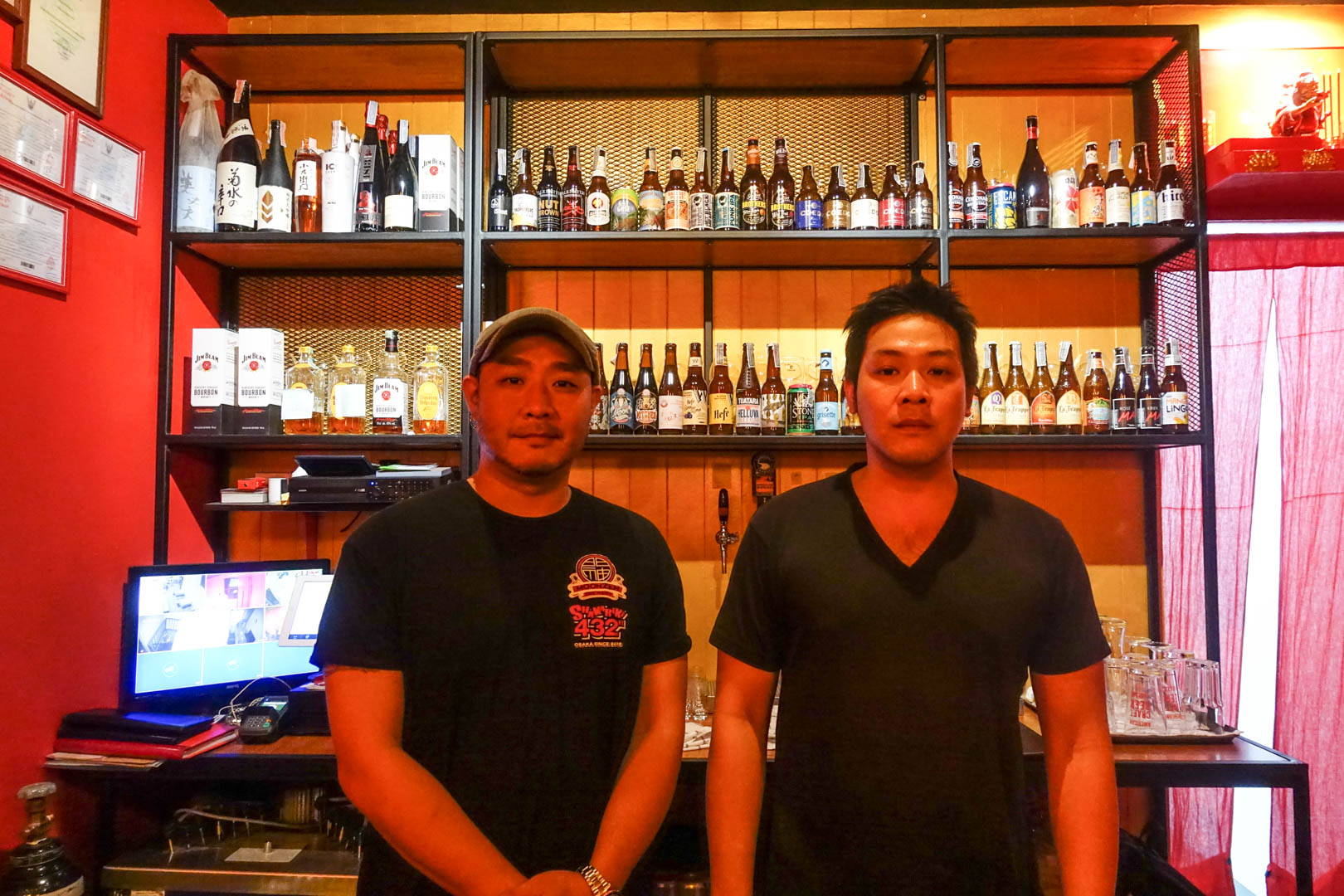
Akarawat ‘Pow’ Hengviriyapanich and Pongkorn ‘Hao’ Hengviriyapanich.

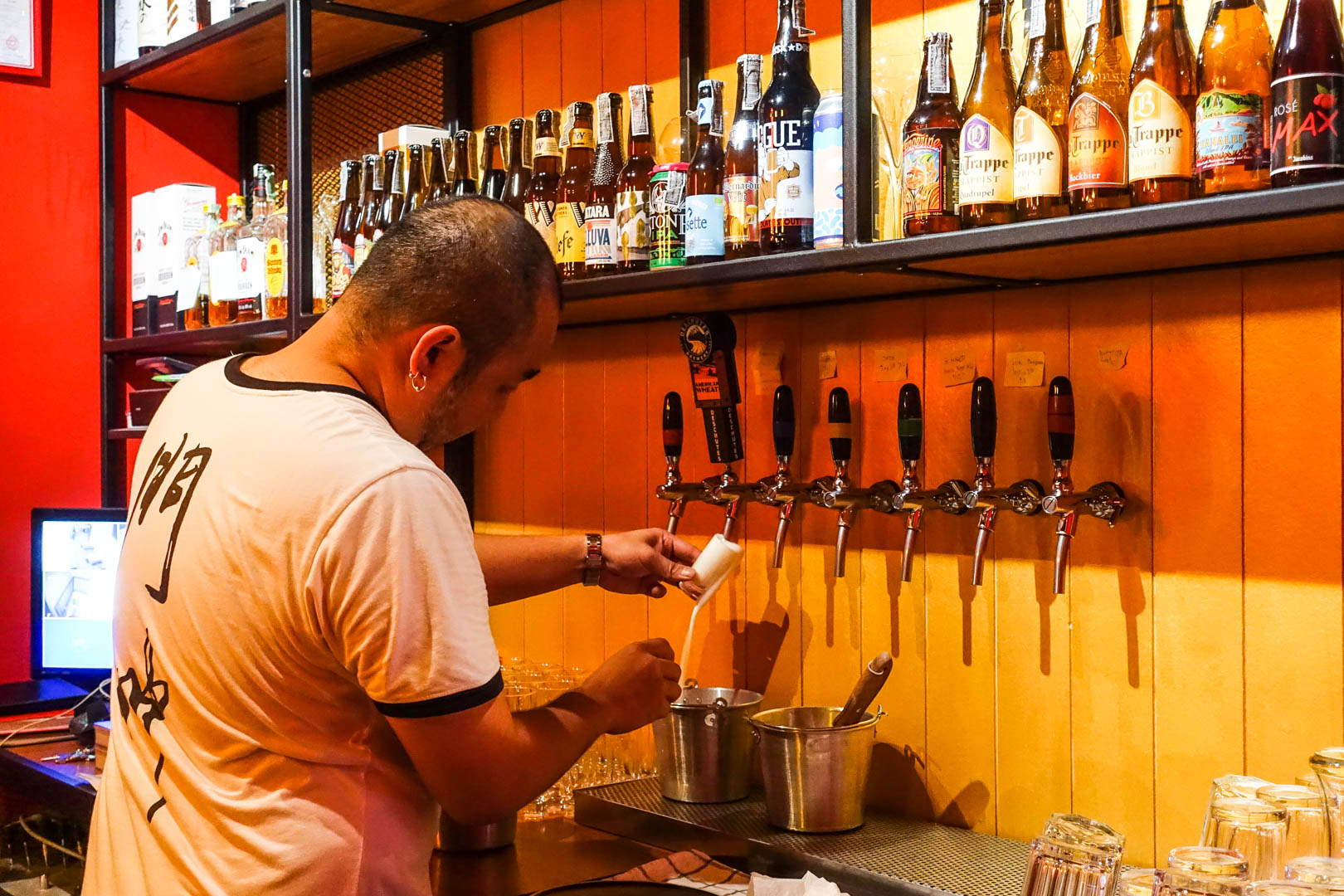
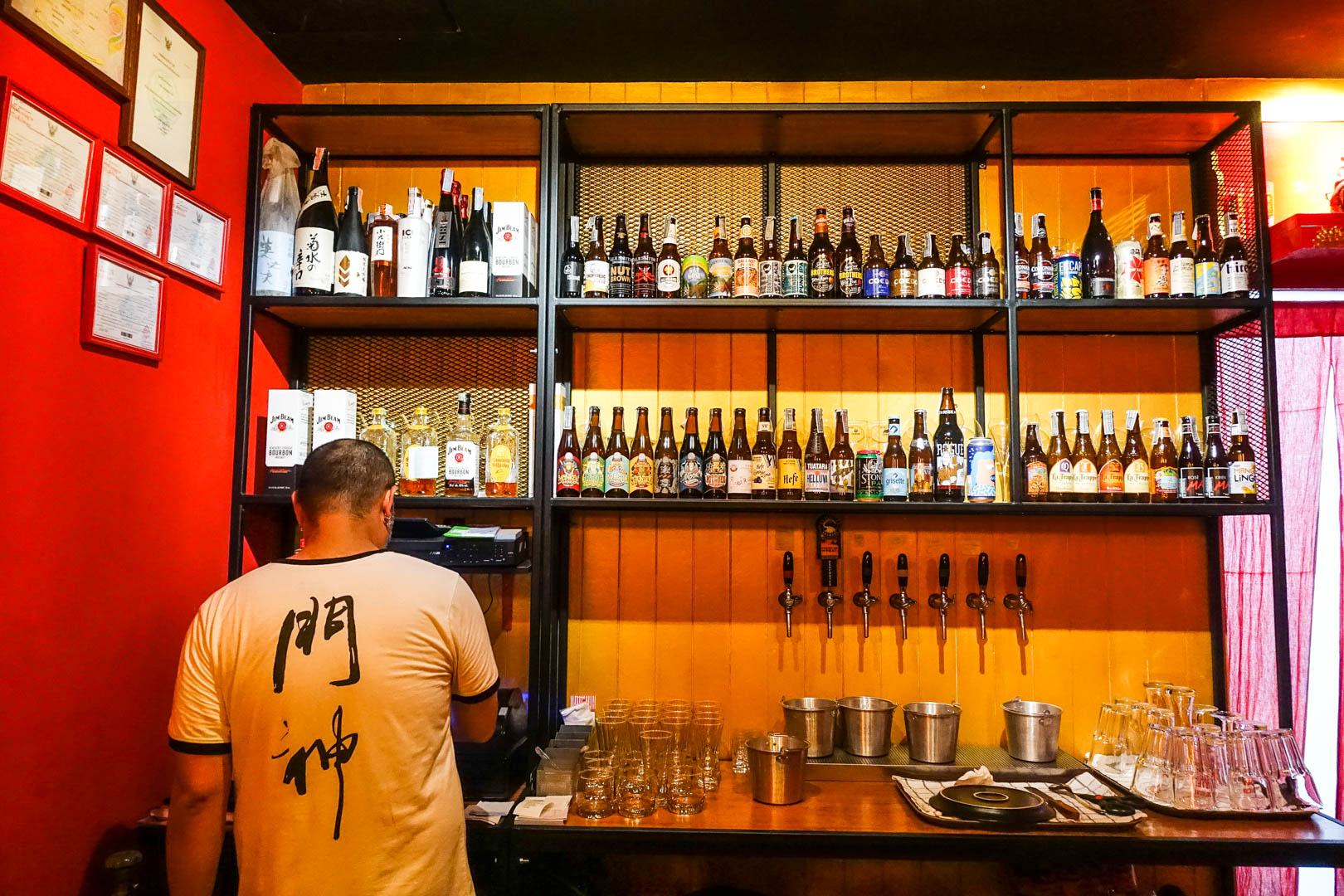
Behind the bar stands owner Akarawat “Pow” Hengviriyapanich, the venue’s own Guardian of Booze and Stories. Akarawat, a native son who studied Chinese literature in Hawaii, calls himself and his bar “storytellers.”

And tell them, he can. It only takes noticing a column painted to resemble one stolen by the Monkey King for him to start.

“Do you know the story of Ngokong and the gourd?” Pow, 38, said, using the Chinese character’s Thai name. “Once, he lost a battle to the Golden Horned King and the Silver Horned King, who trapped him in a magical gourd.”

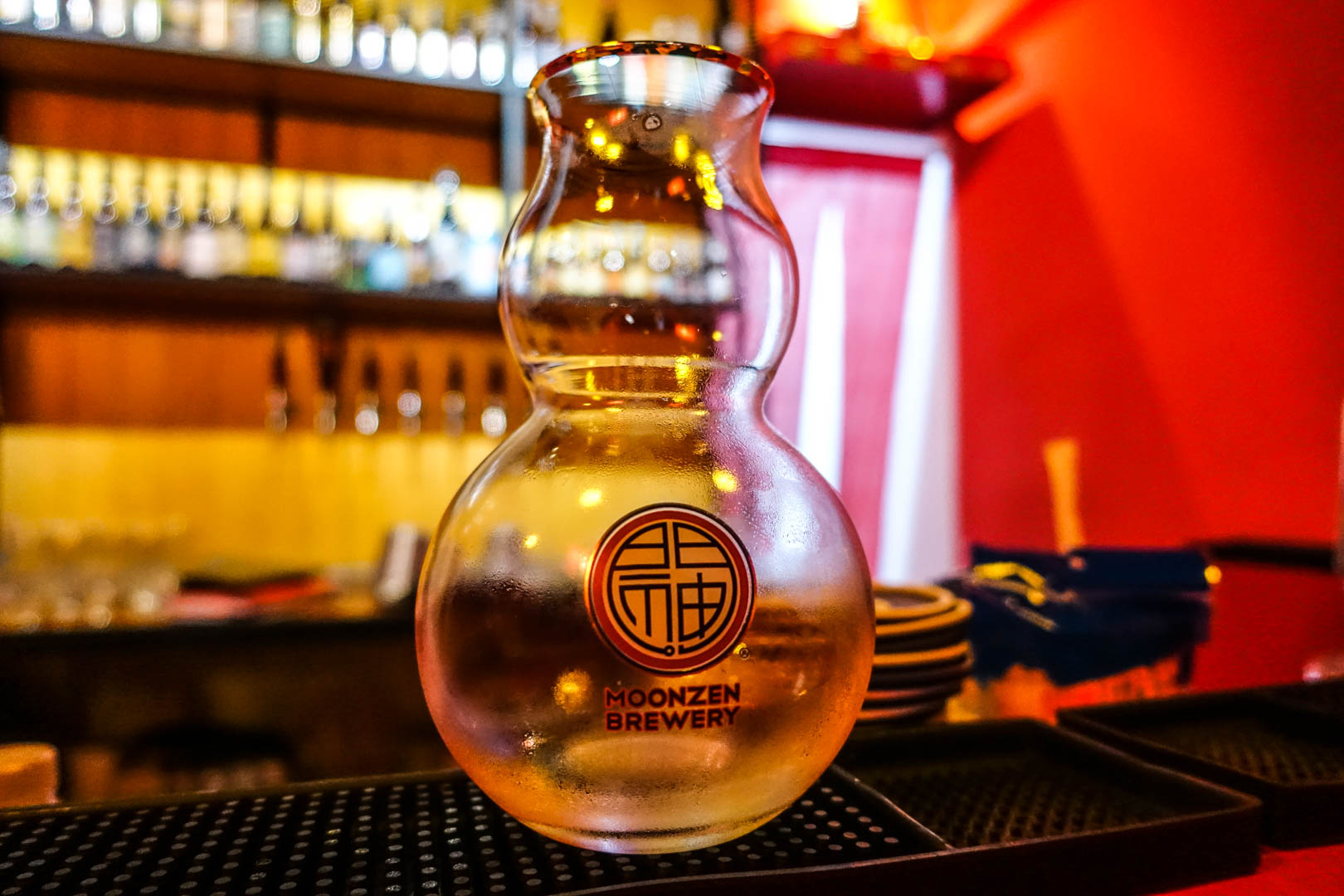
From the tap he pours a Hong Kong beer named “Monkey King” into a gourd-shaped glass, made by Hong Kong brewer Moonzen Brewery – Rabbit Hill is their only Thai distributor.

The glasses trap the foam and cold, just like Ngokong (who later escaped by transforming into a mosquito, Pow explains). Plus, they’re fun to swig from.

DSC02459 3
Pow pours Moonzen beer into a gourd-shaped glass.

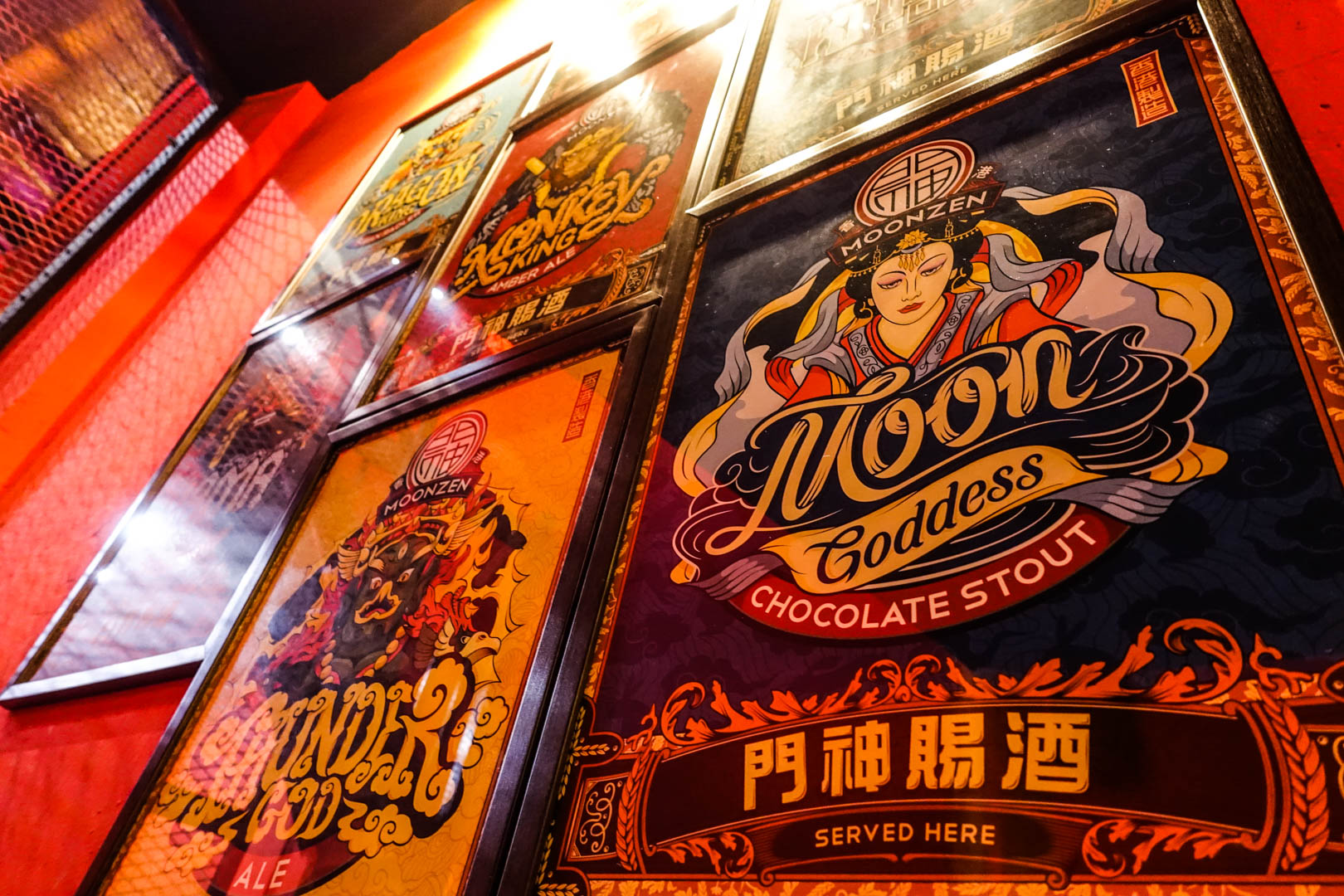
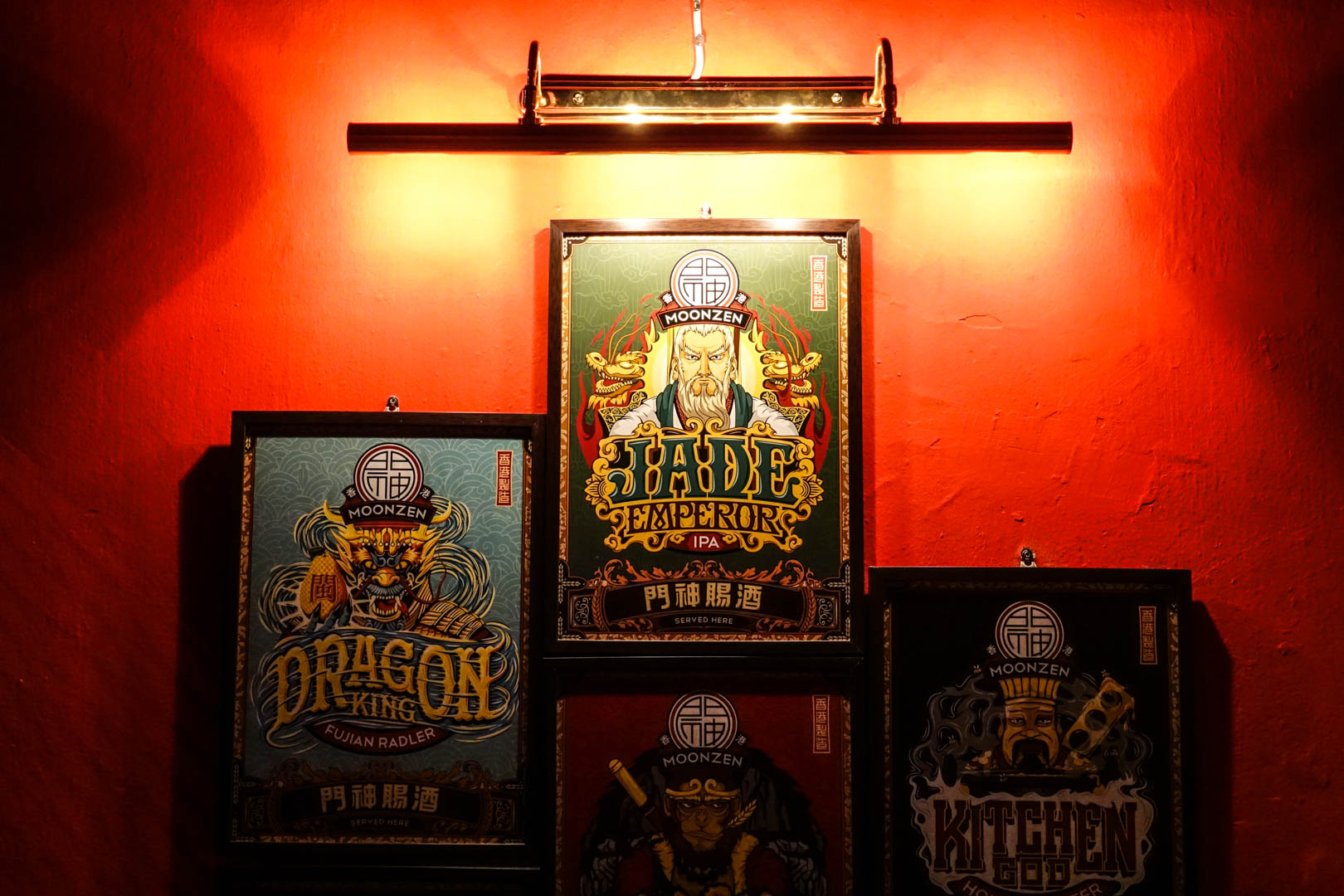
Pow brought Moonzen into Thailand after falling in love with it in Hong Kong. Each beer’s flavor comes from different myths. The Monkey King beer, for example, is peach-flavored for the time he went to heaven and ate all of its immortality-giving peaches.

The name of the bar is another story in itself. A Burmese monk and feng shui confidante to Pow’s family told him to pick one of three fast-moving zodiac animals so his new shop could be just as adaptable: a dragon, a monkey or a rabbit. Pow chose the fecund rabbit, since “that goes well with a bar.” The rabbit then had to be paired with a stable landform good for “leaning one’s back on” for financial support: either a mountain or a hill.

Opening what Pow describes as a “loosely themed” 1940s Shanghai speakeasy right in Chinatown was a no-brainer.

“It didn’t make sense to do it in Sukhumvit. I found this rotting sugar warehouse owned by local emergency officials and rented it out,” he said, gesturing around. “I want it to feel like a version of Yaowarat when my agong [grandfather] was still alive.”

DSC02388 3
Framed pictures of Moonzen beer flavors, which include “Moon
Goddess Chocolate Stout” and “Jade Emperor Ipa.”

Then there’s the food. Somehow Rabbit Hill has managed to take toh jeen food – the kind found on your cousin’s Chinese wedding table – and make it cool.

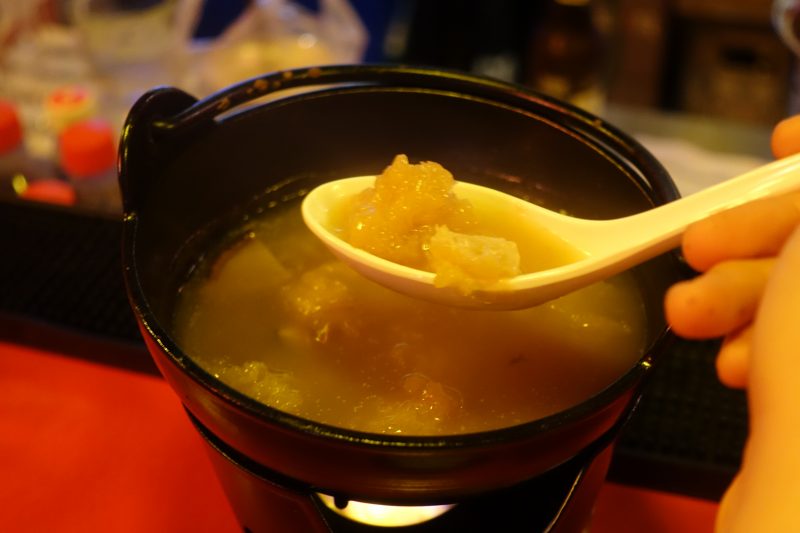
After simmering nine hours, the fish maw soup (300 baht), puts all others you’ve slopped up in Yaowarat to shame. Its light-handed broth is unburdened by the excess white pepper and toppings that weigh down street-side kra poh plaa vats. It’s not surprising the fish maw is good, since Pow’s family used to own a fish maw factory. His brother, Pongkorn “Hao” Hengviriyapanich, is the chef.

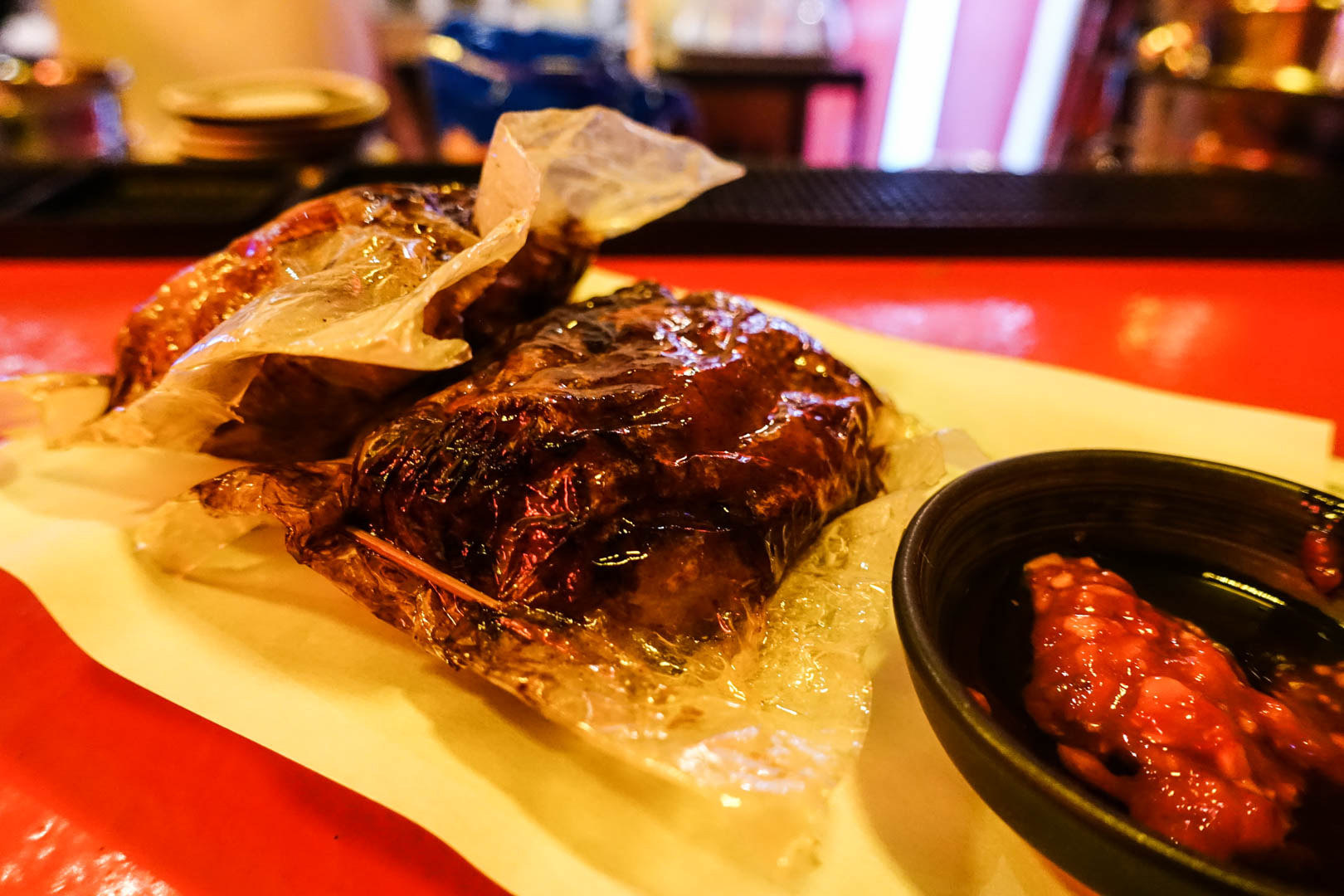
Don’t think of the deep-fried chicken wrapped in paper (180 baht) as a Chinese version of chicken wrapped in pandan leaves. Pow says this Qing Dynasty-era recipe originated from poor peasants in China’s Guangxi region, who preserved chicken by wrapping it in paper and then frying the whole package.

Pow wraps his chicken in food-grade edible paper. Rip it open and find steaming, juicy soy sauce-marinated chicken read to dip in red vinegar sauce with mashed chilies and garlic.

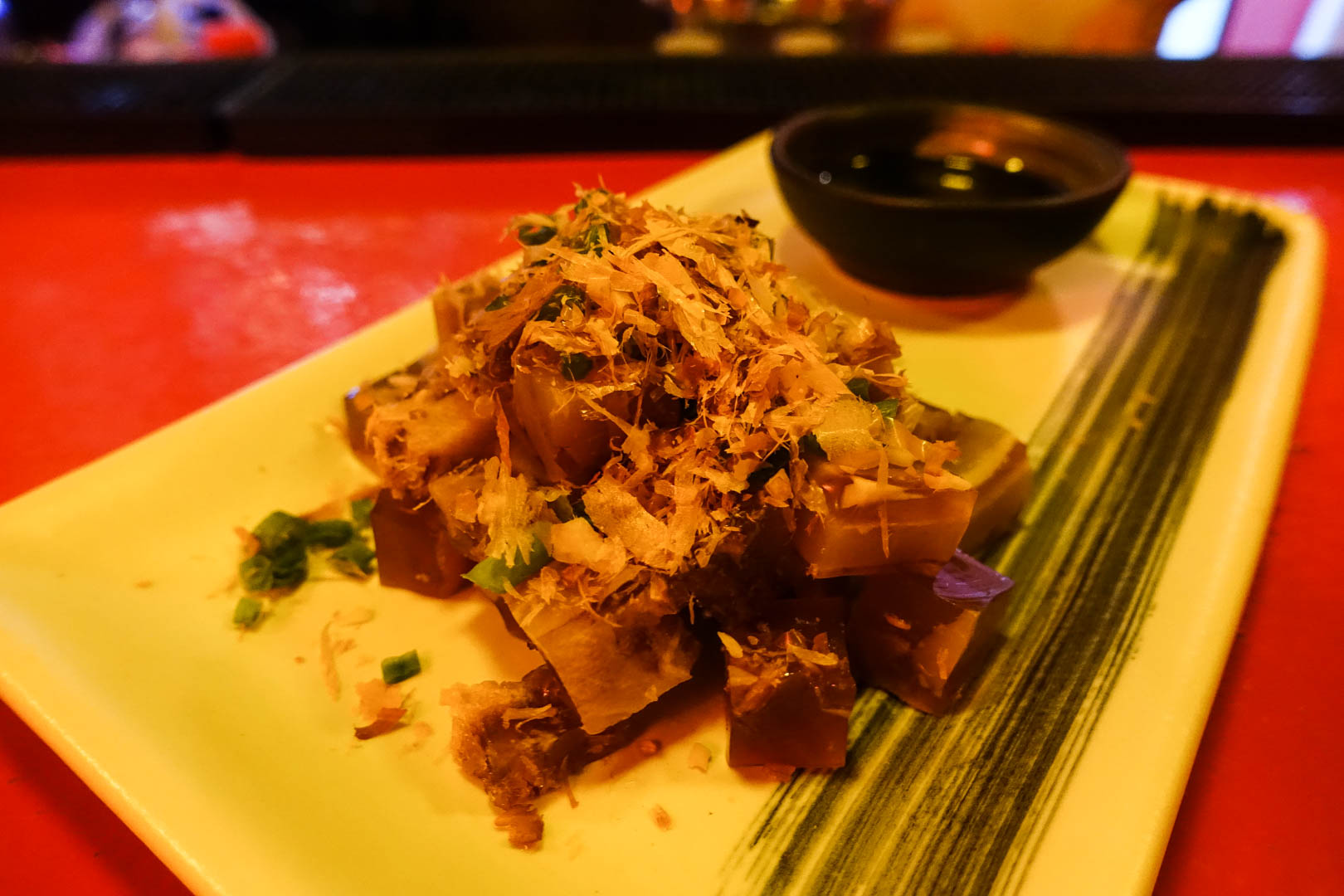
Another must-try is cold jelly pork knuckle chopped into cubes (100 baht), a rare, ancient teochew dish. Don’t be put off – its highly Instagrammable and fun when it wobbles.

DSC02455 3
Deep fried chicken wrapped in paper (180 baht).

Vegetarians can eat deep-fried tofu (100 baht), seaweed salad (80 baht) and edamame (80 baht).

On a recent visit, Rabbit Hill’s customers ranged from families and farangs to colorful katoeys and local Chinese aunties and uncles pounding beer after beer.

Pow says customers appreciate the place’s Wong Kar Wai cinematic atmosphere: contrasting colors with moody shadows and a quiet drama at play beneath the floral qipao patterns.

“They say my place is very ‘Wong,’” Pow said, laughing. “I didn’t know what it was before, but that’s what they’ve been saying.”

Rabbit Hill is open 5pm to midnight, Tuesday through Sunday. Take a taxi to Wat Mangkorn Kamalawat in Yaowarat and walk from there, or walk about 15 minutes from MRT Hua Lamphong.

DSC02404 3
The interior of Rabbit Hill.

DSC02376 3

DSC02421 3
Akarawat ‘Pow’ Hengviriyapanich behind the bar at Rabbit Hill.

DSC02390 3

DSC02429 2

DSC02381 3

DSC02426 3

DSC02414 3
Cold jelly pork knuckle (100 baht).
DSC02446 e1509363648779
Fish maw soup (300 baht).

DSC02384 3

DSC02385 3 e1509363744152

DSC02374 3 e1509363708393
The entrance of Rabbit Hill.
Advertisement

Yingluck Passports Revoked After Appeal Deadline Passes

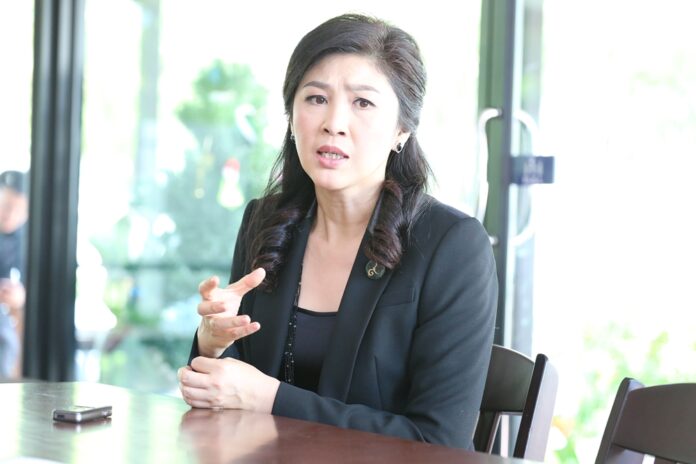
Former prime minister Yingluck Shinawatra talks to a reporter on Jan. 3, 2017.

BANGKOK — Four passports belonging to fugitive former premier Yingluck Shinawatra have been revoked, a deputy police chief announced Monday.

Gen. Srivara Ransibramanakul said he was been informed by the Foreign Ministry that two of the four documents were diplomatic passports. The move came as a result of Yingluck failing to appeal her conviction in absentia one month ago for malfeasance.

The passage of that deadline on Friday means that barring a legal reversal or her return to Thailand, Yingluck will remain a fugitive for the rest of her days.

A lawyer for the former premier said he had not received any instructions from his client by the deadline. A new law covering political crimes dictates that her conviction and sentence will remain in place for perpetuity.

Attorney Norawit Lalaeng said she did not file an appeal because he hadn’t heard from 50-year-old Yingluck since she apparently fled the country in late August.

Speaking Monday, he added that his work as Yingluck’s lawyer was now over. Norawit said he has been unable to reach Yingluck since Aug. 25, the day she was originally expected to hear the verdict in her malfeasance trial at the Supreme Court’s Division for Political Office Holders.

That verdict was postponed to Sept. 27, at which time she was sentenced in absentia to five years in prison for failing to combat corruption in one of her government’s signature policies, an agricultural subsidy that guaranteed prices to rice farmers, as well as a bogus government-to-government rice deal with China.

Asked about Yingluck’s passports, Norawit declined to comment.

Surasak Trirattrakoon, deputy head of the Attorney General’s working group on the case, said the case has now reached finality. He added that from now on, the focus would be on relevant organizations bringing her to justice.

The only other avenue for Yingluck, or her brother and fellow fugitive Thaksin Shinawatra, to be cleared would be a royal pardon, but those have historically been reserved for convicts who have served significant portions of their sentences.

Yingluck did not show up on Aug. 25 and is believed to be either in Dubai or London, seeking political asylum status in the United Kingdom. The British Embassy in Bangkok has declined to comment on the matter, and it’s been over two months since the former premier has made a public statement.

Advertisement

Army Captain Charged With Missing Daughter’s Murder

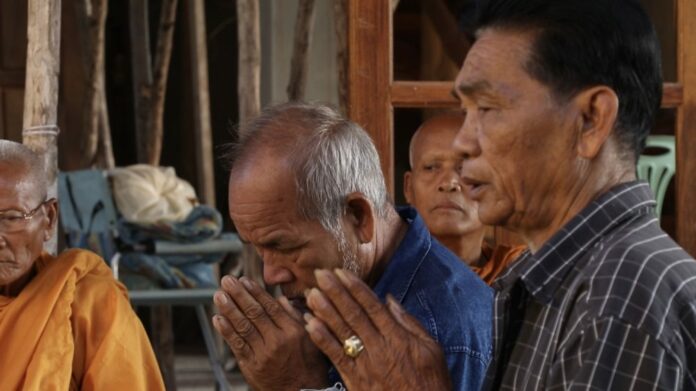
Juthaporn Oun-on’s family makes merit Sunday at a religious ceremony in Sisaket province.

SISAKET — A family finally has closure after searching three months for their daughter and hope for justice as an army captain was charged with her murder Monday.

The search for Juthaporn “Oil” Oun-on, who went missing in July prompting a protracted search which turned up two unrelated bodies, ended Saturday when DNA tests confirmed recently discovered bones belonged to her. The positive ID cleared the way for a charge of premeditated murder to be filed against the lead suspect in the case, Capt. Supphachai “Nheng” Phaso.

“We haven’t found her spine, left arm or khaki shirt yet,” Boonlert Oun-on, Juthaporn’s 62-year-old father said Sunday. “My relatives and I will help search for it, so we have all her pieces so that we can have a merit-making ceremony for her.”

Read: Family Chases False Leads, Psychics in Drawn-Out Search For Daughter

Juthaporn’s remains were discovered seven days ago in an Ubon Ratchathani forest where her husband had searched several times. Supphachai, 30, was also charged with false imprisonment resulting in death and concealing a dead body in the death of the Sisaket provincial administrator.

He’s been taken to the Kantharalak Provincial Court, where he faces trial and capital punishment, life imprisonment or up to 20 years in jail. Juthaporn’s parents plan to oppose Supphachai’s release on bail at a hearing today.

IMG 3479 e1509341780485
A photo of Juthaporn ‘Oil’ Oun-on.

Juthaporn, 37, was a local education official in Sisaket’s Kantharalak district. She disappeared July 3 after dropping her daughter at school. The bones and other articles of clothing were discovered Oct. 23 in Ubon Ratchathani. Police suspect Supphachai was motivated by unpaid debt to the victim.

Juthaporn’s mother Laem Oun-on, 60, and her father Boonlert have been involved in the drawn-out, painful search for their daughter, even hiring mediums and staging protests in front of the local police station since her disappearance. On Sunday, after the DNA results were revealed, the parents and family held a religious ceremony at their daughter’s unfinished house.

Despite the family’s complaints about the police commitment to investigating their daughter’s disappearance, a police spokesman said everything was done by the book.

“The police have been gathering evidence and looking for the body all throughout the case,” spokesman Krissana Pattanacharoen said Monday. “We’ve done everything in a straightforward, transparent way.”

Related stories:

Family Chases False Leads, Psychics in Drawn-Out Search For Daughter

Advertisement

Make a Will or Leave Loved Ones at the Mercy of Thai Law

Still image from an Energy Ministry video about saving electricity based on the 'last will and testament' scenes from legendary lakorn classic 'Baan Sai Tong.' Image: Energy Ministry / YouTube

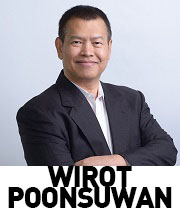
Wirot PoonsuwanCulturally, Thais are not really in the habit of making wills to manage and distribute assets after death, preferring to let the law take over. In other cases, they remind themselves to write it out, but never get around to it until their departure, intestate (legalese for dying without a will).

It therefore happens that loved ones of varying relation are at odds with distant kin, the one controlling the estate “hogs” it by hiding some assets or getting into disputes with the others, with everyone forgetting what the law says. The peaceful ones, who are reluctant to wage a court battle for the sake of family unity, could end up losing and being deprived of their well-being and a fair share of assets for years or the rest of their lives.

Thai inheritance law affords equal importance to spouses, children and parents property owners. By law, each of these rightful heirs receives an equal share of inheritance at the passing of the owner.

Commercial banks where the deceased had savings accounts will allow anyone to withdraw cash until a final court order appoints the administrator of the estate. Heirs in dispute objecting to the appointment of an administrator could prolong the trial for years, locking in the much-needed cash in the bank’s vault.

A will designating an administrator – while the will maker is still alive and well – will ease the court process and quiet any potential objection.

There are two differing ways to dispose of assets by will: general or specific. A general disposal goes by portions by allocating each portion of the estate to each beneficiary, called legatee. Imagine a pile of assets, with one-fourth given to a surviving child, one-half to the surviving spouse, and so on. Although the will is silent on the will maker’s debt, the beneficiary of a general will be allocated a portion of debt corresponding to his portion of property.

This type of general will can be used by a well-to-do person, who is childless, to map out their inheritance tax planning by gifting the entire property, valued in excess of 100 million baht, to their living spouse as Thai law completely exempts inheritance taxes for the spouse.

For a specific will, there have been cases where an owner of land did not wish to have non-family members own the land after his death. He made a will requiring his children to set up a company in which they hold equal numbers of shares then transfer the land to it. This bars any child from transferring their shares to outsiders. Only internal transfers among the original shareholders are permitted.

Other significant landowners are children of a wealthy tycoon. They separately own land banks of varied values, all inherited from their father, with high stacks of title deeds. These siblings love one another and vow to equalize and correct the values of their landholdings. They establish a company, transfer their lots to the company and hold different numbers of shares. They then average out their shareholdings, transferring the excess shares to other sibling shareholders at par value, free from capital gains tax, so that each of them now holds an equal number of shares.

Another episode of transferring land to a company to pay for shares in a new company is also very popular and need not wait for a will to be written. It can be done now if the land has been used for business prior to the transfer date, such as on lease to others or a gold shop using the land as its place of business. The transferor is exempt from 100 percent of personal income taxes and nearly all other transfer fees and expenses, provided the transfer is completed by Dec. 31.

If you intend to do this for inheritance purpose, you can complete the company setup and land transfer first, then make a will to say that, after you leave this world, to which children how many shares of your 99.99 percent stake in the land-owning company will be disposed of.  A ban on them selling the shares to non-siblings can also be inserted.

Not all children are born equal. Some adult children are not doing well in life or career. Maybe they are getting old and unemployed, staying home with mom and dad and relying on their pensions to live. But they’re good people taking care of aging parents, driving them around, taking them to the hospital, running their errands. Parents worried such children won’t have a house to live in after they pass can make a will, specifically gifting the homestead, house and land of their current residence, to these poor children and leave them a comfortable sum of money with no future need to bother better-performing brothers and sisters. Otherwise, left to the inheritance law, they might not make out as well – or be ensured of the house – amid smarter siblings.

The biggest problem of wills are their validity. The law is quite strict on the form and substance of a will; a breach of the prerequisites can render them null and void. Someone who writes a will for the maker to sign, for example, cannot become a beneficiary. Neither can the witnesses who attest the signature of the will maker. Nor can the spouse of the writer or the attesting witness. There must be at least two witnesses signing below the signature of the will maker to witness his signing. The two witnesses must sign immediately together after the will maker signs his name.

A prevailing practice of the will maker signing first and then finding two people to sign as witnesses later is clearly outlawed. Since attesting witnesses cannot receive any property from the will, children and grandchildren of the will maker can surround him and participate in the will signing ceremony, but none of them can sign as an attesting witness.

Another complicated issue is the mental capacity of the will maker. He should not wait until he is too sick or too old to make a will. If he is proven to be mentally impaired while executing a will, for instance when suffering from advanced Alzheimer’s disease, the will can be challenged and declared void. In such cases, an affirmative certificate from a regular doctor of the patient, a video of the signing ceremony and a raft of pictures of the will-execution moment, together with the will maker reading a statement to show his sufficient mental capacity, can be helpful in case there is a future court contest.

Wirot Poonsuwan is a practicing attorney and can be reached at [email protected].

Advertisement

Mourning Ends as Nation Returns to Color

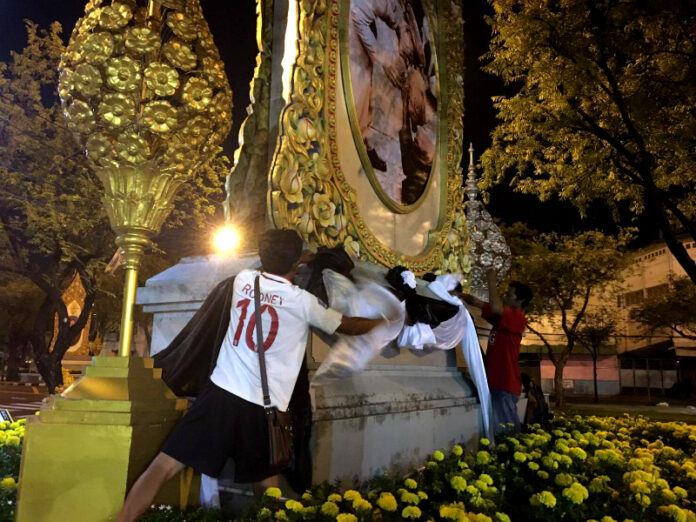
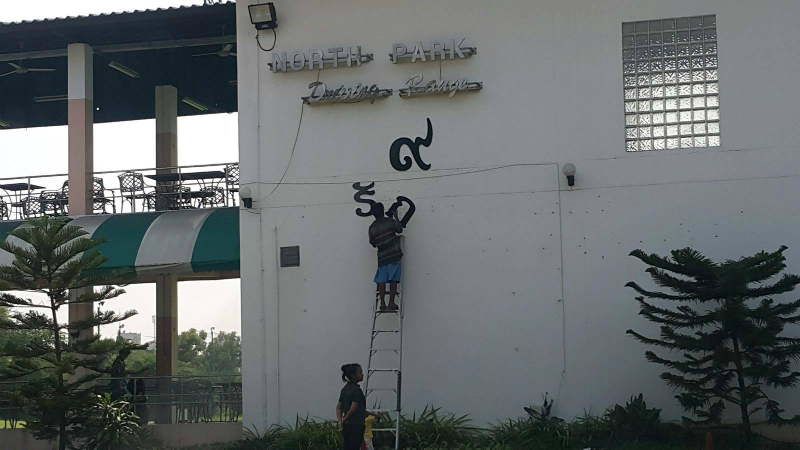
City Hall staff remove black-and-white decorations early Monday morning from an image of King Bhumibol on Ratchadamnoen Avenue in Bangkok.

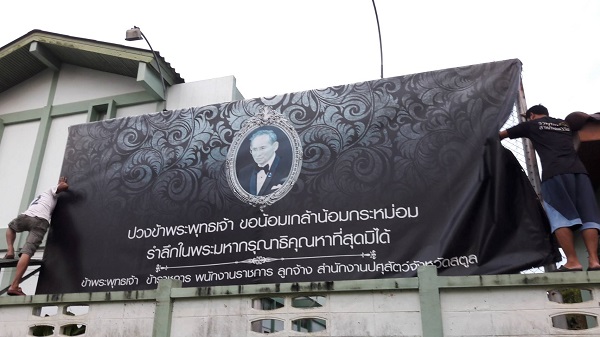
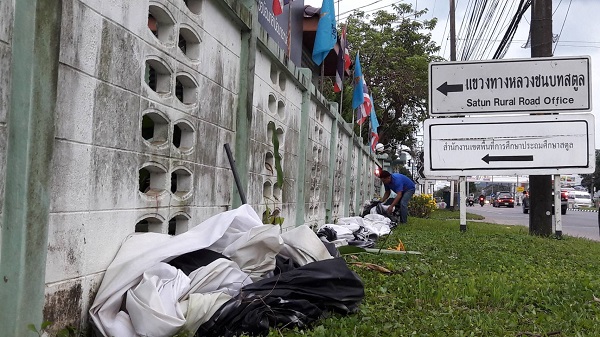
BANGKOK — Mourning signs nationwide were removed starting at midnight on Sunday after the government declared the mourning period for King Bhumibol officially over.

Symbols of mourning such as banners and black-and-white ribbons were immediately removed early Monday morning marking the end to the five-day funerary rites for King Bhumibol. Tradition marks that keeping mourning materials on display long after the mourning period would be a bad omen.

Around Bangkok, 58 symbolic pyres were being dismantled Monday morning, but nine replica crematoriums such as those at the Royal Plaza and City Hall were preserved to hold exhibitions on King Bhumibol’s works.

275978
Staffs remove a mourning sign for King Bhumibol Monday in Satun province.

Government spokesman Lt. Gen. Sansern Kaewkamnerd said Saturday that people can wear any color they wished starting today.

Online, netizens had changed their black-and-white profile photos back to color as the clock struck midnight. Some organizations put up portraits of King Vajiralongkorn as their Facebook cover photos.

The Royal Crematorium will be open to the public for one month starting Thursday before being dismantled.

23107570 10154767427331933 1609619776 o

275977

Advertisement

Court Rejects ‘Excessive Force’ Case Against Junta

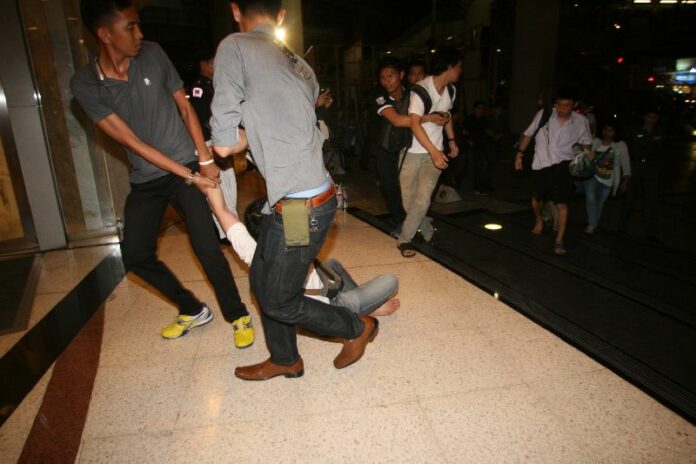
Plain-clothed officers drag a student activist away from the BACC anti-coup protest on 22 May 2015.

BANGKOK — A lawsuit filed by pro-democracy activists seeking 16 million baht in damages from the ruling junta was rejected by the civil court Monday.

The court this morning ruled security forces were acting lawfully when they dispersed a 2015 sit-in marking the first anniversary of the coup in Bangkok in its decision to kick out the suit, which alleged they had used excessive force.

Instead, the court said it was the activists who broke the law by violating the junta’s ban on protests.

“We didn’t get a single baht,” Rangsiman Rome, one of the plaintiffs, said after the decision.

Billed by organizers as a silent sit-in, more than 30 people, mostly students, gathered May 22, 2015, in front of the Bangkok Art and Culture Centre in downtown Bangkok to mark the first anniversary of the junta’s seizing power from the elected government.

The event turned violent after a combined force of police and soldiers surrounded the activists and started dragging them out one by one, sparking a heated confrontation and skirmishes between the two sides. All of the activists were eventually arrested.

In the lawsuit filed to the civil court in January, the activists said they were injured in the crackdown and unlawfully deprived of their liberties when police held them for 12 hours without charge. The suit named the military, police and government as defendants.

While the court acknowledged the plaintiffs’ constitutional rights to assemble, Rangsiman said those rights were restricted by the junta’s ban on protests under the catch-all of Article 44. Therefore, the court ruled the junta had the right to disperse the unauthorized protests.

The judges also ruled injuries and detention suffered by the activists resulted from their refusal to cooperate with the authorities, Rangsiman said. The defendants were subsequently acquitted.

Rangsiman vowed to appeal.

“If we don’t do anything about it, what happened to us today will spread and become a norm,” Rangsiman said. “People who were victims will not get any compensation. We have to keep fighting.”

Advertisement

Irish Rockers ‘The Script’ to Return to Bangkok in April

BANGKOK — Music fans who missed them back in 2015 will be given a second chance to see the band behind “The Man Who Can’t Be Moved,” Breakeven” and “Hall of Fame” in April.

Irish pop rock trio The Script announced Monday they would be heading back to Thailand for their latest Freedom Child Tour, three years after their first ever concert.

The concert will be held on April 28, 2018 at Impact Arena Muang Thong Thani. Tickets start from 2,000 baht and will go on sale from Jan. 28 via ThaiTicketMajor.

Led by frontman Danny O’Donoghue, The Script was formed in 2008 in Dublin. In September, they released their new politically-charged album Freedom Child.

They performed in May 2015 in Bangkok in May 2015 as part of a tour for their fourth studio album No Sound Without Silence.

Advertisement

Hot News

LATEST NEWS

Bangkok
overcast clouds
28.8 ° C
28.8 °
28.8 °
74 %
2.5kmh
97 %
Mon
33 °
Tue
32 °
Wed
33 °
Thu
35 °
Fri
27 °