25.5 C
Bangkok
Saturday, June 20, 2026
Home Blog Page 2262

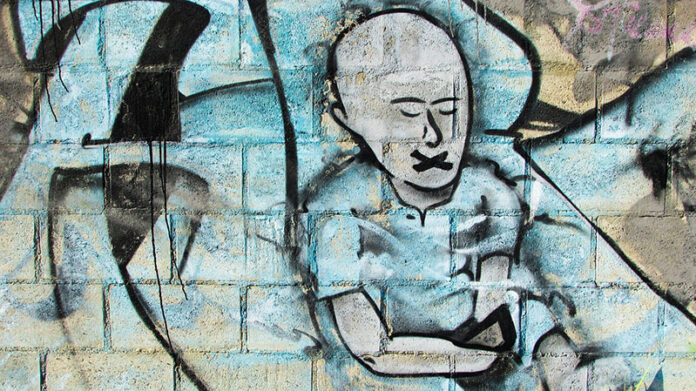
Net Censorship Undermines Opportunities of ‘Thailand 4.0’

With the threat of a single gateway still looming over the heads of netizens, the recent dust-up over limiting access to Facebook content deemed inappropriate by the government, a future internet chock-full of stringent government controls still seems an inevitable reality.

While the government has asserted in the past that its motivation for any restrictions to the kingdom’s internet access is cybersecurity, it would also seem that term covers blocking content it feels is not in its best interest – which was recently the case when it requested the Thai Internet Service Provider Association, or TISPA, to engage Facebook in an attempt to get specific content blocked.

To be clear, it’s common practice for companies such as Facebook and Google to block content from specific countries such as Thailand if presented with a valid court order. From a social media platform perspective, it’s better to stay in business in a country by blocking some content than to be blocked altogether as has happened in China or North Korea.

What is not common practice though is for companies to take down content all together. That means, even when blocked, it remains accessible to people outside of the blocked country.

The issues related to a single gateway span far beyond the goal of preventing cybercrime – or far more draconian attempts to limit access to information – it can have a direct impact on the economy.

Given the economic policies being spearheaded under the Thailand 4.0 initiative and growth of tech startups in the past decade, shifting to a single gateway or regularly blocking social media content could undermine much of the intended progress.

With Thailand focused on moving toward a digital economy with the Thailand 4.0 initiative, it’s going to have to balance its concerns over digital content it deems illegal with the impact on platforms that many firms will leverage to do business.

Sure, finding ways to block content and take legal action against social media platforms might give the government more control over what it deems inappropriate – or just doesn’t want to see – but also threatens to slow down content delivery to local users, making their experience less enjoyable. And if you are trying to grow a digital economy, creating an unpleasant online experience as the norm is not a positive feature.

User experience is a vital part of any digital business, and at a time when the digital economy is being pushed to the forefront of economic policies, it seems shortsighted to enact mechanisms that will ultimately hamper the proliferation of businesses that travel down this path.

If economic growth in all digital sectors is a target for Thailand, then policies such as content blocking and the single gateway will surely hinder – not help – that effort.

Advertisement

World Cup of Tennis Put on Hold for at Least a Year

United States' Serena Williams makes a backhand return to her sister Venus during the women's singles final in January at the Australian Open tennis championships in Melbourne, Australia. Photo: Aaron Favila / Associated Press

LONDON — The International Tennis Federation is putting off its proposal for a World Cup of Tennis Finals for another year.

The ITF said last month it wanted to combine next year’s Davis Cup and Fed Cup finals into one event to raise the profile of the two national team competitions. But on Thursday, the governing body said it would not put the motion to a vote at its annual general meeting next month in Vietnam.

Other proposals, such as reducing the men’s matches to best-of-three sets and possibly skipping the final match of the series if it is already decided, will still go before member nations for ratification at the Aug. 4 meeting in Ho Chi Minh City.

“We promised change and are already delivering change with a significant series of reforms,” ITF President David Haggerty said in a statement. “Taking another year to build consensus around the World Cup of Tennis Finals will allow us to finalize an even stronger recommendation to the AGM.”

Last month, the ITF said it wanted to start staging the World Cup of Tennis in November 2018 in Geneva. The Swiss city was to host the event for three years at its 18,000-seat Palexpo.

The ITF said then that it had made the announcement of the host city well in advance in an effort to follow the successful model used by the Super Bowl and Champions League final.

But that has now been put on hold as the governing body tries to sell its idea to its voting members.

“This decision shows that we do not act unilaterally,” Haggerty said, “and are working with all our stakeholders to find the best solution for tennis.”

Haggerty also announced the creation of a World Cup of Tennis Finals task force. Board members Katrina Adams and Bernard Giudicelli have been appointed as co-chairs.

“The World Cup of Tennis Finals will unlock considerable new revenue for investing back into the sport through the ITF’s member nations,” Haggerty said. “Investment in the development of the next generation remains the priority of the ITF and its national associations.”

Story: Christ Lehourites

Advertisement

Myanmar Propaganda? Army Takes Media on Reporting Trip

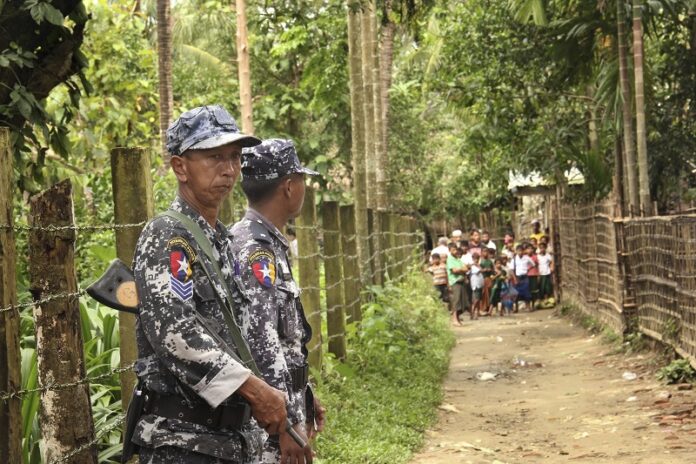
Myanmar's Border Guard Police officers stand guard at a village street July 13 as some residents stand together in Yinmar Chaung Taung village of northern Buthidaung township where the majority Rohingya Muslims and some Rakhine Buddhists live in Rakhine state, Myanmar. Photo: Esther Htusan / Associated Press

KYAR GAUNG TAUNG, Myanmar — Myanmar’s military has a big public relations problem: It stands accused of committing genocide.

Which is why I was among 14 international journalists escorted to a village in northern Rakhine state this past week on a guided press tour – the first time we were allowed into this area since last October, when the army began an aggressive counterinsurgency campaign in the heartland of the country’s oppressed Muslim ethnic Rohingya minority.

The idea was to show that the army’s hands are clean and to display openness, even as the government refuses to allow a human rights fact-finding team from the United Nations to enter the country.

It was hard to reach many conclusions. Our government handlers placed limits on how much we saw and heard. There were time constraints, guards and informers shadowed us, and official briefings mostly repeated familiar talking points. Reporting also was a challenge because many Rohingya villagers speak only their own language and only a few of the reporters even spoke Burmese.

But I learned enough to get at least a dim outline of an ongoing battle for hearts and minds.

Our five-day trip ended Sunday. Everywhere we went, I could see fear in people’s faces, especially when police were with us. I learned how little access the Rohingya have to even basic services. The school attendance rate is less than one in 10; some schools exist but the transportation infrastructure to get children to them doesn’t exist.

The five villages we visited in northern Buthidaung township are very remote; we spent much more time traveling to them – by boat and car – than actually in them.

Farmers and fishermen live in bamboo houses in settlements bracketed by rice paddies. Many small children don’t wear clothes. The only boats visible in the nearby river were dugout canoes, nothing more elaborate.

Their lives are simple. Men plow the fields with their draft animals. Women stay home and cook and wash clothes and fetch the water.

It all seemed so normal.

But when we walked around, people’s expressions made it clear they wanted to tell us something. We were on occasion able to get away from our security escorts – ostensibly there for our own protection – and talk to some.

The army is accused of carrying gross human rights violations against Rohingya villagers during a counterinsurgency operation launched after October’s nighttime attacks by insurgent-led mobs resulted in the deaths of nine border guards and the theft of a cache of weapons.

Human rights groups accuse the government’s security forces of mass killings, gang rapes and burning down villages.

There is evidence to support the allegations. Advocates for the Rohingya, working with a network of activists in Rakhine, circulated many photos and detailed accounts of alleged atrocities, mostly impossible to verify but not refuted either.

In Kyar Gaung Taung, one 20-year-old woman told us what happened when soldiers arrived in her village when the counterinsurgency sweeps began last year. Her story was very similar to accounts that circulated at that time but that we heard mostly secondhand.

When the troops arrived at her villages, she said, they seized her 60-year-old father and tied his hands behind his back. They then set fire to the family home and tossed her father in, she said. She spoke to journalists at the graveyard where her father’s remains were buried.

The army was prepared with a response. “There are less than 10 cases involving killings by the Border Guard Police, and we have explanations in each case,” Brig. Gen. Thura San Lwin told us later. “Even out of these 10 cases filed to the court involving killings, some of the complaints were fake and lies.”

The U.N.’s human rights agency collected testimony from hundreds of Rohingya who fled to neighboring Bangladesh, concluding that rape was widely used by the army as a weapon of war and that civilian deaths were in the hundreds.

The New York-based group Human Rights Watch used before-and-after satellite photos to demonstrate that more than 1,500 houses and other structures had been burned down as part of the counterinsurgency operation. Less convincingly, the government attributed the arson to the insurgents and their sympathizers.

The allegations of abuse are credible not only because the army is historically notorious for mistreatment of other minority groups in the eastern side of the country, but also because there is a well-established pattern of hostility and violence directed by Buddhist ethnic Rakhines at the Rohingya population, estimated at upward of 1 million, most settled in this region.

The Rohingya were the targets of inter-communal violence in 2012 that killed hundreds and drove about 140,000 people – predominantly Rohingya – from their homes to camps for the internally displaced, where most remain.

Many others have been taken into custody. At one point, a group of women from another village glimpsed us and crossed some paddy fields to talk.

The women from War Pait village – I interviewed eight of them – said more than 60 men from their community were arrested for suspected links to the group that carried out the October attacks. Many were under 18, some as young as 13, they said. They’ve visited Buthidaung Prison a couple of times to see their sons, but none of the women knew exactly what charges their loved ones face or how long they will be held.

The violence is not one-sided, although the alleged brutality and scale of last year’s army sweep tends to overshadow other ominous developments. The government claims, and the pattern of several dozen similar killings suggests, that these acts – some involving beheadings – have been carried out by the insurgents, targeting suspected informers or government collaborators.

It’s evident that such activity is blowback from the army’s vigorous counterinsurgency campaign, which had the predictable effect of serving as a recruiting tool for the militants.

Last year’s presumed attackers of the border posts, relatively obscure at the time, have become very active on messaging networks such as WeChat to spread their propaganda. In March, they declared themselves the Arakan Rohingya Salvation Army.

And as the conflict gains more traction in the public eye, the government is grappling with how to get its message out – all while restricting access to the region. Included in this trip were four journalists from state-owned media.

Their only job, it seemed, was to document journalists from the international media – to keep track of us as we tried to tell the stories of others. We were on the front page of the government’s English-language mouthpiece, The Global New Light of Myanmar, three mornings in a row.

As far as they were concerned, we were the news.

Story: Esther Htusan

Advertisement

Chester Bennington, Linkin Park Frontman, 41

Chester Bennington, left, performs during the MMRBQ Music Festival 2015 at the Susquehanna Bank Center in Camden, New Jersey. Photo: Owen Sweeney / Associated Press

LOS ANGELES — Linkin Park lead singer Chester Bennington, whose screeching vocals helped the rock-rap band become one of the most commercially successful acts in the 2000s, was found dead in his home near Los Angeles on Thursday, the Los Angeles County coroner said. He was 41.

Coroner spokesman Brian Elias said authorities are investigating Bennington’s death as an apparent suicide at Palos Verdes Estates, but no additional details are available.

Band co-founder and producer Mike Shinoda said on Twitter he was “shocked and saddened.”

“Chester Bennington was an artist of extraordinary talent and charisma, and a human being with a huge heart and a caring soul. Our thoughts and prayers are with his beautiful family, his band-mates and his many friends,” Warner Bros. Records CEO and Chairman Cameron Stang said in a statement.

The Grammy Award-winning group sold more than 10 million copies of their 2000 debut, “Hybrid Theory,” which featured the megahit and anthem, “In the End.” They sold another 6 million with 2003’s multiplatinum “Meteora.” Both albums explored feelings of frustration and fury.

The success helped Linkin Park become Billboard’s No. 1 act of the decade for rock songs and alternative songs.

Bennington’s voice could soar with piercing strength or descend to a whisper. Rolling Stone once called it a “shrapnel-laced howl that sounds like it comes from someone twice his size.”

The band also sold millions with its remix album, “Reanimation,” and its mash-up record with Jay-Z, “Collision Course.” They won Grammys for best hard rock performance in 2001 for “Crawling” and best rap/sung collaboration for “Numb/Encore” in 2005. Linkin Park was scheduled to begin its tour next week.

Bennington struggled with drug and alcohol addictions at various times during his life. He said he had been sexually abused as a child and was homeless for months before the band found fame.

Linkin Park released their most recent album, “One More Light,” in May. It was a CD that divided critics and fans alike for its embrace of moody pop. One song on the album, “Heavy,” opens with the words: “I don’t like my mind right now.”

Although the band had always experimented with different sounds, some claimed Linkin Park had sold out, which Bennington denied. “One More Light” became the band’s fifth No. 1 album debut on the Billboard 200.

“If you like the music, fantastic. If you don’t like it, that’s your opinion too. Fantastic. If you’re saying we’re doing what we’re doing for a commercial or monetary reason, trying to make success out of some formula. then stab yourself in the face!” Bennington told NME magazine.

Bennington was close friends with Chris Cornell, who died by hanging earlier this year, and performed Leonard Cohen’s “Hallelujah” at the Soundgarden singer’s memorial in late May. He was the godfather of Cornell’s 11-year-old son, Chris. Cornell’s 53rd birthday would have been Thursday.

“The Cornell family is overwhelmed by the heartbreaking news about Chester Bennington which tragically comes so soon after their family’s own loss,” said a Cornell family spokesperson. “They open up their loving arms to Chester’s family and share in the sorrow with all those who loved him.”

When he got his big break in 1999, Bennington was an assistant at a digital-services firm in Phoenix. A music executive sent him a demo from the band Xero, which needed a lead singer. (He had been recommended by his attorney.) Bennington wrote and recorded new vocals over the band’s playing and sent the results back. He soon got the gig and the band then changed its named to Hybrid Theory, then Linkin Park.

Bennington told The Associated Press in 2010 that because of the sound the band is known for — fusing sounds from nu-metal, punk, rock, pop and hip-hop — it was virtually impossible to satisfy their many kinds of fans.

“We’re making music for us, that we like. We’re not making music for other people,” he said. “We’re not thinking, ‘Let’s make a pie-graph of all our fans and find out how many people fit in whatever category and then make the perfect album for them.’ Like, that would be absolutely ridiculous.”

Bennington was married to his second wife, Talinda, and is survived by six children.

Story: Anthony McCartney, Mark Kennedy

Advertisement

Cinema Chain Gives ‘Dunkirk’ Discount to Thai Military

Army officer and actor Col. Wanchana Sawatdee poses at a Dunkirk movies screening Wednesday. Image: Major Cineplex / Facebook

BANGKOK — Thanks to a special deal from the biggest cinema chain, members of the armed forces can watch blockbuster war film “Dunkirk” at a discounted price of 100 baht.

The campaign was announced Wednesday by Major Cineplex, the same day Christopher Nolan’s war epic premiered in Thailand. The chain cited no reason for the deal, which drew criticism from those who believe the military is already one of the most privileged institutions in the country.

A special screening was also held Wednesday for high-ranking military officers. Those attending included Wanchana Sawatdee, the army colonel who starred as King Naresuan in a historical nationalist drama co-produced by the armed forces.

In a video published by Major Cineplex, an unnamed soldier said he wants people to watch the film so they know how much sacrifice soldiers make for their country.

“I want people to come see this film and see the suffering of soldiers,” he said. “Some people may think soldiers have it easy, but it’s not true.”

Another unnamed army officer said the film – which is based on Britain’s united effort to rescue troops stranded on the beaches of Dunkirk in 1941 – would teach people about patriotism and unity.

“Apart from entertainment, it gives you valuable thoughts,” he said. “Love for one’s country and unity can overcome crises.”

Army spokesman Winthai Suvaree said he wasn’t aware of the armed forces’ involvement in the discount campaign.

Members of the armed forces can watch the film for 100 baht today through Saturday, according to the cinema chain website. The original price for a normal seat at Siam Paragon’s branch of Major Cineplex is 270 baht.

Some on social media questioned why the armed forces were eligible for a discount.

“Usually, these people already have it easy, and now they get even more privilege,” Thananan Warasittikul wrote on Major Cineplex’s Facebook page.

“I want the army to take draftees and low-ranking soldiers to the see the films, too,” another user, Natiphan Somjit, wrote in a thread. “It wouldn’t be too much of a waste of the army’s budget, right?”

Related stories:

Badly Translated Poster Gives ‘Dunkirk’ Darker Ending

Advertisement

Mosh and Bang Heads This Weekend in Bangkok

As a young lad in the ‘80s attending a Catholic school, one of my favorite pastimes was lunchtime, carving upside-down crosses into church doors while humming The Sex Pistols’ “Anarchy in the UK.” Needless to say, I was heavily into punk and metal in my rebellious junior high school years.

mongkorn.bug .2017

This week we’ll set aside the usual late-night grooving, dope beats and big bass lines in favor of moshing, headbanging and throwing the horns to grindcore and black metal, with a bit of breakcore and gabber thrown in for good measure.

Albeit small, Bangkok’s hardcore, punk and black metal scene has grown into a tight-knit community with its own bands, venues and fanzines.

“Metal, hardcore, thrash in Thailand is quite a small scene. Many years ago there were a lot kids getting into the music in the hundreds, but it’s even smaller now because everyone wants to follow their own subgenre,” said scene veteran Saranpong Sookpanon aka Yos, who edits independent rock mag Blast. “But the death metal scene has always had a small but very loyal following.”

In 2014, death metal band Surrender of Divinity made international headlines when lead singer Avaejee was stabbed to death at his own home by a crazed fan. The fan, Prakarn Harnphanbusakorn, said he did it because Avaejee had tarnished the image of Satanism. In a conservative country with a tabloid media, the incident put the scene in a negative light.

“The media were interested in the events of the murder, but they were never interested in our music,” Yos said. “The scene’s always been a DIY thing since it began over 20 years ago.”

Controversy aside, if you want a taste of Bangkok metal, here are some of my picks for this month.


Friday

Sick Fast Raw Party –  Soy Sauce Factory

metal02

Grindcore combines elements of punk, metal and industrial. The genre has earned a rep for its down tunes, distorted guitars and fast tempos. This Saturday, Swedish grindcore duo Fredrik Larson and Andreas Backstrom, or Grid, are stopping in Bangkok for a show at Soy Sauce Bar. This year they dropped a new EP, “Human Collapse Syndrome.” They’ll be joined by Malaysian grindcore band Compulsion to Kill and a full lineup of local acts.

Tickets are 350 baht. The event runs 6pm to 11:30pm on Friday at The Soy Sauce Bar, located at Soy Sauce Factory.


Saturday

Angelcorpse “Exterminate Bangkok” – Hollywood Awards Ratchada

metal03

American blackened death metal band Angelcorpse released their debut album “Hammer of Gods” in 1996. Since then they’ve released four critically acclaimed albums, their last album “Of Lucifer and Lightning” was released in 2007. After going separate ways the band regrouped in 2015 and at present are touring with their original lead singer Pete Helmkamp. This weekend the band’s Thai fans eagerly await for Angelcorpse to throw down on stage at Hollywood Awards in Ratchada.

At Hollywood Awards Ratchada Soi 4, tickets are 1,500 baht, doors open at 1pm and Angelcorpse performs at 7pm.


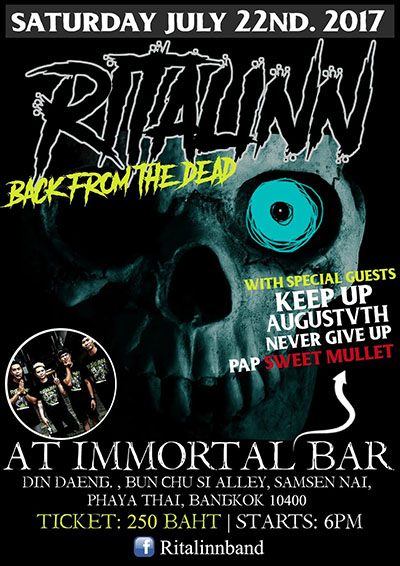
Ritalinn Back From The Dead – Immortal Bar

metal04

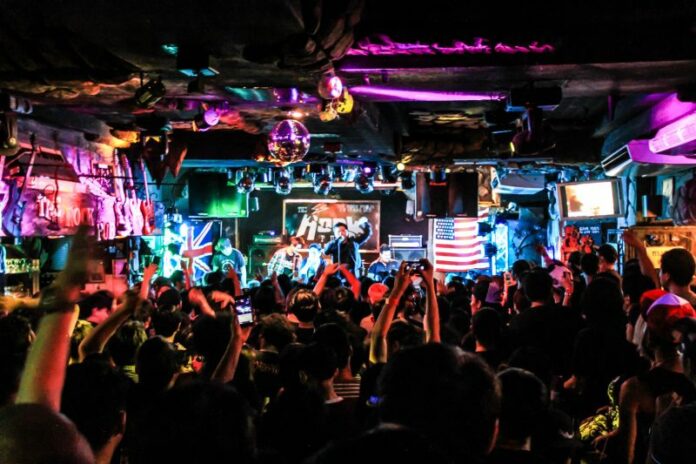
Immortal Bar is considered to be one of Bangkok’s top venues, catering strictly to the underground hardcore-punk-Metal crowd. The venue opened its doors 17 years ago and prides itself for its no commercial music policy. Immortal Bar has played host to both international and local bands. This weekend, Thai emo-punk band Ritalinn will perform their hits. Proceeds from the gig will be donated to the bandekraeron children’s home.

Tickets are 250 baht, the event starts at 6pm.


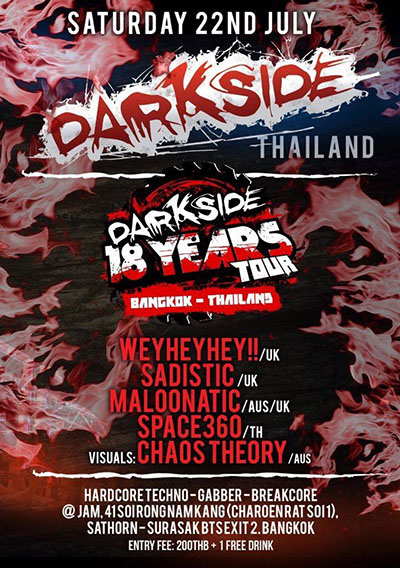
Dark Side Thailand – Jam

metal06

This event isn’t a metal or a punk event, but the music played at Darkside Thailand is just as intense and dark. Gabba is a style of electronic music that has its roots in techno, happy hardcore and industrial music. Gabba’s signature fast paced jack hammer beats often exceed two hundred bpm – just to give you an idea, a normal resting heart beat ranges 60 to 100 bpm.

The genre has huge following in Europe and according to Glaswegian DJ Sadistic, Gabba and hardcore events attract quite an eclectic crowd. Spearheading the movement in Thailand is DJ Sadistic himself. Flying in from Scotland to Join Sadistic is Weheyhey. Also joining him are Australia’s Maloonatic and Thailand’s own Space 360, plus visuals artist Chaos Theory.

Doors open at 8pm on Saturday at Jam. Entry is 200 baht and includes a drink.


July 29

Explicit Live – Residence de Canal

metal05

Ok so I may be cheating a bit here because this gig won’t be until next week, but I just thought I’d give you all a heads up. Thai metal core band Explicit have worked with some of the best in the local and international artists in the industry such as “Evergreen Terrace,” Andrew Carey and Acacia Strain’s Vincent Bennet. Next weekend they take to the stage and will perform their new material. Sounds for the after party will be provided DJs Marco Maurer, Kav O’ Sarin and Michael Morton.

The party starts at 5pm on July 29 at Residence de Canal. All-day tickets are 380 baht and include one drink. Tickets for the after party are 200 baht.


For me it doesn’t matter if it’s mosh pits or breakdance battles, music will always unify people. Have fun this weekend, mosh, throw up your devil horns and until next time, dub be good to you.

Advertisement

ONE Championship Gets Cash for Major Growth

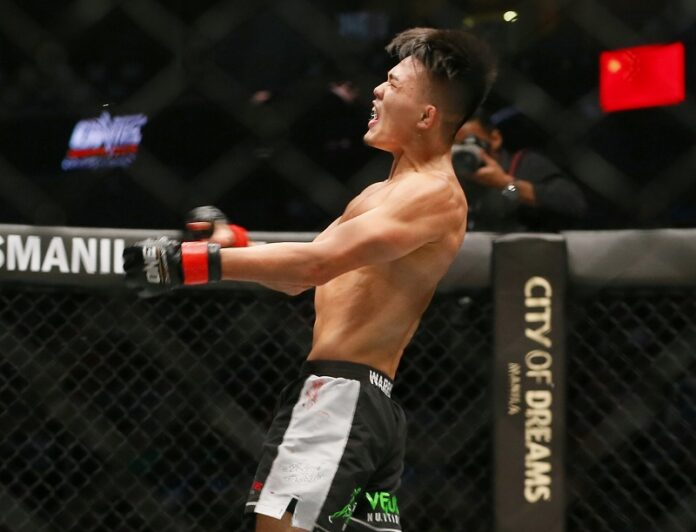
Singapore's Christian Lee lets out a yell following his featherweight win over China's Wan Jian Ping in ONE Championship mixed martial arts bout in Pasay city on April 21, 2017.

ONE Championship has secured a major equity investment from venture capital firm Sequoia India and investment firm Mission Holdings, positioning the ascendant mixed martial arts promotion to increase its presence throughout Asia.

The investment means ONE Championship has raised over $100 million in total capital less than six years after its first show, according to Chatri Sityodtong, the promotion’s chairman and CEO.

Sityodtong told The Associated Press on Wednesday that ONE Championship plans to stage up to 30 events in 2018 and will financially compete to sign the world’s best fighters, all while concentrating on its primary goal of being Asia’s dominant MMA brand. To that mission, Sityodtong intends to expand the Singapore-based promotion’s reach next year into Japan, South Korea and eventually India.

“Already we’re the largest martial arts organization in the history of Asia,” Sityodtong said. “All the pieces suggest that we have a big, big runway of growth ahead of us and that we’re just scratching the surface of our potential.”

The growth is already visible: In the final five months of 2017 alone, ONE Championship has 11 scheduled shows spread among Macau, Malaysia, China, Indonesia, the Philippines, Singapore, Thailand and Myanmar.

After doing 18 events this year, Sityodtong projects 24 to 30 shows for 2018. The increase will include aggressive expansion into China, where ONE Championship is already staging events this year in Beijing, Shanghai and Shenzhen, just north of Hong Kong.

ONE Championship already claimed it was the largest sports media property in Asia before the latest round of investment, with video programming seen in 128 countries and live shows attracting large crowds throughout the Eastern hemisphere. The promotion received capital last year from Heliconia Capital Management, which is owned by Singapore’s sovereign wealth fund.

Sityodtong is a Harvard-educated entrepreneur and a lifelong martial artist who left a lucrative career as a hedge fund manager to start ONE Championship as a showcase for homegrown Asian martial artists. He is looking forward to utilizing Sequoia’s expertise on business expansion while he plots his still-young promotion’s next moves.

“It’s been a whirlwind,” Sityodtong said. “Just six years ago, this was a PowerPoint presentation, and now we arguably have the most blue chip shareholder base for any sports property out here in Asia.”

The UFC, the sport’s richest and most prominent promotion, is striving to increase its presence in Asia with shows in Singapore, Japan and China this year. UFC fights are watched avidly across Asia, and the promotion has a healthy number of fighters under contract with Asian ethnicity, but Sityodtong claims ONE Championship already has “a massive lead over the UFC” in the fight for Asian fans.

“We’re very focused on Asia, with Asian content that really resonates,” Sityodtong said. “So it’s very different scale. It would be like ONE Championship coming to America with Asian heroes and trying to ignite American audiences without any Americans on a show. It’s hard to do so.”

ONE Championship’s talent pool is Asian-focused, but not exclusive. Its champions include Filipino-American heavyweight Brandon Vera, Wisconsin-born welterweight Ben Askren, Brazilian light heavyweight Roger Gracie – and Angela Lee, the Canada-born, Hawaii-raised atomweight who has become one of the promotion’s most popular fighters.

While ONE Championship’s roster of fighters probably doesn’t measure up to the UFC’s group on pure overall talent, Sityodtong’s promotion is about much more than blood and belts. Although he has the money to bid for top free-agent fighters alongside the UFC and Bellator, Sityodtong is more interested in creating a product that suits ONE Championship’s conception of the Asian audience’s sensibilities.

“The UFC has done a wonderful job in the Western hemisphere and deserve their success, but they focus primarily on the fighting, on the violence, on controversy, on disrespect,” Sityodtong said. “You know, Conor McGregor, in your face, F-this, F-that. We’ve chosen to focus on Asian values, and that kind of stuff just doesn’t fly. ONE Championship is a true celebration of martial arts, which is Asia’s greatest cultural treasure, and we want to honor the Asian values of humility, kindness, integrity, strength and discipline. So it’s a very different approach.”

Sityodtong believes that cultivated, clean-cut image has the side benefit of attracting corporate sponsors and deep-pocketed partners – including Sequoia India, a branch of the famed U.S. venture capital firm that invested in Apple, Google, PayPal, YouTube, Instagram, Yahoo!, WhatsApp and countless other foundational technology companies.

“ONE Championship has been a pioneer and major driving force of the martial arts industry in Asia, with surging popularity across major countries,” said Shailendra J Singh, the managing director of Sequoia Capital (India). “It has played an incredible role in nurturing local talent and developing local stars, led by a wonderful, mission-oriented team. We are delighted to join the team in their pursuit of developing the leading martial arts franchise for Asia’s 4.4 billion people.”

Story: Greg Beacham

Related stories:

One MMA Fight Cards Out to Stoke Pan-ASEAN Bloodlust in Bangkok 

Meet a Thai Couple Who Just Fight All the Time (Video) 

Women Fighters to Smash Bangkok as MMA Penetrates Homeland of Muay Thai

Women’s Fights a Strong Part of One’s Expansion Plans

ONE Championship MMA Coming to Bangkok, New Markets for 2017

Advertisement

Joy-Baked Ceramics Cooking Up at Restaurant Gallery

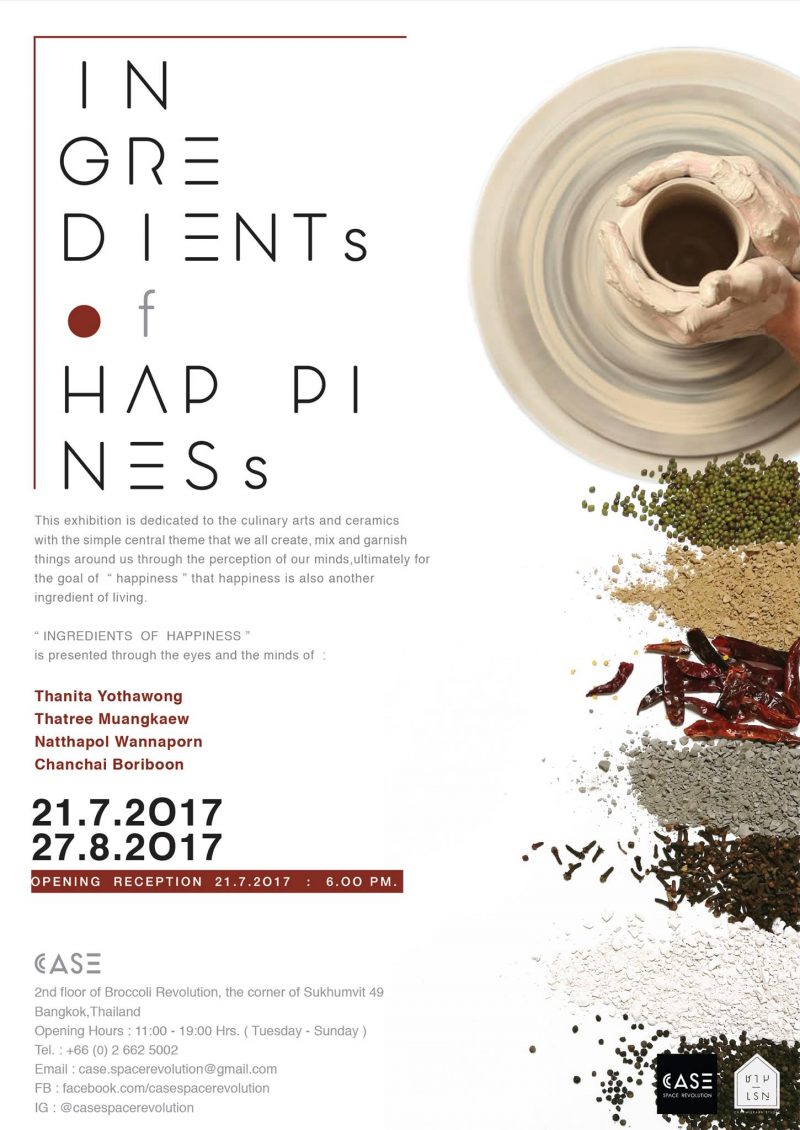
‘Give and Take’ by Natthapol Wannaporn is featured in the Ingredients of Happiness exhibition.

BANGKOK — Four ceramic artists will display their culinary-inspired pottery starting Friday in a gallery located atop a downtown vegan restaurant.

At Ingredients of Happiness, find idea that happiness is a vital ingredient to both food and life in ceramics on display at the restaurant art space called Case Space Revolution. The exhibition opens at 6pm on Friday with drinks and runs until Aug. 27.

Thanita Yothawong, Thatree Muangkaew, Natthapol Wannaporn and Chanchai Boriboon, all fine arts graduates from Silpakorn University, will be the featured artists.

See how ceramics and cooking can combine to make comely crafts on the second floor of Broccoli Revolution, which is located on the corner of Soi Sukhumvit 49, a short walk from BTS Thong Lo.

Press Release INGREDIENTS OF HAPPINESS Poster e1500542864684

Advertisement

Politicos Dismiss Regime’s 10-Point ‘Social Contract’

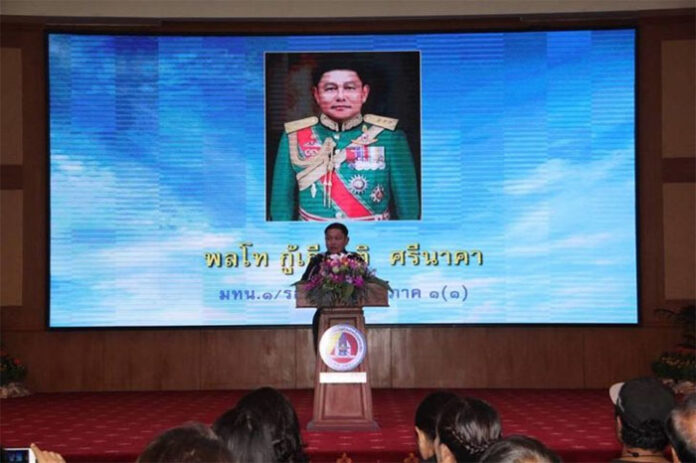
1st Army Corps commander Lt. Gen. Kukiat Srinaka stands below a large image of himself Monday at the 1st Army Division headquarters in Bangkok. Photo: Prachachart

BANGKOK — A number of politicians and critics said they were unimpressed by a 10-point social contract introduced by the military regime Monday at a forum on national reconciliation.

Most of those interviewed after the event held at the 1st Army Division headquarters in Bangkok.said they saw it as a cosmetic exercise to shore up the junta’s image and dwindling popularity at best, or an attempt to further impose its will on the people.

The meeting, led by 1st Army Corps commander Lt. Gen. Kukiat Srinaka, was attended by 312 people including representatives from civil society and the two largest political parties.

Kukiat said the aim was to foster unity and move the country forward peacefully. He assured that the forum – also being staged in the kingdom’s four major regions – would be constructive and attentive to differing views. He said input would be collected for possible adjustment to the draft.

Some of the points were said to have been compiled from feedback people provided the government between Feb. 14 and May 8. Prime Minister Gen. Prayuth Chan-ocha is due – on an unspecified date – to read the final social contract to the public. Prayuth also added a 15-point addendum to the 10 points which includes a clause forbidding future administrations from abusing power to attain popularity and obliges office holders to perform their duties with integrity and accountability.

Junta spokeswoman Col. Sirichan Nga-thong said Monday that forums held in the four regions took place Monday through today. She said Input would be collected for the final version of the social contract.

The first of 10 items calls for unity under a quasi-democratic framework loaded with caveats such as the public’s need to exercise rights “correctly.”

It says “all Thais should seek to create an atmosphere of unity and reconciliation so Thailand could be one under a democratic system with the king at the head.

“Also, people should understand a true democratic system and exercise their rights and liberties correctly and in accordance with the law and [increased public] participation in politics. [They should] accept differing views and strengthen political institutions in a manner that will lead to free and fair elections while accepting electoral results which are considered the consensus of all Thais … .”

Finally, it calls for mechanisms for scrutinizing state power and solving problems “through parliamentary mechanisms.”

The final two items which the government wants to promote urge public support for unspecified reforms and national strategic plans that have yet to be written.

Also worth noting is No. 7, which underscores the regime’s hostility toward the press. It states that “all Thais should exercise caution when consuming news and information in order to ensure it is not distorted.”

Others seem obvious, such as No. 4, which urges Thais to “conserve natural resources and the environment.”

Critics said they were not convinced by the contract and dismissed it as a public relations exercise.

“The whole forum was nothing but an attempt to get people to cooperate with the regime,” said Uchen Cheangsen, a political scientist at Walailak University in Nakhon Si Thammarat province. “I’ve seen many such forums. Many people get invited, but in the end, they mean nothing. This was an image-boosting process and more like ordering people to do as they say than anything close to being a social contract.”

Uchen cited the first point, saying it’s an example of the junta dictating what kind of “democracy” Thailand should have. The political scientist added that if the junta can be honest with itself, it would recognize it is one of the problems facing Thailand.

Gothom Ariya is an expert in public deliberation. Over the years, he has hosted countless forums where people of diverse political stripes have met to deliberate in an an environment of tolerance. Gothom said Tuesday he was not impressed by what the military government is doing.

“This is a process where people participate under the leadership and management of those in power. In a way, it’s like organizing something that looks nice, but whether people really feel involved or own it is another matter. It’s just a formality,” he said.

Gothom warned that the process will not produce anything concrete if people are not allowed to genuinely contribute or amend the 10 points already set forth.

“They should adjust some of the points if there was any input. But if they were just there to notify participants [of the 10 points], there won’t be any real exchange,” Gothom said.

The deputy leader of the Democrat Party, Nipit Intarasombat, was more accommodating. He said his party sent a representative to attend the forum and is cooperating.

“They got the 10 points from listening to the people,” Nipit said, adding that all 10 items seemed to be general statements all parties could agree upon, such as fostering democracy.

“These are norms that society should already have,” he said.

Why then, would the military government go through the process if it should all be understood already? Nipit couldn’t provide an answer, but said he also wondered why.

The veteran politician and former MP said the 10 points were vague and should be made more concrete. He added that he wonders how concerns by different stakeholders – such as the Redshirt belief that double-standards exist in the political and justice system, or Democrat Party supporters’ complaint that Pheu Thai dismisses minority voices when in power – could be addressed by these forums.

On the other side of the divide, a former Pheu Thai MP and leader of Redshirt group United Front for Democracy Against Dictatorship, or UDD, said his party sent Redshirt leader Jatuporn Promphan to participate.

“The UDD has been targeted for destruction … So let us say that we won’t obstruct or oppose the process,” Weng Tojirakarn said. “But I don’t know what results it will generate.”

Jatuporn was sentenced to a year in prison Thursday by the Supreme Court for criticizing the leader of the Democrat Party in 2009.

Weng asked how people could endorse reforms and national strategic plans that haven’t even been written yet by junta appointees. He also shared Nipit’s sentiments in regard to the vagueness of most of the points.

“It’s just something superficial. We don’t know what the real deal will be. It’s about shoring up the credibility of the National Council for Peace and Order, like putting on powder to make them look good,” Weng said.

Advertisement

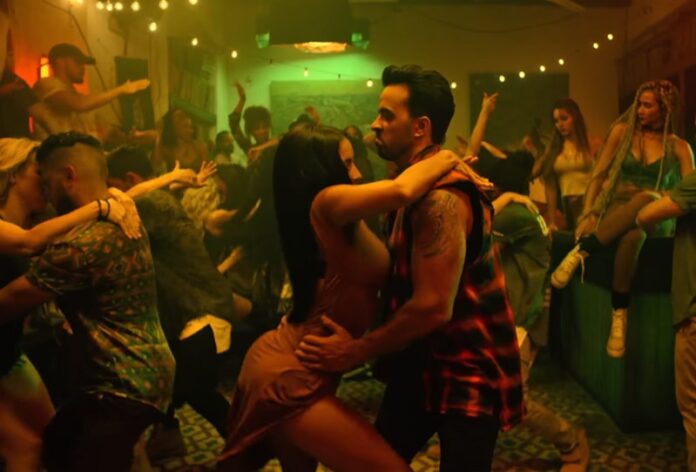
Malaysia Bans ‘Despacito’ on State Radio, TV Over Lyrics

Image: LuisFonsiVEVO / YouTube

KUALA LUMPUR — Malaysia has banned “Despacito” on state radio and television, though it might be hard to slow the song’s record-breaking popularity.

The ban applies only to government-run radio and TV outlets, not to private stations or YouTube or the music streaming services fueling the song’s success.

Communications Minister Salleh Said Keruak said late Wednesday the song was reviewed and banned because of a public complaint that the lyrics are obscene. He urged private radio stations to censor the song themselves out of sensitivity to local culture. Salleh didn’t give further details on the complaint and couldn’t be reached Thursday.

An Islamic party Amanah has earlier denounced the song and called for it to be kept off Malaysia’s airwaves as many young children were singing the song without understanding the words.

“We respect the right to be entertained but there should be clearer guidelines so that the entertainment does not spoil people but makes them better,” party official Atriza Umar told The Star newspaper.

The Spanish-language song  its title means “slowly”  was released by Puerto Rican artists Luis Fonsi and Daddy Yankee in January. The original and a remix featuring Justin Bieber together are the most streamed track of all time with more than 4.6 billion plays across streaming platforms. The previous record was held by Bieber for his 2015 song “Sorry.”

When the record was announced earlier this week, Fonsi credited streaming for helping his music reach every corner of the planet.

Advertisement

Hot News

LATEST NEWS

Bangkok
overcast clouds
25.5 ° C
25.5 °
25.5 °
93 %
3.2kmh
100 %
Fri
25 °
Sat
32 °
Sun
35 °
Mon
37 °
Tue
37 °