






























31.1 C
Bangkok
Tuesday, June 23, 2026
Home Blog Page 2488

Tilikum, Icon of Anti-Captivity ‘Blackfish’ Documentary, 36

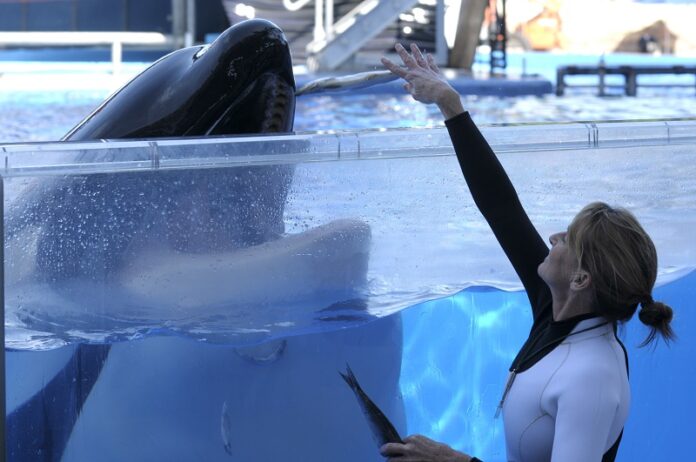
Kelly Flaherty Clark, right, director of animal training at SeaWorld Orlando, works with killer whale Tilikum during a training session in 2011 at the theme park's Shamu Stadium in Orlando, Florida. Photo: Phelan M. Ebenhack / Associated Press

ORLANDO, Florida — Tilikum the orca has died after more than two decades at SeaWorld Orlando, where he gained notoriety for killing a trainer in 2010 and was later profiled in a documentary that helped sway popular opinion against keeping killer whales in captivity.

He will not be replaced. He was the first of SeaWorld’s orcas to die since the company announced the end of its orca breeding program in March 2016.

In a statement announcing Tilikum’s death early Friday, SeaWorld officials said he had serious health issues including a persistent and complicated bacterial lung infection. Tilikum was estimated to be 36 years old. A necropsy will determine the cause of death.

The 2010 death of SeaWorld trainer Dawn Brancheau during a performance with Tilikum after a “Dine with Shamu” show shocked the public and changed the future of orcas at SeaWorld parks.

Brancheau was interacting with Tilikum before a live audience at SeaWorld Orlando when he pulled her from a platform by her arm and held her underwater. An autopsy report said Brancheau drowned but also suffered severe trauma, including multiple fractures.

Former SeaWorld orca trainer John Hargrove said Tilikum’s death offered some closure in the violent death of his friend and colleague. But he said Tilikum also finally found relief.

“Tilikum has been sick, very sick, for so long, and after everything he’s had to endure, this is to me like he’s free,” said Hargrove, who left SeaWorld in 2012 and was featured in the documentary “Blackfish.”

“He lived a tortured existence in captivity. I think all the whales do, but if you had to pinpoint one of them, hands down I would say Tilikum.”

Animal rights advocates who want orcas and other marine mammals at SeaWorld parks released into sea pens or coastal sanctuaries said Tilikum was snared in a business model that led only to tragedy. Lisa Lange, senior vice president for the group People for the Ethical Treatment of Animals, urged SeaWorld to release its remaining orcas and marine mammals to “spend the rest of their lives in as natural a setting as possible.”

SeaWorld supporters found something worthwhile in Tilikum’s time at the park.

“His story is a complicated one, but I also think he represented his species well,” said Grey Stafford, president of the International Marine Trainers’ Association. He’s also a former SeaWorld employee, though he never worked with Tilikum. “In retrospect, there are a lot positives to say.”

SeaWorld President and CEO Joel Manby said, “Tilikum had, and will continue to have, a special place in the hearts of the SeaWorld family, as well as the millions of people all over the world that he inspired.”

According to National Oceanic and Atmospheric Administration figures, male killer whales in the wild typically live about 30 years and females typically live about 50 years. Institutions displaying marine mammals and their critics disagree over whether orcas’ life expectancy in captivity differs from their life span in the wild.

Tilikum had been SeaWorld’s most prolific male orca, siring 14 calves since his arrival at the park about 25 years ago. He was noticeable for his size at more than 22 feet and 11,800 pounds.

He was born off the waters of Iceland and brought to Sealand of the Pacific in Canada after being captured. While at Sealand in 1991, Tilikum and two female orcas were responsible for the death of a part-time trainer who fell into their pool and was submerged by them.

Tilikum was moved to SeaWorld Orlando in 1992, and Sealand later closed.

SeaWorld’s decision to end the breeding program and phase out the theme parks’ traditional orca performances came three years after the release of the documentary, “Blackfish,” which chronicled Tilikum’s life and Brancheau’s death.

Her death was not the only one linked to Tilikum at SeaWorld. In 1999, a naked man who had eluded security and sneaked into SeaWorld at night was found dead the next morning draped over Tilikum in a breeding tank in the back of Shamu Stadium.

“Blackfish” argued that killer whales in captivity become more aggressive toward humans and each other. Because of it, several entertainers pulled out of planned performances at SeaWorld parks and animal rights activists increased their demonstrations outside the parks.

SeaWorld attendance dipped, company profits fell and Southwest Airlines ended its 25-year relationship with the theme park company.

Gabriela Cowperthaite, who directed “Blackfish,” said in an email that it’s time to focus on other whales in captivity. “He lived a horrible life, he caused unspeakable pain, so at least his chapter is over,” she said.

In March, SeaWorld’s CEO acknowledged that the public’s attitude had changed about keeping killer whales captive.

“We needed to move where society was moving,” Manby said.

Tilikum’s death was another blow for SeaWorld employees already reeling from job cuts announced last month across SeaWorld Entertainment Inc.’s 12-park system, Stafford said. He worried the loss of employees trained to care for marine mammals may inadvertently weaken other conservation efforts, such as a captive breeding program proposed for endangered porpoises called vaquitas in the waters off Mexico.

“That human experience isn’t likely to be replaced,” Stafford said.

Story: Mike Schneider, Jennifer Kay
Advertisement

5 Dead, 8 Injured as US Veteran Opens Fire in Florida Airport

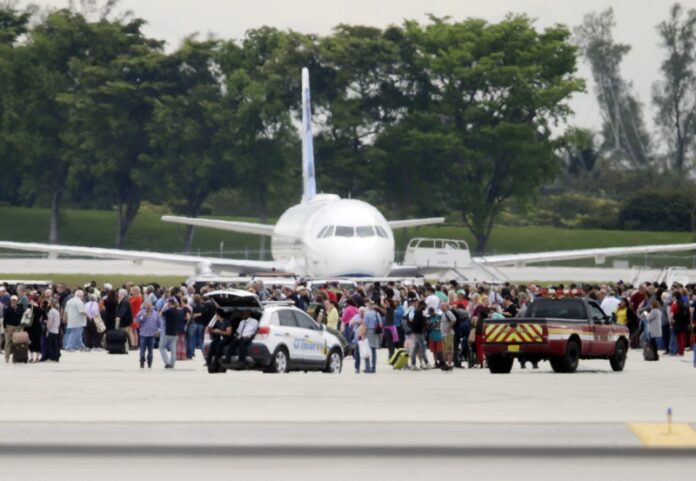
People stand on the tarmac Friday at the Fort Lauderdale-Hollywood International Airport after a shooter opened fire inside a terminal of the airport, killing several people and wounding others before being taken into custody in Fort Lauderdale, Florida. Photo: Lynne Sladky / Associated Press

FORT LAUDERDALE, Florida — An Army veteran who complained that the government was controlling his mind drew a gun from his checked luggage on arrival at the Fort Lauderdale airport and opened fire in the baggage claim area Friday, killing five people and wounding eight, authorities said.

He was taken into custody after throwing his empty weapon down and lying spread-eagle on the ground, one witness said.

“People started kind of screaming and trying to get out of any door they could or hide under the chairs,” the witness, Mark Lea, told MSNBC. “He just kind of continued coming in, just randomly shooting at people, no rhyme or reason to it.”

The gunman was identified as 26-year-old Esteban Santiago of Anchorage, Alaska, who served in Iraq with the National Guard but was demoted and discharged last year for unsatisfactory performance. His brother said he had been receiving psychological treatment recently.

A law enforcement official told The Associated Press that Santiago had walked into the FBI office in Anchorage in November to say that the U.S. government was controlling his mind and making him watch Islamic State videos.

Agents questioned an agitated and disjointed-sounding Santiago and then called police, who took him for a mental health evaluation, according to the official, who was not authorized to discuss the case and spoke on condition of anonymity.

FBI agent George Piro, who is in charge of the Miami field office, confirmed that Santiago had come into the Anchorage office and said he clearly indicated at the time that he was not intent on hurting anyone.

Authorities said the motive for the attack was under investigation. Shortly after the shooting, and before details of Santiago’s mental health became public, Sen. Bill Nelson of Florida said that it remained to be seen whether it was terrorism or the work of “someone who is mentally deranged.”

Piro said authorities are looking at leads in several states and have not ruled out terrorism. “We’re looking at every angle, including the terrorism angle,” he said

Santiago, who is in federal custody, will face federal charges and is expected to appear in court Monday, Piro said.

One witness said the attacker gunned down his victims without a word and kept shooting until he ran out of ammunition for his handgun, sending panicked travelers running out of the terminal and spilling onto the tarmac, baggage in hand.

Others hid in bathroom stalls or crouched behind cars or anything else they could find as police and paramedics rushed in to help the wounded and establish whether there were any other gunmen.

Bruce Hugon, who had flown in from Indianapolis for a vacation, was at the baggage carousel when he heard four or five pops and saw everyone drop down on the ground. He said a woman next to him tried to get up and was shot in the head.

“The guy must have been standing over me at one point. I could smell the gunpowder,” he said. “I thought I was about to feel a piercing pain or nothing at all because I would have been dead.”

It is legal for airline passengers to travel with guns and ammunition as long as the firearms are put in a checked bag – not a carry-on – and are unloaded and locked in a hard-sided container. Guns must be declared to the airline at check-in.

Santiago arrived in Fort Lauderdale after taking off from Anchorage aboard a Delta flight Thursday night, checking only one piece of luggage – his gun, said Jesse Davis, police chief at the Anchorage airport.

At Fort Lauderdale, “after he claimed his bag, he went into the bathroom and loaded the gun and started shooting. We don’t know why,” said Chip LaMarca, a Broward County commissioner who was briefed by investigators.

The bloodshed is likely to raise questions of whether aviation safety officials need to change the rules.

The attack also exposed another weak point in airport security: While travelers have to take off their shoes, put their carry-on luggage through X-ray machines and pass through metal detectors to reach the gates, many other sections of airports, such as ticket counters and baggage claim areas, are more lightly secured and more vulnerable to attack.

In 2013, a gunman with a grudge against the Transportation Security Administration shot and killed one of the agency’s screeners and wounded three others during a rampage at Los Angeles International Airport. Last November, an airline worker was shot and killed near an employee parking lot at Oklahoma City’s airport, and in 2015 a machete-wielding man was shot to death after he attacked federal security officers at the New Orleans airport.

“The fact is that wherever there are crowds, such as at our airports, we remain vulnerable to these types of attacks,” Nelson said.

The Fort Lauderdale gunman said nothing as he “went up and down the carousels of the baggage claim, shooting through luggage to get at people that were hiding,” according to Lea. The killer went through about three magazines before running out of ammunition, Lea said.

“He threw the gun down and laid spread-eagle on the ground until the officer came up to him,” Lea said.

The gunman was arrested unharmed, with no shots fired by law enforcement officers, and was being questioned by the FBI, Sheriff Scott Israel said.

Broward County Sheriff Scott Israel said 30 to 40 people were injured – scrapes, bruises and broken bones – after the shooting.

The condition of the wounded was not disclosed. At least one of the victims was seen lying in a pool of blood with what appeared to be a head wound.

The airport was shut down, with incoming flights diverted and outgoing flights held on the ground. Airport Director Mark Gale said it will try to reopen at 5 a.m. Saturday but urged travelers to check with their individual airlines on flight status. He said 10,000 of the airport’s stranded travelers were being bused overnight to the city’s spacious Port Everglades cruise ship terminal.

President Barack Obama was briefed by his Homeland Security adviser, the White House said. President-elect Donald Trump said that it is a “disgraceful situation that’s happening in our country and throughout the world” and that it was too soon to say whether it was a terrorist attack.

Santiago’s brother, Bryan, told the AP that his brother had been receiving psychological treatment in Alaska. He said Santiago’s girlfriend alerted the family to the situation in recent months. Bryan Santiago said that he didn’t know what his brother was being treated for and that they never talked about it.

He said Esteban Santiago was born in New Jersey and moved to Puerto Rico when he was 2. He was sent to Iraq in 2010 and spent a year there with the 130th Engineer Battalion, according to Puerto Rico National Guard spokesman Maj. Paul Dahlen. He later joined the Alaska National Guard.

The Pentagon said Santiago had gone AWOL several times during his stint with the Alaska National Guard and was demoted – from specialist to private first class – and given a general discharge, which is lower than an honorable discharge.

John Schilcher told Fox News he came up to the baggage claim and heard the first gunshot as he picked up his bag off a carousel.

“The person next to me fell to the ground and then I started hearing other pops. And as this happened, other people started falling and you could hear it and smell it, and people on either side of me were going down and I just dropped to the ground,” said Schilcher, who was there with his wife and mother-in-law. “The firing just went on and on.”

“I was down on the floor. When we finally looked up there was a policeman standing over me,” he said. “That’s when I assumed it was safe.”

Story: David Fischer

Advertisement

In Myanmar Crackdown, Abuses Appear ‘Normal’

Rohingya women and children wait in a queue to collect water in December at the Leda camp, an unregistered camp for Rohingya in Teknaf, near Cox's Bazar, a southern coastal district about, 296 kilometers (183 miles) south of Dhaka, Bangladesh. Photo: Associated Press

WASHINGTON — Abuses appear “normal and allowed” in Myanmar’s response to an armed uprising by Rohingya Muslims, a senior U.S. official said in an interview, casting a pall over one of President Barack Obama’s legacy foreign policy achievements.

Obama and his advisers have long held up the former pariah nation’s U.S.-backed shift from military rule as a breakthrough for American interests and democratic values in Southeast Asia. But the situation in strife-hit Rakhine State makes the transition no straightforward success story.

Rakhine has been largely closed off to foreigners, including aid workers, since a deadly insurgent attack against police in October. Subsequent “clearance operations,” led by the military and reminiscent of its decades of junta rule, have left at least dozens dead. Tens of thousands of Rohingya have escaped to neighboring Bangladesh.

A Myanmar government-appointed commission, led by a former general, this week said there was insufficient evidence so far to support allegations of rape and killings by security forces that have been made by Rohingya villagers fleeing northern Rakhine, which remains off-limits to journalists.

Tom Malinowski, the State Department’s human rights chief, questioned the credibility of that investigation. He said a video of Myanmar police kicking and beating Rohingya – filmed by the police and recently surfaced on social media – suggests a disturbing pattern.

“People don’t film themselves committing a human rights abuse unless they think that doing so is normal and allowed,” Malinowski told The Associated Press.

“What that video suggests to me is that this kind of behavior, at least with respect to whatever unit or elements of the security forces was involved, has become normalized, much as the photographs at Abu Ghraib taught us the same lesson about things that were going on in our military in Iraq at the time,” he said.

The government of Myanmar, also known as Burma, has verified the video and detained the police officers involved. But it insists the incident is an “isolated case.”

Human rights groups and neighboring, Muslim-majority Malaysia accuse Myanmar’s civilian leader, Aung San Suu Kyi, of failing to protect the Rohingya. The Nobel peace laureate is hobbled by her lack of control over the powerful military but harsh national politics also play a role.

Myanmar’s majority Buddhists loathe the Rohingya. Many of the more than 1 million-strong community have lived there for generations, but they lack citizenship. The Rohingya bore the brunt of intercommunal violence with Buddhists in Rakhine in 2012 that left hundreds dead and forced more than 100,000 into squalid camps.

The plight of the Rohingya has attracted the attention of Muslim extremists. U.S. officials say there are credible reports that wealthy backers in Gulf nations and the Rohingya diaspora are providing funds and training for a newly emerged insurgency in Rakhine.

The Myanmar government says the insurgent group – known as Harakah al-Yaqin, or Faith Movement – has hundreds of fighters. It says the group is led by Havid Tuhar, a 45-year-old Rohingya who was raised in Saudi Arabia. The government claims he trained with Taliban in Pakistan.

Havid Tuhar has appeared in several videos posted on social media surrounded by rag-tag, barefoot guerrillas, urging young Rohingya men to fight.

As early as two years ago, Malinowski said, the U.S. expressed fears to Myanmar’s government that the grievances of Muslims needed to be addressed. Otherwise, he said, “outside forces would eventually exploit those grievances to promote a violent reaction.”

“It does seem that something like that, at least on a small scale, has happened,” Malinowski said.

The U.S. would be prepared to share with Myanmar credible threat information to help the civilian leadership respond effectively to attacks, he said. He would not say if any actionable intelligence has been shared to date.

“We do want to support the government of Burma in protecting its people and its borders. We want to help them do it the right way. That means not falling into the trap of an indiscriminate response that fuels recruitment for groups that may be using violence,” Malinowski said.

Story: Matthew Pennington

Advertisement

Court Denies Bail to Activist Suspect in Lese Majeste Case

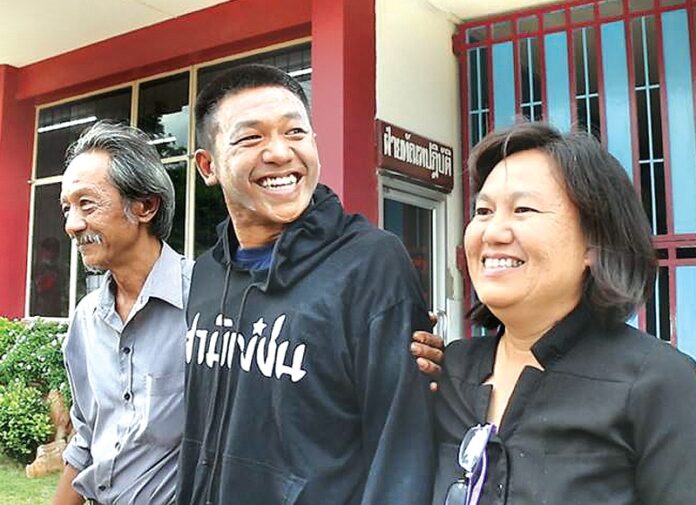
Jatupat ‘Pai’ Boonpattararaksa poses with his parents Aug. 24 in front of the Khon Kaen military court upon being freed on bail in another court case.

KHON KAEN — A Khon Kaen appeals court Friday dismissed a request to free activist Jatupat “Pai” Boonpattararaksa on bail.

Jatupat, a community rights and democracy activist who has campaigned against military rule, has been held in prison since December for sharing a BBC Thai biography of King Rama X the authorities deemed offensive to the monarchy. His was briefly released on bail only to have it revoked Dec. 22 for complaining about its cost.

Jatupat’s lawyers had appealed, but the upper court today affirmed the lower court’s ruling.

Defense lawyers said they will offer a higher bond when they seek bail again in the coming days.

Jatupat was arrested Dec. 3 for sharing on Facebook the BBC Thai article, which was published after King Vajiralongkorn ascended to the throne. He was later charged with defaming the monarchy, a crime known as lese majeste which is punishable by up to 15 years in prison.

After Jatupat was freed the next day, police asked the court to revoke his bail because he complained online about the large bond – 400,000 baht – required by the court. Investigators said his remarks mocked the justice system and instigated unrest.

Related stories: 

 Authorities Visit BBC Thai Offices, Block Article Online

Advertisement

Malls, Airport Closed as Worst Flood in Decades Hit South

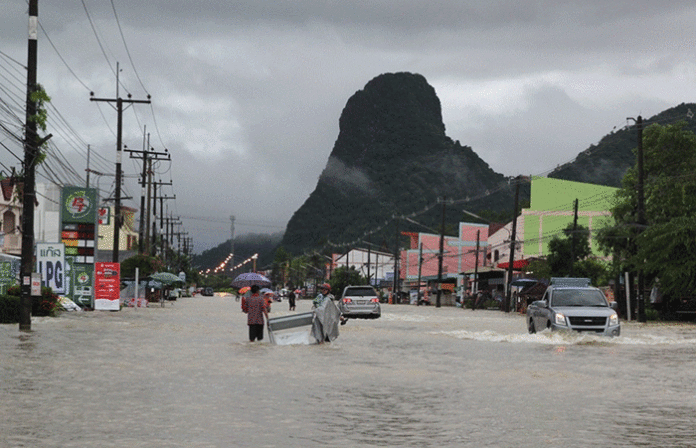
Series of images show the flooding in southern Thailand on Friday

NAKHON SI THAMMARAT — Banks, schools, shopping malls and at least one airport in the south were forced to close Thursday by the ongoing flood crisis that has already claimed six lives.

Many of the flooded areas are popular tourist spots, such as Koh Samui in Surat Thani province, where a family of four narrowly escaped death last night when their wooden house collapsed due to the rain that turned its foundations to mud.

“I heard a loud noise and the house was shaking and leaning,” 16-year-old Woraphol Kamranglaeng told reporters. “So I shouted at my two siblings to jump out of the house.”

Read: Absurd News Parody Brings Smiles to Flood-Ravaged South (Photos)

The flood – the worst in 20 years according to local officials – prompted junta chairman Prayuth Chan-ocha to embark on an urgent visit to one of the provinces affected, while authorities scramble to evacuate residents trapped in their homes and re-open roads and rail tracks cut off by the deluge.

The worst-hit provinces, where rainfall covered over 80 percent of the area, were Phetchaburi, Prachuap Khiri Khan, Chumphon, Surat Thani, Nakhon Si Thammarat, Phang Nga and Ranong. Lesser affected provinces included Phuket, Krabi, Phatthalung, Narathiwat, Yala and Pattani.

The government disaster relief center said six people had died in the flood as of noon Friday. The crisis is expected to continue through the weekend; the Meteorological Department warned that heavy rain will only wind down Sunday at the earliest.

Much of Nakhon Si Thammarat, a key financial center of the southern region, was submerged, forcing major banks and shopping malls to close down. Its airport, which links Bangkok with many islands frequented by tourists, was also shut down. Officials hope to resume flight in the next few days.

Hospitals in the province resumed operation as normal, but their directors told the media they would move their patients if floods did not subside in the coming days.

Junta chairman Prayuth Chan-ocha arrives Friday at Narathiwat City Hall to oversee flood relief operations.

In Phatthalung, south-bound trains had to be stopped because the railtrack has been damaged by the flood in at least 37 spots, needing urgent repairs.

Elsewhere, schools closed down and the army had been deployed to evacuate residents from their homes or hand out relief supplies. More than 160,000 households have been affected by the flood, according to a Friday government report.

Anyone needing assistance is advised to call a government hotline at 1784.

In his visit to Narathiwat, junta chairman and Prime Minister Prayuth attended a flood relief meeting with key members of his cabinet, such as the ministers of interior affairs, agriculture, transport and tourism.

Some private businesses offered support to those affected by the flood. CentralPlaza shopping mall in Nakhon Si Thammarat invited members of the public to use its elevated parking structure for free, while a hotel in the province announced that residents forced to leave their homes could stay there at no cost.

Also going viral on social media were foreigners on Koh Samui who put a stoic face on their fun in the face of the deluge by cruising down flooded streets on floaties.

Koh Samui Jet Skis

A post shared by James Gilbody (@jamesgilbody) on


Midnight dip in Samui

A post shared by James Gilbody (@jamesgilbody) on


Advertisement

Live One Night of Rap, Comedy, Magic and More

Photo: Unda / Facebook

BANGKOK — Get locked and loaded and high at a 60th floor performing arts party in the Sathon area.

Be moved by words when Live By Night kicks off with legit poetry by Bangkok’s Bedroom Poet. Next up is a magic show performed by Stan Fitzgerald, aka One Night Stan. Improv comedy group Sea Stage will pull off visual skits and gags to coax some laughs.

As for music, DJ Octo will open the night spinning welcoming tunes before American-born rapper Unda drops some freestyle rap.

DJs Arin and Luck-E from Dope As Funk will take the stage for the closing party.

Tickets can be purchased online for 350 baht or 500 baht at the door. The event starts at 9pm on Jan. 21 at Vertigo Too high up in the Banyan Tree Hotel on Sathon Tai Road.

Advertisement

British Conservationist Fights to Save Seahorses in Cambodia

Dried seahorses are displaying in plastic jars for sale in a traditional Chinese medicine shop last November in Phnom Penh, Cambodia. Photo: Heng Sinith / Associated Press

ACH SEH ISLAND, Cambodia — A 7-inch creature with a head resembling a horse and a monkey-like tail glides gracefully out of a dark coral crevice off the Cambodian coast. Master of camouflage, unrivaled as a hunter and a much-loved figure of ancient myths and legends, the seahorse may be spiraling toward annihilation after surviving beneath the waves for some 40 million years.

Taking photographs and detailed notes, two divers swim through turbid water to spot the male in the crevice and a nearby female, both hanging on in a once-pristine habitat turned to withered coral beds and ragged remnants of seagrass meadows.

The tropical seas around this jungled island depict, in microcosm, both the seahorse’s threatened state  tens of millions are harvested globally each year  and possible ways to save the iconic species from extinction.

“The seahorse faces an enormous variety of threats,” says Paul Ferber, a British conservationist who has lived on Ach Seh Island for three years, studying the genus Hippocampus and trying to protect its ravaged environment against an armada of illegal trawlers, crab traps and divers in sleek longboats specifically targeting seahorses and related species.

Peering into the darkness one night, Ferber hears the tell-tale chugging of his No. 1 enemy: trawlers from neighboring Vietnam dragging miles-long nets with mesh so fine that even creatures smaller than seahorses can’t escape.

“Big, nasty Vietnamese (boats). It’s either a seine trawler or a pair of them,” he says of vessels that leave behind a lifeless ocean. If equipped with electrified nets, they can even stun and suck in living things burrowed in sea beds.

A powerfully built man with a pair of seahorses tattooed on his chest, Ferber urgently calls his contact in the Cambodian fisheries department, hoping its speedboat can rush from the mainland to arrest the intruders. No luck; the department’s fastest boat was being repaired.

The 39-year-old Ferber, who underwent police training in Britain, said that before such cooperation began, he and his team confronted illegal fishermen alone, armed only with “a slingshot and a bunch of rocks.” He said they were shot at with AK-47 rifles and even a spear gun, and one of their boats was rammed and sunk. Death threats continue.

Seahorses, caught in waters around the world, are sold mainly for Asian traditional medicine, especially in Taiwan, Hong Kong, Vietnam and China.

Amanda Vincent, a Canadian marine biologist and founder of Project Seahorse, estimates that more than 20 million are so consumed each year. Lesser numbers end up as key rings, encased in jewelry or other curios, or in aquariums, with the United States the world’s top buyer for the pet trade. Data from CITES, the international monitor of the wildlife trade, shows that more than 630,000 were imported in the U.S. from 2004 to 2014.

Neither their unique look and behavior (the male, for example, gives birth to the young) nor their place in popular imagination (as charioteers for the Greek god Poseidon, or powerful sea dragons of Chinese myth) seems to have prevented massive exploitation. In Chinese traditional medicine, seahorses ground into powder or dried and eaten whole are believed to cure everything from kidney disease to baldness, despite a lack of scientific evidence. Rice wine with seahorses stuffed inside the bottles is advertised as a powerful sex tonic to “turn a man into an all-night Romeo.”

Visits to Chinese medicine shops in Bangkok and Phnom Penh, Cambodia’s capital, showed brisk sales. In Cambodia, where buying, selling and processing of seahorses is illegal, a dried seahorse was priced at $2 to $2.50.

“It’s a race between the conservation ethos and the rape-and-pillage ethos,” says Vincent, who chairs the seahorse expert group of the Switzerland-based International Union for Conservation of Nature. The legal export trade, she says, has been greatly reduced globally, but illegal fishing continues to threaten many of the 41 seahorse species.

Experts are reluctant to make predictions about possible extinctions but agree many populations are in retreat.

“Seahorses are increasing in our area but declining everywhere else,” says Ferber, who discovered the devastation of Southeast Asia’s seas as a dive instructor in Thailand and Cambodia. On Ach Seh Island, he has built a rudimentary station and quarters for his Thai wife, five children, staff, young volunteers and visiting marine biologists, all living together communal-style. His group, Marine Conservation Cambodia, is supported chiefly by the International Conservation Fund of Canada.

Illegal fishing within the roughly 80 square kilometers (31 square miles) that the group patrols has dropped dramatically, he says. Most of the area will become a marine conservation zone in mid-2017.

The group also maintains a small study area the size of six football fields, and while it has yet to be fully rejuvenated, Canadian staffer Anick Haissoune says, “It’s created a haven for seahorses. It’s small, but proves that a place can revive.” Initially, divers were lucky to spot two seahorses, but now as many as 14 are seen on dives.

More than 30 individual seahorses have been “tattooed”  injected with special dye to allow tracking of their lives and adaptations to surrounding habitat.

Although Ferber lacks academic training  among other occupations, he worked as a florist in London  and Vincent says he is still formalizing his scientific research, she believes his efforts will result in excellent long-term studies. She lauds his role as a front-line conservationist, calling him “not one of life’s bystanders.”

“Paul has enormous courage in tackling real problems with minimal resources,” she says. “I hope he can find a way to stay effective while staying safe. If I had a Paul in every country where we work, my life would be much easier.”

Ferber praises supportive officials in Phnom Penh and within the local fisheries department, but alleges corruption among police and some local government officials tasked with protecting the marine environment.

“It’s a cat-and-mouse game,” he says of the almost daily battle against encroachers.

On a trip to the mainland, Ferber and his crew spot a small craft, pull alongside and lasso it. Its four Vietnamese divers, smiling nervously, have no fishing permit, carry illegal spear guns and have already filled two jerrycans with an assortment of sea creatures.

“They’re small-scale poachers, but they strip everything off the coral reefs that makes them healthy,” Ferber says.

He calls the fisheries department. It’s ready to take action, but final approval for an arrest is needed. The provincial deputy governor then sends word to let the Vietnamese go.

A reason isn’t given; later attempts by The Associated Press to reach the governor and deputy governor by phone were unsuccessful.

But Ferber has his suspicions  and he unleashes a string of curses over the waters.

Story: Denis. A Gray

Advertisement

Samsung Profits Jump 50% Despite Galaxy Disaster

A man walks by an advertising display for Samsung's Galaxy S7 Edge and S7 smartphones Friday in Seoul, South Korea. Photo: Lee Jin-man / Associated Press

SEOUL — Samsung Electronics Co. said Friday that its profits in the last quarter of 2016 surged 50 percent to the highest level in more than three years, despite the Galaxy Note 7 fiasco.

Analysts had expected Samsung’s profits to surge thanks to its mainstay semiconductor business, but the result surpassed even the most optimistic forecasts. The semiconductor division cashed in on strong demand and a tight supply for microchips during the September-December period, likely contributing to more than half of its quarterly earnings.

In its earnings preview, Samsung said it posted 9.2 trillion won (276.3 billion baht) in operating profit, up from 6.1 trillion won a year earlier. It was the biggest quarterly income since the third quarter of 2013.

Analysts polled by FactSet expected a figure of 8 trillion won.

Sales fell 1 percent to 53 trillion won (USD$44.9 billion). The company did not give net profit or breakdown figures for its businesses, which are due later this month.

For the full year, the South Korean tech giant saw a 10 percent gain in its annual income, its best result in three years.

“It’s thanks to the improvement in semiconductors and displays on top of favorable foreign exchange rates,” said Kim Young Woo, an analyst at SK Securities.

The result is a bright spot for the tech giant that was obliged to do multiple recalls last year of products that included a popular smartphone and a washing machine.

The stellar financial results come as Samsung faces an investigation linking it to an influence-peddling scandal that led to the impeachment of President Park Geun-hye. Samsung already has postponed its annual personnel reshuffle, usually announced in December, due to the scandal.

Samsung Group faces allegations that Samsung Electronics and its affiliated companies paid money to foundations and a company controlled by a long-time friend of Park’s, Choi Soon-sil, in order to get the government’s backing in a controversial merger of two Samsung affiliates related to Samsung’s father-to-son leadership succession.

It is still unclear why the Galaxy Note 7 smartphones were prone to overheating and catching fire. That prompted two recalls and eventual discontinuation of the flagship product.

Tim Baxter, chief operating officer at Samsung’s U.S. business, told reporters at the Consumer Electronics Show in Las Vegas on Wednesday that Samsung will share the root cause of the Galaxy Note 7 fires “very soon.” Samsung has been investigating the issue for more than four months.

Story: Youkyung Lee

Advertisement

It’s About Time: New Play ‘Building’ to Touch Hearts

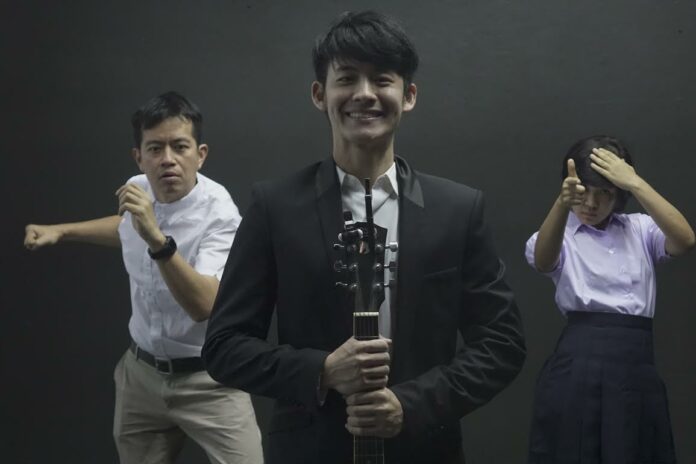
Promotional image for Democrazy Theatre Studio’s ‘Madam Ree Building.’

BANGKOK — Time, longing and the human heart are in play when a school building is to be demolished and students gather to ponder relationships, time and the universe in “Madam Ree Building.”

Twenty years after their first secret kiss, Somyos and Wipha reunite again at a reunion held to say farewell to a building where many memories lie buried. Along with their friends, those past unfinished stories resurface and begin to change the present.

The play is inspired by American playwright Craig Wright’s production about a man who dreams of winning back his ex-girlfriend at their 20-year high-school reunion in “The Pavilion.”

Director Jaturachai Srichanwanpen chose to challenge the story with a reverse analogy to question how time affects relationships and conflict between individual identity and social norms.

Tickets are 500 baht and can be reserved online.

The play will show in Thai with English surtitles. It will be staged at 8pm on Thursdays, Fridays, Saturdays and Mondays, with 3pm matinees on Sundays beginning Feb. 9 before taking a bow on Feb. 27.

Democrazy Theatre Studio on Rama IV Road can be reached on foot via MRT Lumphini Station’s exit No. 1.

Advertisement

Suspect in Brutal Bangkok Knife Murder Video Arrested

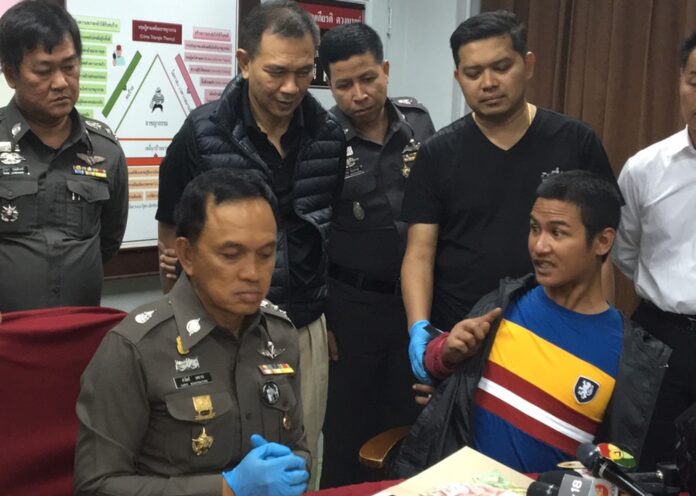
Murder suspect Kittikorn Wikaha, at right, grimaces at Bangkok police commander Sanit Mahatavorn on Friday morning at the Kok Kram Police Station in Bangkok.

BANGKOK — A 26-year-old former convict confessed Friday to stabbing a man to death in northern Bangkok to rob him of his iPhone, an attack that went viral on social media due to its brutality.

Kittikorn Wikaha, who police said has served eight separate terms in prison, was being led through a police “re-enactment” of the alleged crime at 11am after being arrested at his residence earlier in the morning.

He is charged with killing Vasin Lueangcham in Soi Sukhonthasawat 27 on Wednesday night. According to police, Kittikorn said he killed his victim because he resisted.

Speaking at a news conference, Kittikorn advised members of the public to think twice before flaunting their wealth at night lest they also end up as victims.

“Try not to put yourself at risk,” the alleged murderer said. “What’s valuable, keep it safe, don’t show off. The more you show off, the more tempting it is.”

In the security camera footage of Wednesday’s attack, Vasin is seen being stabbed repeatedly by the attacker as his accomplice waits on a getaway motorcycle. The victim tries to defend himself until he is knifed in the throat.

Bangkok police chief Sanit Mahatavorn said the suspect also went on to rob two more victims of their iPhone and cash after killing Vasin that night.

Kittikorn had been jailed eight times since 13, mostly on drug-related convictions; his latest sentence just ended Dec. 14, Lt. Gen. Sanit said. He added that police are still looking for Kittikorn’s accomplice.

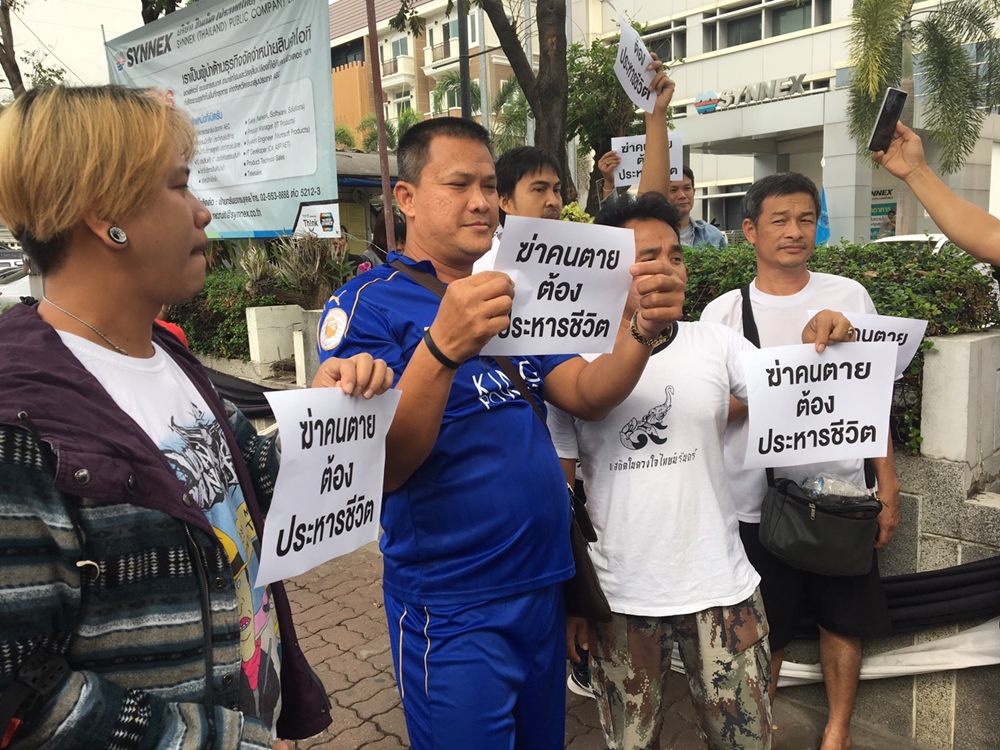
A large crowd was gathering at the scene of the crime Friday morning where police planned the “re-enactment,” some holding signs demanding that Kittikorn be executed for his crime.

“Murderers must be executed,” several signs read.

People display signs demanding Kittkorn be executed.
Advertisement

Hot News

LATEST NEWS

Bangkok
overcast clouds
31.1 ° C
35 °
31.1 °
74 %
4.8kmh
97 %
Tue
34 °
Wed
37 °
Thu
36 °
Fri
36 °
Sat
37 °