

































28.3 C
Bangkok
Sunday, June 21, 2026
Home Blog Page 2515

An Afghan Woman Goes from Refugee to Military Pilot

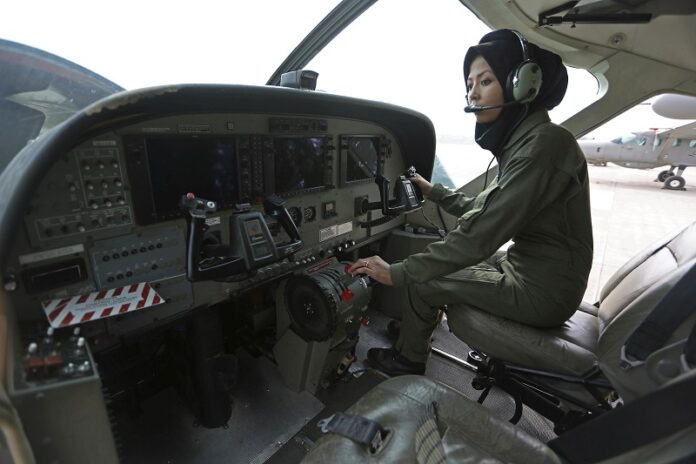
Capt Safia Ferozi, 26, sits in a C-208, a turboprop plane used as transport for the armed forces, before a flight, at the Afghan military airbase in November in Kabul, Afghanistan. Photo: Rahmat Gul / Associated Press

KABUL, Afghanistan — From a childhood as a refugee, Capt. Safia Ferozi is now flying a transport plane for Afghanistan’s air force as the country’s second female pilot, a sign of the efforts to bring more women into the armed forces.

Along the way, the 26-year-old Ferozi also married another pilot, who flies in the same unit supporting army ground forces. They are part of a small Afghan air force that is trying to take a greater role in fighting the Taliban insurgency.

“When I wear military uniform, I really, really feel proud of myself as a woman,” Ferozi said while preparing for a flight at the air force base in the capital, Kabul. She flies a C-208, a turboprop plane used as transport for the armed forces.

Nearly 16 years since the collapse of the militant Taliban regime after the US-led invasion in 2001, Afghan women are taking steps to increase their presence in society, including in parliament, government and the military. Still, they face resistance in a deeply conservative society where women are largely expected to stay in the home and where violence against women remains a widespread problem.

When she was a child, Farozi’s family fled from their home in Kabul in the 1990s, during the civil war among Afghanistan’s warlords. They took refuge in Pakistan, returning only after the fall of the Taliban.

In high school in post-Taliban Afghanistan, Farozi saw a TV commercial urging women to join the military. So after graduation she enrolled in the military academy, studying to become a communication officer. Then it was announced at the academy that the air force was looking for women to become pilots.

Farozi and 12 other women applied, and she was the only one who passed the tests to enter training.

While she was training at an airfield in the western province of Herat, she first met Capt. Mohammad Jawad Najafi, the pilot who would later become her husband. They married nearly two years ago, and he has since backed her ambitions.

She graduated from training in 2015. She gave birth to their first child, daughter Nergis, now nearly 8 months old, and is back flying missions.

Farozi is one of only two female pilots in the Afghan air force, but five other women are currently going through training.

In 2013, Capt. Niloofar Rahmani became the country’s first woman pilot in more than 30 years and the first to pilot fixed-wing aircraft  there were a few female helicopter pilots during Soviet-backed rule in the 1980s. She is now in the United States training on the far larger C-130 military transport craft.

Ferozi says she hopes to inspire other women.

“As a woman you face many challenges, but you have to deal somehow with all those problems,” she said.

There are around 1,800 women serving in Afghanistan’s 195,000-member military, according to Gen. Mohammad Radmanish, deputy Defense Ministry spokesman. The military, which is heavily backed by the U.S. and NATO, is working to bring the number up to 10 percent of its ranks over the next seven years, he said.

Afghanistan’s small air force  just over 100 aircraft  received little attention for years, but in 2015 NATO and the U.S. began focusing on building it up with increased training and equipment. The force has attack helicopters and light attack planes that have been flying combat missions this year, though NATO militaries carry out the vast majority of strikes in the fight against insurgents.

The other major role for the air force is in emergency humanitarian missions, helping those hit by flooding, avalanches, landslides or other disasters.

Story: Karim Sharifi, Rahim Faiez
Advertisement

Severe Floods Cut Off Southern Provinces, 14 Dead

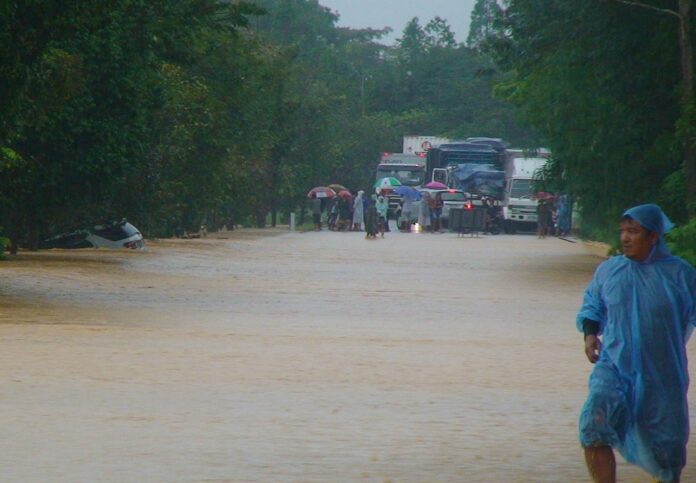
A man wades near a submerged vehicle along a flooded section of Route 41 in Chumphon province on Wednesday morning.

CHUMPHON — Severe floods continued to plague the south of Thailand on Wednesday, rendering a vital highway impassable to many vehicles while the death toll rose to at least 14 people.

Many motorists were forced to take detours after Route 41, which links south to north, was cut off Wednesday morning following days of heavy rain in Chumphon and its neighboring southern provinces. The flood prompted the military government to declare disaster zones in several areas including Koh Samui.

Read: Flash Floods Kill 11 in South, Heavy Rain to Continue

Fourteen people, including five students, have died due to the flooding, disaster officials reported Tuesday.

Meter-deep flood waters on a section of the highway in Chumphon’s Thung Tako district meant only trucks could pass. Traffic police and local officials responded by directing motorists to side roads along the route, but some vehicles ended up getting lost in the confusion.

At least one car had to be rescued after it failed to heed warning signs and plowed into the flood, disabling its engine.

Police are advising motorists to use the seaside road in Sawi district before rejoining Route 41 in the unaffected area.

Meanwhile, security officers in Prachuap Khiri Khan were moving more than 100 patients from a hospital cut off by flooding to other facilities.

Advertisement

Pink and Yellow Monorail Lines Given 2020 Completion

Rendered image of the Pink Line monorail. Photo: Mass Rapid Transit Authority of Thailand

BANGKOK — Two more commuter rail extensions in the capital were given ambitious completion dates after the announcement Tuesday of a firm to build them.

BSR Joint Venture – consisting of BTS Group, Sino-Thai Engineering & Construction PCL and Ratchaburi Electricity Generating Holding PCL – won the 105 billion baht contract to build the Yellow and Pink lines. Together, they will build two suburban monorail lines in a public-private partnership with the Mass Rapid Transit Authority of Thailand, or MRTA.

“The concession contract is expected to be signed by April 2017,” MRTA Governor Peerayuth Singpattanakul said.

Under the contract, the MRTA will be responsible for purchasing the land, while the joint venture builds the stations within three years. After that, they will retain the concession to operate the monorail service for 30 years.

The contract for the Pink Line is worth 53 billion baht. Its 34-kilometer route will run from the Nonthaburi Government Center near Khae Rai junction along Tiwanon and Chaeng Watthana roads to the eastern district of Min Buri.

The Yellow Line contract for 52 billion baht covers a 30-kilometer route from the Ratchada-Lat Phrao intersection southeast to the Samrong area of Samut Prakan province.

Both routes were among many planned extensions delayed from the original plan now being pushed forward by the military government.

The joint venture beat out the Bangkok Expressway and Metro PCL, which operates the original MRT subway system and the new Purple Line.

BSR will need to negotiate specific details of the plan before the project goes to the interim cabinet for approval in March.

The MRTA said it chose to build monorail instead of heavy rail lines because it would have a lower environmental impact and cost slightly less.

Advertisement

Do You Butoh? International Fest Starts Friday

Teerawat “Ka-ge” Mulvilai, artistic director of B-Floor Theatre, in the 2014 performance “SanDanKa”. Photo: International Butoh Festival Thailand / Facebook

BANGKOK — The flexibility and complexity of human flesh will take the stage Friday through six artists in the upcoming International Butoh Festival.

Butoh artists from around the world will converge once again on Bangkok for the International Butoh Festival. This year, its theme explores changes to this ancient artform, which originated in Japan in the late 1950s.

The festival is separated into three programs:

Starting at 7pm on Friday and continuing through Sunday, the first program features shows by Tony Broer from Indonesia, Rosana Barra from Brazil-Spain and Calé Miranda from Brazil.

The following week, from Dec. 16 to 18, watch a “Quiet House” performance by Japanese artists Takayuki Takita and Yuko Kawamoto, along with Thailand’s Teerawat “Ka-ge” Mulvilai, artistic director of B-Floor Theatre.

Finally, a Butoh symposium rounds out the schedule at 4pm on Dec. 18 with Takashi Morishita, curator of the Hijikata Tatsumi Archive. Admission is free.

Tickets for the first two programs are 600 baht each, or 1,000 baht for both. Students can buy tickets for 500 baht each or 800 baht for both. All can be reserved via email or B-Floor Theatre’s Facebook page.

Workshops with the artists will be held Saturday through Dec. 18 for 1,000 baht, with access to all five workshops sold for 4,000 baht.

The festival starts Friday and runs through Dec. 18 in the studio on the fourth floor of the Bangkok Art and Culture Centre, which can be easily reached via skywalk from BTS National Stadium.


Advertisement

High Court Sides with Samsung in Patent Dispute with Apple

A man passes by the Samsung Electronics Co. logos at its headquarters in 2013 in Seoul, South Korea. Photo: Ahn Young-joon / Associated Press

WASHINGTON — The Supreme Court unanimously sided with smartphone maker Samsung on Tuesday in its high-profile patent dispute with Apple over design of the iPhone.

The justices said Samsung may not be required to pay all the profits it earned from 11 phone models because the features it copied from the iPhone were only a part of Samsung’s devices.

Cupertino, California-based Apple had won a USD $399 million judgment against South Korea-based Samsung for infringing parts of the iPhone’s patented design, but the case now returns to a lower court to decide what Samsung must pay.

The case is part of a series of disputes between the technology rivals that began in 2011. Apple accused Samsung of duplicating a handful of distinctive iPhone features for which Apple holds patents: the flat screen, the rounded rectangular shape of the phone and the layout of icons on the screen.

At issue was how much Samsung is required to compensate Apple under an 1887 law that requires patent infringers to pay “total profit.” Apple said that means all the profits from the phone sales, while Samsung argued it was limited to profits related to the specific components that were copied.

Justice Sonia Sotomayor wrote for the court that the law does not require damages to be based on the entire product, but can be limited to only a component of the product. The decision overturned a ruling from a federal appeals court in Washington, which said that Apple was entitled to all the profits.

But the high court declined to lay out a specific test for how such damage awards should be calculated. Sotomayor said doing so was not necessary and the justices left it up to lower courts to resolve.

Samsung had argued that the hefty award ignored the fact that its phones contain more than 200,000 other patents that Apple does not own. Apple said the verdict was fair because the iPhone’s success was directly tied to its distinctive look.

Samsung already has handed the USD $399 million over to Apple, but was hoping to get some of that money back with a favorable Supreme Court ruling. None of the early-generation Samsung phones involved in the lawsuit remains on the market.

In a statement, Apple said the company is optimistic that lower courts “will again send a powerful signal that stealing isn’t right.”

“Our case has always been about Samsung’s blatant copying of our ideas, and that was never in dispute,” the company said. “We will continue to protect the years of hard work that has made iPhone the world’s most innovative and beloved product.”

Samsung in a statement called the ruling a victory “for all those who promote creativity, innovation and fair competition in the marketplace.”

The patent battle between the technology titans was being closely watched by other industry giants. Companies including Google, Facebook and eBay sided with Samsung, arguing that the verdict was an excessive windfall for copying a few features of the iPhone.

On the other side, sportswear manufacturer Adidas and jewelry maker Tiffany & Co. said allowing Apple to recover all the profits Samsung earned would discourage “design pirates” and protect companies that invest in creative designs.

“This removes a threat for technology companies,” said Janelle Waack, a Washington, D.C., lawyer specializing in patent law. “The products that incorporate technology are not automatically going to get stung with a patent infringement suit that’s going to cost them all of the profits from their product.”

Story: Sam Hananel

Advertisement

Indonesia Takes New Step to Combat Loss of Forests, Fires

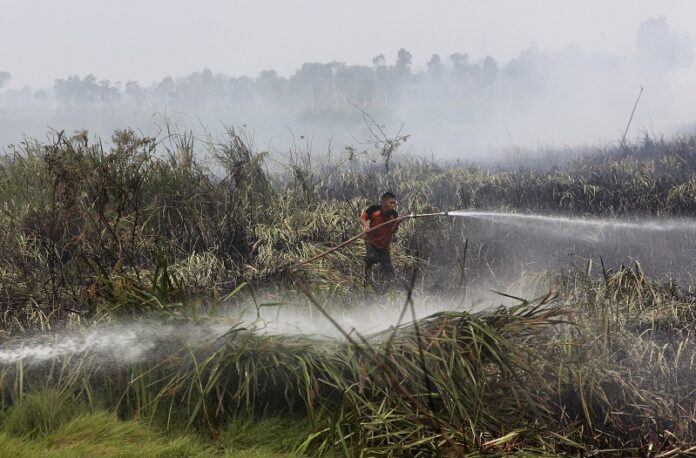
A fireman sprays water to extinguish forest fire at a peatland field in 2015 in Ogan Ilir, South Sumatra, Indonesia. Photo: Tatan Syuflana / Associated Press

JAKARTA — Indonesia has strengthened its moratorium on converting peat swamps to plantations in a move a conservation research group says will help prevent annual fires and substantially cut the country’s carbon emissions if properly implemented.

President Joko “Jokowi” Widodo’s amendment to the moratorium regulation, which was issued on Monday, expands it to cover peatlands of any depth and orders companies to restore areas they’ve degraded.

Indonesia’s move was welcomed by Norway, which in 2010 pledged $1 billion to help the country stop cutting down its prized tropical forests but has released little of it. As a result of the expanded regulation, Norway said it would give $25 million to Indonesia to fund restoration of drained peatlands and another $25 million once an enforcement and monitoring plan is ready.

Draining of peat swamps by palm oil and pulp wood companies is a big contributor to destruction of tropical forests in Indonesia and the country’s greenhouse gas emissions. The land conversion worsens annual dry season fires that release huge amounts of carbon stored in the peat. Many of the fires are deliberately set to clear land of its natural vegetation.

Indonesia has made major commitments to reduce greenhouse gas emissions and protect its tropical forests, which are home to critically endangered species, but deforestation has continued largely unabated. A study in the journal Nature Climate Change estimated that by 2012, Indonesia was clearing 840,000 hectares (2 million acres) of forests a year, more than any other country.

Arief Wijaya, a forests expert at the World Resources Institute, said Tuesday that the strengthened moratorium is particularly important for protecting Indonesia’s Papua region as the “last frontier of natural forests” still largely untouched by exploitation.

Deforestation is far advanced on the Indonesian island of Sumatra and worsening in Kalimantan, which is the Indonesian part of Borneo.

The institute estimates Indonesia could achieve a 7.8 gigaton reduction in carbon emissions over 15 years, which is equivalent to about one year of U.S. greenhouse gas emissions.

Wijaya said that in practice the amended regulation means companies such as Asia Pulp & Paper, one of the world’s largest paper producers, are prohibited from expanding their use of peatlands, even if they are within their concessions. They also must rehabilitate drained peatlands and peatlands damaged by fires.

Last month, the company was criticized by Indonesia’s Environment and Forestry Ministry which released photos showing one of its suppliers in South Sumatra was replanting peatlands which burned in last year’s dry season fires and were supposed to be restored.

The fires from July to October last year in southern Sumatra and Kalimantan were the worst since 1997, sent a life-threatening haze across Indonesia into Singapore, Malaysia and southern Thailand. A study by scientists from Harvard and Colombia universities estimated that fine particulate matter in the haze hastened the deaths of 100,000 people.

The environment ministry said in a statement that one of the main causes of last year’s fires was corporate mismanagement of peatlands, which in turn led to the beefed up regulations.

Story: Stephen Wright

Advertisement

Muay Thai Gets Provisional Olympic Recognition

France's Sofiane Oumiha, at left, fights Thailand's Amnat Ruenroeng during a men's light weight 60-kg preliminary boxing match at the 2016 Summer Olympics in Rio de Janeiro. Photo: Frank Franklin II / Associated Press

LAUSANNE, Switzerland — Muay Thai and cheerleading have made their way into the Olympic movement.

The International Cheer Union and the International Federation of Muay Thai received provisional recognition Tuesday from the IOC executive board – a first step on a long road to becoming a future Olympic sport.

They were among 16 sports bodies which applied for IOC recognition earlier this year, and they join 35 other sports on the list of recognized federations.

Cheerleading and Muay Thai will now be assured of USD$25,000 in IOC funding per year. They are also eligible for other development programs and access to content of the IOC’s digital Olympic Channel.

IOC sports director Kit McConnell said the two federations were given provisional recognition for a period of up to three years. During that time, the IOC executive board can recommend full recognition, another necessary step in the drawn-out path toward joining the Olympic program.

McConnell said the cheerleading federation has over 100 national federations and nearly 4.5 million registered competitors.

“It is a sport with growing popularity, a strong youth focus in schools and universities and we noted that,” he said.

McConnell said Muay Thai has 135 national federations and nearly 400,000 registered athletes.

Advertisement

Earthquake Rocks Indonesia’s Aceh Province; Death Toll Rising

BIREUEN, Indonesia — Chief of army in Indonesia’s Aceh province tells TV that quake death toll rises to 97.

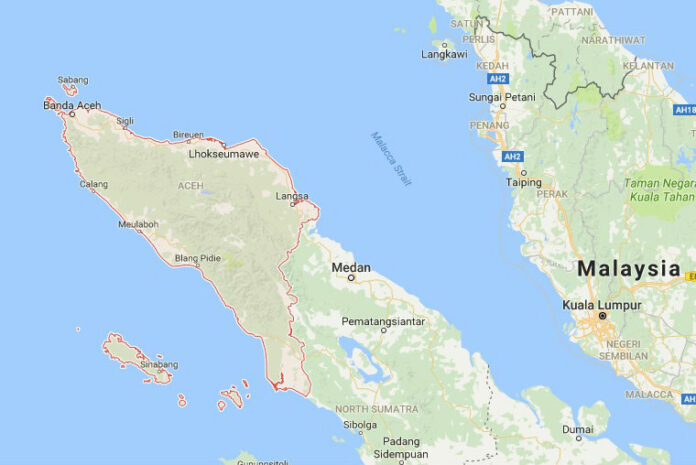
A strong undersea earthquake rocked Indonesia’s province of Aceh early Wednesday, causing several deaths and building collapses in districts near the epicenter.

The U.S. Geological Survey said the shallow 6.4-magnitude earthquake that struck at 5:03 a.m. (2203 GMT Tuesday) was centered about 10 kilometers (6 miles) north of Reuleut, a town in northern Aceh, at a depth of 17.2 kilometers (11 miles).

Indonesia’s Climate, Meteorology and Geophysics Agency said the quake has no potential to trigger a tsunami.

Sulaiman, a local disaster official, told local MetroTV that a woman and her two children were killed in Pidie Jaya, 18 kilometers (11 miles) southwest of the epicenter. Achmad Taufiq, a health worker at a public health center in the nearby district of Bireuen, said a teacher at an Islamic building school died after being hit by falling debris.

Sulaiman said several mosques in Pidie Jaya collapsed as well as stores, houses and other buildings. Heavy equipment has been deployed for the effort to search for survivors.

Television footage from the town showed partially and completely collapsed buildings and injured people at a makeshift emergency center.

About 20 people were being treated at the health center in Bireuen and one person was moved to a hospital because of broken bones and a head injury, said Taufiq.

Residents of the nearby town of Lhokseumawe ran out of their houses in panic during the quake and many people fled to higher ground.

The world’s largest archipelago, Indonesia is prone to earthquakes due to its location on the Pacific “Ring of Fire,” an arc of volcanoes and fault lines in the Pacific Basin.

In December 2004, a massive earthquake off Sumatra island triggered a tsunami that killed 230,000 people in a dozen countries. More than 160,000 people died in Indonesia alone, and most of those deaths occurred in Aceh.

Story: Ayi Yufridar

Advertisement

Authorities Visit BBC Thai Offices, Block Article Online

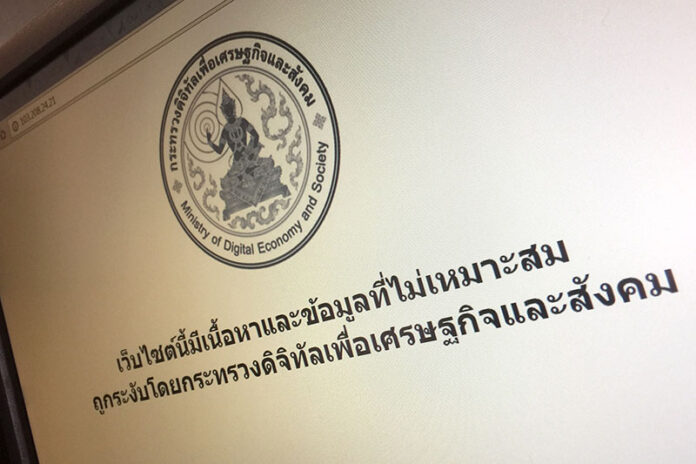
A blocked website shows a notice from the Ministry of Digital Economy and Society with the message, 'This website contains content and information that is deemed inappropriate. It has been censored by the Ministry of Digital Economy and Society' on Nov. 17. Photo: Associated Press

BANGKOK — Police officers briefly visited the BBC’s offices in Bangkok where they reportedly helped themselves to some drinks before departing Tuesday at the same time an article published by the broadcaster’s Thai-language service was blocked.

Ten officers came knocking on the door of the broadcaster’s Maneeya Building office in the Chitlom area where they drank some milk that had been delivered there before departing, Southeast Asia Bureau Chief Jonathan Head said Tuesday night.

“They came – 10 cops, more plain clothes. They drank the Yakult hanging on the door,” Head write in reply to an inquiry. “Then some came back. Then the army came – 7 officers – asking why the police had been here. No BBC staff in the bureau.”

Update: They didn’t drink the milk

The visit came as a biography published online by the BBC’s Thai-language service about newly installed King Rama X was made inaccessible by government censors. Attempts to access the page were met with a banner stating it had been blocked by the Ministry of Digital Economy and Society for displaying “inappropriate content and information.”

Two days ago, a pro-democracy activist was arrested and charged with royal defamation for sharing the article. Jatupat “Pai” Boonpattararaksa, a member of community rights group Dao Din, was released Sunday on bail.

In a story on the arrest, BBC Thai noted that more than 2,500 other Facebook users had shared the same story. Deputy Prime Minister Prawit Wongsuwan said Tuesday that Jatupat was not singled out, and his arrest was in accordance with the law.

Ultra-nationalists have fomented anger online toward BBC Thai, which launched in July 2014 in response to the military coup. Last month it expanded from a Facebook-only presence to its own site with former Bangkok Post Deputy Editor Nopporn Wong-Anan as editor.

Nopporn has himself become the target of a vicious social media campaign. He referred inquiries to BBC representatives in London.

Story: Pravit Rojanaphruk, Sasiwan Mokkhasen, Todd Ruiz

Related stories:

Activist ‘Pai Dao Din’ Freed on Bail After 112 Arrest

Activist ‘Pai Dao Din’ Arrested For Lese Majeste

Advertisement

China Sends Another 120 Peacekeepers to South Sudan

In this Thursday, April 21, 2016 image taken from a video footage run by China's CCTV via AP Video, Chinese President Xi Jinping, right, in military uniform gestures as he tours to the Chinese army’s Joint Operation Command Center in Beijing. Photo: CCTV via Associated Press Video

BEIJING — The first 120 troops of a 700-member Chinese U.N. peacekeeping force have departed for South Sudan, deepening China’s commitment to the troubled East African nation, where two of its peacekeepers were killed in fighting over the summer.

The new troops, who departed on Sunday, are part of the third Chinese battalion to be sent to South Sudan to protect civilians, U.N. staff and humanitarian workers, and to conduct patrols and provide security escorts.

South Sudan has seen continuous fighting since its civil war broke out in December 2013. The more than 12,000 U.N. peacekeepers already in the country have been criticized for failing to protect civilians. China was an early investor in the new state’s energy sector, but fighting and corruption have largely prevented it from reaping any benefits.

In July, two Chinese peacekeepers died and five others were wounded after their vehicle was struck with a rocket-propelled grenade as fighting swept the capital, Juba.

China has maximized publicity of its contribution to U.N. peacekeeping as part of its push to raise its international profile. China is now the biggest contributor of peacekeepers among the five permanent members of the U.N. Security Council, with 2,639 currently deployed on six missions, mostly assigned to medical, engineering and transport duties. Yet in actual terms, that still leaves China ranked 12th overall among nations that have contributed peacekeepers, led by Ethiopia, India and Pakistan.

In total, China contributes about 3 percent of total U.N. peacekeeping forces. In South Sudan, Chinese forces make up less than 10 percent of the total. Chinese peacekeepers also make up only a tiny fraction of the People’s Liberation Army’s 2.3 million personnel.

In a high-profile announcement at the U.N. General Assembly last year, President Xi Jinping said that China would also set up a permanent peacekeeping standby force of 8,000 troops to be deployed whenever necessary. No details were given on the makeup and mission of that force, and there has been no word on whether it has been established yet.

Advertisement

Hot News

LATEST NEWS

Bangkok
overcast clouds
28.3 ° C
33.3 °
28.3 °
77 %
3.3kmh
100 %
Sun
32 °
Mon
38 °
Tue
37 °
Wed
37 °
Thu
37 °