Actor and screenwriter Sylvester Stallone poses for a photo during a 2006 news conference to promote the movie "Rocky Balboa" in Tokyo. (Photo: Vincent Thian / AP)
PHILADELPHIA — On Nov. 21, 1976, audiences met Rocky Balboa, the southpaw boxer from south Philadelphia. Four decades later, Sylvester Stallone’s lovable character resonates with fans drawn to his underdog tale of determination, grit and sleepy-eyed charm.
The reach of “Rocky” is international, and the film serves as a slice of Americana. It is shorthand for Philadelphia as much as the Liberty Bell or Benjamin Franklin.
“Anytime we are speaking to overseas visitors … the conversation always turns, at some point, to ‘Rocky,'” said Julie Coker Graham, president of the Philadelphia Convention and Visitors Bureau. “They ask, ‘Have you met Rocky?” A lot of them think it’s an actual, real-life person.”
On the film’s 40th anniversary, a few reasons for its enduring legacy:
Actor and screenwriter Sylvester Stallone holds actress Talia Shire in a scene from the 1976 movie “Rocky.”(AP)
LOVABLE UNDERDOG Written by Stallone in three days, fans fell hard for the ballad of Rocky Balboa. For the uninitiated (SPOILER ALERT): The small-time boxer from the heavily Italian neighborhood of South Philly stumbles into a bout with the heavyweight champion of the world, Apollo Creed, fighting in the city to celebrate America’s bicentennial. To get him into fighting shape, Rocky (played by Stallone) is trained by the peppery Mickey Goldmill (Burgess Meredith), whose many one-liners make him a frequent scene stealer. Rocky also finds love in the film with sheepish neighborhood pet store clerk, Adrian (Talia Shire). Though he ultimately loses the fight, Rocky proves himself and wins Adrian’s heart, making him the winner of much more than a title.
The film itself was a long shot, made on a budget of only $1 million and shot in 28 days, with a largely unknown cast, including Stallone himself. And it was shot in working-class Philadelphia, a city that — despite its roots as the crucible of freedom — had long had a chip on its shoulder as second-tier as compared to more cultured East Coast metropolises like New York and Boston. (It is worth noting that the film had its premiere in New York.)
CHEERS FOR ROCKY What the movie lacked in beauty, it made up for in heart, something that resonated with audiences worldwide. The film was the highest-grossing of the year, earning $117 million at the North American box office and another $107 million overseas. “Rocky” received 10 Oscar nominations in nine categories at the Academy Awards, winning three: best picture, best director (John G. Avildsen) and best film editing. Stallone, Burgess and Shire were all nominated in acting categories, and Stallone was nominated for his screenplay.
“Rocky” is preserved in the Library of Congress’ National Film Registry as being “culturally, historically, or aesthetically significant.” It was also ranked one of the greatest sports films ever made and is the second-best film about boxing behind “Raging Bull,” according to the American Film Institute.
Actor Sylvester Stallone poses at the top of the steps of the Philadelphia Museum of Art before a statue of Rocky Balboa in 2006. (Photo: Rusty Kennedy / AP)
GONNA FLY NOW The score for “Rocky,” which was also nominated for an Oscar, was penned by Bill Conti. The main song, “Gonna Fly Now,” was originally intended as filler for the training sequence marking Rocky’s journey from amateur to contender. The opening fanfare is among the most recognizablein American culture, and the soaring melody that plays on the melancholic theme woven throughout the movie is the backdrop to Rocky doing impressive one-armed pushups, punching meat in his girlfriend’s brother’s butcher shop and running through Philadelphia’s Italian Market, along the Schuylkill River and past the shipyards.
Conti went on to win an Oscar for his score to 1983’s “The Right Stuff” and made music recognizable to millions in theme songs to “Dynasty” and “Falcon Crest.”
A statue of the movie character Rocky Balboa outside the Philadelphia Museum of Art in Philadelphia. Photo: Matt Rourke / AP
THE ROCKY STEPS AND STATUE The montage climaxes in one of the film’s most memorable scenes, as Rocky bounds up the 72 steps of the Philadelphia Museum of Art, raising his arms in triumph. Four decades later, the run and pose atop the steps are re-created daily in Philadelphia, mostly by tourists. In 1982, a statue of Rocky commissioned by Stallone for “Rocky III” was placed in the spot where he stood in the original film. Its current home is just to the right of the steps and is a selfie stop for visitors.
ROCKY’S NEXT CHAPTER
The original movie was followed by six sequels. In 2015, Rocky was reborn in “Creed,” the story of Adonis Creed, the son of his nemesis-turned-best friend, Apollo. An aging and dying Rocky trains Adonis for a brawl not unlike the grizzled boxer’s first fight nearly two generations earlier. The New York Times reviewed it as a “dandy piece of entertainment, soothingly old-fashioned and bracingly up-to-date.”
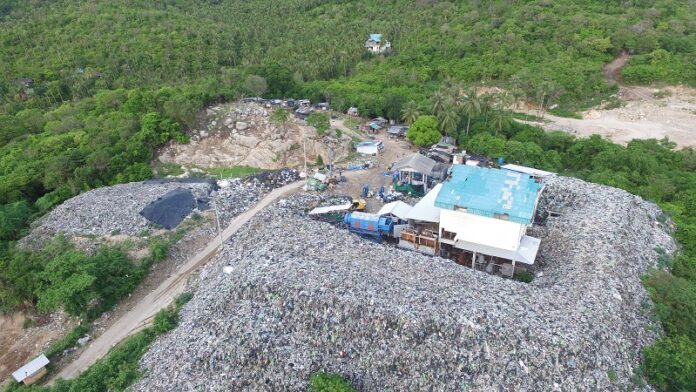
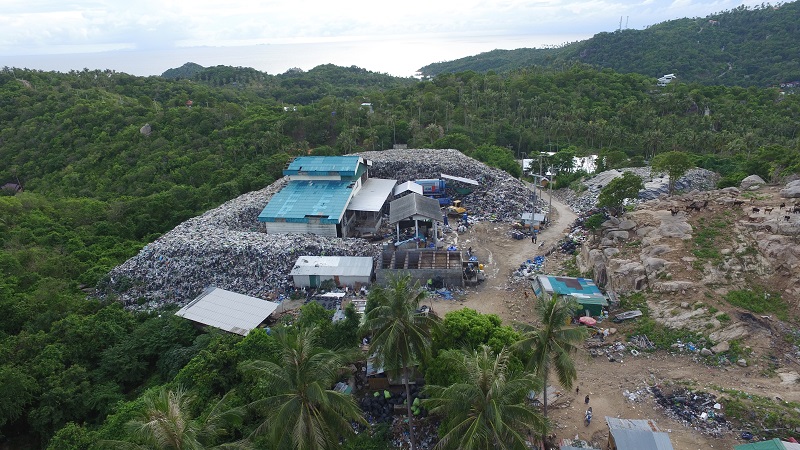
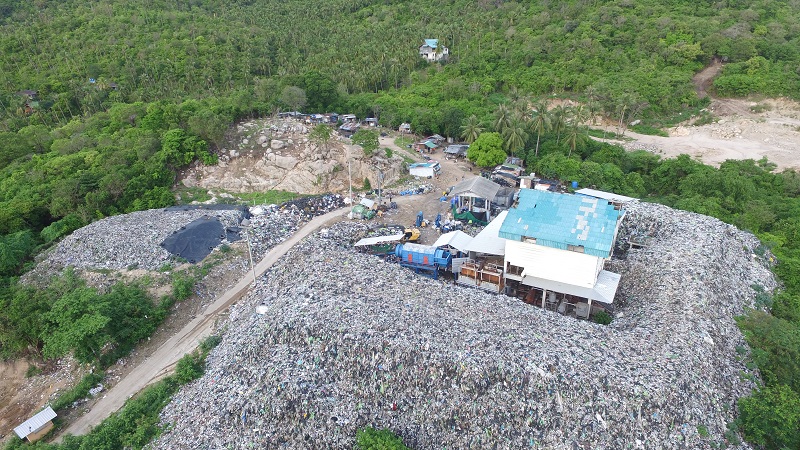
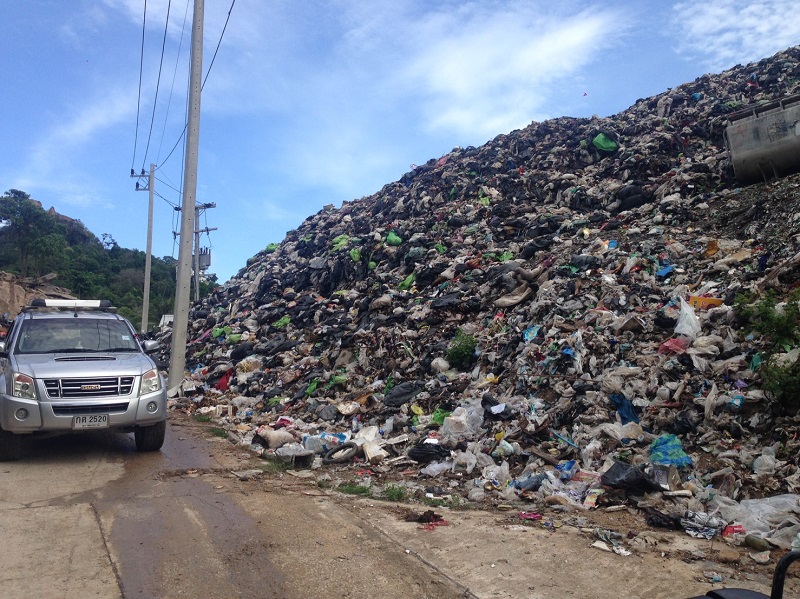
KOH TAO — The island once known for its picturesque diving spots and laid-back beach scene is at the risk of being overwhelmed by the ever-increasing pile of garbage.
The alarm was sounded Monday by Koh Tao’s kamnan Kobchai Saowalak as he led Surat Thani governor to visit the site of the rubbish mountain at the island’s disused trash incinerator plant. He called upon the mainland authorities to take action before the garbage caused irreversible damage to Koh Tao’s environment.
“On average, there are between 20 and 30 tons of trash here,” Kobchai said by telephone. “For the size of Koh Tao, that’s a lot.”
The 21 sq km island welcomes an estimate of 3 million visitors per year, most of them foreign tourists. The island used to see an average of three to five tonnes of trash per day, but now it’s five times that number, Kobchai said.
The problem is due to the trash incinerating plant that broke down some time ago, and local authorities could not fix it, the kamnan said. A private contractor hired to repair the plant ended up ditching the work recently, he added.
The trash that has been accumulating, like a grotesque Mount Olympus amid the green jungle, now weighs about 50,000 tons, a number that continues to rise, according to Kobchai.
After Monday’s meeting with Governor Uaychai Innark, the mainland government agreed to fund a project to build a 3-rai landfill in which rubbish will be compacted and dumped. The work is expected to finish in six months time, Kobchai said.
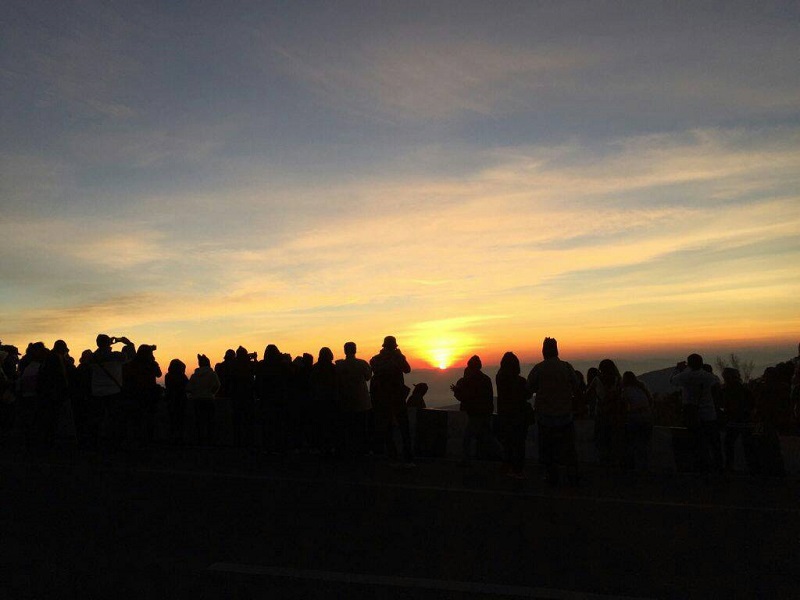
CHIANG MAI — The first frost of the year arrived Monday morning atop of Doi Inthanon in Chiang Mai province’s Chomthong district, exciting Thai tourists who for days had been awaiting the temperature to drop low enough to witness the phenomenon.
Temperatures dropped to 3C at Kiew Mae Pan sightseeing spot on Doi Inthanon as cold weather from China moved southward to the upper parts of Northern Thailand. Grass as well as roadside weeds were frozen on the road leading to the summit of the mountain . Being a tropical country, Thai tourists have always cherished instances of cold climate.
The frost was particularly scenic between kilometer 42 to 47 of the Chomthong / Doi Inthanon Road, where throng of tourists arrived before dawn in anticipation of the first frost, said Rueng Hiranwong, head of Doi Inthanon National Park.
Doi Inthanon receives its name in honor of King Inthawichayanon of the former Lanna Kingdom, who reigned between 1870 to 1897 as the 7th ruler of Chiang Mai. It is the tallest mountain in Thailand rising to 2,565 meters at its summit.
Ariya Jutanugarn celebrates winning the player of the year in the CME Group Tour Championship golf tournament during the award ceremony after the tournament on Sunday in Naples, Fla. Photo: Dorothy Edwards / Naples Daily News via AP
NAPLES, Fla. — Ariya Jutanugarn was unable to accept the CME Globe trophy when it was first being presented to her, needing both hands to hold a big plastic cube stuffed with $1 million in cash.
That’s a great way to end a season.
Jutanugarn’s breakout year ended with a haul of prizes Sunday at the CME Group Tour Championship — the LPGA Tour’s player of the year award, the money title and the season-long Race to CME Globe points competition that comes with a $1 million bonus.
A winner of five tournaments in a year that started slowly with a major meltdown in the California desert and turned around with her winning three consecutive starts in May, Jutanugarn held off Lydia Ko for all three of those trophies.
“I never expected like that much,” Jutanugarn said. “I just really wanted to win my first tournament this year.”
In Gee Chun made a 10-footer for birdie on the final hole to win the scoring title by the slimmest of margins, making her the first player since Nancy Lopez in 1978 to win both the Vare Trophy and rookie of the year in the same season. If Chun’s final putt had not fallen, Ko would have won the Vare for the first time.
“It’s still been a very cool season for me,” said Ko, the world’s No. 1 player, who wrapped Jutanugarn in a big hug when their rounds were complete before heading off to sign dozens of autographs.
Combined, Ko and Chun took more than 11,500 swings over 166 rounds — and the scoring title came down to one putt.
“It was big pressure for me,” Chun said. “I just tried to enjoy my last putt. … It was a big honor for me, to have my name next to legends.”
Add her to the list of young stars on the LPGA Tour. She’s 22, Jutanugarn turns 21 later this week and Ko doesn’t even turn 20 until early next year.
Add Charley Hull to that list as well. She’s a tournament winner now.
Another 20-year-old — youth is most definitely served in this era of women’s golf — Hull looked like a savvy veteran as she stalked what would become her first win. Hull finished two shots ahead of So Yeon Ryu, that margin coming after they had a two-shot swing at the 17th. Ryu’s approach came to rest along a 3-foot face of a bunker, forcing her to play off to the side and wind up settling for bogey.
Hull made birdie there, then coolly two-putted on the 18th to prevail. She shot 66-66 in a bogey-free weekend, with 12 birdies and 24 pars in her final 36 holes of the season.
“I was pretty calm,” Hull said. “I went on the golf course and tried not to think about golf.”
There were tournaments within the tournament, with many things decided in the season’s final minutes. Player of the year was settled first, when it became evident that Ko — who needed a win and nothing less to take that title — was not going to catch Hull. The Race to CME Globe came next, with this being the first time in that award’s three-year history that it wouldn’t go to Ko.
The scoring title then came down to Ko’s and Chun’s final putts, and about a half-hour later, Hull finished off the week and the season by making her first win the tour championship.
“It’s a pretty cool feeling,” Hull said. “Hasn’t quite sunk in yet.”
Hull finished at 19-under 269. So Yeon Ryu (67) was second, Jennifer Song (68) followed at 15 under, and Jutanugarn (69) was 14 under with Mo Martin (68) and Beatriz Recari (68). Chun (70) was seventh at 13 under.
DIVOTS: Ko shot a 10-under 62 on Friday, but her other rounds this week were 70, 73 and 72. She tied for 10th at 11 under. … Shanshan Feng of China finished her season with a birdie and ended this week 12 under. She had won her last two starts and was eighth or better in her final seven events of 2016. … Former world No. 1 Stacy Lewis is 0 for 63 since winning midway through what was her second player-of-the-year campaign in 2014. She shot 76 and tied for 42nd. … Defending champion Cristie Kerr (72) tied for 22nd, 12 back of Hull.
Infant rats are photographed Friday in Morogoro, Tanzania, ahead of training to detect trafficked pangolin parts and smuggled hardwood timber. Photo: Associated Press
JOHANNESBURG — The pangolin, a scaly anteater coveted by poachers, might have a new champion: rats that will be trained to sniff out trafficked pangolin parts in shipments heading from Africa to Asia.
A pilot project to turn African giant pouched rats into conservationist sleuths is literally in its infancy – the 10 to 15 rodents being reared in Tanzania to detect pungent pangolin remains as well as smuggled hardwood timber are just a few weeks old and most are still with their mothers.
The U.S. Fish and Wildlife Service, however, is on board with the vermin trial, which organizers hope can eventually be used to find hidden elephant ivory and rhino horn. The American agency has provided $100,000 to support what it says could be “an innovative tool in combating illegal wildlife trade.”
The challenge seems overwhelming.
Conservationists describe the pangolin as the world’s most heavily trafficked mammal because its meat is considered a delicacy in Vietnam and some parts of China, and its scales are used in traditional Chinese medicine. Wildlife contraband is concealed among vast numbers of shipping containers that annually leave Dar es Salaam in Tanzania, Mombasa in Kenya and other African ports.
Yet APOPO, a non-profit group based in Tanzania, already harnesses the rats’ keen sense of smell to find mines and other explosive material on old battlefields in Angola, Mozambique and, more recently, Cambodia. The organization also uses rats to detect tuberculosis in sputum samples of patients in Tanzania and Mozambique.
The rats in the conservation project will start “socialization training,” which means being carried around on people’s shoulders and in their pockets, being driven around and generally getting used to sights and sounds, APOPO spokesman James Pursey said.
Then comes “click and reward” training in which the rats are fed a treat whenever they hear a clicking sound, and they’ll eventually learn to link the gamey smell of pangolin scales with edible rewards. Later, the intensity of the pangolin smell will be reduced and other smells will be added to confuse the rats. The ultimate aim is to train the rodents to scratch or linger over the pangolin or hardwood aroma for three seconds, tipping handlers to a possible find.
APOPO is confident it can get rats to discriminate between a pangolin scent and other smells, and “the challenge is going to be how the rats actually test the containers,” Pursey said.
The Endangered Wildlife Trust, a South African group leading the project, said the trial “builds on the use of scent detection by dogs, but will take advantage of the rats’ added agility and ability to access the container vents, which would provide the most air from the container, and potentially the most scent. Alternatively, the rats will detect scents sampled onto a filter through the vents.”
Handlers can dispatch rats with leashes and harnesses into hard-to-reach areas, but then “how are they going to tell us that they’ve found something?” said Kirsty Brebner of the Endangered Wildlife Trust.
One option being considered is to install small cameras on the backs of the rats, an idea that has been discussed for the detection of people trapped in collapsed buildings after an earthquake or bombing.
WWF and TRAFFIC have supported “successful” tests using dogs and air-filtering technology to detect wildlife contraband, “but we are still learning the best ways to apply the system for prime time, permanent applications,” said Crawford Allan, a leader of an anti-wildlife crime initiative launched by the two conservation groups.
“Dogs do need a lot of care and we won’t risk them crawling into tight spaces where they could be injured – so bringing in a conservation ‘pied piper’ and a squad of rats could help in those circumstances where they can move freely, with low risk in more cramped conditions inside shipping containers or on the back of trucks etc.,” Allan said in an email. He is not involved in the rat research.
If the training goes well, it could still be another year or so before the rats finally get to work. They’ll stick to cargo perusal rather than, for example, checking out people’s luggage in airports. Travelers, Pursey of APOPO said, wouldn’t be “particularly enamored” to have vermin crawling on their belongings.
Rescuers search among the debris after 14 coaches of an overnight passenger train rolled off the track Sunday near Pukhrayan village Kanpur Dehat district, Uttar Pradesh state, India. Photo: Rajesh Kumar Singh / Associated Press
PUKHRAYAN, India — Rescuers worked through the night to pull people out of mangled coaches after an overnight passenger train derailed early Sunday in northern India, killing at least 115 people, police said.
The death toll was expected to rise further because rescue workers had yet to gain access to one of the worst-damaged of the 14 coaches that derailed, said Daljeet Chaudhary, a director general of police. About 150 people were injured, he said.
The train derailed at around 3:10 a.m., jolting awake passengers who had settled in for the long trip. Survivors and bodies were retrieved from mangled coaches that had fallen on their side.
Ramchandra Tewari, a passenger who suffered a head injury, said he was asleep when he was suddenly flung to the floor of his coach.
“There was a loud sound like an earthquake. I fell from my berth and a lot of luggage fell over me,” Tewari told reporters from his hospital bed in the city of Kanpur. “I thought I was dead, and then I passed out.”
Another passenger, Satish Kumar, said the train was traveling at normal speed when it stopped suddenly.
“It restarted, and then we heard a crash,” Kumar, whose coach remained standing on the track, said at the derailment site. “When we came out of the train, we saw a few coaches had derailed.”
The cause of the derailment was not immediately clear. Accidents are relatively common on India’s sprawling rail network, which is the world’s third largest but lacks modern signaling and communication systems. Most accidents are blamed on poor maintenance and human error.
The impact of the derailment was so strong that one of the coaches landed on top of another, crushing the one below, said Brig. Anurag Chibber, who was heading the army’s rescue team.
“We fear there could be many more dead in the lower coach,” he said, adding that it was unclear how many people were in the coach.
Javeed Ahmad, the police chief of Uttar Pradesh state, where the derailment took place, said 115 bodies had been recovered from the wreckage.
The derailment occurred near the village of Pukhrayan, outside of Kanpur, an industrial city about 400 kilometers (250 miles) southeast of New Delhi. The Patna-Indore Express train, linking the central Indian city of Indore to the city of Patna to its northeast, completes its 1,360-kilometer (845-mile) journey in 27 hours.
Rescue workers, soldiers and members of India’s disaster management force reached Pukhrayan within an hour of the derailment and began pulling out people trapped in the overturned coaches.
Rescuers used cutting torches to open the derailed train cars to try to reach those trapped inside, while cranes were deployed to lift the coaches from the tracks. However, rescuers moved cautiously because some of the coaches were precariously tilted, and there was a danger that they could topple over, possibly injuring those trapped inside.
“We are being very careful in using the cutting torches,” Chaudhary said.
Medical teams provided first aid near the site, while the more seriously injured were moved to hospitals in Kanpur, Chaudhary said. Of the roughly 150 injured, 72 were in serious condition, he said.
Railway Minister Suresh Prabhu arrived at the site by Sunday evening to monitor the rescue and relief operations. He said a special train has been arranged to take passengers from the derailed train to Patna, according to the PTI news agency. He said thousands of food packets, water bottles and cups of tea were being provided to the stranded passengers.
Anxious relatives of passengers searched for their family members among the injured and the dead at hospitals in Kanpur.
Prime Minister Narendra Modi expressed his concern over the derailment.
“Anguished beyond words on the loss of lives due to the derailing of the Patna-Indore express. My thoughts are with the bereaved families,” Modi posted on his Twitter account.
Kanpur is a major railway junction, and hundreds of trains pass through the city every day. After the derailment, several trains using the line were diverted to other routes, Anil Saxena, spokesman for Indian Railways, said in New Delhi.
Rail authorities have ordered an investigation into the incident, Saxena said.
In 2012, an Indian government report said about 15,000 people are killed every year in train accidents in the country, caused mainly by outdated equipment and overstretched staff.
The country’s worst railway accident occurred in 1981, when a passenger train fell into the Baghmati River in northern India, killing nearly 800 people.
Prime Minister Modi has pledged to invest $137 billion over the next five years to modernize India’s railway network, which is used by around 23 million passengers a day.
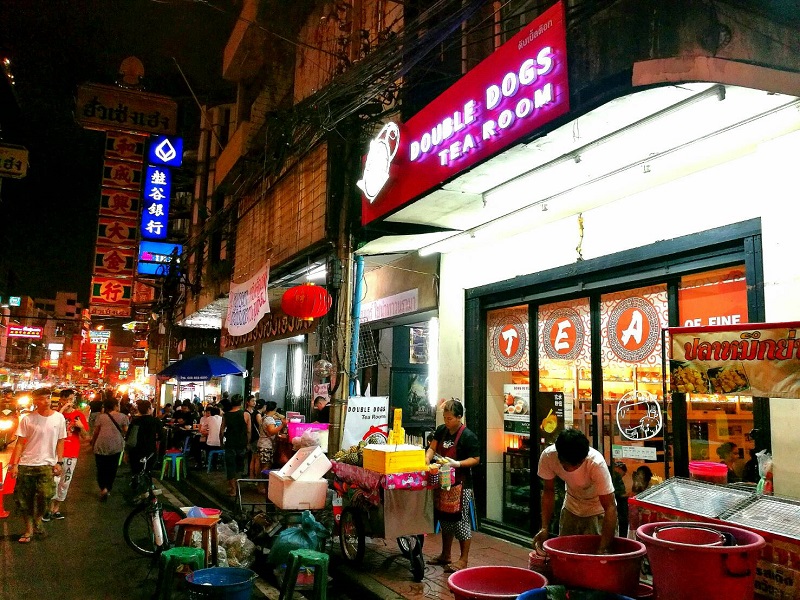
BANGKOK —The irony of Bangkok’s Chinatown is that it’s hard to find a tea house that specializes in brewing fine tea. There’s virtually no competition on Yaowarat Road, with only one standalone shop house specializing in it – Double Dogs Tea Room.
Put it this way, there are more places to sit and feed on a controversial shark fin, or even good coffee, than places to sip fine oolong tea.
The unassuming place has an air of rustic beauty or wabi sabi, as it’s known in Japanese. Outfitted with some old tables revealing a raw wooden texture, Double Dogs is run by a 46-year-old Thai-Chinese more concerned about offering a refuge from the hustle and bustle of the neighborhood with a few cups of fine tea than maximizing profits.
“At least it’s self-sustaining,” said Jongrak Kittiworakarn, the heavily-built man who co-owns the place of its financial viability. Jongrak said capitalism places profits at the center at the expense of identity for those who focus on doing whatever it takes in the name of revenue.
Jongrak is knowledgeable about tea and this comes from over two decades of passion for fine Chinese and even Japanese tea. The place opened five years ago but only became a proper tea house after the first two years, when Double Dogs phased out cocktails. It is now a place for fine tea and quiet contemplation set to meditative background music.
Seventy percent of customers are not Thai, said the co-owner. They are mostly Westerners, and some Japanese, Singaporeans and Malaysians, Jongrak said. Thai customers are mostly not from Chinatown.
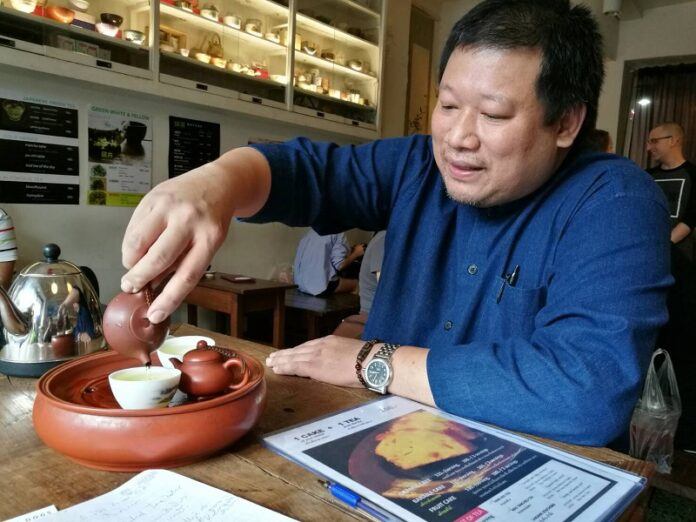
“I set up this shop for those who are seriously into tea drinking,” he stressed, pouring floral Tie Guan Yin tea from Fujian province from a tiny earthenware pot, designed to maximize the pleasure of drinking. “It’s a pastime and aesthetic, like being a wine connoisseur.”
Double Dogs’ range of tea starts at 150 baht per serving for one person and comes in a tiny Iching teapot with a stainless steel electric kettle of water. Uninitiated customers will be guided on how many seconds they should leave the hot water on the pot before pouring it to their tiny porcelain cup to sniff and savour.
Such methods of tea preparation and drinking, called called Gong Fu Cha, originated from southern China, particularly Guangdong and Hainan provinces. Chinese traditional cakes, Japanese rice cakes as well as Japanese green tea are also available. Selections range from Ripe Pu-erh tea from Yunnan province, which is an aged brick tea (earthy and strong, with an aroma reminiscent of earth after rain) to highly drinkable Shui Hsien from Fujian province, which is light in structure and floral in fragrance.
Jongrak, a bio-chemist by training who lectured at Mahidol University for 10 years before quitting, isn’t hoping to make fine tea the next big thing. He believes fine Chinese tea will remain a niche market in the country. His shop has just half a dozen tables and can accommodate no more than 20 tea drinkers at a time. The quality of tea also means the price cannot be cheap, and that will itself act as a barrier to some consumers.
“It’s like wine drinking. Do you drink for the pleasure of it, to get drunk, or because of the logos?,” he said. “If you drink for pleasure, it will always be a niche market as opposed to mass consumption that needs to be popularized.”
Commonly consumed tea, insisted Jongrak, is “low quality tea.”
“It’s almost impossible to discern any quality by drinking it,” he noted.
Double Dogs Tea Room is open 1pm to 9pm from Monday through Thursday and 1pm to 10pm on weekends.
BANGKOK — They know the stereotypes all too well. The Russian jet ski scammer on Phuket, the mafiya foot soldiers in Pattaya or vodka-marinated voin just about anywhere.
The cliches are even worse in Thai-language media, where coverage is rife with loutish behavior and presumptions of criminality. “With Russians, if it’s not fun-drunk, it’s angry-drunk,” a police officer recently offered of a Russian woman caught abusing vehicles with a piece of masonry.
But open up the outer matryoshka doll of cliches and find inside Russian expats, particularly among our comrades in the capital, who are online innovators behind startups that have become household names to Thais.
We sat down to learn the surprising stories of three Russian entrepreneurs behind these companies: a suave Chula graduate, a soulful family man and tech-savvy adventurer – who defy the stereotypes to bring the striving Russian soul to the heart of Bangkok through hard work.
Alexander Kerbo – WorkVenture (Formerly JobNisit.com)
Hazel-eyed and 27, Alexander Kerbo cuts a charming figure at a cozy cafe in Thonglor. Kerbo, Moscow-born, Phuket-schooled and Chula-educated, founded the popular job-matching website JobNisit, now known as WorkVenture.
“The perception is certainly skewed, isn’t it?” he said without accent of the representations of rowdy Russians in Thai news. “I get a lot of friendly jokes from my Thai friends. I have to try to explain to them that there is, in any nation, including the biggest country on Earth, there’s a staggering range of people. And if you look for bad news, you will find it.”
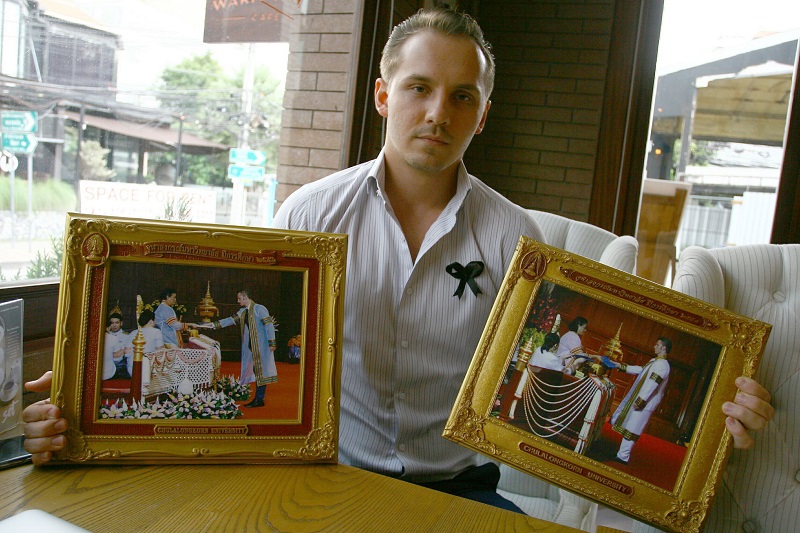
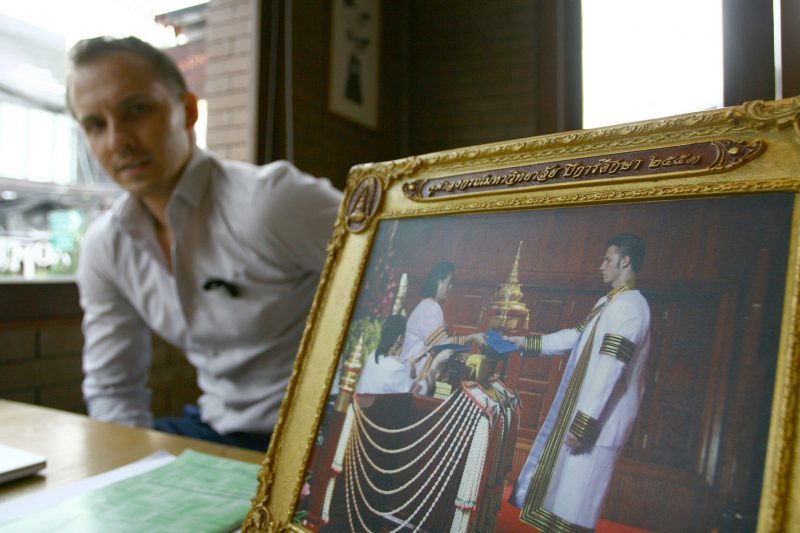
He lugs out two gilded frames of him receiving his bachelor’s and master’s degrees in economics from Princess Sirindhorn – double relics prized among Thais that few can attain.
“Going to Chula helped to understand Thai culture from the core,” he said.
It also taught him the needs of fresh graduates, particularly after an unsuccessful trip to a 2014 career fair.
“There was a clear information and presence gap. You can’t just find a job by going to an event with a pretty with a bunch of balloons shouting into a microphone,” Kerbo said.
Indeed, there is little meaningful career counseling at universities, and many students end up using their parents or upperclassmen for connections to find their first job.
Soon thereafter, with a couple of his classmates from Chulalongkorn University, Kerbo founded JobNisit, which uses qualification-based algorithms to match users with job offers.
“When applying for a job, I want bundits [graduates] and nisits [undergrads] to talk to the companies, understand company culture and make informed career decisions,” Kerbo said.
Twelve years ago, Muscovite businessman Denis Grigorevich Nemtsev decided to see the world – and ended up working in real estate in Thailand.
Like Kerbo, Nemtsev found an underserved market.
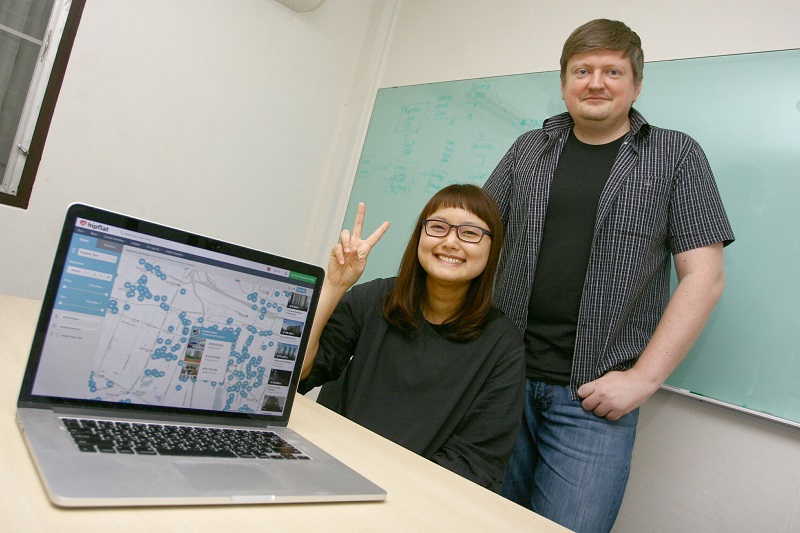
“I saw that there was no one place, one website that would list all properties. There was also no way to see if the price of the property was a good or bad one, or see the history of the price listings,” he said. So in 2013, he launched Hipflat.com.
Hipflat claims to list all buyable and rentable properties in Thailand, and shows its sales history and pricing relative to the area. The inspiration, Nemtsev said, came from the falling value of a condo he purchased. “If I had known, I wouldn’t have bought it.”
The pink-cheeked gentle giant married Mayuree Nemtsev, 33, in 2009. They partnered together to make Hipflat, with Mayuree doing all of the translation.
“I thought that I would not date or even marry a foreigner, because I wanted someone who would understand my culture and give the same importance to family that I do,” she said. “But Denis turned out to understand Thai culture. Everything turned out amazingly perfect, and I am so lucky to have married him.”
Nemtsev seems to love living in Thailand, even if there have been some misunderstandings from others. “I have been asked if I was in the mafia,” said the soft-spoken programmer, looking downward. “I just say ‘no.’”
Learning Thai work culture, for him, has been a warm surprise. “Here, the boss is a father. Back in Russia, it’s purely business,” he said with a detectable blush.
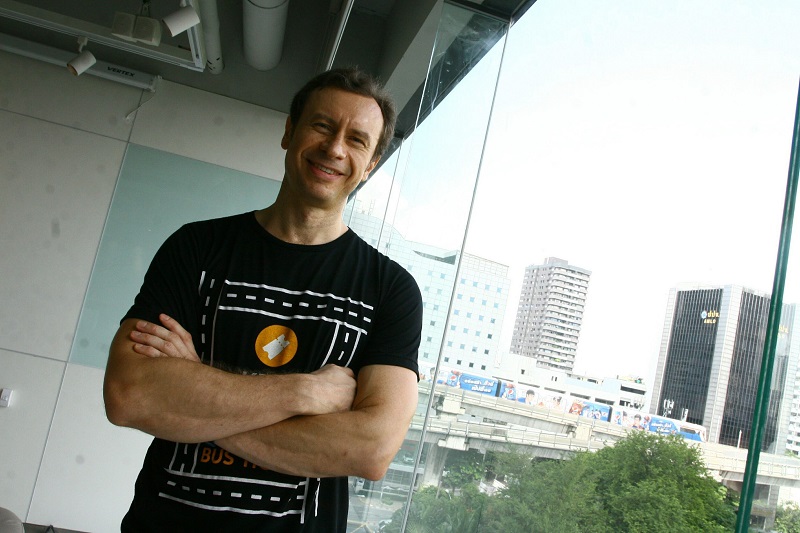
Maxim Titov, a 40-year-old brunette, found another e-commerce gap to fill: bus ticketing. After settling in Bangkok in 2011, Titov adjusted foreign business models to Thailand in order to build Tickets.co.th, a service where users can buy bus tickets online.
“It’s like a time machine has been invented. Generally, in Southeast Asia, business models are lagging behind those of overseas, so you can apply businesses that are already in use overseas here,” Titov said of how he took models from India to build his service owing to the countries’ similar GDP and population behavior.
“Traveling by bus in Southeast Asia won’t change. You can’t fly to your amphur. What will change is how you buy tickets: online instead of at the ticket station,” he said.
As a Russian, he says, Thailand is a sort of paradise, with tropical weather in contrast to his cold motherland. Of the numerous countrymen who come here to vacation, there are bound to be some boisterous ones who should not represent the whole nation.
Like Kerbo and Nemtsev, Titov said he plans to continue developing his business here in Bangkok: “Something keeps me here.”
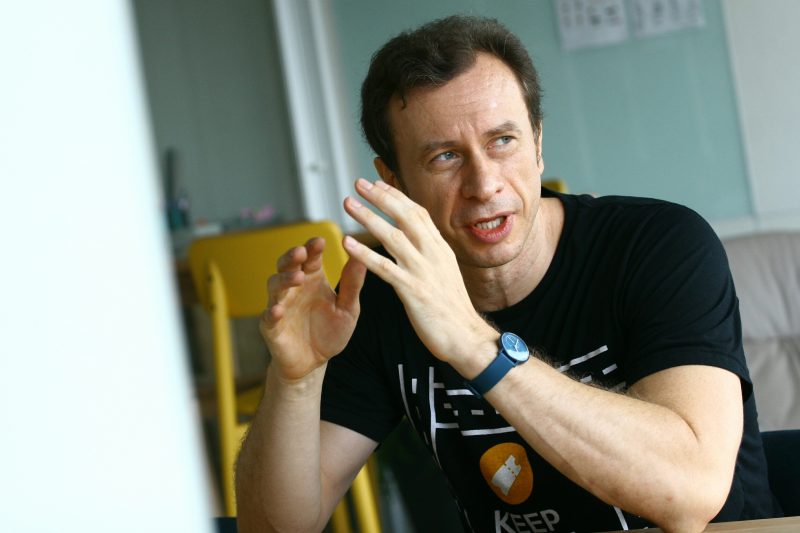
Vietnamese blogger Dinh Cong Le sits next to a laptop with his Facebook profile, displaying a cover image advocating for the dissolution of Article 88, Nov. 12 in Ho Chi Minh City, Vietnam.
HO CHI MINH CITY — It was mid-morning the day 20 police officers from the Vietnam People’s Public Security barged into a downtown Saigon kindergarten and laid their gazes on Pham Chi Dung. Before the startled looks of parents, teachers and children, he was taken away. Among those staring was his three-year-old son, who he had just dropped off moments earlier.
This was one of three times in 2015 during which Dung, 50, was arbitrarily arrested by police in the streets of Ho Chi Minh City and taken into custody, before being subjected to hours of interrogation and psychological coercion. Hopes lay in him confessing or producing self-incriminating evidence to having committed a crime which in most countries is a human right.
“They made me look like a terrorist,” he said.
Dung is one of Vietnam’s active dissident bloggers who dares to challenge the state’s control on media and defy its draconian laws on criticizing the government. He and another activist blogger sat for interviews earlier this month following a string of recent crackdowns on Vietnamese bloggers to explain their struggles, compare Vietnam’s censorship to that of Thailand and explain the international community’s role in their quest for a free press.
A former 30-year card-carrying member of the Communist Party of Vietnam, Dung, like others, fell out of favor and was imprisoned for being outspoken. It didn’t silence him. Upon his release, he continued exposing many government irregularities. He helped found and is also president of the Independent Journalist Association of Vietnam, which aims to bring to light cases of human rights abuses committed by the Communist Party.
To date, his agency has reported on notable intraparty scandals involving nepotism, land encroachment and corruption. Though its website, the Vietnam Times, is inaccessible in Vietnam without help of a proxy server, it most recently condemned the detention of two iconic activist blogger dissidents: Nguyen Ngoc Nhu Quynh aka “Me Nam,” and Ho Van Hai. They were arrested in October and charged Nov. 2 with propagandizing against the state under Article 88 of the Penal Code. They face up to 20 years in prison.
Two months ago, appeals began in the cases of Nguyen Huu Vinh aka “Ba Sam” and his colleague Nguyen Thi Minh Thuy, who were sentenced in March to five years in prison for “abusing democratic freedoms” and plotting to overthrow the government.
“It’s normal,” Dung said, saying there tended to be many arrests toward the end of the year. “The police want to finish their year having ‘achieved’ something, so they target arrests.”
Dung feels there is a wind of change blowing through the country, something which has led authorities to enact tougher measures on critics for fear of revolt. Cracking down on dissidents, he said, merely instigates more efforts to promote free speech.
“It encourages further acts of expression,” Dung said. “The demand for democracy is very high, the economy is suffering, the corruption is terrible and the people have lived under dictatorship for a long time.”
“The top 5 percent controls the economy and people hate the government, but they are silent,” he added. “They cannot express themselves for fear of persecution.”
The persecution he speaks of is one Dung contends with on a daily basis. While Dung and his compatriots are freedom fighters to their supporters, the government sees them as threats to the nation’s stability through their alternative views on governance, civil society and freedom.
“To this date there are three policemen who sit by the coffee shop next to my house monitoring my moves and following me around,” Dung said, sounding almost accepting of life under constant surveillance.
“They want to reduce the influence of the [association] because they don’t want people to be informed about what really happens in the country,” Dung said.
A Growing Movement
Among those standing with Dung to promote press freedom is Dinh Cong Le.
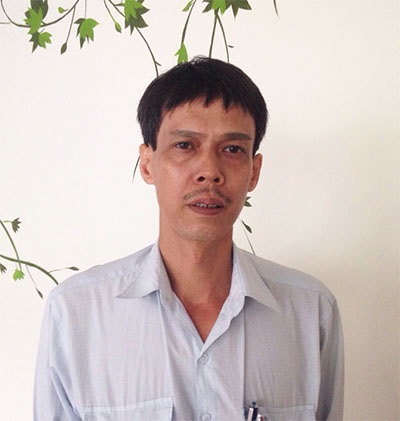
Vietnamese blogger Pham Chi Dung pictured here in a coffee shop Nov. 11 in Ho Chi Minh City, Vietnam.
Le, 48, is a former lawyer who first raised questions about human rights abuses in 2003. He was arrested, and in 2009 had his license to practice law revoked after he and four activists were accused of conducting propaganda against the state. One of them is still in jail serving a 16-year term.
“I was given a five-year sentence, but thanks to pressure from the international community I was released a year early. Instead I was put under house arrest for another three years,” Le said.
Le is also a leading blogger advocating for press freedom. Followed widely by internet users in and out of Vietnam, his critical Facebook posts gather thousands of likes within hours.
Such fame comes at a price. Le’s problems are similar to those endured by Dung.
“We face a lot of difficulties. I am followed around. When I travel to other regions such as the north of Saigon, I am followed,” Le said. “Today I am here, but tomorrow I could be in jail again.”
Early last month he was on his way to Vung Tau, a port town at the mouth of the delta, for a conference.
“Suddenly more than 100 policemen came to arrest our group of 30 people,” he said.
Le and his party were repeatedly beaten, taken in and kept in police custody for 10 hours. After being subjected to a grueling interrogation, he was the last one to be released. It was after midnight.
“They released us in the middle of a dark highway at 1am. I didn’t know how to get back to Vung Tau because they took my phone and my luggage. I had to walk for half an hour on the dark freeway until I found a taxi,” he said.
Article 88 vs. Article 112
A woman cycles past one of the many banners depicting the Vietnamese flag, Nov. 12 in the streets of Ho Chi Minh City, Vietnam.
Asked to put censorship in Thailand in the context of Southeast Asia, especially Thailand, Dung said Article 88 is less abstract than Thailand’s Article 112, which punishes insults to the royal family by up to 15 years in prison per offense.
Where Thailand’s lese majeste law has grown to be more broadly applied, Vietnam’s encompasses all of the state.
“It is more detailed than Article 112, but this only applies to the monarchy, while Article 88 applies to all of the government. The police can relate anything to criticism against the government,” he said.
Le found the problem to be less severe in Thailand because venerating the King is a deep and ingrained tradition.
“We understand if there is a law to protect the King,” he said. “It’s understandable because there is a long history of respecting him. In Vietnam we cannot compare.”
“Thailand at least has a history of multi-party democracy. Here they don’t want us to criticize the Communist Party. In Vietnam, criticizing the Communist Party is like criticizing the King in Thailand,” Le said, adding that the fundamental difference was that while one controls the entire political system, the other is apolitical.
International Support
Le and his colleagues are limited to making their case from home, as the government finds them enough of a threat to prevent them from traveling.
“Last August I was invited to a conference on civil society in East Timor. I was about to board the plane when they told me I wasn’t allowed to leave,” Le said.
Backing their efforts are significant international actors such as the European Union and the United States, whose ambassador to Vietnam Ted Osius called for the release of Me Nam in October. U.S. Political Chief Charles Sellers praised the Independent Journalist Association’s work in July during U.S. Independence Day celebrations:
“I want to thank all of you for your dedication to work peacefully and patriotically to ensure Vietnam’s citizens enjoy the benefits of independent journalism,” Sellers said.
Dung, who spoke proudly of this moment, went on to add that the United States consulate hoped they would lead the way to Vietnamese press freedom.
Going forward, he is concerned about the regression on conditions Vietnam agreed to under President Barack Obama to join the Trans-Pacific Partnership after President-elect Donald Trump campaigned on a promise to kill the deal.
Le believes progress has been made to the point the government is being pressured to listen to opinions other than their own. Citing the suppressed anger of the Vietnamese for the impunity shown in various scandals such as one of the nation’s worst cases of toxic waste dumping, he sees a weak political system on the brink of collapse.
“The government is scared that we will continue to raise our voices. On Oct. 22 there were protests against Formosa Plastics Group, which the government was unable to contain,” Le said. “They don’t want this to escalate even further. We are liabilities to them because we keep raising the issue. They don’t want the phenomenon to spread to other regions or cities,” Le said.
Fearless about being arrested again for his blogging, Le claims not to be scared, having already served a jail term and having nothing to lose.
“Nobody wants to be arrested. But if I am arrested again for raising my ideas, it will prove once again that the government does not want to change,” he said. “I fear for people who have never been to jail because they are scared. They always look around when they try to say things.”
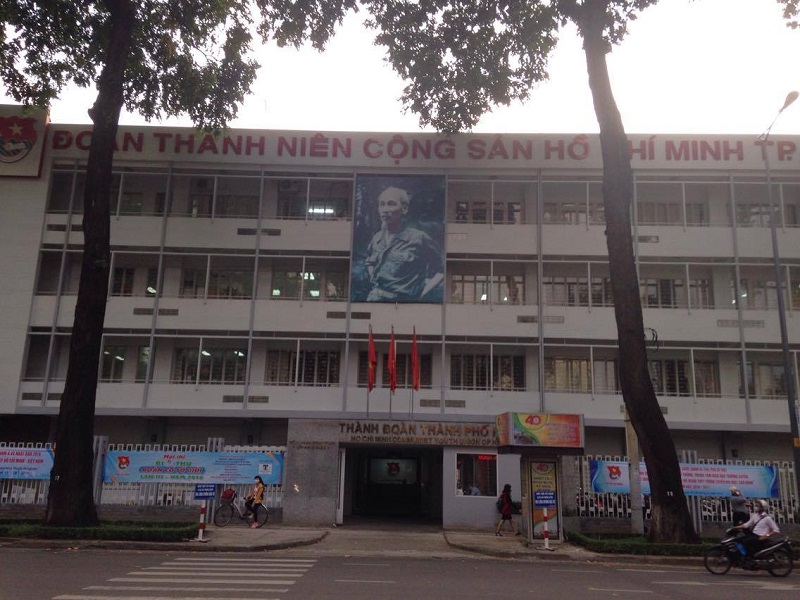
A large portrait of Ho Chi Minh hangs in display Nov. 11 in front of the Ho Chi Minh Communist Youth Union headquarters in Ho Chi Minh City, Vietnam.
Glimmers of Hope
Despite the current climate, both bloggers see reasons to be hopeful. Dung thinks his organization will eventually be recognized by the government and allowed to operate openly.
“Perhaps by 2017,” Dung said with hopeful eyes. “We want to be a hub for open expression, as a precondition of civil society for Vietnam’s future.”
Le, exultant about the importance of his free press movement, remarked upon the expanding blogging community, comparing what he is doing to the germination of a seed – which he hopes will bloom one day.
“The day our ideas flourish, Vietnamese society will change,” he said. “For bloggers and activists like myself, our futures are uncertain. We never know when we may be arrested. But our ideas are certain. One day, they will become true.”
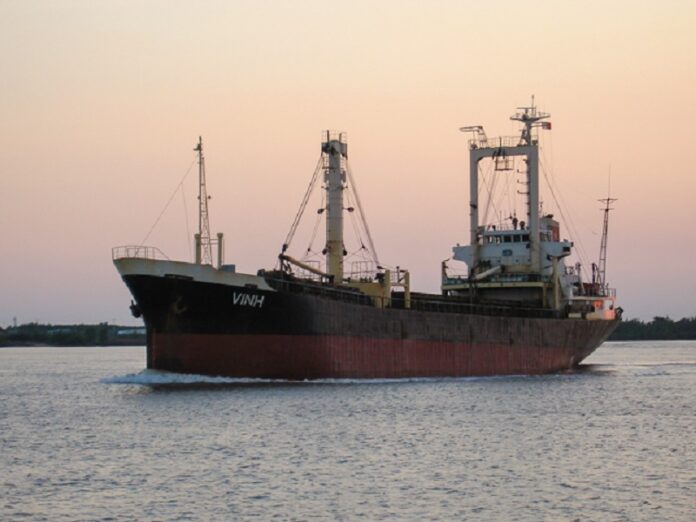
A freighter traveling downstream on the Saigon river in 2007, in Vietnam. Photo: Tore Saetre / Wikimedia Commons
JAKARTA — A collision between a Vietnamese freighter and an Indonesian sailboat has left 15 people missing off Indonesia’s East Java province.
Head of the local Disaster Mitigation Agency Joko Loediyono says the collision involved the cargo ship MV Thaison 4 and KM Mulya Sejati, which was carrying 27 people. It happened early Saturday off Tuban district.
The freighter was reportedly heading to Tanjung Perak seaport in East Java’s capital of Surabaya.
Loediyono says a search has been underway involving disaster response agencies and the navy, which deployed two warships.