32.7 C
Bangkok
Friday, June 19, 2026
Home Blog Page 2618

Owner of Demolished Resort Sent to ICU for Stroke, Wife Says

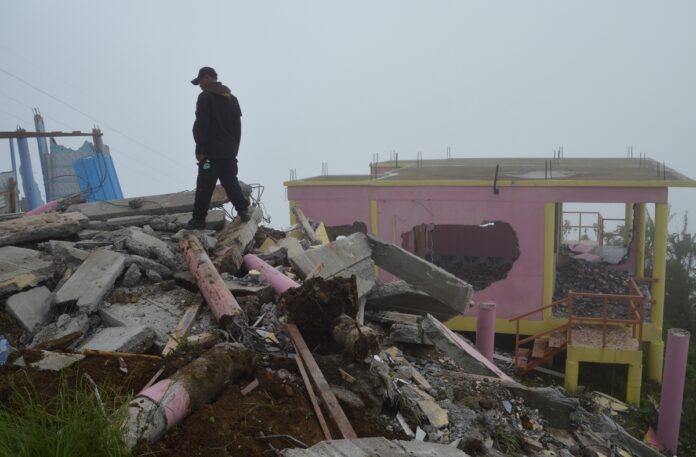
A security officer on Aug. 30 walks atop the ruins of what used to be a resort on Phu Tab Boek mountain in Phetchabun province.

PHETCHABUN — The owner of a resort demolished by forest officials for squatting on public land in Phetchabun province was hospitalized after having a stroke brought on by immense stress, his wife said.

Taweesak Pongjirapanya is among the owners of 19 hotels that officials said were illegally built atop the picturesque mountain of Phu Thap Boek and had to be demolished as part of the junta’s campaign to stamp out unauthorized use of protected public lands.

Read: Bogus ‘ISIS’ Bomb Threat Fails to Stop Demolition of Encroaching Resorts

Taweesak suffered a stroke shortly after security officers started pulling down his hotel, called Phu Thong Kham Resort, on Aug. 30, according to his wife Kachee Pongjirapanya. She said Taweesak remains unconscious in intensive care.

“I don’t know if I can demand anything,” Kachee said by telephone Wednesday. “But I want them to return us our resort. I want them to help us. I want them to help pay medical bill, because we have no money left.”

According to Kachee, her husband inherited the plot of land from his grandparents who lived there before land deeds were issued, and they have no business other than the resort they built on that land.

“We have nothing else. We built it to make a living,” Kachee said. “If they took it away from us like that, we would have to rent land from someone else.”

But one of the officials in charge of the eviction said the government allowed landholders such Taweesak to live on the mountain – so long as they didn’t develop it commercially – because it is part of the Phu Hin Rong Kla National Park. Doing so amounts to land encroachment, said Boonlap Suksai, head of the Forest Department’s regional office.

“There are some native Hmong who turned their land into resorts. And there are outsiders who rented the land from the natives, turned it into resorts but kept the natives as proxies,” Boonlap said.

He added that all of the 19 resorts identified as land encroachers have been demolished, and authorities will soon come up with a plan to redistribute the land to legitimate owners for appropriate uses.

The demolition followed junta chairman Prayuth Chan-ocha’s July 5 order to destroy the 19 offending properties.

Since seizing power from an elected government in May 2014, the junta has embarked on a campaign to take back lands in National Parks and other protected forests that had been developed without permission.

While the campaign was praised as an overdue effort to save forests and beaches from business operators, it also led to clashes between security officers and some forest communities who said they had been living off the land for decades.

Related stories:

Evicted Villagers and Park Officials Reach Compromise

Karen Rights Activist and Key Court Witness ‘Disappears’

Advertisement

Asian Club of Strongmen Welcomes ‘Duterte Harry’

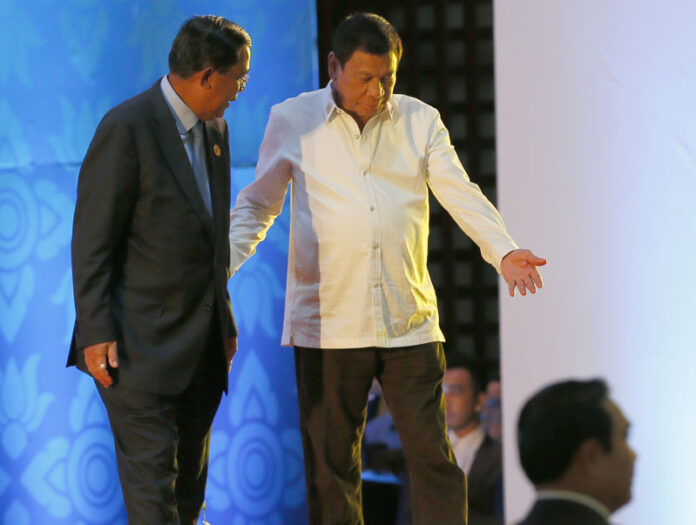
Philippine President Rodrigo Duterte, right, ushers Cambodian Prime Minister Hun Sen following the opening ceremony for the ASEAN Summit on Tuesday in Vientiane, Laos. Photo:Bullit Marquez / Associated Press

VIENTIANE — As bodies continue to pile up in his war on illegal drugs, the Philippine president is making waves at his first summit of the Association of Southeast Asian Nations where he joins a diverse cast of leaders, including some who have found themselves in the cross hairs of human rights watchdogs.

Rodrigo Duterte would fit right in, critics say, and even steal the show.

As president, Duterte brings a long-blemished rights record into the 10-nation ASEAN bloc, which has struggled with internal strife due to its unwieldy collective of dictatorships, authoritarian states, a monarchy and fledgling democracies since its founding nearly half a century ago as an Asian bulwark against communism.

“For most ASEAN leaders, Duterte represents a throwback to an uglier and more brutal form of Asian state, which taints ASEAN efforts to market itself as an increasingly progressive, modernizing trade block with a focus on trade data, rather than daily police-killing body counts,” said Phelim Kine of New York-based Human Rights Watch.

Once a government prosecutor who fought outlaws and insurgents, Duterte was a longtime mayor of southern Davao city, where he started to build a name for his deadly anti-crime campaign –  he was nicknamed “Duterte Harry” after Clint Eastwood’s Dirty Harry movie character. Since he took office as president on June 30, his crackdown on suspected drug dealers and users has left more than 2,000 people dead. More than 600,000 others, mostly drug addicts, have surrendered apparently for fear of being gunned down.

“That dynamic means that Duterte can expect his most meaningful face-time in Laos with other ASEAN embarrassments such as Cambodia’s dictator Hun Sen, representatives of Thailand’s military junta and his authoritarian Laotian hosts,” Kine said. He can rely on these leaders to lend him a sympathetic ear for “his grotesque justifications of abuse of rule of law and state-sanctioned extrajudicial violence as the price of a ‘secure’ society,” he said.

In a rare moment of diplomatic tumult ahead of an ASEAN summit, the 71-year-old Duterte cursed on Monday at President Barack Obama, warning the world’s most powerful man not to question him about the rising body count in his crackdown or “son of a bitch I will swear at you.” This was hours before they were supposed to meet in the Laotian capital.

The next day Duterte expressed regret in a semi-apology aimed at mending fences. But it was too late.

An evidently offended Obama had by then canceled Tuesday’s meeting, which was shaping up as the most-awaited, again because of Duterte – he had recently unleashed abuses at the U.S. ambassador to Manila, calling him gay in derogatory terms and railed against America’s security policies. Also, Obama was expected to raise the matter of extrajudicial killings, all contributing to growing antagonism between the two longtime allies.

Given what Duterte said, “we felt that it wasn’t the right time to have a bilateral meeting with the U.S. president,” Ben Rhodes, Obama’s deputy national security adviser, said. “Certainly the nature of those comments was not constructive.”

Obama is only the latest victim of Duterte’s foul tongue.

In the few months since the election campaign and more than two months into the presidency, Duterte has cursed the pope, the U.N. secretary-general and gotten into verbal tussles with the revered Roman Catholic Church in the Philippines.

Aside from his deadly record, Duterte’s disdain for statecraft, irreverence and bluntly frank and profane language would likely weigh on ASEAN, a conservative group steeped in tradition, protocol and nuanced rhetoric.

ASEAN’s still in a flux. In an incredible reversal of roles, for example, the Philippines was the democracy champions just years ago and was pushing then military-ruled Myanmar to move toward democratic reforms. Myanmar is now led by Nobel Peace laureate Aung San Suu Kyi, who fought her country’s military junta while languishing in home detention for decades.

ASEAN came into being during the Cold War era, and has long been hamstrung by the stark diversity of its member governments along with a bedrock rule of noninterference in each other’s affairs and a policy of making decision by consensus. That has allowed leaders like Hun Sen, Thailand’s coup leader-turned-premier Prayuth Chan-ocha, the faceless one-party communist rulers of Laos and Vietnam, and the general who once ruled Myanmar to occupy regional legitimacy and defy the West’s call for democratic governance.

ASEAN says it’s best to keep dictators in its midst engaged, because dialogue helps to keep them in check. It takes credit for helping Myanmar’s generals give up power. It also says it is necessary to keep the diverse nations together so that they have a stable platform to resolve conflicts and integrate their economies as a counterweight to Asian powerhouses China and India.

Duterte rejects any suggestion that he is a dictator. He sees himself as a leader with an extra tough approach on crime, especially on illegal drugs, because the problem has worsened into a pandemic, corrupting law enforcers and sparking heinous crimes. In ASEAN, he said he would assure the bloc and other countries that there would be no radical shifts in Philippine policies under him.

While critics cringe, Duterte has been adored by a substantial electorate of followers who gave him a convincing election victory on a promise to eradicate crime, drug trafficking and corruption in six months. The tall promise was embraced by crime-weary Filipinos but abhorred by opponents and rights groups as a dangerous expansion of his rights record in Davao, where he was linked to killings with his tacit endorsements of vigilante extermination of alleged drug dealers by motorcycle-riding death squads.

Anna Olarte, an English teacher at an international school in Vientiane, trooped to a convention center with more than 700 other Laos-based Filipinos to see and cheer the president she voted for.

When Duterte walked up the stage and bowed deeply before her and others, Olarte said her heart melted. “It was like, my God, this is my president,” she said.

Story: Jim Gomez

Advertisement

US Pledges to Clear 80 Million Stray Bombs in Laos

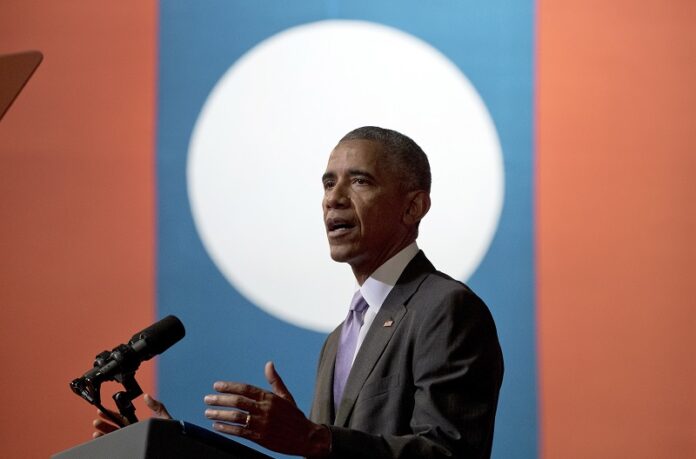
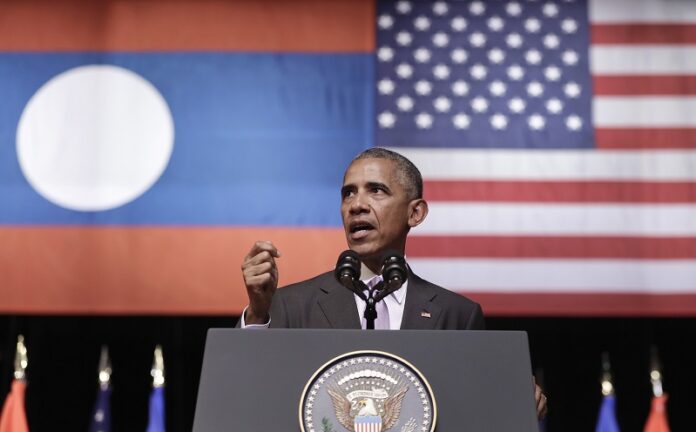
U.S. President Barack Obama speaks on Tuesday at the Lao National Cultural Hall in Vientiane, Laos. Photo: Carolyn Kaster / Associated Press

VIENTIANE — Declaring a “moral obligation” to heal the wounds of a secret war, President Barack Obama on Tuesday pledged help to clear away the 80 million unexploded bombs the U.S. dropped on Laos a generation ago – more than 10 for every one of the country’s 7 million people.

Half a century ago, the United States turned Laos into history’s most heavily bombed country, raining down some two million tons of ordnance in a covert, nine-year chapter of the Vietnam War. The first U.S. president to set foot in Laos while in office, Obama lamented that many Americans remain unaware of the “painful legacy” left behind by a bombardment that claims lives and limbs to this day.

“The remnants of war continue to shatter lives here in Laos,” Obama said before an audience of students, businessmen and orange-robed Buddhist monks who held up cellphones to snap photos of the American president. “Even as we continue to deal with the past, our new partnership is focused on the future,” he said.

To that end, Obama announced the U.S. would double its spending on bomb-clearing efforts to $90 million over three years – a relatively small sum for the U.S. but a significant investment for a small country in one of the poorer corners of the world. Obama plans to put a human face on the issue when he meets Wednesday in Vientiane with survivors of bombs that America dropped.

The president did not come to apologize. Instead, he called the conflict a reminder that “whatever the cause, whatever our intentions, war inflicts a terrible toll – especially on innocent men, women and children.”

Thanks to global cleanup efforts, casualties from tennis ball-sized “bombies” that still litter the Laotian countryside have plummeted from hundreds to dozens per year. But aid groups say far more help is needed. Of all the provinces in landlocked Laos, only one has a comprehensive system to care for bomb survivors.

“We’re incredibly proud of the progress the sector has made over the last five years in terms of the decline in casualties and new victims,” said Channapha Khamvongsa of the nonprofit Legacies of War. “But we are concerned about the upwards of 15,000 survivors around the country that are still in need of support.”

The $90 million to clean up bombs joins another $100 million the U.S. has committed in the past 20 years. The Lao government, meanwhile, says it will boost efforts to recover remains and account for Americans missing since the war.

The punishing air campaign on Laos was an effort to cut off communist forces in neighboring Vietnam. American warplanes dropped more explosives on this Southeast Asian nation than on Germany and Japan combined in World War II, a stunning statistic that Obama noted during his first day in Vientiane.

Obama was one of several world leaders visiting Laos to attend the Association of Southeast Asian Nations. Taking its turn as chair of the regional forum, Laos’ communist government is seizing a rare moment in the spotlight.

For Obama, the visit serves as a capstone to his yearslong effort to bolster relations with Southeast Asian countries long overlooked by the United States. The outreach is a core element of his attempt to shift U.S. diplomatic and military resources away from the Middle East and into Asia in order to counter China in the region and ensure a U.S. foothold in growing markets.

Yet Obama’s outreach took an uncomfortable turn just as he headed to Laos from another summit in China. The White House called off a scheduled meeting Tuesday with President Rodrigo Duterte of the Philippine – a U.S. treaty ally – after the brash new leader referred to Obama as a “son of a bitch.”

Duterte, who had been expecting Obama to criticize his deadly, extrajudicial crackdown on drug dealers, later said he regretted the personal attack on the president.

Obama filled the hole in his schedule by meeting with South Korean President Park Geun-hye in a display of unity a day after North Korea fired three ballistic missiles. Obama vowed to work with the United Nations to tighten sanctions against Pyongyang, but said the door wasn’t closed to a more functional relationship.

Obama’s Asia project – dubbed his pivot or rebalance – has yielded uneven results, as conflict in the Middle East has continued to demand attention and China has bristled at what it views as meddling in its backyard.

So with just four months left in office, Obama used his historic trip to Laos to reassert his aims. He touted new military aid and U.S. support for regional cooperation in addressing maritime disputes and made a plug for the massive Trans-Pacific Partnership free trade agreement, the policy’s central economic component that is now stuck in Congress.

Story: Josh Lederman, Kathleen Hennessey

Advertisement

Foreign Couple Injured in Suan Phlu by Home Fire

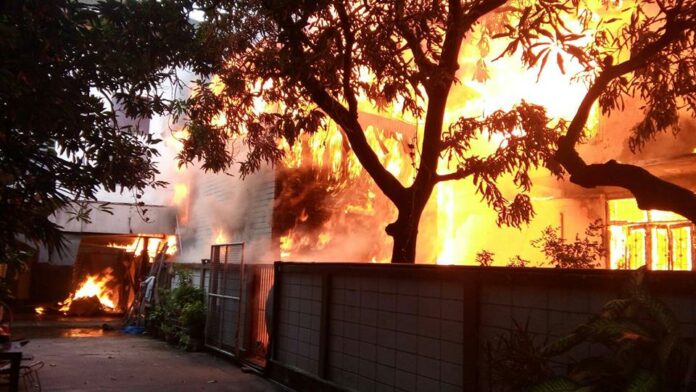
Photo: FM 91 Trafficpro / Facebook

BANGKOK — Two people were injured when fire consumed a house in Soi Suan Plu 6 in the Sathon area this morning.

The fire broke out at about 7am on Wednesday at the two-story wooden residence and was brought under control by approximately 8am. The residents, a foreign couple, received minor burns, according to Pol. Lt.Col. Narong Yimpan. He did not know their nationality.

Police are investigating the cause of the fire, said the deputy chief of Thung Maha Mek Police Station.

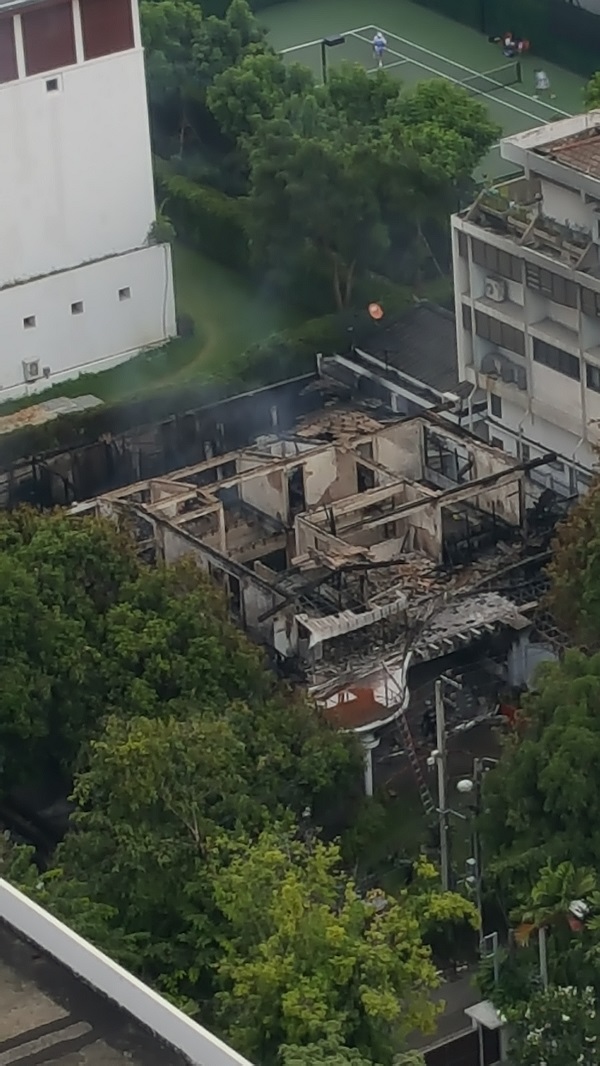
A residence on Bangkok's Soi Suan Phlu 6 after it was destroyed by fire Wednesday morning. Photo: Dave Richards
A residence on Bangkok’s Soi Suan Phlu 6 after it was destroyed by fire Wednesday morning. Photo: Dave Richards
Advertisement

Obama Aide to Meet Wife of Missing Activist Sombath

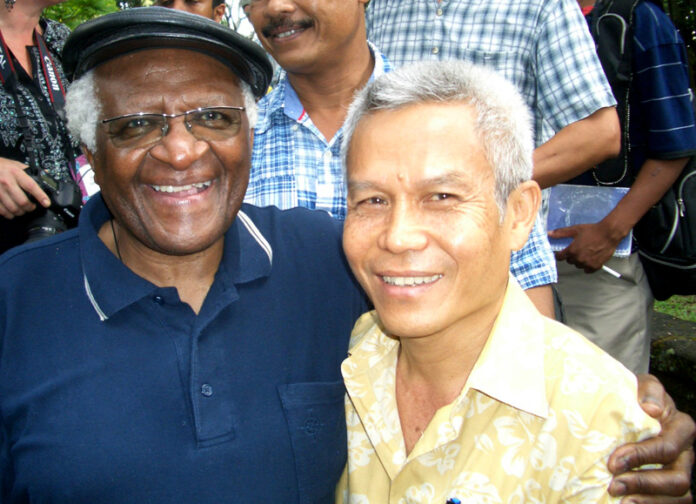
Sombath Somphone, seen here in 2006 with Desmond Tutu, is a respected community development worker from Laos abducted in Vientiane on Dec. 15, 2012. Photo: Shui-Meng Ng

VIENTIANE — A top aide of President Barack Obama said Tuesday he will meet with the wife of a missing Laotian activist, whose case has been repeatedly highlighted by human rights groups as an example of authoritarian excesses of Laos’ one-party Communist government.

Deputy National Security Adviser Ben Rhodes told reporters he will meet with Shui Meng Ng on Thursday while Obama is visiting Laos. The president arrived on Monday to attend a regional summit.

Human rights activists were hoping that Obama would speak about Ng’s husband, Sombath Somphone, who was picked up apparently by security forces on Dec. 15, 2012. He has not been seen since.

Obama has not mentioned him so far in his public remarks, but Rhodes said that “we care very deeply about her case and her husband, and we believe she deserves to know what happened to her husband.”

He said he also met Ng during a recent visit to Laos, and planned to stay in “regular contact” with her. Rhodes said the Laotian government has told the U.S. the same thing it tells Sombath’s wife – that it’s looking into his disappearance.

“Oftentimes, they indicate that they do not know, and that there’s an ongoing investigation,” Rhodes said.

He said that typically, Obama addresses human rights issues with foreign leaders more broadly, and lets his staff raise specific cases with their counterparts.

Sombath’s disappearance was captured on a traffic video camera, in which he is seen being stopped at a police outpost in Vientiane and asked to step out of his Jeep, according to Amnesty International. Within a few minutes a man on a motorcycle arrives, drives away Sombath’s vehicle, and a pickup truck takes Sombath away with armed people on a motorcycle leading the way. The passenger on the motorcycle fires a gunshot into the air, Amnesty International said.

The human rights group said it believes the authorities are either directly responsible for his disappearance, or have simply failed to take steps to find out what happened to him.

“President Obama and world leaders gathering in Laos need to demand answers and accountability from their Lao government hosts on the case of disappeared NGO leader Sombath Somphone. The message has to be clear that the cover up has to end, Sombath needs to be found, and that no other outcome is acceptable,” Phil Robertson, deputy director for Asia at Human Rights Watch, said Tuesday.

The U.S.-educated Sombath mostly worked in rural development, showing farmers creative ways to raise fish and make handicrafts. But he was also vocal about land deals that left thousands of villagers homeless without compensation, sparking rare political protests. He also had international connections.

Sombath is not the only possible victim of a government crackdown.

In 2015, an ethnic Lao who is a Polish citizen disappeared while visiting Laos, according to his Polish wife, allegedly for posting critical comments on Facebook. He was subsequently sentenced to 4 years and 9 months in prison.

In March this year, three young Laotian migrant workers who returned to Laos to renew their passports vanished and reappeared on state TV in prison uniforms to state that they had used the internet to “defame the government.” They have not been charged and their parents have not been allowed to visit them. Another dissident, Ka Yang, who fled to Thailand was deported to Laos in 2011 and imprisoned.

Most Laotians are unaware of such events because of the government’s tight control over the media, the security forces and the judiciary.

Advertisement

Avoid Ramkhamhaeng Road Tonight Due To World Cup Qualifier

A Japanese fan among thousands of people gathering at Rajamangala National Stadium on Tuesday afternoon for a 2018 World Cup qualifying match between Thailand and Japan.

BANGKOK — The public is urged to avoid Ramkhamhaeng Road this evening due to the World Cup qualifying match to be held.

Fans are already gathering outside Rajamangala National Stadium to watch Team Thailand face off against Japan in a 2018 World Cup qualifying match which will get underway at about 7:15pm.

No cars are allowed to park inside the stadium and those going to see the game should take public transportation.

It is the second match for Thailand in the final stage for Asian teams trying to make the World Cup cut. Thailand lost the first qualifier to Saudi Arabia on Thursday and in a match that left some fans feeling cheated.

The match will be broadcast nationwide on Channel 7.

Advertisement

Obama Visit Opens New Era in US-Laos Relations

U.S. President Barack Obama speaks on Tuesday at the Lao National Cultural Hall in Vientiane, Laos. Photo: Carolyn Kaster / Associated Press

VIENTIANE — Acknowledging the scars of a secret war, President Barack Obama on Tuesday said the United States has a “moral obligation” to help this isolated Southeast Asian nation heal and vowed to reinvigorate relations with a country with rising strategic importance to the U.S.

Making the first visit for a sitting U.S. president, Obama said too few Americans know of the United States’ covert bombing of Laos during the Vietnam War. He offered no apologies, calling the campaign and its aftermath reminders that “whatever the cause, whatever our intentions, war inflicts a terrible toll.”

“Given our history here, I believe that the United States has a moral obligation to help Laos heal,” Obama said, as he addressed an audience of more than 1,000 students, business people and officials.

For nine years, the U.S. conducted a punishing, covert bombing campaign on landlocked Laos in an effort to cut off communist forces in neighboring Vietnam. The bombardment dropped more than 2 million tons of ordnance on the small nation, more than “we dropped on Germany and Japan, combined, in all of World War II,” Obama said.

The bombing left behind deep scars, millions of unexploded cluster bombs across the countryside and decades-worth of cleanup.

Obama is one of several world leaders arriving for a meeting of the Association of Southeast Asian Nations. Taking its turn as the chair of the regional forum, the Laos’ communist government is seizing a rare moment in the spotlight.

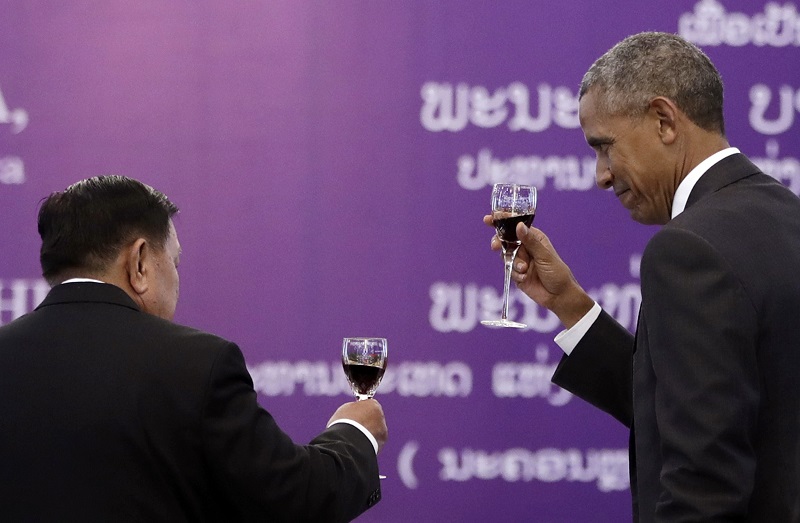
Laotian President Bounnhang Vorachit, left, and U.S. President Barack Obama toast during an official state luncheon Tuesday at the Presidential Palace in Vientiane, Laos. Photo: Carolyn Kaster / Associated Press

For Obama, the visit serves as a capstone to his yearslong effort to bolster relations with Southeast Asian countries long overlooked by the United States. The outreach is a core element of Obama’s attempt to shift U.S. diplomatic and military resources away from the Middle East and into Asia in order to counter China’s dominance in the region and ensure a foothold in growing markets.

Obama’s project – dubbed his Asia pivot – has yielded uneven results, as conflict in the Middle East has continued to demand attention and China has bristled at what it views as meddling in its backyard.

Obama said America’s interest in the Asia-Pacific isn’t new and is not a passing fad.

“The United States is more deeply engaged across the Asia-Pacific than we have been in decades,” Obama said. “Our positon is stronger and we’ve sent a clear message that as a Pacific nation, we are here to stay.”

With just four months left in office and eying his legacy, Obama used the moment to reassert his aims. He touted new military aid and U.S. support for regional cooperation in addressing maritime disputes. He made a plug for the massive Trans-Pacific Partnership free trade agreement, the policy’s central economic component that is now stuck in Congress. He sought to address worries that United States’ new focus on Asia will leave smaller nations as pawns in a chess match between the U.S. and China.

“We believe that bigger nations should not dictate to smaller nations and that all nations should play by the same rules,” he said.

As a first sign of a new relationship with Laos, Obama said his administration would address the legacy of war. Obama announced he would double spending for unexploded ordnance, committing $90 million over the three years. The U.S. has contributed $100 million to the effort in the last 20 years, as annual deaths have fallen from more than 300 to fewer than 50, the White House said.

The Lao government said it would increase efforts to recover remains and account for Americans missing since the VietnamWar.

As he opened a day of ceremony and diplomacy, Obama was greeted by a military band, traditional dancers and a warm, tropical rain. He met with Lao President Bounnhang Vorachit, was feted at a welcome banqueted, where he toasted to a relationship he said would “mean greater progress and opportunity for the people of Laos.”

Obama’s outreach to those regional powers hit a snag just as he arrived in the region from China. The White House called off a planned meeting Tuesday with Philippine President Rodrigo Duterte, after the brash new leader referred to Obama as a “son of a bitch.”

Duterte, who had been expecting Obama to criticize his deadly, extrajudicial crackdown on drug dealers, later said he regretted the personal attack on the president.

In a statement read out Tuesday by his spokesman, Duterte said his “strong comments” to certain questions by a reporter “elicited concern and distress.”

“We look forward to ironing out differences arising out of national priorities and perceptions, and working in mutually responsible ways for both countries,” the statement said.

Story: Josh Lederman, Kathleen Hennessey

Advertisement

Bangkok Man Hangs Himself Via Facebook Live

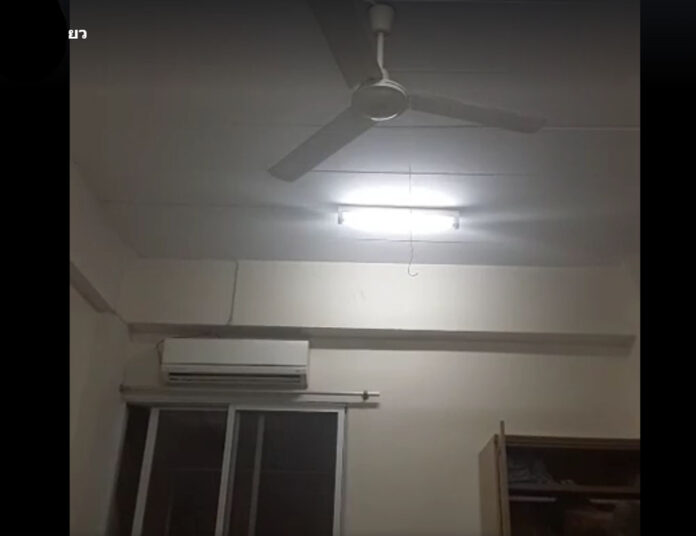
Still image from Monday night livestream

BANGKOK — A man was found dead Tuesday after livestreaming his suicidal via Facebook Live.

Charoen Chimphuk was found dead inside an apartment in Soi Phaholyothin 48 the morning after he filmed himself hanging himself in a streaming video running about 30 minutes.

Sangrawee Omdee, 24, his wife, told police she rushed to the residence after seeing the 30-year-old was preparing to hang himself through the live broadcast streamed via his personal account on 11:46pm.

Titled “Just a man going to die,” the live video showed a calm Charoen making preparations for about 19 minutes to hang himself from a ceiling fan. He is mostly silent the entire time apart from some comments about his family.

“I have nothing left,” he says at one point.

His body remains suspended motionless for another dozen minutes or so. The video is still available but a content warning had been added by Facebook by Tuesday afternoon.

“His wife was not suspicious about his death and believes it was a suicide,” said police Col. Amnat Intharasuan of Bang Khen Police Station. “Though the case is being investigated by the police’s office of forensic science, as it must be.”

Sangrawee told police she has lived with Charoen for five years, and the two have a 3-year-old daughter. She recently found out he was having an affair with another woman, so she had left him.

Sangrawee said the room where Charoen hanged himself was where he went to see the other woman.

Police said they did not find the live video suspicious and believe Charoen hanged himself of his own free will.

Earlier this year, an internet celebrity pretended to shoot himself on Facebook’s livestreaming service in order to promote a skin cream.


Related stories:

Police Find No Evidence Net Idol Shot Himself on Facebook Live
Did a Thai Net Idol Just Shoot Himself on ‘Facebook Live?’


Advertisement

Cinema Dolce: Watch Splendid Tales From Italy at EmQuartier

BANGKOK — Harvey Keitel and Michael Caine are a pair of faltering creatives while a more surreal couple scour an empty world to repair a broken friend in films to show at next week’s Italian Film Festival.

Seven films include three contenders for the 2015 Palme d’Or will bring the best of Italian cinema to audiences Sept. 13 through 18 at EmQuartier.

In “Youth,” Caine and Keitel are men at the end of life’s accomplishments on vacation in the Swiss Alps where they confront the struggle between age and youth, life and death. The English-language dramedy by Paolo Sorrentino got a positive response after its Cannes premiere was nominated for Best Original Song at the Academy Awards.

A troubled female director melts down on the set in “My Mother,” which also received a warm welcome as a Palme d’Or entry.

Things take an avante garde turn in 2015 dark fantasy “The Bear Tales,” with two lonely, surreal figures journeying through a world abandoned by humans in their quest to reanimate a torn teddy bear. The story is adapted from famous fables such as Cinderella, Rapunzel and Sleeping Beauty. It stars Salma Hayek.

Ferdinando Cito Filomarino’s first feature “Antonia” is a biopic about the transient life of Antonia Pozzi who after his death has become one of the most important Italian poets of the 20th century. Lead actress Linda Caridi will attend the opening ceremony of the festival.

For those looking for a laugh, “An Italian Name” unfolds over the course of a dinner between old friends who get tangled up on politics and relationships while debating what to name a coming child. “The Repairman” portrays the rambling life of a failed engineer who earns a living by fixing coffee machines.

For some controversy, check out “Me, Myself and Her,” a love story between two women and their struggles to find true identity.

Tickets range from 150 baht to 300 baht and can be reserved via the Major Cineplex website.

The festival runs Sept. 13 – 18 at EmQuartier’s CineArt theater. The full schedule can be found online. All films show in Italian with English subtitles except “Youth” which is in English. EmQuartier can be reached via skywalk from BTS Phrom Phong.

http://www.youtube.com/watch?v=8gevnrK0400

Advertisement

Europe’s Rosetta Probe Finds Lost Lander on Comet

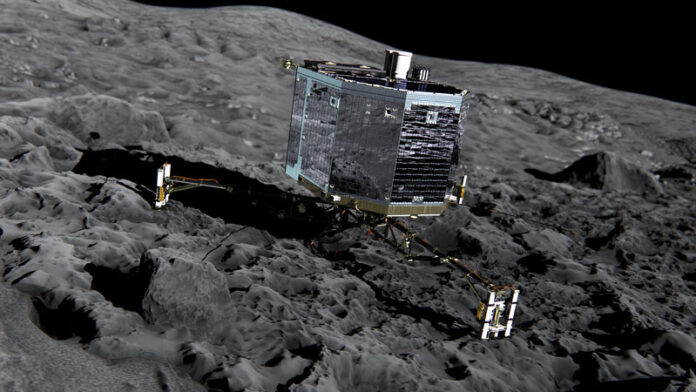
A rendering by the European Space Agency showing its Philae lander on Comet 67P/Churyumov-Gerasimenko.

BERLIN — Europe’s Rosetta space probe has located its lost Philae lander, wedged in a “dark crack” on a comet, the European Space Agency said Monday.

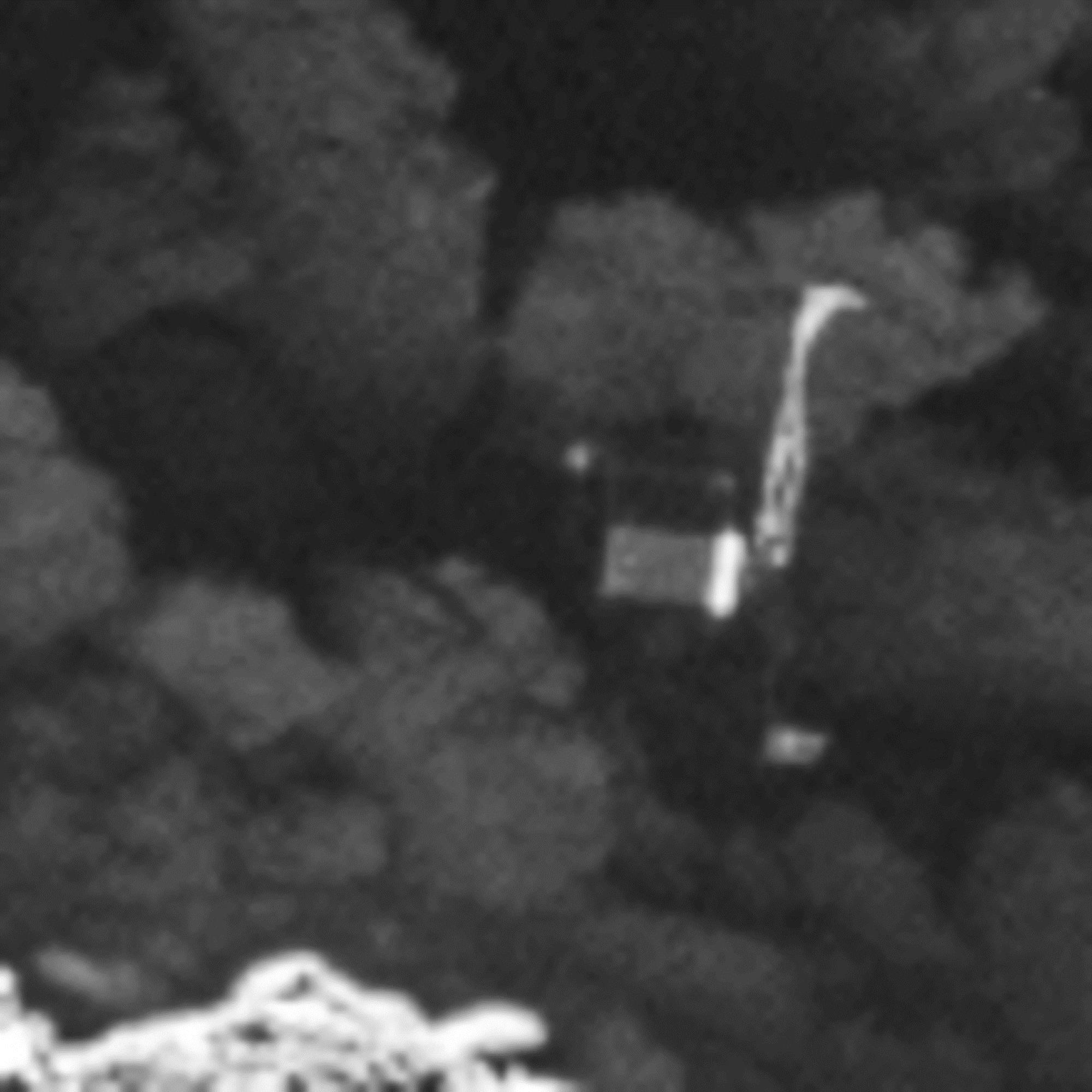
Rosetta’s camera finally captured images on Friday of the lander on comet 67P/Churyumov-Gerasimenko, weeks before the probe’s own mission ends, the agency said. The pictures showing the lander’s body and two of its three legs were taken as Rosetta passed within 2.7 kilometers of the surface.

After being launched in 2004, Rosetta took 10 years to accelerate and catch up with comet 67P. In November 2014 it released Philae, achieving the first landing of a spacecraft on a comet.

Philae bounced after its initial touchdown and its precise location on the comet couldn’t be pinned down until now, though its general vicinity was known.

After sending data to Earth for three days its battery ran out and it went into hibernation, only to recharge enough as thecomet came closer to the sun to communicate briefly with Rosetta in mid-2015.

Comet lander Philae can be seen in this photo taken Friday by Rosetta's OSIRIS narrow-angle camera from a distance of 2.7 kilomters of the Comet 67P/Churyumov/Gerasimenko. Image: European Space Agency
Comet lander Philae can be seen in this photo taken Friday by Rosetta’s OSIRIS narrow-angle camera from a distance of 2.7 kilomters of the Comet 67P/Churyumov/Gerasimenko. Image: European Space Agency

ESA plans to crash Rosetta into the comet Sept. 30, because the probe is unlikely to survive lengthy hibernation in orbit as the comet heads away from the sun.

Data from Rosetta and Philae have already improved scientists’ understanding of the nature of comets and the role they played in the early universe. Analyzing the data fully is expected to keep researchers busy for years.

“We were beginning to think that Philae would remain lost forever,” said Patrick Martin, ESA’s Rosetta mission manager. “It is incredible we have captured this at the final hour.”

Rosetta project scientist Matt Taylor said that locating Philae provides missing information “needed to put Philae’s three days of science into proper context.”

Advertisement

Hot News

LATEST NEWS

Bangkok
overcast clouds
32.7 ° C
35 °
32.7 °
68 %
4kmh
99 %
Fri
30 °
Sat
31 °
Sun
35 °
Mon
36 °
Tue
37 °